SB 3029: HCDA; Counties; DOH; Summer Streets Pilot Program; Report; Appropriation
- Session Year: 2025-2026
- House: Senate
- Latest Version Date: 2026-05-02
Current Status:
Passed
(2026-06-26: Act 176, on 06/26/2026 (Gov. Msg. No. 1278).)
Introduced
In Committee
First Chamber
In Committee
Second Chamber
Final Decking
Enacted
Requires each county, in collaboration with the Hawaii Community Development Authority, to establish a Summer Streets Pilot Program that closes vehicular traffic and repurposes roads for pedestrian and cyclist use, outdoor events, and other community-driven activities. Authorizes each county to consult with the Department of Health. Requires each county to submit an initial proposal to HCDA. Requires a report to the Legislature. Appropriates funds. (CD1)
Requires a county with a population of no greater than three hundred thousand, in collaboration with the Hawaii Community Development Authority, to establish a Summer Streets Pilot Program that closes vehicular traffic and repurposes roads for pedestrian and cyclist use, outdoor events, and other community-driven activities. Requires the Hawaii Community Authority to select the county for the pilot program. Authorizes the county to consult with the Department of Health. Requires the county to submit an initial proposal to the Hawaii Community Development Authority. Requires a report to the Legislature. Appropriates funds. Effective 7/1/3000. (HD2)
Requires a county with a population of no greater than three hundred thousand, in collaboration with the Hawaii Community Development Authority, to establish a Summer Streets Pilot Program that closes vehicular traffic and repurposes roads for pedestrian and cyclist use, outdoor events, and other community-driven activities. Requires the Hawaii Community Authority to select the county for the pilot program. Authorizes the county to consult with the Department of Health. Requires the county to submit an initial proposal to the Hawaii Community Development Authority. Requires a report to the Legislature. Appropriates funds. Effective 7/1/3000. (HD1)
Requires each county, in collaboration with the Hawaii Community Development Authority to establish a Summer Streets Pilot Program that closes vehicular traffic and repurposes roads for pedestrian and cyclist use, outdoor events, and other community-driven activities. Requires each county to submit an initial proposal to the Hawaii Community Development Authority. Requires a report to the Legislature. Appropriates funds. Effective 7/1/2050. (SD1)
Requires each county, in collaboration with the Hawaii Community Development Authority to establish a Summer Streets Pilot Program that closes vehicular traffic and repurposes roads for pedestrian and cyclist use, outdoor events, and other community-driven activities. Requires each county to submit an initial proposal to the Hawaii Community Development Authority. Requires a report to the Legislature. Appropriates funds.
|
THE SENATE |
S.B. NO. |
3029 |
|
THIRTY-THIRD LEGISLATURE, 2026 |
S.D. 1 |
|
|
STATE OF HAWAII |
H.D. 2 |
|
|
|
C.D. 1 |
|
|
|
||
|
|
||
A BILL FOR AN ACT
RELATING TO COMMUNITY DEVELOPMENT.
BE IT ENACTED BY THE LEGISLATURE OF THE STATE OF HAWAII:
The legislature further finds that Malmo's program demonstrated the transformative power of temporarily repurposing streets and public spaces into dynamic areas for pedestrian use, cycling, and community-centered activities. This initiative not only encouraged greater public participation and physical activity, but also bolstered local businesses and improved environmental outcomes. By creating similar spaces across the State, the State can build stronger connections between residents, foster a sense of belonging, and promote healthier lifestyles.
The State's unique geographic and cultural landscape offers a compelling opportunity to adapt and expand upon the Malmo model. Beyond transforming streets, this initiative will emphasize the importance of creating accessible public spaces that act as hubs for social interaction, cultural events, and local markets. These spaces will serve as central gathering points, enriching the lives of residents and supporting a stronger sense of community identity.
The legislature believes that a program modeled after Malmo's program aligns with the State's goal of reducing carbon emissions, encouraging sustainable transportation, and promoting community health. By prioritizing active lifestyles and providing equitable access to public spaces, the program will address public health challenges, such as physical inactivity, mental well-being, and social isolation, while supporting local businesses and reducing environmental impact.
Accordingly, the purpose of this Act is to:
(1) Require each county, in collaboration with the Hawaii community development authority, to establish a summer streets pilot program that temporarily closes vehicular traffic and repurposes roads for pedestrian and cyclist uses;
(2) Authorize each county to consult with the department of health regarding best practices for developing the pilot program;
(3) Require each county to submit an initial proposal to the executive director of the Hawaii community development authority;
(4) Require the Hawaii community development authority to submit a report to the Legislature; and
(5) Appropriate funds for the pilot program.
(b) In developing the summer streets pilot program, each county shall identify and designate specific streets for pedestrianization, prioritizing areas that will best benefit from reduced vehicular traffic, and that are central to local commerce, cultural activities, and community engagement. The summer streets pilot program shall support sustainable transportation options, including the provision of bike lanes and enhanced pedestrian pathways. Each county may consult with the department of health regarding the best practices for developing the pilot program.
(c) Each county shall submit an initial proposal for the summer streets pilot program, including locations, schedules for road closures, types of activities and amenities to be provided, and a breakdown of projected costs to the executive director of the Hawaii community development authority no later than March 31, 2027.
(d) The Hawaii community development authority shall submit a report of its findings and recommendations, including any proposed legislation, to the legislature no later than July 1, 2027.
SECTION 3. There is appropriated out of the general revenues of the State of Hawaii the sum of $200,000 or so much thereof as may be necessary for fiscal year 2026-2027 for the Hawaii community development authority to allocate to each county for the summer streets pilot program required by this Act.
The sum appropriated shall be expended by the Hawaii community development authority for the purposes of this Act.
SECTION 4. This Act shall take effect on July 1, 2026.
Report Title:
HCDA; Counties; DOH; Summer Streets Pilot Program; Report; Appropriation
Description:
Requires each county, in collaboration with the Hawaii Community Development Authority, to establish a Summer Streets Pilot Program that closes vehicular traffic and repurposes roads for pedestrian and cyclist use, outdoor events, and other community-driven activities. Authorizes each county to consult with the Department of Health. Requires each county to submit an initial proposal to HCDA. Requires a report to the Legislature. Appropriates funds. (CD1)
The summary description of legislation appearing on this page is for informational purposes only and is not legislation or evidence of legislative intent.
|
THE SENATE |
S.B. NO. |
3029 |
|
THIRTY-THIRD LEGISLATURE, 2026 |
S.D. 1 |
|
|
STATE OF HAWAII |
H.D. 2 |
|
|
|
|
|
|
|
||
|
|
||
A BILL FOR AN ACT
RELATING TO COMMUNITY DEVELOPMENT.
BE IT ENACTED BY THE LEGISLATURE OF THE STATE OF HAWAII:
The legislature further finds that Malmo's program demonstrated the transformative power of temporarily repurposing streets and public spaces into dynamic areas for pedestrian use, cycling, and community-centered activities. This initiative not only encouraged greater public participation and physical activity, but also bolstered local businesses and improved environmental outcomes. By creating similar spaces across the State, the State can build stronger connections between residents, foster a sense of belonging, and promote healthier lifestyles.
The State's unique geographic and cultural landscape offers a compelling opportunity to adapt and expand upon the Malmo model. Beyond transforming streets, this initiative will emphasize the importance of creating accessible public spaces that act as hubs for social interaction, cultural events, and local markets. These spaces will serve as central gathering points, enriching the lives of residents and supporting a stronger sense of community identity.
The legislature believes that a program modeled after Malmo's program aligns with the State's goal of reducing carbon emissions, encouraging sustainable transportation, and promoting community health. By prioritizing active lifestyles and providing equitable access to public spaces, the program will address public health challenges, such as physical inactivity, mental well-being, and social isolation, while supporting local businesses and reducing environmental impact.
Accordingly, the purpose of this Act is to:
(1) Require a county with a population no greater than three hundred thousand, in collaboration with the Hawaii community development authority, to establish a summer streets pilot program that temporarily closes vehicular traffic and repurposes roads for pedestrian and cyclist uses;
(2) Require the Hawaii community development authority to select the county for the pilot program;
(3) Authorize the county to consult with the department of health regarding best practices for developing the pilot program;
(4) Require the county to submit an initial proposal to the executive director of the Hawaii community development authority;
(5) Require the Hawaii community development authority to submit a report to the Legislature; and
(6) Appropriate funds for the pilot program.
(b) In developing the summer streets pilot program, the county shall identify and designate specific streets for pedestrianization, prioritizing areas that will best benefit from reduced vehicular traffic, and that are central to local commerce, cultural activities, and community engagement. The summer streets pilot program shall support sustainable transportation options, including the provision of bike lanes and enhanced pedestrian pathways. The county may consult with the department of health regarding the best practices for developing the pilot program.
(c) The county selected by the Hawaii community development authority shall submit an initial proposal for the summer streets pilot program, including locations, schedules for road closures, types of activities and amenities to be provided, and a breakdown of projected costs to the executive director of the Hawaii community development authority no later than March 31, 2027.
(d) The Hawaii community development authority shall submit a report of its findings and recommendations, including any proposed legislation, to the legislature no later than July 1, 2027.
SECTION 3. There is appropriated out of the general revenues of the State of Hawaii the sum of $ or so much thereof as may be necessary for fiscal year 2026-2027 for the Hawaii community development authority to allocate to the selected county for the summer streets pilot program required by this Act.
The sum appropriated shall be expended by the Hawaii community development authority for the purposes of this Act.
SECTION 4. This Act shall take effect on July 1, 3000.
Report Title:
HCDA; Counties; DOH; Summer Streets Pilot Program; Report; Appropriation
Description:
Requires a county with a population of no greater than three hundred thousand, in collaboration with the Hawaii Community Development Authority, to establish a Summer Streets Pilot Program that closes vehicular traffic and repurposes roads for pedestrian and cyclist use, outdoor events, and other community-driven activities. Requires the Hawaii Community Authority to select the county for the pilot program. Authorizes the county to consult with the Department of Health. Requires the county to submit an initial proposal to the Hawaii Community Development Authority. Requires a report to the Legislature. Appropriates funds. Effective 7/1/3000. (HD2)
The summary description of legislation appearing on this page is for informational purposes only and is not legislation or evidence of legislative intent.
|
THE SENATE |
S.B. NO. |
3029 |
|
THIRTY-THIRD LEGISLATURE, 2026 |
S.D. 1 |
|
|
STATE OF HAWAII |
H.D. 1 |
|
|
|
|
|
|
|
||
|
|
||
A BILL FOR AN ACT
RELATING TO COMMUNITY DEVELOPMENT.
BE IT ENACTED BY THE LEGISLATURE OF THE STATE OF HAWAII:
The legislature further finds that Malmo's program demonstrated the transformative power of temporarily repurposing streets and public spaces into dynamic areas for pedestrian use, cycling, and community-centered activities. This initiative not only encouraged greater public participation and physical activity, but also bolstered local businesses and improved environmental outcomes. By creating similar spaces across the State, the State can build stronger connections between residents, foster a sense of belonging, and promote healthier lifestyles.
The State's unique geographic and cultural landscape offers a compelling opportunity to adapt and expand upon the Malmo model. Beyond transforming streets, this initiative will emphasize the importance of creating accessible public spaces that act as hubs for social interaction, cultural events, and local markets. These spaces will serve as central gathering points, enriching the lives of residents and supporting a stronger sense of community identity.
The legislature believes that a program modeled after Malmo's program aligns with the State's goal of reducing carbon emissions, encouraging sustainable transportation, and promoting community health. By prioritizing active lifestyles and providing equitable access to public spaces, the program will address public health challenges, such as physical inactivity, mental well-being, and social isolation, while supporting local businesses and reducing environmental impact.
Accordingly, the purpose of this Act is to:
(1) Require a county with a population of no greater than three hundred thousand, in collaboration with the Hawaii community development authority, to establish a summer streets pilot program that temporarily closes vehicular traffic and repurposes roads for pedestrian and cyclist uses;
(2) Require the Hawaii community development authority to select the county for the pilot program;
(3) Authorize the county to consult with the department of health regarding best practices for developing the pilot program;
(4) Require the county to submit an initial proposal to the executive director of the Hawaii community development authority;
(5) Require the Hawaii community development authority to submit a report to the Legislature; and
(6) Appropriate funds for the pilot program
(b) In developing the summer streets pilot program, the county shall identify and designate specific streets for pedestrianization, prioritizing areas that will best benefit from reduced vehicular traffic, and that are central to local commerce, cultural activities, and community engagement. The summer streets pilot program shall support sustainable transportation options, including the provision of bike lanes and enhanced pedestrian pathways. The county may consult with the department of health regarding the best practices for developing the pilot program.
(c) The county selected by the Hawaii community development authority shall submit an initial proposal for the summer streets pilot program, including locations, schedules for road closures, types of activities and amenities to be provided, and a breakdown of projected costs to the executive director of the Hawaii community development authority no later than December 31, 2026.
(d) The Hawaii community development authority shall submit a report of its findings and recommendations, including any proposed legislation, to the legislature no later than twenty days prior to the convening of the regular session of 2027.
SECTION 3. There is appropriated out of the general revenues of the State of Hawaii the sum of $ or so much thereof as may be necessary for fiscal year 2026-2027 for the Hawaii community development authority to allocate to the selected county for the summer streets pilot program required by this Act.
The sum appropriated shall be expended by the Hawaii community development authority for the purposes of this Act.
SECTION 4. This Act shall take effect on July 1, 3000.
Report Title:
HCDA; Counties; DOH; Summer Streets Pilot Program; Report; Appropriation
Description:
Requires a county with a population of no greater than three hundred thousand, in collaboration with the Hawaii Community Development Authority, to establish a Summer Streets Pilot Program that closes vehicular traffic and repurposes roads for pedestrian and cyclist use, outdoor events, and other community-driven activities. Requires the Hawaii Community Authority to select the county for the pilot program. Authorizes the county to consult with the Department of Health. Requires the county to submit an initial proposal to the Hawaii Community Development Authority. Requires a report to the Legislature. Appropriates funds. Effective 7/1/3000. (HD1)
The summary description of legislation appearing on this page is for informational purposes only and is not legislation or evidence of legislative intent.
|
THE SENATE |
S.B. NO. |
3029 |
|
THIRTY-THIRD LEGISLATURE, 2026 |
S.D. 1 |
|
|
STATE OF HAWAII |
|
|
|
|
|
|
|
|
||
|
|
||
A BILL FOR AN ACT
RELATING TO COMMUNITY DEVELOPMENT.
BE IT ENACTED BY THE LEGISLATURE OF THE STATE OF HAWAII:
The legislature further finds that Malmo's program demonstrated the transformative power of temporarily repurposing streets and public spaces into dynamic areas for pedestrian use, cycling, and community-centered activities. This initiative not only encouraged greater public participation and physical activity, but also bolstered local businesses and improved environmental outcomes. By creating similar spaces across the State, the State can build stronger connections between residents, foster a sense of belonging, and promote healthier lifestyles.
The State's unique geographic and cultural landscape offers a compelling opportunity to adapt and expand upon the Malmo model. Beyond transforming streets, this initiative will emphasize the importance of creating accessible public spaces that act as hubs for social interaction, cultural events, and local markets. These spaces will serve as central gathering points, enriching the lives of residents and supporting a stronger sense of community identity.
The legislature believes that a program modeled after Malmo's program aligns with the State's goal of reducing carbon emissions, encouraging sustainable transportation, and promoting community health. By prioritizing active lifestyles and providing equitable access to public spaces, the program will address public health challenges, such as physical inactivity, mental well-being, and social isolation, while supporting local businesses and reducing environmental impact.
Accordingly, the purpose of this Act is to:
(1) Require each county, in collaboration with the Hawaii community development authority, to establish a summer streets pilot program that temporarily closes vehicular traffic and repurposes roads for pedestrian and cyclist uses; and
(2) Require each county to submit an initial proposal to the executive director of the Hawaii community development authority.
(b) In developing the summer streets pilot program, each county shall identify and designate specific streets for pedestrianization, prioritizing areas that will best benefit from reduced vehicular traffic, and that are central to local commerce, cultural activities, and community engagement. The summer streets pilot program shall support sustainable transportation options, including the provision of bike lanes and enhanced pedestrian pathways.
(c) Each county shall submit initial proposals for the summer streets pilot program, including locations, schedules for road closures, types of activities and amenities to be provided, and a breakdown of projected costs to the executive director of the Hawaii community development authority no later than December 31, 2026.
(d) The Hawaii community development authority shall submit a report of its findings and recommendations, including any proposed legislation, to the legislature no later than twenty days prior to the convening of the regular session of 2027.
SECTION 3. There is appropriated out of the general revenues of the State of Hawaii the sum of $ or so much thereof as may be necessary for fiscal year 2026-2027 for the Hawaii community development authority to allocate to each county for the summer streets pilot program required by this Act.
The sum appropriated shall be expended by the Hawaii community development authority for the purposes of this Act.
SECTION 4. This Act shall take effect on July 1, 2050.
Report Title:
HCDA; Counties; Summer Streets Pilot Program; Report; Appropriation
Description:
Requires each county, in collaboration with the Hawaii Community Development Authority to establish a Summer Streets Pilot Program that closes vehicular traffic and repurposes roads for pedestrian and cyclist use, outdoor events, and other community-driven activities. Requires each county to submit an initial proposal to the Hawaii Community Development Authority. Requires a report to the Legislature. Appropriates funds. Effective 7/1/2050. (SD1)
The summary description of legislation appearing on this page is for informational purposes only and is not legislation or evidence of legislative intent.
|
THE SENATE |
S.B. NO. |
3029 |
|
THIRTY-THIRD LEGISLATURE, 2026 |
|
|
|
STATE OF HAWAII |
|
|
|
|
|
|
|
|
||
|
|
||
A BILL FOR AN ACT
RELATING TO COMMUNITY DEVELOPMENT.
BE IT ENACTED BY THE LEGISLATURE OF THE STATE OF HAWAII:
The legislature further finds that Malmo's program demonstrated the transformative power of temporarily repurposing streets and public spaces into dynamic areas for pedestrian use, cycling, and community-centered activities. This initiative not only encouraged greater public participation and physical activity, but also bolstered local businesses and improved environmental outcomes. By creating similar spaces across Hawaii, the State can build stronger connections between residents, foster a sense of belonging, and promote healthier lifestyles.
Hawaii's unique geographic and cultural landscape offers a compelling opportunity to adapt and expand upon the Malmo model. Beyond transforming streets, this initiative will emphasize the importance of creating accessible public spaces that act as hubs for social interaction, cultural events, and local markets. These spaces will serve as central gathering points, enriching the lives of residents and supporting a stronger sense of community identity.
The legislature believes that a program modeled after Malmo's program aligns with the State's goal of reducing carbon emissions, encouraging sustainable transportation, and promoting community health. By prioritizing active lifestyles and providing equitable access to public spaces, the program will address public health challenges, such as physical inactivity, mental well-being, and social isolation while supporting local businesses and reducing environmental impact.
Accordingly, the purpose of this Act is to:
(1) Require each county, in collaboration with the Hawaii community development authority, to establish a summer streets pilot program that temporarily closes vehicular traffic and repurposes roads for pedestrian and cyclist uses; and
(2) Require each county to submit an initial proposal to the executive director of the Hawaii community development authority.
(b) In developing the summer streets pilot program, each county shall identify and designate specific streets for pedestrianization, prioritizing areas that will best benefit from reduced vehicular traffic, and that are central to local commerce, cultural activities, and community engagement. The summer streets pilot program shall support sustainable transportation options, including the provision of bike lanes and enhanced pedestrian pathways.
(c) Each county shall submit initial proposals for the summer streets pilot program, including locations, schedule for road closures, types of activities and amenities to be provided, and a breakdown of projected costs to the executive director of the Hawaii community development authority no later than December 31, 2026.
(d) The Hawaii community development authority shall submit a report of its findings and recommendations, including any proposed legislation, to the legislature no later than twenty days prior to the convening of the regular session of 2027.
SECTION 3. There is appropriated out of the general revenues of the State of Hawaii the sum of $ or so much thereof as may be necessary for fiscal year 2026-2027 for the Hawaii community development authority to allocate to each county for the summer streets pilot program required by this Act.
The sum appropriated shall be expended by the Hawaii community development authority for the purposes of this Act.
SECTION 4. This Act shall take effect on July 1, 2026.
|
INTRODUCED BY: |
_____________________________ |
|
|
|
Report Title:
HCDA; Counties; Summer Streets Pilot Program; Report; Appropriation
Description:
Requires each county, in collaboration with the Hawaii Community Development Authority to establish a Summer Streets Pilot Program that closes vehicular traffic and repurposes roads for pedestrian and cyclist use, outdoor events, and other community-driven activities. Requires each county to submit an initial proposal to the Hawaii Community Development Authority. Requires a report to the Legislature. Appropriates funds.
The summary description of legislation appearing on this page is for informational purposes only and is not legislation or evidence of legislative intent.
|
Date
|
Status
|
|---|---|
| Jun 26, 2026 | Act 176, on 06/26/2026 (Gov. Msg. No. 1278). |
| Jun 26, 2026 | Act 176, 06/26/2026 (Gov. Msg. No. 1278). |
| May 8, 2026 | Enrolled to Governor. |
| May 8, 2026 | Received notice of passage on Final Reading in House (Hse. Com. No. 888). |
| May 6, 2026 | Received notice of Final Reading (Sen. Com. No. 816). |
| May 6, 2026 | Passed Final Reading as amended in CD 1 with none voting aye with reservations; Representative(s) Garcia, Olds, Shimizu voting no (3) and Representative(s) Alcos excused (1). |
| May 6, 2026 | Passed Final Reading, as amended (CD 1). Ayes, 23; Aye(s) with reservations: none. Noes, 2 (Senator(s) Awa, Fevella). Excused, 0 (none). |
| May 1, 2026 | Forty-eight (48) hours notice Wednesday, 05-06-26. |
| May 1, 2026 | Reported from Conference Committee (Conf Com. Rep. No. 215-26) as amended in (CD 1). |
| May 1, 2026 | 48 Hrs. Notice (as amended CD 1) 05-06-26. |
| May 1, 2026 | Reported from Conference Committee as amended CD 1 (Conf. Com. Rep. No. 215-26). |
| May 1, 2026 | The Conference Committee recommends that the measure be Passed, with Amendments. The votes were as follows: 4 Ayes: Representative(s) Kila, Kitagawa, Miyake, Muraoka; Ayes with reservations: none; 0 Noes: none; and 0 Excused: none. |
| May 1, 2026 | The Conference committee recommends that the measure be PASSED, WITH AMENDMENTS. The votes of the Senate Conference Managers were as follows: 3 Aye(s): Senator(s) Lee, C., Inouye, Lamosao; Aye(s) with reservations: none ; 0 No(es): none; and 0 Excused: none. |
| Apr 30, 2026 | Conference Committee Meeting will reconvene on Friday 05-01-26 11:20AM in conference room 329. |
| Apr 29, 2026 | Conference Committee Meeting will reconvene on Thursday 04-30-26 11:10AM in conference room 329. |
| Apr 28, 2026 | Bill scheduled for Conference Committee Meeting on Wednesday, 04-29-26 11:10AM in conference room 329. |
| Apr 27, 2026 | Received notice of Senate conferees (Sen. Com. No. 761). |
| Apr 24, 2026 | Senate Conferees Appointed: Lee, C. Chairs; Inouye Co-Chair; Lamosao. |
| Apr 20, 2026 | Received notice of appointment of House conferees (Hse. Com. No. 787). |
| Apr 20, 2026 | House Conferees Appointed: Kila, Kitagawa Co-Chairs; Miyake, Muraoka. |
| Apr 16, 2026 | Received notice of disagreement (Sen. Com. No. 710). |
| Apr 16, 2026 | Senate disagrees with House amendments. |
| Apr 16, 2026 | Received from House (Hse. Com. No. 730). |
| Apr 14, 2026 | Passed Third Reading as amended in HD 2 with none voting aye with reservations; none voting no (0) and Representative(s) Quinlan excused (1). Transmitted to Senate. |
| Apr 10, 2026 | Forty-eight (48) hours notice Tuesday, 04-14-26. |
| Apr 10, 2026 | Reported from FIN (Stand. Com. Rep. No. 2155-26) as amended in HD 2, recommending passage on Third Reading. |
| Apr 7, 2026 | The committee on FIN recommend that the measure be PASSED, WITH AMENDMENTS. The votes were as follows: 16 Ayes: Representative(s) Todd, Takenouchi, Hartsfield, Hussey, Keohokapu-Lee Loy, Kitagawa, Kusch, Lee, M., Miyake, Morikawa, Perruso, Templo, Yamashita, Reyes Oda; Ayes with reservations: Representative(s) Alcos, Gedeon; 0 Noes: none; and 0 Excused: none. |
| Apr 2, 2026 | Bill scheduled to be heard by FIN on Tuesday, 04-07-26 2:00PM in House conference room 308 VIA VIDEOCONFERENCE. |
| Mar 30, 2026 | Passed Second Reading as amended in HD 1 and referred to the committee(s) on FIN with none voting aye with reservations; none voting no (0) and Representative(s) Cochran, Lowen, Perruso, Quinlan excused (4). |
| Mar 30, 2026 | Reported from TRN (Stand. Com. Rep. No. 1560-26) as amended in HD 1, recommending passage on Second Reading and referral to FIN. |
| Mar 27, 2026 | The committee on TRN recommend that the measure be PASSED, WITH AMENDMENTS. The votes were as follows: 6 Ayes: Representative(s) Kila, Miyake, Evslin, Grandinetti, Kitagawa, Cochran; Ayes with reservations: none; 0 Noes: none; and 3 Excused: Representative(s) La Chica, Muraoka, Pierick. |
| Mar 24, 2026 | Bill scheduled for decision making on Friday, 03-27-26 10:30AM in conference room 430 VIA VIDEOCONFERENCE. |
| Mar 24, 2026 | The committee(s) on TRN recommend(s) that the measure be deferred until 03-27-26 at 10:30 AM. |
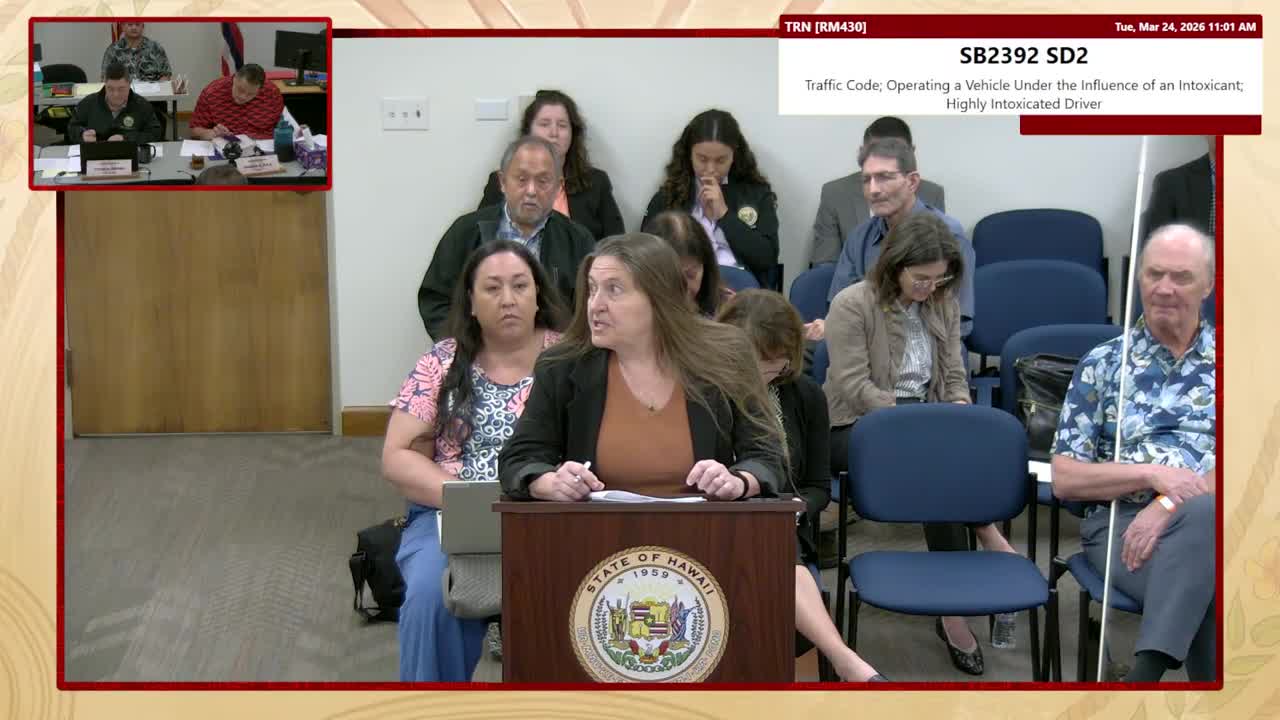
| Mar 19, 2026 | Bill scheduled to be heard by TRN on Tuesday, 03-24-26 9:00AM in House conference room 430 VIA VIDEOCONFERENCE. |
| Mar 10, 2026 | Referred to TRN, FIN, referral sheet 16 |
| Mar 10, 2026 | Pass First Reading |
| Mar 6, 2026 | Received from Senate (Sen. Com. No. 98) in amended form (SD 1). |
| Mar 6, 2026 | Report Adopted; Passed Third Reading. Ayes, 22; Aye(s) with reservations: none. Noes, 2 (Senator(s) Awa, Fevella). Excused, 1 (Senator(s) Ihara). Transmitted to House. |
| Mar 5, 2026 | One Day Notice 03-06-26. |
| Mar 5, 2026 | Reported from WAM (Stand. Com. Rep. No. 2742) with recommendation of passage on Third Reading. |
| Mar 3, 2026 | The committee(s) on WAM recommend(s) that the measure be PASSED, UNAMENDED. The votes in WAM were as follows: 12 Aye(s): Senator(s) Dela Cruz, Moriwaki, DeCoite, Elefante, Hashimoto, Inouye, Kanuha, Kidani, Kim, Lee, C., Richards, Wakai; Aye(s) with reservations: none ; 0 No(es): none; and 1 Excused: Senator(s) Fevella. |
| Feb 25, 2026 | The committee(s) on WAM deferred the measure until 03-03-26 10:15AM; Conference Room 211 & Videoconference. |
| Feb 23, 2026 | The committee(s) on WAM will hold a public decision making on 02-25-26 10:56AM; Conference Room 211 & Videoconference. |
| Feb 20, 2026 | Report adopted; Passed Second Reading, as amended (SD 1) and referred to WAM. |
| Feb 20, 2026 | Reported from WLA (Stand. Com. Rep. No. 2609) with recommendation of passage on Second Reading, as amended (SD 1) and referral to WAM. |
| Feb 18, 2026 | The committee(s) on WLA recommend(s) that the measure be PASSED, WITH AMENDMENTS. The votes in WLA were as follows: 4 Aye(s): Senator(s) Lee, C., Inouye, Lamosao, DeCorte; Aye(s) with reservations: none ; 0 No(es): none; and 1 Excused: Senator(s) Chang. |
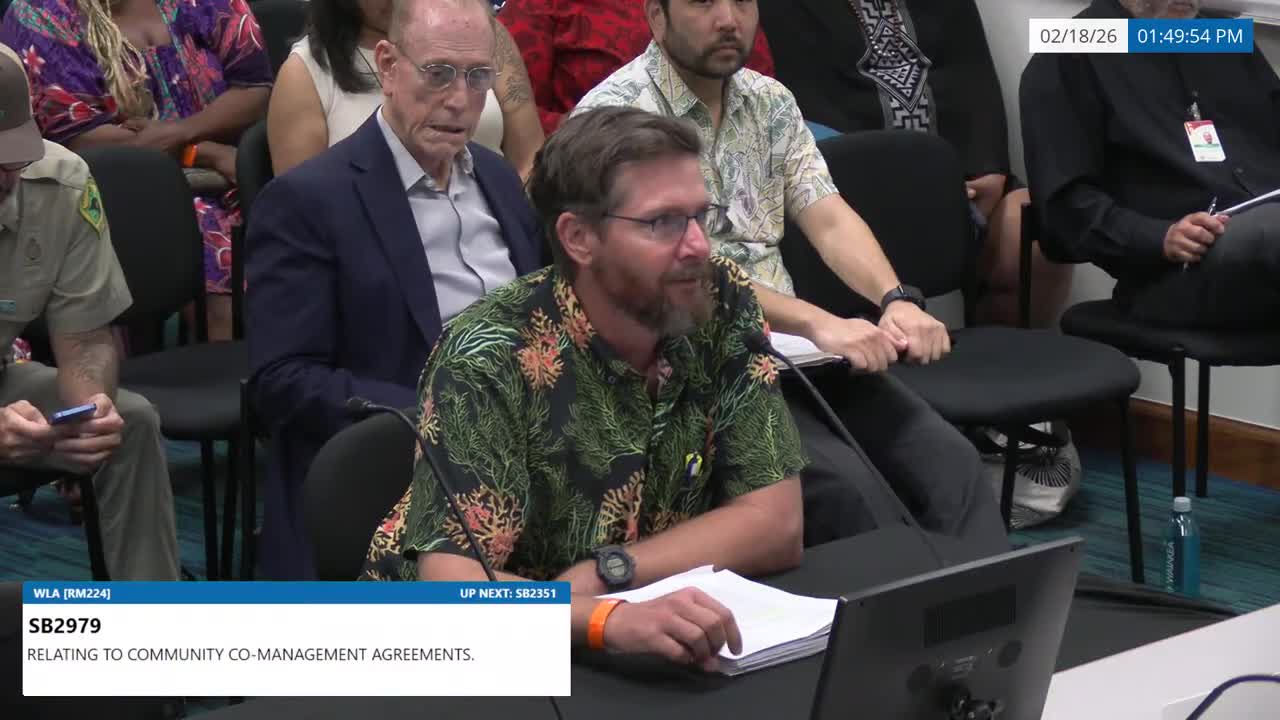
| Feb 13, 2026 | The committee(s) on WLA has scheduled a public hearing on 02-18-26 1:01PM; CR 224 & Videoconference. |
| Jan 30, 2026 | Referred to WLA, WAM. |
| Jan 26, 2026 | Passed First Reading. |
| Jan 23, 2026 | Introduced. |
|
Date
|
Description
|
Location
|
Votes
|
|
|---|---|---|---|---|
| May 6, 2026 | Final Reading | House Floor |
Passed |
|
| May 6, 2026 | Final Reading | Senate Floor |
Passed |
|
| Apr 14, 2026 | Third Reading | House Floor |
Passed |
|
| Apr 7, 2026 | The committee on FIN recommend that the measure be PASSED, WITH AMENDMENTS | House Standing Committee on Finance |
Passed |
|
| Mar 27, 2026 | The committee on TRN recommend that the measure be PASSED, WITH AMENDMENTS | House Standing Committee on Transportation |
Passed |
|
| Mar 6, 2026 | Third Reading | Senate Floor |
Passed |
|
| Mar 3, 2026 | The committee(s) on WAM recommend(s) that the measure be PASSED, UNAMENDED | Senate Standing Committee on Ways and Means |
Passed |
|
| Feb 18, 2026 | The committee(s) on WLA recommend(s) that the measure be PASSED, WITH AMENDMENTS | Senate Standing Committee on Water, Land, Culture and the Arts |
Passed |
This list shows positions taken on this bill by organizations on the date displayed, which is linked to the original source.
Positions by individuals are not included.
|
Organization
|
Position
|
Date
|
|---|---|---|
| Better Block Hawaiʻi | *** Support | Mar 23, 2026 |
| Department of Health | *** Support | Apr 7, 2026 |
| Get Fit Kaua‘i | *** Support | Apr 7, 2026 |
| Hawaiʻi Bicycling League | ** Support | |
| Hawai‘i Appleseed Center for Law and Economic Justice | *** Support | Apr 7, 2026 |
| Hawai‘i Bicycling League | *** Support | Apr 7, 2026 |
| Hawai‘i County Council | *** Support | Mar 23, 2026 |
| Hawai‘i County Council - District 2 | *** Support | Apr 7, 2026 |
| Hawai‘i Public Health Institute | *** Support | Apr 7, 2026 |
| HEAL (Healthy Eating Active Living) Coalition of Kaua‘i County | *** Support | Apr 7, 2026 |
| HEAL Community Coalition of Kaua‘i County | *** Support | Apr 7, 2026 |
| Healthy Eating + Active Living (HEAL) Coalition | *** Support | Apr 7, 2026 |
| Honolulu City Council | *** Support | Feb 24, 2026 |
| Oahu Metropolitan Planning Organization | *** Support | Apr 7, 2026 |
| Oahu Metropolitan Planning Organization (OahuMPO) | *** Support | Apr 7, 2026 |
| State of Hawaii Department of Health | *** Support | Apr 7, 2026 |
STAND. COM. REP. NO. 2742
Honolulu, Hawaii
RE: S.B. No. 3029
S.D. 1
Honorable Ronald D. Kouchi
President of the Senate
Thirty-Third State Legislature
Regular Session of 2026
State of Hawaii
Sir:
Your Committee on Ways and Means, to which was referred S.B. No. 3029, S.D. 1, entitled:
"A BILL FOR AN ACT RELATING TO COMMUNITY DEVELOPMENT,"
begs leave to report as follows:
The purpose and intent of this measure is to establish a Summer Streets Pilot Program in each county.
Specifically, this measure:
(1) Requires that each county develop a proposal for a pilot program that temporarily closes certain roads to vehicular traffic and repurposes those roads for pedestrian and cyclist use, outdoor events, temporary installations, and other community-driven activities;
(2) Appropriates moneys to the Hawaii Community Development Authority to allocate to the counties for the pilot programs; and
(3) Requires the Hawaii Community Development Authority to analyze each county's pilot programs and submit a report to the Legislature before the Regular Session of 2027.
Your Committee received written comments in support of this measure from the Department of Transportation Services of the City and County of Honolulu, a member of the Honolulu City Council, Hawaii Bicycling League, Hawaii Public Health Institute, Oahu Metropolitan Planning Organization, Better Block Hawaii, and three individuals.
Your Committee received written comments on this measure from the Department of Health, Hawaii Community Development Authority, and one individual.
Your Committee finds that similar summer streets programs in other cities have promoted public health, increased revenue and foot traffic for local businesses, and brought people together in positive and meaningful ways. Accordingly, your Committee finds that similar programs in Hawaii would benefit local communities and businesses.
As affirmed by the record of votes of the members of your Committee on Ways and Means that is attached to this report, your Committee is in accord with the intent and purpose of S.B. No. 3029, S.D. 1, and recommends that it pass Third Reading.
Respectfully submitted on behalf of the members of the Committee on Ways and Means,
|
|
|
________________________________ DONOVAN M. DELA CRUZ, Chair |
|
|
|
|
STAND. COM. REP. NO. 2609
Honolulu, Hawaii
RE: S.B. No. 3029
S.D. 1
Honorable Ronald D. Kouchi
President of the Senate
Thirty-Third State Legislature
Regular Session of 2026
State of Hawaii
Sir:
Your Committee on Water, Land, Culture and the Arts, to which was referred S.B. No. 3029 entitled:
"A BILL FOR AN ACT RELATING TO COMMUNITY DEVELOPMENT,"
begs leave to report as follows:
The purpose and intent of this measure is to:
(1) Require each county, in collaboration with the Hawaii Community Development Authority, to establish a Summer Streets Pilot Program that closes vehicular traffic and repurposes roads for pedestrian and cyclist use, outdoor events, and other community-driven activities;
(2) Require each county to submit an initial proposal to the Hawaii Community Development Authority;
(3) Require a report to the Legislature; and
(4) Appropriate funds.
Your Committee received testimony in support of this measure from the Oahu Metropolitan Planning Organization, Hawaiʻi Public Health Institute, Hawaiʻi Bicycling League, and one individual.
Your Committee received testimony in opposition to this measure from one individual.
Your Committee received comments on this measure from the Department of Health and Hawaii Community Development Authority.
Your Committee finds that streets and public spaces are invaluable resources that can enhance community life when transformed into dynamic areas that foster greater public participation, bolster local business, and improve environmental outcomes through promoting local activities and pedestrian- and cycling-access, as done in Malmo, Sweden, in 2017. This measure will align with the State's goals of reducing carbon emissions, encouraging sustainable transportation, and promoting community health, all while supporting local businesses.
Your Committee has amended this measure by:
(1) Inserting an effective date of July 1, 2050, to encourage further discussion; and
(2) Making technical, nonsubstantive amendments for the purposes of clarity and consistency.
As affirmed by the record of votes of the members of your Committee on Water, Land, Culture and the Arts that is attached to this report, your Committee is in accord with the intent and purpose of S.B. No. 3029, as amended herein, and recommends that it pass Second Reading in the form attached hereto as S.B. No. 3029, S.D. 1, and be referred to your Committee on Ways and Means.
Respectfully submitted on behalf of the members of the Committee on Water, Land, Culture and the Arts,
|
|
|
________________________________ CHRIS LEE, Chair |
|
|
|
|
|
Date
|
Testimony PDF
|
|---|---|
| Apr 7, 2026 | SB3029_HD1_TESTIMONY_FIN_04-07-26_.PDF |
| Mar 23, 2026 | SB3029_SD1_TESTIMONY_TRN_03-24-26_.PDF |
| Feb 24, 2026 | SB3029_SD1_TESTIMONY_WAM_02-25-26_.PDF |
| Feb 18, 2026 | SB3029_TESTIMONY_WLA_02-18-26_.PDF |
Discussed in Hearing
 1MIN
Senate Floor
 4MIN
Conference Committee
 4MIN
Conference Committee
 2MIN
Conference Committee
 2MIN
House Standing Committee on Transportation
 6MIN
House Standing Committee on Transportation
 5MIN
Senate Standing Committee on Water, Land, Culture and the Arts
Bill Author