SB 2521: City and County of Honolulu Mayor's Package; DOH; Commercial Driver's License Exemption; Emergency Medical Services Personnel; Authorized Emergency Vehicle
- Session Year: 2025-2026
- House: Senate
- Latest Version Date: 2026-04-07
Current Status:
Failed
(2026-04-22: Received notice of Senate conferees (Sen. Com. No. 720).)
Introduced
In Committee
First Chamber
In Committee
Second Chamber
Final Decking
Enacted
What does this bill do?
The bill exempts emergency medical services personnel—such as paramedics and EMTs—from needing a commercial driver’s license to operate their work vehicles. It also expands the definition of “authorized emergency vehicle” (vehicles designated for emergency response) to include emergency medical services vehicles, disaster response and recovery vehicles, and Department of Health vehicles, and requires firefighters, EMS staff, and police to keep proof they completed agency- or state-approved training to operate those vehicles.
The summary is provided by generative AI which can make mistakes. For original language, please view the details in the table below.
Exempts emergency medical services personnel from commercial driver's license requirements. Requires federal, state, and county firefighters, emergency medical services personnel, and law enforcement officers to maintain proof of successful completion of agency-approved or other state-approved training on authorized emergency vehicles. Amends the definition of "authorized emergency vehicle" under the State Traffic Code to replace ambulances with emergency medical services vehicles. Expands the definition of "authorized emergency vehicle" to include disaster response and recovery vehicles and Department of Health vehicles. Effective 7/1/3000. (HD2)
Exempts emergency medical services personnel from commercial driver's license requirements. Requires federal, state, and county firefighters, emergency medical services personnel, and law enforcement officers to maintain proof that they have successfully completed an agency approved or other state approved training on authorized emergency vehicles. Amends the definition of "authorized emergency vehicle" under the State Traffic Code to replace ambulances with emergency medical services vehicles. Expands the definition of "authorized emergency vehicle" to include disaster response and recovery vehicles and Department of Health vehicles. Effective 7/1/3000. (HD1)
Exempts emergency medical services personnel from commercial driver's license requirements. Requires federal, state, and county firefighters, emergency medical services personnel, and law enforcement officers to maintain proof that they have successfully completed an agency approved or other state approved training on authorized emergency vehicles. Amends the definition of "authorized emergency vehicle" under State Traffic Code to replace ambulances with emergency medical services vehicles. Expands the definition of "authorized emergency vehicle" to include disaster response and recovery vehicles and Department of Health vehicles. (SD1)
Exempts emergency medical services personnel from commercial driver's license requirements. Amends the definition of "authorized emergency vehicle" under State Traffic Code to replace ambulances with emergency medical services vehicles.
|
THE SENATE |
S.B. NO. |
2521 |
|
THIRTY-THIRD LEGISLATURE, 2026 |
S.D. 1 |
|
|
STATE OF HAWAII |
H.D. 2 |
|
|
|
|
|
|
|
||
|
|
||
A BILL FOR AN ACT
RELATING TO EMERGENCY SERVICES.
BE IT ENACTED BY THE LEGISLATURE OF THE STATE OF HAWAII:
SECTION 1. The legislature finds that requiring first responders to obtain commercial driver's licenses to operate authorized commercial vehicles used for emergency response is not in the best interest of public safety because first responders receive training provided by federal, state, and county government agencies that would satisfy this requirement. Imposing this requirement would only serve to create an administrative hurdle for first responders and hinder the performance of their vital public safety functions.
The legislature additionally finds that although emergency medical services personnel, who may be assigned to operate vehicles that are classified as commercial motor vehicles were performing essential public safety functions, receive the same levels of rigorous training as others authorized to operate commercial vehicles, they are still required to obtain commercial driver's licenses, which slows down hiring, raises costs, and creates administrative hurdles for emergency medical services departments across the State.
The legislature further finds that exempting qualified emergency medical services personnel from commercial driver's license requirements may help to alleviate barriers to recruitment and retention and streamline essential functions, while maintaining public safety standards.
The legislature also finds that the current definition for "authorized emergency vehicle" in existing law is insufficient, in that it does not include alternative emergency service vehicles utilized by emergency medical services departments in the State.
Accordingly, the purpose of this Act is to:
(1) Exempt emergency medical services personnel from commercial driver's license requirements, similar to other licensed first responders operating in the State; and
(2) Amend the definition of "authorized emergency vehicle" under the statewide traffic code to clarify that additional emergency services vehicles beyond ambulances are included in the definition.
SECTION 2. Section 286-235.5, Hawaii Revised Statutes, is amended to read as follows:
"§286-235.5 Persons exempt from licensure. The following persons shall be exempt from licensure under this part:
(1) Individuals who operate commercial motor
vehicles for military purposes. This
exception [is] shall be limited to active-duty military
personnel, members of the military reserves, members of the national guard on
active duty, including personnel on full-time national guard duty, personnel on
part-time national guard training, and national guard military technicians
(civilians who are required to wear military uniforms), and active-duty United
States Coast Guard personnel. This
exception [is] shall not be applicable to United States
reserve technicians; and
(2) Federal, state, and county firefighters, emergency
medical services personnel, and law enforcement officers who [drive]
operate federal, state, or county fire trucks, including fire pumpers,
aerial ladder trucks, and elevated platform trucks, or authorized disaster
response and recovery vehicles and emergency vehicles; provided that [they]
the individuals are trained by the federal, state, or county government
and the commercial motor vehicles are equipped with audible and visual signals
and are not subject to normal traffic regulation[.]; provided further
that federal, state, and county firefighters, emergency medical services
personnel, and law enforcement officers shall maintain proof of successful
completion of agency-approved or other state-approved training on authorized
emergency vehicles. For purposes of
this paragraph, "authorized emergency vehicle" [shall have] has
the same meaning as in section 291C-1."
SECTION 3. Section 291C-1, Hawaii Revised Statutes, is amended by amending the definition of "authorized emergency vehicle" to read as follows:
""Authorized emergency
vehicle" includes fire department vehicles, [police vehicles, ambulances,]
emergency medical services vehicles, disaster response and recovery
vehicles, ocean safety vehicles, law enforcement vehicles, conservation and
resources enforcement vehicles, [and] office of the state fire marshal
vehicles [authorized and approved pursuant to section 291-31.5], and
department of health vehicles that are publicly owned and other publicly or
privately owned vehicles designated as [such by a] an authorized
emergency vehicle by the State, appropriate county council, or emergency
management agency."
SECTION 4. Statutory material to be repealed is bracketed and stricken. New statutory material is underscored.
SECTION 5. This Act shall take effect on July 1, 3000.
Report Title:
City and County of Honolulu Mayor's Package; DOH; Commercial Driver's License Exemption; Emergency Medical Services Personnel; Authorized Emergency Vehicle
Description:
Exempts emergency medical services personnel from commercial driver's license requirements. Requires federal, state, and county firefighters, emergency medical services personnel, and law enforcement officers to maintain proof of successful completion of agency-approved or other state-approved training on authorized emergency vehicles. Amends the definition of "authorized emergency vehicle" under the State Traffic Code to replace ambulances with emergency medical services vehicles. Expands the definition of "authorized emergency vehicle" to include disaster response and recovery vehicles and Department of Health vehicles. Effective 7/1/3000. (HD2)
The summary description of legislation appearing on this page is for informational purposes only and is not legislation or evidence of legislative intent.
|
THE SENATE |
S.B. NO. |
2521 |
|
THIRTY-THIRD LEGISLATURE, 2026 |
S.D. 1 |
|
|
STATE OF HAWAII |
H.D. 1 |
|
|
|
|
|
|
|
||
|
|
||
A BILL FOR AN ACT
RELATING TO EMERGENCY SERVICES.
BE IT ENACTED BY THE LEGISLATURE OF THE STATE OF HAWAII:
SECTION 1. The legislature finds that requiring first responders to obtain commercial driver's licenses to operate authorized commercial vehicles is not in the best interest of public safety because first responders receive training provided by federal, state, and county government agencies that would satisfy this requirement. Imposing this requirement would only serve to create an administrative hurdle for first responders and hinder the performance of their vital public safety functions.
The legislature additionally finds that although emergency medical services personnel, who may be assigned to operate vehicles that are classified as commercial motor vehicles in the performance of essential public safety functions, receive the same levels of rigorous training as others authorized to operate commercial vehicles, they are still required to obtain commercial driver's licenses, which slows down hiring, raises costs, and creates administrative hurdles for emergency medical services departments across the State.
The legislature further finds that exempting qualified emergency medical services personnel from commercial driver's license requirements may help to alleviate barriers to recruitment and retention and streamline essential functions, while maintaining public safety standards.
The legislature also finds that the current definition for "authorized emergency vehicle" in existing law is insufficient, in that it does not include alternative emergency service vehicles utilized by emergency medical services departments in the State.
Accordingly, the purpose of this Act is to:
(1) Exempt emergency medical services personnel from commercial driver's license requirements, similar to other licensed first responders operating in the State; and
(2) Amend the definition of "authorized emergency vehicle" to clarify that all vehicles operated by licensed emergency services personnel, not just ambulances, are included in the definition.
SECTION 2. Section 286-235.5, Hawaii Revised Statutes, is amended to read as follows:
"§286-235.5 Persons exempt from licensure. The following persons shall be exempt from licensure under this part:
(1) Individuals who operate commercial motor
vehicles for military purposes. This
exception [is] shall be limited to active-duty military
personnel, members of the military reserves, members of the national guard on
active duty, including personnel on full-time national guard duty, personnel on
part-time national guard training, and national guard military technicians
(civilians who are required to wear military uniforms), and active-duty United
States Coast Guard personnel. This
exception [is] shall not be applicable to United States
reserve technicians; and
(2) Federal, state, and county firefighters, emergency
medical services personnel, and law enforcement officers who drive federal,
state, or county fire trucks, including fire pumpers, aerial ladder trucks, and
elevated platform trucks, or authorized disaster response and recovery
vehicles and emergency vehicles; provided that they are trained by the
federal, state, or county government and the commercial motor vehicles are
equipped with audible and visual signals and are not subject to normal traffic
regulation[.]; provided further that federal, state, and county
firefighters; emergency medical services personnel; and law enforcement
officers shall maintain proof that they have successfully completed an agency
approved or other state approved training on authorized emergency vehicles. For purposes of this paragraph, "authorized
emergency vehicle" shall have the same meaning as in section 291C-1."
SECTION 3. Section 291C-1, Hawaii Revised Statutes, is amended by amending the definition of "authorized emergency vehicle" to read as follows:
""Authorized emergency
vehicle" includes fire department vehicles, police vehicles, [ambulances,]
emergency medical services vehicles, disaster response and recovery
vehicles, ocean safety vehicles, law enforcement vehicles, conservation and
resources enforcement vehicles, [and] office of the state fire marshal
vehicles, and department of health vehicles authorized and approved
pursuant to section 291-31.5 that are publicly owned and other publicly or
privately owned vehicles designated as [such by a] an authorized
emergency vehicle by the State, appropriate county council, or emergency
management agency."
SECTION 4. Statutory material to be repealed is bracketed and stricken. New statutory material is underscored.
SECTION 5. This Act shall take effect on July 1, 3000.
Report Title:
City and County of Honolulu Mayor's Package; DOH; Commercial Driver's License Exemption; Emergency Medical Services Personnel; Authorized Emergency Vehicle
Description:
Exempts emergency medical services personnel from commercial driver's license requirements. Requires federal, state, and county firefighters, emergency medical services personnel, and law enforcement officers to maintain proof that they have successfully completed an agency approved or other state approved training on authorized emergency vehicles. Amends the definition of "authorized emergency vehicle" under the State Traffic Code to replace ambulances with emergency medical services vehicles. Expands the definition of "authorized emergency vehicle" to include disaster response and recovery vehicles and Department of Health vehicles. Effective 7/1/3000. (HD1)
The summary description of legislation appearing on this page is for informational purposes only and is not legislation or evidence of legislative intent.
|
THE SENATE |
S.B. NO. |
2521 |
|
THIRTY-THIRD LEGISLATURE, 2026 |
S.D. 1 |
|
|
STATE OF HAWAII |
|
|
|
|
|
|
|
|
||
|
|
||
A BILL FOR AN ACT
RELATING TO EMERGENCY SERVICES.
BE IT ENACTED BY THE LEGISLATURE OF THE STATE OF HAWAII:
SECTION 1. The legislature understands that requiring first responders to obtain commercial driver's licenses to operate authorized commercial vehicles is not in the best interest of public safety because first responders receive training provided by federal, state, and county government agencies that would satisfy this requirement. Imposing this requirement would only serve to create an administrative hurdle for first responders and hinder the performance of their vital public safety functions.
The legislature finds that although emergency medical service personnel, who may be assigned to operate vehicles which are classified as commercial motor vehicles in the performance of essential public safety functions, receive the same levels of rigorous training, they are still required to obtain commercial driver's licenses, which slows down hiring, raises costs, and creates administrative hurdles for emergency medical services departments across the State.
The legislature further finds that exempting qualified emergency medical services personnel from commercial driver's license requirements may help to alleviate barriers to recruitment and retention, and streamline essential functions, while maintaining public safety standards.
The legislature also finds that the current definition for "authorized emergency vehicle" in existing law is insufficient, in that it does not include alternative emergency service vehicles utilized by emergency medical service departments in the State.
Accordingly, the purpose of this Act is to:
(1) Exempt emergency medical services personnel from commercial driver's license requirements, similar to other licensed first responders operating in the State; and
(2) Amend the definition of "authorized emergency vehicle" in section 291C-1, Hawaii Revised Statutes, to clarify that all vehicles operated by licensed emergency services personnel, not just ambulances, are included in the definition.
SECTION 2. Section 286-235.5, Hawaii Revised Statutes, is amended to read as follows:
"§286-235.5 Persons exempt from licensure. The following persons shall be exempt from licensure under this part:
(1) Individuals who operate commercial motor vehicles for military purposes. This exception is limited to active-duty military personnel, members of the military reserves, members of the national guard on active duty, including personnel on full-time national guard duty, personnel on part-time national guard training, and national guard military technicians (civilians who are required to wear military uniforms), and active-duty United States Coast Guard personnel. This exception is not applicable to United States reserve technicians; and
(2) Federal, state, and county firefighters, emergency medical services personnel, and law enforcement officers who drive federal, state, or county fire trucks, including fire pumpers, aerial ladder trucks, and elevated platform trucks, or authorized disaster response and recovery vehicles and emergency vehicles; provided that they are trained by the federal, state, or county government and the commercial motor vehicles are equipped with audible and visual signals and are not subject to normal traffic regulation. Federal, state, and county firefighters, emergency medical services personnel, and law enforcement officers shall maintain proof that they have successfully completed an agency approved or other state approved training on authorized emergency vehicles. For the purposes of this paragraph, "authorized emergency vehicle" shall have the same meaning as in section 291C-1."
SECTION 3. Section 291C-1, Hawaii Revised Statutes, is amended by amending the definition of "authorized emergency vehicle" to read as follows:
""Authorized emergency
vehicle" includes fire department vehicles, police vehicles, [ambulances,]
emergency medical services vehicles, disaster response and recovery
vehicles, ocean safety vehicles, law enforcement vehicles, conservation and
resources enforcement vehicles, [and] office of the state fire marshal
vehicles, and department of health vehicles authorized and approved
pursuant to section 291-31.5 that are publicly owned and other publicly or
privately owned vehicles designated as [such by a] an authorized
emergency vehicle by the State, appropriate county council, or emergency
management agency."
SECTION 4. Statutory material to be repealed is bracketed and stricken. New statutory material is underscored.
SECTION 5. This Act shall take effect upon its approval.
Report Title:
City and County of Honolulu Mayor's Package; DOH; Commercial Driver's License Exemption; Emergency Medical Services Personnel; Authorized Emergency Vehicle
Description:
Exempts emergency medical services personnel from commercial driver's license requirements. Requires federal, state, and county firefighters, emergency medical services personnel, and law enforcement officers to maintain proof that they have successfully completed an agency approved or other state approved training on authorized emergency vehicles. Amends the definition of "authorized emergency vehicle" under State Traffic Code to replace ambulances with emergency medical services vehicles. Expands the definition of "authorized emergency vehicle" to include disaster response and recovery vehicles and Department of Health vehicles. (SD1)
The summary description of legislation appearing on this page is for informational purposes only and is not legislation or evidence of legislative intent.
|
THE SENATE |
S.B. NO. |
2521 |
|
THIRTY-THIRD LEGISLATURE, 2026 |
|
|
|
STATE OF HAWAII |
|
|
|
|
|
|
|
|
||
|
|
||
A BILL FOR AN ACT
RELATING TO EMERGENCY SERVICES.
BE IT ENACTED BY THE LEGISLATURE OF THE STATE OF HAWAII:
SECTION 1. The legislature understands that requiring first responders to obtain commercial driver's licenses to operate authorized commercial vehicles is not in the best interest of public safety, because first responders receive training provided by federal, state, and county government agencies that would satisfy this requirement. Imposing this requirement would only serve to create an administrative hurdle for first responders and hinder the performance of their vital public safety functions.
The legislature finds that although emergency medical service personnel, who may be assigned to operate vehicles which are classified as commercial motor vehicles in the performance of essential public safety functions, receive the same levels of rigorous training, they are still required to obtain commercial driver's licenses, which slows down hiring, raises costs, and creates administrative hurdles for emergency medical services departments across the State.
The legislature further finds that exempting qualified emergency medical services personnel from commercial driver's license requirements may help to alleviate barriers to recruitment and retention, and streamline essential functions, while maintaining public safety standards.
The legislature also finds that the current definition for "authorized emergency vehicle" in the Hawaii Revised Statutes is insufficient, in that it does not include alternative emergency service vehicles utilized by emergency medical service departments in the State.
Accordingly, the purpose of this Act is to:
(1) Exempt emergency medical services personnel from commercial driver's license requirements, similar to other licensed first responders operating in the State; and
(2) Amend the definition of "authorized emergency vehicle" in section 291C-1, Hawaii Revised Statutes, to clarify that all vehicles operated by licensed emergency services personnel, not just ambulances, are included in the definition.
SECTION 2. Section 286-235.5, Hawaii Revised Statutes, is amended to read as follows:
"§286-235.5 Persons exempt from licensure. The following persons shall be exempt from licensure under this part:
(1) Individuals who operate commercial motor vehicles for military purposes. This exception is limited to active-duty military personnel, members of the military reserves, members of the national guard on active duty, including personnel on full-time national guard duty, personnel on part-time national guard training, and national guard military technicians (civilians who are required to wear military uniforms), and active-duty United States Coast Guard personnel. This exception is not applicable to United States reserve technicians; and
(2) Federal, state, and county firefighters, emergency services personnel, and law enforcement officers who drive federal, state, or county fire trucks, including fire pumpers, aerial ladder trucks, and elevated platform trucks, or authorized emergency vehicles; provided that they are trained by the federal, state, or county government and the commercial motor vehicles are equipped with audible and visual signals and are not subject to normal traffic regulation. For purposes of this paragraph, "authorized emergency vehicle" shall have the same meaning as in section 291C-1."
SECTION 3. Section 291C-1, Hawaii Revised Statutes, is amended by amending the definition of "authorized emergency vehicle" to read as follows:
""Authorized emergency
vehicle" includes fire department vehicles, police vehicles, [ambulances,]
emergency medical services vehicles, ocean safety vehicles, law
enforcement vehicles, conservation and resources enforcement vehicles, and
office of the state fire marshal vehicles authorized and approved pursuant to
section 291-31.5 that are publicly owned and other publicly or privately owned
vehicles designated as such by a county council."
SECTION 4. Statutory material to be repealed is bracketed and stricken. New statutory material is underscored.
SECTION 5. This Act shall take effect upon its approval.
|
INTRODUCED BY: |
_____________________________ |
|
|
By Request |
Report Title:
City and County of Honolulu Mayor's Package; Commercial Driver's License Exemption; Emergency Medical Services Personnel; Authorized Emergency Vehicle
Description:
Exempts emergency medical services personnel from commercial driver's license requirements. Amends the definition of "authorized emergency vehicle" under State Traffic Code to replace ambulances with emergency medical services vehicles.
The summary description of legislation appearing on this page is for informational purposes only and is not legislation or evidence of legislative intent.
|
Date
|
Status
|
|---|---|
| Apr 22, 2026 | Received notice of Senate conferees (Sen. Com. No. 720). |
| Apr 21, 2026 | Senate Conferees Appointed: Inouye Chair; McKelvey, Rhoads Co-Chairs; Elefante. |
| Apr 21, 2026 | Received notice of appointment of House conferees (Hse. Com. No. 800). |
| Apr 21, 2026 | House Conferees Appointed: Kila, Poepoe Co-Chairs; Muraoka. |
| Apr 16, 2026 | Received notice of disagreement (Sen. Com. No. 710). |
| Apr 16, 2026 | Senate disagrees with House amendments. |
| Apr 16, 2026 | Received from House (Hse. Com. No. 667). |
| Apr 14, 2026 | Passed Third Reading as amended in HD 2 with none voting aye with reservations; none voting no (0) and none excused (0). Transmitted to Senate. |
| Apr 10, 2026 | Deferred one day 04-14-26. |
| Apr 8, 2026 | Forty-eight (48) hours notice Friday, 04-10-26. |
| Apr 8, 2026 | Reported from JHA (Stand. Com. Rep. No. 1824-26) as amended in HD 2, recommending passage on Third Reading. |
| Mar 31, 2026 | The committee on JHA recommend that the measure be PASSED, WITH AMENDMENTS. The votes were as follows: 8 Ayes: Representative(s) Tarnas, Poepoe, Hashem, Kahaloa, Takayama, Cochran, Garcia, Shimizu; Ayes with reservations: none; 0 Noes: none; and 2 Excused: Representative(s) Belatti, Sayama. |
| Mar 25, 2026 | Bill scheduled to be heard by JHA on Tuesday, 03-31-26 2:00PM in House conference room 325 VIA VIDEOCONFERENCE. |
| Mar 24, 2026 | Passed Second Reading as amended in HD 1 and referred to the committee(s) on JHA with none voting aye with reservations; none voting no (0) and Representative(s) Garrett, Quinlan excused (2). |
| Mar 24, 2026 | Reported from TRN (Stand. Com. Rep. No. 1336-26) as amended in HD 1, recommending passage on Second Reading and referral to JHA. |
| Mar 19, 2026 | The committee on TRN recommend that the measure be PASSED, WITH AMENDMENTS. The votes were as follows: 8 Ayes: Representative(s) Kila, Miyake, Evslin, Grandinetti, La Chica, Cochran, Muraoka, Pierick; Ayes with reservations: none; Noes: none; and 1 Excused: Representative(s) Kitagawa. |
| Mar 16, 2026 | Bill scheduled to be heard by TRN on Thursday, 03-19-26 8:30AM in House conference room 430 VIA VIDEOCONFERENCE. |
| Mar 12, 2026 | Referred to TRN, JHA, referral sheet 17 |
| Mar 12, 2026 | Pass First Reading |
| Mar 10, 2026 | Received from Senate (Sen. Com. No. 256) in amended form (SD 1). |
| Mar 10, 2026 | Report adopted; Passed Third Reading. Ayes, 25; Aye(s) with reservations: none . Noes, 0 (none). Excused, 0 (none). Transmitted to House. |
| Mar 6, 2026 | One Day Notice 03-10-26. |
| Mar 6, 2026 | Reported from JDC (Stand. Com. Rep. No. 3029) with recommendation of passage on Third Reading. |
| Mar 3, 2026 | The committee(s) on JDC recommend(s) that the measure be PASSED, UNAMENDED. The votes in JDC were as follows: 3 Aye(s): Senator(s) Rhoads, Gabbard, Awa; Aye(s) with reservations: none ; 0 No(es): none; and 2 Excused: Senator(s) Chang, San Buenaventura. |
| Feb 24, 2026 | The committee(s) on JDC will hold a public decision making on 03-03-26 10:15AM; Conference Room 016 & Videoconference. |
| Feb 17, 2026 | Report adopted; Passed Second Reading, as amended (SD 1) and referred to JDC. |
| Feb 17, 2026 | Reported from TRS/HHS (Stand. Com. Rep. No. 2278) with recommendation of passage on Second Reading, as amended (SD 1) and referral to JDC. |
| Feb 11, 2026 | The committee(s) on HHS recommend(s) that the measure be PASSED, WITH AMENDMENTS. The votes in HHS were as follows: 5 Aye(s): Senator(s) San Buenaventura, McKelvey, Kanuha, Keohokalole, Fevella; Aye(s) with reservations: none ; 0 No(es): none; and 0 Excused: none. |
| Feb 11, 2026 | The committee(s) on TRS recommend(s) that the measure be PASSED, WITH AMENDMENTS. The votes in TRS were as follows: 4 Aye(s): Senator(s) Inouye, Elefante, Kanuha, DeCorte; Aye(s) with reservations: none ; 0 No(es): none; and 1 Excused: Senator(s) Lee, C.. |
| Feb 6, 2026 | The committee(s) on TRS/HHS has scheduled a public hearing on 02-11-26 1:15PM; Conference Room 225 & Videoconference. |
| Jan 28, 2026 | Referred to TRS/HHS, JDC. |
| Jan 23, 2026 | Passed First Reading. |
| Jan 23, 2026 | Introduced. |
|
Date
|
Description
|
Location
|
Votes
|
|
|---|---|---|---|---|
| Apr 14, 2026 | Third Reading | House Floor |
Passed |
|
| Mar 31, 2026 | The committee on JHA recommend that the measure be PASSED, WITH AMENDMENTS | House Standing Committee on Judiciary & Hawaiian Affairs |
Passed |
|
| Mar 19, 2026 | The committee on TRN recommend that the measure be PASSED, WITH AMENDMENTS | House Standing Committee on Transportation |
Passed |
|
| Mar 10, 2026 | Third Reading | Senate Floor |
Passed |
|
| Mar 3, 2026 | The committee(s) on JDC recommend(s) that the measure be PASSED, UNAMENDED | Senate Standing Committee on Judiciary |
Passed |
|
| Feb 11, 2026 | The committee(s) on HHS recommend(s) that the measure be PASSED, WITH AMENDMENTS | Senate Standing Committee on Health and Human Services |
Passed |
|
| Feb 11, 2026 | The committee(s) on TRS recommend(s) that the measure be PASSED, WITH AMENDMENTS | Senate Standing Committee on Transportation |
Passed |
This list shows positions taken on this bill by organizations on the date displayed, which is linked to the original source.
Positions by individuals are not included.
|
Organization
|
Position
|
Date
|
|---|---|---|
| City and County of Honolulu | *** Support | Mar 31, 2026 |
| City and County of Honolulu Department of Human Resources | *** Support | Mar 31, 2026 |
| Department of Transportation | ** Support | |
| Department of Health | *** Support | Mar 2, 2026 |
| Department of Transportation | *** Support | Mar 2, 2026 |
| Department of Transportation | *** Support | Mar 18, 2026 |
| Hawaii Department of Health | *** Support | Mar 31, 2026 |
| Honolulu Emergency Services Department | *** Support | Mar 31, 2026 |
| United Public Workers AFSCME Local 646, AFL-CIO | ** Support | |
| United Public Workers, AFSCME Local 646 | *** Support | Feb 11, 2026 |
| United Public Workers, AFSCME Local 646, AFL-CIO | *** Support | Mar 31, 2026 |
STAND. COM. REP. NO. 3029
Honolulu, Hawaii
RE: S.B. No. 2521
S.D. 1
Honorable Ronald D. Kouchi
President of the Senate
Thirty-Third State Legislature
Regular Session of 2026
State of Hawaii
Sir:
Your Committee on Judiciary, to which was referred S.B. No. 2521, S.D. 1, entitled:
"A BILL FOR AN ACT RELATING TO EMERGENCY SERVICES,"
begs leave to report as follows:
The purpose and intent of this measure is to:
(1) Exempt emergency medical services personnel from commercial driver's license requirements;
(2) Require federal, state, and county firefighters, emergency medical services personnel, and law enforcement officers to maintain proof that they have successfully completed an agency approved or other state approved training on authorized emergency vehicles;
(3) Amend the definition of "authorized emergency vehicle" under State Traffic Code to replace ambulances with emergency medical services vehicles; and
(4) Expand the definition of "authorized emergency vehicle" to include disaster response and recovery vehicles and Department of Health vehicles.
Your Committee received testimony in support of this measure from the Department of Transportation; Department of Health; Department of Human Resources of the City and County of Honolulu; Honolulu Emergency Services Department; and United Public Workers AFSCME Local 646, AFL-CIO.
Your Committee finds that there is currently a shortage of drivers with commercial driver's licenses. Requiring emergency medical services personnel to satisfy commercial driver's license requirements erects an administrative barrier that hinders the recruitment and retention of these essential first responders. This measure will exempt emergency medical services personnel from commercial driver's license requirements, streamlining regulations for emergency responders while maintaining the high standards of safety that the public expects and deserves.
As affirmed by the record of votes of the members of your Committee on Judiciary that is attached to this report, your Committee is in accord with the intent and purpose of S.B. No. 2521, S.D. 1, and recommends that it pass Third Reading.
Respectfully submitted on behalf of the members of the Committee on Judiciary,
|
|
|
________________________________ KARL RHOADS, Chair |
|
|
|
|
STAND. COM. REP. NO. 2278
Honolulu, Hawaii
RE: S.B. No. 2521
S.D. 1
Honorable Ronald D. Kouchi
President of the Senate
Thirty-Third State Legislature
Regular Session of 2026
State of Hawaii
Sir:
Your Committees on Transportation and Health and Human Services, to which was referred S.B. No. 2521 entitled:
"A BILL FOR AN ACT RELATING TO EMERGENCY SERVICES,"
beg leave to report as follows:
The purpose and intent of this measure is to:
(1) Exempt emergency medical services personnel from commercial drivers' license requirements; and
(2) Amend the definition of "authorized emergency vehicle" under State Traffic Code to replace ambulances with emergency medical service vehicles.
Your Committees received testimony in support of this measure from the Department of Transportation; Department of Health; Department of Human Resources of the City and County of Honolulu; Honolulu Emergency Services Department; United Public Workers, AFSCME Local 646, AFL-CIO; and one individual.
Your Committees find that first responders obtain training on the operation of authorized emergency vehicles from federal, state, and county agencies that satisfy the requirements of a commercial driver's license. However, existing law requires many first responders to obtain a commercial drivers' license, creating an administrative barrier for first responders that prevents them from performing vital public safety functions and hinders recruitment and retention. This measure will exempt first responders from commercial driver's licensure requirements to promote clarity, readiness, and public safety.
Your Committees note the concern raised by the Department of Health that safeguards are needed to ensure that first responders possess the necessary credentials to operate an authorized emergency vehicle. Therefore, amendments to this measure are necessary to address this concern.
Accordingly, your Committees have amended this measure by:
(1) Specifying that emergency medical services personnel who drive disaster response, recovery, and emergency vehicles shall be exempt from commercial drivers' licensure requirements;
(2) Inserting language requiring federal, state, and county firefighters, emergency medical services personnel, and law enforcement officers to maintain proof that they have successfully completed an agency approved or other state approved training on authorized emergency vehicles;
(3) Expanding the definition of "authorized emergency vehicle" to include disaster response and recovery vehicles and Department of Health vehicles;
(4) Inserting language authorizing the State, appropriate county council, or emergency management agency to designate authorized emergency vehicles; and
(5) Making nonsubstantive technical amendments for the purposes of clarity and consistency.
As affirmed by the records of votes of the members of your Committees on Transportation and Health and Human Services that are attached to this report, your Committees are in accord with the intent and purpose of S.B. No. 2521, as amended herein, and recommend that it pass Second Reading in the form attached hereto as S.B. No. 2521, S.D. 1, and be referred to your Committee on Judiciary.
Respectfully submitted on behalf of the members of the Committees on Transportation and Health and Human Services,
|
________________________________ JOY A. SAN BUENAVENTURA, Chair |
|
________________________________ LORRAINE R. INOUYE, Chair |
|
|
|
|
|
Date
|
Testimony PDF
|
|---|---|
| Mar 31, 2026 | SB2521_HD1_TESTIMONY_JHA_03-31-26_.PDF |
| Mar 18, 2026 | SB2521_SD1_TESTIMONY_TRN_03-19-26_.PDF |
| Mar 2, 2026 | SB2521_SD1_TESTIMONY_JDC_03-03-26_.PDF |
| Feb 11, 2026 | SB2521_TESTIMONY_HHS-TRS_02-11-26_.PDF |
Discussed in Hearing
 1MIN
House Standing Committee on Judiciary & Hawaiian Affairs
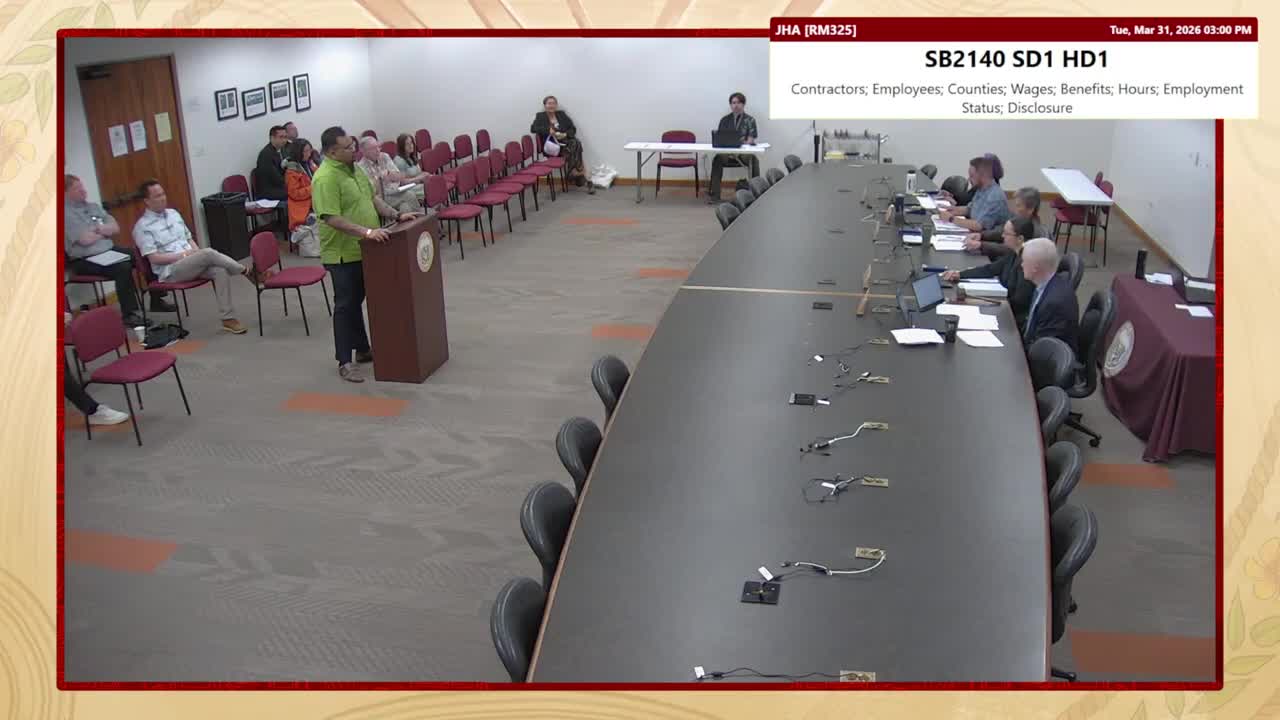 56SEC
House Standing Committee on Judiciary & Hawaiian Affairs
 1MIN
House Standing Committee on Transportation
33SEC
House Standing Committee on Transportation
 45SEC
Senate Standing Committee on Judiciary
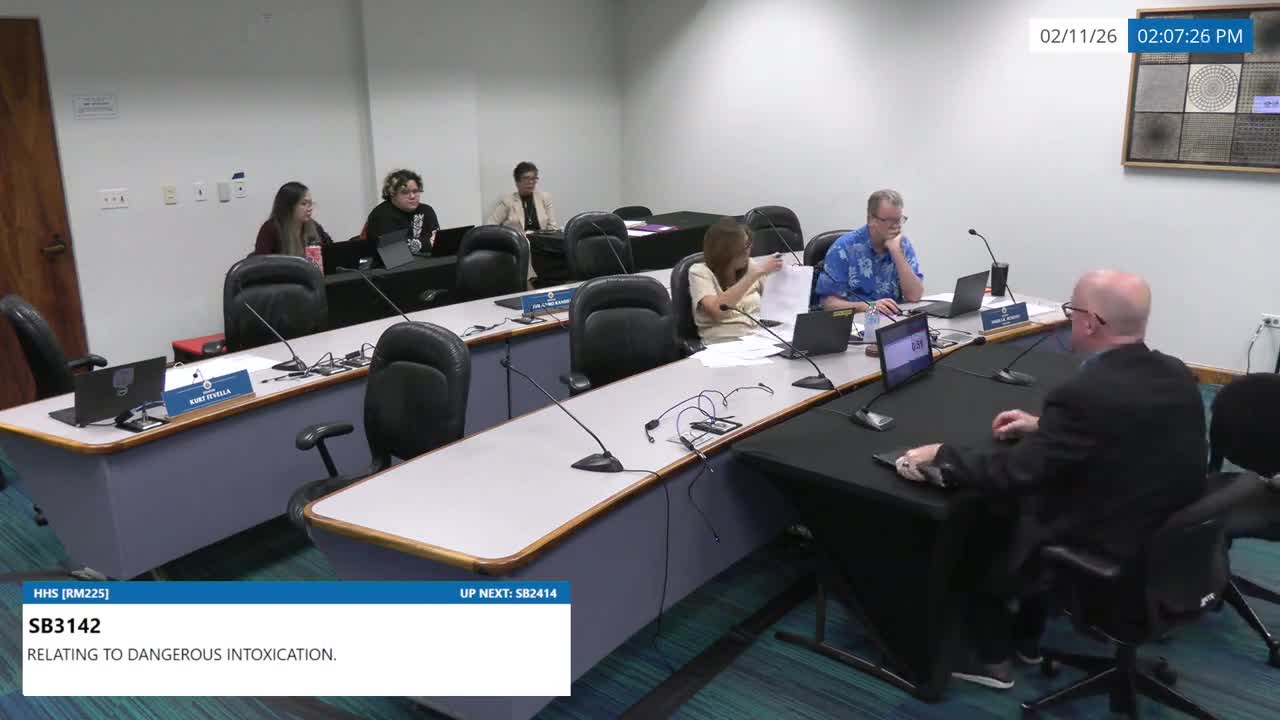 2MIN
Senate Standing Committee on Education
2MIN
Senate Standing Committee on Health and Human Services
2MIN
Senate Standing Committee on Transportation
Bill Author
Bill Co-Author(s):