SB 2340: DOH; Community Care Foster Family Homes; Individuals with Intellectual and Developmental Disabilities; Medicaid Waivers; Housing Access
- Session Year: 2025-2026
- House: Senate
- Latest Version Date: 2026-05-01
Current Status:
Passed
(2026-07-07: Act 199, on 07/07/2026 (Gov. Msg. No. 1301).)
Introduced
In Committee
First Chamber
In Committee
Second Chamber
Final Decking
Enacted
Clarifies that individuals with intellectual and developmental disabilities who meet an intermediate care facility or nursing facility level of care shall not be denied residency in a certified community care foster family home solely because of their disability or enrollment in a specific Medicaid waiver program. Requires the Department of Health to provide technical assistance and training to community care foster family homes. (CD1)
Clarifies that individuals with intellectual and developmental disabilities who meet an intermediate care facility or nursing facility level of care shall not be denied residency in a certified community care foster family home solely because of their disability or enrollment in a specific Medicaid waiver program. Effective 7/1/3000. (HD1)
Clarifies that individuals with intellectual and developmental disabilities who meet an intermediate care facility or nursing facility level of care shall not be denied residency in a licensed community care foster family home solely because of their disability or enrollment in a specific medicaid waiver program. Effective 1/30/2050. (SD2)
Clarifies that individuals with intellectual and developmental disabilities who meet an intermediate care facility or nursing facility level of care shall not be denied residency in a licensed community care foster family home solely because of their disability or enrollment in a specific medicaid waiver program. Effective 1/30/2050. (SD1)
Clarifies that individuals with intellectual and developmental disabilities who meet an intermediate care facility or nursing facility level of care shall not be denied residency in a licensed community care foster family home solely because of their disability or enrollment in a specific medicaid waiver program.
|
THE SENATE |
S.B. NO. |
2340 |
|
THIRTY-THIRD LEGISLATURE, 2026 |
S.D. 2 |
|
|
STATE OF HAWAII |
H.D. 1 |
|
|
|
C.D. 1 |
|
|
|
||
|
|
||
A BILL FOR AN ACT
RELATING TO COMMUNITY CARE FOSTER FAMILY HOMES.
BE IT ENACTED BY THE LEGISLATURE OF THE STATE OF HAWAII:
The legislature further finds that individuals with intellectual and developmental disabilities who wish to reside in a community care foster family home must disenroll from the HCBS I/DD waiver and transition to the medicaid section 1115 waiver. This requirement disrupts continuity of care and may result in the loss of essential, individualized services. Clarifying that waiver status shall not disqualify individuals from living in a community care foster family home will remove systemic barriers and uphold the right to choose where to live.
The purpose of this Act is to ensure that individuals with intellectual and developmental disabilities who meet an intermediate care facility or nursing facility level of care shall not be denied residency in a certified community care foster family home solely because of their disability or enrollment in a specific medicaid waiver program. This Act affirms the right of individuals to live in the least restrictive setting, promotes housing equity, and preserves continuity of essential services.
SECTION 2. Section 321-483, Hawaii Revised Statutes, is amended to read as follows:
"§321-483 Community care foster family home, authority over and evaluation of. (a) Any person in any household who wants to take in, for a fee, any adult who is at the nursing facility level of care and who is unrelated to anyone in the household, for twenty-four hour living accommodations, including personal care and homemaker services, may do so only after the household meets the required standards established for certification and obtains a certificate of approval from the department or its designee.
(b) The department shall adopt rules pursuant to chapter 91 relating to:
(1) Standards of conditions and competence for the operation of community care foster family homes;
(2) Procedures for obtaining and renewing a certificate of approval from the department;
(3) Minimum grievance procedures for clients of community care foster family home services; and
(4) Requirements for primary and substitute caregivers caring for three clients in community care foster family homes including:
(A) Mandating that primary and substitute caregivers be twenty-one years of age or older;
(B) Mandating that primary and substitute caregivers complete a minimum of twelve hours of continuing education every twelve months or at least twenty‑four hours of continuing education every twenty-four months;
(C) Allowing the primary caregiver to be absent from the community care foster family home for no more than twenty-eight hours in a calendar week, not to exceed five hours per day; provided that the substitute caregiver is present in the community care foster family home during the primary caregiver's absence;
(D) Where the primary caregiver is absent from the community care foster family home in excess of the hours as prescribed in subparagraph (C), mandating that the substitute caregiver be a certified nurse aide; and
(E) Mandating that the substitute caregiver have, at a minimum, one year prior work experience as a caregiver in a community residential setting or in a medical facility.
(c) As a condition for obtaining a certificate of approval, community care foster family homes shall comply with rules adopted under subsection (b) and satisfy the background check requirements under section 321-15.2. The department or its designee may deny a certificate of approval if:
(1) An operator or other adult residing in the community care foster family home, except for adults receiving care, has been convicted of a crime other than a minor traffic violation involving a fine of $50 or less;
(2) The department or its designee finds that the background check record of an operator or other adult residing in the home, except for adults receiving care, poses a risk to the health, safety, or well‑being of adults in care; or
(3) An operator or other adult residing in the community care foster family home, except for adults receiving care, is a perpetrator of abuse as defined in section 346-222.
(d) Upon approval of a community care foster family home, the department or its designee shall issue a certificate of approval that shall continue in force for one year, or for two years if a community care foster family home has been certified for at least one year and is in good standing pursuant to standards adopted by the department, unless sooner suspended or revoked for cause. The department or its designee shall renew the certificate of approval only if, after an annual or biennial evaluation, the home continues to meet the standards required for certification.
(e) Any community care foster family home shall be subject to investigation by the department or its designee at any time and in the manner, place, and form as provided in procedures to be established by the department.
(f) The department or its designee may suspend or revoke a certificate of approval if the department or its designee deems that a community care foster family home is unwilling or unable to comply with the rules adopted under subsection (b); provided that:
(1) The suspension or revocation shall be immediate when conditions exist that constitute an imminent danger to the life, health, or safety of adults receiving care;
(2) A community care foster family home whose certificate of approval has been suspended or revoked shall immediately notify its clients and their case managers;
(3) A community care foster family home whose certificate of approval has been suspended or revoked may appeal to the department through its established process, but the appeal shall not stay the suspension or revocation;
(4) A suspended or revoked certificate of approval may be reinstated if the department or its designee deems that the home is willing and able to comply with the rules adopted under subsection (b); and
(5) A revoked certificate of approval shall be restored only after a new application for a certificate of approval is submitted to the department or its designee and approved.
(g) Any community care foster family home shall be subject to monitoring and evaluation by the department or its designee for certification compliance and quality assurance on an annual or biennial basis.
(h) No person who meets an intermediate care facility or nursing facility level of care and is eligible for services under either the 1915(c) medicaid waiver or medicaid section 1115 demonstration waiver shall be denied residency in a certified community care foster family home solely based on the person's disability status or waiver enrollment. A certified caregiver may serve as a provider under the 1915(c) and 1115 medicaid waivers.
(i) The department shall provide technical assistance and training to support the appropriate placement of individuals with intellectual and developmental disabilities in community care foster family homes, in collaboration with case management agencies, licensing entities, and medicaid programs; provided that the department shall consult with the med-QUEST division of the department of human services to align waiver language, provider qualifications, and payment models to facilitate this inclusive housing option; provided further that the department shall issue guidance to case management agencies and community care foster family home operators to ensure compliance."
SECTION 3. New statutory material is underscored.
SECTION 4. This Act shall take effect upon its approval; provided that section 2 shall take effect upon the revision of community care foster family home standards by the department of health and the approval of 1915(c) medicaid waiver updates by the Centers for Medicare and Medicaid Services.
Report Title:
DOH; Community Care Foster Family Homes; Individuals with Intellectual and Developmental Disabilities; Medicaid Waivers; Housing Access
Description:
Clarifies that individuals with intellectual and developmental disabilities who meet an intermediate care facility or nursing facility level of care shall not be denied residency in a certified community care foster family home solely because of their disability or enrollment in a specific Medicaid waiver program. Requires the Department of Health to provide technical assistance and training to community care foster family homes. (CD1)
The summary description of legislation appearing on this page is for informational purposes only and is not legislation or evidence of legislative intent.
|
THE SENATE |
S.B. NO. |
2340 |
|
THIRTY-THIRD LEGISLATURE, 2026 |
S.D. 2 |
|
|
STATE OF HAWAII |
H.D. 1 |
|
|
|
|
|
|
|
||
|
|
||
A BILL FOR AN ACT
RELATING TO COMMUNITY CARE FOSTER FAMILY HOMES.
BE IT ENACTED BY THE LEGISLATURE OF THE STATE OF HAWAII:
SECTION 1. The legislature finds that community care foster family homes provide a vital residential option for individuals who need twenty-four hour support in a home-like setting. Although existing law and administrative rules permit these homes to serve up to three residents, uncertainty remains about whether individuals who qualify for the medicaid intellectual and developmental disabilities home and community‑based services waiver, also known as the HCBS I/DD waiver, may live in such homes without losing access to their waiver services.
The legislature further finds that individuals with intellectual and developmental disabilities who wish to reside in a community care foster family home must disenroll from the HCBS I/DD waiver and transition to the medicaid section 1115 waiver. This requirement disrupts continuity of care and may result in the loss of essential, individualized services. Clarifying that waiver status shall not disqualify individuals from living in a community care foster family home will remove systemic barriers and uphold the right to choose where to live.
The purpose of this Act is to ensure that individuals with intellectual and developmental disabilities who meet an intermediate care facility or nursing facility level of care shall not be denied residency in a certified community care foster family home solely because of their disability or enrollment in a specific medicaid waiver program.
SECTION 2. Section 321-483, Hawaii Revised Statutes, is amended to read as follows:
"§321-483 Community care foster family home, authority over and evaluation of. (a) Any person in any household who wants to take in, for a fee, any adult who is at the nursing facility level of care and who is unrelated to anyone in the household, for twenty-four hour living accommodations, including personal care and homemaker services, may do so only after the household meets the required standards established for certification and obtains a certificate of approval from the department or its designee.
(b) The department shall adopt rules pursuant to chapter 91 relating to:
(1) Standards of conditions and competence for the operation of community care foster family homes;
(2) Procedures for obtaining and renewing a certificate of approval from the department;
(3) Minimum grievance procedures for clients of community care foster family home services; and
(4) Requirements for primary and substitute caregivers caring for three clients in community care foster family homes including:
(A) Mandating that primary and substitute caregivers be twenty-one years of age or older;
(B) Mandating that primary and substitute caregivers complete a minimum of twelve hours of continuing education every twelve months or at least twenty‑four hours of continuing education every twenty-four months;
(C) Allowing the primary caregiver to be absent from the community care foster family home for no more than twenty-eight hours in a calendar week, not to exceed five hours per day; provided that the substitute caregiver is present in the community care foster family home during the primary caregiver's absence;
(D) Where the primary caregiver is absent from the community care foster family home in excess of the hours as prescribed in subparagraph (C), mandating that the substitute caregiver be a certified nurse aide; and
(E) Mandating that the substitute caregiver have, at a minimum, one year prior work experience as a caregiver in a community residential setting or in a medical facility.
(c) As a condition for obtaining a certificate of approval, community care foster family homes shall comply with rules adopted under subsection (b) and satisfy the background check requirements under section 321-15.2. The department or its designee may deny a certificate of approval if:
(1) An operator or other adult residing in the community care foster family home, except for adults receiving care, has been convicted of a crime other than a minor traffic violation involving a fine of $50 or less;
(2) The department or its designee finds that the background check record of an operator or other adult residing in the home, except for adults receiving care, poses a risk to the health, safety, or well‑being of adults in care; or
(3) An operator or other adult residing in the community care foster family home, except for adults receiving care, is a perpetrator of abuse as defined in section 346-222.
(d) Upon approval of a community care foster family home, the department or its designee shall issue a certificate of approval that shall continue in force for one year, or for two years if a community care foster family home has been certified for at least one year and is in good standing pursuant to standards adopted by the department, unless sooner suspended or revoked for cause. The department or its designee shall renew the certificate of approval only if, after an annual or biennial evaluation, the home continues to meet the standards required for certification.
(e) Any community care foster family home shall be subject to investigation by the department or its designee at any time and in the manner, place, and form as provided in procedures to be established by the department.
(f) The department or its designee may suspend or revoke a certificate of approval if the department or its designee deems that a community care foster family home is unwilling or unable to comply with the rules adopted under subsection (b); provided that:
(1) The suspension or revocation shall be immediate when conditions exist that constitute an imminent danger to the life, health, or safety of adults receiving care;
(2) A community care foster family home whose certificate of approval has been suspended or revoked shall immediately notify its clients and their case managers;
(3) A community care foster family home whose certificate of approval has been suspended or revoked may appeal to the department through its established process, but the appeal shall not stay the suspension or revocation;
(4) A suspended or revoked certificate of approval may be reinstated if the department or its designee deems that the home is willing and able to comply with the rules adopted under subsection (b); and
(5) A revoked certificate of approval shall be restored only after a new application for a certificate of approval is submitted to the department or its designee and approved.
(g) Any community care foster family home shall be subject to monitoring and evaluation by the department or its designee for certification compliance and quality assurance on an annual or biennial basis.
(h) No person who meets an intermediate care facility or nursing facility level of care and is eligible for services under either the 1915(c) medicaid waiver or medicaid section 1115 demonstration waiver shall be denied residency in a certified community care foster family home solely based on the person's disability status or waiver enrollment. A certified caregiver may serve as a provider under the 1915(c) and 1115 medicaid waivers.
(i) The department shall provide technical assistance and training to support the appropriate placement of individuals with intellectual and developmental disabilities in community care foster family homes, in collaboration with case management agencies, licensing entities, and medicaid programs; provided that the department shall consult with the med-QUEST division of the department of human services to align waiver language, provider qualifications, and payment models to facilitate this inclusive housing option; provided further that the department shall issue guidance to case management agencies and community care foster family home operators to ensure compliance."
SECTION 3. New statutory material is underscored.
SECTION 4. This Act shall take effect on July 1, 3000; provided that section 2 shall take effect upon the revision of community care foster family home standards by the department of health and the approval of 1915(c) medicaid waiver updates by the Centers for Medicare and Medicaid Services.
Report Title:
Community Care Foster Family Homes; Individuals with Intellectual and Developmental Disabilities; Medicaid; Waiver Status; Housing Access
Description:
Clarifies that individuals with intellectual and developmental disabilities who meet an intermediate care facility or nursing facility level of care shall not be denied residency in a certified community care foster family home solely because of their disability or enrollment in a specific Medicaid waiver program. Effective 7/1/3000. (HD1)
The summary description of legislation appearing on this page is for informational purposes only and is not legislation or evidence of legislative intent.
|
THE SENATE |
S.B. NO. |
2340 |
|
THIRTY-THIRD LEGISLATURE, 2026 |
S.D. 2 |
|
|
STATE OF HAWAII |
|
|
|
|
|
|
|
|
||
|
|
||
A BILL FOR AN ACT
RELATING TO COMMUNITY CARE FOSTER FAMILY HOMES.
BE IT ENACTED BY THE LEGISLATURE OF THE STATE OF HAWAII:
SECTION 1. The legislature finds that community care foster family homes provide a vital residential option for individuals who need twenty-four hour support in a home-like setting. Although existing law and administrative rules permit these homes to serve up to three residents, uncertainty remains about whether individuals who qualify for the medicaid intellectual and developmental disabilities home and community‑based services waiver, also known as the HCBS I/DD waiver, may live in such homes without losing access to their waiver services.
The legislature further finds that individuals with intellectual and developmental disabilities who wish to reside in a community care foster family home must disenroll from the HCBS I/DD waiver and transition to the medicaid section 1115 waiver. This requirement disrupts continuity of care and may result in the loss of essential, individualized services. Clarifying that waiver status shall not disqualify individuals from living in a community care foster family home will remove systemic barriers and uphold the right to choose where to live.
The purpose of this Act is to ensure that individuals with intellectual and developmental disabilities who meet an intermediate care facility or nursing facility level of care shall not be denied residency in a licensed community care foster family home solely because of their disability or enrollment in a specific medicaid waiver program. This Act affirms the right of individuals to live in the least restrictive setting, promotes housing equity, and preserves continuity of essential services.
SECTION 2. Section 321-483, Hawaii Revised Statutes, is amended to read as follows:
"§321-483 Community care foster family home, authority over and evaluation of. (a) Any person in any household who wants to take in, for a fee, any adult who is at the nursing facility level of care and who is unrelated to anyone in the household, for twenty-four hour living accommodations, including personal care and homemaker services, may do so only after the household meets the required standards established for certification and obtains a certificate of approval from the department or its designee.
(b) The department shall adopt rules pursuant to chapter 91 relating to:
(1) Standards of conditions and competence for the operation of community care foster family homes;
(2) Procedures for obtaining and renewing a certificate of approval from the department;
(3) Minimum grievance procedures for clients of community care foster family home services; and
(4) Requirements for primary and substitute caregivers caring for three clients in community care foster family homes including:
(A) Mandating that primary and substitute caregivers be twenty-one years of age or older;
(B) Mandating that primary and substitute caregivers complete a minimum of twelve hours of continuing education every twelve months or at least twenty‑four hours of continuing education every twenty-four months;
(C) Allowing the primary caregiver to be absent from the community care foster family home for no more than twenty-eight hours in a calendar week, not to exceed five hours per day; provided that the substitute caregiver is present in the community care foster family home during the primary caregiver's absence;
(D) Where the primary caregiver is absent from the community care foster family home in excess of the hours as prescribed in subparagraph (C), mandating that the substitute caregiver be a certified nurse aide; and
(E) Mandating that the substitute caregiver have, at a minimum, one year prior work experience as a caregiver in a community residential setting or in a medical facility.
(c) As a condition for obtaining a certificate of approval, community care foster family homes shall comply with rules adopted under subsection (b) and satisfy the background check requirements under section 321-15.2. The department or its designee may deny a certificate of approval if:
(1) An operator or other adult residing in the community care foster family home, except for adults receiving care, has been convicted of a crime other than a minor traffic violation involving a fine of $50 or less;
(2) The department or its designee finds that the background check record of an operator or other adult residing in the home, except for adults receiving care, poses a risk to the health, safety, or well‑being of adults in care; or
(3) An operator or other adult residing in the community care foster family home, except for adults receiving care, is a perpetrator of abuse as defined in section 346-222.
(d) Upon approval of a community care foster family home, the department or its designee shall issue a certificate of approval that shall continue in force for one year, or for two years if a community care foster family home has been certified for at least one year and is in good standing pursuant to standards adopted by the department, unless sooner suspended or revoked for cause. The department or its designee shall renew the certificate of approval only if, after an annual or biennial evaluation, the home continues to meet the standards required for certification.
(e) Any community care foster family home shall be subject to investigation by the department or its designee at any time and in the manner, place, and form as provided in procedures to be established by the department.
(f) The department or its designee may suspend or revoke a certificate of approval if the department or its designee deems that a community care foster family home is unwilling or unable to comply with the rules adopted under subsection (b); provided that:
(1) The suspension or revocation shall be immediate when conditions exist that constitute an imminent danger to the life, health, or safety of adults receiving care;
(2) A community care foster family home whose certificate of approval has been suspended or revoked shall immediately notify its clients and their case managers;
(3) A community care foster family home whose certificate of approval has been suspended or revoked may appeal to the department through its established process, but the appeal shall not stay the suspension or revocation;
(4) A suspended or revoked certificate of approval may be reinstated if the department or its designee deems that the home is willing and able to comply with the rules adopted under subsection (b); and
(5) A revoked certificate of approval shall be restored only after a new application for a certificate of approval is submitted to the department or its designee and approved.
(g) Any community care foster family home shall be subject to monitoring and evaluation by the department or its designee for certification compliance and quality assurance on an annual or biennial basis.
(h) No person who meets an intermediate care facility or nursing facility level of care and is eligible for services under either the 1915(c) medicaid waiver or medicaid section 1115 demonstration waiver shall be denied residency in a certified community care foster family home solely based on the person's disability status or waiver enrollment. A certified caregiver may serve as a provider under the 1915(c) and 1115 medicaid waivers.
(i) The department shall provide technical assistance and training to support the appropriate placement of individuals with intellectual and developmental disabilities in community care foster family homes, in collaboration with case management agencies, licensing entities, and medicaid programs; provided that the department shall consult with the med-QUEST division of the department of human services to align waiver language, provider qualifications, and payment models to facilitate this inclusive housing option; provided further that the department shall issue guidance to case management agencies and foster family home operators to ensure compliance."
SECTION 3. New statutory material is underscored.
SECTION 4. This Act shall take effect on January 30, 2050; provided that section 2 shall take effect upon the revision of community care foster family home standards by the department of health and the approval of 1915(c) medicaid waiver updates by the Centers for Medicare and Medicaid Services.
Report Title:
Community Care Foster Family Homes; Individuals with Intellectual and Developmental Disabilities; Medicaid; Housing Access
Description:
Clarifies that individuals with intellectual and developmental disabilities who meet an intermediate care facility or nursing facility level of care shall not be denied residency in a licensed community care foster family home solely because of their disability or enrollment in a specific medicaid waiver program. Effective 1/30/2050. (SD2)
The summary description of legislation appearing on this page is for informational purposes only and is not legislation or evidence of legislative intent.
|
THE SENATE |
S.B. NO. |
2340 |
|
THIRTY-THIRD LEGISLATURE, 2026 |
S.D. 1 |
|
|
STATE OF HAWAII |
|
|
|
|
|
|
|
|
||
|
|
||
A BILL FOR AN ACT
RELATING TO COMMUNITY CARE FOSTER FAMILY HOMES.
BE IT ENACTED BY THE LEGISLATURE OF THE STATE OF HAWAII:
SECTION 1. The legislature finds that community care foster family homes provide a vital residential option for individuals who need twenty-four-hour support in a home-like setting. Although existing law and administrative rules permit these homes to serve up to three residents, uncertainty remains about whether individuals who qualify for the medicaid intellectual and developmental disabilities home and community‑based services waiver, also known as the HCBS I/DD waiver, may live in such homes without losing access to their waiver services.
The legislature further finds that individuals with intellectual and developmental disabilities who wish to reside in a community care foster family home must disenroll from the HCBS I/DD waiver and transition to the medicaid section 1115 waiver. This requirement disrupts continuity of care and may result in the loss of essential, individualized services. Clarifying that waiver status shall not disqualify individuals from living in a community care foster family home will remove systemic barriers and uphold the right to choose where to live.
The purpose of this Act is to ensure that individuals with intellectual and developmental disabilities who meet an intermediate care facility or nursing facility level of care shall not be denied residency in a licensed community care foster family home solely because of their disability or enrollment in a specific medicaid waiver program. This Act affirms the right of individuals to live in the least restrictive setting, promotes housing equity, and preserves continuity of essential services.
SECTION 2. Section 321-483, Hawaii Revised Statutes, is amended to read as follows:
"§321-483 Community care foster family home, authority over and evaluation of. (a) Any person in any household who wants to take in, for a fee, any adult who is at the nursing facility level of care and who is unrelated to anyone in the household, for twenty-four hour living accommodations, including personal care and homemaker services, may do so only after the household meets the required standards established for certification and obtains a certificate of approval from the department or its designee.
(b) The department shall adopt rules pursuant to chapter 91 relating to:
(1) Standards of conditions and competence for the operation of community care foster family homes;
(2) Procedures for obtaining and renewing a certificate of approval from the department;
(3) Minimum grievance procedures for clients of community care foster family home services; and
(4) Requirements for primary and substitute caregivers caring for three clients in community care foster family homes including:
(A) Mandating that primary and substitute caregivers be twenty-one years of age or older;
(B) Mandating that primary and substitute caregivers complete a minimum of twelve hours of continuing education every twelve months or at least twenty‑four hours of continuing education every twenty-four months;
(C) Allowing the primary caregiver to be absent from the community care foster family home for no more than twenty-eight hours in a calendar week, not to exceed five hours per day; provided that the substitute caregiver is present in the community care foster family home during the primary caregiver's absence;
(D) Where the primary caregiver is absent from the community care foster family home in excess of the hours as prescribed in subparagraph (C), mandating that the substitute caregiver be a certified nurse aide; and
(E) Mandating that the substitute caregiver have, at a minimum, one year prior work experience as a caregiver in a community residential setting or in a medical facility.
(c) As a condition for obtaining a certificate of approval, community care foster family homes shall comply with rules adopted under subsection (b) and satisfy the background check requirements under section 321-15.2. The department or its designee may deny a certificate of approval if:
(1) An operator or other adult residing in the community care foster family home, except for adults receiving care, has been convicted of a crime other than a minor traffic violation involving a fine of $50 or less;
(2) The department or its designee finds that the background check record of an operator or other adult residing in the home, except for adults receiving care, poses a risk to the health, safety, or well‑being of adults in care; or
(3) An operator or other adult residing in the community care foster family home, except for adults receiving care, is a perpetrator of abuse as defined in section 346-222.
(d) Upon approval of a community care foster family home, the department or its designee shall issue a certificate of approval that shall continue in force for one year, or for two years if a community care foster family home has been certified for at least one year and is in good standing pursuant to standards adopted by the department, unless sooner suspended or revoked for cause. The department or its designee shall renew the certificate of approval only if, after an annual or biennial evaluation, the home continues to meet the standards required for certification.
(e) Any community care foster family home shall be subject to investigation by the department or its designee at any time and in the manner, place, and form as provided in procedures to be established by the department.
(f) The department or its designee may suspend or revoke a certificate of approval if the department or its designee deems that a community care foster family home is unwilling or unable to comply with the rules adopted under subsection (b); provided that:
(1) The suspension or revocation shall be immediate when conditions exist that constitute an imminent danger to the life, health, or safety of adults receiving care;
(2) A community care foster family home whose certificate of approval has been suspended or revoked shall immediately notify its clients and their case managers;
(3) A community care foster family home whose certificate of approval has been suspended or revoked may appeal to the department through its established process, but the appeal shall not stay the suspension or revocation;
(4) A suspended or revoked certificate of approval may be reinstated if the department or its designee deems that the home is willing and able to comply with the rules adopted under subsection (b); and
(5) A revoked certificate of approval shall be restored only after a new application for a certificate of approval is submitted to the department or its designee and approved.
(g) Any community care foster family home shall be subject to monitoring and evaluation by the department or its designee for certification compliance and quality assurance on an annual or biennial basis.
(h) No person who meets an intermediate care facility or nursing facility level of care and is eligible for services under either the 1915(c) medicaid waiver or medicaid section 1115 demonstration waiver shall be denied residency in a certified community care foster family home solely based on the person's disability status or waiver enrollment. A certified caregiver may serve as a provider under the 1915(c) and 1115 medicaid waivers.
(i) The department shall provide technical assistance and training to support the appropriate placement of individuals with intellectual and developmental disabilities in community care foster family homes, in collaboration with case management agencies, licensing entities, and medicaid programs; provided that the department shall consult with the med-QUEST division of the department of human services to align waiver language, provider qualifications, and payment models to facilitate this inclusive housing option; provided further that the department shall issue guidance to case management agencies and foster home operators to ensure compliance."
SECTION 3. New statutory material is underscored.
SECTION 4. This Act shall take effect on January 30, 2050; provided that section 2 shall take effect upon the revision of community care foster family home standards by the department of health and the approval of 1915(c) medicaid waiver updates by the Centers for Medicare and Medicaid Services.
Report Title:
Community Care Foster Family Homes; Individuals with Intellectual and Developmental Disabilities; Medicaid; Housing Access
Description:
Clarifies that individuals with intellectual and developmental disabilities who meet an intermediate care facility or nursing facility level of care shall not be denied residency in a licensed community care foster family home solely because of their disability or enrollment in a specific medicaid waiver program. Effective 1/30/2050. (SD1)
The summary description of legislation appearing on this page is for informational purposes only and is not legislation or evidence of legislative intent.
|
THE SENATE |
S.B. NO. |
2340 |
|
THIRTY-THIRD LEGISLATURE, 2026 |
|
|
|
STATE OF HAWAII |
|
|
|
|
|
|
|
|
||
|
|
||
A BILL FOR AN ACT
relating to community care foster family homes.
BE IT ENACTED BY THE LEGISLATURE OF THE STATE OF HAWAII:
SECTION 1. The legislature finds that community care foster family homes provide a vital residential option for individuals who need twenty-four-hour support in a home-like setting. Although existing law and administrative rules permit these homes to serve up to three residents, uncertainty remains about whether individuals who qualify for the medicaid intellectual and developmental disabilities home and community based services waiver, also known as the HCBS I/DD waiver, may live in such homes without losing access to their waiver services.
The legislature further finds that individuals with intellectual and developmental disabilities who wish to reside in a community care foster family home must disenroll from the HCBS I/DD waiver and transition to the medicaid section 1115 waiver. This requirement disrupts continuity of care and may result in the loss of essential, individualized services. Clarifying that waiver status shall not disqualify individuals from living in a community care foster family home will remove systemic barriers and uphold the right to choose where to live.
The purpose of this Act is to ensure that individuals with intellectual and developmental disabilities who meet an intermediate care facility or nursing facility level of care shall not be denied residency in a licensed community care foster family home solely because of their disability or enrollment in a specific medicaid waiver program. This Act affirms the right of individuals to live in the least restrictive setting, promotes housing equity, and preserves continuity of essential services.
SECTION 2. Section 321-483, Hawaii Revised Statutes, is amended to read as follows:
"§321-483 Community care foster family home, authority over and evaluation of. (a) Any person in any household who wants to take in, for a fee, any adult who is at the nursing facility level of care and who is unrelated to anyone in the household, for twenty-four hour living accommodations, including personal care and homemaker services, may do so only after the household meets the required standards established for certification and obtains a certificate of approval from the department or its designee.
(b) The department shall adopt rules pursuant to chapter 91 relating to:
(1) Standards of conditions and competence for the operation of community care foster family homes;
(2) Procedures for obtaining and renewing a certificate of approval from the department;
(3) Minimum grievance procedures for clients of community care foster family home services; and
(4) Requirements for primary and substitute caregivers caring for three clients in community care foster family homes including:
(A) Mandating that primary and substitute caregivers be twenty-one years of age or older;
(B) Mandating that primary and substitute caregivers complete a minimum of twelve hours of continuing education every twelve months or at least twenty-four hours of continuing education every twenty-four months;
(C) Allowing the primary caregiver to be absent from the community care foster family home for no more than twenty-eight hours in a calendar week, not to exceed five hours per day; provided that the substitute caregiver is present in the community care foster family home during the primary caregiver's absence;
(D) Where the primary caregiver is absent from the community care foster family home in excess of the hours as prescribed in subparagraph (C), mandating that the substitute caregiver be a certified nurse aide; and
(E) Mandating that the substitute caregiver have, at a minimum, one year prior work experience as a caregiver in a community residential setting or in a medical facility.
(c) As a condition for obtaining a certificate of approval, community care foster family homes shall comply with rules adopted under subsection (b) and satisfy the background check requirements under section 321-15.2. The department or its designee may deny a certificate of approval if:
(1) An operator or other adult residing in the community care foster family home, except for adults receiving care, has been convicted of a crime other than a minor traffic violation involving a fine of $50 or less;
(2) The department or its designee finds that the background check record of an operator or other adult residing in the home, except for adults receiving care, poses a risk to the health, safety, or well-being of adults in care; or
(3) An operator or other adult residing in the community care foster family home, except for adults receiving care, is a perpetrator of abuse as defined in section 346-222.
(d) Upon approval of a community care foster family home, the department or its designee shall issue a certificate of approval that shall continue in force for one year, or for two years if a community care foster family home has been certified for at least one year and is in good standing pursuant to standards adopted by the department, unless sooner suspended or revoked for cause. The department or its designee shall renew the certificate of approval only if, after an annual or biennial evaluation, the home continues to meet the standards required for certification.
(e) Any community care foster family home shall be subject to investigation by the department or its designee at any time and in the manner, place, and form as provided in procedures to be established by the department.
(f) The department or its designee may suspend or revoke a certificate of approval if the department or its designee deems that a community care foster family home is unwilling or unable to comply with the rules adopted under subsection (b); provided that:
(1) The suspension or revocation shall be immediate when conditions exist that constitute an imminent danger to the life, health, or safety of adults receiving care;
(2) A community care foster family home whose certificate of approval has been suspended or revoked shall immediately notify its clients and their case managers;
(3) A community care foster family home whose certificate of approval has been suspended or revoked may appeal to the department through its established process, but the appeal shall not stay the suspension or revocation;
(4) A suspended or revoked certificate of approval may be reinstated if the department or its designee deems that the home is willing and able to comply with the rules adopted under subsection (b); and
(5) A revoked certificate of approval shall be restored only after a new application for a certificate of approval is submitted to the department or its designee and approved.
(g) Any community care foster family home shall be subject to monitoring and evaluation by the department or its designee for certification compliance and quality assurance on an annual or biennial basis.
(h) No person who meets an intermediate care facility or nursing facility level of care and is eligible for services under either the 1915(c) medicaid waiver or medicaid section 1115 demonstration waiver shall be denied residency in a certified community care foster family home solely based on the person's disability status or waiver enrollment. A certified caregiver may serve as a provider under the 1915(c) and 1115 medicaid waivers; provided that each resident of the home is enrolled in only one waiver and receives services in accordance with that waiver's rules and requirements.
(i) The department shall provide technical assistance and training to support the appropriate placement of individuals with intellectual and developmental disabilities in community care foster family homes, in collaboration with case management agencies, licensing entities, and medicaid programs; provided that the department shall consult with the Med-QUEST division of the department of human services to align waiver language, provider qualifications, and payment models to facilitate this inclusive housing option; provided further that the department shall issue guidance to case management agencies and foster home operators to ensure compliance."
SECTION 3. New statutory material is underscored.
SECTION 4. This Act shall take effect upon its approval.
|
INTRODUCED BY: |
_____________________________ |
|
|
|
Report Title:
Community Care Foster Family Homes; Individuals with Intellectual and Developmental Disabilities; Medicaid; Housing Access
Description:
Clarifies that individuals with intellectual and developmental disabilities who meet an intermediate care facility or nursing facility level of care shall not be denied residency in a licensed community care foster family home solely because of their disability or enrollment in a specific medicaid waiver program.
The summary description of legislation appearing on this page is for informational purposes only and is not legislation or evidence of legislative intent.
|
Date
|
Status
|
|---|---|
| Jul 7, 2026 | Act 199, on 07/07/2026 (Gov. Msg. No. 1301). |
| Jul 7, 2026 | Act 199, 07/07/2026 (Gov. Msg. No. 1301). |
| May 8, 2026 | Enrolled to Governor. |
| May 8, 2026 | Received notice of passage on Final Reading in House (Hse. Com. No. 888). |
| May 6, 2026 | Received notice of Final Reading (Sen. Com. No. 816). |
| May 6, 2026 | Passed Final Reading as amended in CD 1 with none voting aye with reservations; none voting no (0) and none excused (0). |
| May 6, 2026 | Passed Final Reading, as amended (CD 1). Ayes, 25; Aye(s) with reservations: none . 0 No(es): none. 0 Excused: none. |
| May 1, 2026 | Forty-eight (48) hours notice Wednesday, 05-06-26. |
| May 1, 2026 | Reported from Conference Committee (Conf Com. Rep. No. 152-26) as amended in (CD 1). |
| May 1, 2026 | 48 Hrs. Notice (as amended CD 1) 05-06-26. |
| May 1, 2026 | Reported from Conference Committee as amended CD 1 (Conf. Com. Rep. No. 152-26). |
| Apr 30, 2026 | The Conference Committee recommends that the measure be Passed, with Amendments. The votes were as follows: 4 Ayes: Representative(s) Takayama, Marten, Keohokapu-Lee Loy, Alcos; Ayes with reservations: none; 0 Noes: none; and 0 Excused: none. |
| Apr 30, 2026 | The Conference committee recommends that the measure be PASSED, WITH AMENDMENTS. The votes of the Senate Conference Managers were as follows: 3 Aye(s): Senator(s) San Buenaventura, Rhoads, Fevella; Aye(s) with reservations: none ; 0 No(es): none; and 0 Excused: none. |
| Apr 28, 2026 | Conference Committee Meeting will reconvene on Thursday 04-30-26 3:15PM in conference room 329. |
| Apr 24, 2026 | Bill scheduled for Conference Committee Meeting on Tuesday, 04-28-26 3:15PM in conference room 329. |
| Apr 22, 2026 | Received notice of Senate conferees (Sen. Com. No. 720). |
| Apr 21, 2026 | Senate Conferees Appointed: San Buenaventura Chair; Rhoads Co-Chair; Fevella. |
| Apr 21, 2026 | Received notice of appointment of House conferees (Hse. Com. No. 800). |
| Apr 21, 2026 | House Conferees Appointed: Takayama, Marten, Keohokapu-Lee Loy Co-Chairs; Alcos. |
| Apr 16, 2026 | Received notice of disagreement (Sen. Com. No. 710). |
| Apr 16, 2026 | Senate disagrees with House amendments. |
| Apr 16, 2026 | Received from House (Hse. Com. No. 645). |
| Apr 14, 2026 | Passed Third Reading with none voting aye with reservations; none voting no (0) and none excused (0). Transmitted to Senate. |
| Apr 10, 2026 | Reported from FIN (Stand. Com. Rep. No. 2091-26), recommending passage on Third Reading. |
| Apr 8, 2026 | The committee on FIN recommend that the measure be PASSED, UNAMENDED. The votes were as follows: 16 Ayes: Representative(s) Todd, Takenouchi, Hartsfield, Hussey, Keohokapu-Lee Loy, Kitagawa, Kusch, Lee, M., Miyake, Morikawa, Perruso, Templo, Yamashita, Alcos, Gedeon, Reyes Oda; Ayes with reservations: none; Noes: none; and Excused: none. |
| Apr 6, 2026 | Bill scheduled to be heard by FIN on Wednesday, 04-08-26 2:00PM in House conference room 308 VIA VIDEOCONFERENCE. |
| Mar 30, 2026 | Passed Second Reading as amended in HD 1 and referred to the committee(s) on FIN with none voting aye with reservations; none voting no (0) and Representative(s) Cochran, Lowen, Perruso, Quinlan excused (4). |
| Mar 30, 2026 | Reported from HLT/HSH (Stand. Com. Rep. No. 1501-26) as amended in HD 1, recommending passage on Second Reading and referral to FIN. |
| Mar 25, 2026 | The committee on HSH recommend that the measure be PASSED, WITH AMENDMENTS. The votes were as follows: 9 Ayes: Representative(s) Marten, Olds, Amato, Hartsfield, Keohokapu-Lee Loy, Takayama, Takenouchi, Alcos, Garcia; Ayes with reservations: none; Noes: none; and Excused: none. |
| Mar 25, 2026 | The committee on HLT recommend that the measure be PASSED, WITH AMENDMENTS. The votes were as follows: 9 Ayes: Representative(s) Takayama, Keohokapu-Lee Loy, Amato, Hartsfield, Marten, Olds, Takenouchi, Alcos, Garcia; Ayes with reservations: none; Noes: none; and Excused: none. |
| Mar 20, 2026 | Bill scheduled to be heard by HLT/HSH on Wednesday, 03-25-26 9:30AM in House conference room 329 VIA VIDEOCONFERENCE. |
| Mar 12, 2026 | Referred to HLT/HSH, FIN, referral sheet 17 |
| Mar 12, 2026 | Pass First Reading |
| Mar 10, 2026 | Received from Senate (Sen. Com. No. 213) in amended form (SD 2). |
| Mar 10, 2026 | Report adopted; Passed Third Reading, as amended (SD 2). Ayes, 25; Aye(s) with reservations: none . Noes, 0 (none). Excused, 0 (none). Transmitted to House. |
| Mar 6, 2026 | 48 Hrs. Notice 03-10-26. |
| Mar 6, 2026 | Reported from JDC (Stand. Com. Rep. No. 3092) with recommendation of passage on Third Reading, as amended (SD 2). |
| Feb 27, 2026 | The committee(s) on JDC recommend(s) that the measure be PASSED, WITH AMENDMENTS. The votes in JDC were as follows: 5 Aye(s): Senator(s) Rhoads, Gabbard, Chang, San Buenaventura, Awa; Aye(s) with reservations: none ; 0 No(es): none; and 0 Excused: none. |
| Feb 23, 2026 | The committee(s) on JDC will hold a public decision making on 02-27-26 10:30AM; Conference Room 016 & Videoconference. |
| Feb 19, 2026 | Report adopted; Passed Second Reading, as amended (SD 1) and referred to JDC. |
| Feb 19, 2026 | Reported from HHS (Stand. Com. Rep. No. 2421) with recommendation of passage on Second Reading, as amended (SD 1) and referral to JDC. |
| Feb 13, 2026 | The committee(s) on HHS recommend(s) that the measure be PASSED, WITH AMENDMENTS. The votes in HHS were as follows: 5 Aye(s): Senator(s) San Buenaventura, McKelvey, Kanuha, Keohokalole, Fevella; Aye(s) with reservations: none ; 0 No(es): none; and 0 Excused: none. |
| Feb 11, 2026 | The committee(s) on HHS deferred the measure until 02-13-26 1:05PM; Conference Room 225 & Videoconference. |
| Feb 6, 2026 | The committee(s) on HHS has scheduled a public hearing on 02-11-26 1:00PM; Conference Room 225 & Videoconference. |
| Jan 26, 2026 | Referred to HHS, JDC. |
| Jan 21, 2026 | Introduced and passed First Reading. |
| Jan 15, 2026 | Pending Introduction. |
|
Date
|
Description
|
Location
|
Votes
|
|
|---|---|---|---|---|
| May 6, 2026 | Final Reading | House Floor |
Passed |
|
| May 6, 2026 | Final Reading | Senate Floor |
Passed |
|
| Apr 14, 2026 | Third Reading | House Floor |
Passed |
|
| Apr 8, 2026 | The committee on FIN recommend that the measure be PASSED, UNAMENDED | House Standing Committee on Finance |
Passed |
|
| Mar 25, 2026 | The committee on HSH recommend that the measure be PASSED, WITH AMENDMENTS | House Standing Committee on Human Services & Homelessness |
Passed |
|
| Mar 25, 2026 | The committee on HLT recommend that the measure be PASSED, WITH AMENDMENTS | House Standing Committee on Health |
Passed |
|
| Mar 10, 2026 | Third Reading | Senate Floor |
Passed |
|
| Feb 27, 2026 | The committee(s) on JDC recommend(s) that the measure be PASSED, WITH AMENDMENTS | Senate Standing Committee on Judiciary |
Passed |
|
| Feb 13, 2026 | The committee(s) on HHS recommend(s) that the measure be PASSED, WITH AMENDMENTS | Senate Standing Committee on Health and Human Services |
Passed |
This list shows positions taken on this bill by organizations on the date displayed, which is linked to the original source.
Positions by individuals are not included.
|
Organization
|
Position
|
Date
|
|---|---|---|
| Aloha Independent Living Hawaii (AILH) | *** Support | Apr 8, 2026 |
| Alzheimer’s Association | *** Support | Mar 25, 2026 |
| Arc of Maui County | *** Support | Mar 25, 2026 |
| Disability and Communication Access Board | *** Support | Apr 8, 2026 |
| Easter Seals Waimea | *** Support | Feb 11, 2026 |
| Easterseals Waimea | *** Support | Apr 8, 2026 |
| Hawaii Disability Rights Center | *** Support | Apr 8, 2026 |
| Hawaii Self-Advocacy Advisory Council | ** Support | |
| Hawaii Self-Advocacy Advisory Council (SAAC) | *** Support | Apr 8, 2026 |
| Hawaiʻi Self-Advocacy Advisory Council | *** Support | Feb 27, 2026 |
| Hawaiʻi Self‑Advocacy Advisory Council | ** Support | |
| Hawaiʻi State Council on Developmental Disabilities | *** Support | Mar 25, 2026 |
| State Council on Developmental Disabilities | *** Support | Apr 8, 2026 |
STAND. COM. REP. NO. 3092
Honolulu, Hawaii
RE: S.B. No. 2340
S.D. 2
Honorable Ronald D. Kouchi
President of the Senate
Thirty-Third State Legislature
Regular Session of 2026
State of Hawaii
Sir:
Your Committee on Judiciary, to which was referred S.B. No. 2340, S.D. 1, entitled:
"A BILL FOR AN ACT RELATING TO COMMUNITY CARE FOSTER FAMILY HOMES,"
begs leave to report as follows:
The purpose and intent of this measure is to clarify that individuals with intellectual and developmental disabilities who meet an intermediate care facility or nursing facility level of care shall not be denied residency in a licensed community care foster family home solely because of their disability or enrollment in a specific Medicaid waiver program.
Your Committee received testimony in support of this measure from the Hawaiʻi State Council on Developmental Disabilities, Disability and Communication Access Board, Hawaiʻi Self‑Advocacy Advisory Council, Aloha Independent Living Hawaii, Hawaii Disability Rights Center, and six individuals.
Your Committee received comments on this measure from the Department of Human Services and Developmental Disabilities Division of the Department of Health.
Your Committee finds that community care foster family homes provide an important service for individuals who need twenty‑four hour support. Currently, individuals with intellectual and developmental disabilities who are enrolled in a Medicaid intellectual disabilities home and community-based services (HCBS I/DD) waiver program, and wish to reside in a community care foster family home must disenroll from and transition into the Medicaid Section 1115 Waiver Program. This requirement disrupts continuity of care and may cause the loss of essential, individualized services. This measure will eliminate this requirement, ensuring that individuals with intellectual and developmental disabilities may remain enrolled in the HCBS I/DD waiver program and continue to receive the specialized care that they need.
Your Committee has amended this measure by making a technical, nonsubstantive amendment for the purposes of clarity and consistency.
As affirmed by the record of votes of the members of your Committee on Judiciary that is attached to this report, your Committee is in accord with the intent and purpose of S.B. No. 2340, S.D. 1, as amended herein, and recommends that it pass Third Reading in the form attached hereto as S.B. No. 2340, S.D. 2.
Respectfully submitted on behalf of the members of the Committee on Judiciary,
|
|
|
________________________________ KARL RHOADS, Chair |
|
|
|
|
STAND. COM. REP. NO. 2421
Honolulu, Hawaii
RE: S.B. No. 2340
S.D. 1
Honorable Ronald D. Kouchi
President of the Senate
Thirty-Third State Legislature
Regular Session of 2026
State of Hawaii
Sir:
Your Committee on Health and Human Services, to which was referred S.B. No. 2340 entitled:
"A BILL FOR AN ACT RELATING TO COMMUNITY CARE FOSTER FAMILY HOMES,"
begs leave to report as follows:
The purpose and intent of this measure is to clarify that individuals with intellectual and developmental disabilities who meet an intermediate care facility or nursing facility level of care shall not be denied residency in a licensed community care foster family home solely because of their disability or enrollment in a specific Medicaid waiver program.
Your Committee received testimony in support of this measure from the State Council on Developmental Disabilities, Hawaii Disability Rights Center, Hawaii Self-Advocacy Advisory Council, and three individuals.
Your Committee received comments on this measure from the Department of Human Services, Department of Health, and one individual.
Your Committee finds that there is uncertainty about whether individuals who qualify for the Medicaid intellectual and developmental disabilities home and community-based services waiver, also known as the HCBS I/DD waiver, may live in community care foster family homes without losing access to their waiver services. Your Committee further finds that individuals with intellectual and developmental disabilities who wish to reside in a community care foster family home must disenroll from the HCBS I/DD waiver and transition to the Medicaid section 1115 waiver. This requirement disrupts continuity of care and may result in the loss of essential, individualized services. Clarifying that waiver status shall not disqualify individuals from living in a community care foster family home will remove systemic barriers and uphold the right to choose where to live. This measure affirms the right of individuals to live in the least restrictive setting, promotes housing equity, and preserves continuity of essential services.
Your Committee has amended this measure by:
(1) Deleting language that would have required each resident of the certified community care foster family home to be enrolled in only one waiver and receive services in accordance with that waiver's rules and requirements, for the authorization of a certified caregiver to serve as a provider under the 1915(c) and 1115 Medicaid waivers;
(2) Inserting language to provide that this measure shall take effect upon the revision of community care foster family home standards by the Department of Health and the approval of 1915(c) Medicaid waiver updates by the Centers for Medicare and Medicaid Services;
(3) Inserting an effective date of January 30, 2050, to encourage further discussion; and
(4) Making technical, nonsubstantive amendments for the purposes of clarity and consistency.
As affirmed by the record of votes of the members of your Committee on Health and Human Services that is attached to this report, your Committee is in accord with the intent and purpose of S.B. No. 2340, as amended herein, and recommends that it pass Second Reading in the form attached hereto as S.B. No. 2340, S.D. 1, and be referred to your Committee on Judiciary.
Respectfully submitted on behalf of the members of the Committee on Health and Human Services,
|
|
|
________________________________ JOY A. SAN BUENAVENTURA, Chair |
|
|
|
|
|
Date
|
Testimony PDF
|
|---|---|
| Apr 8, 2026 | SB2340_HD1_TESTIMONY_FIN_04-08-26_.PDF |
| Mar 25, 2026 | SB2340_SD2_TESTIMONY_HLT-HSH_03-25-26_.PDF |
| Feb 27, 2026 | SB2340_SD1_TESTIMONY_JDC_02-27-26_.PDF |
| Feb 11, 2026 | SB2340_TESTIMONY_HHS_02-11-26_.PDF |
Discussed in Hearing
 2MIN
Conference Committee
 2MIN
Conference Committee
 1MIN
House Standing Committee on Finance
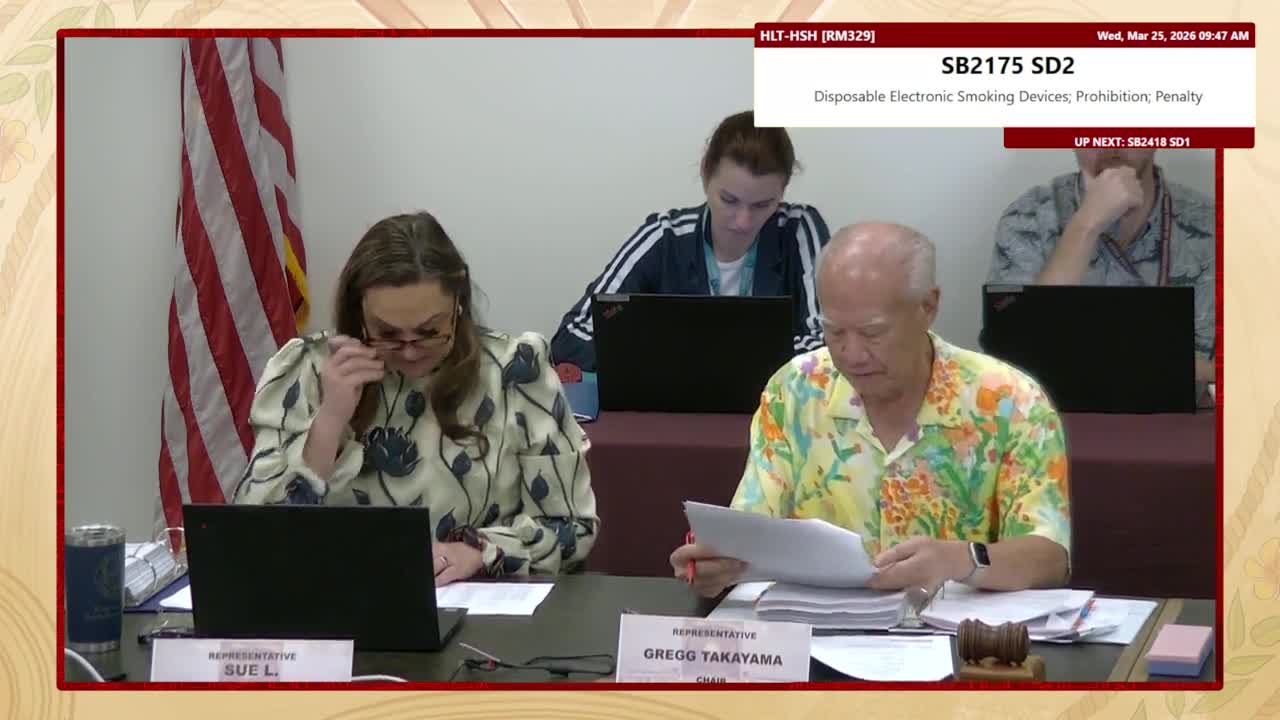 6MIN
House Standing Committee on Health
6MIN
House Standing Committee on Human Services & Homelessness
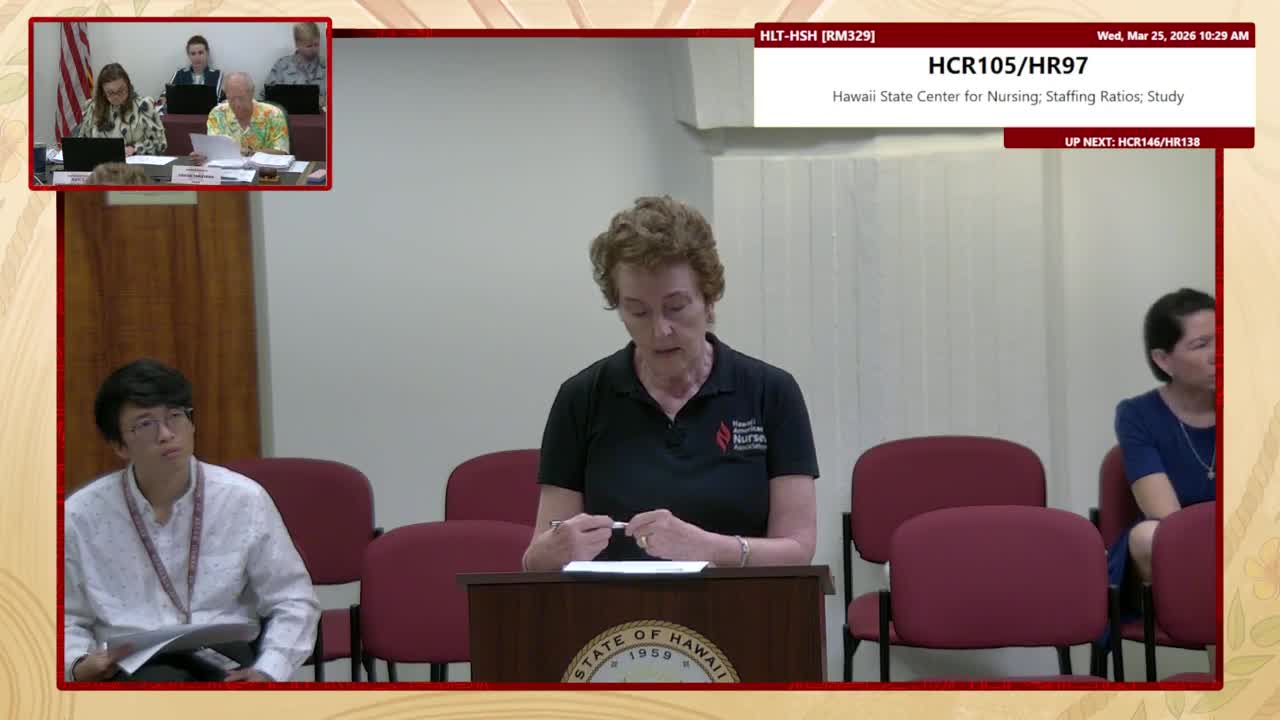 1MIN
House Standing Committee on Health
1MIN
House Standing Committee on Human Services & Homelessness
 47SEC
Senate Standing Committee on Judiciary
Bill Author