SB 2245: Ethics Commission Package; State Employees; Pre-Employment Restrictions; Post-Employment Restrictions
- Session Year: 2025-2026
- House: Senate
- Latest Version Date: 2026-03-20
Current Status:
Failed
(2026-04-20: Received notice of Senate conferees (Sen. Com. No. 714).)
Introduced
In Committee
First Chamber
In Committee
Second Chamber
Final Decking
Enacted
Prohibits new state employees from taking official action on matters they worked on before state employment. Prohibits former permanent employees of the Office of the Governor and Office of the Lieutenant Governor from representing persons or businesses for a period of 12 months after termination from state employment. Effective 7/1/3000. (HD1)
Prohibits new state employees from taking official action on matters they worked on before state employment. Prohibits former permanent employees of the Office of the Governor and Office of the Lieutenant Governor from representing persons or businesses for a period of 12 months after termination from state employment.
|
THE SENATE |
S.B. NO. |
2245 |
|
THIRTY-THIRD LEGISLATURE, 2026 |
H.D. 1 |
|
|
STATE OF HAWAII |
|
|
|
|
|
|
|
|
||
|
|
||
A BILL FOR AN ACT
RELATING TO REVOLVING DOOR RESTRICTIONS FOR STATE EMPLOYEES.
BE IT ENACTED BY THE LEGISLATURE OF THE STATE OF HAWAII:
SECTION 1. The legislature finds that public confidence in state government depends upon the assurance that all state employees make decisions solely in the interest of the public. While Hawaii law restricts post-employment activities of state officials, there is no parallel restriction addressing new state employees who previously worked on matters for private businesses or sources. Establishing a two-year cooling-off period for new state employees will prevent actual or perceived favoritism and strengthen public trust.
The legislature further finds that establishing a cooling‑off period will help prevent even the appearance that a newly hired state employee might favor their former private employer in performing their official duties. This restriction is a narrowly tailored measure to protect the integrity of government decision-making and to enhance public trust.
The purpose of this Act is to prohibit new state employees from taking official action on matters they previously worked on during private sector employment. This Act also extends the lobbying restrictions in the post-employment law to include employees in the offices of the governor and lieutenant governor.
SECTION 2. Chapter 84, Hawaii Revised Statutes, is amended by adding a new section to be appropriately designated and to read as follows:
"§84- Pre-employment matters; restrictions. (a) For two years after becoming an employee, an employee shall not take official action on any matter in which the employee, within the five years preceding becoming an employee:
(1) Received compensation from a private source; and
(2) Personally and substantially participated.
(b) This section shall not apply to any employee who takes official action:
(1) Required by law, court order, or similar legal authority;
(2) Within the scope of membership in a task force or working group; or
(3) On a matter that was expressly identified in the employee's official job description at the time of hire; provided that the matter was disclosed or otherwise known as a primary responsibility of the position.
(c) For purposes of this section, "matter" means a specific bill, contract, claim, application, investigation, proceeding, dispute, or other transaction or proposal involving a particular party or parties and does not include general subject areas."
SECTION 3. Section 84-18, Hawaii Revised Statutes, is amended by amending subsection (e) to read as follows:
"(e) Subject to the restrictions imposed [in
subsections (a) through (d),] under this section, the following
individuals shall not represent any person or business for a fee or other
consideration regarding any legislative action or administrative action, as
defined in section 97-1, for twelve months after termination from their
respective positions:
(1) The governor;
(2) The lieutenant governor;
(3) The administrative director of the State;
(4) The attorney general;
(5) The comptroller;
(6) The chairperson of the board of agriculture and biosecurity;
(7) The director of corrections and rehabilitation;
(8) The director of finance;
(9) The director of business, economic development, and tourism;
(10) The director of commerce and consumer affairs;
(11) The adjutant general;
(12) The superintendent of education;
(13) The chairperson of the Hawaiian homes commission;
(14) The director of health;
(15) The director of human resources development;
(16) The director of human services;
(17) The director of labor and industrial relations;
(18) The chairperson of the board of land and natural resources;
(19) The director of law enforcement;
(20) The director of taxation;
(21) The director of transportation;
(22) The president of the University of Hawaii;
(23) The executive administrator of the board of regents of the University of Hawaii;
(24) The administrator of the office of Hawaiian affairs;
(25) The chief information officer;
(26) The executive director of the agribusiness development corporation;
(27) The executive director of the campaign spending commission;
(28) The executive director of the Hawaii community development authority;
(29) The executive director of the Hawaii housing finance and development corporation;
(30) The president and chief executive officer of the Hawaii tourism authority;
(31) The executive officer of the public utilities commission;
(32) The state auditor;
(33) The director of the legislative reference bureau;
(34) The ombudsman;
(35) The permanent employees of the legislature, other than persons employed in clerical, secretarial, or similar positions;
(36) The administrative director of the courts;
(37) The executive director of the state ethics commission;
(38) The executive officer of the state land use commission;
(39) The executive director of the natural energy laboratory of Hawaii authority;
(40) The executive
director of the Hawaii public housing authority; [and]
(41) The first deputy to the chairperson of the commission on water resource management; and
(42) The permanent employees of the offices of the governor and the lieutenant governor, other than persons employed in clerical, secretarial, or similar positions;
provided that this subsection shall not apply to any person who has held one of the positions listed above only on an interim or acting basis and for a period of less than one hundred eighty‑one days."
SECTION 4. This Act does not affect rights and duties that matured, penalties that were incurred, and proceedings that were begun before its effective date.
SECTION 5. Statutory material to be repealed is bracketed and stricken. New statutory material is underscored.
SECTION 6. This Act shall take effect on July 1, 3000.
Report Title:
Ethics Commission Package; State Employees; Pre-Employment Restrictions; Post-Employment Restrictions
Description:
Prohibits new state employees from taking official action on matters they worked on before state employment. Prohibits former permanent employees of the Office of the Governor and Office of the Lieutenant Governor from representing persons or businesses for a period of 12 months after termination from state employment. Effective 7/1/3000. (HD1)
The summary description of legislation appearing on this page is for informational purposes only and is not legislation or evidence of legislative intent.
|
THE SENATE |
S.B. NO. |
2245 |
|
THIRTY-THIRD LEGISLATURE, 2026 |
|
|
|
STATE OF HAWAII |
|
|
|
|
|
|
|
|
||
|
|
||
A BILL FOR AN ACT
relating to revolving door restrictions for state employees.
BE IT ENACTED BY THE LEGISLATURE OF THE STATE OF HAWAII:
SECTION 1. The legislature finds that public confidence in state government depends upon the assurance that all state employees make decisions solely in the interest of the public. While Hawaii law restricts post-employment activities of state officials, there is no parallel restriction addressing new state employees who previously worked on matters for private businesses or sources. Establishing a two-year cooling-off period for new state employees will prevent actual or perceived favoritism and strengthen public trust.
The legislature further finds that establishing a "cooling‑off" period will help prevent even the appearance that a newly hired state employee might favor their former private employer in performing their official duties. This restriction is a narrowly tailored measure to protect the integrity of government decision-making and to enhance public trust.
The purpose of this Act is to prohibit new state employees from taking official action on matters they previously worked on during private sector employment. This Act also extends the lobbying restrictions in the post-employment law, section 84-18, Hawaii Revised Statutes, to include employees in the offices of the governor and the lieutenant governor.
SECTION 2. Chapter 84, Hawaii Revised Statutes, is amended by adding a new section to be appropriately designated and to read as follows:
"§84- Restrictions on matters involving pre-employment. (a) For two years after becoming an employee, an employee shall not take official action on any matter in which the employee, within the five years preceding becoming an employee:
(1) Received compensation from a private source; and
(2) Personally and substantially participated.
(b) This section shall not apply to any employee who takes official action:
(1) Required by law, court order, or similar legal authority; or
(2) Within the scope of membership in a task force or working group.
(c) For purposes of this section, "matter" means a specific bill, contract, claim, application, investigation, proceeding, dispute, or other transaction or proposal involving a particular party or parties and does not include general subject areas."
SECTION 3. Section 84-18, Hawaii Revised Statutes, is amended by amending subsection (e) to read as follows:
"(e) Subject to the restrictions imposed in subsections (a) through (d), the following individuals shall not represent any person or business for a fee or other consideration regarding any legislative action or administrative action, as defined in section 97-1, for twelve months after termination from their respective positions:
(1) The governor;
(2) The lieutenant governor;
(3) The administrative director of the State;
(4) The attorney general;
(5) The comptroller;
(6) The chairperson of the board of agriculture and biosecurity;
(7) The director of corrections and rehabilitation;
(8) The director of finance;
(9) The director of business, economic development, and tourism;
(10) The director of commerce and consumer affairs;
(11) The adjutant general;
(12) The superintendent of education;
(13) The chairperson of the Hawaiian homes commission;
(14) The director of health;
(15) The director of human resources development;
(16) The director of human services;
(17) The director of labor and industrial relations;
(18) The chairperson of the board of land and natural resources;
(19) The director of law enforcement;
(20) The director of taxation;
(21) The director of transportation;
(22) The president of the University of Hawaii;
(23) The executive administrator of the board of regents of the University of Hawaii;
(24) The administrator of the office of Hawaiian affairs;
(25) The chief information officer;
(26) The executive director of the agribusiness development corporation;
(27) The executive director of the campaign spending commission;
(28) The executive director of the Hawaii community development authority;
(29) The executive director of the Hawaii housing finance and development corporation;
(30) The president and chief executive officer of the Hawaii tourism authority;
(31) The executive officer of the public utilities commission;
(32) The state auditor;
(33) The director of the legislative reference bureau;
(34) The ombudsman;
(35) The permanent employees of the legislature, other than persons employed in clerical, secretarial, or similar positions;
(36) The administrative director of the courts;
(37) The executive director of the state ethics commission;
(38) The executive officer of the state land use commission;
(39) The executive director of the natural energy laboratory of Hawaii authority;
(40) The executive director of the Hawaii public
housing authority; [and]
(41) The first deputy to the chairperson of the commission on water resource management; and
(42) The permanent employees of the offices of the governor and the lieutenant governor, other than persons employed in clerical, secretarial, or similar positions;
provided that this subsection shall not apply to any person who has held one of the positions listed above only on an interim or acting basis and for a period of less than one hundred eighty‑one days."
SECTION 4. This Act does not affect rights and duties that matured, penalties that were incurred, and proceedings that were begun before its effective date.
SECTION 5. Statutory material to be repealed is bracketed and stricken. New statutory material is underscored.
SECTION 6. This Act shall take effect on July 1, 2027.
|
INTRODUCED BY: |
_____________________________ |
|
|
BY REQUEST |
Report Title:
Package; Ethics Commission; State Employees; Pre-Employment Restrictions; Post-Employment Restrictions
Description:
Prohibits new state employees from taking official action on matters they worked on before state employment. Prohibits former permanent employees of the Office of the Governor and Office of the Lieutenant Governor from representing persons or businesses for a period of 12 months after termination from state employment.
The summary description of legislation appearing on this page is for informational purposes only and is not legislation or evidence of legislative intent.
|
Date
|
Status
|
|---|---|
| Apr 20, 2026 | Received notice of Senate conferees (Sen. Com. No. 714). |
| Apr 20, 2026 | Senate Conferees Appointed: Elefante Chair; Rhoads, Lamosao Co-Chairs. |
| Apr 10, 2026 | Received notice of disagreement (Sen. Com. No. 564). |
| Apr 9, 2026 | Senate disagrees with House amendments. |
| Apr 9, 2026 | Received from House (Hse. Com. No. 486). |
| Apr 8, 2026 | Passed Third Reading with none voting aye with reservations; none voting no (0) and Representative(s) Cochran excused (1). Transmitted to Senate. |
| Apr 8, 2026 | Reported from JHA (Stand. Com. Rep. No. 1817-26), recommending passage on Third Reading. |
| Mar 31, 2026 | The committee on JHA recommend that the measure be PASSED, UNAMENDED. The votes were as follows: 8 Ayes: Representative(s) Tarnas, Poepoe, Hashem, Kahaloa, Takayama, Cochran, Garcia, Shimizu; Ayes with reservations: none; 0 Noes: none; and 2 Excused: Representative(s) Belatti, Sayama. |
| Mar 25, 2026 | Bill scheduled to be heard by JHA on Tuesday, 03-31-26 2:00PM in House conference room 325 VIA VIDEOCONFERENCE. |
| Mar 23, 2026 | Passed Second Reading as amended in HD 1 and referred to the committee(s) on JHA with none voting aye with reservations; none voting no (0) and Representative(s) Cochran, Kong, Lowen, Perruso, Poepoe, Quinlan excused (6). |
| Mar 23, 2026 | Reported from LAB (Stand. Com. Rep. No. 1315-26) as amended in HD 1, recommending passage on Second Reading and referral to JHA. |
| Mar 17, 2026 | The committee on LAB recommend that the measure be PASSED, WITH AMENDMENTS. The votes were as follows: 5 Ayes: Representative(s) Sayama, Lee, M., Garrett, Kapela, Kong; Ayes with reservations: none; Noes: none; and 1 Excused: Representative(s) Reyes Oda. |
| Mar 12, 2026 | Bill scheduled to be heard by LAB on Tuesday, 03-17-26 9:30AM in House conference room 309 VIA VIDEOCONFERENCE. |
| Mar 10, 2026 | Referred to LAB, JHA, referral sheet 16 |
| Mar 10, 2026 | Pass First Reading |
| Mar 6, 2026 | Received from Senate (Sen. Com. No. 43). |
| Mar 6, 2026 | Report Adopted; Passed Third Reading. Ayes, 24; Aye(s) with reservations: none. Noes, 0 (none). Excused, 1 (Senator(s) Ihara). Transmitted to House. |
| Mar 5, 2026 | One Day Notice 03-06-26. |
| Mar 5, 2026 | Reported from JDC (Stand. Com. Rep. No. 2722) with recommendation of passage on Third Reading. |
| Feb 24, 2026 | The committee(s) on JDC recommend(s) that the measure be PASSED, UNAMENDED. The votes in JDC were as follows: 4 Aye(s): Senator(s) Rhoads, Chang, San Buenaventura, Awa; Aye(s) with reservations: none ; 0 No(es): none; and 1 Excused: Senator(s) Gabbard. |
| Feb 13, 2026 | The committee(s) on JDC will hold a public decision making on 02-24-26 10:00AM; Conference Room 016 & Videoconference. |
| Feb 6, 2026 | Report adopted; Passed Second Reading and referred to JDC. |
| Feb 6, 2026 | Reported from LBT (Stand. Com. Rep. No. 2121) with recommendation of passage on Second Reading and referral to JDC. |
| Jan 30, 2026 | The committee(s) on LBT recommend(s) that the measure be PASSED, UNAMENDED. The votes in LBT were as follows: 4 Aye(s): Senator(s) Elefante, Lamosao, Ihara, Moriwaki; Aye(s) with reservations: none ; 0 No(es): none; and 1 Excused: Senator(s) Fevella. |
| Jan 27, 2026 | The committee(s) on LBT has scheduled a public hearing on 01-30-26 3:00PM; Conference Room 225 & Videoconference. |
| Jan 26, 2026 | Referred to LBT, JDC. |
| Jan 21, 2026 | Introduced and passed First Reading. |
| Jan 14, 2026 | Pending Introduction. |
|
Date
|
Description
|
Location
|
Votes
|
|
|---|---|---|---|---|
| Apr 8, 2026 | Third Reading | House Floor |
Passed |
|
| Mar 31, 2026 | The committee on JHA recommend that the measure be PASSED, UNAMENDED | House Standing Committee on Judiciary & Hawaiian Affairs |
Passed |
|
| Mar 17, 2026 | The committee on LAB recommend that the measure be PASSED, WITH AMENDMENTS | House Standing Committee on Labor |
Passed |
|
| Mar 6, 2026 | Third Reading | Senate Floor |
Passed |
|
| Feb 24, 2026 | The committee(s) on JDC recommend(s) that the measure be PASSED, UNAMENDED | Senate Standing Committee on Judiciary |
Passed |
|
| Jan 30, 2026 | The committee(s) on LBT recommend(s) that the measure be PASSED, UNAMENDED | Senate Standing Committee on Labor and Technology |
Passed |
This list shows positions taken on this bill by organizations on the date displayed, which is linked to the original source.
Positions by individuals are not included.
|
Organization
|
Position
|
Date
|
|---|---|---|
| Hawaii State Ethics Commission | *** Support | Mar 31, 2026 |
| League of Women Voters of Hawaii | *** Support | Mar 16, 2026 |
STAND. COM. REP. NO. 2722
Honolulu, Hawaii
RE: S.B. No. 2245
Honorable Ronald D. Kouchi
President of the Senate
Thirty-Third State Legislature
Regular Session of 2026
State of Hawaii
Sir:
Your Committee on Judiciary, to which was referred S.B. No. 2245 entitled:
"A BILL FOR AN ACT RELATING TO REVOLVING DOOR RESTRICTIONS FOR STATE EMPLOYEES,"
begs leave to report as follows:
The purpose and intent of this measure is to:
(1) Prohibit new state employees from taking official action on matters they worked on before state employment; and
(2) Prohibit former permanent employees of the Office of the Governor and Office of the Lieutenant Governor from representing persons or businesses for a period of twelve months after termination from state employment.
Your Committee did not receive any testimony on this measure.
Your Committee finds that an ethical risk arises when a newly hired public employee enters government service and may take official action on matters directly connected to the employee's previous private-sector occupation. Without reasonable pre-employment restrictions, well-intentioned public servants may be placed in positions where their impartiality could be questioned, undermining public confidence in government decision-making. This measure will establish meaningful restrictions on new state employees from taking official action on matters they previously worked on prior to state employment and extend post-employment lobbying restricts to employees in the offices of the Governor and Lieutenant Governor to strengthen public trust in the integrity and impartiality of state decision-making.
As affirmed by the record of votes of the members of your Committee on Judiciary that is attached to this report, your Committee is in accord with the intent and purpose of S.B. No. 2245 and recommends that it pass Third Reading.
Respectfully submitted on behalf of the members of the Committee on Judiciary,
|
|
|
________________________________ KARL RHOADS, Chair |
|
|
|
|
STAND. COM. REP. NO. 2121
Honolulu, Hawaii
RE: S.B. No. 2245
Honorable Ronald D. Kouchi
President of the Senate
Thirty-Third State Legislature
Regular Session of 2026
State of Hawaii
Sir:
Your Committee on Labor and Technology, to which was referred S.B. No. 2245 entitled:
"A BILL FOR AN ACT RELATING TO REVOLVING DOOR RESTRICTIONS FOR STATE EMPLOYEES,"
begs leave to report as follows:
The purpose and intent of this measure is to:
(1) Prohibit new state employees from taking official action on matters they worked on before state employment for two years; and
(2) Prohibit former permanent employees of the Office of the Governor and Office of the Lieutenant Governor from representing persons or businesses for a period of twelve months after termination from state employment.
Your Committee received testimony in support of this measure from the Hawai'i State Ethics Commission and League of Women Voters of Hawaii.
Your Committee finds that new state employees who previously worked on matters for private businesses or sources may reduce the public's confidence in the state governments assurance that all state employees make decisions solely in the interest of the public due to the possibility of favoritism for a previous employer. Your Committee further finds that existing law that prohibits former state employees from representing persons and businesses for a fee or other consideration on legislative or administrative actions for twelve months post-employment does not apply to employees of the Office of the Governor and Office of the Lieutenant Governor. By establishing a two-year "cooling off" period for new state employees and extending the twelve-month post-employment prohibition to permanent employees of the Office of the Governor and Office of the Lieutenant Governor, this measure helps prevent the actual, perceived, and appearance of favoritism.
As affirmed by the record of votes of the members of your Committee on Labor and Technology that is attached to this report, your Committee is in accord with the intent and purpose of S.B. No. 2245 and recommends that it pass Second Reading and be referred to your Committee on Judiciary.
Respectfully submitted on behalf of the members of the Committee on Labor and Technology,
|
|
|
________________________________ BRANDON J.C. ELEFANTE, Chair |
|
|
|
|
|
Date
|
Testimony PDF
|
|---|---|
| Mar 31, 2026 | SB2245_HD1_TESTIMONY_JHA_03-31-26_.PDF |
| Mar 16, 2026 | SB2245_TESTIMONY_LAB_03-17-26_.PDF |
| Jan 30, 2026 | SB2245_TESTIMONY_LBT_01-30-26_.PDF |
Discussed in Hearing
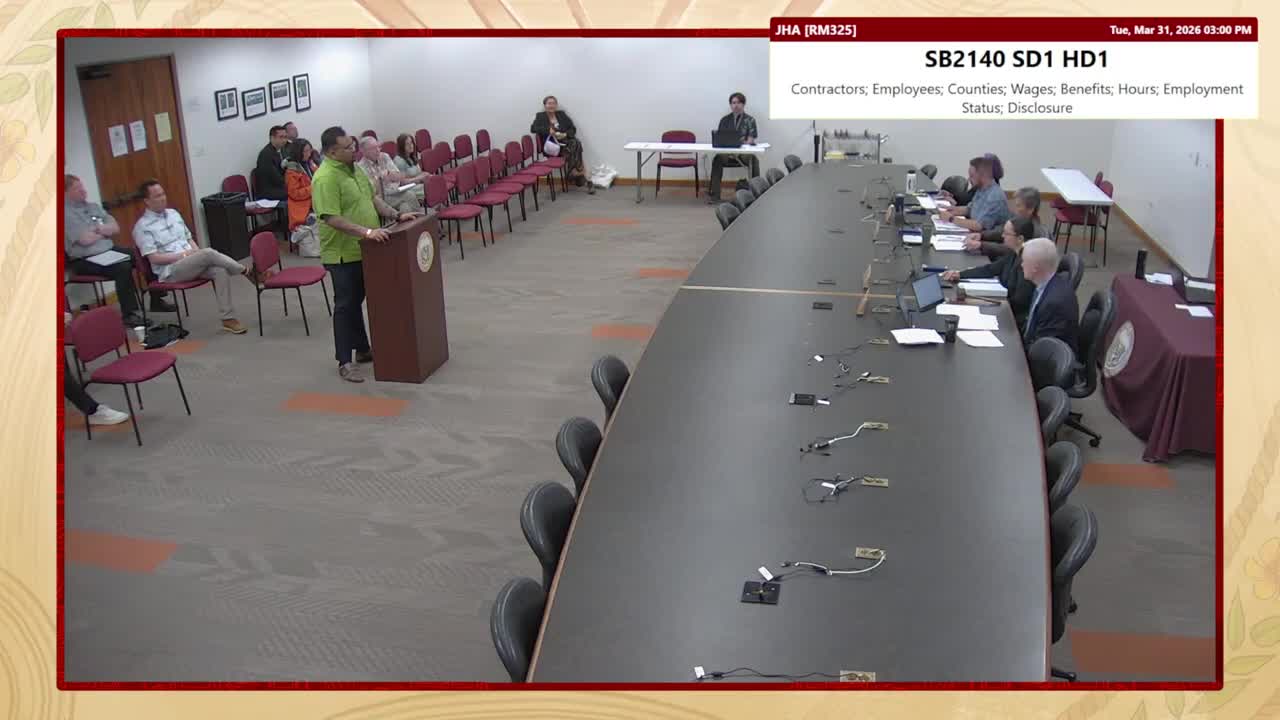 1MIN
House Standing Committee on Judiciary & Hawaiian Affairs
29SEC
House Standing Committee on Judiciary & Hawaiian Affairs
 2MIN
House Standing Committee on Labor
 56SEC
House Standing Committee on Labor
 42SEC
Senate Standing Committee on Judiciary
 3MIN
Senate Standing Committee on Labor and Technology
Bill Author
Bill Co-Author(s):