HB 1658: Collective Bargaining in Public Employment; Repricing of Classes; Negotiations; Impasse Procedures; Arbitration
- Session Year: 2025-2026
- House: House
- Latest Version Date: 2026-04-08
Current Status:
Failed
(2026-05-01: Conference Committee Meeting will reconvene on Friday, 05-01-26 at 3:45PM in Conference Room 411.)
Introduced
In Committee
First Chamber
In Committee
Second Chamber
Final Decking
Enacted
Amends the collective bargaining negotiation procedure on the repricing of classes within a bargaining unit for public employees. Establishes an impasse procedure to be applied when an employer fails to initiate the negotiation or the parties fail to reach an agreement within certain timeframes. Repeals existing law that requires a different impasse procedure to apply in those situations. Sunsets 6/30/2029. Effective 7/1/2050. (SD1)
Amends the collective bargaining negotiation procedure on the repricing of classes within a bargaining unit for public employees. Establishes an impasse procedure to be applied when an employer fails to initiate the negotiation or the parties fail to reach an agreement within certain timeframes. Repeals existing law that requires a different impasse procedure to apply in those situations. Sunsets 6/30/2029. Effective 7/1/3000. (HD1)
Amends the collective bargaining negotiation procedure on the repricing of classes within a bargaining unit for public employees. Establishes an impasse procedure to be applied when an employer fails to initiate the negotiation or the parties fail to reach an agreement within certain timeframes. Repeals existing law that requires a different impasse procedure to apply in those situations. Sunsets 6/30/2029.
|
HOUSE OF REPRESENTATIVES |
H.B. NO. |
1658 |
|
THIRTY-THIRD LEGISLATURE, 2026 |
H.D. 1 |
|
|
STATE OF HAWAII |
S.D. 1 |
|
|
|
|
|
|
|
||
|
|
||
A BILL FOR AN ACT
RELATING TO COLLECTIVE BARGAINING.
BE IT ENACTED BY THE LEGISLATURE OF THE STATE OF HAWAII:
SECTION 1. Section 89-9, Hawaii Revised Statutes, is amended to read as follows:
"§89-9
Scope of negotiations; consultation[.]; impasse procedure for
repricing. (a) The employer and the exclusive representative
shall meet at reasonable times, including meetings sufficiently in advance of
the February 1 impasse date under section 89-11, and shall negotiate in good
faith with respect to wages, hours, the amounts of contributions by the State
and respective counties to the Hawaii employer-union health benefits trust fund
to the extent allowed in subsection (e), and other terms and conditions of
employment which are subject to collective bargaining and which are to be
embodied in a written agreement as specified in section 89-10[,
but such]; provided that this obligation
does not compel either party to agree to a proposal or make a
concession.
(b) The employer or the exclusive representative desiring to initiate negotiations shall notify the other party in writing, setting forth the time and place of the meeting desired and the nature of the business to be discussed, sufficiently in advance of the meeting.
(c) Except as otherwise provided in this chapter,
all matters affecting employee relations, including those that are, or may be,
the subject of a rule adopted by the employer or any director, shall be subject
to consultation with the exclusive representatives of the employees
concerned. The employer shall make every
reasonable effort to consult with exclusive representatives and consider their
input, along with the input of other affected parties, [prior to] before
effecting changes in any major policy affecting employee relations.
(d) Excluded from the subjects of negotiations are matters of classification, reclassification, benefits of but not contributions to the Hawaii employer-union health benefits trust fund, recruitment, examination, initial pricing, and retirement benefits except as provided in section 88-8(h). The employer and the exclusive representative shall not agree to any proposal that would be inconsistent with the merit principle or the principle of equal pay for equal work pursuant to section 76-1 or that would interfere with the rights and obligations of a public employer to:
(1) Direct employees;
(2) Determine qualifications, standards for work, and the nature and contents of examinations;
(3) Hire, promote, transfer, assign, and retain employees in positions;
(4) Suspend, demote, discharge, or take other disciplinary action against employees for proper cause;
(5) Relieve an employee from duties because of lack of work or other legitimate reason;
(6) Maintain efficiency and productivity, including maximizing the use of advanced technology, in government operations;
(7) Determine methods, means, and personnel by which the employer's operations are to be conducted; and
(8) Take actions as may be necessary to carry out the missions of the employer in cases of emergencies.
This
subsection shall not be used to invalidate provisions of collective bargaining
agreements in effect on and after June 30, 2007, and except as otherwise
provided in this chapter, shall not preclude negotiations over the
implementation of management decisions that affect terms and conditions of
employment that are subject to collective bargaining. Further, this subsection shall not preclude
negotiations over the procedures and criteria on promotions, transfers,
assignments, demotions, layoffs, suspensions, terminations, discharges, or
other disciplinary actions as subjects of bargaining during collective
bargaining negotiations or negotiations over a memorandum of agreement,
memorandum of understanding, or other supplemental agreement; provided that [such] this
obligation shall not compel either party to agree to a proposal or make a
concession.
Violations
of the procedures and criteria [so] negotiated may be
subject to the grievance procedure in the collective bargaining agreement.
(e) Negotiations relating to contributions to the Hawaii employer-union health benefits trust fund shall be for the purpose of agreeing upon the amounts which the State and counties shall contribute under section 87A-32, toward the payment of the costs for a health benefits plan, as defined in section 87A-1, and group life insurance benefits, and the parties shall not be bound by the amounts contributed under prior agreements; provided that section 89-11 for the resolution of disputes by way of arbitration shall not be available to resolve impasses or disputes relating to the amounts the State and counties shall contribute to the Hawaii employer-union health benefits trust fund.
(f) The repricing of classes within an appropriate bargaining unit shall be negotiated and determined as follows:
(1) Within thirty days of receipt of a written request from the exclusive representative to negotiate and at times allowed under the collective bargaining agreement, the employer shall negotiate the repricing of classes within the bargaining unit. The negotiated repricing actions that constitute cost items shall be subject to the requirements in section 89-10; and
(2) If the employer fails to timely
initiate a negotiation in compliance with paragraph (1) or the parties cannot
reach an agreement within [one hundred fifty] ninety days after
the exclusive representative's written request to negotiate or by January 31 of
a year in which the agreement is due to expire, whichever is earlier, an
impasse exists and the impasse procedures in [section 89-11]
subsection (g) shall apply;
provided
that the parties may mutually agree on repricing procedures in conformance with
this section; provided further that a repricing request can only be submitted
once per occupation in any eighteen-month period; provided further that impasse
procedures shall not apply if the impasse occurs within one hundred eighty days
after a collective bargaining agreement has been reached between the employer
and the exclusive representative of the bargaining unit. Notwithstanding the foregoing, no more than
fifteen repricing impasse procedures shall be active at any time. If an impasse procedure would have triggered,
but cannot begin because it would exceed the maximum fifteen active repricing
impasse procedures, the parties shall continue to negotiate until [such]
the time [as]
the repricing impasse procedure begins; provided that preference for new
repricing impasse procedures shall be given to repricings in the order in which
they began.
(g) Within ten days of the date of impasse, the exclusive representative may send a written notice to the employer that the impasse shall be submitted to a final and binding arbitration by a single arbitrator. The single arbitrator shall be selected by mutual agreement of the parties; provided that if the parties fail to select an arbitrator within ten days of the exclusive representative's written notice of arbitration, either party may request the board to furnish a list of five qualified and experienced interest arbitrators from which the arbitrator shall be selected. Within ten days after receipt of the list, the parties shall alternately strike names from the list until a single name is left, whom shall be immediately appointed by the board as the arbitrator; provided that the first party to strike a name from the list shall be determined by lot. The arbitrator shall follow the arbitration procedure as follows:
(1) Arbitration hearing. Within ninety days of appointment, the arbitrator shall commence a hearing; and
(2) Arbitration decision. Within thirty days after the conclusion of the hearing, the arbitrator shall reach and transmit a written decision to the parties for inclusion in the final agreement.
Any deadline or procedure in this subsection may be waived or modified by mutual agreement of the employer and the exclusive representative."
SECTION 2. Section 89-11, Hawaii Revised Statutes, is amended by amending subsection (b) to read as follows:
"(b) An impasse during the term of a collective
bargaining agreement on reopened items or items regarding a supplemental
agreement shall not be subject to the impasse procedures in this section[; provided that an
employer's failure to timely initiate a negotiation on repricing of
classes within a bargaining unit pursuant to section 89-9(f)(1) or the parties'
failure to reach an agreement on repricing within the timeframe set forth in
section 89-9(f)(2) shall constitute an impasse, to which the impasse procedures
in this section shall apply]. The parties may mutually agree on an impasse
procedure, but if the procedure culminates in an arbitration decision, the
decision shall be reached pursuant to subsection (f)."
SECTION 3. Statutory material to be repealed is bracketed and stricken. New statutory material is underscored.
SECTION 4. This Act shall take effect on July 1, 2050, and shall be repealed on June 30, 2029; provided that:
(1) Sections 89-9(f) and 89-11(b), Hawaii Revised Statutes, shall be reenacted in the form in which they read on June 30, 2024; and
(2) Any negotiations on repricing pursuant to this Act that started before June 30, 2029, may continue after this Act is repealed.
Report Title:
Collective Bargaining in Public Employment; Repricing of Classes; Negotiations; Impasse Procedures; Arbitration
Description:
Amends the collective bargaining negotiation procedure on the repricing of classes within a bargaining unit for public employees. Establishes an impasse procedure to be applied when an employer fails to initiate the negotiation or the parties fail to reach an agreement within certain timeframes. Repeals existing law that requires a different impasse procedure to apply in those situations. Sunsets 6/30/2029. Effective 7/1/2050. (SD1)
The summary description of legislation appearing on this page is for informational purposes only and is not legislation or evidence of legislative intent.
|
HOUSE OF REPRESENTATIVES |
H.B. NO. |
1658 |
|
THIRTY-THIRD LEGISLATURE, 2026 |
H.D. 1 |
|
|
STATE OF HAWAII |
|
|
|
|
|
|
|
|
||
|
|
||
A BILL FOR AN ACT
RELATING TO COLLECTIVE BARGAINING.
BE IT ENACTED BY THE LEGISLATURE OF THE STATE OF HAWAII:
SECTION 1. Section 89-9, Hawaii Revised Statutes, is amended to read as follows:
"§89-9
Scope of negotiations; consultation[.]; impasse procedure for
repricing. (a) The employer and the exclusive representative
shall meet at reasonable times, including meetings sufficiently in advance of
the February 1 impasse date under section 89-11, and shall negotiate in good
faith with respect to wages, hours, the amounts of contributions by the State
and respective counties to the Hawaii employer-union health benefits trust fund
to the extent allowed in subsection (e), and other terms and conditions of
employment which are subject to collective bargaining and which are to be
embodied in a written agreement as specified in section 89-10[,
but such]; provided that this obligation
does not compel either party to agree to a proposal or make a
concession.
(b) The employer or the exclusive representative desiring to initiate negotiations shall notify the other party in writing, setting forth the time and place of the meeting desired and the nature of the business to be discussed, sufficiently in advance of the meeting.
(c) Except as otherwise provided in this chapter,
all matters affecting employee relations, including those that are, or may be,
the subject of a rule adopted by the employer or any director, shall be subject
to consultation with the exclusive representatives of the employees
concerned. The employer shall make every
reasonable effort to consult with exclusive representatives and consider their
input, along with the input of other affected parties, [prior to] before
effecting changes in any major policy affecting employee relations.
(d) Excluded from the subjects of negotiations are matters of classification, reclassification, benefits of but not contributions to the Hawaii employer-union health benefits trust fund, recruitment, examination, initial pricing, and retirement benefits except as provided in section 88-8(h). The employer and the exclusive representative shall not agree to any proposal that would be inconsistent with the merit principle or the principle of equal pay for equal work pursuant to section 76-1 or that would interfere with the rights and obligations of a public employer to:
(1) Direct employees;
(2) Determine qualifications, standards for work, and the nature and contents of examinations;
(3) Hire, promote, transfer, assign, and retain employees in positions;
(4) Suspend, demote, discharge, or take other disciplinary action against employees for proper cause;
(5) Relieve an employee from duties because of lack of work or other legitimate reason;
(6) Maintain efficiency and productivity, including maximizing the use of advanced technology, in government operations;
(7) Determine methods, means, and personnel by which the employer's operations are to be conducted; and
(8) Take actions as may be necessary to carry out the missions of the employer in cases of emergencies.
This
subsection shall not be used to invalidate provisions of collective bargaining
agreements in effect on and after June 30, 2007, and except as otherwise
provided in this chapter, shall not preclude negotiations over the
implementation of management decisions that affect terms and conditions of
employment that are subject to collective bargaining. Further, this subsection shall not preclude
negotiations over the procedures and criteria on promotions, transfers, assignments,
demotions, layoffs, suspensions, terminations, discharges, or other
disciplinary actions as subjects of bargaining during collective bargaining
negotiations or negotiations over a memorandum of agreement, memorandum of
understanding, or other supplemental agreement; provided that [such] this
obligation shall not compel either party to agree to a proposal or make a
concession.
Violations
of the procedures and criteria [so] negotiated may be
subject to the grievance procedure in the collective bargaining agreement.
(e) Negotiations relating to contributions to the Hawaii employer-union health benefits trust fund shall be for the purpose of agreeing upon the amounts which the State and counties shall contribute under section 87A-32, toward the payment of the costs for a health benefits plan, as defined in section 87A-1, and group life insurance benefits, and the parties shall not be bound by the amounts contributed under prior agreements; provided that section 89-11 for the resolution of disputes by way of arbitration shall not be available to resolve impasses or disputes relating to the amounts the State and counties shall contribute to the Hawaii employer-union health benefits trust fund.
(f) The repricing of classes within an appropriate bargaining unit shall be negotiated and determined as follows:
(1) Within thirty days of receipt of a written request from the exclusive representative to negotiate and at times allowed under the collective bargaining agreement, the employer shall negotiate the repricing of classes within the bargaining unit. The negotiated repricing actions that constitute cost items shall be subject to the requirements in section 89-10; and
(2) If the employer fails to timely
initiate a negotiation in compliance with paragraph (1) or the parties cannot
reach an agreement within [one hundred fifty] ninety days after
the exclusive representative's written request to negotiate or by January 31 of
a year in which the agreement is due to expire, whichever is earlier, an
impasse exists and the impasse procedures in [section 89-11]
subsection (g) shall apply;
provided
that the parties may mutually agree on repricing procedures in conformance with
this section; provided further that a repricing request can only be submitted
once per occupation in any eighteen-month period; provided further that impasse
procedures shall not apply if the impasse occurs within one hundred eighty days
after a collective bargaining agreement has been reached between the employer
and the exclusive representative of the bargaining unit. Notwithstanding the foregoing, no more than
fifteen repricing impasse procedures shall be active at any time. If an impasse procedure would have triggered,
but cannot begin because it would exceed the maximum fifteen active repricing
impasse procedures, the parties shall continue to negotiate until [such]
the time [as]
the repricing impasse procedure begins; provided that preference for new
repricing impasse procedures shall be given to repricings in the order in which
they began.
(g) Within ten days of the date of impasse, the exclusive representative may send a written notice to the employer that the impasse shall be submitted to a final and binding arbitration by a single arbitrator. The single arbitrator shall be selected by mutual agreement of the parties; provided that if the parties fail to select an arbitrator within ten days of the exclusive representative's written notice of arbitration, either party may request the board to furnish a list of five qualified and experienced interest arbitrators from which the arbitrator shall be selected. Within ten days after receipt of the list, the parties shall alternately strike names from the list until a single name is left, whom shall be immediately appointed by the board as the arbitrator; provided that the first party to strike a name from the list shall be determined by lot. The arbitrator shall follow the arbitration procedure as follows:
(1) Arbitration hearing. Within ninety days of appointment, the arbitrator shall commence a hearing; and
(2) Arbitration decision. Within thirty days after the conclusion of the hearing, the arbitrator shall reach and transmit a written decision to the parties for inclusion in the final agreement.
Any deadline or procedure in this subsection may be waived or modified by mutual agreement of the employer and the exclusive representative."
SECTION 2. Section 89-11, Hawaii Revised Statutes, is amended by amending subsection (b) to read as follows:
"(b) An impasse during the term of a collective
bargaining agreement on reopened items or items regarding a supplemental
agreement shall not be subject to the impasse procedures in this section[; provided that an
employer's failure to timely initiate a negotiation on repricing of
classes within a bargaining unit pursuant to section 89-9(f)(1) or the parties'
failure to reach an agreement on repricing within the timeframe set forth in
section 89-9(f)(2) shall constitute an impasse, to which the impasse procedures
in this section shall apply]. The parties may mutually agree on an impasse
procedure, but if the procedure culminates in an arbitration decision, the
decision shall be reached pursuant to subsection (f)."
SECTION 3. Statutory material to be repealed is bracketed and stricken. New statutory material is underscored.
SECTION 4. This Act shall take effect on July 1, 3000, and shall be repealed on June 30, 2029; provided that:
(1) Sections 89-9(f) and 89-11(b), Hawaii Revised Statutes, shall be reenacted in the form in which they read on June 30, 2024; and
(2) Any negotiations on repricing pursuant to this Act that started before June 30, 2029, may continue after this Act is repealed.
Report Title:
Collective Bargaining in Public Employment; Repricing of Classes; Negotiations; Impasse Procedures; Arbitration
Description:
Amends the collective bargaining negotiation procedure on the repricing of classes within a bargaining unit for public employees. Establishes an impasse procedure to be applied when an employer fails to initiate the negotiation or the parties fail to reach an agreement within certain timeframes. Repeals existing law that requires a different impasse procedure to apply in those situations. Sunsets 6/30/2029. Effective 7/1/3000. (HD1)
The summary description of legislation appearing on this page is for informational purposes only and is not legislation or evidence of legislative intent.
|
HOUSE OF REPRESENTATIVES |
H.B. NO. |
1658 |
|
THIRTY-THIRD LEGISLATURE, 2026 |
|
|
|
STATE OF HAWAII |
|
|
|
|
|
|
|
|
||
|
|
||
A BILL FOR AN ACT
RELATING TO COLLECTIVE BARGAINING.
BE IT ENACTED BY THE LEGISLATURE OF THE STATE OF HAWAII:
SECTION 1. Section 89-9, Hawaii Revised Statutes, is amended to read as follows:
"§89-9
Scope of negotiations; consultation[.]; impasse procedure for
repricing. (a) The employer and the exclusive representative
shall meet at reasonable times, including meetings sufficiently in advance of
the February 1 impasse date under section 89-11, and shall negotiate in good
faith with respect to wages, hours, the amounts of contributions by the State
and respective counties to the Hawaii employer-union health benefits trust fund
to the extent allowed in subsection (e), and other terms and conditions of
employment which are subject to collective bargaining and which are to be
embodied in a written agreement as specified in section 89-10[,
but such]; provided that this obligation
does not compel either party to agree to a proposal or make a
concession.
(b) The employer or the exclusive representative desiring to initiate negotiations shall notify the other party in writing, setting forth the time and place of the meeting desired and the nature of the business to be discussed, sufficiently in advance of the meeting.
(c) Except as otherwise provided in this chapter,
all matters affecting employee relations, including those that are, or may be,
the subject of a rule adopted by the employer or any director, shall be subject
to consultation with the exclusive representatives of the employees
concerned. The employer shall make every
reasonable effort to consult with exclusive representatives and consider their
input, along with the input of other affected parties, [prior to] before
effecting changes in any major policy affecting employee relations.
(d) Excluded from the subjects of negotiations are matters of classification, reclassification, benefits of but not contributions to the Hawaii employer-union health benefits trust fund, recruitment, examination, initial pricing, and retirement benefits except as provided in section 88-8(h). The employer and the exclusive representative shall not agree to any proposal that would be inconsistent with the merit principle or the principle of equal pay for equal work pursuant to section 76-1 or that would interfere with the rights and obligations of a public employer to:
(1) Direct employees;
(2) Determine qualifications, standards for work, and the nature and contents of examinations;
(3) Hire, promote, transfer, assign, and retain employees in positions;
(4) Suspend, demote, discharge, or take other disciplinary action against employees for proper cause;
(5) Relieve an employee from duties because of lack of work or other legitimate reason;
(6) Maintain efficiency and productivity, including maximizing the use of advanced technology, in government operations;
(7) Determine methods, means, and personnel by which the employer's operations are to be conducted; and
(8) Take actions as may be necessary to carry out the missions of the employer in cases of emergencies.
This
subsection shall not be used to invalidate provisions of collective bargaining
agreements in effect on and after June 30, 2007, and except as otherwise
provided in this chapter, shall not preclude negotiations over the
implementation of management decisions that affect terms and conditions of
employment that are subject to collective bargaining. Further, this subsection shall not preclude
negotiations over the procedures and criteria on promotions, transfers, assignments,
demotions, layoffs, suspensions, terminations, discharges, or other
disciplinary actions as subjects of bargaining during collective bargaining
negotiations or negotiations over a memorandum of agreement, memorandum of
understanding, or other supplemental agreement; provided that [such] this
obligation shall not compel either party to agree to a proposal or make a
concession.
Violations
of the procedures and criteria [so] negotiated may be
subject to the grievance procedure in the collective bargaining agreement.
(e) Negotiations relating to contributions to the Hawaii employer-union health benefits trust fund shall be for the purpose of agreeing upon the amounts which the State and counties shall contribute under section 87A-32, toward the payment of the costs for a health benefits plan, as defined in section 87A-1, and group life insurance benefits, and the parties shall not be bound by the amounts contributed under prior agreements; provided that section 89-11 for the resolution of disputes by way of arbitration shall not be available to resolve impasses or disputes relating to the amounts the State and counties shall contribute to the Hawaii employer-union health benefits trust fund.
(f) The repricing of classes within an appropriate bargaining unit shall be negotiated and determined as follows:
(1) Within thirty days of receipt of a written request from the exclusive representative to negotiate and at times allowed under the collective bargaining agreement, the employer shall negotiate the repricing of classes within the bargaining unit. The negotiated repricing actions that constitute cost items shall be subject to the requirements in section 89-10; and
(2) If the employer fails to timely
initiate a negotiation in compliance with paragraph (1) or the parties cannot
reach an agreement within one hundred fifty days after the exclusive
representative's written request to negotiate or by January 31 of a year in
which the agreement is due to expire, whichever is earlier, an impasse exists
and the impasse procedures in [section 89-11]
subsection (g) shall apply;
provided
that the parties may mutually agree on repricing procedures in conformance with
this section; provided further that a repricing request can only be submitted
once per occupation in any eighteen-month period; provided further that impasse
procedures shall not apply if the impasse occurs within one hundred eighty days
after a collective bargaining agreement has been reached between the employer
and the exclusive representative of the bargaining unit. Notwithstanding the foregoing, [no]
not more than fifteen repricing impasse
procedures shall be active at any time.
If an impasse procedure would have triggered, but cannot begin because
it would exceed the maximum fifteen active repricing impasse procedures, the parties
shall continue to negotiate until [such]
the time [as]
the repricing impasse procedure begins; provided that preference for new
repricing impasse procedures shall be given to repricings in the order in which
they began.
(g) Within ten days of the date of impasse, the exclusive representative may send a written notice to the employer that the impasse shall be submitted to a final and binding arbitration by a single arbitrator. The single arbitrator shall be selected by mutual agreement of the parties; provided that if the parties fail to select an arbitrator within ten days of the exclusive representative's written notice of arbitration, either party may request the board to furnish a list of five qualified and experienced interest arbitrators from which the arbitrator shall be selected. Within days after receipt of the list, the parties shall alternately strike names from the list until a single name is left, whom shall be immediately appointed by the board as the arbitrator; provided that the first party to strike a name from the list shall be determined by lot. The arbitrator shall follow the arbitration procedure as follows:
(1) Arbitration hearing. Within ninety days of appointment, the arbitrator shall commence a hearing; and
(2) Arbitration decision. Within thirty days after the conclusion of the hearing, the arbitrator shall reach and transmit a written decision to the parties for inclusion in the final agreement.
Any deadline or procedure in this subsection may be waived or modified by mutual agreement of the employer and the exclusive representative."
SECTION 2. Section 89-11, Hawaii Revised Statutes, is amended by amending subsection (b) to read as follows:
"(b) An impasse during the term of a collective
bargaining agreement on reopened items or items regarding a supplemental
agreement shall not be subject to the impasse procedures in this section[; provided that an
employer's failure to timely initiate a negotiation on repricing of
classes within a bargaining unit pursuant to section 89-9(f)(1) or the parties'
failure to reach an agreement on repricing within the timeframe set forth in
section 89-9(f)(2) shall constitute an impasse, to which the impasse procedures
in this section shall apply]. The parties may mutually agree on an impasse
procedure, but if the procedure culminates in an arbitration decision, the
decision shall be reached pursuant to subsection (f)."
SECTION 3. Statutory material to be repealed is bracketed and stricken. New statutory material is underscored.
SECTION 4. This Act shall take effect on July 1, 2026, and shall be repealed on June 30, 2029; provided that:
(1) Sections 89-9(f) and 89-11(b), Hawaii Revised Statutes, shall be reenacted in the form in which they read on June 30, 2024; and
(2) Any negotiations on repricing pursuant to this Act that started prior to June 30, 2029, may continue after this Act is repealed."
|
INTRODUCED BY: |
_____________________________ |
|
|
|
Report Title:
Collective Bargaining in Public Employment; Repricing of Classes; Negotiations; Impasse Procedures; Arbitration
Description:
Amends the collective bargaining negotiation procedure on the repricing of classes within a bargaining unit for public employees. Establishes an impasse procedure to be applied when an employer fails to initiate the negotiation or the parties fail to reach an agreement within certain timeframes. Repeals existing law that requires a different impasse procedure to apply in those situations. Sunsets 6/30/2029.
The summary description of legislation appearing on this page is for informational purposes only and is not legislation or evidence of legislative intent.
|
Date
|
Status
|
|---|---|
| May 1, 2026 | Conference Committee Meeting will reconvene on Friday, 05-01-26 at 3:45PM in Conference Room 411. |
| May 1, 2026 | Conference Committee Meeting will reconvene on Friday, 05-01-26 at 12:00PM in Conference Room 016. |
| Apr 29, 2026 | Bill scheduled for Conference Committee Meeting on Friday, 05-01-26 8:45AM in conference room 016. |
| Apr 29, 2026 | Received notice of Senate conferees (Sen. Com. No. 791). |
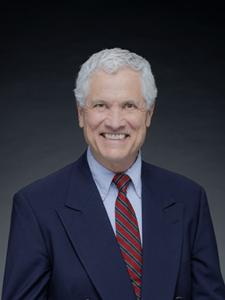
| Apr 29, 2026 | Senate Conferees Appointed: Elefante Chair; Kim Co-Chair; Lamosao. |
| Apr 21, 2026 | Received notice of appointment of House conferees (Hse. Com. No. 799). |
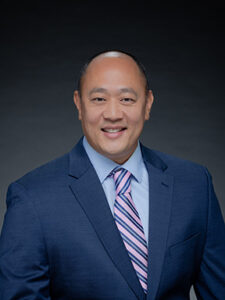
| Apr 21, 2026 | House Conferees Appointed: Sayama, Lee, M. Co-Chairs; Reyes Oda. |
| Apr 17, 2026 | Received notice of disagreement (Hse. Com. No. 780). |
| Apr 16, 2026 | House disagrees with Senate amendment (s). |
| Apr 14, 2026 | Returned from Senate (Sen. Com. No. 597) in amended form (SD 1). |
| Apr 14, 2026 | Report Adopted; Passed Third Reading, as amended (SD 1). Ayes, 25; Aye(s) with reservations: Senator(s) Moriwaki, Richards. Noes, 0 (none). Excused, 0 (none). Transmitted to House. |
| Apr 9, 2026 | 48 Hrs. Notice 04-14-26. |
| Apr 9, 2026 | Reported from WAM (Stand. Com. Rep. No. 3665) with recommendation of passage on Third Reading, as amended (SD 1). |
| Apr 6, 2026 | The committee(s) on WAM recommend(s) that the measure be PASSED, WITH AMENDMENTS. The votes in WAM were as follows: 12 Aye(s): Senator(s) Dela Cruz, Moriwaki, DeCoite, Elefante, Hashimoto, Inouye, Kanuha, Kidani, Kim, Richards, Wakai, Fevella; Aye(s) with reservations: none ; 0 No(es): none; and 1 Excused: Senator(s) Lee, C.. |
| Apr 1, 2026 | The committee(s) on WAM deferred the measure until 04-06-26 10:31AM; Conference Room 211 & Videoconference. |
| Mar 30, 2026 | The committee(s) on WAM will hold a public decision making on 04-01-26 10:03AM; Conference Room 211 & Videoconference. |
| Mar 23, 2026 | Report adopted; Passed Second Reading and referred to WAM. |
| Mar 23, 2026 | Reported from LBT (Stand. Com. Rep. No. 3120) with recommendation of passage on Second Reading and referral to WAM. |
| Mar 16, 2026 | The committee(s) on LBT recommend(s) that the measure be PASSED, UNAMENDED. The votes in LBT were as follows: 4 Aye(s): Senator(s) Elefante, Lamosao, Ihara; Aye(s) with reservations: Senator(s) Moriwaki ; 0 No(es): none; and 1 Excused: Senator(s) Fevella. |
| Mar 12, 2026 | The committee(s) on LBT has scheduled a public hearing on 03-16-26 3:00PM; Conference Room 225 & Videoconference. |
| Mar 10, 2026 | Referred to LBT, WAM. |
| Mar 6, 2026 | Passed First Reading. |
| Mar 6, 2026 | Received from House (Hse. Com. No. 33). |
| Mar 5, 2026 | Passed Third Reading with none voting aye with reservations; none voting no (0) and Representative(s) Perruso excused (1). Transmitted to Senate. |
| Mar 5, 2026 | Reported from FIN (Stand. Com. Rep. No. 793-26), recommending passage on Third Reading. |
| Feb 26, 2026 | The committee on FIN recommend that the measure be PASSED, UNAMENDED. The votes were as follows: 16 Ayes: Representative(s) Todd, Takenouchi, Hartsfield, Hussey, Keohokapu-Lee Loy, Kitagawa, Kusch, Lee, M., Miyake, Morikawa, Perruso, Templo, Yamashita, Alcos, Gedeon, Reyes Oda; Ayes with reservations: none; 0 Noes: none; and 0 Excused: none. |
| Feb 24, 2026 | Bill scheduled to be heard by FIN on Thursday, 02-26-26 10:00AM in House conference room 308 VIA VIDEOCONFERENCE. |
| Feb 17, 2026 | Passed Second Reading as amended in HD 1 and referred to the committee(s) on FIN with none voting aye with reservations; none voting no (0) and Representative(s) Cochran, Lee, M., Poepoe excused (3). |
| Feb 17, 2026 | Reported from LAB (Stand. Com. Rep. No. 279-26) as amended in HD 1, recommending passage on Second Reading and referral to FIN. |
| Feb 10, 2026 | The committee on LAB recommend that the measure be PASSED, WITH AMENDMENTS. The votes were as follows: 6 Ayes: Representative(s) Sayama, Lee, M., Garrett, Kapela, Kong, Reyes Oda; Ayes with reservations: none; 0 Noes: none; and 0 Excused: none. |
| Feb 5, 2026 | Bill scheduled to be heard by LAB on Tuesday, 02-10-26 9:30AM in House conference room 309 VIA VIDEOCONFERENCE. |
| Jan 26, 2026 | Referred to LAB, FIN, referral sheet 1 |
| Jan 21, 2026 | Introduced and Pass First Reading. |
| Jan 20, 2026 | Prefiled. |
|
Date
|
Description
|
Location
|
Votes
|
|
|---|---|---|---|---|
| Apr 14, 2026 | Third Reading | Senate Floor |
Passed |
|
| Apr 6, 2026 | The committee(s) on WAM recommend(s) that the measure be PASSED, WITH AMENDMENTS | Senate Standing Committee on Ways and Means |
Passed |
|
| Mar 16, 2026 | The committee(s) on LBT recommend(s) that the measure be PASSED, UNAMENDED | Senate Standing Committee on Labor and Technology |
Passed |
|
| Mar 5, 2026 | Third Reading | House Floor |
Passed |
|
| Feb 26, 2026 | The committee on FIN recommend that the measure be PASSED, UNAMENDED | House Standing Committee on Finance |
Passed |
|
| Feb 10, 2026 | The committee on LAB recommend that the measure be PASSED, WITH AMENDMENTS | House Standing Committee on Labor |
Passed |
This list shows positions taken on this bill by organizations on the date displayed, which is linked to the original source.
Positions by individuals are not included.
|
Organization
|
Position
|
Date
|
|---|---|---|
| City and County of Honolulu, Department of Human Resources | *** Against | Mar 16, 2026 |
| County of Hawai‘i Department of Human Resources | *** Against | Feb 26, 2026 |
| Department of Human Resources Development | *** Against | Mar 31, 2026 |
| Department of Human Resources of the County of Hawaiʻi | ** Against | |
| Hawaii Government Employees Association (AFSCME Local 152, AFL-CIO) | *** Support | Mar 31, 2026 |
| Hawaii Government Employees Association (HGEA) | *** Support | Feb 26, 2026 |
| Hawaiʻi State Teachers Association | *** Support | Mar 31, 2026 |
| Hawaiʻi State Teachers Association (HSTA) | *** Support | Mar 16, 2026 |
| United Public Workers, AFSCME Local 646, AFL-CIO | *** Support | Mar 31, 2026 |
STAND. COM. REP. NO. 793-26
Honolulu, Hawaii
, 2026
RE: H.B. No. 1658
H.D. 1
Honorable Nadine K. Nakamura
Speaker, House of Representatives
Thirty-Third State Legislature
Regular Session of 2026
State of Hawaii
Madame:
Your Committee on Finance, to which was referred H.B. No. 1658, H.D. 1, entitled:
"A BILL FOR AN ACT RELATING TO COLLECTIVE BARGAINING,"
begs leave to report as follows:
Your Committee received testimony in support of this measure from the Hawaiʻi State Teachers Association; United Public Workers, AFSCME Local 646, AFL-CIO; and Hawaii Government Employees Association, AFSCME Local 152, AFL-CIO. Your Committee received testimony in opposition to this measure from the Department of Human Resources Development; Department of Human Resources of the County of Hawaiʻi; and Department of Human Resources of the City and County of Honolulu.
As affirmed by the record of votes of the members of your Committee on Finance that is attached to this report, your Committee is in accord with the intent and purpose of H.B. No. 1658, H.D. 1, and recommends that it pass Third Reading.
Respectfully submitted on behalf of the members of the Committee on Finance,
|
|
|
____________________________ CHRIS TODD, Chair |
|
|
|
|
STAND. COM. REP. NO. 279-26
Honolulu, Hawaii
, 2026
RE: H.B. No. 1658
H.D. 1
Honorable Nadine K. Nakamura
Speaker, House of Representatives
Thirty-Third State Legislature
Regular Session of 2026
State of Hawaii
Madame:
Your Committee on Labor, to which was referred H.B. No. 1658 entitled:
"A BILL FOR AN ACT RELATING TO COLLECTIVE BARGAINING,"
begs leave to report as follows:
Your Committee received testimony in support of this measure from the Hawaiʻi State Teachers Association; United Public Workers, AFSCME Local 646, AFL-CIO; and Hawaii Government Employees Association, AFSCME Local 152, AFL-CIO. Your Committee received testimony in opposition to this measure from the Department of Human Resources Development.
Your Committee finds that employees across the State face long delays in repricing decisions, resulting in pay inequities and persistent vacancies in critical positions. Your Committee further finds that the current arbitration structure is overly complex and prevents timely resolution of salary adjustments. Your Committee believes that creating a clearer, streamlined impasse and arbitration process will help ensure fair compensation and strengthen workforce recruitment and retention.
Your Committee has amended this measure by:
(1) Changing the negotiation period trigger for declaring an impasse from one hundred fifty days to ninety days after the exclusive representative's written request to negotiate for purposes of repricing of classes within a bargaining unit;
(2) Specifying that the parties must begin the selection process of arbitrators within ten days of receiving a list of potential arbitrators;
(3) Changing the effective date to July 1, 3000, to encourage further discussion; and
(4) Making technical, nonsubstantive amendments for the purposes of clarity, consistency, and style.
As affirmed by the record of votes of the members of your Committee on Labor that is attached to this report, your Committee is in accord with the intent and purpose of H.B. No. 1658, as amended herein, and recommends that it pass Second Reading in the form attached hereto as H.B. No. 1658, H.D. 1, and be referred to your Committee on Finance.
Respectfully submitted on behalf of the members of the Committee on Labor,
|
|
|
____________________________ JACKSON D. SAYAMA, Chair |
|
|
|
|
|
Date
|
Testimony PDF
|
|---|---|
| Mar 31, 2026 | HB1658_HD1_TESTIMONY_WAM_04-01-26_.PDF |
| Mar 16, 2026 | HB1658_HD1_TESTIMONY_LBT_03-16-26_.PDF |
| Feb 26, 2026 | HB1658_HD1_TESTIMONY_FIN_02-26-26_.PDF |
| Feb 9, 2026 | HB1658_TESTIMONY_LAB_02-10-26_.PDF |
Discussed in Hearing
 34SEC
Conference Committee
 21SEC
Conference Committee
5MIN
Conference Committee
 11MIN
Senate Standing Committee on Labor and Technology
52SEC
Senate Standing Committee on Labor and Technology
 1MIN
House Standing Committee on Finance
 13SEC
House Standing Committee on Finance
 2MIN
House Standing Committee on Labor
Bill Author