SB 694: Minors; Detention; Adult Correctional Facilities; Prohibition
- Session Year: 2025-2026
- House: Senate
- Latest Version Date: 2025-04-24
Current Status:
In Progress
(2025-06-26: Act 234, on 06/26/2025 (Gov. Msg. No. 1336).)
Introduced
In Committee
First Chamber
In Committee
Second Chamber
Final Decking
Enacted
What does this bill do?
The bill bars minors from being held in adult jails, lockups, or prisons and requires they be placed in juvenile detention facilities instead. It allows only brief, temporary holds in adult facilities for processing or transport in counties without juvenile centers if the youth is kept separate from adults, and adds safeguards such as time limits on confinement, mental‑health review, staff training and certification of holding areas, notice to judges, and quarterly public reporting.
The summary is provided by generative AI which can make mistakes. For original language, please view the details in the table below.
Prohibits minors from being held in jails, lockups, or prisons for adults, except temporarily under certain circumstances. (CD1)
Prohibits minors from being held in jails, lockups, or prisons for adults, except temporarily under certain circumstances. Effective 7/1/3000. (HD1)
Prohibits minors from being held in jails, lockups, or prisons for adults.
|
THE SENATE |
S.B. NO. |
694 |
|
THIRTY-THIRD LEGISLATURE, 2025 |
H.D. 1 |
|
|
STATE OF HAWAII |
C.D. 1 |
|
|
|
|
|
|
|
||
|
|
||
A BILL FOR AN ACT
RELATING TO THE DETENTION OF MINORS.
BE IT ENACTED BY THE LEGISLATURE OF THE STATE OF HAWAII:
SECTION 1. Section 571-32, Hawaii Revised Statutes, is amended as follows:
1. By amending subsections (d) and (e) to read:
"(d) No minor shall be held in a detention
facility for juveniles or shelter longer than twenty-four hours, excluding
weekends and holidays, unless a petition or motion for revocation of probation[,]
or motion for revocation of protective supervision has been filed, or unless
the judge orders otherwise after a court hearing. No ex parte motions shall be considered. [For the purposes of this section:
(1) Unless a court finds, after a
hearing and in writing, that it is in the interest of justice as provided for
in subsection (g)(2), a minor believed to come within section 571-11(1), or a
minor awaiting trial or another legal process, who is treated as an adult for
purposes of prosecution in criminal court and housed in a secure facility shall
not:
(A) Have sight or sound contact with
adult inmates; or
(B) Be held in any jail or lockup for
adults,
except
as provided in subsection (g)(3); and
(2) Detention in a jail or lockup for
adults may be permitted for:
(A) A minor accused of a non-status
offense who is held for a period not to exceed six hours; provided that the
minor is being held:
(i) For processing or release;
(ii) While awaiting transfer to a
juvenile facility; or
(iii) For a court appearance that occurs
within the period of detention; or
(B) A minor accused of a non-status
offense who is awaiting an initial court appearance that will occur within
forty-eight hours of the minor being taken into custody, excluding weekends and
holidays, and where the jail or lockup for adults is in a location:
(i) Outside a metropolitan statistical
area, as defined by the Office of Management and Budget, and no acceptable
alternative placement is available;
(ii) Where the distance to be traveled or
the lack of highway, road, or transportation does not allow for court
appearances within forty-eight hours, excluding weekends and holidays, such
that a brief delay of no more than an additional forty-eight hours is excusable;
or
(iii) Where safety concerns exist, such as
severe and life-threatening weather conditions that do not allow for reasonably
safe travel, in which case the time for an appearance may be delayed until
twenty-four hours after the time that conditions allow for reasonably safe
travel;
provided
that the minor shall not have sight or sound contact with adult inmates;
provided further that the State shall have a policy in effect that requires
individuals who work with both minor and adult inmates in collocated facilities
to be trained and certified to work with juveniles.]
(e) No minor [may] shall be held
after the filing of a petition or motion, as specified in subsection (d),
unless an order for continued detention or shelter has been made by a judge
after a court hearing. If there is
probable cause to believe that the minor comes within section 571-11(1), the
minor may be securely detained, following a court hearing, in a detention
facility for juveniles or may be held in a shelter. If there is probable cause to believe that
the minor comes within section 281-101.5 or 571-11(2), the minor may be held,
following a court hearing, in a shelter but shall not be securely detained in a
detention facility for juveniles for longer than twenty-four hours, excluding
weekends and holidays, unless the minor is subject to the provisions of chapter
582, Interstate Compact on Juveniles, or chapter 582D, Interstate Compact for
Juveniles, or is allegedly in or has already been adjudicated for a violation
of a valid court order, as provided under the federal Juvenile Justice and
Delinquency Prevention Act of 1974, as amended."
2. By amending subsections (g) through (i) to read:
"(g)
When a minor is ordered to be held or detained by the court[:
(1) Where a minor transferred for
criminal proceedings pursuant to a waiver of family court jurisdiction is
detained, the minor shall not:
(A) Have sight or sound contact with
adult inmates; or
(B) Be held in any jail or lockup for
adults,
unless
a court finds, after a hearing and in writing, that it is in the interest of
justice;
(2) In determining whether it is in the
interest of justice to permit a minor to be held in any jail or lockup for
adults, or to have sight or sound contact with adult inmates, a court shall
consider:
(A) The age of the minor;
(B) The physical and mental maturity of
the minor;
(C) The present mental state of the
minor, including whether the minor presents an imminent risk of self-harm;
(D) The nature and circumstances of the
alleged offense;
(E) The minor's history of prior
delinquent acts;
(F) The relative ability of the
available adult and juvenile detention facilities to meet the specific needs of
the minor and protect the safety of the public as well as other detained
minors; and
(G) Any other relevant factor; and
(3) If a court determines that it is in
the interest of justice to permit a minor to be held in any jail or lockup for
adults, or to have sight or sound contact with adult inmates:
(A) The court shall hold a hearing no
less frequently than once every thirty days, or in the case of a rural
jurisdiction, no less frequently than once every forty-five days, to review
whether it remains in the interest of justice to permit the minor to be held in
a jail or lockup for adults or to have sight or sound contact with adult
inmates; and
(B) The minor shall not be held in any
jail or lockup for adults, or permitted to have sight or sound contact with
adult inmates, for more than one hundred eighty days, unless the court, in
writing, determines there is good cause for an extension, or the minor
expressly waives this limitation.]
, the minor shall not be held in any jail, lockup, or prison for adults.
(h) A minor may be placed in room confinement in
a juvenile detention [or adult jail] facility only under the following
conditions:
(1) Room confinement may only be used as a temporary response to a minor's behavior, and only if:
(A) The behavior poses an immediate and substantial risk of danger to the minor's self or another individual, or a serious and immediate threat to the safety and orderly operation of the facility; provided that any decision to hold a minor in room confinement due to a mental health emergency shall be made by a mental health professional and based upon the mental health professional's examination of the minor; or
(B) The minor is an imminent escape risk;
(2) Because of the potential impact on a minor's mental or physical health, room confinement may only be used for the minimum time necessary for the minor to regain self-control, and only after less restrictive options or techniques, including de-escalation, conflict and behavioral management techniques, and intervention by a mental health professional, have been attempted, exhausted, and failed;
(3) If a minor is placed in room confinement, the reasons for the room confinement shall be explained to the minor. The minor shall also be informed that release from room confinement will occur immediately when the minor exhibits self-control and is no longer deemed a threat to the minor's safety or the safety of others;
(4) If a minor is placed in room confinement, the following individuals shall be notified on the next business day and provided the reasons for the room confinement as well as the location and duration of the confinement:
(A) The senior judge of the family court;
(B) The presiding judge who ordered the minor to be held at the facility;
(C) The deputy chief court administrator; and
(D) The social services manager of the juvenile client services branch for the circuit court of the first circuit;
(5) Room confinement shall not be used for purposes of punishment or disciplinary sanction, coercion, convenience, or retaliation, or to address staffing shortages at the facility;
(6) A minor may be held in room confinement for no more than three hours unless the minor is a danger to themselves or another, or the on-call judge grants an extension of no more than three additional hours of confinement. Thereafter, the minor shall be returned to the general population; provided that if a minor is held in room confinement for more than three hours, a hearing shall be held before the family court on the next business day, at which time the minor shall be provided legal representation;
(7) A minor shall not be returned to room confinement immediately after returning to the general population from room confinement for the purposes of evading the reporting requirements and room confinement restrictions pursuant to this section;
(8) If the minor is not returned to the general population following a hearing pursuant to paragraph (6), the minor shall be transferred to a location where services may be provided to the minor without the need for room confinement; provided that if a mental health professional determines that the level of crisis service needed is not presently available at the location, the superintendent or deputy superintendent of the facility shall initiate a referral to a facility that can meet the needs of the minor;
(9) All rooms used for room confinement shall have adequate and operational lighting, ventilation for the comfort of the minor, and shall be clean and resistant to suicide and self-harm;
(10) The minor shall have access to drinking water, toilet facilities, hygiene supplies, and reading materials approved by a mental health professional;
(11) The minor shall have the same access as provided to minors in the general population of the facility to meals, contact with parents or legal guardians, legal assistance, educational programs, and medical and mental health services;
(12) The minor shall be continuously monitored by facility staff; and
(13) The judiciary shall post quarterly on the judiciary's website a report of its detention center detailing their compliance with this section. Each report shall include:
(A) The number of incidents of room confinement every year;
(B) The number of minors impacted;
(C) The age, gender identity, and race of minors impacted;
(D) Any alternative strategies employed before the use of room confinement, the reasons those alternative strategies failed, and why room confinement was necessary; and
(E) The incidence of mental illness.
For the purposes of this subsection:
"Mental health professional" means a qualified mental health professional or mental health professional supervised by a qualified mental health professional.
"Room confinement" means the placement of a minor in a room, cell, or area with minimal or no contact with persons other than court staff and attorneys. "Room confinement" does not include confinement of a minor in a single-person room or cell for brief periods of locked room time as necessary for required institutional operations and does not include confinement during sleep hours.
(i) Provisions regarding bail shall not be
applicable to minors detained in accordance with this chapter[, except];
provided that bail may be allowed after a minor has been transferred for
criminal prosecution pursuant to waiver of family court jurisdiction."
3. By amending subsections (k) and (l) to read:
"(k) Any other provision of law to the contrary
notwithstanding, any person otherwise subject to proceedings under chapter 832
and who is under the age of eighteen may be confined in a juvenile
detention facility [or correctional facility] by order of a judge for
the purposes set forth in section 832-12, 832-15, or 832-17.
(1) Separated by sight and sound from adult inmates; and
(2) Held no longer than is necessary to be transported to court or the nearest juvenile detention facility.
The
department of human services through the office of youth services shall certify
police station cellblocks and community correctional centers that provide sight
and sound separation between minors and adults in temporary secure
custody[.] pursuant to this subsection. Only cellblocks and centers certified under
this subsection shall be authorized to [detain] temporarily hold
juveniles pursuant to [section 571-32(d).] this subsection. The office of youth services may develop
sight and sound separation standards, issue certifications, monitor and inspect
facilities for compliance, cite facilities for violations, withdraw
certifications, and require certified facilities to submit data and information
as requested. In addition, the office of
youth services may monitor and inspect all cellblocks and centers for
compliance with [section 571-32(d).] this subsection."
SECTION 2. Statutory material to be repealed is bracketed and stricken. New statutory material is underscored.
SECTION 3. This Act shall take effect upon its approval.
Report Title:
Minors; Detention; Adult Correctional Facilities; Prohibition
Description:
Prohibits minors from being held in jails, lockups, or prisons for adults, except temporarily under certain circumstances. (CD1)
The summary description of legislation appearing on this page is for informational purposes only and is not legislation or evidence of legislative intent.
|
THE SENATE |
S.B. NO. |
694 |
|
THIRTY-THIRD LEGISLATURE, 2025 |
H.D. 1 |
|
|
STATE OF HAWAII |
|
|
|
|
|
|
|
|
||
|
|
||
A BILL FOR AN ACT
RELATING TO THE DETENTION OF MINORS.
BE IT ENACTED BY THE LEGISLATURE OF THE STATE OF HAWAII:
SECTION 1. Section 571-32, Hawaii Revised Statutes, is amended to read as follows:
"§571-32 Detention; shelter; release; notice. (a) If a minor who is believed to come within section 571-11(1) is not released as provided in section 571-31 and is not deemed suitable for diversion, then the minor shall be taken without unnecessary delay to the court or to the place of detention or shelter designated by the court. If a minor who is believed to come within section 571-11(2) is not released as provided in section 571-31, and is not deemed suitable for diversion, then the minor shall be taken without unnecessary delay to the court or to the place of shelter designated by the court. If the court determines that the minor requires care away from the minor's own home but does not require secure physical restriction, the minor shall be given temporary care in any available nonsecure minor caring institution, foster family home, or other shelter facility.
(b) The officer or other person who brings a minor to a detention or shelter facility shall give notice to the court at once, stating the legal basis therefor and the reason why the minor was not released to the minor's parents. If the facility to which the minor is taken is not an agency of the court, the person in charge of the facility in which the minor is placed shall promptly give notice to the court that the minor is in that person's custody. Before acceptance of the minor for detention or shelter care, a prompt inquiry shall be made by a duly authorized staff member of the detention or shelter facility or officer of the court. Where it is deemed in the best interests of the minor, the judge, officer, staff member, or director of detention services may then order the minor to be released, if possible, to the care of the minor's parent, guardian, legal custodian, or other responsible adult, or the judge may order the minor held in the facility subject to further order or placed in some other appropriate facility.
(c) As soon as a minor is detained, the minor's parents, guardian, or legal custodian shall be informed, by personal contact or by notice in writing on forms prescribed by the court, that they may have a prompt hearing held by a circuit judge or district family judge regarding release or detention. A minor may be released on the order of the judge with or without a hearing. The director of detention services may order the release of the minor if an order of detention has not been made.
(d) No minor shall be held in a detention
facility for juveniles or shelter longer than twenty-four hours, excluding
weekends and holidays, unless a petition or motion for revocation of probation[,]
or motion for revocation of protective supervision has been filed, or unless
the judge orders otherwise after a court hearing. No ex parte motions shall be considered. [For the purposes of this section:
(1) Unless a court finds, after a
hearing and in writing, that it is in the interest of justice as provided for
in subsection (g)(2), a minor believed to come within section 571-11(1), or a
minor awaiting trial or another legal process, who is treated as an adult for
purposes of prosecution in criminal court and housed in a secure facility shall
not:
(A) Have sight or sound contact with
adult inmates; or
(B) Be held in any jail or lockup for
adults,
except
as provided in subsection (g)(3); and
(2) Detention in a jail or lockup for
adults may be permitted for:
(A) A minor accused of a non-status
offense who is held for a period not to exceed six hours; provided that the
minor is being held:
(i) For processing or release;
(ii) While awaiting transfer to a
juvenile facility; or
(iii) For a court appearance that occurs
within the period of detention; or
(B) A minor accused of a non-status
offense who is awaiting an initial court appearance that will occur within
forty-eight hours of the minor being taken into custody, excluding weekends and
holidays, and where the jail or lockup for adults is in a location:
(i) Outside a metropolitan statistical
area, as defined by the Office of Management and Budget, and no acceptable
alternative placement is available;
(ii) Where the distance to be traveled or
the lack of highway, road, or transportation does not allow for court
appearances within forty-eight hours, excluding weekends and holidays, such
that a brief delay of no more than an additional forty-eight hours is excusable;
or
(iii) Where safety concerns exist, such as
severe and life-threatening weather conditions that do not allow for reasonably
safe travel, in which case the time for an appearance may be delayed until twenty-four
hours after the time that conditions allow for reasonably safe travel;
provided
that the minor shall not have sight or sound contact with adult inmates;
provided further that the State shall have a policy in effect that requires
individuals who work with both minor and adult inmates in collocated facilities
to be trained and certified to work with juveniles.]
(e) No minor [may] shall be held
after the filing of a petition or motion, as specified in subsection (d),
unless an order for continued detention or shelter has been made by a judge
after a court hearing. If there is
probable cause to believe that the minor comes within section 571-11(1), the
minor may be securely detained, following a court hearing, in a detention
facility for juveniles or may be held in a shelter. If there is probable cause to believe that
the minor comes within section 281-101.5 or 571-11(2), the minor may be held,
following a court hearing, in a shelter but shall not be securely detained in a
detention facility for juveniles for longer than twenty-four hours, excluding
weekends and holidays, unless the minor is subject to the provisions of chapter
582, Interstate Compact on Juveniles, or chapter 582D, Interstate Compact for
Juveniles, or is allegedly in or has already been adjudicated for a violation
of a valid court order, as provided under the federal Juvenile Justice and
Delinquency Prevention Act of 1974, as amended.
(f) No minor shall be released from detention except in accordance with this chapter.
(g)
When a minor is ordered to be held or detained by the court[:
(1) Where a minor transferred for
criminal proceedings pursuant to a waiver of family court jurisdiction is
detained, the minor shall not:
(A) Have sight or sound contact with
adult inmates; or
(B) Be held in any jail or lockup for
adults,
unless
a court finds, after a hearing and in writing, that it is in the interest of
justice;
(2) In determining whether it is in the
interest of justice to permit a minor to be held in any jail or lockup for
adults, or to have sight or sound contact with adult inmates, a court shall
consider:
(A) The age of the minor;
(B) The physical and mental maturity of
the minor;
(C) The present mental state of the
minor, including whether the minor presents an imminent risk of self-harm;
(D) The nature and circumstances of the
alleged offense;
(E) The minor's history of prior
delinquent acts;
(F) The relative ability of the
available adult and juvenile detention facilities to meet the specific needs of
the minor and protect the safety of the public as well as other detained
minors; and
(G) Any other relevant factor; and
(3) If a court determines that it is in
the interest of justice to permit a minor to be held in any jail or lockup for
adults, or to have sight or sound contact with adult inmates:
(A) The court shall hold a hearing no
less frequently than once every thirty days, or in the case of a rural
jurisdiction, no less frequently than once every forty-five days, to review
whether it remains in the interest of justice to permit the minor to be held in
a jail or lockup for adults or to have sight or sound contact with adult
inmates; and
(B) The minor shall not be held in any
jail or lockup for adults, or permitted to have sight or sound contact with
adult inmates, for more than one hundred eighty days, unless the court, in
writing, determines there is good cause for an extension, or the minor
expressly waives this limitation.]
, the minor shall not be held in any jail, lockup, or prison for adults.
(h) A minor may be placed in room confinement in
a juvenile detention [or adult jail] facility only under the following
conditions:
(1) Room confinement may only be used as a temporary response to a minor's behavior, and only if:
(A) The behavior poses an immediate and substantial risk of danger to the minor's self or another individual, or a serious and immediate threat to the safety and orderly operation of the facility; provided that any decision to hold a minor in room confinement due to a mental health emergency shall be made by a mental health professional and based upon the mental health professional's examination of the minor; or
(B) The minor is an imminent escape risk;
(2) Because of the potential impact on a minor's mental or physical health, room confinement may only be used for the minimum time necessary for the minor to regain self-control, and only after less restrictive options or techniques, including de-escalation, conflict and behavioral management techniques, and intervention by a mental health professional, have been attempted, exhausted, and failed;
(3) If a minor is placed in room confinement, the reasons for the room confinement shall be explained to the minor. The minor shall also be informed that release from room confinement will occur immediately when the minor exhibits self-control and is no longer deemed a threat to the minor's safety or the safety of others;
(4) If a minor is placed in room confinement, the following individuals shall be notified on the next business day and provided the reasons for the room confinement as well as the location and duration of the confinement:
(A) The senior judge of the family court;
(B) The presiding judge who ordered the minor to be held at the facility;
(C) The deputy chief court administrator; and
(D) The social services manager of the juvenile client services branch for the circuit court of the first circuit;
(5) Room confinement shall not be used for purposes of punishment or disciplinary sanction, coercion, convenience, or retaliation, or to address staffing shortages at the facility;
(6) A minor may be held in room confinement for no more than three hours unless the minor is a danger to themselves or another, or the on-call judge grants an extension of no more than three additional hours of confinement. Thereafter, the minor shall be returned to the general population; provided that if a minor is held in room confinement for more than three hours, a hearing shall be held before the family court on the next business day, at which time the minor shall be provided legal representation;
(7) A minor shall not be returned to room confinement immediately after returning to the general population from room confinement for the purposes of evading the reporting requirements and room confinement restrictions pursuant to this section;
(8) If the minor is not returned to the general population following a hearing pursuant to paragraph (6), the minor shall be transferred to a location where services may be provided to the minor without the need for room confinement; provided that if a mental health professional determines that the level of crisis service needed is not presently available at the location, the superintendent or deputy superintendent of the facility shall initiate a referral to a facility that can meet the needs of the minor;
(9) All rooms used for room confinement shall have adequate and operational lighting, ventilation for the comfort of the minor, and shall be clean and resistant to suicide and self-harm;
(10) The minor shall have access to drinking water, toilet facilities, hygiene supplies, and reading materials approved by a mental health professional;
(11) The minor shall have the same access as provided to minors in the general population of the facility to meals, contact with parents or legal guardians, legal assistance, educational programs, and medical and mental health services;
(12) The minor shall be continuously monitored by facility staff; and
(13) The judiciary shall post quarterly on the judiciary's website a report of its detention center detailing their compliance with this section. Each report shall include:
(A) The number of incidents of room confinement every year;
(B) The number of minors impacted;
(C) The age, gender identity, and race of minors impacted;
(D) Any alternative strategies employed before the use of room confinement, the reasons those alternative strategies failed, and why room confinement was necessary; and
(E) The incidence of mental illness.
For the purposes of this subsection:
"Mental health professional" means a qualified mental health professional or mental health professional supervised by a qualified mental health professional.
"Room confinement" means the placement of a minor in a room, cell, or area with minimal or no contact with persons other than court staff and attorneys. "Room confinement" does not include confinement of a minor in a single-person room or cell for brief periods of locked room time as necessary for required institutional operations and does not include confinement during sleep hours.
(i) Provisions regarding bail shall not be
applicable to minors detained in accordance with this chapter[, except];
provided that bail may be allowed after a minor has been transferred for
criminal prosecution pursuant to waiver of family court jurisdiction.
(k)]
(j) Any other provision of law to
the contrary notwithstanding, any person otherwise subject to proceedings under
chapter 832 and who is under the age of eighteen may be confined in a juvenile
detention facility [or correctional facility] by order of a judge for
the purposes set forth in section 832-12, 832-15, or 832-17.
[(l)]
(k) A minor may temporarily be held for processing or while in transit to
court in an adult jail or lockup in a county that does not have a juvenile
detention facility if the minor is:
(1) Separated by sight and sound from adult inmates; and
(2) Held no longer than is necessary to be transported to court or the nearest juvenile detention facility.
The
department of human services through the office of youth services shall certify
police station cellblocks and community correctional centers that provide sight
and sound separation between minors and adults in temporary secure
custody[.] pursuant to this subsection. Only cellblocks and centers certified under
this subsection shall be authorized to [detain] temporarily hold
juveniles pursuant to [section 571-32(d).] this subsection. The office of youth services may develop
sight and sound separation standards, issue certifications, monitor and inspect
facilities for compliance, cite facilities for violations, withdraw
certifications, and require certified facilities to submit data and information
as requested. In addition, the office of
youth services may monitor and inspect all cellblocks and centers for
compliance with [section 571-32(d).] this subsection."
SECTION 2. Statutory material to be repealed is bracketed and stricken. New statutory material is underscored.
SECTION 3. This Act shall take effect on July 1, 3000.
Report Title:
Minors; Detention; Adult Correctional Facilities; Prohibition
Description:
Prohibits minors from being held in jails, lockups, or prisons for adults, except temporarily under certain circumstances. Effective 7/1/3000. (HD1)
The summary description of legislation appearing on this page is for informational purposes only and is not legislation or evidence of legislative intent.
|
THE SENATE |
S.B. NO. |
694 |
|
THIRTY-THIRD LEGISLATURE, 2025 |
|
|
|
STATE OF HAWAII |
|
|
|
|
|
|
|
|
||
|
|
||
A BILL FOR AN ACT
relating to the detention of minors.
BE IT ENACTED BY THE LEGISLATURE OF THE STATE OF HAWAII:
SECTION 1. Section 571-32, Hawaii Revised Statutes, is amended as follows:
1. By amending subsection (d) to read:
"(d) No minor shall be held in a detention
facility for juveniles or shelter longer than twenty-four hours, excluding
weekends and holidays, unless a petition or motion for revocation of probation,
or motion for revocation of protective supervision has been filed, or unless
the judge orders otherwise after a court hearing. No ex parte motions shall be considered. [For the purposes of this section:
(1) Unless a court finds, after a
hearing and in writing, that it is in the interest of justice as provided for
in subsection (g)(2), a minor believed to come within section 571-11(1), or a
minor awaiting trial or another legal process, who is treated as an adult for
purposes of prosecution in criminal court and housed in a secure facility shall
not:
(A) Have sight or sound contact with
adult inmates; or
(B) Be held in any jail or lockup for
adults,
except
as provided in subsection (g)(3); and
(2) Detention in a jail or lockup for
adults may be permitted for:
(A) A minor accused of a non-status
offense who is held for a period not to exceed six hours; provided that the
minor is being held:
(i) For processing or release;
(ii) While awaiting transfer to a
juvenile facility; or
(iii) For a court appearance that occurs within
the period of detention; or
(B) A minor accused of a non-status
offense who is awaiting an initial court appearance that will occur within
forty-eight hours of the minor being taken into custody, excluding weekends and
holidays, and where the jail or lockup for adults is in a location:
(i) Outside a metropolitan statistical
area, as defined by the Office of Management and Budget, and no acceptable
alternative placement is available;
(ii) Where the distance to be traveled or
the lack of highway, road, or transportation does not allow for court
appearances within forty-eight hours, excluding weekends and holidays, such
that a brief delay of no more than an additional forty-eight hours is excusable;
or
(iii) Where safety concerns exist, such as
severe and life-threatening weather conditions that do not allow for reasonably
safe travel, in which case the time for an appearance may be delayed until
twenty-four hours after the time that conditions allow for reasonably safe
travel;
provided
that the minor shall not have sight or sound contact with adult inmates;
provided further that the State shall have a policy in effect that requires
individuals who work with both minor and adult inmates in collocated facilities
to be trained and certified to work with juveniles.]"
2. By amending subsections (g) and (h) to read:
"(g) When a minor is ordered to be held or
detained by the court[:
(1) Where a minor transferred for
criminal proceedings pursuant to a waiver of family court jurisdiction is
detained, the minor shall not:
(A) Have sight or sound contact with
adult inmates; or
(B) Be held in any jail or lockup for
adults,
unless
a court finds, after a hearing and in writing, that it is in the interest of
justice;
(2) In determining whether it is in the
interest of justice to permit a minor to be held in any jail or lockup for
adults, or to have sight or sound contact with adult inmates, a court shall
consider:
(A) The age of the minor;
(B) The physical and mental maturity of
the minor;
(C) The present mental state of the
minor, including whether the minor presents an imminent risk of self-harm;
(D) The nature and circumstances of the
alleged offense;
(E) The minor's history of prior
delinquent acts;
(F) The relative ability of the
available adult and juvenile detention facilities to meet the specific needs of
the minor and protect the safety of the public as well as other detained
minors; and
(G) Any other relevant factor; and
(3) If a court determines that it is in
the interest of justice to permit a minor to be held in any jail or lockup for
adults, or to have sight or sound contact with adult inmates:
(A) The court shall hold a hearing no
less frequently than once every thirty days, or in the case of a rural
jurisdiction, no less frequently than once every forty-five days, to review
whether it remains in the interest of justice to permit the minor to be held in
a jail or lockup for adults or to have sight or sound contact with adult
inmates; and
(B) The minor shall not be held in any
jail or lockup for adults, or permitted to have sight or sound contact with
adult inmates, for more than one hundred eighty days, unless the court, in
writing, determines there is good cause for an extension, or the minor
expressly waives this limitation.]
, the minor shall not be held in any jail, lockup, or prison for adults.
(h) A minor may be placed in room confinement in
a juvenile detention [or adult jail] facility only under the following
conditions:
(1) Room confinement may only be used as a temporary response to a minor's behavior, and only if:
(A) The behavior poses an immediate and substantial risk of danger to the minor's self or another individual, or a serious and immediate threat to the safety and orderly operation of the facility; provided that any decision to hold a minor in room confinement due to a mental health emergency shall be made by a mental health professional and based upon the mental health professional's examination of the minor; or
(B) The minor is an imminent escape risk;
(2) Because of the potential impact on a minor's mental or physical health, room confinement may only be used for the minimum time necessary for the minor to regain self-control, and only after less restrictive options or techniques, including de-escalation, conflict and behavioral management techniques, and intervention by a mental health professional, have been attempted, exhausted, and failed;
(3) If a minor is placed in room confinement, the reasons for the room confinement shall be explained to the minor. The minor shall also be informed that release from room confinement will occur immediately when the minor exhibits self-control and is no longer deemed a threat to the minor's safety or the safety of others;
(4) If a minor is placed in room confinement, the following individuals shall be notified on the next business day and provided the reasons for the room confinement as well as the location and duration of the confinement:
(A) The senior judge of the family court;
(B) The presiding judge who ordered the minor to be held at the facility;
(C) The deputy chief court administrator; and
(D) The social services manager of the juvenile client services branch for the circuit court of the first circuit;
(5) Room confinement shall not be used for purposes of punishment or disciplinary sanction, coercion, convenience, or retaliation, or to address staffing shortages at the facility;
(6) A minor may be held in room confinement
for [no] not more than three hours unless the minor is a danger
to themselves or another, or the on-call judge grants an extension of [no]
not more than three additional hours of confinement. Thereafter, the minor shall be returned to
the general population; provided that if a minor is held in room confinement
for more than three hours, a hearing shall be held before the family court on
the next business day, at which time the minor shall be provided legal
representation;
(7) A minor shall not be returned to room confinement immediately after returning to the general population from room confinement for the purposes of evading the reporting requirements and room confinement restrictions pursuant to this section;
(8) If the minor is not returned to the general population following a hearing pursuant to paragraph (6), the minor shall be transferred to a location where services may be provided to the minor without the need for room confinement; provided that if a mental health professional determines that the level of crisis service needed is not presently available at the location, the superintendent or deputy superintendent of the facility shall initiate a referral to a facility that can meet the needs of the minor;
(9) All rooms used for room confinement shall have adequate and operational lighting, ventilation for the comfort of the minor, and shall be clean and resistant to suicide and self-harm;
(10) The minor shall have access to drinking water, toilet facilities, hygiene supplies, and reading materials approved by a mental health professional;
(11) The minor shall have the same access as provided to minors in the general population of the facility to meals, contact with parents or legal guardians, legal assistance, educational programs, and medical and mental health services;
(12) The minor shall be continuously monitored by facility staff; and
(13) The judiciary shall post quarterly on the judiciary's website a report of its detention center detailing their compliance with this section. Each report shall include:
(A) The number of incidents of room confinement every year;
(B) The number of minors impacted;
(C) The age, gender identity, and race of minors impacted;
(D) Any alternative strategies employed before the use of room confinement, the reasons those alternative strategies failed, and why room confinement was necessary; and
(E) The incidence of mental illness.
For the purposes of this subsection:
"Mental health professional" means a qualified mental health professional or mental health professional supervised by a qualified mental health professional.
"Room confinement" means the placement of a minor in a room, cell, or area with minimal or no contact with persons other than court staff and attorneys. "Room confinement" does not include confinement of a minor in a single-person room or cell for brief periods of locked room time as necessary for required institutional operations and does not include confinement during sleep hours."
SECTION 2. Statutory material to be repealed is bracketed and stricken. New statutory material is underscored.
SECTION 3. This Act shall take effect upon its approval.
|
INTRODUCED BY: |
_____________________________ |
|
|
|
Report Title:
Minors; Detention; Adult Correctional Facilities; Prohibition
Description:
Prohibits minors from being held in jails, lockups, or prisons for adults.
The summary description of legislation appearing on this page is for informational purposes only and is not legislation or evidence of legislative intent.
|
Date
|
Status
|
|---|---|
| Jun 26, 2025 | Act 234, on 06/26/2025 (Gov. Msg. No. 1336). |
| Jun 26, 2025 | Act 234, 06/26/2025 (Gov. Msg. No. 1336). |
| May 2, 2025 | Enrolled to Governor. |
| May 2, 2025 | Received notice of passage on Final Reading in House (Hse. Com. No. 821). |
| May 1, 2025 | Received notice of Final Reading (Sen. Com. No. 888). |
| Apr 30, 2025 | Passed Final Reading as amended in CD 1 with none voting aye with reservations; Representative(s) Garcia, Kila, Lamosao, Muraoka voting no (4) and Representative(s) Cochran excused (1). |
| Apr 30, 2025 | Passed Final Reading, as amended (CD 1). Ayes, 23; Aye(s) with reservations: none. Noes, 2 (Senator(s) Awa, DeCorte). Excused, 0 (none). |
| Apr 24, 2025 | Forty-eight (48) hours notice Wednesday, 04-30-25. |
| Apr 24, 2025 | Reported from Conference Committee (Conf Com. Rep. No. 71) as amended in (CD 1). |
| Apr 24, 2025 | 48 Hrs. Notice (as amended CD 1) 04-30-25. |
| Apr 24, 2025 | Reported from Conference Committee as amended CD 1 (Conf. Com. Rep. No. 71). |
| Apr 24, 2025 | The Conference Committee recommends that the measure be Passed, with Amendments. The votes were as follows: 2 Ayes: Representative(s) Tarnas, Belatti; Ayes with reservations: none; 1 Noes: Representative(s) Garcia; and 0 Excused: none. |
| Apr 24, 2025 | The Conference committee recommends that the measure be PASSED, WITH AMENDMENTS. The votes of the Senate Conference Managers were as follows: 2 Aye(s): Senator(s) Rhoads, Gabbard; Aye(s) with reservations: none ; 0 No(es): none; and 1 Excused: Senator(s) Fevella. |
| Apr 23, 2025 | Received notice of Senate conferees (Sen. Com. No. 874). |
| Apr 23, 2025 | Conference committee meeting scheduled for 04-24-25 4:00PM; Conference Room 325. |
| Apr 23, 2025 | Senate Conferees Appointed: Rhoads Chair; Gabbard, Fevella. |
| Apr 15, 2025 | Received notice of appointment of House conferees (Hse. Com. No. 731). |
| Apr 14, 2025 | House Conferees Appointed: Tarnas Chair; Belatti, Garcia. |
| Apr 8, 2025 | Received notice of disagreement (Sen. Com. No. 774). |
| Apr 8, 2025 | Senate disagrees with House amendments. |
| Apr 8, 2025 | Received from House (Hse. Com. No. 582). |
| Apr 4, 2025 | Passed Third Reading with none voting aye with reservations; Representative(s) Alcos, Garcia, Kila, Lamosao, Muraoka, Pierick voting no (6) and Representative(s) Cochran, Kapela, Marten excused (3). Transmitted to Senate. |
| Apr 2, 2025 | Passed Second Reading as amended in HD 1; placed on the calendar for Third Reading with Representative(s) Alcos voting aye with reservations; Representative(s) Garcia voting no (1) and Representative(s) Cochran excused (1). |
| Apr 2, 2025 | Reported from JHA (Stand. Com. Rep. No. 1752) as amended in HD 1, recommending passage on Second Reading and placement on the calendar for Third Reading. |
| Mar 19, 2025 | The committee on JHA recommend that the measure be PASSED, WITH AMENDMENTS. The votes were as follows: 9 Ayes: Representative(s) Tarnas, Poepoe, Belatti, Hashem, Kahaloa, Perruso, Takayama, Todd, Shimizu; Ayes with reservations: none; 1 Noes: Representative(s) Garcia; and 1 Excused: Representative(s) Cochran. |
| Mar 17, 2025 | Bill scheduled for decision making on Wednesday, 03-19-25 2:00PM in conference room 325 VIA VIDEOCONFERENCE. |
| Mar 14, 2025 | The committee(s) on JHA recommend(s) that the measure be deferred until 03-19-25. |
| Mar 12, 2025 | Bill scheduled to be heard by JHA on Friday, 03-14-25 2:00PM in House conference room 325 VIA VIDEOCONFERENCE. |
| Mar 7, 2025 | Re-referred to JHA, referral sheet 20 |
| Feb 28, 2025 | Referred to HSH, JHA, referral sheet 17 |
| Feb 27, 2025 | Pass First Reading |
| Feb 19, 2025 | Received from Senate (Sen. Com. No. 7). |
| Feb 19, 2025 | Passed Third Reading. Ayes, 20; Aye(s) with reservations: Senator(s) McKelvey. Noes, 2 (Senator(s) Awa, DeCorte). Excused, 3 (Senator(s) Gabbard, Kouchi, Richards). Transmitted to House. |
| Feb 18, 2025 | One Day Notice 02-19-25. |
| Feb 18, 2025 | Report adopted; Passed Second Reading. |
| Feb 18, 2025 | Reported from JDC (Stand. Com. Rep. No. 695) with recommendation of passage on Second Reading and placement on the calendar for Third Reading. |
| Feb 12, 2025 | The committee(s) on JDC recommend(s) that the measure be PASSED, UNAMENDED. The votes in JDC were as follows: 3 Aye(s): Senator(s) Rhoads, Gabbard, Chang; Aye(s) with reservations: none ; 0 No(es): none; and 2 Excused: Senator(s) San Buenaventura, Awa. |
| Feb 11, 2025 | The committee(s) on JDC deferred the measure until 02-12-25 9:45AM; Conference Room 016 & Videoconference. |
| Feb 7, 2025 | The committee(s) on JDC has scheduled a public hearing on 02-11-25 9:30AM; Conference Room 016 & Videoconference. |
| Jan 31, 2025 | Re-Referred to JDC. |
| Jan 23, 2025 | Referred to HHS, JDC. |
| Jan 17, 2025 | Passed First Reading. |
| Jan 17, 2025 | Introduced. |
|
Date
|
Description
|
Location
|
Votes
|
|
|---|---|---|---|---|
| Apr 30, 2025 | Final Reading | House Floor |
Passed |
|
| Apr 30, 2025 | Final Reading | Senate Floor |
Passed |
|
| Apr 4, 2025 | Third Reading | House Floor |
Passed |
|
| Mar 19, 2025 | The committee on JHA recommend that the measure be PASSED, WITH AMENDMENTS | House Standing Committee on Judiciary & Hawaiian Affairs |
Passed |
|
| Feb 19, 2025 | Third Reading | Senate Floor |
Passed |
|
| Feb 12, 2025 | The committee(s) on JDC recommend(s) that the measure be PASSED, UNAMENDED | Senate Standing Committee on Judiciary |
Passed |
This list shows positions taken on this bill by organizations on the date displayed, which is linked to the original source.
Positions by individuals are not included.
|
Organization
|
Position
|
Date
|
|---|---|---|
| ACLU of Hawaiʻi | ** Support | |
| Hawaii Correctional System Oversight Commission | ** Support | |
| Human Rights for Kids | ** Support | |
| Human Rights For Kids | ** Support | |
| Human Rights for Kids | *** Support | Mar 14, 2025 |
| Judiciary | ** Against | |
| Office of Hawaiian Affairs | ** Support | |
| Office of the Public Defender | ** Support | |
| Opportunity for Youth Action Hawaiʻi | ** Support | |
| University of Hawaii at Manoa | *** Support | Feb 11, 2025 |
CONFERENCE COMMITTEE REP. NO. 71
Honolulu, Hawaii
, 2025
RE: S.B. No. 694
H.D. 1
C.D. 1
Honorable Ronald D. Kouchi
President of the Senate
Thirty-Third State Legislature
Regular Session of 2025
State of Hawaii
Honorable Nadine K. Nakamura
Speaker, House of Representatives
Thirty-Third State Legislature
Regular Session of 2025
State of Hawaii
Sir and Madam:
Your Committee on Conference on the disagreeing vote of the Senate to the amendments proposed by the House of Representatives in S.B. No. 694, H.D. 1, entitled:
"A BILL FOR AN ACT RELATING TO THE DETENTION OF MINORS,"
having met, and after full and free discussion, has agreed to recommend and does recommend to the respective Houses the final passage of this bill in an amended form.
The purpose of this measure is to prohibit minors from being held in jails, lockups, or prisons for adults, except temporarily under certain circumstances.
Your Committee on Conference finds that youth are more likely to experience abuse, commit suicide, and be exposed to prolonged periods of isolation if they enter an adult jail, lockup, or prison. Additionally, youth are five times more likely to be victimized in an adult facility than a juvenile facility. This measure will protect minors from the severe harms they face when placed in adult jails and prisons.
Your Committee on Conference has amended this measure by:
(1) Restoring existing statutory language that requires the official in charge of a facility for the detention of adult offenders or persons charged with crime to inform the court immediately when a minor who is or appears to be under eighteen years of age is received at the facility;
(2) Making it effective upon its approval; and
(3) Making technical, nonsubstantive amendments for the purposes of clarity and consistency.
As affirmed by the record of votes of the managers of your Committee on Conference that is attached to this report, your Committee on Conference is in accord with the intent and purpose of S.B. No. 694, H.D. 1, as amended herein, and recommends that it pass Final Reading in the form attached hereto as S.B. No. 694, H.D. 1, C.D. 1.
Respectfully submitted on behalf of the managers:
|
ON THE PART OF THE HOUSE |
|
ON THE PART OF THE SENATE |
|
____________________________ DAVID A. TARNAS Chair |
|
____________________________ KARL RHOADS Chair |
|
|
|
|
|
|
|
|
|
|
|
|
STAND. COM. REP. NO. 1752
Honolulu, Hawaii
, 2025
RE: S.B. No. 694
H.D. 1
Honorable Nadine K. Nakamura
Speaker, House of Representatives
Thirty-Third State Legislature
Regular Session of 2025
State of Hawaii
Madame:
Your Committee on Judiciary & Hawaiian Affairs, to which was referred S.B. No. 694 entitled:
"A BILL FOR AN ACT RELATING TO THE DETENTION OF MINORS,"
begs leave to report as follows:
Your Committee received testimony in support of this measure from the Office of Hawaiian Affairs; Office of the Public Defender; Human Rights for Kids; ACLU of Hawaiʻi; Opportunity for Youth Action Hawaiʻi; and one individual.
Your Committee finds that minors held in adult correctional facilities often lack appropriate rehabilitative services and face higher risks of harm, including abuse and suicide. This measure aims to promote the well-being and rehabilitation of minors by preventing minors from being held in adult jails or prisons.
Your Committee has amended this measure by:
(1) Repealing the requirement that the official in charge of a facility for the detention of adult offenders or persons charged with crime shall inform the court immediately when a minor who is or appears to be under eighteen years of age is received at the facility;
(2) Allowing minors to be temporarily held for processing or while in transit to court in an adult jail or lockup in a county that does not have a juvenile detention facility, under certain circumstances;
(3) Changing the effective date to July 1, 3000, to encourage further discussion; and
(4) Making technical, nonsubstantive amendments for the purposes of clarity, consistency, and style.
As affirmed by the record of votes of the members of your Committee on Judiciary & Hawaiian Affairs that is attached to this report, your Committee is in accord with the intent and purpose of S.B. No. 694, as amended herein, and recommends that it pass Second Reading in the form attached hereto as S.B. No. 694, H.D. 1, and be placed on the calendar for Third Reading.
Respectfully submitted on behalf of the members of the Committee on Judiciary & Hawaiian Affairs,
|
|
|
____________________________ DAVID A. TARNAS, Chair |
|
|
|
|
STAND. COM. REP. NO. 695
Honolulu, Hawaii
RE: S.B. No. 694
Honorable Ronald D. Kouchi
President of the Senate
Thirty-Third State Legislature
Regular Session of 2025
State of Hawaii
Sir:
Your Committee on Judiciary, to which was referred S.B. No. 694 entitled:
"A BILL FOR AN ACT RELATING TO THE DETENTION OF MINORS,"
begs leave to report as follows:
The purpose and intent of this measure is to prohibit minors from being held in jails, lockups, or prisons for adults.
Your Committee received testimony in support of this measure from the Office of the Public Defender, Office of Hawaiian Affairs, Hawaii Correctional System Oversight Commission, Human Rights for Kids, Opportunity for Youth Action Hawaiʻi, and two individuals.
Your Committee received testimony in opposition to this measure from the Judiciary and one individual.
Your Committee finds that when a minor is transferred to an adult jail or correctional facility, it has a profoundly negative effect on both the minor and the larger community. For example, research indicates that minors are fundamentally different from adults and are more likely to experience abuse, commit suicide, be exposed to prolonged periods of isolation, and become repeat offenders if they enter an adult facility. Additionally, according to the federal Prison Rape Elimination Act of 2003, youth are five times more likely to be victimized in an adult facility than in a juvenile facility. Your Committee also finds that adult correctional facilities do not provide the developmentally appropriate rehabilitative services youth require because adult facilities are not specifically designed or staffed for the rehabilitation of youth. This measure will protect minors who are in a critical stage of development from the harsh environment of adult facilities and the long-lasting mental health consequences of being exposed to violence, abuse, and isolation that may often occur from being held with adult offenders.
As affirmed by the record of votes of the members of your Committee on Judiciary that is attached to this report, your Committee is in accord with the intent and purpose of S.B. No. 694 and recommends that it pass Second Reading and be placed on the calendar for Third Reading.
Respectfully submitted on behalf of the members of the Committee on Judiciary,
|
|
|
________________________________ KARL RHOADS, Chair |
|
|
|
|
|
Date
|
Testimony PDF
|
|---|---|
| Mar 14, 2025 | SB694_TESTIMONY_JHA_03-14-25_.PDF |
| Feb 11, 2025 | SB694_TESTIMONY_JDC_02-11-25_.PDF |
Discussed in Hearing
 3MIN
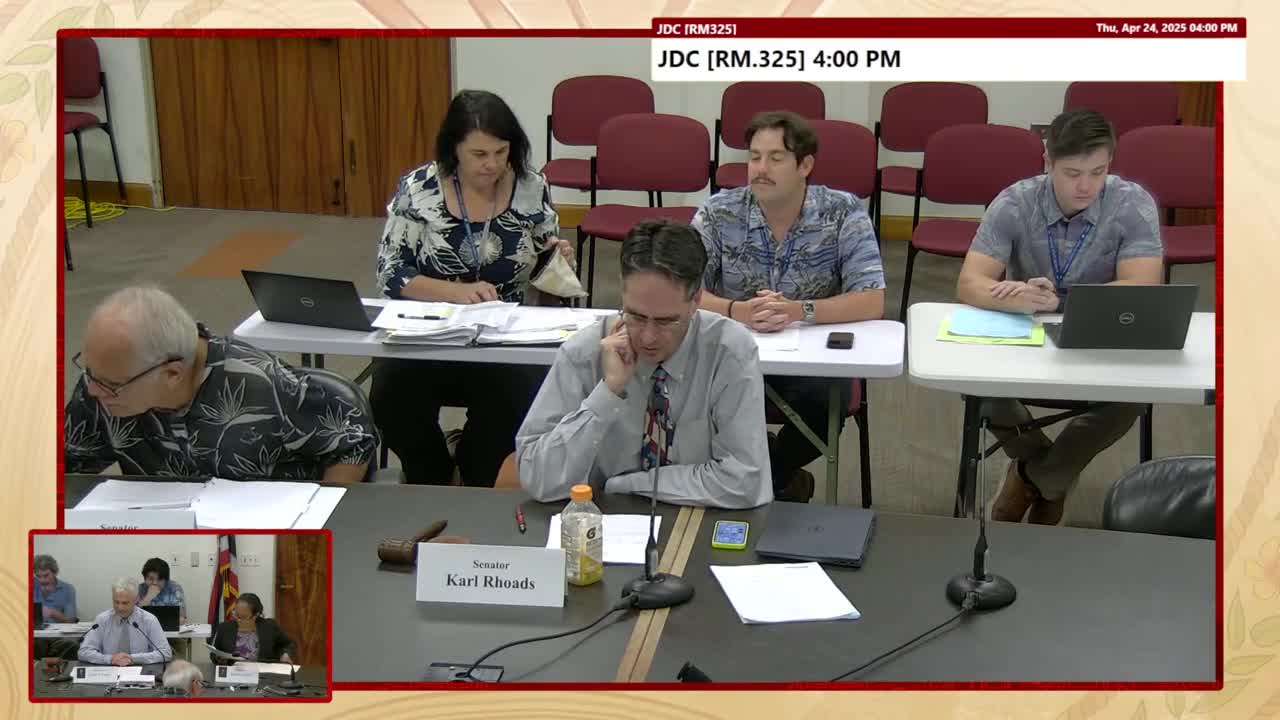
Conference Committee
 8MIN
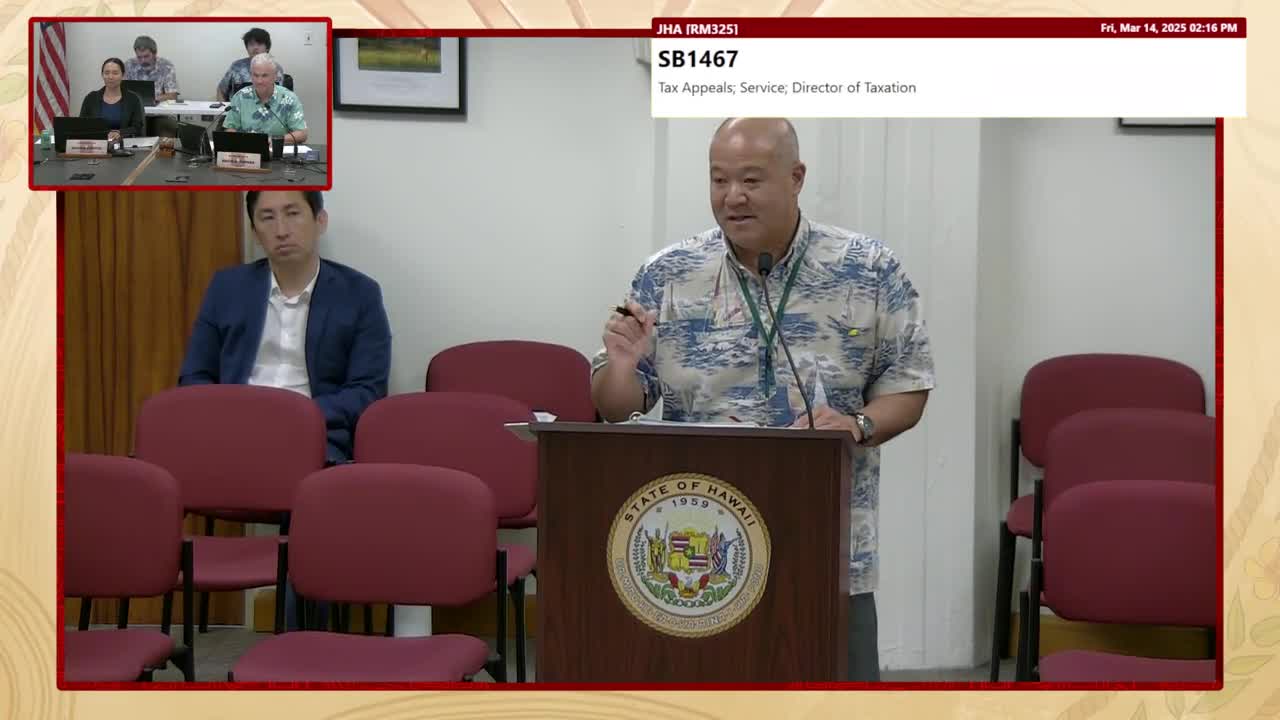
House Standing Committee on Judiciary & Hawaiian Affairs
 9MIN
Senate Standing Committee on Judiciary
41SEC
Senate Standing Committee on Judiciary
Bill Author
Bill Co-Author(s):