SB 1582: Coconut Palm; Tree; Cultural Significance; Food Source; Recognition
- Session Year: 2025-2026
- House: Senate
- Latest Version Date: 2025-03-20
Current Status:
Failed
(2026-03-20: Received notice of all Senate conferees being discharged (Sen. Com. No. 409).)
Introduced
In Committee
First Chamber
In Committee
Second Chamber
Final Decking
Enacted
Recognizes the coconut palm as a culturally significant plant and sustainable staple food source in the State. Effective 7/1/3000. (HD1)
Recognizes the coconut palm as an official, sustainable staple food source in the State.
|
THE SENATE |
S.B. NO. |
1582 |
|
THIRTY-THIRD LEGISLATURE, 2025 |
H.D. 1 |
|
|
STATE OF HAWAII |
|
|
|
|
|
|
|
|
||
|
|
||
A BILL FOR AN ACT
RELATING TO THE COCONUT TREE.
BE IT ENACTED BY THE LEGISLATURE OF THE STATE OF HAWAII:
The legislature further finds that the coconut palm is one of the most useful plants in the world. Early Hawaiians were able to repurpose almost every part of the tree, including using it for food and emergency drinking water, using the oil from the meat as cosmetics for skin and hair, and using the shells to make kitchenware, like spoons, cups, bowls, and containers. Additionally, leaves and husks were used to create cordage, baskets, and roofing thatch, among other goods. The trunks were also used for house construction, canoe building, and drums.
The legislature notes that pursuant to section 226-7, Hawaii Revised Statutes, it is the policy of the State to encourage agriculture by making the best use of natural resources, enhance agricultural growth by providing public incentives and encouraging private initiatives, and promote economically competitive activities that increase Hawaii's agricultural self-sufficiency. Additionally, the legislature believes that increased food security and self-sufficiency are priorities for the State. However, the legislature finds that many of the coconut palm's edible products, including its water and meat, are not being maximized for food security and local food systems, nor is the coconut palm being maximized for agricultural production. As a result, there is limited promotion of the coconut palm for public health, agricultural policies, and food assistance programs.
The legislature recognizes that categorizing coconut palms as a sustainable staple food source could encourage local agricultural production and cultivation. Formal recognition as a food source is also an important first step in maximizing the coconut palm's utilization as a natural resource.
The legislature also finds that coconut palms thrive in Hawaii's tropical climate and are abundant, providing an excellent opportunity for economic development in the State. Recognizing the coconut palm as a food source will support local coconut farmers, processors, and businesses and encourage the growth of new industries and markets for coconut-based products.
The legislature further finds that the coconut palm is an enduring symbol of Native Hawaiian culture, deeply embedded in traditional practices, language, and community life. Historically, the coconut palm provided essential materials for shelter, tools, and weaving, and was revered for its spiritual significance in Native Hawaiian traditions. Beyond its practical uses, the coconut tree represents resilience and sustainability, preserves cultural heritage, revitalizes indigenous knowledge, and reinforces Hawaii's sense of place.
Accordingly, the purpose of this Act is to recognize the coconut palm as a culturally significant plant and sustainable staple food source in Hawaii.
SECTION 2. The Hawaii Revised Statutes is amended by adding a new chapter to title 12, subtitle 6, to be appropriately designated and to read as follows:
"Chapter
coconut palm
§ -1 Coconut palm; cultural significance. The coconut palm (cocos nucifera), or niu in Hawaiian, is established, designated, and recognized as a culturally significant plant in the State."
SECTION 3. Chapter 141, Hawaii Revised Statutes, is amended by adding a new section to be appropriately designated and to read as follows:
"§141- Coconut palm; sustainable staple food source. The coconut palm (cocos nucifera), or niu in Hawaiian, is established, designated, and recognized as a sustainable staple food source in the State."
SECTION 4. New statutory material is underscored.
SECTION 5. This Act shall take effect on July 1, 3000.
Report Title:
Coconut Palm; Tree; Cultural Significance; Food Source; Recognition
Description:
Recognizes the coconut palm as a culturally significant plant and sustainable staple food source in the State. Effective 7/1/3000. (HD1)
The summary description of legislation appearing on this page is for informational purposes only and is not legislation or evidence of legislative intent.
|
THE SENATE |
S.B. NO. |
1582 |
|
THIRTY-THIRD LEGISLATURE, 2025 |
|
|
|
STATE OF HAWAII |
|
|
|
|
|
|
|
|
||
|
|
||
A BILL FOR AN ACT
Relating to the Coconut Tree.
BE IT ENACTED BY THE LEGISLATURE OF THE STATE OF HAWAII:
The legislature further finds that the coconut palm is one of the most useful plants in the world. Early Hawaiians were able to repurpose almost every part of the tree, including using it for food and emergency drinking water, using the oil from the meat as cosmetics for skin and hair, and using the shells to make kitchenware, like spoons, cups, bowls, and containers. Additionally, leaves and husks were used to create cordage, baskets, and roofing thatch, among other goods. The trunks were also used for house construction, canoe building, and drums.
The legislature notes that pursuant to section 226-7, Hawaii Revised Statutes, it is the policy of this State to encourage agriculture by making the best use of natural resources, enhance agricultural growth by providing public incentives and encouraging private initiatives, and promote economically competitive activities that increase Hawaii's agricultural self-sufficiency. Additionally, the legislature believes that increased food security and self-sufficiency are priorities for the State. However, the legislature finds that many of the coconut palm's edible products, including its water and meat, are not being maximized for food security and local food systems, nor is the coconut palm being maximized for agricultural production. As a result, there is limited promotion of the coconut palm for public health, agricultural policies, and food assistance programs.
The legislature recognizes that categorizing coconut palms as a sustainable staple food source could encourage local agricultural production and cultivation. Formal recognition as a food source is also an important first step in maximizing the coconut palm's utilization as a natural resource.
The legislature also finds that coconut palms thrive in Hawaii's tropical climate and are abundant, providing an excellent opportunity for economic development in the State. Recognizing the coconut palm as a food source will support local coconut farmers, processors, and businesses and will encourage the growth of new industries and markets for coconut-based products.
Accordingly, the purpose of this Act is to recognize the coconut palm as a sustainable staple food source in Hawaii.
SECTION 2. Chapter 141, Hawaii Revised Statutes, is amended by adding a new section to be appropriately designated and to read as follows:
"§141- Coconut palm; food source. The coconut palm (cocos nucifera), or niu in Hawaiian, is established, designated, and recognized as a sustainable staple food source in the State."
SECTION 3. New statutory material is underscored.
SECTION 4. This Act shall take effect upon its approval.
|
INTRODUCED BY: |
_____________________________ |
|
|
|
Report Title:
Coconut Palm; Tree; Food Source; Recognition
Description:
Recognizes the coconut palm as an official, sustainable staple food source in the State.
The summary description of legislation appearing on this page is for informational purposes only and is not legislation or evidence of legislative intent.
|
Date
|
Status
|
|---|---|
| Mar 20, 2026 | Received notice of all Senate conferees being discharged (Sen. Com. No. 409). |
| Mar 20, 2026 | Senate Conferee(s) discharged. |
| Dec 8, 2025 | Carried over to 2026 Regular Session. |
| Apr 21, 2025 | Received notice of Senate conferees (Sen. Com. No. 851). |
| Apr 21, 2025 | Senate Conferees Appointed: Gabbard Chair; Richards, Awa. |
| Apr 3, 2025 | Received notice of disagreement (Sen. Com. No. 481). |
| Apr 3, 2025 | Senate disagrees with House amendments. |
| Apr 3, 2025 | Received from House (Hse. Com. No. 449). |
| Apr 2, 2025 | Passed Third Reading with none voting aye with reservations; none voting no (0) and Representative(s) Cochran excused (1). Transmitted to Senate. |
| Apr 2, 2025 | Reported from JHA (Stand. Com. Rep. No. 1757), recommending passage on Third Reading. |
| Mar 27, 2025 | The committee on JHA recommend that the measure be PASSED, UNAMENDED. The votes were as follows: 10 Ayes: Representative(s) Tarnas, Poepoe, Belatti, Hashem, Kahaloa, Perruso, Takayama, Todd, Garcia, Shimizu; Ayes with reservations: none; Noes: none; and 1 Excused: Representative(s) Cochran. |
| Mar 25, 2025 | Bill scheduled to be heard by JHA on Thursday, 03-27-25 2:00PM in House conference room 325 VIA VIDEOCONFERENCE. |
| Mar 21, 2025 | Passed Second Reading as amended in HD 1 and referred to the committee(s) on JHA with none voting aye with reservations; none voting no (0) and Representative(s) Cochran, Garrett, Kapela, Kitagawa, Ward excused (5). |
| Mar 21, 2025 | Reported from AGR (Stand. Com. Rep. No. 1465) as amended in HD 1, recommending passage on Second Reading and referral to JHA. |
| Mar 19, 2025 | The committee on AGR recommend that the measure be PASSED, WITH AMENDMENTS. The votes were as follows: 5 Ayes: Representative(s) Kahaloa, Kusch, Lowen, Perruso, Quinlan; Ayes with reservations: none; Noes: none; and 1 Excused: Representative(s) Ward. |
| Mar 14, 2025 | Bill scheduled for decision making on Wednesday, 03-19-25 10:01AM in conference room 325 VIA VIDEOCONFERENCE. |
| Mar 14, 2025 | The committee(s) on AGR recommend(s) that the measure be deferred until 03-19-25. |
| Mar 12, 2025 | Bill scheduled to be heard by AGR on Friday, 03-14-25 10:00AM in House conference room 325 VIA VIDEOCONFERENCE. |
| Mar 6, 2025 | Referred to AGR, JHA, referral sheet 19 |
| Mar 6, 2025 | Pass First Reading |
| Mar 4, 2025 | Received from Senate (Sen. Com. No. 374). |
| Mar 4, 2025 | Passed Third Reading. Ayes, 25; Aye(s) with reservations: none . Noes, 0 (none). Excused, 0 (none). Transmitted to House. |
| Feb 28, 2025 | One Day Notice 03-04-25. |
| Feb 28, 2025 | Report adopted; Passed Second Reading. |
| Feb 28, 2025 | Reported from AEN (Stand. Com. Rep. No. 810) with recommendation of passage on Second Reading and placement on the calendar for Third Reading. |
| Feb 26, 2025 | The committee(s) on AEN recommend(s) that the measure be PASSED, UNAMENDED. The votes in AEN were as follows: 5 Aye(s): Senator(s) Gabbard, Richards, DeCoite, Rhoads, Awa; Aye(s) with reservations: none ; 0 No(es): none; and 0 Excused: none. |
| Feb 18, 2025 | The committee(s) on AEN has scheduled a public hearing on 02-26-25 1:00PM; Conference Room 224 & Videoconference. |
| Feb 18, 2025 | The committee(s) on AEN deleted the measure from the public hearing scheduled on 02-19-25 1:00PM; CR 224 & Videoconference. |
| Feb 13, 2025 | The committee(s) on AEN has scheduled a public hearing on 02-19-25 1:00PM; Conference Room 224 & Videoconference. |
| Jan 27, 2025 | Referred to AEN. |
| Jan 23, 2025 | Introduced and passed First Reading. |
| Jan 22, 2025 | Pending Introduction. |
|
Date
|
Description
|
Location
|
Votes
|
|
|---|---|---|---|---|
| Apr 2, 2025 | Third Reading | House Floor |
Passed |
|
| Mar 27, 2025 | The committee on JHA recommend that the measure be PASSED, UNAMENDED | House Standing Committee on Judiciary & Hawaiian Affairs |
Passed |
|
| Mar 19, 2025 | The committee on AGR recommend that the measure be PASSED, WITH AMENDMENTS | House Standing Committee on Agriculture & Food Systems |
Passed |
|
| Mar 4, 2025 | Third Reading | Senate Floor |
Passed |
|
| Feb 26, 2025 | The committee(s) on AEN recommend(s) that the measure be PASSED, UNAMENDED | Senate Standing Committee on Agriculture and Environment |
Passed |
This list shows positions taken on this bill by organizations on the date displayed, which is linked to the original source.
Positions by individuals are not included.
|
Organization
|
Position
|
Date
|
|---|---|---|
| Department of Land and Natural Resources | ** Support | |
| Environmental Caucus of the Democratic Party of Hawaiʻi | ** Support | |
| Food+ Policy internship / Food+ Policy Team | *** Support | Feb 26, 2025 |
| Hānai Kaiāulu | ** Support | |
| Hawaii Farmers Union | ** Support | |
| Hawaii Food+ Policy | ** Support | |
| Hawaiʻi Farm Bureau | ** Support | |
| Hawai‘i Farm Bureau | *** Support | Feb 26, 2025 |
| Kahu Aina O Puna | *** Support | Feb 26, 2025 |
| Kingdom of The Hawaiian Islands H.I. | *** Support | Feb 26, 2025 |
| Kuahu Auna O Puna | ** Support | |
| Niu Now/Uluniu | ** Support | |
| Ohana Unity Party | ** Support | |
| Pōhaku Pelemaka | ** Support |
STAND. COM. REP. NO. 1757
Honolulu, Hawaii
, 2025
RE: S.B. No. 1582
H.D. 1
Honorable Nadine K. Nakamura
Speaker, House of Representatives
Thirty-Third State Legislature
Regular Session of 2025
State of Hawaii
Madame:
Your Committee on Judiciary & Hawaiian Affairs, to which was referred S.B. No. 1582, H.D. 1, entitled:
"A BILL FOR AN ACT RELATING TO THE COCONUT TREE,"
begs leave to report as follows:
Your Committee received testimony in support of this measure from the Department of Land and Natural Resources; Niu Now/Uluniu; Hawaii Food+ Policy; Ohana Unity Party; Hawaii Farmers Union; Hawaiʻi Farm Bureau; and two individuals.
Your Committee finds that coconut palms are a significant and underutilized natural resource in Hawaii. Your Committee further finds that the coconut palm is an enduring symbol of Native Hawaiian culture. Therefore, this measure formally recognizes the coconut palm as a culturally significant plant and staple food source in the State.
As affirmed by the record of votes of the members of your Committee on Judiciary & Hawaiian Affairs that is attached to this report, your Committee is in accord with the intent and purpose of S.B. No. 1582, H.D. 1, and recommends that it pass Third Reading.
Respectfully submitted on behalf of the members of the Committee on Judiciary & Hawaiian Affairs,
|
|
|
____________________________ DAVID A. TARNAS, Chair |
|
|
|
|
STAND. COM. REP. NO. 1465
Honolulu, Hawaii
, 2025
RE: S.B. No. 1582
H.D. 1
Honorable Nadine K. Nakamura
Speaker, House of Representatives
Thirty-Third State Legislature
Regular Session of 2025
State of Hawaii
Madame:
Your Committee on Agriculture & Food Systems, to which was referred S.B. No. 1582 entitled:
"A BILL FOR AN ACT RELATING TO THE COCONUT TREE,"
begs leave to report as follows:
Your Committee received testimony in support of this measure from the Department of Land and Natural Resources; Hawaii Farm Bureau; Hawaii Food+ Policy; Hawaii Farmers Union; and one individual.
Your Committee finds that the coconut palm is a historically significant resource that has provided food, water, building materials, and household goods in Hawaii for centuries. Despite its many benefits, the coconut palm's edible products are underutilized and not fully integrated into local food systems, limiting its role in food security and agricultural production.
Your Committee further finds that the coconut palm is an iconic tree that reinforces the natural and cultural identity of Hawaii; it is a sacred and vital resource that sustains Hawaii's land, people, and culture. This measure formally acknowledges the coconut palm's value as a food source and culturally significant plant.
Your Committee has amended this measure by:
(1) Inserting statutory language that recognizes the cultural significance of the coconut palm and including additional related findings in the preamble;
(2) Changing the effective date to July 1, 3000, to encourage further discussion; and
(3) Making technical, nonsubstantive amendments for the purposes of clarity, consistency, and style.
As affirmed by the record of votes of the members of your Committee on Agriculture & Food Systems that is attached to this report, your Committee is in accord with the intent and purpose of S.B. No. 1582, as amended herein, and recommends that it pass Second Reading in the form attached hereto as S.B. No. 1582, H.D. 1, and be referred to your Committee on Judiciary & Hawaiian Affairs.
Respectfully submitted on behalf of the members of the Committee on Agriculture & Food Systems,
|
|
|
____________________________ KIRSTIN KAHALOA, Chair |
|
|
|
|
STAND. COM. REP. NO. 810
Honolulu, Hawaii
RE: S.B. No. 1582
Honorable Ronald D. Kouchi
President of the Senate
Thirty-Third State Legislature
Regular Session of 2025
State of Hawaii
Sir:
Your Committee on Agriculture and Environment, to which was referred S.B. No. 1582 entitled:
"A BILL FOR AN ACT RELATING TO THE COCONUT TREE,"
begs leave to report as follows:
The purpose and intent of this measure is to recognize the coconut palm tree as a sustainable, staple food source in the State.
Your Committee received testimony in support of this measure from the Department of Land and Natural Resources, Hawaiʻi Farm Bureau, Kuahu Auna O Puna, Environmental Caucus of the Democratic Party of Hawaiʻi, Pōhaku Pelemaka, Hānai Kaiāulu, Hawaiʻi Food+ Policy, and thirteen individuals.
Your Committee finds that the coconut palm tree is considered a naturalized Polynesian canoe plant and has been grown in Hawaii for thousands of years. Your Committee recognizes that different parts of the coconut palm, or niu in Hawaiian, can be used for a myriad of uses, including food and emergency drinking water, cosmetic oil, kitchenware, containers, cordage, and construction material. According to testimony received by your Committee, the niu is a drought- and salt-tolerant species that plays a key role in coastal stabilization, erosion control, and carbon sequestration, and its cultivation can support local food production, reduce reliance on imported goods, and enhance food sovereignty. Establishing, designating, and recognizing the coconut palm tree as a sustainable, staple food source in the State aligns with the State's goals for food security, environmental stewardship, and cultural preservation. This measure seeks to bring awareness to the significance of the coconut palm tree in the State to maximize its production and cultivation.
As affirmed by the record of votes of the members of your Committee on Agriculture and Environment that is attached to this report, your Committee is in accord with the intent and purpose of S.B. No. 1582 and recommends that it pass Second Reading and be placed on the calendar for Third Reading.
Respectfully submitted on behalf of the members of the Committee on Agriculture and Environment,
|
|
|
________________________________ MIKE GABBARD, Chair |
|
|
|
|
|
Date
|
Testimony PDF
|
|---|---|
| Mar 27, 2025 | SB1582_HD1_TESTIMONY_JHA_03-27-25_.PDF |
| Mar 13, 2025 | SB1582_TESTIMONY_AGR_03-14-25_.PDF |
| Feb 26, 2025 | SB1582_TESTIMONY_AEN_02-26-25_.PDF |
Discussed in Hearing
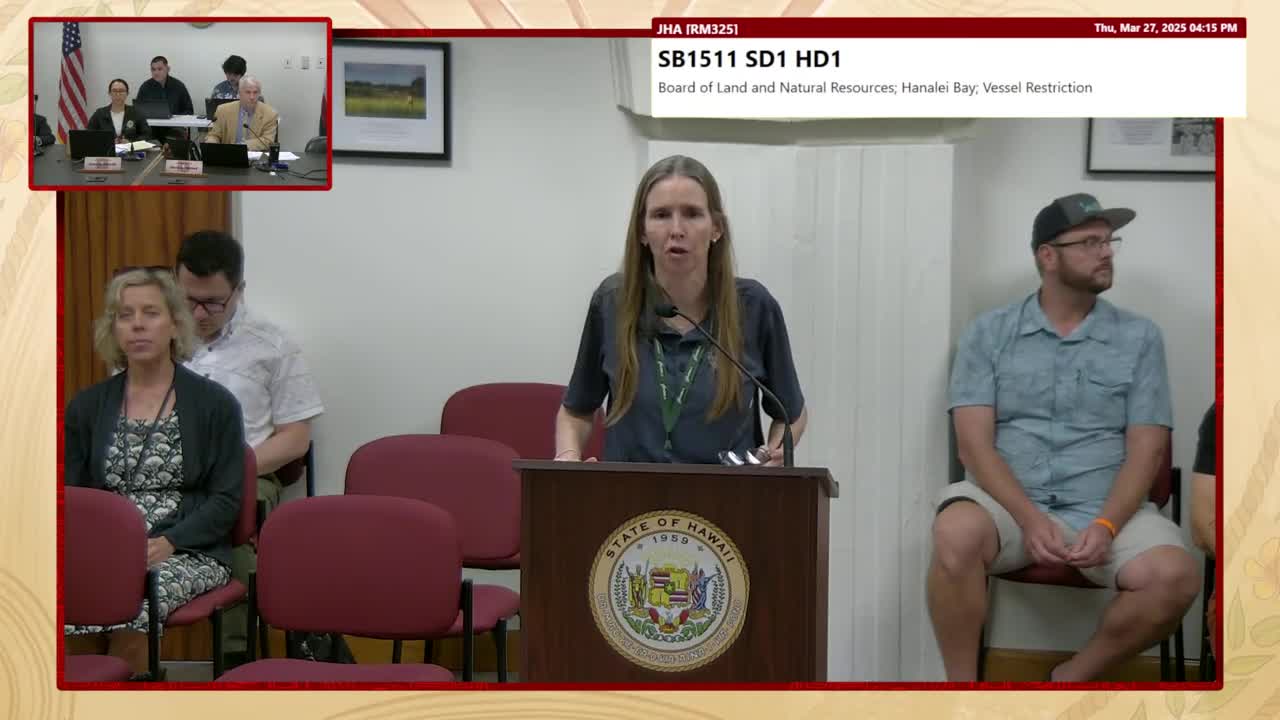 1MIN
House Standing Committee on Judiciary & Hawaiian Affairs
 5MIN
House Standing Committee on Agriculture & Food Systems
 6MIN
House Standing Committee on Agriculture & Food Systems
 10MIN
Senate Standing Committee on Agriculture and Environment
Bill Author