SB 1496: Discrimination in Public Accommodations; Persons with Disabilities; Discriminatory Practices; Places of Public Accommodation
- Session Year: 2025-2026
- House: Senate
- Latest Version Date: 2025-04-01
Current Status:
Failed
(2026-04-02: Received notice of the discharge of all House Conferees (Hse. Com. No. 457).)
Introduced
In Committee
First Chamber
In Committee
Second Chamber
Final Decking
Enacted
Makes it an unlawful discriminatory practice for places of public accommodation to deny a person with a disability full and equal enjoyment of, or information related to, their goods, services, facilities, privileges, advantages, or accommodations using information and communication technology intended for use by the general public as applicants, participants, customers, clients, or visitors. Establishes exceptions. Clarifies that a facility is considered a place of public accommodation regardless of whether its presence in the State is physical or digital. Effective 7/1/3000. (HD2)
Establishes that it shall be an unlawful discriminatory practice for places of public accommodation to deny a person with a disability full and equal enjoyment of, or information related to, their goods, services, facilities, privileges, advantages, or accommodations using information and communication technology intended for use by the general public as applicants, participants, customers, clients, or visitors. Establishes exceptions. Effective 7/1/3000. (HD1)
Establishes that it is an unlawful discriminatory practice for places of public accommodation to deny a person with a disability full and equal enjoyment of information related to their services, facilities, privileges, advantages, or accommodations using information and communication technology intended for use by the general public as applicants, participants, customers, clients, or visitors. Establishes exceptions. Effective 12/31/2050. (SD1)
Establishes that it is an unlawful discriminatory practice for places of public accommodation to deny a person with a disability full and equal enjoyment of information related to their services, facilities, privileges, advantages, or accommodations using information and communication technology intended for use by the general public as applicants, participants, customers, clients, or visitors. Establishes exceptions.
|
THE SENATE |
S.B. NO. |
1496 |
|
THIRTY-THIRD LEGISLATURE, 2025 |
S.D. 1 |
|
|
STATE OF HAWAII |
H.D. 2 |
|
|
|
|
|
|
|
||
|
|
||
A BILL FOR AN ACT
RELATING TO CIVIL RIGHTS.
BE IT ENACTED BY THE LEGISLATURE OF THE STATE OF HAWAII:
The legislature further finds that ready access to and use of information and communication technology is essential for all citizens to have equal access to and full enjoyment of the goods, services, facilities, privileges, advantages, and accommodations of a place of public accommodation. However, websites and applications used by public accommodation providers are too often not accessible to and usable by persons with disabilities, denying them full and equal access.
The legislature additionally finds that existing state and federal laws that prohibit discrimination in public accommodations based on disability should better assist providers of public accommodations and persons with disabilities by affirming and clarifying requirements for electronic access.
Accordingly, the purpose of this Act is to:
(1) Make it an unlawful discriminatory practice for a place of public accommodation to deny a person with a disability full and equal enjoyment of, or information related to, their goods, services, facilities, privileges, advantages, or accommodations using information and communication technology intended for use by the general public; and
(2) Clarify that a facility is considered a place of public accommodation regardless of whether its presence in the State is physical or digital.
SECTION 2. Section 489-2, Hawaii Revised Statutes, is amended as follows:
1. By adding four new definitions to be appropriately inserted and to read:
""Accessible" means the ability to receive, use, and manipulate data and operate controls included in information and communication technology in a manner equivalent to that of individuals who do not have disabilities.
"Application" means software that is designed to run on a device, including a smartphone, tablet, self-service kiosk, wearable technology item, laptop or desktop computer, or another device, and perform or help the user perform a specific task.
"Information and communication technology" means electronic information, software, systems, and equipment used in the creation, manipulation, storage, display, or transmission of data, including internet and intranet systems, websites and interfaces, software applications, operating systems, video and multimedia, telecommunications products, kiosks, information transaction machines, copiers, printers, smartphones, tablets, and laptop and desktop computers.
"Website" means any collection of related web pages, images, videos, or other digital assets placed in one or more computer server-based file archives so that the collection can be accessed over the Internet or through a private computer network."
2. By amending the definition of "place of public accommodation" to read:
""Place
of public accommodation" means a business, accommodation, refreshment,
entertainment, recreation, or transportation facility of any kind whose goods,
services, facilities, privileges, advantages, or accommodations are extended,
offered, sold, or otherwise made available to the general public as customers,
clients, or visitors[.], whether the presence of the business,
accommodation, refreshment, entertainment, recreation, or transportation
facility in the State is physical or digital. By way of example, but not of limitation, "place
of public accommodation" includes facilities of the following
types:
(1) A facility providing services relating to travel or transportation;
(2) An inn, hotel, motel, or other establishment that provides lodging to transient guests;
(3) A restaurant, cafeteria, lunchroom, lunch counter, soda fountain, or other facility principally engaged in selling food for consumption on the premises of a retail establishment;
(4) A shopping center or any establishment that sells goods or services at retail;
(5) An establishment licensed under chapter 281 doing business under a class 4, 5, 7, 8, 9, 10, 11, or 12 license, as defined in section 281-31;
(6) A motion picture theater, other theater, auditorium, convention center, lecture hall, concert hall, sports arena, stadium, or other place of exhibition or entertainment;
(7) A barber shop, beauty shop, bathhouse, swimming pool, gymnasium, reducing or massage salon, or other establishment conducted to serve the health, appearance, or physical condition of persons;
(8) A park, [a] campsite, or trailer
facility, or other recreation facility;
(9) A comfort station; or a dispensary, clinic, hospital, convalescent home, or other institution for the infirm;
(10) A professional office of a health care provider, as defined in section 323D-2, or other similar service establishment;
(11) A mortuary or undertaking establishment; and
(12) An establishment that is physically located within the premises of an establishment otherwise covered by this definition, or within the premises of which is physically located a covered establishment, and which holds itself out as serving patrons of the covered establishment.
No place of public accommodation defined in this section shall be requested to reconstruct any facility or part thereof to comply with this chapter."
SECTION 3. Section 489-5, Hawaii Revised Statutes, is amended to read as follows:
"§489-5
Other discriminatory practices.
(a) It [is] shall be
a discriminatory practice for two or more persons to conspire:
(1) To retaliate or discriminate against a person because the person has opposed an unfair discriminatory practice;
(2) To aid, abet, incite, or coerce a person to engage in a discriminatory practice; or
(3) Wilfully, to obstruct, or prevent, a person from complying with this chapter.
(b) It [is] shall be a
discriminatory practice to deny a person the full and equal enjoyment of the
goods, services, facilities, privileges, advantages, and accommodations of a
place of public accommodations because of the known disability of an individual
with whom the person is known to have a relationship or association.
(c) It shall be a discriminatory practice to deny a person with a disability full and equal enjoyment of the goods, services, facilities, privileges, advantages, or accommodations of a place of public accommodation, or information related to the goods, services, facilities, privileges, advantages, or accommodations of a place of public accommodation, using information and communication technology intended for use by the general public as applicants, participants, customers, clients, or visitors.
Beginning July 1, 2026, a place of public accommodation shall ensure that:
(1) Information and communication technology used to communicate with applicants, participants, customers, clients, visitors, and other members of the public is accessible for full and equal use by persons with disabilities; and
(2) Communications and interactions through information and communication technology with applicants, participants, customers, clients, visitors, and other members of the public with disabilities are as effective as communications and interactions with individuals without disabilities.
For the purposes of this subsection, a website that meets or exceeds the World Wide Web Consortium Web Content Accessibility Guidelines 2.1 Level AA (as the guidelines may be revised) shall be deemed accessible.
A place of public accommodation shall not be deemed to be in violation of this subsection if compliance would impose an undue burden or fundamentally alter the nature of the information and communication technology."
SECTION 4. Statutory material to be repealed is bracketed and stricken. New statutory material is underscored.
SECTION 5. This Act shall take effect on July 1, 3000.
Report Title:
Discrimination in Public Accommodations; Persons with Disabilities; Discriminatory Practices; Places of Public Accommodation
Description:
Makes it an unlawful discriminatory practice for places of public accommodation to deny a person with a disability full and equal enjoyment of, or information related to, their goods, services, facilities, privileges, advantages, or accommodations using information and communication technology intended for use by the general public as applicants, participants, customers, clients, or visitors. Establishes exceptions. Clarifies that a facility is considered a place of public accommodation regardless of whether its presence in the State is physical or digital. Effective 7/1/3000. (HD2)
The summary description of legislation appearing on this page is for informational purposes only and is not legislation or evidence of legislative intent.
|
THE SENATE |
S.B. NO. |
1496 |
|
THIRTY-THIRD LEGISLATURE, 2025 |
S.D. 1 |
|
|
STATE OF HAWAII |
H.D. 1 |
|
|
|
|
|
|
|
||
|
|
||
A BILL FOR AN ACT
RELATING TO CIVIL RIGHTS.
BE IT ENACTED BY THE LEGISLATURE OF THE STATE OF HAWAII:
The legislature further finds that ready access to and use of information and communication technology is essential for all citizens to have equal access to and full enjoyment of the goods, services, facilities, privileges, advantages, and accommodations of a place of public accommodation. However, websites and applications used by public accommodation providers are too often not accessible to and usable by persons with disabilities, denying them full and equal access.
The legislature additionally finds that existing state and federal laws that prohibit discrimination in public accommodations based on disability should better assist providers of public accommodations and persons with disabilities by affirming and clarifying requirements for electronic access.
SECTION 2. Section 489-2, Hawaii Revised Statutes, is amended as follows:
1. By adding four new definitions to be appropriately inserted and to read:
""Accessible" means the ability to receive, use, and manipulate data and operate controls included in information and communication technology in a manner equivalent to that of individuals who do not have disabilities.
"Application" means software that is designed to run on a device, including a smartphone, tablet, self-service kiosk, wearable technology item, laptop or desktop computer, or another device, and perform or help the user perform a specific task.
"Information and communication technology" means electronic information, software, systems, and equipment used in the creation, manipulation, storage, display, or transmission of data, including internet and intranet systems, websites and interfaces, software applications, operating systems, video and multimedia, telecommunications products, kiosks, information transaction machines, copiers, printers, smartphones, tablets, and laptop and desktop computers.
"Website" means any collection of related web pages, images, videos, or other digital assets placed in one or more computer server-based file archives so that the collection can be accessed over the Internet or through a private computer network."
2. By amending the definition of "place of public accommodation" to read:
""Place
of public accommodation" means a business, accommodation, refreshment,
entertainment, recreation, or transportation facility of any kind whose goods,
services, facilities, privileges, advantages, or accommodations are extended,
offered, sold, or otherwise made available to the general public as customers,
clients, or visitors[.], whether the presence of the business,
accommodation, refreshment, entertainment, recreation, or transportation
facility in the State is physical or digital. By way of example, but not of limitation,
place of public accommodation includes facilities of the following types:
(1) A facility providing services relating to travel or transportation;
(2) An inn, hotel, motel, or other establishment that provides lodging to transient guests;
(3) A restaurant, cafeteria, lunchroom, lunch counter, soda fountain, or other facility principally engaged in selling food for consumption on the premises of a retail establishment;
(4) A shopping center or any establishment that sells goods or services at retail;
(5) An establishment licensed under chapter 281 doing business under a class 4, 5, 7, 8, 9, 10, 11, or 12 license, as defined in section 281-31;
(6) A motion picture theater, other theater, auditorium, convention center, lecture hall, concert hall, sports arena, stadium, or other place of exhibition or entertainment;
(7) A barber shop, beauty shop, bathhouse, swimming pool, gymnasium, reducing or massage salon, or other establishment conducted to serve the health, appearance, or physical condition of persons;
(8) A park, [a] campsite, or trailer
facility, or other recreation facility;
(9) A comfort station; or a dispensary, clinic, hospital, convalescent home, or other institution for the infirm;
(10) A professional office of a health care provider, as defined in section 323D-2, or other similar service establishment;
(11) A mortuary or undertaking establishment; and
(12) An establishment that is physically located within the premises of an establishment otherwise covered by this definition, or within the premises of which is physically located a covered establishment, and which holds itself out as serving patrons of the covered establishment.
No place of public accommodation defined in this section shall be requested to reconstruct any facility or part thereof to comply with this chapter."
SECTION 3. Section 489-5, Hawaii Revised Statutes, is amended to read as follows:
"§489-5 Other discriminatory practices. (a) It is a discriminatory practice for two or more persons to conspire:
(1) To retaliate or discriminate against a person because the person has opposed an unfair discriminatory practice;
(2) To aid, abet, incite, or coerce a person to engage in a discriminatory practice; or
(3) Wilfully, to obstruct, or prevent, a person from complying with this chapter.
(b) It is a discriminatory practice to deny a person the full and equal enjoyment of the goods, services, facilities, privileges, advantages, and accommodations of a place of public accommodations because of the known disability of an individual with whom the person is known to have a relationship or association.
(c) It is a discriminatory practice to deny a person with a disability full and equal enjoyment of the goods, services, facilities, privileges, advantages, or accommodations, or information related to the goods, services, facilities, privileges, advantages, or accommodations, using information and communication technology intended for use by the general public as applicants, participants, customers, clients, or visitors.
Beginning July 1, 2026, a place of public accommodation shall:
(1) Ensure that information and communication technology used to communicate with applicants, participants, customers, clients, visitors, and other members of the public is accessible for full and equal use by persons with disabilities; and
(2) Ensure that communications and interactions through information and communication technology with applicants, participants, customers, clients, visitors, and other members of the public with disabilities are as effective as communications and interactions with individuals without disabilities.
For the purposes of this subsection, a website that meets or exceeds the World Wide Web Consortium Web Content Accessibility Guidelines 2.1 Level AA (as the guideline may be revised) shall be deemed accessible. A place of public accommodation shall not be deemed to be in violation of this subsection if compliance would impose an undue burden or fundamentally alter the nature of the information and communication technology."
SECTION 4. Statutory material to be repealed is bracketed and stricken. New statutory material is underscored.
SECTION 5. This Act shall take effect on July 1, 3000.
Report Title:
Discrimination in Public Accommodations; Persons with Disabilities; Discriminatory Practices; Places of Public Accommodation
Description:
Establishes that it shall be an unlawful discriminatory practice for places of public accommodation to deny a person with a disability full and equal enjoyment of, or information related to, their goods, services, facilities, privileges, advantages, or accommodations using information and communication technology intended for use by the general public as applicants, participants, customers, clients, or visitors. Establishes exceptions. Effective 7/1/3000. (HD1)
The summary description of legislation appearing on this page is for informational purposes only and is not legislation or evidence of legislative intent.
|
THE SENATE |
S.B. NO. |
1496 |
|
THIRTY-THIRD LEGISLATURE, 2025 |
S.D. 1 |
|
|
STATE OF HAWAII |
|
|
|
|
|
|
|
|
||
|
|
||
A BILL FOR AN ACT
RELATING TO CIVIL RIGHTS.
BE IT ENACTED BY THE LEGISLATURE OF THE STATE OF HAWAII:
The legislature further finds that ready access to and use of information and communication technology is essential for all citizens to have equal access to and full enjoyment of the goods, services, facilities, privileges, advantages, and accommodations of a place of public accommodation. However, websites and applications used by public accommodation providers are too often not accessible to and usable by persons with disabilities, denying them full and equal access.
The legislature additionally finds that existing state and federal laws that prohibit discrimination in public accommodations based on disability should better assist providers of public accommodations and persons with disabilities by affirming and clarifying requirements for electronic access.
SECTION 2. Section 489-2, Hawaii Revised Statutes, is amended as follows:
1. By adding four new definitions to be appropriately inserted and to read:
""Accessible" means the ability to receive, use, and manipulate data and operate controls included in information and communication technology in a manner equivalent to that of individuals who do not have disabilities.
"Application" means software that is designed to run on a device, including a smartphone, tablet, self-service kiosk, wearable technology item, laptop or desktop computer, or another device, and perform or help the user perform a specific task.
"Information and communication technology" means electronic information, software, systems, and equipment used in the creation, manipulation, storage, display, or transmission of data, including internet and intranet systems, websites and interfaces, software applications, operating systems, video and multimedia, telecommunications products, kiosks, information transaction machines, copiers, printers, smartphones, tablets, and desktop and portable computers.
"Website" means any collection of related web pages, images, videos, or other digital assets placed in one or more computer server-based file archives so that the collection can be accessed over the Internet or through a private computer network."
2. By amending the definition of "place of public accommodation" to read:
""Place
of public accommodation" means a business, accommodation, refreshment,
entertainment, recreation, or transportation facility of any kind whose goods,
services, facilities, privileges, advantages, or accommodations are extended,
offered, sold, or otherwise made available to the general public as customers,
clients, or visitors[.], whether the presence of the business,
accommodation, refreshment, entertainment, recreation, or transportation
facility in the State is physical or digital. By way of example, but not of limitation,
place of public accommodation includes facilities of the following types:
(1) A facility providing services relating to travel or transportation;
(2) An inn, hotel, motel, or other establishment that provides lodging to transient guests;
(3) A restaurant, cafeteria, lunchroom, lunch counter, soda fountain, or other facility principally engaged in selling food for consumption on the premises of a retail establishment;
(4) A shopping center or any establishment that sells goods or services at retail;
(5) An establishment licensed under chapter 281 doing business under a class 4, 5, 7, 8, 9, 10, 11, or 12 license, as defined in section 281-31;
(6) A motion picture theater, other theater, auditorium, convention center, lecture hall, concert hall, sports arena, stadium, or other place of exhibition or entertainment;
(7) A barber shop, beauty shop, bathhouse, swimming pool, gymnasium, reducing or massage salon, or other establishment conducted to serve the health, appearance, or physical condition of persons;
(8) A park, a campsite, or trailer facility, or other recreation facility;
(9) A comfort station; or a dispensary, clinic, hospital, convalescent home, or other institution for the infirm;
(10) A professional office of a health care provider, as defined in section 323D-2, or other similar service establishment;
(11) A mortuary or undertaking establishment; and
(12) An establishment that is physically located within the premises of an establishment otherwise covered by this definition, or within the premises of which is physically located a covered establishment, and which holds itself out as serving patrons of the covered establishment.
No place of public accommodation defined in this section shall be requested to reconstruct any facility or part thereof to comply with this chapter."
SECTION 3. Section 489-5, Hawaii Revised Statutes, is amended to read as follows:
"§489-5 Other discriminatory practices. (a) It is a discriminatory practice for two or more persons to conspire:
(1) To retaliate or discriminate against a person because the person has opposed an unfair discriminatory practice;
(2) To aid, abet, incite, or coerce a person to engage in a discriminatory practice; or
(3) Wilfully, to obstruct, or prevent, a person from complying with this chapter.
(b) It is a discriminatory practice to deny a person the full and equal enjoyment of the goods, services, facilities, privileges, advantages, and accommodations of a place of public accommodations because of the known disability of an individual with whom the person is known to have a relationship or association.
(c) It is a discriminatory practice to deny a person with a disability full and equal enjoyment of the goods, services, facilities, privileges, advantages, or accommodations, or information related to the goods, services, facilities, privileges, advantages, or accommodations using information and communication technology intended for use by the general public as applicants, participants, customers, clients, or visitors.
Beginning July 1, 2026, a place of public accommodation shall:
(1) Ensure that information and communication technology used to communicate with applicants, participants, customers, and other members of the public is accessible for full and equal use by persons with disabilities; and
(2) Ensure that communications and interactions through information and communication technology with applicants, participants, customers, and other members of the public with disabilities are as effective as communications and interactions with individuals without disabilities.
For the purposes of this subsection, a website that meets or exceeds the World Wide Web Consortium Web Content Accessibility Guidelines 2.1 Level AA (as the guideline may be revised) shall be deemed accessible. A public accommodation shall not be deemed to be in violation of this subsection if compliance would impose an undue burden or fundamentally alter the nature of the information and communication technology."
SECTION 4. Statutory material to be repealed is bracketed and stricken. New statutory material is underscored.
SECTION 5. This Act shall take effect on December 31, 2050.
Report Title:
Discrimination in Public Accommodations; Persons with Disabilities; Discriminatory Practices; Places of Public Accommodation
Description:
Establishes that it is an unlawful discriminatory practice for places of public accommodation to deny a person with a disability full and equal enjoyment of information related to their services, facilities, privileges, advantages, or accommodations using information and communication technology intended for use by the general public as applicants, participants, customers, clients, or visitors. Establishes exceptions. Effective 12/31/2050. (SD1)
The summary description of legislation appearing on this page is for informational purposes only and is not legislation or evidence of legislative intent.
|
THE SENATE |
S.B. NO. |
1496 |
|
THIRTY-THIRD LEGISLATURE, 2025 |
|
|
|
STATE OF HAWAII |
|
|
|
|
|
|
|
|
||
|
|
||
A BILL FOR AN ACT
relating to civil rights.
BE IT ENACTED BY THE LEGISLATURE OF THE STATE OF HAWAII:
The legislature further finds that ready access to and use of information and communication technology is essential for all citizens to have equal access to and full enjoyment of the goods, services, facilities, privileges, advantages, and accommodations of a place of public accommodation. However, websites and applications used by public accommodation providers are too often not accessible to and usable by persons with disabilities, denying them full and equal access.
The legislature additionally finds that existing state and federal laws that prohibit discrimination in public accommodations based on disability should better assist providers of public accommodations and persons with disabilities by affirming and clarifying requirements for electronic access.
SECTION 2. Section 489-2, Hawaii Revised Statutes, is amended as follows:
1. By adding four new definitions to be appropriately inserted and to read:
""Accessible" means the ability to receive, use, and manipulate data and operate controls included in information and communication technology in a manner equivalent to that of individuals who do not have disabilities.
"Application" means software that is designed to run on a device, including a smartphone, tablet, self-service kiosk, wearable technology item, laptop or desktop computer, or another device, and perform or help the user perform a specific task.
"Information and communication technology" means electronic information, software, systems, and equipment used in the creation, manipulation, storage, display, or transmission of data, including internet and intranet systems, websites and interfaces, software applications, operating systems, video and multimedia, telecommunications products, kiosks, information transaction machines, copiers, printers, smartphones, tablets, and desktop and portable computers.
"Website" means any collection of related web pages, images, videos, or other digital assets placed in one or more computer server-based file archives so that the collection can be accessed over the Internet or through a private computer network."
2. By amending the definition of "place of public accommodation" to read:
""Place
of public accommodation" means a business, accommodation, refreshment,
entertainment, recreation, or transportation facility of any kind whose goods,
services, facilities, privileges, advantages, or accommodations are extended,
offered, sold, or otherwise made available to the general public as customers,
clients, or visitors[.], whether the presence of the business,
accommodation, refreshment, entertainment, recreation, or transportation
facility in the State is physical or digital. By way of example, but not of limitation,
place of public accommodation includes facilities of the following types:
(1) A facility providing services relating to travel or transportation;
(2) An inn, hotel, motel, or other establishment that provides lodging to transient guests;
(3) A restaurant, cafeteria, lunchroom, lunch counter, soda fountain, or other facility principally engaged in selling food for consumption on the premises of a retail establishment;
(4) A shopping center or any establishment that sells goods or services at retail;
(5) An establishment licensed under chapter 281 doing business under a class 4, 5, 7, 8, 9, 10, 11, or 12 license, as defined in section 281-31;
(6) A motion picture theater, other theater, auditorium, convention center, lecture hall, concert hall, sports arena, stadium, or other place of exhibition or entertainment;
(7) A barber shop, beauty shop, bathhouse, swimming pool, gymnasium, reducing or massage salon, or other establishment conducted to serve the health, appearance, or physical condition of persons;
(8) A park, a campsite, or trailer facility, or other recreation facility;
(9) A comfort station; or a dispensary, clinic, hospital, convalescent home, or other institution for the infirm;
(10) A professional office of a health care provider, as defined in section 323D-2, or other similar service establishment;
(11) A mortuary or undertaking establishment; and
(12) An establishment that is physically located within the premises of an establishment otherwise covered by this definition, or within the premises of which is physically located a covered establishment, and which holds itself out as serving patrons of the covered establishment.
No place of public accommodation defined in this section shall be requested to reconstruct any facility or part thereof to comply with this chapter."
SECTION 3. Section 489-5, Hawaii Revised Statutes, is amended to read as follows:
"§489-5 Other discriminatory practices. (a) It is a discriminatory practice for two or more persons to conspire:
(1) To retaliate or discriminate against a person because the person has opposed an unfair discriminatory practice;
(2) To aid, abet, incite, or coerce a person to engage in a discriminatory practice; or
(3) Wilfully, to obstruct, or prevent, a person from complying with this chapter.
(b) It is a discriminatory practice to deny a person the full and equal enjoyment of the goods, services, facilities, privileges, advantages, and accommodations of a place of public accommodations because of the known disability of an individual with whom the person is known to have a relationship or association.
(c) It is a discriminatory practice to deny a person with a disability full and equal enjoyment of the goods, services, facilities, privileges, advantages, or accommodations, or information related to the goods, services, facilities, privileges, advantages, or accommodations using information and communication technology intended for use by the general public as applicants, participants, customers, clients, or visitors.
Beginning July 1, 2026, a place of public accommodation shall:
(1) Ensure that information and communication technology used to communicate with applicants, participants, customers, and other members of the public is accessible for full and equal use by persons with disabilities; and
(2) Ensure that communications and interactions through information and communication technology with applicants, participants, customers, and other members of the public with disabilities are as effective as communications and interactions with individuals without disabilities.
For purposes of this subsection, a website that meets or exceeds the World Wide Web Consortium Web Content Accessibility Guidelines 2.1 Level AA (as the guideline may be revised) shall be deemed accessible. A public accommodation shall not be deemed to be in violation of this subsection if compliance would impose an undue burden or fundamentally alter the nature of the information and communication technology."
SECTION 4. Statutory material to be repealed is bracketed and stricken. New statutory material is underscored.
SECTION 5. This Act shall take effect upon its approval.
|
INTRODUCED BY: |
_____________________________ |
|
|
|
Report Title:
Discrimination in Public Accommodations; Persons with Disabilities; Discriminatory Practices; Places of Public Accommodation
Description:
Establishes that it is an unlawful discriminatory practice for places of public accommodation to deny a person with a disability full and equal enjoyment of information related to their services, facilities, privileges, advantages, or accommodations using information and communication technology intended for use by the general public as applicants, participants, customers, clients, or visitors. Establishes exceptions.
The summary description of legislation appearing on this page is for informational purposes only and is not legislation or evidence of legislative intent.
|
Date
|
Status
|
|---|---|
| Apr 2, 2026 | Received notice of the discharge of all House Conferees (Hse. Com. No. 457). |
| Apr 1, 2026 | House Conferee(s) discharged. |
| Dec 8, 2025 | Carried over to 2026 Regular Session. |
| Apr 15, 2025 | Received notice of appointment of House conferees (Hse. Com. No. 731). |
| Apr 14, 2025 | House Conferees Appointed: Marten, Poepoe Co-Chairs; Garcia. |
| Apr 8, 2025 | Received notice of disagreement (Sen. Com. No. 774). |
| Apr 8, 2025 | Senate disagrees with House amendments. |
| Apr 8, 2025 | Received from House (Hse. Com. No. 614). |
| Apr 4, 2025 | Passed Third Reading as amended in HD 2 with none voting aye with reservations; none voting no (0) and Representative(s) Cochran excused (1). Transmitted to Senate. |
| Apr 2, 2025 | Forty-eight (48) hours notice Friday, 04-04-25. |
| Apr 2, 2025 | Reported from JHA (Stand. Com. Rep. No. 1777) as amended in HD 2, recommending passage on Third Reading. |
| Mar 25, 2025 | The committee on JHA recommend that the measure be PASSED, WITH AMENDMENTS. The votes were as follows: 10 Ayes: Representative(s) Tarnas, Poepoe, Belatti, Cochran, Hashem, Perruso, Takayama, Todd, Garcia; Ayes with reservations: Representative(s) Shimizu; 0 Noes: none; and 1 Excused: Representative(s) Kahaloa. |
| Mar 21, 2025 | Bill scheduled to be heard by JHA on Tuesday, 03-25-25 2:00PM in House conference room 325 VIA VIDEOCONFERENCE. |
| Mar 18, 2025 | Passed Second Reading as amended in HD 1 and referred to the committee(s) on JHA with none voting aye with reservations; none voting no (0) and Representative(s) Cochran, Ward excused (2). |
| Mar 18, 2025 | Reported from HSH (Stand. Com. Rep. No. 1341) as amended in HD 1, recommending passage on Second Reading and referral to JHA. |
| Mar 13, 2025 | The committee on HSH recommend that the measure be PASSED, WITH AMENDMENTS. The votes were as follows: 9 Ayes: Representative(s) Marten, Olds, Amato, Chun, Keohokapu-Lee Loy, Takayama, Takenouchi, Alcos, Garcia; Ayes with reservations: none; 0 Noes: none; and 0 Excused: none. |
| Mar 7, 2025 | Bill scheduled to be heard by HSH on Thursday, 03-13-25 10:00AM in House conference room 329 VIA VIDEOCONFERENCE. |
| Mar 6, 2025 | Referred to HSH, JHA, referral sheet 19 |
| Mar 6, 2025 | Pass First Reading |
| Mar 4, 2025 | Received from Senate (Sen. Com. No. 354) in amended form (SD 1). |
| Mar 4, 2025 | Report adopted; Passed Third Reading. Ayes, 25; Aye(s) with reservations: none . Noes, 0 (none). Excused, 0 (none). Transmitted to House. |
| Feb 28, 2025 | One Day Notice 03-04-25. |
| Feb 28, 2025 | Reported from JDC (Stand. Com. Rep. No. 1041) with recommendation of passage on Third Reading. |
| Feb 26, 2025 | The committee(s) on JDC recommend(s) that the measure be PASSED, UNAMENDED. The votes in JDC were as follows: 4 Aye(s): Senator(s) Rhoads, Gabbard, Chang, San Buenaventura; Aye(s) with reservations: none ; 0 No(es): none; and 1 Excused: Senator(s) Awa. |
| Feb 21, 2025 | The committee(s) on JDC will hold a public decision making on 02-26-25 9:40AM; Conference Room 016 & Videoconference. |
| Feb 14, 2025 | Report adopted; Passed Second Reading, as amended (SD 1) and referred to JDC. |
| Feb 14, 2025 | Reported from HHS/LBT (Stand. Com. Rep. No. 530) with recommendation of passage on Second Reading, as amended (SD 1) and referral to JDC. |
| Feb 7, 2025 | The committee(s) on LBT recommend(s) that the measure be PASSED, WITH AMENDMENTS. The votes in LBT were as follows: 3 Aye(s): Senator(s) Aquino, Lee, C., Moriwaki; Aye(s) with reservations: none ; 0 No(es): none; and 2 Excused: Senator(s) Ihara, Fevella. |
| Feb 7, 2025 | The committee(s) on HHS recommend(s) that the measure be PASSED, WITH AMENDMENTS. The votes in HHS were as follows: 3 Aye(s): Senator(s) San Buenaventura, Aquino, Hashimoto; Aye(s) with reservations: none ; 0 No(es): none; and 2 Excused: Senator(s) Keohokalole, Fevella. |
| Feb 4, 2025 | The committee(s) on HHS/LBT has scheduled a public hearing on 02-07-25 1:05PM; Conference Room 225 & Videoconference. |
| Jan 27, 2025 | Referred to HHS/LBT, JDC. |
| Jan 23, 2025 | Introduced and passed First Reading. |
| Jan 22, 2025 | Pending Introduction. |
|
Date
|
Description
|
Location
|
Votes
|
|
|---|---|---|---|---|
| Apr 4, 2025 | Third Reading | House Floor |
Passed |
|
| Mar 25, 2025 | The committee on JHA recommend that the measure be PASSED, WITH AMENDMENTS | House Standing Committee on Judiciary & Hawaiian Affairs |
Passed |
|
| Mar 13, 2025 | The committee on HSH recommend that the measure be PASSED, WITH AMENDMENTS | House Standing Committee on Human Services & Homelessness |
Passed |
|
| Mar 4, 2025 | Third Reading | Senate Floor |
Passed |
|
| Feb 26, 2025 | The committee(s) on JDC recommend(s) that the measure be PASSED, UNAMENDED | Senate Standing Committee on Judiciary |
Passed |
|
| Feb 7, 2025 | The committee(s) on LBT recommend(s) that the measure be PASSED, WITH AMENDMENTS | Senate Standing Committee on Labor and Technology |
Passed |
|
| Feb 7, 2025 | The committee(s) on HHS recommend(s) that the measure be PASSED, WITH AMENDMENTS | Senate Standing Committee on Health and Human Services |
Passed |
This list shows positions taken on this bill by organizations on the date displayed, which is linked to the original source.
Positions by individuals are not included.
|
Organization
|
Position
|
Date
|
|---|---|---|
| Deaf and Blind Task Force | ** Support | |
| Department of Health | *** Support | Feb 7, 2025 |
| Disability and Communication Access Board | ** Support | |
| Hawaii Disability Rights Center | ** Support | |
| Hawaii Self-Advocacy Advisory Council | ** Support | |
| Hawaii Self-Advocacy Advisory Council | ** Support | |
| Hawaii Self-Advocacy Advisory Council | *** Support | Mar 12, 2025 |
| Hawaii State Committee of Blind Vendors | ** Support | |
| Hawaii State Council on Developmental Disabilities | *** Support | Mar 25, 2025 |
| Hawaii Civil Rights Commission | ** Support | |
| National Federation of the Blind of Hawaii | ** Support | |
| National Federation of the Blind of Hawaii | *** Support | Mar 25, 2025 |
| State Council on Developmental Disabilities | ** Support | |
| State Health Planning and Development Agency | ** Support |
STAND. COM. REP. NO. 1777
Honolulu, Hawaii
, 2025
RE: S.B. No. 1496
S.D. 1
H.D. 2
Honorable Nadine K. Nakamura
Speaker, House of Representatives
Thirty-Third State Legislature
Regular Session of 2025
State of Hawaii
Madame:
Your Committee on Judiciary & Hawaiian Affairs, to which was referred S.B. No. 1496, S.D. 1, H.D. 1, entitled:
"A BILL FOR AN ACT RELATING TO CIVIL RIGHTS,"
begs leave to report as follows:
Your Committee received testimony in support of this measure from the State Health Planning and Development Agency; Disability and Communication Access Board; Hawaii Civil Rights Commission; State Council on Developmental Disabilities; Hawaii Self-Advocacy Advisory Council; Hawaii Disability Rights Center; National Federation of the Blind of Hawaii; and ten individuals. Your Committee received comments on this measure from the Department of Human Services.
Your Committee finds that advancements in technology have altered how businesses and service providers communicate with their customers and the public, including through the use of websites and applications on mobile devices. However, these advancements in technology may not accommodate persons with disabilities, denying them full and equal access. This measure addresses this challenge by ensuring that places of public accommodation provide equal access to digital information and service persons with disabilities.
Your Committee has amended this measure by making technical, nonsubstantive amendments for the purposes of clarity, consistency, and style.
As affirmed by the record of votes of the members of your Committee on Judiciary & Hawaiian Affairs that is attached to this report, your Committee is in accord with the intent and purpose of S.B. No. 1496, S.D. 1, H.D. 1, as amended herein, and recommends that it pass Third Reading in the form attached hereto as S.B. No. 1496, S.D. 1, H.D. 2.
Respectfully submitted on behalf of the members of the Committee on Judiciary & Hawaiian Affairs,
|
|
|
____________________________ DAVID A. TARNAS, Chair |
|
|
|
|
STAND. COM. REP. NO. 1341
Honolulu, Hawaii
, 2025
RE: S.B. No. 1496
S.D. 1
H.D. 1
Honorable Nadine K. Nakamura
Speaker, House of Representatives
Thirty-Third State Legislature
Regular Session of 2025
State of Hawaii
Madame:
Your Committee on Human Services & Homelessness, to which was referred S.B. No. 1496, S.D. 1, entitled:
"A BILL FOR AN ACT RELATING TO CIVIL RIGHTS,"
begs leave to report as follows:
Your Committee received testimony in support of this measure from the State Council on Developmental Disabilities; State Health Planning and Development Agency; Disability and Communication Access Board; Hawaii Civil Rights Commission; Hawaii Disability Rights Center; Hawaii Self-Advocacy Advisory Council; National Federation of the Blind of Hawaii; and seven individuals. Your Committee received comments on this measure from the Department of Human Services.
Your Committee finds that the digital era has transformed how businesses and service providers interact with customers, with websites and mobile applications now serving as primary platforms for reservations, orders, sales, and access to essential information. Your Committee further finds that equitable access to these digital platforms is critical to ensuring that all individuals, including those with disabilities, can fully benefit from the goods, services, and amenities offered by places of public accommodation. While state and federal laws prohibit discrimination in public accommodations based on disability, clearer guidelines are needed to support businesses in implementing accessible electronic services. This measure seeks to address these challenges by explicitly prohibiting places of public accommodation from restricting access to goods, services, and information through digital platforms, ensuring that persons with disabilities receive full and equal access in the modern information landscape.
Your Committee has amended this measure by:
(1) Changing the effective date to July 1, 3000, to encourage further discussion; and
(2) Making technical, nonsubstantive amendments for the purposes of clarity, consistency, and style.
As affirmed by the record of votes of the members of your Committee on Human Services & Homelessness that is attached to this report, your Committee is in accord with the intent and purpose of S.B. No. 1496, S.D. 1, as amended herein, and recommends that it pass Second Reading in the form attached hereto as S.B. No. 1496, S.D. 1, H.D. 1, and be referred to your Committee on Judiciary & Hawaiian Affairs.
Respectfully submitted on behalf of the members of the Committee on Human Services & Homelessness,
|
|
|
____________________________ LISA MARTEN, Chair |
STAND. COM. REP. NO. 1041
Honolulu, Hawaii
RE: S.B. No. 1496
S.D. 1
Honorable Ronald D. Kouchi
President of the Senate
Thirty-Third State Legislature
Regular Session of 2025
State of Hawaii
Sir:
Your Committee on Judiciary, to which was referred S.B. No. 1496, S.D. 1, entitled:
"A BILL FOR AN ACT RELATING TO CIVIL RIGHTS,"
begs leave to report as follows:
The purpose and intent of this measure is to:
(1) Establish that it is an unlawful discriminatory practice for places of public accommodation to deny a person with a disability full and equal enjoyment of information related to their services, facilities, privileges, advantages, or accommodations using information and communication technology intended for use by the general public as applicants, participants, customers, clients, or visitors; and
(2) Establish exceptions.
Your Committee received testimony in support of this measure from the State Council on Developmental Disabilities, Disability and Communication Access Board, Hawaiʻi Civil Rights Commission, National Federation of the Blind of Hawaii, Hawaii State Committee of Blind Vendors, Hawaii Disability Rights Center, and seven individuals.
Your Committee received comments on this measure from the Department of Human Services and one individual.
Your Committee finds that the technological revolution has fundamentally changed how providers of public accommodations communicate with customers and the public. Providers now provide much of their information and services electronically, including using websites and digital applications to allow customers to make reservations, view menus, place orders, and view product information. Electronic access to public accommodations has therefore become increasingly important to persons with disabilities in the State. This measure promotes equity and inclusion by ensuring that individuals with disabilities have equal access to digital information and services.
Your Committee notes that in Robles v. Domino's Pizza, 913 F.3d 898 (2019), the Ninth Circuit Court of Appeals held that the Americans with Disabilities Act (ADA) applied to the Domino's website and app because it "impede[d] access to the goods and services of its physical pizza franchiseswhich are places of public accommodation." The court emphasized that the "nexus between [the] website and app and physical restaurants...is critical" to the public accommodation analysis. Although the Robles decision dealt with the federal ADA and not the Hawaii public accommodations law, your Committee respectfully requests that the subsequent Committees to which this measure is referred consider this issue.
Your Committee also notes that while this measure would provide an exemption to digital public accommodations in situations of undue hardship, that exemption is not extended to physical accommodations as well. Your Committee respectfully requests that the subsequent Committees to which this measure is referred also consider this issue.
As affirmed by the record of votes of the members of your Committee on Judiciary that is attached to this report, your Committee is in accord with the intent and purpose of S.B. No. 1496, S.D. 1, and recommends that it pass Third Reading.
Respectfully submitted on behalf of the members of the Committee on Judiciary,
|
|
|
________________________________ KARL RHOADS, Chair |
|
|
|
|
STAND. COM. REP. NO. 530
Honolulu, Hawaii
RE: S.B. No. 1496
S.D. 1
Honorable Ronald D. Kouchi
President of the Senate
Thirty-Third State Legislature
Regular Session of 2025
State of Hawaii
Sir:
Your Committees on Health and Human Services and Labor and Technology, to which was referred S.B. No. 1496 entitled:
"A BILL FOR AN ACT RELATING TO CIVIL RIGHTS,"
beg leave to report as follows:
The purpose and intent of this measure is to:
(1) Establish that it is an unlawful discriminatory practice for places of public accommodation to deny a person with a disability full and equal enjoyment of information related to their services, facilities, privileges, advantages, or accommodations using information and communication technology intended for use by the general public as applicants, participants, customers, clients, or visitors; and
(2) Establish exceptions.
Your Committees received testimony in support of this measure from the Hawaiʻi State Council on Developmental Disabilities, State Health Planning and Development Agency, National Federation of the Blind of Hawaii, Deaf and Blind Task Force, Hawaii Disability Rights Center, and ten individuals.
Your Committees received comments on this measure from the Department of Human Services and one individual.
Your Committees find that the information age is changing how providers of public accommodations communicate with customers and the public, including the use of technologies such as websites and applications on smartphones and other mobile devices to take reservations, view menus, place orders, make sales, and provide product information. Your Committees further find that existing state and federal laws that prohibit discrimination in public accommodations based on disability should better assist providers of public accommodations and persons with disabilities by affirming and clarifying requirements for electronic access. This measure ensures that individuals with disabilities in the State have equal access to digital information and services, aligning with the State's collective commitment to equity, inclusion, and civil rights.
Your Committees have amended this measure by:
(1) Inserting an effective date of December 31, 2050, to encourage further discussion; and
(2) Making a technical, nonsubstantive amendment for the purposes of clarity and consistency.
As affirmed by the records of votes of the members of your Committees on Health and Human Services and Labor and Technology that are attached to this report, your Committees are in accord with the intent and purpose of S.B. No. 1496, as amended herein, and recommend that it pass Second Reading in the form attached hereto as S.B. No. 1496, S.D. 1, and be referred to your Committee on Judiciary.
Respectfully submitted on behalf of the members of the Committees on Health and Human Services and Labor and Technology,
|
________________________________ HENRY J.C. AQUINO, Chair |
|
________________________________ JOY A. SAN BUENAVENTURA, Chair |
|
Date
|
Testimony PDF
|
|---|---|
| Mar 25, 2025 | SB1496_HD1_TESTIMONY_JHA_03-25-25_.PDF |
| Mar 12, 2025 | SB1496_SD1_TESTIMONY_HSH_03-13-25_.PDF |
| Feb 25, 2025 | SB1496_SD1_TESTIMONY_JDC_02-26-25_.PDF |
| Feb 7, 2025 | SB1496_TESTIMONY_HHS-LBT_02-07-25_.PDF |
Discussed in Hearing
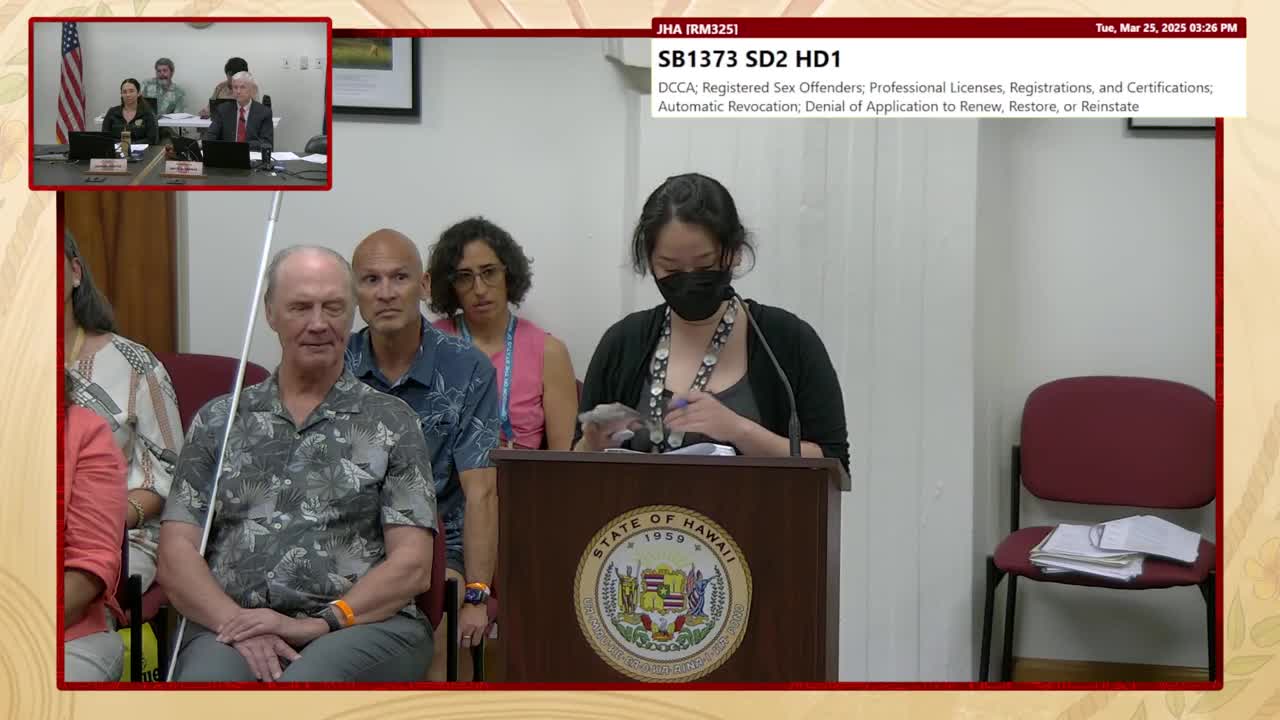 21MIN
House Standing Committee on Judiciary & Hawaiian Affairs
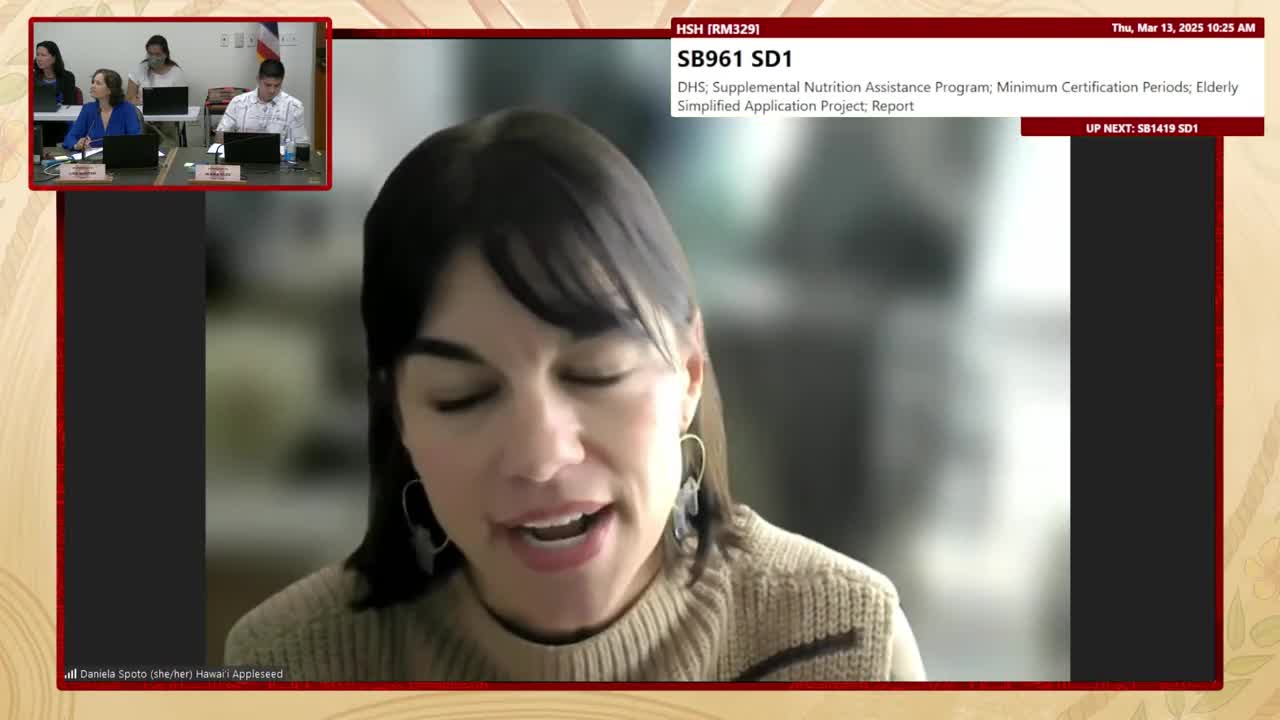 17MIN
House Standing Committee on Human Services & Homelessness
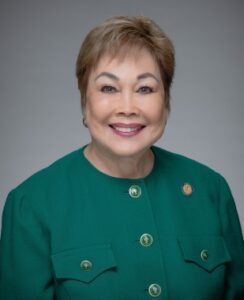
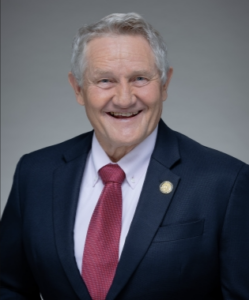
Bill Author