SB 1035: Consumer Protection; Unfair or Deceptive Acts or Practices; Live-Event Tickets; Short-Term Lodging; Disclosures; Total Price; Junk Fees
- Session Year: 2025-2026
- House: Senate
- Latest Version Date: 2025-04-04
Current Status:
Failed
(2025-12-08: Carried over to 2026 Regular Session.)
Introduced
In Committee
First Chamber
In Committee
Second Chamber
Final Decking
Enacted
Makes it an unfair or deceptive act or practice for businesses to: offer, display, or advertise the price of live-ticket events or short-term lodging without clearly and conspicuously disclosing the total price; and misrepresent any fees or charges in any offer, display, or advertisement for the sale of live-event tickets or short-term lodging. Effective 7/1/3000. (HD2)
Makes it an unfair or deceptive act or practice for businesses to: offer, display, or advertise the price of live-ticket events or short-term lodging without clearly and conspicuously disclosing the total price; and misrepresent any fees or charges in any offer, display, or advertisement for the sale of live-event tickets or short-term lodging. Effective 7/1/3000. (HD1)
Prohibits businesses from offering, displaying, or advertising the price of a live-event tickets or short-term lodging without clearly and conspicuously disclosing the maximum total of all fees or charges; provided that government charges, shipping charges, and fees or charges for optional goods or services may be excluded. Requires businesses to disclose clearly and conspicuously certain information, including the final amount of payment, before the consumer consents to pay for the live-event ticket or short-term lodging. Establishes that misrepresentation of any fees or charges in offers, displays, or advertisements for live-event tickets or short-term lodging by businesses constitutes an unfair or deceptive practice. Effective 7/1/2050. (SD2)
Prohibits businesses from offering, displaying, or advertising any price of a live-event tickets or short-term lodging without clearly and conspicuously disclosing the maximum total of all fees or charges; provided that government charges, shipping charges, and fees or charges for optional goods or services may be excluded. Requires businesses to disclose clearly and conspicuously certain information, including the final amount of payment, before the consumer consents to pay for the live-event ticket or short-term lodging. Establishes that misrepresentation of any fees or charges in offers, displays, or advertisements for live-event tickets or short-term lodging by businesses constitutes an unfair or deceptive practice. (SD1)
Requires businesses to clearly and conspicuously disclose the total price of all fees or charges that a consumer may have to pay for any live-event tickets or short-term lodging before the consumer consents to pay. Prohibits any business from charging a consumer any additional hidden or mandatory fees that were not disclosed before the time of purchase. Prohibits a business from offering, displaying, or advertising any covered goods or services without clearly and conspicuously disclosing the total price.
|
THE SENATE |
S.B. NO. |
1035 |
|
THIRTY-THIRD LEGISLATURE, 2025 |
S.D. 2 |
|
|
STATE OF HAWAII |
H.D. 2 |
|
|
|
|
|
|
|
||
|
|
||
A BILL FOR AN ACT
RELATING TO CONSUMER PROTECTION.
BE IT ENACTED BY THE LEGISLATURE OF THE STATE OF HAWAII:
The legislature also finds that consumers increasingly face widespread and growing unfair and deceptive fee practices that make it harder to identify how much something will ultimately cost. Unfortunately, the Internet and the ability to purchase goods or services online have only exacerbated the practice of charging mandatory junk fees that are not disclosed until after the transaction begins. The practice of charging junk fees and other undisclosed mandatory costs is called "drip pricing". Drip pricing is most prevalent in practices involving fees for live-event tickets and short-term lodging and other places of temporary sleeping accommodations, such as hotels, motels, inns, short-term rentals, and vacation rentals.
The legislature further finds that according to the Federal Trade Commission, in the last few years alone, tens of thousands of Americans have expressed displeasure upon discovering the cost of their hotel stays were significantly higher than expected due to hidden resort fees and other mandatory charges in addition to the advertised price. Consumers have also complained about purchasing tickets to a live-event online and finding out that the quoted ticket price had almost doubled by the time they reached the final checkout page. Consumers have confronted a host of mysterious, mandatory charges labeled as "convenience", "processing", or "service" fees that are nondescriptive and confusing. These practices are frustrating for consumers when they shop for travel and entertainment, especially because these purchases can represent significant expenditures to their already strained finances.
The legislature additionally finds that the Federal Trade Commission issued a final rule on January 10, 2025, to address certain unfair or deceptive practices involving fees or charges for live-event tickets and short-term lodging. This final rule serves as a guidance for the State to enhance its consumer protection laws and allow consumers to make better informed decisions when purchasing live-event tickets or deciding where to stay on a short-term basis by leveling the playing field for honest businesses in these industries that truthfully and transparently disclose their pricing information.
Accordingly, the purpose of this Act is to make it an unfair or deceptive act or practice for businesses to:
(1) Offer, display, or advertise the price of live-event tickets or short-term lodging without clearly and conspicuously disclosing the total price as prominently or more prominently than other pricing information, except the final amount of payment; and
(2) Misrepresent any fees or charges in any offer, display, or advertisement for the sale of live-event tickets and short-term lodging.
SECTION 2. Chapter 481B, Hawaii Revised Statutes, is amended by adding a new section to part I to be appropriately designated and to read as follows:
"§481B- Live-event tickets; short-term lodgings; total price; disclosure required; prohibited. (a) It shall be an unfair or deceptive practice in violation of section 480-2 and a violation of this part for any business to offer, display, or advertise any price of a covered good or service without clearly and conspicuously disclosing the total price.
(b) In any offer, display, or advertisement that represents the price of a covered good or service, a business shall disclose the total price more prominently than any other pricing information; provided that when the final amount of payment for the transaction is displayed, the final amount of payment shall be disclosed more prominently than, or as prominently as, the total price.
(c) A business shall disclose clearly and conspicuously, before the consumer consents to pay for any covered good or service:
(1) The nature, purpose, and amount of any fee or charge imposed on the transaction that has been excluded from the total price and the identity of the good or service for which the fee or charge is imposed; and
(2) The final amount of payment for the transaction.
(d) For purposes of meeting the clearly and conspicuously requirements under subsection (c):
(1) In any communication that is solely visual or solely audible, the disclosure shall be made through the same means through which the communication is presented. In any communication made through both visual and audible means, such as a television advertisement, the disclosure shall be presented simultaneously in both the visual and audible portions of the communication even if the representation requiring the disclosure is made in only one means;
(2) A visual disclosure, by its size, contrast, location, the length of time it appears, and other characteristics, shall stand out from any accompanying text or other visual elements so that the visual disclosure is easily noticed, read, and understood;
(3) An audible disclosure, including by telephone or streaming video, shall be delivered in a volume, speed, and cadence sufficient for ordinary consumers to easily hear and understand the audible disclosure;
(4) In any communication using an interactive electronic medium, such as the Internet, a mobile application, or software, the disclosure shall be unavoidable;
(5) The disclosure shall use diction and syntax understandable to ordinary consumers and shall appear in each language in which the representation that requires the disclosure appears;
(6) The disclosure shall comply with these requirements in each medium through which the disclosure is received, including all electronic devices and face-to-face communications; and
(7) The disclosure shall not be contradicted or mitigated by, or inconsistent with, anything else in the communication;
provided that when the representation or sales practice targets a specific audience, such as children, older adults, or the terminally ill, members of that group shall be considered ordinary consumers.
(e) In any offer, display, or advertisement for a covered good or service, it shall be an unfair or deceptive act or practice in violation of section 480-2 and a violation of this part for any business to misrepresent any fee or charge, including but not limited to:
(1) The nature, purpose, amount, or refundability of any fee or charge; and
(2) The identity of the good or service for which the fee or charge is imposed.
(f) For the purposes of this section:
"Ancillary good or service" means any additional goods or services offered to a consumer as part of the same transaction.
"Business" means a person that offers goods or services, including but not limited to online, in mobile applications, or at physical locations.
"Clearly and conspicuously" refers to a required disclosure that is easily noticeable (i.e., difficult to miss) and easily understandable by ordinary consumers.
"Covered good or service" means:
(1) Live-event tickets; or
(2) Short-term lodging, including temporary sleeping accommodations at a hotel, motel, inn, short-term rental, vacation rental, or other place of lodging.
"Government charges" means the fees or charges imposed on the transaction by a federal, state, tribal, or local government agency, department, or unit.
"Pricing information" means any information relating to an amount that a consumer may pay.
"Shipping charges" means the fees or charges that reasonably reflect the amount a business incurs to send physical goods to a consumer, including through the United States Postal Service, private mail and shipping services, or by freight.
"Total price" means the maximum total of all fees or charges that a consumer shall pay for any good or service and any mandatory ancillary good or service; provided that government charges, shipping charges, and fees or charges for any optional ancillary good or service may be excluded."
SECTION 3. This Act does not affect rights and duties that matured, penalties that were incurred, and proceedings that were begun before its effective date.
SECTION 4. New statutory material is underscored.
SECTION 5. This Act shall take effect on July 1, 3000.
Report Title:
Consumer Protection; Unfair or Deceptive Acts or Practices; Live-Event Tickets; Short-Term Lodging; Disclosures; Total Price; Junk Fees
Description:
Makes it an unfair or deceptive act or practice for businesses to: offer, display, or advertise the price of live-ticket events or short-term lodging without clearly and conspicuously disclosing the total price; and misrepresent any fees or charges in any offer, display, or advertisement for the sale of live-event tickets or short-term lodging. Effective 7/1/3000. (HD2)
The summary description of legislation appearing on this page is for informational purposes only and is not legislation or evidence of legislative intent.
|
THE SENATE |
S.B. NO. |
1035 |
|
THIRTY-THIRD LEGISLATURE, 2025 |
S.D. 2 |
|
|
STATE OF HAWAII |
H.D. 1 |
|
|
|
|
|
|
|
||
|
|
||
A BILL FOR AN ACT
RELATING TO CONSUMER PROTECTION.
BE IT ENACTED BY THE LEGISLATURE OF THE STATE OF HAWAII:
The legislature also finds that consumers increasingly face widespread and growing unfair and deceptive fee practices that make it harder to identify how much something will ultimately cost. Unfortunately, the Internet and the ability to purchase goods or services online have only exacerbated the practice of charging mandatory junk fees that are not disclosed until after the transaction begins. The practice of charging junk fees and other undisclosed mandatory costs is called "drip pricing". Drip pricing is most prevalent in practices involving fees for live-event tickets and short-term lodging and other places of temporary sleeping accommodations, such as hotels, motels, inns, short-term rentals, and vacation rentals.
The legislature further finds that according to the Federal Trade Commission, in the last few years alone, tens of thousands of Americans have expressed displeasure upon discovering the cost of their hotel stays were significantly higher than expected due to hidden resort fees and other mandatory charges in addition to the advertised price. Consumers have also complained about purchasing tickets to a live-event online and finding out that the quoted ticket price had almost doubled by the time they reached the final checkout page. Consumers have confronted a host of mysterious, mandatory charges labeled as "convenience", "processing", or "service" fees that are nondescriptive and confusing. These practices are frustrating for consumers when they shop for travel and entertainment, especially because these purchases can represent significant expenditures to their already strained finances.
The legislature additionally finds that the Federal Trade Commission issued a final rule on January 10, 2025, to address certain unfair or deceptive practices involving fees or charges for live-event tickets and short-term lodging. This final rule serves as a guidance for the State to enhance its consumer protection laws and allow consumers to make better informed decisions when purchasing live-event tickets or deciding where to stay on a short-term basis by leveling the playing field for honest businesses in these industries that truthfully and transparently disclose their pricing information.
Accordingly, the purpose of this Act is to:
(1) Make it an unfair or deceptive act or practice for businesses to offer, display, or advertise the price of live-event tickets or short-term lodging without clearly and conspicuously disclosing the total price as prominently or more prominently than other pricing information, except the final amount of payment; and
(2) Make it an unfair or deceptive act or practice for businesses to misrepresent any fees or charges in any offer, display, or advertisement for the sale of live-event tickets and short-term lodging.
SECTION 2. Chapter 481B, Hawaii Revised Statutes, is amended by adding a new section to part I to be appropriately designated and to read as follows:
"§481B- Live-event tickets; short-term lodgings; total price; disclosure required; prohibited. (a) It is an unfair or deceptive practice in violation of section 480-2 and a violation of this part for any business to offer, display, or advertise any price of a covered good or service without clearly and conspicuously disclosing the total price.
(b) In any offer, display, or advertisement that represents the price of a covered good or service, a business shall disclose the total price more prominently than any other pricing information, except when the final amount of payment for the transaction is displayed, the final amount of payment shall be disclosed more prominently than, or as prominently as, the total price.
(c) A business shall disclose clearly and conspicuously, before the consumer consents to pay for any covered good or service:
(1) The nature, purpose, and amount of any fee or charge imposed on the transaction that has been excluded from the total price and the identity of the good or service for which the fee or charge is imposed; and
(2) The final amount of payment for the transaction.
(d) For purposes of meeting the clearly and conspicuously requirements under subsection (c), the disclosure shall:
(1) In any communication that is solely visual or solely audible, the disclosure shall be made through the same means through which the communication is presented. In any communication made through both visual and audible means, such as a television advertisement, the disclosure shall be presented simultaneously in both the visual and audible portions of the communication even if the representation requiring the disclosure is made in only one means;
(2) A visual disclosure, by its size, contrast, location, the length of time it appears, and other characteristics, shall stand out from any accompanying text or other visual elements so that the visual disclosure is easily noticed, read, and understood;
(3) An audible disclosure, including by telephone or streaming video, shall be delivered in a volume, speed, and cadence sufficient for ordinary consumers to easily hear and understand the audible disclosure;
(4) In any communication using an interactive electronic medium, such as the Internet, a mobile application, or software, the disclosure shall be unavoidable;
(5) The disclosure shall use diction and syntax understandable to ordinary consumers and shall appear in each language in which the representation that requires the disclosure appears;
(6) The disclosure shall comply with these requirements in each medium through which the disclosure is received, including all electronic devices and face-to-face communications; and
(7) The disclosure shall not be contradicted or mitigated by, or inconsistent with, anything else in the communication;
provided that when the representation or sales practice targets a specific audience, such as children, older adults, or the terminally ill, members of that group shall be considered ordinary consumers.
(e) In any offer, display, or advertisement for a covered good or service, it shall be an unfair or deceptive act or practice in violation of section 480-2 and a violation of this part for any business to misrepresent any fee or charge, including but not limited to:
(1) The nature, purpose, amount, or refundability of any fee or charge; and
(2) The identity of the good or service for which the fee or charge is imposed.
(f) For the purposes of this section:
"Ancillary good or service" means any additional goods or services offered to a consumer as part of the same transaction.
"Business" means a person that offers goods or services, including but not limited to online, in mobile applications, or at physical locations.
"Clearly and conspicuously" refers to a required disclosure that is easily noticeable (i.e., difficult to miss) and easily understandable by ordinary consumers.
"Covered good or service" means:
(1) Live-event tickets; or
(2) Short-term lodging, including temporary sleeping accommodations at a hotel, motel, inn, short-term rental, vacation rental, or other place of lodging.
"Government charges" means the fees or charges imposed on the transaction by a federal, state, tribal, or local government agency, department, or unit.
"Pricing information" means any information relating to an amount that a consumer may pay.
"Shipping charges" means the fees or charges that reasonably reflect the amount a business incurs to send physical goods to a consumer, including through the United States Postal Service, private mail and shipping services, or by freight.
"Total price" means the maximum total of all fees or charges that a consumer shall pay for any good or service and any mandatory ancillary good or service; provided that government charges, shipping charges, and fees or charges for any optional ancillary good or service may be excluded."
SECTION 3. This Act does not affect rights and duties that matured, penalties that were incurred, and proceedings that were begun before its effective date.
SECTION 4. New statutory material is underscored.
SECTION 5. This Act shall take effect on July 1, 3000.
Report Title:
Consumer Protection; Unfair or Deceptive Acts or Practices; Live-Event Tickets; Short-Term Lodging; Disclosures; Total Price; Junk Fees
Description:
Makes it an unfair or deceptive act or practice for businesses to: offer, display, or advertise the price of live-ticket events or short-term lodging without clearly and conspicuously disclosing the total price; and misrepresent any fees or charges in any offer, display, or advertisement for the sale of live-event tickets or short-term lodging. Effective 7/1/3000. (HD1)
The summary description of legislation appearing on this page is for informational purposes only and is not legislation or evidence of legislative intent.
|
THE SENATE |
S.B. NO. |
1035 |
|
THIRTY-THIRD LEGISLATURE, 2025 |
S.D. 2 |
|
|
STATE OF HAWAII |
|
|
|
|
|
|
|
|
||
|
|
||
A BILL FOR AN ACT
RELATING TO CONSUMER PROTECTION.
BE IT ENACTED BY THE LEGISLATURE OF THE STATE OF HAWAII:
The legislature also finds that consumers increasingly face widespread and growing unfair and deceptive fee practices that make it harder to identify how much something will ultimately cost. Unfortunately, the Internet and the ability to purchase goods or services online have only exacerbated the practice of charging mandatory "junk fees" that are not disclosed until after the transaction begins. The practice of charging junk fees and other undisclosed mandatory costs is called "drip pricing". Drip pricing is most prevalent in practices involving fees for live-event tickets and short-term lodging and other places of temporary sleeping accommodations, such as hotels, motels, inns, short-term rentals, and vacation rentals.
The legislature further finds that according to the Federal Trade Commission, in the last few years alone, tens of thousands of Americans have cried foul when they discovered the cost of their hotel stays were significantly higher than expected due to hidden resort fees and other mandatory charges in addition to the advertised price. Consumers have also complained about purchasing tickets to a live-event online and finding out that the quoted ticket price was almost doubled by the time they reached the final checkout page. Consumers have confronted a host of mysterious, mandatory charges labeled as "convenience", "processing", or "service" fees that are nondescriptive and confusing. These practices are frustrating for consumers when they shop for travel and entertainment, especially because these purchases can be significant expenditures to their already strained finances.
The legislature additionally finds that the Federal Trade Commission recently issued a final trade regulation rule to address certain unfair or deceptive practices involving fees or charges for live-event tickets and short-term lodging. This rule serves as a guidance for the State to enhance its consumer protection laws and allow consumers to make better informed decisions when purchasing live-event tickets or deciding where to stay on a short-term basis by leveling the playing field for honest businesses in these industries that truthfully and transparently disclose their pricing information.
Accordingly, the purpose of this Act is to:
(1) Require businesses that offer a price for live-event tickets or short-term lodging to disclose the total price, inclusive of most mandatory charges, and to ensure that the total price is disclosed more prominently than other pricing information, except the final amount of payment; and
(2) Prohibit misrepresentations about fees or charges in any offer, display, or advertisement for the sale of live-event tickets and short-term lodging.
SECTION 2. Chapter 481B, Hawaii Revised Statutes, is amended by adding a new section to part I to be appropriately designated and to read as follows:
"§481B- Unfair or deceptive practices; junk fees prohibited. (a) No business shall offer, display, or advertise any price of a covered good or service without clearly and conspicuously disclosing the total price.
(b) In any offer, display, or advertisement that represents the price of a covered good or service, a business shall disclose the total price more prominently than any other pricing information, except the final amount of payment.
(c) A business shall disclose clearly and conspicuously, before the consumer consents to pay for any covered good or service:
(1) The nature, purpose, and amount of any fee or charge imposed on the transaction that has been excluded from the total price and the identity of the good or service for which the fee or charge is imposed; and
(2) The final amount of payment for the transaction.
(d) The disclosure required pursuant to subsection (c) shall be subject to the following:
(1) In any communication that is solely visual or solely audible, the disclosure shall be made through the same means through which the communication is presented. In any communication made through visual and audible means, such as a television advertisement, the disclosure shall be presented simultaneously in both the visual and audible portions of the communication, even if the representation requiring the disclosure is made in only one means;
(2) A visual disclosure, by its size, contrast, location, the length of time it appears, and other characteristics, shall stand out from any accompanying text or other visual elements so that it is easily noticed, readable, and understandable;
(3) An audible disclosure, including by telephone or streaming video, shall be delivered in a volume, speed, and cadence that is sufficiently and easily hearable and understandable for ordinary consumers;
(4) In any communication using an interactive electronic medium, such as the Internet, a mobile application, or software, the disclosure shall be unavoidable;
(5) The disclosure shall use diction and syntax understandable to ordinary consumers and shall appear in each language in which the representation that requires the disclosure appears;
(6) The disclosure shall comply with these requirements in each medium through which it is received, including all electronic devices and face-to-face communications; and
(7) The disclosure shall not be contradicted or mitigated by, or inconsistent with, other content in the communication;
provided that, when the representation or sales practice targets a specific audience, such as children, older adults, or the terminally ill, members of that group shall be considered ordinary consumers.
(e) In any offer, display, or advertisement for a covered good or service, it shall be an unfair or deceptive practice in violation of this section for any business to misrepresent any fee or charge, including but not limited to:
(1) The nature, purpose, amount, or refundability of any fee or charge; and
(2) The identity of the good or service for which the fee or charge is imposed.
(f) For the purposes of this section:
"Business" means a person that offers goods or services, whether online, via mobile applications, or at physical locations.
"Clearly and conspicuously" refers to a required disclosure that is made easily noticeable (i.e., difficult to miss) and easily understandable by ordinary consumers.
"Covered goods or services" means:
(1) Live-event tickets; or
(2) Short-term lodging, including temporary sleeping accommodations at a hotel, motel, inn, short-term rental, vacation rental, or other place of lodging.
"Government charges" means the fees or charges imposed on the transaction by a federal, state, tribal, or local government agency, unit, or department.
"Pricing information" means any information relating to an amount that a consumer may pay.
"Shipping charges" means the fees or charges that reasonably reflect the amount a business incurs to send physical goods to a consumer, including through the United States Postal Service, private mail and shipping services, or by freight.
"Total price" means the maximum total of all fees or charges that a consumer would pay for any good or service; provided that government charges, shipping charges, and fees or charges for any optional goods or services may be excluded."
SECTION 3. This Act does not affect rights and duties that matured, penalties that were incurred, and proceedings that were begun before its effective date.
SECTION 4. New statutory material is underscored.
SECTION 5. This Act shall take effect on July 1, 2050.
Report Title:
Consumer Protection; Unfair and Deceptive Practices; Live-Event Tickets; Short-Term Lodging; Booking Transactions; Disclosures; Drip Pricing; Junk Fees
Description:
Prohibits businesses from offering, displaying, or advertising the price of a live-event tickets or short-term lodging without clearly and conspicuously disclosing the maximum total of all fees or charges; provided that government charges, shipping charges, and fees or charges for optional goods or services may be excluded. Requires businesses to disclose clearly and conspicuously certain information, including the final amount of payment, before the consumer consents to pay for the live-event ticket or short-term lodging. Establishes that misrepresentation of any fees or charges in offers, displays, or advertisements for live-event tickets or short-term lodging by businesses constitutes an unfair or deceptive practice. Effective 7/1/2050. (SD2)
The summary description of legislation appearing on this page is for informational purposes only and is not legislation or evidence of legislative intent.
|
THE SENATE |
S.B. NO. |
1035 |
|
THIRTY-THIRD LEGISLATURE, 2025 |
S.D. 1 |
|
|
STATE OF HAWAII |
|
|
|
|
|
|
|
|
||
|
|
||
A BILL FOR AN ACT
RELATING TO CONSUMER PROTECTION.
BE IT ENACTED BY THE LEGISLATURE OF THE STATE OF HAWAII:
The legislature also finds that consumers increasingly face widespread and growing unfair and deceptive fee practices that make it harder to identify how much something will ultimately cost. Unfortunately, the Internet and the ability to purchase goods or services online have only exacerbated the practice of charging mandatory "junk fees" that are not disclosed until after the transaction begins. The practice of charging junk fees and other undisclosed mandatory costs is called "drip pricing". Drip pricing is most prevalent in practices involving fees for live-event tickets and short-term lodging and other places of temporary sleeping accommodations, such as hotels, motels, inns, short-term rentals, and vacation rentals.
The legislature further finds that according to the Federal Trade Commission, in the last few years alone, tens of thousands of Americans have cried foul when they discovered the cost of their hotel stays were significantly higher than expected due to hidden resort fees and other mandatory charges in addition to the advertised price. Consumers have also complained about purchasing tickets to a live-event online and finding out that the quoted ticket price was almost doubled by the time they reached the final checkout page. Consumers have confronted a host of mysterious, mandatory charges labeled as "convenience", "processing", or "service" fees that are nondescriptive and confusing. These practices are frustrating for consumers when they shop for travel and entertainment, especially because these purchases can be significant expenditures to their already strained finances.
The legislature additionally finds that the Federal Trade Commission recently issued a final trade regulation rule to address certain unfair or deceptive practices involving fees or charges for live-event tickets and short-term lodging. This rule serves as a guidance for the State to enhance its consumer protection laws and allow consumers to make better informed purchasing decisions when purchasing live-event tickets or deciding where to stay on a short-term basis by leveling the playing field for honest businesses in these industries that truthfully and transparently disclose their pricing information.
Accordingly, the purpose of this Act is to:
(1) Require businesses that offer a price for live-event tickets or short-term lodging to disclose the total price, inclusive of most mandatory charges, and to ensure that the total price is disclosed more prominently than other pricing information, except the final amount of payment; and
(2) Prohibit misrepresentations about fees or charges in any offer, display, or advertisement for the sale of live-event tickets and short-term lodging.
SECTION 2. Chapter 481B, Hawaii Revised Statutes, is amended by adding a new section to part I to be appropriately designated and to read as follows:
"§481B- Unfair or deceptive practices; junk fees prohibited. (a) No business shall offer, display, or advertise any price of a covered good or service without clearly and conspicuously disclosing the total price.
(b) In any offer, display, or advertisement that represents any price of a covered good or service, a business shall disclose the total price more prominently than any other pricing information, except the final amount of payment.
(c) A business shall disclose clearly and conspicuously, before the consumer consents to pay for any covered good or service:
(1) The nature, purpose, and amount of any fee or charge imposed on the transaction that has been excluded from the total price and the identity of the good or service for which the fee or charge is imposed; and
(2) The final amount of payment for the transaction.
(d) The disclosure required pursuant to subsection (c) shall be subject to the following:
(1) In any communication that is solely visual or solely audible, the disclosure shall be made through the same means through which the communication is presented. In any communication made through visual and audible means, such as a television advertisement, the disclosure shall be presented simultaneously in both the visual and audible portions of the communication, even if the representation requiring the disclosure is made in only one means;
(2) A visual disclosure, by its size, contrast, location, the length of time it appears, and other characteristics, shall stand out from any accompanying text or other visual elements so that it is easily noticed, readable, and understandable;
(3) An audible disclosure, including by telephone or streaming video, shall be delivered in a volume, speed, and cadence that is sufficiently and easily hearable and understandable for ordinary consumers;
(4) In any communication using an interactive electronic medium, such as the Internet, a mobile application, or software, the disclosure shall be unavoidable;
(5) The disclosure shall use diction and syntax understandable to ordinary consumers and shall appear in each language in which the representation that requires the disclosure appears;
(6) The disclosure shall comply with these requirements in each medium through which it is received, including all electronic devices and face-to-face communications; and
(7) The disclosure shall not be contradicted or mitigated by, or inconsistent with, other content in the communication;
provided that, when the representation or sales practice targets a specific audience, such as children, older adults, or the terminally ill, members of that group shall be considered ordinary consumers.
(e) In any offer, display, or advertisement for a covered good or service, it shall be an unfair or deceptive practice in violation of this section for any business to misrepresent any fee or charge, including but not limited to:
(1) The nature, purpose, amount, or refundability of any fee or charge; and
(2) The identity of the good or service for which the fee or charge is imposed.
(f) For the purposes of this section:
"Business" means a person that offers goods or services, whether online, via mobile applications, or at physical locations.
"Clearly and conspicuously" refers to a required disclosure that is made easily noticeable (i.e., difficult to miss) and easily understandable by ordinary consumers.
"Covered goods or services" means:
(1) Live-event tickets; or
(2) Short-term lodging, including temporary sleeping accommodations at a hotel, motel, inn, short-term rental, vacation rental, or other place of lodging.
"Government charges" means the fees or charges imposed on the transaction by a federal, state, tribal, or local government agency, unit, or department.
"Pricing information" means any information relating to an amount that a consumer may pay.
"Shipping charges" means the fees or charges that reasonably reflect the amount a business incurs to send physical goods to a consumer, including through the mail, private mail and shipping services, or by freight.
"Total price" means the maximum total of all fees or charges a consumer would pay for any good or service; provided that government charges, shipping charges, and fees or charges for any optional goods or services may be excluded."
SECTION 3. This Act does not affect rights and duties that matured, penalties that were incurred, and proceedings that were begun before its effective date.
SECTION 4. New statutory material is underscored.
SECTION 5. This Act shall take effect upon its approval.
Report Title:
Consumer Protection; Unfair and Deceptive Practices; Live-Event Tickets; Short-Term Lodging; Booking Transactions; Disclosures; Drip Pricing; Junk Fees
Description:
Prohibits businesses from offering, displaying, or advertising any price of a live-event tickets or short-term lodging without clearly and conspicuously disclosing the maximum total of all fees or charges; provided that government charges, shipping charges, and fees or charges for optional goods or services may be excluded. Requires businesses to disclose clearly and conspicuously certain information, including the final amount of payment, before the consumer consents to pay for the live-event ticket or short-term lodging. Establishes that misrepresentation of any fees or charges in offers, displays, or advertisements for live-event tickets or short-term lodging by businesses constitutes an unfair or deceptive practice. (SD1)
The summary description of legislation appearing on this page is for informational purposes only and is not legislation or evidence of legislative intent.
|
THE SENATE |
S.B. NO. |
1035 |
|
THIRTY-THIRD LEGISLATURE, 2025 |
|
|
|
STATE OF HAWAII |
|
|
|
|
|
|
|
|
||
|
|
||
A BILL FOR AN ACT
relating to consumer protection.
BE IT ENACTED BY THE LEGISLATURE OF THE STATE OF HAWAII:
The legislature also finds that consumers increasingly face widespread and growing unfair and deceptive fee practices that make it harder to identify how much something will ultimately cost. Unfortunately, the Internet and the ability to purchase goods or services online have only exacerbated the practice of charging mandatory "junk fees" that are not disclosed until after the transaction begins. The practice of charging junk fees and other undisclosed mandatory costs is called "drip pricing". Drip pricing is most prevalent in practices involving fees for live-event tickets and short-term lodging and other places of temporary sleeping accommodations, such as hotels, motels, inns, short-term rentals, and vacation rentals.
The legislature further finds that according to the Federal Trade Commission, in the last few years alone, tens of thousands of Americans have cried foul when they discovered the cost of their hotel stays were significantly higher than expected due to hidden resort fees and other mandatory charges in addition to the advertised price. Consumers have also complained about purchasing tickets to a live-event online and finding out that the quoted ticket price was almost doubled by the time they reached the final checkout page. Consumers have confronted a host of mysterious, mandatory charges labeled as "convenience", "processing", or "service" fees that are nondescriptive and confusing. These practices are frustrating for consumers when they shop for travel and entertainment, especially because these purchases can be significant expenditures to their already strained finances.
The legislature further finds that the Federal Trade Commission recently issued a final trade regulation rule to address certain unfair or deceptive practices involving fees or charges for live-event tickets and short-term lodging. This rule serves as a guidance for the State to enhance its consumer protection laws and allow consumers to make better informed purchasing decisions when purchasing live-event tickets or deciding where to stay on a short-term basis by leveling the playing field for honest businesses in these industries that truthfully and transparently disclose their pricing information.
Accordingly, the purpose of this Act is to:
(1) Require businesses that offer a price for live-event tickets or short-term lodging to disclose the total price, inclusive of most mandatory charges, and to ensure that the total price is disclosed more prominently than other pricing information, except the final amount of payment; and
(2) Prohibit misrepresentations about fees or charges in any offer, display, or advertisement for the sale of live-event tickets and short-term lodging.
SECTION 2. Chapter 481B, Hawaii Revised Statutes, is amended by adding a new section to part I to be appropriately designated and to read as follows:
"§481B- Unfair or deceptive practices; junk fees prohibited. (a) No business shall offer, display, or advertise any price of a covered good or service without clearly and conspicuously disclosing the total price.
(b) In any offer, display, or advertisement that represents any price of a covered good or service, a business shall disclose the total price more prominently than any other pricing information.
(c) A business shall disclose clearly and conspicuously, before the consumer consents to pay for any covered good or service:
(1) The nature, purpose, and amount of any fee or charge imposed on the transaction that has been excluded from the total price and the identity of the good or service for which the fee or charge is imposed; and
(2) The final amount of payment for the transaction.
(d) The disclosure required pursuant to subsection (c) shall be subject to the following:
(1) In any communication that is solely visual or solely audible, the disclosure shall be made through the same means through which the communication is presented. In any communication made through visual and audible means, such as a television advertisement, the disclosure shall be presented simultaneously in both the visual and audible portions of the communication, even if the representation requiring the disclosure is made in only one means;
(2) A visual disclosure, by its size, contrast, location, the length of time it appears, and other characteristics, shall stand out from any accompanying text or other visual elements so that it is easily noticed, readable, and understandable;
(3) An audible disclosure, including by telephone or streaming video, shall be delivered in a volume, speed, and cadence that is sufficiently and easily hearable and understandable for ordinary consumers;
(4) In any communication using an interactive electronic medium, such as the Internet, a mobile application, or software, the disclosure shall be unavoidable;
(5) The disclosure shall use diction and syntax understandable to ordinary consumers and shall appear in each language in which the representation that requires the disclosure appears;
(6) The disclosure shall comply with these requirements in each medium through which it is received, including all electronic devices and face-to-face communications; and
(7) The disclosure shall not be contradicted or mitigated by, or inconsistent with, other content in the communication;
provided that, when the representation or sales practice targets a specific audience, such as children, older adults, or the terminally ill, members of that group shall be considered ordinary consumers.
(e) In any offer, display, or advertisement for a covered good or service, it shall be an unfair or deceptive practice in violation of this section for any business to misrepresent any fee or charge, including but not limited to:
(1) The nature, purpose, amount, or refundability of any fee or charge; and
(2) The identity of the good or service for which the fee or charge is imposed.
(f) For the purposes of this section:
"Business" means a person that offers goods or services, whether online, via mobile applications, or at physical locations.
"Clearly and conspicuously" refers to a required disclosure that is made easily noticeable (i.e., difficult to miss) and easily understandable by ordinary consumers.
"Covered goods or services" means:
(1) Live-event tickets; or
(2) Short-term lodging, including temporary sleeping accommodations at a hotel, motel, inn, short-term rental, vacation rental, or other place of lodging.
"Government charges" means the fees or charges imposed on the transaction by a federal, state, tribal, or local government agency, unit, or department.
"Pricing information" means any information relating to an amount that a consumer may pay.
"Shipping charges" means the fees or charges that reasonably reflect the amount a business incurs to send physical goods to a consumer, including through the mail, private mail and shipping services, or by freight.
"Total price" means the maximum total of all fees or charges a consumer would pay for any good or service; provided that government charges, shipping charges, and fees or charges for any optional goods or services may be excluded."
SECTION 3. This Act does not affect rights and duties that matured, penalties that were incurred, and proceedings that were begun before its effective date.
SECTION 4. New statutory material is underscored.
SECTION 5. This Act shall take effect upon its approval.
|
INTRODUCED BY: |
_____________________________ |
|
|
|
Report Title:
Consumer Protection; Live-Event Tickets; Short-Term Lodging; Booking Transactions; Disclosures; Drip Pricing; Junk Fees
Description:
Requires businesses to clearly and conspicuously disclose the total price of all fees or charges that a consumer may have to pay for any live-event tickets or short-term lodging before the consumer consents to pay. Prohibits any business from charging a consumer any additional hidden or mandatory fees that were not disclosed before the time of purchase. Prohibits a business from offering, displaying, or advertising any covered goods or services without clearly and conspicuously disclosing the total price.
The summary description of legislation appearing on this page is for informational purposes only and is not legislation or evidence of legislative intent.
|
Date
|
Status
|
|---|---|
| Dec 8, 2025 | Carried over to 2026 Regular Session. |
| Apr 10, 2025 | Received notice of disagreement (Sen. Com. No. 779). |
| Apr 10, 2025 | Senate disagrees with House amendments. |
| Apr 10, 2025 | Received from House (Hse. Com. No. 667). |
| Apr 8, 2025 | Passed Third Reading as amended in HD 2 with none voting aye with reservations; none voting no (0) and Representative(s) Cochran, Marten excused (2). Transmitted to Senate. |
| Apr 4, 2025 | Forty-eight (48) hours notice Tuesday, 04-08-25. |
| Apr 4, 2025 | Reported from JHA (Stand. Com. Rep. No. 2036) as amended in HD 2, recommending passage on Third Reading. |
| Apr 2, 2025 | The committee on JHA recommend that the measure be PASSED, WITH AMENDMENTS. The votes were as follows: 10 Ayes: Representative(s) Tarnas, Poepoe, Belatti, Hashem, Kahaloa, Perruso, Takayama, Todd, Garcia, Shimizu; Ayes with reservations: none; Noes: none; and 1 Excused: Representative(s) Cochran. |
| Mar 28, 2025 | Bill scheduled to be heard by JHA on Wednesday, 04-02-25 2:00PM in House conference room 325 VIA VIDEOCONFERENCE. |
| Mar 21, 2025 | Passed Second Reading as amended in HD 1 and referred to the committee(s) on JHA with none voting aye with reservations; none voting no (0) and Representative(s) Cochran, Garrett, Kapela, Kitagawa, Ward excused (5). |
| Mar 21, 2025 | Reported from CPC (Stand. Com. Rep. No. 1480) as amended in HD 1, recommending passage on Second Reading and referral to JHA. |
| Mar 18, 2025 | The committee on CPC recommend that the measure be PASSED, WITH AMENDMENTS. The votes were as follows: 8 Ayes: Representative(s) Matayoshi, Chun, Ilagan, Ichiyama, Iwamoto, Kong, Lowen, Marten; Ayes with reservations: none; Noes: none; and 2 Excused: Representative(s) Tam, Pierick. |
| Mar 14, 2025 | Bill scheduled to be heard by CPC on Tuesday, 03-18-25 2:05PM in House conference room 329 VIA VIDEOCONFERENCE. |
| Mar 7, 2025 | Re-referred to CPC, JHA, referral sheet 20 |
| Mar 6, 2025 | Referred to CPC, JHA, FIN, referral sheet 19 |
| Mar 6, 2025 | Pass First Reading |
| Mar 4, 2025 | Received from Senate (Sen. Com. No. 243) in amended form (SD 2). |
| Mar 4, 2025 | Report adopted; Passed Third Reading, as amended (SD 2). Ayes, 25; Aye(s) with reservations: none . Noes, 0 (none). Excused, 0 (none). Transmitted to House. |
| Feb 28, 2025 | 48 Hrs. Notice 03-04-25. |
| Feb 28, 2025 | Reported from CPN/JDC (Stand. Com. Rep. No. 845) with recommendation of passage on Third Reading, as amended (SD 2). |
| Feb 21, 2025 | The committee(s) on JDC recommend(s) that the measure be PASSED, WITH AMENDMENTS. The votes in JDC were as follows: 4 Aye(s): Senator(s) Rhoads, Chang, San Buenaventura, Awa; Aye(s) with reservations: none ; 0 No(es): none; and 1 Excused: Senator(s) Gabbard. |
| Feb 21, 2025 | The committee(s) on CPN recommend(s) that the measure be PASSED, WITH AMENDMENTS. The votes in CPN were as follows: 5 Aye(s): Senator(s) Keohokalole, Fukunaga, McKelvey, Richards, Awa; Aye(s) with reservations: none ; 0 No(es): none; and 0 Excused: none. |
| Feb 18, 2025 | The committee(s) on CPN/JDC will hold a public decision making on 02-21-25 10:10AM; Conference Room 016 & Videoconference. |
| Feb 14, 2025 | Report adopted; Passed Second Reading, as amended (SD 1) and referred to CPN/JDC. |
| Feb 14, 2025 | Reported from EDT (Stand. Com. Rep. No. 506) with recommendation of passage on Second Reading, as amended (SD 1) and referral to CPN/JDC. |
| Jan 30, 2025 | The committee(s) on EDT recommend(s) that the measure be PASSED, WITH AMENDMENTS. The votes in EDT were as follows: 3 Aye(s): Senator(s) DeCoite, Wakai, Kim; Aye(s) with reservations: none ; 0 No(es): none; and 2 Excused: Senator(s) Fukunaga, Awa. |
| Jan 27, 2025 | The committee(s) on EDT has scheduled a public hearing on 01-30-25 1:00PM; Conference Room 229 & Videoconference. |
| Jan 23, 2025 | Referred to EDT, CPN/JDC. |
| Jan 21, 2025 | Passed First Reading. |
| Jan 17, 2025 | Introduced. |
|
Date
|
Description
|
Location
|
Votes
|
|
|---|---|---|---|---|
| Apr 8, 2025 | Third Reading | House Floor |
Passed |
|
| Apr 2, 2025 | The committee on JHA recommend that the measure be PASSED, WITH AMENDMENTS | House Standing Committee on Judiciary & Hawaiian Affairs |
Passed |
|
| Mar 18, 2025 | The committee on CPC recommend that the measure be PASSED, WITH AMENDMENTS | House Standing Committee on Consumer Protection & Commerce |
Passed |
|
| Mar 4, 2025 | Third Reading | Senate Floor |
Passed |
|
| Feb 21, 2025 | The committee(s) on JDC recommend(s) that the measure be PASSED, WITH AMENDMENTS | Senate Standing Committee on Judiciary |
Passed |
|
| Feb 21, 2025 | The committee(s) on CPN recommend(s) that the measure be PASSED, WITH AMENDMENTS | Senate Standing Committee on Commerce and Consumer Protection |
Passed |
|
| Jan 30, 2025 | The committee(s) on EDT recommend(s) that the measure be PASSED, WITH AMENDMENTS | Senate Standing Committee on Economic Development and Tourism |
Passed |
This list shows positions taken on this bill by organizations on the date displayed, which is linked to the original source.
Positions by individuals are not included.
|
Organization
|
Position
|
Date
|
|---|---|---|
| Activities & Attractions Association of Hawaii (A3H) | *** Support | Mar 18, 2025 |
| AMERICAN HOTEL & LODGING ASSOCIATION | ** Support | |
| American Hotel & Lodging Association | *** Support | Mar 18, 2025 |
| American Hotel and Lodging Association | ** Support | |
| Department of Commerce and Consumer Affairs | ** Support | |
| Hawaii Hotel Alliance and American Hotel & Lodging Association | ** Support | |
| PonoRez | ** Support | |
| Rick Bartalini Presents, LLC | ** Support | |
| Travel Technology Association | *** Against | Feb 20, 2025 |
STAND. COM. REP. NO. 2036
Honolulu, Hawaii
, 2025
RE: S.B. No. 1035
S.D. 2
H.D. 2
Honorable Nadine K. Nakamura
Speaker, House of Representatives
Thirty-Third State Legislature
Regular Session of 2025
State of Hawaii
Madame:
Your Committee on Judiciary & Hawaiian Affairs, to which was referred S.B. No. 1035, S.D. 2, H.D. 1, entitled:
"A BILL FOR AN ACT RELATING TO CONSUMER PROTECTION,"
begs leave to report as follows:
The purpose of this measure is to make it an unfair or deceptive act or practice for businesses to:
(1) Offer, display, or advertise the price of live-ticket events or short-term lodging without clearly and conspicuously disclosing the total price; and
(2) Misrepresent any fees or charges in any offer, display, or advertisement for the sale of live-event tickets or short-term lodging.
Your Committee received testimony in support of this measure from the Department of Commerce and Consumer Affairs and Hawaii Hotel Alliance and American Hotel & Lodging Association. Your Committee received comments on this measure from the Hawaii Financial Services Association.
Your Committee finds that the ability for a consumer to identify the true price of a good or service is a necessity for a properly functioning economy. Your Committee further finds that consumers have expressed frustration with the use of hidden resort fees and other mandatory charges by hotels and misleading ticket prices for live events. This measure seeks to deter certain deceptive business practices relating to live-ticket sales and short-term lodging by mandating certain price and fee disclosures.
Your Committee has amended this measure by making technical, nonsubstantive amendments for the purposes of clarity, consistency, and style.
As affirmed by the record of votes of the members of your Committee on Judiciary & Hawaiian Affairs that is attached to this report, your Committee is in accord with the intent and purpose of S.B. No. 1035, S.D. 2, H.D. 1, as amended herein, and recommends that it pass Third Reading in the form attached hereto as S.B. No. 1035, S.D. 2, H.D. 2.
Respectfully submitted on behalf of the members of the Committee on Judiciary & Hawaiian Affairs,
|
|
|
____________________________ DAVID A. TARNAS, Chair |
|
|
|
|
STAND. COM. REP. NO. 1480
Honolulu, Hawaii
, 2025
RE: S.B. No. 1035
S.D. 2
H.D. 1
Honorable Nadine K. Nakamura
Speaker, House of Representatives
Thirty-Third State Legislature
Regular Session of 2025
State of Hawaii
Madame:
Your Committee on Consumer Protection & Commerce, to which was referred S.B. No. 1035, S.D. 2, entitled:
"A BILL FOR AN ACT RELATING TO CONSUMER PROTECTION,"
begs leave to report as follows:
The purpose of this measure is to:
(1) Prohibit businesses from offering, displaying, or advertising live-event tickets or short-term lodging without clearly and conspicuously disclosing the maximum total price of all fees or charges, with some exceptions; and
(2) Specify that a misrepresentation of any fee or charge in any offer, display, or advertisement for live-event tickets or short-term lodging is an unfair or deceptive act or practice.
Your Committee received testimony in support of this measure from the Department of Commerce and Consumer Affairs; PonoRez; Rick Bartalini Presents, LLC; American Hotel & Lodging Association; and Hawaiʻi Hotel Alliance. Your Committee received comments on this measure from the American Express Company.
Your Committee finds that price is material to a consumer's decision about whether to purchase a good or service. Consumers look for prices to comparison shop and weigh what a good or service might be worth. However, some businesses force consumers to go to multiple sites and click through multiple web pages before learning the true total price of a good or service. Consumer harm is particularly pronounced in the live-event ticketing and short-term lodging industries because the offered goods or services are often identical or nearly identical, with the most salient feature being the total price, which is shrouded from consumers. This measure is designed to address the harmful practices of bait-and-switch pricing and misleading fees and charges by mandating price transparency in these industries.
Your Committee has amended this measure by:
(1) Explicitly stating that offering, displaying, or advertising any price of a covered good or service without clearly and conspicuously disclosing the total price, or misrepresenting any fee or charge, is an unfair and deceptive practice;
(2) Requiring that when the final amount of payment is displayed in an offer, display, or advertisement, it shall be displayed more prominently than, or as prominently as, the total price;
(3) Clarifying the clearly and conspicuously disclosure requirements;
(4) Including a definition of "ancillary good or service" and amending the definition of "total price";
(5) Changing the effective date to July 1, 3000, to encourage further discussion; and
(6) Making technical, nonsubstantive amendments for the purposes of clarity, consistency, and style.
As affirmed by the record of votes of the members of your Committee on Consumer Protection & Commerce that is attached to this report, your Committee is in accord with the intent and purpose of S.B. No. 1035, S.D. 2, as amended herein, and recommends that it pass Second Reading in the form attached hereto as S.B. No. 1035, S.D. 2, H.D. 1, and be referred to your Committee on Judiciary & Hawaiian Affairs.
Respectfully submitted on behalf of the members of the Committee on Consumer Protection & Commerce,
|
|
|
____________________________ SCOT Z. MATAYOSHI, Chair |
|
|
|
|
STAND. COM. REP. NO. 845
Honolulu, Hawaii
RE: S.B. No. 1035
S.D. 2
Honorable Ronald D. Kouchi
President of the Senate
Thirty-Third State Legislature
Regular Session of 2025
State of Hawaii
Sir:
Your Committees on Commerce and Consumer Protection and Judiciary, to which was referred S.B. No. 1035, S.D. 1, entitled:
"A BILL FOR AN ACT RELATING TO CONSUMER PROTECTION,"
beg leave to report as follows:
The purpose and intent of this measure is to:
(1) Prohibit businesses from offering, displaying, or advertising the price of live-event tickets or short-term lodging without clearly and conspicuously disclosing the maximum total of all fees or charges; provided that government charges, shipping charges, and fees or charges for optional goods or services may be excluded;
(2) Require businesses to disclose clearly and conspicuously certain information, including the final amount of payment, before the consumer consents to pay for the live-event ticket or short-term lodging; and
(3) Establish that misrepresentation of any fees or charges in offers, displays, or advertisements for live-event tickets or short-term lodging by businesses constitutes an unfair or deceptive practice.
Your Committees received testimony in support of this measure from the American Hotel and Lodging Association and Hawaiʻi Hotel Alliance.
Your Committees received comments on this measure from the Department of Commerce and Consumer Affairs and Travel Technology Association.
Your Committees find that hidden fees are a dishonest, unfair practice that mislead consumers and make comparison shopping more difficult. Deceptive fee practices are increasingly common and especially harmful in the context of the rising cost of living and financial struggles of many local families. This measure aligns the State with the industry-supported Federal Trade Commission's rules and protects consumers in the State by requiring certain fees to be disclosed up front and ensures consumers experience pricing transparency no matter the distribution channel.
Your Committees have amended this measure by:
(1) Inserting an effective date of July 1, 2050, to encourage further discussion; and
(2) Making technical, nonsubstantive amendments for the purposes of clarity and consistency.
As affirmed by the records of votes of the members of your Committees on Commerce and Consumer Protection and Judiciary that are attached to this report, your Committees are in accord with the intent and purpose of S.B. No. 1035, S.D. 1, as amended herein, and recommend that it pass Third Reading in the form attached hereto as S.B. No. 1035, S.D. 2.
Respectfully submitted on behalf of the members of the Committees on Commerce and Consumer Protection and Judiciary,
|
________________________________ KARL RHOADS, Chair |
|
________________________________ JARRETT KEOHOKALOLE, Chair |
|
|
|
|
STAND. COM. REP. NO. 506
Honolulu, Hawaii
RE: S.B. No. 1035
S.D. 1
Honorable Ronald D. Kouchi
President of the Senate
Thirty-Third State Legislature
Regular Session of 2025
State of Hawaii
Sir:
Your Committee on Economic Development and Tourism, to which was referred S.B. No. 1035 entitled:
"A BILL FOR AN ACT RELATING TO CONSUMER PROTECTION,"
begs leave to report as follows:
The purpose and intent of this measure is to:
(1) Prohibit businesses from offering, displaying, or advertising any price of a live-event ticket or short‑term lodging without clearly and conspicuously disclosing the maximum total of all fees or charges; provided that government charges, shipping charges, and fees or charges for optional goods or services may be excluded;
(2) Require businesses to disclose clearly and conspicuously certain information, including the final amount of payment, before the consumer consents to pay for the live-event ticket or short-term lodging; and
(3) Establish that misrepresentation of any fees or charges in offers, displays, or advertisements for live-event tickets or short‑term lodging by businesses constitutes an unfair or deceptive practice.
Your Committee received testimony in support of this measure from one individual.
Your Committee received comments on this measure from the Office of Consumer Protection of the Department of Commerce and Consumer Affairs.
Your Committee finds that Hawaii has and continues to face an increasing cost of living that has put stress on local communities. As prices of goods and services continue to rise, it is necessary for the State to provide a structure that protects consumers from deceptive fee practices that dramatically inflate the final costs of many goods and services. Your Committee further finds that the additional "convenience", "processing", or "service" fees are vague and unfair to consumers. Accordingly, this measure offers additional protection to consumers by requiring businesses to increase the transparency in their pricing information for live-event tickets and smart short-term lodging.
Your Committee acknowledges the concerns raised by the Office of Consumer Protection (OCP) regarding the discrepancies between this measure and the Federal Trade Commission's (FTC) Rule on Unfair or Deceptive Fees, 16 C.F.R. Part 464, that is scheduled to take effect on May 10, 2025. Your Committee finds that this issue raises concerns that merit further consideration and respectfully requests that subsequent Committees to which this measure is referred examine the matter.
Your Committee has amended this measure by:
(1) Clarifying that the disclosure of the final amount of payment shall be more prominent than the total price; and
(2) Making technical, nonsubstantive amendments for the purposes of clarity and consistency.
As affirmed by the record of votes of the members of your Committee on Economic Development and Tourism that is attached to this report, your Committee is in accord with the intent and purpose of S.B. No. 1035, as amended herein, and recommends that it pass Second Reading in the form attached hereto as S.B. No. 1035, S.D. 1, and be referred to your Committees on Commerce and Consumer Protection and Judiciary.
Respectfully submitted on behalf of the members of the Committee on Economic Development and Tourism,
|
|
|
________________________________ LYNN DECOITE, Chair |
|
|
|
|
|
Date
|
Testimony PDF
|
|---|---|
| Apr 2, 2025 | SB1035_HD1_TESTIMONY_JHA_04-02-25_.PDF |
| Mar 18, 2025 | SB1035_SD2_TESTIMONY_CPC_03-18-25_.PDF |
| Feb 20, 2025 | SB1035_SD1_TESTIMONY_CPN-JDC_02-21-25_.PDF |
| Jan 30, 2025 | SB1035_TESTIMONY_EDT_01-30-25_.PDF |
Discussed in Hearing
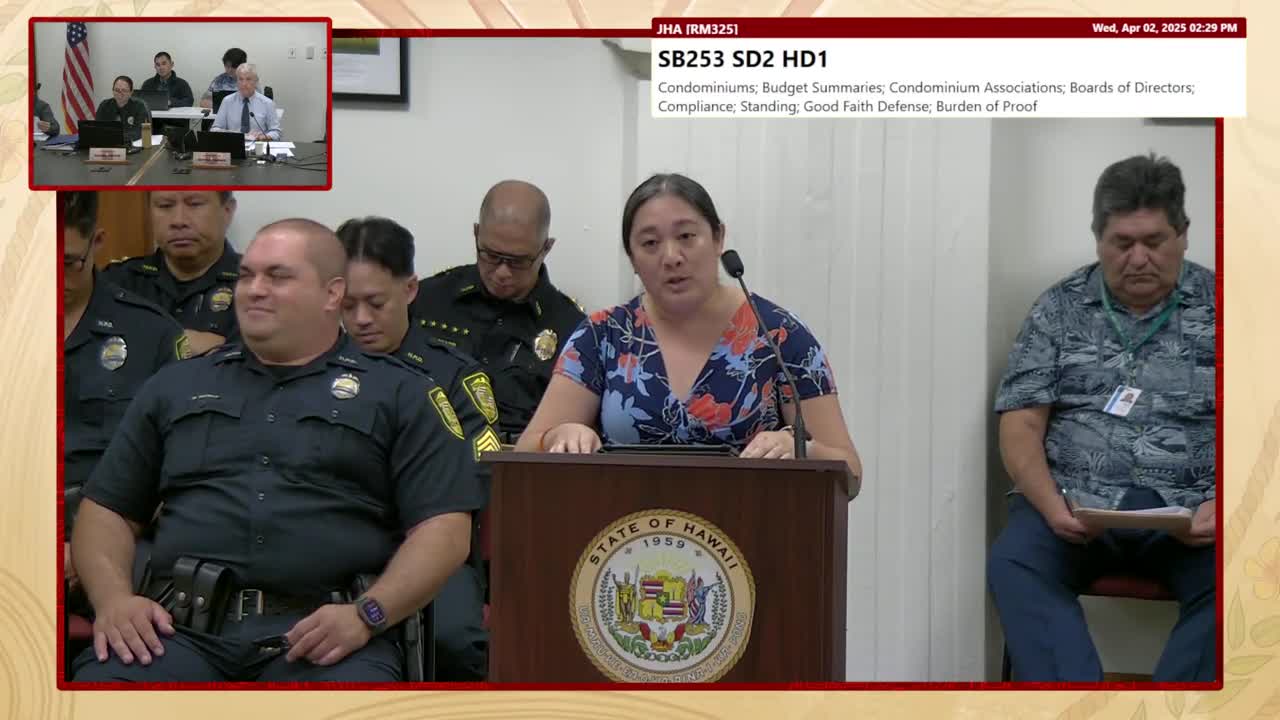 8MIN
House Standing Committee on Judiciary & Hawaiian Affairs
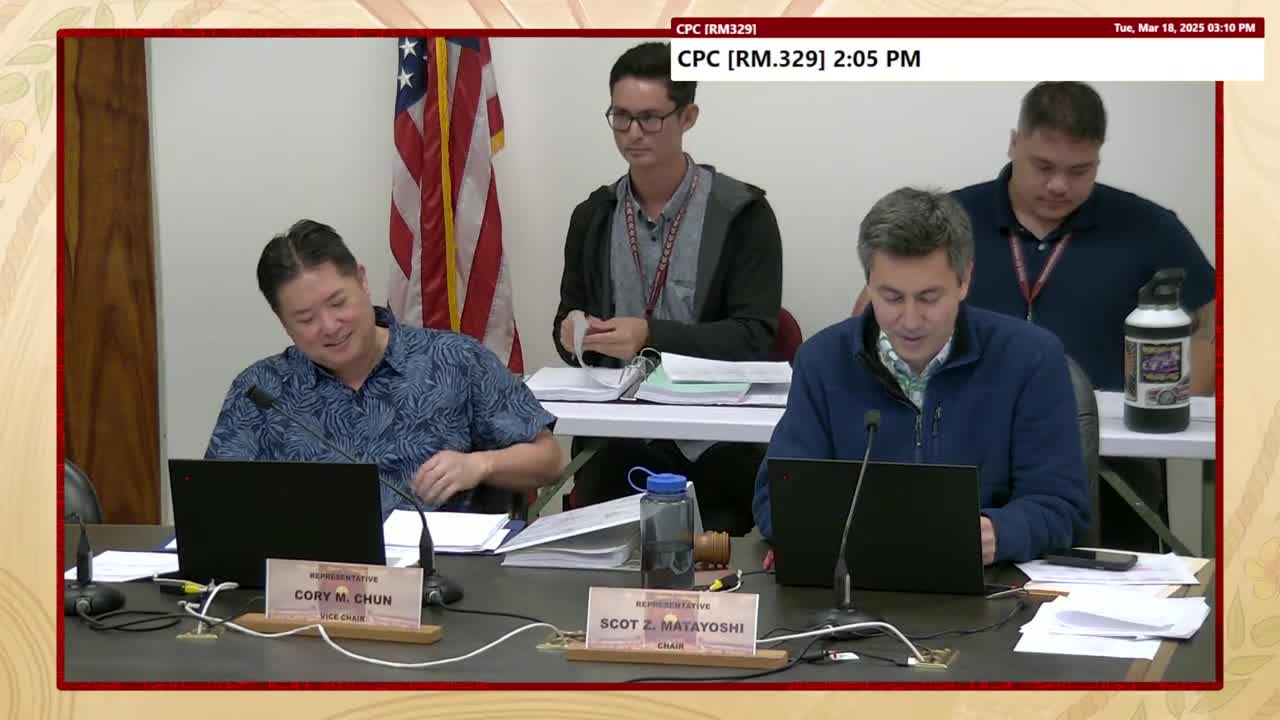 3MIN
House Standing Committee on Consumer Protection & Commerce
3MIN
House Standing Committee on Judiciary & Hawaiian Affairs
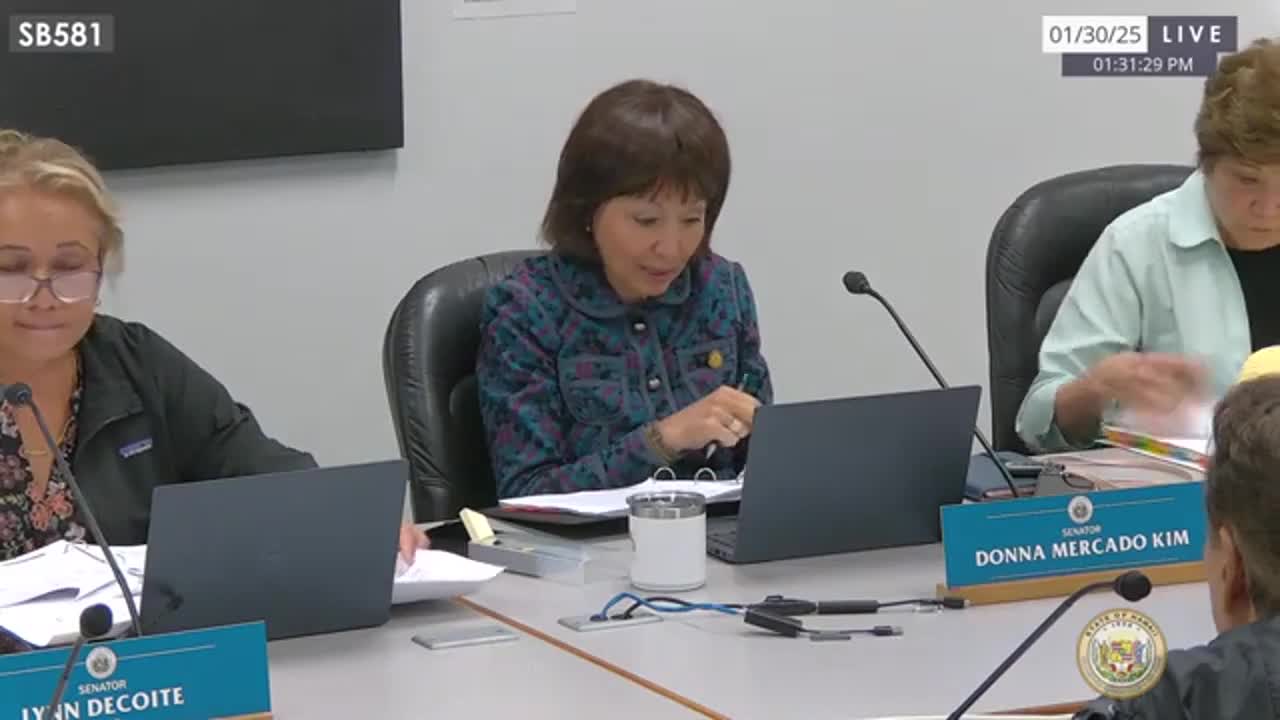 3MIN
Senate Standing Committee on Economic Development and Tourism
Bill Author