HB 874: Child Performers; Trust Accounts; Theatrical Employment; Fiduciary Duty; Penalties
- Session Year: 2025-2026
- House: House
- Latest Version Date: 2025-04-23
Current Status:
In Progress
(2025-06-04: Act 173, on 06/04/2025 (Gov. Msg. No. 1273).)
Introduced
In Committee
First Chamber
In Committee
Second Chamber
Final Decking
Enacted
Establishes that for a minor in theatrical employment with a gross income of at least $5,000 on a project or $20,000 in a calendar year: a parent or legal guardian of the minor is required to establish a trust account for the minor with an independent third-party trustee; and the employer of the minor is required to deposit a portion of the minor's earnings into the trust account until the minor becomes an adult. Makes misappropriation or fraudulent use of funds within the trust account a breach of fiduciary duty subject to penalties. (CD1)
Establishes that for a minor in theatrical employment with a gross income of at least $5,000 on a project or $20,000 in a calendar year: a parent or legal guardian of the minor is required to establish a trust account for the minor with an independent third-party trustee; and the employer of the minor is required to deposit a portion of the minor's earnings into the trust account until the minor becomes an adult. Makes misappropriation or fraudulent use of funds within the trust account a breach of fiduciary duty subject to penalties. Effective 7/1/2050. (SD2)
Establishes that for a minor in theatrical employment with a gross income of at least $5,000 on a project or $20,000 in a calendar year: a parent or legal guardian of the minor is required to establish a trust account for the minor with an independent third-party trustee; and the employer of the minor is required to deposit a portion of the minor's earnings into the trust account until the minor becomes an adult. Makes misappropriation or fraudulent use of funds within the trust account a breach of fiduciary duty subject to penalties. Requires the Department of Labor and Industrial Relations to adopt rules for enforcement by its Wage Standard Division. Effective 7/1/2050. (SD1)
Amends the Uniform Custodial Trust Act to specify that for a minor in theatrical employment with a gross income of at least $5,000 on a project or $20,000 in a calendar year: a parent or legal guardian of the minor is required to establish a trust account for the minor with an independent third-party trustee; and the employer of the minor is required to deposit a portion of the minor's earnings into the trust account until the minor becomes an adult. Makes misappropriation or fraudulent use of funds within the trust account a breach of fiduciary duty subject to penalties. Effective 7/1/3000. (HD3)
Requires a parent or legal guardian of a minor in theatrical employment to establish a trust account for the minor with an independent third-party trustee. Requires the employer of a minor in theatrical employment to deposit a portion of the minor's earnings into the trust account until the child becomes an adult. Effective 7/1/3000. (HD2)
Requires a parent or legal guardian of a minor in theatrical employment to establish a trust account for the minor with an independent third-party trustee . Requires the employer of a minor in theatrical employment to deposit a portion of the minor's earnings into the trust account until the child becomes an adult. Clarifies that theatrical employment, as used in the State's child labor law, includes gainful occupation as a social media influencer. Effective 7/1/3000. (HD1)
Requires a parent or legal guardian of a minor in theatrical employment to establish a trust account for the minor. Requires the employer of a minor in theatrical employment to deposit a portion of the minor's earnings into the trust account until the child becomes an adult. Clarifies that theatrical employment, as used in the State's child labor law, includes gainful occupation as a social media influencer.
|
HOUSE OF REPRESENTATIVES |
H.B. NO. |
874 |
|
THIRTY-THIRD LEGISLATURE, 2025 |
H.D. 3 |
|
|
STATE OF HAWAII |
S.D. 2 |
|
|
|
C.D. 1 |
|
|
|
||
|
|
||
A BILL FOR AN ACT
RELATING TO CHILD PERFORMERS.
BE IT ENACTED BY THE LEGISLATURE OF THE STATE OF HAWAII:
SECTION 1. The legislature finds that the Coogan Law, also known as the California Child Actor's Bill, was first passed in California in 1939 to protect child actors from exploitation in the entertainment industry. The law was named after actor Jackie Coogan, who became one of the highest-paid child stars of his time, only to have his earnings mismanaged by his parents, leaving him with little financial security when he reached adulthood. The Coogan Law has had a lasting impact in California by securing financial protection for child actors, ensuring that they can enjoy the benefits of their hard work once they become adults, and promoting greater responsibility in the entertainment industry.
Accordingly, the purpose of this Act is to protect the safety, morals, health, and well-being of child performers who work or reside in the State by requiring that a portion of the child performer's earnings be kept in trust for the benefit of the child performer until the child reaches the age of majority.
SECTION 2. Chapter 554B, Hawaii Revised Statutes, is amended by adding a new section to be appropriately designated and to read as follows:
"§554B- Minors in theatrical employment; mandatory trust account; fiduciary duty; rules. (a) The parent or legal guardian of a minor in theatrical employment shall establish a trust account for the benefit of the minor before the minor's first instance of theatrical employment and shall maintain the account until the custodian of the account transfers the contents of the account to the minor or the minor's estate.
(b) The employer of the minor in theatrical employment shall deposit at least fifteen per cent of the minor's gross earnings to the trust account for the minor's benefit until the minor attains the age of majority or is emancipated.
(c) The trust account shall be established with an independent third-party trustee that ensures the security and growth of the trust account and that provides the minor and the minor's parent or legal guardian with quarterly statements.
(d) Any contracts or agreements involving a minor in theatrical employment shall be signed by at least one parent or legal guardian.
(e) A parent or legal guardian of a minor in theatrical employment may access the funds within the mandatory trust account established pursuant to subsection (a) for the minor, but only for the benefit of the minor.
(f) Any misappropriation or fraudulent use of funds within the mandatory trust account established pursuant to subsection (a) by the parent or legal guardian of a minor in theatrical employment, or the independent third-party trustee acting as the custodian of the mandatory trust account, shall be a breach of fiduciary duty subject to civil penalties, criminal prosecution, and, in the case of the third-party trustee, removal from the position of trustee.
(g) This section shall only apply when the gross income of the minor in theatrical employment is at least:
(1) $5,000 for a project; or
(2) $20,000 in a calendar year.
(h) For the purposes of this section:
"Employer" includes any individual, partnership, association, joint stock company, trust, corporation, or the personal representative of the estate of a deceased individual, or the receiver, trustee, or successor of any of the same, employing any person, but shall not include the State or any political subdivision thereof or the United States.
"Theatrical employment" means gainful occupation as a model; dancer; singer; musician; social media influencer; entertainer; or motion picture, television, radio, or theatrical performer."
SECTION 3. This Act does not affect rights and duties that matured, penalties that were incurred, and proceedings that were begun before its effective date.
SECTION 4. New statutory material is underscored.
SECTION 5. This Act shall take effect upon its approval.
Report Title:
Child Performers; Trust Accounts; Theatrical Employment; Fiduciary Duty; Penalties
Description:
Establishes that for a minor in theatrical employment with a gross income of at least $5,000 on a project or $20,000 in a calendar year: a parent or legal guardian of the minor is required to establish a trust account for the minor with an independent third-party trustee; and the employer of the minor is required to deposit a portion of the minor's earnings into the trust account until the minor becomes an adult. Makes misappropriation or fraudulent use of funds within the trust account a breach of fiduciary duty subject to penalties. (CD1)
The summary description of legislation appearing on this page is for informational purposes only and is not legislation or evidence of legislative intent.
|
HOUSE OF REPRESENTATIVES |
H.B. NO. |
874 |
|
THIRTY-THIRD LEGISLATURE, 2025 |
H.D. 3 |
|
|
STATE OF HAWAII |
S.D. 2 |
|
|
|
|
|
|
|
||
|
|
||
A BILL FOR AN ACT
RELATING TO CHILD PERFORMERS.
BE IT ENACTED BY THE LEGISLATURE OF THE STATE OF HAWAII:
SECTION 1. The legislature finds that the Coogan Law, also known as the California Child Actor's Bill, was first passed in California in 1939 to protect child actors from exploitation in the entertainment industry. The law was named after actor Jackie Coogan, who became one of the highest-paid child stars of his time, only to have his earnings mismanaged by his parents, leaving him with little financial security when he reached adulthood. The Coogan Law has had a lasting impact in California by securing financial protection for child actors, ensuring that they can enjoy the benefits of their hard work once they become adults, and promoting greater responsibility in the entertainment industry.
Accordingly, the purpose of this Act is to protect the safety, morals, health, and well-being of child performers who work or reside in the State by requiring that a portion of the child performer's earnings be kept in trust for the benefit of the child performer until the child reaches the age of majority.
SECTION 2. Chapter 554B, Hawaii Revised Statutes, is amended by adding a new section to be appropriately designated and to read as follows:
"§554B- Minors in theatrical employment; mandatory trust account; fiduciary duty; rules. (a) The parent or legal guardian of a minor in theatrical employment shall establish a trust account for the benefit of the minor before the minor's first instance of theatrical employment and shall maintain the account until the custodian of the account transfers the contents of the account to the minor or the minor's estate.
(b) The employer of the minor in theatrical employment shall deposit at least fifteen per cent of the minor's gross earnings to the trust account for the minor's benefit until the minor attains the age of majority or is emancipated.
(c) The trust account shall be established with an independent third-party trustee that ensures the security and growth of the trust account and that provides the minor and the minor's parent or legal guardian with quarterly statements.
(d) Any contracts or agreements involving a minor in theatrical employment shall be signed by at least one parent or legal guardian.
(e) A parent or legal guardian of a minor in theatrical employment may access the funds within the mandatory trust account established pursuant to subsection (a), for the minor, but only for the benefit of the minor.
(f) Any misappropriation or fraudulent use of funds within the mandatory trust account established pursuant to subsection (a) by the parent or legal guardian of a minor in theatrical employment, or the independent third-party trustee acting as the custodian of the mandatory trust account, shall be a breach of fiduciary duty subject to civil penalties, criminal prosecution, and, in the case of the third-party trustee, removal from the position of trustee.
(g) This section shall only apply when the gross income of the minor in theatrical employment is at least:
(1) $5,000 for a project; or
(2) $20,000 in a calendar year.
(h) For the purposes of this section:
"Employer" includes any individual, partnership, association, joint stock company, trust, corporation, or the personal representative of the estate of a deceased individual, or the receiver, trustee, or successor of any of the same, employing any person, but shall not include the State or any political subdivision thereof or the United States.
"Theatrical employment" means gainful occupation as a model; dancer; singer; musician; social media influencer; entertainer; or motion picture, television, radio or theatrical performer."
SECTION 3. This Act does not affect rights and duties that matured, penalties that were incurred, and proceedings that were begun before its effective date.
SECTION 4. New statutory material is underscored.
SECTION 5. This Act shall take effect on July 1, 2050.
Report Title:
Child Performers; Trust Accounts; Theatrical Employment; Fiduciary Duty; Penalties
Description:
Establishes that for a minor in theatrical employment with a gross income of at least $5,000 on a project or $20,000 in a calendar year: a parent or legal guardian of the minor is required to establish a trust account for the minor with an independent third-party trustee; and the employer of the minor is required to deposit a portion of the minor's earnings into the trust account until the minor becomes an adult. Makes misappropriation or fraudulent use of funds within the trust account a breach of fiduciary duty subject to penalties. Effective 7/1/2050. (SD2)
The summary description of legislation appearing on this page is for informational purposes only and is not legislation or evidence of legislative intent.
|
HOUSE OF REPRESENTATIVES |
H.B. NO. |
874 |
|
THIRTY-THIRD LEGISLATURE, 2025 |
H.D. 3 |
|
|
STATE OF HAWAII |
S.D. 1 |
|
|
|
|
|
|
|
||
|
|
||
A BILL FOR AN ACT
RELATING TO CHILD PERFORMERS.
BE IT ENACTED BY THE LEGISLATURE OF THE STATE OF HAWAII:
SECTION 1. The legislature finds that the Coogan Law, also known as the California Child Actor's Bill, was first passed in California in 1939 to protect child actors from exploitation in the entertainment industry. The law was named after actor Jackie Coogan, who became one of the highest-paid child stars of his time, only to have his earnings mismanaged by his parents, leaving him with little financial security when he reached adulthood. The Coogan Law has had a lasting impact in California by securing financial protection for child actors, ensuring that they can enjoy the benefits of their hard work once they become adults, and promoting greater responsibility in the entertainment industry.
Accordingly, the purpose of this Act is to protect the safety, morals, health, and well-being of child performers who work or reside in the State by requiring that a portion of the child performer's earnings be kept in trust for the benefit of the child performer until the child reaches the age of majority.
SECTION 2. Chapter 554B, Hawaii Revised Statutes, is amended by adding a new section to be appropriately designated and to read as follows:
"§554B- Minors in theatrical employment; mandatory trust account; fiduciary duty; rules. (a) The parent or legal guardian of a minor in theatrical employment shall establish a trust account for the benefit of the minor before the minor's first instance of theatrical employment and shall maintain the account until the custodian of the account transfers the contents of the account to the minor or the minor's estate.
(b) The employer of the minor in theatrical employment shall deposit at least fifteen per cent of the minor's gross earnings to the trust account for the minor's benefit until the minor attains the age of majority or is emancipated.
(c) The trust account shall be established with an independent third-party trustee that ensures the security and growth of the trust account and that provides the minor and the minor's parent or legal guardian with quarterly statements.
(d) Any contracts or agreements involving a minor in theatrical employment shall be signed by at least one parent or legal guardian.
(e) A parent or legal guardian of a minor in theatrical employment may access the funds within the mandatory trust account established pursuant to subsection (a), for the minor, but only for the benefit of the minor.
(f) Any misappropriation or fraudulent use of funds within the mandatory trust account established pursuant to subsection (a) by the parent or legal guardian of a minor in theatrical employment, or the independent third-party trustee acting as the custodian of the mandatory trust account, shall be a breach of fiduciary duty subject to civil penalties, criminal prosecution, and, in the case of the third-party trustee, removal from the position of trustee.
(g) This section shall only apply when the gross income of the minor in theatrical employment is at least:
(1) $5,000 for a project; or
(2) $20,000 in a calendar year.
(h) The department of labor and industrial relations shall adopt rules pursuant to chapter 91 necessary for its wage standards division to carry out the purposes of this section.
(i) For the purposes of this section:
"Employer" includes any individual, partnership, association, joint stock company, trust, corporation, or the personal representative of the estate of a deceased individual, or the receiver, trustee, or successor of any of the same, employing any person, but shall not include the State or any political subdivision thereof or the United States.
"Theatrical employment" means gainful occupation as a model; dancer; singer; musician; social media influencer; entertainer; or motion picture, television, radio or theatrical performer."
SECTION 3. This Act does not affect rights and duties that matured, penalties that were incurred, and proceedings that were begun before its effective date.
SECTION 4. New statutory material is underscored.
SECTION 5. This Act shall take effect on July 1, 2050.
Report Title:
DLIR; Wage Standards Division; Child Performers; Trust Accounts; Theatrical Employment; Fiduciary Duty; Penalties
Description:
Establishes that for a minor in theatrical employment with a gross income of at least $5,000 on a project or $20,000 in a calendar year: a parent or legal guardian of the minor is required to establish a trust account for the minor with an independent third-party trustee; and the employer of the minor is required to deposit a portion of the minor's earnings into the trust account until the minor becomes an adult. Makes misappropriation or fraudulent use of funds within the trust account a breach of fiduciary duty subject to penalties. Requires the Department of Labor and Industrial Relations to adopt rules for enforcement by its Wage Standard Division. Effective 7/1/2050. (SD1)
The summary description of legislation appearing on this page is for informational purposes only and is not legislation or evidence of legislative intent.
|
HOUSE OF REPRESENTATIVES |
H.B. NO. |
874 |
|
THIRTY-THIRD LEGISLATURE, 2025 |
H.D. 3 |
|
|
STATE OF HAWAII |
|
|
|
|
|
|
|
|
||
|
|
||
A BILL FOR AN ACT
RELATING TO CHILD PERFORMERS.
BE IT ENACTED BY THE LEGISLATURE OF THE STATE OF HAWAII:
SECTION 1. The legislature finds that the Coogan Act, also known as the California Child Actor's Bill, was first passed in California in 1939 to protect child actors from exploitation in the entertainment industry. The act was named after actor Jackie Coogan, who became one of the highest-paid child stars of his time, only to have his earnings mismanaged by his parents, leaving him with little financial security when he reached adulthood. The Coogan Act has had a lasting impact by securing financial protection for child actors, ensuring that they can enjoy the benefits of their hard work once they become adults, and promoting greater responsibility in the entertainment industry.
The purpose of this Act is to protect the safety, morals, health, and well-being of child performers who work or reside in the State by requiring that a portion of the child performer's earnings be kept in trust for the benefit of the child performer until the child reaches the age of majority.
SECTION 2. Chapter 554B, Hawaii Revised Statutes, is amended by adding a new section to be appropriately designated and to read as follows:
"§554B- Minors in theatrical employment; mandatory trust account; fiduciary duty. (a) The parent or legal guardian of a minor in theatrical employment shall establish a trust account for the benefit of the minor prior to the minor's first instance of theatrical employment and shall maintain the account until the custodian of the account transfers the contents of the account to the minor or the minor's estate.
(b) The employer of the minor in theatrical employment shall deposit at least fifteen per cent of the minor's gross earnings to the trust account for the minor's benefit until the minor attains majority or is emancipated.
(c) The trust account shall be established with an independent third-party trustee that ensures the security and growth of the trust account and that provides the minor and the minor's parent or legal guardian with quarterly statements.
(d) Any contracts or agreements involving a minor in theatrical employment shall be signed by at least one parent or legal guardian.
(e) A parent or legal guardian of a minor in theatrical employment may access the funds within the mandatory trust account established pursuant to subsection (a), for the minor, but only for the benefit of the minor.
(f) Any misappropriation or fraudulent use of funds within the mandatory trust account established pursuant to subsection (a) by the parent or legal guardian of a minor in theatrical employment, or the independent third-party trustee acting as the custodian of the mandatory trust account, shall be a breach of fiduciary duty subject to civil penalties, criminal prosecution, and, in the case of the third-party trustee, removal from the position of trustee.
(g) This section shall only apply when the gross income of the minor in theatrical employment is at least:
(1) $5,000 for a project; or
(2) $20,000 in a calendar year.
(h) As used in this section:
"Employer" includes any individual, partnership, association, joint stock company, trust, corporation, the personal representative of the estate of a deceased individual or the receiver, trustee, or successor of any of the same, employing any person, but shall not include the State or any political subdivision thereof or the United States.
"Theatrical employment" means gainful occupation as a model, dancer, singer, musician, social media influencer, entertainer or motion picture, television, radio or theatrical performer."
SECTION 3. This Act does not affect rights and duties that matured, penalties that were incurred, and proceedings that were begun before its effective date.
SECTION 4. New statutory material is underscored.
SECTION 5. This Act shall take effect on July 1, 3000.
Report Title:
Child Performers; Trust Accounts; Theatrical Employment; Uniform Custodial Trust Act; Fiduciary Duty
Description:
Amends the Uniform Custodial Trust Act to specify that for a minor in theatrical employment with a gross income of at least $5,000 on a project or $20,000 in a calendar year: a parent or legal guardian of the minor is required to establish a trust account for the minor with an independent third-party trustee; and the employer of the minor is required to deposit a portion of the minor's earnings into the trust account until the minor becomes an adult. Makes misappropriation or fraudulent use of funds within the trust account a breach of fiduciary duty subject to penalties. Effective 7/1/3000. (HD3)
The summary description of legislation appearing on this page is for informational purposes only and is not legislation or evidence of legislative intent.
|
HOUSE OF REPRESENTATIVES |
H.B. NO. |
874 |
|
THIRTY-THIRD LEGISLATURE, 2025 |
H.D. 2 |
|
|
STATE OF HAWAII |
|
|
|
|
|
|
|
|
||
|
|
||
A BILL FOR AN ACT
RELATING TO CHILD PERFORMERS.
BE IT ENACTED BY THE LEGISLATURE OF THE STATE OF HAWAII:
SECTION 1. The legislature finds that the Coogan Act, also known as the California Child Actor's Bill, was first passed in California in 1939 to protect child actors from exploitation in the entertainment industry. The act was named after actor Jackie Coogan, who became one of the highest-paid child stars of his time, only to have his earnings mismanaged by his parents, leaving him with little financial security when he reached adulthood. The Coogan Act has had a lasting impact by securing financial protection for child actors, ensuring that they can enjoy the benefits of their hard work once they become adults, and promoting greater responsibility in the entertainment industry.
The purpose of this Act is to protect the safety, morals, health, and well-being of child performers who work or reside in the State by requiring that a portion of the child performer's earnings be kept in trust for the benefit of the child performer until the child reaches the age of majority.
SECTION 2. Chapter 390, Hawaii Revised Statutes, is amended by adding three new sections to be appropriately designated and to read as follows:
"§390-A Mandatory trust account. (a) The parent or legal guardian of a minor in theatrical employment shall establish a trust account for the benefit of the minor prior to the minor's first instance of theatrical employment and shall maintain the account until the custodian of the account transfers the contents of the account to the minor or the minor's estate.
(b) The employer of the minor in theatrical employment shall deposit at least fifteen per cent of the minor's gross earnings to the trust account for the minor's benefit until the minor attains majority or is emancipated.
(c) The trust account shall be established with an independent third-party trustee that ensures the security and growth of the trust account and that provides the minor and the minor's parent or legal guardian with quarterly statements.
§390-B Financial oversight. (a) Any contracts or agreements involving a minor in theatrical employment shall be signed by at least one parent or legal guardian.
(b) A parent or legal guardian of a minor in theatrical employment may access the funds within the mandatory trust account established pursuant to section 390‑A, for the minor, but only for the benefit of the minor.
§390-C Breach of fiduciary duty. Any misappropriation or fraudulent use of funds within the mandatory trust account established pursuant to section 390-A by the parent or legal guardian of a minor in theatrical employment, or the independent third-party trustee acting as the custodian of the mandatory trust account, shall be a breach of fiduciary duty subject to civil penalties, criminal prosecution, and, in the case of the third-party trustee, removal from the position of trustee."
SECTION 3. In codifying the new sections added by section 2 of this Act, the revisor of statutes shall substitute appropriate section numbers for the letters used in designating the new sections in this Act.
SECTION 4. This Act does not affect rights and duties that matured, penalties that were incurred, and proceedings that were begun before its effective date.
SECTION 5. New statutory material is underscored.
SECTION 6. This Act shall take effect on July 1, 3000.
Report Title:
Child Labor Law; Child Performers; Trust Accounts; Theatrical Employment
Description:
Requires a parent or legal guardian of a minor in theatrical employment to establish a trust account for the minor with an independent third-party trustee. Requires the employer of a minor in theatrical employment to deposit a portion of the minor's earnings into the trust account until the child becomes an adult. Effective 7/1/3000. (HD2)
The summary description of legislation appearing on this page is for informational purposes only and is not legislation or evidence of legislative intent.
|
HOUSE OF REPRESENTATIVES |
H.B. NO. |
874 |
|
THIRTY-THIRD LEGISLATURE, 2025 |
H.D. 1 |
|
|
STATE OF HAWAII |
|
|
|
|
|
|
|
|
||
|
|
||
A BILL FOR AN ACT
RELATING TO CHILD PERFORMERS.
BE IT ENACTED BY THE LEGISLATURE OF THE STATE OF HAWAII:
SECTION 1. The legislature finds that the Coogan Act, also known as the California Child Actor's Bill, was first passed in California in 1939 to protect child actors from exploitation in the entertainment industry. The act was named after actor Jackie Coogan, who became one of the highest-paid child stars of his time, only to have his earnings mismanaged by his parents, leaving him with little financial security when he reached adulthood. The Coogan Act has had a lasting impact by securing financial protection for child actors, ensuring that they can enjoy the benefits of their hard work once they become adults, and promoting greater responsibility in the entertainment industry.
The purpose of this Act is to protect the safety, morals, health, and well-being of child performers who work or reside in the State by requiring that a portion of the child performer's earnings are kept in trust for the benefit of the child performer until the child reaches the age of majority.
SECTION 2. Chapter 390, Hawaii Revised Statutes, is amended by adding three new sections to be appropriately designated and to read as follows:
"§390-A Mandatory trust account. (a) The parent or legal guardian of a minor in theatrical employment shall establish a trust account for the benefit of the minor prior to the minor's first instance of theatrical employment and shall maintain the account until the custodian of the account transfers the contents of the account to the minor or the minor's estate.
(b) The employer of the minor in theatrical employment shall deposit at least fifteen per cent of the minor's gross earnings to the trust account for the minor's benefit until the minor attains majority or is emancipated.
(c) The trust account shall be established with an independent third-party trustee that ensures the security and growth of the trust account and that provides the minor and the minor's parent or legal guardian with quarterly statements.
§390-B Financial oversight. (a) Any contracts or agreements involving a minor in theatrical employment shall be signed by at least one parent or legal guardian.
(b) A parent or legal guardian of a minor in theatrical employment may access the funds within the mandatory trust account established pursuant to section 390‑A, for the minor, but only for the benefit of the minor.
§390-C Breach of fiduciary duty. Any misappropriation or fraudulent use of funds within the mandatory trust account established pursuant to section 390-A by the parent or legal guardian of a minor in theatrical employment, or the independent third-party trustee acting as the custodian of the mandatory trust account, is a breach of fiduciary duty subject to civil penalties, criminal prosecution, and, in the case of the third-party trustee, removal from the position of trustee."
SECTION 3. Section 390-1, Hawaii Revised Statutes, is amended by amending the definition of "theatrical employment" to read as follows:
""Theatrical employment" means gainful occupation as a model, dancer, singer, musician, social media influencer, entertainer, or motion picture, television, radio, or theatrical performer."
SECTION 4. In codifying the new sections added by section 2 of this Act, the revisor of statutes shall substitute appropriate section numbers for the letters used in designating the new sections in this Act.
SECTION 5. This Act does not affect rights and duties that matured, penalties that were incurred, and proceedings that were begun before its effective date.
SECTION 6. New statutory material is underscored.
SECTION 7. This Act shall take effect on July 1, 3000.
Report Title:
Child Labor Law; Child Performers; Trust Accounts; Theatrical Employment; Social Media Influencers
Description:
Requires a parent or legal guardian of a minor in theatrical employment to establish a trust account for the minor with an independent third-party trustee . Requires the employer of a minor in theatrical employment to deposit a portion of the minor's earnings into the trust account until the child becomes an adult. Clarifies that theatrical employment, as used in the State's child labor law, includes gainful occupation as a social media influencer. Effective 7/1/3000. (HD1)
The summary description of legislation appearing on this page is for informational purposes only and is not legislation or evidence of legislative intent.
|
HOUSE OF REPRESENTATIVES |
H.B. NO. |
874 |
|
THIRTY-THIRD LEGISLATURE, 2025 |
|
|
|
STATE OF HAWAII |
|
|
|
|
|
|
|
|
||
|
|
||
A BILL FOR AN ACT
relating to child performers.
BE IT ENACTED BY THE LEGISLATURE OF THE STATE OF HAWAII:
SECTION 1. The legislature finds that the Coogan Act, also known as the California Child Actor's Bill, was first passed in California in 1939 to protect child actors from exploitation in the entertainment industry. The act was named after actor Jackie Coogan, who became one of the highest-paid child stars of his time, only to have his earnings mismanaged by his parents, leaving him with little financial security when he reached adulthood. The Coogan Act has had a lasting impact by securing financial protection for child actors, ensuring that they can enjoy the benefits of their hard work once they become adults, and promoting greater responsibility in the entertainment industry.
The purpose of this Act is to protect the safety, morals, health, and well-being of child performers who work or reside in the State by requiring that a portion of the child performer's earnings are kept in trust for the benefit of the child performer until the child reaches the age of majority.
SECTION 2. Chapter 390, Hawaii Revised Statutes, is amended by adding two new sections to be appropriately designated and to read as follows:
"§390-A Mandatory trust account. (a) The parent or legal guardian of a minor in theatrical employment shall establish a trust account for the benefit of the minor prior to the minor's first instance of theatrical employment and shall maintain the account until the custodian of the account transfers the contents of the account to the minor or the minor's estate.
(b) The employer of the minor in theatrical employment shall deposit at least fifteen per cent of the minor's gross earnings to the trust account for the minor's benefit until the minor attains majority or is emancipated.
(c) The trust account shall be established with an independent third-party trustee that ensures the security and growth of the trust account and that provides the minor and the minor's legal guardians with quarterly statements.
§390-B Financial oversight. (a) Any contracts or agreements involving a minor in theatrical employment shall be signed by at least one parent or legal guardian.
(b) A parent or legal guardian of a minor in theatrical employment may access the funds within the mandatory trust account established pursuant to section 390‑A, for the minor, but only for the benefit of the minor. Any misappropriation or fraudulent use of funds is subject to penalties."
SECTION 3. Section 390-1, Hawaii Revised Statutes, is amended by amending the definition of "theatrical employment" to read as follows:
""Theatrical employment" means gainful occupation as a model, dancer, singer, musician, social media influencer, entertainer, or motion picture, television, radio or theatrical performer."
SECTION 4. In codifying the new sections added by section 2 of this Act, the revisor of statutes shall substitute appropriate section numbers for the letters used in designating the new sections in this Act.
SECTION 5. New statutory material is underscored.
SECTION 6. This Act shall take effect upon its approval.
|
INTRODUCED BY: |
_____________________________ |
Report Title:
Child Labor Law; Child Performers; Trust Accounts; Theatrical Employment; Social Media Influencers
Description:
Requires a parent or legal guardian of a minor in theatrical employment to establish a trust account for the minor. Requires the employer of a minor in theatrical employment to deposit a portion of the minor's earnings into the trust account until the child becomes an adult. Clarifies that theatrical employment, as used in the State's child labor law, includes gainful occupation as a social media influencer.
The summary description of legislation appearing on this page is for informational purposes only and is not legislation or evidence of legislative intent.
|
Date
|
Status
|
|---|---|
| Jun 4, 2025 | Act 173, on 06/04/2025 (Gov. Msg. No. 1273). |
| Jun 4, 2025 | Act 173, 06/04/2025 (Gov. Msg. No. 1273). |
| May 1, 2025 | Transmitted to Governor. |
| May 2, 2025 | Received notice of passage on Final Reading in House (Hse. Com. No. 821). |
| May 1, 2025 | Received notice of Final Reading (Sen. Com. No. 888). |
| Apr 30, 2025 | Passed Final Reading as amended in CD 1 with none voting aye with reservations; none voting no (0) and Representative(s) Cochran, Pierick excused (2). |
| Apr 30, 2025 | Passed Final Reading, as amended (CD 1). Ayes, 25; Aye(s) with reservations: none . 0 No(es): none. 0 Excused: none. |
| Apr 24, 2025 | 48 Hrs. Notice (as amended CD 1) 04-30-25 |
| Apr 24, 2025 | Reported from Conference Committee as amended CD 1 (Conf. Com. Rep. No. 9). |
| Apr 24, 2025 | Forty-eight (48) hours notice Wednesday, 04-30-25. |
| Apr 24, 2025 | Reported from Conference Committee (Conf Com. Rep. No. 9) as amended in (CD 1). |
| Apr 22, 2025 | The Conference Committee recommends that the measure be Passed, with Amendments. The votes were as follows: 4 Ayes: Representative(s) Marten, Sayama, Lee, M., Garcia; Ayes with reservations: none; 0 Noes: none; and 2 Excused: Representative(s) Matayoshi, Chun. |
| Apr 22, 2025 | The Conference committee recommends that the measure be PASSED, WITH AMENDMENTS. The votes of the Senate Conference Managers were as follows: 3 Aye(s): Senator(s) Aquino, Rhoads, Fevella; Aye(s) with reservations: none ; 0 No(es): none; and 1 Excused: Senator(s) Keohokalole. |
| Apr 21, 2025 | Bill scheduled for Conference Committee Meeting on Tuesday, 04-22-25 1:30PM in conference room 329. |
| Apr 21, 2025 | Received notice of change in conferees (Hse. Com. No. 756). |
| Apr 17, 2025 | House Conferees Changed: Representative Matayoshi added as Co-Chair. Representative Chun discharged as Co-Chair; Added as Member. |
| Apr 15, 2025 | Received notice of Senate conferees (Sen. Com. No. 788). |
| Apr 15, 2025 | Senate Conferees Appointed: Aquino Chair; Rhoads, Keohokalole Co-Chairs; Fevella. |
| Apr 15, 2025 | Received notice of appointment of House conferees (Hse. Com. No. 732). |
| Apr 14, 2025 | House Conferees Appointed: Marten, Sayama, Chun Co-Chairs; Lee, M., Garcia. |
| Apr 11, 2025 | Received notice of disagreement (Hse. Com. No. 704). |
| Apr 10, 2025 | House disagrees with Senate amendment (s). |
| Apr 8, 2025 | Returned from Senate (Sen. Com. No. 687) in amended form (SD 2). |
| Apr 8, 2025 | Report adopted; Passed Third Reading, as amended (SD 2). Ayes, 25; Aye(s) with reservations: none . Noes, 0 (none). Excused, 0 (none). Transmitted to House. |
| Apr 4, 2025 | 48 Hrs. Notice 04-08-25. |
| Apr 4, 2025 | Reported from JDC/CPN (Stand. Com. Rep. No. 1733) with recommendation of passage on Third Reading, as amended (SD 2). |
| Apr 1, 2025 | The committee(s) on CPN recommend(s) that the measure be PASSED, WITH AMENDMENTS. The votes in CPN were as follows: 5 Aye(s): Senator(s) Keohokalole, Fukunaga, McKelvey, Richards, Awa; Aye(s) with reservations: none ; 0 No(es): none; and 0 Excused: none. |
| Apr 1, 2025 | The committee(s) on JDC recommend(s) that the measure be PASSED, WITH AMENDMENTS. The votes in JDC were as follows: 4 Aye(s): Senator(s) Rhoads, Gabbard, Chang, Awa; Aye(s) with reservations: none ; 0 No(es): none; and 1 Excused: Senator(s) San Buenaventura. |
| Mar 24, 2025 | The committee(s) on JDC/CPN will hold a public decision making on 04-01-25 9:30AM; Conference Room 016 & Videoconference. |
| Mar 19, 2025 | Report adopted; Passed Second Reading, as amended (SD 1) and referred to JDC/CPN. |
| Mar 19, 2025 | Reported from LBT (Stand. Com. Rep. No. 1175) with recommendation of passage on Second Reading, as amended (SD 1) and referral to JDC/CPN. |
| Mar 12, 2025 | The committee(s) on LBT recommend(s) that the measure be PASSED, WITH AMENDMENTS. The votes in LBT were as follows: 4 Aye(s): Senator(s) Aquino, Lee, C., Ihara, Fevella; Aye(s) with reservations: none ; 0 No(es): none; and 1 Excused: Senator(s) Moriwaki. |
| Mar 10, 2025 | The committee(s) on LBT deferred the measure until 03-12-25 3:01PM; Conference Room 224 & Videoconference. |
| Mar 7, 2025 | The committee(s) on LBT has scheduled a public hearing on 03-10-25 3:00PM; Conference Room 224 & Videoconference. |
| Mar 6, 2025 | Referred to LBT, JDC/CPN. |
| Mar 6, 2025 | Passed First Reading. |
| Mar 6, 2025 | Received from House (Hse. Com. No. 297). |
| Mar 4, 2025 | Passed Third Reading as amended in HD 3 with Representative(s) Garcia voting aye with reservations; none voting no (0) and Representative(s) Pierick, Ward excused (2). Transmitted to Senate. |
| Feb 28, 2025 | Forty-eight (48) hours notice Tuesday, 03-04-25. |
| Feb 28, 2025 | Reported from CPC (Stand. Com. Rep. No. 1047) as amended in HD 3, recommending passage on Third Reading. |
| Feb 20, 2025 | The committee on CPC recommend that the measure be PASSED, WITH AMENDMENTS. The votes were as follows: 7 Ayes: Representative(s) Matayoshi, Chun, Ichiyama, Iwamoto, Kong, Marten, Tam; Ayes with reservations: none; Noes: none; and 3 Excused: Representative(s) Ilagan, Lowen, Pierick. |
| Feb 18, 2025 | Bill scheduled to be heard by CPC on Thursday, 02-20-25 2:00PM in House conference room 329 VIA VIDEOCONFERENCE. |
| Feb 13, 2025 | Report adopted; referred to the committee(s) on CPC as amended in HD 2 with Representative(s) Garcia voting aye with reservations; none voting no (0) and Representative(s) Cochran, Kitagawa, Ward excused (3). |
| Feb 13, 2025 | Reported from LAB (Stand. Com. Rep. No. 541) as amended in HD 2, recommending referral to CPC. |
| Feb 11, 2025 | The committee on LAB recommend that the measure be PASSED, WITH AMENDMENTS. The votes were as follows: 6 Ayes: Representative(s) Sayama, Lee, M., Garrett, Kapela, Kong, Reyes Oda; Ayes with reservations: none; 0 Noes: none; and 0 Excused: none. |
| Feb 7, 2025 | Bill scheduled to be heard by LAB on Tuesday, 02-11-25 9:00AM in House conference room 309 VIA VIDEOCONFERENCE. |
| Feb 4, 2025 | Passed Second Reading as amended in HD 1 and referred to the committee(s) on LAB with none voting aye with reservations; none voting no (0) and Representative(s) Cochran, Kong, Ward excused (3). |
| Feb 4, 2025 | Reported from HSH (Stand. Com. Rep. No. 56) as amended in HD 1, recommending passage on Second Reading and referral to LAB. |
| Jan 30, 2025 | The committee on HSH recommend that the measure be PASSED, WITH AMENDMENTS. The votes were as follows: 9 Ayes: Representative(s) Marten, Olds, Amato, Chun, Keohokapu-Lee Loy, Takayama, Takenouchi, Alcos, Garcia; Ayes with reservations: none; Noes: none; and Excused: none. |
| Jan 27, 2025 | Bill scheduled to be heard by HSH on Thursday, 01-30-25 9:35AM in House conference room 329 VIA VIDEOCONFERENCE. |
| Jan 23, 2025 | Referred to HSH, LAB, CPC, referral sheet 3 |
| Jan 23, 2025 | Introduced and Pass First Reading. |
| Jan 21, 2025 | Pending introduction. |
|
Date
|
Description
|
Location
|
Votes
|
|
|---|---|---|---|---|
| Apr 30, 2025 | Final Reading | House Floor |
Passed |
|
| Apr 30, 2025 | Final Reading | Senate Floor |
Passed |
|
| Apr 8, 2025 | Third Reading | Senate Floor |
Passed |
|
| Apr 1, 2025 | The committee(s) on CPN recommend(s) that the measure be PASSED, WITH AMENDMENTS | Senate Standing Committee on Commerce and Consumer Protection |
Passed |
|
| Apr 1, 2025 | The committee(s) on JDC recommend(s) that the measure be PASSED, WITH AMENDMENTS | Senate Standing Committee on Judiciary |
Passed |
|
| Mar 12, 2025 | The committee(s) on LBT recommend(s) that the measure be PASSED, WITH AMENDMENTS | Senate Standing Committee on Labor and Technology |
Passed |
|
| Mar 4, 2025 | Third Reading | House Floor |
Passed |
|
| Feb 20, 2025 | The committee on CPC recommend that the measure be PASSED, WITH AMENDMENTS | House Standing Committee on Consumer Protection & Commerce |
Passed |
|
| Feb 11, 2025 | The committee on LAB recommend that the measure be PASSED, WITH AMENDMENTS | House Standing Committee on Labor |
Passed |
|
| Jan 30, 2025 | The committee on HSH recommend that the measure be PASSED, WITH AMENDMENTS | House Standing Committee on Human Services & Homelessness |
Passed |
This list shows positions taken on this bill by organizations on the date displayed, which is linked to the original source.
Positions by individuals are not included.
|
Organization
|
Position
|
Date
|
|---|---|---|
| Department of Labor | ** Against | |
| Hawaii State AFL-CIO | ** Support | |
| Hawaii Teamsters and Allied Workers, Local 996 | ** Support | |
| Hawaiʻi Children's Action Network Speaks! | ** Support | |
| Hawaiʻi Nurses' Association-OPEIU Local 50, AFL-CIO | ** Support | |
| IATSE Local 665 | ** Support | |
| Industrial Relations | ** Against | |
| Pride at Work Hawaiʻi | ** Support | |
| Pride at Work – Hawai‘i | *** Support | Mar 31, 2025 |
| SAG-AFTRA Hawaii Local | ** Support |
CONFERENCE COMMITTEE REP. NO. 9
Honolulu, Hawaii
, 2025
RE: H.B. No. 874
H.D. 3
S.D. 2
C.D. 1
Honorable Nadine K. Nakamura
Speaker, House of Representatives
Thirty-Third State Legislature
Regular Session of 2025
State of Hawaii
Honorable Ronald D. Kouchi
President of the Senate
Thirty-Third State Legislature
Regular Session of 2025
State of Hawaii
Madam and Sir:
Your Committee on Conference on the disagreeing vote of the House of Representatives to the amendments proposed by the Senate in H.B. No. 874, H.D. 3, S.D. 2, entitled:
"A BILL FOR AN ACT RELATING TO CHILD PERFORMERS,"
having met, and after full and free discussion, has agreed to recommend and does recommend to the respective Houses the final passage of this bill in an amended form.
The purpose of this measure is to provide some protection of a child performer's earnings by:
(1) Establishing for a minor in theatrical employment with a gross income of at least $5,000 on a project or $20,000 in a calendar year the requirement for:
(A) A parent or legal guardian of the minor to establish a trust account for the minor with an independent third-party trustee; and
(B) The employer of the minor to deposit a portion of the minor's earnings into the trust account until the minor becomes an adult; and
(2) Making misappropriation or fraudulent use of funds within the trust account a breach of fiduciary duty subject to penalties.
Your Committee on Conference has amended this measure by:
(1) Changing its effective date to upon approval; and
(2) Making technical, nonsubstantive amendments for the purposes of clarity, consistency, and style.
As affirmed by the record of votes of the managers of your Committee on Conference that is attached to this report, your Committee on Conference is in accord with the intent and purpose of H.B. No. 874, H.D. 3, S.D. 2, as amended herein, and recommends that it pass Final Reading in the form attached hereto as H.B. No. 874, H.D. 3, S.D. 2, C.D. 1.
Respectfully submitted on behalf of the managers:
|
ON THE PART OF THE SENATE |
|
ON THE PART OF THE HOUSE |
|
____________________________ HENRY J.C. AQUINO Chair |
|
____________________________ LISA MARTEN Co-Chair |
|
____________________________ KARL RHOADS Co-Chair |
|
____________________________ JACKSON D. SAYAMA Co-Chair |
|
____________________________ JARRETT KEOHOKALOLE Co-Chair |
|
____________________________ SCOT Z. MATAYOSHI Co-Chair |
STAND. COM. REP. NO. 1733
Honolulu, Hawaii
RE: H.B. No. 874
H.D. 3
S.D. 2
Honorable Ronald D. Kouchi
President of the Senate
Thirty-Third State Legislature
Regular Session of 2025
State of Hawaii
Sir:
Your Committees on Judiciary and Commerce and Consumer Protection, to which was referred H.B. No. 874, H.D. 3, S.D. 1, entitled:
"A BILL FOR AN ACT RELATING TO CHILD PERFORMERS,"
beg leave to report as follows:
The purpose and intent of this measure is to protect the safety, morals, health, and well-being of child performers who work or reside in the State by requiring that a portion of the child performer's earnings be kept in trust for the benefit of the child performer until the child reaches the age of majority.
Your Committees received testimony in support of this measure from the Hawaii State AFL-CIO, IATSE Local 665, SAG-AFTRA Hawaii Local, Hawaiʻi Children's Action Network Speaks!, Pride at Work Hawaiʻi, and nineteen individuals.
Your Committees received testimony in opposition to this measure from the Department of Labor and Industrial Relations.
Your Committees received comments on this measure from the Department of the Attorney General.
Your Committees find that several states have made efforts to create safer, more transparent work environments, more safeguards regarding the use or misuse of a child's likeness, and guaranteed financial protections for children who create digital content. Your Committees believe that one of the most important safeguards is the requirement that a portion of a child's income generated by their performance work be placed in a trust account and made available when they legally become an adult. This measure will provide this necessary layer of protection for the well-being of child performers in the State.
Your Committees note that this measure, as written, requires the Department of Labor and Industrial Relations to adopt rules for its Wage Standards Division to carry out the purposes of this measure. However, existing law limits the Department of Labor and Industrial Relations' Wage Standards Division's authority to matters administered under chapters 387 (minimum wage), 388 (non‑payment of wages), and 390 (certificates of employment for minors), Hawaii Revised Statutes. Given that these duties are unrelated to private trust matters or how wages are spent, and because this measure already allows a private right of action and possible criminal penalties, your Committees believe that amendments to this measure are necessary.
Accordingly, your Committees have amended this measure by:
(1) Deleting language that would have required the Department of Labor and Industrial Relations to adopt rules for its Wage Standards Division to carry out the purposes of this measure; and
(2) Making a technical, nonsubstantive amendment for the purposes of clarity and consistency.
As affirmed by the records of votes of the members of your Committees on Judiciary and Commerce and Consumer Protection that are attached to this report, your Committees are in accord with the intent and purpose of H.B. No. 874, H.D. 3, S.D. 1, as amended herein, and recommend that it pass Third Reading in the form attached hereto as H.B. No. 874, H.D. 3, S.D. 2.
Respectfully submitted on behalf of the members of the Committees on Judiciary and Commerce and Consumer Protection,
|
________________________________ JARRETT KEOHOKALOLE, Chair |
|
________________________________ KARL RHOADS, Chair |
|
|
|
|
STAND. COM. REP. NO. 1175
Honolulu, Hawaii
RE: H.B. No. 874
H.D. 3
S.D. 1
Honorable Ronald D. Kouchi
President of the Senate
Thirty-Third State Legislature
Regular Session of 2025
State of Hawaii
Sir:
Your Committee on Labor and Technology, to which was referred H.B. No. 874, H.D. 3, entitled:
"A BILL FOR AN ACT RELATING TO CHILD PERFORMERS,"
begs leave to report as follows:
The purpose and intent of this measure is to:
(1) Establish that for a minor in theatrical employment with a gross income of at least $5,000 on a project or $20,000 in a calendar year:
(A) A parent or legal guardian of the minor is required to establish a trust account for the minor with an independent third-party trustee; and
(B) The employer of the minor is required to deposit a portion of the minor's earnings into the trust account until the minor becomes an adult; and
(2) Make misappropriation or fraudulent use of funds within the trust account a breach of fiduciary duty subject to penalties.
Your Committee received testimony in support of this measure from the SAG-AFTRA Hawaii Local; Pride at Work-Hawaiʻi; Hawaii State AFL-CIO; Hawaiʻi Nurses' Association-OPEIU Local 50, AFL-CIO; and IATSE Local 665.
Your Committee finds that the rise of social media and widespread use of the Internet over the last decade has created more financial opportunities for many individuals, including child performers and their parents, in digital entertainment and advertising. Your Committee also finds that family influencers and vloggers have become increasingly popular. Children featured in this type of content are susceptible to certain risks associated with a lack of transparency and accountability, especially relating to their compensation for that work, making it difficult to ensure their protection. This measure provides financial protection for children in theatrical employment, including the creation of digital content, by requiring a portion of the child's income to be placed in a trust account and made available when the child becomes a legal adult. Accordingly, this measure will help protect child performers from financial exploitation and contribute to their financial security.
Your Committee has amended this measure by:
(1) Inserting language requiring the Department of Labor and Industrial Relations to adopt rules for its Wage Standards Division to carry out the purposes of this measure;
(2) Inserting an effective date of July 1, 2050, to encourage further discussion; and
(3) Making technical, nonsubstantive amendments for the purposes of clarity and consistency.
As affirmed by the record of votes of the members of your Committee on Labor and Technology that is attached to this report, your Committee is in accord with the intent and purpose of H.B. No. 874, H.D. 3, as amended herein, and recommends that it pass Second Reading in the form attached hereto as H.B. No. 874, H.D. 3, S.D. 1, and be referred to your Committees on Judiciary and Commerce and Consumer Protection.
Respectfully submitted on behalf of the members of the Committee on Labor and Technology,
|
|
|
________________________________ HENRY J.C. AQUINO, Chair |
|
|
|
|
STAND. COM. REP. NO. 1047
Honolulu, Hawaii
, 2025
RE: H.B. No. 874
H.D. 3
Honorable Nadine K. Nakamura
Speaker, House of Representatives
Thirty-Third State Legislature
Regular Session of 2025
State of Hawaii
Madame:
Your Committee on Consumer Protection & Commerce, to which was referred H.B. No. 874, H.D. 2, entitled:
"A BILL FOR AN ACT RELATING TO CHILD PERFORMERS,"
begs leave to report as follows:
The purpose of this measure is to provide some protection of a child performer's earnings by:
(1) Specifying that the parent or legal guardian of a minor in theatrical employment must establish a trust account, with an independent third-party trustee, for the minor;
(2) Requiring employers to deposit at least fifteen percent of the minor's gross earnings into the trust account; and
(3) Making any misappropriation or fraudulent use of funds within the trust account by a parent or legal guardian or an independent third-party trustee a breach of fiduciary duty subject to civil penalties, criminal prosecution, and removal from the position of trustee.
Your Committee received testimony in support of this measure from the SAG-AFTRA Hawaiʻi Local; Hawaii State AFL-CIO; Pride at Work Hawaiʻi; IATSE Local 665; and four individuals. Your Committee received comments on this measure from the Department of Labor and Industrial Relations.
Your Committee finds that minors may be employed in a variety of performance roles, including as models, dancers, singers, musicians, or motion picture, television, radio, or theatrical performers. Your Committee further finds that the minor's earnings may be mismanaged by the parents, harming the minor's financial wellbeing. This measure establishes certain safeguards to ensure that minors engaged in theatrical employment are financially protected and can financially benefit from their hard work upon reaching adulthood.
Your Committee notes that the Department of Labor and Industrial Relations raised concerns that the contents of this measure do not comport with the existing provisions of the Child Labor Law and suggested that its provisions may be more suited to other chapters of the Hawaii Revised Statutes, including the Hawaii Uniform Custodial Trust Act. Your Committee requests, as this measure progresses through the legislative process, that other departments provide suggestions on whether there is a more appropriate placement for the provisions of this measure.
Accordingly, your Committee has amended this measure by:
(1) Moving the provisions of this measure from the Child Labor Law to the Hawaii Uniform Custodial Trust Act;
(2) Specifying that the provisions of this measure only apply when the gross income of a minor in theatrical employment is at least $5,000 for a project or $20,000 in a calendar year;
(3) Specifying that for purposes of this measure, "theatrical employment" includes a social media influencer; and
(4) Making technical, nonsubstantive amendments for the purposes of clarity, consistency, and style.
As affirmed by the record of votes of the members of your Committee on Consumer Protection & Commerce that is attached to this report, your Committee is in accord with the intent and purpose of H.B. No. 874, H.D. 2, as amended herein, and recommends that it pass Third Reading in the form attached hereto as H.B. No. 874, H.D. 3.
Respectfully submitted on behalf of the members of the Committee on Consumer Protection & Commerce,
|
|
|
____________________________ SCOT Z. MATAYOSHI, Chair |
|
|
|
|
STAND. COM. REP. NO. 541
Honolulu, Hawaii
, 2025
RE: H.B. No. 874
H.D. 2
Honorable Nadine K. Nakamura
Speaker, House of Representatives
Thirty-Third State Legislature
Regular Session of 2025
State of Hawaii
Madame:
Your Committee on Labor, to which was referred H.B. No. 874, H.D. 1, entitled:
"A BILL FOR AN ACT RELATING TO CHILD PERFORMERS,"
begs leave to report as follows:
The purpose of this measure is to:
(1) Require a parent or legal guardian of a minor in theatrical employment to establish a trust account for the minor with an independent third-party trustee;
(2) Require the employer of a minor in theatrical employment to deposit at least 15 percent of the minor's gross earnings into the trust account until the child becomes an adult; and
(3) Clarify that theatrical employment, as used in the State's child labor law, includes gainful employment as a social media influencer.
Your Committee received testimony in support of this measure from the Hawaii State AFL-CIO; SAG-AFTRA Hawaiʻi Local; Pride at Work-Hawaiʻi; and two individuals. Your Committee received comments on this measure from the Department of Labor and Industrial Relations.
Your Committee finds that a child in theatrical employment deserves financial protection for their earnings. Your Committee also finds that establishing a mandatory trust account for the child's earnings provides financial protection and limits the possibility for wage theft. Your Committee recognizes the intent of including social media influencers under the State's child labor law, however your Committee does not believe that there are sufficient regulations in place to enforce the requirements under this measure, as it relates to social media influencers.
Your Committee has amended this measure by:
(1) Removing language that would include social media influencers under the definition of "theatrical employment" in the State's Child Labor Law; and
(2) Making technical, nonsubstantive amendments for the purposes of clarity, consistency, and style.
As affirmed by the record of votes of the members of your Committee on Labor that is attached to this report, your Committee is in accord with the intent and purpose of H.B. No. 874, H.D. 1, as amended herein, and recommends that it be referred to your Committee on Consumer Protection & Commerce in the form attached hereto as H.B. No. 874, H.D. 2.
Respectfully submitted on behalf of the members of the Committee on Labor,
|
|
|
____________________________ JACKSON D. SAYAMA, Chair |
|
|
|
|
STAND. COM. REP. NO. 56
Honolulu, Hawaii
, 2025
RE: H.B. No. 874
H.D. 1
Honorable Nadine K. Nakamura
Speaker, House of Representatives
Thirty-Third State Legislature
Regular Session of 2025
State of Hawaii
Madame:
Your Committee on Human Services & Homelessness, to which was referred H.B. No. 874 entitled:
"A BILL FOR AN ACT RELATING TO CHILD PERFORMERS,"
begs leave to report as follows:
(1) Requiring a parent or legal guardian of a minor in theatrical employment to establish a trust account for the minor;
(2) Requiring the employer of a minor in theatrical employment to deposit a portion of the minor's earnings into the trust account until the minor becomes an adult or is emancipated; and
(3) Clarifying that theatrical employment, as used in the State's child labor law, includes gainful occupation as a social media influencer.
Your Committee finds that child performers contribute significantly to the entertainment industry, yet without proper financial protections, they risk losing the earnings they work hard to achieve. To prevent the financial exploitation of child performers in the State, this measure provides certain protections and safeguards to ensure that young performers' earnings are protected, promoting their financial security and well-being.
Your Committee has amended this measure by:
(1) Clarifying that the misappropriation or fraudulent use of funds by a parent or legal guardian is a breach of fiduciary duty subject to penalties;
(2) Adding a savings clause;
(3) Changing the effective date to July 1, 3000, to encourage further discussion; and
(4) Making technical, nonsubstantive amendments for the purposes of clarity, consistency, and style.
As affirmed by the record of votes of the members of your Committee on Human Services & Homelessness that is attached to this report, your Committee is in accord with the intent and purpose of H.B. No. 874, as amended herein, and recommends that it pass Second Reading in the form attached hereto as H.B. No. 874, H.D. 1, and be referred to your Committee on Labor.
Respectfully submitted on behalf of the members of the Committee on Human Services & Homelessness,
|
|
|
____________________________ LISA MARTEN, Chair |
|
Date
|
Testimony PDF
|
|---|---|
| Mar 31, 2025 | HB874_SD1_TESTIMONY_CPN-JDC_04-01-25_.PDF |
| Mar 10, 2025 | HB874_HD3_TESTIMONY_LBT_03-10-25_.PDF |
| Feb 20, 2025 | HB874_HD2_TESTIMONY_CPC_02-20-25_.PDF |
| Feb 10, 2025 | HB874_HD1_TESTIMONY_LAB_02-11-25_.PDF |
| Jan 30, 2025 | HB874_TESTIMONY_HSH_01-30-25_.PDF |
Discussed in Hearing
 2MIN
Conference Committee
 4MIN
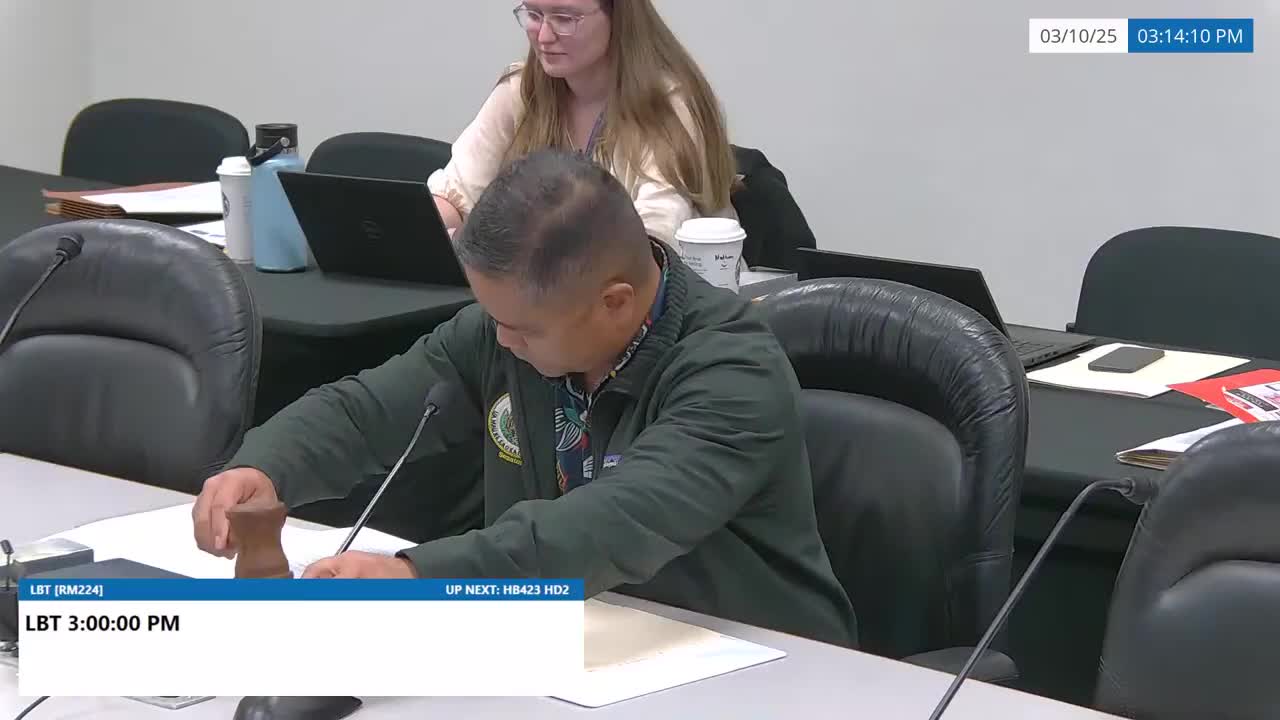
Senate Standing Committee on Labor and Technology
 10MIN
House Standing Committee on Consumer Protection & Commerce
 6MIN
House Standing Committee on Labor
 6MIN
House Standing Committee on Health
6MIN
House Standing Committee on Human Services & Homelessness
Bill Author