HB 700: Cognitive Assessments; Medicare Beneficiaries; Annual Wellness Visits; Alzheimer's Disease and Related Dementias; Dementia Data Pilot Program; Reporting Requirements; Executive Office on Aging
- Session Year: 2025-2026
- House: House
- Latest Version Date: 2025-04-26
Current Status:
In Progress
(2025-07-03: Act 286, on 07/03/2025 (Gov. Msg. No. 1389).)
Introduced
In Committee
First Chamber
In Committee
Second Chamber
Final Decking
Enacted
Establishes, with certain exceptions, standardized cognitive assessments for qualified Medicare beneficiaries. Establishes a two-year Dementia Data Pilot Program within the Executive Office on Aging to collect and analyze cognitive assessment data. Requires the Executive Office on Aging to report de-identified aggregated data to the Legislature. (CD1)
Establishes a Dementia Data Pilot Program within the Executive Office on Aging. Authorizes the Executive Office on Aging to collaborate with a health care system for the pilot program; health care providers participating in the pilot program to submit certain information to the Executive Office on Aging; and the Executive Office on Aging to report de-identified aggregated data to the Legislature. Adds a new part to Chapter 349, Hawaii Revised Statutes, requiring, with certain exceptions, standardized cognitive assessments for qualified patients who are Medicare beneficiaries. Appropriates funds. Effective 7/1/2050. (SD2)
Establishes a Cognitive Assessments for Medicare Beneficiaries Pilot Program within the Executive Office on Aging. Requires the Executive Office on Aging to collaborate with a health care system for the pilot program; health care providers participating in the pilot program to submit certain information to the Executive Office on Aging; and the Executive Office on Aging to report de-identified aggregated data to the Legislature. Appropriates funds. Effective 7/1/2026. (SD1)
Establishes a Cognitive Assessments for Medicare Beneficiaries Pilot Program within the Executive Office on Aging. Requires the Executive Office on Aging to collaborate with a health care system for the pilot program, health care providers participating in the pilot program to submit certain information to the Executive Office on Aging, and the Executive Office on Aging to report de-identified aggregated data to the Legislature. Appropriates funds. Effective 1/1/3000. (HD1)
Requires all health care providers who accept Medicare to provide a cognitive assessment as part of the Medicare Part B annual wellness visit for Medicare beneficiaries sixty-five years of age or older, with certain exceptions. Requires health care providers to submit certain information to the Executive Office on Aging and the Executive Office on Aging to report de-identified aggregated data to the Legislature on an annual basis. Appropriates funds. Effective 1/1/2026.
|
HOUSE OF REPRESENTATIVES |
H.B. NO. |
700 |
|
THIRTY-THIRD LEGISLATURE, 2025 |
H.D. 1 |
|
|
STATE OF HAWAII |
S.D. 2 |
|
|
|
C.D. 1 |
|
|
|
||
|
|
||
A BILL FOR AN ACT
RELATING TO COGNITIVE ASSESSMENTS.
BE IT ENACTED BY THE LEGISLATURE OF THE STATE OF HAWAII:
PART I
SECTION 1. The legislature finds that families caring for individuals with Alzheimer's disease and related dementias face many challenges when attempting to balance their professional lives with the provision of care to their loved ones. Caregivers often must choose between continuing their careers or becoming full-time caregivers. According to the Alzheimer's Association, Hawaii has approximately sixty thousand family caregivers providing ninety-one million hours of unpaid care valued at $1,900,000,000.
The legislature further finds that 6.7 per cent of individuals aged forty-five or older experience subjective cognitive decline. After age sixty-five, the risk of Alzheimer's disease doubles every five years, with individuals on medicare considered at higher risk of having or developing dementia. According to the federal Centers for Disease Control and Prevention, by 2060, nearly fourteen million adults in the United States are projected to have Alzheimer's disease. Nationwide, the costs to care for individuals living with Alzheimer's disease and related dementias is significant, with the total cost of care for Alzheimer's disease projected to increase to more than $1,100,000,000,000 by 2050. However, a 2018 report from the Alzheimer's Association indicated that early diagnosis and treatment of dementia could save the nation as much as $7,900,000,000,000 in medical and care costs over thirty years.
The treatment and prevention of Alzheimer's disease and related dementias is of pressing concern to the State. Per the department of business, economic development, and tourism, nearly one in five residents in Hawaii is sixty-five years of age or older, with this age group rapidly expanding in size. Annually, Alzheimer's and related dementias cost the State's medicaid program $285,000,000. In the Hawaii 2025: State Plan on Alzheimer's Disease and Related Dementias: 2020 Update, the executive office on aging found that medicare costs for the Alzheimer's disease and related dementias population are nearly $10,000 higher in comparison to the non-Alzheimer's disease and related dementias population. The legislature also finds that early detection of Alzheimer's disease and related dementias can reduce costs, manage comorbid conditions, delay disease progression, and allow better care planning. However, data from the federal Centers for Disease Control and Prevention's Behavioral Risk Factor Surveillance System found that over two‑thirds of people with memory problems in Hawaii have not talked to their health care provider. Cost may be one factor behind why individuals have not discussed their cognitive health with their health care providers. According to the Individuals' Interest in Cognitive Screening, Dementia Diagnosis, and Treatment: New Estimates from a Population-Representative Sample report published by the RAND Corporation on December 3, 2024, eighty per cent of study respondents said they would undergo a cognitive assessment if doing so were free. The legislature notes that medicare beneficiaries who have opted to take medicare part B coverage already receive an annual cognitive assessment as part of their supplemental coverage. This assessment can be performed by any practitioner eligible to report evaluation and management services under medicare, including physicians, physician assistants, nurse practitioners, and clinical nurse specialists. However, this assessment protocol is severely underutilized. The legislature also finds that broadening the use of cognitive assessments is an important strategy to identify patients who may benefit from current and future treatments for Alzheimer's disease and related dementias, as assessments provide individuals with information that may facilitate actions to prepare for the future.
The legislature additionally finds that offering cognitive assessments for medicare beneficiaries aged sixty-five or older is a necessary component of the State's strategic plan to address Alzheimer's disease and related dementias. The legislature believes that simultaneously increasing access to cognitive assessments that are already part of many beneficiaries' supplemental medicare coverage in conjunction with the public health awareness campaign on Alzheimer's disease and related dementias conducted by the executive office on aging as part of the State's strategic plan will significantly improve the health outcomes for Hawaii's older residents.
Accordingly, the purpose of this Act is to improve the detection and treatment of Alzheimer's disease and related dementias in Hawaii by:
(1) Standardizing the use of a valid cognitive assessment tool during annual wellness visits covered by medicare part B and part C; and
(2) Establishing a dementia data pilot program within the executive office on aging to collect and analyze cognitive assessment data across the State.
PART II
SECTION 2. Chapter 349, Hawaii Revised Statutes, is amended by adding a new part to be appropriately designated and to read as follows:
"PART . COGNITIVE ASSESSMENTS FOR MEDICARE BENEFICIARIES
§349-A Definitions. For the purposes of this part:
"Annual wellness visit" means a preventive service visit covered by medicare part B between a medicare beneficiary and a primary care provider that occurs once every twelve months and includes developing or updating a personalized prevention plan and performing a health risk assessment but does not include a physical exam.
"Health care provider" means a physician or surgeon licensed under chapter 453, or an advanced practice registered nurse licensed under chapter 457.
"Medicare" means the program established under title XVIII of the Social Security Act of 1935, as amended (42 U.S.C. 1395 et seq.).
"Medicare part B" means the voluntary supplementary medical insurance benefits program provided under title XVIII of the Social Security Act of 1935, as amended (42 U.S.C. 1395j to 1395w-6).
"Medicare part C" means the medicare advantage program provided under title XVIII of the Social Security Act of 1935, as amended (42 U.S.C. 1395w-21 to 1395w-28).
"Qualified patient" means an individual medicare beneficiary, including but not limited to an individual with developmental disabilities who is predisposed to early cognitive decline, and who has coverage under medicare part B or medicare part C.
§349-B Cognitive assessments for qualified patients. (a) The cognitive assessment provided to qualified patients at an annual wellness visit shall be conducted using standardized, validated assessment tools.
(b) A qualified patient may decline the use of a standardized, validated cognitive assessment tool after being informed of its purpose, benefits, and any risks.
§349-C Exemptions. This part shall not apply to:
(1) Health care providers who do not accept medicare insurance;
(2) Qualified patients who have already received a diagnosis of dementia or mild cognitive impairment; and
(3) Qualified patients who are unable to undergo a cognitive assessment due to a physical or mental impairment or disability."
PART III
SECTION 3. (a) There is established a dementia data pilot program within the executive office on aging to collect and analyze cognitive assessment data for the purposes outlined in the Hawaii 2035: State Strategic Plan on Alzheimer's Disease and Related Dementias.
(b) The executive office on aging may collaborate with a health care system to identify health care providers to participate in the pilot program.
(c) A health care provider participating in the pilot program may provide a report to the executive office on aging no later than October 1 of each year. The report may include but not be limited to:
(1) Whether the qualified patient declined the cognitive assessment;
(2) Whether the qualified patient is exempt from a cognitive assessment and the reason for the exemption;
(3) The date of the cognitive assessment;
(4) The address where the cognitive assessment was conducted and whether the cognitive assessment was conducted in person or via telehealth;
(5) The qualified patient's age, zip code, race, and gender;
(6) The type of cognitive assessment administered;
(7) The result of the cognitive assessment; and
(8) Any follow-up actions taken, including subsequent referrals and further diagnosis and treatment.
(d) The executive office on aging may secure the transmission and storage of the information reported pursuant to subsection (c) for the purposes of the pilot program.
(e) The executive office on aging shall provide a report summarizing the information collected pursuant to subsection (c) to the legislature no later than twenty days prior to the convening of the regular sessions of 2027 and 2028. The report shall be made available to the public on the department of health's website.
(f) Any reports submitted to the legislature and subject to publication under this Act shall be limited to aggregated data and shall not directly contain or indirectly result in the disclosure of personally identifiable information.
(g) The identity, or any group of facts or any system of records that may lead to the identity, of any qualified patient who has received a cognitive assessment pursuant to this Act shall be confidential and shall not be revealed in any report, release, or publication.
(h) The dementia data pilot program shall be dissolved two years from its start date.
(i) For the purposes of this part, "qualified patient" has the same meaning as defined in section 349-A, Hawaii Revised Statutes.
PART IV
SECTION 4. In codifying the new sections added by section 2 of this Act, the revisor of statutes shall substitute appropriate section numbers for the letters used in designating the new sections in this Act.
SECTION 5. This Act shall take effect on July 1, 2025.
Report Title:
Cognitive Assessments; Medicare Beneficiaries; Annual Wellness Visits; Alzheimer's Disease and Related Dementias; Dementia Data Pilot Program; Reporting Requirements; Executive Office on Aging
Description:
Establishes, with certain exceptions, standardized cognitive assessments for qualified Medicare beneficiaries. Establishes a two-year Dementia Data Pilot Program within the Executive Office on Aging to collect and analyze cognitive assessment data. Requires the Executive Office on Aging to report de-identified aggregated data to the Legislature. (CD1)
The summary description of legislation appearing on this page is for informational purposes only and is not legislation or evidence of legislative intent.
|
HOUSE OF REPRESENTATIVES |
H.B. NO. |
700 |
|
THIRTY-THIRD LEGISLATURE, 2025 |
H.D. 1 |
|
|
STATE OF HAWAII |
S.D. 2 |
|
|
|
|
|
|
|
||
|
|
||
A BILL FOR AN ACT
RELATING TO COGNITIVE ASSESSMENTS.
BE IT ENACTED BY THE LEGISLATURE OF THE STATE OF HAWAII:
SECTION 1. The legislature finds that families caring for individuals with Alzheimer's disease and related dementias face many challenges when attempting to balance their professional lives with the provision of care to their loved ones. Caregivers often must choose between continuing their careers or becoming full-time caregivers. According to the Alzheimer's Association, Hawaii has approximately sixty thousand family caregivers providing ninety-one million hours of unpaid care valued at $1,900,000,000.
The legislature further finds that 6.7 per cent of individuals aged forty-five or older experience subjective cognitive decline. After age sixty-five, the risk of Alzheimer's doubles every five years, with individuals on medicare considered at higher risk of having or developing dementia. According to the federal Centers for Disease Control and Prevention, by 2060, nearly fourteen million adults in the United States are projected to have Alzheimer's disease. Nationwide, the costs to care for individuals living with Alzheimer's and related dementias is significant, with the total cost of care for Alzheimer's projected to increase to more than $1,100,000,000,000 by 2050. However, a 2018 report from the Alzheimer's Association indicated that early diagnosis and treatment of dementia could save the nation as much as $7,900,000,000,000 in medical and care costs over thirty years.
The treatment and prevention of Alzheimer's disease and related dementias is of pressing concern to the State. Per the department of business, economic development, and tourism, nearly one in five residents in Hawaii is sixty-five years of age or older, with this age group rapidly expanding in size. Annually, Alzheimer's and related dementias cost the State's medicaid program $285,000,000. In the Hawaii 2025: State Plan on Alzheimer's Disease and Related Dementias: 2020 Update, the executive office on aging found that medicare costs for the Alzheimer's disease and related dementias population are nearly $10,000 higher in comparison to the non-Alzheimer's disease and related dementias population. The legislature also finds that early detection of Alzheimer's disease and related dementias can reduce costs, manage comorbid conditions, delay disease progression, and allow better care planning. However, data from the federal Centers for Disease Control and Prevention's Behavioral Risk Factor Surveillance System found that over two‑thirds of people with memory problems in Hawaii have not talked to their health care provider. Cost may be one factor behind why individuals have not discussed their cognitive health with their health care providers. According to the Individuals' Interest in Cognitive Screening, Dementia Diagnosis, and Treatment: New Estimates from a Population-Representative Sample report published by the RAND Corporation on December 3, 2024, eighty per cent of study respondents said they would undergo a cognitive assessment if doing so were free. The legislature notes that medicare beneficiaries who have opted to take medicare part B coverage already receive an annual cognitive assessment as part of their supplemental coverage. This assessment can be performed by any practitioner eligible to report evaluation and management services under medicare, including physicians, physician assistants, nurse practitioners, and clinical nurse specialists. However, this assessment protocol is severely underutilized. The legislature also finds that broadening the use of cognitive assessments is an important strategy to identify patients who may benefit from current and future treatments for Alzheimer's and related dementias, as assessments provide individuals with information that may facilitate actions to prepare for the future.
The legislature additionally finds that offering cognitive assessments for medicare beneficiaries aged sixty-five or older is a necessary component of the State's strategic plan to address Alzheimer's disease and related dementias. The legislature believes that simultaneously increasing access to cognitive assessments that are already part of many beneficiaries' supplemental medicare coverage in conjunction with the public health awareness campaign on Alzheimer's disease and related dementias conducted by the executive office on aging as part of the State's strategic plan will significantly improve the health outcomes for Hawaii's older residents.
Accordingly, the purpose of this Act is to improve the detection and treatment of Alzheimer's disease and related dementias in Hawaii by standardizing the use of a valid cognitive assessment tool during annual wellness visits covered by medicare part B and part C and establishing a dementia data pilot program, within the executive office on aging, to collect and analyze cognitive assessment data across the State.
PART I
SECTION 2. (a) There is established a dementia data pilot program within the executive office on aging to collect and analyze cognitive assessment data for the purposes outlined in the Hawaii 2035: State Strategic Plan on Alzheimer's Disease and Related Dementias.
(b) The executive office on aging may collaborate with a health care system to identify health care providers to participate in the pilot program.
(c) The health care provider may provide a report to the executive office on aging no later than October 1 of each year. The report may include but not be limited to:
(1) Whether a patient declined the cognitive assessment;
(2) Whether a patient is exempt from the cognitive assessment and the reason for the exemption;
(3) The date of the cognitive assessment;
(4) The address where the cognitive assessment was conducted and whether the cognitive assessment was conducted in person or via telehealth;
(5) The qualified patient's age, zip code, race, and gender;
(6) The type of cognitive assessment administered;
(7) The result of the cognitive assessment; and
(8) Any follow-up actions taken, including subsequent referrals and further diagnosis and treatment.
(d) The executive office on aging may secure the transmission and storage of the information reported pursuant to subsection (c) for the purposes of the pilot program.
(e) The executive office on aging shall provide a report summarizing the information collected pursuant to subsection (c) to the legislature no later than twenty days prior to the convening of the regular sessions of 2027 and . The report shall be made available to the public on the department of health's website.
(f) Any reports submitted to the legislature and subject to publication under this Act shall be limited to aggregated data and shall not directly contain or indirectly result in the disclosure of personally identifiable information.
(g) The identity, or any group of facts or any system of records that may lead to the identity, of any qualified patient who has received a cognitive assessment pursuant to this Act shall be confidential and shall not be revealed in any report, release, or publication.
(h) The dementia data pilot program shall be dissolved two years from its start date.
PART II
SECTION 3. Chapter 349, Hawaii Revised Statutes, is amended by adding a new part to be appropriately designated and to read as follows:
"PART . COGNITIVE ASSESSMENTS FOR
MEDICARE BENEFICIARIES
§349-A Definitions. For the purposes of this part:
"Annual wellness visit" means a preventative service visit covered by medicare part B between a medicare beneficiary and a primary care provider that occurs once every twelve months and includes developing or updating a personalized prevention plan and performing a health risk assessment but does not include a physical exam.
"Health care provider" means a physician or surgeon licensed under chapter 453, or an advanced practice registered nurse licensed under chapter 457.
"Medicare" means the program established under title XVIII of the Social Security Act of 1935, as amended (42 United States Code 1395 et seq.).
"Medicare part B" means the voluntary supplementary medical insurance benefits program provided under title XVIII of the Social Security Act of 1935, as amended (42 United States Code 1395j to 1395w-6).
"Medicare part C" means the medicare advantage program provided under title XVIII of the Social Security Act of 1935, as amended (42 United States Code 1395w-21 to 1395w-28).
"Qualified patient" means an individual medicare beneficiary, including but not limited to an individual with developmental disabilities who is predisposed to early cognitive decline, and who has coverage under medicare part B or part C.
§349-B Cognitive assessments for qualified patients. (a) The cognitive assessment provided to qualified patients at an annual wellness visit shall be conducted using standardized, validated assessment tools or diagnostic tests that are approved by the United States Food and Drug Administration and covered by medicare.
(b) A qualified patient may decline the use of a standardized, validated cognitive assessment tool or diagnostic test after being informed of its purpose, benefits, and any risks.
§349-C Exemptions. This part shall not apply to:
(1) Health care providers who do not accept medicare insurance;
(2) Qualified patients who have already received a diagnosis of dementia or mild cognitive impairment; and
(3) Qualified patients who are unable to undergo a cognitive assessment due to a physical or mental impairment or disability."
PART III
SECTION 4. There is appropriated out of the general revenues of the State of Hawaii the sum of $ or so much thereof as may be necessary for fiscal year 2025-2026 and the same sum or so much thereof as may be necessary for fiscal year 2026-2027 for any costs associated with the data management and reporting requirements for the secure data transmission required by this Act.
The sums appropriated shall be expended by the executive office on aging for the purposes of this Act.
PART IV
SECTION 5. In codifying the new sections added by section 3 of this Act, the revisor of statutes shall substitute appropriate section numbers for the letters used in designating the new sections in this Act.
SECTION 6. This Act shall take effect on July 1, 2050.
Report Title:
Cognitive Assessments; Medicare Beneficiaries; Annual Wellness Visits; Alzheimer's Disease and Related Dementias; Pilot Program; Reporting Requirements; Executive Office on Aging; Reports; Appropriations
Description:
Establishes a Dementia Data Pilot Program within the Executive Office on Aging. Authorizes the Executive Office on Aging to collaborate with a health care system for the pilot program; health care providers participating in the pilot program to submit certain information to the Executive Office on Aging; and the Executive Office on Aging to report de-identified aggregated data to the Legislature. Adds a new part to Chapter 349, Hawaii Revised Statutes, requiring, with certain exceptions, standardized cognitive assessments for qualified patients who are Medicare beneficiaries. Appropriates funds. Effective 7/1/2050. (SD2)
The summary description of legislation appearing on this page is for informational purposes only and is not legislation or evidence of legislative intent.
|
HOUSE OF REPRESENTATIVES |
H.B. NO. |
700 |
|
THIRTY-THIRD LEGISLATURE, 2025 |
H.D. 1 |
|
|
STATE OF HAWAII |
S.D. 1 |
|
|
|
|
|
|
|
||
|
|
||
A BILL FOR AN ACT
RELATING TO COGNITIVE ASSESSMENTS.
BE IT ENACTED BY THE LEGISLATURE OF THE STATE OF HAWAII:
SECTION 1. The legislature finds that families caring for individuals with Alzheimer's disease and related dementias face many challenges when attempting to balance their professional lives with the provision of care to their loved ones. Caregivers often must choose between continuing their careers or becoming full-time caregivers. According to the Alzheimer's Association, Hawaii has approximately sixty thousand family caregivers providing ninety-one million hours of unpaid care valued at $1,900,000,000.
The legislature further finds that 6.7 per cent of individuals aged forty-five or older experience subjective cognitive decline. After age sixty-five, the risk of Alzheimer's doubles every five years, with individuals on medicare considered at higher risk of having or developing dementia. According to the federal Centers for Disease Control and Prevention, by 2060, nearly fourteen million adults in the United States are projected to have Alzheimer's disease. Nationwide, the costs to care for individuals living with Alzheimer's and related dementias is significant, with the total cost of care for Alzheimer's projected to increase to more than $1,100,000,000,000 by 2050. However, a 2018 report from the Alzheimer's Association indicated that early diagnosis and treatment of dementia could save the nation as much as $7,900,000,000,000 in medical and care costs over thirty years.
The treatment and prevention of Alzheimer's disease and related dementias is of pressing concern to the State. Per the department of business, economic development, and tourism, nearly one in five residents in Hawaii is sixty-five years of age or older, with this age group rapidly expanding in size. Annually, Alzheimer's and related dementias cost the State's medicaid program $285,000,000. In the Hawaii 2025: State Plan on Alzheimer's Disease and Related Dementias: 2020 Update, the executive office on aging found that medicare costs for the Alzheimer's disease and related dementias population are nearly $10,000 higher in comparison to the non-Alzheimer's disease and related dementias population. The legislature also finds that early detection of Alzheimer's disease and related dementias can reduce costs, manage comorbid conditions, delay disease progression, and allow better care planning. However, data from the federal Centers for Disease Control and Prevention's Behavioral Risk Factor Surveillance System found that over two-thirds of people with memory problems in Hawaii have not talked to their health care provider. Cost may be one factor behind why individuals have not discussed their cognitive health with their health care providers. According to the Individuals' Interest in Cognitive Screening, Dementia Diagnosis, and Treatment: New Estimates from a Population-Representative Sample report published by the RAND Corporation on December 3, 2024, eighty per cent of study respondents said they would undergo a cognitive assessment if doing so were free. The legislature notes that medicare beneficiaries who have opted to take medicare part B coverage already receive an annual cognitive assessment as part of their supplemental coverage. This assessment can be performed by any practitioner eligible to report evaluation and management services under medicare, including physicians, physician assistants, nurse practitioners, and clinical nurse specialists. However, this assessment protocol is severely underutilized. The legislature also finds that broadening the use of cognitive assessments is an important strategy to identify patients who may benefit from current and future treatments for Alzheimer's and related dementias, as assessments provide individuals with information that may facilitate actions to prepare for the future.
The legislature additionally finds that offering cognitive assessments for medicare beneficiaries aged sixty-five or older is a necessary component of the State's strategic plan to address Alzheimer's disease and related dementias. The legislature believes that simultaneously increasing access to cognitive assessments that are already part of many beneficiaries' supplemental medicare coverage in conjunction with the public health awareness campaign on Alzheimer's disease and related dementias conducted by the executive office on aging as part of the State's strategic plan will significantly improve the health outcomes for Hawaii's older residents.
Accordingly, the purpose of this Act is to improve the detection and treatment of Alzheimer's disease and related dementias in Hawaii by establishing a pilot program within the executive office on aging to offer cognitive assessments for medicare beneficiaries at heightened risk for cognitive impairments, regardless of age, during annual wellness visits covered by medicare part B.
SECTION 2. (a) There is established a cognitive assessments for medicare beneficiaries pilot program within the executive office on aging to provide medicare part B patients at heightened risk for cognitive impairments, regardless of age, with a cognitive assessment for the early detection of dementia.
(b) The executive office on aging shall collaborate with a health care system to identify health care providers to participate in the pilot program.
(c) All health care providers participating in the pilot program shall offer and conduct a cognitive assessment when providing an annual wellness visit to a qualified patient.
(d) The cognitive assessment shall be conducted using standardized, validated assessment tools or diagnostic tests approved by the United States Food and Drug Administration and covered by medicare.
(e) A qualified patient may decline the cognitive assessment after being informed of its purpose, benefits, and any risks. The health care provider shall document the qualified patient's decision to decline the cognitive assessment and include it as a part of the qualified patient's medical record.
(f) The health care provider shall provide a report to the executive office on aging no later than October 1 of each year. The report may include but not be limited to:
(1) Whether the qualified patient declined the cognitive assessment;
(2) Whether the qualified patient is exempt from the cognitive assessment and the reason for the exemption;
(3) The date of the cognitive assessment;
(4) The address where the cognitive assessment was conducted and whether the cognitive assessment was conducted in person or via telehealth;
(5) The qualified patient's age, zip code, race, and gender;
(6) The type of cognitive assessment administered;
(7) The result of the cognitive assessment; and
(8) Any follow-up actions taken, including subsequent referrals and further diagnosis and treatment.
(g) The executive office on aging shall secure the transmission and storage of the information reported pursuant to subsection (f) for the purposes of the pilot program.
(h) The executive office on aging shall provide a report summarizing the information collected pursuant to subsection (f) to the legislature no later than twenty days prior to the convening of the regular sessions of 2027 and . The report shall be made available to the public on the department of health's website.
(i) Any reports submitted to the legislature and subject to publication under this Act shall be limited to aggregated data and shall not directly contain or indirectly result in the disclosure of personally identifiable information.
(j) The identity, or any group of facts or any system of records that may lead to the identity, of any qualified patient who has received a cognitive assessment pursuant to this Act shall be confidential and shall not be revealed in any report, release, or publication.
(k) The pilot program shall not include:
(1) Health care providers who do not accept medicare insurance;
(2) Qualified patients who have already received a diagnosis of dementia or mild cognitive impairment; and
(3) Qualified patients who are unable to undergo a cognitive assessment due to a physical or mental impairment or disability.
(l) As used in this Act:
"Annual wellness visit" means a preventive service visit covered by medicare part B between a medicare beneficiary and a primary care provider that occurs once every twelve months and includes developing or updating a personalized prevention plan and performing a health risk assessment, but does not include a physical exam.
"Health care provider" means a physician or surgeon licensed under chapter 453, Hawaii Revised Statutes, or an advanced practice registered nurse licensed under chapter 457, Hawaii Revised Statutes.
"Medicare" means the program established under Title XVIII of the Social Security Act, as amended (42 U.S.C. 1395 et seq.).
"Medicare part B" means the voluntary supplementary medical insurance benefits program provided under Title XVIII of the Social Security Act (42 U.S.C. 1395j-1395w-6).
"Qualified patient" means an individual medicare beneficiary at heightened risk for cognitive impairments, regardless of age, with coverage under medicare part B. "Qualified patient" includes individuals with developmental disabilities who are predisposed to early cognitive decline.
(m) The cognitive assessments for medicare beneficiaries pilot program shall be dissolved on , .
SECTION 3. There is appropriated out of the general revenues of the State of Hawaii the sum of $ or so much thereof as may be necessary for fiscal year 2025-2026 and the same sum or so much thereof as may be necessary for fiscal year 2026-2027 for any costs associated with the data management and reporting requirements for the secure data transmission required by this Act.
The sums appropriated shall be expended by the executive office on aging for the purposes of this Act.
SECTION 4. This Act shall take effect on July 1, 2026.
Report Title:
Cognitive Assessments; Medicare Beneficiaries; Annual Wellness Visits; Alzheimer's Disease and Related Dementias; Pilot Program; Reporting Requirements; Executive Office on Aging; Reports; Appropriations
Description:
Establishes a Cognitive Assessments for Medicare Beneficiaries Pilot Program within the Executive Office on Aging. Requires the Executive Office on Aging to collaborate with a health care system for the pilot program; health care providers participating in the pilot program to submit certain information to the Executive Office on Aging; and the Executive Office on Aging to report de-identified aggregated data to the Legislature. Appropriates funds. Effective 7/1/2026. (SD1)
The summary description of legislation appearing on this page is for informational purposes only and is not legislation or evidence of legislative intent.
|
HOUSE OF REPRESENTATIVES |
H.B. NO. |
700 |
|
THIRTY-THIRD LEGISLATURE, 2025 |
H.D. 1 |
|
|
STATE OF HAWAII |
|
|
|
|
|
|
|
|
||
|
|
||
A BILL FOR AN ACT
RELATING TO COGNITIVE ASSESSMENTS.
BE IT ENACTED BY THE LEGISLATURE OF THE STATE OF HAWAII:
SECTION 1. The legislature finds that families caring for individuals with Alzheimer's disease and related dementias face many challenges when attempting to balance their professional lives with the provision of care to their loved ones. Caregivers often must choose between continuing their careers or becoming full-time caregivers. According to the Alzheimer's Association, Hawaii has approximately sixty thousand family caregivers providing ninety-one million hours of unpaid care valued at $1,900,000,000.
The legislature further finds that 6.7 per cent of individuals aged forty-five or older experience subjective cognitive decline. After age sixty-five, the risk of Alzheimer's doubles every five years, with individuals on medicare considered at higher risk of having or developing dementia. According to the Centers for Disease Control and Prevention, by 2060, nearly fourteen million adults in the United States are projected to have Alzheimer's disease. Nationwide, the costs to care for individuals living with Alzheimer's and related dementias is significant, with the total cost of care for Alzheimer's projected to increase to more than $1,100,000,000,000 by 2050. However, a 2018 report from the Alzheimer's Association indicated that early diagnosis and treatment of dementia could save the nation as much as $7,900,000,000,000 in medical and care costs over thirty years.
The treatment and prevention of Alzheimer's disease and related dementias is of pressing concern to the State. Per the department of business, economic development, and tourism, nearly one in five residents in Hawaii is sixty-five years of age or older, with this age group rapidly expanding in size. Annually, Alzheimer's and related dementias cost the State's medicaid program $285,000,000. In the Hawaii 2025: State Plan on Alzheimer's Disease and Related Dementias: 2020 Update, the executive office on aging found that medicare costs for the Alzheimer's disease and related dementias population are nearly $10,000 higher in comparison to the non-Alzheimer's disease and related dementias population. The legislature also finds that early detection of Alzheimer's disease and related dementias can reduce costs, manage comorbid conditions, delay disease progression, and allow better care planning. However, data from the Centers for Disease Control and Prevention's Behavioral Risk Factor Surveillance System found that over two-thirds of people with memory problems in Hawaii have not talked to their health care provider. Cost may be one factor behind why individuals have not discussed their cognitive health with their health care providers. According to the Individuals' Interest in Cognitive Screening, Dementia Diagnosis, and Treatment: New Estimates from a Population-Representative Sample report published by the RAND Corporation on December 3, 2024, eighty per cent of study respondents said they would undergo a cognitive assessment if doing so were free. The legislature notes that medicare beneficiaries who have opted to take medicare part B coverage already receive an annual cognitive assessment as part of their supplemental coverage. This assessment can be performed by any practitioner eligible to report evaluation and management services under medicare, including physicians, physician assistants, nurse practitioners, and clinical nurse specialists. However, this assessment protocol is severely underutilized. The legislature also finds that broadening the use of cognitive assessments is an important strategy to identify patients who may benefit from current and future treatments for Alzheimer's and related dementias, as assessments provide individuals with information that may facilitate actions to prepare for the future.
The legislature additionally finds that offering cognitive assessments for medicare beneficiaries aged sixty-five or older is a necessary component of the State's strategic plan to address Alzheimer's disease and related dementias. The legislature believes that simultaneously increasing access to cognitive assessments that are already part of many beneficiaries' supplemental medicare coverage in conjunction with the public health awareness campaign on Alzheimer's disease and related dementias conducted by the executive office on aging as part of the State's strategic plan will significantly improve the health outcomes for Hawaii's older residents.
Accordingly, the purpose of this Act is to improve the detection and treatment of Alzheimer's disease and related dementias in Hawaii by establishing a pilot program within the executive office on aging to offer cognitive assessments for medicare beneficiaries aged sixty-five or older during annual wellness visits covered by medicare part B.
SECTION 2. (a) There is established a cognitive assessments for medicare beneficiaries pilot program within the executive office on aging to provide medicare part B patients aged sixty-five or older with a cognitive assessment for the early detection of dementia.
(b) The executive office on aging shall collaborate with a health care system to identify health care providers to participate in the pilot program.
(c) All health care providers participating in the pilot program shall offer and conduct a cognitive assessment when providing an annual wellness visit to a qualified patient.
(d) The cognitive assessment shall be conducted using standardized, validated assessment tools or diagnostic tests approved by the Food and Drug Administration and covered by medicare.
(e) A qualified patient may decline the cognitive assessment after being informed of its purpose, benefits, and any risks. The health care provider shall document the qualified patient's decision to decline the cognitive assessment and include it as a part of the qualified patient's medical record.
(f) The health care provider shall provide a report to the executive office on aging no later than October 1 of each year. The report may include but not be limited to:
(1) Whether the qualified patient declined the cognitive assessment;
(2) Whether the qualified patient is exempt from the cognitive assessment and the reason for the exemption;
(3) The date of the cognitive assessment;
(4) The address where the cognitive assessment was conducted and whether the cognitive assessment was conducted in person or via telehealth;
(5) The qualified patient's age, zip code, race, and gender;
(6) The type of cognitive assessment administered;
(7) The result of the cognitive assessment; and
(8) Any follow-up actions taken, including subsequent referrals and further diagnosis and treatment.
(g) The executive office on aging shall secure the transmission and storage of the information reported pursuant to subsection (f) for the purposes of the pilot program.
(h) The executive office on aging shall provide a report summarizing the information collected pursuant to subsection (f) to the legislature no later than twenty days prior to the convening of the regular sessions of 2027 and . The report shall be available to the public on the department of health's website.
(i) Any reports submitted to the legislature and subject to publication under this Act shall be limited to aggregated data and shall not directly contain or indirectly result in the disclosure of personally identifiable information.
(j) The identity, or any group of facts or any system of records that may lead to the identity, of any qualified patient who has received a cognitive assessment pursuant to this Act shall be confidential and shall not be revealed in any report, release, or publication.
(k) The pilot program shall not include:
(1) Health care providers who do not accept medicare insurance;
(2) Qualified patients who have already received a diagnosis of dementia or mild cognitive impairment; and
(3) Qualified patients who are unable to undergo a cognitive assessment due to a physical or mental impairment or disability.
(l) As used in this Act:
"Annual wellness visit" means a preventive service visit covered by medicare part B between a medicare beneficiary and a primary care provider that occurs once every twelve months and includes developing or updating a personalized prevention plan and performing a health risk assessment, but does not include a physical exam."
"Health care provider" means a physician or surgeon licensed under chapter 453, Hawaii Revised Statutes, or an advanced practice registered nurse licensed under chapter 457, Hawaii Revised Statutes.
"Medicare" means Title XVIII of the Social Security Act, as amended (42 U.S.C. 1801 et seq.).
"Medicare part B" means the voluntary supplementary medical insurance benefits program provided under Title XVIII of the Social Security Act (42 U.S.C. 1831–1848).
"Qualified patient" means an individual medicare beneficiary who is sixty-five years of age or older with coverage under medicare part B.
(m) The cognitive assessments for medicare beneficiaries pilot program shall be dissolved on , .
SECTION 3. There is appropriated out of the general revenues of the State of Hawaii the sum of $ or so much thereof as may be necessary for fiscal year 2025-2026 and the same sum or so much thereof as may be necessary for fiscal year 2026-2027 for any costs associated with the data management and reporting requirements for the secure data transmission required by this Act.
The sums appropriated shall be expended by the executive office on aging for the purposes of this Act.
SECTION 4 This Act shall take effect on January 1, 3000; provided that section 3 shall take effect on July 1, 2026.
Report Title:
Cognitive Assessments; Medicare Beneficiaries; Annual Wellness Visits; Alzheimer's Disease and Related Dementias; Pilot Program; Reporting Requirements; Executive Office on Aging; Appropriation
Description:
Establishes a Cognitive Assessments for Medicare Beneficiaries Pilot Program within the Executive Office on Aging. Requires the Executive Office on Aging to collaborate with a health care system for the pilot program, health care providers participating in the pilot program to submit certain information to the Executive Office on Aging, and the Executive Office on Aging to report de-identified aggregated data to the Legislature. Appropriates funds. Effective 1/1/3000. (HD1)
The summary description of legislation appearing on this page is for informational purposes only and is not legislation or evidence of legislative intent.
|
HOUSE OF REPRESENTATIVES |
H.B. NO. |
700 |
|
THIRTY-THIRD LEGISLATURE, 2025 |
|
|
|
STATE OF HAWAII |
|
|
|
|
|
|
|
|
||
|
|
||
A BILL FOR AN ACT
relating to cognitive assessments.
BE IT ENACTED BY THE LEGISLATURE OF THE STATE OF HAWAII:
SECTION 1. The legislature finds that families caring for individuals with Alzheimer's disease and related dementias face many challenges when attempting to balance their professional lives with the provision of care to their loved ones. Caregivers often must choose between continuing their careers or becoming full-time caregivers. According to the Alzheimer's Association, Hawaii has approximately sixty thousand family caregivers providing ninety-one million hours of unpaid care valued at $1,900,000,000.
The legislature further finds that 6.7 per cent of individuals aged forty-five or older experience subjective cognitive decline. After age sixty-five, the risk of Alzheimer's doubles every five years, with individuals on medicare considered at higher risk of having or developing dementia. According to the Centers for Disease Control and Prevention, by 2060, nearly fourteen million adults in the United States are projected to have Alzheimer's disease. Nationwide, the costs to care for individuals living with Alzheimer's and related dementias is significant, with the total cost of care for Alzheimer's projected to increase to more than $1,100,000,000,000 by 2050. However, a 2018 report from the Alzheimer's Association indicated that early diagnosis and treatment of dementia could save the nation as much as $7,900,000,000,000 in medical and care costs over thirty years.
The treatment and prevention of Alzheimer's disease and related dementias is a pressing concern to the State. Per the department of business, economic development, and tourism, nearly one in five residents in Hawaii is sixty-five years of age or older, with this age group rapidly expanding in size. Annually, Alzheimer's and related dementias cost the State's medicaid program $285,000,000. In the Hawaii 2025: State Plan on Alzheimer's Disease and Related Dementias: 2020 Update, the executive office on aging found that medicare costs for the Alzheimer's disease and related dementias population are nearly $10,000 higher in comparison to the non-Alzheimer's disease and related dementias population. The legislature also finds that early detection of Alzheimer's disease and related dementias can reduce costs, manage comorbid conditions, delay disease progression, and allow better care planning. However, data from the Centers for Disease Control and Prevention's Behavioral Risk Factor Surveillance System found that over two-thirds of people with memory problems in Hawaii have not talked to their health care provider. Cost may be one factor behind why individuals have not discussed their cognitive health with their health care providers. According to the Individuals' Interest in Cognitive Screening, Dementia Diagnosis, and Treatment: New Estimates from a Population-Representative Sample report published by the RAND Corporation on December 3, 2024, eighty per cent of study respondents said they would undergo a cognitive assessment if doing so were free. The legislature notes that medicare beneficiaries who have opted to take Part B coverage already receive an annual cognitive assessment as part of their supplemental coverage. This assessment can be performed by any practitioner eligible to report evaluation and management services under medicare, including physicians, physician assistants, nurse practitioners, and clinical nurse specialists. However, this assessment protocol is severely underutilized. The legislature also finds that broadening the use of cognitive assessments is an important strategy to identify patients who may benefit from current and future treatments for Alzheimer's and related dementias, as assessments provide individuals with information that may facilitate actions to prepare for the future.
The legislature additionally finds that mandating cognitive assessments for medicare beneficiaries aged sixty-five or older is a necessary component of the State's strategic plan to address Alzheimer's disease and related dementias. The legislature believes that simultaneously increasing access to cognitive assessments that are already part of many beneficiaries supplemental medicare coverage in conjunction with the public health awareness campaign on Alzheimer's disease and related dementias conducted by the executive office on aging as part of the State's strategic plan will significantly improve the health outcomes for Hawaii's older residents.
Accordingly, the purpose of this Act is to improve the detection and treatment of Alzheimer's disease and related dementias in Hawaii by mandating cognitive assessments for medicare beneficiaries aged sixty-five or older during annual wellness visits covered by medicare part B.
SECTION 2. Chapter 321, Hawaii Revised Statutes, is amended by adding a new part to be appropriately designated and to read as follows:
"Part . Cognitive assessments for medicare beneficiaries
§321-A Definitions. As used in this part:
"Annual wellness visit" means a preventive service visit covered by medicare part B between a medicare beneficiary and a primary care provider that occurs once every twelve months and includes developing or updating a personalized prevention plan and performing a health risk assessment, but does not include a physical exam."
"Health care provider" means a physician or surgeon licensed under chapter 453 or an advanced practice registered nurse licensed under chapter 457.
"Medicare" means Title XVIII of the Social Security Act, as amended (42 U.S.C. 1801 et seq.).
"Medicare part B" means the voluntary supplementary medical insurance benefits program provided under Title XVIII of the Social Security Act (42 U.S.C. 1831–1848).
"Qualified patient" means an individual medicare beneficiary who is sixty-five years of age or older with coverage under medicare part B .
§321-B Cognitive assessments for qualified patients; reporting requirements. (a) All health care providers shall conduct or order a cognitive assessment when providing an annual wellness visit to a qualified patient.
(b) The cognitive assessment shall be conducted using standardized, validated assessment tools or diagnostic tests approved by the Food and Drug Administration and covered by medicare.
(c) A qualified patient may decline the cognitive assessment after being informed of its purpose, benefits, and any risks. The health care provider shall document the qualified patient's decision to decline the cognitive assessment and include it as a part of the qualified patient's medical record.
(d) The health care provider shall provide a report to the executive office on aging no later than October 1 of each year. The report shall include but not be limited to:
(1) Whether the qualified patient declined the cognitive assessment;
(2) Whether the qualified patient is exempt from the cognitive assessment and the reason for the exemption;
(3) The date of the cognitive assessment;
(4) The address where the cognitive assessment was conducted and whether the cognitive assessment was conducted in person or via telehealth;
(5) The qualified patient's age, zip code, race, and gender;
(6) The type of cognitive assessment administered;
(7) The result of the cognitive assessment; and
(8) Any follow-up actions taken, including subsequent referrals and further diagnosis and treatment.
(e) The executive office on aging shall adopt rules for the secure transmission and storage of the information reported pursuant to subsection (d).
§321-C Executive office on aging; annual report; confidentiality; publication. (a) The executive office on aging shall provide an annual report summarizing the information collected pursuant to section 321-B to the legislature no later than twenty days prior to the convening of each regular session. The report shall be available to the public on the department of health's website.
(b) Any reports submitted to the legislature and subject to publication under this section shall be limited to aggregated data and shall not directly contain or indirectly result in the disclosure of personally identifiable information.
(c) The identity, or any group of facts or any system of records that may lead to the identity, of any qualified patient who has received a cognitive assessment pursuant to this part shall be confidential and shall not be revealed in any report, release, or publication.
§321-D Exemptions. This part shall not apply to:
(1) Health care providers who do not accept medicare insurance;
(2) Qualified patients who have already received a diagnosis of dementia or mild cognitive impairment; and
(3) Qualified patients who are unable to undergo a cognitive assessment due to a physical or mental impairment or disability."
SECTION 3. There is appropriated out of the general revenues of the State of Hawaii the sum of $ or so much thereof as may be necessary for fiscal year 2025-2026 and the same sum or so much thereof as may be necessary for fiscal year 2026-2027 for any costs associated with the data management and reporting requirements for the secure data transmission required by this Act.
The sums appropriated shall be expended by the executive office on aging for the purposes of this Act.
SECTION 4. In codifying the new sections added by section 2 of this Act, the revisor of statutes shall substitute appropriate section numbers for the letters used in designating the new sections in this Act.
SECTION 5. This Act shall take effect on January 1, 2026; provided that section 3 shall take effect on July 1, 2026.
|
INTRODUCED BY: |
_____________________________ |
|
|
|
Report Title:
Cognitive Assessments; Medicare Beneficiaries; Annual Wellness Visits; Alzheimer's Disease and Related Dementias; Reporting Requirements; Executive Office on Aging; Appropriation
Description:
Requires all health care providers who accept Medicare to provide a cognitive assessment as part of the Medicare Part B annual wellness visit for Medicare beneficiaries sixty-five years of age or older, with certain exceptions. Requires health care providers to submit certain information to the Executive Office on Aging and the Executive Office on Aging to report de-identified aggregated data to the Legislature on an annual basis. Appropriates funds. Effective 1/1/2026.
The summary description of legislation appearing on this page is for informational purposes only and is not legislation or evidence of legislative intent.
|
Date
|
Status
|
|---|---|
| Jul 3, 2025 | Act 286, on 07/03/2025 (Gov. Msg. No. 1389). |
| Jul 3, 2025 | Act 286, 07/03/2025 (Gov. Msg. No. 1389). |
| May 1, 2025 | Transmitted to Governor. |
| May 2, 2025 | Received notice of passage on Final Reading in House (Hse. Com. No. 821). |
| May 1, 2025 | Received notice of Final Reading (Sen. Com. No. 888). |
| Apr 30, 2025 | Passed Final Reading as amended in CD 1 with none voting aye with reservations; none voting no (0) and Representative(s) Cochran, Pierick excused (2). |
| Apr 30, 2025 | Passed Final Reading, as amended (CD 1). Ayes, 25; Aye(s) with reservations: none . 0 No(es): none. 0 Excused: none. |
| Apr 25, 2025 | 48 Hrs. Notice (as amended CD 1) 04-30-25 |
| Apr 25, 2025 | Reported from Conference Committee as amended CD 1 (Conf. Com. Rep. No. 252). |
| Apr 25, 2025 | Forty-eight (48) hours notice Wednesday, 04-30-25. |
| Apr 25, 2025 | Reported from Conference Committee (Conf Com. Rep. No. 252) as amended in (CD 1). |
| Apr 25, 2025 | The Conference committee recommends that the measure be PASSED, WITH AMENDMENTS. The votes of the Senate Conference Managers were as follows: 3 Aye(s): Senator(s) San Buenaventura, Moriwaki, Keohokalole; Aye(s) with reservations: none ; 0 No(es): none; and 1 Excused: Senator(s) Fevella. |
| Apr 25, 2025 | The Conference Committee recommends that the measure be Passed, with Amendments. The votes were as follows: 5 Ayes: Representative(s) Takayama, Marten, Keohokapu-Lee Loy, Chun, Garcia; Ayes with reservations: none; 0 Noes: none; and 0 Excused: none. |
| Apr 25, 2025 | Received notice of change in Senate conferees (Sen. Com. No. 879). |
| Apr 25, 2025 | Senate Conferees Changed: Senator Hashimoto discharged as Chair. Senator San Buenaventura added as Chair. |
| Apr 24, 2025 | Conference Committee Meeting will reconvene on Friday 04-25-25 4:30PM in conference room 329. |
| Apr 24, 2025 | Conference Committee Meeting will reconvene on Thursday 04-24-25 4:30PM in conference room 329. |
| Apr 22, 2025 | Bill scheduled for Conference Committee Meeting on Wednesday, 04-23-25 4:30PM in conference room 329. |
| Apr 21, 2025 | Received notice of Senate conferees (Sen. Com. No. 850). |
| Apr 21, 2025 | Senate Conferees Appointed: Hashimoto Chair; Moriwaki, Keohokalole Co-Chairs; Fevella. |
| Apr 21, 2025 | Received notice of appointment of House conferees (Hse. Com. No. 755). |
| Apr 17, 2025 | House Conferees Appointed: Takayama, Marten, Keohokapu-Lee Loy Co-Chairs; Chun, Garcia. |
| Apr 11, 2025 | Received notice of disagreement (Hse. Com. No. 704). |
| Apr 10, 2025 | House disagrees with Senate amendment (s). |
| Apr 8, 2025 | Returned from Senate (Sen. Com. No. 663) in amended form (SD 2). |
| Apr 8, 2025 | Report adopted; Passed Third Reading, as amended (SD 2). Ayes, 25; Aye(s) with reservations: none . Noes, 0 (none). Excused, 0 (none). Transmitted to House. |
| Apr 4, 2025 | 48 Hrs. Notice 04-08-25. |
| Apr 4, 2025 | Reported from WAM/CPN (Stand. Com. Rep. No. 1836) with recommendation of passage on Third Reading, as amended (SD 2). |
| Apr 2, 2025 | The committee(s) on CPN recommend(s) that the measure be PASSED, WITH AMENDMENTS. The votes in CPN were as follows: 5 Aye(s): Senator(s) Keohokalole, Fukunaga, McKelvey, Richards, Awa; Aye(s) with reservations: none ; 0 No(es): none; and 0 Excused: none. |
| Apr 2, 2025 | The committee(s) on WAM recommend(s) that the measure be PASSED, WITH AMENDMENTS. The votes in WAM were as follows: 13 Aye(s): Senator(s) Dela Cruz, Moriwaki, Aquino, DeCoite, Elefante, Hashimoto, Inouye, Kanuha, Kidani, Kim, Lee, C., Wakai, Fevella; Aye(s) with reservations: none ; 0 No(es): none; and 0 Excused: none. |
| Mar 27, 2025 | The committee(s) on WAM/CPN will hold a public decision making on 04-02-25 10:00AM; Conference Room 211 & Videoconference. |
| Mar 19, 2025 | Report adopted; Passed Second Reading, as amended (SD 1) and referred to WAM/CPN. |
| Mar 19, 2025 | Reported from HHS (Stand. Com. Rep. No. 1145) with recommendation of passage on Second Reading, as amended (SD 1) and referral to WAM/CPN. |
| Mar 10, 2025 | The committee(s) on HHS recommend(s) that the measure be PASSED, WITH AMENDMENTS. The votes in HHS were as follows: 3 Aye(s): Senator(s) San Buenaventura, Aquino, Hashimoto; Aye(s) with reservations: none ; 0 No(es): none; and 2 Excused: Senator(s) Keohokalole, Fevella. |
| Mar 6, 2025 | The committee(s) on HHS has scheduled a public hearing on 03-10-25 1:00PM; Conference Room 225 & Videoconference. |
| Mar 4, 2025 | Referred to HHS, WAM/CPN. |
| Mar 4, 2025 | Passed First Reading. |
| Mar 4, 2025 | Received from House (Hse. Com. No. 117). |
| Feb 28, 2025 | Passed Third Reading with none voting aye with reservations; none voting no (0) and Representative(s) Cochran, Pierick, Templo, Ward excused (4). Transmitted to Senate. |
| Feb 28, 2025 | Reported from FIN (Stand. Com. Rep. No. 951), recommending passage on Third Reading. |
| Feb 21, 2025 | The committee on FIN recommend that the measure be PASSED, UNAMENDED. The votes were as follows: 12 Ayes: Representative(s) Yamashita, Takenouchi, Grandinetti, Hussey, Keohokapu-Lee Loy, Kitagawa, Kusch, Lamosao, Miyake, Morikawa, Templo, Reyes Oda; Ayes with reservations: none; Noes: none; and 4 Excused: Representative(s) Holt, Lee, M., Alcos, Ward. |
| Feb 19, 2025 | Bill scheduled to be heard by FIN on Friday, 02-21-25 2:00PM in House conference room 308 VIA VIDEOCONFERENCE. |
| Feb 12, 2025 | Passed Second Reading as amended in HD 1 and referred to the committee(s) on FIN with Representative(s) Pierick voting aye with reservations; none voting no (0) and Representative(s) Cochran, Sayama, Ward excused (3). |
| Feb 12, 2025 | Reported from HLT/HSH (Stand. Com. Rep. No. 511) as amended in HD 1, recommending passage on Second Reading and referral to FIN. |
| Feb 7, 2025 | The committee on HSH recommend that the measure be PASSED, WITH AMENDMENTS. The votes were as follows: 9 Ayes: Representative(s) Marten, Olds, Amato, Chun, Keohokapu-Lee Loy, Takayama, Takenouchi, Alcos, Garcia; Ayes with reservations: none; 0 Noes: none; and 0 Excused: none. |
| Feb 7, 2025 | The committee on HLT recommend that the measure be PASSED, WITH AMENDMENTS. The votes were as follows: 9 Ayes: Representative(s) Takayama, Keohokapu-Lee Loy, Amato, Chun, Marten, Olds, Takenouchi, Alcos, Garcia; Ayes with reservations: none; 0 Noes: none; and 0 Excused: none. |
| Feb 4, 2025 | Bill scheduled to be heard by HLT/HSH on Friday, 02-07-25 8:30AM in House conference room 329 VIA VIDEOCONFERENCE. |
| Jan 21, 2025 | Referred to HLT/HSH, FIN, referral sheet 2 |
| Jan 21, 2025 | Introduced and Pass First Reading. |
| Jan 17, 2025 | Pending introduction. |
|
Date
|
Description
|
Location
|
Votes
|
|
|---|---|---|---|---|
| Apr 30, 2025 | Final Reading | House Floor |
Passed |
|
| Apr 30, 2025 | Final Reading | Senate Floor |
Passed |
|
| Apr 8, 2025 | Third Reading | Senate Floor |
Passed |
|
| Apr 2, 2025 | The committee(s) on CPN recommend(s) that the measure be PASSED, WITH AMENDMENTS | Senate Standing Committee on Commerce and Consumer Protection |
Passed |
|
| Apr 2, 2025 | The committee(s) on WAM recommend(s) that the measure be PASSED, WITH AMENDMENTS | Senate Standing Committee on Ways and Means |
Passed |
|
| Mar 10, 2025 | The committee(s) on HHS recommend(s) that the measure be PASSED, WITH AMENDMENTS | Senate Standing Committee on Health and Human Services |
Passed |
|
| Feb 28, 2025 | Third Reading | House Floor |
Passed |
|
| Feb 21, 2025 | The committee on FIN recommend that the measure be PASSED, UNAMENDED | House Standing Committee on Finance |
Passed |
|
| Feb 7, 2025 | The committee on HSH recommend that the measure be PASSED, WITH AMENDMENTS | House Standing Committee on Human Services & Homelessness |
Passed |
|
| Feb 7, 2025 | The committee on HLT recommend that the measure be PASSED, WITH AMENDMENTS | House Standing Committee on Health |
Passed |
This list shows positions taken on this bill by organizations on the date displayed, which is linked to the original source.
Positions by individuals are not included.
|
Organization
|
Position
|
Date
|
|---|---|---|
| A Honu Space LLC | *** Support | Apr 2, 2025 |
| AARP Hawai‘i | *** Support | Apr 2, 2025 |
| Alzheimer's Association - Hawaii | *** Support | Apr 2, 2025 |
| Alzheimer’s Caregiving & The Caregivers (501(c)(3)) | *** Support | Feb 8, 2025 |
| Department of Health | ** Support | |
| Department of Health | *** Support | Apr 2, 2025 |
| Hawai'i Parkinson Association | *** Support | Mar 10, 2025 |
| Hawaii Alliance for Retired Americans | *** Support | Mar 10, 2025 |
| Hawaii Alliance for Retired Americans | ** Support | |
| Hawaii Disability Rights Center | *** Support | Apr 2, 2025 |
| Hawaii Pacific Neuroscience | ** Support | |
| Hawaii Parkinson Association | *** Support | Feb 8, 2025 |
| Hawaii Parkinson Association | ** Support | |
| Hawaii Primary Care Association | *** Support | Apr 2, 2025 |
| Hawaii State Council on Developmental Disabilities | *** Support | Apr 2, 2025 |
| Hawaiʻi Parkinson Association | ** Support | |
| Hawaiʻi Parkinson Association | ** Support | |
| Hawai‘i Parkinson Association | *** Support | Feb 20, 2025 |
| Hawai‘i Psychological Association | *** Support | Apr 2, 2025 |
| Hawai‘i Public Health Association | *** Support | Apr 2, 2025 |
| Policy Advisory Board for Elder Affairs | ** Support | |
| State Council on Developmental Disabilities | ** Support | |
| State Health Planning and Development Agency | ** Support | |
| The Queen's Medical Center | *** Support | Apr 2, 2025 |
| University of Hawaiʻi at Mānoa (MSW student) | *** Support | Feb 20, 2025 |
CONFERENCE COMMITTEE REP. NO. 252
Honolulu, Hawaii
, 2025
RE: H.B. No. 700
H.D. 1
S.D. 2
C.D. 1
Honorable Nadine K. Nakamura
Speaker, House of Representatives
Thirty-Third State Legislature
Regular Session of 2025
State of Hawaii
Honorable Ronald D. Kouchi
President of the Senate
Thirty-Third State Legislature
Regular Session of 2025
State of Hawaii
Madam and Sir:
Your Committee on Conference on the disagreeing vote of the House of Representatives to the amendments proposed by the Senate in H.B. No. 700, H.D. 1, S.D. 2, entitled:
"A BILL FOR AN ACT RELATING TO COGNITIVE ASSESSMENTS,"
having met, and after full and free discussion, has agreed to recommend and does recommend to the respective Houses the final passage of this bill in an amended form.
The purpose of this measure is to improve the detection and treatment of Alzheimer's disease and related dementias in Hawaii by:
(1) Establishing, with certain exceptions, standardized cognitive assessments for qualified Medicare beneficiaries;
(2) Establishing a two-year Dementia Data Pilot Program within the Executive Office on Aging to collect and analyze cognitive assessment data;
(3) Requiring the Executive Office on Aging to report de-identified aggregated cognitive assessment data to the Legislature; and
(4) Appropriating funds for data management and reporting requirements.
Your Committee on Conference has amended this measure by:
(1) Clarifying that the the Executive Office on Aging is required to submit a report to the Legislature twenty days prior to the convening of the Regular Sessions of 2027 and 2028;
(2) Deleting the requirement that the cognitive assessments use diagnostic tests approved by the United States Food and Drug Administration and covered by Medicare;
(3) Deleting the appropriation;
(4) Changing the effective date to July 1, 2025; and
(5) Making technical, nonsubstantive amendments for the purposes of clarity, consistency, and style.
As affirmed by the record of votes of the managers of your Committee on Conference that is attached to this report, your Committee on Conference is in accord with the intent and purpose of H.B. No. 700, H.D. 1, S.D. 2, as amended herein, and recommends that it pass Final Reading in the form attached hereto as H.B. No. 700, H.D. 1, S.D. 2, C.D. 1.
Respectfully submitted on behalf of the managers:
|
ON THE PART OF THE SENATE |
|
ON THE PART OF THE HOUSE |
|
____________________________ JOY A. SAN BUENAVENTURA Chair |
|
____________________________ GREGG TAKAYAMA Co-Chair |
|
|
|
____________________________ LISA MARTEN Co-Chair |
|
____________________________ SHARON MORIWAKI Co-Chair |
|
____________________________ SUE L. KEOHOKAPU-LEE LOY Co-Chair |
|
____________________________ JARRETT KEOHOKALOLE Co-Chair |
|
|
STAND. COM. REP. NO. 1836
Honolulu, Hawaii
RE: H.B. No. 700
H.D. 1
S.D. 2
Honorable Ronald D. Kouchi
President of the Senate
Thirty-Third State Legislature
Regular Session of 2025
State of Hawaii
Sir:
Your Committees on Ways and Means and Commerce and Consumer Protection, to which was referred H.B. No. 700, H.D. 1, S.D. 1, entitled:
"A BILL FOR AN ACT RELATING TO COGNITIVE ASSESSMENTS,"
beg leave to report as follows:
The purpose and intent of this measure is to improve the detection and treatment of Alzheimer's disease and related forms of dementia.
More specifically, the measure:
(1) Establishes and appropriates moneys for a Cognitive Assessments for Medicare Beneficiaries Pilot Program within the Executive Office on Aging;
(2) Requires the Executive Office on Aging to collaborate with a health care system for purposes of the pilot program;
(3) Requires health care providers participating in the pilot program to submit certain information to the Executive Office on Aging; and
(4) Requires the Executive Office on Aging to report de‑identified aggregated data to the Legislature.
Your Committees received written comments in support of this measure from the Department of Health, Hawaii State Council on Developmental Disabilities, AARP Hawaii, Hawaii Disability Rights Center, Hawaii Primary Care Association, Hawaii Psychological Association, Hawaii Public Health Association, Alzheimer's Association - Hawaii, A Honu Space LLC, and numerous individuals.
Your Committees received written comments on this measure from the Executive Office on Aging and Healthcare Association of Hawaii.
Your Committees find that the pilot program established and cognitive assessments required by this measure will help improve the lives of dementia patients and their families by supporting early dementia detection and intervention.
Your Committees have amended this measure by:
(1) Adopting substantive amendments recommended by the Alzheimer's Association to:
(A) Change the name of the Cognitive Assessments for Medicare Beneficiaries Pilot Program to the Dementia Data Pilot Program;
(B) Make health care provider reporting optional, rather than mandatory;
(C) Provide flexibility for the Executive Office on Aging to develop the Dementia Data Pilot Program;
(D) Sunset the Dementia Data Pilot Program two years from its start date;
(E) Insert a new part in Chapter 349, Hawaii Revised Statutes, requiring validated cognitive assessment tools for cognitive assessments to be used at annual wellness visits; and
(F) Include patients covered under Medicare Part C in the definition of a "qualified patient" and adding a definition for Medicare Part C; and
(2) Changing the effective date to July 1, 2050, to facilitate further discussion on the measure.
Your Committees note that the Executive Office on Aging requests appropriations of $150,000 for fiscal year 2025-2026 and $300,000 for fiscal year 2026-2027 to implement the Dementia Data Pilot Program established by this measure.
As affirmed by the records of votes of the members of your Committees on Ways and Means and Commerce and Consumer Protection that are attached to this report, your Committees are in accord with the intent and purpose of H.B. No. 700, H.D. 1, S.D. 1, as amended herein, and recommend that it pass Third Reading in the form attached hereto as H.B. No. 700, H.D. 1, S.D. 2.
Respectfully submitted on behalf of the members of the Committees on Ways and Means and Commerce and Consumer Protection,
|
________________________________ JARRETT KEOHOKALOLE, Chair |
|
________________________________ DONOVAN M. DELA CRUZ, Chair |
|
|
|
|
STAND. COM. REP. NO. 1145
Honolulu, Hawaii
RE: H.B. No. 700
H.D. 1
S.D. 1
Honorable Ronald D. Kouchi
President of the Senate
Thirty-Third State Legislature
Regular Session of 2025
State of Hawaii
Sir:
Your Committee on Health and Human Services, to which was referred H.B. No. 700, H.D. 1, entitled:
"A BILL FOR AN ACT RELATING TO COGNITIVE ASSESSMENTS,"
begs leave to report as follows:
The purpose and intent of this measure is to:
(1) Establish a Cognitive Assessments for Medicare Beneficiaries Pilot Program within the Executive Office on Aging; and
(2) Require:
(A) The Executive Office on Aging to collaborate with a health care system for the pilot program;
(B) Health care providers participating in the pilot program to submit certain information to the Executive Office on Aging; and
(C) The Executive Office on Aging to report de-identified aggregated data to the Legislature.
Your Committee received testimony in support of this measure from the Department of Health, State Council on Developmental Disabilities, State Health Planning and Development Agency, Hawaiʻi Parkinson Association, Hawaii Disability Rights Center, Hawaiʻi Primary Care Association, Hawaiʻi Public Health Association, Hawaiʻi Psychological Association, Hawaii Alliance for Retired Americans, Alzheimer's Association Hawaii, and thirteen individuals.
Your Committee received comments on this measure from the Executive Office on Aging, Healthcare Association of Hawaii, and one individual.
Your Committee finds that the treatment and prevention of Alzheimer's disease and related dementias is of pressing concern to the State. Your Committee further finds that early detection of Alzheimer's disease and related dementias can reduce costs, manage comorbid conditions, delay disease progression, and allow better care planning. Your Committee notes that Medicare beneficiaries who have opted to take Medicare part B coverage receive an annual cognitive assessment as part of their supplemental coverage. Your Committee additionally finds that broadening the use of cognitive assessments is an important strategy to identify patients who may benefit from current and future treatments for Alzheimer's and related dementias, as assessments provide individuals with information that may facilitate actions to prepare for the future. This measure increases access to cognitive assessments that are already part of many beneficiaries' supplemental Medicare coverage to improve the detection and treatment of Alzheimer's disease and related dementias and improve health outcomes for the State's older residents.
Your Committee has amended this measure by:
(1) Replacing language in the definition of "qualified patient" that would have required an individual Medicare beneficiary to be sixty-five years of age or older to qualify for the Cognitive Assessments for Medicare Beneficiaries Pilot Program with language to require an individual Medicare beneficiary to be at heightened risk for cognitive impairments, regardless of age;
(2) Inserting language to include individuals with developmental disabilities who are predisposed to early cognitive decline into the definition of "qualified patient";
(3) Amending section 1 to reflect its amended purpose;
(4) Inserting an effective date of July 1, 2026; and
(5) Making technical, nonsubstantive amendments for the purposes of clarity and consistency.
As affirmed by the record of votes of the members of your Committee on Health and Human Services that is attached to this report, your Committee is in accord with the intent and purpose of H.B. No. 700, H.D. 1, as amended herein, and recommends that it pass Second Reading in the form attached hereto as H.B. No. 700, H.D. 1, S.D. 1, and be referred to your Committees on Ways and Means and Commerce and Consumer Protection.
Respectfully submitted on behalf of the members of the Committee on Health and Human Services,
|
|
|
________________________________ JOY A. SAN BUENAVENTURA, Chair |
|
|
|
|
STAND. COM. REP. NO. 951
Honolulu, Hawaii
, 2025
RE: H.B. No. 700
H.D. 1
Honorable Nadine K. Nakamura
Speaker, House of Representatives
Thirty-Third State Legislature
Regular Session of 2025
State of Hawaii
Madame:
Your Committee on Finance, to which was referred H.B. No. 700, H.D. 1, entitled:
"A BILL FOR AN ACT RELATING TO COGNITIVE ASSESSMENTS,"
begs leave to report as follows:
The purpose of this measure is to:
(1) Establish a Cognitive Assessments for Medicare Beneficiaries Pilot Program within the Executive Office on Aging to provide certain Medicare Part B beneficiaries with a cognitive assessment for the early detection of dementia; and
(2) Appropriate funds to the Executive Office on Aging for the costs associated with the data management and reporting requirements of the pilot program.
Your Committee received testimony in support of this measure from the Department of Health; State Health Planning and Development Agency; AARP Hawaiʻi; Hawaii Disability Rights Center; Hawaiʻi Primary Care Association; Hawaiʻi Psychological Association; Hawaiʻi Parkinson Association; Hawaii Pacific Neuroscience; and numerous individuals. Your Committee received comments on this measure from the Executive Office on Aging; State Council on Mental Health; Hawaii State Council on Developmental Disabilities; Healthcare Association of Hawaii; and Alzheimer's Association-Hawaii.
As affirmed by the record of votes of the members of your Committee on Finance that is attached to this report, your Committee is in accord with the intent and purpose of H.B. No. 700, H.D. 1, and recommends that it pass Third Reading.
Respectfully submitted on behalf of the members of the Committee on Finance,
|
|
|
____________________________ KYLE T. YAMASHITA, Chair |
|
|
|
|
STAND. COM. REP. NO. 511
Honolulu, Hawaii
, 2025
RE: H.B. No. 700
H.D. 1
Honorable Nadine K. Nakamura
Speaker, House of Representatives
Thirty-Third State Legislature
Regular Session of 2025
State of Hawaii
Madame:
Your Committees on Health and Human Services & Homelessness, to which was referred H.B. No. 700 entitled:
"A BILL FOR AN ACT RELATING TO COGNITIVE ASSESSMENTS,"
beg leave to report as follows:
The purpose of this measure is to:
(1) Require all health care providers who accept Medicare to provide a cognitive assessment as part of the Medicare Part B annual wellness visit for Medicare beneficiaries sixty-five years of age or older, with certain exceptions;
(2) Require all health care providers to submit certain information to the Executive Office on Aging relating to cognitive assessments; and
(3) Require the Executive Office on Aging to report de-identified aggregated data to the Legislature on annual basis and appropriate funds for this purpose.
Your Committees received testimony in support of this measure from the State Health Planning and Development Agency; State Council on Developmental Disabilities; Policy Advisory Board for Elder Affairs; Hawaii Primary Care Association; Hawaii Disability Rights Center; Alzheimer's Association - Hawaii; AARP Hawaii; Hawaii Public Health Association; Hawaii Parkinson Association; and numerous individuals. Your Committees received testimony in opposition to this measure from one individual. Your Committees received comments on this measure from the Department of Health; Executive Office on Aging; and Healthcare Association of Hawaii.
Your Committees find that Alzheimer's disease is one of the top ten leading causes of death in the United States, with ninety percent of cases occurring in individuals aged sixty-five or older. Your Committees further find that early detection and diagnosis of Alzheimer's disease and other dementias enables timely intervention, better care planning, and access to treatments that can slow the disease's progression. Your Committees note that Medicare beneficiaries who have opted to take Part B coverage already receive an annual cognitive assessment as part of their supplemental coverage. Your Committees believe that offering cognitive assessment tests as a standard part of the health care plan for an individual sixty-five years or older is a crucial part of the State's strategic plan to address Alzheimer's disease and related dementias. However, your Committees recognize that, due to the potential magnitude of this bill, it is more prudent at this time to establish a pilot program rather than require immediate implementation of these requirements, which will allow the Executive Office on Aging to best determine what would be needed for a statewide rollout.
Your Committees have amended this measure by:
(1) Establishing a Cognitive Assessments for Medicare Beneficiaries Pilot Program within the Executive Office on Aging, rather than statutorily requiring all health care providers to provide cognitive assessments for Medicare Part B beneficiaries;
(2) Requiring the Executive Office on Aging to collaborate with a health care system for purposes of the pilot program, including identifying health care providers to participate in the program and offer and conduct cognitive assessments to Medicare Part B beneficiaries;
(3) Permitting, rather than requiring, participating health care providers to report certain data to the Executive Office on Aging;
(4) Requiring the Executive Office on Aging to secure the transmission and storage of information reported as part of the pilot program rather than requiring the Office to adopt rules for this purpose;
(5) Changing the effective date to January 1, 3000, to encourage further discussion; and
(6) Making technical, nonsubstantive amendments for the purposes of clarity, consistency, and style.
Your Committees respectfully request your Committee on Finance, should it deliberate on this measure, to consider an appropriation amount of $150,000.
As affirmed by the records of votes of the members of your Committees on Health and Human Services & Homelessness that are attached to this report, your Committees are in accord with the intent and purpose of H.B. No. 700, as amended herein, and recommend that it pass Second Reading in the form attached hereto as H.B. No. 700, H.D. 1, and be referred to your Committee on Finance.
Respectfully submitted on behalf of the members of the Committees on Health and Human Services & Homelessness,
|
____________________________ LISA MARTEN, Chair |
|
____________________________ GREGG TAKAYAMA, Chair |
|
|
|
|
|
Date
|
Testimony PDF
|
|---|---|
| Apr 2, 2025 | HB700_SD1_TESTIMONY_WAM-CPN_04-02-25_.PDF |
| Mar 10, 2025 | HB700_HD1_TESTIMONY_HHS_03-10-25_.PDF |
| Feb 20, 2025 | HB700_HD1_TESTIMONY_FIN_02-21-25_.PDF |
| Feb 8, 2025 | HB700_TESTIMONY_HLT-HSH_02-07-25_.PDF |
Discussed in Hearing
 3MIN
Conference Committee
 1MIN
Conference Committee
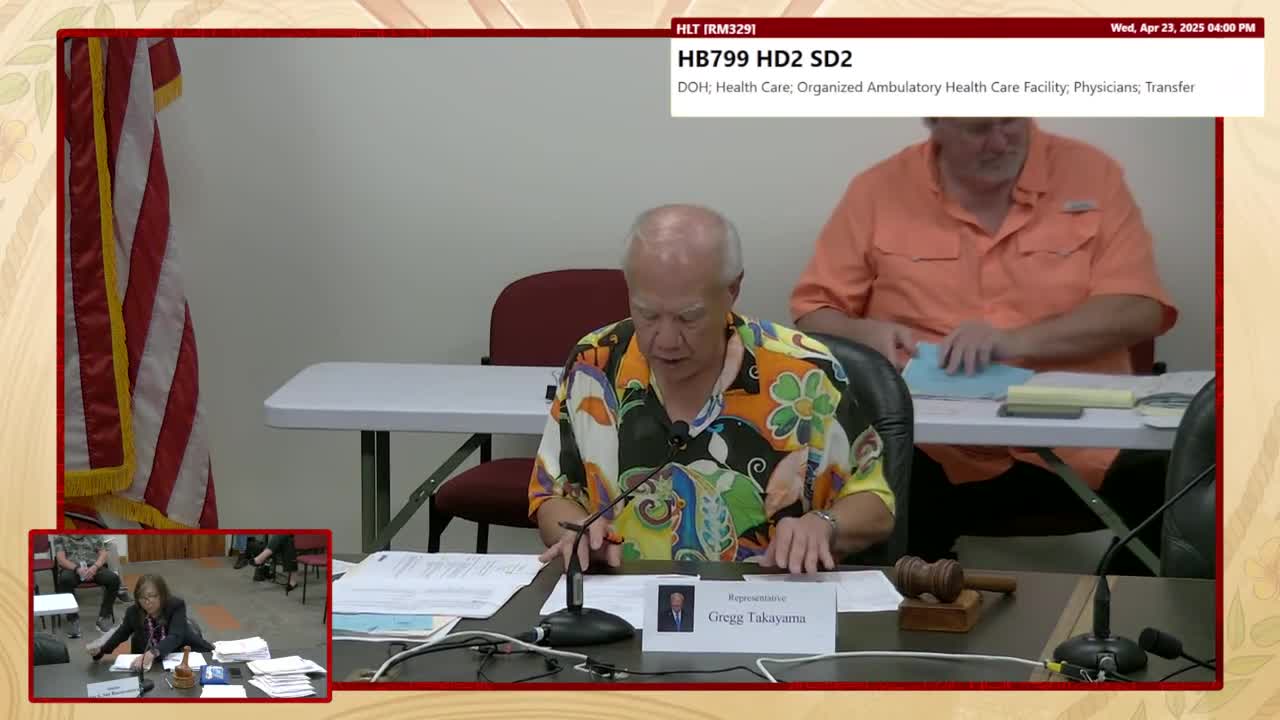 1MIN
Conference Committee
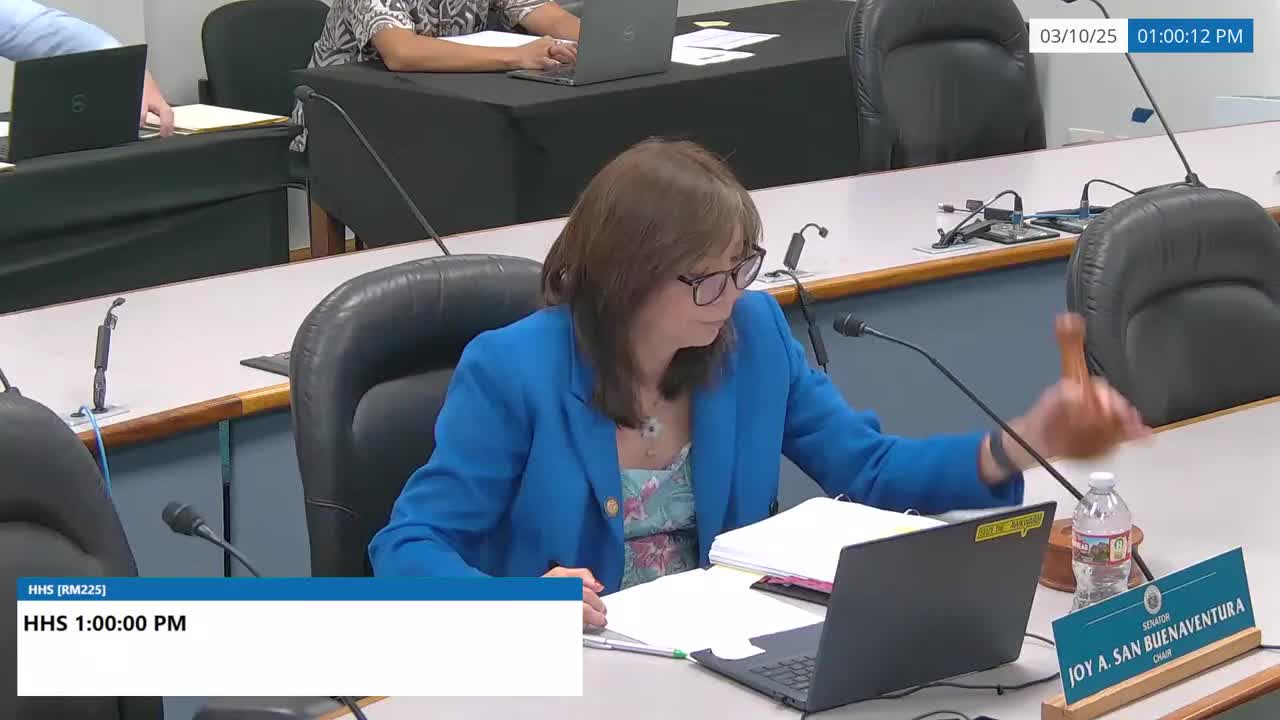 13MIN
Senate Standing Committee on Health and Human Services
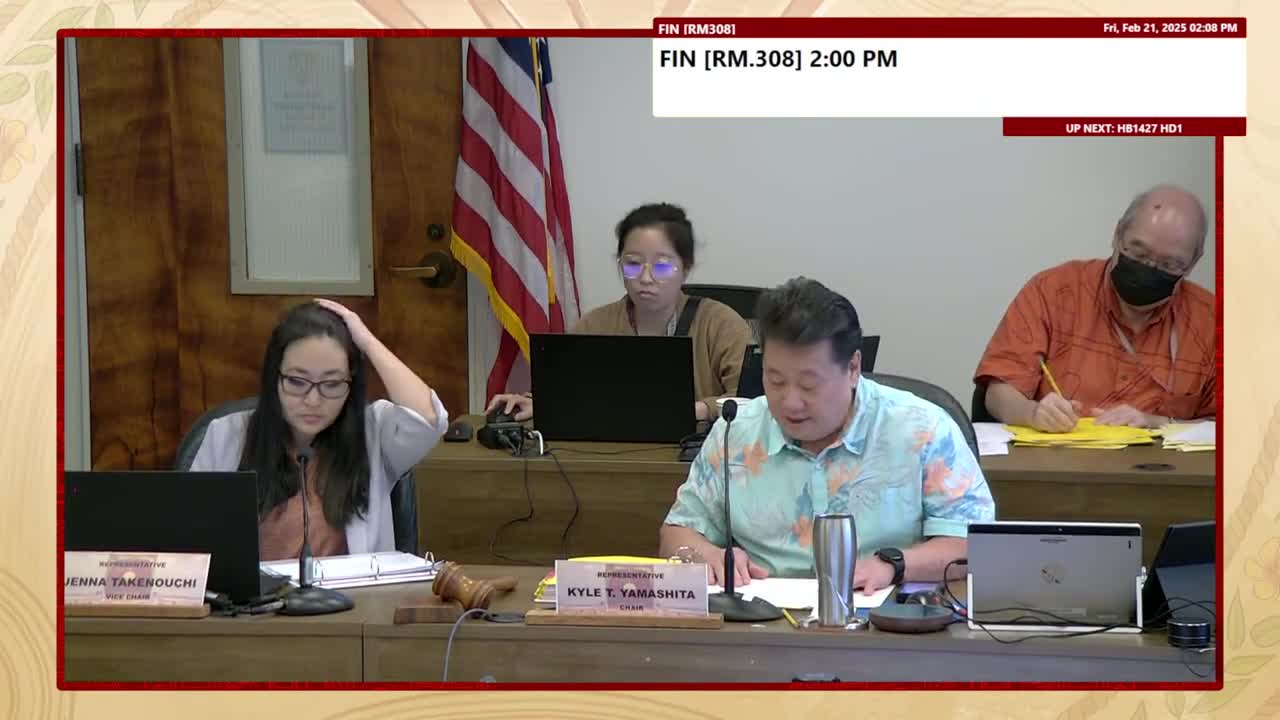 9MIN
House Standing Committee on Finance
 10MIN
House Standing Committee on Health
10MIN