HB 126: Hawaii Omnibus Criminal Forfeiture Act; Civil Asset Forfeiture; Property Forfeiture
- Session Year: 2025-2026
- House: House
- Latest Version Date: 2025-04-26
Current Status:
In Progress
(2025-07-03: Act 288, on 07/03/2025 (Gov. Msg. No. 1391).)
Introduced
In Committee
First Chamber
In Committee
Second Chamber
Final Decking
Enacted
What does this bill do?
This bill changes Hawaii's civil asset forfeiture (when the government takes property) rules and affects people whose property is seized and the agencies that handle forfeitures. It requires seizing agencies to keep and post public records about seized items (authority, date, custodian, description, and value) and bars transfers to federal agencies except for U.S. cash over $100,000. It limits forfeiture of real estate to felony cases, bars taking property unless the owner is charged and returns it if no charge is filed within a year, changes sale rules for seized items, and directs proceeds to investigators, prosecutors, and the state fund.
The summary is provided by generative AI which can make mistakes. For original language, please view the details in the table below.
Increases transparency and accountability surrounding property forfeiture. Clarifies which property is subject to forfeiture. Amends the authorized disposition of forfeited property and the proceeds thereof. Requires the Attorney General to adopt rules necessary to carry out the purpose of the Hawaii Omnibus Criminal Forfeiture Act. Repeals language that requires the Hawaii Omnibus Criminal Forfeiture Act to be construed liberally. (CD1)
Increases transparency and accountability surrounding property forfeiture. Restricts civil asset forfeiture to cases involving the commission of a felony offense where the property owner has been convicted of an underlying felony offense. Requires the Attorney General to adopt rules necessary to carry out the purpose of the Hawaii Omnibus Criminal Forfeiture Act. Limits the transfer of certain forfeiture property to federal agencies. Establishes records requirements. Repeals language that requires the Hawaii Omnibus Criminal Forfeiture Act to be construed liberally. Effective 7/1/2050 (SD2)
Increases transparency and accountability surrounding property forfeiture. Restricts civil asset forfeiture to cases involving the commission of a felony offense where the property owner has been convicted of an underlying felony offense. Directs forfeiture proceeds to the general fund. Amends the allowable expenses for moneys in the Criminal Forfeiture Fund. Requires the Attorney General to adopt rules necessary to carry out the purpose of the Hawaii Omnibus Criminal Forfeiture Act. Limits the transfer of certain forfeiture property to federal agencies. Establishes records requirements. Repeals language that requires the Hawaii Omnibus Criminal Forfeiture Act to be construed liberally. (SD1)
Increases transparency and accountability surrounding property forfeiture. Restricts civil asset forfeiture to cases involving the commission of a felony offense where the property owner has been convicted of an underlying felony offense. Directs forfeiture proceeds to the general fund. Amends the allowable expenses for moneys in the Criminal Forfeiture Fund. Requires the Attorney General to adopt rules necessary to carry out the purpose of the Hawaii Omnibus Criminal Forfeiture Act. Limits the transfer of certain forfeiture property to federal agencies. Establishes records requirements. Repeals language that requires the Hawaii Omnibus Criminal Forfeiture Act to be construed liberally. (Proposed SD1)
Increases transparency and accountability surrounding property forfeiture. Clarifies which property is subject to forfeiture. Amends the authorized disposition of forfeited property and the proceeds thereof. Repeals language that requires the Hawaii Omnibus Criminal Forfeiture Act to be construed liberally. Effective 7/1/3000. (HD1)
Increases transparency and accountability surrounding property forfeiture. Clarifies which property is subject to forfeiture. Amends the authorized disposition of forfeited property and the proceeds thereof. Repeals language that requires the Hawaii Omnibus Criminal Forfeiture Act to be construed liberally.
|
HOUSE OF REPRESENTATIVES |
H.B. NO. |
126 |
|
THIRTY-THIRD LEGISLATURE, 2025 |
H.D. 1 |
|
|
STATE OF HAWAII |
S.D. 2 |
|
|
|
C.D. 1 |
|
|
|
||
|
|
||
A BILL FOR AN ACT
RELATING TO PROPERTY FORFEITURE.
BE IT ENACTED BY THE LEGISLATURE OF THE STATE OF HAWAII:
SECTION 1. The purpose of this Act is to make the State's property forfeiture process more just by:
(1) Increasing transparency and accountability surrounding property forfeiture;
(2) Clarifying which property is subject to forfeiture;
(3) Amending the authorized disposition of forfeited property and the proceeds thereof;
(4) Requiring the attorney general to adopt rules necessary to carry out the purpose of the Hawaii Omnibus Criminal Forfeiture Act; and
(5) Repealing language that requires the Hawaii Omnibus Criminal Forfeiture Act to be construed liberally.
SECTION 2. Chapter 712A, Hawaii Revised Statutes, is amended by adding two new sections to be appropriately designated and to read as follows:
"§712A- Records of seized or forfeited property. (1) Each seizing agency shall maintain the following records for all property seized for purposes of forfeiture:
(a) The authority under which the property was seized or forfeited;
(b) The date on which each item of property was seized or forfeited;
(c) The department or agency that has possession of the seized or forfeited property;
(d) A description of each item of seized or forfeited property; and
(e) The estimated value of each item of seized or forfeited property.
(2) The seizing agency shall:
(a) Maintain all records of seized or forfeited property;
(b) Make the records open to inspection; and
(c) Post the records on a publicly accessible website.
§712A- Equitable sharing program; restrictions. Notwithstanding the provisions of section 712A-7, a seizing agency or prosecuting attorney shall not enter into an agreement to transfer or refer property seized under section 712A-6 to a federal agency directly, indirectly, through adoption, through an intergovernmental joint task force, or by any other means that would circumvent the provisions of this chapter, unless the seized property includes United States currency in excess of $100,000."
SECTION 3. Section 712A-5, Hawaii Revised Statutes, is amended to read as follows:
"§712A-5
Property subject to forfeiture; exemption. (1)
The following [is] shall be subject to forfeiture:
(a) Property described in a statute authorizing forfeiture;
(b) Property used or intended for use in
the commission of, attempt to commit, or conspiracy to commit a covered
offense, or [which] that facilitated or assisted [such] the
activity;
(c) Any firearm [which] that
is subject to forfeiture under any other subsection of this section or [which]
that is carried during, visible, or used in furtherance of the
commission, attempt to commit, or conspiracy to commit a covered offense, or any
firearm found in proximity to contraband or to instrumentalities of an offense;
(d) Contraband or untaxed cigarettes in violation of chapter 245, shall be seized and summarily forfeited to the State without regard to the procedures set forth in this chapter;
(e) Any proceeds or other property acquired, maintained, or produced by means of or as a result of the commission of the covered offense;
(f) Any property derived from any proceeds
[which] that were obtained directly or indirectly from the
commission of a covered offense;
(g) Any interest in, security of, claim
against, or property or contractual right of any kind affording a source of
influence over any enterprise [which] that has been established,
participated in, operated, controlled, or conducted in order to commit a
covered offense; and
(h) All books, records, bank statements,
accounting records, microfilms, tapes, computer data, or other data [which]
that are used, intended for use, or [which] that
facilitated or assisted in the commission of a covered offense, or [which]
that document the use of the proceeds of a covered offense.
[(2) Except that:
(a)] (2)
Real property, or an interest therein, may be forfeited under the
provisions of this chapter only in cases in which the covered offense is
chargeable as a felony offense under state law[;].
(3) The following limitations shall apply to the forfeiture of property under this chapter; provided that nothing in this subsection shall be construed to prevent the seizure of property before conviction pursuant to section 712A-6:
[(b)] (a) No property shall be forfeited under
this chapter [to the extent of an interest of an owner,] by reason of [any
act or omission established by that owner to have been committed or omitted
without the knowledge and consent of that owner;] the commission of any
covered offense unless the owner has received a charge for the covered offense. If no such charge is filed within one year
from the date of seizure, all property seized shall be returned to the legal
owner, as determined by the department or agency in possession of the property,
one year from the date of seizure; provided that property that is contraband or
otherwise unlawful shall not be returned and shall be disposed of pursuant to
rules adopted by the attorney general; provided further that if the legal owner
cannot be determined or located, the department or agency in possession of the
property shall follow procedures set forth in rules adopted by the attorney
general to determine or locate the owner;
(b) No property shall be forfeited under this chapter by reason of any act or omission established by the owner to have been committed or omitted without the knowledge and consent of the owner;
(c) No conveyance used by any person as a
common carrier in the transaction of a business as a common carrier [is]
shall be subject to forfeiture under this section unless it appears that
the owner or other person in charge of the conveyance is a consenting party or
privy to a violation of this chapter;
(d) No conveyance [is] shall be
subject to forfeiture under this section by reason of any act or omission
established by the owner thereof to have been committed or omitted without the
owner's knowledge or consent; and
(e) A forfeiture of a conveyance encumbered
by a bona fide security interest [is] shall be subject to the
interest of the secured party if the secured party neither had knowledge of nor
consented to the act or omission.
(4) This chapter shall not apply to the forfeiture of an animal pursuant to section 711-1109.2.
(5) This section shall not prohibit or restrict forfeitures authorized by law other than this chapter."
SECTION 4. Section 712A-11, Hawaii Revised Statutes, is amended by amending subsection (10) to read as follows:
"(10)
All property, including all interest in such property, declared
forfeited under this chapter vests in this State on the commission of the act
or omission giving rise to forfeiture under this chapter together with the
proceeds of the property after the act or omission. Any property or proceeds transferred to any
person after the act or omission are subject to forfeiture and thereafter shall
be ordered forfeited unless the transferee claims and establishes in a hearing
pursuant to this chapter the showings set out in section 712A-5(2)[.] and
(3)."
SECTION 5. Section 712A-16, Hawaii Revised Statutes, is amended to read as follows:
"§712A-16 Disposition
of property forfeited. (1) All property forfeited to the State under
this chapter shall be transferred to the attorney general, who[:]
may:
[(a) May transfer property, other than
currency, which shall be distributed in accordance with subsection (2) to any
local or state government entity, municipality, or law enforcement agency
within the State;
(b) May sell]
(a) Sell
forfeited property to the public by public sale; provided that for leasehold
real property:
(i) The attorney general shall first offer
the holder of the immediate reversionary interest the right to acquire the
leasehold interest and any improvements built or paid for by the lessee for the
then fair market value of the leasehold interest and improvements. The holder of the immediate reversionary
interest shall have thirty days after receiving written notice within which to
accept or reject the offer in writing; provided that the offer shall be deemed
to be rejected if the holder of the immediate reversionary interest has not
communicated acceptance to the attorney general within the thirty-day
period. The holder of the immediate
reversionary interest shall have thirty days after acceptance to tender to the
attorney general the purchase price for the leasehold interest and any
improvements, upon which tender the leasehold interest and improvements shall
be conveyed to the holder of the immediate reversionary interest[.];
(ii) If the holder of the immediate
reversionary interest fails to exercise the right of first refusal provided in
subparagraph (i), the attorney general may proceed to sell the leasehold
interest and any improvements by public sale[.]; and
(iii) Any dispute between the attorney general and the holder of the immediate reversionary interest as to the fair market value of the leasehold interest and improvements shall be settled by arbitration pursuant to chapter 658A;
[(c) May sell]
(b) Sell
or destroy all raw materials, products, and equipment of any kind used or
intended for use in manufacturing, compounding, or processing a controlled
substance or any untaxed cigarettes in violation of chapter 245;
[(d) May compromise]
(c) Compromise
and pay valid claims against property forfeited pursuant to this chapter; or
[(e) May make]
(d) Make
any other disposition of forfeited property authorized by law.
(2) All forfeited property and the sale proceeds
thereof[, up to a maximum of three million dollars per year, not previously
transferred pursuant to [subsection] (1)(a) of this section,] shall, after
payment of expenses of administration and sale, be distributed or retained
as follows:
(a) One quarter shall be distributed to the
unit or units of state or local government law enforcement [[]whose[]]
officers or employees conducted the investigation and caused the arrest of the
person whose property was forfeited or seizure of the property for forfeiture;
(b) One quarter shall be distributed to the prosecuting attorney who instituted the action producing the forfeiture; and
(c) One half shall be [deposited into]
retained in the criminal forfeiture fund established by this chapter.
(3) [Property] All property and
money distributed to units of state [and] or local government pursuant
to subsection (2)(a) and (b) shall be used for law enforcement purposes, including
but not limited to drug recognition expert training and public awareness or
outreach efforts, and shall complement but not supplant the funds regularly
appropriated for [such] these purposes.
(4) There
[is] shall be established in the department of the attorney
general a special fund to be known as the criminal forfeiture fund[,
hereinafter referred to as the "fund" in] into which shall
be deposited [one-half of] the proceeds of a forfeiture and any
penalties paid pursuant to section 712A-10(6).
All moneys in the criminal forfeiture fund except for those
disbursements provided for in subsection (2)(a) and (b) shall be expended
by the attorney general and are hereby appropriated for the following purposes:
(a) The payment of any expenses necessary
to seize, detain, appraise, inventory, safeguard, maintain, advertise, or sell
property seized, detained, or forfeited pursuant to this chapter or of any
other necessary expenses incident to the seizure, detention, or forfeiture of [such]
property and [such] contract services and payments to reimburse any
federal, state, or county agency for any expenditures made to perform the
foregoing functions;
[(b) The payment of awards for information
or assistance leading to a civil or criminal proceeding;
(c) The payment of supplemental sums to
state and county agencies for law enforcement purposes;
(d)]
(b) The payment of
expenses arising in connection with programs for training and education of law
enforcement officers; and
[(e)]
(c)
The payment of expenses arising in connection with enforcement
pursuant to the drug nuisance abatement unit in the department of the attorney
general.
(5) The attorney general [may, without regard
to the requirements of chapter 91, promulgate] shall adopt rules [and
regulations] necessary to carry out the purpose of this chapter,
including rules concerning the return of seized property, the
disposition of property, the use of the criminal forfeiture fund, and
compromising and paying valid claims against property forfeited [pursuant to
this chapter].
(6) [Not] No less than [twenty]
forty days [prior to] before the convening of each regular
session, the attorney general shall provide to the legislature a report on the
use of the Hawaii omnibus criminal forfeiture act during the fiscal year
preceding the legislative session. The
report shall include:
(a) The total amount and type of property seized by law enforcement agencies;
(b) The total number of administrative and
judicial actions filed by prosecuting attorneys and the disposition thereof[;]
for each action;
(c) The total number of claims or petitions
for remission or mitigation filed in administrative actions and the
dispositions thereof[;] for each action;
(d) The total amount and type of property forfeited and the sale proceeds thereof;
(e) The total amount and type of property distributed to units of state and local government;
(f) The amount of money deposited into the criminal forfeiture fund; and
(g) The amount of money expended by the attorney general from the criminal forfeiture fund under subsection (5) and the reason for the expenditures."
SECTION 6. Section 712A-19, Hawaii Revised Statutes, is repealed.
["[§712A-19] Construction. It is the intent of the legislature that this
chapter be liberally construed so as to effect the purposes of this chapter."]
SECTION 7. This Act does not affect rights and duties that matured, penalties that were incurred, and proceedings that were begun before its effective date.
SECTION 8. Statutory material to be repealed is bracketed and stricken. New statutory material is underscored.
SECTION 9. This Act shall take effect upon its approval.
Report Title:
Hawaii Omnibus Criminal Forfeiture Act; Civil Asset Forfeiture; Property Forfeiture
Description:
Increases transparency and accountability surrounding property forfeiture. Clarifies which property is subject to forfeiture. Amends the authorized disposition of forfeited property and the proceeds thereof. Requires the Attorney General to adopt rules necessary to carry out the purpose of the Hawaii Omnibus Criminal Forfeiture Act. Repeals language that requires the Hawaii Omnibus Criminal Forfeiture Act to be construed liberally. (CD1)
The summary description of legislation appearing on this page is for informational purposes only and is not legislation or evidence of legislative intent.
|
HOUSE OF REPRESENTATIVES |
H.B. NO. |
126 |
|
THIRTY-THIRD LEGISLATURE, 2025 |
H.D. 1 |
|
|
STATE OF HAWAII |
S.D. 2 |
|
|
|
|
|
|
|
||
|
|
||
A BILL FOR AN ACT
RELATING TO PROPERTY FORFEITURE.
BE IT ENACTED BY THE LEGISLATURE OF THE STATE OF HAWAII:
SECTION 1. The purpose of this Act is to make the State's property forfeiture process more just by:
(1) Increasing transparency and accountability surrounding property forfeiture;
(2) Restricting civil asset forfeiture to cases involving the commission of a felony offense where the property owner has been convicted of an underlying felony offense;
(3) Requiring the attorney general to adopt rules necessary to carry out the purposes of the Hawaii omnibus criminal forfeiture act; and
(4) Repealing language that requires the Hawaii omnibus criminal forfeiture act to be construed liberally.
SECTION 2. Chapter 712A, Hawaii Revised Statutes, is amended by adding two new sections to be appropriately designated and to read as follows:
"§712A- Records of seized or forfeited property. (1) Each seizing agency shall maintain the following records for all property seized for purposes of forfeiture:
(a) The authority under which the property was seized or forfeited;
(b) The date on which each item of property was seized or forfeited;
(c) The department or agency that has possession of the seized or forfeited property;
(d) A description of each item of seized or forfeited property; and
(e) The estimated value of each item of seized or forfeited property.
(2) The seizing agency shall:
(a) Maintain all records of seized or forfeited property;
(b) Make the records open to inspection; and
(c) Post the records on a publicly accessible website.
§712A- Equitable sharing program; restrictions. Notwithstanding the provisions of section 712A-7, a seizing agency or prosecuting attorney shall not enter into an agreement to transfer or refer property seized under section 712A-6 to a federal agency directly, indirectly, through adoption, through an intergovernmental joint task force, or by other means that circumvent the provisions of this section, unless the seized property includes United States currency in excess of $100,000."
SECTION 3. Section 712A-5, Hawaii Revised Statutes, is amended to read as follows:
"§712A-5 Property subject to forfeiture; exemption. (1) The following is subject to forfeiture:
(a) Property described in a statute authorizing forfeiture;
(b) Property used or intended for use in
the commission of, attempt to commit, or conspiracy to commit a covered
offense, or [which] that facilitated or assisted [such] the
activity;
(c) Any firearm [which] that
is subject to forfeiture under any other subsection of this section or [which]
is carried during, visible, or used in furtherance of the commission, attempt
to commit, or conspiracy to commit a covered offense, or any firearm found in
proximity to contraband or to instrumentalities of an offense;
(d) Contraband or untaxed cigarettes in violation of chapter 245, shall be seized and summarily forfeited to the State without regard to the procedures set forth in this chapter;
(e) Any proceeds or other property acquired, maintained, or produced by means of or as a result of the commission of the covered offense;
(f) Any property derived from any proceeds [which]
that were obtained directly or indirectly from the commission of a
covered offense;
(g) Any interest in, security of, claim
against, or property or contractual right of any kind affording a source of
influence over any enterprise [which] that has been established,
participated in, operated, controlled, or conducted in order to commit a
covered offense; and
(h) All books, records, bank statements,
accounting records, microfilms, tapes, computer data, or other data [which]
that are used, intended for use, or [which] that
facilitated or assisted in the commission of a covered offense, or [which]
that document the use of the proceeds of a covered offense.
[(2) Except that:
(a) Real property, or an interest
therein, may be forfeited under the provisions of this chapter only in cases in
which the covered offense is chargeable as a felony offense under state law;]
(2) The following is not subject to forfeiture; provided that nothing in this paragraph shall be construed to prevent the seizure of property before conviction pursuant to section 712A‑6:
[(b)] (a) No property shall be forfeited under this
chapter [to the extent of an interest of an owner,] by reason of [any
act or omission established by that owner to have been committed or omitted
without the knowledge and consent of that owner;] the commission of any
covered offense unless:
(i) The covered offense is chargeable as a felony offense under state law; and
(ii) The owner has been convicted of the covered offense by a verdict or plea, including a no contest plea or a deferred acceptance of guilty plea or no contest plea;
(b) No property shall be forfeited under this chapter by reason of any act or omission established by the owner to have been committed or omitted without the knowledge and consent of the owner;
(c) No conveyance used by any person as a common carrier in the transaction of a business as a common carrier is subject to forfeiture under this section unless it appears that the owner or other person in charge of the conveyance is a consenting party or privy to a violation of this chapter;
(d) No conveyance is subject to forfeiture under this section by reason of any act or omission established by the owner thereof to have been committed or omitted without the owner's knowledge or consent; and
(e) A forfeiture of a conveyance encumbered by a bona fide security interest is subject to the interest of the secured party if the secured party neither had knowledge of nor consented to the act or omission.
(3) This chapter shall not apply to the forfeiture of an animal before disposition of criminal charges pursuant to section 711-1109.2.
(4) This section shall not prohibit or restrict forfeitures authorized by law other than this chapter."
SECTION 4. Section 712A-16, Hawaii Revised Statutes, is amended to read as follows:
"§712A-16 Disposition
of property forfeited. (1) All property forfeited to the State under
this chapter shall be transferred to the attorney general, who[:]
may:
(a) [May transfer] Transfer property,
other than currency, which shall be distributed in accordance with subsection
(2) to any local or state government entity, municipality, or law enforcement
agency within the State;
(b) [May sell]
Sell forfeited property to the public by public sale; provided
that for leasehold real property:
(i) The attorney general shall first offer
the holder of the immediate reversionary interest the right to acquire the
leasehold interest and any improvements built or paid for by the lessee for the
then fair market value of the leasehold interest and improvements. The holder of the immediate reversionary
interest shall have thirty days after receiving written notice within which to
accept or reject the offer in writing; provided that the offer shall be deemed
to be rejected if the holder of the immediate reversionary interest has not
communicated acceptance to the attorney general within the thirty-day
period. The holder of the immediate
reversionary interest shall have thirty days after acceptance to tender to the
attorney general the purchase price for the leasehold interest and any
improvements, upon which tender the leasehold interest and improvements shall
be conveyed to the holder of the immediate reversionary interest[.];
(ii) If the holder of the immediate
reversionary interest fails to exercise the right of first refusal provided in
subparagraph (i), the attorney general may proceed to sell the leasehold
interest and any improvements by public sale[.];
and
(iii) Any dispute between the attorney general and the holder of the immediate reversionary interest as to the fair market value of the leasehold interest and improvements shall be settled by arbitration pursuant to chapter 658A;
[(c) May sell] (b) Sell or destroy all raw
materials, products, and equipment of any kind used or intended for use in
manufacturing, compounding, or processing a controlled substance or any untaxed
cigarettes in violation of chapter 245;
[(d) May
compromise] (c) Compromise and pay valid
claims against property forfeited pursuant to this chapter; or
[(e) May make] (d)
Make any other disposition of forfeited property
authorized by law.
(2) All forfeited property and the sale proceeds
thereof, [up to a maximum of three million dollars per year, not previously
transferred pursuant to [subsection] (1)(a) of this section,] shall, after
payment of expenses of administration and sale, be distributed as follows:
(a) One quarter shall be distributed to the
unit or units of state or local government [[]whose[]] officers
or employees conducted the investigation and caused the arrest of the person
whose property was forfeited or seizure of the property for forfeiture;
(b) One quarter shall be distributed to the prosecuting attorney who instituted the action producing the forfeiture; and
(c) One half shall be deposited into the criminal forfeiture fund established by this chapter.
(3) Property and money distributed to units of state and local government shall be used for law enforcement purposes, and shall complement but not supplant the funds regularly appropriated for such purposes.
(4) There
is established in the department of the attorney general a special fund to be
known as the criminal forfeiture fund, hereinafter referred to as the
"fund", [in] into which shall be deposited one-half
of the proceeds of a forfeiture and any penalties paid pursuant to section
712A-10(6). All moneys in the fund shall
be expended by the attorney general and are hereby appropriated for the following
purposes:
(a) The payment of any expenses necessary
to seize, detain, appraise, inventory, safeguard, maintain, advertise, or sell
property seized, detained, or forfeited pursuant to this chapter or of any
other necessary expenses incident to the seizure, detention, or forfeiture of [such] property and [such]
contract services and payments to reimburse any federal, state, or county
agency for any expenditures made to perform the foregoing functions;
(b) The payment of awards for information or assistance leading to a civil or criminal proceeding;
(c) The payment of supplemental sums to state and county agencies for law enforcement purposes;
(d) The payment of expenses arising in connection with programs for training and education of law enforcement officers; and
(e) The payment of expenses arising in connection with enforcement pursuant to the drug nuisance abatement unit in the department of the attorney general.
(5)
The attorney general [may, without
regard to the requirements of chapter 91, promulgate] shall adopt rules
[and regulations] necessary to carry out
the purpose of this chapter, including rules concerning the
disposition of property, the use of the fund, and compromising and paying valid
claims against property forfeited [pursuant to this chapter].
(6)
Not less than [twenty] forty days prior to the convening of each regular session, the
attorney general shall provide to the legislature a report on the use of the
Hawaii omnibus criminal forfeiture act during the fiscal year preceding the
legislative session. The report shall
include:
(a) The total amount and type of property seized by law enforcement agencies;
(b) The total number of administrative and
judicial actions filed by prosecuting attorneys and the disposition thereof[;] for each action;
(c) The total number of claims or petitions
for remission or mitigation filed in administrative actions and the
dispositions thereof[;] for each action;
(d) The total amount and type of property forfeited and the sale proceeds thereof;
(e) The total amount and type of property distributed to units of state and local government;
(f) The amount of money deposited into the criminal
forfeiture fund; and
(g) The amount of money expended by the attorney general from the criminal forfeiture fund under subsection (5) and the reason for the expenditures."
SECTION 5. Section 712A-19, Hawaii Revised Statutes, is repealed.
["[§712A-19] Construction. It is the intent of the legislature that this
chapter be liberally construed so as to effect the purposes of this chapter."]
SECTION 6. This Act does not affect rights and duties that matured, penalties that were incurred, and proceedings that were begun before its effective date.
SECTION 7. Statutory material to be repealed is bracketed and stricken. New statutory material is underscored.
SECTION 8. This Act shall take effect on July 1, 2050.
Report Title:
Hawaii Omnibus Criminal Forfeiture Act; Civil Asset Forfeiture; Property Forfeiture
Description:
Increases transparency and accountability surrounding property forfeiture. Restricts civil asset forfeiture to cases involving the commission of a felony offense where the property owner has been convicted of an underlying felony offense. Requires the Attorney General to adopt rules necessary to carry out the purpose of the Hawaii Omnibus Criminal Forfeiture Act. Limits the transfer of certain forfeiture property to federal agencies. Establishes records requirements. Repeals language that requires the Hawaii Omnibus Criminal Forfeiture Act to be construed liberally. Effective 7/1/2050 (SD2)
The summary description of legislation appearing on this page is for informational purposes only and is not legislation or evidence of legislative intent.
|
HOUSE OF REPRESENTATIVES |
H.B. NO. |
126 |
|
THIRTY-THIRD LEGISLATURE, 2025 |
H.D. 1 |
|
|
STATE OF HAWAII |
S.D. 1 |
|
|
|
|
|
|
|
||
|
|
||
A BILL FOR AN ACT
RELATING TO PROPERTY FORFEITURE.
BE IT ENACTED BY THE LEGISLATURE OF THE STATE OF HAWAII:
SECTION 1. The purpose of this Act is to make the State's property forfeiture process more just by:
(1) Increasing transparency and accountability surrounding property forfeiture;
(2) Restricting civil asset forfeiture to cases involving the commission of a felony offense where the property owner has been convicted of an underlying felony offense;
(3) Directing any forfeiture proceeds to the general fund;
(4) Amending the allowable expenses for moneys in the criminal forfeiture fund;
(5) Requiring the attorney general to adopt rules necessary to carry out the purposes of the Hawaii omnibus criminal forfeiture act; and
(6) Repealing language that requires the Hawaii omnibus criminal forfeiture act to be construed liberally.
SECTION 2. Chapter 712A, Hawaii Revised Statutes, is amended by adding two new sections to be appropriately designated and to read as follows:
"§712A- Records of seized or forfeited property. (1) Each seizing agency shall maintain the following records for all property seized for purposes of forfeiture:
(a) The authority under which the property was seized or forfeited;
(b) The date on which each item of property was seized or forfeited;
(c) The department or agency that has possession of the seized or forfeited property;
(d) A description of each item of seized or forfeited property; and
(e) The estimated value of each item of seized or forfeited property.
(2) The seizing agency shall:
(a) Maintain all records of seized or forfeited property;
(b) Make the records open to inspection; and
(c) Post the records on a publicly accessible website.
§712A- Equitable sharing program; restrictions. Notwithstanding the provisions of section 712A-7, a seizing agency or prosecuting attorney shall not enter into an agreement to transfer or refer property seized under section 712A-6 to a federal agency directly, indirectly, through adoption, through an intergovernmental joint task force, or by other means that circumvent the provisions of this section, unless the seized property includes United States currency in excess of $100,000."
SECTION 3. Section 712A-5, Hawaii Revised Statutes, is amended to read as follows:
"§712A-5 Property subject to forfeiture; exemption. (1) The following is subject to forfeiture:
(a) Property described in a statute authorizing forfeiture;
(b) Property used or intended for use in
the commission of, attempt to commit, or conspiracy to commit a covered
offense, or [which] that facilitated or assisted [such] the
activity;
(c) Any firearm [which] that
is subject to forfeiture under any other subsection of this section or [which]
is carried during, visible, or used in furtherance of the commission, attempt
to commit, or conspiracy to commit a covered offense, or any firearm found in
proximity to contraband or to instrumentalities of an offense;
(d) Contraband or untaxed cigarettes in violation of chapter 245, shall be seized and summarily forfeited to the State without regard to the procedures set forth in this chapter;
(e) Any proceeds or other property acquired, maintained, or produced by means of or as a result of the commission of the covered offense;
(f) Any property derived from any proceeds [which]
that were obtained directly or indirectly from the commission of a
covered offense;
(g) Any interest in, security of, claim
against, or property or contractual right of any kind affording a source of
influence over any enterprise [which] that has been established,
participated in, operated, controlled, or conducted in order to commit a
covered offense; and
(h) All books, records, bank statements,
accounting records, microfilms, tapes, computer data, or other data [which]
that are used, intended for use, or [which] that
facilitated or assisted in the commission of a covered offense, or [which]
that document the use of the proceeds of a covered offense.
[(2) Except that:
(a) Real property, or an interest
therein, may be forfeited under the provisions of this chapter only in cases in
which the covered offense is chargeable as a felony offense under state law;]
(2) The following is not subject to forfeiture; provided that nothing in this paragraph shall be construed to prevent the seizure of property before conviction pursuant to section 712A‑6:
[(b)] (a)
No property shall be forfeited under this chapter [to the extent of
an interest of an owner,] by reason of [any act or omission established
by that owner to have been committed or omitted without the knowledge and
consent of that owner;] the commission of any covered offense unless:
(i) The covered offense is chargeable as a felony offense under state law; and
(ii) The owner has been convicted of the covered offense by a verdict or plea, including a no contest plea or a deferred acceptance of guilty plea or no contest plea;
(b) No property shall be forfeited under this chapter by reason of any act or omission established by the owner to have been committed or omitted without the knowledge and consent of the owner;
(c) No conveyance used by any person as a common carrier in the transaction of a business as a common carrier is subject to forfeiture under this section unless it appears that the owner or other person in charge of the conveyance is a consenting party or privy to a violation of this chapter;
(d) No conveyance is subject to forfeiture under this section by reason of any act or omission established by the owner thereof to have been committed or omitted without the owner's knowledge or consent; and
(e) A forfeiture of a conveyance encumbered by a bona fide security interest is subject to the interest of the secured party if the secured party neither had knowledge of nor consented to the act or omission.
(3) This chapter shall not apply to the forfeiture of an animal before disposition of criminal charges pursuant to section 711-1109.2.
(4) This section shall not prohibit or restrict forfeitures authorized by law other than this chapter."
SECTION 4. Section 712A-16, Hawaii Revised Statutes, is amended to read as follows:
"§712A-16 Disposition
of property forfeited. (1) All property forfeited to the State under
this chapter shall be transferred to the attorney general, who[:]
may:
[(a) May transfer property, other than
currency, which shall be distributed in accordance with subsection (2) to any
local or state government entity, municipality, or law enforcement agency
within the State;
(b) May sell]
(a) Sell
forfeited property to the public by public sale; provided that for leasehold
real property:
(i) The attorney general shall first offer
the holder of the immediate reversionary interest the right to acquire the
leasehold interest and any improvements built or paid for by the lessee for the
then fair market value of the leasehold interest and improvements. The holder of the immediate reversionary
interest shall have thirty days after receiving written notice within which to
accept or reject the offer in writing; provided that the offer shall be deemed
to be rejected if the holder of the immediate reversionary interest has not
communicated acceptance to the attorney general within the thirty-day
period. The holder of the immediate
reversionary interest shall have thirty days after acceptance to tender to the
attorney general the purchase price for the leasehold interest and any
improvements, upon which tender the leasehold interest and improvements shall
be conveyed to the holder of the immediate reversionary interest[.];
(ii) If the holder of the immediate
reversionary interest fails to exercise the right of first refusal provided in
subparagraph (i), the attorney general may proceed to sell the leasehold
interest and any improvements by public sale[.];
and
(iii) Any dispute between the attorney general and the holder of the immediate reversionary interest as to the fair market value of the leasehold interest and improvements shall be settled by arbitration pursuant to chapter 658A;
[(c) May sell]
(b) Sell
or destroy all raw materials, products, and equipment of any kind used or
intended for use in manufacturing, compounding, or processing a controlled
substance or any untaxed cigarettes in violation of chapter 245;
[(d) May
compromise]
(c) Compromise and pay valid
claims against property forfeited pursuant to this chapter; or
[(e) May make]
(d) Make
any other disposition of forfeited property authorized by law.
(2) All forfeited property and the sale proceeds
thereof, [up to a maximum of three million dollars per year, not previously
transferred pursuant to [subsection] (1)(a) of this section, shall,] after
payment of expenses of administration and sale, [be distributed as follows:
(a) One quarter shall be distributed to
the unit or units of state or local government [whose] officers
or employees conducted the investigation and caused the arrest of the person
whose property was forfeited or seizure of the property for forfeiture;
(b) One quarter shall be distributed to
the prosecuting attorney who instituted the action producing the forfeiture;
and
(c) One half shall be deposited into the
criminal forfeiture fund established by this chapter.
(3) Property and money distributed to units of
state and local government shall be used for law enforcement purposes, and
shall complement but not supplant the funds regularly appropriated for such
purposes.] including reimbursement
for any costs incurred by the department of the attorney general related to the
seizure or storage of seized property, shall be deposited to the credit of the
state general fund.
[(4)] (3)
There is established in the department of the attorney
general a special fund to be known as the criminal forfeiture fund, hereinafter
referred to as the "fund", [in] into which shall
be deposited [one-half of the proceeds of a forfeiture and any penalties
paid pursuant to section 712A-10(6).] a
portion of the proceeds of each sale made pursuant to this section that is
sufficient to cover expenses of administration and sale. All moneys in the fund shall be expended by
the attorney general and are hereby appropriated for the [following
purposes:
(a) The] payment of any expenses
necessary to seize, detain, appraise, inventory, safeguard, maintain,
advertise, or sell property seized, detained, or forfeited pursuant to this
chapter or of any other necessary expenses incident to the seizure, detention,
or forfeiture of [such]
property and [such]
contract services and payments to reimburse any federal, state, or county
agency for any expenditures made to perform the foregoing functions[;].
[(b) The payment of awards for information
or assistance leading to a civil or criminal proceeding;
(c) The payment of supplemental sums to
state and county agencies for law enforcement purposes;
(d) The payment of expenses arising in
connection with programs for training and education of law enforcement
officers; and
(e) The payment of expenses arising in
connection with enforcement pursuant to the drug nuisance abatement unit in the
department of the attorney general.
(5)]
(4) The attorney general [may, without regard
to the requirements of chapter 91, promulgate] shall adopt rules [and
regulations] necessary to carry out
the purpose of this chapter, including rules concerning the
disposition of property, the use of the fund, and compromising and paying valid
claims against property forfeited [pursuant to this chapter].
[(6)]
(5) Not less than [twenty] forty days prior to the convening of each regular session, the
attorney general shall provide to the legislature a report on the use of the
Hawaii omnibus criminal forfeiture act during the fiscal year preceding the
legislative session. The report shall
include:
(a) The total amount and type of property seized by law enforcement agencies;
(b) The total number of administrative and
judicial actions filed by prosecuting attorneys and the disposition thereof[;] for each action;
(c) The total number of claims or petitions
for remission or mitigation filed in administrative actions and the
dispositions thereof[;] for each action;
(d) The total amount and type of property forfeited and the sale proceeds thereof;
(e) The total amount and type of property distributed to units of state and local government;
(f) The amount of money deposited into the [criminal
forfeiture] fund; [and]
(g) The amount of money deposited into the general fund; and
[(g)] (h) The amount of money expended by the
attorney general from the criminal forfeiture fund under subsection [(5)] (4) and the reason for the
expenditures."
SECTION 5. Section 712A-19, Hawaii Revised Statutes, is repealed.
["[§712A-19] Construction. It is the intent of the legislature that this
chapter be liberally construed so as to effect the purposes of this chapter."]
SECTION 6. This Act does not affect rights and duties that matured, penalties that were incurred, and proceedings that were begun before its effective date.
SECTION 7. Statutory material to be repealed is bracketed and stricken. New statutory material is underscored.
SECTION 8. This Act shall take effect on July 1, 2025.
Report Title:
Hawaii Omnibus Criminal Forfeiture Act; Civil Asset Forfeiture; Property Forfeiture
Description:
Increases transparency and accountability surrounding property forfeiture. Restricts civil asset forfeiture to cases involving the commission of a felony offense where the property owner has been convicted of an underlying felony offense. Directs forfeiture proceeds to the general fund. Amends the allowable expenses for moneys in the Criminal Forfeiture Fund. Requires the Attorney General to adopt rules necessary to carry out the purpose of the Hawaii Omnibus Criminal Forfeiture Act. Limits the transfer of certain forfeiture property to federal agencies. Establishes records requirements. Repeals language that requires the Hawaii Omnibus Criminal Forfeiture Act to be construed liberally. (SD1)
The summary description of legislation appearing on this page is for informational purposes only and is not legislation or evidence of legislative intent.
|
HOUSE OF REPRESENTATIVES |
H.B. NO. |
126 |
|
THIRTY-THIRD LEGISLATURE, 2025 |
H.D. 1 |
|
|
STATE OF HAWAII |
S.D. 1 |
|
|
|
Proposed |
|
|
|
||
|
|
||
A BILL FOR AN ACT
RELATING TO PROPERTY FORFEITURE.
BE IT ENACTED BY THE LEGISLATURE OF THE STATE OF HAWAII:
SECTION 1. The purpose of this Act is to make the State's property forfeiture process more just by:
(1) Increasing transparency and accountability surrounding property forfeiture;
(2) Restricting civil asset forfeiture to cases involving the commission of a felony offense where the property owner has been convicted of an underlying felony offense;
(3) Directing any forfeiture proceeds to the general fund;
(4) Amending the allowable expenses for moneys in the criminal forfeiture fund;
(5) Requiring the attorney general to adopt rules necessary to carry out the purposes of the Hawaii omnibus criminal forfeiture act; and
(6) Repealing language that requires the Hawaii omnibus criminal forfeiture act to be construed liberally.
SECTION 2. Chapter 712A, Hawaii Revised Statutes, is amended by adding two new sections to be appropriately designated and to read as follows:
"§712A- Records of forfeited property. (1) Each seizing agency shall maintain the following records for all property seized for purposes of forfeiture:
(a) The authority under which the property was forfeited;
(b) The date on which each item of property was forfeited;
(c) The department or agency that has possession of the forfeited property;
(d) A description of each item of forfeited property; and
(e) The estimated value of each item of forfeited property.
(2) The seizing agency shall:
(a) Maintain all records of forfeited property;
(b) Make the records open to inspection; and
(c) Post the records on a publicly accessible website.
§712A- Equitable sharing program; restrictions. Notwithstanding the provisions of section 712A-7, a seizing agency or prosecuting attorney shall not enter into an agreement to transfer or refer property seized under section 712A-6 to a federal agency directly, indirectly, through adoption, through an intergovernmental joint task force, or by other means that circumvent the provisions of this section, unless the seized property includes United States currency in excess of $100,000."
SECTION 3. Section 712A-5, Hawaii Revised Statutes, is amended to read as follows:
"§712A-5 Property subject to forfeiture; exemption. (1) The following is subject to forfeiture:
(a) Property described in a statute authorizing forfeiture;
(b) Property used or intended for use in the
commission of, attempt to commit, or conspiracy to commit a covered offense, or
[which] that facilitated or assisted [such] the
activity;
(c) Any firearm [which] that is
subject to forfeiture under any other subsection of this section or [which]
is carried during, visible, or used in furtherance of the commission, attempt
to commit, or conspiracy to commit a covered offense, or any firearm found in
proximity to contraband or to instrumentalities of an offense;
(d) Contraband or untaxed cigarettes in violation of chapter 245, shall be seized and summarily forfeited to the State without regard to the procedures set forth in this chapter;
(e) Any proceeds or other property acquired, maintained, or produced by means of or as a result of the commission of the covered offense;
(f) Any property derived from any proceeds [which]
that were obtained directly or indirectly from the commission of a
covered offense;
(g) Any interest in, security of, claim against, or
property or contractual right of any kind affording a source of influence over
any enterprise [which] that has been established, participated
in, operated, controlled, or conducted in order to commit a covered offense; and
(h) All books, records, bank statements, accounting
records, microfilms, tapes, computer data, or other data [which] that
are used, intended for use, or [which] that facilitated or
assisted in the commission of a covered offense, or [which] that
document the use of the proceeds of a covered offense.
[(2) Except that:
(a) Real property, or an interest therein,
may be forfeited under the provisions of this chapter only in cases in which
the covered offense is chargeable as a felony offense under state law;]
(2) The following is not subject to forfeiture; provided that nothing in this paragraph shall be construed to prevent the seizure of property before conviction pursuant to section 712A‑6:
[(b)] (a)
No property shall be forfeited under this chapter [to the extent of an
interest of an owner,] by reason of [any act or omission established by
that owner to have been committed or omitted without the knowledge and consent
of that owner;] the commission of any covered offense unless:
(i) The covered offense is chargeable as a felony offense under state law; and
(ii) The owner has been convicted of the covered offense by a verdict or plea, including a no contest plea or a deferred acceptance of guilty plea or no contest plea;
(b) No property shall be forfeited under this chapter by reason of any act or omission established by the owner to have been committed or omitted without the knowledge and consent of the owner;
(c) No conveyance used by any person as a common carrier in the transaction of a business as a common carrier is subject to forfeiture under this section unless it appears that the owner or other person in charge of the conveyance is a consenting party or privy to a violation of this chapter;
(d) No conveyance is subject to forfeiture under this section by reason of any act or omission established by the owner thereof to have been committed or omitted without the owner's knowledge or consent; and
(e) A forfeiture of a conveyance encumbered by a bona fide security interest is subject to the interest of the secured party if the secured party neither had knowledge of nor consented to the act or omission.
(3) This chapter shall not apply to the forfeiture of an animal before disposition of criminal charges pursuant to section 711-1109.2.
(4) This section shall not prohibit or restrict forfeitures authorized by law other than this chapter."
SECTION 4. Section 712A-16, Hawaii Revised Statutes, is amended to read as follows:
"§712A-16 Disposition of
property forfeited. (1) All property forfeited to the State under this
chapter shall be transferred to the attorney general, who[:] may:
[(a) May transfer property, other than
currency, which shall be distributed in accordance with subsection (2) to any
local or state government entity, municipality, or law enforcement agency
within the State;
(b) May sell] (a) Sell
forfeited property to the public by public sale; provided that for leasehold
real property:
(i) The attorney general shall first offer
the holder of the immediate reversionary interest the right to acquire the
leasehold interest and any improvements built or paid for by the lessee for the
then fair market value of the leasehold interest and improvements. The holder
of the immediate reversionary interest shall have thirty days after receiving
written notice within which to accept or reject the offer in writing; provided
that the offer shall be deemed to be rejected if the holder of the immediate reversionary
interest has not communicated acceptance to the attorney general within the
thirty-day period. The holder of the immediate reversionary interest shall
have thirty days after acceptance to tender to the attorney general the
purchase price for the leasehold interest and any improvements, upon which
tender the leasehold interest and improvements shall be conveyed to the holder
of the immediate reversionary interest[.];
(ii) If the holder of the immediate
reversionary interest fails to exercise the right of first refusal provided in
subparagraph (i), the attorney general may proceed to sell the leasehold
interest and any improvements by public sale[.];
and
(iii) Any dispute between the attorney general and the holder of the immediate reversionary interest as to the fair market value of the leasehold interest and improvements shall be settled by arbitration pursuant to chapter 658A;
[(c) May sell] (b) Sell
or destroy all raw materials, products, and equipment of any kind used or
intended for use in manufacturing, compounding, or processing a controlled
substance or any untaxed cigarettes in violation of chapter 245;
[(d) May
compromise] (c) Compromise and pay valid claims against
property forfeited pursuant to this chapter; or
[(e) May make] (d) Make
any other disposition of forfeited property authorized by law.
(2) All forfeited property and the sale
proceeds thereof, [up to a maximum of three million dollars per year, not
previously transferred pursuant to [subsection] (1)(a) of this section, shall,]
after payment of expenses of administration and sale, [be distributed as
follows:
(a) One quarter shall be distributed to
the unit or units of state or local government [whose] officers
or employees conducted the investigation and caused the arrest of the person
whose property was forfeited or seizure of the property for forfeiture;
(b) One quarter shall be distributed to
the prosecuting attorney who instituted the action producing the forfeiture;
and
(c) One half shall be deposited into the
criminal forfeiture fund established by this chapter.
(3) Property and money distributed to units
of state and local government shall be used for law enforcement purposes, and
shall complement but not supplant the funds regularly appropriated for such
purposes.] including reimbursement for any
costs incurred by the department of the attorney general related to the seizure
or storage of seized property, shall be deposited to the credit of the state
general fund.
[(4)] (3)
There is established in the department of the attorney general a special
fund to be known as the criminal forfeiture fund, hereinafter referred to as
the "fund", [in] into which shall be deposited [one-half
of the proceeds of a forfeiture and any penalties paid pursuant to section
712A-10(6).] a portion of the proceeds of each
sale made pursuant to this section that is sufficient to cover expenses of
administration and sale. All moneys in the fund shall be expended
by the attorney general and are hereby appropriated for the [following
purposes:
(a) The] payment of any expenses
necessary to seize, detain, appraise, inventory, safeguard, maintain,
advertise, or sell property seized, detained, or forfeited pursuant to this
chapter or of any other necessary expenses incident to the seizure, detention,
or forfeiture of [such] property and [such] contract services and payments to
reimburse any federal, state, or county agency for any expenditures made to
perform the foregoing functions[;].
[(b) The payment of awards for information
or assistance leading to a civil or criminal proceeding;
(c) The payment of supplemental sums to
state and county agencies for law enforcement purposes;
(d) The payment of expenses arising in
connection with programs for training and education of law enforcement
officers; and
(e) The payment of expenses arising in
connection with enforcement pursuant to the drug nuisance abatement unit in the
department of the attorney general.
(5)] (4)
The attorney general [may, without regard to the requirements of chapter
91, promulgate] shall adopt rules [and regulations] necessary to carry out the purpose of this chapter,
including rules concerning the disposition of property, the use of
the fund, and compromising and paying valid claims against property forfeited [pursuant
to this chapter].
[(6)] (5) Not less than [twenty] forty days [prior to] before the convening of
each regular session, the attorney general shall provide to the legislature a
report on the use of the Hawaii omnibus criminal forfeiture act during the
fiscal year preceding the legislative session. The report shall include:
(a) The total amount and type of property seized by law enforcement agencies;
(b) The total number of administrative and judicial
actions filed by prosecuting attorneys and the disposition thereof[;] for each action;
(c) The total number of claims or petitions for
remission or mitigation filed in administrative actions and the dispositions
thereof[;] for each action;
(d) The total amount and type of property forfeited and the sale proceeds thereof;
(e) The total amount and type of property distributed to units of state and local government;
(f) The amount of money deposited into the [criminal
forfeiture] fund; [and]
(g) The amount of money deposited into the general fund; and
[(g)] (h) The
amount of money expended by the attorney general from the criminal forfeiture
fund under subsection [(5)] (4)
and the reason for the expenditures."
SECTION 5. Section 712A-19, Hawaii Revised Statutes, is repealed.
["[§712A-19] Construction.
It is the intent of the legislature that this chapter be liberally construed so
as to effect the purposes of this chapter."]
SECTION 6. This Act does not affect rights and duties that matured, penalties that were incurred, and proceedings that were begun before its effective date.
SECTION 7. Statutory material to be repealed is bracketed and stricken. New statutory material is underscored.
SECTION 8. This Act shall take effect on July 1, 2025.
Report Title:
Hawaii Omnibus Criminal Forfeiture Act; Civil Asset Forfeiture; Property Forfeiture
Description:
Increases transparency and accountability surrounding property forfeiture. Restricts civil asset forfeiture to cases involving the commission of a felony offense where the property owner has been convicted of an underlying felony offense. Directs forfeiture proceeds to the general fund. Amends the allowable expenses for moneys in the Criminal Forfeiture Fund. Requires the Attorney General to adopt rules necessary to carry out the purpose of the Hawaii Omnibus Criminal Forfeiture Act. Limits the transfer of certain forfeiture property to federal agencies. Establishes records requirements. Repeals language that requires the Hawaii Omnibus Criminal Forfeiture Act to be construed liberally. (Proposed SD1)
The summary description of legislation appearing on this page is for informational purposes only and is not legislation or evidence of legislative intent.
|
HOUSE OF REPRESENTATIVES |
H.B. NO. |
126 |
|
THIRTY-THIRD LEGISLATURE, 2025 |
H.D. 1 |
|
|
STATE OF HAWAII |
|
|
|
|
|
|
|
|
||
|
|
||
A BILL FOR AN ACT
RELATING TO PROPERTY FORFEITURE.
BE IT ENACTED BY THE LEGISLATURE OF THE STATE OF HAWAII:
SECTION 1. The purpose of this Act is to make the State's property forfeiture process more just by:
(1) Increasing transparency and accountability surrounding property forfeiture;
(2) Clarifying which property is subject to forfeiture;
(3) Amending the authorized disposition of forfeited property and the proceeds thereof; and
(4) Repealing language that requires the Hawaii Omnibus Criminal Forfeiture Act to be construed liberally.
SECTION 2. Chapter 712A, Hawaii Revised Statutes, is amended by adding a new section to be appropriately designated and to read as follows:
"§712A- Records of forfeited property. (1) Each seizing agency shall maintain the following records for all property seized for purposes of forfeiture:
(a) The authority under which the property was forfeited;
(b) The date on which each item of property was forfeited;
(c) The department or agency that has possession of the forfeited property;
(d) A description of each item of forfeited property; and
(e) The estimated value of each item of forfeited property.
(2) The seizing agency shall:
(a) Maintain all records of forfeited property;
(b) Make the records open to inspection; and
(c) Post the records on a publicly accessible website."
SECTION 3. Section 712A-5, Hawaii Revised Statutes, is amended to read as follows:
"§712A-5
Property subject to forfeiture; exemption. (1)
The following [is] shall be subject to forfeiture:
(a) Property described in a statute authorizing forfeiture;
(b) Property used or intended for use in
the commission of, attempt to commit, or conspiracy to commit a covered
offense, or [which] that facilitated or assisted [such] the
activity;
(c) Any firearm [which] that
is subject to forfeiture under any other subsection of this section [or
which is]; carried or visible during[, visible,] or used
in furtherance of the commission, attempt to commit, or conspiracy to commit a
covered offense[,]; or [any firearm] found in proximity to
contraband or [to] instrumentalities of an offense;
(d) Contraband or untaxed cigarettes in violation of chapter 245, shall be seized and summarily forfeited to the State without regard to the procedures set forth in this chapter;
(e) Any proceeds or other property acquired, maintained, or produced by means of or as a result of the commission of the covered offense;
(f) Any property derived from any proceeds
[which] that were obtained directly or indirectly from the
commission of a covered offense;
(g) Any interest in, security of, claim
against, or property or contractual right of any kind affording a source of
influence over any enterprise [which] that has been established,
participated in, operated, controlled, or conducted in order to commit a
covered offense; and
(h) All books, records, bank statements,
accounting records, microfilms, tapes, computer data, or other data [which]
that are used, intended for use, or [which] that
facilitated or assisted in the commission of a covered offense, or [which]
that document the use of the proceeds of a covered offense.
(2) Except that:
(a) Real property, or an interest therein, may be forfeited under the provisions of this chapter only in cases in which the covered offense is chargeable as a felony offense under state law;
(b) No property shall be forfeited under
this chapter [to the extent of an interest of an owner,] by reason of
any act or omission established by [that] the owner thereof
to have been committed or omitted without the knowledge [and] or
consent of [that] the owner;
(c) No conveyance used by any person as a
common carrier in the transaction of a business as a common carrier [is]
shall be subject to forfeiture under this section unless it appears that
the owner or other person in charge of the conveyance is a consenting party or
privy to a violation of this chapter;
(d) No conveyance [is] shall be
subject to forfeiture under this section by reason of any act or omission
established by the owner thereof to have been committed or omitted without the
owner's knowledge or consent; and
(e) A forfeiture of a conveyance encumbered
by a bona fide security interest [is] shall be subject to the
interest of the secured party if the secured party neither had knowledge of nor
consented to the act or omission.
(3) This chapter shall not apply to the forfeiture of an animal pursuant to section 711-1109.2.
(4) This section shall not prohibit or restrict forfeitures authorized by law other than this chapter."
SECTION 4. Section 712A-16, Hawaii Revised Statutes, is amended to read as follows:
"§712A-16 Disposition
of property forfeited. (1) All property forfeited to the State under
this chapter shall be transferred to the attorney general, who[:]
may:
[(a) May transfer property, other than
currency, which shall be distributed in accordance with subsection (2) to any
local or state government entity, municipality, or law enforcement agency
within the State;
(b) May sell]
(a) Sell
forfeited property to the public by public sale; provided that for leasehold
real property:
(i) The attorney general shall first offer
the holder of the immediate reversionary interest the right to acquire the
leasehold interest and any improvements built or paid for by the lessee for the
then fair market value of the leasehold interest and improvements. The holder of the immediate reversionary
interest shall have thirty days after receiving written notice within which to
accept or reject the offer in writing; provided that the offer shall be deemed
to be rejected if the holder of the immediate reversionary interest has not communicated
acceptance to the attorney general within the thirty-day period. The holder of the immediate reversionary
interest shall have thirty days after acceptance to tender to the attorney
general the purchase price for the leasehold interest and any improvements,
upon which tender the leasehold interest and improvements shall be conveyed to
the holder of the immediate reversionary interest[.];
(ii) If the holder of the immediate
reversionary interest fails to exercise the right of first refusal provided in
subparagraph (i), the attorney general may proceed to sell the leasehold
interest and any improvements by public sale[.]; and
(iii) Any dispute between the attorney general and the holder of the immediate reversionary interest as to the fair market value of the leasehold interest and improvements shall be settled by arbitration pursuant to chapter 658A;
[(c) May sell]
(b) Sell
or destroy all raw materials, products, and equipment of any kind used or
intended for use in manufacturing, compounding, or processing a controlled
substance or any untaxed cigarettes in violation of chapter 245;
[(d) May compromise]
(c) Compromise
and pay valid claims against property forfeited pursuant to this chapter; or
[(e) May make]
(d) Make
any other disposition of forfeited property authorized by law.
(2) All forfeited property and the sale proceeds
thereof[, up to a maximum of three million dollars per year, not previously
transferred pursuant to [subsection] (1)(a) of this section,] shall, after
payment of expenses of administration and sale, be distributed or retained
as follows:
(a) One quarter shall be distributed to the
unit or units of state or local government law enforcement [[]whose[]]
officers or employees conducted the investigation and caused the arrest of the
person whose property was forfeited or seizure of the property for forfeiture;
(b) One quarter shall be distributed to the prosecuting attorney who instituted the action producing the forfeiture; and
(c) One half shall be [deposited into]
retained in the criminal forfeiture fund established by this chapter.
(3) [Property] All property and
money distributed to units of state [and] or local government pursuant
to subsection (2)(a) and (b) shall be used for law enforcement purposes, including
but not limited to drug recognition expert training and public awareness or
outreach efforts, and shall complement but not supplant the funds regularly
appropriated for [such] these purposes.
(4) There
[is] shall be established in the department of the attorney
general a special fund to be known as the criminal forfeiture fund[,
hereinafter referred to as the "fund" in] into which shall
be deposited [one-half of] the proceeds of a forfeiture and any
penalties paid pursuant to section 712A-10(6).
All moneys in the criminal forfeiture fund except for those
disbursements provided for in subsection (2)(a) and (b) shall be expended
by the attorney general and are hereby appropriated for the following purposes:
(a) The payment of any expenses necessary
to seize, detain, appraise, inventory, safeguard, maintain, advertise, or sell
property seized, detained, or forfeited pursuant to this chapter or of any
other necessary expenses incident to the seizure, detention, or forfeiture of [such]
property and [such] contract services and payments to reimburse any
federal, state, or county agency for any expenditures made to perform the
foregoing functions;
[(b) The payment of awards for information
or assistance leading to a civil or criminal proceeding;
(c) The payment of supplemental sums to
state and county agencies for law enforcement purposes;
(d)]
(b) The payment of
expenses arising in connection with programs for training and education of law
enforcement officers; and
[(e)]
(c) The payment of
expenses arising in connection with enforcement pursuant to the drug nuisance
abatement unit in the department of the attorney general.
All unencumbered and unexpended moneys in excess of $1,000,000 remaining on balance in the criminal forfeiture fund at the close of June 30 of each year shall be deposited to the credit of the state general fund.
(5) The attorney general may, without regard to
the requirements of chapter 91, promulgate rules [and regulations] necessary
to carry out the purpose of this chapter, including rules concerning the
disposition of property, the use of the criminal forfeiture fund, and
compromising and paying valid claims against property forfeited [pursuant to
this chapter].
(6) [Not] No less than twenty days [prior
to] before the convening of each regular session, the attorney
general shall provide to the legislature a report on the use of the Hawaii
omnibus criminal forfeiture act during the fiscal year preceding the
legislative session. The report shall
include:
(a) The total amount and type of property seized by law enforcement agencies;
(b) The total number of administrative and
judicial actions filed by prosecuting attorneys and the disposition thereof[;]
for each action;
(c) The total number of claims or petitions
for remission or mitigation filed in administrative actions and the
dispositions thereof[;] for each action;
(d) The total amount and type of property forfeited and the sale proceeds thereof;
(e) The total amount and type of property distributed to units of state and local government;
(f) The amount of money deposited into the criminal
forfeiture fund; [and]
(g) The amount of money deposited into the general fund; and
[(g)]
(h) The amount of money
expended by the attorney general from the criminal forfeiture fund under
subsection (5) and the reason for the expenditures."
SECTION 5. Section 712A-19, Hawaii Revised Statutes, is amended to read as follows:
"[[]§712A-19[]] Construction. It is the intent of the legislature that this
chapter be [liberally] construed so as to effect the purposes of this
chapter."
SECTION 6. This Act does not affect rights and duties that matured, penalties that were incurred, and proceedings that were begun before its effective date.
SECTION
7. Statutory material to be repealed is
bracketed and stricken. New statutory
material is underscored.
SECTION 8. This Act shall take effect on July 1, 3000.
Report Title:
Hawaii Omnibus Criminal Forfeiture Act
Description:
Increases transparency and accountability surrounding property forfeiture. Clarifies which property is subject to forfeiture. Amends the authorized disposition of forfeited property and the proceeds thereof. Repeals language that requires the Hawaii Omnibus Criminal Forfeiture Act to be construed liberally. Effective 7/1/3000. (HD1)
The summary description of legislation appearing on this page is for informational purposes only and is not legislation or evidence of legislative intent.
|
HOUSE OF REPRESENTATIVES |
H.B. NO. |
126 |
|
THIRTY-THIRD LEGISLATURE, 2025 |
|
|
|
STATE OF HAWAII |
|
|
|
|
|
|
|
|
||
|
|
||
A BILL FOR AN ACT
RELATING TO PROPERTY FORFEITURE.
BE IT ENACTED BY THE LEGISLATURE OF THE STATE OF HAWAII:
SECTION 1. The purpose of this Act is to make the State's property forfeiture process more just by:
(1) Increasing transparency and accountability surrounding property forfeiture;
(2) Clarifying which property is subject to forfeiture;
(3) Amending the authorized disposition of forfeited property and the proceeds thereof; and
(4) Repealing language that requires the Hawaii Omnibus Criminal Forfeiture Act to be construed liberally.
SECTION 2. Chapter 712A, Hawaii Revised Statutes, is amended by adding a new section to be appropriately designated and to read as follows:
"§712A- Records of forfeited property. (1) Each seizing agency shall maintain the following records for all property seized for purposes of forfeiture:
(a) The authority under which the property was forfeited;
(b) The date on which each item of property was forfeited;
(c) The department or agency that has possession of the forfeited property;
(d) A description of each item of forfeited property; and
(e) The estimated value of each item of forfeited property.
(2) The seizing agency shall:
(a) Maintain all records of forfeited property;
(b) Make the records open to inspection; and
(c) Post the records on a publicly accessible website."
SECTION 3. Section 712A-5, Hawaii Revised Statutes, is amended to read as follows:
"§712A-5
Property subject to forfeiture; exemption. (1)
The following [is] shall be subject to forfeiture:
(a) Property described in a statute authorizing forfeiture;
(b) Property used or intended for use in
the commission of, attempt to commit, or conspiracy to commit a covered
offense, or [which] that facilitated or assisted [such] the
activity;
(c) Any firearm [which] that
is subject to forfeiture under any other subsection of this section [or
which is]; carried or visible during[, visible,] or
used in furtherance of the commission, attempt to commit, or conspiracy to
commit a covered offense[,]; or [any firearm] found in
proximity to contraband or [to] instrumentalities of an offense;
(d) Contraband or untaxed cigarettes in violation of chapter 245, shall be seized and summarily forfeited to the State without regard to the procedures set forth in this chapter;
(e) Any proceeds or other property acquired, maintained, or produced by means of or as a result of the commission of the covered offense;
(f) Any property derived from any proceeds
[which] that were obtained directly or indirectly from the
commission of a covered offense;
(g) Any interest in, security of, claim
against, or property or contractual right of any kind affording a source of
influence over any enterprise [which] that has been established,
participated in, operated, controlled, or conducted in order to commit a
covered offense; and
(h) All books, records, bank statements,
accounting records, microfilms, tapes, computer data, or other data [which]
that are used, intended for use, or [which] that
facilitated or assisted in the commission of a covered offense, or [which]
that document the use of the proceeds of a covered offense.
(2) Except that:
(a) Real property, or an interest therein, may be forfeited under the provisions of this chapter only in cases in which the covered offense is chargeable as a felony offense under state law;
(b) No property shall be forfeited under
this chapter [to the extent of an interest of an owner,] by reason of
any act or omission established by [that] the owner thereof
to have been committed or omitted without the knowledge [and] or
consent of [that] the owner;
(c) No conveyance used by any person as a
common carrier in the transaction of a business as a common carrier [is]
shall be subject to forfeiture under this section unless it appears that
the owner or other person in charge of the conveyance is a consenting party or
privy to a violation of this chapter;
(d) No conveyance [is] shall be
subject to forfeiture under this section by reason of any act or omission
established by the owner thereof to have been committed or omitted without the
owner's knowledge or consent; and
(e) A forfeiture of a conveyance encumbered
by a bona fide security interest [is] shall be subject to the
interest of the secured party if the secured party neither had knowledge of nor
consented to the act or omission.
(3) This chapter shall not apply to the forfeiture of an animal pursuant to section 711-1109.2.
(4) This section shall not prohibit or restrict forfeitures authorized by law other than this chapter."
SECTION 4. Section 712A-16, Hawaii Revised Statutes, is amended to read as follows:
"§712A-16 Disposition
of property forfeited. (1) All property forfeited to the State under
this chapter shall be transferred to the attorney general, who[:]
may:
[(a) May transfer property, other than
currency, which shall be distributed in accordance with subsection (2) to any
local or state government entity, municipality, or law enforcement agency
within the State;
(b) May sell]
(a) Sell
forfeited property to the public by public sale; provided that for leasehold
real property:
(i) The attorney general shall first offer
the holder of the immediate reversionary interest the right to acquire the
leasehold interest and any improvements built or paid for by the lessee for the
then fair market value of the leasehold interest and improvements. The holder of the immediate reversionary
interest shall have thirty days after receiving written notice within which to
accept or reject the offer in writing; provided that the offer shall be deemed
to be rejected if the holder of the immediate reversionary interest has not
communicated acceptance to the attorney general within the thirty-day
period. The holder of the immediate
reversionary interest shall have thirty days after acceptance to tender to the
attorney general the purchase price for the leasehold interest and any
improvements, upon which tender the leasehold interest and improvements shall
be conveyed to the holder of the immediate reversionary interest[.];
(ii) If the holder of the immediate
reversionary interest fails to exercise the right of first refusal provided in
subparagraph (i), the attorney general may proceed to sell the leasehold
interest and any improvements by public sale[.]; and
(iii) Any dispute between the attorney general and the holder of the immediate reversionary interest as to the fair market value of the leasehold interest and improvements shall be settled by arbitration pursuant to chapter 658A;
[(c) May sell]
(b) Sell
or destroy all raw materials, products, and equipment of any kind used or
intended for use in manufacturing, compounding, or processing a controlled
substance or any untaxed cigarettes in violation of chapter 245;
[(d) May compromise]
(c) Compromise
and pay valid claims against property forfeited pursuant to this chapter; or
[(e) May make]
(d) Make
any other disposition of forfeited property authorized by law.
(2) All forfeited property and the sale proceeds
thereof[, up to a maximum of three million dollars per year, not previously
transferred pursuant to [subsection] (1)(a) of this section,] shall, after
payment of expenses of administration and sale, be distributed or retained
as follows:
(a) One quarter shall be distributed to the
unit or units of state or local government law enforcement [[]whose[]]
officers or employees conducted the investigation and caused the arrest of the
person whose property was forfeited or seizure of the property for forfeiture;
(b) One quarter shall be distributed to the prosecuting attorney who instituted the action producing the forfeiture; and
(c) One half shall be [deposited into]
retained in the criminal forfeiture fund established by this chapter.
(3) [Property] All property and
money distributed to units of state [and] or local government pursuant
to subsection (2)(a) and (b) shall be used for law enforcement purposes, including
but not limited to drug recognition expert training and public awareness or
outreach efforts, and shall complement but not supplant the funds regularly
appropriated for [such] these purposes.
(4) There
[is] shall be established in the department of the attorney
general a special fund to be known as the criminal forfeiture fund[,
hereinafter referred to as the "fund" in] into which shall
be deposited [one-half of] the proceeds of a forfeiture and any
penalties paid pursuant to section 712A-10(6).
All moneys in the criminal forfeiture fund except for those
disbursements provided for in subsection (2)(a) and (b) shall be expended
by the attorney general and are hereby appropriated for the following purposes:
(a) The payment of any expenses necessary
to seize, detain, appraise, inventory, safeguard, maintain, advertise, or sell
property seized, detained, or forfeited pursuant to this chapter or of any
other necessary expenses incident to the seizure, detention, or forfeiture of [such]
property and [such] contract services and payments to reimburse any
federal, state, or county agency for any expenditures made to perform the
foregoing functions;
[(b) The payment of awards for information
or assistance leading to a civil or criminal proceeding;
(c) The payment of supplemental sums to
state and county agencies for law enforcement purposes;
(d)] (b)
The payment of expenses arising in connection with programs for
training and education of law enforcement officers; and
[(e)] (c)
The payment of expenses arising in connection with enforcement
pursuant to the drug nuisance abatement unit in the department of the attorney
general.
All unencumbered and unexpended moneys in excess of $1,000,000 remaining on balance in the criminal forfeiture fund at the close of June 30 of each year shall be deposited to the credit of the state general fund.
(5) The attorney general may, without regard to
the requirements of chapter 91, promulgate rules [and regulations] necessary
to carry out the purpose of this chapter, including rules concerning the
disposition of property, the use of the criminal forfeiture fund, and
compromising and paying valid claims against property forfeited [pursuant to
this chapter].
(6) [Not] No less than twenty days [prior
to] before the convening of each regular session, the attorney
general shall provide to the legislature a report on the use of the Hawaii
omnibus criminal forfeiture act during the fiscal year preceding the
legislative session. The report shall
include:
(a) The total amount and type of property seized by law enforcement agencies;
(b) The total number of administrative and
judicial actions filed by prosecuting attorneys and the disposition thereof[;]
for each action;
(c) The total number of claims or petitions
for remission or mitigation filed in administrative actions and the
dispositions thereof[;] for each action;
(d) The total amount and type of property forfeited and the sale proceeds thereof;
(e) The total amount and type of property distributed to units of state and local government;
(f) The amount of money deposited into the criminal
forfeiture fund; [and]
(g) The amount of money deposited into the general fund; and
[(g)] (h) The amount of money expended by the attorney
general from the criminal forfeiture fund under subsection (5) and the reason
for the expenditures."
SECTION 5. Section 712A-19, Hawaii Revised Statutes, is amended to read as follows:
"[[]§712A-19[]] Construction. It is the intent of the legislature that this
chapter be [liberally] construed so as to effect the purposes of this
chapter."
SECTION 6. This Act does not affect rights and duties that matured, penalties that were incurred, and proceedings that were begun before its effective date.
SECTION 7. Statutory material to be repealed is bracketed and stricken. New statutory material is underscored.
SECTION 8. This Act shall take effect upon its approval.
|
INTRODUCED BY: |
_____________________________ |
|
|
|
Report Title:
Hawaii Omnibus Criminal Forfeiture Act
Description:
Increases transparency and accountability surrounding property forfeiture. Clarifies which property is subject to forfeiture. Amends the authorized disposition of forfeited property and the proceeds thereof. Repeals language that requires the Hawaii Omnibus Criminal Forfeiture Act to be construed liberally.
The summary description of legislation appearing on this page is for informational purposes only and is not legislation or evidence of legislative intent.
|
Date
|
Status
|
|---|---|
| Jul 3, 2025 | Act 288, on 07/03/2025 (Gov. Msg. No. 1391). |
| Jul 3, 2025 | Act 288, 07/03/2025 (Gov. Msg. No. 1391). |
| Jun 6, 2025 | Notice of intent to veto (Gov. Msg. No. 1301) |
| Jun 6, 2025 | Notice of Intent to veto dated 06/06/2025 (Gov. Msg. No. 1301) |
| May 1, 2025 | Transmitted to Governor. |
| May 2, 2025 | Received notice of passage on Final Reading in House (Hse. Com. No. 821). |
| May 1, 2025 | Received notice of Final Reading (Sen. Com. No. 888). |
| Apr 30, 2025 | Passed Final Reading as amended in CD 1 with none voting aye with reservations; Representative(s) Alcos, Garcia, Muraoka voting no (3) and Representative(s) Cochran excused (1). |
| Apr 30, 2025 | Passed Final Reading, as amended (CD 1). Ayes, 24; Aye(s) with reservations: Senator(s) San Buenaventura. Noes, 1 (Senator(s) Awa). Excused, 0 (none). |
| Apr 25, 2025 | 48 Hrs. Notice (as amended CD 1) 04-30-25 |
| Apr 25, 2025 | Reported from Conference Committee as amended CD 1 (Conf. Com. Rep. No. 231). |
| Apr 25, 2025 | Forty-eight (48) hours notice Wednesday, 04-30-25. |
| Apr 25, 2025 | Reported from Conference Committee (Conf Com. Rep. No. 231) as amended in (CD 1). |
| Apr 25, 2025 | The Conference Committee recommends that the measure be Passed, with Amendments. The votes were as follows: 3 Ayes: Representative(s) Tarnas, Kitagawa, Shimizu; Ayes with reservations: none; 0 Noes: none; and 0 Excused: none. |
| Apr 25, 2025 | The Conference committee recommends that the measure be PASSED, WITH AMENDMENTS. The votes of the Senate Conference Managers were as follows: 3 Aye(s): Senator(s) Rhoads, Kanuha, Fevella; Aye(s) with reservations: none ; 0 No(es): none; and 0 Excused: none. |
| Apr 24, 2025 | Conference Committee Meeting will reconvene on Friday 04-25-25 2:15PM in conference room 325. |
| Apr 23, 2025 | Conference Committee Meeting will reconvene on Thursday 04-24-25 2:15PM in conference room 325. |
| Apr 22, 2025 | Conference Committee Meeting will reconvene on Wednesday 04-23-25 2:15PM in conference room 325. |
| Apr 21, 2025 | Conference Committee Meeting will reconvene on Tuesday 04-22-25 2:05PM in conference room 325. |
| Apr 17, 2025 | Conference Committee Meeting will reconvene on Monday 04-21-25 2:05PM in conference room 325. |
| Apr 16, 2025 | Bill scheduled for Conference Committee Meeting on Thursday, 04-17-25 3:46PM in conference room 325. |
| Apr 15, 2025 | Received notice of Senate conferees (Sen. Com. No. 790). |
| Apr 15, 2025 | Senate Conferees Appointed: Rhoads Chair; Kanuha Co-Chair; Fevella. |
| Apr 15, 2025 | Received notice of appointment of House conferees (Hse. Com. No. 732). |
| Apr 14, 2025 | House Conferees Appointed: Tarnas, Kitagawa Co-Chairs; Shimizu. |
| Apr 10, 2025 | Received notice of disagreement (Hse. Com. No. 621). |
| Apr 8, 2025 | House disagrees with Senate amendment (s). |
| Apr 4, 2025 | Returned from Senate (Sen. Com. No. 568) in amended form (SD 2). |
| Apr 4, 2025 | Report Adopted; Passed Third Reading, as amended (SD 2). Ayes, 24; Aye(s) with reservations: none. Noes, 1 (Senator(s) Awa). Excused, 0 (none). Transmitted to House. |
| Apr 2, 2025 | 48 Hrs. Notice 04-04-25. |
| Apr 2, 2025 | Reported from WAM (Stand. Com. Rep. No. 1527) with recommendation of passage on Third Reading, as amended (SD 2). |
| Mar 28, 2025 | The committee(s) on WAM recommend(s) that the measure be PASSED, WITH AMENDMENTS. The votes in WAM were as follows: 11 Aye(s): Senator(s) Dela Cruz, Moriwaki, Aquino, DeCoite, Elefante, Hashimoto, Inouye, Kanuha, Kidani, Kim, Wakai; Aye(s) with reservations: none ; 0 No(es): none; and 2 Excused: Senator(s) Lee, C., Fevella. |
| Mar 25, 2025 | The committee(s) on WAM will hold a public decision making on 03-28-25 10:02AM; Conference Room 211 & Videoconference. |
| Mar 21, 2025 | Report adopted; Passed Second Reading, as amended (SD 1) and referred to WAM. |
| Mar 21, 2025 | Reported from JDC (Stand. Com. Rep. No. 1238) with recommendation of passage on Second Reading, as amended (SD 1) and referral to WAM. |
| Mar 18, 2025 | The committee(s) on JDC recommend(s) that the measure be PASSED, WITH AMENDMENTS. The votes in JDC were as follows: 3 Aye(s): Senator(s) Rhoads, Chang, San Buenaventura; Aye(s) with reservations: none ; 0 No(es): none; and 2 Excused: Senator(s) Gabbard, Awa. |
| Mar 12, 2025 | The committee(s) on JDC has scheduled a public hearing on 03-18-25 9:45AM; CR 016 & Videoconference (Proposed Draft). |
| Mar 6, 2025 | Referred to JDC, WAM. |
| Mar 6, 2025 | Passed First Reading. |
| Mar 6, 2025 | Received from House (Hse. Com. No. 189). |
| Mar 4, 2025 | Passed Third Reading with none voting aye with reservations; Representative(s) Garcia, Matsumoto, Muraoka, Shimizu voting no (4) and Representative(s) Pierick, Ward excused (2). Transmitted to Senate. |
| Feb 28, 2025 | Reported from FIN (Stand. Com. Rep. No. 1131), recommending passage on Third Reading. |
| Feb 25, 2025 | The committee on FIN recommend that the measure be PASSED, UNAMENDED. The votes were as follows: 13 Ayes: Representative(s) Yamashita, Takenouchi, Grandinetti, Holt, Hussey, Keohokapu-Lee Loy, Kitagawa, Lamosao, Lee, M., Miyake, Morikawa, Templo; Ayes with reservations: Representative(s) Alcos; Noes: none; and 3 Excused: Representative(s) Kusch, Reyes Oda, Ward. |
| Feb 21, 2025 | Bill scheduled to be heard by FIN on Tuesday, 02-25-25 12:00PM in House conference room 308 VIA VIDEOCONFERENCE. |
| Feb 13, 2025 | Passed Second Reading as amended in HD 1 and referred to the committee(s) on FIN with none voting aye with reservations; Representative(s) Garcia voting no (1) and Representative(s) Cochran, Kitagawa, Ward excused (3). |
| Feb 13, 2025 | Reported from JHA (Stand. Com. Rep. No. 618) as amended in HD 1, recommending passage on Second Reading and referral to FIN. |
| Feb 5, 2025 | The committee on JHA recommend that the measure be PASSED, WITH AMENDMENTS. The votes were as follows: 10 Ayes: Representative(s) Tarnas, Poepoe, Belatti, Hashem, Kahaloa, Perruso, Takayama, Todd; Ayes with reservations: Representative(s) Garcia, Shimizu; Noes: none; and 1 Excused: Representative(s) Cochran. |
| Jan 31, 2025 | Bill scheduled to be heard by JHA on Wednesday, 02-05-25 2:00PM in House conference room 325 VIA VIDEOCONFERENCE. |
| Jan 21, 2025 | Referred to JHA, FIN, referral sheet 1 |
| Jan 16, 2025 | Introduced and Pass First Reading. |
| Jan 14, 2025 | Prefiled. |
|
Date
|
Description
|
Location
|
Votes
|
|
|---|---|---|---|---|
| Apr 30, 2025 | Final Reading | House Floor |
Passed |
|
| Apr 30, 2025 | Final Reading | Senate Floor |
Passed |
|
| Apr 4, 2025 | Third Reading | Senate Floor |
Passed |
|
| Mar 28, 2025 | The committee(s) on WAM recommend(s) that the measure be PASSED, WITH AMENDMENTS | Senate Standing Committee on Ways and Means |
Passed |
|
| Mar 18, 2025 | The committee(s) on JDC recommend(s) that the measure be PASSED, WITH AMENDMENTS | Senate Standing Committee on Judiciary |
Passed |
|
| Mar 4, 2025 | Third Reading | House Floor |
Passed |
|
| Feb 25, 2025 | The committee on FIN recommend that the measure be PASSED, UNAMENDED | House Standing Committee on Finance |
Passed |
|
| Feb 5, 2025 | The committee on JHA recommend that the measure be PASSED, WITH AMENDMENTS | House Standing Committee on Judiciary & Hawaiian Affairs |
Passed |
This list shows positions taken on this bill by organizations on the date displayed, which is linked to the original source.
Positions by individuals are not included.
|
Organization
|
Position
|
Date
|
|---|---|---|
| ACLU of Hawaiʻi | *** Support | Mar 28, 2025 |
| Community Alliance on Prisons | *** Support | Mar 28, 2025 |
| County of Kaua‘i, Office of the Prosecuting Attorney | *** Against | Mar 18, 2025 |
| Department of the Attorney General | *** Against | Mar 28, 2025 |
| Department of the Prosecuting Attorney, City and County of Honolulu | *** Against | Mar 28, 2025 |
| Department of the Prosecuting Attorney, County of Maui | *** Against | Mar 28, 2025 |
| Drug Policy Forum of Hawaiʻi | *** Support | Mar 18, 2025 |
| Grassroot Institute of Hawaii | *** Support | Mar 28, 2025 |
| Honolulu Police Department | ** Against | |
| Office of the Public Defender | ** Support |
CONFERENCE COMMITTEE REP. NO. 231
Honolulu, Hawaii
, 2025
RE: H.B. No. 126
H.D. 1
S.D. 2
C.D. 1
Honorable Nadine K. Nakamura
Speaker, House of Representatives
Thirty-Third State Legislature
Regular Session of 2025
State of Hawaii
Honorable Ronald D. Kouchi
President of the Senate
Thirty-Third State Legislature
Regular Session of 2025
State of Hawaii
Madam and Sir:
Your Committee on Conference on the disagreeing vote of the House of Representatives to the amendments proposed by the Senate in H.B. No. 126, H.D. 1, S.D. 2, entitled:
"A BILL FOR AN ACT RELATING TO PROPERTY FORFEITURE,"
having met, and after full and free discussion, has agreed to recommend and does recommend to the respective Houses the final passage of this bill in an amended form.
The purpose of this measure is to make the State's property forfeiture process more just by:
(1) Increasing transparency and accountability surrounding property forfeiture;
(2) Restricting civil asset forfeiture to cases involving the commission of a felony offense where the property owner has been convicted of an underlying felony offense;
(3) Repealing the monetary cap on the distribution of forfeited property and the proceeds thereof to governmental units;
(4) Requiring the Attorney General to adopt rules necessary to carry out the purposes of the Hawaii Omnibus Criminal Forfeiture Act;
(5) Amending the deadline for the Attorney General to report to the Legislature on the use of the Hawaii Omnibus Criminal Forfeiture Act; and
(6) Repealing language that requires the Hawaii Omnibus Criminal Forfeiture Act to be construed liberally.
Your Committee on Conference has amended this measure by:
(1) Restricting civil asset forfeiture to cases where the owner has received a charge for the offense, instead of cases involving the commission of a felony offense where the property owner has been convicted of an underlying felony offense;
(2) Requiring seized property to be returned to the legal owner if a charge is not filed within one year from the date of seizure;
(3) Amending the authorized disposition of forfeited property and the proceeds thereof;
(4) Changing the effective date to upon approval; and
(5) Making technical, nonsubstantive amendments for the purposes of clarity, consistency, and style.
As affirmed by the record of votes of the managers of your Committee on Conference that is attached to this report, your Committee on Conference is in accord with the intent and purpose of H.B. No. 126, H.D. 1, S.D. 2, as amended herein, and recommends that it pass Final Reading in the form attached hereto as H.B. No. 126, H.D. 1, S.D. 2, C.D. 1.
Respectfully submitted on behalf of the managers:
|
ON THE PART OF THE SENATE |
|
ON THE PART OF THE HOUSE |
|
____________________________ KARL RHOADS Chair |
|
____________________________ DAVID A. TARNAS Co-Chair |
|
____________________________ DRU KANUHA Co-Chair |
|
____________________________ LISA KITAGAWA Co-Chair |
|
|
|
|
|
|
|
|
STAND. COM. REP. NO. 1527
Honolulu, Hawaii
RE: H.B. No. 126
H.D. 1
S.D. 2
Honorable Ronald D. Kouchi
President of the Senate
Thirty-Third State Legislature
Regular Session of 2025
State of Hawaii
Sir:
Your Committee on Ways and Means, to which was referred H.B. No. 126, H.D. 1, S.D. 1, entitled:
"A BILL FOR AN ACT RELATING TO PROPERTY FORFEITURE,"
begs leave to report as follows:
The purpose and intent of this measure is to make the State's civil asset forfeiture process more just.
Specifically, this measure:
(1) Increases transparency and accountability surrounding property forfeiture;
(2) Restricts civil asset forfeiture to cases involving the commission of a felony offense where the property owner has been convicted of the underlying offense;
(3) Directs any forfeiture proceeds to the general fund;
(4) Amends the allowable expenses for moneys in the criminal forfeiture fund;
(5) Requires the Attorney General to adopt rules necessary to carry out the purposes of the Hawaii Omnibus Criminal Forfeiture Act; and
(6) Repeals language that requires the Hawaii Omnibus Criminal Forfeiture Act to be construed liberally.
Your Committee received written comments in support of this measure from the ACLU of Hawaii, Community Alliance on Prisons, Grassroot Institute of Hawaii, and one individual.
Your Committee received written comments in opposition to this measure from the Department of the Attorney General, Department of the Prosecuting Attorney of the City and County of Honolulu, Maui County Department of the Prosecuting Attorney, and one individual.
Your Committee finds that the civil asset forfeiture process allows law enforcement agencies to seize and keep property based on suspicion that the property is connected to criminal activity. Property, such as vehicles, houses, cash, and jewelry, can be taken without the property owner having been convicted of a crime or even being formally accused of one, and the burden of proof to recover the seized property is shifted from the State to the property owner.
Your Committee also notes that the civil asset forfeiture process is a powerful tool used by law enforcement agencies against criminals and criminal organizations through seizure of contraband and removal of instrumentalities of crime from circulation. Proceeds from the sale of seized property helps law enforcement agencies offset the ongoing expenses of the process, such as storage, maintenance, and personnel.
Your Committee further finds that improving the fairness of the civil asset forfeiture process must be balanced against supporting the continued use of the process to deter criminal activity.
Accordingly, your Committee has amended this measure by:
(1) Deleting provisions directing forfeited property and its proceeds to the general fund and restoring the distribution of forfeited property and its proceeds among participating state and local government units, the prosecuting attorney, and the criminal forfeiture fund;
(2) Restoring allowable expenditures of moneys in the criminal forfeiture fund, which include payment of awards, supplemental sums to state and county law enforcement officials for enforcement and officer training and education, and expenses of the drug nuisance abatement unit of the Attorney General;
(3) Revising the purpose section accordingly;
(4) Changing the effective date to July 1, 2050, to facilitate further discussion on the measure; and
(5) Making technical nonsubstantive amendments for purposes of clarity and consistency.
As affirmed by the record of votes of the members of your Committee on Ways and Means that is attached to this report, your Committee is in accord with the intent and purpose of H.B. No. 126, H.D. 1, S.D. 1, as amended herein, and recommends that it pass Third Reading in the form attached hereto as H.B. No. 126, H.D. 1, S.D. 2.
Respectfully submitted on behalf of the members of the Committee on Ways and Means,
|
|
|
________________________________ DONOVAN M. DELA CRUZ, Chair |
|
|
|
|
STAND. COM. REP. NO. 1238
Honolulu, Hawaii
RE: H.B. No. 126
H.D. 1
S.D. 1
Honorable Ronald D. Kouchi
President of the Senate
Thirty-Third State Legislature
Regular Session of 2025
State of Hawaii
Sir:
Your Committee on Judiciary, to which was referred H.B. No. 126, H.D. 1, entitled:
"A BILL FOR AN ACT RELATING TO PROPERTY FORFEITURE,"
begs leave to report as follows:
The purpose and intent of this measure is to:
(1) Increase transparency and accountability surrounding property forfeiture;
(2) Clarify which property is subject to forfeiture;
(3) Amend the authorized disposition of forfeited property and the proceeds thereof; and
(4) Repeal language that requires the Hawaii Omnibus Criminal Forfeiture Act to be construed liberally.
Your Committee received testimony in support of this measure from the Office of the Public Defender and three individuals.
Your Committee received testimony in opposition to this measure from the Honolulu Police Department.
Prior to the hearing on this measure, your Committee posted and made available for public review a proposed S.D. 1, which amends this measure by:
(1) Inserting language limiting the transfer of certain forfeiture property to federal agencies;
(2) Restricting civil asset forfeiture to cases involving the commission of a felony offense where the property owner has been convicted of an underlying felony offense;
(3) Directing forfeiture proceeds to the state general fund;
(4) Limiting the allowable expenses for moneys in the Criminal Forfeiture Fund to include a portion of the proceeds of each sale made pursuant to section 712A-16, Hawaii Revised Statutes, that is sufficient to cover expenses of administration and sale;
(5) Requiring the Attorney General to adopt rules necessary to carry out the purpose of the Hawaii Omnibus Criminal Forfeiture Act;
(6) Requiring the Attorney General to provide to the Legislature the report on the use of the Hawaii Omnibus Criminal Forfeiture Act during the fiscal year preceding the legislative session within forty days, rather than twenty days, before the convening of each regular session;
(7) Repealing statutory language establishing the intent of the Legislature that the Hawaii Omnibus Criminal Forfeiture Act be liberally construed;
(8) Amending section 1 to reflect its amended purpose;
(9) Inserting an effective date of July 1, 2025; and
(10) Making technical, nonsubstantive amendments for the purposes of clarity and consistency.
Your Committee received testimony in support of the proposed S.D. 1 from the Drug Policy Forum of Hawaiʻi, Grassroot Institute of Hawaii, Community Alliance on Prisons, and one individual.
Your Committee received testimony in opposition to the proposed S.D. 1 from the Department of the Attorney General, Office of the Prosecuting Attorney of the County of Kauaʻi, Department of the Prosecuting Attorney of the County of Maui, Department of the Prosecuting Attorney of the City and County of Honolulu, and Hawaiʻi County Police Department.
Your Committee finds that the State's civil asset forfeiture process allows law enforcement agencies to seize and keep property based on suspicion that the property is connected to criminal activity. Property, such as vehicles, houses, cash, and jewelry, can be taken without the property owner having been convicted of a crime or even being formally accused of one, and the burden of proof to recover the seized property is shifted from the State to the property owner. Additionally, there is a potential incentive to improperly seize property for forfeiture, as state and county law enforcement agencies are permitted to retain all proceeds from the sale of forfeited property. This measure will make the State's civil asset forfeiture process more fair and just.
Your Committee has amended this measure by adopting the proposed S.D. 1 and further amending the measure by clarifying that the recordkeeping requirements established by this measure apply to both seized and forfeited property.
As affirmed by the record of votes of the members of your Committee on Judiciary that is attached to this report, your Committee is in accord with the intent and purpose of H.B. No. 126, H.D. 1, as amended herein, and recommends that it pass Second Reading in the form attached hereto as H.B. No. 126, H.D. 1, S.D. 1, and be referred to your Committee on Ways and Means.
Respectfully submitted on behalf of the members of the Committee on Judiciary,
|
|
|
________________________________ KARL RHOADS, Chair |
|
|
|
|
STAND. COM. REP. NO. 1131
Honolulu, Hawaii
, 2025
RE: H.B. No. 126
H.D. 1
Honorable Nadine K. Nakamura
Speaker, House of Representatives
Thirty-Third State Legislature
Regular Session of 2025
State of Hawaii
Madame:
Your Committee on Finance, to which was referred H.B. No. 126, H.D. 1, entitled:
"A BILL FOR AN ACT RELATING TO PROPERTY FORFEITURE,"
begs leave to report as follows:
The purpose of this measure is to make the State's property forfeiture process more just by:
(1) Increasing transparency and accountability surrounding property forfeiture;
(2) Clarifying which property is subject to forfeiture;
(3) Amending the authorized disposition of forfeited property and the proceeds thereof; and
(4) Repealing the provision that requires the Hawaii Omnibus Criminal Forfeiture Act to be construed liberally.
As affirmed by the record of votes of the members of your Committee on Finance that is attached to this report, your Committee is in accord with the intent and purpose of H.B. No. 126, H.D. 1, and recommends that it pass Third Reading.
Respectfully submitted on behalf of the members of the Committee on Finance,
|
|
|
____________________________ KYLE T. YAMASHITA, Chair |
|
|
|
|
STAND. COM. REP. NO. 618
Honolulu, Hawaii
, 2025
RE: H.B. No. 126
H.D. 1
Honorable Nadine K. Nakamura
Speaker, House of Representatives
Thirty-Third State Legislature
Regular Session of 2025
State of Hawaii
Madame:
Your Committee on Judiciary & Hawaiian Affairs, to which was referred H.B. No. 126 entitled:
"A BILL FOR AN ACT RELATING TO PROPERTY FORFEITURE,"
begs leave to report as follows:
The purpose of this measure is to make the State's property forfeiture process more just by:
(1) Increasing transparency and accountability surrounding property forfeiture;
(2) Clarifying which property is subject to forfeiture;
(3) Amending the authorized disposition of forfeited property and the proceeds thereof; and
(4) Repealing language that requires the Hawaii Omnibus Criminal Forfeiture Act to be construed liberally.
Your Committee finds that the State's existing property forfeiture process requires reform to ensure greater fairness, transparency, and accountability. This measure clarifies the types of property subject to forfeiture, adjusts the disposition of forfeited assets, mandates public record-keeping, and removes provisions that allowed for overly broad interpretations of the law.
Your Committee has amended this measure by changing the effective date to July 1, 3000, to encourage further discussion.
As affirmed by the record of votes of the members of your Committee on Judiciary & Hawaiian Affairs that is attached to this report, your Committee is in accord with the intent and purpose of H.B. No. 126, as amended herein, and recommends that it pass Second Reading in the form attached hereto as H.B. No. 126, H.D. 1, and be referred to your Committee on Finance.
Respectfully submitted on behalf of the members of the Committee on Judiciary & Hawaiian Affairs,
|
|
|
____________________________ DAVID A. TARNAS, Chair |
|
|
|
|
|
Date
|
Testimony PDF
|
|---|---|
| Mar 28, 2025 | HB126_SD1_TESTIMONY_WAM_03-28-25_.PDF |
| Mar 18, 2025 | HB126_HD1_TESTIMONY_JDC_03-18-25_.PDF |
| Feb 25, 2025 | HB126_HD1_TESTIMONY_FIN_02-25-25_.PDF |
| Feb 5, 2025 | HB126_TESTIMONY_JHA_02-05-25_.PDF |
Discussed in Hearing
 2MIN
Conference Committee
 1MIN
Conference Committee
 1MIN
Conference Committee
 44SEC
Conference Committee
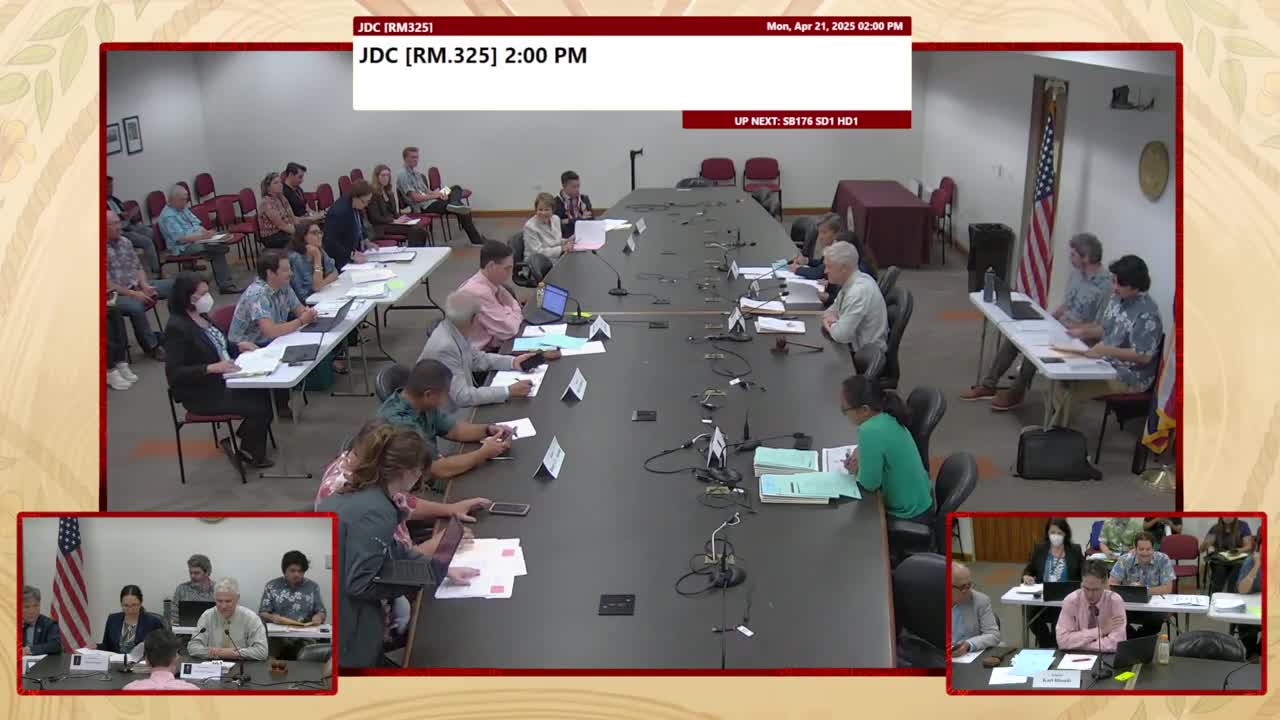 50SEC
Conference Committee
 3MIN
Conference Committee
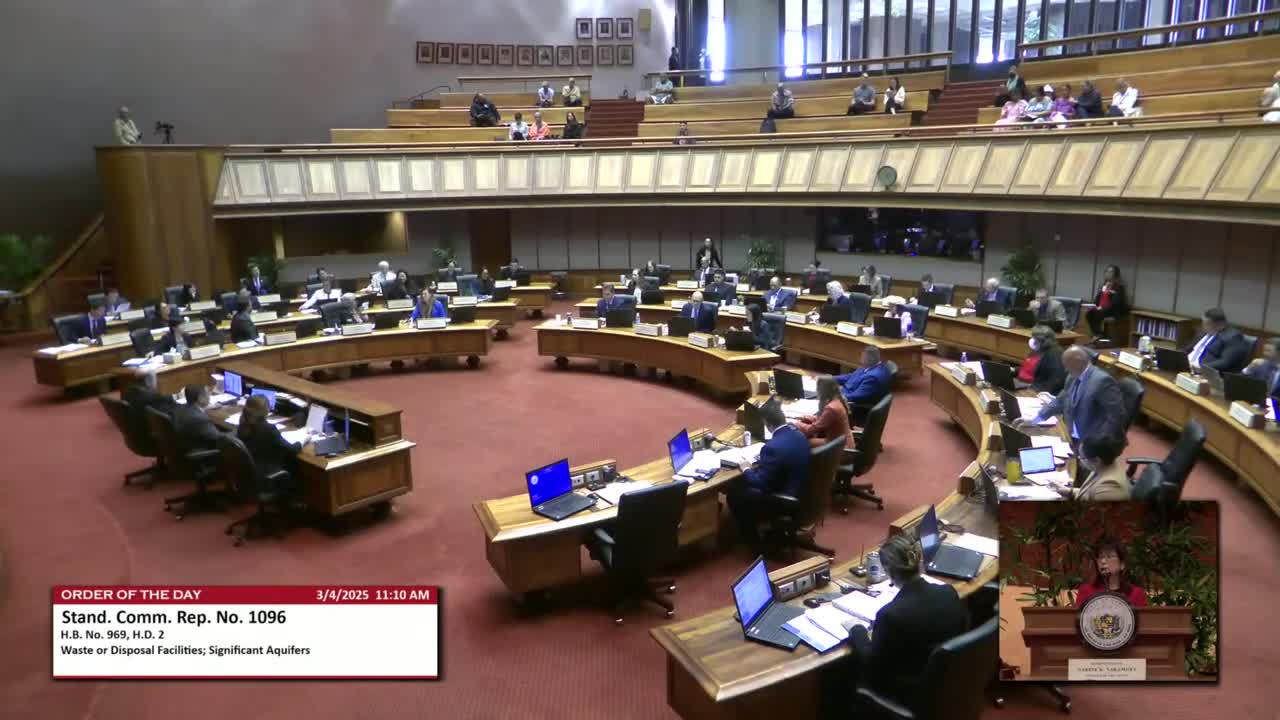 1MIN
House Floor
 8MIN
House Standing Committee on Finance
Bill Author