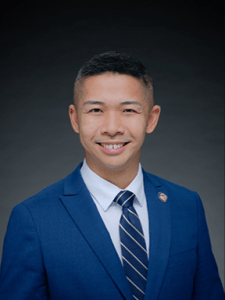
HB 103: Penal Code; Sentencing; Life Without Parole; Persons Under Twenty-one
- Session Year: 2025-2026
- House: House
- Latest Version Date: 2025-04-24
Current Status:
In Progress
(2025-06-03: Act 152, on 06/03/2025 (Gov. Msg. No. 1252).)
Introduced
In Committee
First Chamber
In Committee
Second Chamber
Final Decking
Enacted
Prohibits sentencing persons who were under the age of twenty-one at the time of the offense to life imprisonment without the possibility of parole. (CD1)
Prohibits emerging adult defendants from being sentenced to life imprisonment without the possibility of parole. (SD1)
Changes the age for which individuals are eligible for life without parole sentences from eighteen years of age or older to twenty-one years of age or older.
|
HOUSE OF REPRESENTATIVES |
H.B. NO. |
103 |
|
THIRTY-THIRD LEGISLATURE, 2025 |
S.D. 1 |
|
|
STATE OF HAWAII |
C.D. 1 |
|
|
|
|
|
|
|
||
|
|
||
A BILL FOR AN ACT
RELATING TO SENTENCING.
BE IT ENACTED BY THE LEGISLATURE OF THE STATE OF HAWAII:
SECTION 1. The legislature finds that through a court decision, Massachusetts became the first state to ban life without parole sentences for individuals eighteen years old through twenty years old, considering those in this age group to be "emerging adults". The court extended the bright line age cut-off from eighteen years of age to twenty years of age, in part, due to neuroscience research that supports that brain maturation continues through an individual's mid-twenties.
The purpose of this Act is to prohibit sentencing defendants who were under the age of twenty-one at the time of the offense to life imprisonment without the possibility of parole.
SECTION 2. Chapter 706, Hawaii Revised Statutes, is amended by adding a new section to be appropriately designated and to read as follows:
"§706- Life imprisonment without the possibility of parole; persons under the age of twenty-one; prohibited. Notwithstanding any other law to the contrary, no person convicted of a crime who was under the age of twenty-one at the time of the offense shall be sentenced to life imprisonment without the possibility of parole."
SECTION 3. Section 706-656, Hawaii Revised Statutes, is amended by amending subsection (1) to read as follows:
"(1) Persons [eighteen] twenty-one
years of age or [over] older at the time of the offense who are
convicted of first degree murder or first degree attempted murder shall be
sentenced to life imprisonment without the possibility of parole.
As part of [such] the
sentence, the court shall order the director of corrections and rehabilitation
and the Hawaii paroling authority to prepare an application for the governor to
commute the sentence to life imprisonment with parole at the end of twenty
years of imprisonment; provided that persons who are repeat offenders under
section 706-606.5 shall serve at least the applicable mandatory minimum term of
imprisonment.
Persons under the age of [eighteen]
twenty-one years at the time of the offense who are convicted of first
degree murder or first degree attempted murder shall be sentenced to life
imprisonment with the possibility of parole."
SECTION 4. Section 706-657, Hawaii Revised Statutes, is amended to read as follows:
"§706-657 Enhanced sentence for
second degree murder. (a) The court may sentence a person who was [eighteen]
twenty-one years of age or [over] older at the time of the
offense and who has been convicted of murder in the second degree to life
imprisonment without the possibility of parole under section 706-656 if the
court finds that the murder was especially heinous, atrocious, or cruel,
manifesting exceptional depravity or that the person was previously convicted
of the offense of murder in the first degree or murder in the second degree in
this State or was previously convicted in another jurisdiction of an offense
that would constitute murder in the first degree or murder in the second degree
in this State. [As used in this
section, the phrase "especially heinous, atrocious, or cruel, manifesting
exceptional depravity" means a conscienceless or pitiless crime which is
unnecessarily torturous to a victim and "previously convicted" means
a sentence imposed at the same time or a sentence previously imposed which has
not been set aside, reversed, or vacated.]
(b) Hearings to determine the grounds for imposing an enhanced sentence for second degree murder may be initiated by the prosecutor or by the court on its own motion. The court shall not impose an enhanced term unless the ground therefor has been established at a hearing after the conviction of the defendant and on written notice to the defendant of the ground proposed. Subject to the provision of section 706-604, the defendant shall have the right to hear and controvert the evidence against the defendant and to offer evidence upon the issue.
(c)
The provisions pertaining to commutation in section 706-656(2)[,]
shall apply to persons sentenced pursuant to this section.
(d) As used in this section:
"Especially heinous, atrocious, or cruel, manifesting exceptional depravity" means a conscienceless or pitiless crime that is unnecessarily torturous to a victim.
"Previously convicted" means a sentence imposed at the same time or a sentence previously imposed that has not been set aside, reversed, or vacated."
SECTION 5. Section 706-662, Hawaii Revised Statutes, is amended to read as follows:
"§706-662 Criteria for extended terms of imprisonment. A defendant who has been convicted of a felony may be subject to an extended term of imprisonment under section 706-661 if it is proven beyond a reasonable doubt that an extended term of imprisonment is necessary for the protection of the public and that the convicted defendant satisfies one or more of the following criteria:
(1) The defendant is a
persistent offender in that the defendant has previously been convicted of two
or more felonies committed at different times when the defendant was [eighteen]
twenty-one years of age or older;
(2) The defendant is a professional criminal in that:
(a) The circumstances of the crime show that the defendant has knowingly engaged in criminal activity as a major source of livelihood; or
(b) The defendant has substantial income or resources not explained to be derived from a source other than criminal activity;
(3) The defendant is a dangerous person in that the defendant has been subjected to a psychiatric or psychological evaluation that documents a significant history of dangerousness to others resulting in criminally violent conduct, and this history makes the defendant a serious danger to others. Nothing in this section precludes the introduction of victim-related data to establish dangerousness in accord with the Hawaii rules of evidence;
(4) The defendant is a multiple offender in that:
(a) The defendant is being sentenced for two or more felonies or is already under sentence of imprisonment for any felony; or
(b) The maximum terms of imprisonment authorized for each of the defendant's crimes, if made to run consecutively, would equal or exceed in length the maximum of the extended term imposed or would equal or exceed forty years if the extended term imposed is for a class A felony;
(5) The defendant is an offender against the elderly, the handicapped, or a minor eight years of age or younger in that:
(a) The defendant attempts or commits any of the following crimes: murder, manslaughter, a sexual offense that constitutes a felony under chapter 707, robbery, felonious assault, burglary, or kidnapping; and
(b) The defendant, in the course of committing or attempting to commit the crime, inflicts serious or substantial bodily injury upon a person who has the status of being:
(i) Sixty years of age or older;
(ii) Blind, a paraplegic, or a quadriplegic; or
(iii) Eight years of age or younger; and
the person's status is known or reasonably should be known to the defendant;
(6) The defendant is a hate crime offender in that:
(a) The defendant is convicted of a crime under chapter 707, 708, or 711; and
(b) The defendant intentionally selected a victim or, in the case of a property crime, the property that was the object of a crime, because of hostility toward the actual or perceived race, religion, disability, ethnicity, national origin, gender identity or expression, or sexual orientation of any person. For purposes of this subsection, "gender identity or expression" includes a person's actual or perceived gender, as well as a person's gender identity, gender-related self-image, gender-related appearance, or gender-related expression, regardless of whether that gender identity, gender-related self-image, gender-related appearance, or gender-related expression is different from that traditionally associated with the person's sex at birth; or
(7) The defendant is convicted under section 707-702.5 and the defendant did not remain at the scene of the crime and render reasonable assistance to an injured person, including acts and omissions in violation of section 291C-12."
SECTION 6. Statutory material to be repealed is bracketed and stricken. New statutory material is underscored.
SECTION 7. This Act shall take effect upon its approval.
Report Title:
Penal Code; Sentencing; Life Without Parole; Persons Under Twenty-one
Description:
Prohibits sentencing persons who were under the age of twenty-one at the time of the offense to life imprisonment without the possibility of parole. (CD1)
The summary description of legislation appearing on this page is for informational purposes only and is not legislation or evidence of legislative intent.
|
HOUSE OF REPRESENTATIVES |
H.B. NO. |
103 |
|
THIRTY-THIRD LEGISLATURE, 2025 |
S.D. 1 |
|
|
STATE OF HAWAII |
|
|
|
|
|
|
|
|
||
|
|
||
A BILL FOR AN ACT
RELATING TO SENTENCING.
BE IT ENACTED BY THE LEGISLATURE OF THE STATE OF HAWAII:
SECTION 1. The legislature finds that through a court decision, Massachusetts became the first state to ban life without parole sentences for individuals eighteen years old through twenty years old, considering those in this age group to be "emerging adults". The court extended the bright line age cut-off from eighteen years of age to twenty years of age, in part, due to neuroscience research that supports that brain maturation continues through an individual's mid-twenties.
The purpose of this Act is to prohibit life without parole sentences for emerging adult defendants between eighteen and twenty-one years of age.
SECTION 2. Chapter 706, Hawaii Revised Statutes, is amended by adding a new section to be appropriately designated and to read as follows:
"§706- Emerging adult defendants. (1) Notwithstanding any other law to the contrary, no emerging adult defendant shall be sentenced to life imprisonment without the possibility of parole.
(2) For the purposes of this section, "emerging adult defendant" means a person convicted of a crime who, at the time of the offense, is over eighteen years of age and less than twenty-one years of age."
SECTION 3. New statutory material is underscored.
SECTION 4. This Act shall take effect upon its approval.
Report Title:
Emerging Adult Defendant; Sentencing; Life Without Parole; Minors; Penal Code
Description:
Prohibits emerging adult defendants from being sentenced to life imprisonment without the possibility of parole. (SD1)
The summary description of legislation appearing on this page is for informational purposes only and is not legislation or evidence of legislative intent.
|
HOUSE OF REPRESENTATIVES |
H.B. NO. |
103 |
|
THIRTY-THIRD LEGISLATURE, 2025 |
|
|
|
STATE OF HAWAII |
|
|
|
|
|
|
|
|
||
|
|
||
A BILL FOR AN ACT
relating to Sentencing.
BE IT ENACTED BY THE LEGISLATURE OF THE STATE OF HAWAII:
SECTION 1. The legislature finds that through a court decision, Massachusetts became the first state to ban life without parole sentences for individuals eighteen years of old through twenty years old, considering those in this age group as "emerging adults". The court extended the bright line age cut-off from eighteen years of age to twenty years of age in part due to neuroscience research that supports that brain maturation continues through an individual's mid-twenties.
The purpose of this Act is to change the age for which individuals are eligible for life without parole sentences from eighteen years of age or older to twenty-one years of age or older.
SECTION 2. Section 706-656, Hawaii Revised Statutes, is amended by amending subsection (1) to read as follows:
"(1)
Persons [eighteen] twenty-one years of age or [over]
older at the time of the offense who are convicted of first degree
murder or first degree attempted murder shall be sentenced to life imprisonment
without the possibility of parole.
As part of such sentence, the court shall order the director of corrections and rehabilitation and the Hawaii paroling authority to prepare an application for the governor to commute the sentence to life imprisonment with parole at the end of twenty years of imprisonment; provided that persons who are repeat offenders under section 706-606.5 shall serve at least the applicable mandatory minimum term of imprisonment.
Persons under the age of [eighteen]
twenty-one years at the time of the offense who are convicted of first
degree murder or first degree attempted murder shall be sentenced to life
imprisonment with the possibility of parole."
SECTION 3. Section 706-657, Hawaii Revised Statutes, is amended to read as follows:
"§706-657
Enhanced sentence for second degree murder. The court may sentence a person who was [eighteen]
twenty-one years of age or [over] older at the time of the
offense and who has been convicted of murder in the second degree to life
imprisonment without the possibility of parole under section 706-656 if the
court finds that the murder was especially heinous, atrocious, or cruel,
manifesting exceptional depravity or that the person was previously convicted
of the offense of murder in the first degree or murder in the second degree in
this State or was previously convicted in another jurisdiction of an offense
that would constitute murder in the first degree or murder in the second degree
in this State. As used in this section,
the phrase "especially heinous, atrocious, or cruel, manifesting
exceptional depravity" means a conscienceless or pitiless crime which is
unnecessarily torturous to a victim and "previously convicted" means
a sentence imposed at the same time or a sentence previously imposed which has
not been set aside, reversed, or vacated.
Hearings to determine the grounds for imposing an enhanced sentence for second degree murder may be initiated by the prosecutor or by the court on its own motion. The court shall not impose an enhanced term unless the ground therefor has been established at a hearing after the conviction of the defendant and on written notice to the defendant of the ground proposed. Subject to the provision of section 706-604, the defendant shall have the right to hear and controvert the evidence against the defendant and to offer evidence upon the issue.
The provisions pertaining to commutation in section 706-656(2), shall apply to persons sentenced pursuant to this section."
SECTION 4. Section 706-662, Hawaii Revised Statutes, is amended to read as follows:
"§706-662 Criteria for extended terms of imprisonment. A defendant who has been convicted of a felony may be subject to an extended term of imprisonment under section 706-661 if it is proven beyond a reasonable doubt that an extended term of imprisonment is necessary for the protection of the public and that the convicted defendant satisfies one or more of the following criteria:
(1) The defendant is a persistent offender in that
the defendant has previously been convicted of two or more felonies committed
at different times when the defendant was [eighteen] twenty-one
years of age or older;
(2) The defendant is a professional criminal in that:
(a) The circumstances of the crime show that the defendant has knowingly engaged in criminal activity as a major source of livelihood; or
(b) The defendant has substantial income or resources not explained to be derived from a source other than criminal activity;
(3) The defendant is a dangerous person in that the defendant has been subjected to a psychiatric or psychological evaluation that documents a significant history of dangerousness to others resulting in criminally violent conduct, and this history makes the defendant a serious danger to others. Nothing in this section precludes the introduction of victim-related data to establish dangerousness in accord with the Hawaii rules of evidence;
(4) The defendant is a multiple offender in that:
(a) The defendant is being sentenced for two or more felonies or is already under sentence of imprisonment for any felony; or
(b) The maximum terms of imprisonment authorized for each of the defendant's crimes, if made to run consecutively, would equal or exceed in length the maximum of the extended term imposed or would equal or exceed forty years if the extended term imposed is for a class A felony;
(5) The defendant is an offender against the elderly, handicapped, or a minor eight years of age or younger in that:
(a) The defendant attempts or commits any of the following crimes: murder, manslaughter, a sexual offense that constitutes a felony under chapter 707, robbery, felonious assault, burglary, or kidnapping; and
(b) The defendant, in the course of committing or attempting to commit the crime, inflicts serious or substantial bodily injury upon a person who has the status of being:
(i) Sixty years of age or older;
(ii) Blind, a paraplegic, or a quadriplegic; or
(iii) Eight years of age or younger; and
the person's status is known or reasonably should be known to the defendant;
(6) The defendant is a hate crime offender in that:
(a) The defendant is convicted of a crime under chapter 707, 708, or 711; and
(b) The defendant intentionally selected a victim or, in the case of a property crime, the property that was the object of a crime, because of hostility toward the actual or perceived race, religion, disability, ethnicity, national origin, gender identity or expression, or sexual orientation of any person. For purposes of this subsection, "gender identity or expression" includes a person's actual or perceived gender, as well as a person's gender identity, gender-related self-image, gender-related appearance, or gender-related expression, regardless of whether that gender identity, gender-related self-image, gender-related appearance, or gender-related expression is different from that traditionally associated with the person's sex at birth; or
(7) The defendant is convicted under section 707-702.5 and the defendant did not remain at the scene of the crime and render reasonable assistance to an injured person, including acts and omissions in violation of section 291C-12."
SECTION 5. Statutory material to be repealed is bracketed and stricken. New statutory material is underscored.
SECTION 6. This Act shall take effect upon its approval.
|
INTRODUCED BY: |
_____________________________ |
|
|
|
Report Title:
Sentencing; Life Without Parole; Minors; Penal Code
Description:
Changes the age for which individuals are eligible for life without parole sentences from eighteen years of age or older to twenty-one years of age or older.
The summary description of legislation appearing on this page is for informational purposes only and is not legislation or evidence of legislative intent.
|
Date
|
Status
|
|---|---|
| Jun 3, 2025 | Act 152, on 06/03/2025 (Gov. Msg. No. 1252). |
| Jun 3, 2025 | Act 152, 06/03/2025 (Gov. Msg. No. 1252). |
| May 1, 2025 | Transmitted to Governor. |
| May 2, 2025 | Received notice of passage on Final Reading in House (Hse. Com. No. 821). |
| May 1, 2025 | Received notice of Final Reading (Sen. Com. No. 888). |
| Apr 30, 2025 | Passed Final Reading as amended in CD 1 with none voting aye with reservations; Representative(s) Garcia, Kong, Muraoka, Pierick, Shimizu voting no (5) and Representative(s) Cochran excused (1). |
| Apr 30, 2025 | Passed Final Reading, as amended (CD 1). Ayes, 22; Aye(s) with reservations: Senator(s) Aquino, Elefante. Noes, 3 (Senator(s) Awa, DeCorte, Fevella). Excused, 0 (none). |
| Apr 24, 2025 | 48 Hrs. Notice (as amended CD 1) 04-30-25 |
| Apr 24, 2025 | Reported from Conference Committee as amended CD 1 (Conf. Com. Rep. No. 54). |
| Apr 24, 2025 | Forty-eight (48) hours notice Wednesday, 04-30-25. |
| Apr 24, 2025 | Reported from Conference Committee (Conf Com. Rep. No. 54) as amended in (CD 1). |
| Apr 23, 2025 | The Conference committee recommends that the measure be PASSED, WITH AMENDMENTS. The votes of the Senate Conference Managers were as follows: 3 Aye(s): Senator(s) Rhoads, Chang, Gabbard; Aye(s) with reservations: none ; 0 No(es): none; and 0 Excused: none. |
| Apr 23, 2025 | The Conference Committee recommends that the measure be Passed, with Amendments. The votes were as follows: 2 Ayes: Representative(s) Tarnas, Poepoe; Ayes with reservations: none; 1 Noes: Representative(s) Shimizu; and 0 Excused: none. |
| Apr 23, 2025 | Received notice of appointment of House conferees (Hse. Com. No. 800). |
| Apr 22, 2025 | Bill scheduled for Conference Committee Meeting on Wednesday, 04-23-25 2:10PM in conference room 325. |
| Apr 22, 2025 | House Conferees Appointed: Tarnas Chair; Poepoe, Shimizu. |
| Apr 21, 2025 | Received notice of Senate conferees (Sen. Com. No. 850). |
| Apr 21, 2025 | Senate Conferees Appointed: Rhoads Chair; Chang, Gabbard. |
| Mar 19, 2025 | Received notice of disagreement (Hse. Com. No. 383). |
| Mar 18, 2025 | House disagrees with Senate amendment (s). |
| Mar 17, 2025 | Returned from Senate (Sen. Com. No. 395) in amended form (SD 1). |
| Mar 17, 2025 | Passed Third Reading, as amended (SD 1). Ayes, 22; Aye(s) with reservations: Senator(s) Aquino, Elefante, McKelvey . Noes, 3 (Senator(s) Awa, DeCorte, Fevella). Excused, 0 (none). Transmitted to House. |
| Mar 14, 2025 | 48 Hrs. Notice 03-17-25. |
| Mar 14, 2025 | Report adopted; Passed Second Reading, as amended (SD 1). |
| Mar 14, 2025 | Reported from JDC (Stand. Com. Rep. No. 1080) with recommendation of passage on Second Reading, as amended (SD 1) and placement on the calendar for Third Reading. |
| Mar 11, 2025 | The committee(s) on JDC recommend(s) that the measure be PASSED, WITH AMENDMENTS. The votes in JDC were as follows: 4 Aye(s): Senator(s) Rhoads, Gabbard, Chang, San Buenaventura; Aye(s) with reservations: none ; 1 No(es): Senator(s) Awa; and 0 Excused: none. |
| Mar 7, 2025 | The committee(s) on JDC has scheduled a public hearing on 03-11-25 9:45AM; Conference Room 016 & Videoconference. |
| Mar 4, 2025 | Referred to JDC. |
| Mar 4, 2025 | Passed First Reading. |
| Mar 4, 2025 | Received from House (Hse. Com. No. 81). |
| Feb 28, 2025 | Passed Third Reading with none voting aye with reservations; Representative(s) Garcia, Matsumoto, Muraoka, Shimizu voting no (4) and Representative(s) Cochran, Pierick, Templo, Ward excused (4). Transmitted to Senate. |
| Feb 27, 2025 | Passed Second Reading; placed on the calendar for Third Reading with Representative(s) Amato, Kong, Matsumoto, Reyes Oda voting aye with reservations; Representative(s) Garcia, Muraoka, Shimizu voting no (3) and Representative(s) Cochran, Pierick, Templo, Ward excused (4). |
| Feb 27, 2025 | Reported from JHA (Stand. Com. Rep. No. 807), recommending passage on Second Reading and placement on the calendar for Third Reading. |
| Feb 7, 2025 | The committee on JHA recommend that the measure be PASSED, UNAMENDED. The votes were as follows: 7 Ayes: Representative(s) Tarnas, Poepoe, Hashem, Kahaloa, Perruso, Takayama, Todd; Ayes with reservations: none; 2 Noes: Representative(s) Garcia, Shimizu; and 2 Excused: Representative(s) Belatti, Cochran. |
| Feb 4, 2025 | Bill scheduled to be heard by JHA on Friday, 02-07-25 2:05PM in House conference room 325 VIA VIDEOCONFERENCE. |
| Jan 21, 2025 | Referred to JHA, referral sheet 1 |
| Jan 16, 2025 | Introduced and Pass First Reading. |
| Jan 13, 2025 | Prefiled. |
|
Date
|
Description
|
Location
|
Votes
|
|
|---|---|---|---|---|
| Apr 30, 2025 | Final Reading | House Floor |
Passed |
|
| Apr 30, 2025 | Final Reading | Senate Floor |
Passed |
|
| Mar 17, 2025 | Third Reading | Senate Floor |
Passed |
|
| Mar 11, 2025 | The committee(s) on JDC recommend(s) that the measure be PASSED, WITH AMENDMENTS | Senate Standing Committee on Judiciary |
Passed |
|
| Feb 28, 2025 | Third Reading | House Floor |
Passed |
|
| Feb 7, 2025 | The committee on JHA recommend that the measure be PASSED, UNAMENDED | House Standing Committee on Judiciary & Hawaiian Affairs |
Passed |
This list shows positions taken on this bill by organizations on the date displayed, which is linked to the original source.
Positions by individuals are not included.
|
Organization
|
Position
|
Date
|
|---|---|---|
| Department of the Prosecuting Attorney of the City and County of Honolulu | ** Against | |
| Office of the Public Defender | ** Support | |
| Opportunity for Youth Action Hawaiʻi | *** Support | Feb 7, 2025 |
| State of Hawai‘i, Office of the Public Defender | *** Support | Mar 10, 2025 |
CONFERENCE COMMITTEE REP. NO. 54
Honolulu, Hawaii
, 2025
RE: H.B. No. 103
S.D. 1
C.D. 1
Honorable Nadine K. Nakamura
Speaker, House of Representatives
Thirty-Third State Legislature
Regular Session of 2025
State of Hawaii
Honorable Ronald D. Kouchi
President of the Senate
Thirty-Third State Legislature
Regular Session of 2025
State of Hawaii
Madam and Sir:
Your Committee on Conference on the disagreeing vote of the House of Representatives to the amendments proposed by the Senate in H.B. No. 103, S.D. 1, entitled:
"A BILL FOR AN ACT RELATING TO SENTENCING,"
having met, and after full and free discussion, has agreed to recommend and does recommend to the respective Houses the final passage of this bill in an amended form.
The purpose of this measure is to prohibit life without parole sentences for emerging adult defendants who were over eighteen years of age but under twenty-one years of age at the time of the offense.
Your Committee on Conference has amended this measure by:
(1) Prohibiting life without parole sentences for persons who were under the age of twenty-one at the time of the offense, instead of emerging adult defendants;
(2) Amending existing statutory language to change the age for which individuals are eligible for life without parole sentences or extended terms of imprisonment from eighteen years of age or older to twenty-one years of age or older; and
(3) Making technical, nonsubstantive amendments for the purposes of clarity, consistency, and style.
As affirmed by the record of votes of the managers of your Committee on Conference that is attached to this report, your Committee on Conference is in accord with the intent and purpose of H.B. No. 103, S.D. 1, as amended herein, and recommends that it pass Final Reading in the form attached hereto as H.B. No. 103, S.D. 1, C.D. 1.
Respectfully submitted on behalf of the managers:
|
ON THE PART OF THE SENATE |
|
ON THE PART OF THE HOUSE |
|
____________________________ KARL RHOADS Chair |
|
____________________________ DAVID A. TARNAS Chair |
|
|
|
|
|
|
|
|
|
|
|
|
STAND. COM. REP. NO. 1080
Honolulu, Hawaii
RE: H.B. No. 103
S.D. 1
Honorable Ronald D. Kouchi
President of the Senate
Thirty-Third State Legislature
Regular Session of 2025
State of Hawaii
Sir:
Your Committee on Judiciary, to which was referred H.B. No. 103 entitled:
"A BILL FOR AN ACT RELATING TO SENTENCING,"
begs leave to report as follows:
The purpose and intent of this measure is to change the age at which individuals are eligible for life without parole sentences from eighteen years of age or older to twentyone years of age or older.
Your Committee received testimony in support of this measure from the Office of the Public Defender and one individual.
Your Committee received testimony in opposition to this measure from the Department of the Prosecuting Attorney of the City and County of Honolulu and two individuals.
Your Committee finds that neuroscience and brain development research has demonstrated that brain maturation continues through an individual's mid-twenties, and that these individuals are sometimes referred to as "emerging adults". Your Committee believes that, due to the research supporting continued brain maturation through early adulthood, an emerging adult who has committed a serious offense should have the opportunity for parole after establishing a clear pattern of rehabilitation as established by positive behaviors while in custody, such as taking advantage of educational opportunities, work opportunities, substance abuse counseling opportunities, and a clear commitment to living a life embracing change, sincere remorse, and service within the incarcerated communities. This measure will give the Hawaii Paroling Authority more opportunities to encourage positive behavior and rehabilitation for emerging adults facing a lengthy sentence.
Your Committee notes that this measure is not intended to prohibit the sentencing of defendants to life imprisonment with the possibility of parole or a potential lengthy minimum term of imprisonment for defendants between the ages of eighteen and twenty-one.
Your Committee has amended this measure by:
(1) Deleting language that would have amended existing law to change the age at which individuals are eligible for life without parole sentences from eighteen years of age or older to twenty-one years of age or older;
(2) Inserting new statutory language that prohibits emerging adult defendants from being sentenced to life imprisonment without the possibility of parole;
(3) Defining "emerging adult defendant" as a person convicted of a crime who is over eighteen years of age and less than twenty-one years of age; and
(4) Making technical, nonsubstantive amendments for the purposes of clarity and consistency.
As affirmed by the record of votes of the members of your Committee on Judiciary that is attached to this report, your Committee is in accord with the intent and purpose of H.B. No. 103, as amended herein, and recommends that it pass Second Reading in the form attached hereto as H.B. No. 103, S.D. 1, and be placed on the calendar for Third Reading.
Respectfully submitted on behalf of the members of the Committee on Judiciary,
|
|
|
________________________________ KARL RHOADS, Chair |
|
|
|
|
STAND. COM. REP. NO. 807
Honolulu, Hawaii
, 2025
RE: H.B. No. 103
Honorable Nadine K. Nakamura
Speaker, House of Representatives
Thirty-Third State Legislature
Regular Session of 2025
State of Hawaii
Madame:
Your Committee on Judiciary & Hawaiian Affairs, to which was referred H.B. No. 103 entitled:
"A BILL FOR AN ACT RELATING TO SENTENCING,"
begs leave to report as follows:
Your Committee received testimony in support of this measure from the Office of the Public Defender and Opportunity for Youth Action Hawaiʻi Kawailoa. Your Committee received testimony in opposition to this measure from the Department of the Prosecuting Attorney of the City and County of Honolulu and one individual.
Your Committee finds that juveniles are psychologically and developmentally different from adults and these differences should be recognized by the legal system. Juveniles are extremely vulnerable to negative environments and are easily influenced by crime-producing influences, such as physical, sexual, and psychological abuse by family members, other adults, and older juveniles. Juveniles are less capable than adults to consider the long-term impact of their actions, control their emotions and impulses, or evaluate risks and reward. Juveniles do not have control over their living situations and may experience traumas related to family homelessness, abandonment, exposure to adult drug abuse, and the realities of living in poverty that create environments susceptible to gang involvement or exposure to adult criminal behaviors. This measure raises the age to twenty-one years of age or older for which individuals are eligible for life without parole sentences.
As affirmed by the record of votes of the members of your Committee on Judiciary & Hawaiian Affairs that is attached to this report, your Committee is in accord with the intent and purpose of H.B. No. 103 and recommends that it pass Second Reading and be placed on the calendar for Third Reading.
Respectfully submitted on behalf of the members of the Committee on Judiciary & Hawaiian Affairs,
|
|
|
____________________________ DAVID A. TARNAS, Chair |
|
|
|
|
|
Date
|
Testimony PDF
|
|---|---|
| Mar 10, 2025 | HB103_TESTIMONY_JDC_03-11-25_.PDF |
| Feb 7, 2025 | HB103_TESTIMONY_JHA_02-07-25_.PDF |
Discussed in Hearing
 56SEC
House Floor
 1MIN
Conference Committee
 1MIN
Senate Standing Committee on Judiciary
 3MIN
House Standing Committee on Consumer Protection & Commerce
3MIN
House Standing Committee on Judiciary & Hawaiian Affairs
Bill Author