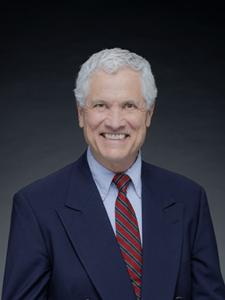
HB 2012: DOE; Community Literacy Labs; Pilot Program; Reports; Appropriation
- Session Year: 2025-2026
- House: House
- Latest Version Date: 2026-03-25
Current Status:
Failed
(2026-03-30: Report adopted; Passed Second Reading, as amended (SD 1) and referred to WAM.)
Introduced
In Committee
First Chamber
In Committee
Second Chamber
Final Decking
Enacted
Establishes and appropriates funds for the Department of Education to establish and implement a two-year Community Literacy Labs Pilot Program. Requires reports to the Legislature. Effective 7/31/2055. (SD1)
Establishes and appropriates funds for the Department of Education to establish and implement a two-year Community Literacy Labs Pilot Program. Effective 7/1/3000. (HD1)
Establishes and appropriates funds for the Department of Education to establish and implement a two-year Community Literacy Labs Pilot Program.
|
HOUSE OF REPRESENTATIVES |
H.B. NO. |
2012 |
|
THIRTY-THIRD LEGISLATURE, 2026 |
H.D. 1 |
|
|
STATE OF HAWAII |
S.D. 1 |
|
|
|
|
|
|
|
||
|
|
||
A BILL FOR AN ACT
RELATING TO COMMUNITY LITERACY LABS.
BE IT ENACTED BY THE LEGISLATURE OF THE STATE OF HAWAII:
SECTION 1. The legislature finds that literacy is a foundational skill essential to academic achievement, workforce readiness, economic mobility, and civic participation. A significant number of students attending public schools receiving federal Title I funding in Hawaii are not reading at grade level, particularly by the end of third grade, increasing the likelihood of long-term educational and economic disparities.
The legislature further finds that schools face constraints related to time, staffing, and resources that limit their ability to meet the full range of students' literacy needs. Community-based and culturally responsive literacy support, when coordinated with schools, has demonstrated effectiveness in improving early reading proficiency and family engagement. Expanded access to literacy supports outside of regular school hours, including before school, after school, weekends, and summer months, can close opportunity gaps and strengthen family and community capacity.
The purpose of this Act is to improve early literacy, reading proficiency, and lifelong educational outcomes by establishing a two-year community literacy labs pilot program in certain underserved and high-need communities.
SECTION 2. (a) The department of education, in collaboration with the department of human services and community partners, shall establish and implement a two-year community literacy labs pilot program in at least five communities where nearby public schools are receiving federal Title I funding; provided that at least one pilot program is established and implemented in each of the following:
(1) An urban community;
(2) A rural community; and
(3) A county with a population of less than five hundred thousand.
(b) The department of education may prioritize the establishment and implementation of community literacy labs in communities demonstrating the greatest literacy and access needs, including but not limited to communities with:
(1) The highest percentages of students reading below grade level;
(2) The highest concentrations of poverty;
(3) Limited access to libraries, tutoring services, or broadband internet;
(4) High populations of English language learners or multilingual students; and
(5) Significant numbers of students experiencing housing instability or involvement in the foster care system.
(c) Community literacy labs may be staffed by:
(1) Licensed teachers;
(2) Literacy specialists;
(3) Educational assistants;
(4) Trained tutors or paraprofessionals;
(5) University or community college students enrolled in education-related programs; and
(6) Qualified nonprofit or community-based organization partners.
(d) The department of education may partner with:
(1) The Hawaii state public library system;
(2) Universities and community colleges;
(3) Native Hawaiian education organizations;
(4) Immigrant and language-access nonprofit organizations;
(5) Housing authorities and community centers; and
(6) Other public or private entities with expertise in literacy development.
(e) In addition to state funding, the department of education may leverage federal Title I funds where permissible.
(f) Participation in and access to the community literacy labs pilot program shall be voluntary and provided at no cost to students and families.
(g) The department of education shall submit an interim report to the legislature no later than twenty days prior to the convening of the regular session of 2027 and a final report no later than twenty days prior to the convening of the regular session of 2028. Each report shall include:
(1) The number and geographic distribution of community literacy labs;
(2) Student participation and attendance rates;
(3) Reading proficiency outcomes and growth measures;
(4) Family engagement metrics;
(5) Program expenditures and cost-effectiveness; and
(6) Recommendations, including any proposed legislation, for program improvement or expansion.
The final report shall also include a determination of whether the pilot program should be made permanent and expanded statewide.
(h) For the purposes of this Act, "community literacy lab" means a program, facility, or mobile service that provides:
(1) Small‑group or individualized reading instruction;
(2) Evidence‑based literacy interventions aligned with state standards;
(3) Multilingual, culturally responsive, and place‑based instructional materials;
(4) Family literacy workshops and caregiver training;
(5) Digital literacy tools and assistive reading technologies;
(6) The distribution of free books to support home libraries; or
(7) Hawaii-relevant content reflective of local cultures and communities,
and operates on a public school campus, in a nearby community location, or through a mobile or pop‑up model to support literacy development for students and families.
SECTION 3. There is appropriated out of the general revenues of the State of Hawaii the sum of $ or so much thereof as may be necessary for fiscal year 2026-2027 for the purposes of the community literacy labs pilot program, to be used for:
(1) Staffing and professional development;
(2) Instructional materials and books;
(3) Technology, software, and assistive tools;
(4) Facility use, maintenance, and utilities;
(5) Transportation, outreach, and family engagement; and
(6) Program evaluation and data collection.
The sum appropriated shall be expended by the department of education for the purposes of this Act.
SECTION 4. This Act shall take effect on July 31, 2055.
Report Title:
DOE; Community Literacy Labs; Pilot Program; Reports; Appropriation
Description:
Establishes and appropriates funds for the Department of Education to establish and implement a two-year Community Literacy Labs Pilot Program. Requires reports to the Legislature. Effective 7/31/2055. (SD1)
The summary description of legislation appearing on this page is for informational purposes only and is not legislation or evidence of legislative intent.
|
HOUSE OF REPRESENTATIVES |
H.B. NO. |
2012 |
|
THIRTY-THIRD LEGISLATURE, 2026 |
H.D. 1 |
|
|
STATE OF HAWAII |
|
|
|
|
|
|
|
|
||
|
|
||
A BILL FOR AN ACT
RELATING TO COMMUNITY LITERACY LABS.
BE IT ENACTED BY THE LEGISLATURE OF THE STATE OF HAWAII:
SECTION 1. The legislature finds that literacy is a foundational skill essential to academic achievement, workforce readiness, economic mobility, and civic participation. A significant number of students attending public schools receiving federal Title I funding in Hawaii are not reading at grade level, particularly by the end of third grade, increasing the likelihood of long-term educational and economic disparities.
The legislature further finds that schools face constraints related to time, staffing, and resources that limit their ability to meet the full range of students' literacy needs. Community-based and culturally responsive literacy support, when coordinated with schools, has demonstrated effectiveness in improving early reading proficiency and family engagement. Expanded access to literacy supports outside of regular school hours, including before school, after school, weekends, and summer months, can close opportunity gaps and strengthen family and community capacity.
The purpose of this Act is to improve early literacy, reading proficiency, and lifelong educational outcomes by establishing a two-year community literacy labs pilot program in certain underserved and high-need communities.
SECTION 2. (a) The department of education, in collaboration with the department of human services and community partners, shall establish and implement a two-year community literacy labs pilot program in at least five communities where nearby public schools are receiving federal Title I funding; provided that at least one pilot program is established and implemented in each of the following:
(1) An urban community;
(2) A rural community; and
(3) A county with a population of less than five hundred thousand.
(b) The department of education may prioritize the establishment and implementation of community literacy labs in communities demonstrating the greatest literacy and access needs, including but not limited to communities with:
(1) The highest percentages of students reading below grade level;
(2) The highest concentrations of poverty;
(3) Limited access to libraries, tutoring services, or broadband internet;
(4) High populations of English language learners or multilingual students; and
(5) Significant numbers of students experiencing housing instability or involvement in the foster care system.
(c) Community literacy labs may be staffed by:
(1) Licensed teachers;
(2) Literacy specialists;
(3) Educational assistants;
(4) Trained tutors or paraprofessionals;
(5) University or community college students enrolled in education-related programs; and
(6) Qualified nonprofit or community-based organization partners.
(d) The department of education may partner with:
(1) The Hawaii state public library system;
(2) Universities and community colleges;
(3) Native Hawaiian education organizations;
(4) Immigrant and language-access nonprofit organizations;
(5) Housing authorities and community centers; and
(6) Other public or private entities with expertise in literacy development.
(e) The department of education shall submit an interim report to the legislature no later than twenty days prior to the convening of the regular session of 2027 and a final report no later than twenty days prior to the convening of the regular session of 2028. Each report shall include:
(1) The number and geographic distribution of community literacy labs;
(2) Student participation and attendance rates;
(3) Reading proficiency outcomes and growth measures;
(4) Family engagement metrics;
(5) Program expenditures and cost-effectiveness; and
(6) Recommendations, including any proposed legislation, for program improvement or expansion.
The final report shall also include a determination of whether the pilot program should be made permanent and expanded statewide.
(f) In addition to state funding, the department of education may leverage federal Title I funds where permissible.
(g) Participation in and access to the community literacy lab pilot program shall be voluntary and provided at no cost to students and families.
(h) For purposes of this Act, "community literacy lab" means a program, facility, or mobile service that provides:
(1) Small‑group or individualized reading instruction;
(2) Evidence‑based literacy interventions aligned with state standards;
(3) Multilingual, culturally responsive, and place‑based instructional materials;
(4) Family literacy workshops and caregiver training;
(5) Digital literacy tools and assistive reading technologies;
(6) The distribution of free books to support home libraries; or
(7) Hawaii-relevant content reflective of local cultures and communities,
and operates on a public school campus, in a nearby community location, or through a mobile or pop‑up model to support literacy development for students and families.
SECTION 3. There is appropriated out of the general revenues of the State of Hawaii the sum of $ or so much thereof as may be necessary for fiscal year 2026-2027 for the purposes of the community literacy lab pilot program, to be used for:
(1) Staffing and professional development;
(2) Instructional materials and books;
(3) Technology, software, and assistive tools;
(4) Facility use, maintenance, and utilities;
(5) Transportation, outreach, and family engagement; and
(6) Program evaluation and data collection.
The sum appropriated shall be expended by the department of education for the purposes of this Act.
SECTION 4. This Act shall take effect on July 1, 3000.
Report Title:
DOE; Community Literacy Labs; Pilot Program; Appropriation
Description:
Establishes and appropriates funds for the Department of Education to establish and implement a two-year Community Literacy Labs Pilot Program. Effective 7/1/3000. (HD1)
The summary description of legislation appearing on this page is for informational purposes only and is not legislation or evidence of legislative intent.
|
HOUSE OF REPRESENTATIVES |
H.B. NO. |
2012 |
|
THIRTY-THIRD LEGISLATURE, 2026 |
|
|
|
STATE OF HAWAII |
|
|
|
|
|
|
|
|
||
|
|
||
A BILL FOR AN ACT
relating to community literacy labs.
BE IT ENACTED BY THE LEGISLATURE OF THE STATE OF HAWAII:
SECTION 1. The legislature finds that literacy is a foundational skill essential to academic achievement, workforce readiness, economic mobility, and civic participation. A significant number of students attending public schools receiving federal Title I funding in Hawaii are not reading at grade level, particularly by the end of third grade, increasing the likelihood of long-term educational and economic disparities.
The legislature further finds that schools face constraints related to time, staffing, and resources that limit their ability to meet the full range of students' literacy needs. Community-based and culturally responsive literacy support, when coordinated with schools, has demonstrated effectiveness in improving early reading proficiency and family engagement. Expanded access to literacy supports outside of regular school hours, including before school, after school, weekends, and summer months, can close opportunity gaps and strengthen family and community capacity.
The purpose of this Act is to improve early literacy, reading proficiency, and lifelong educational outcomes by establishing a two-year community literacy labs pilot program in certain underserved and high-need communities.
SECTION 2. (a) The department of education, in collaboration with the department of human services and community partners, shall establish and implement a two-year community literacy labs pilot program in at least five communities where nearby public schools are receiving federal Title I funding; provided that at least one pilot program is established and implemented in each of the following:
(1) An urban community;
(2) A rural community; and
(3) A county with a population less than five hundred thousand.
(b) The department of education shall prioritize the establishment and implementation of community literacy labs in communities demonstrating the greatest literacy and access needs, including but not limited to communities with:
(1) The highest percentages of students reading below grade level;
(2) The highest concentrations of poverty;
(3) Limited access to libraries, tutoring services, or broadband Internet;
(4) High populations of English language learners or multilingual students; and
(5) Significant numbers of students experiencing housing instability or involvement in the foster care system.
(c) Community literacy labs may be staffed by:
(1) Licensed teachers;
(2) Literacy specialists;
(3) Educational assistants;
(4) Trained tutors or paraprofessionals;
(5) University or community college students enrolled in education-related programs; and
(6) Qualified nonprofit or community-based organization partners.
(d) The department of education may partner with:
(1) The public library system;
(2) Universities and community colleges;
(3) Native Hawaiian education organizations;
(4) Immigrant and language-access nonprofit organizations;
(5) Housing authorities and community centers; and
(6) Other public or private entities with expertise in literacy development.
(e) The department of education shall submit an interim report to the legislature no later than twenty days prior to the convening of the regular session of 2027 and a final report no later than twenty days prior to the convening of the regular session of 2028. Each report shall include:
(1) The number and geographic distribution of community literacy labs;
(2) Student participation and attendance rates;
(3) Reading proficiency outcomes and growth measures;
(4) Family engagement metrics;
(5) Program expenditures and cost-effectiveness; and
(6) Recommendations, including any proposed legislation, for program improvement or expansion.
The final report shall also include a determination of whether the pilot program should be made permanent and expanded statewide.
(f) In addition to state funding, the department of education may leverage federal Title I funds where permissible.
(g) Participation in and access to the community literacy lab pilot program shall be voluntary and provided at no cost to students and families.
(h) For purposes of this Act, "community literacy lab" means a program, facility, or mobile service that provides:
(1) Small‑group or individualized reading instruction;
(2) Evidence‑based literacy interventions aligned with state standards;
(3) Multilingual, culturally responsive, and place‑based instructional materials;
(4) Family literacy workshops and caregiver training;
(5) Digital literacy tools and assistive reading technologies;
(6) The distribution of free books to support home libraries; or
(7) Hawaii-relevant content reflective of local cultures and communities,
and operates on a public school campus, in a nearby community location, or through a mobile or pop‑up model to support literacy development for students and families.
SECTION 3. There is appropriated out of the general revenues of the State of Hawaii the sum of $ or so much thereof as may be necessary for fiscal year 2026-2027 for the purposes of the community literacy lab pilot program and to be used for:
(1) Staffing and professional development;
(2) Instructional materials and books;
(3) Technology, software, and assistive tools;
(4) Facility use, maintenance, and utilities;
(5) Transportation, outreach, and family engagement; and
(6) Program evaluation and data collection.
The sum appropriated shall be expended by the department of education for the purposes of this Act.
SECTION 4. This Act shall take effect on July 1, 2026.
|
INTRODUCED BY: |
_____________________________ |
Report Title:
DOE; Community Literacy Labs; Pilot Program; Appropriation
Description:
Establishes and appropriates funds for the Department of Education to establish and implement a two-year Community Literacy Labs Pilot Program.
The summary description of legislation appearing on this page is for informational purposes only and is not legislation or evidence of legislative intent.
|
Date
|
Status
|
|---|---|
| Mar 30, 2026 | Report adopted; Passed Second Reading, as amended (SD 1) and referred to WAM. |
| Mar 30, 2026 | Reported from EDU (Stand. Com. Rep. No. 3269) with recommendation of passage on Second Reading, as amended (SD 1) and referral to WAM. |
| Mar 20, 2026 | The committee(s) on EDU recommend(s) that the measure be PASSED, WITH AMENDMENTS. The votes in EDU were as follows: 3 Aye(s): Senator(s) Kim, Hashimoto, DeCorte; Aye(s) with reservations: none ; 0 No(es): none; and 2 Excused: Senator(s) Kidani, Fukunaga. |
| Mar 17, 2026 | The committee(s) on EDU has scheduled a public hearing on 03-20-26 1:00PM; Conference Room 229 & Videoconference. |
| Mar 10, 2026 | Referred to EDU, WAM. |
| Mar 10, 2026 | Passed First Reading. |
| Mar 10, 2026 | Received from House (Hse. Com. No. 175). |
| Mar 6, 2026 | Passed Third Reading with none voting aye with reservations; none voting no (0) and Representative(s) Perruso, Sayama excused (2). Transmitted to Senate. |
| Mar 6, 2026 | Reported from FIN (Stand. Com. Rep. No. 951-26), recommending passage on Third Reading. |
| Mar 4, 2026 | The committee on FIN recommend that the measure be PASSED, UNAMENDED. The votes were as follows: 16 Ayes: Representative(s) Todd, Takenouchi, Hartsfield, Hussey, Keohokapu-Lee Loy, Kitagawa, Kusch, Lee, M., Miyake, Morikawa, Perruso, Templo, Yamashita, Alcos, Gedeon, Reyes Oda; Ayes with reservations: none; Noes: none; and Excused: none. |
| Mar 2, 2026 | Bill scheduled to be heard by FIN on Wednesday, 03-04-26 10:00AM in House conference room 308 VIA VIDEOCONFERENCE. |
| Feb 18, 2026 | Report adopted; referred to the committee(s) on FIN with none voting aye with reservations; none voting no (0) and none excused (0). |
| Feb 18, 2026 | Reported from HSH (Stand. Com. Rep. No. 369-26), recommending referral to FIN. |
| Feb 12, 2026 | The committee on HSH recommend that the measure be PASSED, UNAMENDED. The votes were as follows: 8 Ayes: Representative(s) Marten, Olds, Amato, Hartsfield, Keohokapu-Lee Loy, Takayama, Alcos, Garcia; Ayes with reservations: none; Noes: none; and 1 Excused: Representative(s) Takenouchi. |
| Feb 10, 2026 | Bill scheduled to be heard by HSH on Thursday, 02-12-26 10:30AM in House conference room 329 VIA VIDEOCONFERENCE. |
| Feb 5, 2026 | Passed Second Reading as amended in HD 1 and referred to the committee(s) on HSH with none voting aye with reservations; none voting no (0) and Representative(s) Woodson excused (1). |
| Feb 5, 2026 | Reported from EDN (Stand. Com. Rep. No. 25-26) as amended in HD 1, recommending passage on Second Reading and referral to HSH. |
| Feb 3, 2026 | The committee on EDN recommend that the measure be PASSED, WITH AMENDMENTS. The votes were as follows: 10 Ayes: Representative(s) Woodson, La Chica, Amato, Evslin, Garrett, Kapela, Kila, Olds, Muraoka, Souza; Ayes with reservations: none; Noes: none; and Excused: none. |
| Jan 30, 2026 | Bill scheduled to be heard by EDN on Tuesday, 02-03-26 2:00PM in House conference room 309 VIA VIDEOCONFERENCE. |
| Jan 28, 2026 | Referred to EDN, HSH, FIN, referral sheet 3 |
| Jan 26, 2026 | Introduced and Pass First Reading. |
| Jan 23, 2026 | Pending introduction. |
|
Date
|
Description
|
Location
|
Votes
|
|
|---|---|---|---|---|
| Mar 20, 2026 | The committee(s) on EDU recommend(s) that the measure be PASSED, WITH AMENDMENTS | Senate Standing Committee on Education |
Passed |
|
| Mar 6, 2026 | Third Reading | House Floor |
Passed |
|
| Mar 4, 2026 | The committee on FIN recommend that the measure be PASSED, UNAMENDED | House Standing Committee on Finance |
Passed |
|
| Feb 12, 2026 | The committee on HSH recommend that the measure be PASSED, UNAMENDED | House Standing Committee on Human Services & Homelessness |
Passed |
|
| Feb 3, 2026 | The committee on EDN recommend that the measure be PASSED, WITH AMENDMENTS | House Standing Committee on Education |
Passed |
This list shows positions taken on this bill by organizations on the date displayed, which is linked to the original source.
Positions by individuals are not included.
|
Organization
|
Position
|
Date
|
|---|---|---|
| Hawaii Literacy | ** Support | |
| Hawaii Literacy | *** Support | Mar 4, 2026 |
| Hawaii State Public Library System | *** Support | Mar 20, 2026 |
| Teach for America Hawai'i | *** Support | Mar 20, 2026 |
| Teach for America Hawaiʻi | *** Support | Mar 20, 2026 |
STAND. COM. REP. NO. 951-26
Honolulu, Hawaii
, 2026
RE: H.B. No. 2012
H.D. 1
Honorable Nadine K. Nakamura
Speaker, House of Representatives
Thirty-Third State Legislature
Regular Session of 2026
State of Hawaii
Madame:
Your Committee on Finance, to which was referred H.B. No. 2012, H.D. 1, entitled:
"A BILL FOR AN ACT RELATING TO COMMUNITY LITERACY LABS,"
begs leave to report as follows:
Your Committee received testimony in support of this measure from the Hawaiʻi State Public Library System; Hawaii Literacy; and one individual. Your Committee received comments on this measure from the Department of Education.
As affirmed by the record of votes of the members of your Committee on Finance that is attached to this report, your Committee is in accord with the intent and purpose of H.B. No. 2012, H.D. 1, and recommends that it pass Third Reading.
Respectfully submitted on behalf of the members of the Committee on Finance,
|
|
|
____________________________ CHRIS TODD, Chair |
|
|
|
|
STAND. COM. REP. NO. 369-26
Honolulu, Hawaii
, 2026
RE: H.B. No. 2012
H.D. 1
Honorable Nadine K. Nakamura
Speaker, House of Representatives
Thirty-Third State Legislature
Regular Session of 2026
State of Hawaii
Madame:
Your Committee on Human Services & Homelessness, to which was referred H.B. No. 2012, H.D. 1, entitled:
"A BILL FOR AN ACT RELATING TO COMMUNITY LITERACY LABS,"
begs leave to report as follows:
Your Committee received testimony in support of this measure from the Hawaiʻi State Public Library System. Your Committee received comments on this measure from the Department of Education.
Your Committee finds that literacy is foundational to academic achievement, workforce readiness, economic mobility, and civic participation; however, a significant number of students attending Title I public schools are not reading at grade level, increasing the likelihood of long-term educational and economic disparities. Your Committee further finds that community-based, culturally responsive literacy supports have the potential to improve early reading proficiency and family engagement. This measure would pilot at least five such efforts in areas with the greatest literacy and access needs to demonstrate the effects of these interventions on reading proficiency and family engagement.
Your Committee notes that it is in the process of obtaining a cost estimate for the pilot program proposed by this measure and will forward that information to your Committee on Finance when it is available.
As affirmed by the record of votes of the members of your Committee on Human Services & Homelessness that is attached to this report, your Committee is in accord with the intent and purpose of H.B. No. 2012, H.D. 1, and recommends that it be referred to your Committee on Finance.
Respectfully submitted on behalf of the members of the Committee on Human Services & Homelessness,
|
|
|
____________________________ LISA MARTEN, Chair |
|
|
|
|
STAND. COM. REP. NO. 25-26
Honolulu, Hawaii
, 2026
RE: H.B. No. 2012
H.D. 1
Honorable Nadine K. Nakamura
Speaker, House of Representatives
Thirty-Third State Legislature
Regular Session of 2026
State of Hawaii
Madame:
Your Committee on Education, to which was referred H.B. No. 2012 entitled:
"A BILL FOR AN ACT RELATING TO COMMUNITY LITERACY LABS,"
begs leave to report as follows:
Your Committee finds that literacy is vital for success in academics, employment, economic progress, and civic life. Your Committee further finds that schools face limitations in time, staff, and resources to address the literacy needs of their students. Your Committee believes that the establishment of community literacy labs will increase reading proficiency for students through community-based and culturally relevant programs that are coordinated with schools.
Your Committee has amended this measure by:
(1) Authorizing, rather than requiring, the Department of Education to prioritize the establishment and implementation of community literacy labs in communities demonstrating the greatest literacy and access needs;
(2) Changing the effective date to July 1, 3000; and
(3) Making technical, nonsubstantive amendments for the purposes of clarity, consistency, and style.
As affirmed by the record of votes of the members of your Committee on Education that is attached to this report, your Committee is in accord with the intent and purpose of H.B. No. 2012, as amended herein, and recommends that it pass Second Reading in the form attached hereto as H.B. No. 2012, H.D. 1, and be referred to your Committee on Human Services & Homelessness.
Respectfully submitted on behalf of the members of the Committee on Education,
|
|
|
____________________________ JUSTIN H. WOODSON, Chair |
|
|
|
|
|
Date
|
Testimony PDF
|
|---|---|
| Mar 20, 2026 | HB2012_HD1_TESTIMONY_EDU_03-20-26_.PDF |
| Mar 4, 2026 | HB2012_HD1_TESTIMONY_FIN_03-04-26_.PDF |
| Feb 12, 2026 | HB2012_HD1_TESTIMONY_HSH_02-12-26_.PDF |
| Feb 3, 2026 | HB2012_TESTIMONY_EDN_02-03-26_.PDF |
Discussed in Hearing
 18MIN
Senate Standing Committee on Education
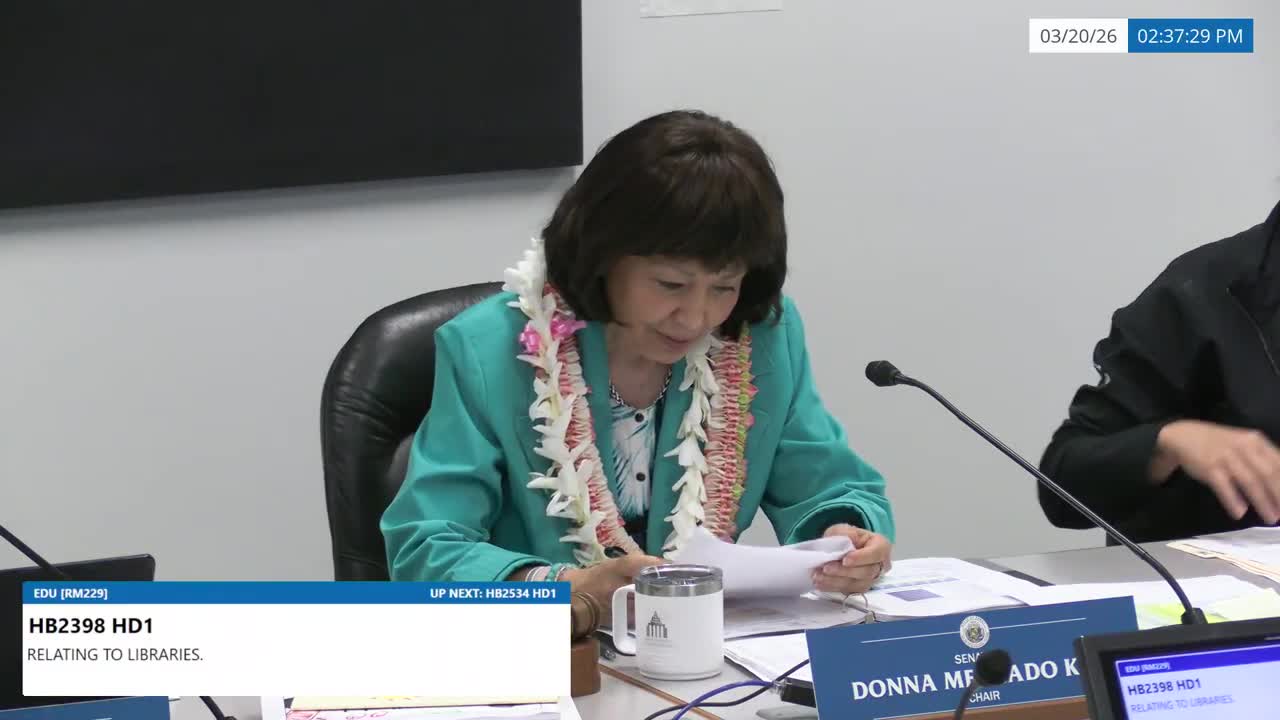 1MIN
Senate Standing Committee on Education
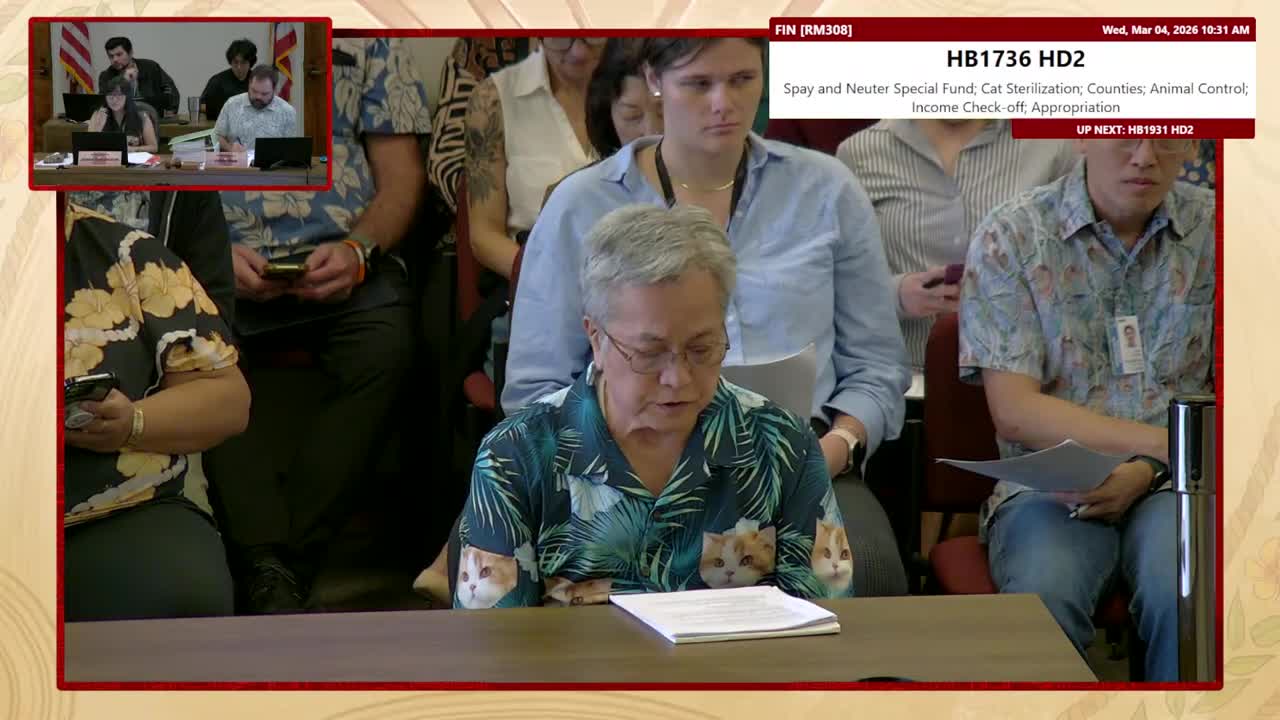 9MIN
House Standing Committee on Finance
 47SEC
House Standing Committee on Human Services & Homelessness
1MIN
House Standing Committee on Human Services & Homelessness
 1MIN
House Standing Committee on Education
 50SEC