HB 1832: DAB; Animal Industry Division; Aquaculture; Biosecurity; Biocontainment Standards; Biological Aquatic Risk-Based Framework; Interagency Coordination; Permitting; Reports; Appropriation
- Session Year: 2025-2026
- House: House
- Latest Version Date: 2026-03-23
Current Status:
Failed
(2026-03-24: Report adopted; Passed Second Reading, as amended (SD 1) and referred to WAM.)
Introduced
In Committee
First Chamber
In Committee
Second Chamber
Final Decking
Enacted
Requires the establishment of a biological aquatic risk-based framework for assessment and approval of aquatic livestock importation and movement. Authorizes the Division of Animal Industry of the Department of Agriculture and Biosecurity to adopt rules implementing species risk categorization, tiered biocontainment standards, per-arrival disease testing, and interagency coordination procedures. Establishes an interagency working group. Requires development of species-specific risk matrices, interagency working group coordination with automatic permit approval timelines, and performance accountability. Establishes an implementation timeline. Requires reports to the Legislature. Appropriates funds. Effective 7/1/2050. (SD1)
Requires the establishment of a biological aquatic risk-based framework for assessment and approval of aquatic livestock importation and movement. Authorizes the Division of Animal Industry of the Department of Agriculture and Biosecurity to adopt rules implementing species risk categorization, tiered biocontainment standards, per-arrival disease testing, and interagency coordination procedures. Establishes an interagency working group. Requires development of species-specific risk matrices, interagency working group coordination with automatic permit approval timelines, and performance accountability. Establishes an implementation timeline. Appropriates funds. Effective 7/1/3000. (HD2)
Requires the establishment of a biological aquatic risk-based framework for assessment and approval of aquatic livestock importation and movement. Authorizes the Division of Animal Industry of the Department of Agriculture and Biosecurity to adopt rules implementing species risk categorization, tiered biocontainment standards, per-arrival disease testing, and interagency coordination procedures. Establishes an interagency working group. Requires development of species-specific risk matrices, interagency working group coordination with automatic permit approval timelines, and performance accountability. Establishes an implementation timeline. Appropriates funds. Effective 7/1/3000. (HD1)
Requires establishment of a biological aquatic risk-based framework for assessment and approval of aquatic livestock importation and movement. Authorizes the Division of Animal Industry of the Department of Agriculture and Biosecurity to adopt rules implementing species risk categorization, tiered biocontainment standards, per-arrival disease testing, and interagency coordination procedures. Establishes an interagency working group. Requires development of species-specific risk matrices, interagency working group coordination with automatic permit approval timelines, and performance accountability. Establishes an implementation timeline. Appropriates moneys.
|
HOUSE OF REPRESENTATIVES |
H.B. NO. |
1832 |
|
THIRTY-THIRD LEGISLATURE, 2026 |
H.D. 2 |
|
|
STATE OF HAWAII |
S.D. 1 |
|
|
|
|
|
|
|
||
|
|
||
A BILL FOR AN ACT
RELATING TO AQUACULTURE.
BE IT ENACTED BY THE LEGISLATURE OF THE STATE OF HAWAII:
SECTION 1. The legislature finds that Hawaii's aquaculture industry serves critical functions for food security, rural economic development, and environmental stewardship. Restorative aquaculture practices, such as seaweed cultivation, bivalve restoration, and integrated multi-trophic systems, also provide measurable benefits to the State, including improved water quality, carbon sequestration, and the recovery of native species.
The legislature further finds that the importation and movement of aquatic livestock within the State pose documented biosecurity risks, including the potential establishment of feral populations, the introduction of novel pathogens affecting endemic species, and disease transmission to wild stocks and adjacent aquaculture operations. Current regulatory frameworks for aquatic livestock assessment are fragmented across multiple agencies with overlapping and sometimes conflicting jurisdictions, resulting in permitting delays, regulatory ambiguity, and insufficient risk-based prioritization.
The legislature acknowledges that international best practices and federal standards employ biological aquatic risk-based frameworks that categorize species by the probability and consequences of establishment, which enables efficient permitting while maintaining biosecurity safeguards. The legislature believes that a similar coordinated, science-based framework for aquatic livestock assessment that incorporates risk-based categorization, biocontainment standards, pre-arrival disease testing, and interagency coordination will help accelerate responsible aquaculture expansion while protecting Hawaii's unique endemic species and wild populations.
The legislature also finds that Act 151, Session Laws of Hawaii 2019, mandates the doubling of local food production by 2030. Meeting this mandate requires expanding sustainable aquaculture as a cornerstone strategy, contingent upon regulatory modernization that balances production incentives with biosecurity protection. The legislature believes that this regulatory modernization should align with the Hawaii aquaculture development program's broader strategic objectives, support for Native Hawaiian cultural practices, and access to federal funding.
Accordingly, the purpose of this Act is to establish and implement a biological aquatic risk-based framework for the assessment and approval of aquatic livestock importation and movement, including the development of:
(1) Biocontainment standards;
(2) Interagency coordination mechanisms; and
(3) Performance accountability to simultaneously advance food security and biosecurity objectives.
SECTION 2. Chapter 141, Hawaii Revised Statutes, is amended as follows:
1. By designating sections 141-51 through 141-59 as subpart A and inserting a title before section 141-51 to read:
"A. Aquaculture Program"
2. By adding a new subpart to part IV to be designated as subpart B and to read:
"B. Aquaculture Biosecurity
§141- Definitions. As used in this subpart:
"Aquaculture" has the same meaning as defined in section 141-51.
"Aquatic livestock" means various species of domestic and non-domestic fish, crustaceans, and mollusks, including finfish and shellfish varieties, that are propagated and raised for food, restorative activities, ornamental purposes, or similar commercial purposes. "Aquatic livestock" includes Native Hawaiian species used for subsistence, cultural, or restoration purposes. "Aquatic livestock" does not include wild-caught organisms unless the organisms are held in aquaculture facilities for breeding or hatchery purposes.
"Biocontainment" means the integration of methods, procedures, facility features, and containment or safety equipment designed to prevent the release of aquatic livestock, infectious agents, and associated pathogens into the environment. "Biocontainment" includes:
(1) Physical containment structures such as tanks, raceways, and net enclosures, with overflow screens, drain covers, and emergency redundancy systems;
(2) Operational procedures, including stock inventory verification, escape response protocols, and regular facility maintenance and inspection;
(3) Disease surveillance and quarantine protocols within facilities;
(4) Sterilization procedures for effluent or recirculated water, where applicable; and
(5) Preventative measures to avoid escapement during feed delivery, cleaning, harvesting, and emergency situations.
"Biological aquatic risk" means the combination of the consequences of an event and the associated likelihood of its occurrence, where biological material is the source of harm, including from escaped aquatic livestock species, associated pathogens, disease organisms, or invasive characteristics.
"Department" means the department of agriculture and biosecurity.
"Division" means the division of animal industry of the department of agriculture and biosecurity.
§141- Aquatic livestock; import assessment and approval process. (a) The division shall develop and implement a biological aquatic risk-based assessment and approval process for the importation and movement of aquatic livestock within the State. The process shall:
(1) Be based on the biological aquatic risk-based framework developed pursuant to section 141-52;
(2) Include pre-arrival disease testing requirements consistent with standards established by the United States Department of Agriculture and National Oceanic and Atmospheric Administration;
(3) Require entry inspections at ports of entry or designated facilities, which shall include, at a minimum, health certifications, species identification, and initial containment verification;
(4) Include post-arrival inspection and quarantine protocols aligned with the assessed risk level;
(5) Require quarantine or depopulation of any aquatic animals as necessary, based on risk assessment or detection of disease or pathogenic organisms; and
(6) Establish interagency coordination procedures, timelines, and lead agency designation to ensure compliance with section 91-13.5 for automatic permit approval requirements.
(b) The department may adopt, amend, or repeal rules pursuant to chapter 91 as necessary to develop and implement the biological aquatic risk-based assessment and approval process.
§141- Permit tracking and reporting. The division shall establish and maintain a permit tracking system documenting all aquatic livestock import and movement applications. The tracking system shall include:
(1) The application receipt date, applicant identity, and the aquatic livestock species;
(2) The biological aquatic risk categorization assigned;
(3) Participating agency review periods and decision dates;
(4) A determination of approval, conditional approval, or denial;
(5) Processing time from initial application to final determination; and
(6) A system for providing reports quarterly to the department and applicable interagency partners that evaluate processing performance and permit approval rates.
§141- Interagency coordination; working group. (a) There is established within the department an interagency working group.
(b) The interagency working group shall comprise the following members or their designees:
(1) The administrator of the division, who shall serve as chair;
(2) The administrator of the division of aquatic resources of the department of land and natural resources;
(3) The deputy director of the department of health's environmental health administration;
(4) The chairperson of the board of land and natural resources;
(5) The director of the office of planning and sustainable development;
(6) The director of the department of planning and permitting, or department of planning, for each county; and
(7) The manager of the aquaculture development program of the department.
(c) The working group shall:
(1) Meet quarterly or as necessary to review pending permit applications and processing timelines;
(2) Develop and implement interagency memoranda of understanding to establish lead agency responsibilities, processing timelines, and dispute resolution procedures;
(3) Ensure that all participating agencies comply with the automatic permit approval provisions of section 91‑13.5;
(4) Identify any regulatory conflicts or statutory gaps impeding aquaculture development and provide any recommendations to the legislature; and
(5) Submit to the legislature an annual report on coordination outcomes and permit processing performance no later than twenty days prior to the convening of each regular session.
§141- Performance metrics. The division shall establish, implement, and track the following performance metrics:
(1) Permit processing efficiency:
(A) By July 1, 2028, reduce the average aquatic livestock import permit processing time to reach a target of twelve to fifteen months;
(B) Achieve one hundred per cent compliance with section 91-13.5; and
(C) Reduce permit denials through early risk identification;
(2) Framework effectiveness:
(A) By June 30, 2028, complete species risk categorization for priority aquaculture species;
(B) Achieve zero documented escapement incidents from certified biocontainment facilities; and
(C) Conduct annual species recategorization reviews based on peer-reviewed research;
(3) Stakeholder satisfaction:
(A) Conduct annual surveys of permit applicants with target satisfaction scores;
(B) Hold quarterly interagency working group meetings; and
(C) Facilitate annual stakeholder forums; and
(4) Environmental outcomes:
(A) Document zero establishment of unintended feral populations from permitted operations;
(B) Maintain baseline monitoring of endemic species; and
(C) Support restoration aquaculture operations demonstrating measurable environmental benefits."
SECTION 3. Section 141-51, Hawaii Revised Statutes, is amended to read as follows:
"§141-51
Definitions. As used in this [part:] subpart:
"Aquaculture" means any form of agriculture devoted to the propagation, cultivation, maintenance, and harvesting of aquatic plants and animals in marine, brackish, and fresh water. The term "aquaculture" does not include species of ornamental marine or freshwater plants and animals that are not utilized for human consumption or bait purposes and that are maintained in closed systems for personal, pet industry, or hobby purposes.
"Chairperson" means the chairperson of the board of agriculture and biosecurity.
"Department" means the department of agriculture and biosecurity.
"Indigenous species" means any aquatic life, wildlife, or land plant species growing or living naturally in Hawaii without having been brought to Hawaii by humans.
"Person" means any natural person or any partnership, corporation, limited liability company, trust, or other type of association."
SECTION 4. Section 141-52, Hawaii Revised Statutes, is amended by amending subsection (a) to read as follows:
"(a) There is established within the department an aquaculture program that shall:
(1) Monitor actions
taken by industry and by federal, state, county, and private agencies in
activities relating to aquaculture, and promote and support worthwhile
aquaculture activities[;] that advance food security, environmental
restoration, cultural perpetuation, and economic development objectives;
(2) Serve as an
information clearinghouse for aquaculture activities[;], including
permitting requirements, species-specific guidance, and technical assistance
resources;
(3) Coordinate
development projects to investigate and solve biological and technical problems
involved in raising selected species with commercial [potential;],
nutritional, restorative, or cultural value;
(4) Actively seek
federal funding for aquaculture activities[;], including competitive
grants under the federal Marine Aquaculture Research for America Act and
related federal programs;
(5) Undertake
activities required to develop and expand the aquaculture industry[; and],
including:
(A) Developing a comprehensive biological aquatic risk-based framework for an assessment and approval process for aquatic livestock that:
(i) Categorizes aquatic livestock species based on the probability and consequences of the establishment of a feral, self-sustaining population;
(ii) Establishes hierarchical risk categories with corresponding approval timelines and biocontainment requirements;
(iii) Incorporates species-specific risk criteria, including native status, invasive characteristics, pathogenic load, and ecological impacts;
(iv) Includes provisions for recategorization based on new scientific evidence or documentation of ecosystem impacts;
(v) Requires a written risk assessment rationale for each species categorization; and
(vi) Is updated annually based on peer-reviewed research, industry experience, and interagency input; and
(B) Developing comprehensive biocontainment standards that establish physical, operational, and monitoring requirements, including:
(i) Facility design specifications appropriate to containment risks and species characteristics;
(ii) Operational protocols for stock management, biosecurity, and emergency response;
(iii) Monitoring and inspection procedures, including frequency and verification protocols;
(iv) Documentation and recordkeeping requirements;
(v) Periodic third-party certification of self‑certification regimes appropriate to risk level; and
(vi) Escalation procedures for biocontainment failures or suspected escapement; and
(6) Perform other functions and activities that may be assigned by law."
SECTION 5. Section 161-6, Hawaii Revised Statutes, is amended to read as follows:
"§161-6
Division of animal industry.
The division of animal industry of the department of agriculture and
biosecurity shall administer this chapter subject to the supervision of the
board. The board may delegate any of its
powers under this chapter, except the power to make rules and regulations[,]
and the development and implementation of a biological aquatic risk-based
framework and biocontainment standards under part IV, subpart B of chapter 141,
or may direct any of its duties to be performed by any appropriate agents,
officers, or employees of the board.
The board may employ on a full or part-time basis veterinarians and poultry inspectors, subject to chapter 76, to carry out a uniform inspection system of poultry or poultry products throughout the State. All poultry inspectors shall be under the supervision and control of a veterinarian employed by the board."
SECTION 6. (a) In collaboration with the interagency working group established under section 2 of this Act, the division of animal industry of the department of agriculture and biosecurity shall develop the biological aquatic risk-based framework and biocontainment standards pursuant to section 2 of this Act within eighteen months of the effective date of this Act; provided that the following timeline shall be adhered to:
(1) Months one through three, initial research phase: Commission a comprehensive literature review examining applicable:
(A) United States Department of Agriculture standards;
(B) National Oceanic and Atmospheric Administration protocols;
(C) International best practices; and
(D) Hawaii-specific risk assessments;
(2) Months four through twelve, framework development phase:
(A) Develop species-specific risk assessment matrices;
(B) Establish risk categorization thresholds;
(C) Develop tiered biocontainment standards; and
(D) Publish a draft framework document and accept oral and written public comments for at least sixty days, and convene at least six public hearings during the sixty-day period; and
(3) Months thirteen through eighteen, finalization phase:
(A) Incorporate public comments received pursuant to paragraph (2);
(B) Finalize species categorizations;
(C) Adopt applicable rules pursuant to chapter 91, Hawaii Revised Statutes;
(D) Develop inspector training programs;
(E) Establish permit application procedures; and
(F) Implement an electronic permit tracking system.
(b) The framework development process under subsection (a) shall address alignment with:
(1) Chapter 195D, Hawaii Revised Statutes;
(2) Section 91-13.5, Hawaii Revised Statutes;
(3) Applicable federal requirements; and
(4) Integration with the Hawaii aquaculture program pursuant to section 141-52, Hawaii Revised Statutes.
SECTION 7. The department of agriculture and biosecurity shall submit a report to the legislature no later than twenty days prior to the convening of the regular session of 2027, and annually thereafter, detailing:
(1) Framework development progress and species categorizations completed;
(2) Permit processing statistics and compliance with statutory timelines;
(3) Biocontainment facility certifications and inspection findings;
(4) Any interagency coordination achievements and regulatory conflicts identified;
(5) Escapement incidents, disease detections, or adverse events;
(6) Stakeholder feedback and satisfaction metrics;
(7) Updated species risk categorizations and the scientific basis for any changes;
(8) Linkage to broader Hawaii aquaculture program objectives; and
(9) Any recommendations for statutory or administrative modifications.
SECTION 8. There is appropriated out of the general revenues of the State of Hawaii the sum of $ or so much thereof as may be necessary for fiscal year 2026-2027 for the division of animal industry of the department of agriculture and biosecurity to:
(1) Implement framework-based permitting operations;
(2) Conduct annual framework updates;
(3) Perform inspections and biocontainment verification; and
(4) Maintain interagency coordination activities.
The sum appropriated shall be expended by the department of agriculture and biosecurity for the purposes of this Act.
SECTION 9. Statutory material to be repealed is bracketed and stricken. New statutory material is underscored.
SECTION 10. This Act shall take effect on July 1, 2050; provided that section 7 shall be repealed on June 30, 2030.
Report Title:
DAB; Animal Industry Division; Aquaculture; Biosecurity; Biocontainment Standards; Biological Aquatic Risk-Based Framework; Interagency Coordination; Permitting; Reports; Appropriation
Description:
Requires the establishment of a biological aquatic risk-based framework for assessment and approval of aquatic livestock importation and movement. Authorizes the Division of Animal Industry of the Department of Agriculture and Biosecurity to adopt rules implementing species risk categorization, tiered biocontainment standards, per-arrival disease testing, and interagency coordination procedures. Establishes an interagency working group. Requires development of species-specific risk matrices, interagency working group coordination with automatic permit approval timelines, and performance accountability. Establishes an implementation timeline. Requires reports to the Legislature. Appropriates funds. Effective 7/1/2050. (SD1)
The summary description of legislation appearing on this page is for informational purposes only and is not legislation or evidence of legislative intent.
|
HOUSE OF REPRESENTATIVES |
H.B. NO. |
1832 |
|
THIRTY-THIRD LEGISLATURE, 2026 |
H.D. 2 |
|
|
STATE OF HAWAII |
|
|
|
|
|
|
|
|
||
|
|
||
A BILL FOR AN ACT
RELATING TO AQUACULTURE.
BE IT ENACTED BY THE LEGISLATURE OF THE STATE OF HAWAII:
SECTION 1. The legislature finds that Hawaii's aquaculture industry serves critical functions for food security, rural economic development, and environmental stewardship. Restorative aquaculture practices, such as seaweed cultivation, bivalve restoration, and integrated multi-trophic systems, also provide measurable benefits to the State, including improved water quality, carbon sequestration, and the recovery of native species.
The legislature further finds that the importation and movement of aquatic livestock within the State pose documented biosecurity risks, including the potential establishment of feral populations, the introduction of novel pathogens affecting endemic species, and disease transmission to wild stocks and adjacent aquaculture operations. Current regulatory frameworks for aquatic livestock assessment are fragmented across multiple agencies with overlapping and sometimes conflicting jurisdictions, resulting in permitting delays, regulatory ambiguity, and insufficient risk-based prioritization.
The legislature acknowledges that international best practices and federal standards employ biological aquatic risk-based frameworks that categorize species by the probability and consequences of establishment, which enables efficient permitting while maintaining biosecurity safeguards. The legislature believes that a similar coordinated, science-based framework for aquatic livestock assessment that incorporates risk-based categorization, biocontainment standards, pre-arrival disease testing, and interagency coordination will help accelerate responsible aquaculture expansion while protecting Hawaii's unique endemic species and wild populations.
The legislature also finds that Act 151, Session Laws of Hawaii 2019, mandates the doubling of local food production by 2030. Meeting this mandate requires expanding sustainable aquaculture as a cornerstone strategy, contingent upon regulatory modernization that balances production incentives with biosecurity protection. The legislature believes that this regulatory modernization should align with the Hawaii aquaculture development program's broader strategic objectives, support for Native Hawaiian cultural practices, and access to federal funding.
Accordingly, the purpose of this Act is to establish and implement a biological aquatic risk-based framework for the assessment and approval of aquatic livestock importation and movement, including the development of:
(1) Biocontainment standards;
(2) Interagency coordination mechanisms; and
(3) Performance accountability to simultaneously advance food security and biosecurity objectives.
SECTION 2. Chapter 141, Hawaii Revised Statutes, is amended as follows:
1. By designating sections 141-51 through 141-59 as subpart A and inserting a title before section 141-51 to read:
"A. Aquaculture Program"
2. By adding a new subpart to part IV to be designated as subpart B and to read:
"B. Aquaculture Biosecurity
§141- Definitions. As used in this subpart:
"Aquaculture" has the same meaning as in section 141-51.
"Aquatic livestock" means various species of domestic and non-domestic fish, crustaceans, and mollusks, including finfish and shellfish varieties, that are propagated and raised for food, restorative activities, ornamental purposes, or similar commercial purposes. "Aquatic livestock" includes native Hawaiian species used for subsistence, cultural, or restoration purposes. "Aquatic livestock" does not include wild-caught organisms unless the organisms are held in aquaculture facilities for breeding or hatchery purposes.
"Biocontainment" means the integration of methods, procedures, facility features, and containment or safety equipment designed to prevent the release of aquatic livestock, infectious agents, and associated pathogens into the environment. "Biocontainment" includes:
(1) Physical containment structures such as tanks, raceways, and net enclosures, with overflow screens, drain covers, and emergency redundancy systems;
(2) Operational procedures, including stock inventory verification, escape response protocols, and regular facility maintenance and inspection;
(3) Disease surveillance and quarantine protocols within facilities;
(4) Sterilization procedures for effluent or recirculated water, where applicable; and
(5) Preventative measures to avoid escapement during feed delivery, cleaning, harvesting, and emergency situations.
"Biological aquatic risk" means the combination of the consequences of an event and the associated likelihood of its occurrence, where biological material is the source of harm, including from escaped aquatic livestock species, associated pathogens, disease organisms, or invasive characteristics.
"Department" means the department of agriculture and biosecurity.
"Division" means the division of animal industry of the department of agriculture and biosecurity.
§141- Aquatic livestock; import assessment and approval process. (a) The division shall develop and implement a biological aquatic risk-based assessment and approval process for the importation and movement of aquatic livestock within the State. The process shall:
(1) Be based on the biological aquatic risk-based framework developed pursuant to section 141-52;
(2) Include pre-arrival disease testing requirements consistent with standards established by the United States Department of Agriculture and National Oceanic and Atmospheric Administration;
(3) Require entry inspections at ports of entry or designated facilities, which shall include, at a minimum, health certifications, species identification, and initial containment verification;
(4) Include post-arrival inspection and quarantine protocols aligned with the assessed risk level;
(5) Require quarantine or depopulation of any aquatic animals as necessary, based on risk assessment or detection of disease or pathogenic organisms; and
(6) Establish interagency coordination procedures, timelines, and lead agency designation to ensure compliance with section 91-13.5 for automatic permit approval requirements.
(b) The department may adopt, amend, or repeal rules pursuant to chapter 91 as necessary to develop and implement the biological aquatic risk-based assessment and approval process.
§141- Permit tracking and reporting. The division shall establish and maintain a permit tracking system documenting all aquatic livestock import and movement applications. The tracking system shall include:
(1) The application receipt date, applicant identity, and the aquatic livestock species;
(2) The biological aquatic risk categorization assigned;
(3) Participating agency review periods and decision dates;
(4) A determination of approval, conditional approval, or denial;
(5) Processing time from initial application to final determination; and
(6) A system for providing reports quarterly to the department and applicable interagency partners that evaluate processing performance and permit approval rates.
§141- Interagency coordination; working group. (a) There is established within the department an interagency working group.
(b) The interagency working group shall comprise the following members or their designees:
(1) The administrator of the division of animal industry of the department of agriculture and biosecurity, who shall serve as chair;
(2) The administrator of the division of aquatic resources of the department of land and natural resources;
(3) The deputy director of the department of health's environmental health administration;
(4) The chairperson of the board of land and natural resources;
(5) The director of the office of planning and sustainable development; and
(6) The director of the department of planning and permitting, or department of planning, for each county.
(c) The working group shall:
(1) Meet quarterly or as necessary to review pending permit applications and processing timelines;
(2) Develop and implement interagency memoranda of understanding to establish lead agency responsibilities, processing timelines, and dispute resolution procedures;
(3) Ensure that all participating agencies comply with the automatic permit approval provisions of section 91‑13.5;
(4) Identify any regulatory conflicts or statutory gaps impeding aquaculture development and provide any recommendations to the legislature; and
(5) Submit to the legislature an annual report on coordination outcomes and permit processing performance no later than twenty days prior to the convening of each regular session.
§141- Performance metrics. The division shall establish, implement, and track the following performance metrics:
(1) Permit processing efficiency:
(A) By July 1, 2028, reduce the average aquatic livestock import permit processing time to reach a target of twelve to fifteen months;
(B) Achieve one hundred per cent compliance with section 91-13.5; and
(C) Reduce permit denials through early risk identification;
(2) Framework effectiveness:
(A) By June 30, 2028, complete species risk categorization for priority aquaculture species;
(B) Achieve zero documented escapement incidents from certified biocontainment facilities; and
(C) Conduct annual species recategorization reviews based on peer-reviewed research;
(3) Stakeholder satisfaction:
(A) Conduct annual surveys of permit applicants with target satisfaction scores;
(B) Hold quarterly interagency working group meetings; and
(C) Facilitate annual stakeholder forums; and
(4) Environmental outcomes:
(A) Document zero establishment of unintended feral populations from permitted operations;
(B) Maintain baseline monitoring of endemic species; and
(C) Support restoration aquaculture operations demonstrating measurable environmental benefits."
SECTION 3. Section 141-51, Hawaii Revised Statutes, is amended to read as follows:
"§141-51
Definitions. As used in this [part:] subpart:
"Aquaculture" means any form of agriculture devoted to the propagation, cultivation, maintenance, and harvesting of aquatic plants and animals in marine, brackish, and fresh water. The term "aquaculture" does not include species of ornamental marine or freshwater plants and animals that are not utilized for human consumption or bait purposes and that are maintained in closed systems for personal, pet industry, or hobby purposes.
"Chairperson" means the chairperson of the board of agriculture and biosecurity.
"Department" means the department of agriculture and biosecurity.
"Indigenous species" means any aquatic life, wildlife, or land plant species growing or living naturally in Hawaii without having been brought to Hawaii by humans.
"Person" means any natural person or any partnership, corporation, limited liability company, trust, or other type of association."
SECTION 4. Section 141-52, Hawaii Revised Statutes, is amended by amending subsection (a) to read as follows:
"(a) There is established within the department an aquaculture program that shall:
(1) Monitor actions
taken by industry and by federal, state, county, and private agencies in
activities relating to aquaculture, and promote and support worthwhile
aquaculture activities[;] that advance food security, environmental
restoration, cultural perpetuation, and economic development objectives;
(2) Serve as an
information clearinghouse for aquaculture activities[;], including
permitting requirements, species-specific guidance, and technical assistance
resources;
(3) Coordinate
development projects to investigate and solve biological and technical problems
involved in raising selected species with commercial [potential;],
nutritional, restorative, or cultural value;
(4) Actively seek
federal funding for aquaculture activities[;], including competitive
grants under the federal Marine Aquaculture Research for America Act and
related federal programs;
(5) Undertake
activities required to develop and expand the aquaculture industry[; and],
including:
(A) Developing a comprehensive biological aquatic risk-based framework for an assessment and approval process for aquatic livestock that:
(i) Categorizes aquatic livestock species based on the probability and consequences of the establishment of a feral, self-sustaining population;
(ii) Establishes hierarchical risk categories with corresponding approval timelines and biocontainment requirements;
(iii) Incorporates species-specific risk criteria, including native status, invasive characteristics, pathogenic load, and ecological impacts;
(iv) Includes provisions for recategorization based on new scientific evidence or documentation of ecosystem impacts;
(v) Requires a written risk assessment rationale for each species categorization; and
(vi) Is updated annually based on peer-reviewed research, industry experience, and interagency input; and
(B) Developing comprehensive biocontainment standards that establish physical, operational, and monitoring requirements, including:
(i) Facility design specifications appropriate to containment risks and species characteristics;
(ii) Operational protocols for stock management, biosecurity, and emergency response;
(iii) Monitoring and inspection procedures, including frequency and verification protocols;
(iv) Documentation and recordkeeping requirements;
(v) Periodic third-party certification of self‑certification regimes appropriate to risk level; and
(vi) Escalation procedures for biocontainment failures or suspected escapement; and
(6) Perform other functions and activities that may be assigned by law."
SECTION 5. Section 161-6, Hawaii Revised Statutes, is amended to read as follows:
"§161-6
Division of animal industry.
The division of animal industry of the department of agriculture and
biosecurity shall administer this chapter subject to the supervision of the
board. The board may delegate any of its
powers under this chapter, except the power to make rules and regulations[,]
and the development and implementation of a biological aquatic risk-based
framework and biocontainment standards under part IV, subpart B of chapter 141,
or may direct any of its duties to be performed by any appropriate agents,
officers, or employees of the board.
The board may employ on a full or part-time basis veterinarians and poultry inspectors, subject to chapter 76, to carry out a uniform inspection system of poultry or poultry products throughout the State. All poultry inspectors shall be under the supervision and control of a veterinarian employed by the board."
SECTION 6. (a) In collaboration with the interagency working group established under section 2 of this Act, the division of animal industry of the department of agriculture and biosecurity shall develop the biological aquatic risk-based framework and biocontainment standards pursuant to section 2 of this Act within eighteen months of the effective date of this Act; provided that the following timeline shall be adhered to:
(1) Months one through three, initial research phase: Commission a comprehensive literature review examining applicable:
(A) United States Department of Agriculture standards;
(B) National Oceanic and Atmospheric Administration protocols;
(C) International best practices; and
(D) Hawaii-specific risk assessments;
(2) Months four through twelve, framework development phase:
(A) Develop species-specific risk assessment matrices;
(B) Establish risk categorization thresholds;
(C) Develop tiered biocontainment standards; and
(D) Publish a draft framework document and accept oral and written public comments for at least sixty days, and convene at least six public hearings during the sixty-day period; and
(3) Months thirteen through eighteen, finalization phase:
(A) Incorporate public comments received pursuant to paragraph (2);
(B) Finalize species categorizations;
(C) Adopt applicable rules pursuant to chapter 91, Hawaii Revised Statutes;
(D) Develop inspector training programs;
(E) Establish permit application procedures; and
(F) Implement an electronic permit tracking system.
(b) The framework development process under subsection (a) shall address alignment with:
(1) Chapter 195D, Hawaii Revised Statutes;
(2) Section 91-13.5, Hawaii Revised Statutes;
(3) Applicable federal requirements; and
(4) Integration with the Hawaii aquaculture program pursuant to section 141-52, Hawaii Revised Statutes.
SECTION 7. The department of agriculture and biosecurity shall submit a report to the legislature no later than twenty days prior to the convening of the regular session of 2027, and annually thereafter, detailing:
(1) Framework development progress and species categorizations completed;
(2) Permit processing statistics and compliance with statutory timelines;
(3) Biocontainment facility certifications and inspection findings;
(4) Any interagency coordination achievements and regulatory conflicts identified;
(5) Escapement incidents, disease detections, or adverse events;
(6) Stakeholder feedback and satisfaction metrics;
(7) Updated species risk categorizations and the scientific basis for any changes;
(8) Linkage to broader Hawaii aquaculture program objectives; and
(9) Any recommendations for statutory or administrative modifications.
SECTION 8. There is appropriated out of the general revenues of the State of Hawaii the sum of $ or so much thereof as may be necessary for fiscal year 2026-2027 for the division of animal industry of the department of agriculture and biosecurity to:
(1) Implement framework-based permitting operations;
(2) Conduct annual framework updates;
(3) Perform inspections and biocontainment verification; and
(4) Maintain interagency coordination activities.
The sum appropriated shall be expended by the department of agriculture and biosecurity for the purposes of this Act.
SECTION 9. Statutory material to be repealed is bracketed and stricken. New statutory material is underscored.
SECTION 10. This Act shall take effect on July 1, 3000; provided that section 7 shall be repealed on June 30, 2030.
Report Title:
DAB; Animal Industry Division; Aquaculture; Biosecurity; Biocontainment Standards; Biological Aquatic Risk-Based Framework; Interagency Coordination; Permitting; Appropriation
Description:
Requires the establishment of a biological aquatic risk-based framework for assessment and approval of aquatic livestock importation and movement. Authorizes the Division of Animal Industry of the Department of Agriculture and Biosecurity to adopt rules implementing species risk categorization, tiered biocontainment standards, per-arrival disease testing, and interagency coordination procedures. Establishes an interagency working group. Requires development of species-specific risk matrices, interagency working group coordination with automatic permit approval timelines, and performance accountability. Establishes an implementation timeline. Appropriates funds. Effective 7/1/3000. (HD2)
The summary description of legislation appearing on this page is for informational purposes only and is not legislation or evidence of legislative intent.
|
HOUSE OF REPRESENTATIVES |
H.B. NO. |
1832 |
|
THIRTY-THIRD LEGISLATURE, 2026 |
H.D. 1 |
|
|
STATE OF HAWAII |
|
|
|
|
|
|
|
|
||
|
|
||
A BILL FOR AN ACT
RELATING TO AQUACULTURE.
BE IT ENACTED BY THE LEGISLATURE OF THE STATE OF HAWAII:
SECTION 1. The legislature finds that Hawaii's aquaculture industry serves critical functions for food security, rural economic development, and environmental stewardship. Restorative aquaculture practices, such as seaweed cultivation, bivalve restoration, and integrated multi-trophic systems, also provide measurable benefits to the State, including improved water quality, carbon sequestration, and the recovery of native species.
The legislature further finds that the importation and movement of aquatic livestock within the State pose documented biosecurity risks, including the potential establishment of feral populations, the introduction of novel pathogens affecting endemic species, and disease transmission to wild stocks and adjacent aquaculture operations. Current regulatory frameworks for aquatic livestock assessment are fragmented across multiple agencies with overlapping and sometimes conflicting jurisdictions, resulting in permitting delays, regulatory ambiguity, and insufficient risk-based prioritization.
The legislature acknowledges that international best practices and federal standards employ biological aquatic risk-based frameworks that categorize species by the probability and consequences of establishment, which enables efficient permitting while maintaining biosecurity safeguards. The legislature believes that a similar coordinated, science-based framework for aquatic livestock assessment that incorporates risk-based categorization, biocontainment standards, pre-arrival disease testing, and interagency coordination will help accelerate responsible aquaculture expansion while protecting Hawaii's unique endemic species and wild populations.
The legislature also finds that Act 151, Session Laws of Hawaii 2019, mandates the doubling of local food production by 2030. Meeting this mandate requires expanding sustainable aquaculture as a cornerstone strategy, contingent upon regulatory modernization that balances production incentives with biosecurity protection. The legislature believes that this regulatory modernization should align with the Hawaii aquaculture development program's broader strategic objectives, support for Native Hawaiian cultural practices, and access to federal funding.
Accordingly, the purpose of this Act is to establish and implement a biological aquatic risk-based framework for the assessment and approval of aquatic livestock importation and movement, including the development of:
(1) Biocontainment standards;
(2) Interagency coordination mechanisms; and
(3) Performance accountability to simultaneously advance food security and biosecurity objectives.
SECTION 2. Chapter 141, Hawaii Revised Statutes, is amended as follows:
1. By designating sections 141-51 through 141-59 as subpart A and inserting a title before section 141-51 to read:
"A. Aquaculture Program"
2. By adding a new subpart to part IV to be designated as subpart B and to read:
"B. Aquaculture Biosecurity
§141- Definitions. As used in this subpart:
"Aquaculture" has the same meaning as in section 141-51.
"Aquatic livestock" means various species of domestic and non-domestic fish, crustaceans, and mollusks, including both finfish and shellfish varieties, that are propagated and raised for food, restorative activities, ornamental purposes, or similar commercial purposes. "Aquatic livestock" includes native Hawaiian species used for subsistence, cultural, or restoration purposes. "Aquatic livestock" does not include wild-caught organisms unless the organisms are held in aquaculture facilities for breeding or hatchery purposes.
"Biocontainment" means the integration of methods, procedures, facility features, and containment or safety equipment designed to prevent the release of aquatic livestock, infectious agents, and associated pathogens into the environment. "Biocontainment" includes:
(1) Physical containment structures such as tanks, raceways, and net enclosures, with overflow screens, drain covers, and emergency redundancy systems;
(2) Operational procedures, including stock inventory verification, escape response protocols, and regular facility maintenance and inspection;
(3) Disease surveillance and quarantine protocols within facilities;
(4) Sterilization procedures for effluent or recirculated water, where applicable; and
(5) Preventative measures to avoid escapement during feed delivery, cleaning, harvesting, and emergency situations.
"Biological aquatic risk" means the combination of the consequences of an event and the associated likelihood of its occurrence, where biological material is the source of harm, including from escaped aquatic livestock species, associated pathogens, disease organisms, or invasive characteristics.
"Department" means the department of agriculture and biosecurity.
"Division" means the division of animal industry of the department of agriculture and biosecurity.
§141- Aquatic livestock; import assessment and approval process. (a) The division shall develop and implement a biological aquatic risk-based assessment and approval process for the importation and movement of aquatic livestock within the State. The process shall:
(1) Be based on the biological aquatic risk-based framework developed pursuant to section 141-52;
(2) Include pre-arrival disease testing requirements consistent with standards established by the United States Department of Agriculture and National Oceanic and Atmospheric Administration;
(3) Require entry inspections at ports of entry or designated facilities, which shall include, at a minimum, health certifications, species identification, and initial containment verification;
(4) Include post-arrival inspection and quarantine protocols aligned with the assessed risk level;
(5) Require quarantine or depopulation of any aquatic animals as necessary, based on risk assessment or detection of disease or pathogenic organisms; and
(6) Establish interagency coordination procedures, timelines, and lead agency designation to ensure compliance with section 91-13.5 for automatic permit approval requirements.
(b) The department may adopt, amend, or repeal rules pursuant to chapter 91 as necessary to develop and implement the biological aquatic risk-based assessment and approval process.
§141- Permit tracking and reporting. The division shall establish and maintain a permit tracking system documenting all aquatic livestock import and movement applications. The tracking system shall include:
(1) The application receipt date, applicant identity, and the aquatic livestock species;
(2) The biological aquatic risk categorization assigned;
(3) Participating agency review periods and decision dates;
(4) A determination of approval, conditional approval, or denial;
(5) Processing time from initial application to final determination; and
(6) A system for providing reports quarterly to the department and applicable interagency partners that evaluate processing performance and permit approval rates.
§141- Interagency coordination; working group. (a) There is established within the department an interagency working group.
(b) The interagency working group shall comprise the following members or their designees:
(1) The administrator of the division of animal industry of the department of agriculture and biosecurity, who shall serve as chair;
(2) The administrator of the division of aquatic resources of the department of land and natural resources;
(3) The deputy director of the department of health's environmental health administration;
(4) The chairperson of the board of land and natural resources;
(5) The director of the office of planning and sustainable development; and
(6) The director of the department of planning and permitting, or department of planning, for each county.
(c) The working group shall:
(1) Meet quarterly or as necessary to review pending permit applications and processing timelines;
(2) Develop and implement interagency memoranda of understanding to establish lead agency responsibilities, processing timelines, and dispute resolution procedures;
(3) Ensure that all participating agencies comply with the automatic permit approval provisions of section 91‑13.5;
(4) Identify any regulatory conflicts or statutory gaps impeding aquaculture development and provide any recommendations to the legislature; and
(5) Submit to the legislature an annual report on coordination outcomes and permit processing performance no later than twenty days prior to the convening of each regular session.
§141- Performance metrics. The division shall establish, implement, and track the following performance metrics:
(1) Permit processing efficiency:
(A) By July 1, 2028, reduce the average aquatic livestock import permit processing time to reach a target of twelve to fifteen months;
(B) Achieve one hundred per cent compliance with section 91-13.5; and
(C) Reduce permit denials through early risk identification;
(2) Framework effectiveness:
(A) By June 30, 2028, complete species risk categorization for priority aquaculture species;
(B) Achieve zero documented escapement incidents from certified biocontainment facilities; and
(C) Conduct annual species recategorization reviews based on peer-reviewed research;
(3) Stakeholder satisfaction:
(A) Conduct annual surveys of permit applicants with target satisfaction scores;
(B) Hold quarterly interagency working group meetings; and
(C) Facilitate annual stakeholder forums; and
(4) Environmental outcomes:
(A) Document zero establishment of unintended feral populations from permitted operations;
(B) Maintain baseline monitoring of endemic species; and
(C) Support restoration aquaculture operations demonstrating measurable environmental benefits."
SECTION 3. Section 141-51, Hawaii Revised Statutes, is amended to read as follows:
"§141-51
Definitions. As used in this [part:] subpart:
"Aquaculture" means any form of agriculture devoted to the propagation, cultivation, maintenance, and harvesting of aquatic plants and animals in marine, brackish, and fresh water. The term "aquaculture" does not include species of ornamental marine or freshwater plants and animals that are not utilized for human consumption or bait purposes and that are maintained in closed systems for personal, pet industry, or hobby purposes.
"Chairperson" means the chairperson of the board of agriculture and biosecurity.
"Department" means the department of agriculture and biosecurity.
"Indigenous species" means any aquatic life, wildlife, or land plant species growing or living naturally in Hawaii without having been brought to Hawaii by humans.
"Person" means any natural person or any partnership, corporation, limited liability company, trust, or other type of association."
SECTION 4. Section 141-52, Hawaii Revised Statutes, is amended by amending subsection (a) to read as follows:
"(a) There is established within the department an aquaculture program that shall:
(1) Monitor actions
taken by industry and by federal, state, county, and private agencies in
activities relating to aquaculture, and promote and support worthwhile
aquaculture activities[;] that advance food security, environmental
restoration, cultural perpetuation, and economic development objectives;
(2) Serve as an
information clearinghouse for aquaculture activities[;], including
permitting requirements, species-specific guidance, and technical assistance
resources;
(3) Coordinate
development projects to investigate and solve biological and technical problems
involved in raising selected species with commercial [potential;],
nutritional, restorative, or cultural value;
(4) Actively seek
federal funding for aquaculture activities[;], including competitive
grants under the federal Marine Aquaculture Research for America Act and
related federal programs;
(5) Undertake
activities required to develop and expand the aquaculture industry[; and],
including:
(A) Developing a comprehensive biological aquatic risk-based framework for an assessment and approval process for aquatic livestock that:
(i) Categorizes aquatic livestock species based on the probability and consequences of the establishment of a feral, self-sustaining population;
(ii) Establishes hierarchical risk categories with corresponding approval timelines and biocontainment requirements;
(iii) Incorporates species-specific risk criteria, including native status, invasive characteristics, pathogenic load, and ecological impacts;
(iv) Includes provisions for recategorization based on new scientific evidence or documentation of ecosystem impacts;
(v) Requires a written risk assessment rationale for each species categorization; and
(vi) Is updated annually based on peer-reviewed research, industry experience, and interagency input; and
(B) Developing comprehensive biocontainment standards that establish physical, operational, and monitoring requirements, including:
(i) Facility design specifications appropriate to containment risks and species characteristics;
(ii) Operational protocols for stock management, biosecurity, and emergency response;
(iii) Monitoring and inspection procedures, including frequency and verification protocols;
(iv) Documentation and recordkeeping requirements;
(v) Periodic third-party certification of self‑certification regimes appropriate to risk level; and
(vi) Escalation procedures for biocontainment failures or suspected escapement; and
(6) Perform other functions and activities that may be assigned by law."
SECTION 5. Section 161-6, Hawaii Revised Statutes, is amended to read as follows:
"§161-6
Division of animal industry.
The division of animal industry of the department of agriculture and
biosecurity shall administer this chapter subject to the supervision of the
board. The board may delegate any of its
powers under this chapter, except the power to make rules and regulations[,]
and the development and implementation of a biological aquatic risk-based
framework and biocontainment standards under part IV, subpart B of chapter 141,
or may direct any of its duties to be performed by any appropriate agents,
officers, or employees of the board.
The board may employ on a full or part-time basis veterinarians and poultry inspectors, subject to chapter 76, to carry out a uniform inspection system of poultry or poultry products throughout the State. All poultry inspectors shall be under the supervision and control of a veterinarian employed by the board."
SECTION 6. (a) In collaboration with the interagency working group established under section 2 of this Act, the division of animal industry of the department of agriculture and biosecurity shall develop the biological aquatic risk-based framework and biocontainment standards pursuant to section 2 of this Act within eighteen months of the effective date of this Act; provided that the following timeline shall be adhered to:
(1) Months one through three, initial research phase: Commission a comprehensive literature review examining applicable:
(A) United States Department of Agriculture standards;
(B) National Oceanic and Atmospheric Administration protocols;
(C) International best practices; and
(D) Hawaii-specific risk assessments;
(2) Months four through twelve, framework development phase:
(A) Develop species-specific risk assessment matrices;
(B) Establish risk categorization thresholds;
(C) Develop tiered biocontainment standards; and
(D) Publish a draft framework document and accept oral and written public comments for at least sixty days, and convene at least six public hearings during the sixty-day period; and
(3) Months thirteen through eighteen, finalization phase:
(A) Incorporate public comments received pursuant to paragraph 2;
(B) Finalize species categorizations;
(C) Adopt applicable rules pursuant to chapter 91, Hawaii Revised Statutes;
(D) Develop inspector training programs;
(E) Establish permit application procedures; and
(F) Implement an electronic permit tracking system.
(b) The framework development process under subsection (a) shall address alignment with:
(1) Chapter 195D, Hawaii Revised Statutes;
(2) Section 91-13.5, Hawaii Revised Statutes;
(3) Applicable federal requirements; and
(4) Integration with the Hawaii aquaculture program pursuant to section 141-52, Hawaii Revised Statutes.
SECTION 7. The department of agriculture and biosecurity shall submit a report to the legislature no later than twenty days prior to the convening of the regular session of 2027, and annually thereafter, detailing:
(1) Framework development progress and species categorizations completed;
(2) Permit processing statistics and compliance with statutory timelines;
(3) Biocontainment facility certifications and inspection findings;
(4) Any interagency coordination achievements and regulatory conflicts identified;
(5) Escapement incidents, disease detections, or adverse events;
(6) Stakeholder feedback and satisfaction metrics;
(7) Updated species risk categorizations and the scientific basis for any changes;
(8) Linkage to broader Hawaii aquaculture program objectives; and
(9) Any recommendations for statutory or administrative modifications.
SECTION 8. There is appropriated out of the general revenues of the State of Hawaii the sum of $ or so much thereof as may be necessary for fiscal year 2026-2027 for the division of animal industry of the department of agriculture and biosecurity to:
(1) Implement framework-based permitting operations;
(2) Conduct annual framework updates;
(3) Perform inspections and biocontainment verification; and
(4) Maintain interagency coordination activities.
The sum appropriated shall be expended by the department of agriculture and biosecurity for the purposes of this Act.
SECTION 9. Statutory material to be repealed is bracketed and stricken. New statutory material is underscored.
SECTION 10. This Act shall take effect on July 1, 3000; provided that section 7 shall be repealed on June 30, 2030.
Report Title:
DAB; Animal Industry Division; Aquaculture; Biosecurity; Biocontainment Standards; Biological Aquatic Risk-Based Framework; Interagency Coordination; Permitting; Appropriation
Description:
Requires the establishment of a biological aquatic risk-based framework for assessment and approval of aquatic livestock importation and movement. Authorizes the Division of Animal Industry of the Department of Agriculture and Biosecurity to adopt rules implementing species risk categorization, tiered biocontainment standards, per-arrival disease testing, and interagency coordination procedures. Establishes an interagency working group. Requires development of species-specific risk matrices, interagency working group coordination with automatic permit approval timelines, and performance accountability. Establishes an implementation timeline. Appropriates funds. Effective 7/1/3000. (HD1)
The summary description of legislation appearing on this page is for informational purposes only and is not legislation or evidence of legislative intent.
|
HOUSE OF REPRESENTATIVES |
H.B. NO. |
1832 |
|
THIRTY-THIRD LEGISLATURE, 2026 |
|
|
|
STATE OF HAWAII |
|
|
|
|
|
|
|
|
||
|
|
||
A BILL FOR AN ACT
Relating to Aquaculture.
BE IT ENACTED BY THE LEGISLATURE OF THE STATE OF HAWAII:
SECTION 1. The legislature finds that Hawaii's aquaculture industry serves critical functions for food security, rural economic development, and environmental stewardship. Restorative aquaculture practices, such as seaweed cultivation, bivalve restoration, and integrated multi-trophic systems, also provide measurable benefits to the State, including improved water quality, carbon sequestration, and the recovery of native species.
The legislature further finds that the importation and movement of aquatic livestock within the State pose documented biosecurity risks, including the potential establishment of feral populations, the introduction of novel pathogens affecting endemic species, and disease transmission to wild stocks and adjacent aquaculture operations. Current regulatory frameworks for aquatic livestock assessment are fragmented across multiple agencies with overlapping and sometimes conflicting jurisdictions, resulting in permitting delays, regulatory ambiguity, and insufficient risk-based prioritization.
The legislature acknowledges that international best practices and federal standards employ biological aquatic risk-based frameworks that categorize species by the probability and consequences of establishment, which enables efficient permitting while maintaining biosecurity safeguards. The legislature believes that a similar coordinated, science-based framework for aquatic livestock assessment that incorporates risk-based categorization, biocontainment standards, pre-arrival disease testing, and interagency coordination will help accelerate responsible aquaculture expansion while protecting Hawaii's unique endemic species and wild populations.
The legislature also finds that Act 151, Session Laws of Hawaii 2019, mandates the doubling of local food production by 2030. Meeting this mandate requires expanding sustainable aquaculture as a cornerstone strategy, contingent upon regulatory modernization that balances production incentives with biosecurity protection. The legislature believes that this regulatory modernization should align with the Hawaii aquaculture development program's broader strategic objectives, support for Native Hawaiian cultural practices, and access to federal funding.
Accordingly, the purpose of this Act is to establish and implement a biological aquatic risk-based framework for the assessment and approval of aquatic livestock importation and movement, including the development of:
(1) Biocontainment standards;
(2) Interagency coordination mechanisms; and
(3) Performance accountability to simultaneously advance food security and biosecurity objectives.
SECTION 2. Chapter 141, Hawaii Revised Statutes, is amended as follows:
1. By designating sections 141-51 through 141-59 as subpart A and inserting a title before section 141-51 to read:
"A. Aquaculture Program"
2. By adding a new subpart to part IV to be designated as subpart B and to read:
"B. Aquaculture Biosecurity
§141- Definitions. As used in this subpart:
"Aquatic livestock" means various species of domestic and non-domestic fish, crustaceans, and mollusks, including both finfish and shellfish varieties, that are propagated and raised for food, restorative activities, ornamental purposes, or similar commercial purposes. "Aquatic livestock" includes native Hawaiian species used for subsistence, cultural, or restoration purposes. "Aquatic livestock" does not include wild-caught organisms unless the organisms are held in aquaculture facilities for breeding or hatchery purposes.
"Biocontainment" means the integration of methods, procedures, facility features, and containment or safety equipment designed to prevent the release of aquatic livestock, infectious agents, and associated pathogens into the environment. "Biocontainment" includes:
(1) Physical containment structures such as tanks, raceways, and net enclosures, with overflow screens, drain covers, and emergency redundancy systems;
(2) Operational procedures, including stock inventory verification, escape response protocols, and regular facility maintenance and inspection;
(3) Disease surveillance and quarantine protocols within facilities;
(4) Sterilization procedures for effluent or recirculated water, where applicable; and
(5) Preventative measures to avoid escapement during feed delivery, cleaning, harvesting, and emergency situations.
"Biological aquatic risk" means the combination of the consequences of an event and the associated likelihood of its occurrence, where biological material is the source of harm, including from escaped aquatic livestock species, associated pathogens, disease organisms, or invasive characteristics.
"Department" means the department of agriculture and biosecurity.
"Division" means the division of animal industry of the department of agriculture and biosecurity.
§141- Aquatic livestock; import assessment and approval process. (a) The division shall develop and implement a biological aquatic risk-based assessment and approval process for the importation and movement of aquatic livestock within the State. The process shall:
(1) Be based on the biological aquatic risk-based framework developed pursuant to section 141-52;
(2) Include pre-arrival disease testing requirements consistent with standards established by the United States Department of Agriculture and National Oceanic and Atmospheric Administration;
(3) Require entry inspections at ports of entry or designated facilities, which shall include, at a minimum, health certifications, species identification, and initial containment verification;
(4) Include post-arrival inspection and quarantine protocols aligned with the assessed risk level;
(5) Require quarantine or depopulation of any aquatic animals as necessary, based on risk assessment or detection of disease or pathogenic organisms; and
(6) Establish interagency coordination procedures, timelines, and lead agency designation to ensure compliance with section 91-13.5 for automatic permit approval requirements.
(b) The department may adopt, amend, or repeal rules pursuant to chapter 91 as necessary to develop and implement the biological aquatic risk-based assessment and approval process.
§141- Permit tracking and reporting. The division shall establish and maintain a permit tracking system documenting all aquatic livestock import and movement applications. The tracking system shall include:
(1) The application receipt date, applicant identity, and the aquatic livestock species;
(2) The biological aquatic risk categorization assigned;
(3) Participating agency review periods and decision dates;
(4) A determination of approval, conditional approval, or denial;
(5) Processing time from initial application to final determination; and
(6) A system for providing reports quarterly to the department and applicable interagency partners that evaluate processing performance and permit approval rates.
§141- Interagency coordination. (a) There is established within the department an interagency working group.
(b) The interagency working group shall comprise the following members or their designees:
(1) The administrator of the division of animal industry of the department of agriculture and biosecurity, who shall serve as chair;
(2) The administrator of the division of aquatic resources of the department of land and natural resources;
(3) The deputy director of the department of health's environmental health administration;
(4) The chairperson of the board of land and natural resources;
(5) The director of the office of planning and sustainable development; and
(6) The director of the department of planning and permitting, or department of planning, for each county.
(c) The working group shall:
(1) Meet quarterly or as necessary to review pending permit applications and processing timelines;
(2) Develop and implement interagency memoranda of understanding to establish lead agency responsibilities, processing timelines, and dispute resolution procedures;
(3) Ensure that all participating agencies comply with the automatic permit approval provisions of section 91‑13.5;
(4) Identify any regulatory conflicts or statutory gaps impeding aquaculture development and provide any recommendations to the legislature; and
(5) Submit to the legislature an annual report on coordination outcomes and permit processing performance.
§141- Performance metrics. The division shall establish, implement, and track the following performance metrics:
(1) Permit processing efficiency:
(A) By July 1, 2028, reduce the average aquatic livestock import permit processing timeline to reach a target of twelve to fifteen months;
(B) Achieve one hundred per cent compliance with section 91-13.5, Hawaii Revised Statutes; and
(C) Reduce permit denials through early risk identification;
(2) Framework effectiveness:
(A) By June 30, 2028, complete species risk categorization for priority aquaculture species;
(B) Achieve zero documented escapement incidents from certified biocontainment facilities; and
(C) Conduct annual species recategorization reviews based on peer-reviewed research;
(3) Stakeholder satisfaction:
(A) Conduct annual surveys of permit applicants with target satisfaction scores;
(B) Hold quarterly interagency working group meetings; and
(C) Facilitate annual stakeholder forums; and
(4) Environmental outcomes:
(A) Document zero establishment of unintended feral populations from permitted operations;
(B) Maintain baseline monitoring of endemic species; and
(C) Support restoration aquaculture operations demonstrating measurable environmental benefits."
SECTION 3. Section 141-52, Hawaii Revised Statutes, is amended by amending subsection (a) to read as follows:
"(a) There is established within the department an aquaculture program that shall:
(1) Monitor actions
taken by industry and by federal, state, county, and private agencies in
activities relating to aquaculture, and promote and support worthwhile
aquaculture activities[;] that advance food security, environmental
restoration, cultural perpetuation, and economic development objectives;
(2) Serve as an
information clearinghouse for aquaculture activities[;], including permitting
requirements, species-specific guidance, and technical assistance resources;
(3) Coordinate
development projects to investigate and solve biological and technical problems
involved in raising selected species with commercial [potential;],
nutritional, restorative, or cultural value;
(4) Actively seek
federal funding for aquaculture activities[;], including competitive
grants under the federal Marine Aquaculture Research for America Act and
related federal programs;
(5) Undertake
activities required to develop and expand the aquaculture industry[; and],
including:
(A) Developing a comprehensive biological aquatic risk-based framework for an assessment and approval process for aquatic livestock that:
(i) Categorizes aquatic livestock species based on the probability and consequences of the establishment of a feral, self-sustaining population;
(ii) Establishes hierarchical risk categories with corresponding approval timelines and biocontainment requirements;
(iii) Incorporates species-specific risk criteria, including native status, invasive characteristics, pathogenic load, and ecological impacts;
(iv) Includes provisions for recategorization based on new scientific evidence or documentation of ecosystem impacts;
(v) Requires a written risk assessment rationale for each species categorization; and
(vi) Is updated annually based on peer-reviewed research, industry experience, and interagency input; and
(B) Developing comprehensive biocontainment standards that establish physical, operational, and monitoring requirements, including:
(i) Facility design specifications appropriate to containment risks and species characteristics;
(ii) Operational protocols for stock management, biosecurity, and emergency response;
(iii) Monitoring and inspection procedures, including frequency and verification protocols;
(iv) Documentation and recordkeeping requirements;
(v) Periodic third-party certification of self‑certification regimes appropriate to risk level; and
(vi) Escalation procedures for biocontainment failures or suspected escapement; and
(6) Perform other functions and activities that may be assigned by law."
SECTION 4. Section 161-6, Hawaii Revised Statutes, is amended to read as follows:
"§161-6
Division of animal industry.
The division of animal industry of the department of agriculture and
biosecurity shall administer this chapter subject to the supervision of the
board. [The] Except for the development
and implementation of biological aquatic risk-based framework and
biocontainment standards under part IV, subpart B of chapter 141, the board
may delegate any of its powers under this chapter, except the power to make
rules and regulations, or may direct any of its duties to be performed by any
appropriate agents, officers, or employees of the board.
The board may employ on a full or part-time basis veterinarians and poultry inspectors, subject to chapter 76, to carry out a uniform inspection system of poultry or poultry products throughout the State. All poultry inspectors shall be under the supervision and control of a veterinarian employed by the board."
SECTION 5. (a) In collaboration with the interagency working group established under section 2 of this Act, the division of animal industry of the department of agriculture and biosecurity shall develop the biological aquatic risk-based framework and biocontainment standards pursuant to section 2 of this Act within eighteen months of the effective date of this Act; provided that the following timeline shall be adhered to:
(1) Months one through three, initial research phase: Commission a comprehensive literature review examining applicable:
(A) United States Department of Agriculture standards;
(B) National Oceanic and Atmospheric Administration protocols;
(C) International best practices; and
(D) Hawaii-specific risk assessments;
(2) Months four through twelve, framework development phase:
(A) Develop species-specific risk assessment matrices;
(B) Establish risk categorization thresholds;
(C) Develop tiered biocontainment standards; and
(D) Publish a draft framework document and accept oral and written public comments for at least sixty days, and convene at least six public hearings during the sixty-day period; and
(3) Months thirteen through eighteen, finalization phase:
(A) Incorporate public comments received pursuant to paragraph 2;
(B) Finalize species categorizations;
(C) Adopt applicable rules pursuant to chapter 91;
(D) Develop inspector training programs;
(E) Establish permit application procedures; and
(F) Implement an electronic permit tracking system.
(b) The framework development process under subsection (a) shall address alignment with:
(1) Chapter 195D, Hawaii Revised Statutes;
(2) Section 91-13.5, Hawaii Revised Statutes;
(3) Applicable federal requirements; and
(4) Integration with the Hawaii aquaculture program pursuant to section 141-52, Hawaii Revised Statutes.
SECTION 6. The department of agriculture and biosecurity shall submit a report to the legislature no later than twenty days prior to the convening of the regular session of 2027, and annually thereafter, detailing:
(1) Framework development progress and species categorizations completed;
(2) Permit processing statistics and compliance with statutory timelines;
(3) Biocontainment facility certifications and inspection findings;
(4) Any interagency coordination achievements and regulatory conflicts identified;
(5) Escapement incidents, disease detections, or adverse events;
(6) Stakeholder feedback and satisfaction metrics;
(7) Updated species risk categorizations and the scientific basis for any changes;
(8) Linkage to broader Hawaii aquaculture program objectives; and
(9) Any recommendations for statutory or administrative modifications.
SECTION 7. There is appropriated out of the general revenues of the State of Hawaii the sum of $2,000,000 or so much thereof as may be necessary for fiscal year 2026-2027 for the division of animal industry of the department of agriculture and biosecurity to:
(1) Implement framework-based permitting operations;
(2) Conduct annual framework updates;
(3) Perform inspections and biocontainment verification; and
(4) Maintain interagency coordination activities.
The sum appropriated shall be expended by the department of agriculture and biosecurity for the purposes of this Act.
SECTION 8. Statutory material to be repealed is bracketed and stricken. New statutory material is underscored.
SECTION 9. This Act shall take effect on July 1, 2026; provided that section 6 shall be repealed on June 30, 2030.
|
INTRODUCED BY: |
_____________________________ |
|
|
|
Report Title:
DAB; Animal Industry Division; Aquaculture; Biosecurity; Biocontainment Standards; Biological Aquatic Risk-Based Framework; Interagency Coordination; Permitting; Appropriation
Description:
Requires establishment of a biological aquatic risk-based framework for assessment and approval of aquatic livestock importation and movement. Authorizes the Division of Animal Industry of the Department of Agriculture and Biosecurity to adopt rules implementing species risk categorization, tiered biocontainment standards, per-arrival disease testing, and interagency coordination procedures. Establishes an interagency working group. Requires development of species-specific risk matrices, interagency working group coordination with automatic permit approval timelines, and performance accountability. Establishes an implementation timeline. Appropriates moneys.
The summary description of legislation appearing on this page is for informational purposes only and is not legislation or evidence of legislative intent.
|
Date
|
Status
|
|---|---|
| Mar 24, 2026 | Report adopted; Passed Second Reading, as amended (SD 1) and referred to WAM. |
| Mar 24, 2026 | Reported from AEN (Stand. Com. Rep. No. 3152) with recommendation of passage on Second Reading, as amended (SD 1) and referral to WAM. |
| Mar 18, 2026 | The committee(s) on AEN recommend(s) that the measure be PASSED, WITH AMENDMENTS. The votes in AEN were as follows: 5 Aye(s): Senator(s) Gabbard, Richards, DeCoite, Rhoads, Awa; Aye(s) with reservations: none ; 0 No(es): none; and 0 Excused: none. |
| Mar 13, 2026 | The committee(s) on AEN has scheduled a public hearing on 03-18-26 3:30PM; Conference Room 224 & Videoconference. |
| Mar 12, 2026 | Referred to AEN, WAM. |
| Mar 12, 2026 | Passed First Reading. |
| Mar 12, 2026 | Received from House (Hse. Com. No. 294). |
| Mar 10, 2026 | Passed Third Reading as amended in HD 2 with none voting aye with reservations; none voting no (0) and Representative(s) Kong, Pierick excused (2). Transmitted to Senate. |
| Mar 6, 2026 | Forty-eight (48) hours notice Tuesday, 03-10-26. |
| Mar 6, 2026 | Reported from FIN (Stand. Com. Rep. No. 1028-26) as amended in HD 2, recommending passage on Third Reading. |
| Feb 23, 2026 | The committee on FIN recommend that the measure be PASSED, WITH AMENDMENTS. The votes were as follows: 16 Ayes: Representative(s) Todd, Takenouchi, Hartsfield, Hussey, Keohokapu-Lee Loy, Kitagawa, Kusch, Lee, M., Miyake, Morikawa, Perruso, Templo, Yamashita, Alcos, Gedeon, Reyes Oda; Ayes with reservations: none; Noes: none; and Excused: none. |
| Feb 19, 2026 | Bill scheduled to be heard by FIN on Monday, 02-23-26 2:00PM in House conference room 308 VIA VIDEOCONFERENCE. |
| Feb 18, 2026 | Passed Second Reading as amended in HD 1 and referred to the committee(s) on FIN with none voting aye with reservations; none voting no (0) and none excused (0). |
| Feb 18, 2026 | Reported from AGR (Stand. Com. Rep. No. 385-26) as amended in HD 1, recommending passage on Second Reading and referral to FIN. |
| Feb 11, 2026 | The committee on AGR recommend that the measure be PASSED, WITH AMENDMENTS. The votes were as follows: 5 Ayes: Representative(s) Chun, Kusch, Kahaloa, Perruso, Matsumoto; Ayes with reservations: none; Noes: none; and 2 Excused: Representative(s) Lowen, Quinlan. |
| Feb 6, 2026 | Bill scheduled to be heard by AGR on Wednesday, 02-11-26 9:30AM in House conference room 325 VIA VIDEOCONFERENCE. |
| Jan 26, 2026 | Referred to AGR, FIN, referral sheet 1 |
| Jan 23, 2026 | Introduced and Pass First Reading. |
| Jan 22, 2026 | Pending introduction. |
|
Date
|
Description
|
Location
|
Votes
|
|
|---|---|---|---|---|
| Mar 18, 2026 | The committee(s) on AEN recommend(s) that the measure be PASSED, WITH AMENDMENTS | Senate Standing Committee on Agriculture and Environment |
Passed |
|
| Mar 10, 2026 | Third Reading | House Floor |
Passed |
|
| Feb 23, 2026 | The committee on FIN recommend that the measure be PASSED, WITH AMENDMENTS | House Standing Committee on Finance |
Passed |
|
| Feb 11, 2026 | The committee on AGR recommend that the measure be PASSED, WITH AMENDMENTS | House Standing Committee on Agriculture & Food Systems |
Passed |
This list shows positions taken on this bill by organizations on the date displayed, which is linked to the original source.
Positions by individuals are not included.
|
Organization
|
Position
|
Date
|
|---|---|---|
| Board of Agriculture and Biosecurity | *** Support | Mar 18, 2026 |
| Coordinating Group on Alien Pest Species | ** Support | |
| Department of Agriculture & Biosecurity | *** Support | Mar 18, 2026 |
| Department of Land and Natural Resources | *** Support | Mar 18, 2026 |
| Hawai'i Farm Bureau | *** Support | Mar 18, 2026 |
| Hawaii Aquaculture and Aquaponics Association | ** Against | |
| Hawaiʻi Food+ Policy | ** Support | |
| Hawaiʻi Farm Bureau | ** Support |
STAND. COM. REP. NO. 1028-26
Honolulu, Hawaii
, 2026
RE: H.B. No. 1832
H.D. 2
Honorable Nadine K. Nakamura
Speaker, House of Representatives
Thirty-Third State Legislature
Regular Session of 2026
State of Hawaii
Madame:
Your Committee on Finance, to which was referred H.B. No. 1832, H.D. 1, entitled:
"A BILL FOR AN ACT RELATING TO AQUACULTURE,"
begs leave to report as follows:
The purpose of this measure is to:
(1) Establish a biological aquatic risk-based framework for the assessment and approval of aquatic livestock importation and movement;
(2) Establish an Interagency Working Group to assist in implementing the framework between agencies; and
(3) Appropriate funds for the Department of Agriculture and Biosecurity's Division of Animal Industry to:
(A) Implement framework-based permitting operations;
(B) Conduct annual framework updates;
(C) Perform inspections and biocontainment verification; and
(D) Maintain interagency coordination activities.
Your Committee received testimony in support of this measure from the Department of Agriculture and Biosecurity; Department of Land and Natural Resources; Hawaiʻi Farm Bureau; Hawaiʻi Food+ Policy; and two individuals. Your Committee received testimony in opposition to this measure from the Hawaii Aquaculture and Aquaponics Association and two individuals.
Your Committee has amended this measure by making technical, nonsubstantive amendments for the purposes of clarity, consistency, and style.
As affirmed by the record of votes of the members of your Committee on Finance that is attached to this report, your Committee is in accord with the intent and purpose of H.B. No. 1832, H.D. 1, as amended herein, and recommends that it pass Third Reading in the form attached hereto as H.B. No. 1832, H.D. 2.
Respectfully submitted on behalf of the members of the Committee on Finance,
|
|
|
____________________________ CHRIS TODD, Chair |
|
|
|
|
STAND. COM. REP. NO. 385-26
Honolulu, Hawaii
, 2026
RE: H.B. No. 1832
H.D. 1
Honorable Nadine K. Nakamura
Speaker, House of Representatives
Thirty-Third State Legislature
Regular Session of 2026
State of Hawaii
Madame:
Your Committee on Agriculture & Food Systems, to which was referred H.B. No. 1832 entitled:
"A BILL FOR AN ACT RELATING TO AQUACULTURE,"
begs leave to report as follows:
The purpose of this measure is to:
(1) Establish a biological aquatic risk-based framework for the assessment and approval of aquatic livestock importation and movement;
(2) Establish an Interagency Working Group to assist in implementing the framework between agencies; and
(3) Appropriate funds for the Department of Agriculture and Biosecurity's Division of Animal Industry to:
(A) Implement framework-based permitting operations;
(B) Conduct annual framework updates;
(C) Perform inspections and biocontainment verification; and
(D) Maintain interagency coordination activities.
Your Committee received testimony in support of this measure from the Department of Land and Natural Resources; Department of Agriculture and Biosecurity; Hawaiʻi Farm Bureau; Hawaiʻi Food+ Policy; Coordinating Group on Alien Pest Species; and one individual. Your Committee received comments on this measure from the Hawaii Aquaculture and Aquaponics Association.
Your Committee finds that Hawaii's aquaculture industry plays an essential role in ensuring food security, promoting rural economic development, and practicing environmental stewardship. Restorative aquaculture techniques yield tangible benefits for the State, such as enhanced water quality, carbon sequestration, and recovery of native species.
Your Committee recognizes that the importation and movement of aquatic livestock within the State present verified biosecurity risks, including the potential establishment of feral populations, introduction of new pathogens affecting endemic species, and disease transmission to wild stocks and adjacent aquaculture operations. The existing regulatory frameworks for assessing aquatic livestock are distributed across multiple agencies with overlapping and, at times, conflicting jurisdictions. This fragmentation leads to permitting delays, regulatory uncertainty, and inadequate risk-based prioritization.
Your Committee notes that international best practices and federal standards utilize biological aquatic risk-based frameworks, categorizing species based on the likelihood and impact of establishment, which enables efficient permitting while maintaining robust biosecurity measures. Your Committee believes that a similarly coordinated, science-driven framework for aquatic livestock assessment that incorporates risk-based categorization, biocontainment standards, pre-arrival disease testing, and interagency cooperation will facilitate responsible aquaculture expansion and safeguard Hawaii's unique endemic species and wild populations.
Your Committee has amended this measure by:
(1) Requiring the Interagency Working Group to submit its annual report to the Legislature no later than twenty days prior to the convening of each regular session;
(2) Changing the appropriation to an unspecified amount;
(3) Changing the effective date to July 1, 3000, to encourage further discussion; and
(4) Making technical, nonsubstantive amendments for the purposes of clarity, consistency, and style.
Your Committee respectfully requests your Committee on Finance, should it deliberate on this measure, to consider an appropriation amount of $2,000,000 for the Department of Agriculture and Biosecurity's Division of Animal Industry.
As affirmed by the record of votes of the members of your Committee on Agriculture & Food Systems that is attached to this report, your Committee is in accord with the intent and purpose of H.B. No. 1832, as amended herein, and recommends that it pass Second Reading in the form attached hereto as H.B. No. 1832, H.D. 1, and be referred to your Committee on Finance.
Respectfully submitted on behalf of the members of the Committee on Agriculture & Food Systems,
|
|
|
____________________________ CORY CHUN, Chair |
|
|
|
|
|
Date
|
Testimony PDF
|
|---|---|
| Mar 18, 2026 | HB1832_HD2_TESTIMONY_AEN_03-18-26_.PDF |
| Feb 24, 2026 | HB1832_HD1_TESTIMONY_FIN_02-23-26_.PDF |
| Feb 11, 2026 | HB1832_TESTIMONY_AGR_02-11-26_.PDF |
Discussed in Hearing
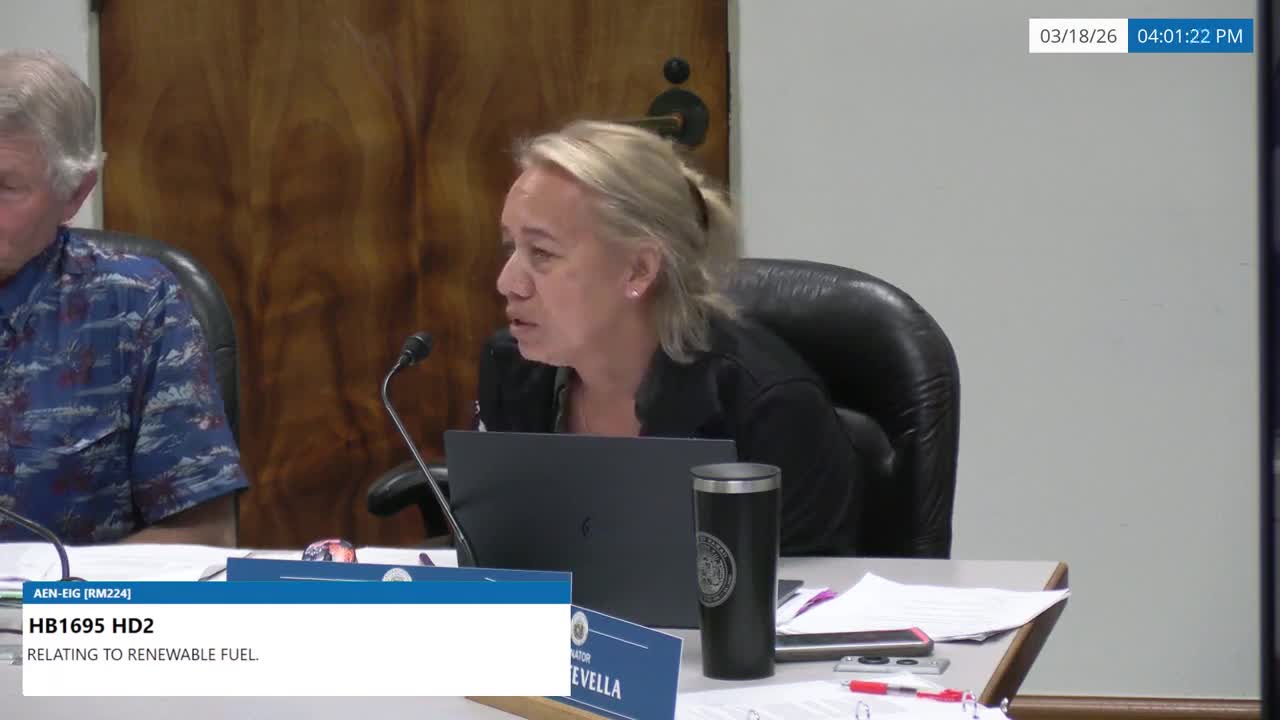 1MIN
Senate Standing Committee on Agriculture and Environment
1MIN
Senate Standing Committee on Housing
1MIN
Senate Standing Committee on Energy and Intergovernmental Affairs
38SEC
Senate Standing Committee on Agriculture and Environment
38SEC
Senate Standing Committee on Housing
38SEC
Senate Standing Committee on Energy and Intergovernmental Affairs
 1MIN
House Standing Committee on Finance
 1MIN
House Standing Committee on Finance
Bill Author