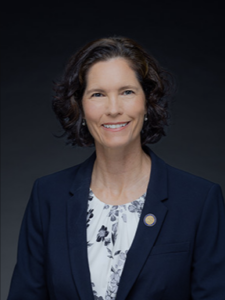
HB 1948: Personal Care Products; Small Plastic Containers; Lodging Establishments; Prohibition; Fines
- Session Year: 2025-2026
- House: House
- Latest Version Date: 2026-03-06
Current Status:
Failed
(2026-03-12: Referred to EDT/AEN, CPN/JDC.)
Introduced
In Committee
First Chamber
In Committee
Second Chamber
Final Decking
Enacted
Prohibits lodging establishments from providing personal care products in small plastic containers within sleeping room accommodations, any space within sleeping room accommodations, or bathrooms used by the public or guests. Establishes civil penalties. Effective 7/1/3000. (HD2)
Prohibits lodging establishments from providing personal care products in small plastic containers within sleeping room accommodations, any space within sleeping room accommodations, or bathrooms used by the public or guests. Establishes civil penalties. Effective 7/1/3000. (HD1)
Prohibits lodging establishments from providing personal care products in small plastic containers within sleeping room accommodations, any space within sleeping room accommodations, or bathrooms used by the public or guests. Establishes civil penalties.
|
HOUSE OF REPRESENTATIVES |
H.B. NO. |
1948 |
|
THIRTY-THIRD LEGISLATURE, 2026 |
H.D. 2 |
|
|
STATE OF HAWAII |
|
|
|
|
|
|
|
|
||
|
|
||
A BILL FOR AN ACT
RELATING TO SINGLE-USE PLASTICS.
BE IT ENACTED BY THE LEGISLATURE OF THE STATE OF HAWAII:
SECTION 1. The legislature finds that single-use plastics are goods made from fossil fuel-based petrochemicals that are intended to be disposed of shortly after use. Single-use plastics are an example of a "throwaway culture" that prioritizes convenience over durability and sustainability. Globally, approximately three hundred million tons of plastic are produced each year, even though less than ten per cent of plastics ever produced have been recycled. Instead, discarded plastics wind up in landfills, incinerators, and the environment, ultimately breaking apart into tiny toxic pieces called microplastics that contaminate water, food, and even the air. Plastic pollution is a major threat to the oceans, the environment, and human health. Furthermore, according to a 2021 report from Beyond Plastics, the plastic industry is on track to overtake coal as a source of atmospheric greenhouse gas emissions.
The legislature further finds that hotels and other lodging establishments frequently provide complimentary toiletries that are packaged in small plastic containers that, due to their size and where they are provided, seem intended to be disposed of shortly after use. This is not consistent with the Hawaii tourism authority's strategic plan, which cites the goals of promoting sustainable tourism, preserving natural resources, and advocating for responsible tourism in Hawaii that minimizes negative environmental impacts. Some hotels have already transitioned away from single-use plastics and instead provide bulk dispensers for personal-care products or complimentary toiletries in packaging made of sustainable materials. Therefore, the legislature finds that there is an opportunity to reduce harmful plastic waste in Hawaii while also making the visitor industry more sustainable. The legislature additionally finds that California and New York have already passed laws to do this.
Accordingly, the purpose of this Act is to prohibit lodging establishments in the State from providing small plastic containers of personal care products to any person staying in a sleeping room accommodation, in any space within the sleeping room accommodation, or in any bathroom used by the public or guests.
SECTION 2. Chapter 342H, Hawaii Revised Statutes, is amended by adding a new section to be appropriately designated and to read as follows:
"§342H- Personal care products; small plastic containers; lodging establishments; prohibited. (a) Beginning on:
(1) January 1, 2027, for lodging establishments with more than fifty sleeping room accommodations; and
(2) January 1, 2029, for lodging establishments with fifty or fewer sleeping room accommodations,
no lodging establishment shall provide a small plastic container containing a personal care product to any person staying in a sleeping room accommodation, in any space within the sleeping room accommodation, or in any bathroom used by the public or guests.
(b) A lodging establishment may:
(1) Use bulk dispensers of personal care products; and
(2) Provide personal care products packaged in containers made from non-plastic materials to a person, upon request, at a place other than:
(A) A sleeping room accommodation;
(B) A space within the sleeping room accommodation; or
(C) Within any bathroom used by the public or guests.
(c) The department may inspect the sleeping room accommodations and any bathroom used by the public or guests in each lodging establishment and shall issue a citation for any violation of subsection (a). Notwithstanding section 342H-9, any lodging establishment that violates subsection (a) shall be subject to a civil penalty of $500 for the first violation and $2,000 for a second or subsequent violation. Each day of continued violation under this section shall constitute a separate and distinct offense for which the lodging establishment may be penalized.
The attorney general may bring an action in the circuit environmental court to impose a civil penalty pursuant to this subsection.
(d) Nothing in this section shall prohibit a county from enacting ordinances more stringent than this section.
(e) The department may adopt rules pursuant to chapter 91 to implement this section.
(f) As used in this section:
"Lodging establishment" means an establishment that contains one or more sleeping room accommodations that are rented or otherwise provided to the public, including a hotel, condominium hotel, motel, resort, bed-and-breakfast home, transient vacation rental, transient accommodation, or hosted rental. "Lodging establishment" does not include a hospital, nursing home, residential retirement community, prison, jail, correctional facility, homeless shelter, boarding school, worker housing, or long-term rental home.
"Personal care product" means shampoo, hair conditioner, or bath soap.
"Plastic" means any synthetic material made from organic polymers, such as polyethylene, polyvinyl chloride, or nylon, that can be molded into shape while soft and then set into a rigid or slightly elastic form. "Plastic" includes all materials identified with resin codes one to seven, as provided in section 342H-42.
"Small plastic container" means a plastic bottle or container that has a capacity of six ounces or less.
"Transient accommodations" has the same meaning as in section 237D-1."
SECTION 3. This Act does not affect rights and duties that matured, penalties that were incurred, and proceedings that were begun before its effective date.
SECTION 4. New statutory material is underscored.
SECTION 5. This Act shall take effect on July 1, 3000.
Report Title:
Personal Care Products; Small Plastic Containers; Lodging Establishments; Prohibition; Fines
Description:
Prohibits lodging establishments from providing personal care products in small plastic containers within sleeping room accommodations, any space within sleeping room accommodations, or bathrooms used by the public or guests. Establishes civil penalties. Effective 7/1/3000. (HD2)
The summary description of legislation appearing on this page is for informational purposes only and is not legislation or evidence of legislative intent.
|
HOUSE OF REPRESENTATIVES |
H.B. NO. |
1948 |
|
THIRTY-THIRD LEGISLATURE, 2026 |
H.D. 1 |
|
|
STATE OF HAWAII |
|
|
|
|
|
|
|
|
||
|
|
||
A BILL FOR AN ACT
RELATING TO SINGLE-USE PLASTICS.
BE IT ENACTED BY THE LEGISLATURE OF THE STATE OF HAWAII:
SECTION 1. The legislature finds that single-use plastics are goods made from fossil fuel-based petrochemicals that are intended to be disposed of shortly after use. Single-use plastics are an example of a "throwaway culture" that prioritizes convenience over durability and sustainability. Globally, approximately three hundred million tons of plastic are produced each year, even though less than ten per cent of plastics ever produced have been recycled. Instead, discarded plastics wind up in landfills, incinerators, and the environment, ultimately breaking apart into tiny toxic pieces called microplastics that contaminate water, food, and even the air. Plastic pollution is a major threat to the oceans, the environment, and human health. Furthermore, according to a 2021 report from Beyond Plastics, the plastic industry is on track to overtake coal as a source of atmospheric greenhouse gas emissions.
The legislature further finds that hotels and other lodging establishments frequently provide complimentary toiletries that are packaged in single-use plastic containers. This is not consistent with the Hawaii tourism authority's strategic plan, which cites the goals of promoting sustainable tourism, preserving natural resources, and advocating for responsible tourism in Hawaii that minimizes negative environmental impacts. Some hotels have already transitioned away from single-use plastics and instead provide bulk dispensers for personal-care products or complimentary toiletries in packaging made of sustainable materials. Therefore, the legislature finds that there is an opportunity to reduce harmful plastic waste in Hawaii while also making the visitor industry more sustainable. The legislature additionally finds that California and New York have already passed laws to do this.
Accordingly, the purpose of this Act is to prohibit lodging establishments in the State from providing small plastic containers of personal care products to any person staying in a sleeping room accommodation, in any space within the sleeping room accommodation, or in any bathroom used by the public or guests.
SECTION 2. Chapter 342H, Hawaii Revised Statutes, is amended by adding a new section to be appropriately designated and to read as follows:
"§342H- Personal care products; small plastic containers; lodging establishments; prohibited. (a) Beginning on:
(1) January 1, 2027, for lodging establishments with more than fifty sleeping room accommodations; and
(2) January 1, 2029, for lodging establishments with fifty or fewer sleeping room accommodations,
no lodging establishment shall provide a small plastic container containing a personal care product to any person staying in a sleeping room accommodation, in any space within the sleeping room accommodation, or in any bathroom used by the public or guests.
(b) A lodging establishment may:
(1) Use bulk dispensers of personal care products; and
(2) Provide personal care products packaged in containers made from non-plastic materials to a person, upon request, at a place other than:
(A) A sleeping room accommodation;
(B) A space within the sleeping room accommodation; or
(C) Within any bathroom used by the public or guests.
(c) The department may inspect the sleeping room accommodations and any bathroom used by the public or guests in each lodging establishment and shall issue a citation for any violation of subsection (a). Notwithstanding section 342H-9, any lodging establishment that violates subsection (a) shall be subject to a civil penalty of $500 for the first violation and $2,000 for a second or subsequent violation. Each day of continued violation under this section shall constitute a separate and distinct offense for which the lodging establishment may be penalized.
For purposes of this subsection, the attorney general may bring an action in the circuit environmental court to impose a civil penalty pursuant to this subsection.
(d) Nothing in this section shall prohibit a county from enacting ordinances more stringent than this section.
(e) The department may adopt rules pursuant to chapter 91 to implement this section.
(f) As used in this section:
"Lodging establishment" means an establishment that contains one or more sleeping room accommodations that are rented or otherwise provided to the public, including a hotel, condominium hotel, motel, resort, bed-and-breakfast home, transient vacation rental, transient accommodation, or hosted rental. "Lodging establishment" does not include a hospital, nursing home, residential retirement community, prison, jail, correctional facility, homeless shelter, boarding school, worker housing, or long-term rental home.
"Personal care product" means shampoo, hair conditioner, or bath soap.
"Plastic" means any synthetic material made from organic polymers, such as polyethylene, polyvinyl chloride, or nylon, that can be molded into shape while soft and then set into a rigid or slightly elastic form. "Plastic" includes all materials identified with resin codes one to seven, as provided in section 342H-42.
"Small plastic container" means a plastic bottle or container that has a capacity of six ounces or less.
"Transient accommodations" has the same meaning as in section 237D-1."
SECTION 3. This Act does not affect rights and duties that matured, penalties that were incurred, and proceedings that were begun before its effective date.
SECTION 4. New statutory material is underscored.
SECTION 5. This Act shall take effect on July 1, 3000.
Report Title:
Personal Care Products; Small Plastic Containers; Lodging Establishments; Prohibition; Fines
Description:
Prohibits lodging establishments from providing personal care products in small plastic containers within sleeping room accommodations, any space within sleeping room accommodations, or bathrooms used by the public or guests. Establishes civil penalties. Effective 7/1/3000. (HD1)
The summary description of legislation appearing on this page is for informational purposes only and is not legislation or evidence of legislative intent.
|
HOUSE OF REPRESENTATIVES |
H.B. NO. |
1948 |
|
THIRTY-THIRD LEGISLATURE, 2026 |
|
|
|
STATE OF HAWAII |
|
|
|
|
|
|
|
|
||
|
|
||
A BILL FOR AN ACT
RELATING TO SINGLE-USE PLASTICS.
BE IT ENACTED BY THE LEGISLATURE OF THE STATE OF HAWAII:
SECTION 1. The legislature finds that single-use plastics are goods made from fossil fuel-based petrochemicals that are intended to be disposed of shortly after use. Single-use plastics are an example of a "throwaway culture" that prioritizes convenience over durability and sustainability. Globally, approximately three hundred million tons of plastic are produced each year, even though less than ten per cent of plastics ever produced have been recycled. Instead, discarded plastics wind up in landfills, incinerators, and the environment, ultimately breaking apart into tiny toxic pieces called microplastics that contaminate water, food, and even the air. Plastic pollution is a major threat to the oceans, the environment, and human health. Furthermore, according to a 2021 report from Beyond Plastics, the plastic industry is on track to overtake coal as a source of atmospheric greenhouse gas emissions.
The legislature further finds that hotels and other lodging establishments frequently provide complimentary toiletries that are packaged in single-use plastic containers. This is not consistent with the Hawaii tourism authority's strategic plan, which cites the goals of promoting sustainable tourism, preserving natural resources, and advocating for responsible tourism in Hawaii that minimizes negative environmental impacts. Some hotels have already transitioned away from single-use plastics and instead provide bulk dispensers for personal-care products or complimentary toiletries in packaging made of sustainable materials. Therefore, the legislature finds that there is an opportunity to reduce harmful plastic waste in Hawaii while also making the visitor industry more sustainable. The legislature also finds that California and New York have already passed laws to do this.
Accordingly, the purpose of this Act is to prohibit lodging establishments in the State from providing small plastic containers of personal care products to any person staying in a sleeping room accommodation, in any space within the sleeping room accommodation, or in any bathroom used by the public or guests.
SECTION 2. Chapter 342H, Hawaii Revised Statutes, is amended by adding a new section to be appropriately designated and to read as follows:
"§342H- Personal care products; small plastic containers; lodging establishments; prohibited. (a) Beginning on:
(1) January 1, 2027, for lodging establishments with more than fifty sleeping room accommodations; and
(2) January 1, 2029, for lodging establishments with fifty or fewer sleeping room accommodations,
no lodging establishment shall provide a small plastic container containing a personal care product to any person staying in a sleeping room accommodation, in any space within the sleeping room accommodation, or in any bathroom used by the public or guests.
(b) A lodging establishment may:
(1) Use bulk dispensers of personal care products; and
(2) Provide personal care products packaged in containers made from non-plastic materials to a person, upon request, at a place other than:
(A) A sleeping room accommodation;
(B) A space within the sleeping room accommodation; or
(C) Within any bathroom used by the public or guests.
(c) The department may inspect the sleeping room accommodations and any bathroom used by the public or guests in each lodging establishment and shall issue a citation for any violation of subsection (a). Notwithstanding section 342H-9, any lodging establishment that violates subsection (a) shall be subject to a civil penalty of $500 for the first violation and $2,000 for a second or subsequent violation. Each day of continued violation under this section shall constitute a separate and distinct offense for which the lodging establishment may be penalized.
For purposes of this subsection, the attorney general may bring an action in the circuit environmental court to impose a civil penalty pursuant to this subsection.
(d) Nothing in this section shall prohibit a county from enacting ordinances more stringent than this section.
(e) The department may adopt rules pursuant to chapter 91 to implement this section.
(f) As used in this section:
"Lodging establishment" means an establishment that contains one or more sleeping room accommodations that are rented or otherwise provided to the public, including a hotel, condominium hotel, motel, resort, bed-and-breakfast home, transient vacation rental, transient accommodation, or hosted rental. "Lodging establishment" does not include a hospital, nursing home, residential retirement community, prison, jail, correctional facility, homeless shelter, boarding school, worker housing, or long-term rental home.
"Personal care product" means shampoo, hair conditioner, bath soap, or lotion.
"Plastic" means any synthetic material made from organic polymers, such as polyethylene, polyvinyl chloride, or nylon, that can be molded into shape while soft and then set into a rigid or slightly elastic form. "Plastic" includes all materials identified with resin codes one to seven, as provided in section 342H-42.
"Small plastic container" means a plastic bottle or container that has a capacity of six ounces or less and is not intended to be reused by the end user.
"Transient accommodations" has the same meaning as in section 237D-1."
SECTION 3. This Act does not affect rights and duties that matured, penalties that were incurred, and proceedings that were begun before its effective date.
SECTION 4. New statutory material is underscored.
SECTION 5. This Act shall take effect upon its approval.
|
INTRODUCED BY: |
_____________________________ |
|
|
|
Report Title:
Personal Care Products; Small Plastic Containers; Lodging Establishments; Prohibition; Fines
Description:
Prohibits lodging establishments from providing personal care products in small plastic containers within sleeping room accommodations, any space within sleeping room accommodations, or bathrooms used by the public or guests. Establishes civil penalties.
The summary description of legislation appearing on this page is for informational purposes only and is not legislation or evidence of legislative intent.
|
Date
|
Status
|
|---|---|
| Mar 12, 2026 | Referred to EDT/AEN, CPN/JDC. |
| Mar 12, 2026 | Passed First Reading. |
| Mar 12, 2026 | Received from House (Hse. Com. No. 321). |
| Mar 10, 2026 | Passed Third Reading as amended in HD 2 with Representative(s) Shimizu voting aye with reservations; Representative(s) Alcos, Garcia, Pierick voting no (3) and none excused (0). Transmitted to Senate. |
| Mar 6, 2026 | Forty-eight (48) hours notice Tuesday, 03-10-26. |
| Mar 6, 2026 | Reported from JHA (Stand. Com. Rep. No. 1134-26) as amended in HD 2, recommending passage on Third Reading. |
| Mar 5, 2026 | The committee on JHA recommend that the measure be PASSED, WITH AMENDMENTS. The votes were as follows: 6 Ayes: Representative(s) Tarnas, Poepoe, Cochran, Kahaloa, Takayama; Ayes with reservations: Representative(s) Shimizu; 1 Noes: Representative(s) Garcia; and 3 Excused: Representative(s) Belatti, Hashem, Sayama. |
| Mar 3, 2026 | Bill scheduled to be heard by JHA on Thursday, 03-05-26 2:00PM in House conference room 325 VIA VIDEOCONFERENCE. |
| Feb 18, 2026 | Report adopted; referred to the committee(s) on JHA with none voting aye with reservations; Representative(s) Alcos, Garcia, Pierick, Shimizu voting no (4) and none excused (0). |
| Feb 18, 2026 | Reported from EEP (Stand. Com. Rep. No. 451-26), recommending referral to JHA. |
| Feb 17, 2026 | The committee on EEP recommend that the measure be PASSED, UNAMENDED. The votes were as follows: 6 Ayes: Representative(s) Lowen, Perruso, Chun, Kahaloa, Kusch, Matsumoto; Ayes with reservations: none; Noes: none; and 1 Excused: Representative(s) Quinlan. |
| Feb 11, 2026 | Bill scheduled to be heard by EEP on Tuesday, 02-17-26 9:30AM in House conference room 325 VIA VIDEOCONFERENCE. |
| Feb 10, 2026 | Passed Second Reading as amended in HD 1 and referred to the committee(s) on EEP with none voting aye with reservations; Representative(s) Alcos, Garcia, Shimizu voting no (3) and none excused (0). |
| Feb 9, 2026 | Reported from TOU (Stand. Com. Rep. No. 59-26) as amended in HD 1, recommending passage on Second Reading and referral to EEP. |
| Feb 5, 2026 | The committee on TOU recommend that the measure be PASSED, WITH AMENDMENTS. The votes were as follows: 7 Ayes: Representative(s) Tam, Templo, Holt, Hussey, Ilagan, Yamashita, Gedeon; Ayes with reservations: none; Noes: none; and Excused: none. |
| Feb 2, 2026 | Bill scheduled to be heard by TOU on Thursday, 02-05-26 9:30AM in House conference room 423 VIA VIDEOCONFERENCE. |
| Jan 28, 2026 | Referred to TOU, EEP, JHA, referral sheet 3 |
| Jan 26, 2026 | Introduced and Pass First Reading. |
| Jan 23, 2026 | Pending introduction. |
|
Date
|
Description
|
Location
|
Votes
|
|
|---|---|---|---|---|
| Mar 10, 2026 | Third Reading | House Floor |
Passed |
|
| Mar 5, 2026 | The committee on JHA recommend that the measure be PASSED, WITH AMENDMENTS | House Standing Committee on Judiciary & Hawaiian Affairs |
Passed |
|
| Feb 17, 2026 | The committee on EEP recommend that the measure be PASSED, UNAMENDED | House Standing Committee on Energy & Environmental Protection |
Passed |
|
| Feb 5, 2026 | The committee on TOU recommend that the measure be PASSED, WITH AMENDMENTS | House Standing Committee on Tourism |
Passed |
This list shows positions taken on this bill by organizations on the date displayed, which is linked to the original source.
Positions by individuals are not included.
|
Organization
|
Position
|
Date
|
|---|---|---|
| Climate Protectors Hawaiʻi | ** Support | |
| Climate Protectors Hawai‘i | *** Support | Feb 17, 2026 |
| Global Preservation Initiative | ** Support | |
| Hawaii Youth Climate Coalition | ** Support | |
| Hawaiʻi Hotel Alliance | ** Support | |
| Hawaiʻi Reef and Ocean Coalition | ** Support | |
| Hawai‘i County Council - Council Member District 2 | *** Support | Mar 5, 2026 |
| Hawai‘i Reef and Ocean Coalition | *** Support | Feb 17, 2026 |
| Solid Waste Reduction Task Force of Hawaii Environmental Change Agents | ** Support | |
| Solid Waste Reduction Task Force of Hawaii Environmental Change Agents | ** Support | |
| Solid Waste Reduction Task Force of Hawaii Environmental Change Agents | *** Support | Mar 5, 2026 |
| Starn O'Toole Marcus & Fischer, A Law Corporation | ** Support | |
| Starn O'Toole Marcus & Fisher (law corporation) | *** Support | Mar 5, 2026 |
| Surfrider Foundation (Hawaiʻi Region) | *** Support | Feb 17, 2026 |
| Surfrider Foundation Hawaiʻi Region | ** Support | |
| Surfrider Foundation, Hawaiʻi Region | ** Support | |
| Sustainable Coastlines Hawaiʻi | ** Support | |
| Zero Waste Kauaʻi | ** Support | |
| Zero Waste Kauaʻi | *** Support | Feb 17, 2026 |
STAND. COM. REP. NO. 1134-26
Honolulu, Hawaii
, 2026
RE: H.B. No. 1948
H.D. 2
Honorable Nadine K. Nakamura
Speaker, House of Representatives
Thirty-Third State Legislature
Regular Session of 2026
State of Hawaii
Madame:
Your Committee on Judiciary & Hawaiian Affairs, to which was referred H.B. No. 1948, H.D. 1, entitled:
"A BILL FOR AN ACT RELATING TO SINGLE-USE PLASTICS,"
begs leave to report as follows:
Your Committee received testimony in support of this measure from one member of the Hawaiʻi County Council; Solid Waste Reduction Task Force of Hawaii Environmental Change Agents; Sustainable Coastlines Hawaiʻi; Global Preservation Initiative; Surfrider Foundation Hawaiʻi Region; Starn O'Toole Marcus & Fischer, A Law Corporation; Hawaiʻi Hotel Alliance; Hawaii Youth Climate Coalition; and numerous individuals. Your Committee received comments on this measure from the Department of Land and Natural Resources; Department of Health; Maui Chamber of Commerce; and Hawaiʻi Lodging & Tourism Association.
Your Committee finds that single-use plastic containers contribute substantially to environmental pollution and the accumulation of microplastics that threaten natural resources and public health. Your Committee further finds that prohibiting the use of small plastic containers for personal care products in lodging establishments, while allowing reasonable alternatives and phased implementation, advances the State's sustainability goals and supports responsible tourism practices.
Your Committee has amended this measure by making technical, nonsubstantive amendments for the purposes of clarity, consistency, and style.
As affirmed by the record of votes of the members of your Committee on Judiciary & Hawaiian Affairs that is attached to this report, your Committee is in accord with the intent and purpose of H.B. No. 1948, H.D. 1, as amended herein, and recommends that it pass Third Reading in the form attached hereto as H.B. No. 1948, H.D. 2.
Respectfully submitted on behalf of the members of the Committee on Judiciary & Hawaiian Affairs,
|
|
|
____________________________ DAVID A. TARNAS, Chair |
|
|
|
|
STAND. COM. REP. NO. 451-26
Honolulu, Hawaii
, 2026
RE: H.B. No. 1948
H.D. 1
Honorable Nadine K. Nakamura
Speaker, House of Representatives
Thirty-Third State Legislature
Regular Session of 2026
State of Hawaii
Madame:
Your Committee on Energy & Environmental Protection, to which was referred H.B. No. 1948, H.D. 1, entitled:
"A BILL FOR AN ACT RELATING TO SINGLE-USE PLASTICS,"
begs leave to report as follows:
Your Committee received testimony in support of this measure from Sustainable Coastlines Hawaiʻi; Climate Protectors Hawaiʻi; Hawaiʻi Reef and Ocean Coalition; Solid Waste Reduction Task Force of Hawaii Environmental Change Agents; Surfrider Foundation, Hawaiʻi Region; Zero Waste Kauaʻi; and numerous individuals. Your Committee received testimony in opposition to this measure from one individual. Your Committee received comments on this measure from the Department of Land and Natural Resources; Department of Health; Maui Chamber of Commerce; and one individual.
Your Committee finds that many lodging establishments provide complimentary toiletries that are packaged in small plastic containers that, due to their size and where they are provided, seem intended to be disposed of shortly after use or after just a single use. Your Committee further finds that this practice is not consistent with sustainable tourism, preserving natural resources, or minimizing environmental harms. Your Committee notes that alternatives to small plastic containers already exist in the form of bulk dispensing and sustainable packaging materials, which some lodging establishments have already adopted. This measure phases in a prohibition on the provision of these products in small plastic containers in certain areas of lodging establishments to shift the entire industry toward greater environmental responsibility and stewardship.
As affirmed by the record of votes of the members of your Committee on Energy & Environmental Protection that is attached to this report, your Committee is in accord with the intent and purpose of H.B. No. 1948, H.D. 1, and recommends that it be referred to your Committee on Judiciary & Hawaiian Affairs.
Respectfully submitted on behalf of the members of the Committee on Energy & Environmental Protection,
|
|
|
____________________________ NICOLE E. LOWEN, Chair |
|
|
|
|
STAND. COM. REP. NO. 59-26
Honolulu, Hawaii
, 2026
RE: H.B. No. 1948
H.D. 1
Honorable Nadine K. Nakamura
Speaker, House of Representatives
Thirty-Third State Legislature
Regular Session of 2026
State of Hawaii
Madame:
Your Committee on Tourism, to which was referred H.B. No. 1948 entitled:
"A BILL FOR AN ACT RELATING TO SINGLE-USE PLASTICS,"
begs leave to report as follows:
The purpose of this measure is to prohibit lodging establishments in the State from providing small, single-use plastic containers of personal care products to any person staying in a sleeping room accommodation, in any space within the sleeping room accommodation, or in any bathroom used by the public or guests.
Your Committee received testimony in support of this measure from the Surfrider Foundation Hawaiʻi Region and five individuals. Your Committee received testimony in opposition to this measure from one individual. Your Committee received comments on this measure from the Department of Land and Natural Resources and Department of Health.
Your Committee finds that plastic pollution is a major threat to the oceans, the environment, and human health, and that most discarded plastic ends up in landfills, incinerators, or the environment where it breaks down to harmful microplastics that contaminate water, food, and the air. Your Committee further finds that single-use plastics are intended to be disposed of shortly after use and are often used to package the complimentary toiletries that are supplied by hotels and other lodging establishments. This measure is intended to reduce the use of harmful single-use plastic waste in Hawaii while making the visitor industry more sustainable by banning lodging establishments from using single-use plastics when providing complimentary personal care products to guests.
Your Committee has amended this measure by:
(1) Amending the definitions of "personal care product" and "small plastic container";
(2) Changing the effective date to July 1, 3000, to encourage further discussion; and
(3) Making a technical, nonsubstantive amendment for the purposes of clarity, consistency, and style.
As affirmed by the record of votes of the members of your Committee on Tourism that is attached to this report, your Committee is in accord with the intent and purpose of H.B. No. 1948, as amended herein, and recommends that it pass Second Reading in the form attached hereto as H.B. No. 1948, H.D. 1, and be referred to your Committee on Energy & Environmental Protection.
Respectfully submitted on behalf of the members of the Committee on Tourism,
|
|
|
____________________________ ADRIAN K. TAM, Chair |
|
|
|
|
|
Date
|
Testimony PDF
|
|---|---|
| Mar 5, 2026 | HB1948_HD1_TESTIMONY_JHA_03-05-26_.PDF |
| Feb 17, 2026 | HB1948_HD1_TESTIMONY_EEP_02-17-26_.PDF |
| Feb 4, 2026 | HB1948_TESTIMONY_TOU-ECD_02-05-26_.PDF |
Discussed in Hearing
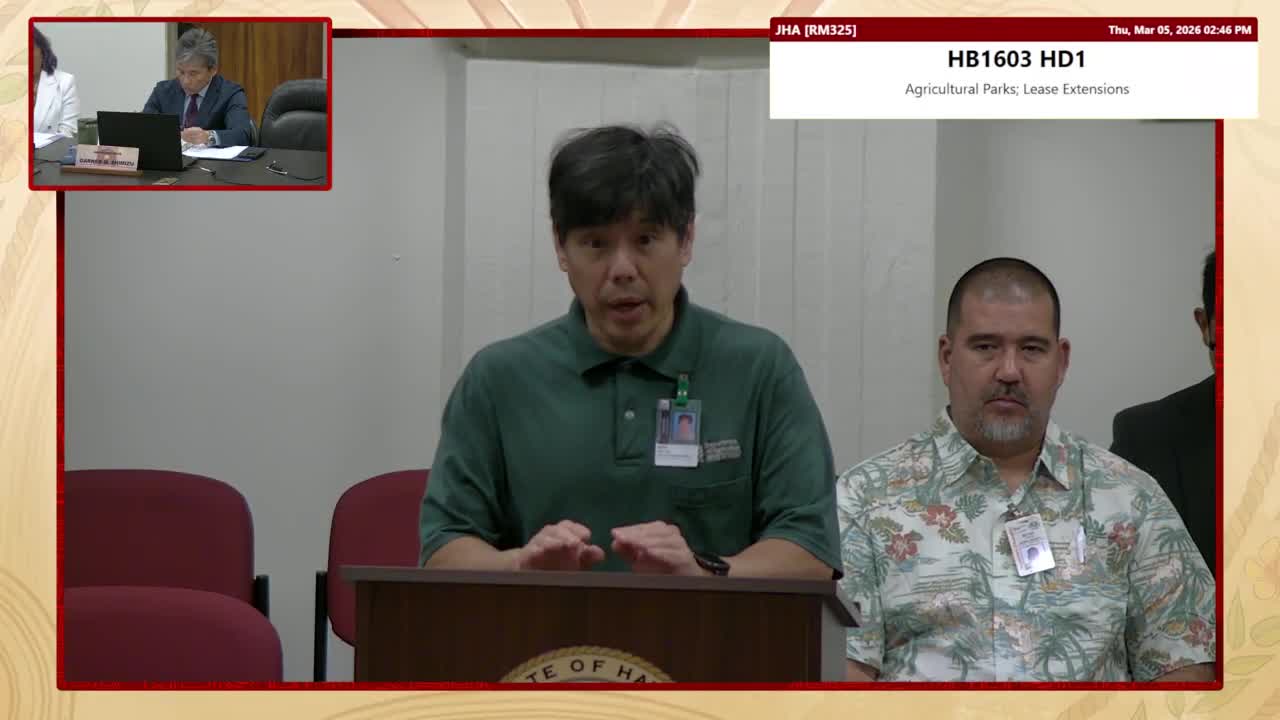 5MIN
House Standing Committee on Judiciary & Hawaiian Affairs
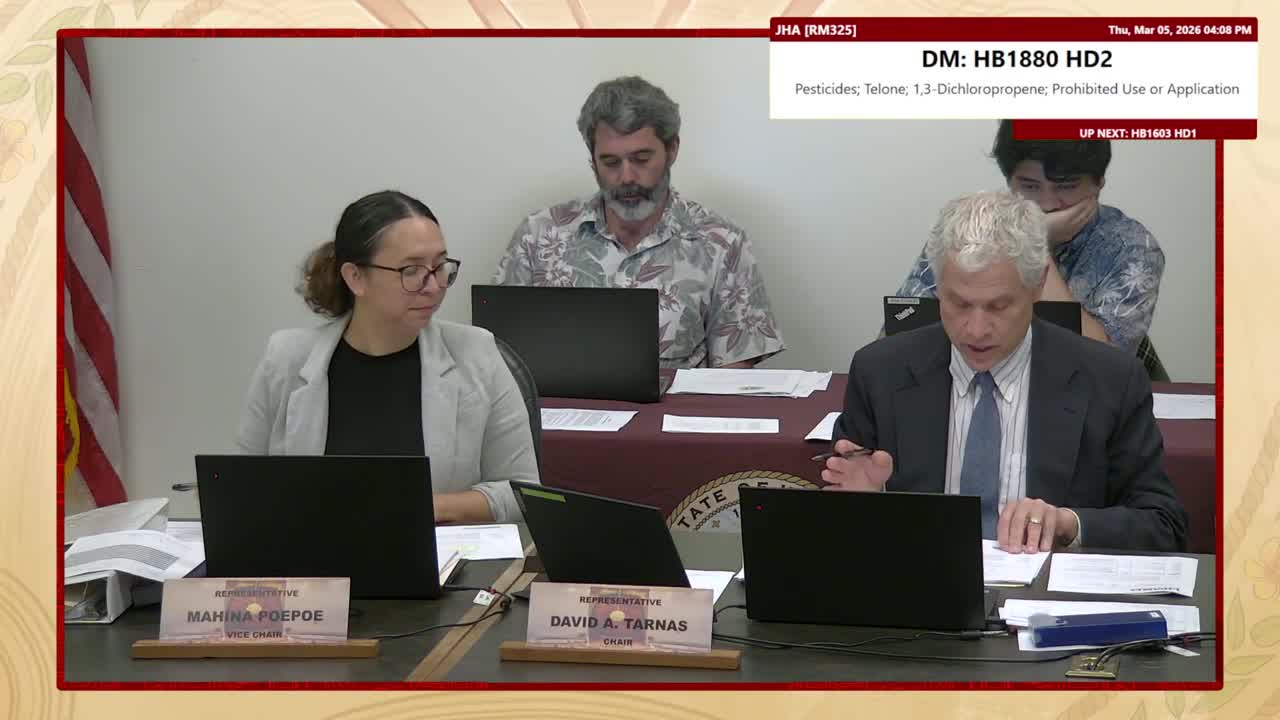 1MIN
House Standing Committee on Judiciary & Hawaiian Affairs
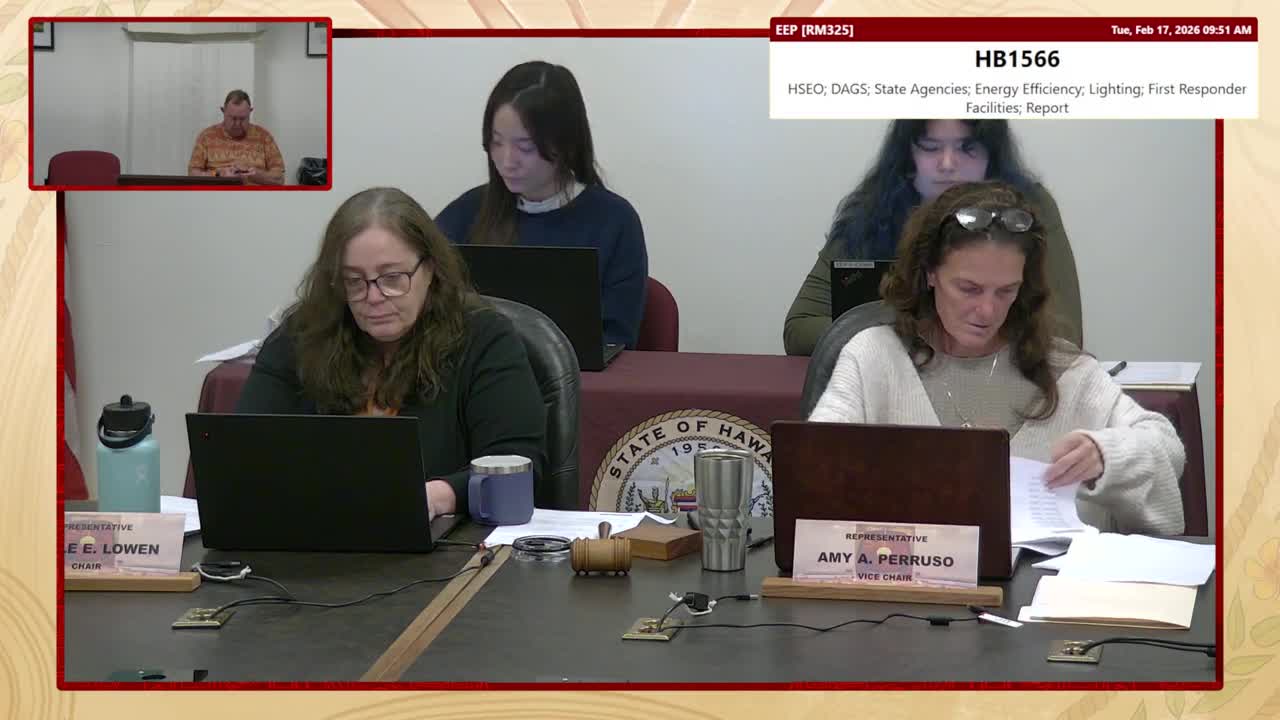 38SEC
House Standing Committee on Energy & Environmental Protection
 1MIN
House Floor
 2MIN
House Standing Committee on Agriculture & Food Systems
2MIN
House Standing Committee on Tourism
1MIN
House Standing Committee on Agriculture & Food Systems
1MIN