HB 756: RELATING TO HEALTH.
- Session Year: 2025-2026
- House: House
- Latest Version Date: 2025-02-12
Current Status:
Failed
(2025-12-08: Carried over to 2026 Regular Session.)
Introduced
In Committee
First Chamber
In Committee
Second Chamber
Final Decking
Enacted
Prohibits the sale of flavored nicotine products and nicotine product flavor enhancers and the mislabeling of e-liquids as nicotine free. Establishes penalties for violations. Authorizes the Department of Health to appoint, commission, or contract for services of inspectors. Establishes positions. Appropriates funds. Effective 7/1/3000. (HD2)
Prohibits the sale of flavored nicotine products and nicotine product flavor enhancers and the mislabeling of e-liquids as nicotine free. Establishes penalties for violations. Authorizes the Department of Health to appoint, commission, or contract for services of inspectors. Establishes positions. Appropriates funds. Effective 7/1/3000. (HD1)
Prohibits the sale of flavored nicotine products and the mislabeling of e-liquids as nicotine free. Establishes penalties for violations. Authorizes the Department of Health to appoint, commission, or contract for services of inspectors. Establishes two full-time equivalent program specialist positions and one full-time equivalent hearing officer position. Appropriates funds. Effective 1/1/2026.
|
HOUSE OF REPRESENTATIVES |
H.B. NO. |
756 |
|
THIRTY-THIRD LEGISLATURE, 2025 |
H.D. 2 |
|
|
STATE OF HAWAII |
|
|
|
|
|
|
|
|
||
|
|
||
A BILL FOR AN ACT
RELATING TO HEALTH.
BE IT ENACTED BY THE LEGISLATURE OF THE STATE OF HAWAII:
The legislature further finds that eighty-one per cent of youth who have ever used a tobacco product report that the first tobacco product they used was flavored. Flavored tobacco products promote youth initiation of tobacco use and help young occasional smokers become daily smokers by reducing or masking the natural harshness and taste of tobacco smoke, thereby increasing the appeal of tobacco products.
The legislature additionally finds that menthol, in particular, is used by the tobacco industry because it has a cooling and numbing effect and can reduce the throat irritation from smoking, thus making menthol cigarettes an appealing option for youth who are initiating tobacco use. Candy and fruit flavors improve the taste and reduce the harshness of tobacco products, making them more appealing and easier for beginners to try tobacco products and ultimately become addicted. The United States Surgeon General noted in the 2016 report titled "E-Cigarette Use Among Youth and Youth Adults" that "[b]ecause the adolescent brain is still developing, nicotine use during adolescence can disrupt the formation of brain circuits that control attention, learning, and susceptibility to addiction."
Furthermore, delays in the United States Food and Drug Administration regulatory process of e-cigarettes have allowed the tobacco and electronic smoking device industries to significantly increase the marketing and production of electronic vaping devices. According to a 2018 study published in the Journal of Medical Internet Research, the count of flavored tobacco products went from 7,764 in 2014 to 15,586 in 2017, a one hundred per cent increase. Every year that passes youth become more exposed to the predatory practices of tobacco companies seeking a market for nicotine addiction. Hawaii has experienced the heightened promotion of vape products that offer candy and local flavors designed to appeal to the State's youth, such as POG, apple mui, luau punch, rainbow candy, lava burst ice, Shaka strawberry, lychee ice, Molokai Hot Bread, and lilikoi lychee. Additionally, many of the packages are designed to look like candies popular with children, such as Jolly Ranchers and Sour Patch Kids.
The legislature also finds that young people and people of color have high rates of use of flavored tobacco products, including menthol. According to the 2023 Hawaii Youth Risk Behavior Surveillance System, among public high school students who are current cigarette smokers, an average of 14.1 per cent smoke menthol, and among public middle school students who are current cigarette smokers, an average of 7.1 smoke menthol. According to the 2022 Behavioral Risk Factor Surveillance System, 63.7 per cent of adult smokers in Hawaii usually smoke menthol cigarettes.
Furthermore, the 2022 Behavioral Risk Factor Surveillance System shows that prevalence is high among specific ethnic groups with 70.8 per cent of Filipinos, 80.7 per cent of Native Hawaiians, and 66.9 per cent of Japanese usually smoking menthol cigarettes. The 2021 National Youth Tobacco Survey report, estimates that ending the sale of flavored tobacco in Hawaii would save the State at least $48,000,000 in long-term health care costs, prevent seven hundred premature smoking-related deaths, prompt over three thousand menthol cigarette smokers to quit, and prevent youth from initiating smoking with menthol cigarettes.
Given the significant threat to public health posed by flavored tobacco products, including those with menthol, seven states — California, Maryland, Massachusetts, New Jersey, New York, Rhode Island, and Utah — and over three hundred ninety localities have enacted policies to end the sale of flavored tobacco products to some extent. These laws now protect over twenty-five per cent of the United States' population. Hawaii must also take steps to regulate these products to address the youth vaping epidemic and reduce tobacco-related health disparities.
Of additional concern is the increased use of tobacco- and smoke-free oral nicotine pouches that come in different flavors and strengths. These products are easier to conceal than cigarettes or vape products and may be used by youth who mistakenly believe that the lack of tobacco and smoke makes the product safer for consumption. Furthermore, because these products do not contain tobacco, they can fall through the regulatory cracks, requiring a broader approach to addressing youth nicotine addiction.
Accordingly, the purpose of this Act is to prohibit the sale of, offer for sale, or possess with the intent to sell or offer to sell, all flavored nicotine products and nicotine product flavor enhancers, including products with menthol, and prohibit the mislabeling of e-liquid products as nicotine-free.
SECTION 2. Chapter 321, Hawaii Revised Statutes, is amended by adding a new part to be appropriately designated and to read as follows:
"Part . SALE OF FLAVORED Nicotine PRODUCTS PROHIBITED
§321-A Definitions. As used in this part, unless the context otherwise requires:
"Cigarette" has the same meaning as in section 245-1.
"Department" means the department of health.
"Director" means the director of health.
"Distinguishable" means perceivable to the sense of smell, taste, or touch, or more than one or all of these.
"Electronic smoking device" means any device that may be used to deliver any aerosolized or vaporized substance to the person inhaling from the device, including but not limited to an electronic cigar, electronic cigarette, electronic hookah, electronic pipe, or vape pen. "Electronic smoking device" includes any component, part, or accessory of the device, and any substance that may be aerosolized or vaporized by such device, whether or not the substance contains nicotine. "Electronic smoking device" does not include drugs, devices, or combination products authorized for sale by the United States Food and Drug Administration, as those terms are defined in the Federal Food, Drug, and Cosmetic Act, or medical devices used to aerosolize, inhale, or ingest prescription drugs, including manufactured cannabis products manufactured or distributed in accordance with section 329D-10(a).
"E-liquid" means any liquid or like substance, which may or may not contain nicotine, that is designed or intended to be used in an electronic smoking device, whether or not packaged in a cartridge or other container. "E-liquid" does not include prescription drugs, cannabis for medical use pursuant to chapter 329, or manufactured cannabis products pursuant to chapter 329D.
"Entity" has the same meaning as in section 245-1.
"Flavored nicotine product" means any nicotine product that imparts:
(1) A taste or odor distinguishable by an average consumer, other than the taste or odor of tobacco, before, during, or after the consumption of the nicotine product, or more than one or all of these, including but not limited to any tastes or odors relating to alcoholic beverage, candy, chocolate, cocoa, dessert, fruit, herb, honey, menthol, mint, spice, vanilla, or wintergreen; or
(2) A cooling or numbing sensation distinguishable by an average consumer before, during, or after the consumption of the nicotine product, or more than one or all of these.
"Inspector" means a person appointed, commissioned, or contracted by the department for the enforcement of this part pursuant to section 321-C.
"Labeling" means written, printed, pictorial, or graphic matter upon a nicotine product or any of its packaging.
"Nicotine" means any form of the chemical nicotine, including any salt or complex, regardless of whether the chemical is naturally or synthetically derived, and includes nicotinic alkaloids and nicotine analogs.
"Nicotine product" means:
(1) Any product containing, made of, or derived from nicotine that is intended for human consumption or is likely to be consumed, whether inhaled, absorbed, or ingested by any other means, including but not limited to a cigarette, a cigar, pipe tobacco, chewing tobacco, snuff, a pouch, lozenges, or snus;
(2) Any electronic smoking device and any substances that may be aerosolized or vaporized by such device, whether or not the substance contains nicotine; or
(3) Any component, part, or accessory of any item described in paragraph (1) or (2), whether or not any of these contains tobacco or nicotine, including but not limited to filters, hookahs, mouthpieces, pipes, rolling papers, and blunt or hemp wraps.
"Nicotine product" does not include drugs, devices, or combination products authorized for sale by the United States Food and Drug Administration, as those terms are defined in the Federal Food, Drug, and Cosmetic Act.
"Nicotine product flavor enhancer" means a product designed, manufactured, produced, marketed, or sold to produce a distinguishable flavor other than that of tobacco or to impart a cooling, tingling, or numbing sensation when added to a nicotine product.
"Nicotine product retail location" means any premises where nicotine products are sold or distributed to a consumer, including but not limited to any bar, cafe, cart, location, lounge, outlet, stand, store, vehicle, vending machine, or structure.
"Packaging" means a box, carton, pack, or container of any kind, or if no other container, any wrapping, including cellophane, in which a nicotine product is sold or offered for sale to a consumer.
"Retailer" means an entity that sells, offers for sale, or exchanges or offers to exchange nicotine products to consumers for any form of consideration. "Retailer" includes an owner or agent of a nicotine product retail location.
§321-B Sale of flavored nicotine products and nicotine product flavor enhancers; mislabeling as nicotine-free. (a) Beginning January 1, 2026, it shall be unlawful for any retailer to:
(2) Mislabel as nicotine-free, or sell or market for sale as nicotine-free, any e-liquid product that contains nicotine.
(b) A statement or claim, including but not limited to text, color, or images, on the nicotine product's labeling or packaging that is used to explicitly or implicitly communicate that the nicotine product has a flavor other than tobacco, or that the nicotine product imparts a cooling or numbing sensation, made by a manufacturer, importer, or retailer, or an agent or employee of a manufacturer, importer, or retailer, and directed to consumers or the public shall be prima facie evidence that the nicotine product is a flavored nicotine product. This includes but is not limited to public statements that a product has a minty or cooling effect, such as describing the product as "chill", "ice", "fresh", "arctic", or "frost".
(c) Any flavored nicotine product found in a retailer's possession that is in violation of this part may be considered contraband, be seized by an inspector, or be subject to immediate destruction or disposal by the retailer in accordance with rules adopted by the department pursuant to section 321-D. The cost of proper disposal of electronic smoking devices and e-liquids as hazardous waste pursuant to rules adopted in accordance with section 342J-4 shall be borne by the retailer.
(d) Any retailer that violates this part shall be subject to a fine no less than $100 and no more than $1,000 for each separate offense. Each day of each violation shall constitute a separate offense. Any fines collected by the department shall be deposited to the credit of the general fund.
(e) Notwithstanding any other law to the contrary, any county may adopt a rule or an ordinance that places greater restrictions on the access to flavored nicotine products than the restrictions provided in this part. In the case of a conflict between the restrictions in this part and any county rule or ordinance regarding access to flavored nicotine products, the more stringent restrictions shall prevail.
§321-C Inspectors; authority and access to records. (a) The director may appoint, commission, or contract for services of a third party one or more inspectors as the exigencies of the enforcement of this part may require. Persons appointed, commissioned, or contracted for services under this part shall have and may exercise all the powers and authority outlined in the rules adopted pursuant to section 321-D.
(b) Information necessary to investigate violations of this part shall be made available to the department and any appointed, commissioned, or contracted inspectors of the department.
§321-D Administrative rules. (a) The department may adopt rules pursuant to chapter 91 to effectuate the purposes of this part.
(b) No later than June 30, 2026, the department shall adopt interim rules, which shall be exempt from chapters 91 and 201M, to effectuate the purposes of this part; provided that the interim rules shall remain in effect until January 1, 2032, or until rules are adopted pursuant to subsection (a), whichever occurs sooner.
(c) The department may amend the interim rules adopted pursuant to subsection (b), exempt from chapter 201M and the public notice and public hearing requirements of chapter 91; provided that any amended interim rules shall remain in effect until January 1, 2032, or until rules are adopted pursuant to subsection (a), whichever occurs sooner.
§321-E Contract for services. Subject to section 26-38, the department may contract the services of a third party in accordance with chapter 103D for enforcement, inspections, or any other services needed to administer this part."
SECTION 3. There is established full-time equivalent ( FTE) program specialist positions to review, process, and initiate inspections under the authority of the department of health and full-time equivalent ( FTE) hearings officer position to preside over administrative hearings and other related hearings duties as required under section 2 of this Act.
SECTION 4. There is appropriated out of the general revenues of the State of Hawaii the sum of $ or so much thereof as may be necessary for fiscal year 2025-2026 and the same sum or so much thereof as may be necessary for fiscal year 2026-2027 to carry out the purposes of this Act, including the hiring of necessary staff, including full-time equivalent ( FTE) program specialist positions and full-time equivalent ( FTE) hearings officer position.
The sums appropriated shall be expended by the department of health for the purposes of this Act.
SECTION 5. This Act does not affect rights and duties that matured, penalties that were incurred, and proceedings that were begun before its effective date.
SECTION 6. If any provision of this Act, or the application thereof to any person or circumstance, is held invalid, the invalidity does not affect other provisions or applications of the Act that can be given effect without the invalid provision or application, and to this end the provisions of this Act are severable.
SECTION 7. In codifying the new sections added by section 2 of this Act, the revisor of statutes shall substitute appropriate section numbers for the letters used in designating the new sections in this Act.
SECTION 8. This Act shall take effect on July 1, 3000; provide that section 4 shall take effect on July 1, 2025.
Report Title:
Keiki Caucus; Prohibition; Sale; Labeling; Flavored Nicotine Products; Nicotine Product Flavor Enhancers; E-Liquids; Penalties; Appropriation
Description:
Prohibits the sale of flavored nicotine products and nicotine product flavor enhancers and the mislabeling of e-liquids as nicotine free. Establishes penalties for violations. Authorizes the Department of Health to appoint, commission, or contract for services of inspectors. Establishes positions. Appropriates funds. Effective 7/1/3000. (HD2)
The summary description of legislation appearing on this page is for informational purposes only and is not legislation or evidence of legislative intent.
|
HOUSE OF REPRESENTATIVES |
H.B. NO. |
756 |
|
THIRTY-THIRD LEGISLATURE, 2025 |
H.D. 1 |
|
|
STATE OF HAWAII |
|
|
|
|
|
|
|
|
||
|
|
||
A BILL FOR AN ACT
RELATING TO HEALTH.
BE IT ENACTED BY THE LEGISLATURE OF THE STATE OF HAWAII:
The legislature further finds that eighty-one per cent of youth who have ever used a tobacco product report that the first tobacco product they used was flavored. Flavored tobacco products promote youth initiation of tobacco use and help young occasional smokers become daily smokers by reducing or masking the natural harshness and taste of tobacco smoke, thereby increasing the appeal of tobacco products.
The legislature additionally finds that menthol, in particular, is used by the tobacco industry because it has a cooling and numbing effect and can reduce the throat irritation from smoking, thus making menthol cigarettes an appealing option for youth who are initiating tobacco use. Candy and fruit flavors improve the taste and reduce the harshness of tobacco products, making them more appealing and easier for beginners to try tobacco products and ultimately become addicted. The United States Surgeon General noted in the 2016 report titled "E-Cigarette Use Among Youth and Youth Adults" that "[b]ecause the adolescent brain is still developing, nicotine use during adolescence can disrupt the formation of brain circuits that control attention, learning, and susceptibility to addiction."
Furthermore, delays in the United States Food and Drug Administration regulatory process of e-cigarettes have allowed the tobacco and electronic smoking device industries to significantly increase the marketing and production of electronic vaping devices. According to a 2018 study published in the Journal of Medical Internet Research, the count of flavored tobacco products went from 7,764 in 2014 to 15,586 in 2017, a one hundred per cent increase. Every year that passes youth become more exposed to the predatory practices of tobacco companies seeking a market for nicotine addiction. Hawaii has experienced the heightened promotion of vape products that offer candy and local flavors designed to appeal to the State's youth, such as POG, apple mui, luau punch, rainbow candy, lava burst ice, Shaka strawberry, lychee ice, Molokai Hot Bread, and lilikoi lychee. Additionally, many of the packages are designed to look like candies popular with children, such as Jolly Ranchers and Sour Patch Kids.
The legislature also finds that young people and people of color have high rates of use of flavored tobacco products, including menthol. According to the 2023 Hawaii Youth Risk Behavior Surveillance System, among public high school students who are current cigarette smokers, an average of 14.1 per cent smoke menthol, and among public middle school students who are current cigarette smokers, an average of 7.1 smoke menthol. According to the 2022 Behavioral Risk Factor Surveillance System, 63.7 per cent of adult smokers in Hawaii usually smoke menthol cigarettes.
Furthermore, the 2022 Behavioral Risk Factor Surveillance System shows that prevalence is high among specific ethnic groups with 70.8 per cent of Filipinos, 80.7 per cent of Native Hawaiians, and 66.9 per cent of Japanese usually smoking menthol cigarettes. The 2021 National Youth Tobacco Survey report, estimates that ending the sale of flavored tobacco in Hawaii would save the State at least $48,000,000 in long-term health care costs, prevent seven hundred premature smoking-related deaths, prompt over three thousand menthol cigarette smokers to quit, and prevent youth from initiating smoking with menthol cigarettes.
Given the significant threat to public health posed by flavored tobacco products, including those with menthol, seven states—California, Maryland, Massachusetts, New Jersey, New York, Rhode Island, and Utah—and over three hundred ninety localities have enacted policies to end the sale of flavored tobacco products to some extent. These laws now protect over twenty-five per cent of the United States' population. Hawaii must also take steps to regulate these products to address the youth vaping epidemic and reduce tobacco-related health disparities.
Of additional concern is the increased use of tobacco- and smoke-free oral nicotine pouches that come in different flavors and strengths. These products are easier to conceal than cigarettes or vape products and may be used by youth who mistakenly believe that the lack of tobacco and smoke makes the product safer for consumption. Furthermore, because these products do not contain tobacco, they can fall through the regulatory cracks, requiring a broader approach to addressing youth nicotine addiction.
Accordingly, the purpose of this Act is to prohibit the sale or distribution of all flavored nicotine products and nicotine product flavor enhancers, including products with menthol, and prohibit the mislabeling of products as nicotine-free.
SECTION 2. Chapter 321, Hawaii Revised Statutes, is amended by adding a new part to be appropriately designated and to read as follows:
"Part . SALE OF FLAVORED Nicotine PRODUCTS PROHIBITED
§321-A Definitions. As used in this part, unless the context otherwise requires:
"Cigarette" has the same meaning as in section 245-1.
"Department" means the department of health.
"Director" means the director of health.
"Distinguishable" means perceivable to the sense of smell, taste, or touch, or more than one or all of these.
"Electronic smoking device" means any device that may be used to deliver any aerosolized or vaporized substance to the person inhaling from the device, including but not limited to an electronic cigarette, electronic cigar, electronic pipe, vape pen, or electronic hookah. "Electronic smoking device" includes any component, part, or accessory of the device, and any substance that may be aerosolized or vaporized by such device, whether or not the substance contains nicotine. "Electronic smoking device" does not include drugs, devices, or combination products authorized for sale by the United States Food and Drug Administration, as those terms are defined in the Federal Food, Drug, and Cosmetic Act, or medical devices used to aerosolize, inhale, or ingest prescription drugs, including manufactured cannabis products manufactured or distributed in accordance with section 329D-10(a).
"E-liquid" means any liquid or like substance, which may or may not contain nicotine, that is designed or intended to be used in an electronic smoking device, whether or not packaged in a cartridge or other container. "E-liquid" does not include prescription drugs, cannabis for medical use pursuant to chapter 329, or manufactured cannabis products pursuant to chapter 329D.
"Entity" has the same meaning as in section 245-1.
"Flavored nicotine product" means any nicotine product that imparts:
(1) A taste or odor distinguishable by an average consumer, other than the taste or odor of tobacco, before, during, or after the consumption of the nicotine product, or more than one or all of these, including but not limited to any tastes or odors relating to fruit, chocolate, vanilla, honey, candy, cocoa, dessert, alcoholic beverage, mint, wintergreen, menthol, herb, or spice; or
(2) A cooling or numbing sensation distinguishable by an average consumer before, during, or after the consumption of the nicotine product, or more than one or all of these.
"Inspector" means a person appointed, commissioned, or contracted by the department for the enforcement of this part pursuant to section 321-C.
"Labeling" means written, printed, pictorial, or graphic matter upon a nicotine product or any of its packaging.
"Nicotine" means any form of the chemical nicotine, including any salt or complex, regardless of whether the chemical is naturally or synthetically derived, and includes nicotinic alkaloids and nicotine analogs.
"Nicotine product" means:
(1) Any product containing, made of, or derived from nicotine that is intended for human consumption or is likely to be consumed, whether inhaled, absorbed, or ingested by any other means, including but not limited to a cigarette, a cigar, pipe tobacco, chewing tobacco, snuff, a pouch, lozenges, or snus;
(2) Any electronic smoking device and any substances that may be aerosolized or vaporized by such device, whether or not the substance contains nicotine; or
(3) Any component, part, or accessory of any item described in paragraph (1) or (2), whether or not any of these contains tobacco or nicotine, including but not limited to filters, rolling papers, blunt or hemp wraps, hookahs, mouthpieces, and pipes.
"Nicotine product" does not include drugs, devices, or combination products authorized for sale by the United States Food and Drug Administration, as those terms are defined in the Federal Food, Drug, and Cosmetic Act.
"Nicotine product flavor enhancer" means a product designed, manufactured, produced, marketed, or sold to produce a distinguishable flavor other than that of tobacco or to impart a cooling, tingling, or numbing sensation when added to a nicotine product.
"Nicotine product retail location" means any premises where nicotine products are sold or distributed to a consumer, including but not limited to any bar, cafe, cart, location, lounge, outlet, stand, store, vehicle, vending machine, or structure.
"Packaging" means a pack, box, carton, or container of any kind, or if no other container, any wrapping, including cellophane, in which a nicotine product is sold or offered for sale to a consumer.
"Retailer" means an entity that sells, offers for sale, or exchanges or offers to exchange nicotine products to consumers for any form of consideration. "Retailer" includes an owner or agent of a nicotine product retail location.
§321-B Sale of flavored nicotine products and nicotine product flavor enhancers; mislabeling as nicotine-free. (a) Beginning January 1, 2026, it shall be unlawful for any retailer to:
(2) Mislabel as nicotine-free, or sell or market for sale as nicotine-free, any e-liquid product that contains nicotine.
(b) A statement or claim, including but not limited to text, color, or images on the nicotine product's labeling or packaging that is used to explicitly or implicitly communicate that the nicotine product has a flavor other than tobacco, or that the nicotine product imparts a cooling or numbing sensation, made by a manufacturer, importer, or retailer, or an agent or employee of a manufacturer, importer, or retailer, and directed to consumers or the public shall be prima facie evidence that the nicotine product is a flavored nicotine product. This includes but is not limited to public statements that a product has a minty or cooling effect, such as describing the product as "chill," "ice," "fresh," "arctic," or "frost".
(c) Any flavored nicotine product found in a retailer's possession that is in violation of this part may be considered contraband, be seized by an inspector, or be subject to immediate destruction or disposal by the retailer in accordance with rules adopted by the department pursuant to section 321-D. The cost of proper disposal of electronic smoking devices and e-liquids as hazardous waste pursuant to section 342J-4 shall be borne by the retailer.
(d) Any retailer that violates this part shall be subject to a fine no less than $100 nor more than $1,000 for each separate offense. Each day of each violation shall constitute a separate offense. Any fines collected by the department shall be deposited to the credit of the general fund.
(e) Notwithstanding any other law to the contrary, any county may adopt a rule or an ordinance that places greater restrictions on the access to flavored nicotine products than the restrictions provided in this part. In the case of a conflict between the restrictions in this part and any county rule or ordinance regarding access to flavored nicotine products, the more stringent restrictions shall prevail.
§321-C Inspectors; authority and access to records. (a) The director may appoint, commission, or contract for services of a third party one or more inspectors as the exigencies of the enforcement of this part may require. Persons appointed, commissioned, or contracted for services under this part shall have and may exercise all the powers and authority outlined in the rules adopted pursuant to section 321-D.
(b) Information necessary to investigate violations of this part shall be made available to the department and any appointed, commissioned, or contracted inspectors of the department.
§321-D Administrative rules. (a) The department may adopt rules pursuant to chapter 91 to effectuate the purposes of this part.
(b) No later than June 30, 2026, the department shall adopt interim rules, which shall be exempt from chapters 91 and 201M, to effectuate the purposes of this part; provided that the interim rules shall remain in effect until January 1, 2032, or until rules are adopted pursuant to subsection (a), whichever occurs sooner.
(c) The department may amend the interim rules adopted pursuant to subsection (b), exempt from chapter 201M and the public notice and public hearing requirements of chapter 91; provided that any amended interim rules shall remain in effect until January 1, 2032, or until rules are adopted pursuant to subsection (a), whichever occurs sooner.
§321-E Contract for services. Subject to section 26-36, the department may contract the services of a third party in accordance with chapter 103D for enforcement, inspections, or any other services needed to administer this part."
SECTION 3. There is established full-time equivalent ( FTE) program specialist positions to review, process, and initiate inspections under the authority of the department of health and full-time equivalent ( FTE) hearings officer position to preside over administrative hearings and other related hearings duties as required under section 2 of this Act.
SECTION 4. There is appropriated out of the general revenues of the State of Hawaii the sum of $ or so much thereof as may be necessary for fiscal year 2025-2026 and the same sum or so much thereof as may be necessary for fiscal year 2026-2027 to carry out the purposes of this Act, including the hiring of necessary staff, including full-time equivalent ( FTE) program specialist positions and full-time equivalent ( FTE) hearings officer position.
The sums appropriated shall be expended by the department of health for the purposes of this Act.
SECTION 5. This Act does not affect rights and duties that matured, penalties that were incurred, and proceedings that were begun before its effective date.
SECTION 6. If any provision of this Act, or the application thereof to any person or circumstance, is held invalid, the invalidity does not affect other provisions or applications of the Act that can be given effect without the invalid provision or application, and to this end the provisions of this Act are severable.
SECTION 7. In codifying the new sections added by section 2 of this Act, the revisor of statutes shall substitute appropriate section numbers for the letters used in designating the new sections in this Act.
SECTION 8. This Act shall take effect on July 1, 3000; provide that section 4 shall take effect on July 1, 2025.
Report Title:
Keiki Caucus; Prohibition; Sale; Labeling; Flavored Nicotine Products; Nicotine Product Flavor Enhancers; E-Liquids; Penalties; Appropriation
Description:
Prohibits the sale of flavored nicotine products and nicotine product flavor enhancers and the mislabeling of e-liquids as nicotine free. Establishes penalties for violations. Authorizes the Department of Health to appoint, commission, or contract for services of inspectors. Establishes positions. Appropriates funds. Effective 7/1/3000. (HD1)
The summary description of legislation appearing on this page is for informational purposes only and is not legislation or evidence of legislative intent.
|
HOUSE OF REPRESENTATIVES |
H.B. NO. |
756 |
|
THIRTY-THIRD LEGISLATURE, 2025 |
|
|
|
STATE OF HAWAII |
|
|
|
|
|
|
|
|
||
|
|
||
A BILL FOR AN ACT
Relating to health.
BE IT ENACTED BY THE LEGISLATURE OF THE STATE OF HAWAII:
The legislature further finds that eighty-one per cent of youth who have ever used a tobacco product report that the first tobacco product they used was flavored. Flavored tobacco products promote youth initiation of tobacco use and help young occasional smokers become daily smokers by reducing or masking the natural harshness and taste of tobacco smoke, thereby increasing the appeal of tobacco products.
The legislature additionally finds that menthol, in particular, is used by the tobacco industry because it has a cooling and numbing effect and can reduce the throat irritation from smoking, thus making menthol cigarettes an appealing option for youth who are initiating tobacco use. Candy and fruit flavors improve the taste and reduce the harshness of tobacco products, making them more appealing and easier for beginners to try tobacco products and ultimately become addicted. The United States Surgeon General noted in the 2016 report titled "E-Cigarette Use Among Youth and Youth Adults" that "[b]ecause the adolescent brain is still developing, nicotine use during adolescence can disrupt the formation of brain circuits that control attention, learning, and susceptibility to addiction."
Furthermore, delays in the United States Food and Drug Administration regulatory process of e-cigarettes have allowed the tobacco and electronic smoking device industries to significantly increase the marketing and production of electronic vaping devices. According to a 2018 study published in the Journal of Medical Internet Research, the count of flavored tobacco products went from 7,764 in 2014 to 15,586 in 2017, a one hundred per cent increase. Every year that passes youth become more exposed to the predatory practices of tobacco companies seeking a market for nicotine addiction. Hawaii has experienced the heightened promotion of vape products that offer candy and local flavors designed to appeal to the State's youth, such as POG, apple mui, luau punch, rainbow candy, lava burst ice, Shaka strawberry, lychee ice, Molokai Hot Bread, and lilikoi lychee. Additionally, many of the packages are designed to look like candies popular with children, such as Jolly Ranchers and Sour Patch Kids.
The legislature also finds that young people and people of color have high rates of use of flavored tobacco products, including menthol. According to the 2023 Hawaii Youth Risk Behavior Surveillance System, among public high school students who are current cigarette smokers, an average of 14.1 per cent smoke menthol, and among public middle school students who are current cigarette smokers, an average of 7.1 smoke menthol. According to the 2022 Behavioral Risk Factor Surveillance System, 63.7 per cent of adult smokers in Hawaii usually smoke menthol cigarettes.
Furthermore, the 2022 Behavioral Risk Factor Surveillance System shows that prevalence is high among specific ethnic groups with 70.8 per cent of Filipinos, 80.7 per cent of Native Hawaiians, and 66.9 per cent of Japanese usually smoking menthol cigarettes. The 2021 National Youth Tobacco Survey report, estimates that ending the sale of flavored tobacco in Hawaii would save the State at least $48,000,000 in long-term health care costs, prevent seven hundred premature smoking-related deaths, prompt over three thousand menthol cigarette smokers to quit, and prevent youth from initiating smoking with menthol cigarettes.
Given the significant threat to public health posed by flavored tobacco products, including those with menthol, seven states—California, Maryland, Massachusetts, New Jersey, New York, Rhode Island, and Utah—and over three hundred ninety localities have enacted policies to end the sale of flavored tobacco products to some extent. These laws now protect over twenty-five per cent of the United States' population. Hawaii must also take steps to regulate these products to address the youth vaping epidemic and reduce tobacco-related health disparities.
Of additional concern is the increased use of tobacco- and smoke-free oral nicotine pouches that come in different flavors and strengths. These products are easier to conceal than cigarettes or vape products and may be used by youth who mistakenly believe that the lack of tobacco and smoke makes the product safer for consumption. Furthermore, because these products do not contain tobacco, they can fall through the regulatory cracks, requiring a broader approach to addressing youth nicotine addiction.
Accordingly, the purpose of this Act is to prohibit the sale or distribution of all flavored nicotine products, including products with menthol, and prohibit the mislabeling of products as nicotine-free.
SECTION 2. Chapter 321, Hawaii Revised Statutes, is amended by adding a new part to be appropriately designated and to read as follows:
"Part . SALE OF FLAVORED Nicotine PRODUCTS PROHIBITED
§321-A Definitions. As used in this part, unless the context otherwise requires:
"Cigarette" has the same meaning as in section 245-1.
"Department" means the department of health.
"Director" means the director of health.
"Distinguishable" means perceivable by either the sense of smell or taste.
"Electronic smoking device" means any device that may be used to deliver any aerosolized or vaporized substance to the person inhaling from the device, including but not limited to an electronic cigarette, electronic cigar, electronic pipe, vape pen, or electronic hookah. "Electronic smoking device" includes any component, part, or accessory of the device, and any substance that may be aerosolized or vaporized by such device, whether or not the substance contains nicotine. "Electronic smoking device" does not include drugs, devices, or combination products authorized for sale by the United States Food and Drug Administration, as those terms are defined in the Federal Food, Drug, and Cosmetic Act.
"E-liquid" means any liquid or like substance, which may or may not contain nicotine, that is designed or intended to be used in an electronic smoking device, whether or not packaged in a cartridge or other container. "E-liquid" does not include prescription drugs; cannabis for medical use pursuant to chapter 329 or manufactured cannabis products pursuant to chapter 329D; or medical devices used to aerosolize, inhale, or ingest prescription drugs, including manufactured cannabis products manufactured or distributed in accordance with section 329D-10(a).
"Entity" has the same meaning as in section 245-1.
"Flavored nicotine product" means any nicotine product that contains a taste or smell, other than the taste or smell of tobacco, that is distinguishable by an ordinary consumer either prior to or during the consumption of a nicotine product, including but not limited to any taste or smell relating to fruit, menthol, mint, wintergreen, chocolate, cocoa, vanilla, honey, molasses, or any candy, dessert, alcoholic beverage, herb, or spice.
"Labeling" means written, printed, pictorial, or graphic matter upon a nicotine product or any of its packaging.
"Nicotine product" means:
(1) Any product that:
(A) Contains, is made of, or is derived from nicotine; or
(B) Has been determined to be addictive by the director and has a similar molecular structure to nicotine, but is not itself nicotine,
that is intended for human consumption or is likely to be consumed, whether inhaled, absorbed, or ingested by any other means, including but not limited to a cigarette, a cigar, pipe tobacco, chewing tobacco, snuff, or snus;
(2) Any electronic smoking device and any substances that may be aerosolized or vaporized by such device, whether or not the substance contains nicotine; or
(3) Any component, part, or accessory of any item described in paragraph (1) or (2), whether or not any of these contains tobacco or nicotine, including but not limited to filters, rolling papers, blunt or hemp wraps, hookahs, mouthpieces, and pipes.
"Nicotine product" does not include drugs, devices, or combination products authorized for sale by the United States Food and Drug Administration, as those terms are defined in the Federal Food, Drug, and Cosmetic Act.
"Packaging" means a pack, box, carton, or container of any kind, or if no other container, any wrapping, including cellophane, in which a nicotine product is sold or offered for sale to a consumer.
"Retailer" means an entity that sells, offers for sale, or exchanges or offers to exchange nicotine products to consumers for any form of consideration. "Retailer" includes an owner, agent, or employee of a nicotine retail location.
"Nicotine retail location" means any premises where nicotine products are sold or distributed to a consumer, including but not limited to any bar, cafe, cart, location, lounge, outlet, stand, store, vehicle, vending machine, or structure.
§321-B Sale of flavored nicotine products; mislabeling as nicotine-free. (a) Beginning January 1, 2026, it shall be unlawful for any retailer to:
(2) Mislabel as nicotine-free, or sell or market for sale as nicotine-free, any e-liquid product that contains nicotine.
(b) A statement or claim, including but not limited to text, color, or images on the nicotine product's labeling or packaging that is used to explicitly or implicitly communicate that the nicotine product has a flavor other than tobacco, made by a manufacturer or an agent or employee of a manufacturer, and directed to consumers or the public shall be prima facie evidence that the nicotine product is a flavored nicotine product.
(c) Any flavored nicotine product found in a retailer's possession that is in violation of this part may be considered contraband, be seized by an inspector, or be subject to immediate destruction or disposal by the retailer in accordance with rules adopted by the department pursuant to section 321-D. The cost of proper disposal of electronic smoking devices and e-liquids as hazardous waste pursuant to chapter 11-266.1, Hawaii Administrative Rules, shall be borne by the retailer.
(d) Any retailer that violates this part shall be subject to a fine no less than $100 nor more than $1,000 for each separate offense. Each day of each violation shall constitute a separate offense. Any fines collected by the department shall be deposited to the credit of the general fund.
(e) Notwithstanding any other law to the contrary, any county may adopt a rule or an ordinance that places greater restrictions on the access to flavored nicotine products than the restrictions provided in this part. In the case of a conflict between the restrictions in this part and any county rule or ordinance regarding access to flavored nicotine products, the more stringent restrictions shall prevail.
§321-C Inspectors; authority and access to records. (a) The director may appoint, commission, or contract for services of a third party one or more inspectors as the exigencies of the enforcement of this part may require. Persons appointed, commissioned, or contracted for services under this part shall have and may exercise all the powers and authority outlined in the rules adopted pursuant to section 321-D.
(b) Information necessary to investigate violations of this part shall be made available to the department and any appointed, commissioned, or contracted inspectors of the department.
§321-D Administrative rules. (a) The department may adopt rules pursuant to chapter 91 to effectuate the purposes of this part.
(b) No later than June 30, 2026, the department shall adopt interim rules, which shall be exempt from chapters 91 and 201M, to effectuate the purposes of this part; provided that the interim rules shall remain in effect until January 1, 2032, or until rules are adopted pursuant to subsection (a), whichever occurs sooner.
§321-E Contract for services. The department may contract the services of a third party in accordance with chapter 103D for enforcement, inspections, or any other services needed to administer this part."
SECTION 3. There is established two full-time equivalent (2.0 FTE) program specialist positions to review, process, and initiate inspections under the authority of the department of health and one full-time equivalent (1.0 FTE) hearings officer position to preside over administrative hearings and other related hearings duties as required under section 2 of this Act.
SECTION 4. There is appropriated out of the general revenues of the State of Hawaii the sum of $ or so much thereof as may be necessary for fiscal year 2025-2026 and the same sum or so much thereof as may be necessary for fiscal year 2026-2027 to carry out the purposes of this Act, including the hiring of necessary staff, including two full-time equivalent (2.0 FTE) program specialist positions and one full-time equivalent (1.0 FTE) hearings officer position.
The sums appropriated shall be expended by the department of health for the purposes of this Act.
SECTION 5. This Act does not affect rights and duties that matured, penalties that were incurred, and proceedings that were begun before its effective date.
SECTION 6. If any provision of this Act, or the application thereof to any person or circumstance, is held invalid, the invalidity does not affect other provisions or applications of the Act that can be given effect without the invalid provision or application, and to this end the provisions of this Act are severable.
SECTION 7. In codifying the new sections added by section 2 of this Act, the revisor of statutes shall substitute appropriate section numbers for the letters used in designating the new sections in this Act.
SECTION 8. This Act shall take effect on January 1, 2026; provide that section 4 shall take effect on July 1, 2025.
|
INTRODUCED BY: |
_____________________________ |
Report Title:
Keiki Caucus; Prohibition; Sale; Labeling; Flavored Nicotine Products; E-Liquids; Penalties; Appropriation
Description:
Prohibits the sale of flavored nicotine products and the mislabeling of e-liquids as nicotine free. Establishes penalties for violations. Authorizes the Department of Health to appoint, commission, or contract for services of inspectors. Establishes two full-time equivalent program specialist positions and one full-time equivalent hearing officer position. Appropriates funds. Effective 1/1/2026.
The summary description of legislation appearing on this page is for informational purposes only and is not legislation or evidence of legislative intent.
|
Date
|
Status
|
|---|---|
| Dec 8, 2025 | Carried over to 2026 Regular Session. |
| Mar 4, 2025 | Referred to CPN/HHS, WAM/JDC. |
| Mar 4, 2025 | Passed First Reading. |
| Mar 4, 2025 | Received from House (Hse. Com. No. 125). |
| Feb 28, 2025 | Passed Third Reading with Representative(s) Garcia, Shimizu voting aye with reservations; Representative(s) Iwamoto voting no (1) and Representative(s) Cochran, Pierick, Templo, Ward excused (4). Transmitted to Senate. |
| Feb 28, 2025 | Reported from FIN (Stand. Com. Rep. No. 954), recommending passage on Third Reading. |
| Feb 21, 2025 | The committee on FIN recommend that the measure be PASSED, UNAMENDED. The votes were as follows: 12 Ayes: Representative(s) Yamashita, Takenouchi, Grandinetti, Hussey, Keohokapu-Lee Loy, Kitagawa, Kusch, Lamosao, Miyake, Morikawa, Templo, Reyes Oda; Ayes with reservations: none; Noes: none; and 4 Excused: Representative(s) Holt, Lee, M., Alcos, Ward. |
| Feb 19, 2025 | Bill scheduled to be heard by FIN on Friday, 02-21-25 2:00PM in House conference room 308 VIA VIDEOCONFERENCE. |
| Feb 13, 2025 | Report adopted; referred to the committee(s) on FIN as amended in HD 2 with Representative(s) Garcia, Shimizu voting aye with reservations; Representative(s) Kong voting no (1) and Representative(s) Cochran, Kitagawa, Ward excused (3). |
| Feb 13, 2025 | Reported from CPC/JHA (Stand. Com. Rep. No. 553) as amended in HD 2, recommending referral to FIN. |
| Feb 7, 2025 | The committee on JHA recommend that the measure be PASSED, WITH AMENDMENTS. The votes were as follows: 6 Ayes: Representative(s) Tarnas, Poepoe, Takayama, Todd, Garcia; Ayes with reservations: Representative(s) Shimizu; Noes: none; and 5 Excused: Representative(s) Belatti, Cochran, Hashem, Kahaloa, Perruso. |
| Feb 7, 2025 | The committee on CPC recommend that the measure be PASSED, WITH AMENDMENTS. The votes were as follows: 6 Ayes: Representative(s) Matayoshi, Chun, Ilagan, Marten, Tam, Pierick; Ayes with reservations: none; Noes: none; and 4 Excused: Representative(s) Ichiyama, Iwamoto, Kong, Lowen. |
| Feb 5, 2025 | Bill scheduled to be heard by CPC/JHA on Friday, 02-07-25 2:00PM in House conference room 325 VIA VIDEOCONFERENCE. |
| Feb 5, 2025 | Passed Second Reading as amended in HD 1 and referred to the committee(s) on CPC/JHA with none voting aye with reservations; none voting no (0) and Representative(s) Cochran, Ward excused (2). |
| Feb 5, 2025 | Reported from HLT (Stand. Com. Rep. No. 159) as amended in HD 1, recommending passage on Second Reading and referral to CPC/JHA. |
| Jan 31, 2025 | The committee on HLT recommend that the measure be PASSED, WITH AMENDMENTS. The votes were as follows: 9 Ayes: Representative(s) Takayama, Keohokapu-Lee Loy, Amato, Chun, Marten, Olds, Takenouchi, Alcos, Garcia; Ayes with reservations: none; Noes: none; and Excused: none. |
| Jan 29, 2025 | Bill scheduled to be heard by HLT on Friday, 01-31-25 9:15AM in House conference room 329 VIA VIDEOCONFERENCE. |
| Jan 21, 2025 | Referred to HLT, CPC/JHA, FIN, referral sheet 2 |
| Jan 21, 2025 | Introduced and Pass First Reading. |
| Jan 17, 2025 | Pending introduction. |
|
Date
|
Description
|
Location
|
Votes
|
|
|---|---|---|---|---|
| Feb 28, 2025 | Third Reading | House Floor |
Passed |
|
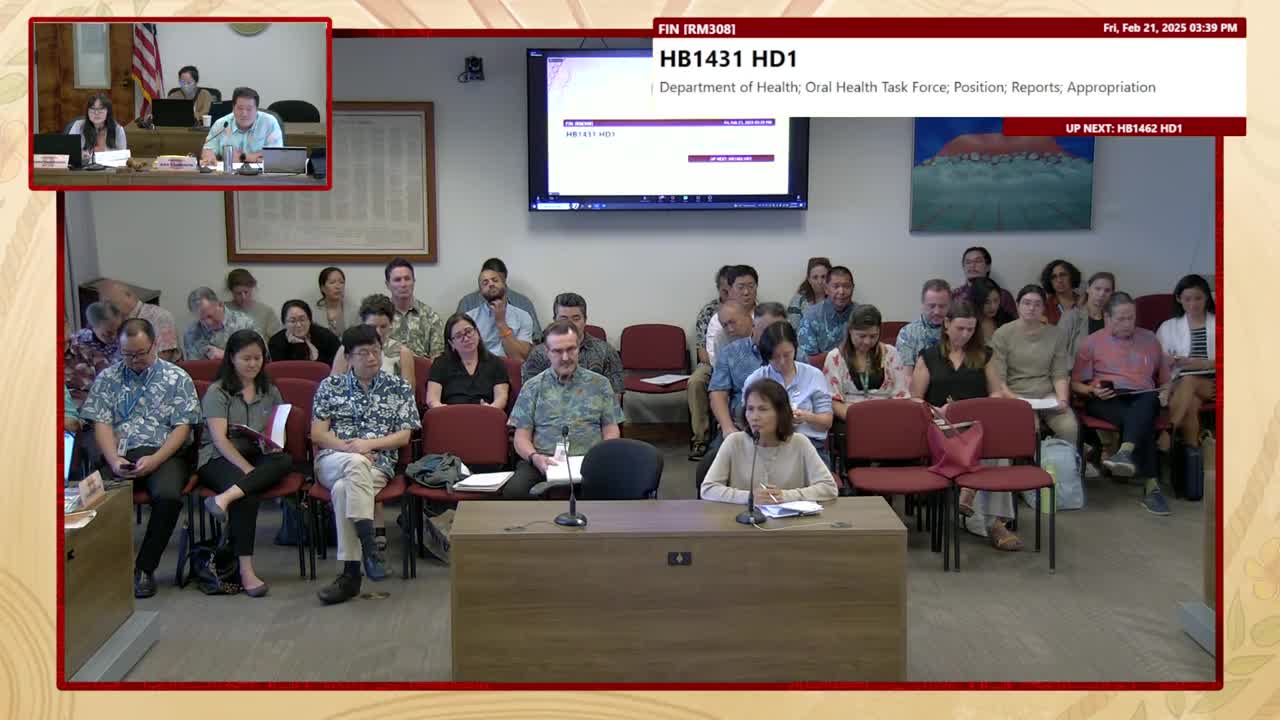
| Feb 21, 2025 | The committee on FIN recommend that the measure be PASSED, UNAMENDED | House Standing Committee on Finance |
Passed |
|
| Feb 7, 2025 | The committee on JHA recommend that the measure be PASSED, WITH AMENDMENTS | House Standing Committee on Judiciary & Hawaiian Affairs |
Passed |
|
| Feb 7, 2025 | The committee on CPC recommend that the measure be PASSED, WITH AMENDMENTS | House Standing Committee on Consumer Protection & Commerce |
Passed |
|
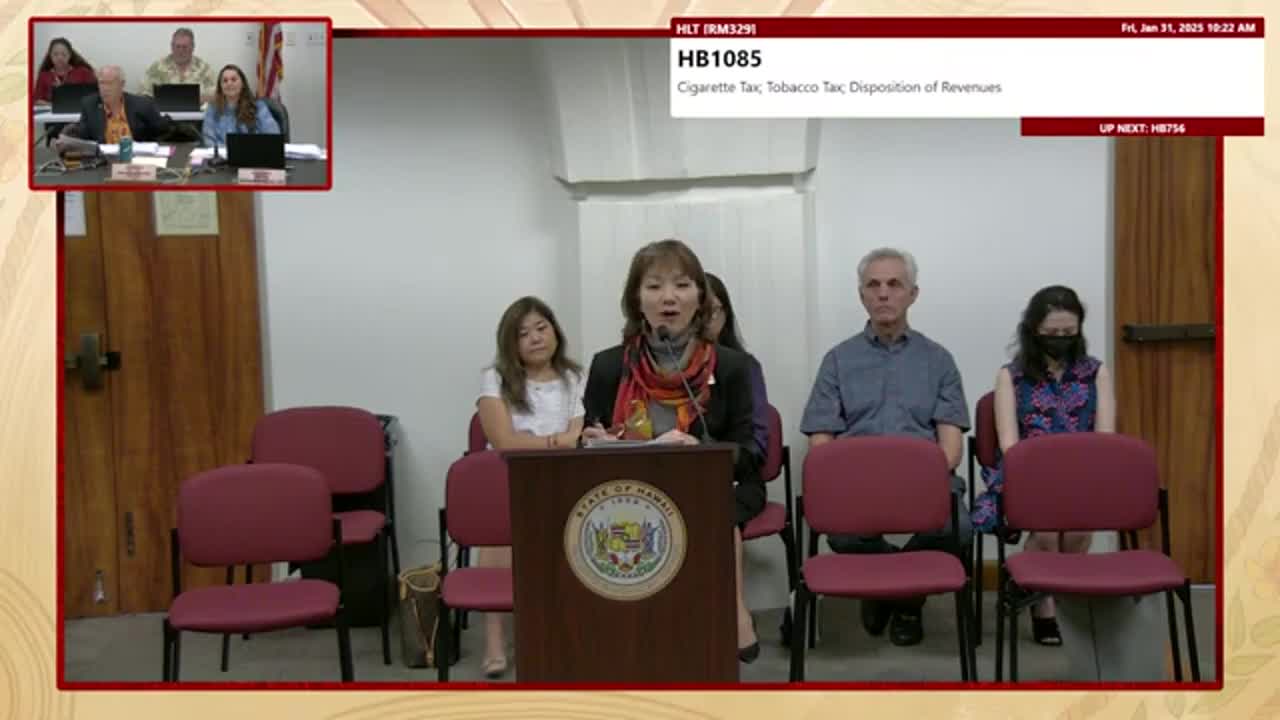
| Jan 31, 2025 | The committee on HLT recommend that the measure be PASSED, WITH AMENDMENTS | House Standing Committee on Health |
Passed |
This list shows positions taken on this bill by organizations on the date displayed, which is linked to the original source.
Positions by individuals are not included.
|
Organization
|
Position
|
Date
|
|---|---|---|
| ABC Stores | *** Against | Feb 20, 2025 |
| AlohaCare | ** Support | |
| AlohaCare | *** Support | Feb 20, 2025 |
| American Lung Association | ** Support | |
| Americans for Tax Reform | *** Against | Feb 7, 2025 |
| Bevmart | *** Against | Feb 20, 2025 |
| Bionic Petroleum | *** Against | Feb 20, 2025 |
| BMA Mart | *** Against | Feb 20, 2025 |
| Campaign for Tobacco-Free Kids | ** Support | |
| China Town Liquor | *** Against | Feb 20, 2025 |
| Chinatown Liquor | *** Against | Feb 7, 2025 |
| Cigarettes and Things | *** Against | Feb 20, 2025 |
| Coalition for a Tobacco-Free Hawaiʻi | ** Support | |
| Coalition for a Tobacco-Free Hawaiʻi Youth Council | ** Support | |
| Department of Health | *** Support | Feb 20, 2025 |
| Department of Health | ** Support | |
| Department of the Attorney General | ** Support | |
| Discount Smoke Shop Hawaii | *** Against | Feb 20, 2025 |
| Ewa Pantry | *** Against | Feb 20, 2025 |
| Family Medicine | *** Support | Feb 7, 2025 |
| Hawaii Association of Independent Schools | *** Support | Feb 20, 2025 |
| Hawaii Association of Independent Schools | ** Support | |
| Hawaii Association of Independent Schools (HAIS) | *** Support | Feb 7, 2025 |
| Hawaii COPD Coalition | ** Support | |
| Hawaii Dental Association | ** Support | |
| Hawaii Dental Association | *** Support | Feb 20, 2025 |
| Hawaii Smokers Alliance | *** Against | Feb 20, 2025 |
| Hawaii State Council on Developmental Disabilities | ** Support | |
| Hawaii Substance Abuse Coalition | ** Support | |
| Hawaii Children's Action Network Speaks! | ** Support | |
| Hawaiʻi Association of Independent Schools | ** Support | |
| Hawaiʻi Health & Harm Reduction Center | ** Support | |
| Hawaiʻi Public Health Association | ** Support | |
| Hawaiʻi State Teachers Association | ** Support | |
| Hawaiʻi Primary Care Association | ** Support | |
| Hawaiʻi Youth Services Network | ** Support | |
| Hawaiʻi-American Nurses Association | ** Support | |
| Hawai‘i County Council - District 2 | *** Support | Feb 20, 2025 |
| Hina Mauka | ** Support | |
| Japan Tobacco International U.S.A., Inc. | *** Against | Feb 7, 2025 |
| Kailua High School | ** Support | |
| Kainehe Liquor | *** Against | Feb 20, 2025 |
| Kaiser Permanente Hawaiʻi | ** Support | |
| Kakaako Smokes | *** Against | Feb 20, 2025 |
| KCL Aloha Pacific Inc. | *** Against | Feb 20, 2025 |
| Keiki Injury Prevention Coalition | ** Support | |
| Kihei Charter School | ** Support | |
| Kona Liquor Store | *** Against | Feb 20, 2025 |
| Marukin Market | *** Against | Feb 20, 2025 |
| MauiYouth & Family Services | *** Support | Feb 7, 2025 |
| No. 1 Store | *** Against | Feb 20, 2025 |
| Nonstop Convenience | *** Against | Feb 20, 2025 |
| Parents And Children Together | ** Support | |
| Punahou School | *** Support | Feb 20, 2025 |
| Reason Foundation | *** Against | Jan 30, 2025 |
| Retail Merchants of Hawaii | *** Against | Feb 20, 2025 |
| S&K Wholesale | *** Against | Feb 20, 2025 |
| Stanford REACH Lab | *** Support | Feb 20, 2025 |
| Tax Foundation | *** Against | Feb 20, 2025 |
| Taxpayers Protection Alliance | *** Against | Feb 20, 2025 |
| The Friends of Kamalani & Lydgate Park | ** Support | |
| The Friends of Kamalani & Lydgate Park | *** Support | Feb 20, 2025 |
| Tobacco-Free Kids Action Fund | ** Support | |
| University of Hawaii Student Health Advisory Council | ** Support | |
| University of Hawaii Student Health Advisory Council | ** Support | |
| Waianae Coast Comprehensive Health Center | ** Support | |
| Wawa Village Market | *** Against | Feb 20, 2025 |
| Young's Wine & Spirit | *** Against | Feb 20, 2025 |
STAND. COM. REP. NO. 954
Honolulu, Hawaii
, 2025
RE: H.B. No. 756
H.D. 2
Honorable Nadine K. Nakamura
Speaker, House of Representatives
Thirty-Third State Legislature
Regular Session of 2025
State of Hawaii
Madame:
Your Committee on Finance, to which was referred H.B. No. 756, H.D. 2, entitled:
"A BILL FOR AN ACT RELATING TO HEALTH,"
begs leave to report as follows:
Your Committee received testimony in support of this measure from the Department of Health; Kailua High School; Kihei Charter School; one member of the Hawaiʻi County Council; Hawaiʻi Youth Services Network; Hawaiʻi Public Health Association; Hawaii Substance Abuse Coalition; Hawaiʻi State Teachers Association; Parents And Children Together; Kaiser Permanente Hawaiʻi; Hawaiʻi Association of Independent Schools; Hina Mauka; Keiki Injury Prevention Coalition; Hawaiʻi-American Nurses Association; Hawaiʻi Primary Care Association; Hawaii COPD Coalition; Campaign for Tobacco-Free Kids; Tobacco-Free Kids Action Fund; AlohaCare; The Friends of Kamalani & Lydgate Park; University of Hawaii Student Health Advisory Council; Hawaii Dental Association; Coalition for a Tobacco-Free Hawaiʻi; Coalition for a Tobacco-Free Hawaiʻi Youth Council; Hawaiʻi Health & Harm Reduction Center; Waianae Coast Comprehensive Health Center; and numerous individuals.
Your Committee received testimony in opposition to this measure from Kainehe Liquor; BMA Mart; ABC Stores; Cigarettes and Things; Bionic Petroleum; China Town Liquor; Cigar Association of America, Inc.; Marukin Market; Retail Merchants of Hawaii; Discount Smoke Shop Hawaii; KCL Aloha Pacific Inc.; No. 1 Store; S&K Wholesale; Nonstop Convenience; Young's Wine & Spirit; Wawa Village Market; Kona Liquor Store; Hawaii Smokers Alliance; Bevmart; Ewa Pantry; Kakaako Smokes; and six individuals.
Your Committee received comments on this measure from the Department of the Attorney General; Tax Foundation; and Taxpayers Protection Alliance.
As affirmed by the record of votes of the members of your Committee on Finance that is attached to this report, your Committee is in accord with the intent and purpose of H.B. No. 756, H.D. 2, and recommends that it pass Third Reading.
Respectfully submitted on behalf of the members of the Committee on Finance,
|
|
|
____________________________ KYLE T. YAMASHITA, Chair |
|
|
|
|
STAND. COM. REP. NO. 553
Honolulu, Hawaii
, 2025
RE: H.B. No. 756
H.D. 2
Honorable Nadine K. Nakamura
Speaker, House of Representatives
Thirty-Third State Legislature
Regular Session of 2025
State of Hawaii
Madame:
Your Committees on Consumer Protection & Commerce and Judiciary & Hawaiian Affairs, to which was referred H.B. No. 756, H.D. 1, entitled:
"A BILL FOR AN ACT RELATING TO HEALTH,"
beg leave to report as follows:
The purpose of this measure is to:
(1) Prohibit the sale, offer for sale, or possession with the intent to sell or offer for sale, of all flavored nicotine products and nicotine product flavor enhancers, including products with menthol;
(2) Prohibit the mislabeling of e-liquid products as nicotine-free;
(3) Authorize the Department of Health to appoint, commission, or contract for services of third-party inspectors to enforce the prohibitions; and
(4) Establish positions and appropriate funds for those positions.
Your Committees received testimony in support of this measure from the Department of the Attorney General; Department of Health; Hawaii State Council on Developmental Disabilities; Hina Mauka; Hawaii Substance Abuse Coalition; Coalition for a Tobacco-Free Hawaiʻi Youth Council; Hawaii COPD Coalition; Hawaiʻi Public Health Association; Campaign for Tobacco-Free Kids; Tobacco-Free Kids Action Fund; Hawaiʻi American Nurses Association; Hawaiʻi Youth Services Network; Hawaiʻi State Teachers Association; Coalition for a Tobacco-Free Hawaiʻi; Hawaii Dental Association; Hawaii Primary Care Association; University of Hawaii Student Health Advisory Council; Hawaii Association of Independent Schools; Hawaiʻi Health & Harm Reduction Center; Kaiser Permanente Hawaiʻi; American Lung Association; and numerous individuals. Your Committees received testimony in opposition to this measure from the Retain Merchants of Hawaii; ABC Stores; Japan Tobacco International U.S.A., Inc.; Americans for Tax Reform; Marukin Market; Hawaii Smokers Alliance; BMA Mart; Cigarettes and Things; Ewa Pantry; Cigar Association of America, Inc.; China Town Liquor; Wawa Market; R&K Grocery and Liquor; Kainehe Liquor; Kilani Market; S&K Wholesale; Nonstop Convenience; Kona Liquor Store; and five individuals. Your Committees received comments on this measure from Maui Youth and Family Services Adolescent Treatment Team.
Your Committees find that the vaping crisis in the State has evolved and expanded to all adolescence age groups. Current use of e-cigarettes among high school youth is at 13.2 percent, while middle school e-cigarette use is at 10.3 percent. Furthermore, middle school e-cigarette use rose in several key indicators, including experimentation or ever use (12.8 percent to 16.9 percent), daily use (1.2 percent to 2 percent), and frequent use (1.8 percent to 2.7 percent).
Your Committees further find that an expansive catalog of flavors is one of the main reasons why the use of tobacco products and electronic smoking devices by youth continues to rise. Electronic smoking devices and flavored tobacco products have been glamorized and promoted in a manner to appeal to youth, using flavors like candy, fruit, Maui mango, and shaka strawberry. The majority of youth who use electronic smoking devices report using a flavored product. This measure seeks to address the youth tobacco and vaping crisis by prohibiting the sale and distribution of flavored tobacco products and mislabeling of e-liquid products and provides the Department of Health with the administrative authority needed to enforce this ban.
Your Committees have amended this measure by:
(1) Clarifying that the disposal of electronic smoking devices and e-liquids as hazardous waste is done in accordance with rules adopted by the Department of Health pursuant to its authority to regulate the disposal of hazardous waste in the State;
(2) Amending a cross reference to prevent the delegation of final decision-making authority to a contracted inspector; and
(3) Making technical, nonsubstantive amendments for the purposes of clarity, consistency, and style.
Your Committees respectfully request your Committee on Finance, should it deliberate on this measure, to consider an appropriation amount of $1,000,000, two full-time equivalent (2.0 FTE) program specialist positions, and one full-time equivalent (1.0 FTE) hearings officer position.
As affirmed by the records of votes of the members of your Committees on Consumer Protection & Commerce and Judiciary & Hawaiian Affairs that are attached to this report, your Committees are in accord with the intent and purpose of H.B. No. 756, H.D. 1, as amended herein, and recommend that it be referred to your Committee on Finance, in the form attached hereto as H.B. No. 756, H.D. 2.
Respectfully submitted on behalf of the members of the Committees on Consumer Protection & Commerce and Judiciary & Hawaiian Affairs,
|
____________________________ DAVID A. TARNAS, Chair |
|
____________________________ SCOT Z. MATAYOSHI, Chair |
|
|
|
|
STAND. COM. REP. NO. 159
Honolulu, Hawaii
, 2025
RE: H.B. No. 756
H.D. 1
Honorable Nadine K. Nakamura
Speaker, House of Representatives
Thirty-Third State Legislature
Regular Session of 2025
State of Hawaii
Madame:
Your Committee on Health, to which was referred H.B. No. 756 entitled:
"A BILL FOR AN ACT RELATING TO HEALTH,"
begs leave to report as follows:
The purpose of this measure is to prohibit the sale or distribution of all flavored nicotine products, including products with menthol, and prohibit the mislabeling of products as nicotine-free.
Your Committee received testimony in support of this measure from the Department of the Attorney General; Department of Health; Hawaii State Council on Developmental Disabilities; Hawaii Youth Services Network; Hawaii Substance Abuse Coalition; Hina Mauka; Keiki Injury Prevention Coalition; Coalition for a Tobacco-Free Hawaii Youth Council; Hawaii COPD Coalition; Hawaii Primary Care Association; Hawaii Children's Action Network Speaks!; Coalition for a Tobacco-Free Hawaii; Campaign for Tobacco-Free Kids Hawaii; Tobacco-Free Kids Action Fund; Kaiser Permanente Hawaii; and numerous individuals. Your Committee received testimony in opposition to this measure from the Cigar Association of America, Inc.; Americans for Tax Reform; ABC Stores; Marukin Market; China Town Liquor; No. 1 Store; Discount Smoke Shop Hawaii; and two individuals. Your Committee received comments on this measure from the Tax Foundation and Reason Foundation.
Your Committee finds that Hawaii's youth have been disproportionately affected by the nationwide vaping epidemic, with latest estimates showing e-cigarette use among high schoolers at 13.2 percent and 10.3 percent use among middle schoolers, a 6.7 percent increase from 2023. Your Committee further finds that more than eight out of ten youth e-cigarette and nicotine pouch users reported using flavored products, with fruit as the most common flavor, followed by candy, desserts or other sweets, mint, and menthol. For youth nicotine pouch users, mint was the most commonly used flavor, followed by fruit.
Your Committee believes that an expansive catalog of flavors is one of the main reasons why the use of tobacco and nicotine products and electronic smoking devices by Hawaii's youth continues to rise. Electronic smoking devices and flavored tobacco products offered in Hawaii include flavors and packaging designed to appeal to the State's youth, such as POG, shaka strawberry, luau punch, and lilikoi lychee. This measure seeks to address the youth vaping crisis by prohibiting the sale and distribution of all flavored nicotine products and mislabeling of products as nicotine-free.
Your Committee has amended this measure by:
(1) Amending the definitions of "distinguishable", "electronic smoking device", "e-liquid", "flavored nicotine product", "nicotine product", "retailer", and "nicotine product retail location";
(2) Inserting definitions for "inspector", "nicotine", and "nicotine product flavor enhancer";
(3) Making it unlawful to sell nicotine product flavor enhancers as well as flavored nicotine products;
(4) Clarifying that a statement or claim that a product is a flavored nicotine product includes any statements or claims made by an importer, a distributor, or a retailer, or their agents or employees, and any claims that the product has a minty or cooling effect;
(5) Authorizing the Department of Health to amend interim rules;
(6) Clarifying the Department of Health's ability to contract with third-party inspectors;
(7) Changing the number of full-time equivalent positions to unspecified numbers;
(8) Changing the effective date to July 1, 3000, to encourage further discussion; and
(9) Making technical, nonsubstantive amendments for the purposes of clarity, consistency, and style.
Your Committee respectfully requests your Committee on Finance, should it deliberate on this measure, to consider appropriating funds for two full-time equivalent (2.0 FTE) program specialist positions and one full-time equivalent (1.0 FTE) hearings officer position.
As affirmed by the record of votes of the members of your Committee on Health that is attached to this report, your Committee is in accord with the intent and purpose of H.B. No. 756, as amended herein, and recommends that it pass Second Reading in the form attached hereto as H.B. No. 756, H.D. 1, and be referred to your Committees on Consumer Protection & Commerce and Judiciary & Hawaiian Affairs.
Respectfully submitted on behalf of the members of the Committee on Health,
|
|
|
____________________________ GREGG TAKAYAMA, Chair |
|
|
|
|
|
Date
|
Testimony PDF
|
|---|---|
| Feb 20, 2025 | HB756_HD2_TESTIMONY_FIN_02-21-25_.PDF |
| Feb 7, 2025 | HB756_HD1_TESTIMONY_CPC-JHA_02-07-25_.PDF |
| Jan 30, 2025 | HB756_TESTIMONY_HLT_01-31-25_.PDF |
Discussed in Hearing
 23MIN
House Standing Committee on Finance
 29MIN
House Standing Committee on Consumer Protection & Commerce
29MIN
House Standing Committee on Judiciary & Hawaiian Affairs
 19MIN
House Standing Committee on Health
19MIN