SB 311: Constitutional Amendment; Freedom of Speech; Monetary Expenditures to Influence Elections
- Session Year: 2025-2026
- House: Senate
- Latest Version Date: 2025-03-17
Current Status:
Failed
(2025-12-08: Carried over to 2026 Regular Session.)
Introduced
In Committee
First Chamber
In Committee
Second Chamber
Final Decking
Enacted
Proposes an amendment to the Hawaii State Constitution to provide that freedom of speech protected under the Hawaii State Constitution does not include the expenditure of money to influence elections. Effective 7/1/3000. (HD1)
Proposes an amendment to the Hawaii State Constitution to provide that freedom of speech protected under the Hawaii State Constitution does not include the expenditure of money to influence elections. (SD1)
Proposes an amendment to the Hawaii State Constitution to provide that freedom of speech protected under the Hawaii State Constitution does not include the expenditure of money to influence elections.
|
THE SENATE |
S.B. NO. |
311 |
|
THIRTY-THIRD LEGISLATURE, 2025 |
S.D. 1 |
|
|
STATE OF HAWAII |
H.D. 1 |
|
|
|
|
|
|
|
||
|
|
||
A BILL FOR AN ACT
PROPOSING AN AMENDMENT TO THE HAWAII STATE CONSTITUTION REGARDING THE FREEDOM OF SPEECH.
BE IT ENACTED BY THE LEGISLATURE OF THE STATE OF HAWAII:
SECTION 1. The legislature finds that the United States Supreme Court's decision in Citizens United v. Federal Election Commission, 558 U.S. 310 (2010), reversed long-standing campaign finance restrictions and designated corporate spending on elections as free speech protected under the First Amendment of the Constitution of the United States. The legislature also finds that the United States Supreme Court's decision in Buckley v. Valeo, 424 U.S. 1 (1976), provided protection under the United States Constitution to the expenditure of money to influence policy. The Citizens United decision removed any limits on the amount of money that corporations, special interest groups, and political action committees (PACs) could spend on an election. The legislature further finds that the decisions in Citizens United and Buckley are a serious threat to our democracy. Corporations enjoy various advantages, including limited liability, perpetual life, and favorable treatment in the accumulation and distribution of assets, which allow them to amass and spend an extraordinary amount of money on political messages that often have far greater reach and influence than messages from individuals. During the thirteen years since the Citizens United decision, there has been a massive increase in political spending by corporations, special interest groups, and PACs, dramatically expanding their already outsized political influence on election outcomes and policy decisions.
The legislature also finds that the power to amend state constitutions rests with the people of each state, and the legislature believes it is critical that the State express its disapproval of the Citizens United and Buckley decisions. At least twenty states, including Hawaii in 2016, have taken legislative action urging Congress to pass a proposed constitutional amendment that overturns the decision in Citizens United; however, Congress has failed to take any action and appears unlikely to do so.
The legislature acknowledges that as long as Citizens United and Buckley are binding law, this Act will have no effect on the Constitution of the United States. United States Supreme Court decisions can be overturned, as demonstrated by the Court's decision to override the fifty-year-old Roe v. Wade decision. Therefore, a state constitutional provision, while not binding today, may nonetheless be valuable in the future.
Accordingly, the purpose of this Act is to propose an amendment to article I, section 4, of the Hawaii State Constitution to provide that the expenditure of money to influence elections is not a form of speech protected under the Hawaii State Constitution.
SECTION 2. Article I, section 4, of the Constitution of the State of Hawaii is amended to read as follows:
"FREEDOM OF RELIGION, SPEECH, PRESS,
ASSEMBLY AND PETITION
Section 4. No law shall be enacted respecting an establishment of religion, or prohibiting the free exercise thereof, or abridging the freedom of speech or of the press or the right of the people peaceably to assemble and to petition the government for a redress of grievances.
The freedom of speech shall not include the expenditure of money to influence elections."
SECTION 3. The question to be printed on the ballot shall be as follows:
"Shall the Hawaii State Constitution be amended to state that freedom of speech protections under the Hawaii State Constitution do not include the expenditure of money to influence elections?"
SECTION 4. New constitutional material is underscored.
SECTION 5. This amendment shall take effect on July 1, 3000; provided that this amendment shall take effect upon compliance with article XVII, section 3, of the Constitution of the State of Hawaii.
Report Title:
Constitutional Amendment; Freedom of Speech; Monetary Expenditures to Influence Elections
Description:
Proposes an amendment to the Hawaii State Constitution to provide that freedom of speech protected under the Hawaii State Constitution does not include the expenditure of money to influence elections. Effective 7/1/3000. (HD1)
The summary description of legislation appearing on this page is for informational purposes only and is not legislation or evidence of legislative intent.
|
THE SENATE |
S.B. NO. |
311 |
|
THIRTY-THIRD LEGISLATURE, 2025 |
S.D. 1 |
|
|
STATE OF HAWAII |
|
|
|
|
|
|
|
|
||
|
|
||
A BILL FOR AN ACT
PROPOSING AN AMENDMENT TO THE HAWAII STATE CONSTITUTION REGARDING THE FREEDOM OF SPEECH.
BE IT ENACTED BY THE LEGISLATURE OF THE STATE OF HAWAII:
SECTION 1. The legislature finds that the United States Supreme Court's decision in Citizens United v. Federal Election Commission, 558 U.S. 310 (2010), reversed long-standing campaign finance restrictions and designated corporate spending on elections as free speech protected under the First Amendment of the Constitution of the United States. The legislature also finds that the United States Supreme Court's decision in Buckley v. Valeo, 424 U.S. 659 (1976), provided protection under the United States Constitution to the expenditure of money to influence policy. The Citizens United decision removed any limits on the amount of money that corporations, special interest groups, and political action committees (PACs) could spend on an election. The legislature further finds that the decisions in Citizens United and Buckley are a serious threat to our democracy. Corporations enjoy various advantages, including limited liability, perpetual life, and favorable treatment in the accumulation and distribution of assets, which allow them to amass and spend an extraordinary amount of money on political messages that often have far greater reach and influence than messages from individuals. During the thirteen years since the Citizens United decision, there has been a massive increase in political spending by corporations, special interest groups, and PACs, dramatically expanding their already outsized political influence on election outcomes and policy decisions.
The legislature also finds that the power to amend state constitutions rests with the people of each state, and the legislature believes it is critical that the State express its disapproval of the Citizens United and Buckley decisions. At least twenty states, including Hawaii in 2016, have taken legislative action urging Congress to pass a proposed constitutional amendment that overturns the decision in Citizens United; however, Congress has failed to take any action and appears unlikely to do so.
The legislature acknowledges that as long as Citizens United and Buckley are binding law, this Act will have no effect on the Constitution of the United States. United States Supreme Court decisions can be overturned, as demonstrated by the Court's decision to override the fifty-year-old Roe v. Wade decision. Therefore, a state constitutional provision, while not binding today, may nonetheless be valuable in the future.
Accordingly, the purpose of this Act is to propose an amendment to article I, section 4, of the Hawaii State Constitution to provide that the expenditure of money to influence elections is not a form of speech protected under the Hawaii State Constitution.
SECTION 2. Article 1, section 4, of the Constitution of the State of Hawaii is amended to read as follows:
"FREEDOM OF RELIGION, SPEECH, PRESS,
ASSEMBLY AND PETITION
Section 4. No law shall be enacted respecting an establishment of religion, or prohibiting the free exercise thereof, or abridging the freedom of speech or of the press or the right of the people peaceably to assemble and to petition the government for a redress of grievances.
The freedom of speech shall not include the expenditure of money to influence elections."
SECTION 3. The question to be printed on the ballot shall be as follows:
"Shall the Hawaii State Constitution be amended to state that freedom of speech protections under the Hawaii State Constitution do not include the expenditure of money to influence elections, which would take effect if the United States Supreme Court overturns, Congress overrides, or an amendment to the United States Constitution invalidates the United States Supreme Court's decisions in Citizens United v. Federal Election Commission and Buckley v. Valeo, which provide protection under the United States Constitution to the expenditure of money to influence policy?"
SECTION 4. New constitutional material is underscored.
SECTION 5. This amendment shall take effect upon compliance with article XVII, section 3, of the Constitution of the State of Hawaii.
Report Title:
Constitutional Amendment; Freedom of Speech; Monetary Expenditures to Influence Elections
Description:
Proposes an amendment to the Hawaii State Constitution to provide that freedom of speech protected under the Hawaii State Constitution does not include the expenditure of money to influence elections. (SD1)
The summary description of legislation appearing on this page is for informational purposes only and is not legislation or evidence of legislative intent.
|
THE SENATE |
S.B. NO. |
311 |
|
THIRTY-THIRD LEGISLATURE, 2025 |
|
|
|
STATE OF HAWAII |
|
|
|
|
|
|
|
|
||
|
|
||
A BILL FOR AN ACT
PROPOSING AN AMENDMENT TO THE HAWAII STATE CONSTITUTION REGARDING THE FREEDOM OF SPEECH.
BE IT ENACTED BY THE LEGISLATURE OF THE STATE OF HAWAII:
SECTION 1. The legislature finds that the United States Supreme Court's decision in Citizens United v. Federal Election Commission, 558 U.S. 310 (2010), reversed long-standing campaign finance restrictions and designated corporate spending on elections as free speech protected under the First Amendment of the Constitution of the United States. The decision removed any limits on the amount of money that corporations, special interest groups, and political action committees (PACs) could spend on an election. The legislature further finds that the decision in Citizens United is a serious threat to our democracy. Corporations enjoy various advantages, including limited liability, perpetual life, and favorable treatment in the accumulation and distribution of assets, which allow them to amass and spend an extraordinary amount of money on political messages that often have far greater reach and influence than messages from individuals. During the thirteen years since the Citizens United decision, there has been a massive increase in political spending by corporations, special interest groups, and PACs, dramatically expanding their already outsized political influence on election outcomes and policy decisions.
The legislature also finds that the power to amend state constitutions rests with the people of each state, and the legislature believes it is critical that the State express its disapproval of the Citizens United decision. At least twenty states, including Hawaii in 2016, have taken legislative action urging Congress to pass a proposed constitutional amendment that overturns the decision in Citizens United; however, Congress has failed to take any action and appears unlikely to do so.
The legislature acknowledges that as long as Citizens United is binding law, this Act will have no effect on the Constitution of the United States. United States Supreme Court decisions can be overturned, as demonstrated by the Court's decision to override the fifty-year-old Roe v. Wade decision. Therefore, a state constitutional provision, while not binding today, may nonetheless be valuable in the future.
Accordingly, the purpose of this Act is to propose an amendment to article I, section 4, of the Hawaii State Constitution to provide that the expenditure of money to influence elections is not a form of speech protected under the Hawaii State Constitution.
SECTION 2. Article 1, section 4, of the Constitution of the State of Hawaii is amended to read as follows:
"FREEDOM OF RELIGION, SPEECH, PRESS,
ASSEMBLY AND PETITION
Section 4. No law shall be enacted respecting an establishment of religion, or prohibiting the free exercise thereof, or abridging the freedom of speech or of the press or the right of the people peaceably to assemble and to petition the government for a redress of grievances.
The freedom of speech shall not include the expenditure of money to influence elections."
SECTION 3. The question to be printed on the ballot shall be as follows:
"Shall the Hawaii State Constitution be amended to state that freedom of speech protections under the Hawaii State Constitution do not include the expenditure of money to influence elections, which would take effect if the United States Supreme Court overturns, Congress overrides, or an amendment to the United States Constitution invalidates the United States Supreme Court's decision in Citizens United v. Federal Election Commission, which allows unrestricted spending by corporations on elections?"
SECTION 4. New constitutional material is underscored.
SECTION 5. This amendment shall take effect upon compliance with article XVII, section 3, of the Constitution of the State of Hawaii.
|
INTRODUCED BY: |
_____________________________ |
|
|
|
Report Title:
Constitutional Amendment; Freedom of Speech; Monetary Expenditures to Influence Elections
Description:
Proposes an amendment to the Hawaii State Constitution to provide that freedom of speech protected under the Hawaii State Constitution does not include the expenditure of money to influence elections.
The summary description of legislation appearing on this page is for informational purposes only and is not legislation or evidence of legislative intent.
|
Date
|
Status
|
|---|---|
| Dec 8, 2025 | Carried over to 2026 Regular Session. |
| Mar 18, 2025 | Passed Second Reading as amended in HD 1 and referred to the committee(s) on FIN with none voting aye with reservations; Representative(s) Alcos, Garcia, Muraoka, Pierick, Shimizu voting no (5) and Representative(s) Cochran, Ward excused (2). |
| Mar 18, 2025 | Reported from JHA (Stand. Com. Rep. No. 1329) as amended in HD 1, recommending passage on Second Reading and referral to FIN. |
| Mar 12, 2025 | The committee on JHA recommend that the measure be PASSED, WITH AMENDMENTS. The votes were as follows: 8 Ayes: Representative(s) Tarnas, Poepoe, Belatti, Hashem, Kahaloa, Perruso, Takayama, Todd; Ayes with reservations: none; 2 Noes: Representative(s) Garcia, Shimizu; and 1 Excused: Representative(s) Cochran. |
| Mar 10, 2025 | Bill scheduled to be heard by JHA on Wednesday, 03-12-25 2:00PM in House conference room 325 VIA VIDEOCONFERENCE. |
| Mar 10, 2025 | Notice of bill proposing constitutional amendment transmitted to Governor pursuant to Article XVII, Section 3 (Sen. Com. No. 1). |
| Mar 6, 2025 | Referred to JHA, FIN, referral sheet 19 |
| Mar 6, 2025 | Pass First Reading |
| Mar 4, 2025 | Received from Senate (Sen. Com. No. 130) in amended form (SD 1). |
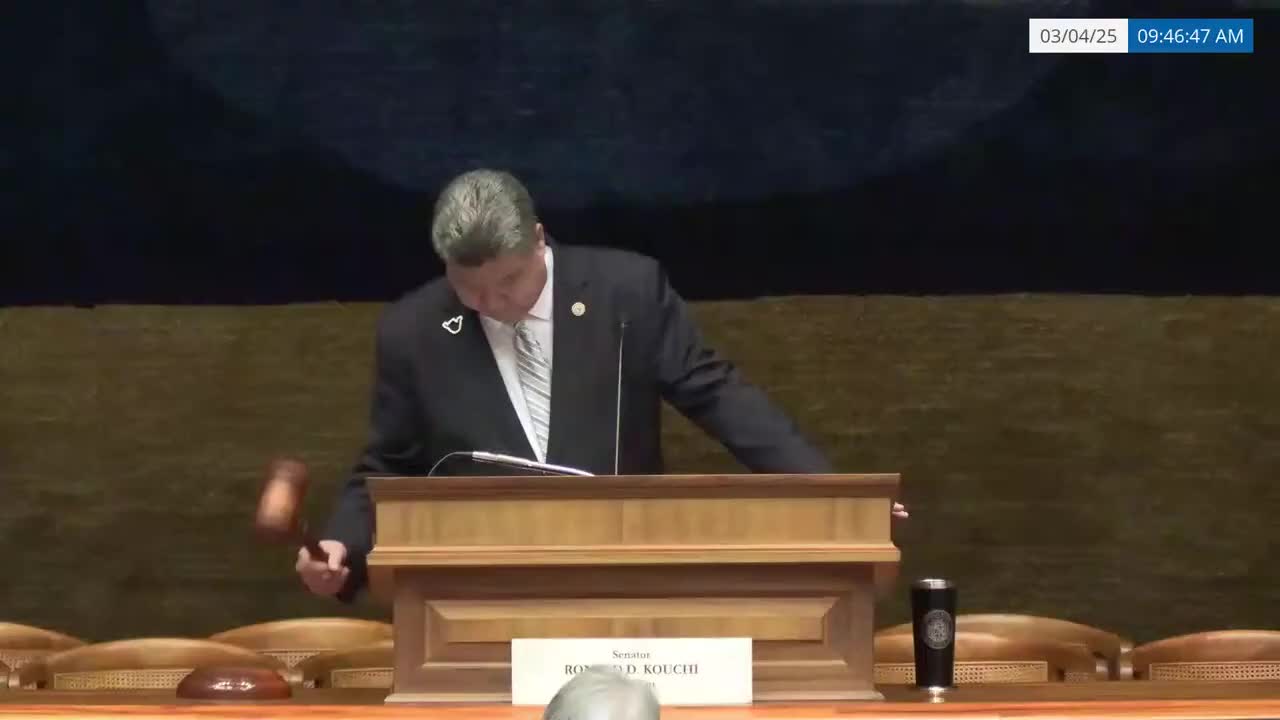
| Mar 4, 2025 | Passed Third Reading, as amended (SD 1). Ayes, 25; Aye(s) with reservations: none. Noes, 0 (none). Excused, 0 (none). Transmitted to House. |
| Feb 27, 2025 | 48 Hrs. Notice 03-04-25. |
| Feb 27, 2025 | Report adopted; Passed Second Reading, as amended (SD 1). |
| Feb 27, 2025 | Reported from JDC (Stand. Com. Rep. No. 713) with recommendation of passage on Second Reading, as amended (SD 1) and placement on the calendar for Third Reading. |
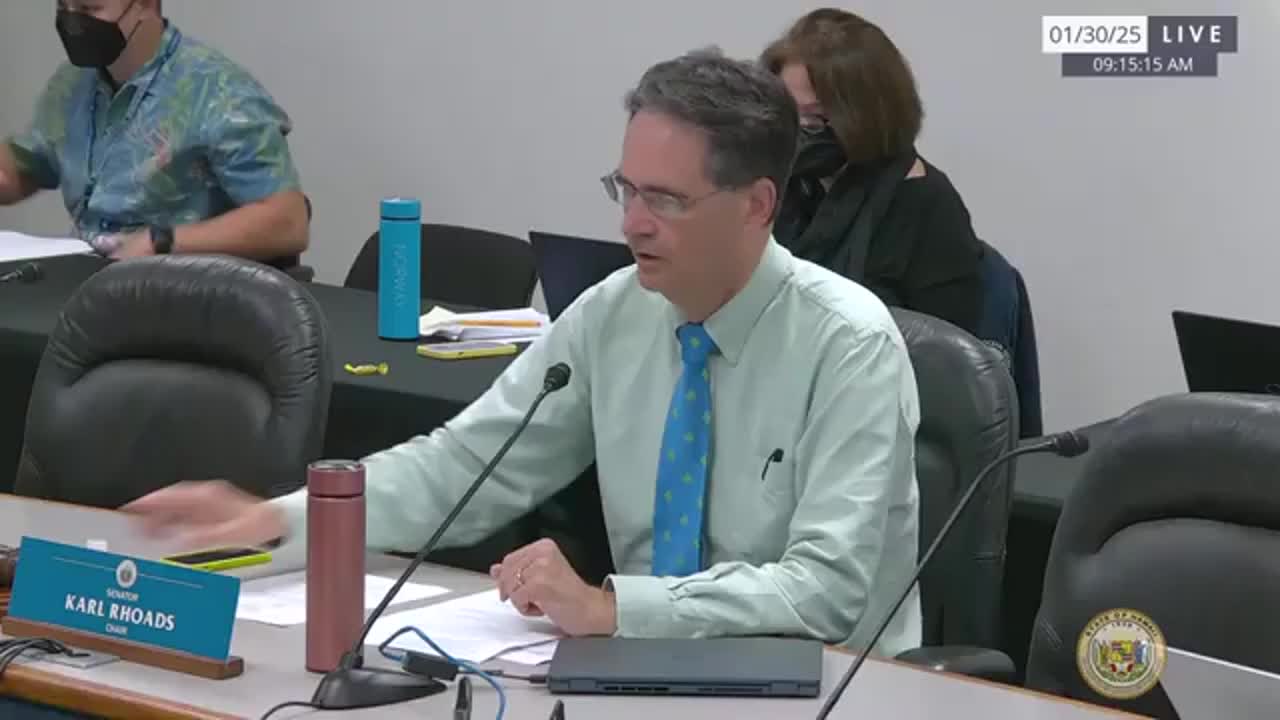
| Jan 30, 2025 | The committee(s) on JDC recommend(s) that the measure be PASSED, WITH AMENDMENTS. The votes in JDC were as follows: 5 Aye(s): Senator(s) Rhoads, Gabbard, Chang, San Buenaventura, Awa; Aye(s) with reservations: none ; 0 No(es): none; and 0 Excused: none. |
| Jan 29, 2025 | Re-Referred to JDC. |
| Jan 27, 2025 | The committee(s) on JDC has scheduled a public hearing on 01-30-25 9:15AM; Conference Room 016 & Videoconference. |
| Jan 21, 2025 | Referred to JDC, WAM. |
| Jan 15, 2025 | Introduced and passed First Reading. |
| Jan 14, 2025 | Pending Introduction. |
|
Date
|
Description
|
Location
|
Votes
|
|
|---|---|---|---|---|
| Mar 12, 2025 | The committee on JHA recommend that the measure be PASSED, WITH AMENDMENTS | House Standing Committee on Judiciary & Hawaiian Affairs |
Passed |
|
| Mar 4, 2025 | Third Reading | Senate Floor |
Passed |
|
| Jan 30, 2025 | The committee(s) on JDC recommend(s) that the measure be PASSED, WITH AMENDMENTS | Senate Standing Committee on Judiciary |
Passed |
This list shows positions taken on this bill by organizations on the date displayed, which is linked to the original source.
Positions by individuals are not included.
|
Organization
|
Position
|
Date
|
|---|---|---|
| Community Alliance on Prisons | ** Support | |
| Hawaii Patriot Republicans | *** Against | Mar 12, 2025 |
| Hawaiʻi Workers Center | *** Support | Jan 31, 2025 |
| League of Women Voters of Hawaii | ** Support | |
| Pride at Work - Hawaiʻi | ** Support | |
| Pride at Work – Hawai‘i | *** Support | Mar 12, 2025 |
| Sierra Club of Hawaiʻi | *** Support | Jan 31, 2025 |
STAND. COM. REP. NO. 1329
Honolulu, Hawaii
, 2025
RE: S.B. No. 311
S.D. 1
H.D. 1
Honorable Nadine K. Nakamura
Speaker, House of Representatives
Thirty-Third State Legislature
Regular Session of 2025
State of Hawaii
Madame:
Your Committee on Judiciary & Hawaiian Affairs, to which was referred S.B. No. 311, S.D. 1, entitled:
"A BILL FOR AN ACT PROPOSING AN AMENDMENT TO THE HAWAII STATE CONSTITUTION REGARDING THE FREEDOM OF SPEECH,"
begs leave to report as follows:
Your Committee received testimony in support of this measure from Pride at Work - Hawaiʻi; League of Women Voters of Hawaii; Community Alliance on Prisons; and numerous individuals. Your Committee received testimony in opposition to this measure from Hawaii Patriot Republicans and numerous individuals. Your Committee received comments on this measure from one individual.
Your Committee finds that the influence of corporate and special interest money in elections has grown substantially following the United States Supreme Court's decisions in Citizens United v. Federal Election Commission and Buckley v. Valeo. These rulings equated political expenditures with free speech, allowing corporations, political action committees, and other entities to spend unlimited amounts to influence elections and policy decisions. This measure seeks to propose a state constitutional amendment clarifying that the expenditure of money to influence elections is not protected speech under the Hawaii State Constitution. While the proposed amendment would not have immediate legal effect under current federal precedent, it expresses the State's opposition to these rulings and preserves the possibility of future enforcement should federal law change.
Your Committee has amended this measure by:
(1) Amending the ballot question to remove language specifying the circumstances for when the amendment to the Hawaii State Constitution would take effect;
(2) Changing the effective date to July 1, 3000, to encourage further discussion; and
(3) Making technical, nonsubstantive amendments for the purposes of clarity, consistency, and style.
As affirmed by the record of votes of the members of your Committee on Judiciary & Hawaiian Affairs that is attached to this report, your Committee is in accord with the intent and purpose of S.B. No. 311, S.D. 1, as amended herein, and recommends that it pass Second Reading in the form attached hereto as S.B. No. 311, S.D. 1, H.D. 1, and be referred to your Committee on Finance.
Respectfully submitted on behalf of the members of the Committee on Judiciary & Hawaiian Affairs,
|
|
|
____________________________ DAVID A. TARNAS, Chair |
|
|
|
|
STAND. COM. REP. NO. 713
Honolulu, Hawaii
RE: S.B. No. 311
S.D. 1
Honorable Ronald D. Kouchi
President of the Senate
Thirty-Third State Legislature
Regular Session of 2025
State of Hawaii
Sir:
Your Committee on Judiciary, to which was referred S.B. No. 311 entitled:
"A BILL FOR AN ACT PROPOSING AN AMENDMENT TO THE HAWAII STATE CONSTITUTION REGARDING THE FREEDOM OF SPEECH,"
begs leave to report as follows:
The purpose and intent of this measure is to propose an amendment to the Hawaii State Constitution to provide that freedom of speech protected under the Hawaii State Constitution does not include the expenditure of money to influence elections.
Your Committee received testimony in support of this measure from the Community Alliance on Prisons and eight individuals.
Your Committee received testimony in opposition to this measure from two individuals.
Your Committee received comments on this measure from one individual.
Your Committee finds that the United States Supreme Court's decision in Citizens United v. Federal Election Commission, 558 U.S. 310 (2010), reversed long-standing campaign finance restrictions and designated corporate spending on elections as free speech protected under the First Amendment of the Constitution of the United States. The decision removed any limits on the amount of money that corporations, special interest groups, and political action committees (PACs) could spend on an election. During the thirteen years since the Citizens United decision, there has been a massive increase in political spending by corporations, special interest groups, and PACs, dramatically expanding their already outsized political influence on election outcomes and policy decisions. This measure will acknowledge the decision in Citizens United as a serious threat to our democracy and allow the State to express its disapproval of the Citizens United decision.
Your Committee notes that in addition to the Citizens United decision, the United States Supreme Court in Buckley v. Valeo, 424 U.S. 659 (1976), held that limits on expenditures of money to influence elections are protected speech. Your Committee believes that including discussions of the Buckley decision in this measure will provide more context regarding the constitutional protections afforded to the expenditure of money to influence elections.
Accordingly, your Committee has amended this measure by:
(1) Clarifying the ballot question to include the Buckley v. Valeo decision, which, like the Citizens United decision, provides protection under the United States Constitution to the expenditure of money to influence policy;
(2) Inserting additional legislative findings; and
(3) Making technical, nonsubstantive amendments for the purposes of clarity and consistency.
As affirmed by the record of votes of the members of your Committee on Judiciary that is attached to this report, your Committee is in accord with the intent and purpose of S.B. No. 311, as amended herein, and recommends that it pass Second Reading in the form attached hereto as S.B. No. 311, S.D. 1, and be placed on the calendar for Third Reading.
Respectfully submitted on behalf of the members of the Committee on Judiciary,
|
|
|
________________________________ KARL RHOADS, Chair |
|
|
|
|
|
Date
|
Testimony PDF
|
|---|---|
| Mar 12, 2025 | SB311_SD1_TESTIMONY_JHA_03-12-25_.PDF |
| Jan 31, 2025 | SB311_TESTIMONY_JDC_01-30-25_.PDF |
Discussed in Hearing
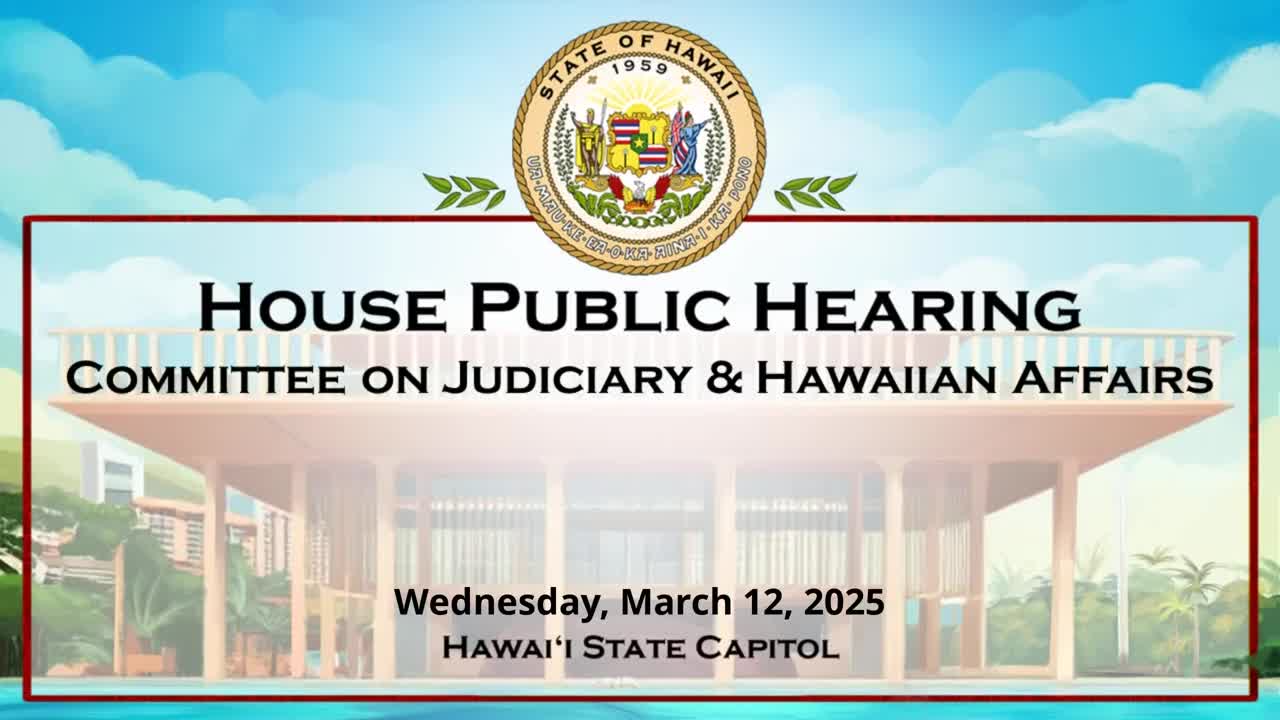 12MIN
House Standing Committee on Judiciary & Hawaiian Affairs
 25SEC
Senate Floor
 3MIN
Senate Standing Committee on Judiciary
Bill Author