SB 2377: Offenses Against Property Rights; Criminal Property Damage of Critical Infrastructure Facilities; Felony
- Session Year: 2025-2026
- House: Senate
- Latest Version Date: 2026-03-23
Current Status:
Failed
(2026-03-24: Passed Second Reading as amended in HD 1 and referred to the committee(s) on JHA with none voting aye with reservations; none voting no (0) and Representative(s) Garrett, Quinlan excused (2).)
Introduced
In Committee
First Chamber
In Committee
Second Chamber
Final Decking
Enacted
What does this bill do?
Creates a new crime that makes it a class C felony (a serious criminal offense) for anyone who knowingly or on purpose damages a critical infrastructure facility without the owner or operator's consent. It also adds broadband, wireless, and cable television networks to the definition of “critical infrastructure.”
The summary is provided by generative AI which can make mistakes. For original language, please view the details in the table below.
Establishes the offense of criminal property damage to critical infrastructure facilities as a class C felony. Expands the term "critical infrastructure" to include broadband, wireless, and cable networks. Effective 7/1/3000. (HD1)
Establishes the offense of criminal property damage to critical infrastructure facilities as a class C felony. Expands the term "critical infrastructure" to include broadband and cable networks. Effective 9/1/2050. (SD2)
Establishes the offense of criminal property damage to critical infrastructure facilities as a class C felony. Expands the term "critical infrastructure" to include broadband and cable networks. Effective 9/1/2050. (SD1)
Establishes the offense of criminal property damage to critical infrastructure facilities as a class C felony. Expands the term "critical infrastructure" to include broadband and cable networks.
|
THE SENATE |
S.B. NO. |
2377 |
|
THIRTY-THIRD LEGISLATURE, 2026 |
S.D. 2 |
|
|
STATE OF HAWAII |
H.D. 1 |
|
|
|
|
|
|
|
||
|
|
||
A BILL FOR AN ACT
RELATING TO PROPERTY DAMAGE OF CRITICAL INFRASTRUCTURE FACILITIES.
BE IT ENACTED BY THE LEGISLATURE OF THE STATE OF HAWAII:
"§708- Criminal property damage of a critical infrastructure facility. (1) A person commits the offense of criminal property damage of a critical infrastructure facility if the person intentionally or knowingly damages any critical infrastructure facility without the owner or operator's consent.
(2) Criminal property damage of a critical infrastructure facility is a class C felony.
(3) For the purposes of this section:
"Critical infrastructure facility" has the same meaning as "critical infrastructure" defined in section 708-890.
"Damage" has the same meaning as defined in section 708‑890."
SECTION 2. Section 708-890, Hawaii Revised Statutes, is amended by amending the definition of "critical infrastructure" to read as follows:
""Critical infrastructure" means publicly or privately owned or operated systems or assets vital to the defense, security, economic security, public health or safety, or any combination thereof, of the State or nation. "Critical infrastructure" includes:
(1) Gas and oil production, storage, and delivery systems;
(2) Water supply systems;
(3) Telecommunications networks;
(4) Electrical power delivery systems;
(5) Finance and banking systems;
(6) Emergency services, such as medical, police, fire, and rescue services;
(7) Transportation
systems and services, such as highways, mass transit, airlines, and airports; [and]
(8) Government
operations that provide essential services to the public[.]; and
(9) Broadband, wireless, and cable television networks."
SECTION 3. This Act does not affect rights and duties that matured, penalties that were incurred, and proceedings that were begun before its effective date.
SECTION 4. Statutory material to be repealed is bracketed and stricken. New statutory material is underscored.
SECTION 5. This Act shall take effect on July 1, 3000.
Report Title:
Offenses Against Property Rights; Criminal Property Damage of Critical Infrastructure Facilities; Felony
Description:
Establishes the offense of criminal property damage to critical infrastructure facilities as a class C felony. Expands the term "critical infrastructure" to include broadband, wireless, and cable networks. Effective 7/1/3000. (HD1)
The summary description of legislation appearing on this page is for informational purposes only and is not legislation or evidence of legislative intent.
|
THE SENATE |
S.B. NO. |
2377 |
|
THIRTY-THIRD LEGISLATURE, 2026 |
S.D. 2 |
|
|
STATE OF HAWAII |
|
|
|
|
|
|
|
|
||
|
|
||
A BILL FOR AN ACT
RELATING TO PROPERTY DAMAGE OF CRITICAL INFRASTRUCTURE FACILITIES.
BE IT ENACTED BY THE LEGISLATURE OF THE STATE OF HAWAII:
"§708- Criminal property damage of a critical infrastructure facility. (1) A person commits the offense of criminal property damage of a critical infrastructure facility if the person intentionally or knowingly damages any critical infrastructure facility without the owner or operator's consent.
(2) Criminal property damage of a critical infrastructure facility is a class C felony.
(3) For the purposes of this section:
"Critical infrastructure facility" has the same meaning as "critical infrastructure" defined in section 708-890.
"Damage" has the same meaning as defined in section 708‑890."
SECTION 2. Section 708-890, Hawaii Revised Statutes, is amended by amending the definition of "critical infrastructure" to read as follows:
""Critical infrastructure" means publicly or privately owned or operated systems or assets vital to the defense, security, economic security, public health or safety, or any combination thereof, of the State or nation. "Critical infrastructure" includes:
(1) Gas and oil production, storage, and delivery systems;
(2) Water supply systems;
(3) Telecommunications networks;
(4) Electrical power delivery systems;
(5) Finance and banking systems;
(6) Emergency services, such as medical, police, fire, and rescue services;
(7) Transportation
systems and services, such as highways, mass transit, airlines, and airports; [and]
(8) Government
operations that provide essential services to the public[.]; and
(9) Broadband and cable television networks."
SECTION 3. This Act does not affect rights and duties that matured, penalties that were incurred, and proceedings that were begun before its effective date.
SECTION 4. Statutory material to be repealed is bracketed and stricken. New statutory material is underscored.
SECTION 5. This Act shall take effect on September 1, 2050.
Report Title:
Offenses Against Property Rights; Criminal Property Damage of Critical Infrastructure Facilities; Felony
Description:
Establishes the offense of criminal property damage to critical infrastructure facilities as a class C felony. Expands the term "critical infrastructure" to include broadband and cable networks. Effective 9/1/2050. (SD2)
The summary description of legislation appearing on this page is for informational purposes only and is not legislation or evidence of legislative intent.
|
THE SENATE |
S.B. NO. |
2377 |
|
THIRTY-THIRD LEGISLATURE, 2026 |
S.D. 1 |
|
|
STATE OF HAWAII |
|
|
|
|
|
|
|
|
||
|
|
||
A BILL FOR AN ACT
RELATING TO PROPERTY DAMAGE OF CRITICAL INFRASTRUCTURE FACILITIES.
BE IT ENACTED BY THE LEGISLATURE OF THE STATE OF HAWAII:
"§708- Criminal property damage of a critical infrastructure facility. (1) A person commits the offense of criminal property damage of a critical infrastructure facility if the person intentionally or knowingly damages any critical infrastructure facility without the owner or operator's consent.
(2) Criminal property damage of a critical infrastructure facility is a class C felony.
(3) For the purposes of this section, "critical infrastructure facility" has the same meaning as "critical infrastructure" defined in section 708-890."
SECTION 2. Section 708-890, Hawaii Revised Statutes, is amended by amending the definition of "critical infrastructure" to read as follows:
""Critical infrastructure" means publicly or privately owned or operated systems or assets vital to the defense, security, economic security, public health or safety, or any combination thereof, of the State or nation. "Critical infrastructure" includes:
(1) Gas and oil production, storage, and delivery systems;
(2) Water supply systems;
(3) Telecommunications networks;
(4) Electrical power delivery systems;
(5) Finance and banking systems;
(6) Emergency services, such as medical, police, fire, and rescue services;
(7) Transportation
systems and services, such as highways, mass transit, airlines, and airports; [and]
(8) Government
operations that provide essential services to the public[.]; and
(9) Broadband and cable television networks."
SECTION 3. This Act does not affect rights and duties that matured, penalties that were incurred, and proceedings that were begun before its effective date.
SECTION 4. Statutory material to be repealed is bracketed and stricken. New statutory material is underscored.
SECTION 5. This Act shall take effect on September 1, 2050.
Report Title:
Offenses Against Property Rights; Criminal Property Damage of Critical Infrastructure Facilities; Felony
Description:
Establishes the offense of criminal property damage to critical infrastructure facilities as a class C felony. Expands the term "critical infrastructure" to include broadband and cable networks. Effective 9/1/2050. (SD1)
The summary description of legislation appearing on this page is for informational purposes only and is not legislation or evidence of legislative intent.
|
THE SENATE |
S.B. NO. |
2377 |
|
THIRTY-THIRD LEGISLATURE, 2026 |
|
|
|
STATE OF HAWAII |
|
|
|
|
|
|
|
|
||
|
|
||
A BILL FOR AN ACT
RELATING TO PROPERTY DAMAGE OF CRITICAL INFRASTRUCTURE FACILITIES.
BE IT ENACTED BY THE LEGISLATURE OF THE STATE OF HAWAII:
"§708- Criminal property damage of a critical infrastructure facility. (1) A person commits the offense of criminal property damage of a critical infrastructure facility if the person intentionally or knowingly damages any critical infrastructure facility without the owner or operator's consent.
(2) Criminal property damage of a critical infrastructure facility is a class C felony.
(3) For the purposes of this section, "critical infrastructure facility" has the same meaning as "critical infrastructure" defined in section 708-890."
SECTION 2. Section 708-890, Hawaii Revised Statutes, is amended by amending the definition of "critical infrastructure" to read as follows:
""Critical infrastructure" means publicly or privately owned or operated systems or assets vital to the defense, security, economic security, public health or safety, or any combination thereof, of the State or nation. "Critical infrastructure" includes:
(1) Gas and oil production, storage, and delivery systems;
(2) Water supply systems;
(3) Telecommunications networks;
(4) Electrical power delivery systems;
(5) Finance and banking systems;
(6) Emergency services, such as medical, police, fire, and rescue services;
(7) Transportation
systems and services, such as highways, mass transit, airlines, and airports; [and]
(8) Government
operations that provide essential services to the public[.]; and
(9) Broadband and cable television networks."
SECTION 3. This Act does not affect rights and duties that matured, penalties that were incurred, and proceedings that were begun before its effective date.
SECTION 4. Statutory material to be repealed is bracketed and stricken. New statutory material is underscored.
SECTION 5. This Act shall take effect upon its approval.
|
INTRODUCED BY: |
_____________________________ |
|
|
|
Report Title:
Offenses Against Property Rights; Criminal Property Damage of Critical Infrastructure Facilities; Felony
Description:
Establishes the offense of criminal property damage to critical infrastructure facilities as a class C felony. Expands the term "critical infrastructure" to include broadband and cable networks.
The summary description of legislation appearing on this page is for informational purposes only and is not legislation or evidence of legislative intent.
|
Date
|
Status
|
|---|---|
| Mar 24, 2026 | Passed Second Reading as amended in HD 1 and referred to the committee(s) on JHA with none voting aye with reservations; none voting no (0) and Representative(s) Garrett, Quinlan excused (2). |
| Mar 24, 2026 | Reported from ECD (Stand. Com. Rep. No. 1324-26) as amended in HD 1, recommending passage on Second Reading and referral to JHA. |
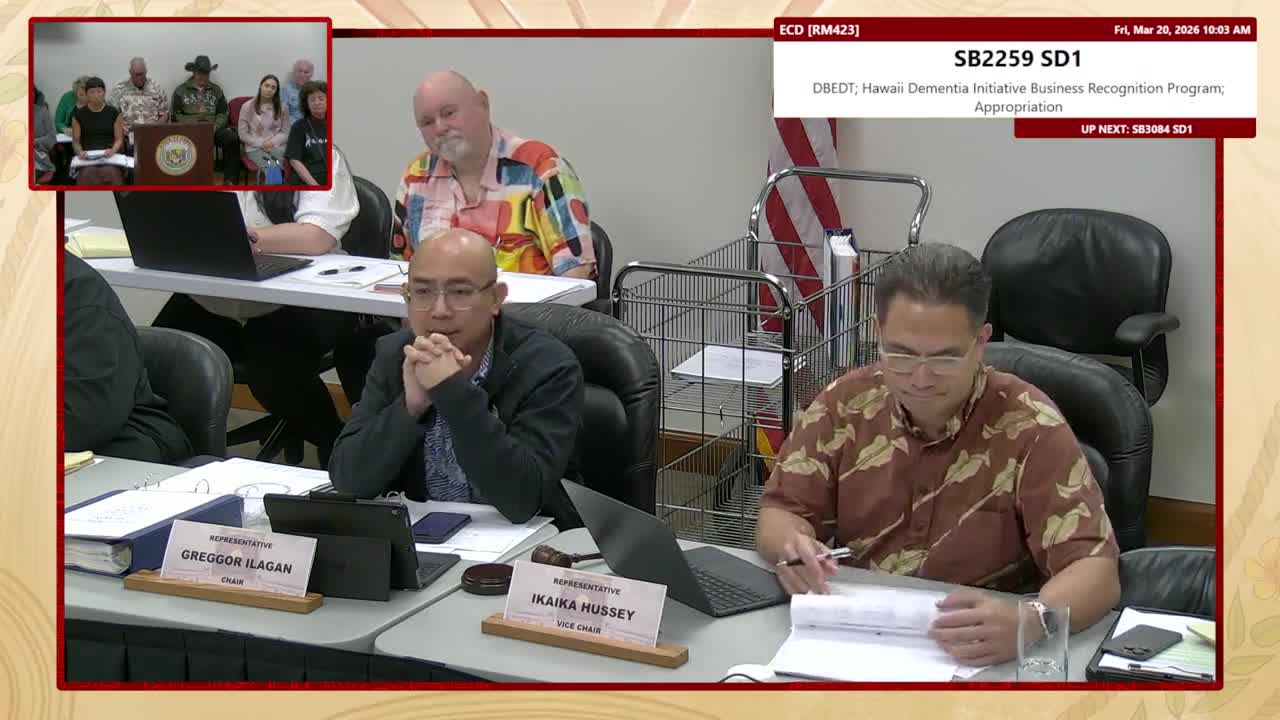
| Mar 20, 2026 | The committee on ECD recommend that the measure be PASSED, WITH AMENDMENTS. The votes were as follows: 6 Ayes: Representative(s) Ilagan, Hussey, Tam, Templo, Yamashita, Gedeon; Ayes with reservations: none; Noes: none; and Excused: none. |
| Mar 16, 2026 | Bill scheduled to be heard by ECD on Friday, 03-20-26 9:30AM in House conference room 423 VIA VIDEOCONFERENCE. |
| Mar 12, 2026 | Referred to ECD, JHA, referral sheet 17 |
| Mar 12, 2026 | Pass First Reading |
| Mar 10, 2026 | Received from Senate (Sen. Com. No. 221) in amended form (SD 2). |
| Mar 10, 2026 | Report adopted; Passed Third Reading, as amended (SD 2). Ayes, 25; Aye(s) with reservations: none . Noes, 0 (none). Excused, 0 (none). Transmitted to House. |
| Mar 6, 2026 | 48 Hrs. Notice 03-10-26. |
| Mar 6, 2026 | Reported from JDC (Stand. Com. Rep. No. 3058) with recommendation of passage on Third Reading, as amended (SD 2). |
| Feb 27, 2026 | The committee(s) on JDC recommend(s) that the measure be PASSED, WITH AMENDMENTS. The votes in JDC were as follows: 5 Aye(s): Senator(s) Rhoads, Gabbard, Chang, San Buenaventura, Awa; Aye(s) with reservations: none ; 0 No(es): none; and 0 Excused: none. |
| Feb 23, 2026 | The committee(s) on JDC will hold a public decision making on 02-27-26 10:30AM; Conference Room 016 & Videoconference. |
| Feb 18, 2026 | Report adopted; Passed Second Reading, as amended (SD 1) and referred to JDC. |
| Feb 18, 2026 | Reported from PSM/EIG (Stand. Com. Rep. No. 2375) with recommendation of passage on Second Reading, as amended (SD 1) and referral to JDC. |
| Feb 10, 2026 | The committee(s) on EIG recommend(s) that the measure be PASSED, WITH AMENDMENTS. The votes in EIG were as follows: 5 Aye(s): Senator(s) Wakai, Chang, DeCoite, Richards; Aye(s) with reservations: Senator(s) Fevella ; 0 No(es): none; and 0 Excused: none. |
| Feb 10, 2026 | The committee(s) on PSM recommend(s) that the measure be PASSED, WITH AMENDMENTS. The votes in PSM were as follows: 4 Aye(s): Senator(s) Fukunaga, Lee, C., Hashimoto, DeCorte; Aye(s) with reservations: none ; 0 No(es): none; and 1 Excused: Senator(s) Inouye. |
| Feb 6, 2026 | The committee(s) on PSM/EIG has scheduled a public hearing on 02-10-26 3:07PM; Conference Room 224 & Videoconference. |
| Jan 28, 2026 | Referred to PSM/EIG, JDC. |
| Jan 21, 2026 | Introduced and passed First Reading. |
| Jan 16, 2026 | Pending Introduction. |
|
Date
|
Description
|
Location
|
Votes
|
|
|---|---|---|---|---|
| Mar 20, 2026 | The committee on ECD recommend that the measure be PASSED, WITH AMENDMENTS | House Standing Committee on Economic Development & Technology |
Passed |
|
| Mar 10, 2026 | Third Reading | Senate Floor |
Passed |
|
| Feb 27, 2026 | The committee(s) on JDC recommend(s) that the measure be PASSED, WITH AMENDMENTS | Senate Standing Committee on Judiciary |
Passed |
|
| Feb 10, 2026 | The committee(s) on EIG recommend(s) that the measure be PASSED, WITH AMENDMENTS | Senate Standing Committee on Energy and Intergovernmental Affairs |
Passed |
|
| Feb 10, 2026 | The committee(s) on PSM recommend(s) that the measure be PASSED, WITH AMENDMENTS | Senate Standing Committee on Public Safety and Military Affairs |
Passed |
This list shows positions taken on this bill by organizations on the date displayed, which is linked to the original source.
Positions by individuals are not included.
|
Organization
|
Position
|
Date
|
|---|---|---|
| Charter Communications | *** Support | Mar 20, 2026 |
| CTIA | *** Support | Mar 20, 2026 |
| CTIA | *** Support | Feb 10, 2026 |
| Department of the Prosecuting Attorney, City and County of Honolulu | *** Support | Mar 20, 2026 |
| Department of the Prosecuting Attorney, County of Maui | *** Support | Mar 20, 2026 |
| Hawaiian Telcom | *** Support | Mar 20, 2026 |
| Honolulu Fire Department | ** Support | |
| Honolulu Police Department | *** Support | Mar 20, 2026 |
| Kaua‘i Police Department | *** Support | Mar 20, 2026 |
| Maui Police Department | ** Support | |
| Office of the Prosecuting Attorney of the County of Hawaii | ** Support | |
| Office of the Public Defender | ** Against | |
| State of Hawaii 911 Board | *** Support | Mar 20, 2026 |
STAND. COM. REP. NO. 3058
Honolulu, Hawaii
RE: S.B. No. 2377
S.D. 2
Honorable Ronald D. Kouchi
President of the Senate
Thirty-Third State Legislature
Regular Session of 2026
State of Hawaii
Sir:
Your Committee on Judiciary, to which was referred S.B. No. 2377, S.D. 1, entitled:
"A BILL FOR AN ACT RELATING TO PROPERTY DAMAGE OF CRITICAL INFRASTRUCTURE FACILITIES,"
begs leave to report as follows:
The purpose and intent of this measure is to:
(1) Establish the offense of criminal property damage to critical infrastructure facilities as a class C felony; and
(2) Expand the term "critical infrastructure" to include broadband and cable networks.
Your Committee received testimony in support of this measure from the Office of the Prosecuting Attorney of the County of Hawaii, Department of the Prosecuting Attorney of the County of Maui, Maui Police Department, Kauaʻi Police Department, Honolulu Fire Department, Honolulu Police Department, Charter Communications, and Hawaiian Telcom.
Your Committee received comments on this measure from the Department of the Prosecuting Attorney of the City and County of Honolulu.
Your Committee finds that critical infrastructure, including utilities, energy systems, transportation, and broadband communications, forms the backbone of daily life in the State. The impact of disruptions of these networks can be immediate and far-reaching and may result in hospitals losing power, failure of emergency communications, business closures, and loss of essential services for families. This measure represents a reasonable and necessary step to safeguard the well-being of local communities and bolster the resilience of the State.
Your Committee notes that this measure, as written, employs the definition of "critical infrastructure" as used in section 708-890, Hawaii Revised Statutes (HRS), but leaves the term "damage" undefined. Your Committee believes that an express cross-reference to the definition of "damage" in section 708-890, HRS, would be beneficial to avoid any ambiguity, and therefore amendments to this measure are necessary.
Accordingly, your Committee has amended this measure by specifying that "damage" means any impairment to the integrity or availability of data, a program, a system, a network, or computer services.
As affirmed by the record of votes of the members of your Committee on Judiciary that is attached to this report, your Committee is in accord with the intent and purpose of S.B. No. 2377, S.D. 1, as amended herein, and recommends that it pass Third Reading in the form attached hereto as S.B. No. 2377, S.D. 2.
Respectfully submitted on behalf of the members of the Committee on Judiciary,
|
|
|
________________________________ KARL RHOADS, Chair |
|
|
|
|
STAND. COM. REP. NO. 2375
Honolulu, Hawaii
RE: S.B. No. 2377
S.D. 1
Honorable Ronald D. Kouchi
President of the Senate
Thirty-Third State Legislature
Regular Session of 2026
State of Hawaii
Sir:
Your Committees on Public Safety and Military Affairs and Energy and Intergovernmental Affairs, to which was referred S.B. No. 2377 entitled:
"A BILL FOR AN ACT RELATING TO PROPERTY DAMAGE OF CRITICAL INFRASTRUCTURE FACILITIES,"
beg leave to report as follows:
The purpose and intent of this measure is to:
(1) Establish the offense of criminal property damage to critical infrastructure facilities as a class C felony; and
(2) Expand the term "critical infrastructure" to include broadband and cable networks.
Your Committees received testimony in support of this measure from the Department of the Prosecuting Attorney of the County of Maui, CTIA, Charter Communications, Hawaiian Telcom, and one individual.
Your Committees received testimony in opposition to this measure from the Office of the Public Defender.
Your Committees find that communities increasingly rely on complex infrastructure systems, such as electrical, water, and telecommunications, for essential services. While these infrastructure systems provide important benefits to residents of the State, they also create new vulnerabilities. Increasing reliance on advanced telecommunications infrastructure, including broadband, is especially notable and requires further legal protection. Your Committees note that theft and vandalism targeting communications infrastructure, often motivated by the scrap value of copper, have increased significantly. This measure will address these vulnerabilities and protect public safety and welfare by strengthening deference and providing law enforcement with appropriate tools to hold offenders accountable.
Your Committees have amended this measure by inserting an effective date of September 1, 2050, to encourage further discussion.
Your Committees note the concerns raised by the Office of the Public Defender that damage to a critical infrastructure facility can already be prosecuted as "property of another" under existing criminal property damage statutes, and that rather than limiting the punishment to a single class C felony offense, the existing scheme would also allow an offender to be punished, commensurate with the severity of the damage caused, ranging from a petty misdemeanor to a class B felony. Your Committees further note that this measure would be unique and deviate from the general structure of existing criminal property damage statutes because the offense would be a class C felony based solely on the nature of the items damaged, in this case a "critical infrastructure facility". Finally, your Committees note that this measure lacks a specific definition for the term "damage", which may lead to unnecessary litigation and appellate challenges. Your Committees believe that these issues raise concerns that merit further consideration and request further examination by your Committee on Judiciary, should it choose to deliberate on this measure.
As affirmed by the records of votes of the members of your Committees on Public Safety and Military Affairs and Energy and Intergovernmental Affairs that are attached to this report, your Committees are in accord with the intent and purpose of S.B. No. 2377, as amended herein, and recommend that it pass Second Reading in the form attached hereto as S.B. No. 2377, S.D. 1, and be referred to your Committee on Judiciary.
Respectfully submitted on behalf of the members of the Committees on Public Safety and Military Affairs and Energy and Intergovernmental Affairs,
|
________________________________ GLENN WAKAI, Chair |
|
________________________________ CAROL FUKUNAGA, Chair |
|
|
|
|
|
Date
|
Testimony PDF
|
|---|---|
| Mar 20, 2026 | SB2377_SD2_TESTIMONY_ECD_03-20-26_.PDF |
| Feb 27, 2026 | SB2377_SD1_TESTIMONY_JDC_02-27-26_.PDF |
| Feb 10, 2026 | SB2377_TESTIMONY_EIG-PSM_02-10-26_.PDF |
Discussed in Hearing
 27SEC
House Standing Committee on Economic Development & Technology
 1MIN
House Standing Committee on Economic Development & Technology
 49SEC
Senate Standing Committee on Judiciary
 2MIN
Senate Standing Committee on Energy and Intergovernmental Affairs
2MIN
Senate Standing Committee on Public Safety and Military Affairs
 2MIN
Senate Standing Committee on Energy and Intergovernmental Affairs
2MIN
Senate Standing Committee on Public Safety and Military Affairs
Bill Author