SB 2661: Legislature; Judiciary; Code of Ethics; Nepotism; Prohibition
- Session Year: 2025-2026
- House: Senate
- Latest Version Date: 2026-03-27
Current Status:
Failed
(2026-03-30: Passed Second Reading as amended in HD 1 and referred to the committee(s) on JHA with none voting aye with reservations; none voting no (0) and Representative(s) Cochran, Lowen, Perruso, Quinlan excused (4).)
Introduced
In Committee
First Chamber
In Committee
Second Chamber
Final Decking
Enacted
Subjects all nominated, appointed, or elected officers and employees of the State, including members of boards, commissions, and committees; individuals under contract to the State or constitutional convention; and legislators, delegates to a constitutional convention, and justices and judges, and their respective employees, to nepotism prohibitions in the State's Code of Ethics. Effective 7/1/3000. (HD1)
Repeals language in the State's Code of Ethics that exempts the legislative and judicial branches from prohibitions against nepotism in public employment. (SD1)
Repeals language in the State's Code of Ethics that exempts the legislative and judicial branches from prohibitions against nepotism in public employment.
|
THE SENATE |
S.B. NO. |
2661 |
|
THIRTY-THIRD LEGISLATURE, 2026 |
S.D. 1 |
|
|
STATE OF HAWAII |
H.D. 1 |
|
|
|
|
|
|
|
||
|
|
||
A BILL FOR AN ACT
RELATING TO NEPOTISM.
BE IT ENACTED BY THE LEGISLATURE OF THE STATE OF HAWAII:
Accordingly, the purpose of this Act is to subject legislators, delegates to a constitutional convention, judges, justices, and legislative and judicial employees to the same nepotism prohibitions applied to other state employees, effectively preventing nepotism across all branches of state government.
SECTION 2. Section 84-13.2, Hawaii Revised Statutes, is amended to read as follows:
"[[]§84-13.2[]]
Nepotism; prohibition. (a) No
employee shall:
(1) Appoint, hire, promote, or retain a relative or household member to, or demote, discharge, or terminate a relative or household member from; or
(2) Participate in an interview or discussion regarding the appointment, hiring, promotion, or retention of a relative or household member to, or the demotion, discharge, or termination of a relative or household member from,
a paid position in the employee's employing agency; provided that this subsection shall not prohibit an employee from performing ministerial acts that may impact the relative or household member if those acts are a part of the normal job functions of the employee.
(b) No employee shall supervise a relative or household member unless the employee:
(1) Has a physical impairment requiring the employment of a particular relative or household member; provided that the employee discloses the prospective employment to the state ethics commission before the appointment or hire is made; or
(2) Disqualifies oneself from taking any official action directly affecting the relative or household member.
(c) No employee shall award a contract to or otherwise take official action on a contract with a business if the employee knows or reasonably should know that the employee's relative or household member is an executive officer of or holds a substantial ownership interest in that business.
(d) Notwithstanding the prohibitions in this section, if an employee who is a supervisor or executive director is unable to waive or disengage from completing their official duties or from taking official action and is legally required to take action that directly impacts a relative or household member receiving an award or other official action on a contract described in subsection (c), the employee shall not be in violation of this section if the employee:
(1) Has complied with the disclosure requirements of section 84-17; and
(2) Posts a notice of intent to award the contract and files a copy of the notice with the state ethics commission at least five days before awarding the contract. If the posting and filing of the award in advance is otherwise prohibited by law, notice shall be posted and filed as soon as practicable. Every notice of intent shall describe the employee's relationship with the relative or household member, the relative or household member's relationship with the entity receiving the contract, action taken and to be taken affecting the relative or household member's business, and the dollar value of the contract.
(e) Upon application, the state ethics commission may grant an exception to an employee or agency that is unable to comply with this section for good cause, including a demonstrated lack of qualified personnel or applicants.
(f) Any employee who knowingly violates this section shall be subject to the administrative fines set forth in section 84‑39. Any favorable action obtained by a relative or household member of an employee in violation of this section shall be voidable in accordance with sections 84-16 and 84-19.
(g) This section shall not affect the applicability of section 84-13 or 84-14.
[(i)
Notwithstanding sections 84-2 and 84-3, this section shall not apply to
employees or agencies of the legislative or judicial branch of the State.
(j)] (i) For the purposes of this
section:
"Employee" means any nominated, appointed, or elected officer or employee of the State, including members of boards, commissions, and committees; individuals under contract to the State or constitutional convention; and legislators, delegates to a constitutional convention, justices and judges, and their respective employees.
"Household member" means an individual who resides in the same dwelling unit as the employee.
"Relative" means the employee's parent, grandparent, stepparent, child, grandchild, stepchild, foster child, adopted child, sibling, half-sibling, stepsibling, parent's sibling, first cousin, sibling's child, spouse, spouse's parent, child-in-law, or sibling-in-law, or any individual who has become a member of the employee's immediate family through the Hawaiian hanai custom."
SECTION 3. Statutory material to be repealed is bracketed and stricken. New statutory material is underscored.
SECTION 4. This Act shall take effect on July 1, 3000.
Report Title:
Legislature; Judiciary; Code of Ethics; Nepotism; Prohibition
Description:
Subjects all nominated, appointed, or elected officers and employees of the State, including members of boards, commissions, and committees; individuals under contract to the State or constitutional convention; and legislators, delegates to a constitutional convention, and justices and judges, and their respective employees, to nepotism prohibitions in the State's Code of Ethics. Effective 7/1/3000. (HD1)
The summary description of legislation appearing on this page is for informational purposes only and is not legislation or evidence of legislative intent.
|
THE SENATE |
S.B. NO. |
2661 |
|
THIRTY-THIRD LEGISLATURE, 2026 |
S.D. 1 |
|
|
STATE OF HAWAII |
|
|
|
|
|
|
|
|
||
|
|
||
A BILL FOR AN ACT
RELATING TO NEPOTISM.
BE IT ENACTED BY THE LEGISLATURE OF THE STATE OF HAWAII:
Accordingly, the purpose of this Act is to subject legislative and judicial employees to the same ethical standards as other state employees, effectively preventing nepotism across all branches of state government.
SECTION 2. Section 84-13.2, Hawaii Revised Statutes, is amended to read as follows:
"[[]§84-13.2[]]
Nepotism; prohibition. (a) No
employee shall:
(1) Appoint, hire, promote, or retain a relative or household member to, or demote, discharge, or terminate a relative or household member from; or
(2) Participate in an interview or discussion regarding the appointment, hiring, promotion, or retention of a relative or household member to, or the demotion, discharge, or termination of a relative or household member from,
a paid position in the employee's employing agency; provided that this subsection shall not prohibit an employee from performing ministerial acts that may impact the relative or household member if those acts are a part of the normal job functions of the employee.
(b) No employee shall supervise a relative or household member unless the employee:
(1) Has a physical impairment requiring the employment of a particular relative or household member; provided that the employee discloses the prospective employment to the state ethics commission before the appointment or hire is made; or
(2) Disqualifies oneself from taking any official action directly affecting the relative or household member.
(c) No employee shall award a contract to or otherwise take official action on a contract with a business if the employee knows or reasonably should know that the employee's relative or household member is an executive officer of or holds a substantial ownership interest in that business.
(d) Notwithstanding the prohibitions in this section, if an employee who is a supervisor or executive director is unable to waive or disengage from completing their official duties or from taking official action and is legally required to take action that directly impacts a relative or household member receiving an award or other official action on a contract described in subsection (c), the employee shall not be in violation of this section if the employee:
(1) Has complied with the disclosure requirements of section 84-17; and
(2) Posts a notice of intent to award the contract and files a copy of the notice with the state ethics commission at least five days before awarding the contract. If the posting and filing of the award in advance is otherwise prohibited by law, notice shall be posted and filed as soon as practicable. Every notice of intent shall describe the employee's relationship with the relative or household member, the relative or household member's relationship with the entity receiving the contract, action taken and to be taken affecting the relative or household member's business, and the dollar value of the contract.
(e) Upon application, the state ethics commission may grant an exception to an employee or agency that is unable to comply with this section for good cause, including a demonstrated lack of qualified personnel or applicants.
(f) Any employee who knowingly violates this section shall be subject to the administrative fines set forth in section 84‑39. Any favorable action obtained by a relative or household member of an employee in violation of this section shall be voidable in accordance with sections 84-16 and 84-19.
(g) This section shall not affect the applicability of section 84-13 or 84-14.
[(i)
Notwithstanding sections 84-2 and 84-3, this section shall not apply to
employees or agencies of the legislative or judicial branch of the State.
(j)] (i) For the purposes of this
section:
"Employee" means any nominated, appointed, or elected officer or employee of the State, including members of boards, commissions, and committees, and employees under contract to the State or constitutional convention, including legislators, delegates to the constitutional convention, justices and judges, and their respective employees.
"Household member" means an individual who resides in the same dwelling unit as the employee.
"Relative" means the employee's parent, grandparent, stepparent, child, grandchild, stepchild, foster child, adopted child, sibling, half-sibling, stepsibling, parent's sibling, first cousin, sibling's child, spouse, spouse's parent, child-in-law, or sibling-in-law, or any individual who has become a member of the employee's immediate family through the Hawaiian hanai custom."
SECTION 3. Statutory material to be repealed is bracketed and stricken. New statutory material is underscored.
SECTION 4. This Act shall take effect upon its approval.
Report Title:
Legislative and Judicial Employees; Code of Ethics; Nepotism; Prohibition
Description:
Repeals language in the State's Code of Ethics that exempts the legislative and judicial branches from prohibitions against nepotism in public employment. (SD1)
The summary description of legislation appearing on this page is for informational purposes only and is not legislation or evidence of legislative intent.
|
THE SENATE |
S.B. NO. |
2661 |
|
THIRTY-THIRD LEGISLATURE, 2026 |
|
|
|
STATE OF HAWAII |
|
|
|
|
|
|
|
|
||
|
|
||
A BILL FOR AN ACT
relating to nepotism.
BE IT ENACTED BY THE LEGISLATURE OF THE STATE OF HAWAII:
Accordingly, the purpose of this Act is to subject legislative and judicial employees to the same ethical standards as other state employees, effectively preventing nepotism across all branches of state government.
SECTION 2. Section 84-13.2, Hawaii Revised Statutes, is amended to read as follows:
"[[]§84-13.2[]]
Nepotism; prohibition. (a) No
employee shall:
(1) Appoint, hire, promote, or retain a relative or household member to, or demote, discharge, or terminate a relative or household member from; or
(2) Participate in an interview or discussion regarding the appointment, hiring, promotion, or retention of a relative or household member to, or the demotion, discharge, or termination of a relative or household member from,
a paid position in the employee's employing agency; provided that this subsection shall not prohibit an employee from performing ministerial acts that may impact the relative or household member if those acts are a part of the normal job functions of the employee.
(b) No employee shall supervise a relative or household member unless the employee:
(1) Has a physical impairment requiring the employment of a particular relative or household member; provided that the employee discloses the prospective employment to the state ethics commission before the appointment or hire is made; or
(2) Disqualifies oneself from taking any official action directly affecting the relative or household member.
(c) No employee shall award a contract to or otherwise take official action on a contract with a business if the employee knows or reasonably should know that the employee's relative or household member is an executive officer of or holds a substantial ownership interest in that business.
(d) Notwithstanding the prohibitions in this section, if an employee who is a supervisor or executive director is unable to waive or disengage from completing their official duties or from taking official action and is legally required to take action that directly impacts a relative or household member receiving an award or other official action on a contract described in subsection (c), the employee shall not be in violation of this section if the employee:
(1) Has complied with the disclosure requirements of section 84-17; and
(2) Posts a notice of intent to award the contract and files a copy of the notice with the state ethics commission at least five days before awarding the contract. If the posting and filing of the award in advance is otherwise prohibited by law, notice shall be posted and filed as soon as practicable. Every notice of intent shall describe the employee's relationship with the relative or household member, the relative or household member's relationship with the entity receiving the contract, action taken and to be taken affecting the relative or household member's business, and the dollar value of the contract.
(e) Upon application, the state ethics commission may grant an exception to an employee or agency that is unable to comply with this section for good cause, including a demonstrated lack of qualified personnel or applicants.
(f) Any employee who knowingly violates this section shall be subject to the administrative fines set forth in section 84‑39. Any favorable action obtained by a relative or household member of an employee in violation of this section shall be voidable in accordance with sections 84-16 and 84-19.
(g) This section shall not affect the applicability of section 84-13 or 84-14.
[(i)
Notwithstanding sections 84-2 and 84-3, this section shall not apply to
employees or agencies of the legislative or judicial branch of the State.
(j)] (i) For purposes of this section:
"Household member" means an individual who resides in the same dwelling unit as the employee.
"Relative" means the employee's parent, grandparent, stepparent, child, grandchild, stepchild, foster child, adopted child, sibling, half-sibling, stepsibling, parent's sibling, first cousin, sibling's child, spouse, spouse's parent, child-in-law, or sibling-in-law, or any individual who has become a member of the employee's immediate family through the Hawaiian hanai custom."
SECTION 3. Statutory material to be repealed is bracketed and stricken. New statutory material is underscored.
SECTION 4. This Act shall take effect upon its approval.
|
INTRODUCED BY: |
_____________________________ |
|
|
|
Report Title:
Legislative and Judicial Employees; Code of Ethics; Nepotism; Prohibition
Description:
Repeals language in the State's Code of Ethics that exempts the legislative and judicial branches from prohibitions against nepotism in public employment.
The summary description of legislation appearing on this page is for informational purposes only and is not legislation or evidence of legislative intent.
|
Date
|
Status
|
|---|---|
| Mar 30, 2026 | Passed Second Reading as amended in HD 1 and referred to the committee(s) on JHA with none voting aye with reservations; none voting no (0) and Representative(s) Cochran, Lowen, Perruso, Quinlan excused (4). |
| Mar 30, 2026 | Reported from LMG (Stand. Com. Rep. No. 1494-26) as amended in HD 1, recommending passage on Second Reading and referral to JHA. |
| Mar 23, 2026 | The committee on LMG recommend that the measure be PASSED, WITH AMENDMENTS. The votes were as follows: 4 Ayes: Representative(s) Ichiyama, Kahaloa, Morikawa, Matsumoto; Ayes with reservations: none; Noes: none; and 1 Excused: Representative(s) Quinlan. |
| Mar 20, 2026 | Bill scheduled to be heard by LMG on Monday, 03-23-26 2:30PM in House conference room 430 VIA VIDEOCONFERENCE. |
| Mar 12, 2026 | Referred to LMG, JHA, referral sheet 17 |
| Mar 12, 2026 | Pass First Reading |
| Mar 10, 2026 | Received from Senate (Sen. Com. No. 276) in amended form (SD 1). |
| Mar 10, 2026 | Passed Third Reading, as amended (SD 1). Ayes, 25; Aye(s) with reservations: none . Noes, 0 (none). Excused, 0 (none). Transmitted to House. |
| Mar 5, 2026 | 48 Hrs. Notice 3/10/2026. |
| Mar 5, 2026 | Report adopted; Passed Second Reading, as amended (SD 1). |
| Mar 5, 2026 | Reported from JDC (Stand. Com. Rep. No. 2811) with recommendation of passage on Second Reading, as amended (SD 1) and placement on the calendar for Third Reading. |
| Feb 20, 2026 | The committee(s) on JDC recommend(s) that the measure be PASSED, WITH AMENDMENTS. The votes in JDC were as follows: 4 Aye(s): Senator(s) Rhoads, Gabbard, San Buenaventura, Awa; Aye(s) with reservations: none ; 0 No(es): none; and 1 Excused: Senator(s) Chang. |
| Feb 13, 2026 | The committee(s) on JDC deferred the measure until 02-20-26 9:45AM; Conference Room 016 & Videoconference. |
| Feb 9, 2026 | The committee(s) on JDC has scheduled a public hearing on 02-13-26 9:00AM; Conference Room 016 & Videoconference. |
| Feb 4, 2026 | Re-Referred to JDC. |
| Jan 28, 2026 | Referred to GVO, JDC. |
| Jan 26, 2026 | Passed First Reading. |
| Jan 23, 2026 | Introduced. |
|
Date
|
Description
|
Location
|
Votes
|
|
|---|---|---|---|---|
| Mar 23, 2026 | The committee on LMG recommend that the measure be PASSED, WITH AMENDMENTS | House Standing Committee on Legislative Management |
Passed |
|
| Mar 10, 2026 | Third Reading | Senate Floor |
Passed |
|
| Feb 20, 2026 | The committee(s) on JDC recommend(s) that the measure be PASSED, WITH AMENDMENTS | Senate Standing Committee on Judiciary |
Passed |
This list shows positions taken on this bill by organizations on the date displayed, which is linked to the original source.
Positions by individuals are not included.
|
Organization
|
Position
|
Date
|
|---|---|---|
| Akatsuka | *** Support | Feb 13, 2026 |
| Hawaii State Ethics Commission | *** Support | Mar 23, 2026 |
STAND. COM. REP. NO. 2811
Honolulu, Hawaii
RE: S.B. No. 2661
S.D. 1
Honorable Ronald D. Kouchi
President of the Senate
Thirty-Third State Legislature
Regular Session of 2026
State of Hawaii
Sir:
Your Committee on Judiciary, to which was referred S.B. No. 2661 entitled:
"A BILL FOR AN ACT RELATING TO NEPOTISM,"
begs leave to report as follows:
The purpose and intent of this measure is to repeal language in the State's Code of Ethics that exempts the legislative and judicial branches from prohibitions against nepotism in public employment.
Your Committee received testimony in support of this measure from the Hawaiʻi State Ethics Commission and three individuals.
Your Committee finds that while existing law applies nepotism restrictions on most state employees, the Legislature and Judiciary are exempt. A consistent statewide standard would ensure that employment decisions are based on merit rather than personal relationships. This measure will strengthen public trust in government by establishing a uniform nepotism standard across all branches of state government.
Your Committee has amended this measure by:
(1) Expanding the prohibition on nepotism in public employment to include judges and legislators by inserting a definition of "employee"; and
(2) Making a technical, nonsubstantive amendment for the purposes of clarity and consistency.
As affirmed by the record of votes of the members of your Committee on Judiciary that is attached to this report, your Committee is in accord with the intent and purpose of S.B. No. 2661, as amended herein, and recommends that it pass Second Reading in the form attached hereto as S.B. No. 2661, S.D. 1, and be placed on the calendar for Third Reading.
Respectfully submitted on behalf of the members of the Committee on Judiciary,
|
|
|
________________________________ KARL RHOADS, Chair |
|
|
|
|
|
Date
|
Testimony PDF
|
|---|---|
| Mar 23, 2026 | SB2661_SD1_TESTIMONY_LMG_03-23-26_.PDF |
| Feb 13, 2026 | SB2661_TESTIMONY_JDC_02-13-26_.PDF |
Discussed in Hearing
 4MIN
House Standing Committee on Legislative Management
 2MIN
Senate Standing Committee on Judiciary
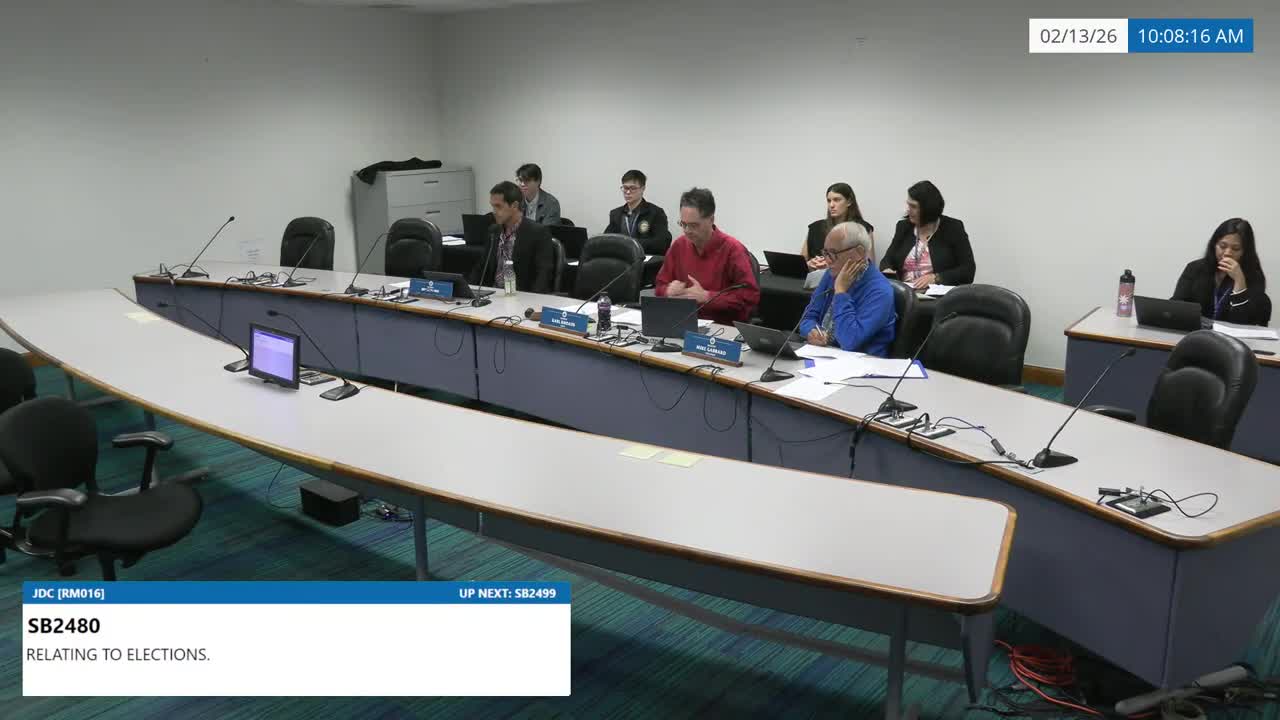 4MIN
Senate Standing Committee on Judiciary
4MIN
Senate Standing Committee on Energy and Intergovernmental Affairs
Bill Author

Bill Co-Author(s):