SCR 63: REQUESTING THE DISABILITY AND COMMUNICATION ACCESS BOARD TO STUDY the COMMUNICATION NEEDS OF INDIVIDUALS WHO ARE DEAF, HARD OF HEARING, OR DEAF-BLIND in health care settings and make necessary revisions to the guidance for health care providers.
- Session Year: 2025-2026
- House: Senate
- Latest Version Date: 2026-04-07
Current Status:
Passed
(2026-04-21: Resolution adopted in final form.)
Introduced
In Committee
First Chamber
In Committee
Second Chamber
Final Decking
Enacted
REQUESTING THE DISABILITY AND COMMUNICATION ACCESS BOARD TO STUDY the COMMUNICATION NEEDS OF INDIVIDUALS WHO ARE DEAF, HARD OF HEARING, OR DEAF-BLIND in health care settings and make necessary revisions to the guidance for health care providers.
REQUESTING THE DISABILITY AND COMMUNICATION ACCESS BOARD TO STUDY the HEALTH CARE SETTING COMMUNICATION NEEDS OF, AND DEVELOP GUIDELINES FOR, INDIVIDUALS WHO ARE DEAF, HARD OF HEARING, OR DEAF-BLIND.
|
THE SENATE |
S.C.R. NO. |
63 |
|
THIRTY-THIRD LEGISLATURE, 2026 |
S.D. 1 |
|
|
STATE OF HAWAII |
|
|
|
|
|
|
|
|
||
|
|
||
SENATE CONCURRENT
RESOLUTION
REQUESTING THE DISABILITY AND COMMUNICATION ACCESS BOARD TO STUDY the COMMUNICATION NEEDS OF INDIVIDUALS WHO ARE DEAF, HARD OF HEARING, OR DEAF-BLIND in health care settings and make necessary revisions to the guidance for health care providers.
WHEREAS, Title III of the Americans with Disabilities Act of 1990 (42 U.S.C section 12181 et. seq. (1990)) requires health care facilities to communicate effectively with people having communication disabilities; and
WHEREAS, Chapter 489, Hawaii Revised Statutes, prohibits discrimination on the basis of disability in places of public accommodation, including health care facilities; and
WHEREAS, health care providers have a duty to provide auxiliary aids and services, including qualified sign language interpreters, to patients who are deaf, hard of hearing, or deaf-blind in order to promote effective communication; and
WHEREAS, before deciding what type of auxiliary aid or service is necessary for effective communication, health care providers must give primary consideration to the patient's preference; and
WHEREAS, a health care provider may allow an adult accompanying a deaf, hard of hearing, or deaf-blind patient to interpret only in limited cases involving an imminent threat and upon agreement of all parties; and
WHEREAS, a health care provider may not rely on an accompanying adult to interpret if there is reason to doubt the person's impartiality or effectiveness; and
WHEREAS, each patient who is deaf, hard of hearing, or deaf-blind has different needs and preferences regarding the desired profile of interpreters, the sign language used, and the specific services interpreters can provide, including American Sign Language and tactile interpretation; and
WHEREAS, the Disability and Communication Access Board has published an informational flyer, Guidance for Healthcare Providers in Ensuring Effective Communication; and
WHEREAS, Hawaii suffers from a shortage of qualified sign language interpreters; and
WHEREAS, given the limited availability of qualified interpreters and the variety of required and preferred interpretation services, additional guidance is needed to assist health care providers in communicating effectively with deaf, hard of hearing, and deaf-blind patients; and
WHEREAS, patients who are deaf, hard of hearing, or deaf‑blind may have additional communication needs while hospitalized or receiving inpatient care in skilled nursing facilities; now, therefore,
BE IT RESOLVED by the Senate of the Thirty-third Legislature of the State of Hawaii, Regular Session of 2026, the House of Representatives concurring, that the Disability and Communication Access Board is requested to study the communication needs of individuals who are deaf, hard of hearing, or deaf-blind in health care settings; and
BE IT FURTHER RESOLVED that the study is requested to include consideration of:
(1) The availability of sign language interpreters, tactile interpreters, and other services and auxiliary aids that serve the needs of deaf, hard of hearing, and deaf-blind communities in the State;
(2) The range of preferences of deaf, hard of hearing, or deaf-blind patients;
(3) Any special communication needs of deaf, hard of hearing, or deaf-blind patients who are hospitalized or receiving inpatient care in skilled nursing facilities; and
(4) The legal duty for health care providers to provide auxiliary aids and services, including qualified sign language interpreters, to patients who are deaf, hard of hearing, or deaf-blind in order to promote effective communication; and
BE IT FURTHER RESOLVED that, based on the study's findings, the Disability and Communication Access Board is requested to make any necessary revisions to the current guidance for health care providers to ensure effective communication that better addresses the needs of deaf, hard of hearing, or deaf‑blind individuals in health care settings; and
BE IT FURTHER RESOLVED that the Disability and Communication Access Board is requested to submit a report of its findings and recommendations, including any proposed legislation, to the Legislature no later than twenty days prior to the convening of the Regular Session of 2027; and
BE IT FURTHER RESOLVED that certified copies of this Concurrent Resolution be transmitted to the Director of Health and all members of the Disability and Communication Access Board.
Department of Health; Disability and Communication Access Board; Deaf; Hard of Hearing; Deaf-Blind; Americans with Disabilities Act; Effective Communication
|
THE SENATE |
S.C.R. NO. |
63 |
|
THIRTY-THIRD LEGISLATURE, 2026 |
|
|
|
STATE OF HAWAII |
|
|
|
|
|
|
|
|
||
|
|
||
SENATE CONCURRENT
RESOLUTION
REQUESTING THE DISABILITY AND COMMUNICATION ACCESS BOARD TO STUDY the HEALTH CARE SETTING COMMUNICATION NEEDS OF, AND DEVELOP GUIDELINES FOR, INDIVIDUALS WHO ARE DEAF, HARD OF HEARING, OR DEAF-BLIND.
WHEREAS, the Title III of the Americans with Disabilities Act of 1990 (42 USC section 12101 et. seq. (1990)) requires healthcare facilities to communicate effectively with people having communication disabilities; and
WHEREAS, Chapter 489, Hawaii Revised Statutes, prohibits discrimination on the basis of disability in places of public accommodation, including healthcare facilities; and
WHEREAS, healthcare providers have a duty to provide auxiliary aids and services, including qualified sign language interpreters, to patients who are deaf, hard of hearing, or deaf-blind in order to promote effective communication; and
WHEREAS, before deciding what type of auxiliary aid or service is necessary for effective communication, healthcare providers must give primary consideration to the patient's preference; and
WHEREAS, a healthcare provider may allow an adult accompanying a deaf, hard of hearing, or deaf-blind patient to interpret only in limited cases involving an imminent threat and upon agreement of all parties; and
WHEREAS, a healthcare provider may not rely on an accompanying adult to interpret if there is reason to doubt the person's impartiality or effectiveness; and
WHEREAS, each patient who is deaf, hard of hearing, or deaf-blind has different needs and preferences regarding the desired profile of the interpreters, the sign language used, and the specific services interpreters can provide, including American Sign Language and tactile interpretation; and
WHEREAS, the Disability and Communication Access Board has published an informational flyer, "Guidance for Healthcare Providers in Ensuring Effective Communication"; and
WHEREAS, Hawaii suffers from a shortage of qualified sign language interpreters; and
WHEREAS, given the limited availability of qualified interpreters and the variety of required and preferred interpretation services additional guidance is needed to assist healthcare providers in communicating effectively with deaf, hard of hearing, and deaf-blind patients; and
WHEREAS, patients who are deaf, hard of hearing, or deaf‑blind may have additional communication needs while hospitalized or receiving in-patient care in skilled nursing facilities; now, therefore,
BE IT RESOLVED by the Senate of the Thirty-third Legislature of the State of Hawaii, Regular Session of 2026, the House of Representatives concurring, that the Disability and Communication Access Board is requested to conduct a study of the communication needs of deaf, hard of hearing, or deaf-blind individuals in health care settings; and
BE IT FURTHER RESOLVED that the study is requested to include consideration of:
(1) The availability of sign language interpreters, tactile interpreters, and other services and auxiliary aids that serve the needs of deaf, hard of hearing, and deaf-blind communities in the State;
(2) The range of preferences of deaf, hard of hearing, or deaf-blind patients;
(3) Any special communication needs of deaf, hard of hearing, or deaf-blind patients who are hospitalized or receiving in-patient care in skilled nursing facilities; and
(4) The legal duty for health care providers to provide auxiliary aids and services, including qualified sign language interpreters, to patients who are deaf, hard of hearing, or deaf-blind in order to promote effective communication; and
BE IT FURTHER RESOLVED that, based on the study's findings, the Disability and Communication Access Board is requested to make any necessary revisions to the current guidance for healthcare providers to ensure effective communication that better addresses the needs of deaf, hard of hearing, or deaf‑blind individuals in healthcare settings; and
BE IT FURTHER RESOLVED that the Disability and Communication Access Board is requested to submit a report of its findings and recommendations, including any proposed legislation, to the Legislature no later than twenty days prior to the convening of the Regular Session of 2027; and
BE IT FURTHER RESOLVED that certified copies of this Concurrent Resolution be transmitted to Director of Health and all members of the Disability and Communication Access Board.
|
|
OFFERED BY: |
_____________________________ |
|
|
|
|
Department of Health; Disability and Communication Access Board; Deaf; Hard of Hearing; Deaf-Blind; Americans with Disabilities Act; Effective Communication
|
Date
|
Status
|
|---|---|
| Apr 21, 2026 | Resolution adopted in final form. |
| Apr 21, 2026 | Received from House (Hse. Com. No. 794). |
| Apr 20, 2026 | Transmitted to Senate. |
| Apr 20, 2026 | Adopted with none voting aye with reservations; none voting no (0) and Representative(s) Alcos, Cochran, Woodson excused (3). |
| Apr 20, 2026 | Reported from HSH/HLT (Stand. Com. Rep. No. 2227-26), recommending adoption. |
| Apr 16, 2026 | The committee on HLT recommend that the measure be PASSED, UNAMENDED. The votes were as follows: 9 Ayes: Representative(s) Takayama, Keohokapu-Lee Loy, Amato, Hartsfield, Marten, Olds, Takenouchi, Alcos, Garcia; Ayes with reservations: none; Noes: none; and Excused: none. |
| Apr 16, 2026 | The committee on HSH recommend that the measure be PASSED, UNAMENDED. The votes were as follows: 9 Ayes: Representative(s) Marten, Olds, Amato, Hartsfield, Keohokapu-Lee Loy, Takayama, Takenouchi, Alcos, Garcia; Ayes with reservations: none; Noes: none; and Excused: none. |
| Apr 13, 2026 | Resolution scheduled to be heard by HSH/HLT on Thursday, 04-16-26 9:45AM in conference room 329 VIA VIDEOCONFERENCE. |
| Apr 10, 2026 | Referred to HSH/HLT, referral sheet 28 |
| Apr 9, 2026 | Received from Senate (Sen. Com. No. 460) in amended form (SD 1). |
| Apr 9, 2026 | Report and Resolution Adopted, as amended (SD 1). Transmitted to House. |
| Apr 8, 2026 | One Day Notice 04-09-26. |
| Apr 8, 2026 | Reported from HHS (Stand. Com. Rep. No. 3486) with recommendation of adoption, as amended (SD 1). |
| Mar 30, 2026 | The committee(s) on HHS recommend(s) that the measure be PASSED, WITH AMENDMENTS. The votes in HHS were as follows: 4 Aye(s): Senator(s) San Buenaventura, McKelvey, Kanuha, Fevella; Aye(s) with reservations: none ; 0 No(es): none; and 1 Excused: Senator(s) Keohokalole. |
| Mar 27, 2026 | The committee(s) on HHS has scheduled a public hearing on 03-30-26 1:07PM; Conference Room 225 & Videoconference. |
| Mar 19, 2026 | Referred to HHS. |
| Mar 12, 2026 | Offered. |
|
Date
|
Description
|
Location
|
Votes
|
|
|---|---|---|---|---|
| Apr 16, 2026 | The committee on HLT recommend that the measure be PASSED, UNAMENDED | House Standing Committee on Health |
Passed |
|
| Apr 16, 2026 | The committee on HSH recommend that the measure be PASSED, UNAMENDED | House Standing Committee on Human Services & Homelessness |
Passed |
|
| Mar 30, 2026 | The committee(s) on HHS recommend(s) that the measure be PASSED, WITH AMENDMENTS | Senate Standing Committee on Health and Human Services |
Passed |
This list shows positions taken on this bill by organizations on the date displayed, which is linked to the original source.
Positions by individuals are not included.
|
Organization
|
Position
|
Date
|
|---|---|---|
| Aloha Independent Living Hawaii (AILH) | *** Support | Mar 30, 2026 |
| Comprehensive Service Center (CSC), Center on Disability Studies, University of Hawaiʻi at Mānoa | *** Support | Apr 16, 2026 |
| Disability and Communication Access Board (DCAB) | *** Support | Apr 16, 2026 |
| Hawaii Disability Rights Center | *** Support | Apr 16, 2026 |
|
Date
|
Testimony PDF
|
|---|---|
| Apr 16, 2026 | SCR63_SD1_TESTIMONY_HSH-HLT_04-16-26_.PDF |
| Mar 30, 2026 | SCR63_TESTIMONY_HHS_03-30-26_.PDF |
Discussed in Hearing
 10MIN
House Standing Committee on Health
10MIN
House Standing Committee on Human Services & Homelessness
2MIN
House Standing Committee on Health
2MIN
House Standing Committee on Human Services & Homelessness
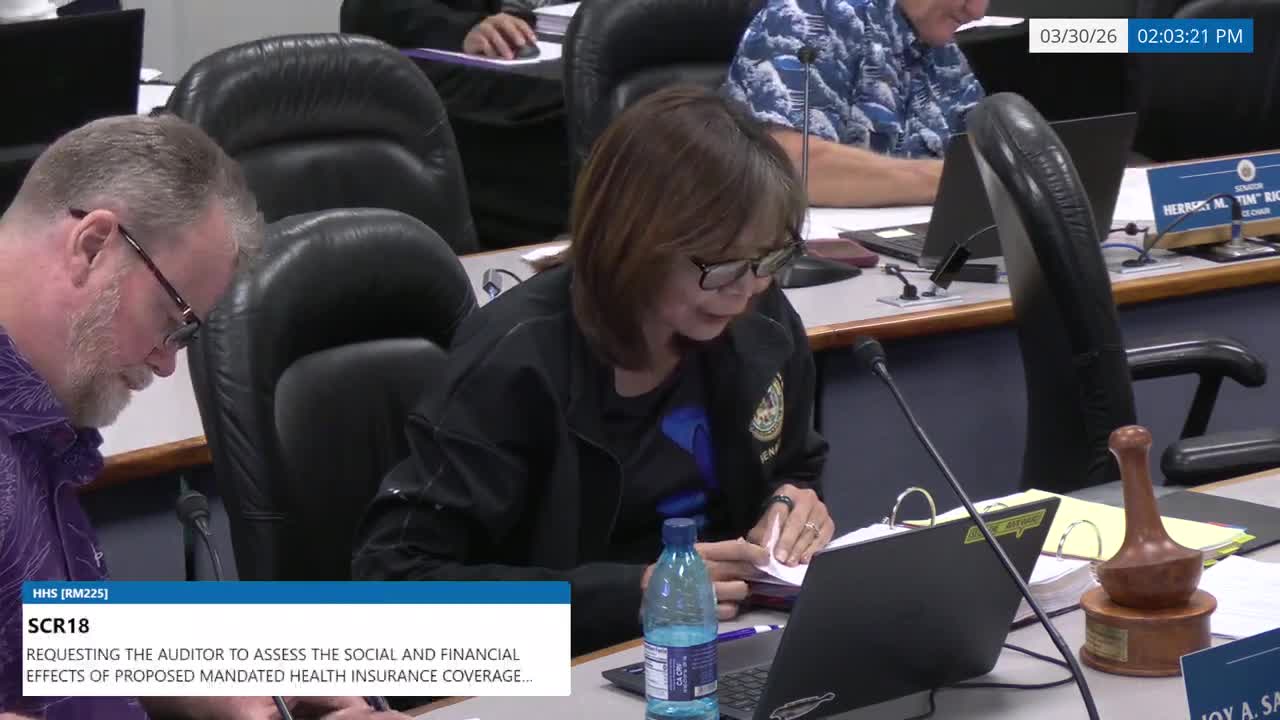 35SEC
Senate Standing Committee on Agriculture and Environment
35SEC
Senate Standing Committee on Health and Human Services
35SEC
Senate Standing Committee on Housing
35SEC
Senate Standing Committee on Energy and Intergovernmental Affairs
Bill Author