HB 814: DOH; Youth Cannabis Use; Public Health and Informational Campaign; Community-based Organizations; Appropriation
- Session Year: 2025-2026
- House: House
- Latest Version Date: 2026-02-10
Current Status:
Failed
(2026-02-11: Passed Second Reading as amended in HD 1 and referred to the committee(s) on FIN with Representative(s) Alcos, Garcia, Pierick voting aye with reservations; none voting no (0) and Representative(s) Holt excused (1).)
Introduced
In Committee
First Chamber
In Committee
Second Chamber
Final Decking
Enacted
What does this bill do?
This bill gives the Hawaii Department of Health $2 million to run a public health multimedia campaign about youth cannabis risks. It also provides $5 million for community-based prevention programs and $5 million for community-run treatment (including residential, intensive outpatient, and outpatient services) to prevent and treat substance misuse among youth, especially cannabis use.
The summary is provided by generative AI which can make mistakes. For original language, please view the details in the table below.
Appropriates funds for the Department of Health to develop and implement a public health and informational campaign and contract with community-based organizations to prevent substance misuse and treat substance use disorder among youth. Effective 7/1/3000. (HD1)
Appropriates funds for the Department of Health to develop and implement a public health and informational campaign; administer grants to prevent substance misuse among youth; and administer grants to treat substance use disorder among youth.
|
HOUSE OF REPRESENTATIVES |
H.B. NO. |
814 |
|
THIRTY-THIRD LEGISLATURE, 2025 |
H.D. 1 |
|
|
STATE OF HAWAII |
|
|
|
|
|
|
|
|
||
|
|
||
A BILL FOR AN ACT
RELATING TO CANNABIS.
BE IT ENACTED BY THE LEGISLATURE OF THE STATE OF HAWAII:
Cannabis use can harm the developing brain, leading to cognitive impairment, increased risk of psychiatric disorders, cannabis use disorder, poor academic performance, and other long‑term health consequences. Early use, especially before age fourteen, greatly increases the risk of addiction. High‑potency products also contribute to unpredictable reactions and more emergency room visits.
The legislature further finds that effective prevention requires coordinated public education, media outreach, community programs, school involvement, and family-based strategies. Evidence-based treatment, particularly behavioral therapies, supports recovery and helps adolescents build healthy coping skills. Early intervention also improves long-term outcomes.
The purpose of this Act is to protect youth from the health risks of cannabis use by appropriating funds for:
(1) A public health and informational campaign;
(2) Contracts with community-based organizations to prevent substance misuse among youth; and
(3) Contracts with community-based organizations to treat substance use disorder among youth.
SECTION 2. The department of health shall develop and implement a public health and informational multi-media campaign regarding youth cannabis use and its impact on public health and safety. The campaign may inform the public about any new laws related to cannabis and the continuing risks that cannabis use poses to children, and may include a mix of digital, social media, radio, and television advertising, along with materials for schools and community groups.
SECTION 3. There is appropriated out of the general revenues of the State of Hawaii the sum of $2,000,000 or so much thereof as may be necessary for fiscal year 2026-2027 for the department of health to implement the public health and informational multi-media campaign pursuant to section 2 of this Act.
The sum appropriated shall be expended by the department of health for the purposes of this Act.
SECTION 4. There is appropriated out of the general revenues of the State of Hawaii the sum of $5,000,000 or so much thereof as may be necessary for fiscal year 2026-2027 for the alcohol and drug abuse division of the department of health to contract with community-based organizations to provide youth and families with evidenced-based prevention services that prevent substance misuse among youth, especially youth cannabis use.
The sum appropriated shall be expended by the department of health for the purposes of this Act.
SECTION 5. There is appropriated out of the general revenues of the State of Hawaii the sum of $5,000,000 or so much thereof as may be necessary for fiscal year 2026-2027 for the alcohol and drug abuse division of the department of health to contract with community-based organizations to provide youth and families with evidenced-based treatment services, such as residential, intensive outpatient, and outpatient programs, to treat substance use disorder among youth, especially youth cannabis use.
The sum appropriated shall be expended by the department of health for the purposes of this Act.
SECTION 6. The department of health shall submit a report to the legislature no later than twenty days prior to the convening of the regular session of 2028, of its findings and recommendations, including:
(1) The manner in which funds received pursuant to this Act have been expended;
(2) The particular service providers involved;
(3) The number of persons who have been served;
(4) A description of the services provided;
(5) Measurable outcomes; and
(6) Any proposed legislation.
SECTION 7. This Act shall take effect on July 1, 3000.
Report Title:
DOH; Youth Cannabis Use; Public Health and Informational Campaign; Community-based Organizations; Appropriation
Description:
Appropriates funds for the Department of Health to develop and implement a public health and informational campaign and contract with community-based organizations to prevent substance misuse and treat substance use disorder among youth. Effective 7/1/3000. (HD1)
The summary description of legislation appearing on this page is for informational purposes only and is not legislation or evidence of legislative intent.
|
HOUSE OF REPRESENTATIVES |
H.B. NO. |
814 |
|
THIRTY-THIRD LEGISLATURE, 2025 |
|
|
|
STATE OF HAWAII |
|
|
|
|
|
|
|
|
||
|
|
||
A BILL FOR AN ACT
RELATING TO CANNABIS.
BE IT ENACTED BY THE LEGISLATURE OF THE STATE OF HAWAII:
SECTION 1. The legislature finds that marijuana, also known as cannabis, is a plant with psychoactive properties derived primarily from its main psychoactive component tetrahydrocannabinol (THC). With more legalization occurring across the nation, there have been changing trends that affect youth cannabis use such as greater public acceptance, declining perception of risk, increasing availability of new products, higher potency, pervasive marketing with products that appeal to youth, and varying content of THC in similar products.
The legislature further finds that addressing cannabis use among youth is a major public health concern. In 2022, the department of health reported that youth lifetime use was at 33.2 per cent while use in the past month was at 20.3 per cent. Treatment agencies for cannabis use disorder reported that 63.5 per cent of kids presenting for treatment do so because of problems stemming from overuse of cannabis. As of 2023, cannabis use by youth in the past month, a better determinative indicator for the effects of legalization, increased albeit modestly. While youth cannabis use declined overall in 2023, older students consistently reported higher usage at twenty-two per cent, suggesting a need for targeted interventions aimed at older adolescents. Also, cannabis use among girls increased to eighteen per cent.
The legislature also finds that there is general agreement from available data that cannabis use is not healthy for young people. Except for some refractory epilepsy and seizure disorders, there is no established beneficial use of cannabis in children. There is, however, extensive evidence that cannabis use causes serious, permanent harm on developing brains. Studies show that early cannabis use can impair adolescent brain development causing cognitive impairment and underdeveloped decision-making as well as functional impairments in attention and memory. There are increased risks for the early onset of psychiatric conditions, such as schizophrenia. Early cannabis use can also lead to cannabis use disorder, suicidal ideation, poor school performance, increased high school dropout rates, and negative effects on male fertility. Physicians, parents, and children alike need to be aware of these risks.
The legislature additionally finds that prevention practices can protect youth from the potential harm of cannabis use as well as be a link for youth to access treatment. It is important to build and support a diverse and skilled public health workforce for cannabis prevention and treatment that provides health support functions and ensures continuous quality improvement to develop an organizational infrastructure that prevents the harms of cannabis and improves public health. It is also critical for Hawaii reassure the community that it has the capacity to address prevention and treatment for youth cannabis use.
There are a number of informational, media, and evidence-based prevention strategies that communities could implement to prevent youth cannabis use, such as: public education, local policy, environmental scans, data monitoring, and community collaborations. Public health and education as well as media campaigns are more effective if the effort develops and is implemented in a comprehensive public health and education campaign. Public education messages can decrease the misconceptions about cannabis as well as build support for prevention strategies, increase knowledge about relevant aspects of the law, and establish positive social norms and healthy beliefs. Programs and media campaigns that educate youth about risks and consequences of cannabis use and emphasize refusal skills have been and will continue to be important strategies to prevent youth cannabis use.
Hawaii can build upon other states' successful prevention-oriented, media-based interventions designed to reduce adolescent cannabis use using similar message strategies. Media-based campaigns are attractive as intervention strategies given the potential economies of scale associated with media interventions as well as youth involvement with and influence by media. Media-based interventions show reductions in cannabis use when in-school media and promotional materials are combined with community-based efforts, especially when positive autonomy and competence goals are linked with non-use.
Prevention programs work best when combining a community focus on a population segment with an environmental strategy to address social norms and economic conditions to influence behavior. Key components of prevention include education and awareness in community campaigns, skill-building programs, family-based prevention and education, family strengthening programs, peer interventions, community engagement, coalition building, and policy and regulation.
The legislature further finds that cannabis is habit forming and can lead to addiction, especially for adolescents. Adolescents who start using cannabis before the age of fourteen are four times more likely to become addicted by the time they are adults. Cannabis addiction is more common among teens than adults because their brains are still developing and are far more sensitive to the chemicals in cannabis. Therefore, cannabis use peaks in teen years and early twenties.
Cannabis, like other addictive drugs, demonstrates heightened behavioral responses and altered brain activity as well as withdrawal symptoms of irritability, sleep problems, anxiety, and cravings. The high potency of cannabis currently available is noteworthy because it increases the unpredictability of a reaction, accounting for a rise in emergency room visits due to the effect of cannabis. However, since cannabis does not generally pose an immediate threat to health, it can be more challenging to stop using the drug. Moreover, many people who later develop addiction to other drugs, first started with cannabis.
The legislature also finds that as cannabis use increases, so will the need for treatment for cannabis use disorders. Approximately three in ten people who use cannabis have cannabis use disorder. The risk of developing cannabis use disorder is stronger in people who start using cannabis during youth or adolescence and who use cannabis more frequently. Most teens who enter substance use disorder treatment programs in Hawaii and other states report that cannabis is the main or only drug they use. Teens who identify other drugs as their primary drug of choice often say they use cannabis too.
Adolescent substance use disorder treatment refers to a range of interventions designed to help young people overcome issues related to the use of alcohol, drugs, or other substances. Since adolescents have unique developmental, psychological, and social needs, treatment approaches are tailored specifically to this age group, focusing on building healthy behaviors, coping mechanisms, and support systems. Behavioral therapies are the best practice and are available for treating cannabis use disorders using motivational enhancement, cognitive therapies, and motivational incentives. Early identification and treatment can prevent long-term substance dependence and help adolescents build healthier futures. While engaging in a supportive and structured program increases the chances of successful recovery.
(1) A public health and informational campaign;
(2) Grants to prevent substance misuse among youth; and
(3) Grants to treat substance use disorder among youth.
SECTION 2. There is appropriated out of the general revenues of the State of Hawaii the sum of $4,000,000 or so much thereof as may be necessary for fiscal year 2025-2026 and the sum of $2,000,000 or so much thereof as may be necessary for fiscal year 2026-2027 for the department of health to develop and implement comprehensive messaging in a public health and informational campaign that includes media regarding youth cannabis use and its impact on public health and safety. The campaign may inform the public about any new laws related to cannabis and the continuing risks that cannabis use poses to children. A multi-media campaign may include a mix of digital, social media, radio, and television advertising, along with materials for schools and community groups.
The sums appropriated shall be expended by the department of health for the purposes of this Act.
SECTION 3. There is appropriated out of the general revenues of the State of Hawaii the sum of $5,000,000 or so much thereof as may be necessary for fiscal year 2025-2026 and the same sum or so much thereof as may be necessary for fiscal year 2026-2027 for the alcohol and drug abuse division of the department of health to administer grants for community-based organizations to provide youth and families with evidenced-based prevention services that prevent substance misuse among youth, especially youth cannabis use.
The sums appropriated shall be expended by the department of health for the purposes of this Act.
SECTION 4. There is appropriated out of the general revenues of the State of Hawaii the sum of $5,000,000 or so much thereof as may be necessary for fiscal year 2025-2026 and the same sum or so much thereof as may be necessary for fiscal year 2026-2027 for the alcohol and drug abuse division of the department of health to administer grants for community-based organizations to provide youth and families with evidenced-based treatment services, such as residential, intensive outpatient, and outpatient programs, to treat substance use disorder among youth, especially youth cannabis use.
The sums appropriated shall be expended by the department of health for the purposes of this Act.
SECTION 5. The department of health shall submit a report to the legislature no later than twenty days prior to the convening of the regular session of 2027, of its findings and recommendations, including:
(1) The manner in which funds received pursuant to this Act have been expended;
(2) The particular service providers involved;
(3) The number of persons who have been served;
(4) A description of the services provided;
(5) Measurable outcomes; and
(6) Any proposed legislation.
SECTION 6. This Act shall take effect on July 1, 2025.
|
INTRODUCED BY: |
_____________________________ |
Report Title:
DOH; Youth Cannabis Use; Appropriation
Description:
Appropriates funds for the Department of Health to develop and implement a public health and informational campaign; administer grants to prevent substance misuse among youth; and administer grants to treat substance use disorder among youth.
The summary description of legislation appearing on this page is for informational purposes only and is not legislation or evidence of legislative intent.
|
Date
|
Status
|
|---|---|
| Feb 11, 2026 | Passed Second Reading as amended in HD 1 and referred to the committee(s) on FIN with Representative(s) Alcos, Garcia, Pierick voting aye with reservations; none voting no (0) and Representative(s) Holt excused (1). |
| Feb 11, 2026 | Reported from HLT (Stand. Com. Rep. No. 164-26) as amended in HD 1, recommending passage on Second Reading and referral to FIN. |
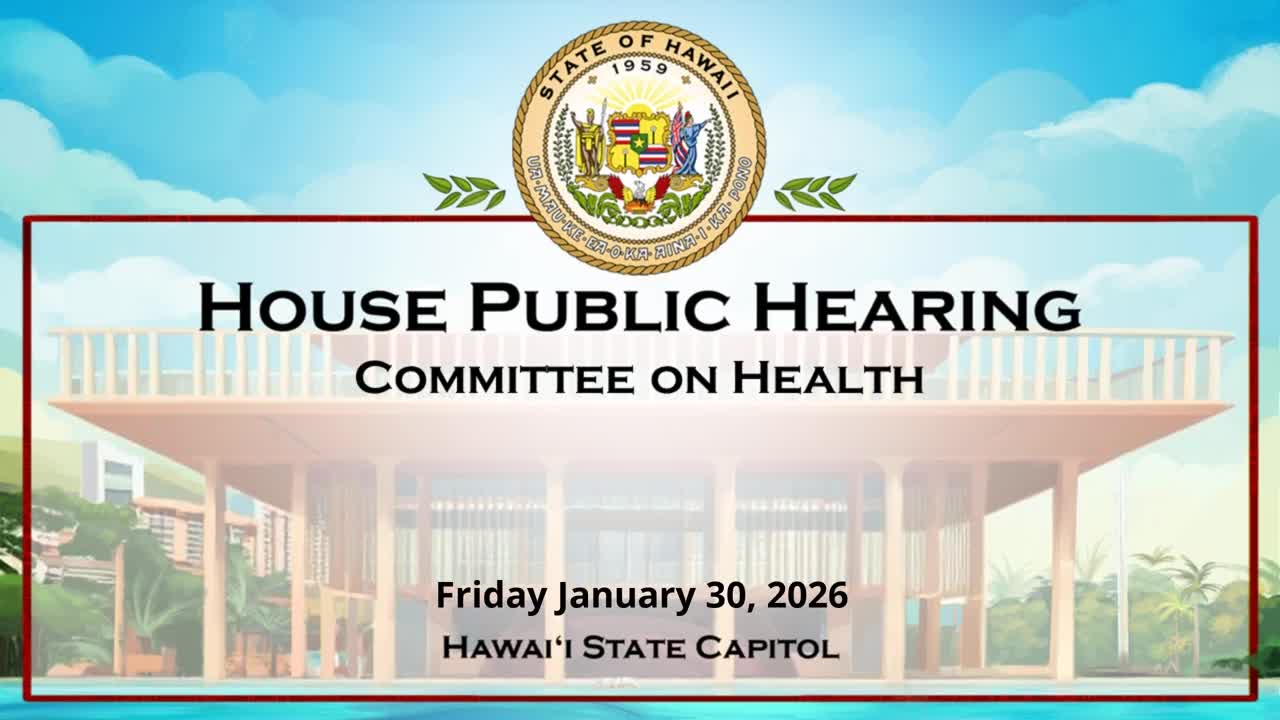
| Jan 30, 2026 | The committee on HLT recommend that the measure be PASSED, WITH AMENDMENTS. The votes were as follows: 9 Ayes: Representative(s) Takayama, Keohokapu-Lee Loy, Amato, Marten, Takenouchi; Ayes with reservations: Representative(s) Hartsfield, Olds, Alcos, Garcia; Noes: none; and Excused: none. |
| Jan 26, 2026 | Bill scheduled to be heard by HLT on Friday, 01-30-26 10:30AM in House conference room 329 VIA VIDEOCONFERENCE. |
| Dec 8, 2025 | Carried over to 2026 Regular Session. |
| Jan 21, 2025 | Referred to HLT, FIN, referral sheet 2 |
| Jan 21, 2025 | Introduced and Pass First Reading. |
| Jan 17, 2025 | Pending introduction. |
|
Date
|
Description
|
Location
|
Votes
|
|
|---|---|---|---|---|
| Jan 30, 2026 | The committee on HLT recommend that the measure be PASSED, WITH AMENDMENTS | House Standing Committee on Health |
Passed |
This list shows positions taken on this bill by organizations on the date displayed, which is linked to the original source.
Positions by individuals are not included.
|
Organization
|
Position
|
Date
|
|---|---|---|
| Big Island Substance Abuse Council | ** Support | |
| Big Island Substance Abuse Council (BISAC) | *** Support | Jan 30, 2026 |
| Bobby Benson Center | ** Support | |
| Bobby Benson Center | *** Support | Jan 30, 2026 |
| Coalition for a Drug-Free Hawaii | ** Support | |
| Department of Education | ** Support | |
| Department of the Prosecuting Attorney of City and County of Honolulu | ** Support | |
| Drug Policy Forum of Hawaiʻi | ** Support | |
| Hawaii Substance Abuse Coalition | ** Support | |
| Hawaiʻi Family Forum | ** Support | |
| Hina Mauka | ** Support |
STAND. COM. REP. NO. 164-26
Honolulu, Hawaii
, 2026
RE: H.B. No. 814
H.D. 1
Honorable Nadine K. Nakamura
Speaker, House of Representatives
Thirty-Third State Legislature
Regular Session of 2026
State of Hawaii
Madame:
Your Committee on Health, to which was referred H.B. No. 814 entitled:
"A BILL FOR AN ACT RELATING TO CANNABIS,"
begs leave to report as follows:
The purpose of this measure is to appropriate funds for:
(1) The Department of Health to develop and implement a comprehensive public health and informational campaign on youth cannabis use and its impact on public health and safety;
(2) Grants for community-based organizations to provide evidence-based services to prevent substance misuse among youth; and
(3) Grants for community-based organizations provide evidence-based services to treat substance use disorder among youth.
Your Committee received testimony in support of this measure from the Department of Education; Department of the Prosecuting Attorney of City and County of Honolulu; Hawaii Substance Abuse Coalition; Big Island Substance Abuse Council; Hina Mauka; Hawaiʻi Family Forum; Coalition for a Drug-Free Hawaii; Bobby Benson Center; Drug Policy Forum of Hawaiʻi; and five individuals. Your Committee received comments on this measure from the Department of the Attorney General and Department of Health.
Your Committee finds that the evolving landscape of cannabis use among youth, including increased public acceptance, declining perception of risk, and the availability of higher potency products has led to an increase in youth cannabis use. Your Committee further finds that there is general agreement from available data that there is no beneficial use of cannabis in children and that there is extensive evidence that cannabis use causes serious and permanent harm to developing brains. This measure is intended to address the growing harm presented by increased cannabis use by appropriating funds to support prevention and treatment efforts to reduce cannabis use by Hawaii's youth.
Your Committee has amended this measure by:
(1) Amending the preamble;
(2) Removing appropriations for fiscal year 2025-2026;
(3) Requiring the Department of Health to contract with community-based organizations to provide services for the prevention and treatment of substance use disorder among youth, rather than administer grants;
(4) Extending the Department of Health's report date to prior to the Regular Session of 2028, rather than 2027;
(5) Changing the effective date to July 1, 3000, to encourage further discussion; and
(6) Making technical, nonsubstantive amendments for the purposes of clarity, consistency, and style.
As affirmed by the record of votes of the members of your Committee on Health that is attached to this report, your Committee is in accord with the intent and purpose of H.B. No. 814, as amended herein, and recommends that it pass Second Reading in the form attached hereto as H.B. No. 814, H.D. 1, and be referred to your Committee on Finance.
Respectfully submitted on behalf of the members of the Committee on Health,
|
|
|
____________________________ GREGG TAKAYAMA, Chair |
|
|
|
|
|
Date
|
Testimony PDF
|
|---|---|
| Jan 30, 2026 | HB814_TESTIMONY_HLT_01-30-26_.PDF |
Bill Author

Bill Co-Author(s):