SB 877: DHS; Medicaid; In-Home Services; Matching Funds; Appropriation
- Session Year: 2025-2026
- House: Senate
- Latest Version Date: 2026-02-10
Current Status:
Failed
(2026-02-11: Report adopted; Passed Second Reading, as amended (SD 1) and referred to WAM.)
Introduced
In Committee
First Chamber
In Committee
Second Chamber
Final Decking
Enacted
What does this bill do?
This bill provides a state appropriation to increase Medicaid funding for in‑home care, affecting Medicaid recipients—such as older adults and people with disabilities—and the home‑care providers who serve them. It requires the Department of Human Services to secure the maximum federal matching funds so the state money will draw down more federal dollars and raise provider reimbursements to help keep people in their homes.
The summary is provided by generative AI which can make mistakes. For original language, please view the details in the table below.
Appropriates funds to increase the funding for Medicaid in-home services, conditioned on the Department of Human Services obtaining the maximum federal matching funds. Effective 7/1/2050. (SD1)
Appropriates funds to increase the funding for Medicaid in-home services, conditioned on the Department of Human Services obtaining the maximum federal matching funds.
|
THE SENATE |
S.B. NO. |
877 |
|
THIRTY-THIRD LEGISLATURE, 2025 |
S.D. 1 |
|
|
STATE OF HAWAII |
|
|
|
|
|
|
|
|
||
|
|
||
A BILL FOR AN ACT
RELATING TO HUMAN SERVICES.
BE IT ENACTED BY THE LEGISLATURE OF THE STATE OF HAWAII:
SECTION 1. The legislature finds that most of the State's kupuna would prefer to live in their own homes for as long as they can. In-home services are key to ensuring kupuna and people with disabilities stay in their own home; these services include helping with activities of daily living such as meal preparation, cleaning, bathing, mobility support, and other forms of personal care. In a 2021 quantitative research study among Hawaii residents forty-five years of age and older, sixty-five per cent were extremely or very concerned about being able to age in place and eighty-three per cent of those surveyed said it was extremely or very important to them to stay in their homes as they get older. Helping individuals live in their own home instead of in an institutional nursing facility is also far less costly.
The legislature further finds that reimbursement rates that do not have medicare rates for equivalent services, such as in-home care services, are reviewed and determined by the department of human services at least every five years. The last review of home and community‑based reimbursement rates for residential services by the department of human services' med-QUEST division was conducted through a third-party study by the actuarial firm Milliman and reported on December 30, 2022. The study developed benchmark comparison rates for in-home services, including homemaker/companion/chore, personal care/personal assistance/attendant care, and private duty nursing by registered nurse and licensed practical nurse and modeled three rate scenarios for in-home services (low, medium, and high) under different direct care staff wage and caseload assumptions. The low scenario includes the lowest wage or highest caseload assumptions to calculate the lowest reimbursement rates, meaning wage assumptions are set at the United States Department of Labor Bureau of Labor Statistics twenty-fifth percentile for specific occupation codes and titles; the medium scenario includes middle wage or caseload assumptions, meaning wage assumptions are set at the fiftieth percentile; and the high scenario includes the highest wages or lowest caseload assumptions to calculate the highest rates, meaning wage assumptions are set at the seventy-fifth percentile.
The rate studies found there is tremendous wage pressure for direct care workers for home settings, given the highly competitive labor market in the State for similar paying jobs. For all in-home provider types included in the study, current median direct care wages paid by the operators fell below the United States Department of Labor Bureau of Labor Statistics twenty-fifth percentile for those occupation codes and titles, except for licensed practical nurses who fell just below the fiftieth percentile.
The legislature additionally finds that the data collected in the Milliman study is now five years old and the cost of providing care has risen substantially. The legislature notes that data on the actual costs of care provided by Kokua Healthcare's personal assistance services in 2024 had rates exceeding the high scenario listed in the Milliman study. Kokua Healthcare is unable to provide services to medicaid clients as the reimbursement is too low to cover costs. Other in-home services providers are facing similar pressure, which impacts access to care for medicaid clients.
The legislature therefore finds that increasing the reimbursement rates to the high scenario modeled in the Milliman study will best address the significant wage pressure felt by in-home services providers and the rising cost of care and is more likely to make this essential care available to medicaid clients.
The purpose of this Act is to appropriate funds to increase funding of medicaid in-home services. The corresponding federal matching funds will also increase, resulting in a larger impact on reimbursement received by service providers.
SECTION 2. There is appropriated out of the general revenues of the State of Hawaii the sum of $ or so much thereof as may be necessary for fiscal year 2026-2027 to increase funding for medicaid in-home services; provided that the department of human services shall obtain the maximum federal matching funds available for this expenditure.
The sum appropriated shall be expended by the department of human services for the purposes of this Act.
SECTION 3. This Act shall take effect on July 1, 2050.
Report Title:
DHS; Medicaid; In-Home Services; Matching Funds; Appropriation
Description:
Appropriates funds to increase the funding for Medicaid in-home services, conditioned on the Department of Human Services obtaining the maximum federal matching funds. Effective 7/1/2050. (SD1)
The summary description of legislation appearing on this page is for informational purposes only and is not legislation or evidence of legislative intent.
|
THE SENATE |
S.B. NO. |
877 |
|
THIRTY-THIRD LEGISLATURE, 2025 |
|
|
|
STATE OF HAWAII |
|
|
|
|
|
|
|
|
||
|
|
||
A BILL FOR AN ACT
relating to human services.
BE IT ENACTED BY THE LEGISLATURE OF THE STATE OF HAWAII:
SECTION 1. The legislature finds that most of the State's kupuna would prefer to live in their own homes for as long as they can. In-home services are key to ensuring kupuna and people with disabilities stay in their own home; these services include helping with activities of daily living such as meal preparation, cleaning, bathing, mobility support, and other forms of personal care. In a 2021 quantitative research study among Hawaii residents forty-five years of age and older, sixty-five per cent were extremely or very concerned about being able to age in place and eighty-three per cent of those surveyed said it was extremely or very important to them to stay in their homes as they get older. Helping individuals live in their own home instead of in an institutional nursing facility is also far less costly.
The legislature further finds that reimbursement rates that do not have medicare rates for equivalent services, such as in-home care services, are reviewed and determined by the department of human services at least every five years. The last review of home and community‑based reimbursement rates for residential services by the department of human services' med-QUEST division was conducted through a third-party study by the actuarial firm Milliman and reported on December 30, 2022. The study developed benchmark comparison rates for in-home services, including homemaker/companion/chore, personal care/personal assistance/attendant care, and private duty nursing by registered nurse and licensed practical nurse and modeled three rate scenarios for in-home services (low, medium, and high) under different direct care staff wage and caseload assumptions. The low scenario includes the lowest wage or highest caseload assumptions to calculate the lowest reimbursement rates, meaning wage assumptions are set at the United States Department of Labor Bureau of Labor Statistics twenty-fifth percentile for specific occupation codes and titles; the medium scenario includes middle wage or caseload assumptions, meaning wage assumptions are set at the fiftieth percentile; and the high scenario includes the highest wages or lowest caseload assumptions to calculate the highest rates, meaning wage assumptions are set at the seventy-fifth percentile.
The rate studies found there is tremendous wage pressure for direct care workers for home settings, given the highly competitive labor market in the State for similar paying jobs. For all in-home provider types included in the study, current median direct care wages paid by the operators fell below the United States Department of Labor Bureau of Labor Statistics twenty-fifth percentile for those occupation codes and titles, except for licensed practical nurses who fell just below the fiftieth percentile.
The legislature additionally finds that the data collected in the Milliman study is now five years old and the cost of providing care has risen substantially. The legislature notes that data on the actual costs of care provided by Kokua Healthcare's personal assistance services in 2024 had rates exceeding the high scenario listed in the Milliman study. Kokua Healthcare is unable to provide services to medicaid clients as the reimbursement is too low to cover costs. Other in-home services providers are facing similar pressure, which impacts access to care for medicaid clients.
The legislature therefore finds that increasing the reimbursement rates to the high scenario modeled in the Milliman study will best address the significant wage pressure felt by in-home services providers and the rising cost of care and is more likely to make this essential care available to medicaid clients.
The purpose of this Act is to appropriate funds to increase funding of medicaid in-home services. The corresponding federal matching funds will also increase, resulting in a larger impact on reimbursement received by service providers.
SECTION 2. There is appropriated out of the general revenues of the State of Hawaii the sum of $16,160,000 or so much thereof as may be necessary for fiscal year 2025-2026 and the same sum or so much thereof as may be necessary for fiscal year 2026-2027 to increase funding for medicaid in-home services; provided that the department of human services shall obtain the maximum federal matching funds available for this expenditure.
The sum appropriated shall be expended by the department of human services for the purposes of this Act.
SECTION 3. This Act shall take effect on July 1, 2025.
|
INTRODUCED BY: |
_____________________________ |
Report Title:
DHS; Medicaid; In-Home Services; Matching Funds; Appropriation
Description:
Appropriates funds to increase the funding for Medicaid in-home services, conditioned on the Department of Human Services obtaining the maximum federal matching funds.
The summary description of legislation appearing on this page is for informational purposes only and is not legislation or evidence of legislative intent.
|
Date
|
Status
|
|---|---|
| Feb 11, 2026 | Report adopted; Passed Second Reading, as amended (SD 1) and referred to WAM. |
| Feb 11, 2026 | Reported from HHS (Stand. Com. Rep. No. 2163) with recommendation of passage on Second Reading, as amended (SD 1) and referral to WAM. |
| Jan 28, 2026 | The committee(s) on HHS recommend(s) that the measure be PASSED, WITH AMENDMENTS. The votes in HHS were as follows: 5 Aye(s): Senator(s) San Buenaventura, McKelvey, Kanuha, Keohokalole, Fevella; Aye(s) with reservations: none ; 0 No(es): none; and 0 Excused: none. |
| Jan 23, 2026 | The committee(s) on HHS has scheduled a public hearing on 01-28-26 1:30PM; Conference Room 225 & Videoconference. |
| Dec 8, 2025 | Carried over to 2026 Regular Session. |
| Jan 23, 2025 | Referred to HHS, WAM. |
| Jan 21, 2025 | Passed First Reading. |
| Jan 17, 2025 | Introduced. |
|
Date
|
Description
|
Location
|
Votes
|
|
|---|---|---|---|---|
| Jan 28, 2026 | The committee(s) on HHS recommend(s) that the measure be PASSED, WITH AMENDMENTS | Senate Standing Committee on Health and Human Services |
Passed |
This list shows positions taken on this bill by organizations on the date displayed, which is linked to the original source.
Positions by individuals are not included.
|
Organization
|
Position
|
Date
|
|---|---|---|
| AARP Hawaiʻi | ** Support | |
| AlohaCare | *** Support | Jan 28, 2026 |
| AlohaCare | ** Support | |
| Disability and Communication Access Board | ** Support | |
| Hawaii Disability Rights Center | ** Support | |
| Hawaii Medical Association | ** Support | |
| Hawaiʻi Children's Action Network Speaks! | ** Support |
STAND. COM. REP. NO. 2163
Honolulu, Hawaii
RE: S.B. No. 877
S.D. 1
Honorable Ronald D. Kouchi
President of the Senate
Thirty-Third State Legislature
Regular Session of 2026
State of Hawaii
Sir:
Your Committee on Health and Human Services, to which was referred S.B. No. 877 entitled:
"A BILL FOR AN ACT RELATING TO HUMAN SERVICES,"
begs leave to report as follows:
The purpose and intent of this measure is to appropriate funds to increase the funding for Medicaid in-home services, conditioned on the Department of Human Services obtaining the maximum federal matching funds.
Your Committee received testimony in support of this measure from the Disability and Communication Access Board, AARP Hawaiʻi, AlohaCare, Hawaii Medical Association, Hawaii Disability Rights Center, Hawaiʻi Children's Action Network Speaks!, and one individual.
Your Committee received testimony in opposition to this measure from two individuals.
Your Committee received comments on this measure from the Department of Human Services and Executive Office on Aging.
Your Committee finds that most of the State's kupuna would prefer to live in their own homes for as long as they can, and that in-home services are key to ensuring kupuna and people with disabilities stay in their own home. Your Committee further finds that reimbursement rate studies have found there is tremendous wage pressure for direct care workers for home settings, given the highly competitive labor market in the State for similar paying jobs. This measure increases the funding for Medicaid in-home services to address the significant wage pressure felt by in-home services providers and the rising cost of care.
Your Committee has amended this measure by:
(1) Changing the appropriation amount from $16,160,000 to an unspecified amount;
(2) Updating fiscal years to reflect the current legislative session; and
(3) Inserting an effective date of July 1, 2050, to encourage further discussion.
Your Committee notes that this measure, as amended, contains an unspecified appropriation amount. Should your Committee on Ways and Means choose to deliberate on this measure, your Committee respectfully requests that it consider inserting an appropriation amount of $6,700,000 to increase funding for Medicaid in-home services; provided that the Department of Human Services shall obtain the maximum federal matching funds available for this expenditure.
As affirmed by the record of votes of the members of your Committee on Health and Human Services that is attached to this report, your Committee is in accord with the intent and purpose of S.B. No. 877, as amended herein, and recommends that it pass Second Reading in the form attached hereto as S.B. No. 877, S.D. 1, and be referred to your Committee on Ways and Means.
Respectfully submitted on behalf of the members of the Committee on Health and Human Services,
|
|
|
________________________________ JOY A. SAN BUENAVENTURA, Chair |
|
|
|
|
|
Date
|
Testimony PDF
|
|---|---|
| Jan 28, 2026 | SB877_TESTIMONY_HHS_01-28-26_.PDF |
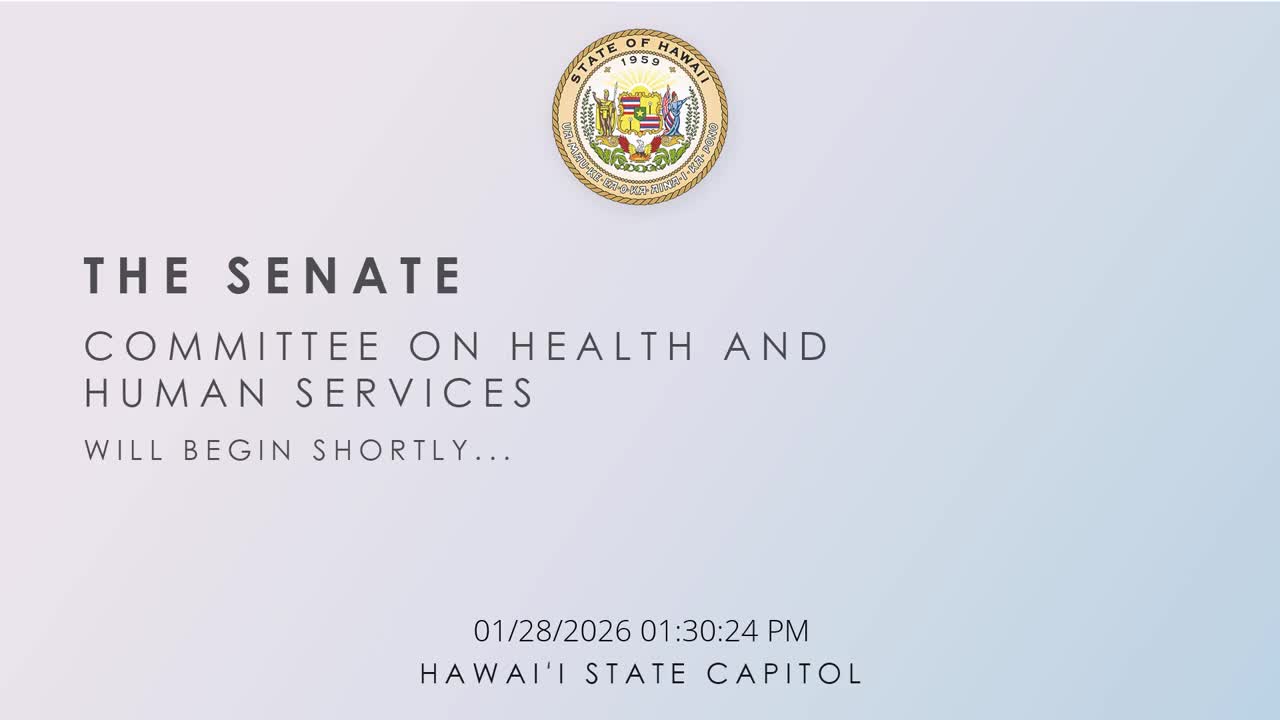
Discussed in Hearing
 3MIN
Senate Standing Committee on Health and Human Services
Bill Author