HB 1542: DOH; Medical Cannabis; Health Care Facilities; Compassionate Access
- Session Year: 2025-2026
- House: House
- Latest Version Date: 2026-02-05
Current Status:
Failed
(2026-02-06: Passed Second Reading as amended in HD 1 and referred to the committee(s) on CPC with Representative(s) Pierick voting aye with reservations; none voting no (0) and none excused (0).)
Introduced
In Committee
First Chamber
In Committee
Second Chamber
Final Decking
Enacted
What does this bill do?
The bill lets terminally ill people and patients over 65 with chronic diseases use medical cannabis inside specified health care facilities. Facilities that allow use must record it in the patient's chart, ban smoking or vaping, require the patient's medical cannabis registry card, keep cannabis locked, make the patient or caregiver responsible for bringing and removing it, and prohibit staff from giving or retrieving it. General acute care hospitals may limit use to terminally ill patients, and facilities are not required to provide a cannabis recommendation.
The summary is provided by generative AI which can make mistakes. For original language, please view the details in the table below.
Allows terminally ill patients and qualifying patients over sixty-five years of age with chronic diseases to use medical cannabis within specified health care facilities under certain conditions. Requires enforcement by the Department of Health. Effective 7/1/3000. (HD1)
Allows terminally ill patients and qualifying patients over sixty-five years of age with chronic diseases to use medical cannabis within specified health care facilities under certain conditions. Requires enforcement by the Department of Health.
|
HOUSE OF REPRESENTATIVES |
H.B. NO. |
1542 |
|
THIRTY-THIRD LEGISLATURE, 2026 |
H.D. 1 |
|
|
STATE OF HAWAII |
|
|
|
|
|
|
|
|
||
|
|
||
A BILL FOR AN ACT
RELATING TO COMPASSIONATE ACCESS TO MEDICAL CANNABIS.
BE IT ENACTED BY THE LEGISLATURE OF THE STATE OF HAWAII:
SECTION 1. The Hawaii Revised Statutes is amended by adding a new chapter to be appropriately designated and to read as follows:
"Chapter
compassionate access to medical cannabis Act or ryan's law
§ -1 Short title; legislative intent. (a) This chapter shall be known, and may be cited, as the "Compassionate Access to Medical Cannabis Act" or "Ryan's Law".
(b) It is the intent of the legislature in enacting this chapter to support the ability of terminally ill patients and qualifying patients over sixty-five years of age with chronic diseases to safely use medical cannabis within specified health care facilities in compliance with part IX of chapter 329.
§ -2 Definitions. Unless the context requires otherwise, the following definitions shall apply to this chapter:
"Congregate living health facility" means a residential health facility with a noninstitutional, homelike environment that provides:
(1) Inpatient care, including medical supervision, twenty-four-hour skilled nursing and supportive care, pharmacy, dietary, social, and recreational services, to residents whose primary need is the availability of skilled nursing care on a recurring, intermittent, extended, or continuous basis;
(2) Care that is generally less intense than that provided in general acute care hospitals but more intense than that provided in skilled nursing facilities; and
(3) At least one type of the following specialized services:
(A) Services for persons who are mentally alert, persons with physical disabilities, or persons who may be ventilator dependent;
(B) Services for persons who have a diagnosis of terminal illness, a diagnosis of a life-threatening illness, or both, as stated in writing by the person's attending physician or surgeon. For the purposes of this definition, "life-threatening illness" means an illness that can lead to a possibility of a termination of life within five years or less; or
(C) Services for persons who are catastrophically and severely disabled, including, for catastrophically disabled persons, speech, physical, and occupational therapy. For the purposes of this definition, "a person who is catastrophically and severely disabled" means a person whose origin of disability was acquired through trauma or nondegenerative neurologic illness, for whom it has been determined that active rehabilitation would be beneficial, and to whom these services are being provided.
"Department" means the department of health.
"General acute care hospital" means a health facility licensed by the department that has a duly constituted governing body with overall administrative and professional responsibility for the facility and an organized medical staff that provides twenty-four-hour inpatient care, including the following basic services: medical, nursing, surgical, anesthesia, laboratory, radiology, pharmacy, and dietary services. "General acute care hospital" includes a health facility that:
(1) Has more than one physical plant maintained and operated on separate premises; or
(2) Exclusively provides acute medical rehabilitation center services, including at least physical therapy, occupational therapy, and speech therapy, and contracts for required surgical and anesthesia services with another acute care hospital.
"Health care facility" means a congregate living health facility, general acute care hospital, home health agency, hospice home, skilled nursing facility, or special hospital. "Health care facility" does not include a chemical dependency recovery hospital, a chemical dependency residential treatment center, a state hospital, or an emergency department of a general acute care hospital while the patient is receiving emergency services and care.
"Home health agency" means a private or public organization, including but not limited to any partnership, corporation, political subdivision of the State, or other government agency within the State, that provides, or arranges for the provision of, skilled nursing services to persons in their temporary or permanent place of residence and is licensed by the department.
"Hospice home" has the same meaning as defined in section 321-15.1.
"Medical cannabis" means cannabis or a manufactured cannabis product used in compliance with part IX of chapter 329.
"Patient" means an individual who meets one or both of the following criteria:
(1) Is terminally ill; or
(2) Is over sixty-five years of age with a chronic disease for which the patient has received a written certification from the patient's physician or advanced practice registered nurse pursuant to part IX of chapter 329.
"Primary caregiver" has the same meaning as defined in section 329-121.
"Skilled nursing facility" means a skilled nursing facility licensed pursuant to section 321-571 that provides skilled nursing care and supportive care to patients whose primary need is for availability of skilled nursing care on an extended basis.
"Special hospital" means a health facility that has a duly constituted governing body with overall administrative and professional responsibility for the facility and an organized medical or dental staff that provides inpatient or outpatient care in maternity or dentistry.
"Terminally ill" means a medical condition resulting in a prognosis of life of one year or less if the disease follows its natural course.
§ -3 Health care facilities; duties regarding permitted use of medical cannabis. (a) Except as provided in subsection (b), a health care facility may permit patient use of medical cannabis, as authorized by the patient's physician or advanced practice registered nurse pursuant to part IX of chapter 329 and indicated in the patient's medical record, and, if a health care facility elects to permit patient use of cannabis, shall do all of the following:
(1) Prohibit smoking or vaping as methods to use medical cannabis; provided that a home health agency shall only prohibit smoking or vaping immediately before or while home health agency staff are present in the residence;
(2) Include the use of medical cannabis within the patient's medical records;
(3) Require a patient to provide a copy of the patient's valid medical cannabis registry card or certificate issued pursuant to part IX of chapter 329, or a copy of the patient's written certification as defined under section 329-121;
(4) Require a patient or primary caregiver to be responsible for acquiring, retrieving, administering, and removing medical cannabis;
(5) Require medical cannabis to be stored securely at all times in a locked container in the patient's room, other designated area, or with the patient's primary caregiver; provided that this paragraph shall not apply to a home health agency;
(6) Prohibit health care professionals, health care facility staff, and home health agency staff, including but not limited to physicians, nurses, and pharmacists, from administering medical cannabis or retrieving medical cannabis from storage;
(7) Develop, disseminate, and train health care facility staff on written guidelines developed by the health care facility for the use and disposal of medical cannabis within the health care facility pursuant to this chapter; provided that this paragraph shall not apply to a home health agency; and
(8) Ensure that a patient is not denied admission to the health care facility in whole or in part because of the patient's use of medical cannabis.
(b) Notwithstanding subsection (a), a general acute care hospital shall not permit a patient with a chronic disease to use medical cannabis unless the patient is terminally ill.
§ -4 Removal of medical cannabis from health care facility upon discharge of patient. (a) Upon discharge, all remaining medical cannabis shall be removed by the patient or the patient's primary caregiver. If a patient cannot remove the medical cannabis and does not have a primary caregiver who is available to remove the medical cannabis, the medical cannabis shall be stored in a locked container until it is disposed of in accordance with the health care facility's policy and procedure governing medical cannabis.
(b) This section shall not apply to a home health agency.
§ -5 Medical cannabis recommendation not required. This chapter shall not require a health care facility to provide or furnish a patient with a recommendation to use medical cannabis in compliance with part IX of chapter 329 or include medical cannabis in a patient's discharge plan.
§ -6 Enforcement; compliance with chapter not required for licensing; construction of chapter with other laws. (a) This chapter shall be enforced by the department.
(b) Compliance with this chapter shall not be a condition for obtaining, retaining, or renewing a license as a health care facility.
(c) This chapter shall not reduce, expand, or otherwise modify the laws restricting the cultivation, possession, distribution, or use of cannabis that may be otherwise applicable.
§ -7 Actions permitting noncompliance. (a) If a federal regulatory agency, the United States Department of Justice, or the federal Centers for Medicare and Medicaid Services takes one of the following actions, or makes an inquiry about the health care facility's activities pursuant to section -3, a health care facility may suspend compliance with section -3 until the regulatory agency, the United States Department of Justice, or the federal Centers for Medicare and Medicaid Services notifies the health care facility that it may resume permitting the use of medical cannabis within the facility:
(1) A federal regulatory agency or the United States Department of Justice initiates enforcement action, including a notice to suspend funding, against a health care facility related to the health care facility's compliance with a state-regulated medical cannabis program; or
(2) A federal regulatory agency, the United States Department of Justice, or the federal Centers for Medicare and Medicaid Services issues a rule, guidance, or otherwise provides notification to the health care facility that expressly prohibits the use of medical cannabis in health care facilities or otherwise prohibits compliance with a state-regulated medical cannabis program.
(b) This section shall not permit a health care facility to prohibit patient use of medical cannabis due solely to the fact that cannabis is a Schedule I drug pursuant to the federal Uniform Controlled Substances Act, or other federal constraints on the use of medical cannabis that were in existence before the enactment of this chapter."
SECTION 2. Section 329-122, Hawaii Revised Statutes, is amended by amending subsection (e) to read as follows:
"(e) [The] Except as permitted under
chapter , the authorization for the medical use of
cannabis in this section shall not apply to:
(1) The medical use of cannabis that endangers the health or well-being of another person;
(2) The medical use of cannabis:
(A) In a school bus, public bus, or any moving vehicle;
(B) In the workplace of one's employment;
(C) On any school grounds;
(D) At any public park, public beach, public recreation center, recreation or youth center; or
(E) At any other place open to the public; provided that a qualifying patient, primary caregiver, qualifying out-of-state patient, caregiver of a qualifying out-of-state patient, or an owner or employee of a medical cannabis dispensary licensed under chapter 329D shall not be prohibited from transporting cannabis or any manufactured cannabis product, as that term is defined in section 329D-1, in any public place; provided further that the cannabis or manufactured cannabis product shall be transported in a sealed container, not be visible to the public, and shall not be removed from its sealed container or consumed or used in any way while it is in the public place; and
(3) The use of cannabis by a qualifying patient, parent, primary caregiver, qualifying out-of-state patient, or caregiver of a qualifying out-of-state patient, for purposes other than medical use permitted by this part."
SECTION 3. Statutory material to be repealed is bracketed and stricken. New statutory material is underscored.
SECTION 4. This Act shall take effect on July 1, 3000.
Report Title:
DOH; Medical Cannabis; Health Care Facilities; Compassionate Access
Description:
Allows terminally ill patients and qualifying patients over sixty-five years of age with chronic diseases to use medical cannabis within specified health care facilities under certain conditions. Requires enforcement by the Department of Health. Effective 7/1/3000. (HD1)
The summary description of legislation appearing on this page is for informational purposes only and is not legislation or evidence of legislative intent.
|
HOUSE OF REPRESENTATIVES |
H.B. NO. |
1542 |
|
THIRTY-THIRD LEGISLATURE, 2026 |
|
|
|
STATE OF HAWAII |
|
|
|
|
|
|
|
|
||
|
|
||
A BILL FOR AN ACT
relating to compassionate access to medical cannabis.
BE IT ENACTED BY THE LEGISLATURE OF THE STATE OF HAWAII:
SECTION 1. The Hawaii Revised Statutes is amended by adding a new chapter to be appropriately designated and to read as follows:
"Chapter
compassionate access to medical cannabis Act or ryan's law
§ -1 Short title; legislative intent. (a) This chapter shall be known, and may be cited, as the "Compassionate Access to Medical Cannabis Act" or "Ryan's Law".
(b) It is the intent of the legislature in enacting this chapter to support the ability of terminally ill patients and qualifying patients over sixty-five years of age with chronic diseases to safely use medical cannabis within specified health care facilities in compliance with part IX of chapter 329.
§ -2 Definitions. Unless the context requires otherwise, the following definitions shall apply to this chapter:
"Congregate living health facility" means a residential health facility with a noninstitutional, homelike environment that provides:
(1) Inpatient care, including medical supervision, twenty-four-hour skilled nursing and supportive care, pharmacy, dietary, social, and recreational services, to residents whose primary need is the availability of skilled nursing care on a recurring, intermittent, extended, or continuous basis;
(2) Care that is generally less intense than that provided in general acute care hospitals but more intense than that provided in skilled nursing facilities; and
(3) At least one type of the following specialized services:
(A) Services for persons who are mentally alert, persons with physical disabilities, or persons who may be ventilator dependent;
(B) Services for persons who have a diagnosis of terminal illness, a diagnosis of a life-threatening illness, or both, as stated in writing by the person's attending physician or surgeon. For the purposes of this definition, "life-threatening illness" means an illness that can lead to a possibility of a termination of life within five years or less; or
(C) Services for persons who are catastrophically and severely disabled, including, for catastrophically disabled persons, speech, physical, and occupational therapy. For the purposes of this definition, "a person who is catastrophically and severely disabled" means a person whose origin of disability was acquired through trauma or nondegenerative neurologic illness, for whom it has been determined that active rehabilitation would be beneficial, and to whom these services are being provided.
"Department" means the department of health.
"General acute care hospital" means a health facility licensed by the department that has a duly constituted governing body with overall administrative and professional responsibility for the facility and an organized medical staff that provides twenty-four-hour inpatient care, including the following basic services: medical, nursing, surgical, anesthesia, laboratory, radiology, pharmacy, and dietary services. "General acute care hospital" includes a health facility that:
(1) Has more than one physical plant maintained and operated on separate premises; or
(2) Exclusively provides acute medical rehabilitation center services, including at least physical therapy, occupational therapy, and speech therapy, and contracts for required surgical and anesthesia services with another acute care hospital.
"Health care facility" means a congregate living health facility, general acute care hospital, home health agency, hospice home, skilled nursing facility, or special hospital. "Health care facility" does not include a chemical dependency recovery hospital, a state hospital, or an emergency department of a general acute care hospital while the patient is receiving emergency services and care.
"Home health agency" means a private or public organization, including but not limited to any partnership, corporation, political subdivision of the State, or other government agency within the State, that provides, or arranges for the provision of, skilled nursing services to persons in their temporary or permanent place of residence and is licensed by the department.
"Hospice home" has the same meaning as defined in section 321-15.1.
"Medical cannabis" means cannabis or a cannabis product used in compliance with part IX of chapter 329.
"Patient" means an individual who meets one or both of the following criteria:
(1) Is terminally ill; or
(2) Is over sixty-five years of age with a chronic disease for which the patient has received a written certification from the patient's physician or advanced practice registered nurse pursuant to part IX of chapter 329.
"Primary caregiver" has the same meaning as defined in section 329-121.
"Skilled nursing facility" means a skilled nursing facility licensed pursuant to section 321-571 that provides skilled nursing care and supportive care to patients whose primary need is for availability of skilled nursing care on an extended basis.
"Special hospital" means a health facility that has a duly constituted governing body with overall administrative and professional responsibility for the facility and an organized medical or dental staff that provides inpatient or outpatient care in maternity or dentistry.
"Terminally ill" means a medical condition resulting in a prognosis of life of one year or less if the disease follows its natural course.
§ -3 Health care facilities; duties regarding permitted use of medical cannabis. (a) Except as provided in subsection (b), a health care facility shall permit patient use of medical cannabis, as authorized by the patient's physician or advanced practice registered nurse pursuant to part IX of chapter 329 and indicated in the patient's medical record, and shall do all of the following:
(1) Prohibit smoking or vaping as methods to use medical cannabis; provided that a home health agency shall only prohibit smoking or vaping immediately before or while home health agency staff are present in the residence;
(2) Include the use of medical cannabis within the patient's medical records;
(3) Require a patient to provide a copy of the patient's valid medical cannabis registry card or certificate issued pursuant to part IX of chapter 329, or a copy of the patient's written certification as defined under section 329-121;
(4) Require a patient or primary caregiver to be responsible for acquiring, retrieving, administering, and removing medical cannabis;
(5) Require medical cannabis to be stored securely at all times in a locked container in the patient's room, other designated area, or with the patient's primary caregiver; provided that this requirement shall not apply to a home health agency;
(6) Prohibit health care professionals, health care facility staff, and home health agency staff, including but not limited to physicians, nurses, and pharmacists, from administering medical cannabis or retrieving medical cannabis from storage;
(7) Develop, disseminate, and train health care facility staff on written guidelines developed by the health care facility for the use and disposal of medical cannabis within the health care facility pursuant to this chapter; provided that this requirement shall not apply to a home health agency; and
(8) Ensure that a patient is not denied admission to the health care facility in whole or in part because of the patient's use of medical cannabis.
(b) Notwithstanding subsection (a), a general acute care hospital shall not permit a patient with a chronic disease to use medical cannabis unless the patient is terminally ill.
§ -4 Removal of medical cannabis from health care facility upon discharge of patient. (a) Upon discharge, all remaining medical cannabis shall be removed by the patient or the patient's primary caregiver. If a patient cannot remove the medical cannabis and does not have a primary caregiver that is available to remove the medical cannabis, the medical cannabis shall be stored in a locked container until it is disposed of in accordance with the health care facility's policy and procedure governing medical cannabis.
(b) Subsection (a) shall not apply to a home health agency.
§ -5 Medical cannabis recommendation not required. This chapter shall not require a health care facility to provide or furnish a patient with a recommendation to use medical cannabis in compliance with part IX of chapter 329 or include medical cannabis in a patient's discharge plan.
§ -6 Enforcement; compliance with chapter not required for licensing; construction of chapter with other laws. (a) This chapter shall be enforced by the department.
(b) Compliance with this chapter shall not be a condition for obtaining, retaining, or renewing a license as a health care facility.
(c) This chapter does not reduce, expand, or otherwise modify the laws restricting the cultivation, possession, distribution, or use of cannabis that may be otherwise applicable.
§ -7 Actions permitting noncompliance. (a) If a federal regulatory agency, the United States Department of Justice, or the federal Centers for Medicare and Medicaid Services takes one of the following actions, or makes an inquiry about the health care facility's activities pursuant to section -3, a health care facility may suspend compliance with section -3 until the regulatory agency, the United States Department of Justice, or the federal Centers for Medicare and Medicaid Services notifies the health care facility that it may resume permitting the use of medical cannabis within the facility:
(1) A federal regulatory agency or the United States Department of Justice initiates enforcement action, including a notice to suspend funding, against a health care facility related to the health care facility's compliance with a state-regulated medical cannabis program; or
(2) A federal regulatory agency, the United States Department of Justice, or the federal Centers for Medicare and Medicaid Services issues a rule, guidance, or otherwise provides notification to the health care facility that expressly prohibits the use of medical cannabis in health care facilities or otherwise prohibits compliance with a state-regulated medical cannabis program.
(b) This section shall not permit a health care facility to prohibit patient use of medical cannabis due solely to the fact that cannabis is a Schedule I drug pursuant to the federal Uniform Controlled Substances Act, or other federal constraints on the use of medical cannabis that were in existence before the enactment of this chapter."
SECTION 2. Section 329-122, Hawaii Revised Statutes, is amended by amending subsection (e) to read as follows:
"(e) [The] Except as permitted under
chapter , the authorization for the medical use of
cannabis in this section shall not apply to:
(1) The medical use of cannabis that endangers the health or well-being of another person;
(2) The medical use of cannabis:
(A) In a school bus, public bus, or any moving vehicle;
(B) In the workplace of one's employment;
(C) On any school grounds;
(D) At any public park, public beach, public recreation center, recreation or youth center; or
(E) At any other place open to the public; provided that a qualifying patient, primary caregiver, qualifying out-of-state patient, caregiver of a qualifying out-of-state patient, or an owner or employee of a medical cannabis dispensary licensed under chapter 329D shall not be prohibited from transporting cannabis or any manufactured cannabis product, as that term is defined in section 329D-1, in any public place; provided further that the cannabis or manufactured cannabis product shall be transported in a sealed container, not be visible to the public, and shall not be removed from its sealed container or consumed or used in any way while it is in the public place; and
(3) The use of cannabis by a qualifying patient, parent, primary caregiver, qualifying out-of-state patient, or caregiver of a qualifying out-of-state patient, for purposes other than medical use permitted by this part."
SECTION 3. This Act shall take effect upon its approval.
|
INTRODUCED BY: |
_____________________________ |
|
|
|
Report Title:
DOH; Medical Cannabis; Health Care Facilities; Access
Description:
Allows terminally ill patients and qualifying patients over sixty-five years of age with chronic diseases to use medical cannabis within specified health care facilities under certain conditions. Requires enforcement by the Department of Health.
The summary description of legislation appearing on this page is for informational purposes only and is not legislation or evidence of legislative intent.
|
Date
|
Status
|
|---|---|
| Feb 6, 2026 | Passed Second Reading as amended in HD 1 and referred to the committee(s) on CPC with Representative(s) Pierick voting aye with reservations; none voting no (0) and none excused (0). |
| Feb 6, 2026 | Reported from HLT (Stand. Com. Rep. No. 46-26) as amended in HD 1, recommending passage on Second Reading and referral to CPC. |
| Feb 4, 2026 | The committee on HLT recommend that the measure be PASSED, WITH AMENDMENTS. The votes were as follows: 9 Ayes: Representative(s) Takayama, Keohokapu-Lee Loy, Amato, Hartsfield, Marten, Olds, Takenouchi, Alcos, Garcia; Ayes with reservations: none; Noes: none; and Excused: none. |
| Jan 30, 2026 | Bill scheduled to be heard by HLT on Wednesday, 02-04-26 9:00AM in House conference room 329 VIA VIDEOCONFERENCE. |
| Jan 26, 2026 | Referred to HLT, CPC, JHA, referral sheet 1 |
| Jan 21, 2026 | Introduced and Pass First Reading. |
| Jan 14, 2026 | Prefiled. |
|
Date
|
Description
|
Location
|
Votes
|
|
|---|---|---|---|---|
| Feb 4, 2026 | The committee on HLT recommend that the measure be PASSED, WITH AMENDMENTS | House Standing Committee on Health |
Passed |
This list shows positions taken on this bill by organizations on the date displayed, which is linked to the original source.
Positions by individuals are not included.
|
Organization
|
Position
|
Date
|
|---|---|---|
| Bartell & Kwiatkowski | *** Support | Feb 4, 2026 |
| Big Island Substance Abuse Council (BISAC) | *** Against | Feb 4, 2026 |
| Cannabis Society of Hawaiʻi | ** Support | |
| Drug Policy Forum of Hawaiʻi | ** Support | |
| Drug Policy Forum of Hawaiʻi | *** Support | Feb 4, 2026 |
| Hawaii Substance Abuse Coalition (HSAC) | *** Against | Feb 4, 2026 |
| Hawaiʻi Cannabis Industry Association | ** Support | |
| Healthcare Association of Hawaii | *** Against | Feb 4, 2026 |
| Hina Mauka | *** Against | Feb 4, 2026 |
STAND. COM. REP. NO. 46-26
Honolulu, Hawaii
, 2026
RE: H.B. No. 1542
H.D. 1
Honorable Nadine K. Nakamura
Speaker, House of Representatives
Thirty-Third State Legislature
Regular Session of 2026
State of Hawaii
Madame:
Your Committee on Health, to which was referred H.B. No. 1542 entitled:
"A BILL FOR AN ACT RELATING TO COMPASSIONATE ACCESS TO MEDICAL CANNABIS,"
begs leave to report as follows:
Your Committee received testimony in support of this measure from the Hawaiʻi Cannabis Industry Association; Drug Policy Forum of Hawaiʻi; Cannabis Society of Hawaiʻi; and five individuals. Your Committee received testimony in opposition to this measure from the Big Island Substance Abuse Council; Hina Mauka; and Healthcare Association of Hawaii. Your Committee received comments on this measure from the Department of Health; Department of the Attorney General; Hawaii Substance Abuse Coalition; Akamai Cannabis Consulting; Marijuana Policy Project; and one individual.
Your Committee finds that medical cannabis is most commonly used for pain relief, to improve appetite, and reduce nausea, and can be used as an alternative to heavy pain relievers like fentanyl and morphine. Your Committee further finds that terminally ill patients or qualified patients over sixty-five who suffer from a chronic disease who choose to use medical cannabis for treatment or pain relief often wish to continue their use of medical cannabis while in the hospital, which ensures consistency in the individual course of treatment for these patients. While your Committee recognizes the concerns raised in testimony about potential conflicts with federal law and participation in Medicare and Medicaid, your Committee believes there is value in maintaining patient access and that further discussion on this measure is warranted.
Accordingly, your Committee has amended this measure by:
(1) Amending the definition of "health care facility" to exclude chemical dependency residential treatment centers;
(2) Permitting, rather than requiring, health care facilities to permit patients to use medical cannabis;
(3) Changing the effective date to July 1, 3000, to encourage further discussion; and
(4) Making technical, nonsubstantive amendments for the purposes of clarity, consistency, and style.
As affirmed by the record of votes of the members of your Committee on Health that is attached to this report, your Committee is in accord with the intent and purpose of H.B. No. 1542, as amended herein, and recommends that it pass Second Reading in the form attached hereto as H.B. No. 1542, H.D. 1, and be referred to your Committee on Consumer Protection & Commerce.
Respectfully submitted on behalf of the members of the Committee on Health,
|
|
|
____________________________ GREGG TAKAYAMA, Chair |
|
Date
|
Testimony PDF
|
|---|---|
| Feb 4, 2026 | HB1542_TESTIMONY_HLT-HSH_02-04-26_.PDF |
Discussed in Hearing
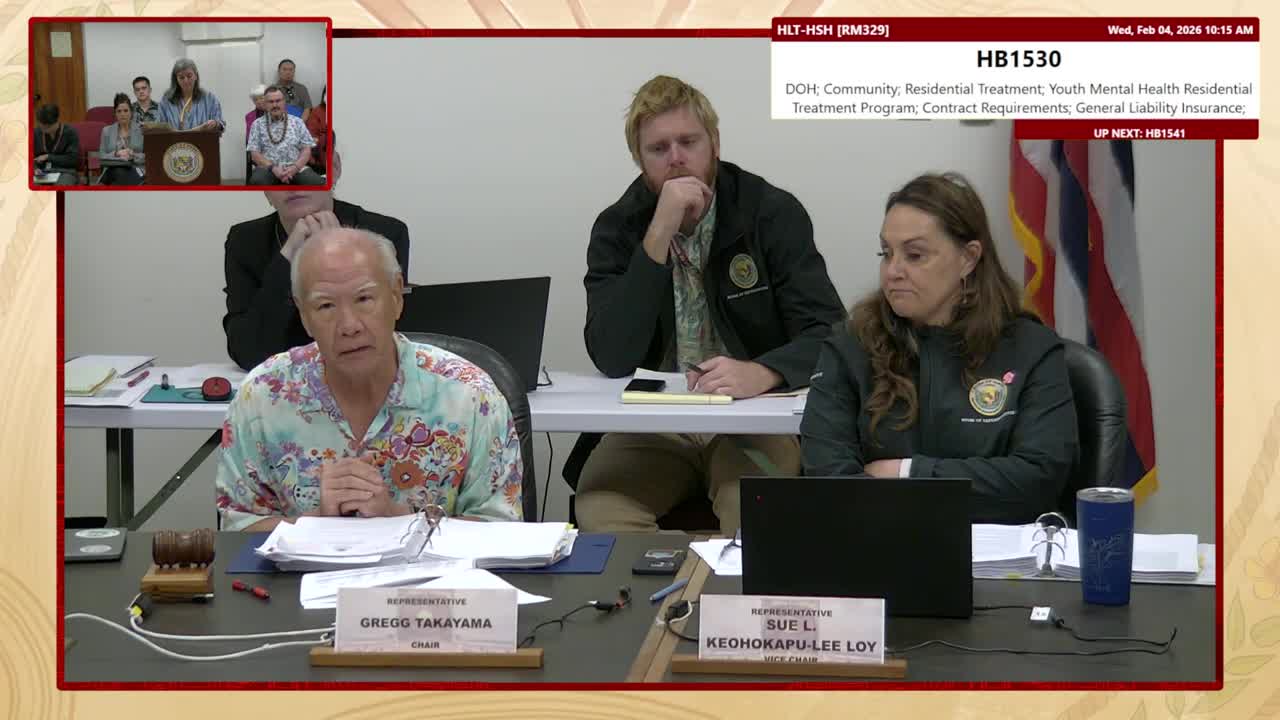 18MIN
House Standing Committee on Health
18MIN
House Standing Committee on Human Services & Homelessness
 1MIN
House Standing Committee on Health
1MIN
House Standing Committee on Human Services & Homelessness
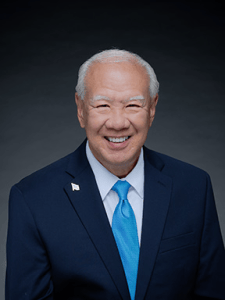
Bill Author
Bill Co-Author(s):