HB 933: RELATING TO GENERAL EXCISE TAX REDUCTIONS.
- Session Year: 2025-2026
- House: House
- Latest Version Date: 2025-02-03
Current Status:
Failed
(2025-12-08: Carried over to 2026 Regular Session.)
Introduced
In Committee
First Chamber
In Committee
Second Chamber
Final Decking
Enacted
Reduces the general excise tax rate on the gross proceeds or gross income from the sale of groceries that are eligible under the Supplemental Nutrition Assistance Program (SNAP) or Special Supplemental Nutrition Program for Women, Infants, and Children (WIC), regardless of the means of purchase and the program eligibility of the purchaser. Reduces the general excise tax rate on the gross proceeds or income from the sale of nonprescription drugs. Requires DBEDT to conduct an economic cost-benefit analysis on the general excise tax reductions. Effective 7/1/3000. (HD1)
Reduces the general excise tax rate on the gross proceeds or income from the sale of groceries that are eligible under the supplemental nutrition assistance program (SNAP) or special supplemental nutrition program for women, infants, and children (WIC), regardless of the means of purchase and the program eligibility of the purchaser. Reduces the general excise tax rate on the gross proceeds or income from the sale of nonprescription drugs. Requires DBEDT to conduct an economic cost-benefit analysis on the GET reductions.
|
HOUSE OF REPRESENTATIVES |
H.B. NO. |
933 |
|
THIRTY-THIRD LEGISLATURE, 2025 |
H.D. 1 |
|
|
STATE OF HAWAII |
|
|
|
|
|
|
|
|
||
|
|
||
A BILL FOR AN ACT
RELATING TO GENERAL EXCISE TAX REDUCTIONS.
BE IT ENACTED BY THE LEGISLATURE OF THE STATE OF HAWAII:
SECTION 1. The legislature finds that the cost of living in Hawaii is extremely high and many residents are struggling to pay for food, medication, housing, and other necessities. Many Hawaii residents, including vulnerable populations, suffer from food insecurity. A 2021 study by the university of Hawaii at Manoa stated that forty-eight per cent of Hawaii families with children are experiencing food insecurity. A 2021 Cornell university study indicated that even the slightest increase in tax rate correlated to an increased likelihood of food insecurity.
The legislature further finds that only thirteen states tax most foods purchased for home consumption. Six of the states that tax groceries do so at a reduced rate. Taxing the sale of groceries is generally considered regressive and disproportionately hurts working families because they spend a higher percentage of their income on food. Hawaii's general excise tax on groceries negatively affects not only the amount of food that Hawaii families can afford, but also the quality and diversity of their food choices.
According to the United States Department of Agriculture, a Hawaii family on a thrifty food plan spends $1,794.60 per month on food. This family would pay over $800 a year in state taxes on those groceries. The thrifty food plan represents those on a limited budget. Even if this family is eligible for a refundable food/excise tax credit, the family would likely get back less than one-half of those state taxes paid on groceries.
The legislature has already recognized that certain items should be exempt from the general excise tax, as evidenced by the existing general exemption for amounts received by certain entities for selling prescription drugs. Lowering the tax rate on groceries and nonprescription drugs will have an immediate positive impact on Hawaii's cost of living by lowering the cost of these necessary items.
Accordingly, the purpose of this Act is to:
(1) Establish a reduction in the general excise tax rate on gross proceeds or gross income from the sale of groceries that are eligible for purchase under the supplemental nutrition assistance program or special supplemental nutrition program for women, infants, and children and from the sale of nonprescription drugs; and
(2) Require the department of business, economic development, and tourism to conduct an economic cost-benefit analysis on the general excise reductions and submit a report to the legislature.
SECTION 2. Chapter 237, Hawaii Revised Statutes, is amended by adding two new sections to be appropriately designated and to read as follows:
"§237- Reduced rate; eligible groceries. (a) Notwithstanding section 237-13 to the contrary, beginning January 1, 2026, there is hereby levied and shall be assessed and collected a tax equivalent to one-half per cent less than the rate that would have applied pursuant to section 237-13 of the gross proceeds or gross income received from the sale of all groceries eligible for purchase under the supplemental nutrition assistance program and special supplemental nutrition program for women, infants, and children within the State, regardless of the means of purchase and the eligibility of the purchaser for supplemental nutrition assistance program or special supplemental nutrition program for women, infants, and children benefits.
(b) For the purposes of this section:
"Food" or "food product" means substances, whether in liquid, concentrated, solid, frozen, dried, or dehydrated form, that are sold for ingestion or chewing by humans and are consumed for their taste or nutritional value.
"Groceries" means any food or food product for home consumption. "Groceries" may be further defined by the department by rule through the enumeration of items in rules or tax informational release; provided that the department shall consult with the federal Food and Nutrition Service of the United States Department of Agriculture in further defining the term "groceries" for purposes of the supplemental nutrition assistance program and special supplemental nutrition program for women, infants, and children.
§237- Reduced rate; nonprescription drugs. (a) Notwithstanding section 237-13 to the contrary, beginning January 1, 2026, there is hereby levied and shall be assessed and collected a tax equivalent to one-half per cent less than the rate that would have applied pursuant to section 237-13 of the gross proceeds or gross income received from the sale of nonprescription drugs.
(b) For the purposes of this section:
"Drug" means:
(1) Articles recognized in the official United States Pharmacopoeia, official United States Pharmacopoeia Dispensing Information, official Homeopathic Pharmacopoeia of the United States, or official National Formulary, or any supplement to any of these publications;
(2) Articles intended for use in the diagnosis, cure, mitigation, treatment, or prevention of disease in humans;
(3) Articles, other than food or clothing, intended to affect the structure or any function of the body of humans; or
(4) Articles intended for use as a component of any article specified in paragraph (1), (2), or (3).
"Drug" does not include devices or their components, parts or accessories, cosmetics, or liquor as defined in section 281-1.
"Nonprescription drug" means any packaged, bottled, or nonbulk chemical, drug, or medicine that may be lawfully sold without a practitioner's order."
SECTION 3. (a) By December 1, 2026, the department of business, economic development, and tourism shall conduct an economic cost-benefit analysis on the general excise tax reductions for calendar year 2026 as provided in section 2 of this Act.
(b) The department of business, economic development, and tourism shall submit a report of its findings from the economic cost-benefit analysis, including any recommendations and proposed legislation, to the legislature no later than twenty days prior to the convening of the regular session of 2027.
SECTION 4. New statutory material is underscored.
SECTION 5. This Act shall take effect on July 1, 3000.
Report Title:
General Excise Tax; Rate Reduction; SNAP; WIC; Groceries; Nonprescription Drugs; DBEDT
Description:
Reduces the general excise tax rate on the gross proceeds or gross income from the sale of groceries that are eligible under the Supplemental Nutrition Assistance Program (SNAP) or Special Supplemental Nutrition Program for Women, Infants, and Children (WIC), regardless of the means of purchase and the program eligibility of the purchaser. Reduces the general excise tax rate on the gross proceeds or income from the sale of nonprescription drugs. Requires DBEDT to conduct an economic cost-benefit analysis on the general excise tax reductions. Effective 7/1/3000. (HD1)
The summary description of legislation appearing on this page is for informational purposes only and is not legislation or evidence of legislative intent.
|
HOUSE OF REPRESENTATIVES |
H.B. NO. |
933 |
|
THIRTY-THIRD LEGISLATURE, 2025 |
|
|
|
STATE OF HAWAII |
|
|
|
|
|
|
|
|
||
|
|
||
A BILL FOR AN ACT
relating to general excise tax reductions.
BE IT ENACTED BY THE LEGISLATURE OF THE STATE OF HAWAII:
SECTION 1. The legislature finds that the cost of living in Hawaii is extremely high and many residents are struggling to pay for food, medication, housing, and other necessities. Many Hawaii residents, including vulnerable populations, suffer from food insecurity. A 2021 study by the University of Hawaii at Manoa stated that forty-eight per cent of Hawaii families with children are experiencing food insecurity. A 2021 Cornell study indicated that even the slightest increase in tax rate correlated to an increased likelihood of food insecurity.
The legislature further finds that only thirteen states tax most foods purchased for consumption at home from the state sales tax. Six of the states that tax groceries do so at a reduced rate. Taxing the sale of groceries is generally considered regressive and disproportionately hurts working families because they spend a higher percentage of their income on food. Hawaii's general excise tax on groceries negatively affects not only the amount of food that Hawaii families can afford, but also the quality and diversity of their food choices.
According to the United States Department of Agriculture, a Hawaii family on a thrifty food plan spends $1,794.60 per month on food. This family would pay over $800 a year in state taxes on those groceries. The thrifty food plan represents those on a limited budget. Even if this family is eligible for a refundable food/excise tax credit, the family would likely get back less than one-half of those state taxes paid on groceries.
The legislature has already recognized that certain items should be exempt from the general excise tax, as evidenced by the existing general exemption for amounts received by certain entities for selling prescription drugs. Lowering the tax rate on groceries and nonprescription drugs will have an immediate positive impact on Hawaii's cost of living by lowering the cost of these necessary items.
Accordingly, the purpose of this Act is to:
(1) Establish a reduction in the general excise tax rate on gross proceeds or income from the sale of groceries that are eligible for purchase under the supplemental nutrition assistance program or special supplemental nutrition program for women, infants, and children and from the sale of nonprescription drugs; and
(2) Require the department of business, economic development and tourism to conduct an economic cost-benefit analysis on the general excise reductions and submit a report to the legislature.
SECTION 2. Chapter 237, Hawaii Revised Statutes, is amended by adding two new sections to be appropriately designated and to read as follows:
"§237- Reduced rate; eligible groceries. (a) Notwithstanding section 237-13 to the contrary, beginning January 1, 2026, there is hereby levied and shall be assessed and collected a tax equivalent to one-half per cent less than the rate that would have applied pursuant to section 237-13 of the gross proceeds or income received from the sale of all groceries eligible for purchase under the supplemental nutrition assistance program and special supplemental nutrition program for women, infants, and children within the State, regardless of the means of purchase and the eligibility of the purchaser for supplemental nutrition assistance program or special supplemental nutrition program for women, infants, and children benefits.
(b) For the purposes of this section:
"Food" or "food product" means substances, whether in liquid, concentrated, solid, frozen, dried, or dehydrated form, that are sold for ingestion or chewing by humans and are consumed for their taste or nutritional value.
"Groceries" means any food or food product for home consumption. "Groceries" may be further defined by the department by rule through the enumeration of items in rules or tax informational release; provided that the department shall consult with the federal Food and Nutrition Service of the United States Department of Agriculture in further defining the term "groceries" for purposes of the supplemental nutrition assistance program and special supplemental nutrition program for women, infants, and children.
§237- Reduced rate; nonprescription drugs. (a) Notwithstanding section 237-13 to the contrary, beginning January 1, 2026, there is hereby levied and shall be assessed and collected a tax equivalent to one-half per cent less than the rate that would have applied pursuant to section 237-13 of the gross proceeds or income received from the sale of nonprescription drugs.
(b) For the purposes of this section:
"Drug" means:
(1) Articles recognized in the official United States Pharmacopoeia, official United States Pharmacopoeia Dispensing Information, official Homeopathic Pharmacopoeia of the United States, or official National Formulary, or any supplement to any of these publications;
(2) Articles intended for use in the diagnosis, cure, mitigation, treatment, or prevention of disease in humans;
(3) Articles, other than food or clothing, intended to affect the structure or any function of the body of humans; or
(4) Articles intended for use as a component of any article specified in paragraph (1), (2), or (3); provided that the term "drug" does not include devices or their components, parts or accessories, cosmetics, or liquor as defined in section 281-1.
"Nonprescription drug" means any packaged, bottled, or nonbulk chemical, drug, or medicine that may be lawfully sold without a practitioner's order."
SECTION 3. (a) By December 1, 2026, the department of business, economic development, and tourism shall conduct an economic cost-benefit analysis on the general excise tax reductions for calendar year 2026 as provided in section 2 of this Act.
(b) The department of business, economic development, and tourism shall submit a report of its findings from the economic cost-benefit analysis, including any recommendations and proposed legislation, to the legislature no later than twenty days prior to the convening of the regular session of 2027.
SECTION 4. New statutory material is underscored.
SECTION 5. This Act shall take effect on July 1, 2025.
|
INTRODUCED BY: |
_____________________________ |
|
|
|
Report Title:
General Excise Tax; Rate Reduction; SNAP; WIC; Groceries; Nonprescription Drugs; DBEDT
Description:
Reduces the general excise tax rate on the gross proceeds or income from the sale of groceries that are eligible under the supplemental nutrition assistance program (SNAP) or special supplemental nutrition program for women, infants, and children (WIC), regardless of the means of purchase and the program eligibility of the purchaser. Reduces the general excise tax rate on the gross proceeds or income from the sale of nonprescription drugs. Requires DBEDT to conduct an economic cost-benefit analysis on the GET reductions.
The summary description of legislation appearing on this page is for informational purposes only and is not legislation or evidence of legislative intent.
|
Date
|
Status
|
|---|---|
| Dec 8, 2025 | Carried over to 2026 Regular Session. |
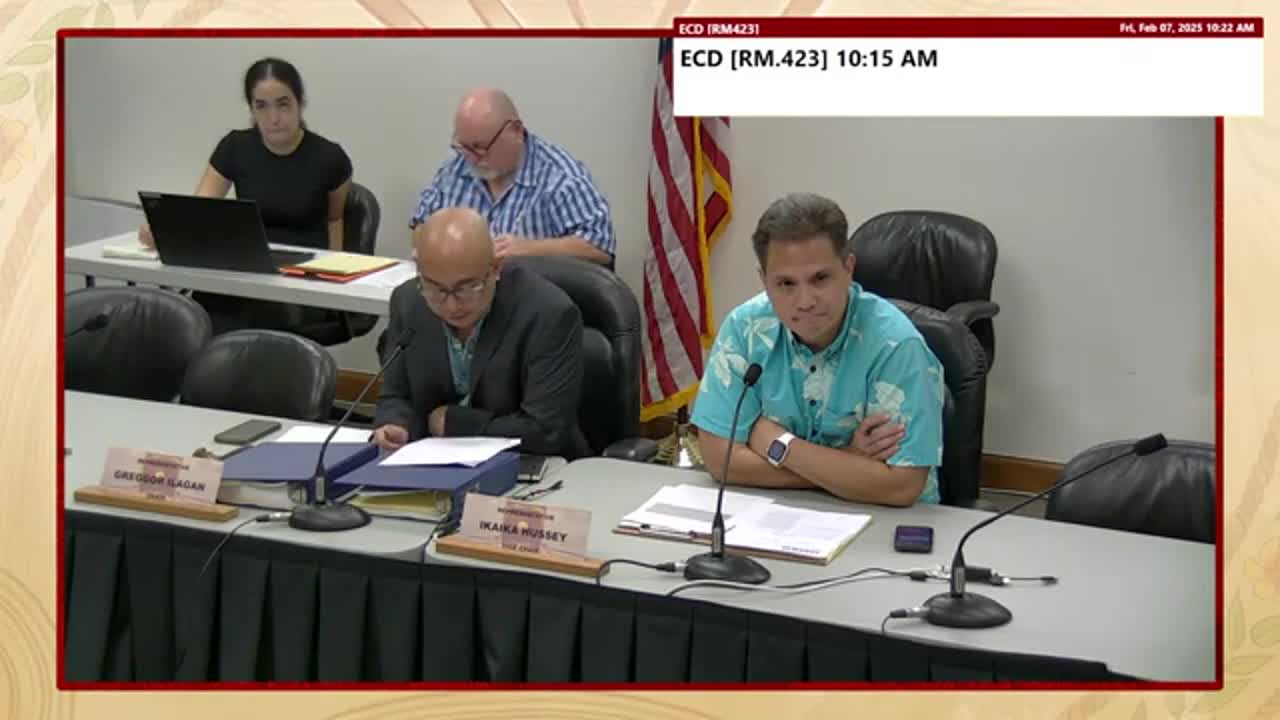
| Feb 7, 2025 | The committee(s) on ECD recommend(s) that the measure be deferred. |
| Feb 4, 2025 | Bill scheduled to be heard by ECD on Friday, 02-07-25 10:15AM in House conference room 423 VIA VIDEOCONFERENCE. |
| Feb 4, 2025 | Passed Second Reading as amended in HD 1 and referred to the committee(s) on ECD with none voting aye with reservations; none voting no (0) and Representative(s) Cochran, Kong, Ward excused (3). |
| Feb 4, 2025 | Reported from HSH (Stand. Com. Rep. No. 59) as amended in HD 1, recommending passage on Second Reading and referral to ECD. |
| Jan 30, 2025 | The committee on HSH recommend that the measure be PASSED, WITH AMENDMENTS. The votes were as follows: 9 Ayes: Representative(s) Marten, Olds, Amato, Chun, Keohokapu-Lee Loy, Takayama, Takenouchi, Alcos, Garcia; Ayes with reservations: none; Noes: none; and Excused: none. |
| Jan 27, 2025 | Bill scheduled to be heard by HSH on Thursday, 01-30-25 9:35AM in House conference room 329 VIA VIDEOCONFERENCE. |
| Jan 23, 2025 | Referred to HSH, ECD, FIN, referral sheet 3 |
| Jan 23, 2025 | Introduced and Pass First Reading. |
| Jan 21, 2025 | Pending introduction. |
|
Date
|
Description
|
Location
|
Votes
|
|
|---|---|---|---|---|
| Jan 30, 2025 | The committee on HSH recommend that the measure be PASSED, WITH AMENDMENTS | House Standing Committee on Human Services & Homelessness |
Passed |
This list shows positions taken on this bill by organizations on the date displayed, which is linked to the original source.
Positions by individuals are not included.
|
Organization
|
Position
|
Date
|
|---|---|---|
| Chamber of Commerce Hawaii | *** Support | Feb 7, 2025 |
| Grassroot Institute of Hawaii | *** Support | Feb 7, 2025 |
| Hawaii Food Industry Association | *** Support | Feb 7, 2025 |
| Hawai‘i Foodbank | *** Support | Feb 7, 2025 |
| Hawai‘i Pacific Health | *** Support | Feb 7, 2025 |
| Maui Chamber of Commerce | *** Support | Feb 7, 2025 |
STAND. COM. REP. NO. 59
Honolulu, Hawaii
, 2025
RE: H.B. No. 933
H.D. 1
Honorable Nadine K. Nakamura
Speaker, House of Representatives
Thirty-Third State Legislature
Regular Session of 2025
State of Hawaii
Madame:
Your Committee on Human Services & Homelessness, to which was referred H.B. No. 933 entitled:
"A BILL FOR AN ACT RELATING TO GENERAL EXCISE TAX REDUCTIONS,"
begs leave to report as follows:
The purpose of this measure is to:
(1) Establish a reduction in the general excise tax rate on gross proceeds or gross income from the sale of groceries that are eligible for purchase under the Supplemental Nutrition Assistance Program or Special Supplemental Nutrition Program for Women, Infants, and Children and from the sale of nonprescription drugs; and
(2) Require the Department of Business, Economic Development, and Tourism to conduct an economic cost-benefit analysis on the general excise reductions and submit a report to the Legislature.
Your Committee received testimony in support of this measure from the Grassroot Institute of Hawaii; Hawaiʻi Foodbank; Hawaiʻi Pacific Health; Hawaii Food Industry Association; and Maui Chamber of Commerce. Your Committee received comments on this measure from the Department of Taxation and Tax Foundation of Hawaii.
Your Committee finds that Hawaii's high cost of living forces many residents to struggle with basic necessities, including food, housing, and medication. Food insecurity remains a serious issue, with nearly half of Hawaii families with children experiencing difficulty affording enough to eat. Unlike most states, Hawaii taxes groceries at the full general excise tax rate, which disproportionately burdens working families and those on limited budgets. Reducing the general excise tax on groceries and nonprescription drugs would provide immediate financial relief, helping families afford essential items.
Your Committee has amended this measure by:
(1) Changing the effective date to July 1, 3000, to encourage further discussion; and
(2) Making technical, nonsubstantive amendments for clarity, consistency, and style.
Your Committee notes the request in testimony from the Department of Taxation that this measure take effect on January 1, 2027, rather than January 1, 2026, to allow the Department sufficient time to implement the proposed reduced rates for the sale of eligible groceries and nonprescription drugs and provide businesses with enough time to update their accounting systems to comply with the changes proposed by this measure.
As affirmed by the record of votes of the members of your Committee on Human Services & Homelessness that is attached to this report, your Committee is in accord with the intent and purpose of H.B. No. 933, as amended herein, and recommends that it pass Second Reading in the form attached hereto as H.B. No. 933, H.D. 1, and be referred to your Committee on Economic Development & Technology.
Respectfully submitted on behalf of the members of the Committee on Human Services & Homelessness,
|
|
|
____________________________ LISA MARTEN, Chair |
|
|
|
|
|
Date
|
Testimony PDF
|
|---|---|
| Feb 7, 2025 | HB933_HD1_TESTIMONY_ECD_02-07-25_.PDF |
| Jan 29, 2025 | HB933_TESTIMONY_HSH_01-30-25_.PDF |
Discussed in Hearing
 2MIN
House Standing Committee on Economic Development & Technology
 5MIN
House Standing Committee on Health
5MIN
House Standing Committee on Human Services & Homelessness
Bill Author

Bill Co-Author(s):