SB 175: PROPOSING AN AMENDMENT TO ARTICLE VI, SECTION 3, OF THE HAWAII STATE CONSTITUTION TO INCREASE THE MANDATORY RETIREMENT AGE FOR STATE JUSTICES AND JUDGES.
- Session Year: 2025-2026
- House: Senate
- Latest Version Date: 2025-02-05
Current Status:
Failed
(2025-12-08: Carried over to 2026 Regular Session.)
Introduced
In Committee
First Chamber
In Committee
Second Chamber
Final Decking
Enacted
Proposes a constitutional amendment to increase the mandatory retirement age for justices and judges from seventy to seventy‑five years of age. (SD1)
Proposes a constitutional amendment to increase the mandatory retirement age for justices and judges from seventy to seventy-five years of age.
|
THE SENATE |
S.B. NO. |
175 |
|
THIRTY-THIRD LEGISLATURE, 2025 |
S.D. 1 |
|
|
STATE OF HAWAII |
|
|
|
|
|
|
|
|
||
|
|
||
A BILL FOR AN ACT
PROPOSING AN AMENDMENT TO ARTICLE VI, SECTION 3, OF THE HAWAII STATE CONSTITUTION TO INCREASE THE MANDATORY RETIREMENT AGE FOR STATE JUSTICES AND JUDGES.
BE IT ENACTED BY THE LEGISLATURE OF THE STATE OF HAWAII:
SECTION 2. Article 6, section 3, of the Constitution of the State of Hawaii is amended to read as follows:
"APPOINTMENT OF JUSTICES AND JUDGES
Section 3. The governor, with the consent of the senate, shall fill a vacancy in the office of the chief justice, supreme court, intermediate appellate court and circuit courts by appointing a person from a list of not less than four, and not more than six nominees for the vacancy presented to the governor by the judicial selection commission.
If the governor fails to make any appointment within thirty days of presentation, or within ten days of the senate's rejection of any previous appointment, the appointment shall be made by the judicial selection commission from the list with the consent of the senate. If the senate fails to reject any appointment within thirty days thereof, the senate shall be deemed to have consented to that appointment. If the senate rejects any appointment, the governor shall make another appointment from the list within ten days thereof. The same appointment and consent procedure shall be followed until a valid appointment has been made, or failing this, the judicial selection commission shall make the appointment from the list, without senate consent.
The chief justice, with the consent of the senate, shall fill a vacancy in the district courts by appointing a person from a list of not less than four and not more than six nominees for the vacancy presented to the chief justice by the judicial selection commission. If the chief justice fails to make any appointment within thirty days of presentation, or within ten days of the senate's rejection of any previous appointment, the appointment shall be made by the judicial selection commission from the list with the consent of the senate. If the senate fails to reject any appointment within thirty days thereof, the senate shall be deemed to have consented to that appointment. If the senate rejects any appointment, the chief justice shall make another appointment from the list within ten days thereof. The same appointment and consent procedure shall be followed until a valid appointment has been made, or failing this, the judicial selection commission shall make the appointment from the list, without senate consent. The chief justice shall appoint per diem district court judges as provided by law.
The judicial selection commission shall disclose to the public the list of nominees for each vacancy concurrently with the presentation of each list to the governor or the chief justice, as applicable.
QUALIFICATIONS FOR APPOINTMENT
Justices and judges shall be residents and citizens of the State and of the United States, and licensed to practice law by the supreme court. A justice of the supreme court, judge of the intermediate appellate court and judge of the circuit court shall have been so licensed for a period of not less than ten years preceding nomination. A judge of the district court shall have been so licensed for a period of not less than five years preceding nomination.
No justice or judge shall, during the term of office, engage in the practice of law, or run for or hold any other office or position of profit under the United States, the State or its political subdivisions.
TENURE; RETIREMENT
The term of office of justices and judges of the supreme court, intermediate appellate court and circuit courts shall be ten years. Judges of district courts shall hold office for the periods as provided by law. At least six months before the expiration of a justice's or judge's term of office, every justice and judge shall petition the judicial selection commission to be retained in office or shall inform the commission of an intention to retire. If the judicial selection commission determines that the justice or judge should be retained in office, the commission shall renew the term of office of the justice or judge for the period provided by this section or by law.
Justices
and judges shall be retired upon attaining the age of [seventy] seventy-five
years. They shall be included in any
retirement law of the State."
SECTION 3. The question to be printed on the ballot shall be as follows:
"Shall the mandatory retirement age for all state court justices and judges be increased from seventy to seventy‑five years of age?"
SECTION 4. Constitutional material to be repealed is bracketed and stricken. New constitutional material is underscored.
SECTION 5. This amendment shall take effect upon compliance with article XVII, section 3, of the Constitution of the State of Hawaii.
Report Title:
Constitutional Amendment; Judges; Mandatory Retirement Age
Description:
Proposes a constitutional amendment to increase the mandatory retirement age for justices and judges from seventy to seventy‑five years of age. (SD1)
The summary description of legislation appearing on this page is for informational purposes only and is not legislation or evidence of legislative intent.
|
THE SENATE |
S.B. NO. |
175 |
|
THIRTY-THIRD LEGISLATURE, 2025 |
|
|
|
STATE OF HAWAII |
|
|
|
|
|
|
|
|
||
|
|
||
A BILL FOR AN ACT
PROPOSING AN AMENDMENT TO ARTICLE VI, SECTION 3, OF THE HAWAII STATE CONSTITUTION TO INCREASE THE MANDATORY RETIREMENT AGE FOR STATE JUSTICES AND JUDGES.
BE IT ENACTED BY THE LEGISLATURE OF THE STATE OF HAWAII:
SECTION 2. Article 6, section 3, of the Constitution of the State of Hawaii is amended to read as follows:
"APPOINTMENT OF JUSTICES AND JUDGES
Section 3. The governor, with the consent of the senate, shall fill a vacancy in the office of the chief justice, supreme court, intermediate appellate court and circuit courts by appointing a person from a list of not less than four, and not more than six, nominees for the vacancy presented to the governor by the judicial selection commission.
If the governor fails to make any appointment within thirty days of presentation, or within ten days of the senate's rejection of any previous appointment, the appointment shall be made by the judicial selection commission from the list with the consent of the senate. If the senate fails to reject any appointment within thirty days thereof, the senate shall be deemed to have consented to that appointment. If the senate rejects any appointment, the governor shall make another appointment from the list within ten days thereof. The same appointment and consent procedure shall be followed until a valid appointment has been made, or failing this, the judicial selection commission shall make the appointment from the list, without senate consent.
The chief justice, with the consent of the senate, shall fill a vacancy in the district courts by appointing a person from a list of not less than four and not more than six nominees for the vacancy presented to the chief justice by the judicial selection commission. If the chief justice fails to make any appointment within thirty days of presentation, or within ten days of the senate's rejection of any previous appointment, the appointment shall be made by the judicial selection commission from the list with the consent of the senate. If the senate fails to reject any appointment within thirty days thereof, the senate shall be deemed to have consented to that appointment. If the senate rejects any appointment, the chief justice shall make another appointment from the list within ten days thereof. The same appointment and consent procedure shall be followed until a valid appointment has been made, or failing this, the judicial selection commission shall make the appointment from the list, without senate consent. The chief justice shall appoint per diem district court judges as provided by law.
The judicial selection commission shall disclose to the public the list of nominees for each vacancy concurrently with the presentation of each list to the governor or the chief justice, as applicable.
QUALIFICATIONS FOR APPOINTMENT
Justices and judges shall be residents and citizens of the State and of the United States, and licensed to practice law by the supreme court. A justice of the supreme court, judge of the intermediate appellate court and judge of the circuit court shall have been so licensed for a period of not less than ten years preceding nomination. A judge of the district court shall have been so licensed for a period of not less than five years preceding nomination.
No justice or judge shall, during the term of office, engage in the practice of law, or run for or hold any other office or position of profit under the United States, the State or its political subdivisions.
TENURE; RETIREMENT
The term of office of justices and judges of the supreme court, intermediate appellate court and circuit courts shall be ten years. Judges of district courts shall hold office for the periods as provided by law. At least six months before the expiration of a justice's or judge's term of office, every justice and judge shall petition the judicial selection commission to be retained in office or shall inform the commission of an intention to retire. If the judicial selection commission determines that the justice or judge should be retained in office, the commission shall renew the term of office of the justice or judge for the period provided by this section or by law.
Justices
and judges shall be retired upon attaining the age of [seventy] seventy-five
years. They shall be included in any
retirement law of the State."
SECTION 3. The question to be printed on the ballot shall be as follows:
"Shall the mandatory retirement age for all state court justices and judges be increased from seventy to seventy‑five years of age?"
SECTION 4. Constitutional material to be repealed is bracketed and stricken. New constitutional material is underscored.
SECTION 5. This amendment shall take effect upon compliance with article XVII, section 3, of the Constitution of the State of Hawaii.
|
INTRODUCED BY: |
_____________________________ |
|
|
|
Report Title:
Constitutional Amendment; Judges; Mandatory Retirement Age
Description:
Proposes a constitutional amendment to increase the mandatory retirement age for justices and judges from seventy to seventy-five years of age.
The summary description of legislation appearing on this page is for informational purposes only and is not legislation or evidence of legislative intent.
|
Date
|
Status
|
|---|---|
| Dec 8, 2025 | Carried over to 2026 Regular Session. |
| Feb 6, 2025 | Report adopted; Passed Second Reading, as amended (SD 1) and referred to WAM. |
| Feb 6, 2025 | Reported from JDC (Stand. Com. Rep. No. 64) with recommendation of passage on Second Reading, as amended (SD 1) and referral to WAM. |
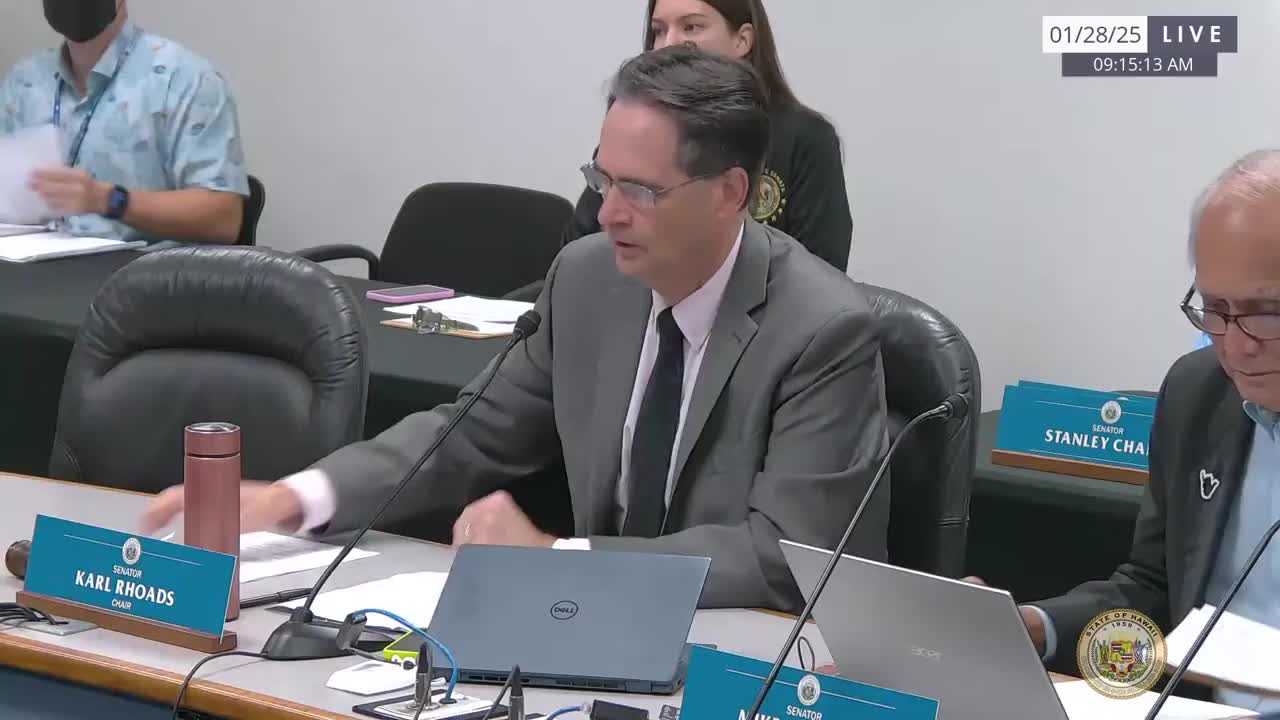
| Jan 28, 2025 | The committee(s) on JDC recommend(s) that the measure be PASSED, WITH AMENDMENTS. The votes in JDC were as follows: 4 Aye(s): Senator(s) Rhoads, Gabbard, Chang, San Buenaventura; Aye(s) with reservations: none ; 1 No(es): Senator(s) Awa; and 0 Excused: none. |
| Jan 22, 2025 | The committee(s) on JDC has scheduled a public hearing on 01-28-25 9:15AM; Conference Room 016 & Videoconference. |
| Jan 17, 2025 | Referred to JDC, WAM. |
| Jan 15, 2025 | Introduced and passed First Reading. |
| Jan 13, 2025 | Pending Introduction. |
|
Date
|
Description
|
Location
|
Votes
|
|
|---|---|---|---|---|
| Jan 28, 2025 | The committee(s) on JDC recommend(s) that the measure be PASSED, WITH AMENDMENTS | Senate Standing Committee on Judiciary |
Passed |
This list shows positions taken on this bill by organizations on the date displayed, which is linked to the original source.
Positions by individuals are not included.
|
Organization
|
Position
|
Date
|
|---|---|---|
| Community Alliance on Prisons | ** Support | |
| Executive Office on Aging | ** Support | |
| Judiciary | ** Support | |
| Life of the Land | ** Support | |
| Office of the Public Defender | ** Support |
STAND. COM. REP. NO. 64
Honolulu, Hawaii
RE: S.B. No. 175
S.D. 1
Honorable Ronald D. Kouchi
President of the Senate
Thirty-Third State Legislature
Regular Session of 2025
State of Hawaii
Sir:
Your Committee on Judiciary, to which was referred S.B. No. 175 entitled:
"A BILL FOR AN ACT PROPOSING AN AMENDMENT TO ARTICLE VI, SECTION 3, OF THE HAWAII STATE CONSTITUTION TO INCREASE THE MANDATORY RETIREMENT AGE FOR STATE JUSTICES AND JUDGES,"
begs leave to report as follows:
The purpose and intent of this measure is to propose an amendment to article VI, section 3, of the Hawaii State Constitution to increase the mandatory retirement age for justices and judges from seventy to seventy-five years of age.
Your Committee received testimony in support of this measure from the Judiciary, Executive Office on Aging, Office of the Public Defender, Community Alliance on Prisons, Life of the Land, and two individuals.
Your Committee received testimony in opposition to this measure from two individuals.
Your Committee finds that many judges and justices are forced to retire at the age of seventy as a result of the mandatory retirement age for state judges and justices, despite still being able to perform their judicial duties. Additionally, many judges and justices continue to be active in the legal community and other community-based endeavors after their retirement. Your Committee also finds that many judges have grown into their positions over many years on the bench and bring invaluable experience and knowledge to the judicial system. Additionally, the majority of states allow judges to serve past the age of seventy. This measure will ensure that the State does not lose competent and experienced judges merely because of their age.
Your Committee has amended this measure by making a technical, nonsubstantive amendment for the purposes of clarity and consistency.
As affirmed by the record of votes of the members of your Committee on Judiciary that is attached to this report, your Committee is in accord with the intent and purpose of S.B. No. 175, as amended herein, and recommends that it pass Second Reading in the form attached hereto as S.B. No. 175, S.D. 1, and be referred to your Committee on Ways and Means.
Respectfully submitted on behalf of the members of the Committee on Judiciary,
|
|
|
________________________________ KARL RHOADS, Chair |
|
|
|
|
Bill Author