HB 1781: Department of Education; Mathematics; Numeracy; Numeracy Coaching Program; Establishment; Appropriation
- Session Year: 2025-2026
- House: House
- Latest Version Date: 2026-02-18
Current Status:
Failed
(2026-03-10: Referred to EDU, WAM.)
Introduced
In Committee
First Chamber
In Committee
Second Chamber
Final Decking
Enacted
Requires the Department of Education to establish a Numeracy Coaching Program to provide numeracy coaches in certain Department of Education elementary schools, middle schools, and intermediate schools to support teachers, improve instruction, and ensure that students develop a strong foundation in mathematics. Appropriates funds. Effective 7/1/3000. (HD1)
Requires the Department of Education to establish a Numeracy Coaching Program to provide numeracy coaches in certain Department of Education elementary schools, middle schools, and intermediate schools to support teachers, improve instruction, and ensure that students develop a strong foundation in mathematics. Appropriates funds.
|
HOUSE OF REPRESENTATIVES |
H.B. NO. |
1781 |
|
THIRTY-THIRD LEGISLATURE, 2026 |
H.D. 1 |
|
|
STATE OF HAWAII |
|
|
|
|
|
|
|
|
||
|
|
||
A BILL FOR AN ACT
RELATING TO EDUCATION.
BE IT ENACTED BY THE LEGISLATURE OF THE STATE OF HAWAII:
SECTION 1. This Act shall be known, and may be cited, as the Hawaii Numeracy Act.
SECTION 2. The legislature finds that mathematics proficiency is essential for college and career readiness, economic mobility, and a strong future workforce for the State. Yet statewide math outcomes show persistent gaps in foundational numeracy skills. According to the 2024 National Assessment of Educational Progress, only forty-two per cent of Hawaii's fourth-grade students and twenty-three percent of eighth-grade students scored at or above proficient in mathematics, meaning that a majority of students are not meeting grade-level expectations.
The legislature further finds that other states have demonstrated that rapid, measurable improvement in student math achievement is possible when schools implement structured, evidence-based mathematics coaching. Alabama and Kentucky, both early adopters of statewide math coaching models, posted some of the strongest gains in the nation on recent National Assessment of Educational Progress assessments. Alabama's sustained investment in math coaches contributed to some of the largest fourth-grade math increases nationally in 2022 and continued improvements in 2024. Kentucky's statewide coaching model has similarly been associated with notable gains in elementary mathematics achievement and steady improvement across student subgroups. These examples show that high-quality, job-embedded instructional coaching can help teachers implement evidence-based math instruction, strengthen early numeracy, and accelerate statewide gains.
Accordingly, the purpose of this Act is to establish a comprehensive numeracy coaching program in Hawaii to support teachers, improve instruction, and ensure that all students develop a strong foundation in mathematics.
SECTION 3. Chapter 302A, Hawaii Revised Statutes, is amended by adding a new subpart to part IV to be appropriately designated and to read as follows:
" . numeracy coaching program
"§302A- Definitions. As used in this subpart, unless the context otherwise requires:
"Dyscalculia" means a pattern of learning difficulties characterized by problems processing numerical informational, learning arithmetic facts, performing accurate or fluent calculations, difficulties with mathematical reasoning, and difficulties with word reasoning accuracy.
"Numeracy" means the ability to understand and work with numbers.
§302A- Numeracy coaching program; established. (a) The department shall establish a statewide numeracy coaching program to strengthen mathematics instruction and improve student outcomes in numeracy and mathematics.
(b) The department shall employ and allocate numeracy coaches to department schools with priority given to:
(1) Elementary schools serving kindergarten through fifth grade, where early numeracy development has the greatest long-term impact;
(2) Schools with the lowest mathematics proficiency rates, as determined by state assessments; and
(3) Middle schools and intermediate schools serving the eighth grade, where statewide mathematics proficiency remains significantly below grade-level expectations.
(c) The department shall ensure that the deployment of numeracy coaches reflect statewide needs and school-level data, with staffing decisions grounded in student performance, demonstrated demand for instructional support, and equitable access across complex areas.
§302A- Numeracy coach; qualifications. To qualify as a numeracy coach, an individual shall:
(1) Hold a valid teacher license issued by the Hawaii teacher standards board;
(2) Have at least three years of successful experience teaching mathematics or providing mathematics intervention at the elementary school, middle school, or intermediate school level;
(3) Demonstrate expertise in mathematics and numeracy instruction through at least one of the following:
(A) A mathematics or elementary mathematics specialist endorsement;
(B) Passing a high-quality mathematics assessment approved by the department; or
(C) Completion of a department-approved mathematics coaching preparation program; and
(4) Complete department-approved professional learning in evidence-based mathematics instruction, numeracy development, and instructional coaching.
§302A- Numeracy coaches; duties and responsibilities. Numeracy coaches shall support the improvement of mathematics instruction and student learning through evidence-based coaching practices. The duties of numeracy coaches shall include but not be limited to:
(1) Providing job-embedded instructional coaching to teachers, including modeling lessons, co-teaching, observation with feedback, and collaborative planning;
(2) Supporting teachers in implementing evidence-based mathematics and numeracy practices that are aligned with state standards, including practices that strengthen number sense, conceptual understanding, procedural fluency, and problem-solving;
(3) Assisting teachers in the use of screening, diagnostic, and formative assessment tools to identify student needs, including characteristics of dyscalculia, and to monitor student progress in mathematics;
(4) Facilitating ongoing professional learning for teachers and grade-level teams that build knowledge of mathematics content, the progression of numeracy development, and effective instructional strategies;
(5) Collaborating with school leadership to support a coherent schoolwide mathematics improvement plan aligned with complex-area and statewide goals;
(6) Supporting the use of high-quality instructional materials and interventions, including concrete, visual, and representational tools that improve mathematics learning;
(7) Using student performance data to inform instructional adjustments, intervention supports, and small-group instruction across all tiers of the school's multi-tiered system of support for mathematics;
(8) Participating in ongoing professional learning and coach training as required by the department to ensure consistent statewide coaching quality; and
(9) Engaging families and the school community in strategies that support numeracy development outside the classroom, as appropriate.
§302A- Report. No later than twenty days prior to the convening of each regular session, the department shall submit a report to the governor and legislature on the status of the numeracy coaching program. The report shall include:
(1) Student mathematics proficiency and growth on state assessments, disaggregated by subgroup;
(2) The number of teachers receiving coaching cycles and the type and duration of coaching provided;
(3) Progress-monitoring data for numeracy in grades kindergarten through five;
(4) Workforce data related to the numeracy coaching program, including coach recruitment, retention, licensure pathways, and whether coaches are hired from within schools or from outside the department;
(5) Teacher feedback on the effectiveness of numeracy coaching support; and
(6) Recommendations for improving the numeracy coaching program and any additional resource needs.
§302A- Rules. The department shall adopt rules pursuant to chapter 91 to effectuate this subpart."
SECTION 4. There is appropriated out of the general revenues of the State of Hawaii the sum of $ or so much thereof as may be necessary for fiscal year 2026-2027 for the establishment of the numeracy coaching program pursuant to section 3 of this Act.
The sum appropriated shall be expended by the department of education for the purposes of this Act.
SECTION 5. This Act shall take effect on July 1, 3000.
Report Title:
Department of Education; Mathematics; Numeracy; Numeracy Coaching Program; Establishment; Appropriation
Description:
Requires the Department of Education to establish a Numeracy Coaching Program to provide numeracy coaches in certain Department of Education elementary schools, middle schools, and intermediate schools to support teachers, improve instruction, and ensure that students develop a strong foundation in mathematics. Appropriates funds. Effective 7/1/3000. (HD1)
The summary description of legislation appearing on this page is for informational purposes only and is not legislation or evidence of legislative intent.
|
HOUSE OF REPRESENTATIVES |
H.B. NO. |
1781 |
|
THIRTY-THIRD LEGISLATURE, 2026 |
|
|
|
STATE OF HAWAII |
|
|
|
|
|
|
|
|
||
|
|
||
A BILL FOR AN ACT
relating to education.
BE IT ENACTED BY THE LEGISLATURE OF THE STATE OF HAWAII:
SECTION 1. This Act shall be known, and may be cited, as the Hawaii Numeracy Act.
SECTION 2. The legislature finds that mathematics proficiency is essential for college and career readiness, economic mobility, and a strong future workforce for the State. Yet statewide math outcomes show persistent gaps in foundational numeracy skills. According to the 2024 National Assessment of Educational Progress, only forty-two per cent of Hawaii's fourth-grade students and twenty-three percent of eighth-grade students scored at or above proficient in mathematics, meaning that a majority of students are not meeting grade-level expectations.
The legislature further finds that other states have demonstrated that rapid, measurable improvement in student math achievement is possible when schools implement structured, evidence-based mathematics coaching. Alabama and Kentucky, both early adopters of statewide math coaching models, posted some of the strongest gains in the nation on recent National Assessment of Educational Progress assessments. Alabama's sustained investment in math coaches contributed to some of the largest fourth-grade math increases nationally in 2022 and continued improvements in 2024. Kentucky's statewide coaching model has similarly been associated with notable gains in elementary mathematics achievement and steady improvement across student subgroups. These examples show that high-quality, job-embedded instructional coaching can help teachers implement evidence-based math instruction, strengthen early numeracy, and accelerate statewide gains.
Accordingly, the purpose of this Act is to establish a comprehensive numeracy coaching program in Hawaii to support teachers, improve instruction, and ensure that all students develop a strong foundation in mathematics.
SECTION 3. Chapter 302A, Hawaii Revised Statutes, is amended by adding a new subpart to part IV to be appropriately designated and to read as follows:
" . numeracy coaching program
"§302A- Definitions. As used in this subpart, unless the context otherwise requires:
"Dyscalculia" means a pattern of learning difficulties characterized by problems processing numerical informational, learning arithmetic facts, performing accurate or fluent calculations, difficulties with mathematical reasoning, and difficulties with word reasoning accuracy.
"Numeracy" means the ability to understand and work with numbers.
§302A- Numeracy coaching program; established. (a) The department shall establish a statewide numeracy coaching program to strengthen mathematics instruction and improve student outcomes in numeracy and mathematics.
(b) The department shall employ and allocate numeracy coaches to department schools with priority given to:
(1) Elementary schools serving kindergarten through fifth grade, where early numeracy development has the greatest long-term impact;
(2) Schools with the lowest mathematics proficiency rates, as determined by state assessments and the National Assessment of Educational Progress; and
(3) Middle schools and intermediate schools serving the eighth grade, where statewide mathematics proficiency remains significantly below grade-level expectations.
(c) The department shall ensure that the deployment of numeracy coaches reflect statewide needs and school-level data, with staffing decisions grounded in student performance, demonstrated demand for instructional support, and equitable access across complex areas.
§302A- Numeracy coach; qualifications. To qualify as a numeracy coach, an individual shall:
(1) Hold a valid teacher license issued by the Hawaii teacher standards board;
(2) Have at least three years of successful experience teaching mathematics or providing mathematics intervention at the elementary school, middle school, or intermediate school level;
(3) Demonstrate expertise in mathematics and numeracy instruction through at least one of the following:
(A) A mathematics or elementary mathematics specialist endorsement;
(B) Passing a high-quality mathematics assessment approved by the department; or
(C) Completion of a department-approved mathematics coaching preparation program; and
(4) Complete department-approved professional learning in evidence-based mathematics instruction, numeracy development, and instructional coaching.
§302A- Numeracy coaches; duties and responsibilities. Numeracy coaches shall support the improvement of mathematics instruction and student learning through evidence-based coaching practices. The duties of numeracy coaches shall include but not be limited to:
(1) Providing job-embedded instructional coaching to teachers, including modeling lessons, co-teaching, observation with feedback, and collaborative planning;
(2) Supporting teachers in implementing evidence-based mathematics and numeracy practices that are aligned with state standards, including practices that strengthen number sense, conceptual understanding, procedural fluency, and problem-solving;
(3) Assisting teachers in the use of screening, diagnostic, and formative assessment tools to identify student needs, including characteristics of dyscalculia, and to monitor student progress in mathematics;
(4) Facilitating ongoing professional learning for teachers and grade-level teams that build knowledge of mathematics content, the progression of numeracy development, and effective instructional strategies;
(5) Collaborating with school leadership to support a coherent schoolwide mathematics improvement plan aligned with complex-area and statewide goals;
(6) Supporting the use of high-quality instructional materials and interventions, including concrete, visual, and representational tools that improve mathematics learning;
(7) Using student performance data to inform instructional adjustments, intervention supports, and small-group instruction across all tiers of the school's multi-tiered system of support for mathematics;
(8) Participating in ongoing professional learning and coach training as required by the department to ensure consistent statewide coaching quality; and
(9) Engaging families and the school community in strategies that support numeracy development outside the classroom, as appropriate.
§302A- Report. No later than twenty days prior to the convening of each regular session, the department shall submit a report to the governor and legislature on the status of the numeracy coaching program. The report shall include:
(1) Student mathematics proficiency and growth on state assessments and the National Assessment of Educational Progress, disaggregated by subgroup;
(2) The number of teachers receiving coaching cycles and the type and duration of coaching provided;
(3) Progress-monitoring data for numeracy in grades kindergarten through five;
(4) Workforce data related to the numeracy coaching program, including coach recruitment, retention, licensure pathways, and whether coaches are hired from within schools or from outside the department;
(5) Teacher feedback on the effectiveness of numeracy coaching support; and
(6) Recommendations for improving the numeracy coaching program and any additional resource needs.
§302A- Rules. The department shall adopt rules pursuant to chapter 91 to effectuate this subpart."
SECTION 4. There is appropriated out of the general revenues of the State of Hawaii the sum of $ or so much thereof as may be necessary for fiscal year 2026-2027 for the establishment of the numeracy coaching program pursuant to section 2 of this Act.
The sum appropriated shall be expended by the department of education for the purposes of this Act.
SECTION 5. This Act shall take effect on July 1, 2026.
|
INTRODUCED BY: |
_____________________________ |
|
|
|
Report Title:
Department of Education; Mathematics; Numeracy; Numeracy Coaching Program; Establishment; Appropriation
Description:
Requires the Department of Education to establish a Numeracy Coaching Program to provide numeracy coaches in certain Department of Education elementary schools, middle schools, and intermediate schools to support teachers, improve instruction, and ensure that students develop a strong foundation in mathematics. Appropriates funds.
The summary description of legislation appearing on this page is for informational purposes only and is not legislation or evidence of legislative intent.
|
Date
|
Status
|
|---|---|
| Mar 10, 2026 | Referred to EDU, WAM. |
| Mar 10, 2026 | Passed First Reading. |
| Mar 10, 2026 | Received from House (Hse. Com. No. 156). |
| Mar 6, 2026 | Passed Third Reading with none voting aye with reservations; none voting no (0) and Representative(s) Perruso, Sayama excused (2). Transmitted to Senate. |
| Mar 6, 2026 | Reported from FIN (Stand. Com. Rep. No. 948-26), recommending passage on Third Reading. |
| Mar 3, 2026 | The committee on FIN recommend that the measure be PASSED, UNAMENDED. The votes were as follows: 16 Ayes: Representative(s) Todd, Takenouchi, Hartsfield, Hussey, Keohokapu-Lee Loy, Kitagawa, Kusch, Lee, M., Miyake, Morikawa, Perruso, Templo, Yamashita, Alcos, Gedeon, Reyes Oda; Ayes with reservations: none; 0 Noes: none; and 0 Excused: none. |
| Feb 27, 2026 | Bill scheduled to be heard by FIN on Tuesday, 03-03-26 2:00PM in House conference room 308 VIA VIDEOCONFERENCE. |
| Feb 19, 2026 | Passed Second Reading as amended in HD 1 and referred to the committee(s) on FIN with none voting aye with reservations; none voting no (0) and none excused (0). |
| Feb 19, 2026 | Reported from EDN (Stand. Com. Rep. No. 500-26) as amended in HD 1, recommending passage on Second Reading and referral to FIN. |
| Feb 12, 2026 | The committee on EDN recommend that the measure be PASSED, WITH AMENDMENTS. The votes were as follows: 9 Ayes: Representative(s) Woodson, La Chica, Amato, Evslin, Kapela, Kila, Olds, Muraoka, Souza; Ayes with reservations: none; Noes: none; and 1 Excused: Representative(s) Garrett. |
| Feb 10, 2026 | Bill scheduled to be heard by EDN on Thursday, 02-12-26 2:00PM in House conference room 309 VIA VIDEOCONFERENCE. |
| Jan 26, 2026 | Referred to EDN, FIN, referral sheet 1 |
| Jan 22, 2026 | Introduced and Pass First Reading. |
| Jan 21, 2026 | Pending introduction. |
|
Date
|
Description
|
Location
|
Votes
|
|
|---|---|---|---|---|
| Mar 6, 2026 | Third Reading | House Floor |
Passed |
|
| Mar 3, 2026 | The committee on FIN recommend that the measure be PASSED, UNAMENDED | House Standing Committee on Finance |
Passed |
|
| Feb 12, 2026 | The committee on EDN recommend that the measure be PASSED, WITH AMENDMENTS | House Standing Committee on Education |
Passed |
This list shows positions taken on this bill by organizations on the date displayed, which is linked to the original source.
Positions by individuals are not included.
|
Organization
|
Position
|
Date
|
|---|---|---|
| Department of Education | ** Support | |
| Harold K.L. Castle Foundation | ** Support | |
| HawaiiKidsCAN | ** Support | |
| University of Hawaiʻi at Manoa College of Education | ** Support | |
| University of Hawai‘i at Mānoa College of Education | *** Support | Mar 3, 2026 |
STAND. COM. REP. NO. 948-26
Honolulu, Hawaii
, 2026
RE: H.B. No. 1781
H.D. 1
Honorable Nadine K. Nakamura
Speaker, House of Representatives
Thirty-Third State Legislature
Regular Session of 2026
State of Hawaii
Madame:
Your Committee on Finance, to which was referred H.B. No. 1781, H.D. 1, entitled:
"A BILL FOR AN ACT RELATING TO EDUCATION,"
begs leave to report as follows:
Your Committee received testimony in support of this measure from the Department of Education; University of Hawaiʻi at Manoa College of Education; HawaiiKidsCAN; Harold K.L. Castle Foundation; and two individuals. Your Committee received testimony in opposition to this measure from one individual.
As affirmed by the record of votes of the members of your Committee on Finance that is attached to this report, your Committee is in accord with the intent and purpose of H.B. No. 1781, H.D. 1, and recommends that it pass Third Reading.
Respectfully submitted on behalf of the members of the Committee on Finance,
|
|
|
____________________________ CHRIS TODD, Chair |
|
|
|
|
Honolulu, Hawaii
H.D. 1
Speaker, House of Representatives
Thirty-Third State Legislature
State of Hawaii
Madame:
Your Committee on Education, to which was referred H.B. No. 1781 entitled:
"A BILL FOR AN ACT RELAT ING TO EDUCATION,"
begs leave to report as follows:
The purpose of this measure is to require and appropriate funds for the Department of Education to establish a Numeracy Coaching Program to provide numeracy coaches in certain Department of Education elementary schools, middle schools, and intermediate schools to support teachers, improve instruction, and ensure that students develop a strong foundation in mathematics.
Your Committee finds that mathematics proficiency is a vital skill for college and career readiness, economic mobility, and a strong future workforce for the State. However, statewide math outcomes show persistent gaps in foundational numeracy skills.
Your Committee further finds that other states have exhibited rapid, measurable improvement in student math achievement when schools implement structured, evidence-based mathematics coaching. Your Committee believes that providing high-quality, job-embedded instructional coaching can help teachers implement evidence-based math instruction, strengthen early numeracy, and accelerate statewide gains.
Your Committee has amended this measure by:
(1) Deleting language that would have:
(A) Prioritized the employment and allocation of numeracy coaches to schools with the lowest mathematics proficiency rates, as determined by the National Assessment of Educational Progress; and
(B) Required the report to the Legislature to include growth on the National Assessment of Educational Progress;
(2) Changing the effective date to July 1, 3000; and
(3) Making a technical, nonsubstantive amendment for the purposes of clarity, consistency, and style.
As affirmed by the record of votes of the members of your Committee on Education that is attached to this report, your Committee is in accord with the intent and purpose of H.B. No. 1781, as amended herein, and recommends that it pass Second Reading in the form attached hereto as H.B. No. 1781, H.D. 1, and be referred to your Committee on Finance.
Respectfully submitted on behalf of the members of the Committee on Education,
|
|
|
JUSTIN H. WOODSON, Chair |
|
Date
|
Testimony PDF
|
|---|---|
| Mar 3, 2026 | HB1781_HD1_TESTIMONY_FIN_03-03-26_.PDF |
| Feb 12, 2026 | HB1781_TESTIMONY_EDN_02-12-26_.PDF |
Discussed in Hearing
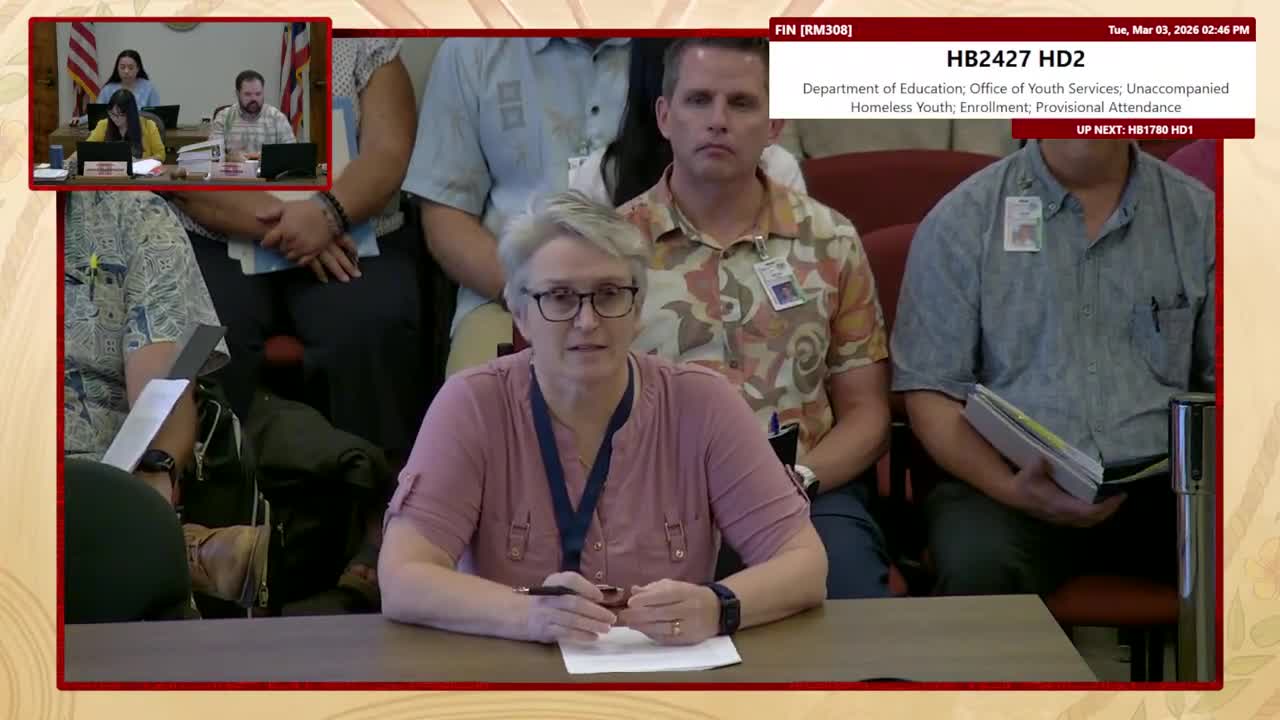 9MIN
House Standing Committee on Finance
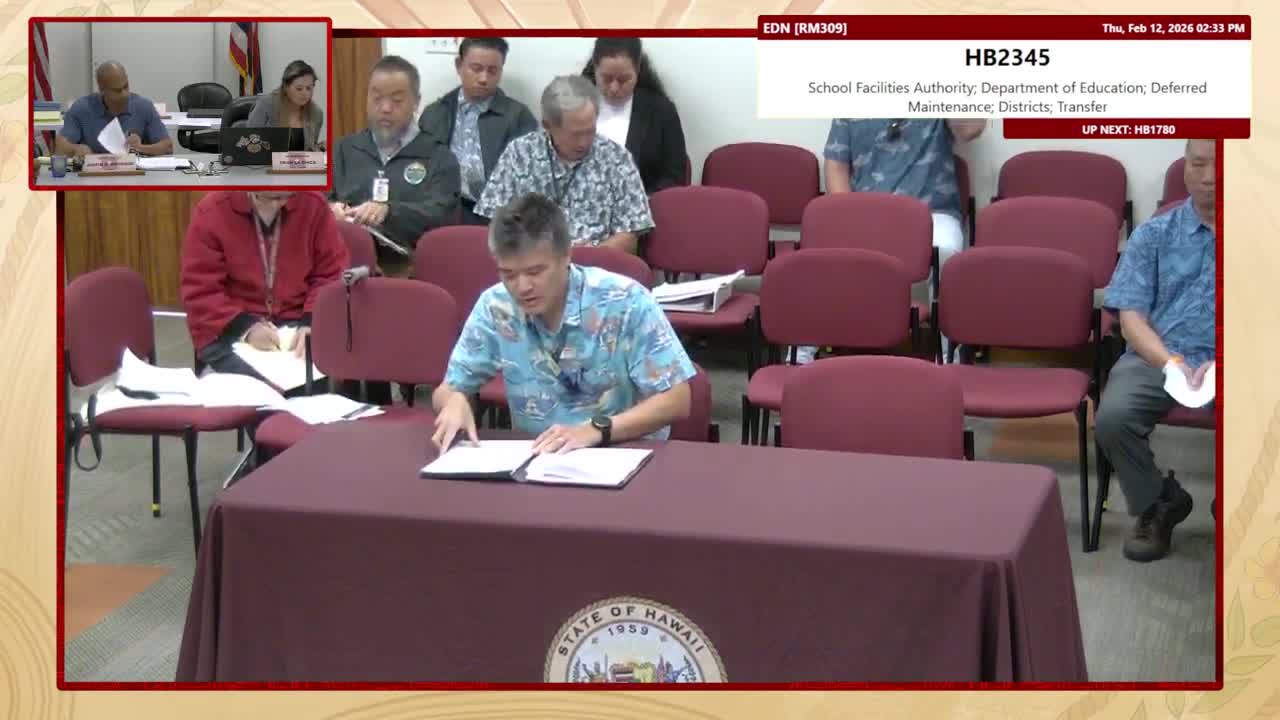 1MIN
House Standing Committee on Education
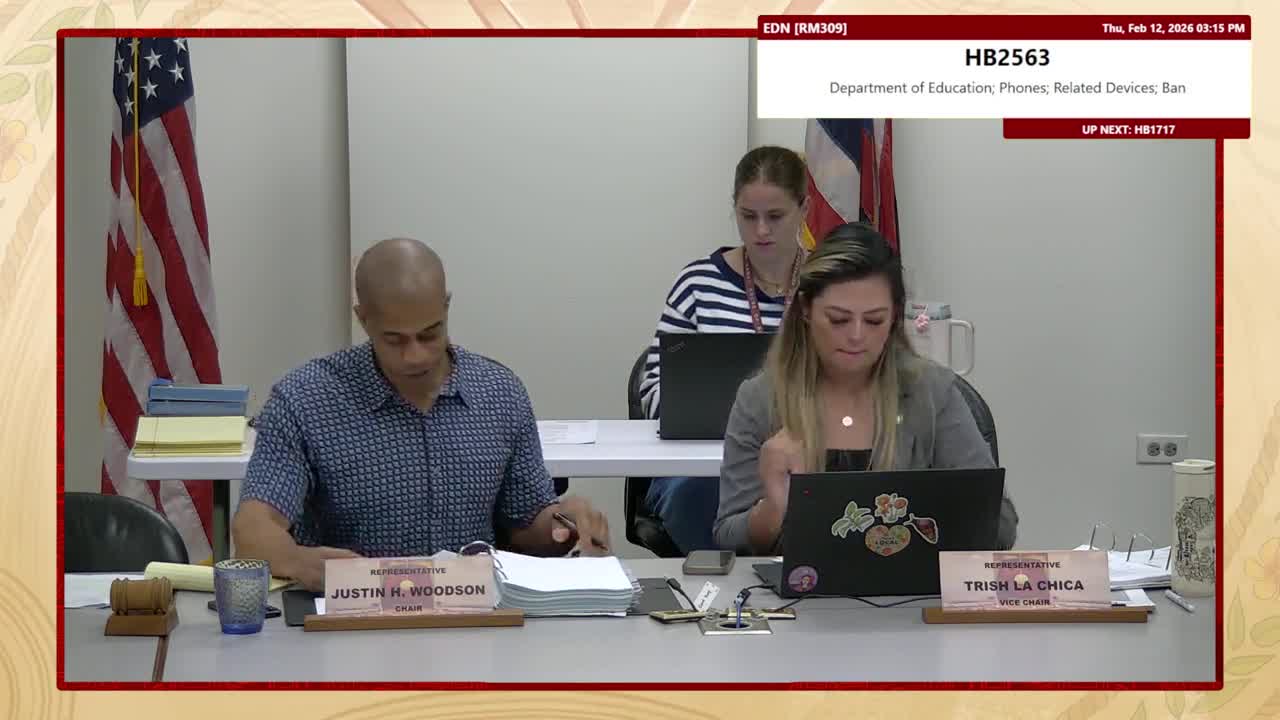 15SEC