HB 1872: UH; Early Learning Apprenticeship Grant Program; Child Care; Early Learning Opportunities; Reports; Appropriation
- Session Year: 2025-2026
- House: House
- Latest Version Date: 2026-03-25
Current Status:
Failed
(2026-03-30: Report adopted; Passed Second Reading, as amended (SD 1) and referred to WAM.)
Introduced
In Committee
First Chamber
In Committee
Second Chamber
Final Decking
Enacted
Establishes an Early Learning Apprenticeship Grant Program to be administered by the University of Hawaii to provide financial support for early learning program service providers in the State to participate in state- or federally-approved early learning apprenticeship programs. Requires an annual report to the Legislature. Appropriates funds. Effective 7/31/2055. (SD1)
Establishes an Early Learning Apprenticeship Grant Program to be administered by the University of Hawaii to provide financial support for early learning program service providers in the State to participate in state- or federally-approved early learning apprenticeship programs. Requires an annual report to the Legislature. Appropriates funds. Effective 7/1/3000. (HD1)
Establishes an Early Learning Apprenticeship Grant Program to be administered by the University of Hawaii to provide financial support for early learning program service providers in the State to participate in state- or federally-approved early learning apprenticeship programs. Requires an annual report to the Legislature. Appropriates funds.
|
HOUSE OF REPRESENTATIVES |
H.B. NO. |
1872 |
|
THIRTY-THIRD LEGISLATURE, 2026 |
H.D. 1 |
|
|
STATE OF HAWAII |
S.D. 1 |
|
|
|
|
|
|
|
||
|
|
||
A BILL FOR AN ACT
RELATING TO AN EARLY LEARNING APPRENTICESHIP GRANT PROGRAM.
BE IT ENACTED BY THE LEGISLATURE OF THE STATE OF HAWAII:
SECTION 1. The legislature finds that quality learning experiences during a child's earliest years improve long-term, multi-general outcomes and contribute to a strong, skilled workforce. High-quality early learning programs support the growth and development of children, help working families to secure and sustain employment and economic vitality, promote the creation of jobs and workforce support, and generate substantial revenue for the State.
The legislature notes that despite the growing demand for well-trained early learning professionals, the field is experiencing a shortage of qualified and well-compensated workers. Therefore, the legislature recognizes that it is necessary to support the recruitment, retention, and professional development of early learning professionals as an investment in a workforce that supports the State's youngest children and working families, which will contribute to the current and future prosperity of the State.
The legislature further finds that registered apprenticeship programs are proven models that create skilled workforces tailored to the specialized needs of their respective industries while fostering economic growth. Registered apprenticeship programs are high-quality, industry-driven career pathways that combine on-the-job training with classroom instruction to prepare workers for skilled careers. Registered apprenticeship programs ensure businesses have access to well trained and qualified employees while also ensuring that employees are fairly compensated commensurate to the necessary qualifications. Furthermore, apprenticeship programs offer an accessible pathway to stable careers, assist in developing technical skills, upskill the existing workforce, and encourage a culture of lifelong learning and continuous professional development.
The legislature also finds that the first federally approved early learning apprenticeship program recently launched to serve as a critical recruitment and retention pathway for prospective early learning professionals and increase access to early learning opportunities. However, the legislature recognizes that due to the significant labor costs required of the industry, many early learning program service providers have difficulty maintaining the federal compensation requirement and are therefore disincentivized from participating in early learning apprenticeship programs.
The legislature declares that the establishment of an early learning apprenticeship grant program is a matter of statewide concern pursuant to article X, section 6, of the Hawaii State Constitution.
The purpose of this Act is to establish an early learning apprenticeship grant program, to be administered by the university of Hawaii, to assist publicly- or privately-run early learning program service providers participating in state- and federally-approved early learning apprenticeship programs.
SECTION 2. Chapter 304A, Hawaii Revised Statutes, is amended by adding a new section to subpart M of part IV to be appropriately designated and to read as follows:
"§304A- Early learning apprenticeship grant program; established. (a) There is established an early learning apprenticeship grant program to be administered by the university to provide financial support for early learning program service providers in the State to participate in early learning apprenticeship programs.
(b) The university shall award grants to an early learning program service provider licensed or registered to provide child care in the State that participates in a state- or federally-approved early learning apprenticeship program as an employer or sponsor; provided that priority shall be given to an early learning program service provider that:
(1) Is licensed or registered to provide care for infants and toddlers; and
(2) Enrolls children under the age of three.
(c) The university shall determine the grant amount per license; provided that the university shall consider the following factors when determining the grant amount:
(1) The size of an early learning program service provider participating in a state- or federally-approved early learning apprenticeship program as an employer;
(2) The difference between the statutorily-required wage rates or prevailing industry standard wage rates, whichever is higher, and the early learning program service provider's current wage rates; and
(3) Other factors, including but not limited to stipend bonuses or wage supplements.
(d) The university shall award grants based on criteria developed by the university in consultation with the executive office on early learning.
(e) The grant program shall provide financial assistance to eligible early learning program service providers to cover the costs associated with their participation in a state- or federally-approved early learning apprenticeship program, including:
(1) Personnel expenses and wages;
(2) Training expenses;
(3) Mentorship stipends;
(4) Administrative costs; and
(5) Wage or salary increases, wage supplements, or other compensation enhancements as needed to attract and retain qualified employees within the state- or federally-approved apprenticeship framework, including apprentices and other early learning employees;
provided that the wages shall match statutorily-required wage requirements or prevailing industry standards, whichever is higher.
(f) The university may collaborate with the counties to administer the grant program.
(g) The university shall submit a report of its findings and recommendations, including any proposed legislation regarding the grant program, to the legislature no later than twenty days prior to the convening of each regular session. The report shall include at minimum:
(1) The number of early learning program service providers receiving grants pursuant to the grant program;
(2) The number of apprentices hired by early learning program service providers receiving grants under the grant program;
(3) The total amount of funds awarded to early learning program service providers pursuant to the grant program; and
(4) The purposes for which the early learning program service providers used the awarded grants, including documentation on wages paid or wage increases given to qualified employees within the state- or federally-approved apprenticeship framework, including apprentices and other early learning employees.
(h) For the purposes of this section:
"Early learning" has the same meaning as defined in section 302L-1.
"Early learning program" means a publicly- or privately-run program within the State's early learning system governed pursuant to chapter 302L. "Early learning program" includes center-based programs, family child care programs, family-child interaction learning programs, and home-based instruction programs.
"Grant program" means the early learning apprenticeship grant program."
SECTION 3. There is appropriated out of the university of Hawaii tuition and fees special fund the sum of $ or so much thereof as may be necessary for fiscal year 2026-2027 for the university of Hawaii to implement and administer the early learning apprenticeship grant program.
The sum appropriated shall be expended by the university of Hawaii for the purposes of this Act.
SECTION 4. New statutory material is underscored.
SECTION 5. This Act shall take effect on July 31, 2055.
Report Title:
UH; Early Learning Apprenticeship Grant Program; Child Care; Early Learning Opportunities; Reports; Appropriation
Description:
Establishes an Early Learning Apprenticeship Grant Program to be administered by the University of Hawaii to provide financial support for early learning program service providers in the State to participate in state- or federally-approved early learning apprenticeship programs. Requires an annual report to the Legislature. Appropriates funds. Effective 7/31/2055. (SD1)
The summary description of legislation appearing on this page is for informational purposes only and is not legislation or evidence of legislative intent.
|
HOUSE OF REPRESENTATIVES |
H.B. NO. |
1872 |
|
THIRTY-THIRD LEGISLATURE, 2026 |
H.D. 1 |
|
|
STATE OF HAWAII |
|
|
|
|
|
|
|
|
||
|
|
||
A BILL FOR AN ACT
RELATING TO AN EARLY LEARNING APPRENTICESHIP GRANT PROGRAM.
BE IT ENACTED BY THE LEGISLATURE OF THE STATE OF HAWAII:
SECTION 1. The legislature finds that quality learning experiences during a child's earliest years improve long-term, multi-general outcomes and contribute to a strong, skilled workforce. High-quality early learning programs support the growth and development of children, help working families to secure and sustain employment and economic vitality, promote the creation of jobs and workforce support, and generate substantial revenue for the State.
The legislature notes that despite the growing demand for well-trained early learning professionals, the field is experiencing a shortage of qualified and well-compensated workers. Therefore, the legislature recognizes that it is necessary to support the recruitment, retention, and professional development of early learning professionals as an investment in a workforce that supports the State's youngest children and working families, which will contribute to the current and future prosperity of the State.
The legislature further finds that registered apprenticeship programs are proven models that create skilled workforces tailored to the specialized needs of their respective industries while fostering economic growth. Registered apprenticeship programs are high-quality, industry-driven career pathways that combine on-the-job training with classroom instruction to prepare workers for skilled careers. Registered apprenticeship programs ensure businesses have access to well trained and qualified employees while also ensuring that employees are fairly compensated commensurate to the necessary qualifications. Furthermore, apprenticeship programs offer an accessible pathway to stable careers, assist in developing technical skills, upskill the existing workforce, and encourage a culture of lifelong learning and continuous professional development.
The legislature also finds that the first federally approved early learning apprenticeship program recently launched to serve as a critical recruitment and retention pathway for prospective early learning professionals and increase access to early learning opportunities. However, the legislature recognizes that due to the significant labor costs required of the industry, many early learning program service providers have difficulty maintaining the federal compensation requirement and are therefore disincentivized from participating in early learning apprenticeship programs.
The legislature declares that the establishment of an early learning apprenticeship grant program is a matter of statewide concern.
The purpose of this Act is to establish an early learning apprenticeship grant program, to be administered by the university of Hawaii, to assist publicly- or privately-run early learning program service providers participating in state- and federally-approved early learning apprenticeship programs.
SECTION 2. Chapter 304A, Hawaii Revised Statutes, is amended by adding a new section to subpart M of part IV to be appropriately designated and to read as follows:
"§304A- Early learning apprenticeship grant program; established. (a) There is established an early learning apprenticeship grant program to be administered by the university to provide financial support for early learning program service providers in the State to participate in early learning apprenticeship programs.
(b) The university shall award grants to an early learning program service provider licensed or registered to provide child care in the State that participates in a state- or federally-approved early learning apprenticeship program as an employer or sponsor; provided that priority shall be given to an early learning program service provider that:
(1) Is licensed or registered to provide care for infants and toddlers; and
(2) Enrolls children under the age of three.
(c) The university shall determine the grant amount per license; provided that the university shall consider the following factors when determining the grant amount:
(1) The size of an early learning program service provider participating in a state- or federally-approved early learning apprenticeship program as an employer;
(2) The difference between the statutorily-required wage rates or prevailing industry standard wage rates, whichever is higher, and the early learning program service provider's current wage rates; and
(3) Other factors, including but not limited to stipend bonuses or wage supplements.
(d) The university shall award grants based on criteria developed by the university in consultation with the executive office on early learning.
(e) The grant program shall provide financial assistance to eligible early learning program service providers to cover the costs associated with their participation in a state- or federally-approved early learning apprenticeship program, including:
(1) Personnel expenses and wages;
(2) Training expenses;
(3) Mentorship stipends;
(4) Administrative costs; and
(5) Wage or salary increases, wage supplements, or other compensation enhancements as needed to attract and retain qualified employees within the state- or federally-approved apprenticeship framework, including apprentices and other early learning employees;
provided that the wages shall match statutorily-required wage requirements or prevailing industry standards, whichever is higher.
(f) The university may collaborate with the counties to administer the grant program.
(g) The university shall submit a report of its findings and recommendations, including any proposed legislation regarding the grant program, to the legislature no later than twenty days prior to the convening of each regular session. The report shall include at minimum:
(1) The number of early learning program service providers receiving grants pursuant to the program;
(2) The number of apprentices hired by early learning program service providers receiving grants under the program;
(3) The total amount of funds awarded to early learning program service providers pursuant to the program; and
(4) The purposes for which the early learning program service providers used the awarded grants, including documentation on wages paid or wage increases given to qualified employees within the state- or federally-approved apprenticeship framework, including apprentices and other early learning employees.
(h) For the purposes of this section:
"Early learning" has the same meaning as in section 302L-1.
"Early learning program" means a publicly- or privately-run program within the State's early learning system governed pursuant to chapter 302L. "Early learning program" includes center-based programs, family child care programs, family-child interaction learning programs, and home-based instruction programs.
"Grant program" means the early learning apprenticeship grant program."
SECTION 3. There is appropriated out of the general revenues of the State of Hawaii the sum of $ or so much thereof as may be necessary for fiscal year 2026-2027 for the university of Hawaii to implement and administer the early learning apprenticeship grant program.
The sum appropriated shall be expended by the university of Hawaii for the purposes of this Act.
SECTION 4. New statutory material is underscored.
SECTION 5. This Act shall take effect on July 1, 3000.
Report Title:
UH; Early Learning Apprenticeship Grant Program; Childcare; Early Learning Opportunities; Reports; Appropriation
Description:
Establishes an Early Learning Apprenticeship Grant Program to be administered by the University of Hawaii to provide financial support for early learning program service providers in the State to participate in state- or federally-approved early learning apprenticeship programs. Requires an annual report to the Legislature. Appropriates funds. Effective 7/1/3000. (HD1)
The summary description of legislation appearing on this page is for informational purposes only and is not legislation or evidence of legislative intent.
|
HOUSE OF REPRESENTATIVES |
H.B. NO. |
1872 |
|
THIRTY-THIRD LEGISLATURE, 2026 |
|
|
|
STATE OF HAWAII |
|
|
|
|
|
|
|
|
||
|
|
||
A BILL FOR AN ACT
relating to an early learning apprenticeship grant program.
BE IT ENACTED BY THE LEGISLATURE OF THE STATE OF HAWAII:
SECTION 1. The legislature finds that quality learning experiences during a child's earliest years improve long-term, multi-general outcomes and contribute to a strong, skilled workforce. High-quality early learning programs support the growth and development of children, help working families to secure and sustain employment and economic vitality, promote the creation of jobs and workforce support, and generate substantial revenue for the State.
The legislature notes that despite the growing demand for well-trained early learning professionals, the field is experiencing a shortage of qualified and well-compensated workers. Therefore, the legislature recognizes that it is necessary to support the recruitment, retention, and professional development of early learning professionals as an investment in a workforce that supports the State's youngest children and working families, which will contribute to the current and future prosperity of the State.
The legislature further finds that registered apprenticeship programs are proven models that create skilled workforces tailored to the specialized needs of their respective industries while fostering economic growth. Registered apprenticeship programs are high-quality, industry-driven career pathways that combine on-the-job training with classroom instruction to prepare workers for skilled careers. Registered apprenticeship programs ensure businesses have access to well trained and qualified employees while also ensuring that employees are fairly compensated commensurate to the necessary qualifications. Furthermore, apprenticeship programs offer an accessible pathway to stable careers, assist in developing technical skills, upskill the existing workforce, and encourage a culture of lifelong learning and continuous professional development.
The legislature also finds that the first federally approved early learning apprenticeship program recently launched to serve as a critical recruitment and retention pathway for prospective early learning professionals and increase access to early learning opportunities. However, the legislature recognizes that due to the significant labor costs required of the industry, many early learning program service providers have difficulty maintaining the federal compensation requirement and are therefore disincentivized from participating in early learning apprenticeship programs.
The legislature declares that the establishment of an early learning apprenticeship grant program is a matter of statewide concern.
The purpose of this Act is to establish an early learning apprenticeship grant program, to be administered by the university of Hawaii, to assist publicly- or privately-run early learning program service providers participating in state- and federally-approved early learning apprenticeship programs.
SECTION 2. Chapter 304A, Hawaii Revised Statutes, is amended by adding a new section to subpart M of part IV to be appropriately designated and to read as follows:
"§304A- Early learning apprenticeship grant program; established. (a) There is established an early learning apprenticeship grant program to be administered by the university to provide financial support for early learning program service providers in the State to participate in early learning apprenticeship programs.
(b) The university shall award grants to an early learning program service provider licensed or registered to provide child care in the State that participates in a state- or federally-approved early learning apprenticeship program as an employer or sponsor; provided that priority shall be given to an early learning program service provider that:
(1) Is licensed or registered to provide care for infants and toddlers; and
(2) Enrolls children under the age of three.
(c) The university shall determine the grant amount per license; provided that the university shall consider the following factors when determining the grant amount:
(1) The size of an early learning program service provider participating in a state- or federally-approved early learning apprenticeship program as an employer;
(2) The difference between the statutorily-required wage rates or prevailing industry standard wage rates, whichever is higher, and the early learning program service provider's current wage rates; and
(3) Other factors, including but not limited to stipend bonuses or wage supplements.
(d) The university shall award grants based on criteria developed by the university in consultation with the executive office on early learning.
(e) The grant program shall provide financial assistance to eligible early learning program service providers to cover the costs associated with their participation in a state- or federally-approved early learning apprenticeship program, including:
(1) Personnel expenses and wages;
(2) Training expenses;
(3) Mentorship stipends;
(4) Administrative costs; and
(5) Wage or salary increases, wage supplements, or other compensation enhancements as needed to attract and retain qualified employees within the state- or federally-approved apprenticeship framework, including apprentices and other early learning employees;
provided that the wages shall match statutorily-required wage requirements or prevailing industry standards, whichever is higher.
(f) The university may collaborate with the counties to administer the grant program.
(g) The university shall submit a report of its findings and recommendations, including any proposed legislation regarding the grant program, to the legislature no later than twenty days prior to the convening of each regular session. The report shall include at minimum:
(1) The number of early learning program service providers receiving grants pursuant to the program;
(2) The number of apprentices hired by early learning program service providers receiving grants under the program;
(3) The total amount of funds awarded to early learning program service providers pursuant to the program; and
(4) The purposes for which the early learning program service providers used the awarded grants, including documentation on wages paid or wage increases given to qualified employees within the state- or federally-approved apprenticeship framework, including apprentices and other early learning employees.
(h) For the purposes of this section:
"Early learning" has the same meaning as in section 302L-1.
"Early learning program" means a publicly- or privately-run program within the State's early learning system governed pursuant to chapter 302L. "Early learning program" includes center-based programs, family child care programs, family-child interaction learning programs, and home-based instruction programs.
"Grant program" means the early learning apprenticeship grant program."
SECTION 3. There is appropriated out of the general revenues of the State of Hawaii the sum of $ or so much thereof as may be necessary for fiscal year 2026-2027 for the university of Hawaii to implement and administer the early learning apprenticeship grant program.
The sum appropriated shall be expended by the university of Hawaii for the purposes of this Act.
SECTION 4. New statutory material is underscored.
SECTION 5. This Act shall take effect on July 1, 2026.
|
INTRODUCED BY: |
_____________________________ |
|
|
|
Report Title:
UH; Early Learning Apprenticeship Grant Program; Childcare; Early Learning Opportunities; Reports; Appropriation
Description:
Establishes an Early Learning Apprenticeship Grant Program to be administered by the University of Hawaii to provide financial support for early learning program service providers in the State to participate in state- or federally-approved early learning apprenticeship programs. Requires an annual report to the Legislature. Appropriates funds.
The summary description of legislation appearing on this page is for informational purposes only and is not legislation or evidence of legislative intent.
|
Date
|
Status
|
|---|---|
| Mar 30, 2026 | Report adopted; Passed Second Reading, as amended (SD 1) and referred to WAM. |
| Mar 30, 2026 | Reported from EDU (Stand. Com. Rep. No. 3263) with recommendation of passage on Second Reading, as amended (SD 1) and referral to WAM. |
| Mar 23, 2026 | The committee(s) on EDU recommend(s) that the measure be PASSED, WITH AMENDMENTS. The votes in EDU were as follows: 4 Aye(s): Senator(s) Kim, Kidani, Hashimoto, DeCorte; Aye(s) with reservations: none ; 0 No(es): none; and 1 Excused: Senator(s) Fukunaga. |
| Mar 18, 2026 | The committee(s) on EDU deferred the measure until 03-23-26 1:10PM; Conference Room 229 & Videoconference. |
| Mar 16, 2026 | The committee(s) on EDU has scheduled a public hearing on 03-18-26 1:00PM; Conference Room 229 & Videoconference. |
| Mar 10, 2026 | Referred to EDU, WAM. |
| Mar 6, 2026 | Passed First Reading. |
| Mar 6, 2026 | Received from House (Hse. Com. No. 60). |
| Mar 5, 2026 | Passed Third Reading with none voting aye with reservations; Representative(s) Pierick voting no (1) and Representative(s) Perruso excused (1). Transmitted to Senate. |
| Mar 5, 2026 | Reported from FIN (Stand. Com. Rep. No. 812-26), recommending passage on Third Reading. |
| Feb 25, 2026 | The committee on FIN recommend that the measure be PASSED, UNAMENDED. The votes were as follows: 16 Ayes: Representative(s) Todd, Takenouchi, Hartsfield, Hussey, Keohokapu-Lee Loy, Kitagawa, Kusch, Lee, M., Miyake, Morikawa, Perruso, Templo, Yamashita, Alcos, Gedeon, Reyes Oda; Ayes with reservations: none; Noes: none; and Excused: none. |
| Feb 23, 2026 | Bill scheduled to be heard by FIN on Wednesday, 02-25-26 2:00PM in House conference room 308 VIA VIDEOCONFERENCE. |
| Feb 20, 2026 | Report adopted; referred to the committee(s) on FIN with none voting aye with reservations; Representative(s) Pierick voting no (1) and Representative(s) Quinlan excused (1). |
| Feb 20, 2026 | Reported from LAB (Stand. Com. Rep. No. 623-26), recommending referral to FIN. |
| Feb 17, 2026 | The committee on LAB recommend that the measure be PASSED, UNAMENDED. The votes were as follows: 6 Ayes: Representative(s) Sayama, Lee, M., Garrett, Kapela, Kong, Reyes Oda; Ayes with reservations: none; Noes: none; and Excused: none. |
| Feb 13, 2026 | Bill scheduled to be heard by LAB on Tuesday, 02-17-26 9:00AM in House conference room 309 VIA VIDEOCONFERENCE. |
| Feb 11, 2026 | Passed Second Reading as amended in HD 1 and referred to the committee(s) on LAB with none voting aye with reservations; none voting no (0) and Representative(s) Holt excused (1). |
| Feb 11, 2026 | Reported from HED/EDN (Stand. Com. Rep. No. 130-26) as amended in HD 1, recommending passage on Second Reading and referral to LAB. |
| Feb 6, 2026 | The committee on EDN recommend that the measure be PASSED, WITH AMENDMENTS. The votes were as follows: 10 Ayes: Representative(s) Woodson, La Chica, Amato, Evslin, Garrett, Kapela, Kila, Olds, Muraoka, Souza; Ayes with reservations: none; Noes: none; and Excused: none. |
| Feb 6, 2026 | The committee on HED recommend that the measure be PASSED, WITH AMENDMENTS. The votes were as follows: 10 Ayes: Representative(s) Garrett, Amato, Evslin, Kapela, Kila, La Chica, Olds, Woodson, Muraoka, Souza; Ayes with reservations: none; Noes: none; and Excused: none. |
| Feb 3, 2026 | Bill scheduled to be heard by HED/EDN on Friday, 02-06-26 2:00PM in House conference room 309 VIA VIDEOCONFERENCE. |
| Jan 26, 2026 | Referred to HED/EDN, LAB, FIN, referral sheet 2 |
| Jan 26, 2026 | Introduced and Pass First Reading. |
| Jan 23, 2026 | Pending introduction. |
|
Date
|
Description
|
Location
|
Votes
|
|
|---|---|---|---|---|
| Mar 23, 2026 | The committee(s) on EDU recommend(s) that the measure be PASSED, WITH AMENDMENTS | Senate Standing Committee on Education |
Passed |
|
| Mar 5, 2026 | Third Reading | House Floor |
Passed |
|
| Feb 25, 2026 | The committee on FIN recommend that the measure be PASSED, UNAMENDED | House Standing Committee on Finance |
Passed |
|
| Feb 17, 2026 | The committee on LAB recommend that the measure be PASSED, UNAMENDED | House Standing Committee on Labor |
Passed |
|
| Feb 6, 2026 | The committee on EDN recommend that the measure be PASSED, WITH AMENDMENTS | House Standing Committee on Education |
Passed |
|
| Feb 6, 2026 | The committee on HED recommend that the measure be PASSED, WITH AMENDMENTS | House Standing Committee on Higher Education |
Passed |
This list shows positions taken on this bill by organizations on the date displayed, which is linked to the original source.
Positions by individuals are not included.
|
Organization
|
Position
|
Date
|
|---|---|---|
| AAUW of Hawaii | *** Support | Mar 18, 2026 |
| Aloha United Way | ** Support | |
| Association for Infant Mental Health Hawaiʻi | ** Support | |
| Association for Infant Mental Health Hawaii (AIMH HI) | *** Support | Feb 25, 2026 |
| Association for Infant Mental Health in Hawaiʻi | ** Support | |
| Association for Infant Mental Health in Hawai‘i (AIMH HI) | *** Support | Feb 6, 2026 |
| Board of Education | *** Support | Mar 18, 2026 |
| Chamber of Commerce Hawaii | *** Support | Mar 18, 2026 |
| City and County of Honolulu Department of Community Services | *** Support | Mar 18, 2026 |
| Commit to Keiki | *** Support | Mar 18, 2026 |
| Department of Human Services | *** Support | Mar 18, 2026 |
| Department of Research and Development, County of Hawaiʻi | ** Support | |
| Early Childhood Action Strategy | *** Support | Mar 18, 2026 |
| Early Learning Board | *** Support | Mar 18, 2026 |
| ECE3 Project | *** Support | Mar 18, 2026 |
| Executive Office on Early Learning | *** Support | Mar 18, 2026 |
| Family Programs Hawaii | *** Support | Feb 25, 2026 |
| Family Programs Hawaii | ** Support | |
| Family Promise of Hawai‘i | *** Support | Feb 6, 2026 |
| Family Promise of Hawaiʻi | ** Support | |
| Hawai'i Association of Independent Schools | *** Support | Feb 17, 2026 |
| Hawai‘i Association of Independent Schools | *** Support | Mar 18, 2026 |
| Hawaiʻi Association of Independent Schools | ** Support | |
| Hawaiʻi Association of Independent Schools | ** Support | |
| Hawaiʻi Association of Independent Schools | ** Support | |
| Hawaii Association of Independent Schools | *** Support | Feb 25, 2026 |
| Hawaiʻi Children’s Action Network Speaks! | *** Support | Mar 18, 2026 |
| Hawaiʻi Early Childhood Educator Excellence and Equity (ECE3) Project, University of Hawaiʻi at Mānoa College of Education | *** Support | Feb 17, 2026 |
| Hawaiʻi Early Childhood Educator Excellence and Equity Project at the University of Hawaiʻi Mānoa College of Education | ** Support | |
| Hawai‘i Island Chamber of Commerce | *** Support | Mar 18, 2026 |
| Hawaii State Commission on the Status of Women | *** Support | Mar 18, 2026 |
| Holomua Collaborative | *** Support | Mar 18, 2026 |
| Kapolei Chamber of Commerce | *** Support | Mar 18, 2026 |
| Keiki O Ka 'Āina (affiliated) | *** Support | Feb 6, 2026 |
| Keiki O Ka ʻĀina Family Learning Centers | *** Support | Mar 18, 2026 |
| Office of Hawaiian Affairs | *** Support | Mar 18, 2026 |
| Office of the Mayor of the County of Kauai | ** Support | |
| 'Ohana Leadership Council | *** Support | Mar 18, 2026 |
| Parents and Children Together (PACT) | *** Support | Mar 18, 2026 |
| Parents for Public Schools of Hawai‘i | *** Support | Feb 6, 2026 |
| Parents for Public Schools of Hawaiʻi | ** Support | |
| People Attentive to Children (PATCH) | *** Support | Feb 25, 2026 |
| State Public Charter School Commission | *** Support | Mar 18, 2026 |
| State Public Charter School Commission | ** Support | |
| The Happy Bento | ** Support | |
| University of Hawaiʻi at Mānoa College of Education | *** Support | Mar 18, 2026 |
| University of Hawaiʻi at Mānoa, College of Education (ECE3 Project) | *** Support | Feb 25, 2026 |
| University of Hawaiʻi Mānoa, ECE3 Project | *** Support | Feb 6, 2026 |
| Wainiha Country Market | *** Support | Feb 6, 2026 |
| YMCA of Honolulu | *** Support | Mar 18, 2026 |
| YMCA of Honolulu | *** Support | Feb 17, 2026 |
| YMCA of Honolulu | ** Support |
STAND. COM. REP. NO. 812-26
Honolulu, Hawaii
, 2026
RE: H.B. No. 1872
H.D. 1
Honorable Nadine K. Nakamura
Speaker, House of Representatives
Thirty-Third State Legislature
Regular Session of 2026
State of Hawaii
Madame:
Your Committee on Finance, to which was referred H.B. No. 1872, H.D. 1, entitled:
"A BILL FOR AN ACT RELATING TO AN EARLY LEARNING APPRENTICESHIP GRANT PROGRAM,"
begs leave to report as follows:
Your Committee received testimony in support of this measure from the Department of Human Services; Executive Office on Early Learning; Board of Education; Early Learning Board; Hawaii State Commission on the Status of Women; State Public Charter School Commission; Office of the Mayor of the County of Kauai; Department of Community Services of the City and County of Honolulu; Chamber of Commerce Hawaii; Hawaiʻi Association of Independent Schools; Association for Infant Mental Health Hawaiʻi; Kapolei Chamber of Commerce; Early Childhood Action Strategy; Commit to Keiki; Aloha United Way; AAUW of Hawaii; Keiki O Ka ʻĀina Family Learning Centers; Hawaiʻi Children's Action Network Speaks!; Parents and Children Together; The Happy Bento; Holomua Collaborative; Family Promise of Hawaiʻi; Family Programs Hawaii; and numerous individuals. Your Committee received comments on this measure from the University of Hawaiʻi System.
As affirmed by the record of votes of the members of your Committee on Finance that is attached to this report, your Committee is in accord with the intent and purpose of H.B. No. 1872, H.D. 1, and recommends that it pass Third Reading.
Respectfully submitted on behalf of the members of the Committee on Finance,
|
|
|
____________________________ CHRIS TODD, Chair |
|
|
|
|
STAND. COM. REP. NO. 623-26
Honolulu, Hawaii
, 2026
RE: H.B. No. 1872
H.D. 1
Honorable Nadine K. Nakamura
Speaker, House of Representatives
Thirty-Third State Legislature
Regular Session of 2026
State of Hawaii
Madame:
Your Committee on Labor, to which was referred H.B. No. 1872, H.D. 1, entitled:
"A BILL FOR AN ACT RELATING TO AN EARLY LEARNING APPRENTICESHIP GRANT PROGRAM,"
begs leave to report as follows:
Your Committee received testimony in support of this measure from the Department of Human Services; Board of Education; Early Learning Board; Executive Office on Early Learning; Hawaiʻi Early Childhood Educator Excellence and Equity Project at the University of Hawaiʻi Mānoa College of Education; Hawaii State Commission on the Status of Women; State Public Charter School Commission; Department of Community Services of the City and County of Honolulu; Commit to Keiki; Early Childhood Action Strategy; Holomua Collaborative; Parents and Children Together; AAUW of Hawaii; Hawaiʻi Association of Independent Schools; YMCA of Honolulu; Chamber of Commerce Hawaii; Hawaii Children's Action Network Speaks!; Kapolei Chamber of Commerce; and numerous individuals. Your Committee received comments on this measure from the University of Hawaiʻi System.
Your Committee finds that high-quality early learning programs are critical to child development and the economic stability of working families, yet the State is experiencing a shortage of well-trained and adequately compensated early learning professionals. Your Committee further finds that although registered apprenticeship programs offer an effective pathway for training and retaining early learning workers, many providers are unable to participate due to the higher wage requirements and associated costs of apprenticeship programs. Your Committee believes that establishing a grant program to offset these costs will help expand the early learning workforce by supporting providers in adopting apprenticeship models that strengthen recruitment, retention, and long-term professional development.
As affirmed by the record of votes of the members of your Committee on Labor that is attached to this report, your Committee is in accord with the intent and purpose of H.B. No. 1872, H.D. 1, and recommends that it be referred to your Committee on Finance.
Respectfully submitted on behalf of the members of the Committee on Labor,
|
|
|
____________________________ JACKSON D. SAYAMA, Chair |
|
|
|
|
STAND. COM. REP. NO. 130-26
Honolulu, Hawaii
, 2026
RE: H.B. No. 1872
H.D. 1
Honorable Nadine K. Nakamura
Speaker, House of Representatives
Thirty-Third State Legislature
Regular Session of 2026
State of Hawaii
Madame:
Your Committees on Higher Education and Education, to which was referred H.B. No. 1872 entitled:
"A BILL FOR AN ACT RELATING TO AN EARLY LEARNING APPRENTICESHIP GRANT PROGRAM,"
beg leave to report as follows:
Your Committees received testimony in support of this measure from the Department of Human Services; Board of Education; Executive Office on Early Learning; Early Learning Board; Hawaii State Commission on the Status of Women; Department of Community Services, City and County of Honolulu; Department of Research and Development, County of Hawaiʻi; Hawaiʻi Association of Independent Schools; Association for Infant Mental Health in Hawaiʻi; Commit to Keiki; Early Childhood Action Strategy; Chamber of Commerce Hawaiʻi; Hawaiʻi Children's Action Network Speaks!; YMCA of Honolulu; Parents for Public Schools of Hawaiʻi; Family Promise of Hawaiʻi; Keiki O Ka ʻĀina Family Learning Centers; and numerous individuals. Your Committees received comments on this measure from the University of Hawaiʻi System.
Your Committees find that Hawaii faces a critical shortage of qualified early learning professionals, which limits access to high‑quality early learning opportunities and strains working families who rely on stable childcare to sustain employment. Your Committees further find that registered apprenticeship programs offer a proven, workforce development pathway to recruit, train, and retain early learning educators, but many providers struggle to participate due to the financial burden of meeting wage and training requirements. This measure establishes a grant program to support early learning program service providers in covering apprenticeship related costs.
Your Committees have amended this measure by changing the effective date to July 1, 3000, to encourage further discussion.
As affirmed by the records of votes of the members of your Committees on Higher Education and Education that are attached to this report, your Committees are in accord with the intent and purpose of H.B. No. 1872, as amended herein, and recommend that it pass Second Reading in the form attached hereto as H.B. No. 1872, H.D. 1, and be referred to your Committee on Labor.
Respectfully submitted on behalf of the members of the Committees on Higher Education and Education,
|
____________________________ JUSTIN H. WOODSON, Chair |
|
____________________________ ANDREW TAKUYA GARRETT, Chair |
|
|
|
|
|
Date
|
Testimony PDF
|
|---|---|
| Mar 18, 2026 | HB1872_HD1_TESTIMONY_EDU_03-18-26_.PDF |
| Feb 25, 2026 | HB1872_HD1_TESTIMONY_FIN_02-25-26_.PDF |
| Feb 17, 2026 | HB1872_HD1_TESTIMONY_LAB_02-17-26_.PDF |
| Feb 6, 2026 | HB1872_TESTIMONY_HED-EDN_02-06-26_.PDF |
Discussed in Hearing
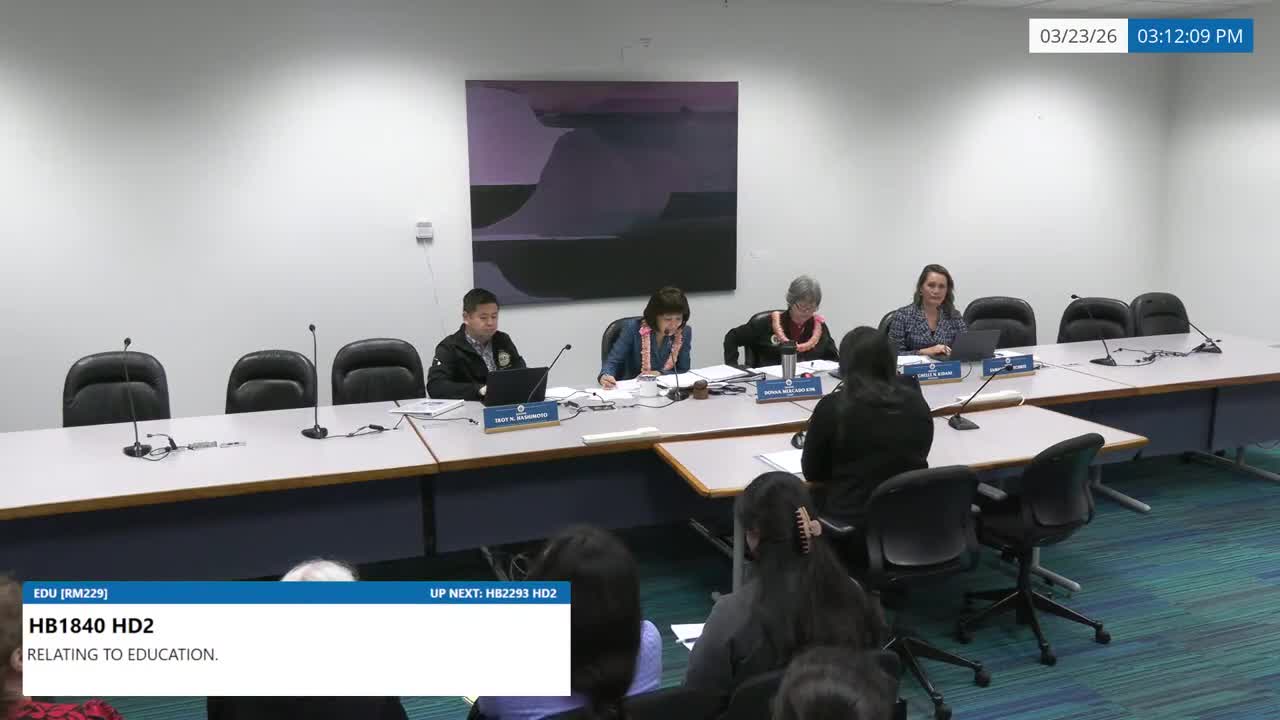 38SEC
Senate Standing Committee on Education
38SEC
Senate Standing Committee on Labor and Technology
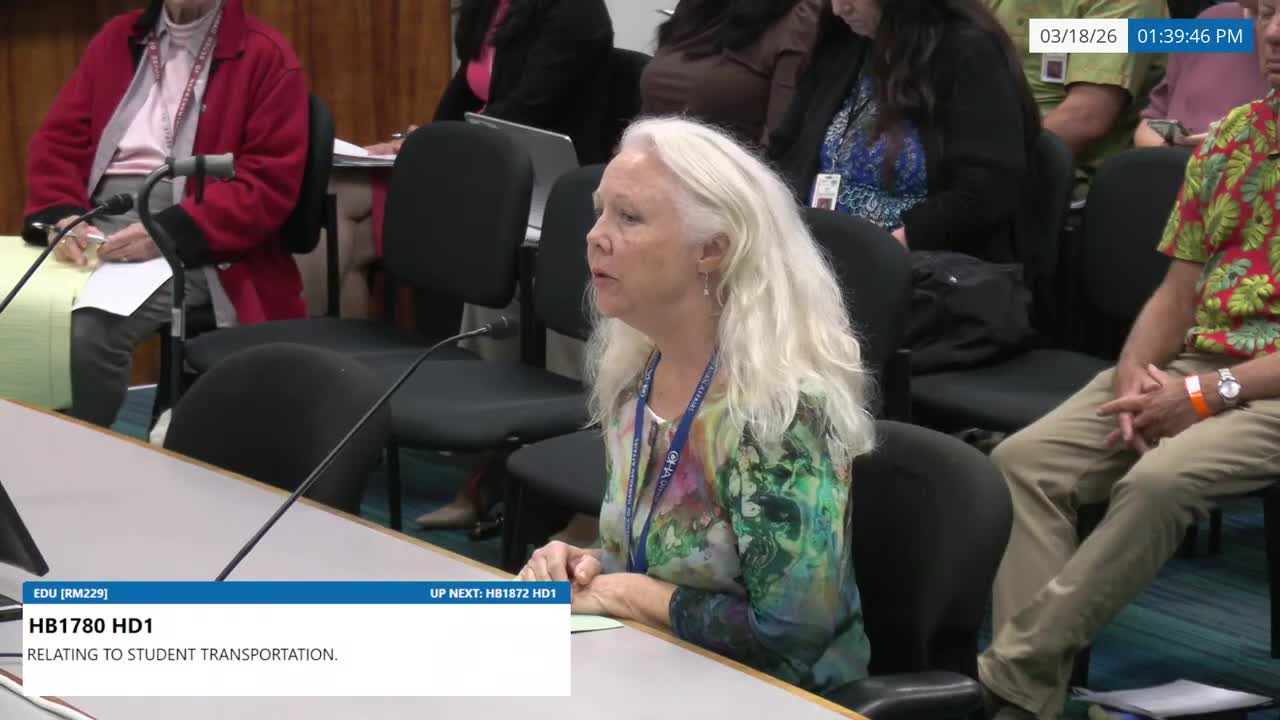 19MIN
Senate Standing Committee on Education
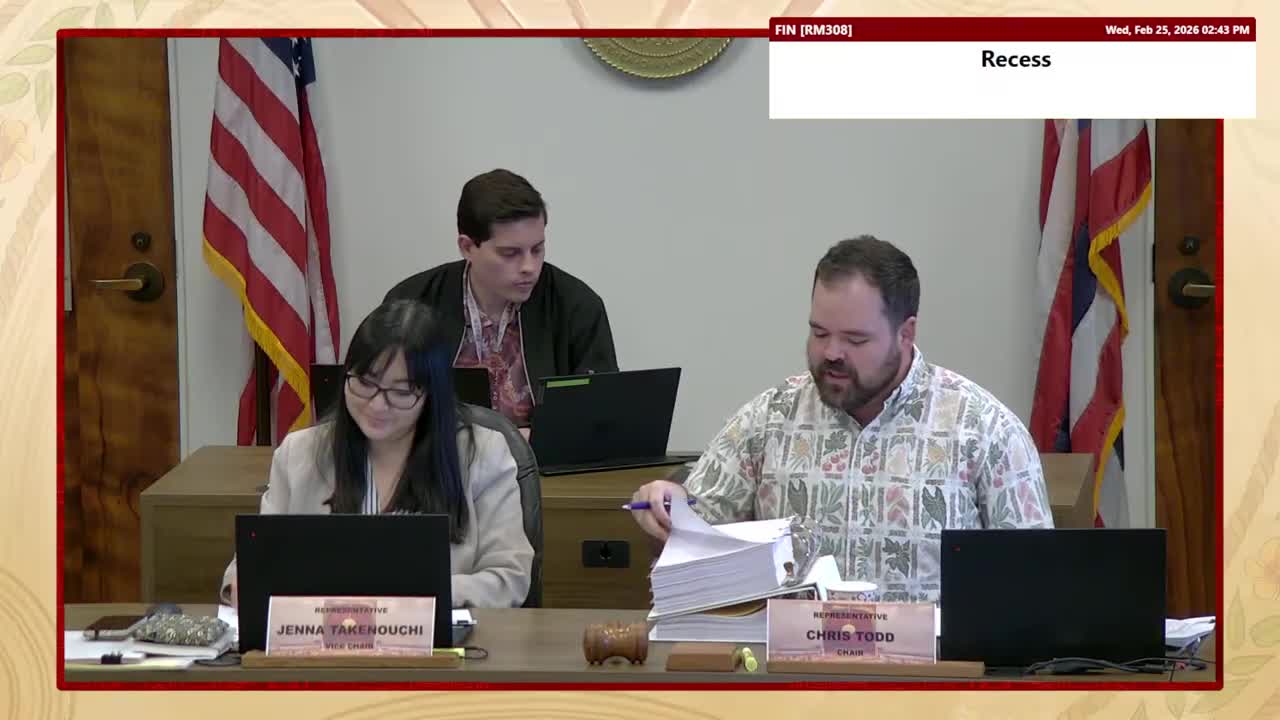 4MIN
House Standing Committee on Finance
 23SEC
House Standing Committee on Finance
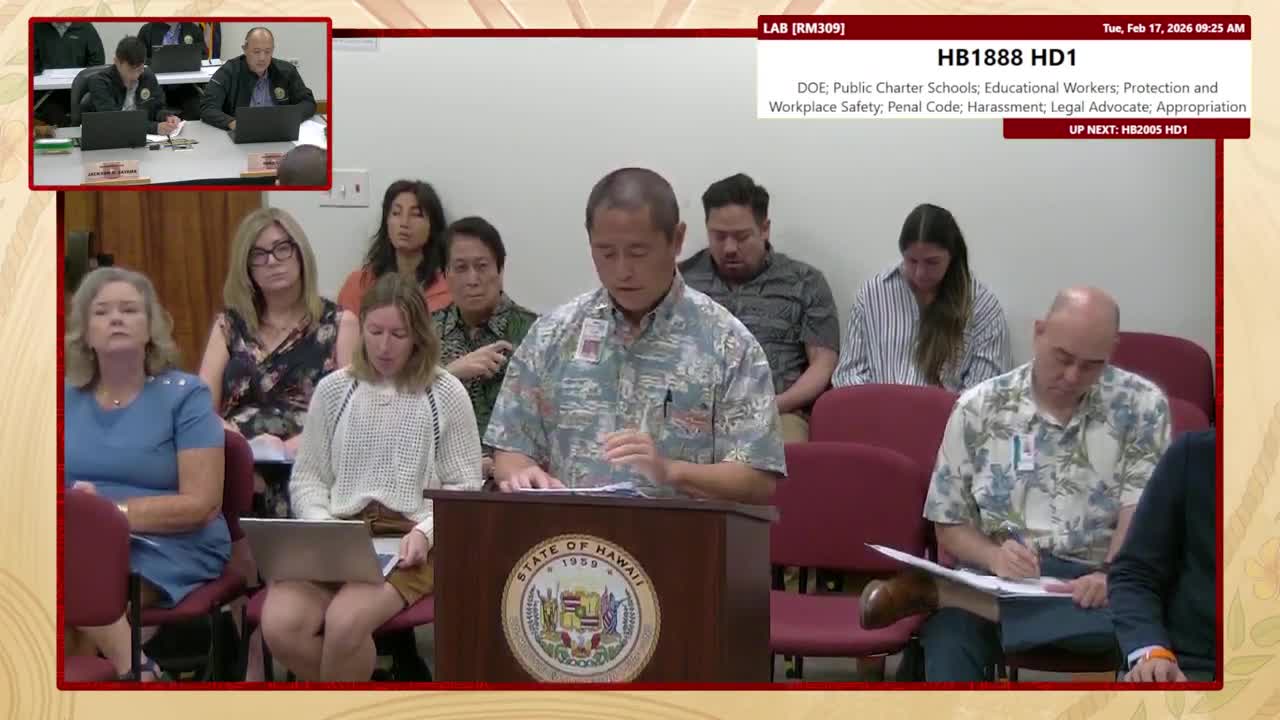 3MIN
House Standing Committee on Labor
 23SEC
House Standing Committee on Labor
 15MIN
House Standing Committee on Education
Bill Author