HB 1730: DOH; Cesspool Conversion Implementation Working Group; Cesspools; Administrative Rules; Appropriations
- Session Year: 2025-2026
- House: House
- Latest Version Date: 2026-03-25
Current Status:
Failed
(2026-03-30: Report adopted; Passed Second Reading, as amended (SD 1) and referred to WAM.)
Introduced
In Committee
First Chamber
In Committee
Second Chamber
Final Decking
Enacted
Establishes a Cesspool Conversion Implementation Working Group to assist the Department of Health in a review of the Department's administrative rules and practices regarding wastewater systems and cesspools and in the development of proposed changes to make cesspool conversions more affordable. Requires a report to the Legislature. Appropriates funds for positions and hiring of a consultant to assist the Cesspool Conversion Implementation Working Group. Effective 7/1/3000. (SD1)
Establishes a Cesspool Conversion Implementation Working Group to assist the Department of Health in a review of the Department's administrative rules and practices regarding wastewater systems and cesspools and in the development of proposed changes to make cesspool conversions more affordable. Requires a report to the Legislature. Appropriates funds for positions and hiring of a consultant to assist the Cesspool Conversion Implementation Working Group. Effective 7/1/3000. (HD2)
Establishes a Cesspool Conversion Implementation Working Group to assist the Department of Health in a review of the Department's administrative rules and practices regarding wastewater systems and cesspools and in the development of proposed changes to make cesspool conversions more affordable. Requires a report to the Legislature. Appropriates funds for positions and hiring of a consultant to assist the Cesspool Conversion Implementation Working Group. Effective 7/1/3000. (HD1)
Establishes a Wastewater Technical Advisory Group to assist the Department of Health in a review of the Department's administrative rules and practices regarding wastewater systems and cesspools and in the development of proposed changes to make cesspool conversions more affordable. Requires report to the Legislature. Appropriates funds for positions and hiring of a consultant to assist the Wastewater Technical Advisory Group.
|
HOUSE OF REPRESENTATIVES |
H.B. NO. |
1730 |
|
THIRTY-THIRD LEGISLATURE, 2026 |
H.D. 2 |
|
|
STATE OF HAWAII |
S.D. 1 |
|
|
|
|
|
|
|
||
|
|
||
A BILL FOR AN ACT
RELATING TO WASTEWATER SYSTEMS.
BE IT ENACTED BY THE LEGISLATURE OF THE STATE OF HAWAII:
SECTION 1. The legislature finds that additional resources are needed to help governments and homeowners address Hawaii's cesspool pollution problem. Existing law requires that all cesspools be converted by 2050. However, these much needed conversions must be affordable for homeowners and government entities.
The legislature further finds that the health of Hawaii's people and the quality of Hawaii's waters are being harmed by pollution from individual wastewater systems, especially cesspools. Cesspools are antiquated, substandard systems that damage public health, pollute drinking water, and lower water quality in streams, groundwater, nearshore marine areas, and the ocean. Hawaii has more than eighty thousand cesspools that discharge about fifty million gallons of wastewater into the State's groundwater every day. Cesspool pollution also harms public recreation and the precious coral reefs on which the State's economy, shoreline, fisheries, and native species depend. Wastewater systems release over three thousand tons of nutrients per year, which fertilize algae that can smother coral reefs. Maintaining the cleanliness of the State's waters falls under the State's obligation to protect, control, and regulate the use of Hawaii's water resources for the benefit of its people and the legislature's obligation to provide for a water resources agency that shall, among other things, set overall water quality and use policies and protect ground and surface water resources and watersheds, pursuant to article XI, section 7, of the Hawaii State Constitution.
The legislature also finds that to protect the public health and environment, including coral reefs, cesspools should be replaced by connections to sewerage systems or, in areas that are too remote to be feasibly connected, upgraded either with individual on-site wastewater disposal systems or cluster wastewater treatment systems. Upgrading cesspools will benefit public health, water quality, and coral reefs and enhance the State's economy by providing better visitor experience and stimulating new green jobs related to the installation of wastewater systems. Protecting the State's coral reefs also will benefit fisheries and protect shoreline properties from erosion. The United States Geological Survey estimates that coral reefs in Hawaii provide flood protection benefits to Hawaii residents and $836,000,000 annually in averted damages to property and economic activity.
To address the State's cesspool pollution, Act 125, Session Laws of Hawaii 2017, and Act 87, Session Laws of Hawaii 2022, require all cesspools to be upgraded or converted to a director of health-approved wastewater system or connected to a sewerage system before January 1, 2050, with certain exemptions. Although more than three thousand three hundred cesspools need to be upgraded per year on average to meet the 2050 mandate, currently less than four hundred cesspools per year are being upgraded.
In Act 217, Session Laws of Hawaii 2024, the legislature appropriated funds for the university of Hawaii water resources research center to prepare an overlay of sewers and cesspools and in Act 198, Session Laws of Hawaii 2025, the legislature established a three-year new wastewater system and individual wastewater system technology testing pilot program. These Acts are intended to help the counties plan for sewer expansion and cesspool upgrades and help the director of health expedite approval of new wastewater technologies in the near term. However, the cesspool upgrade effort will also need additional strategic planning and resources for the long term.
The legislature additionally finds that, given the scope of Hawaii's cesspool pollution problem, the department of health needs additional support and resources to help implement the program of cesspool upgrades, including:
(1) Advice from a committee of technical advisors to help determine the best, most affordable solutions;
(2) Advice in revising existing administrative rules, which were adopted a decade ago and may exclude some feasible, affordable solutions; and
(3) Additional department personnel to focus solely on cesspool upgrades.
Additionally, the legislature finds that the department of health should examine rules and policies adopted in other states as models to find more affordable means of improving public health and the environment without compromising water quality. For example, the department of health's current administrative rules require an individual wastewater system to be designed assuming a home produces two hundred gallons of wastewater per day per bedroom, whereas many other states use a lower number. This requirement tends to result in larger, more expensive individual wastewater systems in Hawaii. Identifying ways to reduce excavation, which is a major cost of installing an individual waste system given the State's geology, could reduce costs. Additionally, treating wastewater adequately before disposing of it through an existing cesspool could improve water quality while reducing costs.
Accordingly, the purpose of this Act is to:
(1) Establish a cesspool conversion implementation working group to assist the department of health in its review of rules and practices for cesspools and wastewater systems;
(2) Require the department of health, in consultation with the cesspool conversion implementation working group, to propose changes for administrative rules and practices to make wastewater systems and cesspool upgrades and conversions more affordable without compromising water quality;
(3) Establish positions within the department of health focused on implementing the cesspool compliance program and related activities; and
(4) Appropriate funds.
SECTION 2. (a) There is established a cesspool conversion implementation working group to assist the department of health in reviewing administrative rules and practices for cesspools and wastewater systems. The cesspool conversion implementation working group shall consist of members selected or, if the member is a private individual, invited to participate by the director of health, unless otherwise specified, from various backgrounds with knowledge of wastewater technologies and systems and shall include:
(1) The director of health or the director's designee;
(2) Members of the house of representatives or the members' designees, to be selected by the speaker of the house of representatives;
(3) Members of the senate or the members' designees, to be selected by the president of the senate;
(4) The administrator of the state historic preservation division of the department of land and natural resources or the administrator's designee;
(5) The chairperson of the Hawaiian homes commission or the chairperson's designee;
(6) Licensed consulting individual wastewater systems engineers working on Oahu sites;
(7) Licensed consulting individual wastewater systems engineers working on Maui sites;
(8) Licensed consulting individual wastewater systems engineers working on Kauai sites;
(9) Licensed consulting individual wastewater systems engineers working on Hawaii Island sites;
(10) Licensed individual wastewater systems contractors working on Oahu sites;
(11) Licensed individual wastewater systems contractors working on Maui sites;
(12) Licensed individual wastewater systems contractors working on Kauai sites;
(13) Licensed individual wastewater systems contractors working on Hawaii Island sites;
(14) One university of Hawaii professor who has knowledge and experience with wastewater issues in the State and nationally;
(15) One county government official, to be selected by the Hawaii State Association of Counties who has knowledge and experience with wastewater issues in the State;
(16) One wastewater industry professional in Hawaii who has knowledge and experience in wastewater systems and individual wastewater systems technologies;
(17) One individual who helped develop the Hawaiʻi cesspool prioritization tool;
(18) Two individuals from nonprofit groups who have knowledge of wastewater issues in the State; and
(19) One individual who has knowledge of alternative wastewater systems in other states;
provided that the director of health shall have discretion to determine the maximum number of invitations to extend to private individuals to serve as members of the working group.
(b) The department of health, in consultation with the cesspool conversion implementation working group, shall review the department's administrative rules and practices and propose changes that have the potential to make wastewater systems and cesspool upgrades more affordable without compromising water quality.
(c) The department of health may adopt rules pursuant to chapter 91, Hawaii Revised Statutes, for the purposes of this Act.
(d) The department of health shall submit a report of its findings and recommendations, including any proposed legislation, to the legislature no later than twenty days prior to the convening of the regular session of 2028.
(e) The cesspool conversion implementation working group shall dissolve on June 30, 2028.
SECTION 3. There is appropriated out of the general revenues of the State of Hawaii the sum of $ or so much thereof as may be necessary for fiscal year 2026-2027 for the establishment of the following positions focused on achieving cesspool upgrades within a branch of the department of health:
(1) One full-time equivalent (1.0 FTE) permanent program specialist V position; and
(2) One full-time equivalent (1.0 FTE) permanent engineer V position.
The sum appropriated shall be expended by the department of health for the purposes of this Act.
SECTION 4. There is appropriated out of the general revenues of the State of Hawaii the sum of $ or so much thereof as may be necessary for fiscal year 2026-2027 to hire a consultant to assist the cesspool conversion implementation working group in advising the department of health on changes to the department's administrative rules and policies that have the potential to make wastewater systems and cesspool upgrades more affordable without compromising water quality.
The sum appropriated shall be expended by the department of health for the purposes of this Act.
SECTION 5. This Act shall take effect on July 1, 3000.
Report Title:
DOH; Cesspool Conversion Implementation Working Group; Cesspools; Administrative Rules; Appropriations
Description:
Establishes a Cesspool Conversion Implementation Working Group to assist the Department of Health in a review of the Department's administrative rules and practices regarding wastewater systems and cesspools and in the development of proposed changes to make cesspool conversions more affordable. Requires a report to the Legislature. Appropriates funds for positions and hiring of a consultant to assist the Cesspool Conversion Implementation Working Group. Effective 7/1/3000. (SD1)
The summary description of legislation appearing on this page is for informational purposes only and is not legislation or evidence of legislative intent.
|
HOUSE OF REPRESENTATIVES |
H.B. NO. |
1730 |
|
THIRTY-THIRD LEGISLATURE, 2026 |
H.D. 2 |
|
|
STATE OF HAWAII |
|
|
|
|
|
|
|
|
||
|
|
||
A BILL FOR AN ACT
RELATING TO WASTEWATER SYSTEMS.
BE IT ENACTED BY THE LEGISLATURE OF THE STATE OF HAWAII:
SECTION 1. The legislature finds that additional resources are needed to help governments and homeowners address Hawaii's cesspool pollution problem. Existing law requires that all cesspools be converted by 2050. However, these much needed conversions must be affordable for homeowners and government entities.
The legislature further finds that the health of Hawaii's people and the quality of Hawaii's waters are being harmed by pollution from individual wastewater systems, especially cesspools. Cesspools are antiquated, substandard systems that damage public health, pollute drinking water, and lower water quality in streams, groundwater, nearshore marine areas, and the ocean. Hawaii has more than eighty thousand cesspools that discharge about fifty million gallons of wastewater into the State's groundwater every day. Cesspool pollution also harms public recreation and the precious coral reefs on which the State's economy, shoreline, fisheries, and native species depend. Wastewater systems release over three thousand tons of nutrients per year, which fertilize algae that can smother coral reefs. Maintaining the cleanliness of the State's waters falls under the State's obligation to protect, control, and regulate the use of Hawaii's water resources for the benefit of its people and the legislature's obligation to provide for a water resources agency that shall, among other things, set overall water quality and use policies and protect ground and surface water resources and watersheds, pursuant to article XI, section 7, of the Hawaii State Constitution.
The legislature also finds that to protect the public health and environment, including coral reefs, cesspools should be replaced by connections to sewerage systems or, in areas that are too remote to be feasibly connected, upgraded either with individual on-site wastewater disposal systems or cluster wastewater treatment systems. Upgrading cesspools will benefit public health, water quality, and coral reefs and enhance the State's economy by providing better visitor experience and stimulating new green jobs related to the installation of wastewater systems. Protecting the State's coral reefs also will benefit fisheries and protect shoreline properties from erosion. The United States Geological Survey estimates that coral reefs in Hawaii provide flood protection benefits to Hawaii residents and $836,000,000 annually in averted damages to property and economic activity.
To address the State's cesspool pollution, Act 125, Session Laws of Hawaii 2017, and Act 87, Session Laws of Hawaii 2022, require all cesspools to be upgraded or converted to a director-approved wastewater system or connected to a sewerage system before January 1, 2050, with certain exemptions. Although more than three thousand three hundred cesspools need to be upgraded per year on average to meet the 2050 mandate, currently less than four hundred cesspools per year are being upgraded.
In Act 217, Session Laws of Hawaii 2024, the legislature appropriated funds for the university of Hawaii water resource research center to prepare an overlay of sewers and cesspools and in Act 198, Session Laws of Hawaii 2025, the legislature established a three-year new wastewater system and individual wastewater system technology testing pilot program. These Acts are intended to help the counties plan for sewer expansion and cesspool upgrades and help the director of health expedite approval of new wastewater technologies in the near term. However, the cesspool upgrade effort will also need additional strategic planning and resources for the long term.
The legislature additionally finds that, given the scope of Hawaii's cesspool pollution problem, the department of health needs additional support and resources to help implement the program of cesspool upgrades, including:
(1) Advice from a committee of technical advisors to help determine the best, most affordable solutions;
(2) Advice in revising existing administrative rules, which were adopted a decade ago and may exclude some feasible, affordable solutions; and
(3) Additional department personnel to focus solely on cesspool upgrades.
Additionally, the legislature finds that the department of health should examine rules and policies adopted in other states as models to find more affordable means of improving public health and the environment without compromising water quality. For example, the department of health's current administrative rules require an individual wastewater system to be designed assuming a home produces two hundred gallons of wastewater per day per bedroom, whereas many other states use a lower number. This requirement tends to result in larger, more expensive individual wastewater systems in Hawaii. Identifying ways to reduce excavation, which is a major cost of installing an individual waste system given the State's geology, could reduce costs. Additionally, treating wastewater adequately before disposing of it through an existing cesspool could improve water quality while reducing costs.
Accordingly, the purpose of this Act is to:
(1) Establish a cesspool conversion implementation working group to assist the department of health in its review of rules and practices for cesspools and wastewater systems;
(2) Require the department of health, in consultation with the cesspool conversion implementation working group, to propose changes for administrative rules and practices to make wastewater systems and cesspool upgrades and conversions more affordable without compromising water quality;
(3) Establish positions within the department of health focused on implementing the cesspool compliance program and related activities; and
(4) Appropriate funds.
SECTION 2. (a) There is established a cesspool conversion implementation working group to assist the department of health in reviewing administrative rules and practices for cesspools and wastewater systems. The cesspool conversion implementation working group shall consist of members selected or, if the member is a private individual, invited to participate by the director of health, unless otherwise specified, from various backgrounds with knowledge of wastewater technologies and systems and shall include:
(1) The director of health or the director's designee;
(2) Members of the house of representatives or the members' designees, to be selected by the speaker of the house of representatives;
(3) Members of the senate or the members' designees, to be selected by the president of the senate;
(4) The administrator of the state historic preservation division of the department of land and natural resources or the administrator's designee;
(5) The chairperson of the Hawaiian homes commission or the chairperson's designee;
(6) Licensed consulting individual wastewater systems engineers working on Oahu sites;
(7) Licensed consulting individual wastewater systems engineers working on Maui sites;
(8) Licensed consulting individual wastewater systems engineers working on Kauai sites;
(9) Licensed consulting individual wastewater systems engineers working on Hawaii Island sites;
(10) Licensed individual wastewater systems contractors working on Oahu sites;
(11) Licensed individual wastewater systems contractors working on Maui sites;
(12) Licensed individual wastewater systems contractors working on Kauai sites;
(13) Licensed individual wastewater systems contractors working on Hawaii Island sites;
(14) One university of Hawaii professor who has knowledge and experience with wastewater issues in the State and nationally;
(15) One county government official selected by the Hawaii State Association of Counties who has knowledge and experience with wastewater issues in the State;
(16) One wastewater industry professional in Hawaii who has knowledge and experience in wastewater systems and individual wastewater systems technologies;
(17) One individual who helped develop the Hawaiʻi cesspool prioritization tool;
(18) Two individuals from non-profit groups who have knowledge of wastewater issues in the State; and
(19) One individual who has knowledge of alternative wastewater systems in other states.
(b) The department of health, in consultation with the cesspool conversion implementation working group, shall review the department's administrative rules and practices and propose changes that have the potential to make wastewater systems and cesspool upgrades more affordable without compromising water quality.
(c) The department of health may adopt rules pursuant to chapter 91, Hawaii Revised Statutes, for the purposes of this Act.
(d) The department of health shall submit a report of its findings and recommendations, including any proposed legislation, to the legislature no later than twenty days prior to the convening of the regular session of 2028.
(e) The cesspool conversion implementation working group shall dissolve on June 30, 2028.
SECTION 3. There is appropriated out of the general revenues of the State of Hawaii the sum of $ or so much thereof as may be necessary for fiscal year 2026-2027 for the establishment of the following positions focused on achieving cesspool upgrades within a branch of the department of health:
(1) One full-time equivalent (1.0 FTE) permanent program specialist V position; and
(2) One full-time equivalent (1.0 FTE) permanent engineer V position.
The sum appropriated shall be expended by the department of health for the purposes of this Act.
SECTION 4. There is appropriated out of the general revenues of the State of Hawaii the sum of $ or so much thereof as may be necessary for fiscal year 2026-2027 to hire a consultant to assist the cesspool conversion implementation working group in advising the department of health on changes to the department's administrative rules and policies that have the potential to make wastewater systems and cesspool upgrades more affordable without compromising water quality.
The sum appropriated shall be expended by the department of health for the purposes of this Act.
SECTION 5. This Act shall take effect on July 1, 3000.
Report Title:
DOH; Cesspool Conversion Implementation Working Group; Cesspools; Administrative Rules; Appropriation
Description:
Establishes a Cesspool Conversion Implementation Working Group to assist the Department of Health in a review of the Department's administrative rules and practices regarding wastewater systems and cesspools and in the development of proposed changes to make cesspool conversions more affordable. Requires a report to the Legislature. Appropriates funds for positions and hiring of a consultant to assist the Cesspool Conversion Implementation Working Group. Effective 7/1/3000. (HD2)
The summary description of legislation appearing on this page is for informational purposes only and is not legislation or evidence of legislative intent.
|
HOUSE OF REPRESENTATIVES |
H.B. NO. |
1730 |
|
THIRTY-THIRD LEGISLATURE, 2026 |
H.D. 1 |
|
|
STATE OF HAWAII |
|
|
|
|
|
|
|
|
||
|
|
||
A BILL FOR AN ACT
RELATING TO WASTEWATER SYSTEMS.
BE IT ENACTED BY THE LEGISLATURE OF THE STATE OF HAWAII:
SECTION 1. The legislature finds that additional resources are needed to help governments and homeowners address Hawaii's cesspool pollution problem. Existing law requires that all cesspools be converted by 2050. However, these much needed conversions must be affordable for homeowners and government entities.
The legislature further finds that the health of Hawaii's people and the quality of Hawaii's waters are being harmed by pollution from individual wastewater systems, especially cesspools. Cesspools are antiquated, substandard systems that damage public health, pollute drinking water, and lower water quality in streams, groundwater, nearshore marine areas, and the ocean. Hawaii has more than eighty thousand cesspools that discharge about fifty million gallons of wastewater into the State's groundwater every day. Cesspool pollution also harms public recreation and the precious coral reefs on which the State's economy, shoreline, fisheries, and native species depend. Wastewater systems release over three thousand tons of nutrients per year, which fertilize algae that can smother coral reefs. Maintaining the cleanliness of the State's waters falls under the State's obligation to protect, control, and regulate the use of Hawaii's water resources for the benefit of its people and the legislature's obligation to provide for a water resources agency that shall, among other things, set overall water quality and use policies and protect ground and surface water resources and watersheds, pursuant to article XI, section 7, of the Hawaii State Constitution.
The legislature also finds that to protect the public health and environment, including coral reefs, cesspools should be replaced by connections to sewerage systems or, in areas that are too remote to be feasibly connected, upgraded either with individual on-site wastewater disposal systems or cluster wastewater treatment systems. Upgrading cesspools will benefit public health, water quality, and coral reefs and enhance the State's economy by providing better visitor experience and stimulating new green jobs related to the installation of wastewater systems. Protecting the State's coral reefs also will benefit fisheries and protect shoreline properties from erosion. The United States Geological Survey estimates that coral reefs in Hawaii provide flood protection benefits to Hawaii residents and $836,000,000 annually in averted damages to property and economic activity.
To address the State's cesspool pollution, Act 125, Session Laws of Hawaii 2017, and Act 87, Session Laws of Hawaii 2022, require all cesspools to be upgraded or converted to a director-approved wastewater system or connected to a sewerage system before January 1, 2050, with certain exemptions. Although more than three thousand three hundred cesspools need to be upgraded per year on average to meet the 2050 mandate, currently less than four hundred cesspools per year are being upgraded.
In Act 217, Session Laws of Hawaii 2024, the legislature appropriated funds for the university of Hawaii water resource research center to prepare an overlay of sewers and cesspools and in Act 198, Session Laws of Hawaii 2025, the legislature established a three-year new wastewater system and individual wastewater system technology testing pilot program. These Acts are intended to help the counties plan for sewer expansion and cesspool upgrades and help the director of health expedite approval of new wastewater technologies in the near term. However, the cesspool upgrade effort will also need additional strategic planning and resources for the long term.
The legislature additionally finds that, given the scope of Hawaii's cesspool pollution problem, the department of health needs additional support and resources to help implement the program of cesspool upgrades, including:
(1) Advice from a committee of technical advisors to help determine the best, most affordable solutions;
(2) Advice in revising existing administrative rules, which were adopted a decade ago and may exclude some feasible, affordable solutions; and
(3) Additional department personnel to focus solely on cesspool upgrades.
Additionally, the legislature finds that the department of health should examine rules and policies adopted in other states as models to find more affordable means of improving public health and the environment without compromising water quality. For example, the department of health's current administrative rules require an individual wastewater system to be designed assuming a home produces two hundred gallons of wastewater per day per bedroom, whereas many other states use a lower number. This requirement tends to result in larger, more expensive individual wastewater systems in Hawaii. Identifying ways to reduce excavation, which is a major cost of installing an individual waste system given the State's geology, could reduce costs. Additionally, treating wastewater adequately before disposing of it through an existing cesspool could improve water quality while reducing costs.
Accordingly, the purpose of this Act is to:
(1) Establish a cesspool conversion implementation working group to assist the department of health in its review of rules and practices for cesspools and wastewater systems;
(2) Require the department of health, in consultation with the cesspool conversion implementation working group, to propose changes for administrative rules and practices to make wastewater systems and cesspool upgrades and conversions more affordable without compromising water quality;
(3) Establish positions within the department of health focused on implementing the cesspool compliance program and related activities; and
(4) Appropriate funds.
SECTION 2. (a) There is established a cesspool conversion implementation working group to assist the department of health in reviewing administrative rules and practices for cesspools and wastewater systems. The cesspool conversion implementation working group shall consist of members selected by the director of health, unless otherwise specified, from various backgrounds with knowledge of wastewater technologies and systems and shall include but not be limited to:
(1) The director of health or the director's designee;
(2) Members of the house of representatives or the members' designees, to be selected by the speaker of the house of representatives;
(3) Members of the senate or the members' designees, to be selected by the president of the senate;
(4) The administrator of the state historic preservation division of the department of land and natural resources or the administrator's designee;
(5) The chairperson of the Hawaiian homes commission or the chairperson's designee;
(6) Licensed consulting individual wastewater systems engineers working on Oahu sites;
(7) Licensed consulting individual wastewater systems engineers working on Maui sites;
(8) Licensed consulting individual wastewater systems engineers working on Kauai sites;
(9) Licensed consulting individual wastewater systems engineers working on Hawaii Island sites;
(10) Licensed individual wastewater systems contractors working on Oahu sites;
(11) Licensed individual wastewater systems contractors working on Maui sites;
(12) Licensed individual wastewater systems contractors working on Kauai sites;
(13) Licensed individual wastewater systems contractors working on Hawaii Island sites;
(14) One University of Hawaii professor who has knowledge and experience with wastewater issues in the State and nationally;
(15) One county government official selected by the Hawaii State Association of Counties who has knowledge and experience with wastewater issues in the State;
(16) One wastewater industry professional in Hawaii who has knowledge and experience in wastewater systems and individual wastewater systems technologies;
(17) One individual who helped develop the Hawaiʻi cesspool prioritization tool;
(18) Two individuals from non-profit groups who have knowledge of wastewater issues in the State; and
(19) One individual who has knowledge of alternative wastewater systems in other states.
(b) The department of health, in consultation with the cesspool conversion implementation working group, shall review its administrative rules and practices and propose changes that have the potential to make wastewater systems and cesspool upgrades more affordable without compromising water quality.
(c) The department of health may adopt rules pursuant to chapter 91, Hawaii Revised Statutes, for the purposes of this Act.
(d) The department of health shall submit a report of its findings and recommendations, including any proposed legislation, to the legislature no later than twenty days prior to the convening of the regular session of 2028.
(e) The cesspool conversion implementation working group shall dissolve on June 30, 2028.
SECTION 3. There is appropriated out of the general revenues of the State of Hawaii the sum of $ or so much thereof as may be necessary for fiscal year 2026-2027 for the establishment of the following positions focused on achieving cesspool upgrades within a branch of the department of health:
(1) One full-time equivalent (1.0 FTE) permanent program specialist V position; and
(2) One full-time equivalent (1.0 FTE) permanent engineer V position.
The sum appropriated shall be expended by the department of health for the purposes of this Act.
SECTION 4. There is appropriated out of the general revenues of the State of Hawaii the sum of $ or so much thereof as may be necessary for fiscal year 2026-2027 to hire a consultant to assist the cesspool conversion implementation working group in advising the department of health on changes to the department's administrative rules and policies that have the potential to make wastewater systems and cesspool upgrades more affordable without compromising water quality.
The sum appropriated shall be expended by the department of health for the purposes of this Act.
SECTION 5. This Act shall take effect on July 1, 3000.
Report Title:
DOH; Cesspool Conversion Implementation Working Group; Cesspools; Administrative Rules; Appropriation
Description:
Establishes a Cesspool Conversion Implementation Working Group to assist the Department of Health in a review of the Department's administrative rules and practices regarding wastewater systems and cesspools and in the development of proposed changes to make cesspool conversions more affordable. Requires a report to the Legislature. Appropriates funds for positions and hiring of a consultant to assist the Cesspool Conversion Implementation Working Group. Effective 7/1/3000. (HD1)
The summary description of legislation appearing on this page is for informational purposes only and is not legislation or evidence of legislative intent.
|
HOUSE OF REPRESENTATIVES |
H.B. NO. |
1730 |
|
THIRTY-THIRD LEGISLATURE, 2026 |
|
|
|
STATE OF HAWAII |
|
|
|
|
|
|
|
|
||
|
|
||
A BILL FOR AN ACT
relating to wastewater systems.
BE IT ENACTED BY THE LEGISLATURE OF THE STATE OF HAWAII:
SECTION 1. The legislature finds that additional resources are needed to help governments and homeowners address Hawaii's cesspool pollution problem. Existing law requires that all cesspools be converted by 2050. However, these much needed conversions must be affordable for homeowners and government entities.
The legislature further finds that the health of Hawaii's people and the quality of Hawaii's waters are being harmed by pollution from individual wastewater systems, especially cesspools. Cesspools are antiquated, substandard systems that damage public health, pollute drinking water, and lower water quality in streams, groundwater, nearshore marine areas, and the ocean. Hawaii has more than eighty thousand cesspools that discharge about fifty million gallons of wastewater into the State's groundwater every day. Cesspool pollution also harms public recreation and the precious coral reefs on which the State's economy, shoreline, fisheries, and native species depend. Wastewater systems release over three thousand tons of nutrients per year, which fertilize algae that can smother coral reefs. Maintaining the cleanliness of the State's waters falls under the State's obligation to protect, control, and regulate the use of Hawaii's water resources for the benefit of its people and the legislature's obligation to provide for a water resources agency that shall, among other things, set overall water quality and use policies and protect ground and surface water resources and watersheds, pursuant to article XI, section 7, of the Hawaii State Constitution.
The legislature also finds that to protect the public health and environment, including coral reefs, cesspools should be replaced by connections to sewerage systems or, in areas that are too remote to be feasibly connected, upgraded either with individual on-site wastewater disposal systems or cluster wastewater treatment systems. Upgrading cesspools will benefit public health, water quality, and coral reefs and enhance the State's economy by providing better visitor experience and stimulating new green jobs related to the installation of wastewater systems. Protecting the State's coral reefs also will benefit fisheries and protect shoreline properties from erosion. The United States Geological Survey estimates that coral reefs in Hawaii provide flood protection benefits to Hawaii residents and $836,000,000 annually in averted damages to property and economic activity.
To address the State's cesspool pollution, Act 125, Session Laws of Hawaii 2017, and Act 87, Session Laws of Hawaii 2022, require all cesspools to be upgraded or converted to a director-approved wastewater system or connected to a sewerage system before January 1, 2050, with certain exemptions. Although more than three thousand three hundred cesspools need to be upgraded per year on average to meet the 2050 mandate, currently less than four hundred cesspools per year are being upgraded.
In Act 217, Session Laws of Hawaii 2024, the legislature appropriated funds for the university of Hawaii water resource research center to prepare an overlay of sewers and cesspools and in Act 198, Session Laws of Hawaii 2025, the legislature established a three-year new wastewater system and individual wastewater system technology testing pilot program. These acts are intended to help the counties plan for sewer expansion cesspool upgrades and help the director of health expedite approval of new wastewater technologies in the near term. However, the cesspool upgrade effort will also need additional strategic planning and resources for the long term.
The legislature further finds that, given the scope of Hawaii's cesspool pollution problem, the department of health needs additional support and resources to help implement the program of cesspool upgrades, including:
(1) Advice from a committee of technical advisers to help determine the best, most affordable solutions;
(2) Advice in revising existing administrative rules, which were adopted a decade ago and may exclude some feasible, affordable solutions; and
(3) Additional department personnel to focus solely on cesspool upgrades.
Additionally, the legislature finds that the department of health should examine rules and policies adopted in other states as models to find more affordable means of improving public health and the environment without compromising water quality. For example, the department of health's current administrative rules require an individual wastewater system to be designed assuming a home produces two hundred gallons of wastewater per day per bedroom, whereas many other states use a lower number. This requirement tends to result in larger, more expensive individual wastewater systems in Hawaii. Identifying ways to reduce excavation, which is a major cost of installing an individual waste system given the State's geology, could reduce costs. Additionally, treating wastewater adequately before disposing of it through an existing cesspool could improve water quality while reducing costs.
Accordingly, the purpose of this Act is to:
(1) Establish a wastewater technical advisory group to advise the department of health in its review of rules and practices for cesspools and wastewater systems;
(2) Require the department of health, in consultation with the wastewater technical advisory group, to propose changes for administrative rules and practices to make wastewater systems and cesspool upgrades and conversions more affordable without compromising water quality;
(3) Establish positions within the department of health to begin staffing a new branch focused on implementing the cesspool compliance program and related activities; and
(4) Appropriate funds.
SECTION 2. (a) There is established a wastewater technical advisory group to assist the department of health in reviewing administrative rules and practices for cesspools and wastewater systems. The wastewater technical advisory group shall consist of members selected by the director of health, unless otherwise specified, from various backgrounds with knowledge of wastewater technologies and systems and include but not be limited to:
(1) Two individuals who have worked as professors at universities who have knowledge and experience with wastewater issues in Hawaii and nationally;
(2) Two county government officials selected by the Hawaii State Association of Counties who have knowledge and experience with Hawaii's wastewater issues;
(3) Two wastewater industry professionals in Hawaii with knowledge and experience in wastewater systems and individual wastewater systems technologies;
(4) Three individuals who helped develop the Hawaiʻi cesspool prioritization tool;
(5) Three individuals from non-profit groups with knowledge of wastewater issues in Hawaii;
(6) One individual from the department of Hawaiian home lands; and
(7) One individual with knowledge about alternative wastewater technology systems in other states.
(b) The department of health, in consultation with the wastewater technical advisory group, shall review its administrative rules and practices and propose changes that have the potential to make wastewater systems and cesspool upgrades more affordable without compromising water quality.
(c) The department of health may adopt rules pursuant to chapter 91, Hawaii Revised Statutes, for the purposes of this Act.
(d) The department of health shall submit a report of its findings and recommendations, including any proposed legislation, to the legislature no later than twenty days prior to the convening of the regular session of 2028.
(e) The wastewater technical advisory group shall dissolve on June 30, 2028.
SECTION 3. There is appropriated out of the general revenues of the State of Hawaii the sum of $ or so much thereof as may be necessary for fiscal year 2026-2027 for the establishment of the following positions focused on achieving cesspool upgrades within a branch of the department of health:
(1) One full-time equivalent (1.0 FTE) permanent program specialist V position; and
(2) One full-time equivalent (1.0 FTE) permanent planner IV position.
The sum appropriated shall be expended by the department of health for the purposes of this Act.
SECTION 4. There is appropriated out of the general revenues of the State of Hawaii the sum of $ or so much thereof as may be necessary for fiscal year 2026-2027 to hire a consultant to assist the wastewater technical advisory group in advising the department of health on changes to the department's administrative rules and policies that have the potential to make wastewater systems and cesspool upgrades more affordable without compromising water quality.
The sum appropriated shall be expended by the department of health for the purposes of this Act.
SECTION 5. This Act shall take effect on July 1, 2026.
|
INTRODUCED BY: |
_____________________________ |
|
|
|
Report Title:
DOH; Wastewater Technical Advisory Group; Cesspools; Administrative Rules; Appropriation
Description:
Establishes a Wastewater Technical Advisory Group to assist the Department of Health in a review of the Department's administrative rules and practices regarding wastewater systems and cesspools and in the development of proposed changes to make cesspool conversions more affordable. Requires report to the Legislature. Appropriates funds for positions and hiring of a consultant to assist the Wastewater Technical Advisory Group.
The summary description of legislation appearing on this page is for informational purposes only and is not legislation or evidence of legislative intent.
|
Date
|
Status
|
|---|---|
| Mar 30, 2026 | Report adopted; Passed Second Reading, as amended (SD 1) and referred to WAM. |
| Mar 30, 2026 | Reported from AEN/HHS (Stand. Com. Rep. No. 3240) with recommendation of passage on Second Reading, as amended (SD 1) and referral to WAM. |
| Mar 23, 2026 | The committee(s) on AEN recommend(s) that the measure be PASSED, WITH AMENDMENTS. The votes in AEN were as follows: 4 Aye(s): Senator(s) Gabbard, Richards, DeCoite, Rhoads; Aye(s) with reservations: none ; 0 No(es): none; and 1 Excused: Senator(s) Awa. |
| Mar 23, 2026 | The committee(s) on HHS recommend(s) that the measure be PASSED, WITH AMENDMENTS. The votes in HHS were as follows: 4 Aye(s): Senator(s) San Buenaventura, McKelvey, Kanuha, Keohokalole; Aye(s) with reservations: none ; 0 No(es): none; and 1 Excused: Senator(s) Fevella. |
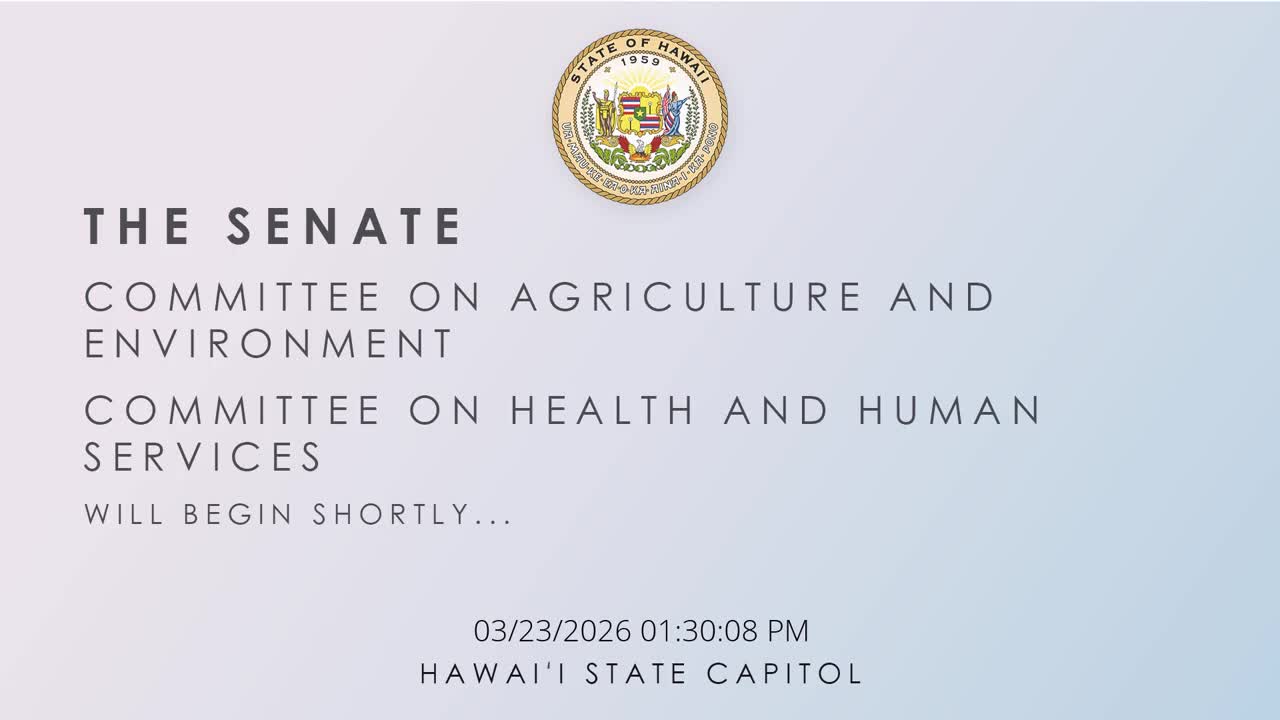
| Mar 20, 2026 | The committee(s) on AEN/HHS has scheduled a public hearing on 03-23-26 1:30PM; Conference Room 225 & Videoconference. |
| Mar 12, 2026 | Referred to AEN/HHS, WAM. |
| Mar 12, 2026 | Passed First Reading. |
| Mar 12, 2026 | Received from House (Hse. Com. No. 274). |
| Mar 10, 2026 | Passed Third Reading as amended in HD 2 with none voting aye with reservations; none voting no (0) and Representative(s) Kong, Pierick excused (2). Transmitted to Senate. |
| Mar 6, 2026 | Forty-eight (48) hours notice Tuesday, 03-10-26. |
| Mar 6, 2026 | Reported from FIN (Stand. Com. Rep. No. 1205-26) as amended in HD 2, recommending passage on Third Reading. |
| Mar 2, 2026 | The committee on FIN recommend that the measure be PASSED, WITH AMENDMENTS. The votes were as follows: 15 Ayes: Representative(s) Todd, Takenouchi, Hartsfield, Hussey, Keohokapu-Lee Loy, Kitagawa, Kusch, Lee, M., Miyake, Morikawa, Perruso, Templo, Yamashita, Gedeon, Reyes Oda; Ayes with reservations: none; Noes: none; and 1 Excused: Representative(s) Alcos. |
| Feb 27, 2026 | Bill scheduled to be heard by FIN on Monday, 03-02-26 10:00AM in House conference room 308 VIA VIDEOCONFERENCE. |
| Feb 4, 2026 | Passed Second Reading as amended in HD 1 and referred to the committee(s) on FIN with none voting aye with reservations; none voting no (0) and Representative(s) Kitagawa excused (1). |
| Feb 4, 2026 | Reported from EEP (Stand. Com. Rep. No. 13-26) as amended in HD 1, recommending passage on Second Reading and referral to FIN. |
| Jan 30, 2026 | Re-referred to EEP, FIN, referral sheet 5 |
| Jan 29, 2026 | The committee on EEP recommend that the measure be PASSED, WITH AMENDMENTS. The votes were as follows: 5 Ayes: Representative(s) Lowen, Perruso, Kahaloa, Kusch, Matsumoto; Ayes with reservations: none; Noes: none; and 2 Excused: Representative(s) Chun, Quinlan. |
| Jan 26, 2026 | Bill scheduled to be heard by EEP on Thursday, 01-29-26 9:30AM in House conference room 325 VIA VIDEOCONFERENCE. |
| Jan 26, 2026 | Referred to EEP, WAL, FIN, referral sheet 1 |
| Jan 21, 2026 | Introduced and Pass First Reading. |
| Jan 20, 2026 | Prefiled. |
|
Date
|
Description
|
Location
|
Votes
|
|
|---|---|---|---|---|
| Mar 23, 2026 | The committee(s) on AEN recommend(s) that the measure be PASSED, WITH AMENDMENTS | Senate Standing Committee on Agriculture and Environment |
Passed |
|
| Mar 23, 2026 | The committee(s) on HHS recommend(s) that the measure be PASSED, WITH AMENDMENTS | Senate Standing Committee on Health and Human Services |
Passed |
|
| Mar 10, 2026 | Third Reading | House Floor |
Passed |
|
| Mar 2, 2026 | The committee on FIN recommend that the measure be PASSED, WITH AMENDMENTS | House Standing Committee on Finance |
Passed |
|
| Jan 29, 2026 | The committee on EEP recommend that the measure be PASSED, WITH AMENDMENTS | House Standing Committee on Energy & Environmental Protection |
Passed |
This list shows positions taken on this bill by organizations on the date displayed, which is linked to the original source.
Positions by individuals are not included.
|
Organization
|
Position
|
Date
|
|---|---|---|
| American Council of Engineering Companies of Hawaii | ** Support | |
| Climate Change and Health Working Group | *** Support | Mar 23, 2026 |
| Department of Hawaiian Home Lands | ** Support | |
| Department of Land and Natural Resources | *** Support | Mar 23, 2026 |
| Friends of Hanauma Bay | *** Support | Mar 23, 2026 |
| Hawaiʻi Public Health Institute | *** Support | Mar 23, 2026 |
| Hawai‘i Reef and Ocean Coalition | *** Support | Mar 23, 2026 |
| Kingdom Pathways | *** Support | Jan 29, 2026 |
| Ocean Legislative Task Force | ** Support | |
| Office of Planning and Sustainable Development | *** Support | Mar 23, 2026 |
| Public Access to SunScreens (PASS) Coalition | *** Support | Mar 23, 2026 |
| Surfrider Foundation | *** Support | Mar 23, 2026 |
| Surfrider Foundation, Hawaiʻi Region | ** Support | |
| Surfrider Foundation, Hawaiʻi Region | ** Support | |
| The Nature Conservancy, Hawai‘i and Palmyra | *** Support | Mar 23, 2026 |
| The Nature Conservancy Hawaiʻi and Palmyra | ** Support | |
| University of Hawai‘i at Mānoa | *** Support | Mar 23, 2026 |
| University of Hawai‘i Sea Grant College Program | *** Support | Mar 23, 2026 |
| University of Hawaiʻi Water Resources Research Center | ** Support | |
| WaiHome LLC | *** Support | Mar 23, 2026 |
| WAI: Wastewater Alternatives & Innovations | *** Support | Mar 23, 2026 |
| Water Resources Research Center | *** Support | Mar 23, 2026 |
| Water Resources Research Center | *** Support | Jan 29, 2026 |
STAND. COM. REP. NO. 1205-26
Honolulu, Hawaii
, 2026
RE: H.B. No. 1730
H.D. 2
Honorable Nadine K. Nakamura
Speaker, House of Representatives
Thirty-Third State Legislature
Regular Session of 2026
State of Hawaii
Madame:
Your Committee on Finance, to which was referred H.B. No. 1730, H.D. 1, entitled:
"A BILL FOR AN ACT RELATING TO WASTEWATER SYSTEMS,"
begs leave to report as follows:
The purpose of this measure is to:
(1) Establish a Cesspool Conversion Implementation Working Group to assist the Department of Health in a review of the Department's administrative rules and practices regarding wastewater systems and cesspools and in the development of proposed changes to make cesspool conversions more affordable; and
(2) Appropriate funds for positions and hiring of a consultant to assist the Cesspool Conversion Implementation Working Group.
Your Committee received testimony in support of this measure from the Department of Land and Natural Resources; Office of Planning and Sustainable Development; University of Hawaiʻi Sea Grant College Program; Ocean Legislative Task Force; Climate Change and Health Working Group; Puakō For Reefs; WaiHome LLC; Public Access to SunScreens Coalition; Surfrider Foundation, Hawaiʻi Region; The Nature Conservancy Hawaiʻi and Palmyra; Hawaiʻi Reef and Ocean Coalition; WAI: Wastewater Alternatives & Innovations; and six individuals. Your Committee received comments on this measure from the Department of Health.
Your Committee has amended this measure by:
(1) Clarifying that private individuals will be invited by the Director of Health, rather than required, to participate as members of the Cesspool Conversion Implementation Working Group; and
(2) Making technical, nonsubstantive amendments for the purposes of clarity, consistency, and style.
As affirmed by the record of votes of the members of your Committee on Finance that is attached to this report, your Committee is in accord with the intent and purpose of H.B. No. 1730, H.D. 1, as amended herein, and recommends that it pass Third Reading in the form attached hereto as H.B. No. 1730, H.D. 2.
Respectfully submitted on behalf of the members of the Committee on Finance,
|
|
|
____________________________ CHRIS TODD, Chair |
|
|
|
|
STAND. COM. REP. NO. 13-26
Honolulu, Hawaii
, 2026
RE: H.B. No. 1730
H.D. 1
Honorable Nadine K. Nakamura
Speaker, House of Representatives
Thirty-Third State Legislature
Regular Session of 2026
State of Hawaii
Madame:
Your Committee on Energy & Environmental Protection, to which was referred H.B. No. 1730 entitled:
"A BILL FOR AN ACT RELATING TO WASTEWATER SYSTEMS,"
begs leave to report as follows:
The purpose of this measure is to:
(1) Establish a Wastewater Technical Advisory Group to assist the Department of Health in reviewing administrative rules and practices for cesspools and wastewater systems and proposing changes to make upgrades more affordable; and
(2) Appropriate funds for positions within a branch of the Department of Health and the hiring of a consultant to assist the Wastewater Technical Advisory Group.
Your Committee received testimony in support of this measure from the Department of Land and Natural Resources; Department of Hawaiian Home Lands; Office of Planning and Sustainable Development; University of Hawaiʻi Sea Grant College Program; University of Hawaiʻi Water Resources Research Center; Surfrider Foundation, Hawaiʻi Region; American Council of Engineering Companies of Hawaii; Public Access to SunScreens Coalition; Hawaiʻi Reef and Ocean Coalition; Hawaiʻi Ocean Legislative Task Force; The Nature Conservancy Hawaiʻi and Palmyra; WAI: Wastewater Alternatives & Innovations; Kingdom Pathways; WaiHome LLC; and five individuals. Your Committee received comments on this measure from the Department of Health.
Your Committee finds that although more than three thousand three hundred cesspools need to be upgraded per year to meet the 2050 cesspool upgrade, conversion, or connection mandate, fewer than four hundred fifty cesspools per year are being upgraded. Your Committee recognizes that high costs are contributing to this lack of progress. This measure ensures that the Department of Health has the capacity and support necessary to review administrative rules and practices and propose changes to make cesspool upgrade, conversion, and connection more affordable.
Your Committee has amended this measure by:
(1) Changing the name of the Wastewater Technical Advisory Group to the Cesspool Conversion Implementation Working Group and amending the membership of the Working Group;
(2) Amending one of the positions to be established in the Department of Health;
(3) Changing the effective date to July 1, 3000, to encourage further discussion; and
(4) Making technical, nonsubstantive amendments for the purposes of clarity, consistency, and style.
Your Committee respectfully requests your Committee on Finance, should it deliberate on this measure, to consider an appropriation amount of $182,208 for the establishment of positions in the Department of Health.
As affirmed by the record of votes of the members of your Committee on Energy & Environmental Protection that is attached to this report, your Committee is in accord with the intent and purpose of H.B. No. 1730, as amended herein, and recommends that it pass Second Reading in the form attached hereto as H.B. No. 1730, H.D. 1, and be referred to your Committee on Finance.
Respectfully submitted on behalf of the members of the Committee on Energy & Environmental Protection,
|
|
|
____________________________ NICOLE E. LOWEN, Chair |
|
|
|
|
|
Date
|
Testimony PDF
|
|---|---|
| Mar 23, 2026 | HB1730_HD2_TESTIMONY_AEN-HHS_03-23-26_.PDF |
| Mar 2, 2026 | HB1730_HD1_TESTIMONY_FIN_03-02-26_.PDF |
| Jan 29, 2026 | HB1730_TESTIMONY_EEP_01-29-26_.PDF |
Discussed in Hearing
 9MIN
Senate Standing Committee on Agriculture and Environment
9MIN
Senate Standing Committee on Health and Human Services
1MIN
Senate Standing Committee on Agriculture and Environment
1MIN
Senate Standing Committee on Health and Human Services
 2MIN
House Standing Committee on Finance
 27SEC
House Standing Committee on Finance
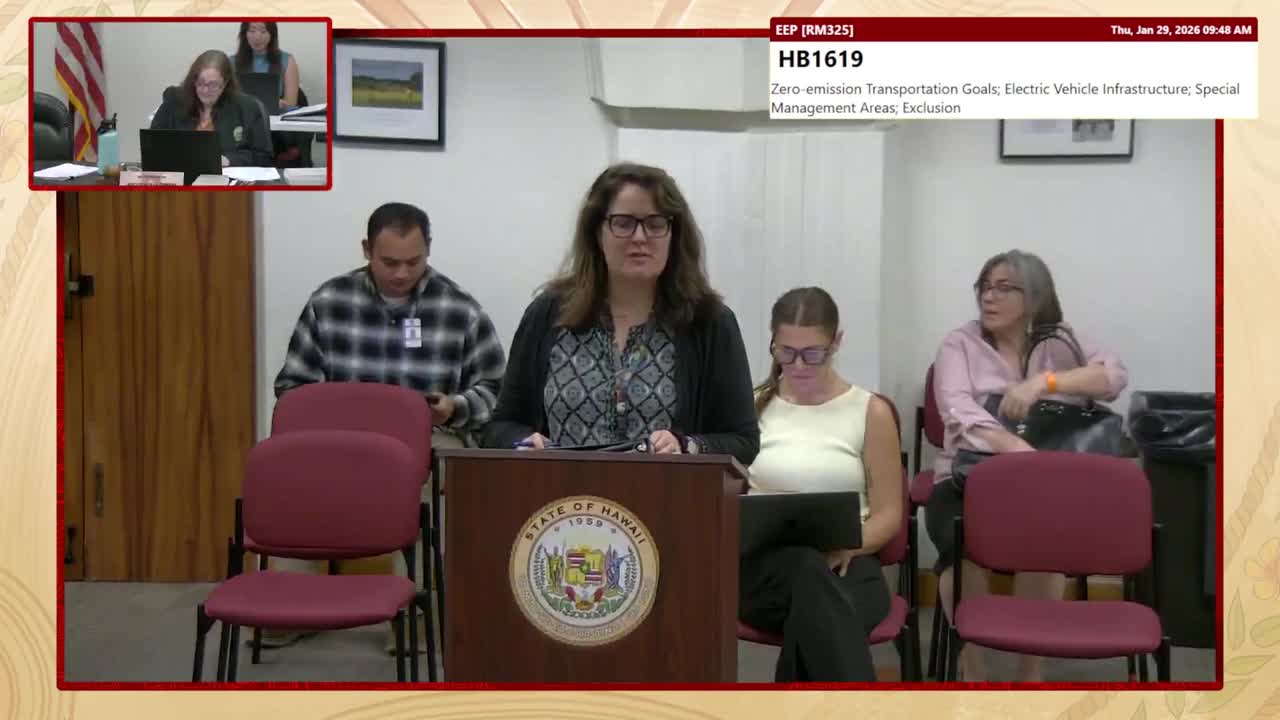 12MIN
House Standing Committee on Energy & Environmental Protection
Bill Author
Bill Co-Author(s):