HB 306: State Water Code; CWRM; Penalties
- Session Year: 2025-2026
- House: House
- Latest Version Date: 2026-05-01
Current Status:
Failed
(2026-05-08: Recommitted to Conference committee as amended in CD 1 with none voting no and Representative(s) Ratcliffe excused.)
Introduced
In Committee
First Chamber
In Committee
Second Chamber
Final Decking
Enacted
Makes failure to maintain a natural stream channel that causes an unreasonable and substantial physical obstruction of the natural flow of water a violation of the State Water Code, with certain exceptions. Establishes a period of time after receipt of written notice of certain violations of the State Water Code during which a violator may remedy the violation or enter into a corrective action plan with the Commission on Water Resource Management (CWRM). Gives CWRM the discretion to impose a minimum penalty per State Water Code violation, increases the maximum penalty per violation, and authorizes CWRM to consider each day that a violation exists or continues to exist a separate offense. Establishes factors CWRM must consider when determining the amount of the penalty. Prohibits the State from acquiring a fee simple interest in any artificial watercourse, including a canal or ditch, under certain circumstances. Allows the State to acquire a fee simple interest in the artificial watercourse if the Legislature provides prior approval by concurrent resolution. (CD1)
Adds a minimum penalty and maximum penalty per violation of the State Water Code and authorizes the Commission on Water Resource Management to consider each day that a violation exists or continues to exist a separate offense. Establishes factors the CWRM must consider when determining the amount of the penalty. Increases maximum fines every five years from 2030 to 2045. Effective 7/1/2040. (SD1)
Adds a minimum penalty and maximum penalty per violation of the State Water Code and makes each day that a violation exists or continues to exist a separate offense. Establishes factors the Commission on Water Resource Management must consider when determining the amount of the penalty. Increases maximum fines in five-year increments from 2030 to 2045. Effective 7/1/3000. (HD2)
Adds a minimum penalty and maximum penalty per violation of the State Water Code and makes each day that a violation exists or continues to exist a separate offense. Establishes factors the Commission on Water Resource Management must consider when determining the amount of the penalty. Increases maximum fines in five-year increments from 2030 to 2045. Effective 7/1/3000. (HD1)
Adds a minimum penalty of $50 and a maximum penalty of $60,000 per violation of the State Water Code and makes each day that a violation exists or continues to exist a separate offense. Requires the Commission on Water Resource Management to determine the amount of the penalty based on the circumstances of the violation.
|
HOUSE OF REPRESENTATIVES |
H.B. NO. |
306 |
|
THIRTY-THIRD LEGISLATURE, 2025 |
H.D. 2 |
|
|
STATE OF HAWAII |
S.D. 1 |
|
|
|
C.D. 1 |
|
|
|
||
|
|
||
A BILL FOR AN ACT
RELATING TO STATE WATER CODE PENALTIES.
BE IT ENACTED BY THE LEGISLATURE OF THE STATE OF HAWAII:
SECTION 1. The legislature finds that in 1987, the state water code was adopted to protect the precious water resources of the State. To better enable the department of land and natural resources and commission on water resource management to carry out that mission, the legislature further finds that the water code's penalties and fines must be amended and increased to serve as an effective deterrence to violators.
The legislature further finds that increasing potential fines for water code violations will also:
(1) Help to preserve water resources by ensuring the sustainable management and conservation of limited water resources for future generations, particularly in areas facing over-extraction or misuse;
(2) Protect the ecosystems by safeguarding wetlands, rivers, and aquifers that depend on healthy water systems to maintain biodiversity and environmental balance;
(3) Promote public health and safety by preventing contamination of drinking water supplies and reducing health risks associated with waterborne diseases and pollutants;
(4) Promote climate change resilience by regulating water usage and protecting vulnerable water sources to address challenges posed by prolonged droughts, erratic rainfall, and rising sea levels;
(5) Promote economic stability by helping to avoid economic losses in agriculture, tourism, and other industries that rely heavily on consistent and clean water supplies;
(6) Promote enforcement of equity and justice to ensure fair access to water resources for all, including marginalized communities that may be disproportionately affected by water scarcity or poor water management;
(7) Increase accountability for violations to deter illegal activities such as unauthorized diversions, pollution, or overuse of water resources by imposing stricter penalties and fines; and
(8) Increase compliance with federal and state mandates to meet legal obligations under federal or state environmental protection laws, ensuring alignment with broader water management and conservation goals.
The purpose of this Act is to:
(1) Make failure to maintain a natural stream channel that causes an unreasonable and substantial physical obstruction of the natural flow of water a violation of the state water code, with certain exceptions;
(2) Establish a period of time after receipt of written notice of certain violations of the state water code during which a violator may remedy the violation or enter into a corrective action plan with the commission on water resource management;
(3) Give the commission on water resource management the discretion to impose a minimum penalty per state water code violation; amend the maximum penalty per violation of the state water code; and clarify what constitutes a separate offense; and
(4) Require the commission on water resource management to consider certain factors when imposing penalties.
SECTION 2. Section 174C-15, Hawaii Revised Statutes, is amended to read as follows:
"§174C-15 Penalties and common law remedies. (a) The commission may enforce its rules and orders adopted pursuant to this chapter by suit for injunction or for damages or both. It shall be a violation of this chapter to fail to maintain a natural stream channel under a person's ownership if the failure to maintain the channel causes an unreasonable and substantial physical obstruction of the natural flow of water; provided that obstructions caused strictly by acts of nature, including severe weather events, shall not constitute a violation if the owner promptly reports the obstruction and takes reasonable steps to coordinate removal; provided further that the term "natural stream channel" shall not include ephemeral streams or dry gulches; provided further that routine grading or redirection of water flow for agricultural or flood management purposes shall not constitute an unreasonable and substantial physical obstruction.
(b)
Any person who [violates any]:
(1) Violates any provision of this chapter[, or any];
(2) Violates any rule adopted pursuant to this chapter[,
may];
(3) Violates any order of the commission regarding the enforcement or application of any provision of this chapter or rule adopted under this chapter;
(4) Fails to obtain a permit when a permit is required under this chapter;
(5) Fails to comply with permit conditions; or
(6) Fails to comply with standardized water audit requirements pursuant to Act 169, Session Laws of Hawaii 2016,
shall be subject to a fine imposed by the commission. [Such fine shall not exceed $5,000. For a continuing offense, each day during
which the offense is committed is a separate violation.] as provided
under subsection (c). Prior to the
assessment of any fine under this section for a failure to maintain a natural
stream channel or a failure to comply with permit conditions under paragraph
(5), the commission shall issue a written notice of violation to the property
owner or permittee. The property owner or
permittee shall have a notice period of thirty days from receipt of the notice
to remedy the violation or enter into a corrective action plan with the
commission. If the violation is remedied
or a plan is approved within this period, no fine shall be assessed. Each day that a violation exists or continues
to exist may be considered a separate offense.
Penalties for continuing violations shall be assessed from the earliest
known date of the violation; provided that for violations involving a failure
to maintain a natural stream channel without malicious intent or substantial
harm to the environment, penalties for a continuing violation shall only begin
to accrue after the expiration of the notice period.
The earliest known date of a violation shall be determined by the commission by a preponderance of the evidence; provided that if the earliest known date cannot be determined by a preponderance of the evidence, penalties for continuing violations shall be assessed from the earliest date the commission is made aware of the violation.
(c) A fine imposed pursuant to this section shall not be less than $50 and shall not exceed:
(1) $5,000 per violation; provided that the commission has not fined the violator within the five years preceding the violation; provided further that the violation does not cause harm to other water users, the environment, or water source; or
(2) $15,000 per violation; provided that the commission has fined the violator within the five years preceding the violation; provided further that the violation causes harm to other water users, the environment, or water source.
(d) When imposing a fine, the commission shall consider the following factors:
(1) The nature, circumstances, extent, gravity, and history of the violation and of any prior violations;
(2) The economic benefit to the violator, or anticipated by the violator, resulting from the violation;
(3) The opportunity, difficulty, and history of corrective action;
(4) The violator's good faith efforts to comply;
(5) The violator's degree of culpability;
(6) The quantity of water affected by the violation, including the quantity of water unlawfully diverted, wasted, or contaminated;
(7) The potential or actual harm to other water users, the environment, or water source caused by the violation; and
(8) Any other matters as justice may require.
(e) The State shall not acquire a fee simple interest in any artificial watercourse, including a canal or ditch, if the current or prior owner of the artificial watercourse has been subject to a fine under this section for the artificial watercourse; provided that the State may acquire a fee simple interest in the artificial watercourse if the legislature provides prior approval by concurrent resolution.
[(c)] (f)
No provision of this chapter shall bar the right of any injured person
to seek other legal or equitable relief against a violator of this chapter.
[(d)] (g) Except as otherwise provided by law, the
commission or its authorized representative by proper delegation may set,
charge, and collect administrative fines [or]; may bring legal
action to recover administrative fees and costs as documented by receipts or
affidavit, including [attorneys'] attorney's fees and costs; [or]
and may bring legal action to recover administrative fines, fees, and
costs, including [attorneys'] attorney's fees and costs, or
payment for damages resulting from a violation of this chapter or any rule
adopted pursuant to this chapter."
SECTION 3. If any provision of this Act, or the application thereof to any person or circumstance, is held invalid, the invalidity does not affect other provisions or applications of the Act that can be given effect without the invalid provision or application, and to this end the provisions of this Act are severable.
SECTION 4. This Act does not affect rights and duties that matured, penalties that were incurred, and proceedings that were begun before its effective date.
SECTION 5. Statutory material to be repealed is bracketed and stricken. New statutory material is underscored.
SECTION 6. This Act shall take effect on July 1, 2026.
Report Title:
State Water Code; CWRM; Penalties
Description:
Makes failure to maintain a natural stream channel that causes an unreasonable and substantial physical obstruction of the natural flow of water a violation of the State Water Code, with certain exceptions. Establishes a period of time after receipt of written notice of certain violations of the State Water Code during which a violator may remedy the violation or enter into a corrective action plan with the Commission on Water Resource Management (CWRM). Gives CWRM the discretion to impose a minimum penalty per State Water Code violation, increases the maximum penalty per violation, and authorizes CWRM to consider each day that a violation exists or continues to exist a separate offense. Establishes factors CWRM must consider when determining the amount of the penalty. Prohibits the State from acquiring a fee simple interest in any artificial watercourse, including a canal or ditch, under certain circumstances. Allows the State to acquire a fee simple interest in the artificial watercourse if the Legislature provides prior approval by concurrent resolution. (CD1)
The summary description of legislation appearing on this page is for informational purposes only and is not legislation or evidence of legislative intent.
|
HOUSE OF REPRESENTATIVES |
H.B. NO. |
306 |
|
THIRTY-THIRD LEGISLATURE, 2025 |
H.D. 2 |
|
|
STATE OF HAWAII |
S.D. 1 |
|
|
|
|
|
|
|
||
|
|
||
A BILL FOR AN ACT
RELATING TO STATE WATER CODE PENALTIES.
BE IT ENACTED BY THE LEGISLATURE OF THE STATE OF HAWAII:
SECTION 1. The legislature finds that in 1987, the state water code was adopted to protect the precious water resources of the State. To better enable the department of land and natural resources and commission on water resource management to carry out that mission, the legislature further finds that the water code's penalties and fines must be amended and increased to serve as an effective deterrence to violators.
The legislature further finds that increasing potential fines for water code violations will also:
(1) Help to preserve water resources by ensuring the sustainable management and conservation of limited water resources for future generations, particularly in areas facing over-extraction or misuse;
(2) Protect the ecosystems by safeguarding wetlands, rivers, and aquifers that depend on healthy water systems to maintain biodiversity and environmental balance;
(3) Promote public health and safety by preventing contamination of drinking water supplies and reducing health risks associated with waterborne diseases and pollutants;
(4) Promote climate change resilience by regulating water usage and protecting vulnerable water sources to address challenges posed by prolonged droughts, erratic rainfall, and rising sea levels;
(5) Promote economic stability by helping to avoid economic losses in agriculture, tourism, and other industries that rely heavily on consistent and clean water supplies;
(6) Promote enforcement of equity and justice to ensure fair access to water resources for all, including marginalized communities that may be disproportionately affected by water scarcity or poor water management;
(7) Increase accountability for violations to deter illegal activities such as unauthorized diversions, pollution, or overuse of water resources by imposing stricter penalties and fines; and
(8) Increase compliance with federal and state mandates to meet legal obligations under federal or state environmental protection laws, ensuring alignment with broader water management and conservation goals.
The purpose of this Act is to:
(1) Ensure that all violators of the state water code are held accountable for their violations by adding a minimum penalty and amending the maximum penalty, with scheduled incremental increases, per violation of the state water code and clarifying what constitutes a separate offense; and
(2) Require the commission on water resource management to consider certain factors when imposing penalties.
SECTION 2. Section 174C-15, Hawaii Revised Statutes, is amended to read as follows:
"§174C-15 Penalties and common law remedies. (a) The commission may enforce its rules and orders adopted pursuant to this chapter by suit for injunction or for damages or both.
(b)
Any person who [violates any]:
(1) Violates any provision of this chapter[, or any];
(2) Violates any rule adopted pursuant to this chapter[,
may];
(3) Violates any order of the commission regarding the enforcement or application of any provision of this chapter or rule adopted under this chapter;
(4) Fails to obtain a permit when a permit is required under this chapter;
(5) Fails to comply with permit conditions; or
(6) Fails to comply with standardized water audit requirements pursuant to Act 169, Session Laws of Hawaii 2016,
shall be subject to a fine imposed by the commission. [Such fine shall not exceed $5,000. For a continuing offense, each day during
which the offense is committed is a separate violation.] as provided
under subsection (c). Each day that a
violation exists or continues to exist may be considered a separate
offense. Penalties for continuing
violations shall be assessed from the earliest known date of the
violation. The earliest known date of a
violation shall be determined by the commission by a preponderance of the
evidence; provided that if the earliest known date cannot be determined by a
preponderance of the evidence, penalties for continuing violations shall be
assessed from the earliest date the commission is made aware of the violation.
(c) A fine imposed pursuant to this section shall not be less than $50 and shall not exceed:
(1) $5,000 per violation; provided that the commission has fined the violator within the five years preceding the violation; provided further that the violation does not cause harm to other water users, the environment, or water source; or
(2) $25,000 per violation; provided that the commission has fined the violator within the five years preceding the violation; provided further that the violation causes harm to other water users, the environment, or water source.
(d) When imposing a fine, the commission shall consider the following factors, including but not limited to:
(1) The nature, circumstances, extent, gravity, and history of the violation and of any prior violations;
(2) The economic benefit to the violator, or anticipated by the violator, resulting from the violation;
(3) The opportunity, difficulty, and history of corrective action;
(4) The violator's good faith efforts to comply;
(5) The violator's degree of culpability;
(6) The quantity of water affected by the violation, including the quantity of water unlawfully diverted, wasted, or contaminated;
(7) The potential or actual harm to other water users, the environment, or water source caused by the violation; and
(8) Any other matters as justice may require.
[(c)] (e)
No provision of this chapter shall bar the right of any injured person
to seek other legal or equitable relief against a violator of this chapter.
[(d)] (f) Except as otherwise provided by law, the
commission or its authorized representative by proper delegation may set,
charge, and collect administrative fines [or]; may bring legal
action to recover administrative fees and costs as documented by receipts or
affidavit, including attorneys' fees and costs; [or] and may
bring legal action to recover administrative fines, fees, and costs, including attorneys'
fees and costs, or payment for damages resulting from a violation of this
chapter or any rule adopted pursuant to this chapter.
(g) The maximum fine per violation pursuant to subsection (c)(2) shall increase to:
(1) $30,000 beginning January 1, 2030;
(2) $35,000 beginning January 1, 2035;
(3) $40,000 beginning January 1, 2040; and
(4) $45,000 beginning January 1, 2045."
SECTION 3. If any provision of this Act, or the application thereof to any person or circumstance, is held invalid, the invalidity does not affect other provisions or applications of the Act that can be given effect without the invalid provision or application, and to this end the provisions of this Act are severable.
SECTION 4. This Act does not affect rights and duties that matured, penalties that were incurred, and proceedings that were begun before its effective date.
SECTION 5. Statutory material to be repealed is bracketed and stricken. New statutory material is underscored.
SECTION 6. This Act shall take effect on July 1, 2040.
Report Title:
State Water Code; CWRM; Penalties
Description:
Adds a minimum penalty and maximum penalty per violation of the State Water Code and authorizes the Commission on Water Resource Management to consider each day that a violation exists or continues to exist a separate offense. Establishes factors the CWRM must consider when determining the amount of the penalty. Increases maximum fines every five years from 2030 to 2045. Effective 7/1/2040. (SD1)
The summary description of legislation appearing on this page is for informational purposes only and is not legislation or evidence of legislative intent.
|
HOUSE OF REPRESENTATIVES |
H.B. NO. |
306 |
|
THIRTY-THIRD LEGISLATURE, 2025 |
H.D. 2 |
|
|
STATE OF HAWAII |
|
|
|
|
|
|
|
|
||
|
|
||
A BILL FOR AN ACT
RELATING TO STATE WATER CODE PENALTIES.
BE IT ENACTED BY THE LEGISLATURE OF THE STATE OF HAWAII:
SECTION 1. The legislature finds that in 1987, the state water code was adopted to protect the precious water resources of the State. To better enable the department of land and natural resources and commission on water resource management to carry out that mission, the legislature further finds that the water code's penalties and fines must be amended and increased to serve as an effective deterrence to violators.
The legislature further finds that increasing potential fines for water code violations will also:
(1) Help to preserve water resources by ensuring the sustainable management and conservation of limited water resources for future generations, particularly in areas facing over-extraction or misuse;
(2) Protect the ecosystems by safeguarding wetlands, rivers, and aquifers that depend on healthy water systems to maintain biodiversity and environmental balance;
(3) Promote public health and safety by preventing contamination of drinking water supplies and reducing health risks associated with waterborne diseases and pollutants;
(4) Promote climate change resilience by regulating water usage and protecting vulnerable water sources to address challenges posed by prolonged droughts, erratic rainfall, and rising sea levels;
(5) Promote economic stability by helping to avoid economic losses in agriculture, tourism, and other industries that rely heavily on consistent and clean water supplies;
(6) Promote enforcement of equity and justice to ensure fair access to water resources for all, including marginalized communities that may be disproportionately affected by water scarcity or poor water management;
(7) Increase accountability for violations to deter illegal activities such as unauthorized diversions, pollution, or overuse of water resources by imposing stricter penalties and fines; and
(8) Increase compliance with federal and state mandates to meet legal obligations under federal or state environmental protection laws, ensuring alignment with broader water management and conservation goals.
The purpose of this Act is to:
(1) Ensure that all violators of the state water code are held accountable for their violations by adding a minimum penalty and amending the maximum penalty, with scheduled incremental increases, per violation of the state water code and clarifying what constitutes a separate offense; and
(2) Require the commission on water resource management to consider certain factors when imposing penalties.
SECTION 2. Section 174C-15, Hawaii Revised Statutes, is amended to read as follows:
"§174C-15 Penalties and common law remedies. (a) The commission may enforce its rules and orders adopted pursuant to this chapter by suit for injunction or for damages or both.
(b)
Any person who [violates any]:
(1) Violates any provision
of this chapter[, or any];
(2) Violates any rule adopted pursuant to this chapter[,
may];
(3) Violates any order of the commission;
(4) Fails to obtain a permit when a permit is required under this chapter;
(5) Fails to comply with permit conditions; or
(6) Fails to comply with standardized water audit requirements pursuant to Act 169, Session Laws of Hawaii 2016,
shall be subject to a fine imposed by the commission. [Such fine] The fine shall be no
less than $50 and shall not exceed [$5,000. For a continuing offense, each day during
which the offense is committed is a separate violation.], except as
provided under subsection (f), $
per violation. Each day that a violation
exists or continues to exist shall constitute a separate offense. Penalties for continuing violations shall be
assessed from the earliest known date of the violation. The earliest known date of a violation shall
be determined by the commission by a preponderance of the evidence; provided
that if the earliest known date cannot be determined by a preponderance of the
evidence, penalties for continuing violations shall be assessed from the
earliest date the commission is made aware of the violation.
(c) When imposing a penalty, the commission shall consider the following factors, including but not limited to:
(1) The nature, circumstances, extent, gravity, and history of the violation and of any prior violations;
(2) The economic benefit to the violator, or anticipated by the violator, resulting from the violation;
(3) The opportunity, difficulty, and history of corrective action;
(4) Good faith efforts to comply;
(5) Degree of culpability; and
(6) Any other matters as justice may require.
[(c)] (d)
No provision of this chapter shall bar the right of any injured person
to seek other legal or equitable relief against a violator of this chapter.
[(d)] (e) Except as otherwise provided by law, the
commission or its authorized representative by proper delegation may set,
charge, and collect administrative fines [or]; may bring legal
action to recover administrative fees and costs as documented by receipts or
affidavit, including [attorneys'] attorney's fees and costs; [or]
and may bring legal action to recover administrative fines, fees, and
costs, including [attorneys'] attorney's fees and costs, or
payment for damages resulting from a violation of this chapter or any rule
adopted pursuant to this chapter.
(f) The maximum fine per violation pursuant to subsection (b) shall increase to:
(1) $ beginning January 1, 2030;
(2) $ beginning January 1, 2035;
(3) $ beginning January 1, 2040; and
(4) $ beginning January 1, 2045."
SECTION 3. If any provision of this Act, or the application thereof to any person or circumstance, is held invalid, the invalidity does not affect other provisions or applications of the Act that can be given effect without the invalid provision or application, and to this end the provisions of this Act are severable.
SECTION 4. This Act does not affect rights and duties that matured, penalties that were incurred, and proceedings that were begun before its effective date.
SECTION 5. Statutory material to be repealed is bracketed and stricken. New statutory material is underscored.
SECTION 6. This Act shall take effect on July 1, 3000.
Report Title:
State Water Code; Commission on Water Resource Management; Penalties
Description:
Adds a minimum penalty and maximum penalty per violation of the State Water Code and makes each day that a violation exists or continues to exist a separate offense. Establishes factors the Commission on Water Resource Management must consider when determining the amount of the penalty. Increases maximum fines in five-year increments from 2030 to 2045. Effective 7/1/3000. (HD2)
The summary description of legislation appearing on this page is for informational purposes only and is not legislation or evidence of legislative intent.
|
HOUSE OF REPRESENTATIVES |
H.B. NO. |
306 |
|
THIRTY-THIRD LEGISLATURE, 2025 |
H.D. 1 |
|
|
STATE OF HAWAII |
|
|
|
|
|
|
|
|
||
|
|
||
A BILL FOR AN ACT
RELATING TO STATE WATER CODE PENALTIES.
BE IT ENACTED BY THE LEGISLATURE OF THE STATE OF HAWAII:
SECTION 1. The legislature finds that in 1987, the state water code was adopted to protect the precious water resources of the State. To better enable the department of land and natural resources and commission on water resource management to carry out that mission, the legislature further finds that the water code's penalties and fines must be amended and increased to serve as an effective deterrence to violators.
The legislature further finds that increasing potential fines for water code violations will also:
(1) Help to preserve water resources by ensuring the sustainable management and conservation of limited water resources for future generations, particularly in areas facing over-extraction or misuse;
(2) Protect the ecosystems by safeguarding wetlands, rivers, and aquifers that depend on healthy water systems to maintain biodiversity and environmental balance;
(3) Promote public health and safety by preventing contamination of drinking water supplies and reducing health risks associated with waterborne diseases and pollutants;
(4) Promote climate change resilience by regulating water usage and protecting vulnerable water sources to address challenges posed by prolonged droughts, erratic rainfall, and rising sea levels;
(5) Promote economic stability by helping to avoid economic losses in agriculture, tourism, and other industries that rely heavily on consistent and clean water supplies;
(6) Promote enforcement of equity and justice to ensure fair access to water resources for all, including marginalized communities that may be disproportionately affected by water scarcity or poor water management;
(7) Increase accountability for violations to deter illegal activities such as unauthorized diversions, pollution, or overuse of water resources by imposing stricter penalties and fines; and
(8) Increase compliance with federal and state mandates to meet legal obligations under federal or state environmental protection laws, ensuring alignment with broader water management and conservation goals.
The purpose of this Act is to:
(1) Ensure that all violators of the state water code are held accountable for their violations by adding a minimum penalty and amending the maximum penalty, with scheduled incremental increases, per violation of the state water code and clarifying what constitutes a separate offense; and
(2) Require the commission on water resource management to consider certain factors when imposing penalties.
SECTION 2. Section 174C-15, Hawaii Revised Statutes, is amended to read as follows:
"§174C-15 Penalties and common law remedies. (a) The commission may enforce its rules and orders adopted pursuant to this chapter by suit for injunction or for damages or both.
(b)
Any person who [violates any]:
(1) Violates any provision
of this chapter[, or any];
(2) Violates any rule adopted pursuant to this chapter[,
may];
(3) Violates any order of the commission;
(4) Fails to obtain a permit when a permit is required under this chapter;
(5) Fails to comply with permit conditions; or
(6) Fails to comply with standardized water audit requirements pursuant to Act 169, Session Laws of Hawaii 2016,
shall be subject to a fine imposed by the commission. [Such fine] The fine shall be no
less than $50 and shall not exceed [$5,000. For a continuing offense, each day during
which the offense is committed is a separate violation.] $
per violation. Each day that a violation
exists or continues to exist shall constitute a separate offense. Penalties for continuing violations shall be
assessed from the earliest known date of the violation. The earliest known date of a violation shall
be determined by the commission by a preponderance of the evidence; provided
that if the earliest known date cannot be determined by a preponderance of the
evidence, penalties for continuing violations shall be assessed from the
earliest date the commission is made aware of the violation.
(c) When imposing a penalty, the commission shall consider the following factors, including but not limited to:
(1) The nature, circumstances, extent, gravity, and history of the violation and of any prior violations;
(2) The economic benefit to the violator, or anticipated by the violator, resulting from the violation;
(3) The opportunity, difficulty, and history of corrective action;
(4) Good faith efforts to comply;
(5) Degree of culpability; and
(6) Such other matters as justice may require.
[(c)] (d)
No provision of this chapter shall bar the right of any injured person
to seek other legal or equitable relief against a violator of this chapter.
[(d)] (e) Except as otherwise provided by law, the
commission or its authorized representative by proper delegation may set,
charge, and collect administrative fines [or]; may bring legal
action to recover administrative fees and costs as documented by receipts or
affidavit, including [attorneys'] attorney's fees and costs; [or]
and may bring legal action to recover administrative fines, fees, and
costs, including [attorneys'] attorney's fees and costs, or
payment for damages resulting from a violation of this chapter or any rule
adopted pursuant to this chapter.
(f) The maximum fine per violation pursuant to subsection (b) shall increase to:
(1) $ beginning January 1, 2030;
(2) $ beginning January 1, 2035;
(3) $ beginning January 1, 2040; and
(4) $ beginning January 1, 2045."
SECTION 3. If any provision of this Act, or the application thereof to any person or circumstance, is held invalid, the invalidity does not affect other provisions or applications of the Act that can be given effect without the invalid provision or application, and to this end the provisions of this Act are severable.
SECTION 4. This Act does not affect rights and duties that matured, penalties that were incurred, and proceedings that were begun before its effective date.
SECTION 5. Statutory material to be repealed is bracketed and stricken. New statutory material is underscored.
SECTION 6. This Act shall take effect on July 1, 3000.
Report Title:
State Water Code; Commission on Water Resource Management; Penalties
Description:
Adds a minimum penalty and maximum penalty per violation of the State Water Code and makes each day that a violation exists or continues to exist a separate offense. Establishes factors the Commission on Water Resource Management must consider when determining the amount of the penalty. Increases maximum fines in five-year increments from 2030 to 2045. Effective 7/1/3000. (HD1)
The summary description of legislation appearing on this page is for informational purposes only and is not legislation or evidence of legislative intent.
|
HOUSE OF REPRESENTATIVES |
H.B. NO. |
306 |
|
THIRTY-THIRD LEGISLATURE, 2025 |
|
|
|
STATE OF HAWAII |
|
|
|
|
|
|
|
|
||
|
|
||
A BILL FOR AN ACT
relating to state water code penalties.
BE IT ENACTED BY THE LEGISLATURE OF THE STATE OF HAWAII:
SECTION 1. The legislature finds that in 1987, the state water code was adopted to protect the precious water resources of the State. To better enable the department of land and natural resources and commission on water resource management to carry out that mission, the legislature further finds that the water code's penalties and fines must be amended and increased to serve as an effective deterrence to violators.
The legislature further finds that increasing potential fines for water code violations will also:
(1) Help to preserve water resources by ensuring the sustainable management and conservation of limited water resources for future generations, particularly in areas facing over-extraction or misuse;
(2) Protect the ecosystems by safeguarding wetlands, rivers, and aquifers that depend on healthy water systems to maintain biodiversity and environmental balance;
(3) Promote public health and safety by preventing contamination of drinking water supplies and reducing health risks associated with waterborne diseases and pollutants;
(4) Promote climate change resilience by regulating water usage and protecting vulnerable water sources to address challenges posed by prolonged droughts, erratic rainfall, and rising sea levels;
(5) Promote economic stability by helping to avoid economic losses in agriculture, tourism, and other industries that rely heavily on consistent and clean water supplies;
(6) Promote enforcement of equity and justice to ensure fair access to water resources for all, including marginalized communities that may be disproportionately affected by water scarcity or poor water management;
(7) Increase accountability for violations to deter illegal activities such as unauthorized diversions, pollution, or overuse of water resources by imposing stricter penalties and fines; and
(8) Increase compliance with federal and state mandates to meet legal obligations under federal or state environmental protection laws, ensuring alignment with broader water management and conservation goals.
The purpose of this Act is to ensure that all violators of the state water code are held accountable for their violations by creating a minimum penalty of $50 and a maximum penalty of $60,000 for every violation.
SECTION 2. Section 174C-15, Hawaii Revised Statutes, is amended to read as follows:
"§174C-15 Penalties and common law remedies. (a) The commission may enforce its rules and orders adopted pursuant to this chapter by suit for injunction or for damages or both.
(b) Any person who
violates any provision of this chapter, [or] violates any rule
adopted pursuant to this chapter, [may] violates any order of the
commission, fails to obtain a permit when a permit is required under this
chapter, or fails to comply with permit conditions, shall be subject to a
fine imposed by the commission. [Such
fine] The fine shall be not less than $50 and shall not exceed [$5,000. For a continuing offense, each day during
which the offense is committed is a separate violation.] $60,000 per
violation. Each day that a violation
exists or continues to exist shall constitute a separate offense. Penalties for continuing violations shall be
assessed from the earliest known date of the violation. The earliest known date of a violation shall
be determined by the commission by a preponderance of the evidence; provided
that if the earliest known date cannot be determined by a preponderance of the
evidence, penalties for continuing violations shall be assessed from the
earliest date the commission is made aware of the violation.
(c) The commission shall determine the penalty amount for each violation upon review of the circumstances of the violation, taking into account the nature, extent, and gravity of the violation and considering the history of such violations, degree of culpability, and other matters as justice may require.
[(c)] (d)
No provision of this chapter shall bar the right of any injured person
to seek other legal or equitable relief against a violator of this chapter.
[(d)]
(e) Except as otherwise provided
by law, the commission or its authorized representative by proper delegation [may]
shall set, charge, and collect administrative fines [or]; may
bring legal action to recover administrative fees and costs as documented by
receipts or affidavit, including [attorneys'] attorney's fees and
costs; [or] and may bring legal action to recover administrative
fines, fees, and costs, including [attorneys'] attorney's fees
and costs, or payment for damages resulting from a violation of this chapter or
any rule adopted pursuant to this chapter."
SECTION 3. Statutory material to be repealed is bracketed and stricken. New statutory material is underscored.
SECTION 4. This Act shall take effect on July 1, 2025.
|
INTRODUCED BY: |
_____________________________ |
|
|
|
Report Title:
State Water Code; Commission on Water Resource Management; Penalties
Description:
Adds a minimum penalty of $50 and a maximum penalty of $60,000 per violation of the State Water Code and makes each day that a violation exists or continues to exist a separate offense. Requires the Commission on Water Resource Management to determine the amount of the penalty based on the circumstances of the violation.
The summary description of legislation appearing on this page is for informational purposes only and is not legislation or evidence of legislative intent.
|
Date
|
Status
|
|---|---|
| May 8, 2026 | Recommitted to Conference committee as amended in CD 1 with none voting no and Representative(s) Ratcliffe excused. |
| May 6, 2026 | Received notice of Final Reading (Sen. Com. No. 816). |
| May 6, 2026 | Deferred one day 05-08-26. |
| May 6, 2026 | Passed Final Reading, as amended (CD 1). Ayes, 25; Aye(s) with reservations: none . 0 No(es): none. 0 Excused: none. |
| May 1, 2026 | 48 Hrs. Notice (as amended CD 1) 05-06-26 |
| May 1, 2026 | Reported from Conference Committee as amended CD 1 (Conf. Com. Rep. No. 196-26). |
| May 1, 2026 | Forty-eight (48) hours notice Wednesday, 05-06-26. |
| May 1, 2026 | Reported from Conference Committee (Conf Com. Rep. No. 196-26) as amended in (CD 1). |
| May 1, 2026 | The Conference Committee recommends that the measure be Passed, with Amendments. The votes were as follows: 4 Ayes: Representative(s) Hashem, Tarnas, Morikawa, Shimizu; Ayes with reservations: none; 0 Noes: none; and 0 Excused: none. |
| May 1, 2026 | The Conference committee recommends that the measure be PASSED, WITH AMENDMENTS. The votes of the Senate Conference Managers were as follows: 3 Aye(s): Senator(s) Lee, C., Rhoads, Hashimoto; Aye(s) with reservations: none ; 0 No(es): none; and 0 Excused: none. |
| May 1, 2026 | Conference committee meeting to reconvene on 05-01-26 11:35 AM; Conference Room 229. |
| Apr 30, 2026 | Conference committee meeting to reconvene on 05-01-26 9:00AM; Conference Room 229. |
| Apr 29, 2026 | Conference committee meeting to reconvene on 04-30-26 9:00AM; Conference Room 229. |
| Apr 28, 2026 | Conference committee meeting scheduled for 04-29-26 9:01AM; Conference Room 229. |
| Apr 27, 2026 | Received notice of Senate conferees (Sen. Com. No. 782). |
| Apr 27, 2026 | Senate Conferees Appointed: Lee, C. Chairs; Rhoads, Hashimoto Co-Chairs. |
| Apr 24, 2026 | Received notice of appointment of House conferees (Hse. Com. No. 820). |
| Apr 23, 2026 | House Conferees Appointed: Hashem, Tarnas, Morikawa Co-Chairs; Shimizu. |
| Apr 17, 2026 | Re-Referred to WLA, JDC/WAM. |
| Apr 2, 2026 | Received notice of the discharge of all House Conferees (Hse. Com. No. 457). |
| Apr 1, 2026 | House Conferee(s) discharged. |
| Dec 8, 2025 | Carried over to 2026 Regular Session. |
| Apr 21, 2025 | Received notice of appointment of House conferees (Hse. Com. No. 755). |
| Apr 17, 2025 | House Conferees Appointed: Hashem, Poepoe, Lamosao Co-Chairs; Shimizu. |
| Apr 11, 2025 | Received notice of disagreement (Hse. Com. No. 704). |
| Apr 10, 2025 | House disagrees with Senate amendment (s). |
| Apr 8, 2025 | Returned from Senate (Sen. Com. No. 617) in amended form (SD 1). |
| Apr 8, 2025 | Report Adopted; Passed Third Reading. Ayes, 25; Aye(s) with reservations: Senator(s) Fevella. Noes, 0 (none). Excused, 0 (none). Transmitted to House. |
| Apr 4, 2025 | One Day Notice 04-08-25. |
| Apr 4, 2025 | Reported from JDC/WAM (Stand. Com. Rep. No. 1679) with recommendation of passage on Third Reading. |
| Apr 1, 2025 | The committee(s) on WAM recommend(s) that the measure be PASSED, UNAMENDED. The votes in WAM were as follows: 12 Aye(s): Senator(s) Dela Cruz, Moriwaki, Aquino, Elefante, Hashimoto, Inouye, Kanuha, Kidani, Kim, Lee, C., Wakai, Fevella; Aye(s) with reservations: none ; 0 No(es): none; and 1 Excused: Senator(s) DeCoite. |
| Apr 1, 2025 | The committee(s) on JDC recommend(s) that the measure be PASSED, UNAMENDED. The votes in JDC were as follows: 5 Aye(s): Senator(s) Rhoads, Gabbard, Chang, San Buenaventura, Awa; Aye(s) with reservations: none ; 0 No(es): none; and 0 Excused: none. |
| Mar 27, 2025 | The committee(s) on JDC/WAM will hold a public decision making on 04-01-25 10:00AM; Conference Room 211 & Videoconference. |
| Mar 21, 2025 | Report adopted; Passed Second Reading, as amended (SD 1) and referred to JDC/WAM. |
| Mar 21, 2025 | Reported from WTL (Stand. Com. Rep. No. 1211) with recommendation of passage on Second Reading, as amended (SD 1) and referral to JDC/WAM. |
| Mar 14, 2025 | The committee(s) on WTL recommend(s) that the measure be PASSED, WITH AMENDMENTS. The votes in WTL were as follows: 4 Aye(s): Senator(s) Inouye, Elefante, Chang, DeCorte; Aye(s) with reservations: none ; 0 No(es): none; and 1 Excused: Senator(s) McKelvey. |
| Mar 10, 2025 | The committee(s) on WTL has scheduled a public hearing on 03-14-25 1:00PM; Conference Room 229 & Videoconference. |
| Mar 6, 2025 | Referred to WTL, JDC/WAM. |
| Mar 6, 2025 | Passed First Reading. |
| Mar 6, 2025 | Received from House (Hse. Com. No. 209). |
| Mar 4, 2025 | Passed Third Reading with none voting aye with reservations; none voting no (0) and Representative(s) Pierick, Ward excused (2). Transmitted to Senate. |
| Feb 28, 2025 | Reported from FIN (Stand. Com. Rep. No. 1149), recommending passage on Third Reading. |
| Feb 24, 2025 | The committee on FIN recommend that the measure be PASSED, UNAMENDED. The votes were as follows: 15 Ayes: Representative(s) Yamashita, Takenouchi, Grandinetti, Holt, Hussey, Keohokapu-Lee Loy, Kitagawa, Kusch, Lee, M., Morikawa, Templo, Alcos, Reyes Oda; Ayes with reservations: Representative(s) Lamosao, Miyake; Noes: none; and 1 Excused: Representative(s) Ward. |
| Feb 21, 2025 | Bill scheduled to be heard by FIN on Monday, 02-24-25 2:00PM in House conference room 308 VIA VIDEOCONFERENCE. |
| Feb 14, 2025 | Report adopted; referred to the committee(s) on FIN as amended in HD 2 with none voting aye with reservations; none voting no (0) and Representative(s) Cochran, Matayoshi, Poepoe, Ward excused (4). |
| Feb 14, 2025 | Reported from JHA (Stand. Com. Rep. No. 742) as amended in HD 2, recommending referral to FIN. |
| Feb 5, 2025 | The committee on JHA recommend that the measure be PASSED, WITH AMENDMENTS. The votes were as follows: 10 Ayes: Representative(s) Tarnas, Poepoe, Belatti, Hashem, Kahaloa, Perruso, Takayama, Todd, Garcia, Shimizu; Ayes with reservations: none; Noes: none; and 1 Excused: Representative(s) Cochran. |
| Jan 31, 2025 | Bill scheduled to be heard by JHA on Wednesday, 02-05-25 2:00PM in House conference room 325 VIA VIDEOCONFERENCE. |
| Jan 30, 2025 | Passed Second Reading as amended in HD 1 and referred to the committee(s) on JHA with none voting aye with reservations; none voting no (0) and Representative(s) Cochran, Ward excused (2). |
| Jan 30, 2025 | Reported from WAL (Stand. Com. Rep. No. 22) as amended in HD 1, recommending passage on Second Reading and referral to JHA. |
| Jan 28, 2025 | The committee on WAL recommend that the measure be PASSED, WITH AMENDMENTS. The votes were as follows: 9 Ayes: Representative(s) Hashem, Lamosao, Belatti, Ichiyama, Morikawa, Poepoe, Shimizu; Ayes with reservations: Representative(s) Iwamoto, Souza; Noes: none; and 1 Excused: Representative(s) Woodson. |
| Jan 24, 2025 | Bill scheduled to be heard by WAL on Tuesday, 01-28-25 9:00AM in House conference room 411 VIA VIDEOCONFERENCE. |
| Jan 21, 2025 | Referred to WAL, JHA, FIN, referral sheet 1 |
| Jan 17, 2025 | Introduced and Pass First Reading. |
| Jan 16, 2025 | Pending introduction. |
|
Date
|
Description
|
Location
|
Votes
|
|
|---|---|---|---|---|
| May 6, 2026 | Final Reading | Senate Floor |
Passed |
|
| Apr 8, 2025 | Third Reading | Senate Floor |
Passed |
|
| Apr 1, 2025 | The committee(s) on WAM recommend(s) that the measure be PASSED, UNAMENDED | Senate Standing Committee on Ways and Means |
Passed |
|
| Apr 1, 2025 | The committee(s) on JDC recommend(s) that the measure be PASSED, UNAMENDED | Senate Standing Committee on Judiciary |
Passed |
|
| Mar 14, 2025 | The committee(s) on WTL recommend(s) that the measure be PASSED, WITH AMENDMENTS | Senate Standing Committee on Water and Land |
Passed |
|
| Mar 4, 2025 | Third Reading | House Floor |
Passed |
|
| Feb 24, 2025 | The committee on FIN recommend that the measure be PASSED, UNAMENDED | House Standing Committee on Finance |
Passed |
|
| Feb 5, 2025 | The committee on JHA recommend that the measure be PASSED, WITH AMENDMENTS | House Standing Committee on Judiciary & Hawaiian Affairs |
Passed |
|
| Jan 28, 2025 | The committee on WAL recommend that the measure be PASSED, WITH AMENDMENTS | House Standing Committee on Water & Land |
Passed |
This list shows positions taken on this bill by organizations on the date displayed, which is linked to the original source.
Positions by individuals are not included.
|
Organization
|
Position
|
Date
|
|---|---|---|
| Cummings ʻOhana GodTrust | *** Support | Apr 1, 2025 |
| Department of Land and Natural Resources | ** Support | |
| Earthjustice | *** Against | Mar 14, 2025 |
| Earthjustice and Land Use Research Foundation | ** Against | |
| Environmental Caucus of the Democratic Party of Hawaii | ** Support | |
| Green Party of Hawaiʻi | ** Support | |
| Hawaiʻi Alliance for Progressive Action | ** Support | |
| Hawaiʻi Makai Watch Program | *** Support | Apr 1, 2025 |
| Hawaiʻi Reef and Ocean Coalition | ** Support | |
| Honolulu Board of Water Supply | ** Support | |
| Kauai Climate Action Coalition | ** Support | |
| Lahaina Strong | ** Support | |
| Land Use Research Foundation of Hawaii | ** Against | |
| Office of Hawaiian Affairs | ** Support | |
| Sierra Club of Hawaiʻi | ** Support | |
| Strata Farms LLC | ** Support | |
| thirty‑ | ** Support | |
| Ulupono Initiative | ** Support |
STAND. COM. REP. NO. 1679
Honolulu, Hawaii
RE: H.B. No. 306
H.D. 2
S.D. 1
Honorable Ronald D. Kouchi
President of the Senate
Thirty-Third State Legislature
Regular Session of 2025
State of Hawaii
Sir:
Your Committees on Judiciary and Ways and Means, to which was referred H.B. No. 306, H.D. 2, S.D. 1, entitled:
"A BILL FOR AN ACT RELATING TO STATE WATER CODE PENALTIES,"
beg leave to report as follows:
The purpose and intent of this measure is to:
(1) Ensure that all violators of the State Water Code are held accountable for their violations by adding a minimum penalty and amending the maximum penalty, with scheduled incremental increases, per violation of the State Water Code and clarifying what constitutes a separate offense; and
(2) Require the Commission on Water Resource Management to consider certain factors when imposing penalties.
Your Committees received testimony in support of this measure from the Department of Land and Natural Resources, Honolulu Board of Water Supply, Ulupono Initiative, Lāhainā Strong, Hawaiʻi Alliance for Progressive Action, Green Party of Hawaiʻi, and thirty‑eight individuals.
Your Committees received testimony in opposition to this measure from the Land Use Research Foundation of Hawaii.
Your Committees received comments on this measure from the Office of Hawaiian Affairs.
Your Committees find that to assist the Department of Land and Natural Resources and Commission on Water Resource Management in their mission to protect the State's water resources, the State Water Code's penalties and fines must be amended and increased to serve as an effective deterrence to violators. Your Committees further find that imposing harsher fines and penalties on violators of the State Water Code will support the preservation of the State's water resources and protect ecosystems that depend on healthy water systems. This measure will strengthen the State Water Code, enabling the Commission on Water Resource Management to better protect the State's water resources.
As affirmed by the records of votes of the members of your Committees on Judiciary and Ways and Means that are attached to this report, your Committees are in accord with the intent and purpose of H.B. No. 306, H.D. 2, S.D. 1, and recommend that it pass Third Reading.
Respectfully submitted on behalf of the members of the Committees on Judiciary and Ways and Means,
|
________________________________ DONOVAN M. DELA CRUZ, Chair |
|
________________________________ KARL RHOADS, Chair |
|
|
|
|
STAND. COM. REP. NO. 1211
Honolulu, Hawaii
RE: H.B. No. 306
H.D. 2
S.D. 1
Honorable Ronald D. Kouchi
President of the Senate
Thirty-Third State Legislature
Regular Session of 2025
State of Hawaii
Sir:
Your Committee on Water and Land, to which was referred H.B. No. 306, H.D. 2, entitled:
"A BILL FOR AN ACT RELATING TO STATE WATER CODE PENALTIES,"
begs leave to report as follows:
The purpose and intent of this measure is to:
(1) Add a minimum penalty and maximum penalty per violation of the State Water Code and make each day that a violation exists or continues to exist a separate offense;
(2) Establish factors the Commission on Water Resource Management must consider when determining the amount of the penalty; and
(3) Increase maximum fines every five years from 2030 to 2045.
Your Committee received testimony in support of this measure from the Department of Land and Natural Resources, Office of Hawaiian Affairs, Honolulu Board of Water Supply, Ulupono Initiative, Sierra Club of Hawaiʻi, Lāhainā Strong, Hawaiʻi Alliance for Progressive Action, and two individuals.
Your Committee received testimony in opposition to this measure from Earthjustice and Land Use Research Foundation.
Your Committee finds that the State Water Code was adopted to protect the State's precious water resources. Your Committee further finds that the current penalties in the State Water Code could be made more stringent to better deter exploitation and misuse of the State's water resources. Accordingly, this measure strengthens the State Water Code by establishing minimum and maximum penalties for violations of the State Water Code to ensure that present and future generations have access to clean water.
Your Committee notes the concern that this measure may give the Commission on Water Resources Management expanded authority to subjectively and unilaterally assess violations of the State Water Code.
Accordingly, your Committee has amended this measure by:
(1) Clarifying that any person who violates any order of the Commission on Water Resource Management (Commission) regarding the enforcement or application of existing law or rules adopted by the Commission shall be subject to a fine imposed by the Commission;
(2) Authorizing the Commission to consider each day that a violation exists or continues to exist a separate offense;
(3) Establishing two tiers of violations with different maximum fines based on whether the violation has caused harm to other water users, the environment, or water source, and whether the violator has been assessed a fine by the Commission within the five years preceding the violation;
(4) Clarifying that the Commission shall consider the violator's good faith efforts to comply with the State Water Code and culpability when assessing a fine;
(5) Requiring the Commission to consider the quantity of water affected by a violation when assessing a fine;
(6) Requiring the Commission to consider the potential or actual harm caused by the violation to other water users, the environment, or water source when assessing the fine;
(7) Inserting the amounts to which the maximum fines increase every five years, from 2030 to 2045;
(8) Inserting an effective date of July 1, 2040, to encourage further discussion; and
(9) Making technical, nonsubstantive amendments for the purposes of clarity and consistency.
As affirmed by the record of votes of the members of your Committee on Water and Land that is attached to this report, your Committee is in accord with the intent and purpose of H.B. No. 306, H.D. 2, as amended herein, and recommends that it pass Second Reading in the form attached hereto as H.B. No. 306, H.D. 2, S.D. 1, and be referred to your Committees on Judiciary and Ways and Means.
Respectfully submitted on behalf of the members of the Committee on Water and Land,
|
|
|
________________________________ LORRAINE R. INOUYE, Chair |
|
|
|
|
STAND. COM. REP. NO. 1149
Honolulu, Hawaii
, 2025
RE: H.B. No. 306
H.D. 2
Honorable Nadine K. Nakamura
Speaker, House of Representatives
Thirty-Third State Legislature
Regular Session of 2025
State of Hawaii
Madame:
Your Committee on Finance, to which was referred H.B. No. 306, H.D. 2, entitled:
"A BILL FOR AN ACT RELATING TO STATE WATER CODE PENALTIES,"
begs leave to report as follows:
The purpose of this measure is to:
(1) Establish a minimum penalty, and amend the maximum penalty with scheduled incremental increases, per violation of the State Water Code and clarify what constitutes a separate offense; and
(2) Require the Commission on Water Resource Management to consider certain factors when imposing penalties.
Your Committee received testimony in support of this measure from the Hawaiʻi Reef and Ocean Coalition; Ulupono Initiative; Lāhainā Strong; and one individual. Your Committee received testimony in opposition to this measure from the Land Use Research Foundation of Hawaii. Your Committee received comments on this measure from the Department of Land and Natural Resources and Honolulu Board of Water Supply.
As affirmed by the record of votes of the members of your Committee on Finance that is attached to this report, your Committee is in accord with the intent and purpose of H.B. No. 306, H.D. 2, and recommends that it pass Third Reading.
Respectfully submitted on behalf of the members of the Committee on Finance,
|
|
|
____________________________ KYLE T. YAMASHITA, Chair |
|
|
|
|
STAND. COM. REP. NO. 742
Honolulu, Hawaii
, 2025
RE: H.B. No. 306
H.D. 2
Honorable Nadine K. Nakamura
Speaker, House of Representatives
Thirty-Third State Legislature
Regular Session of 2025
State of Hawaii
Madame:
Your Committee on Judiciary & Hawaiian Affairs, to which was referred H.B. No. 306, H.D. 1, entitled:
"A BILL FOR AN ACT RELATING TO STATE WATER CODE PENALTIES,"
begs leave to report as follows:
The purpose of this measure is to:
(1) Ensure that all violators of the State Water Code are held accountable for their violations by adding a minimum penalty and amending the maximum penalty, with scheduled incremental increases, per violation of the State Water Code and clarifying what constitutes a separate offense; and
(2) Require the Commission on Water Resource Management to consider certain factors when imposing penalties.
Your Committee received testimony in support of this measure from the Department of Land and Natural Resources; Hawaiʻi Alliance for Progressive Action; Ulupono Initiative; Kauai Climate Action Coalition; and numerous individuals. Your Committee received comments on this measure from the Land Use Research Foundation of Hawaii.
Your Committee finds that this measure will better enable the Department of Land and Natural Resources and Commission on Water Resource Management to protect the precious water resources of Hawaii by amending and clarifying the penalty structure for violators of the State Water Code.
Your Committee has amended this measure by making technical, nonsubstantive amendments for the purposes of clarity, consistency, and style.
Your Committee respectfully requests your Committee on Finance, should it deliberate on this measure, to consider requiring the fine to be no less than $50 and no more than $25,000 per violation, with the maximum fine increasing to:
(1) $30,000 beginning January 1, 2030;
(2) $40,000 beginning January 1, 2035;
(3) $55,000 beginning January 1, 2040; and
(4) $75,000 beginning January 1, 2045.
As affirmed by the record of votes of the members of your Committee on Judiciary & Hawaiian Affairs that is attached to this report, your Committee is in accord with the intent and purpose of H.B. No. 306, H.D. 1, as amended herein, and recommends that it be referred to your Committee on Finance in the form attached hereto as H.B. No. 306, H.D. 2.
Respectfully submitted on behalf of the members of the Committee on Judiciary & Hawaiian Affairs,
|
|
|
____________________________ DAVID A. TARNAS, Chair |
STAND. COM. REP. NO. 22
Honolulu, Hawaii
, 2025
RE: H.B. No. 306
H.D. 1
Honorable Nadine K. Nakamura
Speaker, House of Representatives
Thirty-Third State Legislature
Regular Session of 2025
State of Hawaii
Madame:
Your Committee on Water & Land, to which was referred H.B. No. 306 entitled:
"A BILL FOR AN ACT RELATING TO STATE WATER CODE PENALTIES,"
begs leave to report as follows:
The purpose of this measure is to establish a $50 minimum and $60,000 maximum fine for every violation of the State Water Code.
Your Committee received testimony in support of this measure from the Department of Land and Natural Resources; Hawaii Alliance for Progressive Action; Green Party of Hawaii; Environmental Caucus of the Democratic Party of Hawaii; Sierra Club of Hawaii; Strata Farms LLC; and numerous individuals. Your Committee received comments on this measure from the Honolulu Board of Water Supply; Department of Water Supply of the County of Hawaiʻi; and one individual.
Your Committee finds that the State has an affirmative duty to protect, control, and regulate the use of the State's water resources. Your Committee further finds that the current penalties in the State Water Code do not serve as a sufficient deterrent to prevent over-extraction or misuse of these resources. Your Committee believes that establishing minimum and maximum penalties for violations of the State Water Code, as intended by this measure, will help preserve water resources, protect vulnerable ecosystems, and ensure access to safe drinking water for residents and visitors in the State.
Your Committee has amended this measure by:
(1) Including failure to comply with standardized water audit requirements as a violation subject to a penalty;
(2) Leaving the maximum penalty unspecified;
(3) Establishing factors that must be considered by the Commission on Water Resource Management when imposing a penalty;
(4) Reverting to existing statutory language that permits, rather than requires, the Commission to set, charge, and collect administrative fines;
(5) Establishing an incremental increase of the maximum fine effective every five years over a twenty-year period beginning in 2035;
(6) Inserting severability and savings clauses;
(7) Changing the effective date to July 1, 3000, to encourage further discussion; and
(8) Making technical, nonsubstantive amendments for the purposes of clarity, consistency, and style.
As affirmed by the record of votes of the members of your Committee on Water & Land that is attached to this report, your Committee is in accord with the intent and purpose of H.B. No. 306, as amended herein, and recommends that it pass Second Reading in the form attached hereto as H.B. No. 306, H.D. 1, and be referred to your Committee on Judiciary & Hawaiian Affairs.
Respectfully submitted on behalf of the members of the Committee on Water & Land,
|
|
|
____________________________ MARK J. HASHEM, Chair |
|
Date
|
Testimony PDF
|
|---|---|
| Apr 1, 2025 | HB306_SD1_TESTIMONY_WAM-JDC_04-01-25_.PDF |
| Mar 14, 2025 | HB306_HD2_TESTIMONY_WTL_03-14-25_.PDF |
| Feb 24, 2025 | HB306_HD2_TESTIMONY_FIN_02-24-25_.PDF |
| Feb 5, 2025 | HB306_HD1_TESTIMONY_JHA_02-05-25_.PDF |
| Jan 28, 2025 | HB306_TESTIMONY_WAL_01-28-25_.PDF |
Discussed in Hearing
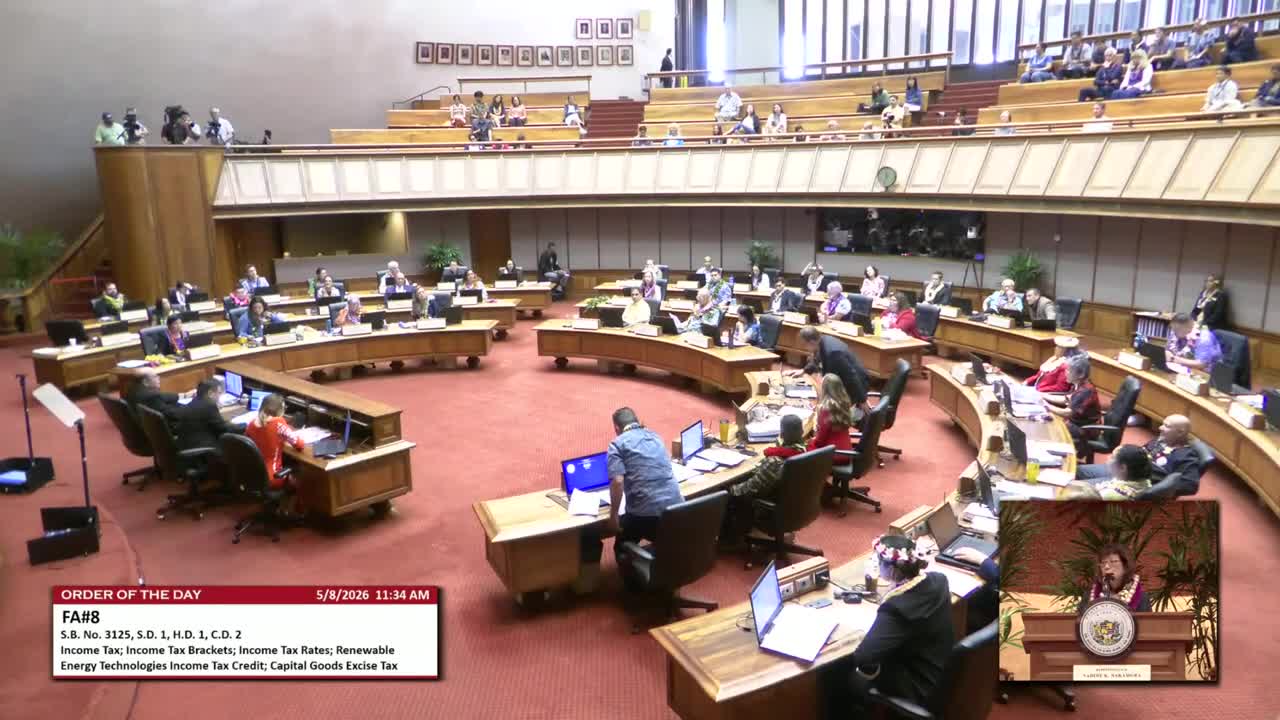 1MIN
House Floor
 2MIN
Conference Committee
 45SEC
Conference Committee
 35SEC
Conference Committee
 12MIN
Senate Standing Committee on Water and Land
 11MIN
House Standing Committee on Finance
 4MIN
House Standing Committee on Judiciary & Hawaiian Affairs
 21MIN
House Standing Committee on Water & Land
Bill Author