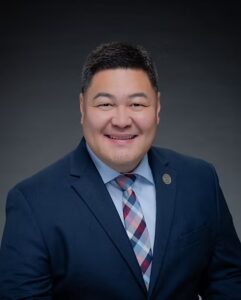
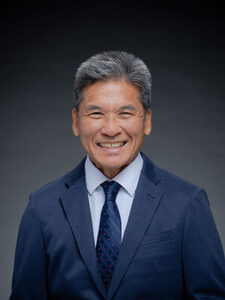
HB 2583: DBEDT; Hawaii Micro-Lending Credit Enhancement Program; Credit Enhancement; Loan Loss Reserves; Small Businesses; Special Fund; Reports; Appropriation
- Session Year: 2025-2026
- House: House
- Latest Version Date: 2026-05-01
Current Status:
Passed
(2026-07-07: Act 183, on 07/06/2026 (Gov. Msg. No. 1285).)
Introduced
In Committee
First Chamber
In Committee
Second Chamber
Final Decking
Enacted
Establishes the Hawaii Micro-Lending Credit Enhancement Program within the Department of Business, Economic Development, and Tourism to expand micro-lending capacity by providing state‑funded loan loss reserves or other credit enhancement that absorbs first losses on qualified micro-loans made by participating lenders to Hawaii small businesses. Allows borrower fees and state matching contributions to capitalize lender-held loan loss reserve accounts. Establishes the Hawaii Micro-Lending Credit Enhancement Special Fund. Requires annual reports to the Legislature. Appropriates funds out of the Special Fund. (CD1)
Establishes the Hawaii Micro-Lending Credit Enhancement Program within the Department of Business, Economic Development, and Tourism to expand micro-lending capacity by providing state‑funded loan loss reserves or other credit enhancement that absorbs first losses on qualified micro-loans made by participating lenders to Hawaii small businesses. Allows borrower fees and state matching contributions to capitalize lender-held loan loss reserve accounts. Establishes the Hawaii Micro-Lending Credit Enhancement Special Fund. Requires reports to the Legislature. Appropriates funds. Effective 7/1/3050. (SD1)
Establishes the Hawaii Micro-Lending Credit Enhancement Program within the Department of Business, Economic Development, and Tourism to expand micro-lending capacity by providing state‑funded loan loss reserves or other credit enhancement that absorbs first losses on qualified micro-loans made by participating lenders to Hawaii small businesses. Allows borrower fees and state matching contributions to capitalize lender-held loan loss reserve accounts. Establishes the Hawaii Micro-Lending Credit Enhancement Special Fund. Requires reports to the Legislature. Appropriates funds. Effective 7/1/3000. (HD1)
Establishes the Hawaii Micro-Lending Credit Enhancement Program within the Department of Business, Economic Development, and Tourism to expand micro-lending capacity by providing state‑funded loan loss reserves or other credit enhancement that absorbs first losses on qualified micro-loans made by participating lenders to Hawaii small businesses. Allows borrower fees and state matching contributions to capitalize lender-held loan loss reserve accounts. Establishes the Hawaii Micro-Lending Credit Enhancement Special Fund. Requires reports to the Legislature. Appropriates funds.
|
HOUSE OF REPRESENTATIVES |
H.B. NO. |
2583 |
|
THIRTY-THIRD LEGISLATURE, 2026 |
H.D. 1 |
|
|
STATE OF HAWAII |
S.D. 1 |
|
|
|
C.D. 1 |
|
|
|
||
|
|
||
A BILL FOR AN ACT
RELATING TO ECONOMIC DEVELOPMENT.
BE IT ENACTED BY THE LEGISLATURE OF THE STATE OF HAWAII:
The legislature further finds that publicly available data from the United States Small Business Administration (SBA) indicates that a substantial share of SBA-backed loans made to Hawaii businesses are originated by lenders headquartered outside the State, rather than by Hawaii-based banks and community lenders. This pattern reflects limited local capacity for smaller-dollar lending and constrained lender risk tolerance in the absence of credit enhancement tools.
The legislature additionally finds that when small business credit is primarily originated by out-of-state lenders, interest payments, fees, and servicing revenues are more likely to leave the State, reducing the local economic multiplier effect that would otherwise occur if those dollars were retained and reinvested through local financial institutions. Over time, this dynamic contributes to capital leakage from the State and weakens the State's locally rooted small business financing ecosystem.
The legislature also finds that limited availability of locally delivered micro-loans increases financial risk for Hawaii entrepreneurs. In the absence of sufficient micro‑lending capacity among local lenders, small businesses may be forced to rely on higher-cost or riskier credit products, accept less favorable loan terms, or delay business formation, expansion, and hiring altogether. These constraints disproportionately affect early-stage businesses, rural communities, and neighbor islands.
The legislature recognizes that other states have successfully addressed similar capital access challenges through state-supported loan loss reserve and credit enhancement programs that share risk with lenders while leveraging private capital. In particular:
(1) California operates a long-standing small business capital access program that establishes loan loss reserve accounts funded by borrower and lender contributions matched by the state, enabling lenders to extend credit to small businesses that would not otherwise qualify on comparable terms;
(2) Colorado administers a credit reserve program that uses borrower fees and state matching contributions to capitalize lender-held reserve accounts that absorb first losses on enrolled loans, expanding access to smaller-dollar loans while preserving prudent underwriting standards and voluntary participation; and
(3) Florida operates a state capital access program that similarly establishes loan loss reserve accounts through borrower and lender contributions matched by the state,
demonstrating that credit enhancement models can be successfully deployed in tourism-driven, small-business-dominated economies with significant seasonal cash-flow variability, conditions that closely mirror Hawaii's economic structure.
The legislature further finds that these programs are effective because they are market-based, voluntary, and fiscally disciplined, leveraging private lending rather than replacing it and expanding access to credit without imposing mandates on lenders.
Accordingly, the purpose of this Act is to strengthen the State's small business financing ecosystem by establishing a state-supported micro-lending credit enhancement program that expands local lending capacity, retains more financial activity within the State, reduces reliance on higher-risk borrowing options, and improves access to affordable, appropriately sized capital for entrepreneurs in the State.
SECTION 2. The Hawaii Revised Statutes is amended by adding a new chapter to be appropriately designated and to read as follows:
"Chapter
hawaii Micro-Lending credit enhancement program
§ -1 Definitions. As used in this chapter:
"Credit enhancement" means a loan loss reserve, first-loss reserve, partial guarantee, or other risk-sharing mechanism approved by the department to encourage lending that would not otherwise occur on comparable terms.
"Department" means the department of business, economic development, and tourism.
"Eligible lender" means a state- or federally-chartered bank, savings bank, credit union, certified community development financial institution, or other financing entity approved by the department that originates and services business loans in the State.
"Micro-loan" has the same meaning as "microloan" in title 13 Code of Federal Regulations section 120.701.
"Program" means the Hawaii micro-lending credit enhancement program established pursuant to this chapter.
"Qualified borrower" means a for-profit small business that:
(1) Is authorized to do business in the State;
(2) Maintains its primary operations in the State; and
(3) Meets size standards as determined by the department by rule.
§ -2 Hawaii micro-lending credit enhancement program; established. (a) There is established within the department the Hawaii micro-lending credit enhancement program to encourage eligible lenders to increase the availability of micro-loans to qualified borrowers through state-supported credit enhancement.
(b) Lender and borrower participation in the program shall be voluntary. Nothing in this chapter shall be construed to require an eligible lender to make any loan or alter prudent underwriting standards.
§ -3 Credit enhancement mechanisms; loan loss reserves. (a) The department may provide credit enhancement through one or more of the following mechanisms:
(1) Loan loss reserve accounts established with participating eligible lenders;
(2) First-loss reserve arrangements that absorb a portion of initial losses on qualified micro-loans; or
(3) Other risk-sharing mechanisms approved by the department that are consistent with recognized state small business credit enhancement practices.
(b) The department may require, as a condition of participation in the program, that:
(1) A qualified borrower pay a fee of up to one per cent of the micro-loan principal, which shall be deposited into a lender-held loan loss reserve account; and
(2) The program provide a matching contribution, in an amount determined by the department, deposited into the same reserve account.
(c) Funds in a loan loss reserve account shall be used solely to cover losses on qualified micro-loans in accordance with program guidelines established by the department.
§ -4 Eligible uses; exclusions. (a) Qualified micro‑loans may be used for standard business purposes, including working capital, equipment, inventory, leasehold improvements, and other uses approved by the department.
(b) The department shall establish by rule any exclusions necessary to protect the integrity of the program.
§ -5 Administration; rules; contracts. (a) The department shall administer the program and may adopt rules pursuant to chapter 91 to implement this chapter.
(b) The department may contract with a qualified third‑party program administrator to support lender enrollment, reserve administration, compliance monitoring, and reporting.
§ -6 Hawaii micro-lending credit enhancement special fund. (a) There is established in the state treasury the Hawaii micro-lending credit enhancement special fund.
(b) The following shall be deposited into the special fund:
(1) Moneys received from the federal government;
(2) Grants, awards, donations, gifts, transfers, or money derived from private sources;
(3) Moneys received pursuant to the program; and
(4) Interest earned or accrued on moneys in the special fund.
(c) Moneys in the special fund may be expended by the department for credit enhancement, program administration, and reporting.
§ -7 Reporting. No later than twenty days prior to the convening of each regular session, the department shall submit a report to the legislature that details the following:
(1) The number and dollar amount of micro-loans supported pursuant to this chapter;
(2) The lenders participating in the program;
(3) The geographic distribution of loans under the program;
(4) The reserve contributions, claims, and recoveries under the program; and
(5) The estimated private capital leveraged per state dollar under the program."
SECTION 3. There is appropriated out of the Hawaii micro‑lending credit enhancement special fund the sum of $1,500,000 or so much thereof as may be necessary for fiscal year 2026-2027 for the Hawaii micro-lending credit enhancement program.
The sum appropriated shall be expended by the department of business, economic development, and tourism for the purposes of this Act.
SECTION 4. This Act shall take effect on July 1, 2026.
Report Title:
DBEDT; Hawaii Micro-Lending Credit Enhancement Program; Credit Enhancement; Loan Loss Reserves; Small Businesses; Special Fund; Reports; Appropriation
Description:
Establishes the Hawaii Micro-Lending Credit Enhancement Program within the Department of Business, Economic Development, and Tourism to expand micro-lending capacity by providing state‑funded loan loss reserves or other credit enhancement that absorbs first losses on qualified micro-loans made by participating lenders to Hawaii small businesses. Allows borrower fees and state matching contributions to capitalize lender-held loan loss reserve accounts. Establishes the Hawaii Micro-Lending Credit Enhancement Special Fund. Requires annual reports to the Legislature. Appropriates funds out of the Special Fund. (CD1)
The summary description of legislation appearing on this page is for informational purposes only and is not legislation or evidence of legislative intent.
|
HOUSE OF REPRESENTATIVES |
H.B. NO. |
2583 |
|
THIRTY-THIRD LEGISLATURE, 2026 |
H.D. 1 |
|
|
STATE OF HAWAII |
S.D. 1 |
|
|
|
|
|
|
|
||
|
|
||
A BILL FOR AN ACT
RELATING TO ECONOMIC DEVELOPMENT.
BE IT ENACTED BY THE LEGISLATURE OF THE STATE OF HAWAII:
The legislature further finds that publicly available data from the United States Small Business Administration (SBA) indicates that a substantial share of SBA-backed loans made to Hawaii businesses are originated by lenders headquartered outside the State, rather than by Hawaii-based banks and community lenders. This pattern reflects limited local capacity for smaller-dollar lending and constrained lender risk tolerance in the absence of credit enhancement tools.
The legislature additionally finds that when small business credit is primarily originated by out-of-state lenders, interest payments, fees, and servicing revenues are more likely to leave the State, reducing the local economic multiplier effect that would otherwise occur if those dollars were retained and reinvested through local financial institutions. Over time, this dynamic contributes to capital leakage from the State and weakens the State's locally rooted small business financing ecosystem.
The legislature also finds that limited availability of locally delivered micro-loans increases financial risk for Hawaii entrepreneurs. In the absence of sufficient micro‑lending capacity among local lenders, small businesses may be forced to rely on higher-cost or riskier credit products, accept less favorable loan terms, or delay business formation, expansion, and hiring altogether. These constraints disproportionately affect early-stage businesses, rural communities, and neighbor islands.
The legislature recognizes that other states have successfully addressed similar capital access challenges through state-supported loan loss reserve and credit enhancement programs that share risk with lenders while leveraging private capital. In particular:
(1) California operates a long-standing small business capital access program that establishes loan loss reserve accounts funded by borrower and lender contributions matched by the state, enabling lenders to extend credit to small businesses that would not otherwise qualify on comparable terms;
(2) Colorado administers a credit reserve program that uses borrower fees and state matching contributions to capitalize lender-held reserve accounts that absorb first losses on enrolled loans, expanding access to smaller-dollar loans while preserving prudent underwriting standards and voluntary participation; and
(3) Florida operates a state capital access program that similarly establishes loan loss reserve accounts through borrower and lender contributions matched by the state,
demonstrating that credit enhancement models can be successfully deployed in tourism-driven, small-business-dominated economies with significant seasonal cash-flow variability--conditions that closely mirror Hawaii's economic structure.
The legislature further finds that these programs are effective because they are market-based, voluntary, and fiscally disciplined, leveraging private lending rather than replacing it and expanding access to credit without imposing mandates on lenders.
Accordingly, the purpose of this Act is to strengthen the State's small business financing ecosystem by establishing a state-supported micro-lending credit enhancement program that expands local lending capacity, retains more financial activity within the State, reduces reliance on higher-risk borrowing options, and improves access to affordable, appropriately sized capital for entrepreneurs in the State.
SECTION 2. The Hawaii Revised Statutes is amended by adding a new chapter to be appropriately designated and to read as follows:
"Chapter
hawaii Micro-Lending credit enhancement program
§ -1 Definitions. As used in this chapter:
"Credit enhancement" means a loan loss reserve, first-loss reserve, partial guarantee, or other risk-sharing mechanism approved by the department to encourage lending that would not otherwise occur on comparable terms.
"Department" means the department of business, economic development, and tourism.
"Eligible lender" means a state- or federally-chartered bank, savings bank, credit union, certified community development financial institution, or other financing entity approved by the department that originates and services business loans in the State.
"Micro-loan" means a business loan with an original principal amount not to exceed $ , as determined by the department by rule.
"Program" means the Hawaii micro-lending credit enhancement program established pursuant to this chapter.
"Qualified borrower" means a for-profit small business that:
(1) Is authorized to do business in the State;
(2) Maintains its primary operations in the State; and
(3) Meets size standards as determined by the department by rule.
§ -2 Hawaii micro-lending credit enhancement program; established. (a) There is established within the department the Hawaii micro-lending credit enhancement program to encourage eligible lenders to increase the availability of micro-loans to qualified borrowers through state-supported credit enhancement.
(b) Lender and borrower participation shall be voluntary. Nothing in this chapter shall be construed to require an eligible lender to make any loan or alter prudent underwriting standards.
§ -3 Credit enhancement mechanisms; loan loss reserves. (a) The department may provide credit enhancement through one or more of the following mechanisms:
(1) Loan loss reserve accounts established with participating eligible lenders;
(2) First-loss reserve arrangements that absorb a portion of initial losses on qualified micro-loans; or
(3) Other risk-sharing mechanisms approved by the department that are consistent with recognized state small business credit enhancement practices.
(b) The department may require, as a condition of participation, that:
(1) A qualified borrower pay a fee of up to one per cent of the micro-loan principal, which shall be deposited into a lender-held loan loss reserve account; and
(2) The program provide a matching contribution, in an amount determined by the department, deposited into the same reserve account.
(c) Funds in a loan loss reserve account shall be used solely to cover losses on qualified micro-loans in accordance with program guidelines established by the department.
§ -4 Eligible uses; exclusions. (a) Qualified micro‑loans may be used for standard business purposes, including working capital, equipment, inventory, leasehold improvements, and other uses approved by the department.
(b) The department shall establish by rule any exclusions necessary to protect the integrity of the program.
§ -5 Administration; rules; contracts. (a) The department shall administer the program and may adopt rules pursuant to chapter 91 to implement this chapter.
(b) The department may contract with a qualified third‑party program administrator to support lender enrollment, reserve administration, compliance monitoring, and reporting.
§ -6 Hawaii micro-lending credit enhancement special fund. (a) There is established in the state treasury the Hawaii micro-lending credit enhancement special fund.
(b) The following shall be deposited into the special fund:
(1) Legislative appropriations;
(2) Moneys received from the federal government;
(3) Grants, awards, donations, gifts, transfers, or money derived from private sources;
(4) Moneys received pursuant to the program; and
(5) Interest earned or accrued on moneys in the special fund.
(c) Moneys in the special fund may be expended by the department for credit enhancement, program administration, and reporting.
§ -7 Reporting. No later than twenty days prior to the convening of each regular session, the department shall submit a report to the legislature detailing:
(1) The number and dollar amount of micro-loans supported;
(2) Participating lenders;
(3) Geographic distribution of loans;
(4) Reserve contributions, claims, and recoveries; and
(5) Estimated private capital leveraged per state dollar."
SECTION 3. There is appropriated out of the general revenues of the State of Hawaii the sum of $ or so much thereof as may be necessary for fiscal year 2026-2027 to be deposited into the Hawaii micro-lending credit enhancement special fund.
SECTION 4. There is appropriated out of the Hawaii micro‑lending credit enhancement special fund the sum of $ or so much thereof as may be necessary for fiscal year 2026-2027 for the Hawaii micro-lending credit enhancement program.
The sum appropriated shall be expended by the department of business, economic development, and tourism for the purposes of this Act.
SECTION 5. This Act shall take effect on July 1, 3050.
Report Title:
DBEDT; Micro-Lending; Credit Enhancement; Loan Loss Reserve; Small Businesses; Special Fund; Reports; Appropriation
Description:
Establishes the Hawaii Micro-Lending Credit Enhancement Program within the Department of Business, Economic Development, and Tourism to expand micro-lending capacity by providing state‑funded loan loss reserves or other credit enhancement that absorbs first losses on qualified micro-loans made by participating lenders to Hawaii small businesses. Allows borrower fees and state matching contributions to capitalize lender-held loan loss reserve accounts. Establishes the Hawaii Micro-Lending Credit Enhancement Special Fund. Requires reports to the Legislature. Appropriates funds. Effective 7/1/3050. (SD1)
The summary description of legislation appearing on this page is for informational purposes only and is not legislation or evidence of legislative intent.
|
HOUSE OF REPRESENTATIVES |
H.B. NO. |
2583 |
|
THIRTY-THIRD LEGISLATURE, 2026 |
H.D. 1 |
|
|
STATE OF HAWAII |
|
|
|
|
|
|
|
|
||
|
|
||
A BILL FOR AN ACT
RELATING TO ECONOMIC DEVELOPMENT.
BE IT ENACTED BY THE LEGISLATURE OF THE STATE OF HAWAII:
The legislature further finds that publicly available data from the United States Small Business Administration (SBA) indicate that a substantial share of SBA-backed loans made to Hawaii businesses are originated by lenders headquartered outside the State, rather than by Hawaii-based banks and community lenders. This pattern reflects limited local capacity for smaller-dollar lending and constrained lender risk tolerance in the absence of credit enhancement tools.
The legislature additionally finds that when small business credit is primarily originated by out-of-state lenders, interest payments, fees, and servicing revenues are more likely to leave the State, reducing the local economic multiplier effect that would otherwise occur if those dollars were retained and reinvested through local financial institutions. Over time, this dynamic contributes to capital leakage from the State and weakens the State's locally rooted small business financing ecosystem.
The legislature also finds that limited availability of locally delivered micro-loans increases financial risk for Hawaii entrepreneurs. In the absence of sufficient micro‑lending capacity among local lenders, small businesses may be forced to rely on higher-cost or riskier credit products, accept less favorable loan terms, or delay business formation, expansion, and hiring altogether. These constraints disproportionately affect early-stage businesses, rural communities, and neighbor islands.
The legislature recognizes that other states have successfully addressed similar capital access challenges through state-supported loan loss reserve and credit enhancement programs that share risk with lenders while leveraging private capital. In particular:
(1) California operates a long-standing small business capital access program that establishes loan loss reserve accounts funded by borrower and lender contributions matched by the state, enabling lenders to extend credit to small businesses that would not otherwise qualify on comparable terms;
(2) Colorado administers a credit reserve program that uses borrower fees and state matching contributions to capitalize lender-held reserve accounts that absorb first losses on enrolled loans, expanding access to smaller-dollar loans while preserving prudent underwriting standards and voluntary participation; and
(3) Florida operates a state capital access program that similarly establishes loan loss reserve accounts through borrower and lender contributions matched by the state; demonstrating that credit enhancement models can be successfully deployed in tourism-driven, small-business-dominated economies with significant seasonal cash-flow variability—conditions that closely mirror Hawaii's economic structure.
The legislature further finds that these programs are effective because they are market-based, voluntary, and fiscally disciplined, leveraging private lending rather than replacing it and expanding access to credit without imposing mandates on lenders.
Accordingly, the purpose of this Act is to strengthen the State's small business financing ecosystem by establishing a state-supported micro-lending credit enhancement program that expands local lending capacity, retains more financial activity within the State, reduces reliance on higher-risk borrowing options, and improves access to affordable, appropriately sized capital for entrepreneurs in the State.
SECTION 2. The Hawaii Revised Statutes is amended by adding a new chapter to be appropriately designated and to read as follows:
"Chapter
hawaii Micro-Lending credit enhancement program
§ -1 Definitions. As used in this chapter:
"Credit enhancement" means a loan loss reserve, first-loss reserve, partial guarantee, or other risk-sharing mechanism approved by the department to encourage lending that would not otherwise occur on comparable terms.
"Department" means the department of business, economic development, and tourism.
"Eligible lender" means a state- or federally-chartered bank, savings bank, credit union, certified community development financial institution, or other financing entity approved by the department that originates and services business loans in the State.
"Micro-loan" means a business loan with an original principal amount not to exceed $ , as determined by the department by rule.
"Qualified borrower" means a for-profit small business that:
(1) Is authorized to do business in the State;
(2) Maintains its primary operations in the State; and
(3) Meets size standards as determined by the department by rule.
§ -2 Hawaii micro-lending credit enhancement program; established. (a) There is established within the department the Hawaii micro-lending credit enhancement program to encourage eligible lenders to increase the availability of micro-loans to qualified borrowers through state-supported credit enhancement.
(b) Lender and borrower participation shall be voluntary. Nothing in this chapter shall be construed to require an eligible lender to make any loan or alter prudent underwriting standards.
§ -3 Credit enhancement mechanisms; loan loss reserves. (a) The department may provide credit enhancement through one or more of the following mechanisms:
(1) Loan loss reserve accounts established with participating eligible lenders;
(2) First-loss reserve arrangements that absorb a portion of initial losses on qualified micro-loans; or
(3) Other risk-sharing mechanisms approved by the department that are consistent with recognized state small business credit enhancement practices.
(b) The department may require, as a condition of participation, that:
(1) A qualified borrower pay a fee of up to one per cent of the micro-loan principal, which shall be deposited into a lender-held loan loss reserve account; and
(2) The program provide a matching contribution, in an amount determined by the department, deposited into the same reserve account.
(c) Funds in a loan loss reserve account shall be used solely to cover losses on qualified micro-loans in accordance with program guidelines established by the department.
§ -4 Eligible uses; exclusions. (a) Qualified micro‑loans may be used for standard business purposes, including working capital, equipment, inventory, leasehold improvements, and other uses approved by the department.
(b) The department shall establish by rule any exclusions necessary to protect the integrity of the program.
§ -5 Administration; rules; contracts. (a) The department shall administer the program and may adopt rules pursuant to chapter 91 to implement this chapter.
(b) The department may contract with a qualified third‑party program administrator to support lender enrollment, reserve administration, compliance monitoring, and reporting.
§ -6 Hawaii micro-lending credit enhancement special fund. (a) There is established in the state treasury the Hawaii micro-lending credit enhancement special fund.
(b) The following shall be deposited into the special fund:
(1) Legislative appropriations;
(2) Moneys received from the federal government;
(3) Grants, awards, donations, gifts, transfers, or money derived from private sources;
(4) Moneys received pursuant to the program; and
(5) Interest earned or accrued on moneys in the special fund.
(c) Moneys in the special fund may be expended for credit enhancement, program administration, and reporting.
§ -7 Reporting. No later than twenty days prior to the convening of each regular session, the department shall submit a report to the legislature detailing:
(1) The number and dollar amount of micro-loans supported;
(2) Participating lenders;
(3) Geographic distribution of loans;
(4) Reserve contributions, claims, and recoveries; and
(5) Estimated private capital leveraged per state dollar."
SECTION 3. There is appropriated out of the general revenues of the State of Hawaii the sum of $ or so much thereof as may be necessary for fiscal year 2026-2027 to be deposited into the Hawaii micro-lending credit enhancement special fund.
SECTION 4. There is appropriated out of the Hawaii micro‑lending credit enhancement special fund the sum of $ or so much thereof as may be necessary for fiscal year 2026-2027 for the Hawaii micro-lending credit enhancement program.
The sum appropriated shall be expended by the department of business, economic development, and tourism for the purposes of this Act.
SECTION 5. This Act shall take effect on July 1, 3000.
Report Title:
DBEDT; Micro-Lending; Credit Enhancement; Loan Loss Reserve; Small Businesses; Special Fund; Reports; Appropriation
Description:
Establishes the Hawaii Micro-Lending Credit Enhancement Program within the Department of Business, Economic Development, and Tourism to expand micro-lending capacity by providing state‑funded loan loss reserves or other credit enhancement that absorbs first losses on qualified micro-loans made by participating lenders to Hawaii small businesses. Allows borrower fees and state matching contributions to capitalize lender-held loan loss reserve accounts. Establishes the Hawaii Micro-Lending Credit Enhancement Special Fund. Requires reports to the Legislature. Appropriates funds. Effective 7/1/3000. (HD1)
The summary description of legislation appearing on this page is for informational purposes only and is not legislation or evidence of legislative intent.
|
HOUSE OF REPRESENTATIVES |
H.B. NO. |
2583 |
|
THIRTY-THIRD LEGISLATURE, 2026 |
|
|
|
STATE OF HAWAII |
|
|
|
|
|
|
|
|
||
|
|
||
A BILL FOR AN ACT
relating to economic development.
BE IT ENACTED BY THE LEGISLATURE OF THE STATE OF HAWAII:
The legislature further finds that publicly available data from the United States Small Business Administration (SBA) indicate that a substantial share of SBA-backed loans made to Hawaii businesses are originated by lenders headquartered outside the State, rather than by Hawaii-based banks and community lenders. This pattern reflects limited local capacity for smaller-dollar lending and constrained lender risk tolerance in the absence of credit enhancement tools.
The legislature further finds that when small business credit is primarily originated by out-of-state lenders, interest payments, fees, and servicing revenues are more likely to leave the State, reducing the local economic multiplier effect that would otherwise occur if those dollars were retained and reinvested through local financial institutions. Over time, this dynamic contributes to capital leakage from the State and weakens the State's locally rooted small business financing ecosystem.
The legislature further finds that limited availability of locally delivered micro-loans increases financial risk for Hawaii entrepreneurs. In the absence of sufficient micro‑lending capacity among local lenders, small businesses may be forced to rely on higher-cost or riskier credit products, accept less favorable loan terms, or delay business formation, expansion, and hiring altogether. These constraints disproportionately affect early-stage businesses, rural communities, and neighbor islands.
The legislature recognizes that other states have successfully addressed similar capital access challenges through state-supported loan loss reserve and credit enhancement programs that share risk with lenders while leveraging private capital. In particular:
(1) California operates a long-standing small business capital access program that establishes loan loss reserve accounts funded by borrower and lender contributions matched by the state, enabling lenders to extend credit to small businesses that would not otherwise qualify on comparable terms;
(2) Colorado administers a credit reserve program that uses borrower fees and state matching contributions to capitalize lender-held reserve accounts that absorb first losses on enrolled loans, expanding access to smaller-dollar loans while preserving prudent underwriting standards and voluntary participation; and
(3) Florida operates a state capital access program that similarly establishes loan loss reserve accounts through borrower and lender contributions matched by the state; demonstrating that credit enhancement models can be successfully deployed in tourism-driven, small-business-dominated economies with significant seasonal cash-flow variability—conditions that closely mirror Hawaii's economic structure.
The legislature further finds that these programs are effective because they are market-based, voluntary, and fiscally disciplined, leveraging private lending rather than replacing it and expanding access to credit without imposing mandates on lenders.
Accordingly, the purpose of this Act is to strengthen the State's small business financing ecosystem by establishing a state-supported micro-lending credit enhancement program that expands local lending capacity, retains more financial activity within the State, reduces reliance on higher-risk borrowing options, and improves access to affordable, appropriately sized capital for entrepreneurs in the State.
SECTION 2. The Hawaii Revised Statutes is amended by adding a new chapter to be appropriately designated and to read as follows:
"Chapter
hawaii Micro-Lending credit enhancement program
§ -1 Definitions. As used in this chapter:
"Credit enhancement" means a loan loss reserve, first-loss reserve, partial guarantee, or other risk-sharing mechanism approved by the department to encourage lending that would not otherwise occur on comparable terms.
"Department" means the department of business, economic development, and tourism.
"Eligible lender" means a state- or federally-chartered bank, savings bank, credit union, certified community development financial institution, or other financing entity approved by the department that originates and services business loans in the State.
"Micro-loan" means a business loan with an original principal amount not to exceed $ , as determined by the department by rule.
"Qualified borrower" means a for-profit small business that:
(1) Is authorized to do business in the State;
(2) Maintains its primary operations in the State; and
(3) Meets size standards as determined by the department by rule.
§ -2 Hawaii micro-lending credit enhancement program; established. (a) There is established within the department the Hawaii micro-lending credit enhancement program to encourage eligible lenders to increase the availability of micro-loans to qualified borrowers through state-supported credit enhancement.
(b) Participation by lenders and borrowers shall be voluntary. Nothing in this chapter shall be construed to require an eligible lender to make any loan or alter prudent underwriting standards.
§ -3 Credit enhancement mechanisms; loan loss reserves. (a) The department may provide credit enhancement through one or more of the following mechanisms:
(1) Loan loss reserve accounts established with participating eligible lenders;
(2) First-loss reserve arrangements that absorb a portion of initial losses on qualified micro-loans; or
(3) Other risk-sharing mechanisms approved by the department that are consistent with recognized state small business credit enhancement practices.
(b) The department may require, as a condition of participation, that:
(1) A borrower pay a fee of up to one per cent of the micro-loan principal, which shall be deposited into a lender-held loan loss reserve account; and
(2) The program provide a matching contribution, in an amount determined by the department, deposited into the same reserve account.
(c) Funds in a loan loss reserve account shall be used solely to cover losses on qualified micro-loans in accordance with program guidelines established by the department.
§ -4 Eligible uses; exclusions. (a) Qualified micro‑loans may be used for standard business purposes, including working capital, equipment, inventory, leasehold improvements, and other uses approved by the department.
(b) The department shall establish by rule any exclusions necessary to protect the integrity of the program.
§ -5 Administration; rules; contracts. (a) The department shall administer the program and may adopt rules pursuant to chapter 91 to implement this chapter.
(b) The department may contract with a qualified third‑party program administrator to support lender enrollment, reserve administration, compliance monitoring, and reporting.
§ -6 Hawaii micro-lending credit enhancement special fund. (a) There is established in the state treasury the Hawaii micro-lending credit enhancement special fund.
(b) The following shall be deposited into the special fund:
(1) Legislative appropriations;
(2) Moneys received from the federal government;
(3) Grants, awards, donations, gifts, transfers, or money derived from private sources;
(4) Moneys received pursuant to the program; and
(5) Interest earned or accrued on moneys in the special fund.
(c) Moneys in the special fund may be expended for credit enhancement, program administration, and reporting.
§ -7 Reporting. No later than twenty days prior to the convening of each regular session, the department shall submit a report to the legislature detailing:
(1) The number and dollar amount of micro-loans supported;
(2) Participating lenders;
(3) Geographic distribution of loans;
(4) Reserve contributions, claims, and recoveries; and
(5) Estimated private capital leveraged per state dollar."
SECTION 3. There is appropriated out of the general revenues of the State of Hawaii the sum of $ or so much thereof as may be necessary for fiscal year 2026-2027 to be deposited into the Hawaii micro-lending credit enhancement special fund.
SECTION 4. There is appropriated out of the Hawaii micro‑lending credit enhancement special fund the sum of $ or so much thereof as may be necessary for fiscal year 2026-2027 for the Hawaii micro-lending credit enhancement program.
The sum appropriated shall be expended by the department of business, economic development, and tourism for the purposes of this Act.
SECTION 5. This Act shall take effect on July 1, 2026.
|
INTRODUCED BY: |
_____________________________ |
|
|
|
Report Title:
DBEDT; Micro-Lending; Credit Enhancement; Loan Loss Reserve; Small Businesses; Special Fund; Reports; Appropriation
Description:
Establishes the Hawaii Micro-Lending Credit Enhancement Program within the Department of Business, Economic Development, and Tourism to expand micro-lending capacity by providing state‑funded loan loss reserves or other credit enhancement that absorbs first losses on qualified micro-loans made by participating lenders to Hawaii small businesses. Allows borrower fees and state matching contributions to capitalize lender-held loan loss reserve accounts. Establishes the Hawaii Micro-Lending Credit Enhancement Special Fund. Requires reports to the Legislature. Appropriates funds.
The summary description of legislation appearing on this page is for informational purposes only and is not legislation or evidence of legislative intent.
|
Date
|
Status
|
|---|---|
| Jul 7, 2026 | Act 183, on 07/06/2026 (Gov. Msg. No. 1285). |
| Jul 7, 2026 | Act 183, 07/06/2026 (Gov. Msg. No. 1285). |
| May 8, 2026 | Received notice of passage on Final Reading in House (Hse. Com. No. 888). |
| May 7, 2026 | Transmitted to Governor. |
| May 6, 2026 | Received notice of Final Reading (Sen. Com. No. 816). |
| May 6, 2026 | Passed Final Reading, as amended (CD 1). Ayes, 25; Aye(s) with reservations: none . 0 No(es): none. 0 Excused: none. |
| May 6, 2026 | Passed Final Reading as amended in CD 1 with none voting aye with reservations; none voting no (0) and none excused (0). |
| May 1, 2026 | 48 Hrs. Notice (as amended CD 1) 05-06-26 |
| May 1, 2026 | Reported from Conference Committee as amended CD 1 (Conf. Com. Rep. No. 188-26). |
| May 1, 2026 | Forty-eight (48) hours notice Wednesday, 05-06-26. |
| May 1, 2026 | Reported from Conference Committee (Conf Com. Rep. No. 188-26) as amended in (CD 1). |
| May 1, 2026 | The Conference Committee recommends that the measure be Passed, with Amendments. The votes were as follows: 4 Ayes: Representative(s) Ilagan, Hussey, Tam, Gedeon; Ayes with reservations: none; 0 Noes: none; and 0 Excused: none. |
| May 1, 2026 | The Conference committee recommends that the measure be PASSED, WITH AMENDMENTS. The votes of the Senate Conference Managers were as follows: 3 Aye(s): Senator(s) DeCoite, Wakai, Lamosao; Aye(s) with reservations: none ; 0 No(es): none; and 1 Excused: Senator(s) Fevella. |
| May 1, 2026 | Conference committee meeting to reconvene on 05-01-26 5:40 PM; Conference Room 309. |
| May 1, 2026 | Conference committee meeting to reconvene on 05-01-26 5:37 PM; Conference Room 329. |
| Apr 30, 2026 | Conference committee meeting to reconvene on 05-01-26 5:37 PM; Conference Room 329. |
| May 1, 2026 | Conference Committee Meeting will reconvene on Friday, 05-01-26 at 4:31PM in Conference Room 411. |
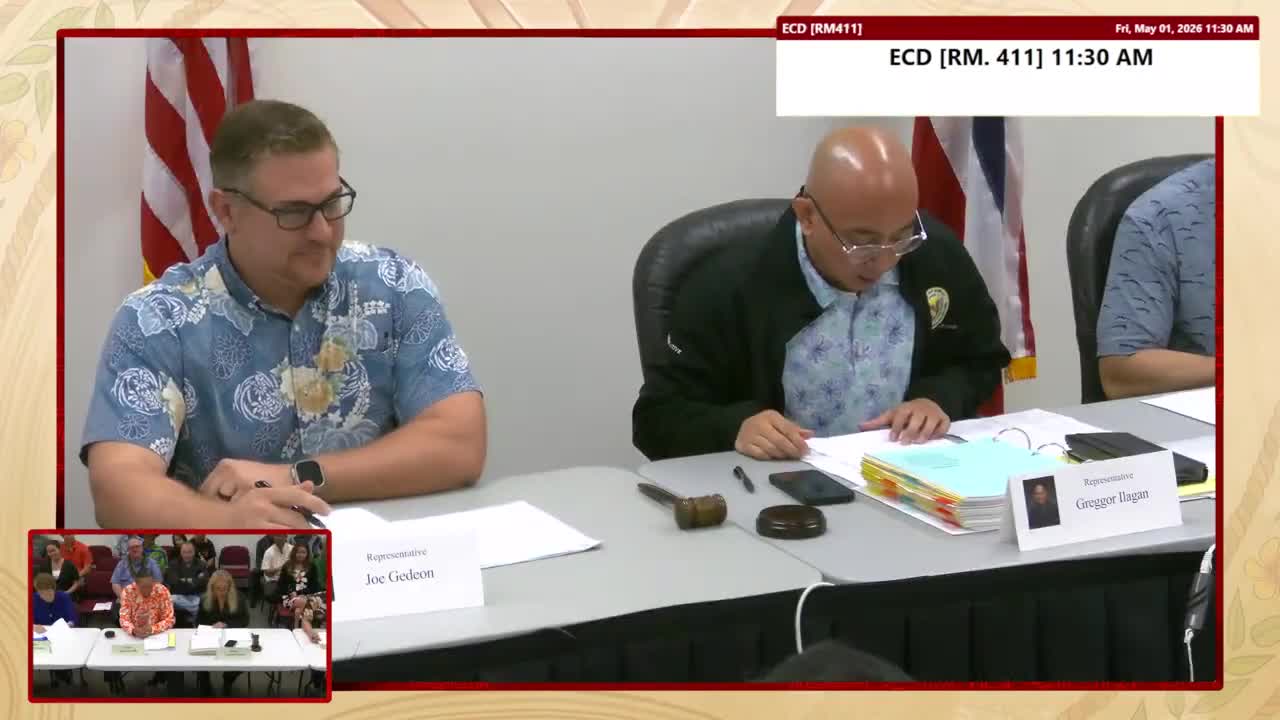
| May 1, 2026 | Conference Committee Meeting will reconvene on Friday, 05-01-26 at 11:30AM in Conference Room 411. |
| Apr 30, 2026 | Conference Committee Meeting will reconvene on Friday 05-01-26 8:01AM in conference room 411. |
| Apr 28, 2026 | Bill scheduled for Conference Committee Meeting on Thursday, 04-30-26 8:30AM in conference room 411. |
| Apr 23, 2026 | Received notice of Senate conferees (Sen. Com. No. 725). |
| Apr 22, 2026 | Senate Conferees Appointed: DeCoite Chair; Wakai, Lamosao Co-Chairs; Fevella. |
| Apr 20, 2026 | Received notice of appointment of House conferees (Hse. Com. No. 786). |
| Apr 20, 2026 | House Conferees Appointed: Ilagan, Hussey Co-Chairs; Tam, Gedeon. |
| Apr 17, 2026 | Received notice of disagreement (Hse. Com. No. 780). |
| Apr 16, 2026 | House disagrees with Senate amendment (s). |
| Apr 14, 2026 | Returned from Senate (Sen. Com. No. 706) in amended form (SD 1). |
| Apr 14, 2026 | Report adopted; Passed Third Reading. Ayes, 25; Aye(s) with reservations: none . Noes, 0 (none). Excused, 0 (none). Transmitted to House. |
| Apr 10, 2026 | One Day Notice 04-14-26. |
| Apr 10, 2026 | Reported from WAM/CPN (Stand. Com. Rep. No. 3737) with recommendation of passage on Third Reading. |
| Apr 7, 2026 | The committee(s) on CPN recommend(s) that the measure be PASSED, UNAMENDED. The votes in CPN were as follows: 4 Aye(s): Senator(s) Keohokalole, Fukunaga, Lamosao, McKelvey; Aye(s) with reservations: none ; 0 No(es): none; and 1 Excused: Senator(s) Awa. |
| Apr 7, 2026 | The committee(s) on WAM recommend(s) that the measure be PASSED, UNAMENDED. The votes in WAM were as follows: 11 Aye(s): Senator(s) Dela Cruz, Moriwaki, DeCoite, Elefante, Hashimoto, Inouye, Kanuha, Kidani, Kim, Wakai, Fevella; Aye(s) with reservations: none ; 0 No(es): none; and 2 Excused: Senator(s) Lee, C., Richards. |
| Apr 2, 2026 | The committee(s) on WAM/CPN will hold a public decision making on 04-07-26 10:30AM; Conference Room 211 & Videoconference. |
| Mar 24, 2026 | Report adopted; Passed Second Reading, as amended (SD 1) and referred to WAM/CPN. |
| Mar 24, 2026 | Reported from EDT (Stand. Com. Rep. No. 3145) with recommendation of passage on Second Reading, as amended (SD 1) and referral to WAM/CPN. |
| Mar 17, 2026 | The committee(s) on EDT recommend(s) that the measure be PASSED, WITH AMENDMENTS. The votes in EDT were as follows: 3 Aye(s): Senator(s) DeCoite, Wakai, Fukunaga; Aye(s) with reservations: none ; 0 No(es): none; and 2 Excused: Senator(s) Kim, Fevella. |
| Mar 13, 2026 | The committee(s) on EDT has scheduled a public hearing on 03-17-26 1:00PM; Conference Room 229 & Videoconference. |
| Mar 10, 2026 | Referred to EDT, WAM/CPN. |
| Mar 6, 2026 | Passed First Reading. |
| Mar 6, 2026 | Received from House (Hse. Com. No. 120). |
| Mar 5, 2026 | Passed Third Reading with Representative(s) Iwamoto voting aye with reservations; none voting no (0) and Representative(s) Perruso excused (1). Transmitted to Senate. |
| Mar 5, 2026 | Reported from FIN (Stand. Com. Rep. No. 773-26), recommending passage on Third Reading. |
| Mar 2, 2026 | The committee on FIN recommend that the measure be PASSED, UNAMENDED. The votes were as follows: 16 Ayes: Representative(s) Todd, Takenouchi, Hartsfield, Hussey, Keohokapu-Lee Loy, Kitagawa, Kusch, Lee, M., Miyake, Morikawa, Perruso, Templo, Yamashita, Alcos, Gedeon, Reyes Oda; Ayes with reservations: none; Noes: none; and Excused: none. |
| Feb 27, 2026 | Bill scheduled to be heard by FIN on Monday, 03-02-26 2:00PM in House conference room 308 VIA VIDEOCONFERENCE. |
| Feb 18, 2026 | Passed Second Reading as amended in HD 1 and referred to the committee(s) on FIN with none voting aye with reservations; none voting no (0) and none excused (0). |
| Feb 18, 2026 | Reported from ECD (Stand. Com. Rep. No. 424-26) as amended in HD 1, recommending passage on Second Reading and referral to FIN. |
| Feb 13, 2026 | The committee on ECD recommend that the measure be PASSED, WITH AMENDMENTS. The votes were as follows: 7 Ayes: Representative(s) Ilagan, Hussey, Holt, Tam, Templo, Yamashita, Gedeon; Ayes with reservations: none; Noes: none; and Excused: none. |
| Feb 10, 2026 | Bill scheduled to be heard by ECD on Friday, 02-13-26 8:30AM in House conference room 423 VIA VIDEOCONFERENCE. |
| Feb 2, 2026 | Referred to ECD, FIN, referral sheet 6 |
| Jan 28, 2026 | Introduced and Pass First Reading. |
|
Date
|
Description
|
Location
|
Votes
|
|
|---|---|---|---|---|
| May 6, 2026 | Final Reading | Senate Floor |
Passed |
|
| May 6, 2026 | Final Reading | House Floor |
Passed |
|
| Apr 14, 2026 | Third Reading | Senate Floor |
Passed |
|
| Apr 7, 2026 | The committee(s) on CPN recommend(s) that the measure be PASSED, UNAMENDED | Senate Standing Committee on Commerce and Consumer Protection |
Passed |
|
| Apr 7, 2026 | The committee(s) on WAM recommend(s) that the measure be PASSED, UNAMENDED | Senate Standing Committee on Ways and Means |
Passed |
|
| Mar 17, 2026 | The committee(s) on EDT recommend(s) that the measure be PASSED, WITH AMENDMENTS | Senate Standing Committee on Economic Development and Tourism |
Passed |
|
| Mar 5, 2026 | Third Reading | House Floor |
Passed |
|
| Mar 2, 2026 | The committee on FIN recommend that the measure be PASSED, UNAMENDED | House Standing Committee on Finance |
Passed |
|
| Feb 13, 2026 | The committee on ECD recommend that the measure be PASSED, WITH AMENDMENTS | House Standing Committee on Economic Development & Technology |
Passed |
This list shows positions taken on this bill by organizations on the date displayed, which is linked to the original source.
Positions by individuals are not included.
|
Organization
|
Position
|
Date
|
|---|---|---|
| Chamber of Commerce Hawaii | *** Support | Apr 7, 2026 |
| Chamber of Commerce Hawaiʻi (2030 Blueprint) | *** Support | Feb 13, 2026 |
| Hawai'i Farm Bureau | *** Support | Apr 7, 2026 |
| Hawaiʻi Farm Bureau | ** Support | |
| Hawaiʻi Island Chamber of Commerce | ** Support | |
| Hawai‘i Island Chamber of Commerce | *** Support | Apr 7, 2026 |
| Maui Chamber of Commerce | *** Support | Apr 7, 2026 |
| Retail Merchants of Hawaiʻi | *** Support | Apr 7, 2026 |
| Watanabe Floral, Inc. | ** Support |
STAND. COM. REP. NO. 773-26
Honolulu, Hawaii
, 2026
RE: H.B. No. 2583
H.D. 1
Honorable Nadine K. Nakamura
Speaker, House of Representatives
Thirty-Third State Legislature
Regular Session of 2026
State of Hawaii
Madame:
Your Committee on Finance, to which was referred H.B. No. 2583, H.D. 1, entitled:
"A BILL FOR AN ACT RELATING TO ECONOMIC DEVELOPMENT,"
begs leave to report as follows:
The purpose of this measure is to:
(1) Establish the Hawaii Micro-Lending Credit Enhancement Program and Micro-Lending Credit Enhancement Special Fund; and
(2) Appropriate funds into and out of the Special Fund for the program.
Your Committee received testimony in support of this measure from the Chamber of Commerce Hawaii; Maui Chamber of Commerce; Hawaiʻi Farm Bureau; Retail Merchants of Hawaiʻi; Watanabe Floral, Inc.; and two individuals. Your Committee received comments on this measure from the Business Development and Support Division of the Department of Business, Economic Development, and Tourism.
As affirmed by the record of votes of the members of your Committee on Finance that is attached to this report, your Committee is in accord with the intent and purpose of H.B. No. 2583, H.D. 1, and recommends that it pass Third Reading.
Respectfully submitted on behalf of the members of the Committee on Finance,
|
|
|
____________________________ CHRIS TODD, Chair |
|
|
|
|
STAND. COM. REP. NO. 424-26
Honolulu, Hawaii
, 2026
RE: H.B. No. 2583
H.D. 1
Honorable Nadine K. Nakamura
Speaker, House of Representatives
Thirty-Third State Legislature
Regular Session of 2026
State of Hawaii
Madame:
Your Committee on Economic Development & Technology, to which was referred H.B. No. 2583 entitled:
"A BILL FOR AN ACT RELATING TO ECONOMIC DEVELOPMENT,"
begs leave to report as follows:
The purpose of this measure is to:
(1) Establish the Hawaii Micro-Lending Credit Enhancement Program and Micro-Lending Credit Enhancement Special Fund; and
(2) Appropriate funds into and out of the Special Fund for the program.
Your Committee received testimony in support of this measure from the Hawaiʻi Island Chamber of Commerce; Maui Chamber of Commerce; Chamber of Commerce Hawaii; and one individual. Your Committee received comments on this measure from the Department of Business, Economic Development, and Tourism.
Your Committee finds that small businesses in Hawaii face significant challenges accessing affordable micro‑loans due to limited local lending capacity and risk tolerance. These barriers restrict business formation and expansion, particularly for startups, sole proprietors, and very small employers. This measure strengthens the State's small business financing ecosystem by establishing a credit enhancement program that supports local lenders and expands access to capital.
Your Committee has amended this measure by:
(1) Changing the effective date to July 1, 3000, to encourage further discussion; and
(2) Making technical, nonsubstantive amendments for the purposes of clarity, consistency, and style.
As affirmed by the record of votes of the members of your Committee on Economic Development & Technology that is attached to this report, your Committee is in accord with the intent and purpose of H.B. No. 2583, as amended herein, and recommends that it pass Second Reading in the form attached hereto as H.B. No. 2583, H.D. 1, and be referred to your Committee on Finance.
Respectfully submitted on behalf of the members of the Committee on Economic Development & Technology,
|
|
|
____________________________ GREGGOR ILAGAN, Chair |
|
|
|
|
|
Date
|
Testimony PDF
|
|---|---|
| Apr 7, 2026 | HB2583_SD1_TESTIMONY_WAM-CPN_04-07-26_.PDF |
| Mar 17, 2026 | HB2583_HD1_TESTIMONY_EDT_03-17-26_.PDF |
| Mar 3, 2026 | HB2583_HD1_TESTIMONY_FIN_03-02-26_.PDF |
| Feb 13, 2026 | HB2583_TESTIMONY_ECD_02-13-26_.PDF |
Discussed in Hearing
 2MIN
Conference Committee
 30SEC
Conference Committee
 47SEC
Conference Committee
 1MIN
Conference Committee
 44SEC
Conference Committee
 2MIN
Senate Standing Committee on Commerce and Consumer Protection
2MIN
Senate Standing Committee on Ways and Means
 1MIN
Senate Standing Committee on Economic Development and Tourism
Bill Author