SB 888: AG; Office of Consumer Protection; Unfair or Deceptive Acts or Practices; Smart Household Security Device Data; Prohibition; Consent; Law Enforcement Agencies; Warrants; Emergency Situation; Penalties
- Session Year: 2025-2026
- House: Senate
- Latest Version Date: 2026-04-29
Current Status:
Passed
(2026-07-14: Act 253, on 07/14/2026 (Gov. Msg. No. 1355).)
Introduced
In Committee
First Chamber
In Committee
Second Chamber
Final Decking
Enacted
Prohibits operators of smart household security devices from sharing user data with law enforcement agencies unless the user consents, the law enforcement agency obtains a judicial warrant, or there is an emergency situation involving a clear and present danger of imminent death or great bodily harm. Prohibits operators from requiring users to consent to the sharing of data with law enforcement agencies as a condition of using a smart household security device. Allows the Department of the Attorney General to bring a civil action against operators who violate certain requirements. (CD1)
Prohibits operators of smart household security devices from sharing user data with law enforcement agencies unless the user consents, the law enforcement agency obtains a judicial warrant, or there is an emergency situation involving a clear and present danger of imminent death or great bodily harm. Prohibits operators from requiring users to consent to the sharing of data with law enforcement agencies as a condition of using a smart household security device. Effective 7/1/3000. (HD2)
Prohibits operators of smart household security devices from sharing user data with law enforcement agencies unless the user consents, the law enforcement agency obtains a judicial warrant, or there is an emergency situation involving a clear and present danger of imminent death or great bodily harm. Prohibits operators from requiring users to consent to share data with law enforcement agencies to use a smart household security device. Effective 7/1/3000. (HD1)
Prohibits operators of smart household security devices from sharing user data with law enforcement agencies unless the user consents or the law enforcement agency obtains a judicial warrant. Prohibits operators from requiring users to consent to share data with law enforcement agencies to use a smart household security device. Allows the Department of the Attorney General or the Office of Consumer Protection to bring a civil action against operators who violate certain requirements and establishes statutory penalties. Effective 7/1/2050. (SD2)
Prohibits operators of smart household security devices from sharing user data with law enforcement agencies unless the user consents or the law enforcement agency obtains a judicial warrant. Prohibits operators from requiring users to consent to share data with law enforcement agencies to use a smart household security device. Allows the Department of the Attorney General to bring a civil action against operators who violate certain requirements and establishes statutory penalties. (SD1)
Prohibits operators of smart household security devices from sharing user data with law enforcement agencies unless the user consents or the law enforcement agency obtains a judicial warrant. Prohibits operators from requiring users to consent to share data with law enforcement agencies to use a smart household security device. Allows the Department of the Attorney General to bring a civil action against operators who violate certain requirements and establishes statutory penalties. (Proposed SD1)
Short form bill.
|
THE SENATE |
S.B. NO. |
888 |
|
THIRTY-THIRD LEGISLATURE, 2025 |
S.D. 2 |
|
|
STATE OF HAWAII |
H.D. 2 |
|
|
|
C.D. 1 |
|
|
|
||
|
|
||
A BILL FOR AN ACT
RELATING TO CONSUMER PROTECTION.
BE IT ENACTED BY THE LEGISLATURE OF THE STATE OF HAWAII:
"§481B- Smart household security devices; data sharing with law enforcement; prohibition; penalties. (a) An operator shall not share smart household security device user data with a law enforcement agency unless:
(1) The user consents in writing to share their data with a law enforcement agency;
(2) The law enforcement agency provides the operator with a judicial warrant requiring the operator to share the data with the law enforcement agency; or
(3) There is an emergency situation; provided that:
(A) The emergency involves a clear and present danger of imminent death or serious bodily harm to a person or persons resulting from a kidnapping, an abduction, or the holding of a hostage by force or the threat of the imminent use of force;
(B) There was no prior notice of the emergency sufficient to obtain prior judicial approval, and the law enforcement officer reasonably believes that an order permitting the obtaining of smart household security device data would be issued were there prior judicial review;
(C) The smart household security device data is necessary and the only potential data available to prevent imminent death or serious bodily harm to a person or persons; and
(D) The smart household security device data must and can be accessed before a judicial warrant could be issued to prevent imminent death or serious bodily harm to a person or persons.
(b) An operator shall not require a user to consent to the sharing of smart household security device data with a law enforcement agency as a condition of using a smart household security device. An operator shall clearly and conspicuously inform the user, through a visible disclaimer, that the user is not required to consent to sharing data with a law enforcement agency and that refusing to consent will not terminate the user's ability to use the smart household security device.
(c) Any violation of this section shall be deemed an unfair or deceptive act or practice in trade or commerce in violation of chapter 480.
(d) The attorney general may bring an action based on a violation of this section to recover all of the following relief:
(1) Injunctive relief;
(2) Damages in an amount equal to the greater of:
(A) Actual damages; or
(B) A civil penalty in accordance with section 480‑3.1; and
(3) Reasonable attorneys' fees and costs.
(e) Notwithstanding section 480-2 or any law to the contrary, and notwithstanding subsection (f), no person, including a consumer, may bring a private action to enforce this section or a private action under any other law based on a violation of this section.
(f) The duties, remedies, and obligations imposed by this section shall be cumulative to the duties, remedies, or obligations imposed under other law and shall not be construed to relieve an operator from any duties, remedies, or obligations imposed under any other law.
(g) For the purposes of this section:
"Judicial warrant" means an order in writing or otherwise pursuant to section 803-33.5 made by a judge or other magistrate, or a warrant issued pursuant to Rule 41 of the Federal Rules of Criminal Procedure.
"Law enforcement agency" means any county police department, the department of law enforcement, and any federal, state, or county public body that employs law enforcement officers.
"Law enforcement officer" means any public servant, whether employed by the United States, the State, or a county, who is vested by law with a duty to maintain public order or to make arrests for offenses or to enforce the criminal laws, whether that duty extends to all offenses or is limited to a specific class of offenses.
"Operator" means a person who develops, makes available, or operates a smart household security device for the public and who collects, retains, or controls access to smart household security device data associated with a user account profile. "Operator" does not include a retail store solely because the retail store provides access to or sells a smart household security device.
"Smart household security device" means a device primarily intended for residential security or monitoring that:
(1) Is installed or affixed to a residential dwelling, accessory structure, or entryway;
(2) Continuously or intermittently captures visual images or audio recordings, or both; and
(3) Enables storage, transmission, or remote access to the recordings through a digital networked system.
"Smart household security device" does not include a personal computing device, tablet, or mobile phone when used incidentally for recording; a device used solely for live two-way communication without recording capability; or a device owned or operated by a government entity for public surveillance.
"User" means a person who has, or generates, an account or profile to use a smart household security device."
SECTION 2. If any provision of this Act, or the application thereof to any person or circumstance, is held invalid, the invalidity does not affect other provisions or applications of the Act that can be given effect without the invalid provision or application, and to this end the provisions of this Act are severable.
SECTION 3. This Act does not affect rights and duties that matured, penalties that were incurred, and proceedings that were begun before its effective date.
SECTION 4. New statutory material is underscored.
SECTION 5. This Act shall take effect on July 1, 2026.
Report Title:
AG; Office of Consumer Protection; Unfair or Deceptive Acts or Practices; Smart Household Security Device Data; Prohibition; Consent; Law Enforcement Agencies; Warrants; Emergency Situation; Penalties
Description:
Prohibits operators of smart household security devices from sharing user data with law enforcement agencies unless the user consents, the law enforcement agency obtains a judicial warrant, or there is an emergency situation involving a clear and present danger of imminent death or great bodily harm. Prohibits operators from requiring users to consent to the sharing of data with law enforcement agencies as a condition of using a smart household security device. Allows the Department of the Attorney General to bring a civil action against operators who violate certain requirements. (CD1)
The summary description of legislation appearing on this page is for informational purposes only and is not legislation or evidence of legislative intent.
|
THE SENATE |
S.B. NO. |
888 |
|
THIRTY-THIRD LEGISLATURE, 2025 |
S.D. 2 |
|
|
STATE OF HAWAII |
H.D. 2 |
|
|
|
|
|
|
|
||
|
|
||
A BILL FOR AN ACT
RELATING TO CONSUMER PROTECTION.
BE IT ENACTED BY THE LEGISLATURE OF THE STATE OF HAWAII:
"§481B- Smart household security devices; data sharing with law enforcement; prohibition; penalties. (a) An operator shall not share smart household security device user data with a law enforcement agency unless:
(1) The user consents in writing to share their data with a law enforcement agency;
(2) The law enforcement agency provides the operator with a judicial warrant requiring the operator to share the data with the law enforcement agency; or
(3) There is an emergency situation; provided that:
(A) The emergency involves a clear and present danger of imminent death or serious bodily harm to a person or persons resulting from a kidnapping, an abduction, or the holding of a hostage by force or the threat of the imminent use of force;
(B) There was no prior notice of the emergency sufficient to obtain prior judicial approval, and the law enforcement officer reasonably believes that an order permitting the obtaining of smart household security device data would be issued were there prior judicial review;
(C) The smart household security device data is necessary and the only potential data available to prevent imminent death or serious bodily harm to a person or persons; and
(D) The smart household security device data must and can be accessed before a judicial warrant could be issued to prevent imminent death or serious bodily harm to a person or persons.
(b) An operator shall not require a user to consent to the sharing of smart household security device data with a law enforcement agency as a condition of using a smart household security device. An operator shall clearly and conspicuously inform the user, through a visible disclaimer, that the user is not required to consent to sharing data with a law enforcement agency and that refusing to consent will not terminate the user's ability to use the smart household security device.
(c) Notwithstanding section 480-2 or any law to the contrary, and notwithstanding subsection (d), no person, including a consumer, may bring a private action to enforce this section or a private action under any other law based on a violation of this section.
(d) The duties, remedies, and obligations imposed by this section shall be cumulative to the duties, remedies, or obligations imposed under other law and shall not be construed to relieve an operator from any duties, remedies, or obligations imposed under any other law.
(e) For the purposes of this section:
"Judicial warrant" means an order in writing or otherwise pursuant to section 803-33.5 made by a judge or other magistrate, or a warrant issued pursuant to Rule 41 of the Federal Rules of Criminal Procedure.
"Law enforcement agency" means any county police department, the department of law enforcement, and any federal, state, or county public body that employs law enforcement officers.
"Law enforcement officer" means any public servant, whether employed by the United States, the State, or a county, who is vested by law with a duty to maintain public order or to make arrests for offenses or to enforce the criminal laws, whether that duty extends to all offenses or is limited to a specific class of offenses.
"Operator" means a person who develops, makes available, or operates a smart household security device to the public and who collects, retains, or controls access to smart household security device data associated with a user account profile. "Operator" does not include a retail store solely because the retail store provides access to or sells a smart household security device.
"Smart household security device" means a device primarily intended for residential security or monitoring that:
(1) Is installed or affixed to a residential dwelling, accessory structure, or entryway;
(2) Continuously or intermittently captures visual images or audio recordings, or both; and
(3) Enables storage, transmission, or remote access to the recordings through a digital networked system.
"Smart household security device" does not include a personal computing device, tablet, or mobile phone when used incidentally for recording; a device used solely for live two-way communication without recording capability; or a device owned or operated by a government entity for public surveillance.
"User" means a person who has, or generates, an account or profile to use a smart household security device."
SECTION 2. If any provision of this Act, or the application thereof to any person or circumstance, is held invalid, the invalidity does not affect other provisions or applications of the Act that can be given effect without the invalid provision or application, and to this end the provisions of this Act are severable.
SECTION 3. This Act does not affect rights and duties that matured, penalties that were incurred, and proceedings that were begun before its effective date.
SECTION 4. New statutory material is underscored.
SECTION 5. This Act shall take effect on July 1, 3000.
Report Title:
AG; OCP; Unfair or Deceptive Practices; Smart Household Security Device Data; Prohibition; Consent; Law Enforcement Agencies; Warrants; Emergency Situation
Description:
Prohibits operators of smart household security devices from sharing user data with law enforcement agencies unless the user consents, the law enforcement agency obtains a judicial warrant, or there is an emergency situation involving a clear and present danger of imminent death or great bodily harm. Prohibits operators from requiring users to consent to the sharing of data with law enforcement agencies as a condition of using a smart household security device. Effective 7/1/3000. (HD2)
The summary description of legislation appearing on this page is for informational purposes only and is not legislation or evidence of legislative intent.
|
THE SENATE |
S.B. NO. |
888 |
|
THIRTY-THIRD LEGISLATURE, 2025 |
S.D. 2 |
|
|
STATE OF HAWAII |
H.D. 1 |
|
|
|
|
|
|
|
||
|
|
||
A BILL FOR AN ACT
RELATING TO CONSUMER PROTECTION.
BE IT ENACTED BY THE LEGISLATURE OF THE STATE OF HAWAII:
"§481B- Smart household security devices; data sharing with law enforcement; prohibition; penalties. (a) An operator shall not share smart household security device user data with a law enforcement agency unless:
(1) The user consents in writing to share their data with a law enforcement agency;
(2) The law enforcement agency provides the operator with a judicial warrant requiring the operator to share the data with the law enforcement agency; or
(3) There is an emergency situation:
(A) Involving a clear and present danger of imminent death or serious bodily harm to a person or persons resulting from a kidnapping, abduction, or the holding of a hostage by force or the threat of the imminent use of force;
(B) Where there was no previous notice of the emergency to the law enforcement officer sufficient to obtain prior judicial approval and the law enforcement officer reasonably believes that an order permitting the obtaining of smart household security device data would be issued were there prior judicial review;
(C) The smart household security device data is necessary and the only potential data available to prevent imminent death or serious bodily harm to a person or persons; and
(D) The smart household security device data must and can be accessed before a warrant could be issued to prevent imminent death or serious bodily harm to a person or persons.
(b) An operator shall not require a user to consent to share smart household security device data with a law enforcement agency to use a smart household security device. An operator shall clearly and conspicuously, through a visible disclaimer, inform a user that the user is not required to consent to share data with a law enforcement agency and that refusing to consent will not terminate the user's ability to use the smart household security device.
(c) Notwithstanding section 480-2 or any law to the contrary and notwithstanding subsection (d), no person, including a consumer, may bring a private action to enforce this section or a private action under any other law from a violation of this section.
(d) The duties, remedies, and obligations imposed by this section are cumulative to the duties, remedies, or obligations imposed under other law and shall not be construed to relieve an operator from any duties, remedies, or obligations imposed under any other law.
(e) For the purposes of this section:
"Judicial warrant" means an order in writing or otherwise pursuant to section 803-33.5 made by a judge or other magistrate, or a warrant issued pursuant to Rule 41 of the Federal Rules of Criminal Procedure.
"Law enforcement agency" means any county police department, the department of law enforcement, and any federal, state, or county public body that employs law enforcement officers.
"Law enforcement officer" means any public servant, whether employed by the United States, the State, or a county, vested by law with a duty to maintain public order or, to make arrests for offenses or to enforce the criminal laws, whether that duty extends to all offenses or is limited to a specific class of offenses.
"Operator" means a person who develops or makes available a smart household security device to the public. "Operator" does not include retail stores solely because the retail store provides access to a smart household security device.
"Smart household security device" means a device primarily intended for residential security or monitoring that:
(1) Is installed or affixed to a residential dwelling, accessory structure, or entryway;
(2) Continuously or intermittently captures visual images or audio recordings, or both; and
(3) Enables storage, transmission, or remote access to the recordings through a digital networked system.
"Smart household security device" does not include a personal computing device, tablet, or mobile phone when used incidentally for recording; a device used solely for live two-way communication without recording capability; or a device owned or operated by a government entity for public surveillance.
"User" means a person who has, or generates, an account or profile to use a smart household security device."
SECTION 2. If any provision of this Act, or the application thereof to any person or circumstance, is held invalid, the invalidity does not affect other provisions or applications of the Act that can be given effect without the invalid provision or application, and to this end the provisions of this Act are severable.
SECTION 3. This Act does not affect rights and duties that matured, penalties that were incurred, and proceedings that were begun before its effective date.
SECTION 4. New statutory material is underscored.
SECTION 5. This Act shall take effect on July 1, 3000.
Report Title:
AG; OCP; Unfair or Deceptive Practices; Smart Household Security Device Data; Prohibition; Consent; Law Enforcement Agencies; Warrants; Emergency Situation
Description:
Prohibits operators of smart household security devices from sharing user data with law enforcement agencies unless the user consents, the law enforcement agency obtains a judicial warrant, or there is an emergency situation involving a clear and present danger of imminent death or great bodily harm. Prohibits operators from requiring users to consent to share data with law enforcement agencies to use a smart household security device. Effective 7/1/3000. (HD1)
The summary description of legislation appearing on this page is for informational purposes only and is not legislation or evidence of legislative intent.
|
THE SENATE |
S.B. NO. |
888 |
|
THIRTY-THIRD LEGISLATURE, 2025 |
S.D. 2 |
|
|
STATE OF HAWAII |
|
|
|
|
|
|
|
|
||
|
|
||
A BILL FOR AN ACT
RELATING TO CONSUMER PROTECTION.
BE IT ENACTED BY THE LEGISLATURE OF THE STATE OF HAWAII:
"§481B- Smart household security devices; data sharing with law enforcement; prohibition; penalties. (a) An operator shall not share smart household security device user data with a law enforcement agency unless:
(1) The user consents in writing to share their data with a law enforcement agency; or
(2) The law enforcement agency provides the operator with a judicial warrant requiring the operator to share the data with the law enforcement agency.
(b) An operator shall not require a user to consent to share smart household security device data with a law enforcement agency to use a smart household security device. An operator shall clearly and conspicuously, through a visible disclaimer, inform a user that the user is not required to consent to share data with a law enforcement agency and that refusing to consent will not terminate the user's ability to use the smart household security device.
(c) Any violation of this section shall be deemed an unfair or deceptive act or practice in trade or commerce in violation of chapter 480.
(d) The attorney general or the office of consumer protection may bring an action based on a violation of this section to recover all of the following relief:
(1) Injunctive relief;
(2) Damages in an amount equal to the greater of:
(A) Actual damages; or
(B) A civil penalty of $ per violation; and
(3) Reasonable attorneys' fees and costs.
(e) Nothing in this section shall be interpreted as creating a private right of action to enforce this section or to support a private right of action under any other law.
(f) The duties, remedies, and obligations imposed by this section are cumulative to the duties, remedies, or obligations imposed under other law and shall not be construed to relieve an operator from any duties, remedies, or obligations imposed under any other law.
(g) For the purposes of this section:
"Judicial warrant" means an order in writing or otherwise pursuant to section 803-33.5 made by a judge or other magistrate, or a warrant issued pursuant to Rule 41 of the Federal Rules of Criminal Procedure.
"Law enforcement agency" means any county police department, the department of law enforcement, and any federal, state, or county public body that employs law enforcement officers.
"Law enforcement officer" means any public servant, whether employed by the United States, State, or county, vested by law with a duty to maintain public order or, to make arrests for offenses or to enforce the criminal laws, whether that duty extends to all offenses or is limited to a specific class of offenses.
"Operator" means a person who develops or makes available a smart household security device to the public. "Operator" does not include retail stores solely because the retail store provides access to a smart household security device.
"Smart household security device" means a device primarily intended for residential security or monitoring that:
(1) Is installed or affixed to a residential dwelling, accessory structure, or entryway;
(2) Continuously or intermittently captures visual images, audio recordings, or both; and
(3) Enables storage, transmission, or remote access to the recordings through a digital networked system.
"Smart household security device" does not include a personal computing device, tablet, or mobile phone when used incidentally for recording; a device used solely for live two-way communication without recording capability; or a device owned or operated by a government entity for public surveillance.
"User" means a person who has, or generates, an account or profile to use a smart household security device."
SECTION 2. If any provision of this Act, or the application thereof to any person or circumstance, is held invalid, the invalidity does not affect other provisions or applications of the Act that can be given effect without the invalid provision or application, and to this end the provisions of this Act are severable.
SECTION 3. This Act does not affect rights and duties that matured, penalties that were incurred, and proceedings that were begun before its effective date.
SECTION 4. New statutory material is underscored.
SECTION 5. This Act shall take effect on July 1, 2050.
Report Title:
AG; OCP; Smart Household Security Devices; Law Enforcement Agencies; Data Sharing; Prohibition; Unfair or Deceptive Practices; Penalties
Description:
Prohibits operators of smart household security devices from sharing user data with law enforcement agencies unless the user consents or the law enforcement agency obtains a judicial warrant. Prohibits operators from requiring users to consent to share data with law enforcement agencies to use a smart household security device. Allows the Department of the Attorney General or the Office of Consumer Protection to bring a civil action against operators who violate certain requirements and establishes statutory penalties. Effective 7/1/2050. (SD2)
The summary description of legislation appearing on this page is for informational purposes only and is not legislation or evidence of legislative intent.
|
THE SENATE |
S.B. NO. |
888 |
|
THIRTY-THIRD LEGISLATURE, 2025 |
S.D. 1 |
|
|
STATE OF HAWAII |
|
|
|
|
|
|
|
|
||
|
|
||
A BILL FOR AN ACT
RELATING TO CONSUMER PROTECTION.
BE IT ENACTED BY THE LEGISLATURE OF THE STATE OF HAWAII:
"§481B- Smart household security devices; data sharing with law enforcement; prohibition; penalties. (a) An operator shall not share user data with a law enforcement agency unless:
(1) The user consents in writing to share their data with a law enforcement agency; or
(2) The law enforcement agency provides the operator with a judicial warrant requiring the operator to share the data with the law enforcement agency.
(b) An operator shall not require a user to consent to share data with a law enforcement agency to use a smart household security device. An operator shall clearly and conspicuously, through a visible disclaimer, inform a user that they are not required to consent to share data with a law enforcement agency and that refusing to consent will not terminate the user's ability to use the smart household security device.
(c) Any violation of this section shall be deemed an unfair or deceptive act or practice in trade or commerce in violation of chapter 480.
(d) The attorney general may bring an action based on a violation of this section to recover all of the following relief:
(1) Injunctive relief;
(2) Damages in an amount equal to the greater of:
(A) Actual damages; or
(B) A civil penalty of $ per violation; and
(3) Reasonable attorneys' fees and costs.
(e) Nothing in this section shall be interpreted as creating a private right of action to enforce this section or to support a private right of action under any other law.
(f) The duties, remedies, and obligations imposed by this section are cumulative to the duties, remedies, or obligations imposed under other law and shall not be construed to relieve an operator from any duties, remedies, or obligations imposed under any other law.
(g) For the purposes of this section:
"Judicial warrant" means an order in writing or otherwise pursuant to section 803-33.5 made by a judge or other magistrate, directed to an officer of justice, commanding the officer to search for certain articles supposed to be in the possession of, or anticipated to be in the possession of, one who is charged with having obtained them illegally, or who keeps them illegally, or with the intent of using them as the means of committing a certain offense; provided that a judicial warrant may identify an individual or entity authorized pursuant to section 803-37 to provide technical assistance to the officer. "Judicial warrant" includes a warrant issued pursuant to Rule 41 of the Federal Rules of Criminal Procedure.
"Law enforcement agency" means any county police department, the department of law enforcement, and any federal, state, or county public body that employs law enforcement officers.
"Law enforcement officer" means any public servant, whether employed by the United States, State, or county, vested by law with a duty to maintain public order or, to make arrests for offenses or to enforce the criminal laws, whether that duty extends to all offenses or is limited to a specific class of offenses.
"Operator" means a person who develops or makes available a smart household security device to the public. "Operator" does not include retail stores solely because the retail store provides access to a smart household security device.
"Smart household security device" means a device primarily intended for residential security or monitoring that:
(1) Is installed or affixed to a residential dwelling, accessory structure, or entryway;
(2) Continuously or intermittently captures visual images, audio recordings, or both; and
(3) Enables storage, transmission, or remote access to the recordings through a digital networked system.
"Smart household security device" does not include a personal computing device, tablet, or mobile phone when used incidentally for recording; a device used solely for live two-way communication without recording capability; or a device owned or operated by a government entity for public surveillance.
"User" means a person who has, or generates, an account or profile to use a smart household security device."
SECTION 2. If any provision of this Act, or the application thereof to any person or circumstance, is held invalid, the invalidity does not affect other provisions or applications of the Act that can be given effect without the invalid provision or application, and to this end the provisions of this Act are severable.
SECTION 3. This Act does not affect rights and duties that matured, penalties that were incurred, and proceedings that were begun before its effective date.
SECTION 4. New statutory material is underscored.
SECTION 5. This Act shall take effect upon its approval.
Report Title:
AG; Smart Household Security Devices; Law Enforcement Agencies; Data Sharing; Prohibition; Unfair or Deceptive Practices; Penalties
Description:
Prohibits operators of smart household security devices from sharing user data with law enforcement agencies unless the user consents or the law enforcement agency obtains a judicial warrant. Prohibits operators from requiring users to consent to share data with law enforcement agencies to use a smart household security device. Allows the Department of the Attorney General to bring a civil action against operators who violate certain requirements and establishes statutory penalties. (SD1)
The summary description of legislation appearing on this page is for informational purposes only and is not legislation or evidence of legislative intent.
|
THE SENATE |
S.B. NO. |
888 |
|
THIRTY-THIRD LEGISLATURE, 2025 |
S.D. 1 |
|
|
STATE OF HAWAII |
Proposed |
|
|
|
|
|
|
|
||
|
|
||
A BILL FOR AN ACT
RELATING TO CONSUMER PROTECTION.
BE IT ENACTED BY THE LEGISLATURE OF THE STATE OF HAWAII:
"§481B- Smart household security devices; data sharing with law enforcement; prohibition; penalties. (a) An operator shall not share user data with a law enforcement agency unless:
(1) The user consents in writing to share their data with a law enforcement agency; or
(2) The law enforcement agency provides the operator with a judicial warrant requiring the operator to share the data with the law enforcement agency.
(b) An operator shall not require a user to consent to share data with a law enforcement agency to use a smart household security device. An operator shall clearly and conspicuously, through a visible disclaimer, inform a user that they are not required to consent to share data with a law enforcement agency and that refusing to consent will not terminate the user's ability to use the smart household security device.
(c) Any violation of this section shall be deemed an unfair or deceptive act or practice in trade or commerce in violation of chapter 480.
(d) The attorney general may bring an action based on a violation of this section to recover all of the following relief:
(1) Injunctive relief;
(2) Damages in an amount equal to the greater of:
(A) Actual damages; or
(B) A civil penalty of $ per violation; and
(3) Reasonable attorneys' fees and costs.
(e) Nothing in this section shall be interpreted as creating a private right of action to enforce this section or to support a private right of action under any other law.
(f) The duties, remedies, and obligations imposed by this section are cumulative to the duties, remedies, or obligations imposed under other law and shall not be construed to relieve an operator from any duties, remedies, or obligations imposed under any other law.
(g) For the purposes of this section:
"Judicial warrant" means an order in writing or otherwise pursuant to section 803-33.5 made by a judge or other magistrate, directed to an officer of justice, commanding the officer to search for certain articles supposed to be in the possession of, or anticipated to be in the possession of, one who is charged with having obtained them illegally, or who keeps them illegally, or with the intent of using them as the means of committing a certain offense; provided that a judicial warrant may identify an individual or entity authorized pursuant to section 803-37 to provide technical assistance to the officer. "Judicial warrant" includes a warrant issued pursuant to Rule 41 of the Federal Rules of Criminal Procedure.
"Law enforcement agency" means any county police department, the department of law enforcement, and any federal, state, or county public body that employs law enforcement officers.
"Law enforcement officer" means any public servant, whether employed by the United States, State, or county, vested by law with a duty to maintain public order or, to make arrests for offenses or to enforce the criminal laws, whether that duty extends to all offenses or is limited to a specific class of offenses.
"Operator" means a person who develops or makes available a smart household security device to the public. "Operator" does not include retail stores solely because the retail store provides access to a smart household security device.
"Smart household security device" means a device primarily intended for residential security or monitoring that:
(1) Is installed or affixed to a residential dwelling, accessory structure, or entryway;
(2) Continuously or intermittently captures visual images, audio recordings, or both; and
(3) Enables storage, transmission, or remote access to the recordings through a digital networked system.
"Smart household security device" does not include a personal computing device, tablet, or mobile phone when used incidentally for recording; a device used solely for live two-way communication without recording capability; or a device owned or operated by a government entity for public surveillance.
"User" means a person who has, or generates, an account or profile to use a smart household security device."
SECTION 2. If any provision of this Act, or the application thereof to any person or circumstance, is held invalid, the invalidity does not affect other provisions or applications of the Act that can be given effect without the invalid provision or application, and to this end the provisions of this Act are severable.
SECTION 3. This Act does not affect rights and duties that matured, penalties that were incurred, and proceedings that were begun before its effective date.
SECTION 4. New statutory material is underscored.
SECTION 5. This Act shall take effect upon its approval.
Report Title:
AG; Smart Household Security Devices; Law Enforcement Agencies; Data Sharing; Prohibition; Unfair or Deceptive Practices; Penalties
Description:
Prohibits operators of smart household security devices from sharing user data with law enforcement agencies unless the user consents or the law enforcement agency obtains a judicial warrant. Prohibits operators from requiring users to consent to share data with law enforcement agencies to use a smart household security device. Allows the Department of the Attorney General to bring a civil action against operators who violate certain requirements and establishes statutory penalties. (Proposed SD1)
The summary description of legislation appearing on this page is for informational purposes only and is not legislation or evidence of legislative intent.
|
THE SENATE |
S.B. NO. |
888 |
|
THIRTY-THIRD LEGISLATURE, 2025 |
|
|
|
STATE OF HAWAII |
|
|
|
|
|
|
|
|
||
|
|
||
A BILL FOR AN ACT
RELATING TO COnsumer protection.
BE IT ENACTED BY THE LEGISLATURE OF THE STATE OF HAWAII:
Section 1. The purpose of this Act is to effectuate the title of this Act.
SECTION 2. The Hawaii Revised Statutes is amended to conform to the purpose of this Act.
SECTION 3. This Act shall take effect upon its approval.
|
INTRODUCED BY: |
_____________________________ |
|
|
|
|
Date
|
Status
|
|---|---|
| Jul 14, 2026 | Act 253, on 07/14/2026 (Gov. Msg. No. 1355). |
| Jul 14, 2026 | Act 253, 07/14/2026 (Gov. Msg. No. 1355). |
| May 8, 2026 | Enrolled to Governor. |
| May 8, 2026 | Received notice of passage on Final Reading in House (Hse. Com. No. 888). |
| May 6, 2026 | Received notice of Final Reading (Sen. Com. No. 816). |
| May 6, 2026 | Passed Final Reading as amended in CD 1 with none voting aye with reservations; Representative(s) Cochran voting no (1) and none excused (0). |
| May 6, 2026 | Passed Final Reading, as amended (CD 1). Ayes, 25; Aye(s) with reservations: none . 0 No(es): none. 0 Excused: none. |
| Apr 29, 2026 | Forty-eight (48) hours notice Wednesday, 05-06-26. |
| Apr 29, 2026 | Reported from Conference Committee (Conf Com. Rep. No. 47-26) as amended in (CD 1). |
| Apr 29, 2026 | 48 Hrs. Notice (as amended CD 1) 05-06-26. |
| Apr 29, 2026 | Reported from Conference Committee as amended CD 1 (Conf. Com. Rep. No. 47-26). |
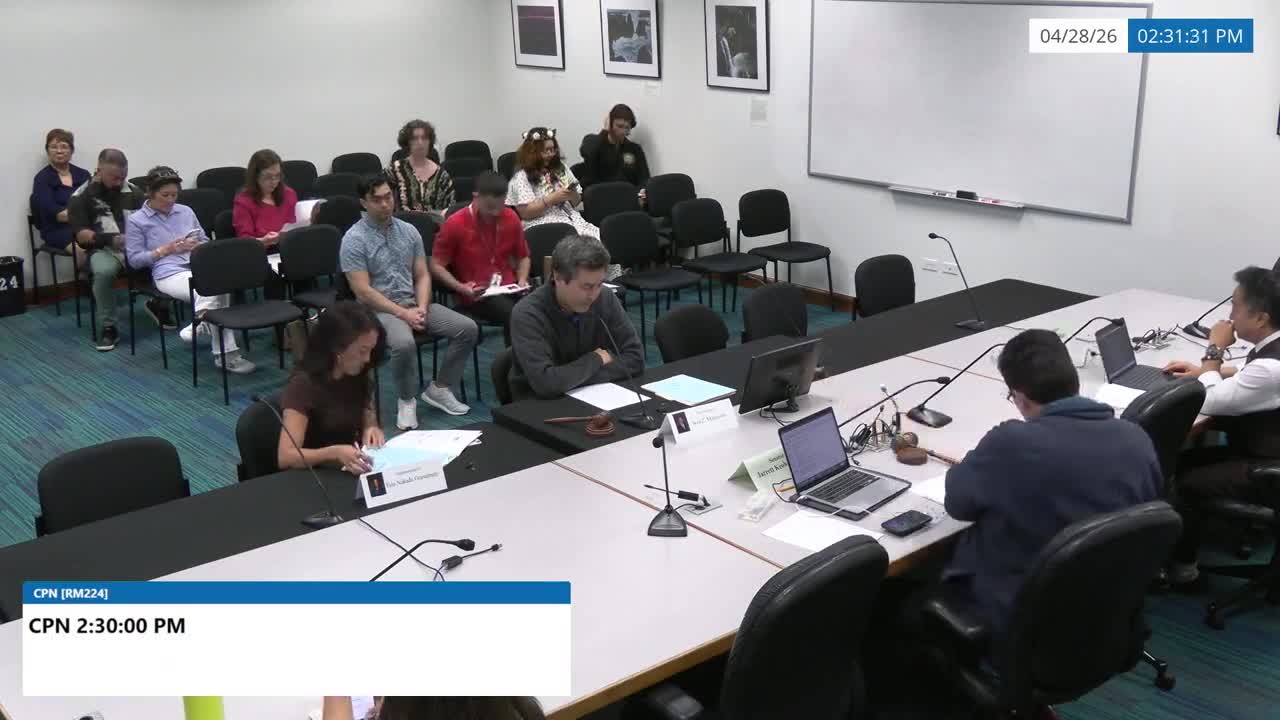
| Apr 28, 2026 | The Conference Committee recommends that the measure be Passed, with Amendments. The votes were as follows: 3 Ayes: Representative(s) Matayoshi, Tarnas, Pierick; Ayes with reservations: none; 0 Noes: none; and 0 Excused: none. |
| Apr 28, 2026 | The Conference committee recommends that the measure be PASSED, WITH AMENDMENTS. The votes of the Senate Conference Managers were as follows: 2 Aye(s): Senator(s) Keohokalole, Rhoads; Aye(s) with reservations: none ; 0 No(es): none; and 1 Excused: Senator(s) Awa. |
| Apr 27, 2026 | Conference committee meeting to reconvene on 04-28-26 2:40PM; Conference Room 224. |
| Apr 24, 2026 | Conference committee meeting to reconvene on 04-27-26 2:40PM; CR 224. |
| Apr 23, 2026 | Conference committee meeting scheduled for 04-24-26 3:30PM; Conference Room 224. |
| Apr 23, 2026 | Received notice of appointment of House conferees (Hse. Com. No. 816). |
| Apr 23, 2026 | House Conferees Appointed: Matayoshi, Tarnas Co-Chairs; Pierick. |
| Apr 23, 2026 | Received notice of Senate conferees (Sen. Com. No. 724). |
| Apr 22, 2026 | Senate Conferees Appointed: Keohokalole Chair; Rhoads Co-Chair; Awa. |
| Apr 16, 2026 | Received notice of disagreement (Sen. Com. No. 710). |
| Apr 16, 2026 | Senate disagrees with House amendments. |
| Apr 16, 2026 | Received from House (Hse. Com. No. 608). |
| Apr 14, 2026 | Passed Third Reading as amended in HD 2 with Representative(s) Garcia, Shimizu voting aye with reservations; Representative(s) Cochran voting no (1) and none excused (0). Transmitted to Senate. |
| Apr 10, 2026 | Deferred one day 04-14-26. |
| Apr 8, 2026 | Forty-eight (48) hours notice Friday, 04-10-26. |
| Apr 8, 2026 | Reported from JHA (Stand. Com. Rep. No. 1834-26) as amended in HD 2, recommending passage on Third Reading. |
| Apr 1, 2026 | The committee on JHA recommend that the measure be PASSED, WITH AMENDMENTS. The votes were as follows: 8 Ayes: Representative(s) Tarnas, Poepoe, Belatti, Kahaloa, Takayama; Ayes with reservations: Representative(s) Cochran, Garcia, Shimizu; 0 Noes: none; and 2 Excused: Representative(s) Hashem, Sayama. |
| Mar 30, 2026 | Bill scheduled to be heard by JHA on Wednesday, 04-01-26 2:00PM in House conference room 325 VIA VIDEOCONFERENCE. |
| Mar 25, 2026 | Passed Second Reading as amended in HD 1 and referred to the committee(s) on JHA with none voting aye with reservations; none voting no (0) and Representative(s) Matsumoto, Perruso excused (2). |
| Mar 25, 2026 | Reported from CPC (Stand. Com. Rep. No. 1431-26) as amended in HD 1, recommending passage on Second Reading and referral to JHA. |
| Mar 18, 2026 | The committee on CPC recommend that the measure be PASSED, WITH AMENDMENTS. The votes were as follows: 11 Ayes: Representative(s) Matayoshi, Grandinetti, Chun, Ilagan, Ichiyama, Iwamoto, Kong, Lowen, Marten, Tam, Pierick; Ayes with reservations: none; Noes: none; and Excused: none. |
| Mar 16, 2026 | Bill scheduled to be heard by CPC on Wednesday, 03-18-26 2:00PM in House conference room 329 VIA VIDEOCONFERENCE. |
| Mar 12, 2026 | Referred to CPC, JHA, referral sheet 17 |
| Mar 12, 2026 | Pass First Reading |
| Mar 10, 2026 | Received from Senate (Sen. Com. No. 142) in amended form (SD 2). |
| Mar 10, 2026 | Report adopted; Passed Third Reading. Ayes, 25; Aye(s) with reservations: none . Noes, 0 (none). Excused, 0 (none). Transmitted to House. |
| Mar 6, 2026 | One Day Notice 03-10-26. |
| Mar 6, 2026 | Reported from JDC (Stand. Com. Rep. No. 3045) with recommendation of passage on Third Reading. |
| Mar 3, 2026 | The committee(s) on JDC recommend(s) that the measure be PASSED, UNAMENDED. The votes in JDC were as follows: 4 Aye(s): Senator(s) Rhoads, Gabbard, San Buenaventura, Awa; Aye(s) with reservations: none ; 0 No(es): none; and 1 Excused: Senator(s) Chang. |
| Feb 24, 2026 | The committee(s) on JDC will hold a public decision making on 03-03-26 10:15AM; Conference Room 016 & Videoconference. |
| Feb 20, 2026 | Report adopted; Passed Second Reading, as amended (SD 2) and referred to JDC. |
| Feb 20, 2026 | Reported from CPN (Stand. Com. Rep. No. 2647) with recommendation of passage on Second Reading, as amended (SD 2) and referral to JDC. |
| Feb 17, 2026 | The committee(s) on CPN recommend(s) that the measure be PASSED, WITH AMENDMENTS. The votes in CPN were as follows: 4 Aye(s): Senator(s) Keohokalole, Fukunaga, Lamosao, Awa; Aye(s) with reservations: none ; 0 No(es): none; and 1 Excused: Senator(s) McKelvey. |
| Feb 13, 2026 | The committee(s) on CPN has scheduled a public hearing on 02-17-26 9:20AM; Conference Room 229 & Videoconference. |
| Feb 13, 2026 | Report adopted, as amended (SD 1) and recommitted to CPN. |
| Feb 13, 2026 | Reported from CPN (Stand. Com. Rep. No. 2270) as amended (SD 1), with recommendation of recommittal to CPN. |
| Feb 13, 2026 | The committee(s) on CPN recommend(s) that the measure be PASSED, WITH AMENDMENTS and be recommitted. The votes in CPN were as follows: 4 Aye(s): Senator(s) Keohokalole, Fukunaga, McKelvey, Awa; Aye(s) with reservations: none ; 0 No(es): none; and 1 Excused: Senator(s) Lamosao. |
| Feb 12, 2026 | Re-Referred to CPN, JDC. |
| Feb 12, 2026 | The committee on CPN has rescheduled its decision making to 02-13-26 9:25AM; Conference Room 229 & Videoconference. |
| Feb 12, 2026 | The committee on CPN has deleted the measure from decision making scheduled on 02-17-26 9:25AM; CR 229 & Videoconference. |
| Feb 12, 2026 | The committee(s) on CPN will hold a public decision making on 02-17-26 9:25AM; Conference Room 229 & Videoconference. |
| Dec 8, 2025 | Carried over to 2026 Regular Session. |
| Jan 23, 2025 | Referred to CPN. |
| Jan 21, 2025 | Passed First Reading. |
| Jan 17, 2025 | Introduced. |
|
Date
|
Description
|
Location
|
Votes
|
|
|---|---|---|---|---|
| May 6, 2026 | Final Reading | House Floor |
Passed |
|
| May 6, 2026 | Final Reading | Senate Floor |
Passed |
|
| Apr 14, 2026 | Third Reading | House Floor |
Passed |
|
| Apr 1, 2026 | The committee on JHA recommend that the measure be PASSED, WITH AMENDMENTS | House Standing Committee on Judiciary & Hawaiian Affairs |
Passed |
|
| Mar 18, 2026 | The committee on CPC recommend that the measure be PASSED, WITH AMENDMENTS | House Standing Committee on Consumer Protection & Commerce |
Passed |
|
| Mar 10, 2026 | Third Reading | Senate Floor |
Passed |
|
| Mar 3, 2026 | The committee(s) on JDC recommend(s) that the measure be PASSED, UNAMENDED | Senate Standing Committee on Judiciary |
Passed |
|
| Feb 17, 2026 | The committee(s) on CPN recommend(s) that the measure be PASSED, WITH AMENDMENTS | Senate Standing Committee on Commerce and Consumer Protection |
Passed |
|
| Feb 13, 2026 | The committee(s) on CPN recommend(s) that the measure be PASSED, WITH AMENDMENTS and be recommitted | Senate Standing Committee on Commerce and Consumer Protection |
Passed |
This list shows positions taken on this bill by organizations on the date displayed, which is linked to the original source.
Positions by individuals are not included.
STAND. COM. REP. NO. 3045
Honolulu, Hawaii
RE: S.B. No. 888
S.D. 2
Honorable Ronald D. Kouchi
President of the Senate
Thirty-Third State Legislature
Regular Session of 2026
State of Hawaii
Sir:
Your Committee on Judiciary, to which was referred S.B. No. 888, S.D. 2, entitled:
"A BILL FOR AN ACT RELATING TO CONSUMER PROTECTION,"
begs leave to report as follows:
The purpose and intent of this measure is to:
(1) Prohibit operators of smart household security devices from sharing user data with law enforcement agencies unless the user consents or the law enforcement agency obtains a judicial warrant;
(2) Prohibit operators from requiring users to consent to share data with law enforcement agencies to use a smart household security device; and
(3) Allow the Department of the Attorney General or the Office of Consumer Protection to bring a civil action against operators who violate certain requirements and establish statutory penalties.
Your Committee received testimony in support of this measure from three individuals.
Your Committee received comments on this measure from the Department of Commerce and Consumer Affairs.
Your Committee finds that many of the State's residents have installed smart household security devices in their homes, including doorbell cameras, security cameras, motion sensors, and connected alarm systems. These devices are intended to protect families, monitor property, and provide peace of mind, and are installed inside and outside of homes where they capture video and audio of residents' private spaces and daily routines. However, many residents do not realize that the data from these devices can be accessed and shared with law enforcement without their knowledge or consent. This measure will protect the privacy and civil liberties of the State's residents by ensuring that the government may not access information about a resident's private areas without the resident's consent or judicial oversight.
As affirmed by the record of votes of the members of your Committee on Judiciary that is attached to this report, your Committee is in accord with the intent and purpose of S.B. No. 888, S.D. 2, and recommends that it pass Third Reading.
Respectfully submitted on behalf of the members of the Committee on Judiciary,
|
|
|
________________________________ KARL RHOADS, Chair |
|
|
|
|
STAND. COM. REP. NO. 2647
Honolulu, Hawaii
RE: S.B. No. 888
S.D. 2
Honorable Ronald D. Kouchi
President of the Senate
Thirty-Third State Legislature
Regular Session of 2026
State of Hawaii
Sir:
Your Committee on Commerce and Consumer Protection, to which was referred S.B. No. 888, S.D. 1, entitled:
"A BILL FOR AN ACT RELATING TO CONSUMER PROTECTION,"
begs leave to report as follows:
The purpose and intent of this measure is to:
(1) Prohibit operators of smart household security devices from sharing user data with law enforcement agencies unless the user consents or the law enforcement agency obtains a judicial warrant;
(2) Prohibit operators from requiring users to consent to share data with law enforcement agencies to use a smart household security device;
(3) Allow the Department of the Attorney General to bring a civil action against an operator that violates certain requirements; and
(4) Establish statutory penalties.
Your Committee received testimony in support of this measure from seven individuals.
Your Committee received comments on this measure from the Judiciary, Department of Law Enforcement, and Office of Consumer Protection of the Department of Commerce and Consumer Affairs.
Your Committee finds that operators of smart household security devices do not always notify a user when providing their data to law enforcement agencies. This includes both non-content data, such as account holder demographic information, and recorded audio and video content. This measure would safeguard privacy and consumer protection by ensuring users are in control of how their smart household security device data is shared.
Your Committee has amended this measure by:
(1) Inserting language that clarifies that the Office of Consumer Protection may bring an action to enforce a violation;
(2) Amending the definition of "judicial warrant" to clarify access to smart household security devices, even when such devices may contain evidence of crimes other than the illegal possession or use of a household security device;
(3) Inserting an effective date of July 1, 2050, to encourage further discussion; and
(4) Making technical, nonsubstantive amendments for the purposes of clarity and consistency.
As affirmed by the record of votes of the members of your Committee on Commerce and Consumer Protection that is attached to this report, your Committee is in accord with the intent and purpose of S.B. No. 888, S.D. 1, as amended herein, and recommends that it pass Second Reading in the form attached hereto as S.B. No. 888, S.D. 2, and be referred to your Committee on Judiciary.
Respectfully submitted on behalf of the members of the Committee on Commerce and Consumer Protection,
|
|
|
________________________________ JARRETT KEOHOKALOLE, Chair |
|
|
|
|
STAND. COM. REP. NO. 2270
Honolulu, Hawaii
RE: S.B. No. 888
S.D. 1
Honorable Ronald D. Kouchi
President of the Senate
Thirty-Third State Legislature
Regular Session of 2026
State of Hawaii
Sir:
Your Committee on Commerce and Consumer Protection, to which was referred S.B. No. 888 entitled:
"A BILL FOR AN ACT RELATING TO CONSUMER PROTECTION,"
begs leave to report as follows:
The purpose and intent of this measure is to amend the law relating to consumer protection.
Prior to the hearing on this measure, your Committee posted and made available for public review a proposed S.D. 1, which amends this measure by deleting its contents and replacing it with language to:
(1) Prohibit operators of smart household security devices from sharing user data with law enforcement agencies without user consent or a warrant;
(2) Prohibit operators of smart household security devices from requiring consent to share user data as a condition of use;
(3) Authorize the Department of the Attorney General to bring a civil action against operators who violate certain requirements; and
(4) Establish statutory penalties.
Your Committee has amended this measure by adopting the proposed S.D. 1.
As affirmed by the record of votes of the members of your Committee on Commerce and Consumer Protection that is attached to this report, your Committee is in accord with the intent and purpose of S.B. No. 888, as amended herein, and recommends that it be recommitted to your Committee on Commerce and Consumer Protection, in the form attached hereto as S.B. No. 888, S.D. 1, for further consideration.
Respectfully submitted on behalf of the members of the Committee on Commerce and Consumer Protection,
|
|
|
________________________________ JARRETT KEOHOKALOLE, Chair |
|
|
|
|
|
Date
|
Testimony PDF
|
|---|---|
| Apr 1, 2026 | SB888_HD1_TESTIMONY_JHA_04-01-26_.PDF |
| Mar 19, 2026 | SB888_SD2_TESTIMONY_CPC_03-18-26_.PDF |
| Mar 2, 2026 | SB888_SD2_TESTIMONY_JDC_03-03-26_.PDF |
| Feb 17, 2026 | SB888_SD1_TESTIMONY_CPN_02-17-26_.PDF |
Discussed in Hearing
 6MIN
Conference Committee
 28SEC
Conference Committee
 1MIN
Conference Committee
 1MIN
House Standing Committee on Judiciary & Hawaiian Affairs
 1MIN
House Standing Committee on Judiciary & Hawaiian Affairs
 3MIN
House Standing Committee on Consumer Protection & Commerce
 1MIN
House Standing Committee on Consumer Protection & Commerce
 1MIN
Senate Standing Committee on Judiciary
Bill Author

Bill Co-Author(s):