SB 2360: DBEDT; DOTAX; State Enterprise Zones; Qualified Business; State Business Tax Credit; General Excise Tax; Eligible Business Activities; Innovation Enterprises; Retail Sales; Value-Added Agricultural Products; Hawaii Food and Production Innovation Network; Health Care Services; Exemption; Extension; Comprehensive Review; Report
- Session Year: 2025-2026
- House: Senate
- Latest Version Date: 2026-05-02
Current Status:
Passed
(2026-07-07: Act 182, on 07/06/2026 (Gov. Msg. No. 1284).)
Introduced
In Committee
First Chamber
In Committee
Second Chamber
Final Decking
Enacted
Amends the definition of "eligible business activity" for the purposes of the Enterprise Zone Program to include certain retail sales of tangible personal property; processing of certain value-added agricultural products; research development, sale, or production of all types of medical products and medical and health care services; activities of the Hawaii Food and Product Innovation Network; the provision of certain professional services by health care professionals; aerospace research and development activities; and information technology design and production services. Authorizes the Department of Business, Economic Development, and Tourism to declare up to two census tracts on state land that contain an innovation enterprise to be designated as an enterprise zone, subject to the Governor's approval and notwithstanding certain conditions. Requires DBEDT to conduct a comprehensive review, in consultation with the Department of Taxation, of the State Enterprise Zones Program and to submit a report to the Legislature. For taxable years beginning after 12/31/2026, extends the eligibility period of the state business tax credit for qualified businesses within state enterprise zones. Beginning 1/1/2028, extends the eligibility period of the general excise tax exemption for qualified businesses within state enterprise zones. Applies to qualified businesses who join the Enterprise Zone Program on or after 7/1/2026. (CD1)
Amends the definition of "eligible business activity" for the purposes of the Enterprise Zone Program to include certain retail sales of tangible personal property, processing of certain value-added agricultural products, the Hawaii food and product innovation network, and the provision of certain professional services by health care professionals. For taxable years beginning after 12/31/2026, extends the eligibility period of the state business tax credit for qualified businesses within state enterprise zones. Beginning 1/1/2028, extends the eligibility period of the general excise tax exemption for qualified businesses within state enterprise zones. Applies to qualified businesses who join the Enterprise Zone Program on or after a specific date. Effective 7/1/3000. (HD1)
Amends the definition of "eligible business activity" for the purposes of the Enterprise Zone Program to include certain retail sales of tangible personal property, processing of certain value-added agricultural products, the Hawaii food and product innovation network, and the provision of certain professional services by health care professionals. For taxable years beginning after 12/31/2026, extends the eligibility period of the state business tax credit for qualified businesses within state enterprise zones. Beginning 1/1/2028, extends the eligibility period of the general excise tax exemption credit for qualified businesses within state enterprise zones. Effective 7/1/2050. (HD1)
Amends the definition of "eligible business activity" for Enterprise Zone Program purposes to include retail sales of tangible personal property manufactured and sold in an enterprise zone that is to be used or consumed by the purchaser and not for resale, the processing of value-added agricultural products grown within an enterprise zone, and the provision of professional services by health care professionals in health care-related sectors. Extends the eligibility period of the state business tax credit and general excise tax exemption for qualified businesses within state Enterprise Zones from 7 years to 9 years. Extends the eligibility period of the general excise tax exemption for qualified businesses within state Enterprise Zones engaged in the manufacturing of tangible personal property or the producing or processing of agricultural products from 10 years to 12 years. Makes the extension of the state business tax credit eligibility period applicable to taxable years beginning after 12/31/2026. Makes the extension of the general excise tax exemption eligibility period take effect on 1/1/2028. Effective 7/1/2050. (SD1)
Amends the definition of "eligible business activity" for Enterprise Zone Program purposes to include retail sales of tangible personal property manufactured and sold in the enterprise zone that is to be used or consumed by the purchaser and not for resale, the processing of value-added agricultural products grown within an enterprise zone, and the provision of professional services by health care professionals in health-care related sectors. Extends the eligibility period of the state business tax credit and general excise tax exemption for qualified businesses within state Enterprise Zones from 7 years to 9 years. Extends the eligibility period of the general excise tax exemption for qualified businesses within state Enterprise Zones engaged in the manufacturing of tangible personal property or the producing or processing of agricultural products from 10 years to 12 years. Makes the extension of the state business tax credit eligibility period applicable to taxable years beginning after 12/31/2026. Makes the extension of the general excise tax exemption eligibility period take effect on 1/1/2028.
|
THE SENATE |
S.B. NO. |
2360 |
|
THIRTY-THIRD LEGISLATURE, 2026 |
S.D. 1 |
|
|
STATE OF HAWAII |
H.D. 2 |
|
|
|
C.D. 1 |
|
|
|
||
|
|
||
A BILL FOR AN ACT
RELATING TO STATE ENTERPRISE ZONES.
BE IT ENACTED BY THE LEGISLATURE OF THE STATE OF HAWAII:
SECTION 1. The legislature finds that the enterprise zone program was established in 1986 for the purpose of stimulating business, agricultural, and industrial growth in areas to revitalize neighborhoods by providing public benefits to local companies. In addition to stimulating business activity, the enterprise zone program also promotes job preservation and job creation in areas designated by the counties and approved by the governor. Benefits for local companies include permitting and zoning assistance, fee waivers, tax relief, and more.
The legislature further finds that the most common industries participating in the enterprise zone program are agricultural production or processing, manufacturing, and wholesaling. Other eligible industries include aviation or maritime repair or maintenance; telecommunication switching and delivery; information technology design and production; medical research, clinical trials, and telemedicine; for-profit training programs in international business management or environmental remediation; biotechnology research, development, production, or sales; repair or maintenance of assistive technology equipment used by persons with disabilities; certain call centers; and wind energy production.
The legislature additionally finds that, for decades, a manufacturer of tangible products has only been eligible for enterprise zone program benefits if over one-half of the gross sales of its products are to wholesalers and the sale takes place within the enterprise zone. This qualification was established before modern innovations in manufacturing and retail sales. Since the program's establishment, business models have significantly changed, and local manufacturers now often skip selling to wholesalers and go directly to retail, making those manufacturers ineligible to participate in the enterprise zone program. Allowing local manufacturers that sell directly to retail to be eligible for the enterprise zone program will help lift local businesses and promote job creation and job preservation for local families looking to thrive in Hawaii.
Accordingly, the purpose of this part is to modernize the enterprise zone program by:
(1) Allowing additional activities within an enterprise zone to qualify for enterprise zone benefits, specifically:
(A) Retail activity by a local manufacturer made within the enterprise zone;
(B) The processing of value-added agriculture products;
(C) Research, development, sale, or production of all types of medical products and medical and health care services;
(D) Activities of the Hawaii food and product innovation network;
(E) The provision of professional services by health care professionals in health care-related sectors;
(F) Research and development of aerospace technology; and
(G) Information technology design and production services;
(2) Authorizing the department of business, economic development, and tourism to declare up to two census tracts on state land that contain an innovation enterprise to be designated as an enterprise zone, subject to the governor's approval; and
(3) Requiring the department of business, economic development, and tourism to conduct a comprehensive review, in consultation with the department of taxation, of the state enterprise zones program and report to the legislature.
SECTION 2. Section 209E-2, Hawaii Revised Statutes, is amended as follows:
1. By adding four new definitions to be appropriately inserted and to read:
""Hawaii food and product innovation network" means an entity engaged in research, development, testing, production, or commercialization of proprietary or novel food products, including food processing technologies, value-added food products derived from agricultural crops, and food science and nutrition research with commercial applications; provided that the entity's primary business activity involves such research, development, testing, production, or commercialization.
"Innovation enterprise" means an area located on property owned by the State that is intended to support, or currently contains, businesses primarily engaged in space domain awareness; information technology design and production services; aerospace, medical technology, biomedical, or life sciences research and development; clinical trials; or pharmaceutical manufacturing.
"Tangible personal property" means property that can be touched or felt and relocated. "Tangible personal property" does not include electricity, real property, or intellectual property.
"Value-added agricultural product" means a product that has been processed, enhanced, or otherwise modified beyond its raw state in a manner that increases its economic value."
2. By amending the definition of "eligible business activity" to read:
""Eligible business activity" means the:
(1) Manufacture of tangible personal property, the wholesale sale of tangible personal property as described in section 237-4, the sale of tangible personal property manufactured and sold at retail in an enterprise zone for consumption or use by the purchaser and not for resale, or a service business as defined in this section;
(2) Production
of agricultural products where the business is a producer as defined in section
237-5, or the processing of agricultural products[,] or value-added
agricultural products, all or some of which were grown within an enterprise
zone;
(3) Research,
development, sale, or production of [all]:
(A) All types of [genetically-engineered]
medical, agricultural, or maritime biotechnology products; [or] and
(B) Medical and health care services;
(4) Production of electric power from wind energy for sale primarily to a public utility company for resale to the public;
(5) Activities of the Hawaii food and product innovation network;
(6) The provision of professional services by health care professionals in health care-related sectors, including but not limited to home health care agencies, specialized care practices, and health coaching;
(7) Research and development of aerospace technology; or
(8) Information technology design and production services;
provided that medical cannabis dispensary activities pursuant to chapter 329D shall not be considered an eligible business activity for the purposes of this chapter."
SECTION 3. Section 209E-4, Hawaii Revised Statutes, is amended to read as follows:
"§209E-4 Enterprise zone designation. (a) The governing body of any county may apply in writing to the department to have an area declared to be an enterprise zone. The application shall include a description of the location of the area or areas in question, and a general statement identifying proposed local incentives to complement the state and any federal incentives.
(b) The governor, upon the recommendation of the director, shall approve the designation of up to six areas in each county as enterprise zones for a period of twenty years. Any such area shall be located in one United States census tract or two or more contiguous United States census tracts in accordance with the most recent decennial United States Census. The census tract or tracts within which each enterprise zone is located also shall meet at least one of the following criteria:
(1) Twenty-five per cent or more of the population have incomes below eighty per cent of the median family income of the county; or
(2) The unemployment rate is 1.5 times the state average.
(c) The department may declare up to two census tracts on state land that contain an innovation enterprise to be designated as an enterprise zone, subject to the governor's approval; provided that, notwithstanding any other provision of this section, the designation of census tracts pursuant to this subsection may be made without regard to county application requirements, geographic limitations, or eligibility criteria otherwise applicable to enterprise zones under this chapter."
SECTION 4. (a) The department of business, economic development, and tourism, in consultation with the department of taxation, shall conduct a comprehensive review of the state enterprise zones program established under chapter 209E, Hawaii Revised Statutes.
(b) The comprehensive review shall include:
(1) An evaluation of the economic impact of the program, including the number of jobs created and the types of industries supported;
(2) An assessment of whether existing enterprise zones continue to meet the statutory eligibility criteria for designation; and
(3) Revenues generated by participating companies for each county.
(c) The department of business, economic development, and tourism shall submit a report of its findings to the legislature no later than twenty days prior to the convening of the regular session of 2027.
PART II
SECTION 5. This part shall apply to business firms that are designated as a qualified business for the purposes of chapter 209E, Hawaii Revised Statutes, on or after July 1, 2026.
SECTION 6. Section 209E-9, Hawaii Revised Statutes, is amended by amending subsection (b) to read as follows:
"(b) A business firm may also be eligible to be designated a qualified business for purposes of this chapter if the business:
(1) Is actively engaged in the conduct of a
trade or business in an eligible business activity in an area immediately [prior
to] before the area being designated an enterprise zone;
(2) Meets the requirements of subsection (a)(2); and
(3) Either:
(A) Increases its average annual number of
full-time employees employed at the business' establishment or establishments
within enterprise zones located within the same county by at least ten per cent
by the end of the first year of operation, and by at least
fifteen per cent by the end of each of the fourth, fifth, sixth, [and]
seventh, eighth, and ninth years of operation, and for businesses
eligible for tax credits extending past the [seventh] ninth year,
at least maintains that higher level of employment during each subsequent
taxable year; provided that the percentage increase shall be based upon the
employee count at the beginning of the initial year of operation within the
enterprise zone or zones; or
(B) Increases its gross sales of agricultural crops produced, or agricultural products processed within enterprise zones located within the same county by two per cent annually."
SECTION 7. Section 209E-10, Hawaii Revised Statutes, is amended as follows:
1. By amending subsection (a) to read:
"(a) The department shall certify annually to the
department of taxation the applicability of the tax credit provided in this
chapter for a qualified business against any taxes due the State. Except for the general excise tax, the credit
shall be eighty per cent of the tax due for the first tax year, seventy per
cent of the tax due for the second tax year, sixty per cent of the tax due for
the third tax year, fifty per cent of the tax due for the fourth tax
year, forty per cent of the tax due for the fifth tax year,
thirty per cent of the tax due for the sixth tax year, and twenty
per cent of the tax due for each of the seventh [year.],
eighth, and ninth tax years. For qualified businesses engaged in the manufacturing of
tangible personal property or the producing or processing of agricultural
products, the credit shall continue after the [seventh] ninth tax
year at the rate of twenty per cent of the tax due for each of the subsequent
three tax years. Any tax credit
not usable shall not be applied to future tax years."
2. By amending subsection (c) to read:
"(c) In addition to any tax credit authorized
under this section, any qualified business shall be entitled to a tax credit
against any taxes due the State in an amount equal to a percentage of
unemployment taxes paid. The amount of
the credit shall be equal to eighty per cent of the unemployment taxes paid
during the first tax year, seventy per cent of the taxes paid during the
second tax year, sixty per cent of the taxes paid during the third tax
year, fifty per cent of the taxes paid during the fourth tax year, forty
per cent of the taxes paid during the fifth tax year, thirty per cent of
the taxes paid during the sixth tax year, and twenty per cent of the
taxes paid during each of the seventh [year.], eighth, and
ninth tax years. For qualified businesses engaged in the
manufacturing of tangible personal property or the producing or processing of
agricultural products, the credit shall continue after the [seventh] ninth
tax year in an amount equal to twenty per cent of the taxes paid during
each of the subsequent three tax years."
SECTION 8. Section 209E-11, Hawaii Revised Statutes, is amended to read as follows:
"§209E-11 State
general excise exemptions. The
department shall certify annually to the department of taxation that any
qualified business is exempt from the payment of general excise taxes on the
gross proceeds from an eligible business activity as
defined in this chapter; provided that agricultural
businesses other than those engaged in the production of genetically-engineered
agricultural products shall not be exempt from the payment of general excise
taxes on the gross proceeds of agricultural retail sales. The gross proceeds received by a contractor
licensed under chapter 444 shall be exempt from the general excise tax for
construction within an enterprise zone performed for a qualified business
within an enterprise zone or a business that has been approved by the department
to enroll into the enterprise zone program.
The exemption shall extend for a period not to exceed [seven] nine
years; provided that for qualified
businesses engaged in the manufacturing of tangible personal property or the
producing or processing of agricultural products, the exemption shall extend
for a period not to exceed [ten] twelve years; provided further
that if a force majeure event occurs, then the period of time shall be tolled
until the force majeure event ceases."
PART III
SECTION 9. This Act shall apply to all qualified businesses, as defined in section 209E-2, Hawaii Revised Statutes, that join the enterprise zone program on or after the effective date of this Act.
SECTION 10. Statutory material to be repealed is bracketed and stricken. New statutory material is underscored.
SECTION 11. This Act shall take effect on July 1, 2026; provided that:
(1) Section 7 shall apply to taxable years beginning after December 31, 2026; and
(2) Section 8 shall take effect on January 1, 2028.
Report Title:
DBEDT; DOTAX; State Enterprise Zones; Qualified Business; State Business Tax Credit; General Excise Tax; Eligible Business Activities; Innovation Enterprises; Retail Sales; Value-Added Agricultural Products; Hawaii Food and Production Innovation Network; Health Care Services; Exemption; Extension; Comprehensive Review; Report
Description:
Amends the definition of "eligible business activity" for the purposes of the Enterprise Zone Program to include certain retail sales of tangible personal property; processing of certain value-added agricultural products; research development, sale, or production of all types of medical products and medical and health care services; activities of the Hawaii Food and Product Innovation Network; the provision of certain professional services by health care professionals; aerospace research and development activities; and information technology design and production services. Authorizes the Department of Business, Economic Development, and Tourism to declare up to two census tracts on state land that contain an innovation enterprise to be designated as an enterprise zone, subject to the Governor's approval and notwithstanding certain conditions. Requires DBEDT to conduct a comprehensive review, in consultation with the Department of Taxation, of the State Enterprise Zones Program and to submit a report to the Legislature. For taxable years beginning after 12/31/2026, extends the eligibility period of the state business tax credit for qualified businesses within state enterprise zones. Beginning 1/1/2028, extends the eligibility period of the general excise tax exemption for qualified businesses within state enterprise zones. Applies to qualified businesses who join the Enterprise Zone Program on or after 7/1/2026. (CD1)
The summary description of legislation appearing on this page is for informational purposes only and is not legislation or evidence of legislative intent.
|
THE SENATE |
S.B. NO. |
2360 |
|
THIRTY-THIRD LEGISLATURE, 2026 |
S.D. 1 |
|
|
STATE OF HAWAII |
H.D. 2 |
|
|
|
|
|
|
|
||
|
|
||
A BILL FOR AN ACT
RELATING TO STATE ENTERPRISE ZONES.
BE IT ENACTED BY THE LEGISLATURE OF THE STATE OF HAWAII:
SECTION 1. The legislature finds that the enterprise zone program was established in 1986 for the purpose of stimulating business, agricultural, and industrial growth in areas to revitalize neighborhoods by providing public benefits to local companies. In addition to stimulating business activity, the enterprise zone program also promotes job preservation and job creation in areas designated by the counties and approved by the governor. Benefits for local companies include permitting and zoning assistance, fee waivers, tax relief, and more.
The legislature further finds that the most common industries participating in the enterprise zone program are agricultural production or processing, manufacturing, and wholesaling. Other eligible industries include aviation or maritime repair or maintenance; telecommunication switching and delivery; information technology design and production; medical research, clinical trials, and telemedicine; for-profit training programs in international business management or environmental remediation; biotechnology research, development, production, or sales; repair or maintenance of assistive technology equipment used by persons with disabilities; certain call centers; and wind energy production.
The legislature additionally finds that, for decades, a manufacturer of tangible products has only been eligible for enterprise zone program benefits if over one-half of the gross sales of its products are to wholesalers and the sale takes place within the enterprise zone. This qualification was established before modern innovations in manufacturing and retail sales. Since the program's establishment, business models have significantly changed, and local manufacturers now often skip selling to wholesalers and go directly to retail, making those manufacturers ineligible to participate in the enterprise zone program. Allowing local manufacturers that sell directly to retail to be eligible for the enterprise zone program will help lift local businesses and promote job creation and job preservation for local families looking to thrive in Hawaii.
Accordingly, the purpose of this part is to modernize the enterprise zone program by allowing additional activities within an enterprise zone to qualify for enterprise zone benefits, specifically:
(1) Retail activity by a local manufacturer made within the enterprise zone;
(2) The processing of value-added agriculture products;
(3) The Hawaii food and product innovation network; and
(4) The provision of professional services by health care professionals in health care-related sectors.
SECTION 2. Section 209E-2, Hawaii Revised Statutes, is amended as follows:
1. By adding three new definitions to be appropriately inserted and to read:
""Hawaii food and product innovation network" means an entity engaged in research, development, testing, production, or commercialization of proprietary or novel food products, including food processing technologies, value-added food products derived from local agricultural crops, and food science and nutrition research with commercial applications; provided that the entity's primary business activity involves such research, development, testing, production, or commercialization.
"Tangible personal property" means property that can be touched or felt and relocated. "Tangible personal property" does not include electricity, real property, or intellectual property.
"Value-added agricultural product" means a product that has been processed, enhanced, or otherwise modified beyond its raw state in a manner that increases its economic value and that meets the criteria established for the seal of quality program managed by the department of agriculture and biosecurity pursuant to section 148-63."
2. By amending the definition of "eligible business activity" to read:
""Eligible business activity" means the:
(1) Manufacture of tangible personal property, the wholesale sale of tangible personal property as described in section 237-4, the sale of tangible personal property manufactured and sold at retail in an enterprise zone for consumption or use by the purchaser and not for resale, or a service business as defined in this section;
(2) Production
of agricultural products where the business is a producer as defined in section
237-5, or the processing of agricultural products[,] or value-added
agricultural products, all or some of which were grown within an enterprise
zone;
(3) Research,
development, sale, or production of all types of genetically-engineered
medical, agricultural, or maritime biotechnology products; [or]
(4) Production of electric power from wind energy for sale primarily to a public utility company for resale to the public;
(5) Hawaii food and product innovation network; or
(6) The provision of professional services by health care professionals in health care-related sectors, including but not limited to home health care agencies, specialized care practices, and health coaching;
provided that medical cannabis dispensary activities pursuant to chapter 329D shall not be considered an eligible business activity for the purposes of this chapter."
PART II
SECTION 3. This part shall apply to business firms that are designated as a qualified business for the purposes of chapter 209E, Hawaii Revised Statutes, on or after July 1, 2026.
SECTION 4. Section 209E-9, Hawaii Revised Statutes, is amended by amending subsection (b) to read as follows:
"(b) A business firm may also be eligible to be designated a qualified business for purposes of this chapter if the business:
(1) Is actively engaged in the conduct of a
trade or business in an eligible business activity in an area immediately [prior
to] before the area being designated an enterprise zone;
(2) Meets the requirements of subsection (a)(2); and
(3) Either:
(A) Increases its average annual number of
full-time employees employed at the business' establishment or establishments
within enterprise zones located within the same county by at least ten per cent
by the end of the first year of operation, and by at least
fifteen per cent by the end of each of the fourth, fifth, sixth, [and]
seventh, eighth, and ninth years of operation, and for businesses
eligible for tax credits extending past the [seventh] ninth year,
at least maintains that higher level of employment during each subsequent
taxable year; provided that the percentage increase shall be based upon the
employee count at the beginning of the initial year of operation within the
enterprise zone or zones; or
(B) Increases its gross sales of agricultural crops produced, or agricultural products processed within enterprise zones located within the same county by two per cent annually."
SECTION 5. Section 209E-10, Hawaii Revised Statutes, is amended as follows:
1. By amending subsection (a) to read:
"(a) The department shall certify annually to the
department of taxation the applicability of the tax credit provided in this
chapter for a qualified business against any taxes due the State. Except for the general excise tax, the credit
shall be eighty per cent of the tax due for the first tax year, seventy per
cent of the tax due for the second tax year, sixty per cent of the tax due for
the third tax year, fifty per cent of the tax due for the fourth tax
year, forty per cent of the tax due for the fifth tax year,
thirty per cent of the tax due for the sixth tax year, and twenty
per cent of the tax due for each of the seventh [year.],
eighth, and ninth tax years. For qualified businesses engaged in the manufacturing of
tangible personal property or the producing or processing of agricultural
products, the credit shall continue after the [seventh] ninth tax
year at the rate of twenty per cent of the tax due for each of the subsequent
three tax years. Any tax credit
not usable shall not be applied to future tax years."
2. By amending subsection (c) to read:
"(c) In addition to any tax credit authorized
under this section, any qualified business shall be entitled to a tax credit
against any taxes due the State in an amount equal to a percentage of
unemployment taxes paid. The amount of
the credit shall be equal to eighty per cent of the unemployment taxes paid
during the first tax year, seventy per cent of the taxes paid during the
second tax year, sixty per cent of the taxes paid during the third tax
year, fifty per cent of the taxes paid during the fourth tax year, forty
per cent of the taxes paid during the fifth tax year, thirty per cent of
the taxes paid during the sixth tax year, and twenty per cent of the
taxes paid during each of the seventh [year.], eighth, and
ninth tax years. For qualified businesses engaged in the
manufacturing of tangible personal property or the producing or processing of
agricultural products, the credit shall continue after the [seventh] ninth
tax year in an amount equal to twenty per cent of the taxes paid during
each of the subsequent three tax years."
SECTION 6. Section 209E-11, Hawaii Revised Statutes, is amended to read as follows:
"§209E-11 State
general excise exemptions. The
department shall certify annually to the department of taxation that any
qualified business is exempt from the payment of general excise taxes on the
gross proceeds from an eligible business activity as
defined in this chapter; provided that agricultural
businesses other than those engaged in the production of genetically-engineered
agricultural products shall not be exempt from the payment of general excise
taxes on the gross proceeds of agricultural retail sales. The gross proceeds received by a contractor
licensed under chapter 444 shall be exempt from the general excise tax for
construction within an enterprise zone performed for a qualified business
within an enterprise zone or a business that has been approved by the
department to enroll into the enterprise zone program. The exemption shall extend for a period not
to exceed [seven] nine years; provided that for qualified businesses engaged in the
manufacturing of tangible personal property or the producing or processing of
agricultural products, the exemption shall extend for a period not to exceed [ten]
twelve years; provided further that if a force majeure event occurs,
then the period of time shall be tolled until the force majeure event ceases."
PART III
SECTION 7. This Act shall apply to all qualified businesses, as defined in section 209E-2, Hawaii Revised Statutes, that join the enterprise zone program on or after the effective date of this Act.
SECTION 8. Statutory material to be repealed is bracketed and stricken. New statutory material is underscored.
SECTION 9. This Act shall take effect on July 1, 3000; provided that:
(1) Section 5 shall apply to taxable years beginning after December 31, 2026; and
(2) Section 6 shall take effect on January 1, 2028.
Report Title:
State Enterprise Zones; Qualified Business; State Business Tax Credit; General Excise Tax; Eligible Business Activities; Retail Sales; Value-Added Agricultural Products; Hawaii Food and Production Innovation Network; Health Care Services; Exemption; Extension
Description:
Amends the definition of "eligible business activity" for the purposes of the Enterprise Zone Program to include certain retail sales of tangible personal property, processing of certain value-added agricultural products, the Hawaii food and product innovation network, and the provision of certain professional services by health care professionals. For taxable years beginning after 12/31/2026, extends the eligibility period of the state business tax credit for qualified businesses within state enterprise zones. Beginning 1/1/2028, extends the eligibility period of the general excise tax exemption for qualified businesses within state enterprise zones. Applies to qualified businesses who join the Enterprise Zone Program on or after a specific date. Effective 7/1/3000. (HD1)
The summary description of legislation appearing on this page is for informational purposes only and is not legislation or evidence of legislative intent.
|
THE SENATE |
S.B. NO. |
2360 |
|
THIRTY-THIRD LEGISLATURE, 2026 |
S.D. 1 |
|
|
STATE OF HAWAII |
H.D. 1 |
|
|
|
|
|
|
|
||
|
|
||
A BILL FOR AN ACT
RELATING TO STATE ENTERPRISE ZONES.
BE IT ENACTED BY THE LEGISLATURE OF THE STATE OF HAWAII:
SECTION 1. The legislature finds that the enterprise zone program was established in 1986 for the purpose of stimulating business, agricultural, and industrial growth in areas to revitalize neighborhoods by providing public benefits to local companies. In addition to stimulating business activity, the enterprise zone program also promotes job preservation and job creation in areas designated by the counties and approved by the governor. Benefits for local companies include permitting and zoning assistance, fee waivers, tax relief, and more.
The legislature further finds that the most common industries participating in the enterprise zone program are agricultural production or processing, manufacturing, and wholesaling. Other eligible industries include aviation or maritime repair or maintenance; telecommunication switching and delivery; information technology design and production; medical research, clinical trials, and telemedicine; for-profit training programs in international business management or environmental remediation; biotechnology research, development, production, or sales; repair or maintenance of assistive technology equipment used by persons with disabilities; certain call centers; and wind energy production.
The legislature additionally finds that, for decades, a manufacturer of tangible products has only been eligible for enterprise zone program benefits if over one-half of the gross sales of its products are to wholesalers and the sale takes place within the enterprise zone. This qualification was established before modern innovations in manufacturing and retail sales. Since the program's establishment, business models have significantly changed, and local manufacturers now often skip selling to wholesalers and go directly to retail, making those manufacturers ineligible to participate in the enterprise zone program. Allowing local manufacturers that sell directly to retail to be eligible for the enterprise zone program will help lift local businesses and promote job creation and job preservation for local families looking to thrive in Hawaii.
Accordingly, the purpose of this part is to modernize the enterprise zone program by allowing additional activities within an enterprise zone to qualify for enterprise zone benefits, specifically:
(1) Retail activity by a local manufacturer made within the enterprise zone;
(2) The processing of value-added agriculture products;
(3) The Hawaii food and product innovation network; and
(4) The provision of professional services by health care professionals in health care-related sectors.
SECTION 2. Section 209E-2, Hawaii Revised Statutes, is amended as follows:
1. By adding three new definitions to be appropriately inserted and to read:
""Hawaii food and product innovation network" means an entity engaged in research, development, testing, production, or commercialization of proprietary or novel food products, including food processing technologies, value-added food products derived from local agricultural crops, and food science and nutrition research with commercial applications; provided that the entity's primary business activity involves such research, development, testing, production, or commercialization.
"Tangible personal property" means property that can be touched or felt and relocated. "Tangible personal property" does not include electricity, real property, or intellectual property.
"Value-added agricultural product" means a product that has been processed, enhanced, or otherwise modified beyond its raw state in a manner that increases its economic value and that meets the criteria established for the seal of quality program managed by the department of agriculture and biosecurity pursuant to section 148-63."
2. By amending the definition of "eligible business activity" to read:
""Eligible business activity" means the:
(1) Manufacture of tangible personal property, the wholesale sale of tangible personal property as described in section 237-4, the sale of tangible personal property manufactured and sold at retail in an enterprise zone for consumption or use by the purchaser and not for resale, or a service business as defined in this section;
(2) Production
of agricultural products where the business is a producer as defined in section
237-5, or the processing of agricultural products[,] or value-added
agricultural products, all or some of which were grown within an enterprise
zone;
(3) Research,
development, sale, or production of all types of genetically-engineered
medical, agricultural, or maritime biotechnology products; [or]
(4) Production of electric power from wind energy for sale primarily to a public utility company for resale to the public;
(5) Hawaii food and product innovation network; or
(6) The provision of professional services by health care professionals in health care-related sectors, including but not limited to home health care agencies, specialized care practices, and health coaching;
provided that medical cannabis dispensary activities pursuant to chapter 329D shall not be considered an eligible business activity for the purposes of this chapter."
PART II
SECTION 3. This part shall apply to business firms that are designated as a qualified business for the purposes of chapter 209E, Hawaii Revised Statutes, on or after July 1, 2026.
SECTION 4. Section 209E-9, Hawaii Revised Statutes, is amended by amending subsection (b) to read as follows:
"(b) A business firm may also be eligible to be designated a qualified business for purposes of this chapter if the business:
(1) Is actively engaged in the conduct of a
trade or business in an eligible business activity in an area immediately [prior
to] before the area being designated an enterprise zone;
(2) Meets the requirements of subsection (a)(2); and
(3) Either:
(A) Increases its average annual number of
full-time employees employed at the business' establishment or establishments
within enterprise zones located within the same county by at least ten per cent
by the end of the first year of operation, and by at least
fifteen per cent by the end of each of the fourth, fifth, sixth, [and]
seventh, eighth, and ninth years of operation, and for businesses
eligible for tax credits extending past the [seventh] ninth year,
at least maintains that higher level of employment during each subsequent
taxable year; provided that the percentage increase shall be based upon the
employee count at the beginning of the initial year of operation within the
enterprise zone or zones; or
(B) Increases its gross sales of agricultural crops produced, or agricultural products processed within enterprise zones located within the same county by two per cent annually."
SECTION 5. Section 209E-10, Hawaii Revised Statutes, is amended as follows:
1. By amending subsection (a) to read:
"(a) The department shall certify annually to the
department of taxation the applicability of the tax credit provided in this
chapter for a qualified business against any taxes due the State. Except for the general excise tax, the credit
shall be eighty per cent of the tax due for the first tax year, seventy per
cent of the tax due for the second tax year, sixty per cent of the tax due for
the third tax year, fifty per cent of the tax due for the fourth tax
year, forty per cent of the tax due for the fifth tax year,
thirty per cent of the tax due for the sixth tax year, and twenty
per cent of the tax due for each of the seventh [year.],
eighth, and ninth tax years. For qualified businesses engaged in the manufacturing of
tangible personal property or the producing or processing of agricultural
products, the credit shall continue after the [seventh] ninth tax
year at the rate of twenty per cent of the tax due for each of the subsequent
three tax years. Any tax credit
not usable shall not be applied to future tax years."
2. By amending subsection (c) to read:
"(c) In addition to any tax credit authorized
under this section, any qualified business shall be entitled to a tax credit
against any taxes due the State in an amount equal to a percentage of
unemployment taxes paid. The amount of
the credit shall be equal to eighty per cent of the unemployment taxes paid
during the first tax year, seventy per cent of the taxes paid during the
second tax year, sixty per cent of the taxes paid during the third tax
year, fifty per cent of the taxes paid during the fourth tax year, forty
per cent of the taxes paid during the fifth tax year, thirty per cent of
the taxes paid during the sixth tax year, and twenty per cent of the
taxes paid during each of the seventh [year.], eighth, and
ninth tax years. For qualified businesses engaged in the
manufacturing of tangible personal property or the producing or processing of
agricultural products, the credit shall continue after the [seventh] ninth
tax year in an amount equal to twenty per cent of the taxes paid during
each of the subsequent three tax years."
SECTION 6. Section 209E-11, Hawaii Revised Statutes, is amended to read as follows:
"§209E-11 State
general excise exemptions. The
department shall certify annually to the department of taxation that any
qualified business is exempt from the payment of general excise taxes on the
gross proceeds from an eligible business activity as
defined in this chapter; provided that agricultural
businesses other than those engaged in the production of genetically-engineered
agricultural products shall not be exempt from the payment of general excise
taxes on the gross proceeds of agricultural retail sales. The gross proceeds received by a contractor
licensed under chapter 444 shall be exempt from the general excise tax for
construction within an enterprise zone performed for a qualified business
within an enterprise zone or a business that has been approved by the
department to enroll into the enterprise zone program. The exemption shall extend for a period not
to exceed [seven] nine years; provided that for qualified businesses engaged in the
manufacturing of tangible personal property or the producing or processing of
agricultural products, the exemption shall extend for a period not to exceed [ten]
twelve years; provided further that if a force majeure event occurs,
then the period of time shall be tolled until the force majeure event ceases."
PART III
SECTION 7. Statutory material to be repealed is bracketed and stricken. New statutory material is underscored.
SECTION 8. This Act shall take effect on July 1, 2050; provided that:
(1) Section 5 shall apply to taxable years beginning after December 31, 2026; and
(2) Section 6 shall take effect on January 1, 2028.
Report Title:
State Enterprise Zones; Qualified Business; State Business Tax Credit; General Excise Tax; Eligible Business Activities; Retail Sales; Value-Added Agricultural Products; Hawaii Food and Production Innovation Network; Health Care Services; Exemption; Extension
Description:
Amends the definition of "eligible business activity" for the purposes of the Enterprise Zone Program to include certain retail sales of tangible personal property, processing of certain value-added agricultural products, the Hawaii food and product innovation network, and the provision of certain professional services by health care professionals. For taxable years beginning after 12/31/2026, extends the eligibility period of the state business tax credit for qualified businesses within state enterprise zones. Beginning 1/1/2028, extends the eligibility period of the general excise tax exemption credit for qualified businesses within state enterprise zones. Effective 7/1/2050. (HD1)
The summary description of legislation appearing on this page is for informational purposes only and is not legislation or evidence of legislative intent.
|
THE SENATE |
S.B. NO. |
2360 |
|
THIRTY-THIRD LEGISLATURE, 2026 |
S.D. 1 |
|
|
STATE OF HAWAII |
|
|
|
|
|
|
|
|
||
|
|
||
A BILL FOR AN ACT
RELATING TO STATE ENTERPRISE ZONES.
BE IT ENACTED BY THE LEGISLATURE OF THE STATE OF HAWAII:
SECTION 1. The legislature finds that the enterprise zone program was established in 1986 for the purpose of stimulating business, agricultural, and industrial growth in areas to revitalize neighborhoods by providing public benefits to local companies. In addition to stimulating business activity, the enterprise zone program also promotes job preservation and job creation in areas designated by the counties and approved by the governor. Benefits for local companies include permitting and zoning assistance, fee waivers, tax relief, and more.
The legislature further finds that the most common industries participating in the enterprise zone program are agricultural production or processing, manufacturing, and wholesaling. Other eligible industries include aviation or maritime repair or maintenance; telecommunication switching and delivery; information technology design and production; medical research, clinical trials, and telemedicine; for-profit training programs in international business management or environmental remediation; biotechnology research, development, production, or sales; repair or maintenance of assistive technology equipment used by persons with disabilities; certain call centers; and wind energy production.
The legislature additionally finds that, for decades, a manufacturer of tangible products has only been eligible for enterprise zone program benefits if over one-half of the gross sales of its products are to wholesalers and the sale takes place within the enterprise zone. This qualification was established before modern innovations in manufacturing and retail sales. Since the program's establishment, business models have significantly changed, and local manufacturers now often skip selling to wholesalers and go directly to retail, making those manufacturers ineligible to participate in the enterprise zone program. Allowing local manufacturers that sell directly to retail to be eligible for the enterprise zone program will help lift local businesses and promote job creation and job preservation for local families looking to thrive in Hawaii.
Accordingly, the purpose of this part is to modernize the enterprise zone program by allowing additional activities within an enterprise zone to qualify for enterprise zone benefits, specifically:
(1) Retail and wholesale activity by a local manufacturer made within the enterprise zone;
(2) The processing of value-added agriculture products; and
(3) The provision of professional services by health care professionals in health care-related sectors.
SECTION 2. Section 209E-2, Hawaii Revised Statutes, is amended as follows:
1. By adding two new definitions to be appropriately inserted and to read:
""Tangible personal property" means property that can be touched or felt and can be relocated. "Tangible personal property" does not include electricity, real property, or intellectual property.
"Value-added agricultural product" means a product that has been processed, enhanced, or otherwise modified beyond its raw state in a manner that increases its economic value and that meets the criteria established for the seal of quality program managed by the department of agriculture and biosecurity pursuant to section 148-63."
2. By amending the definition of "eligible business activity" to read:
""Eligible business activity" means the:
(1) Manufacture of tangible personal property, the wholesale sale of tangible personal property as described in section 237-4, the sale of tangible personal property manufactured and sold at retail in an enterprise zone for consumption or use by the purchaser and not for resale, or a service business as defined in this section;
(2) Production
of agricultural products where the business is a producer as defined in section
237-5, or the processing of agricultural products[,] or value-added
agricultural products, all or some of which were grown within an enterprise
zone;
(3) Research,
development, sale, or production of all types of genetically-engineered
medical, agricultural, or maritime biotechnology products; [or]
(4) Production of electric power from wind energy for sale primarily to a public utility company for resale to the public; or
(5) The provision of professional services by health care professionals in health care-related sectors, including but not limited to home health care agencies, specialized care practices, and health coaching;
provided that medical cannabis dispensary activities pursuant to chapter 329D shall not be considered an eligible business activity for the purposes of this chapter."
PART II
SECTION 3. This part shall apply to business firms that are designated as a qualified business for the purposes of chapter 209E, Hawaii Revised Statutes, on or after July 1, 2026.
SECTION 4. Section 209E-9, Hawaii Revised Statutes, is amended by amending subsection (b) to read as follows:
"(b) A business firm may also be eligible to be designated a qualified business for purposes of this chapter if the business:
(1) Is actively engaged in the conduct of a
trade or business in an eligible business activity in an area immediately [prior
to] before the area being designated an enterprise zone;
(2) Meets the requirements of subsection (a)(2); and
(3) Either:
(A) Increases its average annual number of
full-time employees employed at the business' establishment or establishments
within enterprise zones located within the same county by at least ten per cent
by the end of the first year of operation, and by at least
fifteen per cent by the end of each of the fourth, fifth, sixth, [and]
seventh, eighth, and ninth years of operation, and for businesses
eligible for tax credits extending past the [seventh] ninth year,
at least maintains that higher level of employment during each subsequent
taxable year; provided that the percentage increase shall be based upon the
employee count at the beginning of the initial year of operation within the
enterprise zone or zones; or
(B) Increases its gross sales of agricultural crops produced, or agricultural products processed within enterprise zones located within the same county by two per cent annually."
SECTION 5. Section 209E-10, Hawaii Revised Statutes, is amended as follows:
1. By amending subsection (a) to read:
"(a) The department shall certify annually to the
department of taxation the applicability of the tax credit provided in this
chapter for a qualified business against any taxes due the State. Except for the general excise tax, the credit
shall be eighty per cent of the tax due for the first tax year, seventy per
cent of the tax due for the second tax year, sixty per cent of the tax due for
the third tax year, fifty per cent of the tax due for the fourth tax
year, forty per cent of the tax due for the fifth tax year,
thirty per cent of the tax due for the sixth tax year, and twenty
per cent of the tax due for each of the seventh [year.], eighth,
and ninth tax years. For qualified businesses engaged in the manufacturing of
tangible personal property or the producing or processing of agricultural
products, the credit shall continue after the [seventh] ninth tax
year at the rate of twenty per cent of the tax due for each of the subsequent
three tax years. Any tax credit
not usable shall not be applied to future tax years."
2. By amending subsection (c) to read:
"(c) In addition to any tax credit authorized
under this section, any qualified business shall be entitled to a tax credit
against any taxes due the State in an amount equal to a percentage of
unemployment taxes paid. The amount of
the credit shall be equal to eighty per cent of the unemployment taxes paid
during the first year, seventy per cent of the taxes paid during the second
year, sixty per cent of the taxes paid during the third year, fifty per cent of
the taxes paid during the fourth year, forty per cent of the taxes paid during
the fifth year, thirty per cent of the taxes paid during the sixth year, and
twenty per cent of the taxes paid during each of the seventh [year.],
eighth, and ninth years. For qualified
businesses engaged in the manufacturing of tangible personal property or the
producing or processing of agricultural products, the credit shall continue
after the [seventh] ninth year in an amount equal to twenty per
cent of the taxes paid during each of the subsequent three tax years."
SECTION 6. Section 209E-11, Hawaii Revised Statutes, is amended to read as follows:
"§209E-11 State
general excise exemptions. The
department shall certify annually to the department of taxation that any
qualified business is exempt from the payment of general excise taxes on the
gross proceeds from an eligible business activity as
defined in this chapter; provided that agricultural
businesses other than those engaged in the production of genetically-engineered
agricultural products shall not be exempt from the payment of general excise
taxes on the gross proceeds of agricultural retail sales. The gross proceeds received by a contractor
licensed under chapter 444 shall be exempt from the general excise tax for
construction within an enterprise zone performed for a qualified business
within an enterprise zone or a business that has been approved by the
department to enroll into the enterprise zone program. The exemption shall extend for a period not
to exceed [seven] nine years; provided that for qualified businesses engaged in the
manufacturing of tangible personal property or the producing or processing of
agricultural products, the exemption shall extend for a period not to exceed [ten]
twelve years; provided further that if a force majeure event occurs,
then the period of time shall be tolled until the force majeure event ceases."
PART III
SECTION 7. Statutory material to be repealed is bracketed and stricken. New statutory material is underscored.
SECTION 8. This Act shall take effect on July 1, 2050; provided that:
(1) Section 5 shall apply to taxable years beginning after December 31, 2026; and
(2) Section 6 shall take effect on January 1, 2028.
Report Title:
State Enterprise Zones; Qualified Business; State Business Tax Credit; General Excise Tax; Eligible Business Activities; Retail Sales; Value-Added Agricultural Products; Health Care Services; Exemption; Extension
Description:
Amends the definition of "eligible business activity" for Enterprise Zone Program purposes to include retail sales of tangible personal property manufactured and sold in an enterprise zone that is to be used or consumed by the purchaser and not for resale, the processing of value-added agricultural products grown within an enterprise zone, and the provision of professional services by health care professionals in health care-related sectors. Extends the eligibility period of the state business tax credit and general excise tax exemption for qualified businesses within state Enterprise Zones from 7 years to 9 years. Extends the eligibility period of the general excise tax exemption for qualified businesses within state Enterprise Zones engaged in the manufacturing of tangible personal property or the producing or processing of agricultural products from 10 years to 12 years. Makes the extension of the state business tax credit eligibility period applicable to taxable years beginning after 12/31/2026. Makes the extension of the general excise tax exemption eligibility period take effect on 1/1/2028. Effective 7/1/2050. (SD1)
The summary description of legislation appearing on this page is for informational purposes only and is not legislation or evidence of legislative intent.
|
THE SENATE |
S.B. NO. |
2360 |
|
THIRTY-THIRD LEGISLATURE, 2026 |
|
|
|
STATE OF HAWAII |
|
|
|
|
|
|
|
|
||
|
|
||
A BILL FOR AN ACT
RELATING TO STATE ENTERPRISE ZONES.
BE IT ENACTED BY THE LEGISLATURE OF THE STATE OF HAWAII:
SECTION 1. The legislature finds that the enterprise zone program was established in 1986 for the purpose of stimulating business, agricultural, and industrial growth in areas to revitalize neighborhoods by providing public benefits to local companies. In addition to stimulating business activity, the enterprise zone program also promotes job preservation and job creation in areas designated by the counties and approved by the governor. Benefits for local companies include permitting and zoning assistance, fee waivers, tax relief, and more.
The legislature further finds that the most common industries participating in the enterprise zone program are agricultural production or processing, manufacturing, and wholesaling and distribution. Other eligible industries include aviation or maritime repair or maintenance; telecommunications switching and delivery systems; information technology design and production; medical research and clinical trials; for-profit training programs in international business management or environmental remediation; biotechnology research, development, production, or sales; repair or maintenance of assisted technology equipment; certain call centers; and wind energy producers.
The legislature additionally finds that, for decades, a manufacturer of tangible products has only been eligible for enterprise zone program benefits if over one-half of the gross sales of its products are to wholesalers and the sale takes place within the enterprise zone. This qualification was established before modern revolutions in manufacturing and retail sales. Since the program's establishment, business models have significantly changed, and local manufacturers now often skip selling to wholesalers and go directly to retail, making those manufacturers ineligible to participate in the enterprise zone program. Allowing local manufacturers that sell directly to retail to be eligible for the enterprise zone program will help lift local businesses and promote job creation and job preservation for local families looking to thrive in Hawaii.
Accordingly, the purpose of this part is to modernize the enterprise zone program by allowing additional activities within an enterprise zone to qualify for enterprise zone benefits, specifically:
(1) Retail and wholesale activity by a local manufacturer made within the enterprise zone;
(2) The processing of value-added agriculture products; and
(3) The provision of professional services by health care professionals in health-care related sectors.
SECTION 2. Section 209E-2, Hawaii Revised Statutes, is amended as follows:
1. By adding two new definitions to be appropriately inserted and to read:
""Tangible personal property" means property that can be touched or felt and can be relocated. "Tangible personal property" does not include electricity, real property, or intellectual property.
"Value-added agricultural product" means a product that has been processed, enhanced, or otherwise modified beyond its raw state in a manner that increases its economic value and that meets the criteria established for the seal of quality program by the department of agriculture and biosecurity under section 148-63."
2. By amending the definition of "eligible business activity" to read:
""Eligible business activity" means the:
(1) Manufacture of tangible personal property, the wholesale sale of tangible personal property as described in section 237-4, the sale of tangible personal property manufactured and sold at retail in the enterprise zone for consumption or use by the purchaser and not for resale, or a service business as defined in this section;
(2) Production of agricultural products where
the business is a producer as defined in section 237-5, [or] the
processing of agricultural products[,] or value-added agricultural
products, all or some of which were grown within an enterprise zone;
(3) Research, development, sale, or
production of all types of genetically-engineered medical, agricultural, or
maritime biotechnology products; [or]
(4) Production of electric power from wind energy for sale primarily to a public utility company for resale to the public; or
(5) The provision of professional services by health care professionals in health-care related sectors, including but not limited to home health care agencies, specialized care practices, and health coaching;
provided that medical cannabis dispensary activities pursuant to chapter 329D shall not be considered an eligible business activity for the purposes of this chapter."
PART II
SECTION 3. This part shall apply to business firms that are designated as a qualified business for the purposes of chapter 209E, Hawaii Revised Statutes, on or after July 1, 2026.
SECTION 4. Section 209E-9, Hawaii Revised Statutes, is amended by amending subsection (b) to read as follows:
"(b) A business firm may also be eligible to be designated a qualified business for purposes of this chapter if the business:
(1) Is actively engaged in the conduct of a
trade or business in an eligible business activity in an area immediately [prior
to] before the area being designated an enterprise zone;
(2) Meets the requirements of subsection (a)(2); and
(3) Either:
(A) Increases its average annual number of
full-time employees employed at the business' establishment or establishments
within enterprise zones located within the same county by at least ten per cent
by the end of the first year of operation, and by at least
fifteen per cent by the end of each of the fourth, fifth, sixth, [and]
seventh, eighth, and ninth years of operation, and for businesses
eligible for tax credits extending past the [seventh] ninth year,
at least maintains that higher level of employment during each subsequent
taxable year; provided that the percentage increase shall be based upon the
employee count at the beginning of the initial year of operation within the
enterprise zone or zones; or
(B) Increases its gross sales of agricultural crops produced, or agricultural products processed within enterprise zones located within the same county by two per cent annually."
SECTION 5. Section 209E-10, Hawaii Revised Statutes, is amended as follows:
1. By amending subsection (a) to read:
"(a)
The department shall certify annually to the department of taxation the
applicability of the tax credit provided in this chapter for a qualified
business against any taxes due the State.
Except for the general excise tax, the credit shall be eighty per cent
of the tax due for the first tax year, seventy per cent of the tax due for the
second tax year, sixty per cent of the tax due for the third tax year,
fifty per cent of the tax due for the fourth tax year, forty per
cent of the tax due for the fifth tax year, thirty per cent of
the tax due for the sixth tax year, and twenty per cent of the
tax due for each of the seventh [year.], eighth, and ninth tax
years. For qualified businesses engaged in the manufacturing of
tangible personal property or the producing or processing of agricultural
products, the credit shall continue after the [seventh] ninth tax
year at the rate of twenty per cent of the tax due for each of the subsequent
three tax years. Any tax credit
not usable shall not be applied to future tax years."
2. By amending subsection (c) to read:
"(c)
In addition to any tax credit authorized under this section, any
qualified business shall be entitled to a tax credit against any taxes due the
State in an amount equal to a percentage of unemployment taxes paid. The amount of the credit shall be equal to
eighty per cent of the unemployment taxes paid during the first year, seventy
per cent of the taxes paid during the second year, sixty per cent of the taxes
paid during the third year, fifty per cent of the taxes paid during the fourth
year, forty per cent of the taxes paid during the fifth year, thirty per cent
of the taxes paid during the sixth year, and twenty per cent of the taxes paid
during each of the seventh [year.], eighth, and ninth years. For qualified businesses engaged in the
manufacturing of tangible personal property or the producing or processing of
agricultural products, the credit shall continue after the [seventh] ninth
year in an amount equal to twenty per cent of the taxes paid during each of the
subsequent three tax years."
SECTION 6. Section 209E-11, Hawaii Revised Statutes, is amended to read as follows:
"§209E-11 State general excise exemptions. The department shall certify annually to
the department of taxation that any qualified business is exempt from the
payment of general excise taxes on the gross proceeds from an
eligible business activity as defined in this chapter; provided
that agricultural businesses other than those engaged in the production of
genetically-engineered agricultural products shall not be exempt from the
payment of general excise taxes on the gross proceeds of agricultural retail sales. The gross proceeds received by a contractor
licensed under chapter 444 shall be exempt from the general excise tax for
construction within an enterprise zone performed for a qualified business
within an enterprise zone or a business that has been approved by the
department to enroll into the enterprise zone program. The exemption shall extend for a period not
to exceed [seven] nine years; provided that for qualified businesses engaged in the
manufacturing of tangible personal property or the producing or processing of
agricultural products, the exemption shall extend for a period not to exceed [ten]
twelve years; provided further that if a force majeure event occurs,
then the period of time shall be tolled until the force majeure event ceases."
PART III
SECTION 7. Statutory material to be repealed is bracketed and stricken. New statutory material is underscored.
SECTION 8. This Act shall take effect on July 1, 2026; provided that:
(1) Section 5 shall apply to taxable years beginning after December 31, 2026; and
(2) Section 6 shall take effect on January 1, 2028.
|
INTRODUCED BY: |
_____________________________ |
|
|
|
Report Title:
State Enterprise Zones; Qualified Business; State Business Tax Credit; General Excise Tax; Eligible Business Activities; Retail Sales; Value-Added Agricultural Products; Health Care Services; Exemption; Extension
Description:
Amends the definition of "eligible business activity" for Enterprise Zone Program purposes to include retail sales of tangible personal property manufactured and sold in the enterprise zone that is to be used or consumed by the purchaser and not for resale, the processing of value-added agricultural products grown within an enterprise zone, and the provision of professional services by health care professionals in health-care related sectors. Extends the eligibility period of the state business tax credit and general excise tax exemption for qualified businesses within state Enterprise Zones from 7 years to 9 years. Extends the eligibility period of the general excise tax exemption for qualified businesses within state Enterprise Zones engaged in the manufacturing of tangible personal property or the producing or processing of agricultural products from 10 years to 12 years. Makes the extension of the state business tax credit eligibility period applicable to taxable years beginning after 12/31/2026. Makes the extension of the general excise tax exemption eligibility period take effect on 1/1/2028.
The summary description of legislation appearing on this page is for informational purposes only and is not legislation or evidence of legislative intent.
|
Date
|
Status
|
|---|---|
| Jul 7, 2026 | Act 182, on 07/06/2026 (Gov. Msg. No. 1284). |
| Jul 7, 2026 | Act 182, 07/06/2026 (Gov. Msg. No. 1284). |
| May 8, 2026 | Enrolled to Governor. |
| May 8, 2026 | Received notice of passage on Final Reading in House (Hse. Com. No. 888). |
| May 6, 2026 | Received notice of Final Reading (Sen. Com. No. 816). |
| May 6, 2026 | Passed Final Reading as amended in CD 1 with none voting aye with reservations; Representative(s) Iwamoto voting no (1) and none excused (0). |
| May 6, 2026 | Passed Final Reading, as amended (CD 1). Ayes, 25; Aye(s) with reservations: none . 0 No(es): none. 0 Excused: none. |
| May 1, 2026 | Forty-eight (48) hours notice Wednesday, 05-06-26. |
| May 1, 2026 | Reported from Conference Committee (Conf Com. Rep. No. 227-26) as amended in (CD 1). |
| May 1, 2026 | 48 Hrs. Notice (as amended CD 1) 05-06-26. |
| May 1, 2026 | Reported from Conference Committee as amended CD 1 (Conf. Com. Rep. No. 227-26). |
| May 1, 2026 | The Conference Committee recommends that the measure be Passed, with Amendments. The votes were as follows: 5 Ayes: Representative(s) Ilagan, Kusch, Hussey, Tam, Gedeon; Ayes with reservations: none; 0 Noes: none; and 0 Excused: none. |
| May 1, 2026 | The Conference committee recommends that the measure be PASSED, WITH AMENDMENTS. The votes of the Senate Conference Managers were as follows: 2 Aye(s): Senator(s) DeCoite, Hashimoto; Aye(s) with reservations: none ; 0 No(es): none; and 1 Excused: Senator(s) Fevella. |
| May 1, 2026 | Conference Committee Meeting will reconvene on Friday, 05-01-26 at 4:31PM in Conference Room 411. |
| May 1, 2026 | Conference Committee Meeting will reconvene on Friday, 05-01-26 at 11:30AM in Conference Room 411. |
| Apr 30, 2026 | Conference Committee Meeting will reconvene on Friday 05-01-26 8:01AM in conference room 411. |
| Apr 28, 2026 | Bill scheduled for Conference Committee Meeting on Thursday, 04-30-26 8:30AM in conference room 411. |
| Apr 22, 2026 | Received notice of Senate conferees (Sen. Com. No. 723). |
| Apr 22, 2026 | Senate Conferees Appointed: DeCoite Chair; Hashimoto Co-Chair; Fevella. |
| Apr 23, 2026 | Received notice of appointment of House conferees (Hse. Com. No. 811). |
| Apr 22, 2026 | House Conferees Appointed: Ilagan, Kusch, Hussey Co-Chairs; Tam, Gedeon. |
| Apr 10, 2026 | Received notice of disagreement (Sen. Com. No. 564). |
| Apr 10, 2026 | Senate disagrees with House amendments. |
| Apr 10, 2026 | Received from House (Hse. Com. No. 507). |
| Apr 9, 2026 | Passed Third Reading with none voting aye with reservations; none voting no (0) and Representative(s) Cochran excused (1). Transmitted to Senate. |
| Apr 9, 2026 | Reported from FIN (Stand. Com. Rep. No. 2002-26), recommending passage on Third Reading. |
| Apr 7, 2026 | The committee on FIN recommend that the measure be PASSED, UNAMENDED. The votes were as follows: 15 Ayes: Representative(s) Todd, Takenouchi, Hartsfield, Hussey, Keohokapu-Lee Loy, Kitagawa, Kusch, Lee, M., Miyake, Perruso, Templo, Yamashita, Alcos, Gedeon, Reyes Oda; Ayes with reservations: none; 0 Noes: none; and 1 Excused: Representative(s) Morikawa. |
| Apr 2, 2026 | Bill scheduled for decision making on Tuesday, 04-07-26 10:10AM in conference room 308 VIA VIDEOCONFERENCE. |
| Apr 2, 2026 | The committee(s) on FIN recommend(s) that the measure be deferred until 04-07-26. |
| Mar 31, 2026 | Bill scheduled to be heard by FIN on Thursday, 04-02-26 2:00PM in House conference room 308 VIA VIDEOCONFERENCE. |
| Mar 30, 2026 | Report adopted; referred to the committee(s) on FIN as amended in HD 2 with none voting aye with reservations; none voting no (0) and Representative(s) Cochran, Lowen, Perruso, Quinlan excused (4). |
| Mar 30, 2026 | Reported from AGR (Stand. Com. Rep. No. 1492-26) as amended in HD 2, recommending referral to FIN. |
| Mar 25, 2026 | The committee on AGR recommend that the measure be PASSED, WITH AMENDMENTS. The votes were as follows: 4 Ayes: Representative(s) Chun, Kusch, Kahaloa, Lowen; Ayes with reservations: none; Noes: none; and 3 Excused: Representative(s) Perruso, Quinlan, Matsumoto. |
| Mar 20, 2026 | Bill scheduled to be heard by AGR on Wednesday, 03-25-26 9:15AM in House conference room 325 VIA VIDEOCONFERENCE. |
| Mar 20, 2026 | Passed Second Reading as amended in HD 1 and referred to the committee(s) on AGR with none voting aye with reservations; none voting no (0) and Representative(s) Quinlan excused (1). |
| Mar 20, 2026 | Reported from ECD (Stand. Com. Rep. No. 1273-26) as amended in HD 1, recommending passage on Second Reading and referral to AGR. |
| Mar 18, 2026 | The committee on ECD recommend that the measure be PASSED, WITH AMENDMENTS. The votes were as follows: 6 Ayes: Representative(s) Ilagan, Hussey, Tam, Templo, Yamashita, Gedeon; Ayes with reservations: none; Noes: none; and Excused: none. |
| Mar 12, 2026 | Bill scheduled to be heard by ECD on Wednesday, 03-18-26 8:30AM in House conference room 423 VIA VIDEOCONFERENCE. |
| Mar 12, 2026 | This measure has been deleted from the meeting scheduled on Friday 03-13-26 10:00AM in conference room 423 VIA VIDEOCONFERENCE. |
| Mar 10, 2026 | Bill scheduled to be heard by ECD on Friday, 03-13-26 10:00AM in House conference room 423 VIA VIDEOCONFERENCE. |
| Mar 10, 2026 | Referred to ECD, AGR, FIN, referral sheet 16 |
| Mar 10, 2026 | Pass First Reading |
| Mar 6, 2026 | Received from Senate (Sen. Com. No. 52) in amended form (SD 1). |
| Mar 6, 2026 | Report Adopted; Passed Third Reading. Ayes, 24; Aye(s) with reservations: none. Noes, 0 (none). Excused, 1 (Senator(s) Ihara). Transmitted to House. |
| Mar 5, 2026 | One Day Notice 03-06-26. |
| Mar 5, 2026 | Reported from WAM (Stand. Com. Rep. No. 2724) with recommendation of passage on Third Reading. |
| Mar 2, 2026 | The committee(s) on WAM recommend(s) that the measure be PASSED, UNAMENDED. The votes in WAM were as follows: 13 Aye(s): Senator(s) Dela Cruz, Moriwaki, DeCoite, Elefante, Hashimoto, Inouye, Kanuha, Kidani, Kim, Lee, C., Richards, Wakai, Fevella; Aye(s) with reservations: none ; 0 No(es): none; and 0 Excused: none. |
| Feb 27, 2026 | The committee on WAM has rescheduled its decision making to 03-02-26 10:02AM; CR 211 & Videoconference. |
| Feb 23, 2026 | The committee(s) on WAM will hold a public decision making on 03-02-26 10:31AM; Conference Room 211 & Videoconference. |
| Feb 12, 2026 | Report adopted; Passed Second Reading, as amended (SD 1) and referred to WAM. |
| Feb 12, 2026 | Reported from EDT (Stand. Com. Rep. No. 2208) with recommendation of passage on Second Reading, as amended (SD 1) and referral to WAM. |
| Feb 5, 2026 | The committee(s) on EDT recommend(s) that the measure be PASSED, WITH AMENDMENTS. The votes in EDT were as follows: 3 Aye(s): Senator(s) DeCoite, Fukunaga, Fevella; Aye(s) with reservations: none ; 0 No(es): none; and 2 Excused: Senator(s) Wakai, Kim. |
| Feb 2, 2026 | The committee(s) on EDT has scheduled a public hearing on 02-05-26 1:00PM; Conference Room 229 & Videoconference. |
| Jan 26, 2026 | Referred to EDT, WAM. |
| Jan 21, 2026 | Introduced and passed First Reading. |
| Jan 15, 2026 | Pending Introduction. |
|
Date
|
Description
|
Location
|
Votes
|
|
|---|---|---|---|---|
| May 6, 2026 | Final Reading | House Floor |
Passed |
|
| May 6, 2026 | Final Reading | Senate Floor |
Passed |
|
| Apr 7, 2026 | The committee on FIN recommend that the measure be PASSED, UNAMENDED | House Standing Committee on Finance |
Passed |
|
| Mar 25, 2026 | The committee on AGR recommend that the measure be PASSED, WITH AMENDMENTS | House Standing Committee on Agriculture & Food Systems |
Passed |
|
| Mar 18, 2026 | The committee on ECD recommend that the measure be PASSED, WITH AMENDMENTS | House Standing Committee on Economic Development & Technology |
Passed |
|
| Mar 6, 2026 | Third Reading | Senate Floor |
Passed |
|
| Mar 2, 2026 | The committee(s) on WAM recommend(s) that the measure be PASSED, UNAMENDED | Senate Standing Committee on Ways and Means |
Passed |
|
| Feb 5, 2026 | The committee(s) on EDT recommend(s) that the measure be PASSED, WITH AMENDMENTS | Senate Standing Committee on Economic Development and Tourism |
Passed |
This list shows positions taken on this bill by organizations on the date displayed, which is linked to the original source.
Positions by individuals are not included.
|
Organization
|
Position
|
Date
|
|---|---|---|
| Agribusiness Development Corporation | *** Support | Apr 2, 2026 |
| aio (aio Family of Companies) | *** Support | Mar 25, 2026 |
| aio Family of Companies | *** Support | Apr 2, 2026 |
| Board of Agriculture & Biosecurity; Department of Agriculture & Biosecurity | *** Support | Apr 2, 2026 |
| Chamber of Commerce Hawaii | *** Support | Apr 2, 2026 |
| County of Hawaiʻi, Department of Research and Development | *** Support | Mar 1, 2026 |
| Department of Agriculture & Biosecurity | *** Support | Mar 17, 2026 |
| Department of Business, Economic Development & Tourism (DBEDT) | *** Support | Apr 2, 2026 |
| Department of Business, Economic Development & Tourism (DBEDT), Business Development and Support Division | *** Support | Apr 2, 2026 |
| Food+ Policy | *** Support | Apr 2, 2026 |
| Hawaii Food Industry Association (HFIA) | *** Support | Apr 2, 2026 |
| Hawaiʻi Farm Bureau | ** Support | |
| Hawaiʻi Food Plus Policy | *** Support | Mar 25, 2026 |
| Hawai‘i Farm Bureau | *** Support | Apr 2, 2026 |
| Hawai‘i Forest Association | *** Support | Apr 2, 2026 |
| Hawai‘i Forest Association (HFA) | *** Support | Mar 25, 2026 |
| Holomua Collaborative | *** Support | Apr 2, 2026 |
| HPM BUILDING SUPPLY | *** Support | Apr 2, 2026 |
| Land Use Research Foundation of Hawaii | *** Support | Apr 2, 2026 |
| Mana Up | *** Support | Apr 2, 2026 |
| Maui Chamber of Commerce | *** Support | Apr 2, 2026 |
| Min Plastics & Supply, Inc. | *** Support | Feb 5, 2026 |
| Office of Economic Revitalization of the City and County of Honolulu | ** Support | |
| Retail Merchants of Hawaiʻi | *** Support | Apr 2, 2026 |
| Title Guaranty of Hawai‘i | *** Support | Apr 2, 2026 |
STAND. COM. REP. NO. 2724
Honolulu, Hawaii
RE: S.B. No. 2360
S.D. 1
Honorable Ronald D. Kouchi
President of the Senate
Thirty-Third State Legislature
Regular Session of 2026
State of Hawaii
Sir:
Your Committee on Ways and Means, to which was referred S.B. No. 2360, S.D. 1, entitled:
"A BILL FOR AN ACT RELATING TO STATE ENTERPRISE ZONES,"
begs leave to report as follows:
The purpose and intent of this measure is to expand the State's Enterprise Zones Program to provide targeted support for Hawaii's developing industries.
Specifically, this measure:
(1) Expands eligible business activity within an enterprise zone to include:
(A) The sale of certain tangible personal property manufactured and sold at retail in an enterprise zone;
(B) The production of value-added agricultural products; and
(C) The provision of certain professional services by health care professionals; and
(2) Increases the eligibility period for the state business tax credit and general excise tax exemption for qualified businesses within the State's Enterprise Zones.
Your Committee received written comments in support of this measure from the Department of Business, Economic Development, and Tourism; Agribusiness Development Corporation; Business Development and Support Division of the Department of Business, Economic Development and Tourism; County of Hawaii Department of Research and Development; Retail Merchants of Hawaii; Hawaii Food Industry Association; Holomua Collaborative; Mana Up; aio; Title Guaranty of Hawaii; Maui Chamber of Commerce; Hawaii Farm Bureau; Chamber of Commerce Hawaii; and one individual.
Your Committee received written comments on this measure from the Department of Taxation and Tax Foundation of Hawaii.
Your Committee finds that expanding and modernizing the State's Enterprise Zones Program will help to diversify Hawaii's economy by supporting emerging manufacturing and agricultural industries. Your Committee further finds that extending eligibility periods for the state business tax credit will help to reduce the tax burden of companies that invest heavily in equipment, facilities, and workforce training before reaching full production scale.
As affirmed by the record of votes of the members of your Committee on Ways and Means that is attached to this report, your Committee is in accord with the intent and purpose of S.B. No. 2360, S.D. 1, and recommends that it pass Third Reading.
Respectfully submitted on behalf of the members of the Committee on Ways and Means,
|
|
|
________________________________ DONOVAN M. DELA CRUZ, Chair |
|
|
|
|
STAND. COM. REP. NO. 2208
Honolulu, Hawaii
RE: S.B. No. 2360
S.D. 1
Honorable Ronald D. Kouchi
President of the Senate
Thirty-Third State Legislature
Regular Session of 2026
State of Hawaii
Sir:
Your Committee on Economic Development and Tourism, to which was referred S.B. No. 2360 entitled:
"A BILL FOR AN ACT RELATING TO STATE ENTERPRISE ZONES,"
begs leave to report as follows:
The purpose and intent of this measure is to:
(1) Amend the definition of "eligible business activity" for Enterprise Zone Program purposes to include retail sales of tangible personal property manufactured and sold in the Enterprise Zone that is to be used or consumed by the purchaser and not for resale, the processing of value-added agricultural products grown within an Enterprise Zone, and the provision of professional services by health care professionals in health care‑related sectors;
(2) Extend the eligibility period of the State Business Tax Credit and general excise tax exemption for qualified businesses within state Enterprise Zones from seven years to nine years;
(3) Extend the eligibility period of the general excise tax exemption for qualified businesses within state Enterprise Zones engaged in the manufacturing of tangible personal property or the producing or processing of agricultural products from ten years to twelve years;
(4) Make the extension of the State Business Tax Credit eligibility period applicable to taxable years beginning after December 31, 2026; and
(5) Make the extension of the general excise tax exemption eligibility period take effect on January 1, 2028.
Your Committee received testimony in support of this measure from the Department of Business, Economic Development, and Tourism; Business Development and Support Division of the Department of Business, Economic Development, and Tourism; Agribusiness Development Corporation; Department of Research and Development of the County of Hawaiʻi; Office of Economic Revitalization of the City and County of Honolulu; Retail Merchants of Hawaiʻi; Hawaiʻi Farm Bureau; Chamber of Commerce Hawaii; Holomua Collaborative; Hawaii Food Industry Association; Maui Chamber of Commerce; Mana Up; aio; and Title Guaranty of Hawaiʻi.
Your Committee received comments on this measure from the Department of Taxation and Tax Foundation of Hawaii.
Your Committee finds that the Enterprise Zone Program was created at a time when economic growth was primarily driven by production to stimulate economic activity in targeted areas by encouraging business development, investment, and job creation. However, as the State's economy has evolved, new manufacturing and value-added agricultural production business models have developed, particularly through the expansion of direct‑to‑consumer sales. Agricultural producers and growers have also experienced changing business environments and would greatly benefit from inclusion in the Enterprise Zone Program. Your Committee further finds that achieving the State's economic goals requires aligning incentives with targeted industries that diversify the economy, increase local production, build export capacity, and create higher-wage career pathways. This measure expands and modernizes the Enterprise Zone Program to contribute to a more resilient economy.
Your Committee has amended this measure by:
(1) Inserting an effective date of July 1, 2050, to encourage further discussion; and
(2) Making technical, nonsubstantive amendments for the purposes of clarity and consistency.
As affirmed by the record of votes of the members of your Committee on Economic Development and Tourism that is attached to this report, your Committee is in accord with the intent and purpose of S.B. No. 2360, as amended herein, and recommends that it pass Second Reading in the form attached hereto as S.B. No. 2360, S.D. 1, and be referred to your Committee on Ways and Means.
Respectfully submitted on behalf of the members of the Committee on Economic Development and Tourism,
|
|
|
________________________________ LYNN DECOITE, Chair |
|
|
|
|
|
Date
|
Testimony PDF
|
|---|---|
| Apr 2, 2026 | SB2360_HD2_TESTIMONY_FIN_04-02-26_.PDF |
| Mar 25, 2026 | SB2360_HD1_TESTIMONY_AGR_03-25-26_.PDF |
| Mar 17, 2026 | SB2360_SD1_TESTIMONY_ECD_03-18-26_.PDF |
| Mar 1, 2026 | SB2360_SD1_TESTIMONY_WAM_03-02-26_.PDF |
| Feb 5, 2026 | SB2360_TESTIMONY_EDT_02-05-26_.PDF |
Discussed in Hearing
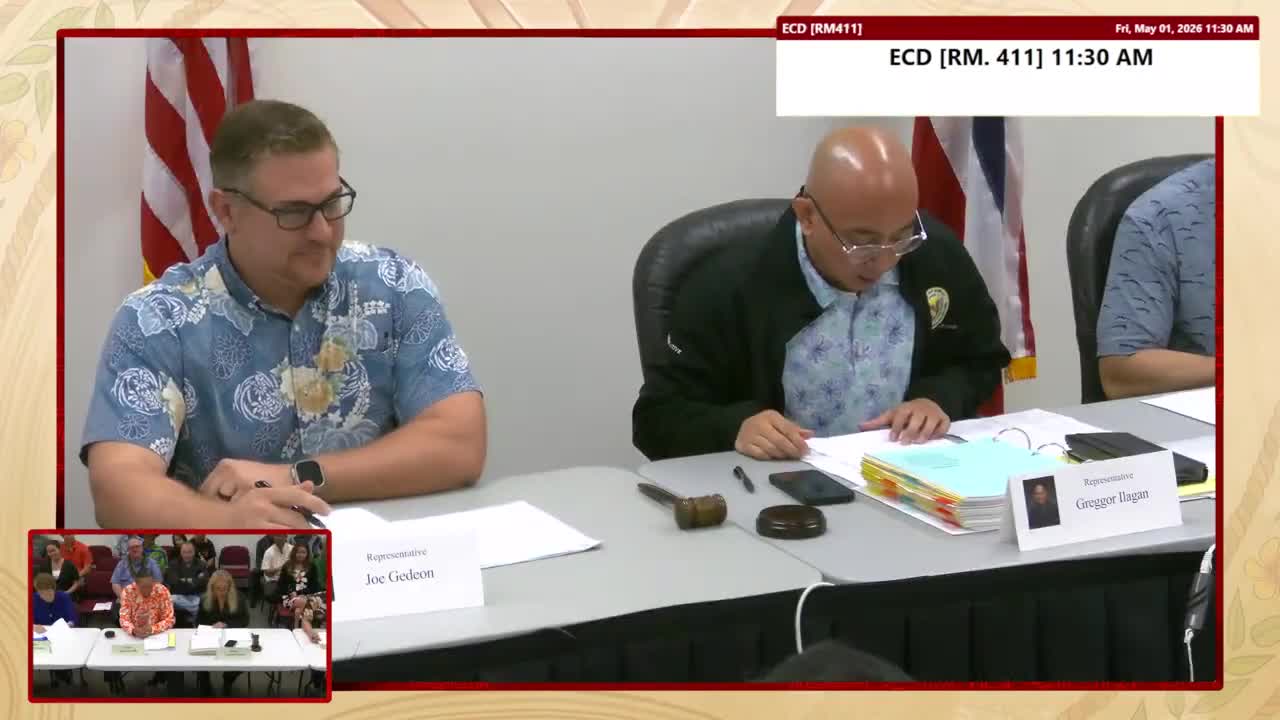 42SEC
Conference Committee
 3MIN
Conference Committee
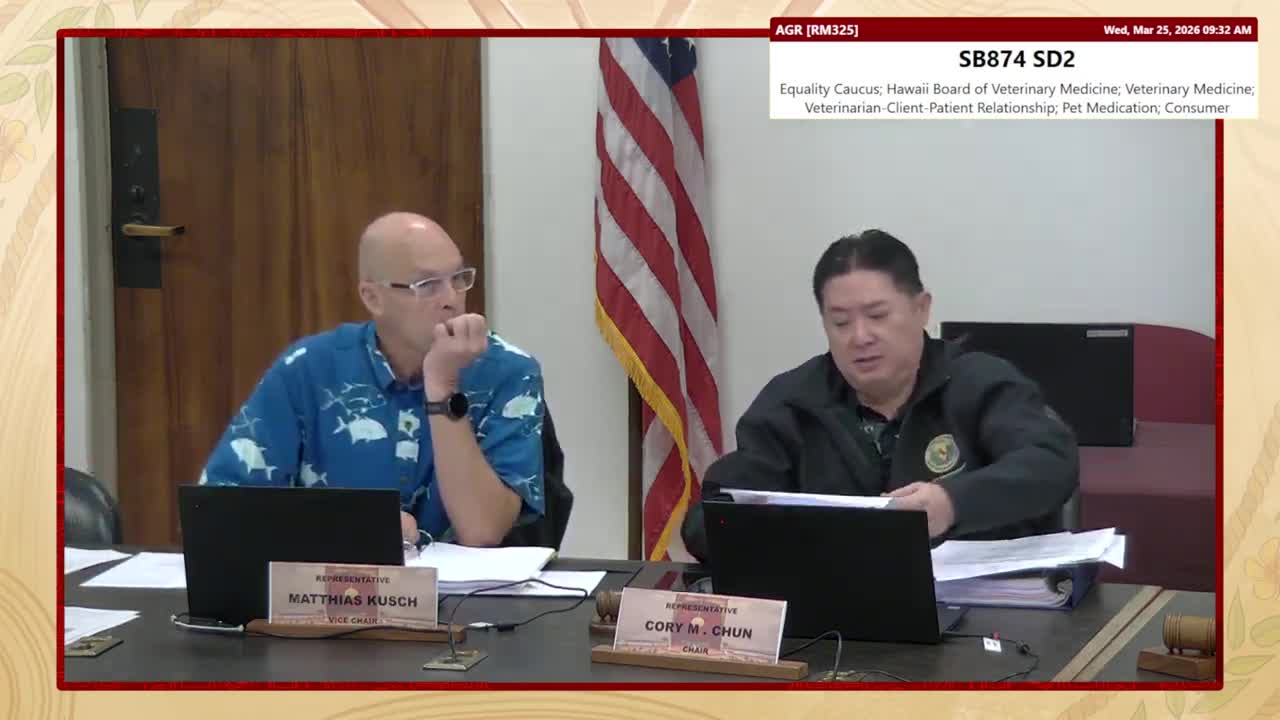 7MIN
House Standing Committee on Agriculture & Food Systems
7MIN
House Standing Committee on Energy & Environmental Protection
 1MIN
House Standing Committee on Agriculture & Food Systems
1MIN
House Standing Committee on Energy & Environmental Protection
 17MIN
House Standing Committee on Economic Development & Technology
 51SEC
House Standing Committee on Economic Development & Technology
Bill Author