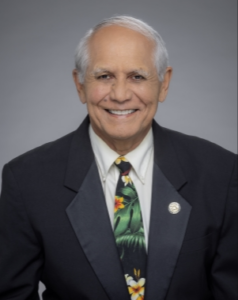
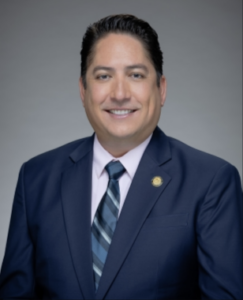
SB 2158: Board of Veterinary Medicine; Veterinarian Workforce Development Special Fund; Scholarships; Loan Repayment; Interstate Partnerships; Memoranda of Understanding; Appropriation
- Session Year: 2025-2026
- House: Senate
- Latest Version Date: 2026-02-17
Current Status:
Failed
(2026-02-18: Report adopted; Passed Second Reading, as amended (SD 1) and referred to WAM.)
Introduced
In Committee
First Chamber
In Committee
Second Chamber
Final Decking
Enacted
Establishes the Veterinarian Workforce Development Special Fund. Establishes the Veterinarian Workforce Development Loan Repayment and Scholarship Program to support qualified veterinarians committed to or currently working in veterinary medicine in the State. Authorizes the Hawaii Board of Veterinary Medicine to enter into agreements, including memoranda of understanding, with the University of Hawaii, the Hawaii Veterinary Medical Association, and accredited out‑of‑state schools to increase the availability of accredited veterinary programs and licensure opportunities to residents of the State. Appropriates funds. Effective 1/1/2077. (SD1)
Establishes the Veterinarian Workforce Development Special Fund. Establishes the Veterinarian Workforce Development Loan Repayment and Scholarship Program to support qualified veterinarians committed to or currently working in veterinary medicine in the State. Authorizes the Hawaii Board of Veterinary Medicine to enter into agreements, including memoranda of understanding, with the University of Hawaii, the Hawaii Veterinary Medical Association, and accredited out‑of‑state schools to increase the availability of accredited veterinary programs and licensure opportunities to residents of the State. Appropriates funds.
|
THE SENATE |
S.B. NO. |
2158 |
|
THIRTY-THIRD LEGISLATURE, 2026 |
S.D. 1 |
|
|
STATE OF HAWAII |
|
|
|
|
|
|
|
|
||
|
|
||
A BILL FOR AN ACT
RELATING TO VETERINARIANS.
BE IT ENACTED BY THE LEGISLATURE OF THE STATE OF HAWAII:
Presently, there are a myriad of issues that limit the potential to increase the number of licensed veterinarians in the State. For one, the State does not have a veterinary school, requiring individuals interested in pursuing a career in veterinary medicine to advance their education out-of-state, where many often remain after graduation. Without an educational option in Hawaii, veterinary graduates who do return to the State encounter financial barriers such as higher out‑of‑state tuition and relocation costs, higher costs of living due to geographical isolation, and considerable student loan debt.
The legislature further finds that, in the United States, the pursuit of a doctor of veterinary medicine degree is a costly undertaking, with total program costs ranging from $150,000 to $400,000 for private out-of-state programs. Average program costs in the United States range from $200,000 to $275,000. The average graduate accumulates anywhere from $150,000 to $200,000 in student loan debt, with certain graduates accumulating more debt based on their chosen program. Therefore, it is imperative to incentivize current and future veterinarians to practice in the State by offering benefits to help lessen tuition burdens.
The legislature additionally finds that there are structural limitations within the State's veterinary education policy framework, contributing to a stunted workforce and highlighting the need for well-trained, highly qualified veterinary professionals in the State. Given the State's unique geography and resources, veterinarians must often adapt to a combination of geographical constraints such as inter‑island travel, along with practical challenges associated with limited specialty referrals, exotic species cases tied to endemic ecosystems, regulatory issues tied to import and export of animals and quarantine, and cultural sensitivities regarding animals in local communities. The role frequently demands flexibility, requiring that one may be called upon to assist in rural or remote clinics, serve in high-volume spay or neuter operations, participate in emergency or disaster-response animal-welfare efforts, or collaborate with wildlife agencies.
The legislature finds that the shortage of veterinary professionals in the State directly impacts and affects livestock health management, animal disease prevention, and emergency response frameworks, creating broader economic and biosecurity vulnerabilities. Without intervention, the State risks continued decline in veterinary service availability, compromising animal welfare, food security, and agricultural biosecurity. Offering prospective students and current veterinarians increased educational pathways and options within the State's veterinary educational framework will catalyze growth and expansion of the field of veterinary medicine, enhance the agricultural industry, move to address the shortage of veterinarians in the State, incentivize the interests of individuals seeking entry into the profession, and assist qualified individuals who hold student debt.
Accordingly, the purpose of this Act is to:
(1) Establish the veterinary workforce development special fund;
(2) Establish the veterinary workforce development loan repayment and scholarship program to assist veterinarians in the State with loan repayments and completion of veterinary medicine education; and
(3) Increase the number of seats available to Hawaii residents interested in pursuing a doctor of veterinary medicine degree by authorizing the Hawaii board of veterinary medicine to enter into interstate partnerships and memoranda of agreement, in accordance with rules adopted pursuant to chapter 91, Hawaii Revised Statutes.
SECTION 2. Chapter 471, Hawaii Revised Statutes, is amended by adding three new sections to be appropriately designated and to read as follows:
"§471-A Veterinary workforce development special fund. (a) There is established the veterinary workforce development special fund, to be administered and expended by the board.
(b) The following shall be deposited into the special fund:
(1) Appropriations by the legislature;
(2) Grants, donations, gifts, or other income received for the purposes of the special fund; and
(3) Interest earned or accrued on moneys in the special fund.
(c) Moneys in the special fund shall be used to support the veterinary workforce development loan repayment and scholarship program established pursuant to section 471‑B; provided that the special fund shall be used for purposes identified by the board to support veterinary workforce assessment and planning efforts, including the recruitment and retention of veterinarians in the State. This shall include but not be limited to:
(1) Maintaining accurate veterinarian workforce assessment information and providing or updating personal and professional information, which shall be maintained in a secure database; provided that the board may disclose information specific to any veterinarian only with the express written consent of the veterinarian;
(2) Providing loan repayment to veterinarians who commit to working in shortage areas of the State as part of the veterinarian workforce loan repayment and scholarship program administered by the board; and
(3) Providing scholarships to qualifying veterinarians to be determined by the board.
§471-B Veterinary workforce development loan repayment and scholarship program. (a) There is established a veterinary workforce development loan repayment and scholarship program to be administered by the board to provide financial support to veterinary students and practicing veterinarians who agree to work as a full-time veterinarian in shortage areas of the State for a period of time to be determined by the board.
(b) The veterinary workforce development loan repayment and scholarship program shall offer:
(1) Loan repayments to veterinarians who commit to working in shortage areas of the State for a minimum period of time determined by the board; and
(2) Scholarships to veterinary students attending veterinary colleges that meet standards established by the board; provided that the scholarship recipients commit to work in the State after graduation for a minimum period of time determined by the board.
(c) An individual who receives a loan repayment or scholarship pursuant to this section and does not work in the State for the minimum time period specified by the board shall repay the total amount of the loan or scholarship received to the veterinarian workforce development special fund; provided that the board may waive this requirement upon good cause shown.
(d) The board shall adopt rules in accordance with chapter 91 necessary to implement and administer the veterinarian workforce development loan repayment and scholarship program, including eligibility requirements and procedures.
§471-C Veterinary education and training agreements. Beginning January 1, 2027, the board may enter into agreements, including a memorandum of understanding, with the university of Hawaii, Hawaii Veterinary Medical Association, and accredited out-of-state colleges of veterinary medicine to:
(1) Establish pathways for clinical training and joint clinical rotations in the State;
(2) Establish expedited licensure processes for graduates of approved partner programs;
(3) Authorize temporary practice permits for visiting faculty or clinicians providing clinical teaching or services in the State; and
(4) Facilitate interagency coordination to negotiate and operationalize partnerships and agreements with accredited out-of-state schools to increase the availability of program seats for residents in the State."
SECTION 3. No later than December 31, 2026, the Hawaii board of veterinary medicine shall adopt rules pursuant to chapter 91, Hawaii Revised Statutes, necessary to implement section 471-C, Hawaii Revised Statutes.
SECTION 4. There is appropriated out of the general revenues of the State of Hawaii the sum of $ or so much thereof as may be necessary for fiscal year 2026-2027 to be deposited into the veterinary workforce development special fund.
SECTION 5. There is appropriated out of the veterinary workforce development special fund the sum of $ or so much thereof as may be necessary for fiscal year 2026-2027 for scholarships and loan repayments to qualified individuals working as veterinarians in the State pursuant to the requirements of section 471-A, Hawaii Revised Statutes.
The sum appropriated shall be expended by the department of commerce and consumer affairs for the purposes of this Act.
SECTION 6. In codifying the new sections added by section 2 of this Act, the revisor of statutes shall substitute appropriate section numbers for the letters used in designating the new sections in this Act.
SECTION 7. New statutory material is underscored.
SECTION 8. This Act shall take effect on January 1, 2077.
Report Title:
Board of Veterinary Medicine; Veterinarian Workforce Development Special Fund; Scholarships; Loan Repayment; Interstate Partnerships; Memoranda of Understanding; Appropriation
Description:
Establishes the Veterinarian Workforce Development Special Fund. Establishes the Veterinarian Workforce Development Loan Repayment and Scholarship Program to support qualified veterinarians committed to or currently working in veterinary medicine in the State. Authorizes the Hawaii Board of Veterinary Medicine to enter into agreements, including memoranda of understanding, with the University of Hawaii, the Hawaii Veterinary Medical Association, and accredited out‑of‑state schools to increase the availability of accredited veterinary programs and licensure opportunities to residents of the State. Appropriates funds. Effective 1/1/2077. (SD1)
The summary description of legislation appearing on this page is for informational purposes only and is not legislation or evidence of legislative intent.
|
THE SENATE |
S.B. NO. |
2158 |
|
THIRTY-THIRD LEGISLATURE, 2026 |
|
|
|
STATE OF HAWAII |
|
|
|
|
|
|
|
|
||
|
|
||
A BILL FOR AN ACT
RELATING TO VETERINARIANS.
BE IT ENACTED BY THE LEGISLATURE OF THE STATE OF HAWAII:
Presently, there are a myriad of issues that limit the potential to increase the number of licensed veterinarians in the State. For one, the State does not have a veterinary school, requiring individuals interested in pursuing a career in veterinary medicine to advance their education out-of-state, where many often remain after graduation. Without an educational option in Hawaii, veterinary graduates who do return to the State encounter financial barriers such as higher out‑of‑state tuition and relocation costs, higher costs of living due to geographical isolation, and considerable student loan debt.
The legislature further finds that, in the United States, the pursuit of a doctor of veterinary medicine degree is a costly undertaking, with total program costs ranging from $150,000 to $400,000 for private out-of-state programs. Average program costs in the United States range from $200,000 to $275,000. The average graduate accumulates anywhere from $150,000 to $200,000 in student loan debt, with certain graduates accumulating more debt based on their chosen program. Therefore, it is imperative to incentivize current and future veterinarians to practice in the State by offering benefits to help lessen tuition burdens.
The legislature additionally finds that there are structural limitations within the State's veterinary education policy framework, contributing to a stunted workforce and highlighting the need for well-trained, highly qualified veterinary professionals in the State. Given the State's unique geography and resources, veterinarians must often adapt to a combination of geographical constraints such as inter-island travel, along with practical challenges associated with limited specialty referrals, exotic species cases tied to endemic ecosystems, regulatory issues tied to import and export of animals and quarantine, and cultural sensitivities regarding animals in local communities. The role frequently demands flexibility, requiring that one may be called upon to assist in rural or remote clinics, serve in high-volume spay or neuter operations, participate in emergency or disaster-response animal-welfare efforts, or collaborate with wildlife agencies.
The legislature finds that the shortage of veterinary professionals in the State directly impacts and affects livestock health management, animal disease prevention, and emergency response frameworks, creating broader economic and biosecurity vulnerabilities. Without intervention, the State risks continued decline in veterinary service availability, compromising animal welfare, food security, and agricultural biosecurity. Offering prospective students and current veterinarians increased educational pathways and options within the State's veterinary educational framework will catalyze growth and expansion of the field of veterinary medicine, enhance the agricultural industry, move to address the shortage of veterinarians in the State, incentivize the interests of individuals seeking entry into the profession, and assist qualified individuals who hold student debt.
Accordingly, the purpose of this Act is to:
(1) Establish the veterinary workforce development special fund;
(2) Establish the veterinary workforce development loan repayment and scholarship program to assist veterinarians in the State with loan repayments and completion of veterinary medicine education; and
(3) Increase the number of seats available to Hawaii residents interested in pursuing a doctor of veterinary medicine degree by authorizing the Hawaii board of veterinary medicine to enter into interstate partnerships and memoranda of agreement, in accordance with rules adopted pursuant to chapter 91, Hawaii Revised Statutes.
SECTION 2. Chapter 471, Hawaii Revised Statutes, is amended by adding three new sections to be appropriately designated and to read as follows:
"§471-A Veterinary workforce development special fund. (a) There is established the veterinary workforce development special fund, to be administered and expended by the board.
(b) The following shall be deposited into the special fund:
(1) Appropriations by the legislature;
(2) Grants, donations, gifts, or other income received for the purposes of the special fund; and
(3) Interest earned or accrued on moneys in the special fund.
(c) Moneys in the special fund shall be used to support the veterinary workforce development loan repayment and scholarship program established pursuant to section 471-B; provided that the special fund shall be used for purposes identified by the board to support veterinary workforce assessment and planning efforts, including the recruitment and retention of veterinarians in the State. This shall include but not be limited to:
(1) Maintaining accurate veterinarian workforce assessment information and providing or updating personal and professional information, which shall be maintained in a secure database; provided that the board may disclose information specific to any veterinarian only with the express written consent of the veterinarian;
(2) Providing loan repayment to veterinarians who commit to working in shortage areas of the State as part of the veterinarian workforce loan repayment and scholarship program administered by the board; and
(3) Providing scholarships to qualifying veterinarians to be determined by the board.
§471-B Veterinary workforce development loan repayment and scholarship program. (a) There is established a veterinary workforce development loan repayment and scholarship program to be administered by the board to provide financial support to veterinary students and practicing veterinarians who agree to work as a full-time veterinarian in shortage areas of the State for a period of time to be determined by the board.
(b) The veterinary workforce development loan repayment and scholarship program shall offer:
(1) Loan repayments to veterinarians who commit to working in shortage areas of the State for a minimum period of time determined by the board; and
(2) Scholarships to veterinary students attending veterinary colleges that meet standards established by the board; provided that the scholarship recipients commit to work in the State after graduation for a minimum period of time determined by the board.
(c) An individual who receives a loan repayment or scholarship pursuant to this section and does not work in the State for the minimum time period specified by the board shall repay the total amount of the loan or scholarship received to the veterinarian workforce development special fund; provided that the board may waive this requirement upon good cause shown.
(d) The board shall adopt rules in accordance with chapter 91 necessary to implement and administer the veterinarian workforce development loan repayment and scholarship program, including eligibility requirements and procedures.
§471-C Veterinary education and training agreements. Beginning January 1, 2027, the board may enter into agreements, including a memorandum of understanding, with the university of Hawaii, Hawaii Veterinary Medical Association, and accredited out-of-state colleges of veterinary medicine to:
(1) Establish pathways for clinical training and joint clinical rotations in the State;
(2) Establish expedited licensure processes for graduates of approved partner programs;
(3) Authorize temporary practice permits for visiting faculty or clinicians providing clinical teaching or services in the State; and
(4) Facilitate interagency coordination to negotiate and operationalize partnerships and agreements with accredited out-of-state schools to increase the availability of program seats for residents in the State."
SECTION 3. No later than December 31, 2026, the Hawaii board of veterinary medicine shall adopt rules pursuant to chapter 91, Hawaii Revised Statutes, necessary to implement section 471-C, Hawaii Revised Statutes.
SECTION 4. There is appropriated out of the general revenues of the State of Hawaii the sum of $ or so much thereof as may be necessary for fiscal year 2026-2027 to be deposited into the veterinary workforce development special fund.
SECTION 5. There is appropriated out of the veterinary workforce development special fund the sum of $ or so much thereof as may be necessary for fiscal year 2026-2027 for scholarships and loan repayments to qualified individuals working as veterinarians in the State pursuant to the requirements of section 471-A, Hawaii Revised Statutes.
The sum appropriated shall be expended by the department of commerce and consumer affairs for the purposes of this Act.
SECTION 6. In codifying the new sections added by section 2 of this Act, the revisor of statutes shall substitute appropriate section numbers for the letters used in designating the new sections in this Act.
SECTION 7. New statutory material is underscored.
SECTION 8. This Act shall take effect on July 1, 2026.
|
INTRODUCED BY: |
_____________________________ |
|
|
|
Report Title:
Board of Veterinary Medicine; Veterinarian Workforce Development Special Fund; Scholarships; Loan Repayment; Interstate Partnerships; Memoranda of Understanding; Appropriation
Description:
Establishes the Veterinarian Workforce Development Special Fund. Establishes the Veterinarian Workforce Development Loan Repayment and Scholarship Program to support qualified veterinarians committed to or currently working in veterinary medicine in the State. Authorizes the Hawaii Board of Veterinary Medicine to enter into agreements, including memoranda of understanding, with the University of Hawaii, the Hawaii Veterinary Medical Association, and accredited out‑of‑state schools to increase the availability of accredited veterinary programs and licensure opportunities to residents of the State. Appropriates funds.
The summary description of legislation appearing on this page is for informational purposes only and is not legislation or evidence of legislative intent.
|
Date
|
Status
|
|---|---|
| Feb 18, 2026 | Report adopted; Passed Second Reading, as amended (SD 1) and referred to WAM. |
| Feb 18, 2026 | Reported from LBT/CPN (Stand. Com. Rep. No. 2313) with recommendation of passage on Second Reading, as amended (SD 1) and referral to WAM. |
| Feb 6, 2026 | The committee(s) on CPN recommend(s) that the measure be PASSED, WITH AMENDMENTS. The votes in CPN were as follows: 4 Aye(s): Senator(s) Keohokalole, Fukunaga, Lamosao, McKelvey; Aye(s) with reservations: none ; 0 No(es): none; and 1 Excused: Senator(s) Awa. |
| Feb 6, 2026 | The committee(s) on LBT recommend(s) that the measure be PASSED, WITH AMENDMENTS. The votes in LBT were as follows: 5 Aye(s): Senator(s) Elefante, Lamosao, Ihara, Moriwaki, Fevella; Aye(s) with reservations: none ; 0 No(es): none; and 0 Excused: none. |
| Feb 2, 2026 | The committee(s) on LBT/CPN has scheduled a public hearing on 02-06-26 10:00AM; Conference Room 229 & Videoconference. |
| Jan 22, 2026 | Referred to LBT/CPN, WAM. |
| Jan 21, 2026 | Introduced and passed First Reading. |
| Jan 14, 2026 | Pending Introduction. |
|
Date
|
Description
|
Location
|
Votes
|
|
|---|---|---|---|---|
| Feb 6, 2026 | The committee(s) on CPN recommend(s) that the measure be PASSED, WITH AMENDMENTS | Senate Standing Committee on Commerce and Consumer Protection |
Passed |
|
| Feb 6, 2026 | The committee(s) on LBT recommend(s) that the measure be PASSED, WITH AMENDMENTS | Senate Standing Committee on Labor and Technology |
Passed |
This list shows positions taken on this bill by organizations on the date displayed, which is linked to the original source.
Positions by individuals are not included.
|
Organization
|
Position
|
Date
|
|---|---|---|
| Department of Agriculture and Biosecurity | ** Support | |
| Department of Agriculture & Biosecurity | *** Support | Feb 6, 2026 |
| Hawaii Veterinary Medical Association | ** Support | |
| Hawaiian Humane Society | ** Support | |
| University of Hawaiʻi system | ** Support |
STAND. COM. REP. NO. 2313
Honolulu, Hawaii
RE: S.B. No. 2158
S.D. 1
Honorable Ronald D. Kouchi
President of the Senate
Thirty-Third State Legislature
Regular Session of 2026
State of Hawaii
Sir:
Your Committees on Labor and Technology and Commerce and Consumer Protection, to which was referred S.B. No. 2158 entitled:
"A BILL FOR AN ACT RELATING TO VETERINARIANS,"
beg leave to report as follows:
The purpose and intent of this measure is to:
(1) Establish the Veterinarian Workforce Development Special Fund;
(2) Establish the Veterinarian Workforce Development Loan Repayment and Scholarship Program to support qualified veterinarians committed to or currently working in veterinary medicine in the State; and
(3) Authorize the Hawaii Board of Veterinary Medicine to enter into agreements, including memoranda of understanding, with the University of Hawaii, Hawaii Veterinary Medical Association, and accredited out‑of‑state schools to increase the availability of accredited veterinary programs and licensure opportunities to residents of the State.
Your Committees received testimony in support of this measure from the Department of Agriculture and Biosecurity, University of Hawaiʻi System, Hawaiian Humane Society, Hawaii Veterinary Medical Association, and thirteen individuals.
Your Committees received comments on this measure from the Hawaii Board of Veterinary Medicine and one individual.
Your Committees find that there is a critical need for licensed veterinarians in the State, due to various factors, including the absence of an in-state veterinary school, high educational and relocation costs and the unique geographical and environmental demands of practicing in Hawaii. According to the University of Hawaii System, the cost to establish a new doctor of veterinary medicine school in the State would be an estimated $50 to 70 million, plus potentially another $100 million to construct the required facilities. This measure provides a more cost‑effective approach by authorizing the Hawaii Board of Veterinary Medicine to establish and set the parameters for a veterinary workforce loan repayment and scholarship program to incentivize local students to pursue a doctor of veterinary medicine degree and return to the State to practice.
Your Committees have amended this measure by inserting an effective date of January 1, 2077, to encourage further discussion.
As affirmed by the records of votes of the members of your Committees on Labor and Technology and Commerce and Consumer Protection that are attached to this report, your Committees are in accord with the intent and purpose of S.B. No. 2158, as amended herein, and recommend that it pass Second Reading in the form attached hereto as S.B. No. 2158, S.D. 1, and be referred to your Committee on Ways and Means.
Respectfully submitted on behalf of the members of the Committees on Labor and Technology and Commerce and Consumer Protection,
|
________________________________ JARRETT KEOHOKALOLE, Chair |
|
________________________________ BRANDON J.C. ELEFANTE, Chair |
|
Date
|
Testimony PDF
|
|---|---|
| Feb 6, 2026 | SB2158_TESTIMONY_CPN-LBT_02-06-26_.PDF |
Discussed in Hearing
 4MIN
Conference Committee
 3MIN
Senate Standing Committee on Commerce and Consumer Protection
3MIN
Senate Standing Committee on Hawaiian Affairs
3MIN
Senate Standing Committee on Health and Human Services
3MIN
Senate Standing Committee on Labor and Technology
1MIN
Senate Standing Committee on Commerce and Consumer Protection
1MIN
Senate Standing Committee on Hawaiian Affairs
1MIN
Senate Standing Committee on Health and Human Services
Bill Author