SB 1396
- Session Year: 2025-2026
- House: Senate
- Latest Version Date: 2025-05-01
Current Status:
In Progress
(2025-05-27: Act 096, on 05/27/2025 (Gov. Msg. No. 1196).)
Introduced
In Committee
First Chamber
In Committee
Second Chamber
Final Decking
Enacted
What does this bill do?
This amendment sets the tax rate for the taxes covered by subsections (a) and (c) at 11% and directs any revenue above a 10% rate into the state's mass transit special fund, with the remaining revenue at the 10% level going to the general fund. If a court orders payment to a county with more than 500,000 people because a county surcharge was found unlawful, the state will deduct that award from the mass transit fund deposits and treat it as general fund revenue.
The summary is provided by generative AI which can make mistakes. For original language, please view the details in the table below.
Beginning 7/1/2025, requires the Governor to request in the executive budget or supplemental budget that an amount of general funds that approximates the additional Transient Accommodations Tax revenue generated by this Act be expended to advance certain climate change mitigation and tourism projects. Increases the Transient Accommodations Tax rate beginning on 1/1/2026. Assesses the Transient Accommodations Tax on gross rental proceeds derived from cruise fares. Amends the amount of Transient Accommodation Tax that shall be deposited into the Mass Transit Special Fund. Amends the allowable uses of the Special Land and Development Fund and the portion of Transient Accommodations Tax collections that are allocated to the Special Land and Development Fund. Effective 1/1/2026. (CD2)
Beginning 7/1/2025, requires the Governor to request in the executive budget or supplemental budget that an amount of general funds that approximates the additional Transient Accommodations Tax revenue generated by this Act be expended to advance certain climate change mitigation and tourism projects. Increases the Transient Accommodations Tax rate beginning on 1/1/2026. Assesses the Transient Accommodations Tax on gross rental proceeds derived from cruise fares. Amends the amount of Transient Accommodation Tax that shall be deposited into the Mass Transit Special Fund. Amends the allowable uses of the Special Land and Development Fund and the portion of Transient Accommodations Tax collections that are allocated to the Special Land and Development Fund. Effective 1/1/2026. (CD2)
Beginning 7/1/2025, requires the Governor to request in the executive budget or supplemental budget that an amount of general funds that approximates the additional Transient Accommodations Tax revenue generated by this Act be expended to advance certain climate change mitigation and tourism projects. Increases the Transient Accommodations Tax rate beginning on 1/1/2026. Assesses the Transient Accommodations Tax on gross rental proceeds derived from cruise fares. Amends the amount of Transient Accommodation Tax that shall be deposited into the Mass Transit Special Fund. Amends the allowable uses of the Special Land and Development Fund and the portion of Transient Accommodations Tax collections that are allocated to the Special Land and Development Fund. Effective 1/1/2026. (CD1)
Amends the Transient Accommodations Tax rate beginning on 1/1/2027. Amends the allowable uses of the Special Land and Development Fund and the portion of Transient Accommodations Tax collections that are allocated to the Special Land and Development Fund. Assesses the Transient Accommodations Tax on cruise ship cabins based on the total time the cruise ship is docked at any port in the State. Appropriates funds to DLNR for protection, management, and restoration of the State's natural resources as well as for environmental stewardship, climate and hazard mitigation, and sustainable tourism. Effective 7/1/3000. (HD3)
Amends the Transient Accommodations Tax rate beginning on 1/1/2027. Assesses the Transient Accommodations Tax on cruise ship cabins based on the total time the cruise ship is docked at any port in the State. Appropriates funds to DLNR for protection, management, and restoration of the State's natural resources as well as for environmental stewardship, climate and hazard mitigation, and sustainable tourism. Effective 7/1/3000. (HD2)
Amends the transient accommodations tax rate beginning on 1/1/2027. Beginning 1/1/2027, requires a $20 transient accommodation tax to be levied per night for each furnishing of transient accommodations in exchange for points, miles, or other amounts provided through a membership, loyalty, or rewards program. Appropriates funds to DLNR for protection, management, and restoration of the State's natural resources. Effective 7/1/3000. (HD1)
Beginning 1/1/2026, increases the Transient Accommodation Tax by an unspecified amount. Requires the Governor to request in the budget or supplemental budget submitted to the Legislature for an amount of general funds equal to an unspecified percentage of the transient accommodations tax revenue be expended to advance specific projects that address climate change and support tourism marketing and destination management. Effective 7/1/2050. (SD3)
Beginning 1/1/2026, increases the Transient Accommodation Tax by an unspecified amount. Requires the Governor to request in the budget or supplemental budget submitted to the legislature for an amount of general funds equal to an unspecified percentage of the transient accommodations tax revenue be expended to advance specific projects that address climate change and tourism impacts. Effective 7/1/2050. (SD2)
Establishes the Climate Mitigation and Resiliency Special Fund to be administered by the Department of Defense to advance projects addressing climate change impacts. Requires the DOD to convene a selection committee to review and recommend projects for Climate Mitigation and Resiliency Special Fund allocation. Requires the Adjutant General to adopt rules. Establishes the Economic Development and Revitalization Special Fund to be administered by the Department of Business, Economic Development, and Tourism for projects advancing economic development or revitalization; infrastructure within tourism districts or resort areas; climate change mitigation, adaptation, or resiliency; and tourism marketing. Requires DBEDT to establish procedures for receiving and evaluating project proposals for Economic Development and Revitalization Special Fund allocation. Requires DBEDT to submit annual reports to the Legislature. Beginning 1/1/2026, increases the Transient Accommodation Tax and allocates a portion thereof to the Climate Mitigation and Resiliency Special Fund. Appropriates funds. Effective 7/1/2050. (SD1)
Establishes the Climate Mitigation and Resiliency Special Fund and the Economic Development and Revitalization Special Fund. Beginning January 1, 2026, increases the Transient Accommodations Tax. Allocates funds generated by the increase to the newly established funds.
SENATE FLOOR AMENDMENT
FLOOR AMENDMENT NO. Date
TO: SENATE Bill 1396 S.D. 3, H.D. 3, C.D. 1
Section 1. S.B. 1396, S.D. 3, H.D. 3, C.D. 1, is amended by page 15, line 9 through page 16, line 11, to read as follows:
"3. By amending subsection (e) to read:
"(e)
Notwithstanding the tax rates established in subsections [(a)(5)] (a)(6)
and [(c)(3),] (c)(4), the tax rates levied, assessed, and
collected pursuant to subsections (a) and (c) shall be [10.25] eleven
per cent for the period beginning on January 1, 2018, to December 31, 2030;
provided that:
(1) The tax revenues levied,
assessed, and collected pursuant to this subsection that are in excess of the
revenues realized from the levy, assessment, and collection of tax at the [9.25]
ten per cent rate shall be deposited quarterly into the mass transit
special fund established under section 248-2.7; and
(2) If a court of competent jurisdiction determines that the amount of county surcharge on state tax revenues deducted and withheld by the State, pursuant to section 248-2.6, violates statutory or constitutional law and, as a result, awards moneys to a county with a population greater than five hundred thousand, then an amount equal to the monetary award shall be deducted and withheld from the tax revenues deposited under paragraph (1) into the mass transit special fund, and those funds shall be a general fund realization of the State.
The remaining tax
revenues levied, assessed, and collected at the [9.25] ten per
cent tax rate pursuant to subsections (a) and (c) shall be deposited into the
general fund in accordance with section 237D-6.5(b)."
|
Offered by: |
( ) Carried
|
|
|
( ) Failed to Carry
|
|
|
( ) Withdrawn
|
|
THE SENATE |
S.B. NO. |
1396 |
|
THIRTY-THIRD LEGISLATURE, 2025 |
S.D. 3 |
|
|
STATE OF HAWAII |
H.D. 3 |
|
|
|
C.D. 2 |
|
|
|
||
|
|
||
A BILL FOR AN ACT
RELATING TO ECONOMIC DEVELOPMENT.
BE IT ENACTED BY THE LEGISLATURE OF THE STATE OF HAWAII:
The legislature further finds that economic development cannot be separated from environmental stewardship. Hawaii's economy is deeply reliant on its natural resources, from tourism and agriculture to marine industries and renewable energy. Degradation of these resources due to climate change and environmental mismanagement will result in significant financial losses across multiple sectors. By investing in sustainability, the State secures long-term economic stability while preserving its unique landscapes and biodiversity.
The legislature also finds that climate resilience must be integrated into all economic planning efforts. Resiliency measures, such as sustainable land use practices, shoreline protection, and forestry projects, ensure that Hawaii's economy remains robust in the face of climate-related disasters. Without proactive investment, businesses and communities will continue to suffer financial losses due to increased flooding, wildfires, and extreme weather events.
The legislature additionally finds that investing in Hawaii's environment is, in itself, economic development. Furthermore, the legislature finds that as contemplated, the transient accommodations tax is intended to be applied fully and equitably whenever a transient accommodation is furnished within the State. Whereas hotel and lodging establishments have complied with and pay their due share of transient accommodations taxes, tax collections on short-term rental operators have fallen short. Moreover, there is currently no transient accommodations tax levied on cruise ships, which in 2024, accounted for 972,820 passenger port calls at port facilities under the jurisdiction of the department of transportation. Supporting sustainable practices protects the islands' unique ecosystems while simultaneously fostering economic growth. This support includes funding renewable energy projects, enhancing conservation efforts, and promoting environmental tourism initiatives. These investments preserve natural resources, reduce carbon footprints, and stimulate economic opportunities, such as job creation in renewable energy sectors and eco-friendly tourism.
In addition, the legislature finds that Hawaii has an opportunity to be a global leader in sustainable innovation. By investing in conservation-focused business models, the State can attract investors and industries that prioritize sustainability. These initiatives not only protect the environment but also diversify the economy, reducing reliance on tourism and traditional extractive industries.
The legislature further finds that Hawaii's cultural heritage and traditions are deeply connected to its natural environment. The protection and restoration of forests, coral reefs, and coastal ecosystems safeguard the foundation of Native Hawaiian practices and knowledge systems. Investing in environmental conservation ensures that these traditions can continue to thrive, enriching community well-being and cultural tourism.
The legislature also finds that a failure to act now will result in increased costs in the future. The economic burden of climate inaction will far exceed the cost of proactive investment in mitigation and adaptation strategies. Infrastructure damage, loss of biodiversity, increased health issues due to heat and pollution, and disruptions to tourism and agriculture will place a heavy financial strain on the State if environmental action is delayed.
The legislature additionally finds that a strong commitment to environmental sustainability enhances Hawaii's reputation as a world-class destination for ecotourism. Travelers are increasingly seeking destinations that prioritize sustainability, and by investing in conservation efforts, renewable energy, and sustainable tourism practices, Hawaii can maintain its competitive edge in the global tourism market while ensuring the long-term viability of its natural resources.
The legislature therefore declares that investment in climate resilience and environmental sustainability is a fundamental component of Hawaii's economic development strategy. By prioritizing policies and funding mechanisms that support climate action, conservation, and sustainable industries, Hawaii can build a more resilient, prosperous, and environmentally secure future for all residents and visitors.
Accordingly, the purpose of this Act is to:
(1) Increase the transient accommodations tax rate for transient accommodations and resort time shares;
(2) Assess the transient accommodations tax on the gross receipts derived from cruise fares;
(3) Require the governor to request in the executive budget or supplemental budget that an amount of general funds that approximates the additional transient accommodations tax revenue generated by this Act be expended equally to advance certain climate change mitigation and tourism projects; and
(4) Amend the allowable uses of the special land and development fund and the portion of transient accommodations tax collections that are allocated to the special land and development fund.
SECTION 2. Chapter 37, Hawaii Revised Statutes, is amended by adding a new section to part IV to be appropriately designated and to read as follows:
"§37- Climate change and tourism destination management; projects; budget request. The governor shall request, in the budget or the supplemental budget submitted to the legislature pursuant to section 37-71 or 37-72, that an amount of general funds that approximates the additional revenue generated by any increase to the transient accommodations tax rates pursuant to section 237D-2(a)(6) and (c)(4) beginning on January 1, 2026, and section 237D-2(e) beginning on July 1, 2026, and by assessment of the transient accommodations tax on gross rental proceeds derived from cruise fares pursuant to section 237D-2(a) be expended equally to advance specific projects to:
(1) Protect, manage, and restore the State's natural resources, including native forests, native plants and animals, aquatic resources, coastal lands, and freshwater resources;
(2) Increase the resilience of structures and infrastructure to natural and climate-related disasters, such as hurricanes and sea level rise, and perform hazard mitigation activities, such as wildfire and flood mitigation; and
(3) Improve the visitor experience, mitigate the impacts of tourism on the natural environment, ensure that the State's natural resources are maintained for future residents and visitors, and support destination management, such as park improvements and beach improvement, nourishment, and maintenance projects."
SECTION 3. Section 171-19, Hawaii Revised Statutes, is amended by amending subsection (a) to read as follows:
(1) To reimburse the general fund of the State for advances made that are required to be reimbursed from the proceeds derived from sales, leases, licenses, or permits of public lands;
(2) For the planning, development, management, operations, or maintenance of all lands and improvements under the control and management of the board pursuant to title 12, including but not limited to permanent or temporary staff positions who may be appointed without regard to chapter 76;
(3) To repurchase any land, including improvements, in the exercise by the board of any right of repurchase specifically reserved in any patent, deed, lease, or other documents or as provided by law;
(4) For the payment of all appraisal fees; provided that all fees reimbursed to the board shall be deposited in the fund;
(5) For the payment of publication notices as required under this chapter; provided that all or a portion of the expenditures may be charged to the purchaser or lessee of public lands or any interest therein under rules adopted by the board;
(6) For the management, maintenance, and development of trails and trail accesses under the jurisdiction of the department;
(7) For the payment to private land developers who have contracted with the board for development of public lands under section 171-60;
(8) For the payment of debt service on revenue bonds issued by the department, including revenue bonds issued for the purposes of section 237D-6.5(b)(4), and the establishment of debt service and other reserves deemed necessary by the board;
(9) To reimburse the general fund for debt service on general obligation bonds issued to finance departmental projects, including projects under section 237D-6.5(b)(4), where the bonds are designated to be reimbursed from the special land and development fund;
(10) For the protection, planning, management, and
regulation of water resources under chapter 174C; [and]
(11) For the purposes of section 237D-6.5(b)(4); and
[(11)] (12) For other purposes of this
chapter."
SECTION 4. Section 237D-1, Hawaii Revised Statutes, is amended as follows:
1. By adding three new definitions to be appropriately inserted and to read:
""Cruise fare" means the total amount paid by a transient for a cruise ship cabin on a cruise ship, inclusive of any mandatory fees imposed by a cruise ship operator, owner, or representative thereof on a transient for the use of shipboard services, facilities, meals, and onboard entertainment, but does not include optional charges for shipboard services, meals, excursions, and onboard entertainment beyond the mandatory fee amount.
"Cruise ship" means any ship that docks at any port in the State that charges a fee for and provides cruise ship cabins to transients.
"Cruise ship cabin" means an accommodation or living quarter on a cruise ship that is provided to a transient."
2. By amending the definition of "gross rental" or "gross rental proceeds" to read:
"Gross rental" or "gross rental proceeds" means the gross receipts, cash or accrued, of the taxpayer received as compensation for the furnishing of transient accommodations or entering into arrangements to furnish transient accommodations and the value proceeding or accruing from the furnishing of transient accommodations or entering into arrangements to furnish transient accommodations, including resort fees without any deductions on account of the cost of property or services sold, the cost of materials used, labor cost, taxes, royalties, interest, discounts, or any other expenses whatsoever. "Gross rental" or "gross rental proceeds" includes the gross receipts derived from cruise fares. Every taxpayer shall be presumed to be dealing on a cash basis unless the taxpayer proves to the satisfaction of the department of taxation that the taxpayer is dealing on an accrual basis and the taxpayer's books are so kept, or unless the taxpayer employs or is required to employ the accrual basis for the purposes of the tax imposed by chapter 237 for any taxable year in which event the taxpayer shall report the taxpayer's gross income for the purposes of this chapter on the accrual basis for the same period.
The words "gross rental" or "gross rental proceeds" shall not be construed to include the amounts of taxes imposed by chapter 237 or this chapter on operators of transient accommodations, transient accommodations brokers, travel agencies, and tour packagers and passed on, collected, and received from the consumer as part of the receipts received as compensation for the furnishing of transient accommodations or entering into arrangements to furnish transient accommodations.
Where transient accommodations are furnished through arrangements made by a transient accommodations broker, travel agency, or tour packager at noncommissionable negotiated contract rates and the gross income is divided between the operator of transient accommodations on the one hand and the transient accommodations broker, travel agency, or tour packager on the other hand, the tax imposed by this chapter shall apply to each operator and transient accommodations broker, travel agency, or tour packager with respect to that person's respective portion of the proceeds and no more.
For purposes of this definition, where the operator maintains a schedule of rates for identifiable groups of individuals, such as kamaainas, upon which the accommodations are leased, let, or rented, gross rental or gross rental proceeds means the receipts collected and received based upon the scheduled rates and recorded as receipts in its books and records."
SECTION 5. Section 237D-2, Hawaii Revised Statutes, is amended as follows:
1. By amending subsection (a) to read:
"(a) There is levied and shall be assessed and collected each month a tax of:
(1) Five per cent for the period beginning on January 1, 1987, to June 30, 1994;
(2) Six per cent for the period beginning on July 1, 1994, to December 31, 1998;
(3) 7.25 per cent for the period beginning on January 1, 1999, to June 30, 2009;
(4) 8.25 per cent for the period beginning on July 1,
2009, to June 30, 2010; [and]
(5) 9.25 per cent for the period beginning on July 1,
2010[, and thereafter;] to December 31, 2025; and
(6) Ten per cent for the period beginning on January 1, 2026, and thereafter,
on the gross rental or gross rental proceeds derived
from furnishing transient accommodations[.]; provided that an
operator of a cruise ship shall be assessed and pay a tax of eleven per cent
under this subsection on all gross rental proceeds derived from cruise fares
prorated by the percentage of days docked at any port in the State in
comparison to the total number of days of the voyage."
2. By amending subsection (c) to read:
"(c) There is levied and shall be assessed and collected each month, on the occupant of a resort time share vacation unit, a transient accommodations tax of:
(1) 7.25 per cent on the fair market rental value until December 31, 2015;
(2) 8.25 per cent on the fair market rental value for
the period beginning on January 1, 2016, to December 31, 2016; [and]
(3) 9.25 per cent on the fair market rental value for
the period beginning on January 1, 2017, [and thereafter.] to
December 31, 2025; and
(4) Ten per cent on the fair market rental value for the period beginning on January 1, 2026, and thereafter."
3. By amending subsection (e) to read:
"(e) Notwithstanding the tax rates
established in subsections [(a)(5)] (a)(6) and [(c)(3),] (c)(4),
the tax rates levied, assessed, and collected pursuant to subsections (a) and
(c) shall be [10.25] eleven per cent for the period beginning on
January 1, 2018, to December 31, 2030; provided that:
(1) The tax revenues levied, assessed, and collected
pursuant to this subsection that are in excess of the revenues realized from
the levy, assessment, and collection of tax at the [9.25] ten per
cent rate shall be deposited quarterly into the mass transit special fund
established under section 248-2.7; and
(2) If a court of competent jurisdiction determines that the amount of county surcharge on state tax revenues deducted and withheld by the State, pursuant to section 248-2.6, violates statutory or constitutional law and, as a result, awards moneys to a county with a population greater than five hundred thousand, then an amount equal to the monetary award shall be deducted and withheld from the tax revenues deposited under paragraph (1) into the mass transit special fund, and those funds shall be a general fund realization of the State.
The remaining tax revenues levied, assessed,
and collected at the [9.25] ten per cent tax rate pursuant to
subsections (a) and (c) shall be deposited into the general fund in accordance
with section 237D-6.5(b)."
SECTION 6. Section 237D-6.5, Hawaii Revised Statutes, is amended by amending subsection (b) to read as follows:
"(b) Except for the revenues collected pursuant to section 237D-2(e), revenues collected under this chapter shall be distributed in the following priority, with the excess revenues to be deposited into the general fund:
(1) $1,500,000 shall be allocated to the Turtle Bay conservation easement special fund beginning July 1, 2015, for the reimbursement to the state general fund of debt service on reimbursable general obligation bonds, including ongoing expenses related to the issuance of the bonds, the proceeds of which were used to acquire the conservation easement and other real property interests in Turtle Bay, Oahu, for the protection, preservation, and enhancement of natural resources important to the State, until the bonds are fully amortized;
(2) $11,000,000 shall be allocated to the convention center enterprise special fund established under section 201B-8;
(3) An allocation shall be deposited into the tourism emergency special fund, established in section 201B-10, in a manner sufficient to maintain a fund balance of $5,000,000 in the tourism emergency special fund; and
(4) $3,000,000 shall be allocated to the special land
and development fund established under section 171-19[; provided that the
allocation shall be expended in accordance with the Hawaii tourism authority
strategic plan] for:
(A) The protection, preservation,
maintenance, and enhancement of natural resources, including beaches[,
important to the visitor industry];
(B) Planning, construction, and repair of
facilities; [and]
(C) Operation [and],
maintenance, and improvement costs of public lands, including beaches[,
connected with enhancing the visitor experience.]; and
(D) Any related debt service and financing agreement costs.
All transient accommodations taxes shall be paid into the state treasury each month within ten days after collection and shall be kept by the state director of finance in special accounts for distribution as provided in this subsection."
SECTION 7. If any provision of this Act, or the application thereof to any person or circumstance, is held invalid, the invalidity does not affect other provisions or applications of the Act that can be given effect without the invalid provision or application, and to this end the provisions of this Act are severable.
SECTION 8. Statutory material to be repealed is bracketed and stricken. New statutory material is underscored.
SECTION 9. This Act shall take effect on January 1, 2026; provided that section 2 shall take effect on July 1, 2025.
Report Title:
Transient Accommodations Tax; Increase; Natural Resources; Climate Change Mitigation; Special Land and Development Fund; Cruise Fares; Mass Transit Special Fund
Description:
Beginning 7/1/2025, requires the Governor to request in the executive budget or supplemental budget that an amount of general funds that approximates the additional Transient Accommodations Tax revenue generated by this Act be expended to advance certain climate change mitigation and tourism projects. Increases the Transient Accommodations Tax rate beginning on 1/1/2026. Assesses the Transient Accommodations Tax on gross rental proceeds derived from cruise fares. Amends the amount of Transient Accommodation Tax that shall be deposited into the Mass Transit Special Fund. Amends the allowable uses of the Special Land and Development Fund and the portion of Transient Accommodations Tax collections that are allocated to the Special Land and Development Fund. Effective 1/1/2026. (CD2)
The summary description of legislation appearing on this page is for informational purposes only and is not legislation or evidence of legislative intent.
HOUSE FLOOR AMENDMENT
FLOOR AMENDMENT NO. Date
TO: SENATE Bill 1396 S.D. 3, H.D. 3, C.D. 1
Section 1. S.B. 1396, S.D. 3, H.D. 3, C.D. 1, is amended by page 15, line 9 through page 16, line 11, to read as follows:
"3. By amending subsection (e) to read:
"(e)
Notwithstanding the tax rates established in subsections [(a)(5)] (a)(6)
and [(c)(3),] (c)(4), the tax rates levied, assessed, and
collected pursuant to subsections (a) and (c) shall be [10.25] eleven
per cent for the period beginning on January 1, 2018, to December 31, 2030;
provided that:
(1) The tax revenues levied,
assessed, and collected pursuant to this subsection that are in excess of the
revenues realized from the levy, assessment, and collection of tax at the [9.25]
ten per cent rate shall be deposited quarterly into the mass transit
special fund established under section 248-2.7; and
(2) If a court of competent jurisdiction determines that the amount of county surcharge on state tax revenues deducted and withheld by the State, pursuant to section 248-2.6, violates statutory or constitutional law and, as a result, awards moneys to a county with a population greater than five hundred thousand, then an amount equal to the monetary award shall be deducted and withheld from the tax revenues deposited under paragraph (1) into the mass transit special fund, and those funds shall be a general fund realization of the State.
The remaining tax
revenues levied, assessed, and collected at the [9.25] ten per
cent tax rate pursuant to subsections (a) and (c) shall be deposited into the
general fund in accordance with section 237D-6.5(b)."
|
Offered by: |
( ) Carried
|
|
|
( ) Failed to Carry
|
|
|
( ) Withdrawn
|
|
THE SENATE |
S.B. NO. |
1396 |
|
THIRTY-THIRD LEGISLATURE, 2025 |
S.D. 3 |
|
|
STATE OF HAWAII |
H.D. 3 |
|
|
|
C.D. 2 |
|
|
|
||
|
|
||
A BILL FOR AN ACT
RELATING TO ECONOMIC DEVELOPMENT.
BE IT ENACTED BY THE LEGISLATURE OF THE STATE OF HAWAII:
The legislature further finds that economic development cannot be separated from environmental stewardship. Hawaii's economy is deeply reliant on its natural resources, from tourism and agriculture to marine industries and renewable energy. Degradation of these resources due to climate change and environmental mismanagement will result in significant financial losses across multiple sectors. By investing in sustainability, the State secures long-term economic stability while preserving its unique landscapes and biodiversity.
The legislature also finds that climate resilience must be integrated into all economic planning efforts. Resiliency measures, such as sustainable land use practices, shoreline protection, and forestry projects, ensure that Hawaii's economy remains robust in the face of climate-related disasters. Without proactive investment, businesses and communities will continue to suffer financial losses due to increased flooding, wildfires, and extreme weather events.
The legislature additionally finds that investing in Hawaii's environment is, in itself, economic development. Furthermore, the legislature finds that as contemplated, the transient accommodations tax is intended to be applied fully and equitably whenever a transient accommodation is furnished within the State. Whereas hotel and lodging establishments have complied with and pay their due share of transient accommodations taxes, tax collections on short-term rental operators have fallen short. Moreover, there is currently no transient accommodations tax levied on cruise ships, which in 2024, accounted for 972,820 passenger port calls at port facilities under the jurisdiction of the department of transportation. Supporting sustainable practices protects the islands' unique ecosystems while simultaneously fostering economic growth. This support includes funding renewable energy projects, enhancing conservation efforts, and promoting environmental tourism initiatives. These investments preserve natural resources, reduce carbon footprints, and stimulate economic opportunities, such as job creation in renewable energy sectors and eco-friendly tourism.
In addition, the legislature finds that Hawaii has an opportunity to be a global leader in sustainable innovation. By investing in conservation-focused business models, the State can attract investors and industries that prioritize sustainability. These initiatives not only protect the environment but also diversify the economy, reducing reliance on tourism and traditional extractive industries.
The legislature further finds that Hawaii's cultural heritage and traditions are deeply connected to its natural environment. The protection and restoration of forests, coral reefs, and coastal ecosystems safeguard the foundation of Native Hawaiian practices and knowledge systems. Investing in environmental conservation ensures that these traditions can continue to thrive, enriching community well-being and cultural tourism.
The legislature also finds that a failure to act now will result in increased costs in the future. The economic burden of climate inaction will far exceed the cost of proactive investment in mitigation and adaptation strategies. Infrastructure damage, loss of biodiversity, increased health issues due to heat and pollution, and disruptions to tourism and agriculture will place a heavy financial strain on the State if environmental action is delayed.
The legislature additionally finds that a strong commitment to environmental sustainability enhances Hawaii's reputation as a world-class destination for ecotourism. Travelers are increasingly seeking destinations that prioritize sustainability, and by investing in conservation efforts, renewable energy, and sustainable tourism practices, Hawaii can maintain its competitive edge in the global tourism market while ensuring the long-term viability of its natural resources.
The legislature therefore declares that investment in climate resilience and environmental sustainability is a fundamental component of Hawaii's economic development strategy. By prioritizing policies and funding mechanisms that support climate action, conservation, and sustainable industries, Hawaii can build a more resilient, prosperous, and environmentally secure future for all residents and visitors.
Accordingly, the purpose of this Act is to:
(1) Increase the transient accommodations tax rate for transient accommodations and resort time shares;
(2) Assess the transient accommodations tax on the gross receipts derived from cruise fares;
(3) Require the governor to request in the executive budget or supplemental budget that an amount of general funds that approximates the additional transient accommodations tax revenue generated by this Act be expended equally to advance certain climate change mitigation and tourism projects; and
(4) Amend the allowable uses of the special land and development fund and the portion of transient accommodations tax collections that are allocated to the special land and development fund.
SECTION 2. Chapter 37, Hawaii Revised Statutes, is amended by adding a new section to part IV to be appropriately designated and to read as follows:
"§37- Climate change and tourism destination management; projects; budget request. The governor shall request, in the budget or the supplemental budget submitted to the legislature pursuant to section 37-71 or 37-72, that an amount of general funds that approximates the additional revenue generated by any increase to the transient accommodations tax rates pursuant to section 237D-2(a)(6) and (c)(4) beginning on January 1, 2026, and section 237D-2(e) beginning on July 1, 2026, and by assessment of the transient accommodations tax on gross rental proceeds derived from cruise fares pursuant to section 237D-2(a) be expended equally to advance specific projects to:
(1) Protect, manage, and restore the State's natural resources, including native forests, native plants and animals, aquatic resources, coastal lands, and freshwater resources;
(2) Increase the resilience of structures and infrastructure to natural and climate-related disasters, such as hurricanes and sea level rise, and perform hazard mitigation activities, such as wildfire and flood mitigation; and
(3) Improve the visitor experience, mitigate the impacts of tourism on the natural environment, ensure that the State's natural resources are maintained for future residents and visitors, and support destination management, such as park improvements and beach improvement, nourishment, and maintenance projects."
SECTION 3. Section 171-19, Hawaii Revised Statutes, is amended by amending subsection (a) to read as follows:
(1) To reimburse the general fund of the State for advances made that are required to be reimbursed from the proceeds derived from sales, leases, licenses, or permits of public lands;
(2) For the planning, development, management, operations, or maintenance of all lands and improvements under the control and management of the board pursuant to title 12, including but not limited to permanent or temporary staff positions who may be appointed without regard to chapter 76;
(3) To repurchase any land, including improvements, in the exercise by the board of any right of repurchase specifically reserved in any patent, deed, lease, or other documents or as provided by law;
(4) For the payment of all appraisal fees; provided that all fees reimbursed to the board shall be deposited in the fund;
(5) For the payment of publication notices as required under this chapter; provided that all or a portion of the expenditures may be charged to the purchaser or lessee of public lands or any interest therein under rules adopted by the board;
(6) For the management, maintenance, and development of trails and trail accesses under the jurisdiction of the department;
(7) For the payment to private land developers who have contracted with the board for development of public lands under section 171-60;
(8) For the payment of debt service on revenue bonds issued by the department, including revenue bonds issued for the purposes of section 237D-6.5(b)(4), and the establishment of debt service and other reserves deemed necessary by the board;
(9) To reimburse the general fund for debt service on general obligation bonds issued to finance departmental projects, including projects under section 237D-6.5(b)(4), where the bonds are designated to be reimbursed from the special land and development fund;
(10) For the protection, planning, management, and
regulation of water resources under chapter 174C; [and]
(11) For the purposes of section 237D-6.5(b)(4); and
[(11)] (12) For other purposes of this
chapter."
SECTION 4. Section 237D-1, Hawaii Revised Statutes, is amended as follows:
1. By adding three new definitions to be appropriately inserted and to read:
""Cruise fare" means the total amount paid by a transient for a cruise ship cabin on a cruise ship, inclusive of any mandatory fees imposed by a cruise ship operator, owner, or representative thereof on a transient for the use of shipboard services, facilities, meals, and onboard entertainment, but does not include optional charges for shipboard services, meals, excursions, and onboard entertainment beyond the mandatory fee amount.
"Cruise ship" means any ship that docks at any port in the State that charges a fee for and provides cruise ship cabins to transients.
"Cruise ship cabin" means an accommodation or living quarter on a cruise ship that is provided to a transient."
2. By amending the definition of "gross rental" or "gross rental proceeds" to read:
"Gross rental" or "gross rental proceeds" means the gross receipts, cash or accrued, of the taxpayer received as compensation for the furnishing of transient accommodations or entering into arrangements to furnish transient accommodations and the value proceeding or accruing from the furnishing of transient accommodations or entering into arrangements to furnish transient accommodations, including resort fees without any deductions on account of the cost of property or services sold, the cost of materials used, labor cost, taxes, royalties, interest, discounts, or any other expenses whatsoever. "Gross rental" or "gross rental proceeds" includes the gross receipts derived from cruise fares. Every taxpayer shall be presumed to be dealing on a cash basis unless the taxpayer proves to the satisfaction of the department of taxation that the taxpayer is dealing on an accrual basis and the taxpayer's books are so kept, or unless the taxpayer employs or is required to employ the accrual basis for the purposes of the tax imposed by chapter 237 for any taxable year in which event the taxpayer shall report the taxpayer's gross income for the purposes of this chapter on the accrual basis for the same period.
The words "gross rental" or "gross rental proceeds" shall not be construed to include the amounts of taxes imposed by chapter 237 or this chapter on operators of transient accommodations, transient accommodations brokers, travel agencies, and tour packagers and passed on, collected, and received from the consumer as part of the receipts received as compensation for the furnishing of transient accommodations or entering into arrangements to furnish transient accommodations.
Where transient accommodations are furnished through arrangements made by a transient accommodations broker, travel agency, or tour packager at noncommissionable negotiated contract rates and the gross income is divided between the operator of transient accommodations on the one hand and the transient accommodations broker, travel agency, or tour packager on the other hand, the tax imposed by this chapter shall apply to each operator and transient accommodations broker, travel agency, or tour packager with respect to that person's respective portion of the proceeds and no more.
For purposes of this definition, where the operator maintains a schedule of rates for identifiable groups of individuals, such as kamaainas, upon which the accommodations are leased, let, or rented, gross rental or gross rental proceeds means the receipts collected and received based upon the scheduled rates and recorded as receipts in its books and records."
SECTION 5. Section 237D-2, Hawaii Revised Statutes, is amended as follows:
1. By amending subsection (a) to read:
"(a) There is levied and shall be assessed and collected each month a tax of:
(1) Five per cent for the period beginning on January 1, 1987, to June 30, 1994;
(2) Six per cent for the period beginning on July 1, 1994, to December 31, 1998;
(3) 7.25 per cent for the period beginning on January 1, 1999, to June 30, 2009;
(4) 8.25 per cent for the period beginning on July 1,
2009, to June 30, 2010; [and]
(5) 9.25 per cent for the period beginning on July 1,
2010[, and thereafter;] to December 31, 2025; and
(6) Ten per cent for the period beginning on January 1, 2026, and thereafter,
on the gross rental or gross rental proceeds derived
from furnishing transient accommodations[.]; provided that an
operator of a cruise ship shall be assessed and pay a tax of eleven per cent
under this subsection on all gross rental proceeds derived from cruise fares
prorated by the percentage of days docked at any port in the State in
comparison to the total number of days of the voyage."
2. By amending subsection (c) to read:
"(c) There is levied and shall be assessed and collected each month, on the occupant of a resort time share vacation unit, a transient accommodations tax of:
(1) 7.25 per cent on the fair market rental value until December 31, 2015;
(2) 8.25 per cent on the fair market rental value for
the period beginning on January 1, 2016, to December 31, 2016; [and]
(3) 9.25 per cent on the fair market rental value for
the period beginning on January 1, 2017, [and thereafter.] to
December 31, 2025; and
(4) Ten per cent on the fair market rental value for the period beginning on January 1, 2026, and thereafter."
3. By amending subsection (e) to read:
"(e) Notwithstanding the tax rates
established in subsections [(a)(5)] (a)(6) and [(c)(3),] (c)(4),
the tax rates levied, assessed, and collected pursuant to subsections (a) and
(c) shall be [10.25] eleven per cent for the period beginning on
January 1, 2018, to December 31, 2030; provided that:
(1) The tax revenues levied, assessed, and collected
pursuant to this subsection that are in excess of the revenues realized from
the levy, assessment, and collection of tax at the [9.25] ten per
cent rate shall be deposited quarterly into the mass transit special fund
established under section 248-2.7; and
(2) If a court of competent jurisdiction determines that the amount of county surcharge on state tax revenues deducted and withheld by the State, pursuant to section 248-2.6, violates statutory or constitutional law and, as a result, awards moneys to a county with a population greater than five hundred thousand, then an amount equal to the monetary award shall be deducted and withheld from the tax revenues deposited under paragraph (1) into the mass transit special fund, and those funds shall be a general fund realization of the State.
The remaining tax revenues levied, assessed,
and collected at the [9.25] ten per cent tax rate pursuant to
subsections (a) and (c) shall be deposited into the general fund in accordance
with section 237D-6.5(b)."
SECTION 6. Section 237D-6.5, Hawaii Revised Statutes, is amended by amending subsection (b) to read as follows:
"(b) Except for the revenues collected pursuant to section 237D-2(e), revenues collected under this chapter shall be distributed in the following priority, with the excess revenues to be deposited into the general fund:
(1) $1,500,000 shall be allocated to the Turtle Bay conservation easement special fund beginning July 1, 2015, for the reimbursement to the state general fund of debt service on reimbursable general obligation bonds, including ongoing expenses related to the issuance of the bonds, the proceeds of which were used to acquire the conservation easement and other real property interests in Turtle Bay, Oahu, for the protection, preservation, and enhancement of natural resources important to the State, until the bonds are fully amortized;
(2) $11,000,000 shall be allocated to the convention center enterprise special fund established under section 201B-8;
(3) An allocation shall be deposited into the tourism emergency special fund, established in section 201B-10, in a manner sufficient to maintain a fund balance of $5,000,000 in the tourism emergency special fund; and
(4) $3,000,000 shall be allocated to the special land
and development fund established under section 171-19[; provided that the
allocation shall be expended in accordance with the Hawaii tourism authority
strategic plan] for:
(A) The protection, preservation,
maintenance, and enhancement of natural resources, including beaches[,
important to the visitor industry];
(B) Planning, construction, and repair of
facilities; [and]
(C) Operation [and],
maintenance, and improvement costs of public lands, including beaches[,
connected with enhancing the visitor experience.]; and
(D) Any related debt service and financing agreement costs.
All transient accommodations taxes shall be paid into the state treasury each month within ten days after collection and shall be kept by the state director of finance in special accounts for distribution as provided in this subsection."
SECTION 7. If any provision of this Act, or the application thereof to any person or circumstance, is held invalid, the invalidity does not affect other provisions or applications of the Act that can be given effect without the invalid provision or application, and to this end the provisions of this Act are severable.
SECTION 8. Statutory material to be repealed is bracketed and stricken. New statutory material is underscored.
SECTION 9. This Act shall take effect on January 1, 2026; provided that section 2 shall take effect on July 1, 2025.
Report Title:
Transient Accommodations Tax; Increase; Natural Resources; Climate Change Mitigation; Special Land and Development Fund; Cruise Fares; Mass Transit Special Fund
Description:
Beginning 7/1/2025, requires the Governor to request in the executive budget or supplemental budget that an amount of general funds that approximates the additional Transient Accommodations Tax revenue generated by this Act be expended to advance certain climate change mitigation and tourism projects. Increases the Transient Accommodations Tax rate beginning on 1/1/2026. Assesses the Transient Accommodations Tax on gross rental proceeds derived from cruise fares. Amends the amount of Transient Accommodation Tax that shall be deposited into the Mass Transit Special Fund. Amends the allowable uses of the Special Land and Development Fund and the portion of Transient Accommodations Tax collections that are allocated to the Special Land and Development Fund. Effective 1/1/2026. (CD2)
The summary description of legislation appearing on this page is for informational purposes only and is not legislation or evidence of legislative intent.
|
THE SENATE |
S.B. NO. |
1396 |
|
THIRTY-THIRD LEGISLATURE, 2025 |
S.D. 3 |
|
|
STATE OF HAWAII |
H.D. 3 |
|
|
|
C.D. 1 |
|
|
|
||
|
|
||
A BILL FOR AN ACT
RELATING TO ECONOMIC DEVELOPMENT.
BE IT ENACTED BY THE LEGISLATURE OF THE STATE OF HAWAII:
The legislature further finds that economic development cannot be separated from environmental stewardship. Hawaii's economy is deeply reliant on its natural resources, from tourism and agriculture to marine industries and renewable energy. Degradation of these resources due to climate change and environmental mismanagement will result in significant financial losses across multiple sectors. By investing in sustainability, the State secures long-term economic stability while preserving its unique landscapes and biodiversity.
The legislature also finds that climate resilience must be integrated into all economic planning efforts. Resiliency measures, such as sustainable land use practices, shoreline protection, and forestry projects, ensure that Hawaii's economy remains robust in the face of climate-related disasters. Without proactive investment, businesses and communities will continue to suffer financial losses due to increased flooding, wildfires, and extreme weather events.
The legislature additionally finds that investing in Hawaii's environment is, in itself, economic development. Furthermore, the legislature finds that as contemplated, the transient accommodations tax is intended to be applied fully and equitably whenever a transient accommodation is furnished within the State. Whereas hotel and lodging establishments have complied with and pay their due share of transient accommodations taxes, tax collections on short-term rental operators have fallen short. Moreover, there is currently no transient accommodations tax levied on cruise ships, which in 2024, accounted for 972,820 passenger port calls at port facilities under the jurisdiction of the department of transportation. Supporting sustainable practices protects the islands' unique ecosystems while simultaneously fostering economic growth. This support includes funding renewable energy projects, enhancing conservation efforts, and promoting environmental tourism initiatives. These investments preserve natural resources, reduce carbon footprints, and stimulate economic opportunities, such as job creation in renewable energy sectors and eco-friendly tourism.
In addition, the legislature finds that Hawaii has an opportunity to be a global leader in sustainable innovation. By investing in conservation-focused business models, the State can attract investors and industries that prioritize sustainability. These initiatives not only protect the environment but also diversify the economy, reducing reliance on tourism and traditional extractive industries.
The legislature further finds that Hawaii's cultural heritage and traditions are deeply connected to its natural environment. The protection and restoration of forests, coral reefs, and coastal ecosystems safeguard the foundation of Native Hawaiian practices and knowledge systems. Investing in environmental conservation ensures that these traditions can continue to thrive, enriching community well-being and cultural tourism.
The legislature also finds that a failure to act now will result in increased costs in the future. The economic burden of climate inaction will far exceed the cost of proactive investment in mitigation and adaptation strategies. Infrastructure damage, loss of biodiversity, increased health issues due to heat and pollution, and disruptions to tourism and agriculture will place a heavy financial strain on the State if environmental action is delayed.
The legislature additionally finds that a strong commitment to environmental sustainability enhances Hawaii's reputation as a world-class destination for ecotourism. Travelers are increasingly seeking destinations that prioritize sustainability, and by investing in conservation efforts, renewable energy, and sustainable tourism practices, Hawaii can maintain its competitive edge in the global tourism market while ensuring the long-term viability of its natural resources.
The legislature therefore declares that investment in climate resilience and environmental sustainability is a fundamental component of Hawaii's economic development strategy. By prioritizing policies and funding mechanisms that support climate action, conservation, and sustainable industries, Hawaii can build a more resilient, prosperous, and environmentally secure future for all residents and visitors.
Accordingly, the purpose of this Act is to:
(1) Increase the transient accommodations tax rate for transient accommodations and resort time shares;
(2) Assess the transient accommodations tax on the gross receipts derived from cruise fares;
(3) Require the governor to request in the executive budget or supplemental budget that an amount of general funds that approximates the additional transient accommodations tax revenue generated by this Act be expended equally to advance certain climate change mitigation and tourism projects; and
(4) Amend the allowable uses of the special land and development fund and the portion of transient accommodations tax collections that are allocated to the special land and development fund.
SECTION 2. Chapter 37, Hawaii Revised Statutes, is amended by adding a new section to part IV to be appropriately designated and to read as follows:
"§37- Climate change and tourism destination management; projects; budget request. The governor shall request, in the budget or the supplemental budget submitted to the legislature pursuant to section 37-71 or 37-72, that an amount of general funds that approximates the additional revenue generated by any increase to the transient accommodations tax rates pursuant to section 237D-2(a)(6) and (c)(4) beginning on January 1, 2026, and section 237D-2(e) beginning on July 1, 2026, and by assessment of the transient accommodations tax on gross rental proceeds derived from cruise fares pursuant to section 237D-2(a) be expended equally to advance specific projects to:
(1) Protect, manage, and restore the State's natural resources, including native forests, native plants and animals, aquatic resources, coastal lands, and freshwater resources;
(2) Increase the resilience of structures and infrastructure to natural and climate-related disasters, such as hurricanes and sea level rise, and perform hazard mitigation activities, such as wildfire and flood mitigation; and
(3) Improve the visitor experience, mitigate the impacts of tourism on the natural environment, ensure that the State's natural resources are maintained for future residents and visitors, and support destination management, such as park improvements and beach improvement, nourishment, and maintenance projects."
SECTION 3. Section 171-19, Hawaii Revised Statutes, is amended by amending subsection (a) to read as follows:
(1) To reimburse the general fund of the State for advances made that are required to be reimbursed from the proceeds derived from sales, leases, licenses, or permits of public lands;
(2) For the planning, development, management, operations, or maintenance of all lands and improvements under the control and management of the board pursuant to title 12, including but not limited to permanent or temporary staff positions who may be appointed without regard to chapter 76;
(3) To repurchase any land, including improvements, in the exercise by the board of any right of repurchase specifically reserved in any patent, deed, lease, or other documents or as provided by law;
(4) For the payment of all appraisal fees; provided that all fees reimbursed to the board shall be deposited in the fund;
(5) For the payment of publication notices as required under this chapter; provided that all or a portion of the expenditures may be charged to the purchaser or lessee of public lands or any interest therein under rules adopted by the board;
(6) For the management, maintenance, and development of trails and trail accesses under the jurisdiction of the department;
(7) For the payment to private land developers who have contracted with the board for development of public lands under section 171-60;
(8) For the payment of debt service on revenue bonds issued by the department, including revenue bonds issued for the purposes of section 237D-6.5(b)(4), and the establishment of debt service and other reserves deemed necessary by the board;
(9) To reimburse the general fund for debt service on general obligation bonds issued to finance departmental projects, including projects under section 237D-6.5(b)(4), where the bonds are designated to be reimbursed from the special land and development fund;
(10) For
the protection, planning, management, and regulation of water resources under
chapter 174C; [and]
(11) For the purposes of section 237D-6.5(b)(4); and
[(11)] (12)
For other purposes of this chapter."
SECTION 4. Section 237D-1, Hawaii Revised Statutes, is amended as follows:
1. By adding three new definitions to be appropriately inserted and to read:
""Cruise fare" means the total amount paid by a transient for a cruise ship cabin on a cruise ship, inclusive of any mandatory fees imposed by a cruise ship operator, owner, or representative thereof on a transient for the use of shipboard services, facilities, meals, and onboard entertainment, but does not include optional charges for shipboard services, meals, excursions, and onboard entertainment beyond the mandatory fee amount.
"Cruise ship" means any ship that docks at any port in the State that charges a fee for and provides cruise ship cabins to transients.
"Cruise ship cabin" means an accommodation or living quarter on a cruise ship that is provided to a transient."
2. By amending the definition of "gross rental" or "gross rental proceeds" to read:
"Gross rental" or "gross rental proceeds" means the gross receipts, cash or accrued, of the taxpayer received as compensation for the furnishing of transient accommodations or entering into arrangements to furnish transient accommodations and the value proceeding or accruing from the furnishing of transient accommodations or entering into arrangements to furnish transient accommodations, including resort fees without any deductions on account of the cost of property or services sold, the cost of materials used, labor cost, taxes, royalties, interest, discounts, or any other expenses whatsoever. "Gross rental" or "gross rental proceeds" includes the gross receipts derived from cruise fares. Every taxpayer shall be presumed to be dealing on a cash basis unless the taxpayer proves to the satisfaction of the department of taxation that the taxpayer is dealing on an accrual basis and the taxpayer's books are so kept, or unless the taxpayer employs or is required to employ the accrual basis for the purposes of the tax imposed by chapter 237 for any taxable year in which event the taxpayer shall report the taxpayer's gross income for the purposes of this chapter on the accrual basis for the same period.
The words "gross rental" or "gross rental proceeds" shall not be construed to include the amounts of taxes imposed by chapter 237 or this chapter on operators of transient accommodations, transient accommodations brokers, travel agencies, and tour packagers and passed on, collected, and received from the consumer as part of the receipts received as compensation for the furnishing of transient accommodations or entering into arrangements to furnish transient accommodations.
Where transient accommodations are furnished through arrangements made by a transient accommodations broker, travel agency, or tour packager at noncommissionable negotiated contract rates and the gross income is divided between the operator of transient accommodations on the one hand and the transient accommodations broker, travel agency, or tour packager on the other hand, the tax imposed by this chapter shall apply to each operator and transient accommodations broker, travel agency, or tour packager with respect to that person's respective portion of the proceeds and no more.
For purposes of this definition, where the operator maintains a schedule of rates for identifiable groups of individuals, such as kamaainas, upon which the accommodations are leased, let, or rented, gross rental or gross rental proceeds means the receipts collected and received based upon the scheduled rates and recorded as receipts in its books and records."
SECTION 5. Section 237D-2, Hawaii Revised Statutes, is amended as follows:
1. By amending subsection (a) to read:
"(a) There is levied and shall be assessed and collected each month a tax of:
(1) Five per cent for the period beginning on January 1, 1987, to June 30, 1994;
(2) Six per cent for the period beginning on July 1, 1994, to December 31, 1998;
(3) 7.25 per cent for the period beginning on January 1, 1999, to June 30, 2009;
(4) 8.25 per cent for the period beginning
on July 1, 2009, to June 30, 2010; [and]
(5) 9.25 per cent for the period beginning
on July 1, 2010[, and thereafter;] to December 31, 2025; and
(6) Ten per cent for the period beginning on January 1, 2026, and thereafter,
on the
gross rental or gross rental proceeds derived from furnishing transient
accommodations[.]; provided that an operator of a cruise ship shall
be assessed and pay a tax of eleven per cent under this subsection on all gross
rental proceeds derived from cruise fares prorated by the percentage of days
docked at any port in the State in comparison to the total number of days of
the voyage."
2. By amending subsection (c) to read:
"(c) There is levied and shall be assessed and collected each month, on the occupant of a resort time share vacation unit, a transient accommodations tax of:
(1) 7.25 per cent on the fair market rental value until December 31, 2015;
(2) 8.25 per cent on the fair market rental
value for the period beginning on January 1, 2016, to December 31, 2016; [and]
(3) 9.25 per cent on the fair market rental
value for the period beginning on January 1, 2017, [and thereafter.] to
December 31, 2025; and
(4) Ten per cent on the fair market rental value for the period beginning on January 1, 2026, and thereafter."
3. By amending subsection (e) to read:
"(e) Notwithstanding the tax rates established in subsections
[(a)(5)] (a)(6) and [(c)(3),] (c)(4), the tax rates
levied, assessed, and collected pursuant to subsections (a) and (c) shall be [10.25]
eleven per cent for the period beginning on January 1, 2018, to December
31, 2030; provided that:
(1) [The] 0.98 per cent of the
tax revenues levied, assessed, and collected pursuant to this [subsection
that are in excess of the revenues realized from the levy, assessment, and
collection of tax at the 9.25 per cent rate] section shall be
deposited quarterly into the mass transit special fund established under
section 248-2.7; and
(2) If a court of competent jurisdiction determines that the amount of county surcharge on state tax revenues deducted and withheld by the State, pursuant to section 248-2.6, violates statutory or constitutional law and, as a result, awards moneys to a county with a population greater than five hundred thousand, then an amount equal to the monetary award shall be deducted and withheld from the tax revenues deposited under paragraph (1) into the mass transit special fund, and those funds shall be a general fund realization of the State.
The
remaining tax revenues levied, assessed, and collected at the [9.25] ten
per cent tax rate pursuant to subsections (a) and (c) shall be deposited into
the general fund in accordance with section 237D-6.5(b)."
SECTION 6. Section 237D-6.5, Hawaii Revised Statutes, is amended by amending subsection (b) to read as follows:
"(b) Except for the revenues collected pursuant to section 237D-2(e), revenues collected under this chapter shall be distributed in the following priority, with the excess revenues to be deposited into the general fund:
(1) $1,500,000 shall be allocated to the Turtle Bay conservation easement special fund beginning July 1, 2015, for the reimbursement to the state general fund of debt service on reimbursable general obligation bonds, including ongoing expenses related to the issuance of the bonds, the proceeds of which were used to acquire the conservation easement and other real property interests in Turtle Bay, Oahu, for the protection, preservation, and enhancement of natural resources important to the State, until the bonds are fully amortized;
(2) $11,000,000 shall be allocated to the convention center enterprise special fund established under section 201B-8;
(3) An allocation shall be deposited into the tourism emergency special fund, established in section 201B-10, in a manner sufficient to maintain a fund balance of $5,000,000 in the tourism emergency special fund; and
(4) $3,000,000 shall be allocated to the
special land and development fund established under section 171-19[;
provided that the allocation shall be expended in accordance with the Hawaii
tourism authority strategic plan] for:
(A) The protection, preservation,
maintenance, and enhancement of natural resources, including beaches[,
important to the visitor industry];
(B) Planning, construction, and repair of
facilities; [and]
(C) Operation [and],
maintenance, and improvement costs of public lands, including beaches[,
connected with enhancing the visitor experience.];
and
(D) Any related debt service and financing agreement costs.
All transient accommodations taxes shall be paid into the state treasury each month within ten days after collection and shall be kept by the state director of finance in special accounts for distribution as provided in this subsection."
SECTION 7. If any provision of this Act, or the application thereof to any person or circumstance, is held invalid, the invalidity does not affect other provisions or applications of the Act that can be given effect without the invalid provision or application, and to this end the provisions of this Act are severable.
SECTION 8. Statutory material to be repealed is bracketed and stricken. New statutory material is underscored.
SECTION 9. This Act shall take effect on January 1, 2026; provided that section 2 shall take effect on July 1, 2025.
Report Title:
Transient Accommodations Tax; Increase; Natural Resources; Climate Change Mitigation; Special Land and Development Fund; Cruise Fares; Mass Transit Special Fund
Description:
Beginning 7/1/2025, requires the Governor to request in the executive budget or supplemental budget that an amount of general funds that approximates the additional Transient Accommodations Tax revenue generated by this Act be expended to advance certain climate change mitigation and tourism projects. Increases the Transient Accommodations Tax rate beginning on 1/1/2026. Assesses the Transient Accommodations Tax on gross rental proceeds derived from cruise fares. Amends the amount of Transient Accommodation Tax that shall be deposited into the Mass Transit Special Fund. Amends the allowable uses of the Special Land and Development Fund and the portion of Transient Accommodations Tax collections that are allocated to the Special Land and Development Fund. Effective 1/1/2026. (CD1)
The summary description of legislation appearing on this page is for informational purposes only and is not legislation or evidence of legislative intent.
|
THE SENATE |
S.B. NO. |
1396 |
|
THIRTY-THIRD LEGISLATURE, 2025 |
S.D. 3 |
|
|
STATE OF HAWAII |
H.D. 3 |
|
|
|
|
|
|
|
||
|
|
||
A BILL FOR AN ACT
RELATING TO ECONOMIC DEVELOPMENT.
BE IT ENACTED BY THE LEGISLATURE OF THE STATE OF HAWAII:
The legislature further finds that economic development cannot be separated from environmental stewardship. Hawaii's economy is deeply reliant on its natural resources, from tourism and agriculture to marine industries and renewable energy. Degradation of these resources due to climate change and environmental mismanagement will result in significant financial losses across multiple sectors. By investing in sustainability, the State secures long-term economic stability while preserving its unique landscapes and biodiversity.
The legislature also finds that climate resilience must be integrated into all economic planning efforts. Resiliency measures, such as sustainable land use practices, shoreline protection, and forestry projects, ensure that Hawaii's economy remains robust in the face of climate-related disasters. Without proactive investment, businesses and communities will continue to suffer financial losses due to increased flooding, wildfires, and extreme weather events.
The legislature additionally finds that investing in Hawaii's environment is, in itself, economic development. Furthermore, the legislature finds that as contemplated, the transient accommodations tax is intended to be applied fully and equitably whenever a transient accommodation is furnished within the State. Whereas hotel and lodging establishments have complied with and pay their due share of transient accommodations taxes, tax collections on short-term rental operators have fallen short. Moreover, there is currently no transient accommodations tax levied on cruise ships, which in 2024, accounted for 972,820 passenger port calls at port facilities under the jurisdiction of the department of transportation. Supporting sustainable practices protects the islands' unique ecosystems while simultaneously fostering economic growth. This support includes funding renewable energy projects, enhancing conservation efforts, and promoting environmental tourism initiatives. These investments preserve natural resources, reduce carbon footprints, and stimulate economic opportunities, such as job creation in renewable energy sectors and eco-friendly tourism.
In addition, the legislature finds that Hawaii has an opportunity to be a global leader in sustainable innovation. By investing in conservation-focused business models, the State can attract investors and industries that prioritize sustainability. These initiatives not only protect the environment but also diversify the economy, reducing reliance on tourism and traditional extractive industries.
The legislature further finds that Hawaii's cultural heritage and traditions are deeply connected to its natural environment. The protection and restoration of forests, coral reefs, and coastal ecosystems safeguard the foundation of Native Hawaiian practices and knowledge systems. Investing in environmental conservation ensures that these traditions can continue to thrive, enriching community well-being and cultural tourism.
The legislature also finds that a failure to act now will result in increased costs in the future. The economic burden of climate inaction will far exceed the cost of proactive investment in mitigation and adaptation strategies. Infrastructure damage, loss of biodiversity, increased health issues due to heat and pollution, and disruptions to tourism and agriculture will place a heavy financial strain on the State if environmental action is delayed.
The legislature additionally finds that a strong commitment to environmental sustainability enhances Hawaii's reputation as a world-class destination for ecotourism. Travelers are increasingly seeking destinations that prioritize sustainability, and by investing in conservation efforts, renewable energy, and sustainable tourism practices, Hawaii can maintain its competitive edge in the global tourism market while ensuring the long-term viability of its natural resources.
The legislature therefore declares that investment in climate resilience and environmental sustainability is a fundamental component of Hawaii's economic development strategy. By prioritizing policies and funding mechanisms that support climate action, conservation, and sustainable industries, Hawaii can build a more resilient, prosperous, and environmentally secure future for all residents and visitors.
Accordingly, the purpose of this Act is to:
(1) Increase the transient accommodations tax;
(2) Amend the allowable uses of the special land and development fund and the portion of transient accommodations tax collections that are allocated to the special land and development fund; and
(3) Assess the transient accommodations tax on cruise ship cabins based on the total time the cruise ship is docked at any port in the State,
to create a source of revenue for environmental stewardship, climate and hazard mitigation, and sustainable tourism, to be implemented through additional funding to the department of land and natural resources.
SECTION 2. Section 171-19, Hawaii Revised Statutes, is amended by amending subsection (a) to read as follows:
(1) To reimburse the general fund of the State for advances made that are required to be reimbursed from the proceeds derived from sales, leases, licenses, or permits of public lands;
(2) For the planning, development, management, operations, or maintenance of all lands and improvements under the control and management of the board pursuant to title 12, including but not limited to permanent or temporary staff positions who may be appointed without regard to chapter 76;
(3) To repurchase any land, including improvements, in the exercise by the board of any right of repurchase specifically reserved in any patent, deed, lease, or other documents or as provided by law;
(4) For the payment of all appraisal fees; provided that all fees reimbursed to the board shall be deposited in the fund;
(5) For the payment of publication notices as required under this chapter; provided that all or a portion of the expenditures may be charged to the purchaser or lessee of public lands or any interest therein under rules adopted by the board;
(6) For the management, maintenance, and development of trails and trail accesses under the jurisdiction of the department;
(7) For the payment to private land developers who have contracted with the board for development of public lands under section 171-60;
(8) For the payment of debt service on revenue bonds issued by the department, including revenue bonds issued for the purposes of section 237D-6.5(b)(4), and the establishment of debt service and other reserves deemed necessary by the board;
(9) To reimburse the general fund for debt service on general obligation bonds issued to finance departmental projects, including projects under section 237D-6.5(b)(4), where the bonds are designated to be reimbursed from the special land and development fund;
(10) For
the protection, planning, management, and regulation of water resources under
chapter 174C; [and]
(11) For the purposes of section 237D-6.5(b)(4); and
[(11)] (12) For other purposes of this chapter."
SECTION 3. Section 237D-1, Hawaii Revised Statutes, is amended as follows:
1. By adding two new definitions to be appropriately inserted and to read:
""Cruise ship" means any ship that docks at any port in the State that charges a fee for and provides cruise ship cabins to transient passengers.
"Cruise ship cabin" means an accommodation or living quarter on a cruise ship that is provided to transient passengers."
2. By amending the definition of "lease", "let", or "rental" to read:
""Lease",
"let", or "rental" means the leasing or renting of living
quarters [or], sleeping or housekeeping accommodations, or
cruise ship cabins in hotels, apartment hotels, motels, condominiums or
units defined in chapter 514B, cooperative apartments, rooming houses, cruise
ships, or other places in which lodgings are regularly furnished to
transients for a consideration, without transfer of the title of such
property."
3. By amending the definition of "transient accommodations" to read:
""Transient
accommodations" means the furnishing of a room, apartment, suite, single
family dwelling, shelter, cruise ship cabin, or
the like to a transient for less than one hundred eighty consecutive days for
each letting in a hotel, apartment hotel, motel, condominium or unit as defined
in chapter 514B, cooperative apartment, vehicle equipped with or advertised as
including sleeping accommodations, dwelling unit, [or] rooming house,
or cruise ship that provides living quarters,
sleeping, or housekeeping accommodations, or other place in which lodgings are
regularly furnished to transients."
SECTION 4. Section 237D-2, Hawaii Revised Statutes, is amended as follows:
1. By amending subsection (a) to read:
"(a) There is levied and shall be assessed and collected each month a tax of:
(1) Five per cent for the period beginning on January 1, 1987, to June 30, 1994;
(2) Six per cent for the period beginning on July 1, 1994, to December 31, 1998;
(3) 7.25 per cent for the period beginning on January 1, 1999, to June 30, 2009;
(4) 8.25 per cent for the period beginning
on July 1, 2009, to June 30, 2010; [and]
(5) 9.25 per cent for the period beginning
on July 1, 2010[, and thereafter;] to December 31, 2026; and
(6) per cent for the period beginning on January 1, 2027, and thereafter,
on the
gross rental or gross rental proceeds derived from furnishing transient
accommodations[.]; provided that an operator of a cruise ship shall
be assessed and pay a tax of per cent under this
subsection on all gross rental proceeds derived from the furnishing of a cruise
ship cabin for the duration of the cruise lease, prorated by the percentage of
total time docked at any port in the State."
2. By amending subsection (c) to read:
"(c) There is levied and shall be assessed and collected each month, on the occupant of a resort time share vacation unit, a transient accommodations tax of:
(1) 7.25 per cent on the fair market rental value until December 31, 2015;
(2) 8.25 per cent on the fair market rental
value for the period beginning on January 1, 2016, to December 31, 2016; [and]
(3) 9.25 per cent on the fair market rental
value for the period beginning on January 1, 2017, [and thereafter.] to
December 31, 2026; and
(4) per cent on the fair market rental value for the period beginning on January 1, 2027, and thereafter."
3. By amending subsection (e) to read:
"(e) Notwithstanding the tax rates established in
subsections [(a)(5)] (a)(6) and [(c)(3),] (c)(4),
the tax rates levied, assessed, and collected pursuant to subsections (a) and
(c) shall be [10.25] per cent for the
period beginning on January 1, 2018, to December 31, 2030; provided that:
(1) [The]
per cent of the tax revenues levied, assessed, and collected pursuant to
this [subsection that are in excess of the revenues realized from the levy,
assessment, and collection of tax at the 9.25 per cent rate] section
shall be deposited quarterly into the mass transit special fund established
under section 248-2.7; and
(2) If a court of competent jurisdiction determines that the amount of county surcharge on state tax revenues deducted and withheld by the State, pursuant to section 248-2.6, violates statutory or constitutional law and, as a result, awards moneys to a county with a population greater than five hundred thousand, then an amount equal to the monetary award shall be deducted and withheld from the tax revenues deposited under paragraph (1) into the mass transit special fund, and those funds shall be a general fund realization of the State.
The
remaining tax revenues levied, assessed, and collected [at the 9.25 per cent
tax rate pursuant to subsections (a) and (c)] shall be deposited into the
general fund in accordance with section 237D-6.5(b)."
SECTION 5. Section 237D-6.5, Hawaii Revised Statutes, is amended by amending subsection (b) to read as follows:
"(b) Except for the revenues collected pursuant to section 237D-2(e), revenues collected under this chapter shall be distributed in the following priority, with the excess revenues to be deposited into the general fund:
(1) $1,500,000 shall be allocated to the Turtle Bay conservation easement special fund beginning July 1, 2015, for the reimbursement to the state general fund of debt service on reimbursable general obligation bonds, including ongoing expenses related to the issuance of the bonds, the proceeds of which were used to acquire the conservation easement and other real property interests in Turtle Bay, Oahu, for the protection, preservation, and enhancement of natural resources important to the State, until the bonds are fully amortized;
(2) $11,000,000 shall be allocated to the convention center enterprise special fund established under section 201B-8;
(3) An allocation shall be deposited into the tourism emergency special fund, established in section 201B-10, in a manner sufficient to maintain a fund balance of $5,000,000 in the tourism emergency special fund; and
(4) $3,000,000 shall be allocated to the
special land and development fund established under section 171-19[;
provided that the allocation shall be expended in accordance with the Hawaii
tourism authority strategic plan] for:
(A) The protection, preservation,
maintenance, and enhancement of natural resources, including beaches[,
important to the visitor industry];
(B) Planning, construction, and repair of
facilities; [and]
(C) Operation [and],
maintenance, and improvement costs of public lands, including beaches[,
connected with enhancing the visitor experience.];
and
(D) Any related debt service and financing agreement costs.
All transient accommodations taxes shall be paid into the state treasury each month within ten days after collection and shall be kept by the state director of finance in special accounts for distribution as provided in this subsection."
SECTION 6. There is appropriated out of the general revenues of the State of Hawaii the sum of $ or so much thereof as may be necessary for fiscal year 2025-2026 and the same sum or so much thereof as may be necessary for fiscal year 2026-2027:
(1) To protect, manage, and restore the State's natural resources, including native forests; native plants and animals; aquatic resources; coastal lands; and freshwater resources; and
(2) For environmental stewardship, climate and hazard mitigation, and sustainable tourism.
The sums appropriated shall be expended by the department of land and natural resources for the purposes of this Act.
SECTION 7. Statutory material to be repealed is bracketed and stricken. New statutory material is underscored.
SECTION 8. This Act shall take effect on July 1, 3000.
Report Title:
Transient Accommodations Tax; Increase; DLNR; Natural Resources; Climate Change Mitigation; Special Land and Development Fund; Cruise Ships; Cabins; Appropriation
Description:
Amends the Transient Accommodations Tax rate beginning on 1/1/2027. Amends the allowable uses of the Special Land and Development Fund and the portion of Transient Accommodations Tax collections that are allocated to the Special Land and Development Fund. Assesses the Transient Accommodations Tax on cruise ship cabins based on the total time the cruise ship is docked at any port in the State. Appropriates funds to DLNR for protection, management, and restoration of the State's natural resources as well as for environmental stewardship, climate and hazard mitigation, and sustainable tourism. Effective 7/1/3000. (HD3)
The summary description of legislation appearing on this page is for informational purposes only and is not legislation or evidence of legislative intent.
|
THE SENATE |
S.B. NO. |
1396 |
|
THIRTY-THIRD LEGISLATURE, 2025 |
S.D. 3 |
|
|
STATE OF HAWAII |
H.D. 2 |
|
|
|
|
|
|
|
||
|
|
||
A BILL FOR AN ACT
RELATING TO ECONOMIC DEVELOPMENT.
BE IT ENACTED BY THE LEGISLATURE OF THE STATE OF HAWAII:
The legislature further finds that economic development cannot be separated from environmental stewardship. Hawaii's economy is deeply reliant on its natural resources, from tourism and agriculture to marine industries and renewable energy. Degradation of these resources due to climate change and environmental mismanagement will result in significant financial losses across multiple sectors. By investing in sustainability, the State secures long-term economic stability while preserving its unique landscapes and biodiversity.
The legislature also finds that climate resilience must be integrated into all economic planning efforts. Resiliency measures, such as sustainable land use practices, shoreline protection, and forestry projects, ensure that Hawaii's economy remains robust in the face of climate-related disasters. Without proactive investment, businesses and communities will continue to suffer financial losses due to increased flooding, wildfires, and extreme weather events.
The legislature additionally finds that investing in Hawaii's environment is, in itself, economic development. Furthermore, the legislature finds that as contemplated, the transient accommodations tax is intended to be applied fully and equitably whenever a transient accommodation is furnished within the State. Whereas hotel and lodging establishments have complied with and pay their due share of transient accommodations taxes, tax collections on short-term rental operators have fallen short. Moreover, there is currently no transient accommodations tax levied on cruise ships, which in 2024, accounted for 972,820 passenger port calls at port facilities under the jurisdiction of the department of transportation. Supporting sustainable practices protects the islands' unique ecosystems while simultaneously fostering economic growth. This support includes funding renewable energy projects, enhancing conservation efforts, and promoting environmental tourism initiatives. These investments preserve natural resources, reduce carbon footprints, and stimulate economic opportunities, such as job creation in renewable energy sectors and eco-friendly tourism.
In addition, the legislature finds that Hawaii has an opportunity to be a global leader in sustainable innovation. By investing in conservation-focused business models, the State can attract investors and industries that prioritize sustainability. These initiatives not only protect the environment but also diversify the economy, reducing reliance on tourism and traditional extractive industries.
The legislature further finds that Hawaii's cultural heritage and traditions are deeply connected to its natural environment. The protection and restoration of forests, coral reefs, and coastal ecosystems safeguard the foundation of Native Hawaiian practices and knowledge systems. Investing in environmental conservation ensures that these traditions can continue to thrive, enriching community well-being and cultural tourism.
The legislature also finds that a failure to act now will result in increased costs in the future. The economic burden of climate inaction will far exceed the cost of proactive investment in mitigation and adaptation strategies. Infrastructure damage, loss of biodiversity, increased health issues due to heat and pollution, and disruptions to tourism and agriculture will place a heavy financial strain on the State if environmental action is delayed.
The legislature additionally finds that a strong commitment to environmental sustainability enhances Hawaii's reputation as a world-class destination for ecotourism. Travelers are increasingly seeking destinations that prioritize sustainability, and by investing in conservation efforts, renewable energy, and sustainable tourism practices, Hawaii can maintain its competitive edge in the global tourism market while ensuring the long-term viability of its natural resources.
The legislature therefore declares that investment in climate resilience and environmental sustainability is a fundamental component of Hawaii's economic development strategy. By prioritizing policies and funding mechanisms that support climate action, conservation, and sustainable industries, Hawaii can build a more resilient, prosperous, and environmentally secure future for all residents and visitors.
Accordingly, the purpose of this Act is to:
(1) Increase the transient accommodations tax; and
(2) Assess the transient accommodations tax on cruise ship cabins based on the total time the cruise ship is docked at any port in the State,
to create a source of revenue for environmental stewardship, climate and hazard mitigation, and sustainable tourism, to be implemented through additional funding to the department of land and natural resources.
SECTION 2. Section 237D-1, Hawaii Revised Statutes, is amended as follows:
1. By adding two new definitions to be appropriately inserted and to read:
""Cruise ship" means any ship that docks at any port in the State that charges a fee for and provides cruise ship cabins to transient passengers.
"Cruise ship cabin" means an accommodation or living quarter on a cruise ship that is provided to transient passengers."
2. By amending the definition of "lease", "let", or "rental" to read:
""Lease",
"let", or "rental" means the leasing or renting of living
quarters [or], sleeping or housekeeping accommodations, or
cruise ship cabins in hotels, apartment hotels, motels, condominiums or
units defined in chapter 514B, cooperative apartments, rooming houses, cruise
ships, or other places in which lodgings are regularly furnished to
transients for a consideration, without transfer of the title of such
property."
3. By amending the definition of "transient accommodations" to read:
""Transient
accommodations" means the furnishing of a room, apartment, suite, single
family dwelling, shelter, cruise ship cabin, or
the like to a transient for less than one hundred eighty consecutive days for
each letting in a hotel, apartment hotel, motel, condominium or unit as defined
in chapter 514B, cooperative apartment, vehicle equipped with or advertised as
including sleeping accommodations, dwelling unit, [or] rooming house,
or cruise ship that provides living quarters,
sleeping, or housekeeping accommodations, or other place in which lodgings are
regularly furnished to transients."
SECTION 3. Section 237D-2, Hawaii Revised Statutes, is amended to read as follows:
"§237D-2 Imposition and rates. (a) There is levied and shall be assessed and collected each month a tax of:
(1) Five per cent for the period beginning on January 1, 1987, to June 30, 1994;
(2) Six per cent for the period beginning on July 1, 1994, to December 31, 1998;
(3) 7.25 per cent for the period beginning on January 1, 1999, to June 30, 2009;
(4) 8.25 per cent for the period beginning
on July 1, 2009, to June 30, 2010; [and]
(5) 9.25 per cent for the period beginning
on July 1, 2010[, and thereafter;] to December 31, 2026; and
(6) per cent for the period beginning on January 1, 2027, and thereafter,
on the
gross rental or gross rental proceeds derived from furnishing transient
accommodations[.]; provided that an operator of a cruise ship shall
be assessed and pay a tax of per cent under this
subsection on all gross rental proceeds derived from the furnishing of a cruise
ship cabin for the duration of the cruise lease, prorated by the percentage of
total time docked at any port in the State.
(b) Every transient accommodations broker, travel agency, and tour packager who arranges transient accommodations at noncommissioned negotiated contract rates and every operator or other taxpayer who receives gross rental proceeds shall pay to the State the tax imposed by subsection (a), as provided in this chapter.
(c) There is levied and shall be assessed and collected each month, on the occupant of a resort time share vacation unit, a transient accommodations tax of:
(1) 7.25 per cent on the fair market rental value until December 31, 2015;
(2) 8.25 per cent on the fair market rental
value for the period beginning on January 1, 2016, to December 31, 2016; [and]
(3) 9.25 per cent on the fair market rental
value for the period beginning on January 1, 2017, [and thereafter.] to
December 31, 2026; and
(4) per cent on the fair market rental value for the period beginning on January 1, 2027, and thereafter.
(d) Every plan manager shall be liable for and pay to the State the transient accommodations tax imposed by subsection (c) as provided in this chapter. Every resort time share vacation plan shall be represented by a plan manager who shall be subject to this chapter.
(e) Notwithstanding the tax rates established in
subsections [(a)(5)] (a)(6) and [(c)(3),] (c)(4),
the tax rates levied, assessed, and collected pursuant to subsections (a) and
(c) shall be [10.25] per cent for the
period beginning on January 1, 2018, to December 31, 2030; provided that:
(1) [The]
per cent of the tax revenues levied, assessed, and collected pursuant to
this [subsection that are in excess of the revenues realized from the levy,
assessment, and collection of tax at the 9.25 per cent rate] section
shall be deposited quarterly into the mass transit special fund established
under section 248-2.7; and
(2) If a court of competent jurisdiction determines that the amount of county surcharge on state tax revenues deducted and withheld by the State, pursuant to section 248-2.6, violates statutory or constitutional law and, as a result, awards moneys to a county with a population greater than five hundred thousand, then an amount equal to the monetary award shall be deducted and withheld from the tax revenues deposited under paragraph (1) into the mass transit special fund, and those funds shall be a general fund realization of the State.
The
remaining tax revenues levied, assessed, and collected [at the 9.25 per cent
tax rate pursuant to subsections (a) and (c)] shall be deposited into the
general fund in accordance with section 237D-6.5(b)."
SECTION 4. There is appropriated out of the general revenues of the State of Hawaii the sum of $ or so much thereof as may be necessary for fiscal year 2025-2026 and the same sum or so much thereof as may be necessary for fiscal year 2026-2027:
(1) To protect, manage, and restore the State's natural resources, including native forests; native plants and animals; aquatic resources; coastal lands; and freshwater resources; and
(2) For environmental stewardship, climate and hazard mitigation, and sustainable tourism.
The sums appropriated shall be expended by the department of land and natural resources for the purposes of this Act.
SECTION 5. Statutory material to be repealed is bracketed and stricken. New statutory material is underscored.
SECTION 6. This Act shall take effect on July 1, 3000.
Report Title:
Transient Accommodations Tax; Increase; DLNR; Natural Resources; Climate Change Mitigation; Cruise Ships; Cabins; Appropriation
Description:
Amends the Transient Accommodations Tax rate beginning on 1/1/2027. Assesses the Transient Accommodations Tax on cruise ship cabins based on the total time the cruise ship is docked at any port in the State. Appropriates funds to DLNR for protection, management, and restoration of the State's natural resources as well as for environmental stewardship, climate and hazard mitigation, and sustainable tourism. Effective 7/1/3000. (HD2)
The summary description of legislation appearing on this page is for informational purposes only and is not legislation or evidence of legislative intent.
|
THE SENATE |
S.B. NO. |
1396 |
|
THIRTY-THIRD LEGISLATURE, 2025 |
S.D. 3 |
|
|
STATE OF HAWAII |
H.D. 1 |
|
|
|
|
|
|
|
||
|
|
||
A BILL FOR AN ACT
RELATING TO ECONOMIC DEVELOPMENT.
BE IT ENACTED BY THE LEGISLATURE OF THE STATE OF HAWAII:
The legislature further finds that economic development cannot be separated from environmental stewardship. Hawaii's economy is deeply reliant on its natural resources, from tourism and agriculture to marine industries and renewable energy. Degradation of these resources due to climate change and environmental mismanagement will result in significant financial losses across multiple sectors. By investing in sustainability, the State secures long-term economic stability while preserving its unique landscapes and biodiversity.
The legislature further finds that climate resilience must be integrated into all economic planning efforts. Resiliency measures, such as sustainable land use practices, shoreline protection, and forestry projects, ensure that Hawaii's economy remains robust in the face of climate-related disasters. Without proactive investment, businesses and communities will continue to suffer financial losses due to increased flooding, wildfires, and extreme weather events.
The legislature further finds that investing in Hawaii's environment is, in itself, economic development. Supporting sustainable practices protects the islands' unique ecosystems while simultaneously fostering economic growth. This includes funding renewable energy projects, enhancing conservation efforts, and supporting environmental tourism initiatives. These investments preserve natural resources, reduce carbon footprints, and stimulate economic opportunities, such as job creation in renewable energy sectors and eco-friendly tourism.
The legislature further finds that Hawaii has an opportunity to be a global leader in sustainable innovation. By investing in conservation-focused business models, the State can attract investors and industries that prioritize sustainability. These initiatives not only protect the environment but also diversify the economy, reducing reliance on tourism and traditional extractive industries.
The legislature further finds that Hawaii's cultural heritage and traditions are deeply connected to its natural environment. The protection and restoration of forests, coral reefs, and coastal ecosystems safeguard the foundation of Native Hawaiian practices and knowledge systems. Investing in environmental conservation ensures that these traditions can continue to thrive, enriching community well-being and cultural tourism.
The legislature further finds that a failure to act now will result in increased costs in the future. The economic burden of climate inaction will far exceed the cost of proactive investment in mitigation and adaptation strategies. Infrastructure damage, loss of biodiversity, increased health issues due to heat and pollution, and disruptions to tourism and agriculture will place a heavy financial strain on the State if environmental action is delayed.
The legislature further finds that a strong commitment to environmental sustainability enhances Hawaii's reputation as a world-class destination for ecotourism. Travelers are increasingly seeking destinations that prioritize sustainability, and by investing in conservation efforts, renewable energy, and sustainable tourism practices, Hawaii can maintain its competitive edge in the global tourism market while ensuring the long-term viability of its natural resources.
The legislature therefore declares that investment in climate resilience and environmental sustainability is a fundamental component of Hawaii's economic development strategy. By prioritizing policies and funding mechanisms that support climate action, conservation, and sustainable industries, Hawaii can build a more resilient, prosperous, and environmentally secure future for all residents and visitors.
Accordingly, the purpose of this Act is to increase the transient accommodations tax to create a source of revenue for environmental stewardship, to be implemented through additional funding to the department of land and natural resources.
SECTION 2. Section 237D-2, Hawaii Revised Statutes, is amended to read as follows:
"§237D-2 Imposition and rates. (a) There is levied and shall be assessed and collected each month a tax of:
(1) Five per cent for the period beginning on January 1, 1987, to June 30, 1994;
(2) Six per cent for the period beginning on July 1, 1994, to December 31, 1998;
(3) 7.25 per cent for the period beginning on January 1, 1999, to June 30, 2009;
(4) 8.25 per cent for the period beginning
on July 1, 2009, to June 30, 2010; [and]
(5) 9.25 per cent for the period beginning
on July 1, 2010[, and thereafter;] to December 31, 2026; and
(6) per cent for the period beginning on January 1, 2027, and thereafter,
on the gross rental or gross rental proceeds derived from furnishing transient accommodations.
(b)
Every transient accommodations broker, travel agency, and tour packager
who arranges transient accommodations at noncommissioned negotiated contract
rates and every operator or other taxpayer who receives gross rental proceeds
shall pay to the State the tax imposed by [subsection] subsections
(a)[,] and (f), as provided in this chapter.
(c) There is levied and shall be assessed and collected each month, on the occupant of a resort time share vacation unit, a transient accommodations tax of:
(1) 7.25 per cent on the fair market rental value until December 31, 2015;
(2) 8.25 per cent on the fair market rental
value for the period beginning on January 1, 2016, to December 31, 2016; [and]
(3) 9.25 per cent on the fair market rental
value for the period beginning on January 1, 2017, [and thereafter.] to
December 31, 2026; and
(4) per cent on the fair market rental value for the period beginning on January 1, 2027, and thereafter.
(d) Every plan manager shall be liable for and pay to the State the transient accommodations tax imposed by subsection (c) as provided in this chapter. Every resort time share vacation plan shall be represented by a plan manager who shall be subject to this chapter.
(e) Notwithstanding the tax rates established in
subsections [(a)(5)] (a)(6) and [(c)(3),] (c)(4),
the tax rates levied, assessed, and collected pursuant to subsections (a) and
(c) shall be [10.25] per cent for the
period beginning on January 1, 2018, to December 31, 2030; provided that:
(1) [The]
per cent of the tax revenues levied, assessed, and collected pursuant to
this [subsection that are in excess of the revenues realized from the levy,
assessment, and collection of tax at the 9.25 per cent rate] section
shall be deposited quarterly into the mass transit special fund established
under section 248-2.7; and
(2) If a court of competent jurisdiction determines that the amount of county surcharge on state tax revenues deducted and withheld by the State, pursuant to section 248-2.6, violates statutory or constitutional law and, as a result, awards moneys to a county with a population greater than five hundred thousand, then an amount equal to the monetary award shall be deducted and withheld from the tax revenues deposited under paragraph (1) into the mass transit special fund, and those funds shall be a general fund realization of the State.
The
remaining tax revenues levied, assessed, and collected [at the 9.25 per cent
tax rate pursuant to subsections (a) and (c)] shall be deposited into the
general fund in accordance with section 237D-6.5(b).
(f) Beginning on January 1, 2027, there is levied and shall be assessed and collected each month a tax of $20 per night on each furnishing of a transient accommodation in exchange for points, miles, or other amounts provided through a membership, loyalty, or rewards program. In addition to amounts owed under this subsection, any additional gross rental or gross rental proceeds derived from furnishing or arranging a transient accommodation in exchange for points, miles, or other amounts provided through a membership, loyalty, or rewards program shall remain subject to levy, assessment, and collection pursuant to subsection (a)."
SECTION 3. There is appropriated out of the general revenues of the State of Hawaii the sum of $ or so much thereof as may be necessary for fiscal year 2025-2026 and the same sum or so much thereof as may be necessary for fiscal year 2026-2027 to protect, manage, and restore the State's natural resources, including native forests; native plants and animals; aquatic resources; coastal lands; and freshwater resources.
The sums appropriated shall be expended by the department of land and natural resources for the purposes of this Act.
SECTION 4. Statutory material to be repealed is bracketed and stricken. New statutory material is underscored.
SECTION 5. This Act shall take effect on July 1, 3000.
Report Title:
Transient Accommodations Tax; Membership, Loyalty, or Rewards Programs; Increase; DLNR; Natural Resources; Appropriation
Description:
Amends the transient accommodations tax rate beginning on 1/1/2027. Beginning 1/1/2027, requires a $20 transient accommodation tax to be levied per night for each furnishing of transient accommodations in exchange for points, miles, or other amounts provided through a membership, loyalty, or rewards program. Appropriates funds to DLNR for protection, management, and restoration of the State's natural resources. Effective 7/1/3000. (HD1)
The summary description of legislation appearing on this page is for informational purposes only and is not legislation or evidence of legislative intent.
SENATE FLOOR AMENDMENT
FLOOR AMENDMENT NO. Date
TO: Senate Bill No. 1396, S.D. 2
SECTION 1. Senate Bill No. 1396, S.D. 2, is amended by amending section 1, page 2, line 18 through page 3, line 9, to read as follows:
"Accordingly, the purpose of this Act is to address the impacts of climate change and support tourism marketing and destination management in the State and mitigate further impacts by authorizing the funding of resiliency projects by:
(1) Increasing the transient accommodations tax; and
(2) Requiring the governor to request in the budget or supplemental budget submitted to the legislature pursuant to section 37-71 or 37-72, Hawaii Revised Statutes, that an amount of general funds equal to per cent of the moneys collected pursuant to chapter 237D, Hawaii Revised Statutes, be expended to advance specific projects that address climate change and support tourism marketing and destination management."
SECTION 2. Senate Bill No. 1396, S.D. 2, is amended by amending section 2, page 3, lines 10 through 20, to read as follows:
"SECTION 2. Chapter 37, Hawaii Revised Statutes, is amended by adding a new section to part IV to be appropriately designated and to read as follows:
"§37- Climate change and tourism marketing and destination management; projects; budget request. The governor shall request, in the budget or supplemental budget submitted to the legislature pursuant to section 37-71 or 37-72, that an amount of general funds equal to per cent of the moneys collected pursuant to chapter 237D be expended to advance specific projects that address climate change and support tourism marketing and destination management, including projects that mitigate, adapt to, or increase resiliency to climate change and tourism.""
|
Offered by: |
( ) Carried
|
|
|
( ) Failed to Carry
|
|
|
( ) Withdrawn
|
|
THE SENATE |
S.B. NO. |
1396 |
|
THIRTY-THIRD LEGISLATURE, 2025 |
S.D. 3 |
|
|
STATE OF HAWAII |
|
|
|
|
|
|
|
|
||
|
|
||
A BILL FOR AN ACT
RELATING TO ECONOMIC DEVELOPMENT.
BE IT ENACTED BY THE LEGISLATURE OF THE STATE OF HAWAII:
The legislature further finds that given the scale and impact of the climate emergency, the State must invest in bold actions to prepare for, mitigate, and adapt to climate change, including resiliency to intensifying natural disasters. A coordinated approach is necessary, and the department of defense, charged with protecting the safety and welfare of the people of Hawaii and the State's lead for hazard mitigation and disaster readiness, is prepared to assume this responsibility, in coordination with the departments of business, economic development, and tourism; land and natural resources; and transportation, as well as the community, to provide for the safety, security, and well-being of Hawaii's places and people.
The legislature additionally finds that economic development, in particular, must consider climate change. Tourism, infrastructure, and community development are all predicated upon Hawaii's land and natural resources. Resiliency to and mitigation of climate change must remain at the forefront of any economic development or revitalization project.
The legislature also finds that Hawaii needs to invest in efforts to reduce climate change impacts now to limit current and future costs of climate change. The anticipated extent of the impact of climate change is such that state government needs to take comprehensive and coordinated mitigation efforts as soon as possible.
Accordingly, the purpose of this Act is to address the impacts of climate change and support tourism marketing and destination management in the State and mitigate further impacts by authorizing the funding of resiliency projects by:
(1) Increasing the transient accommodations tax; and
(2) Requiring the governor to request in the budget or supplemental budget submitted to the legislature pursuant to section 37-71 or 37-72, Hawaii Revised Statutes, that an amount of general funds equal to per cent of the moneys collected pursuant to chapter 237D, Hawaii Revised Statutes, be expended to advance specific projects that address climate change and support tourism marketing and destination management.
SECTION 2. Chapter 37, Hawaii Revised Statutes, is amended by adding a new section to part IV to be appropriately designated and to read as follows:
"§37- Climate change and tourism marketing and destination management; projects; budget request. The governor shall request, in the budget or supplemental budget submitted to the legislature pursuant to section 37-71 or 37-72, that an amount of general funds equal to per cent of the moneys collected pursuant to chapter 237D be expended to advance specific projects that address climate change and support tourism marketing and destination management, including projects that mitigate, adapt to, or increase resiliency to climate change and tourism."
SECTION 3. Section 237D-2, Hawaii Revised Statutes, is amended as follows:
1. By amending subsection (a) to read:
"(a) There is levied and shall be assessed and collected each month a tax of:
(1) Five per cent for the period beginning on January 1, 1987, to June 30, 1994;
(2) Six per cent for the period beginning on July 1, 1994, to December 31, 1998;
(3) 7.25 per cent for the period beginning on January 1, 1999, to June 30, 2009;
(4) 8.25 per cent for the period beginning on July 1,
2009, to June 30, 2010; [and]
(5) 9.25 per cent for the period beginning on July 1,
2010, [and thereafter;] to December 31, 2025; and
(6) per cent for the period beginning on January 1, 2026, and thereafter;
on the gross rental or gross rental proceeds derived from furnishing transient accommodations."
2. By amending subsection (c) to read:
"(c) There is levied and shall be assessed and collected each month, on the occupant of a resort time share vacation unit, a transient accommodations tax of:
(1) 7.25 per cent on the fair market rental value until December 31, 2015;
(2) 8.25 per cent on the fair market rental value for
the period beginning on January 1, 2016, to December 31, 2016; [and]
(3) 9.25 per cent on the fair market rental value for
the period beginning on January 1, 2017, [and thereafter.] to
December 31, 2025; and
(4) per cent on the fair market rental value for the period beginning on January 1, 2026, and thereafter."
3. By amending subsection (e) to read:
"(e) Notwithstanding the tax rates
established in subsections (a)(5) and (6) and (c)(3)[,] and
(4), the tax rates levied, assessed, and collected pursuant to subsections
(a) and (c) shall be 10.25 per cent for the period beginning on January 1,
2018, to December 31, 2025, and per cent for the period beginning on
January 1, 2026, to December 31, 2030; provided that:
(1) The tax revenues levied, assessed, and collected
pursuant to this subsection that are in excess of the revenues realized from
the levy, assessment, and collection of tax at the [9.25 per cent rate] rates
established in subsections (a)(5) and (6) and (c)(3) and (4) shall be
deposited quarterly into the mass transit special fund established under
section 248‑2.7; and
(2) If a court of competent jurisdiction determines that the amount of county surcharge on state tax revenues deducted and withheld by the State, pursuant to section 248-2.6, violates statutory or constitutional law and, as a result, awards moneys to a county with a population greater than five hundred thousand, then an amount equal to the monetary award shall be deducted and withheld from the tax revenues deposited under paragraph (1) into the mass transit special fund, and those funds shall be a general fund realization of the State.
The remaining tax revenues levied, assessed,
and collected at the [9.25 per cent tax rate pursuant to] rates
established in subsections (a) and (c) shall be deposited into the general
fund in accordance with section 237D-6.5(b)."
SECTION 4. Statutory material to be repealed is bracketed and stricken. New statutory material is underscored.
SECTION 5. This Act shall take effect on July 1, 2050.
Report Title:
Governor; Transient Accommodations Tax; Budget; Supplemental Budget; Climate Change; Tourism Marketing; Destination Management; Projects
Description:
Beginning 1/1/2026, increases the Transient Accommodation Tax by an unspecified amount. Requires the Governor to request in the budget or supplemental budget submitted to the Legislature for an amount of general funds equal to an unspecified percentage of the transient accommodations tax revenue be expended to advance specific projects that address climate change and support tourism marketing and destination management. Effective 7/1/2050. (SD3)
The summary description of legislation appearing on this page is for informational purposes only and is not legislation or evidence of legislative intent.
|
THE SENATE |
S.B. NO. |
1396 |
|
THIRTY-THIRD LEGISLATURE, 2025 |
S.D. 2 |
|
|
STATE OF HAWAII |
|
|
|
|
|
|
|
|
||
|
|
||
A BILL FOR AN ACT
RELATING TO ECONOMIC DEVELOPMENT.
BE IT ENACTED BY THE LEGISLATURE OF THE STATE OF HAWAII:
The legislature further finds that given the scale and impact of the climate emergency, the State must invest in bold actions to prepare for, mitigate, and adapt to climate change, including resiliency to intensifying natural disasters. A coordinated approach is necessary, and the department of defense, charged with protecting the safety and welfare of the people of Hawaii and the State's lead for hazard mitigation and disaster readiness, is prepared to assume this responsibility, in coordination with the departments of business, economic development, and tourism; land and natural resources; and transportation, as well as the community, to provide for the safety, security, and well-being of Hawaii's places and people.
The legislature additionally finds that economic development, in particular, must consider climate change. Tourism, infrastructure, and community development are all predicated upon Hawaii's land and natural resources. Resiliency to and mitigation of climate change must remain at the forefront of any economic development or revitalization project.
The legislature also finds that Hawaii needs to invest in efforts to reduce climate change impacts now to limit current and future costs of climate change. The anticipated extent of the impact of climate change is such that state government needs to take comprehensive and coordinated mitigation efforts as soon as possible.
Accordingly, the purpose of this Act is to address the impacts of climate change and tourism on the State and mitigate further impacts by authorizing the funding of resiliency projects by:
(1) Increasing the transient accommodations tax; and
(2) Requiring the governor to request in the budget or supplemental budget submitted to the legislature pursuant to section 37-71 or 37-72, Hawaii Revised Statutes, that an amount of general funds equal to per cent of the moneys collected pursuant to chapter 237D, Hawaii Revised Statutes, be expended to advance specific projects that address climate change and tourism impacts.
SECTION 2. Chapter 37, Hawaii Revised Statutes, is amended by adding a new section to part IV to be appropriately designated and to read as follows:
"§37- Climate change and tourism impacts; projects; budget request. The governor shall request, in the budget or supplemental budget submitted to the legislature pursuant to section 37-71 or 37-72, that an amount of general funds equal to per cent of the moneys collected pursuant to chapter 237D be expended to advance specific projects that address climate change and tourism impacts, including projects that mitigate, adapt to, or increase resiliency to climate change and tourism."
SECTION 3. Section 237D-2, Hawaii Revised Statutes, is amended as follows:
1. By amending subsection (a) to read:
"(a) There is levied and shall be assessed and collected each month a tax of:
(1) Five per cent for the period beginning on January 1, 1987, to June 30, 1994;
(2) Six per cent for the period beginning on July 1, 1994, to December 31, 1998;
(3) 7.25 per cent for the period beginning on January 1, 1999, to June 30, 2009;
(4) 8.25
per cent for the period beginning on July 1, 2009, to June 30, 2010; [and]
(5) 9.25
per cent for the period beginning on July 1, 2010, [and thereafter;] to
December 31, 2025; and
(6) per cent for the period beginning on January 1, 2026, and thereafter;
on the gross rental or gross rental proceeds derived from furnishing transient accommodations."
2. By amending subsection (c) to read:
"(c) There is levied and shall be assessed and collected each month, on the occupant of a resort time share vacation unit, a transient accommodations tax of:
(1) 7.25 per cent on the fair market rental value until December 31, 2015;
(2) 8.25
per cent on the fair market rental value for the period beginning on January 1,
2016, to December 31, 2016; [and]
(3) 9.25
per cent on the fair market rental value for the period beginning on January 1,
2017, [and thereafter.] to December 31, 2025; and
(4) per cent on the fair market rental value for the period beginning on January 1, 2026, and thereafter."
3. By amending subsection (e) to read:
"(e)
Notwithstanding the tax rates established in subsections (a)(5) and
(6) and (c)(3)[,] and (4), the tax rates levied, assessed,
and collected pursuant to subsections (a) and (c) shall be 10.25 per cent for
the period beginning on January 1, 2018, to December 31, 2025, and per cent for the period beginning on January
1, 2026, to December 31, 2030; provided that:
(1) The
tax revenues levied, assessed, and collected pursuant to this subsection that
are in excess of the revenues realized from the levy, assessment, and
collection of tax at the [9.25 per cent rate] rates established in
subsections (a)(5) and (6) and (c)(3) and (4) shall be deposited quarterly
into the mass transit special fund established under section 248‑2.7; and
(2) If a court of competent jurisdiction determines that the amount of county surcharge on state tax revenues deducted and withheld by the State, pursuant to section 248-2.6, violates statutory or constitutional law and, as a result, awards moneys to a county with a population greater than five hundred thousand, then an amount equal to the monetary award shall be deducted and withheld from the tax revenues deposited under paragraph (1) into the mass transit special fund, and those funds shall be a general fund realization of the State.
The remaining tax revenues levied,
assessed, and collected at the [9.25 per cent tax rate pursuant to] rates
established in subsections (a) and (c) shall be deposited into the general
fund in accordance with section 237D-6.5(b)."
SECTION 4. Statutory material to be repealed is bracketed and stricken. New statutory material is underscored.
SECTION 5. This Act shall take effect on July 1, 2050.
Report Title:
Governor; Transient Accommodations Tax; Budget; Supplemental Budget; Climate Change and Tourism Impacts; Projects
Description:
Beginning 1/1/2026, increases the Transient Accommodation Tax by an unspecified amount. Requires the Governor to request in the budget or supplemental budget submitted to the legislature for an amount of general funds equal to an unspecified percentage of the transient accommodations tax revenue be expended to advance specific projects that address climate change and tourism impacts. Effective 7/1/2050. (SD2)
The summary description of legislation appearing on this page is for informational purposes only and is not legislation or evidence of legislative intent.
|
THE SENATE |
S.B. NO. |
1396 |
|
THIRTY-THIRD LEGISLATURE, 2025 |
S.D. 1 |
|
|
STATE OF HAWAII |
|
|
|
|
|
|
|
|
||
|
|
||
A BILL FOR AN ACT
RELATING TO ECONOMIC DEVELOPMENT.
BE IT ENACTED BY THE LEGISLATURE OF THE STATE OF HAWAII:
The legislature further finds that given the scale and impact of the climate emergency, the State must invest in bold actions to prepare for, mitigate, and adapt to climate change, including resiliency to intensifying natural disasters. A coordinated approach is necessary, and the department of defense, charged with protecting the safety and welfare of the people of Hawaii and the State's lead for hazard mitigation and disaster readiness, is prepared to assume this responsibility, in coordination with the departments of business, economic development, and tourism; land and natural resources; and transportation, as well as the community, to provide for the safety, security, and well-being of Hawaii's places and people.
The legislature additionally finds that economic development, in particular, must consider climate change. Tourism, infrastructure, and community development are all predicated upon Hawaii's land and natural resources. Resiliency to and mitigation of climate change must remain at the forefront of any economic development or revitalization project.
The legislature also finds that Hawaii needs to invest in efforts to reduce climate change impacts now to limit current and future costs of climate change. The anticipated extent of the impact of climate change is such that state government needs to take comprehensive and coordinated mitigation efforts as soon as possible.
Accordingly, the purpose of this Act is to:
(1) Address the impacts of climate change on the State and mitigate further impacts by authorizing the funding of resiliency projects;
(2) Establish the climate mitigation and resiliency special fund and the economic development and revitalization special fund;
(3) Increase the transient accommodations tax and allocate a portion of the tax to the climate mitigation and resiliency special funds; and
(4) Appropriate funds.
SECTION 2. The Hawaii Revised Statutes is amended by adding a new chapter to be appropriately designated and to read as follows:
"CHAPTER
RESILIENCY
§ -1 Resiliency projects. The department of defense may fund projects that strengthen the State's resiliency, including projects that mitigate, adapt to, or increase resiliency against climate change.
§ -2 Resiliency projects; selection committee. The department of defense shall convene a selection committee to review and recommend projects for climate mitigation and resiliency special fund allocation. The following members shall comprise the committee:
(1) The adjutant general;
(2) The director of business, economic development, and tourism;
(3) The director of finance;
(4) The chairperson of the board of land and natural resources;
(5) The director of transportation;
(6) An at-large member nominated by the president of the senate; and
(7) An at-large member nominated by the speaker of the house or representatives;
provided that the two at-large members shall each be invited to serve and appointed by the governor, without the advice and consent of the senate, from a list of three nominees submitted for each position by the nominating authority specified in this section.
§ -3 Climate mitigation and resiliency special fund; established. (a) There is established in the state treasury the climate mitigation and resiliency special fund, to be administered by the department of defense, into which shall be deposited:
(1) Appropriations made by the legislature to the fund;
(2) Fees collected under this chapter or any rule adopted thereunder;
(3) Grants provided by governmental agencies or any other source;
(4) Donations made by private individuals or organizations for deposit into the fund;
(5) Interest earned from moneys in the emergency and budget reserve fund established in section 328L-3;
(6) A portion of the revenues from the transient accommodations tax established by chapter 237D, as provided by section 237D-6.5; and
(7) Interest earned from moneys in the fund.
(b) Moneys in the climate mitigation and resiliency special fund shall be used to advance projects addressing climate change impacts, including projects that mitigate, adapt to, or increase resiliency against climate change. Moneys may also be used for consultant, personnel, and administrative costs required to develop and implement the aforementioned projects.
§ -4 Rules. The adjutant general shall adopt rules pursuant to chapter 91 necessary for the purposes of this chapter, including for the imposition and collection of fees."
SECTION 3. Chapter 201, Hawaii Revised Statutes, is amended by adding to part I a new section to be appropriately designated and to read as follows:
"§201- Economic development and revitalization special fund. (a) There is established in the state treasury the economic development and revitalization special fund, to be administered by the department, into which shall be deposited:
(1) Appropriations made by the legislature to the fund;
(2) Fees collected under this chapter or any rule adopted thereunder;
(3) Grants provided by governmental agencies or any other source;
(4) Donations made by private individuals or organizations for deposit into the fund; and
(5) Interest earned from moneys in the fund.
(b) Moneys in the economic development and revitalization special fund shall be used for projects advancing:
(1) Economic development or revitalization;
(2) Infrastructure within tourism districts or resort areas;
(3) Climate change mitigation, adaptation, or resiliency; and
(4) Tourism marketing.
(c) The department shall establish procedures for receiving and evaluating project proposals for economic development and revitalization special fund allocation; provided that:
(1) The Hawaii tourism authority, office of planning and sustainable development, and department of land and natural resources shall each review any project proposal submitted for funding allocation and submit a recommendation for funding allocation to the department;
(2) The department shall review any project proposal submitted for funding allocation as well as the corresponding recommendations for funding allocation submitted to the department pursuant to paragraph (1) and make a recommendation for funding allocation to the governor; and
(3) All funding allocations shall be subject to the governor's final approval.
(d) The department shall submit an annual report to the legislature no later than twenty days prior to the convening of each regular session on the sources of moneys deposited into the economic development and revitalization special fund and expenditures of moneys from the special fund."
SECTION 4. Section 237D-2, Hawaii Revised Statutes, is amended to read as follows:
"§237D-2 Imposition and rates. (a) There is levied and shall be assessed and collected each month a tax of:
(1) Five per cent for the period beginning on January 1, 1987, to June 30, 1994;
(2) Six per cent for the period beginning on July 1, 1994, to December 31, 1998;
(3) 7.25 per cent for the period beginning on January 1, 1999, to June 30, 2009;
(4) 8.25
per cent for the period beginning on July 1, 2009, to June 30, 2010; [and]
(5) 9.25
per cent for the period beginning on July 1, 2010, [and thereafter;] to
December 31, 2025; and
(6) Eleven per cent for the period beginning on January 1, 2026, and thereafter;
on the gross rental or gross rental proceeds derived from furnishing transient accommodations.
(b) Every transient accommodations broker, travel agency, and tour packager who arranges transient accommodations at noncommissioned negotiated contract rates and every operator or other taxpayer who receives gross rental proceeds shall pay to the State the tax imposed by subsection (a), as provided in this chapter.
(c) There is levied and shall be assessed and collected each month, on the occupant of a resort time share vacation unit, a transient accommodations tax of:
(1) 7.25 per cent on the fair market rental value until December 31, 2015;
(2) 8.25 per cent on the fair market rental value for the period beginning on January 1, 2016, to December 31, 2016; and
(3) 9.25
per cent on the fair market rental value for the period beginning on January 1,
2017, [and thereafter.] to December 31, 2025; and
(4) Eleven per cent on the fair market rental value for the period beginning on January 1, 2026, and thereafter.
(d) Every plan manager shall be liable for and pay to the State the transient accommodations tax imposed by subsection (c) as provided in this chapter. Every resort time share vacation plan shall be represented by a plan manager who shall be subject to this chapter.
(e) Notwithstanding
the tax rates established in subsections (a)(5) and (6) and (c)(3)[,]
and (4), the tax rates levied, assessed, and collected pursuant to
subsections (a) and (c) shall be 10.25 per cent for the period beginning on
January 1, 2018, to December 31, 2025, and twelve per cent for the
period beginning on January 1, 2026, to December 31, 2030; provided that:
(1) The
tax revenues levied, assessed, and collected pursuant to this subsection that
are in excess of the revenues realized from the levy, assessment, and
collection of tax at the [9.25 per cent rate] rates established in
subsections (a)(5) and (6) and (c)(3) and (4) shall be deposited quarterly
into the mass transit special fund established under section 248‑2.7; and
(2) If a court of competent jurisdiction determines that the amount of county surcharge on state tax revenues deducted and withheld by the State, pursuant to section 248-2.6, violates statutory or constitutional law and, as a result, awards moneys to a county with a population greater than five hundred thousand, then an amount equal to the monetary award shall be deducted and withheld from the tax revenues deposited under paragraph (1) into the mass transit special fund, and those funds shall be a general fund realization of the State.
The remaining tax revenues levied,
assessed, and collected at the [9.25 per cent tax rate pursuant to] rates
established in subsections (a) and (c) shall be deposited into the general
fund in accordance with section 237D-6.5(b)."
SECTION 5. Section 237D-6.5, Hawaii Revised Statutes, is amended by amending subsection (b) to read as follows:
"(b) Except for the revenues collected pursuant to section 237D-2(e), revenues collected under this chapter shall be distributed in the following priority, with the excess revenues to be deposited into the general fund:
(1) $1,500,000 shall be allocated to the Turtle Bay conservation easement special fund beginning July 1, 2015, for the reimbursement to the state general fund of debt service on reimbursable general obligation bonds, including ongoing expenses related to the issuance of the bonds, the proceeds of which were used to acquire the conservation easement and other real property interests in Turtle Bay, Oahu, for the protection, preservation, and enhancement of natural resources important to the State, until the bonds are fully amortized;
(2) $11,000,000 shall be allocated to the convention center enterprise special fund established under section 201B-8;
(3) An
allocation shall be deposited into the tourism emergency special fund,
established in section 201B‑10, in a manner sufficient to maintain a fund
balance of $5,000,000 in the tourism emergency special fund; [and]
(4) $3,000,000 shall be allocated to the special land and development fund established under section 171-19; provided that the allocation shall be expended in accordance with the Hawaii tourism authority strategic plan for:
(A) The protection, preservation, maintenance, and enhancement of natural resources, including beaches, important to the visitor industry;
(B) Planning, construction, and repair of facilities; and
(C) Operation
and maintenance costs of public lands, including beaches, connected with
enhancing the visitor experience[.]; and
(5) 7.3 per cent of the total revenue collected pursuant to section 237D-2 shall be allocated to the climate mitigation and resiliency special fund, established under section -1.
All transient accommodations taxes shall be paid into the state treasury each month within ten days after collection and shall be kept by the state director of finance in special accounts for distribution as provided in this subsection."
SECTION 6. There is appropriated out of the general revenues of the State of Hawaii the sum of $50,000,000 or so much thereof as may be necessary for fiscal year 2025-2026 to be deposited into the climate mitigation and resiliency special fund.
SECTION 7. There is appropriated out of the climate mitigation and resiliency special fund the sum of $50,000,000 or so much thereof as may be necessary for fiscal year 2025-2026 to advance projects addressing climate change impacts.
The sum appropriated shall be expended by the department of defense for the purposes of this Act.
SECTION 8. There is appropriated out of the climate mitigation and resiliency special fund $90,000,000 or so much thereof as may be necessary for fiscal year 2025-2026 and the same sum or so much thereof as may be necessary for fiscal year 2026-2027 to advance projects addressing climate change impacts.
The sums appropriated shall be expended by the department of defense for the purposes of this Act.
SECTION 9. There is appropriated out of the economic development and revitalization special fund $90,000,000 or so much thereof as may be necessary for fiscal year 2025-2026 and the same sum or so much thereof as may be necessary for fiscal year 2026-2027 to advance resilient economic development and revitalization projects.
The sums appropriated shall be expended by the department of business, economic development, and tourism for the purposes of this Act.
SECTION 10. The appropriations made by this Act shall not lapse at the end of the fiscal year for which the appropriation is made; provided that all moneys from the appropriation unencumbered as of June 30, 2028, shall lapse into the fund from which appropriated as of that date. Any unissued balance of any authorization made by this Act as of the close of business on June 30, 2028, shall lapse.
SECTION 11. Statutory material to be repealed is bracketed and stricken. New statutory material is underscored.
SECTION 12. This Act shall take effect on July 1, 2050.
Report Title:
DOD; DBEDT; Climate Mitigation and Resiliency Special Fund; Economic Development and Revitalization Special Fund; Rules; Transient Accommodations Tax; Report; Appropriations
Description:
Establishes the Climate Mitigation and Resiliency Special Fund to be administered by the Department of Defense to advance projects addressing climate change impacts. Requires the DOD to convene a selection committee to review and recommend projects for Climate Mitigation and Resiliency Special Fund allocation. Requires the Adjutant General to adopt rules. Establishes the Economic Development and Revitalization Special Fund to be administered by the Department of Business, Economic Development, and Tourism for projects advancing economic development or revitalization; infrastructure within tourism districts or resort areas; climate change mitigation, adaptation, or resiliency; and tourism marketing. Requires DBEDT to establish procedures for receiving and evaluating project proposals for Economic Development and Revitalization Special Fund allocation. Requires DBEDT to submit annual reports to the Legislature. Beginning 1/1/2026, increases the Transient Accommodation Tax and allocates a portion thereof to the Climate Mitigation and Resiliency Special Fund. Appropriates funds. Effective 7/1/2050. (SD1)
The summary description of legislation appearing on this page is for informational purposes only and is not legislation or evidence of legislative intent.
|
THE SENATE |
S.B. NO. |
1396 |
|
THIRTY-THIRD LEGISLATURE, 2025 |
|
|
|
STATE OF HAWAII |
|
|
|
|
|
|
|
|
||
|
|
||
A BILL FOR AN ACT
RELATING TO ECONOMIC DEVELOPMENT.
BE IT ENACTED BY THE LEGISLATURE OF THE STATE OF HAWAII:
The legislature further finds that given the scale and impact of the climate emergency, the State must invest in bold actions to prepare for, mitigate, and adapt to climate change, including resiliency to intensifying natural disasters. A coordinated approach is necessary, and the department of defense, charged with protecting the safety and welfare of the people of Hawaii and the State's lead for hazard mitigation and disaster readiness, is prepared to assume this responsibility, in coordination with the departments of business, economic development, and tourism; land and natural resources; and transportation, as well as the community, to provide for the safety, security, and wellbeing of Hawaii's places and people.
The legislature further finds that economic development, in particular, must consider climate change. Tourism, infrastructure, and community development are all predicated upon Hawaii's land and natural resources. Resiliency to and mitigation of climate change must remain at the forefront of any economic development or revitalization project.
The legislature further finds that Hawaii needs to invest in efforts to reduce climate change impacts now to limit current and future costs of climate change. The anticipated extent of the impact of climate change is such that state government needs to take comprehensive and coordinated mitigation efforts as soon as possible.
The purposes of this Act are to:
(1) Address the impacts of climate change on the State and mitigate further impacts by authorizing the funding of resiliency projects and establishing the climate mitigation and resiliency special fund;
(2) Support resilient economic development and revitalization throughout the state by establishing the economic development and revitalization special fund;
(3) Increase the transient accommodations tax and allocate a portion of the tax to the two newly established special funds; and
(4) Appropriate funds into and out of the special funds.
SECTION 2. The Hawaii Revised Statutes is amended by adding a new chapter to be appropriately designated and to read as follows:
"CHAPTER
RESILIENCY
§ -1 Resiliency projects. The department of defense may fund projects that strengthen the State's resiliency, including projects that mitigate, adapt to, or increase resiliency against climate change.
§ -2 Resiliency projects; selection committee. The department of defense shall convene a selection committee to review and recommend projects for climate mitigation and resiliency special fund allocation. The following members shall comprise the committee:
(1) The adjutant general;
(2) The director of business, economic development, and tourism;
(3) The director of finance;
(4) The chairperson of the board of land and natural resources;
(5) The director of transportation;
(6) An at-large member nominated by the president of the senate; and
(7) An at-large member nominated by the speaker of the house or representatives;
provided that the two at-large members shall each be invited to serve and appointed by the governor, without the advice and consent of the senate, from a list of three nominees submitted for each position by the nominating authority specified in this section.
§ -3 Climate mitigation and resiliency special fund; established. (a) There is established in the state treasury the climate mitigation and resiliency special fund, to be administered by the department of defense, into which shall be deposited:
(1) Appropriations made by the legislature to the fund;
(2) Fees collected under this chapter or any rule adopted thereunder;
(3) Grants provided by governmental agencies or any other source;
(4) Donations made by private individuals or organizations for deposit into the fund;
(5) Interest earned from moneys in the emergency and budget reserve fund established in section 328L-3;
(6) A portion of the revenues from the transient accommodations tax established by chapter 237D, as provided by section 237D-6.5; and
(7) Interest earned from moneys in the fund.
(b) Moneys in the climate mitigation and resiliency special fund shall be used to advance projects addressing climate change impacts, including projects that mitigate, adapt to, or increase resiliency against climate change. Moneys may also be used for consultant, personnel, and administrative costs required to develop and implement the aforementioned projects.
§ -4 Rules. The adjutant general shall adopt rules pursuant to chapter 91 necessary for the purposes of this chapter."
SECTION 3. Chapter 201, Hawaii Revised Statutes, is amended by adding to part I a new section to be appropriately designated and to read as follows:
"§201- Economic development and revitalization special fund. (a) There is established in the state treasury the economic development and revitalization special fund, to be administered by the department, into which shall be deposited:
(1) Appropriations made by the legislature to the fund;
(2) Fees collected under this chapter or any rule adopted thereunder;
(3) Grants provided by governmental agencies or any other source;
(4) Donations made by private individuals or organizations for deposit into the fund;
(5) A portion of the revenues from the transient accommodations tax, as provided by section 237D-6.5; and
(6) Interest earned from moneys in the fund.
(b) Moneys in the economic development and revitalization special fund shall be used for projects advancing:
(1) Economic development or revitalization;
(2) Infrastructure within tourism districts or resort areas;
(3) Climate change mitigation, adaptation, or resiliency; and
(4) Tourism marketing.
(c) The department shall establish procedures for receiving and evaluating project proposals for economic development and revitalization special fund allocation; provided that
(1) The Hawaii tourism authority, office of planning and sustainable development, and department of land and natural resources shall each review any project proposal submitted for funding allocation and submit a recommendation for funding allocation to the department;
(2) The department shall review any project proposal submitted for funding allocation as well as the corresponding recommendations for funding allocation submitted to the department pursuant to paragraph (1) and make a recommendation for funding allocation to the governor; and
(3) All funding allocations are subject to the governor's final approval.
(d) The department shall submit an annual report to the legislature no later than twenty days prior to the convening of each regular session on the sources of moneys deposited into the economic development and revitalization special fund and expenditures of moneys in the special fund."
SECTION 4. Section 237D-2, Hawaii Revised Statutes, is amended to read as follows:
"§237D-2 Imposition and rates. (a) There is levied and shall be assessed and collected each month a tax of:
(1) Five per cent for the period beginning on January 1, 1987, to June 30, 1994;
(2) Six per cent for the period beginning on July 1, 1994, to December 31, 1998;
(3) 7.25 per cent for the period beginning on January 1, 1999, to June 30, 2009;
(4) 8.25
per cent for the period beginning on July 1, 2009, to June 30, 2010; [and]
(5) 9.25
per cent for the period beginning on July 1, 2010, [and thereafter;] to
December 31, 2025; and
(6) 11 per cent for the period beginning on January 1, 2026, and thereafter;
on the gross rental or gross rental proceeds derived from furnishing transient accommodations.
(b) Every transient accommodations broker, travel agency, and tour packager who arranges transient accommodations at noncommissioned negotiated contract rates and every operator or other taxpayer who receives gross rental proceeds shall pay to the State the tax imposed by subsection (a), as provided in this chapter.
(c) There is levied and shall be assessed and collected each month, on the occupant of a resort time share vacation unit, a transient accommodations tax of:
(1) 7.25 per cent on the fair market rental value until December 31, 2015;
(2) 8.25 per cent on the fair market rental value for the period beginning on January 1, 2016, to December 31, 2016; and
(3) 9.25
per cent on the fair market rental value for the period beginning on January 1,
2017, [and thereafter.] to December 31, 2025; and
(4) 11 per cent on the fair market rental value for the period beginning on January 1, 2026, and thereafter.
(d) Every plan manager shall be liable for and pay to the State the transient accommodations tax imposed by subsection (c) as provided in this chapter. Every resort time share vacation plan shall be represented by a plan manager who shall be subject to this chapter.
(e) Notwithstanding
the tax rates established in subsections (a)(5) and (6) and (c)(3)[,]
and (4), the tax rates levied, assessed, and collected pursuant to
subsections (a) and (c) shall be 10.25 per cent for the period beginning on
January 1, 2018, to December 31, 2025, and 12 per cent for the period
beginning on January 1, 2026, to December 31, 2030; provided that:
(1) The
tax revenues levied, assessed, and collected pursuant to this subsection that
are in excess of the revenues realized from the levy, assessment, and
collection of tax at the [9.25 per cent rate] rates established in
subsections (a)(5) and (6) and (c)(3) and (4) shall be deposited quarterly
into the mass transit special fund established under section 248-2.7; and
(2) If a court of competent jurisdiction determines that the amount of county surcharge on state tax revenues deducted and withheld by the State, pursuant to section 248-2.6, violates statutory or constitutional law and, as a result, awards moneys to a county with a population greater than five hundred thousand, then an amount equal to the monetary award shall be deducted and withheld from the tax revenues deposited under paragraph (1) into the mass transit special fund, and those funds shall be a general fund realization of the State.
The remaining tax revenues levied,
assessed, and collected at the [9.25 per cent tax rate pursuant to] rates
established in subsections (a) and (c) shall be deposited into the general
fund in accordance with section 237D-6.5(b)."
SECTION 5. Section 237D-6.5, Hawaii Revised Statutes, is amended by amending subsection (b) to read as follows:
"(b) Except for the revenues collected pursuant to section 237D-2(e), revenues collected under this chapter shall be distributed in the following priority, with the excess revenues to be deposited into the general fund:
(1) $1,500,000 shall be allocated to the Turtle Bay conservation easement special fund beginning July 1, 2015, for the reimbursement to the state general fund of debt service on reimbursable general obligation bonds, including ongoing expenses related to the issuance of the bonds, the proceeds of which were used to acquire the conservation easement and other real property interests in Turtle Bay, Oahu, for the protection, preservation, and enhancement of natural resources important to the State, until the bonds are fully amortized;
(2) $11,000,000 shall be allocated to the convention center enterprise special fund established under section 201B-8;
(3) An
allocation shall be deposited into the tourism emergency special fund,
established in section 201B-10, in a manner sufficient to maintain a fund
balance of $5,000,000 in the tourism emergency special fund; [and]
(4) $3,000,000 shall be allocated to the special land and development fund established under section 171-19; provided that the allocation shall be expended in accordance with the Hawaii tourism authority strategic plan for:
(A) The protection, preservation, maintenance, and enhancement of natural resources, including beaches, important to the visitor industry;
(B) Planning, construction, and repair of facilities; and
(C) Operation
and maintenance costs of public lands, including beaches, connected with
enhancing the visitor experience[.];
(5) 7.3 per cent of the total revenue collected pursuant to section 237D-2 shall be allocated to the climate mitigation and resiliency special fund, established under section -1;
(6) 7.3 per cent of the total revenue collected pursuant to section 237D-2 shall be allocated to the economic development and revitalization special fund, established under section 201- .
All transient accommodations taxes shall be paid into the state treasury each month within ten days after collection and shall be kept by the state director of finance in special accounts for distribution as provided in this subsection."
SECTION 6. There is appropriated out of the general revenues of the State of Hawaii the sum of $50,000,000 or so much thereof as may be necessary for fiscal year 2025-2026 to be deposited into the climate mitigation and resiliency special fund.
SECTION 7. There is appropriated out of the climate mitigation and resiliency special fund the sum of $50,000,000 or so much thereof as may be necessary for fiscal year 2025-2026 to advance projects addressing climate change impacts.
The sum appropriated shall be expended by the department of defense for the purposes of this Act.
SECTION 8. There is appropriated out of the climate mitigation and resiliency special fund $90,000,000 or so much thereof as may be necessary for fiscal year 2025-2026 and the same sum or so much thereof as may be necessary for fiscal year 2026-2027 to advance projects addressing climate change impacts.
The sum appropriated shall be expended by the department of defense for the purposes of this Act.
SECTION 9. There is appropriated out of the economic development and revitalization special fund $90,000,000 or so much thereof as may be necessary for fiscal year 2025-2026 and the same sum or so much thereof as may be necessary for fiscal year 2026-2027 to advance resilient economic development and revitalization projects.
The sum appropriated shall be expended by the department of business, economic development, and tourism for the purposes of this Act.
SECTION 10. The appropriations made by this Act shall not lapse at the end of the fiscal year for which the appropriation is made; provided that all moneys from the appropriation unencumbered as of June 30, 2028, shall lapse into the fund from which appropriated as of that date. Any unissued balance of any authorization made by this Act as of the close of business on June 30, 2028, shall lapse.
SECTION 11. Statutory material to be repealed is bracketed and stricken. New statutory material is underscored.
SECTION 12. This Act, upon its approval, shall take effect on July 1, 2025.
|
INTRODUCED BY: |
_____________________________ |
|
|
BY REQUEST |
Report Title:
Climate Mitigation and Resiliency Special Fund; Economic Development and Revitalization Special Fund; Transient Accommodations Tax; Department of Defense; Department of Business, Economic Development, and Tourism; Appropriation
Description:
Establishes the Climate Mitigation and Resiliency Special Fund and the Economic Development and Revitalization Special Fund. Beginning January 1, 2026, increases the Transient Accommodations Tax. Allocates funds generated by the increase to the newly established funds.
The summary description of legislation appearing on this page is for informational purposes only and is not legislation or evidence of legislative intent.
|
Date
|
Status
|
|---|---|
| May 27, 2025 | Act 096, on 05/27/2025 (Gov. Msg. No. 1196). |
| May 27, 2025 | Act 096, 05/27/2025 (Gov. Msg. No. 1196). |
| May 2, 2025 | Enrolled to Governor. |
| May 2, 2025 | Received notice of passage on Final Reading in House (Hse. Com. No. 824). |
| May 2, 2025 | Received notice of Final Reading (Sen. Com. No. 889). |
| May 2, 2025 | Passed Final Reading as amended in CD 2 with Representative(s) Amato voting aye with reservations; Representative(s) Alcos, Garcia, Kong, Matsumoto, Muraoka, Pierick, Reyes Oda, Shimizu voting no (8) and Representative(s) Cochran, Iwamoto excused (2). |
| May 2, 2025 | Passed Final Reading, as amended (CD 2). Ayes, 23; Aye(s) with reservations: Senator(s) Fevella, Inouye, McKelvey, Richards. Noes, 2 (Senator(s) Awa, DeCorte). Excused, 0 (none). |
| Apr 30, 2025 | Forty-eight (48) hours notice Friday, 05-02-25. |
| Apr 30, 2025 | Floor amendment adopted as amended CD 2 with none voting no and Representative(s) Cochran excused. |
| Apr 30, 2025 | Floor Amendment No. 9 offered by Rep. Tam. |
| Apr 25, 2025 | Forty-eight (48) hours notice Wednesday, 04-30-25. |
| Apr 25, 2025 | Reported from Conference Committee (Conf Com. Rep. No. 200) as amended in (CD 1). |
| Apr 30, 2025 | 48 Hrs. Notice 05-02-25 |
| Apr 30, 2025 | Report filed. |
| Apr 30, 2025 | Separated Committee Report. |
| Apr 30, 2025 | Floor amendment adopted as amended (CD 2). |
| Apr 30, 2025 | Floor Amendment No. 16 offered. |
| Apr 25, 2025 | 48 Hrs. Notice (as amended CD 1) 04-30-25. |
| Apr 25, 2025 | Reported from Conference Committee as amended CD 1 (Conf. Com. Rep. No. 200). |
| Apr 25, 2025 | The Conference Committee recommends that the measure be Passed, with Amendments. The votes were as follows: 5 Ayes: Representative(s) Tam, Hashem, Yamashita, Ichiyama, Matsumoto; Ayes with reservations: none; 0 Noes: none; and 0 Excused: none. |
| Apr 25, 2025 | The Conference committee recommends that the measure be PASSED, WITH AMENDMENTS. The votes of the Senate Conference Managers were as follows: 3 Aye(s): Senator(s) DeCoite, Gabbard, Kim; Aye(s) with reservations: none ; 0 No(es): none; and 1 Excused: Senator(s) Fevella. |
| Apr 25, 2025 | Conference committee meeting to reconvene on 04-25-25 5:15 PM; Conference Room 411. |
| Apr 25, 2025 | Conference Committee Meeting will reconvene on Friday, 04-25-25 at 5:15PM in Conference Room 411. |
| Apr 25, 2025 | Received notice of change in conferees (Hse. Com. No. 815). |
| Apr 25, 2025 | House Conferees Discharged: Representative Lowen discharged as Co-Chair. |
| Apr 25, 2025 | Re-referred to TOU, WAL, FIN, referral sheet 37 |
| Apr 25, 2025 | Conference committee meeting to reconvene on 04-25-25 11:25 AM; Conference Room 325. |
| Apr 24, 2025 | Conference committee meeting to reconvene on 04-25-25 9:16AM; Conference Room 325. |
| Apr 23, 2025 | Conference committee meeting scheduled for 04-24-25 11:06AM; Conference Room 325. |
| Apr 22, 2025 | Received notice of Senate conferees (Sen. Com. No. 863). |
| Apr 22, 2025 | Senate Conferees Appointed: DeCoite Chair; Gabbard, Kim Co-Chairs; Fevella. |
| Apr 15, 2025 | Received notice of appointment of House conferees (Hse. Com. No. 731). |
| Apr 14, 2025 | House Conferees Appointed: Lowen, Tam, Hashem, Yamashita Co-Chairs; Ichiyama, Matsumoto. |
| Apr 10, 2025 | Received notice of disagreement (Sen. Com. No. 779). |
| Apr 10, 2025 | Senate disagrees with House amendments. |
| Apr 10, 2025 | Received from House (Hse. Com. No. 686). |
| Apr 8, 2025 | Passed Third Reading as amended in HD 3 with none voting aye with reservations; Representative(s) Alcos, Garcia, Kong, Matsumoto, Muraoka, Pierick, Reyes Oda, Shimizu voting no (8) and Representative(s) Cochran excused (1). Transmitted to Senate. |
| Apr 4, 2025 | Forty-eight (48) hours notice Tuesday, 04-08-25. |
| Apr 4, 2025 | Reported from FIN (Stand. Com. Rep. No. 2023) as amended in HD 3, recommending passage on Third Reading. |
| Apr 2, 2025 | The committee on FIN recommend that the measure be PASSED, WITH AMENDMENTS. The votes were as follows: 14 Ayes: Representative(s) Yamashita, Takenouchi, Grandinetti, Holt, Hussey, Keohokapu-Lee Loy, Kitagawa, Kusch, Lamosao, Lee, M., Miyake, Morikawa, Templo; Ayes with reservations: Representative(s) Reyes Oda; 1 Noes: Representative(s) Alcos; and Excused: none. |
| Mar 31, 2025 | Bill scheduled to be heard by FIN on Wednesday, 04-02-25 3:30PM in House conference room 308 VIA VIDEOCONFERENCE. |
| Mar 21, 2025 | Report adopted; referred to the committee(s) on FIN as amended in HD 2 with Representative(s) Alcos, Matsumoto, Reyes Oda, Shimizu voting aye with reservations; Representative(s) Garcia, Muraoka voting no (2) and Representative(s) Cochran, Garrett, Kapela, Kitagawa, Ward excused (5). |
| Mar 21, 2025 | Reported from TOU/WAL (Stand. Com. Rep. No. 1490) as amended in HD 2, recommending referral to FIN. |
| Mar 20, 2025 | The committee on WAL recommend that the measure be PASSED, WITH AMENDMENTS. The votes were as follows: 8 Ayes: Representative(s) Hashem, Lamosao, Belatti, Ichiyama, Iwamoto, Poepoe, Souza; Ayes with reservations: Representative(s) Shimizu; Noes: none; and 2 Excused: Representative(s) Morikawa, Woodson. |
| Mar 20, 2025 | The committee on TOU recommend that the measure be PASSED, WITH AMENDMENTS. The votes were as follows: 5 Ayes: Representative(s) Tam, Templo, Hussey, Ilagan, Todd; Ayes with reservations: none; Noes: none; and 2 Excused: Representative(s) Holt, Matsumoto. |
| Mar 17, 2025 | Bill scheduled to be heard by TOU/WAL on Thursday, 03-20-25 9:00AM in House conference room 423 VIA VIDEOCONFERENCE. |
| Mar 14, 2025 | Passed Second Reading as amended in HD 1 and referred to the committee(s) on TOU/WAL with Representative(s) Matsumoto, Reyes Oda voting aye with reservations; Representative(s) Alcos, Garcia, Muraoka, Pierick, Shimizu voting no (5) and Representative(s) Cochran, Holt, Iwamoto, Ward excused (4). |
| Mar 14, 2025 | Reported from EEP (Stand. Com. Rep. No. 1252) as amended in HD 1, recommending passage on Second Reading and referral to TOU/WAL. |
| Mar 13, 2025 | The committee on EEP recommend that the measure be PASSED, WITH AMENDMENTS. The votes were as follows: 5 Ayes: Representative(s) Lowen, Perruso, Kahaloa, Kusch, Quinlan; Ayes with reservations: none; Noes: none; and 1 Excused: Representative(s) Ward. |
| Mar 10, 2025 | Bill scheduled to be heard by EEP on Thursday, 03-13-25 9:45AM in House conference room 325 VIA VIDEOCONFERENCE. |
| Mar 6, 2025 | Referred to EEP, TOU/WAL, FIN, referral sheet 19 |
| Mar 6, 2025 | Pass First Reading |
| Mar 6, 2025 | Received from Senate (Sen. Com. No. 393) in amended form (SD 3). |
| Mar 6, 2025 | Passed Third Reading, as amended (SD 3). Ayes, 22; Aye(s) with reservations: Senator(s) Fukunaga, Inouye, Kim, Richards . Noes, 2 (Senator(s) Awa, DeCorte). Excused, 1 (Senator(s) Lee, C.). Transmitted to House. |
| Mar 4, 2025 | 48 Hrs. Notice 03-06-25 |
| Mar 4, 2025 | Report filed. |
| Mar 4, 2025 | Separated Committee Report. |
| Mar 4, 2025 | Floor amendment adopted as amended (SD 3). Ayes, 24. Noes, 1 (Senator(s) Awa). Excused, 0 (none). |
| Mar 4, 2025 | Floor Amendment No. 3 offered. |
| Feb 28, 2025 | 48 Hrs. Notice 03-04-25. |
| Feb 28, 2025 | Reported from WAM (Stand. Com. Rep. No. 1049) with recommendation of passage on Third Reading, as amended (SD 2). |
| Feb 27, 2025 | The committee(s) on WAM recommend(s) that the measure be PASSED, WITH AMENDMENTS. The votes in WAM were as follows: 13 Aye(s): Senator(s) Dela Cruz, Moriwaki, Aquino, DeCoite, Elefante, Hashimoto, Kanuha, Kidani, Lee, C., Fevella; Aye(s) with reservations: Senator(s) Inouye, Kim, Wakai ; 0 No(es): none; and 0 Excused: none. |
| Feb 21, 2025 | The committee(s) on WAM will hold a public decision making on 02-27-25 10:30AM; Conference Room 211 & Videoconference. |
| Feb 14, 2025 | Report adopted; Passed Second Reading, as amended (SD 1) and referred to WAM. |
| Feb 14, 2025 | Reported from EDT/AEN (Stand. Com. Rep. No. 662) with recommendation of passage on Second Reading, as amended (SD 1) and referral to WAM. |
| Feb 13, 2025 | The committee(s) on AEN recommend(s) that the measure be PASSED, WITH AMENDMENTS. The votes in AEN were as follows: 4 Aye(s): Senator(s) Gabbard, DeCoite, Rhoads; Aye(s) with reservations: Senator(s) Richards ; 1 No(es): Senator(s) Awa; and 0 Excused: none. |
| Feb 13, 2025 | The committee(s) on EDT recommend(s) that the measure be PASSED, WITH AMENDMENTS. The votes in EDT were as follows: 4 Aye(s): Senator(s) DeCoite; Aye(s) with reservations: Senator(s) Wakai, Fukunaga, Kim ; 1 No(es): Senator(s) Awa; and 0 Excused: none. |
| Feb 10, 2025 | The committee(s) on EDT/AEN has scheduled a public hearing on 02-13-25 1:02PM; Conference Room 229 & Videoconference. |
| Jan 27, 2025 | Referred to EDT/AEN, WAM. |
| Jan 23, 2025 | Introduced and passed First Reading. |
| Jan 21, 2025 | Pending Introduction. |
|
Date
|
Description
|
Location
|
Votes
|
|
|---|---|---|---|---|
| May 2, 2025 | Final Reading | House Floor |
Passed |
|
| May 2, 2025 | Final Reading | Senate Floor |
Passed |
|
| Apr 8, 2025 | Third Reading | House Floor |
Passed |
|
| Apr 2, 2025 | The committee on FIN recommend that the measure be PASSED, WITH AMENDMENTS | House Standing Committee on Finance |
Passed |
|
| Mar 20, 2025 | The committee on WAL recommend that the measure be PASSED, WITH AMENDMENTS | House Standing Committee on Water & Land |
Passed |
|
| Mar 20, 2025 | The committee on TOU recommend that the measure be PASSED, WITH AMENDMENTS | House Standing Committee on Tourism |
Passed |
|
| Mar 13, 2025 | The committee on EEP recommend that the measure be PASSED, WITH AMENDMENTS | House Standing Committee on Energy & Environmental Protection |
Passed |
|
| Mar 6, 2025 | Third Reading | Senate Floor |
Passed |
|
| Feb 27, 2025 | The committee(s) on WAM recommend(s) that the measure be PASSED, WITH AMENDMENTS | Senate Standing Committee on Ways and Means |
Passed |
|
| Feb 13, 2025 | The committee(s) on AEN recommend(s) that the measure be PASSED, WITH AMENDMENTS | Senate Standing Committee on Agriculture and Environment |
Passed |
|
| Feb 13, 2025 | The committee(s) on EDT recommend(s) that the measure be PASSED, WITH AMENDMENTS | Senate Standing Committee on Economic Development and Tourism |
Passed |
This list shows positions taken on this bill by organizations on the date displayed, which is linked to the original source.
Positions by individuals are not included.
|
Organization
|
Position
|
Date
|
|---|---|---|
| Activities and Attractions Association of Hawaii (A3H) | *** Against | Apr 2, 2025 |
| Ala Wai House LLC | *** Against | Apr 2, 2025 |
| American Hotel & Lodging Association | *** Against | May 23, 2025 |
| American Hotel & Lodging Association (AHLA) | *** Against | Mar 13, 2025 |
| Atlantis Submarines ~ Maui | *** Against | Mar 13, 2025 |
| Benioff Ocean Science Laboratory | *** Support | May 23, 2025 |
| Care for 'Āina Now Leadership Committee | *** Support | Mar 20, 2025 |
| Care for ʻĀina Now Coalition | *** Support | Apr 2, 2025 |
| Climate Protectors Hawaiʻi | ** Support | |
| Coalition Earth | ** Support | |
| Coral Reef Alliance | ** Support | |
| Council for Native Hawaiian Advancement | ** Support | |
| Department of Business, Economic Development, and Tourism | *** Support | Apr 2, 2025 |
| Department of Defense | *** Support | Apr 2, 2025 |
| Department of Hawaiian Home Lands | *** Support | Apr 2, 2025 |
| Department of Land and Natural Resources | ** Support | |
| Department of the Attorney General | ** Support | |
| Grassroot Institute of Hawaii | *** Against | Apr 2, 2025 |
| Hawaii Food+ Policy | ** Support | |
| Hawaii Green Infrastructure Authority | *** Support | Apr 2, 2025 |
| Hawaii Hotel Alliance | *** Against | Mar 13, 2025 |
| Hawaii Mid- and Short-Term Rental (HIMAST) Alliance | *** Against | Apr 2, 2025 |
| Hawaii Ocean Legislative Task Force | ** Support | |
| Hawaii Reef and Ocean Coalition | ** Support | |
| Hawaii State Energy Office | *** Support | Apr 2, 2025 |
| Hawaiʻi Climate Advisory Team | ** Support | |
| Hawaiʻi Land Trust | ** Support | |
| Hawaiʻi Lodging & Tourism Association | ** Support | |
| Hawaiʻi Tourism Authority | ** Support | |
| Hawaiʻi Workforce Funders Collaborative | ** Support | |
| Hawaiʻi Alliance of Nonprofit Organizations | ** Support | |
| Hawaiʻi Appleseed Center for Law & Economic Justice | ** Support | |
| Hawaiʻi Climate Change Mitigation & Adaptation Commission | *** Support | Mar 20, 2025 |
| Hawaiʻi Emergency Management Agency | *** Support | Apr 2, 2025 |
| Hawaiʻi Land Trust | ** Support | |
| Hawaiʻi Land Trust | *** Support | Mar 13, 2025 |
| Hawai‘i Community Development Authority | *** Support | Mar 20, 2025 |
| Hawai‘i Land Trust | *** Support | Mar 20, 2025 |
| Honu Hawaii Home LLC | *** Against | Mar 20, 2025 |
| Individual short-term rental owners | *** Against | Mar 20, 2025 |
| Kauai Climate ACTION Coalition | *** Support | Apr 2, 2025 |
| Kingdom Pathways | ** Support | |
| Kingdom Pathways | *** Support | Mar 13, 2025 |
| Kohala Coast Resort Association | *** Against | Apr 2, 2025 |
| Kona Kai LLC | *** Against | Apr 2, 2025 |
| Kuaʻāina Ulu ʻAuamo (KUA) | *** Support | Apr 2, 2025 |
| Kupu | *** Support | Apr 2, 2025 |
| Kupu | ** Support | |
| Māl̕ama Learning Center | *** Support | Apr 2, 2025 |
| Maui Chamber of Commerce | *** Against | Mar 20, 2025 |
| Maui Hotel and Lodging Association | *** Against | Apr 2, 2025 |
| maui tropical house | *** Against | Apr 2, 2025 |
| National Tropical Botanical Garden | ** Support | |
| National Tropical Botanical Garden | *** Support | Mar 13, 2025 |
| Norwegian Cruise Line Holdings (NCLH) | *** Against | Apr 2, 2025 |
| Oahu Short Term Rental Alliance (OSTRA) | *** Against | Mar 20, 2025 |
| Office of Planning & Sustainable Development | *** Support | May 23, 2025 |
| Office of the Governor | ** Support | |
| Office of the Governor | *** Support | Apr 2, 2025 |
| Recovery and Resiliency Unit of the Office of the Governor | ** Support | |
| Resources Legacy Fund | ** Support | |
| Sail Maui | *** Against | Mar 13, 2025 |
| Serendipity Associates | *** Against | Apr 2, 2025 |
| Sheraton Maui Resort | *** Against | Mar 20, 2025 |
| Sheraton Maui Resort & Spa | *** Against | Mar 20, 2025 |
| South Maui Fish Company | *** Against | Mar 20, 2025 |
| Tax Foundation of Hawaii | *** Against | May 23, 2025 |
| The Nature Conservancy | *** Support | Mar 20, 2025 |
| The Nature Conservancy - Hawaiʻi and Palmyra | ** Support | |
| The Nature Conservancy Hawaiʻi and Palmyra | ** Support | |
| The Westin Maui Resort & Spa | *** Against | Mar 20, 2025 |
| True Blue, Inc. | *** Against | Mar 13, 2025 |
| University of Hawai‘i at Mānoa Department of Natural Resources and Environmental Management | *** Support | Apr 2, 2025 |
| Vibrant Hawaiʻi | ** Support | |
| Wildfire Safety Advocates of Waikoloa | ** Support | |
| Wildfire Safety Advocates of Waikoloa | *** Support | Mar 13, 2025 |
CONFERENCE COMMITTEE REP. NO. 200
Honolulu, Hawaii
, 2025
RE: S.B. No. 1396
S.D. 3
H.D. 3
C.D. 1
Honorable Ronald D. Kouchi
President of the Senate
Thirty-Third State Legislature
Regular Session of 2025
State of Hawaii
Honorable Nadine K. Nakamura
Speaker, House of Representatives
Thirty-Third State Legislature
Regular Session of 2025
State of Hawaii
Sir and Madam:
Your Committee on Conference on the disagreeing vote of the Senate to the amendments proposed by the House of Representatives in S.B. No. 1396, S.D. 3, H.D. 3, entitled:
"A BILL FOR AN ACT RELATING TO ECONOMIC DEVELOPMENT,"
having met, and after full and free discussion, has agreed to recommend and does recommend to the respective Houses the final passage of this bill in an amended form.
The purpose of this measure is to:
(1) Amend the Transient Accommodations Tax rate beginning on January 1, 2027;
(2) Amend the allowable uses of the Special Land and Development Fund and the portion of Transient Accommodations Tax collections that are allocated to the Special Land and Development Fund;
(3) Assess the Transient Accommodations Tax on cruise ship cabins based on the total time the cruise ship is docked at any port in the State; and
(4) Appropriate funds to the Department of Land and Natural Resources for protection, management, and restoration of the State's natural resources as well as for environmental stewardship, climate and hazard mitigation, and sustainable tourism.
Your Committee on Conference finds that as an island chain, the State is particularly vulnerable to the effects of climate change. Your Committee on Conference further finds that climate change also threatens the State's resort and tourism areas, which are essential to the State's economy. Your Committee on Conference therefore concludes that the State must invest in mitigation and adaptation to address its climate emergency. Accordingly, this measure will ensure the long-term viability of the State's tourism industry and natural resources by increasing the Transient Accommodations Tax to fund climate change mitigation, adaptation, and resiliency initiatives.
Your Committee on Conference has amended this measure by:
(1) Effective July 1, 2025, requiring the Governor to request in the executive budget or supplemental budget that an amount of general funds that approximates the additional Transient Accommodations Tax revenue generated by this measure be expended to advance certain climate change mitigation and tourism projects;
(2) Inserting language to define "cruise fare" as the total amount paid by a transient for a cruise ship cabin on a cruise ship, inclusive of any mandatory fees imposed by a cruise ship operator, owner, or representative thereof on a transient for the use of shipboard services, facilities, meals, and onboard entertainment, but not including optional charges for shipboard services, meals, excursions, and onboard entertainment beyond the mandatory fee amount;
(3) Deleting language that would have amended the definition of "lease", "let", or "rental" to include the leasing or renting of cruise ship cabins in cruise ships;
(4) Deleting language that would have amended the definition of "transient accommodations" to include the furnishing of cruise ship cabins in cruise ships;
(5) Inserting language that amends the definition of "gross rental" or "gross rental proceeds" to include the gross receipts derived from cruise fares;
(6) Sunsetting the existing 9.25 percent tax rate levied on the gross rental or gross rental proceeds derived from furnishing transient accommodations on December 31, 2025, rather than December 31, 2026;
(7) Inserting ten percent as the new tax rate levied on the gross rental or gross rental proceeds derived from furnishing transient accommodations beginning on January 1, 2026;
(8) Inserting eleven percent as the tax rate assessed on the operator of a cruise ship on gross rental proceeds derived from cruise fares;
(9) Clarifying that the operator of a cruise ship shall be assessed and pay a tax on all gross rental proceeds derived from cruise fares prorated by the percentage of days docked at any port in the State in comparison to the total number of days of the voyage, rather than a tax on all gross rental proceeds derived from the furnishing of a cruise ship cabin for the duration of the cruise lease, prorated by the percentage of total time docked at any port in the State;
(10) Sunsetting the existing 9.25 percent tax rate levied on the occupant of a resort time share vacation unit on December 31, 2025, rather than December 31, 2026;
(11) Inserting ten percent as the new tax rate levied on the occupant of a resort time share vacation unit beginning on January 1, 2026;
(12) Inserting eleven percent as the new non-specified Transient Accommodations Tax rate for the period beginning on January 1, 2018, to December 31, 2030;
(13) Specifying that 0.98 percent of the tax revenues levied, assessed, and collected pursuant to section 237D-2, Hawaii Revised Statutes, shall be deposited quarterly into the Mass Transit Special Fund;
(14) Clarifying that the remaining tax revenues levied, assessed, and collected at the ten percent tax rate pursuant to subsections 237D-2 (a) and (c), Hawaii Revised Statutes, shall be deposited into the general fund;
(15) Deleting language that would have appropriated funds to the Department of Land and Natural Resources for the preservation of natural resources, environmental stewardship, climate and hazard mitigation, and sustainable tourism;
(16) Amending section 1 to reflect its amended purpose;
(17) Changing its effective date to January 1, 2026; and
(18) Making technical, nonsubstantive amendments for the purposes of clarity and consistency.
As affirmed by the record of votes of the managers of your Committee on Conference that is attached to this report, your Committee on Conference is in accord with the intent and purpose of S.B. No. 1396, S.D. 3, H.D. 3, as amended herein, and recommends that it pass Final Reading in the form attached hereto as S.B. No. 1396, S.D. 3, H.D. 3, C.D. 1.
Respectfully submitted on behalf of the managers:
|
ON THE PART OF THE HOUSE |
|
ON THE PART OF THE SENATE |
|
____________________________ ADRIAN K. TAM Co-Chair |
|
____________________________ LYNN DECOITE Chair |
|
____________________________ MARK J. HASHEM Co-Chair |
|
____________________________ MIKE GABBARD Co-Chair |
|
____________________________ KYLE T. YAMASHITA Co-Chair |
|
____________________________ DONNA MERCADO KIM Co-Chair |
|
|
|
|
STAND. COM. REP. NO. 2023
Honolulu, Hawaii
, 2025
RE: S.B. No. 1396
S.D. 3
H.D. 3
Honorable Nadine K. Nakamura
Speaker, House of Representatives
Thirty-Third State Legislature
Regular Session of 2025
State of Hawaii
Madame:
Your Committee on Finance, to which was referred S.B. No. 1396, S.D. 3, H.D. 2, entitled:
"A BILL FOR AN ACT RELATING TO ECONOMIC DEVELOPMENT,"
begs leave to report as follows:
The purpose of this measure is to:
(1) Amend the Transient Accommodations Tax rate beginning on January 1, 2027;
(2) Assess the Transient Accommodations Tax on cruise ship cabins, prorated by the percentage of total time the cruise ship is docked at any port in the State; and
(3) Appropriate funds to the Department of Land and Natural Resources for the protection, management, and restoration of the State's natural resources; environmental stewardship; climate and hazard mitigation; and sustainable tourism.
Your Committee received testimony in support of this measure from the Department of Land and Natural Resources; Hawaiʻi Climate Advisory Team; Coalition Earth; Hawaii Reef and Ocean Coalition; Climate Protectors Hawaiʻi; Kupu; Council for Native Hawaiian Advancement; Hawaiʻi Alliance of Nonprofit Organizations; Hawaii Ocean Legislative Task Force; Hawaii Food+ Policy; Hawaiʻi Appleseed Center for Law & Economic Justice; Resources Legacy Fund; Hawaiʻi Workforce Funders Collaborative; The Nature Conservancy Hawaiʻi and Palmyra; Vibrant Hawaiʻi; Coral Reef Alliance; Wildfire Safety Advocates of Waikoloa; and numerous individuals.
Your Committee received testimony in opposition to this measure from the Activities and Attractions Association of Hawaii; Hawaii Mid- and Short-Term Rental Alliance; Oʻahu Short-Term Rental Alliance; Kona Kai LLC; Serendipity Associates; Maui Hotel & Lodging Association; Norwegian Cruise Line Holding Ltd; Grassroot Institute of Hawaii; Maui Chamber of Commerce; Honu Hawaii Home, LLC; Maui Vacation Rental Association; ARDA Hawaii; Kohala Coast Resort Association; Ala Wai House LLC; and numerous individuals.
Your Committee received comments on this measure from the Office of the Governor; Recovery and Resiliency Unit; Department of Hawaiian Home Lands; Department of Taxation; Hawaiʻi Tourism Authority; Department of Business, Economic Development, and Tourism; Hawaii Green Infrastructure Authority; Hawaiʻi Climate Change Mitigation and Adaptation Commission; Hawaiʻi State Energy Office; Hawaiʻi Emergency Management Agency; Kauai Climate Action Coalition; Kuaʻāina Ulu ʻAuamo; Mālama Learning Center; Cruise Lines International Association; Care for ʻĀina Now Coalition; Sustainable Coastlines Hawaiʻi; Hawaiʻi Green Growth Local2030 Hub; ʻĀina Aloha Economic Futures; Hawaiʻi Wildfire Management Organization; Tax Foundation of Hawaii; Hawaiʻi Lodging & Tourism Association; and six individuals.
Your Committee has amended this measure by:
(1) Adjusting the allowable uses of the Special Land and Development Fund;
(2) Removing the requirement that Transient Accommodations Tax allocations to the Special Land and Development Fund be expended in accordance with the Hawaii Tourism Authority Strategic Plan; and
(3) Making technical, nonsubstantive amendments for the purposes of clarity, consistency, and style.
As affirmed by the record of votes of the members of your Committee on Finance that is attached to this report, your Committee is in accord with the intent and purpose of S.B. No. 1396, S.D. 3, H.D. 2, as amended herein, and recommends that it pass Third Reading in the form attached hereto as S.B. No. 1396, S.D. 3, H.D. 3.
Respectfully submitted on behalf of the members of the Committee on Finance,
|
|
|
____________________________ KYLE T. YAMASHITA, Chair |
|
|
|
|
STAND. COM. REP. NO. 1490
Honolulu, Hawaii
, 2025
RE: S.B. No. 1396
S.D. 3
H.D. 2
Honorable Nadine K. Nakamura
Speaker, House of Representatives
Thirty-Third State Legislature
Regular Session of 2025
State of Hawaii
Madame:
Your Committees on Tourism and Water & Land, to which was referred S.B. No. 1396, S.D. 3, H.D. 1, entitled:
"A BILL FOR AN ACT RELATING TO ECONOMIC DEVELOPMENT,"
beg leave to report as follows:
The purpose of this measure is to:
(1) Amend the Transient Accommodations Tax rate beginning on January 1, 2027;
(2) Beginning on January 1, 2027, require a $20 Transient Accommodation Tax to be levied per night for each furnishing of a transient accommodation in exchange for points, miles, or other amounts provided through a membership, loyalty, or rewards program; and
(3) Appropriate funds to the Department of Land and Natural Resources for the protection, management, and restoration of the State's natural resources.
Your Committees received testimony in support of this measure from the Office of the Governor; Department of Land and Natural Resources; Department of Business, Economic Development, and Tourism; Department of the Attorney General; Hawaiʻi State Energy Office; Hawaiʻi Community Development Authority; Hawaiʻi Emergency Management Agency; Hawaii Green Infrastructure Authority; Hawaiʻi Climate Advisory Team; Hawaiʻi Ocean Legislative Task Force; The Nature Conservancy - Hawaiʻi and Palmyra; Hawaii Appleseed Center for Law & Economic Justice; Kuaʻāina Ulu ʻAuamo; Mālama Learning Center; Coalition Earth; Hawaiʻi Land Trust; Hawaiʻi Reef and Ocean Coalition; Climate Protectors Hawaiʻi; Kauai Climate Action Coalition; Council for Native Hawaiian Advancement; Care for ʻĀina Now Coalition; Kupu; Resources Legacy Fund; and numerous individuals. Your Committees received testimony in opposition to this measure from the Hawaii Mid and Short Term Rental Alliance; Maui Hotel & Lodging Association; Sheraton Maui Resort & Spa; Westin Maui Resort & Spa; Honu Hawaii Home LLC; Kohala Coast Resort Association; Oʻahu Short-Term Rental Alliance; South Maui Fish Company; Grassroot Institute of Hawaii; Maui Chamber of Commerce; and numerous individuals. Your Committees received comments on this measure from the Office of the Governor - Recovery and Resiliency Unit; Department of Taxation; Department of Hawaiian Home Lands; Hawaiʻi Tourism Authority; Hawaiʻi Climate Change Mitigation and Adaptation Commission; Marriott International; Hawaiʻi Hotel Alliance; American Hotel & Lodging Association; Tax Foundation of Hawaii; Expedia Group; and two individuals.
Your Committees find that a strong commitment to environmental stewardship enhances Hawaii's reputation as a world-class destination for sustainable tourism. Your Committees further find that the approach adopted by this measure helps Hawaii maintain its competitive edge in the global tourism market while ensuring the long-term viability of its natural resources.
Your Committees have amended this measure by:
(1) Assessing the Transient Accommodations Tax on cruise ship cabins based on the total time the cruise ship is docked at any port in the State but leaving the rate unspecified;
(2) Deleting the requirement for a $20 Transient Accommodation Tax to be levied per night for each furnishing of transient accommodations in exchange for points, miles, or other amounts provided through a membership, loyalty, or rewards program;
(3) Adding environmental stewardship, climate and hazard mitigation, and sustainable tourism as additional uses for the appropriation to the Department of Land and Natural Resources; and
(4) Making technical, nonsubstantive amendments for the purposes of clarity, consistency, and style.
As affirmed by the records of votes of the members of your Committees on Tourism and Water & Land that are attached to this report, your Committees are in accord with the intent and purpose of S.B. No. 1396, S.D. 3, H.D. 1, as amended herein, and recommend that it be referred to your Committee on Finance, in the form attached hereto as S.B. No. 1396, S.D. 3, H.D. 2.
Respectfully submitted on behalf of the members of the Committees on Tourism and Water & Land,
|
____________________________ MARK J. HASHEM, Chair |
|
____________________________ ADRIAN K. TAM, Chair |
|
|
|
|
STAND. COM. REP. NO. 1252
Honolulu, Hawaii
, 2025
RE: S.B. No. 1396
S.D. 3
H.D. 1
Honorable Nadine K. Nakamura
Speaker, House of Representatives
Thirty-Third State Legislature
Regular Session of 2025
State of Hawaii
Madame:
Your Committee on Energy & Environmental Protection, to which was referred S.B. No. 1396, S.D. 3, entitled:
"A BILL FOR AN ACT RELATING TO ECONOMIC DEVELOPMENT,"
begs leave to report as follows:
The purpose of this measure is to:
(1) Beginning January 1, 2026, amend the Transient Accommodation Tax to an unspecified amount; and
(2) Require the Governor to request in the budget or supplemental budget submitted to the Legislature that an amount of general funds equal to an unspecified percentage of the transient accommodations tax revenue be expended to advance specific projects that address climate change and support tourism marketing and destination management.
Your Committee received testimony in support of this measure from the Office of the Governor; Department of Land and Natural Resources; Hawaiʻi Tourism Authority; Hawaiʻi State Energy Office; Hawaii Emergency Management Agency; Hawaiʻi Climate Advisory Team; The Nature Conservancy; Care for ʻĀina Now Coalition; Resources Legacy Fund; Hawaii Ocean Legislative Task Force; National Tropical Botanical Garden; Kuaʻāina Ulu ʻAuamo; Kingdom Pathways; Hawaiʻi Reef and Ocean Coalition; Climate Protectors Hawaiʻi; Vibrant Hawaiʻi; Coalition Earth; Council for Native Hawaiian Advancement; Hawaiʻi Land Trust; Kauai Climate Action Coalition; Hawaii Appleseed Center for Law & Economic Justice; Wildfire Safety Advocates of Waikoloa; Hawaiʻi Lodging & Tourism Association; and numerous individuals.
Your Committee received testimony in opposition to this measure from the Activities and Attractions Association of Hawaii; Atlantis Adventures LLC; Kohala Coast Resort Association; True Blue Inc.; Maui Hotel & Lodging Association; Sailing Maui Inc.; Hula Girl Sailing Charters; Grassroot Institute of Hawaii; Maui Chamber of Commerce; Hawaii Hotel Alliance; American Hotel & Lodging Association; and seven individuals.
Your Committee received comments on this measure from the Office of the Governor Recovery and Resiliency Unit; Department of Business, Economic Development, and Tourism; Department of Taxation; Hawaiʻi Climate Change Mitigation and Adaptation Commission; Hawaii Green Infrastructure Authority; Sustainable Coastlines Hawaiʻi; and Tax Foundation of Hawaii.
Your Committee finds that climate change will have a detrimental impact on the State's environment, culture, and economy. Your Committee further finds that the State must invest in efforts to reduce climate change impacts now to limit current and future consequences of climate change. This measure establishes a dedicated source of state funding through transient accommodations tax revenue to fund resiliency projects that address climate change.
Your Committee further finds that H.B. No. 504, H.D. 1 (Regular Session of 2025), a substantially similar measure, was previously passed by your Committee.
Accordingly, your Committee has amended this measure by:
(1) Deleting its contents and inserting the contents of H.B. No. 504, H.D. 1, a measure that:
(A) Amends the transient accommodations tax rate beginning January 1, 2027;
(B) Beginning January 1, 2027, requires a $20 transient accommodations tax to be levied per night for each furnishing of transient accommodations in exchange for points, miles, or other amounts through a membership, loyalty, or rewards program; and
(C) Appropriates funds for the protection, management, and restoration of the State's natural resources;
(2) Changing the effective date to July 1, 3000, to encourage further discussion;
(3) Amending the preamble to express the nexus between economic development and environmental stewardship; and
(4) Making technical, nonsubstantive amendments for the purposes of clarity, consistency, and style.
As affirmed by the record of votes of the members of your Committee on Energy & Environmental Protection that is attached to this report, your Committee is in accord with the intent and purpose of S.B. No. 1396, S.D. 3, as amended herein, and recommends that it pass Second Reading in the form attached hereto as S.B. No. 1396, S.D. 3, H.D. 1, and be referred to your Committees on Tourism and Water & Land.
Respectfully submitted on behalf of the members of the Committee on Energy & Environmental Protection,
|
|
|
____________________________ NICOLE E. LOWEN, Chair |
|
|
|
|
STAND. COM. REP. NO. 1049
Honolulu, Hawaii
RE: S.B. No. 1396
S.D. 2
Honorable Ronald D. Kouchi
President of the Senate
Thirty-Third State Legislature
Regular Session of 2025
State of Hawaii
Sir:
Your Committee on Ways and Means, to which was referred S.B. No. 1396, S.D. 1, entitled:
"A BILL FOR AN ACT RELATING TO ECONOMIC DEVELOPMENT,"
begs leave to report as follows:
The purpose and intent of this measure is to improve the State's infrastructure, economic resiliency, and resilience to climate change.
Specifically, this measure:
(1) Establishes the climate mitigation and resiliency special fund, to be administered by the Department of Defense to advance projects addressing climate change impacts;
(2) Establishes a process to review and recommend projects for climate mitigation and resiliency special fund allocation;
(3) Establishes the economic development and revitalization special fund, to be administered by the Department of Business, Economic Development, and Tourism for projects advancing economic development or revitalization; infrastructure within tourism districts or resort areas; climate change mitigation, adaptation, or resiliency; and tourism marketing;
(4) Increases the transient accommodations tax and deposits a portion of the tax proceeds into the climate mitigation and resiliency special fund; and
(5) Makes appropriations.
Your Committee received written comments in support of this measure from the Office of the Governor; Department of Land and Natural Resources; Department of Business, Economic Development, and Tourism; Climate Change Mitigation and Adaptation Commission; Office of Planning and Sustainable Development; Hawaii Green Infrastructure Authority; Hawaii State Energy Office; Hawaii Tourism Authority; Hawaii Climate Advisory Team; Hawaii Emergency Management Agency; The Nature Conservancy; Kua`aina Ulu `Auamo; Kauai Climate Action Coalition; Hawaii Land Trust; Hawai`i Reef and Ocean Coalition and Climate Protectors Hawai`i; Care for `Aina Now Coalition; BENIOFF Ocean Science Laboratory; Sustainable Coastlines Hawaii; Hawai`i Ocean Legislative Task Force; Resources Legacy Fund; Coalition Earth; and numerous individuals.
Your Committee received written comments in opposition to this measure from Kohala Coast Resort Association, Maui Hotel and Lodging Association, Grassroots Institute of Hawaii, Hawaii Hotel Alliance, Maui Chamber of Commerce, The American Hotel and Lodging Association, Polynesian Cultural Center, and one individual.
Your Committee received written comments on this measure from the Department of Taxation and Tax Foundation of Hawaii.
Your Committee finds that climate change threatens the future of the State's economy, environment, culture, and way of life. Your Committee further finds that it is imperative that the State takes action to mitigate the effects of, and adapt to, climate change to ensure the health, safety, and well-being of Hawaii's lands, waters, and people.
Your Committee has amended this measure by:
(1) Deleting language that would have established the climate mitigation and resiliency special fund and economic development and revitalization special fund;
(2) Changing the rates of the transient accommodations tax to unspecified rates;
(3) Requiring the Governor to request in the budget or supplemental budget submitted to the Legislature that an amount of general funds equal to an unspecified percentage of transient accommodations tax revenue be expended to advance specific projects that address climate change and tourism impacts; and
(4) Making technical nonsubstantive amendments for purposes of clarity, consistency, and style.
As affirmed by the record of votes of the members of your Committee on Ways and Means that is attached to this report, your Committee is in accord with the intent and purpose of S.B. No. 1396, S.D. 1, as amended herein, and recommends that it pass Third Reading in the form attached hereto as S.B. No. 1396, S.D. 2.
Respectfully submitted on behalf of the members of the Committee on Ways and Means,
|
|
|
________________________________ DONOVAN M. DELA CRUZ, Chair |
|
|
|
|
STAND. COM. REP. NO. 662
Honolulu, Hawaii
RE: S.B. No. 1396
S.D. 1
Honorable Ronald D. Kouchi
President of the Senate
Thirty-Third State Legislature
Regular Session of 2025
State of Hawaii
Sir:
Your Committees on Economic Development and Tourism and Agriculture and Environment, to which was referred S.B. No. 1396 entitled:
"A BILL FOR AN ACT RELATING TO ECONOMIC DEVELOPMENT,"
beg leave to report as follows:
The purpose and intent of this measure is to:
(1) Address the impacts of climate change on the State and mitigate further impacts by authorizing the funding of resiliency projects;
(2) Establish the Climate Mitigation and Resiliency Special Fund and the Economic Development and Revitalization Special Fund;
(3) Increase the Transient Accommodations Tax and allocate a portion of the tax to the two newly established special funds; and
(4) Appropriate funds.
Your Committees received testimony in support of this measure from the Office of the Governor; Department of Business, Economic Development, and Tourism; Department of Land and Natural Resources; Hawaiʻi Emergency Management Agency; Office of Planning and Sustainable Development; Hawaii State Energy Office; Recovery and Resiliency Unit of the Office of the Governor; Hawaiʻi Climate Advisory Team; Hawaiʻi Tourism Authority; Hawaiʻi Climate Change Mitigation and Adaptation Commission; Hawaii Green Infrastructure Authority; Hawaiʻi Ocean Legislative Task Force; Care for ʻĀina Now Coalition; Kuaʻāina Ulu ʻAuamo; Hawaiʻi Land Trust; Coalition Earth; and two individuals.
Your Committees received testimony in opposition to this measure from the Grassroot Institute of Hawaii, Kohala Coast Resort Association, and Maui Chamber of Commerce.
Your Committees received comments on this measure from the Department of the Attorney General, Department of Taxation, and Tax Foundation of Hawaii.
Your Committees find that as an island state, Hawaii is particularly susceptible to the effects of climate change, including rising temperatures, prolonged droughts, and increasingly destructive and deadly weather events. Your Committees further find that given the scale and impact of the climate emergency, it is imperative that the State invest in bold actions to prepare for, mitigate, and adapt to climate change, including resiliency to intensifying natural disasters. In recognition of these impacts and their potentially life-threatening consequences, this measure establishes the Climate Mitigation and Resiliency Special Fund and the Economic Development and Revitalization Special Fund to advance projects addressing the impacts of climate change that mitigate, adapt to, or increase resiliency against climate change.
Your Committees have amended this measure by:
(1) Clarifying that the Adjutant General shall adopt administrative rules on the imposition and collection of fees;
(2) Deleting language that would have required 7.3 percent of total revenue collected by the Transient Accommodations Tax to be allocated to the Economic Development and Revitalization Special Fund;
(3) Amending section 1 to reflect its amended purposes;
(4) Inserting an effective date of July 1, 2050, to encourage further discussion; and
(5) Making technical, nonsubstantive amendments for the purposes of clarity and consistency.
As affirmed by the records of votes of the members of your Committees on Economic Development and Tourism and Agriculture and Environment that are attached to this report, your Committees are in accord with the intent and purpose of S.B. No. 1396, as amended herein, and recommend that it pass Second Reading in the form attached hereto as S.B. No. 1396, S.D. 1, and be referred to your Committee on Ways and Means.
Respectfully submitted on behalf of the members of the Committees on Economic Development and Tourism and Agriculture and Environment,
|
________________________________ MIKE GABBARD, Chair |
|
________________________________ LYNN DECOITE, Chair |
|
|
|
|
|
Date
|
Testimony PDF
|
|---|---|
| May 23, 2025 | SB1396_SD1_TESTIMONY_WAM_02-27-25_.PDF |
| Apr 2, 2025 | SB1396_HD2_TESTIMONY_FIN_04-02-25_.PDF |
| Mar 20, 2025 | SB1396_HD1_TESTIMONY_TOU-WAL_03-20-25_.PDF |
| Mar 13, 2025 | SB1396_SD3_TESTIMONY_EEP_03-13-25_.PDF |
| Feb 13, 2025 | SB1396_TESTIMONY_EDT-AEN_02-13-25_.PDF |
Discussed in Hearing
 3MIN
House Floor
 8MIN
Senate Floor
 2MIN
Senate Floor
 56SEC
Conference Committee
 3MIN
Conference Committee
 4MIN
Conference Committee
 7MIN
House Floor
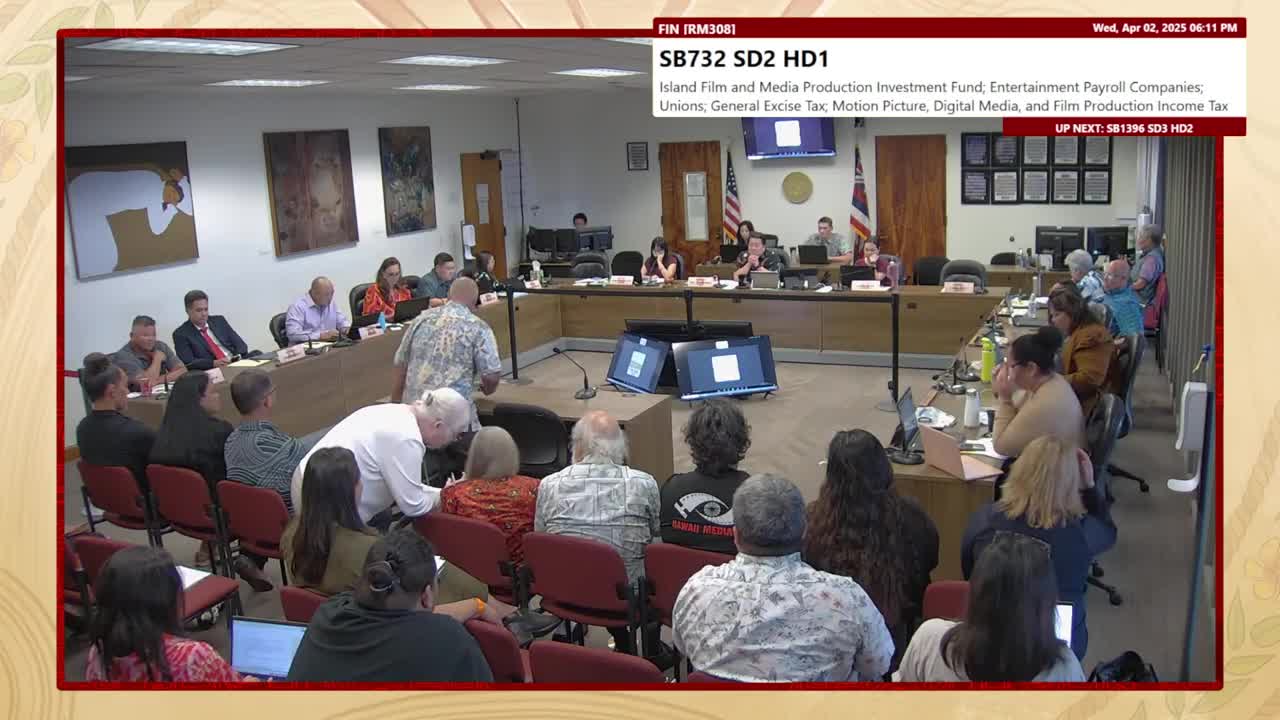 27MIN
House Standing Committee on Finance
Bill Author
Bill Co-Author(s):