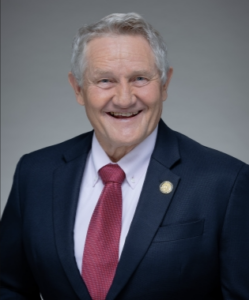
SB 1120: DOT; Clean Fuel Standard; Greenhouse Gases; Alternative Fuels; Feasibility Study; Rules
- Session Year: 2025-2026
- House: Senate
- Latest Version Date: 2025-03-12
Current Status:
Failed
(2026-04-17: Re-Referred to TRS/AEN, WAM.)
Introduced
In Committee
First Chamber
In Committee
Second Chamber
Final Decking
Enacted
Requires the Department of Transportation to conduct a feasibility study on implementing a clean fuel standard for alternative fuels in the State. Requires, no later than 1/1/2028, the Department of Transportation to adopt rules governing a clean fuel standard for alternative fuels in the State. Effective 7/1/3000. (HD1)
Requires the Department of Transportation to adopt rules governing a clean fuel standard for alternative fuels in the State. Effective 7/1/2050. (SD1)
Requires the Department of Transportation to adopt rules governing a clean fuel standard for alternative fuels in the State.
|
THE SENATE |
S.B. NO. |
1120 |
|
THIRTY-THIRD LEGISLATURE, 2025 |
S.D. 1 |
|
|
STATE OF HAWAII |
H.D. 1 |
|
|
|
|
|
|
|
||
|
|
||
A BILL FOR AN ACT
RELATING TO TRANSPORTATION.
BE IT ENACTED BY THE LEGISLATURE OF THE STATE OF HAWAII:
The legislature further finds that better management of waste and resources is critical to environmental stewardship and a clean fuel standard is central to reducing the State's lifecycle greenhouse gas emissions while also protecting the State's economic competitiveness, public health, and the environment. To prompt the use of clean fuels and zero-emission vehicles, other states like California, Oregon, and Washington have successfully implemented programs that reduce the carbon intensity of their transportation fuels.
The legislature also finds that without policies specific to the transportation sector, emissions reductions will not be achieved in a timeframe consistent with the State's goals. Therefore, a clean fuel standard that is technology-neutral and market-based is an effective policy for reducing emissions in the transportation sector while also achieving other co‑benefits.
The legislature additionally finds that by creating a clean fuel standard that rewards environmental performance, the State will incentivize the creation of jobs in various sectors, including construction, agriculture, waste management, landscape restoration, forestry, and transportation. A clean fuel standard can create new markets for what is usually considered waste, including but not limited to municipal solid waste, construction and demolition debris, used cooking oil from food processing, agricultural and forestry residuals, industrial emissions, invasive species biomass from landscape restoration projects, and renewable electricity. Furthermore, the demand created for alternative fuels and cleaner forms of mobility under a clean fuel standard will not only help reduce greenhouse gas emissions but may also have a co-benefit of reducing air pollution, thereby improving the health of citizens of the State.
It is the intent of the legislature to support the deployment of c1ean transportation fuel technologies through a carefully designed program that reduces the carbon intensity of fuel used in the State to:
(1) Reduce lifecycle greenhouse gas emissions;
(2) Stimulate the local, state, and regional economies, thereby providing economic development;
(3) Promote public and environmental health by increasing sustainability and encouraging a circular economy and landscape restoration activities; and
(4) Support existing jobs in the clean fuel industry and create new jobs in new innovative clean fuel technologies.
Therefore, the purpose of this Act is to require the department of transportation to:
(1) Conduct a feasibility study on implementing clean fuel standards for alternative fuels; and
(2) No later than January 1, 2028, adopt rules governing a clean fuel standard for alternative fuels in the State.
SECTION 2. (a) The department of transportation shall conduct a feasibility study on implementing clean fuel standards for alternative fuels as described under section 3, including its potential fiscal impact on the State.
(b) The department of transportation shall submit a report of its findings and recommendations, including any proposed legislation, to the legislature no later than sixty days prior to the convening of the regular session of 2027.
SECTION 3. (a) No later than January 1, 2028, the department of transportation shall adopt rules pursuant to chapter 91, Hawaii Revised Statutes, governing a clean fuel standard for alternative fuels in the State. The rules shall include:
(1) A schedule to phase-in the implementation of the clean fuel standard for alternative fuels in a manner that reduces the average carbon intensity by at least ten per cent below 2019 levels by 2035 and at least fifty per cent below 2019 levels by 2045, including the establishment of annual carbon intensity standards for alternative fuels;
(2) An implementation date for the clean fuel standard for diesel and gasoline no later than January 1, 2029;
(3) Standards for measuring lifecycle greenhouse gas emissions using Argonne National Lab's GREET model attributable to the production and use of diesel, gasoline, and other alternative fuels throughout their lifecycles, including feedstock production or extraction, fuel production, and the transportation of raw materials and finished fuels;
(4) A mechanism by which diesel and gasoline that have a carbon intensity below the annual carbon intensity standard are used within the State to generate credits;
(5) A mechanism by which alternative fuel that has a carbon intensity below the annual carbon intensity standard is used within the State to generate credits;
(6) A mechanism to adjust the carbon intensity of alternative fuel when the alternative fuel is used in a powertrain that is not equal in efficiency to that of the reference fuel and drivetrain combination;
(7) A mechanism by which diesel or gasoline that has a carbon intensity above the annual carbon intensity standard would generate a deficit;
(8) A mechanism by which an alternative fuel that has a carbon intensity above the annual carbon intensity standard would generate a deficit;
(9) A mechanism that requires diesel, gasoline, or other alternative fuel that is exported from the State to retire any associated credit or debit;
(10) Exemptions for diesel, gasoline, or other fuels used by aircraft, railroad locomotives, military vehicles, and interstate waterborne vessels;
(11) Procedures for verifying credits and deficits generated under the clean fuel standard; and
(12) A schedule by which the department of transportation shall review and update the lifecycle greenhouse gas modeling every three years based on a review of the best available scientific literature.
(b) The department of transportation may adopt rules pursuant to chapter 91, Hawaii Revised Statutes, that include:
(1) A cost containment mechanism designed to allow for sufficient compliance flexibility and maximum greenhouse gas reductions;
(2) Mechanisms whereby an electric utility or an energy producer can generate credits for electricity for gaseous fuels used in transportation; provided that the department of transportation shall develop these mechanisms based on best practices in use in other states and in consultation with industry stakeholders;
(3) Mechanisms whereby exempt end-uses, such as aviation, marine, rail, and military, can opt in to the program to generate credits when using alternative fuel;
(4) Mechanisms whereby alternative fuel users can opt in to the clean fuel program to generate credits when it displaces the combustion of gasoline or diesel in offroad, heating, cooling, and temporary power generation;
(5) A schedule to phase in the implementation of the standards for alternative fuels that have achieved a predominant market share and have an average carbon intensity that exceeds the annual diesel or gasoline carbon intensity standard;
(6) A program to support the deployment of infrastructure for the distribution of electricity as a vehicle fuel based on a mechanism by which no more than per cent of the annual deficits can be allocated;
(7) A program to support the deployment of new technologies and infrastructure for the distribution or production of liquid or gaseous alternative fuels based on a mechanism by which no more than per cent of the annual deficits can be allocated;
(8) Any standards, specifications, testing requirements, and other measures as needed to ensure the quality of gasoline, diesel, and alternative fuels used in accordance with the clean fuel standard;
(9) Linking the clean fuel standard to similar policies in other jurisdictions, including but not limited to California, Oregon, and Washington;
(10) A method to utilize the carbon intensity pathways already approved in other states like California, Oregon, and Washington to reduce the burden of administering and certifying the carbon intensity of transportation fuels in the clean fuel program;
(11) Mechanisms that allow credits to be traded and to be banked for future compliance periods; and
(12) Exemptions for diesel, gasoline, and alternative fuels that are used in volumes below thresholds established by the department of transportation.
(c) For the purposes of this section:
"Alternative fuel" means any fuel that is not gasoline or diesel and is used for transportation purposes, including but not limited to ethanol, biomass-based diesel, renewable diesel, sustainable aviation fuel, electricity, biomethane, biogasoline, renewable natural gas, fuels from carbon capture and utilization, electrofuels, and hydrogen.
"Carbon intensity" means that quantity of lifecycle greenhouse gas emissions per unit of fuel energy, expressed in grams of carbon dioxide equivalent per megajoule.
"Clean fuel standard" means standards for the reduction of greenhouse gas emissions, on average, per unit of fuel energy.
"Greenhouse gas" means carbon dioxide, methane, nitrous oxide, hydrofluorocarbons, perfluorocarbons, sulfur hexafluoride, and any other gas or gases designated by the department of transportation or the Hawaii state energy office by rule.
SECTION 4. This Act shall take effect on July 1, 3000; provided that:
(1) Section 2 shall take effect on July 1, 2025; and
(2) Section 3 shall take effect on July 1, 2027.
Report Title:
DOT; Clean Fuel Standard; Greenhouse Gases; Alternative Fuels; Feasibility Study; Rules
Description:
Requires the Department of Transportation to conduct a feasibility study on implementing a clean fuel standard for alternative fuels in the State. Requires, no later than 1/1/2028, the Department of Transportation to adopt rules governing a clean fuel standard for alternative fuels in the State. Effective 7/1/3000. (HD1)
The summary description of legislation appearing on this page is for informational purposes only and is not legislation or evidence of legislative intent.
|
THE SENATE |
S.B. NO. |
1120 |
|
THIRTY-THIRD LEGISLATURE, 2025 |
S.D. 1 |
|
|
STATE OF HAWAII |
|
|
|
|
|
|
|
|
||
|
|
||
A BILL FOR AN ACT
RELATING TO TRANSPORTATION.
BE IT ENACTED BY THE LEGISLATURE OF THE STATE OF HAWAII:
The legislature also finds that without policy specific to the transportation sector, emissions reductions will not be achieved in a timeframe consistent with the State's goals. Therefore, a clean fuel standard that is technology-neutral and market-based is an effective policy for reducing emissions in the transportation sector while also achieving other co‑benefits.
The legislature additionally finds that by creating a clean fuel standard that rewards environmental performance, the State will incentivize the creation of jobs in various sectors, including construction, agriculture, waste management, landscape restoration, forestry, and transportation. A clean fuel standard can create new markets for what is usually considered waste, including but not limited to municipal solid waste; construction and demolition debris; used cooking oil from food processing; agricultural and forestry residuals; industrial emissions; invasive species biomass from landscape restoration projects; and renewable electricity. Furthermore, the demand created for alternative fuels and cleaner forms of mobility under a clean fuel standard will not only help reduce greenhouse gas emissions but may also have a co-benefit of reducing air pollution, improving the health of citizens of the State.
It is the intent of the legislature to support the deployment of c1ean transportation fuel technologies through a carefully designed program that reduces the carbon intensity of fuel used in the State to:
(1) Reduce lifecycle greenhouse gas emissions;
(2) Stimulate the local, state, and regional economies, thereby providing economic development;
(3) Promote public and environmental health by increasing sustainability and encouraging a circular economy and landscape restoration activities; and
(4) Support existing jobs in the clean fuel industry and create new jobs in new innovative clean fuel technologies.
Therefore, the purpose of this Act is to require the department of transportation to adopt rules governing a clean fuel standard for alternative fuels in the State.
SECTION 2. (a) The department of transportation shall adopt rules pursuant to chapter 91, Hawaii Revised Statutes, governing a clean fuel standard for alternative fuels in the State. The rules shall include:
(1) A schedule to phase-in the implementation of the clean fuel standard for alternative fuels in a manner that reduces the average carbon intensity by at least ten per cent below 2019 levels by 2035 and at least fifty per cent below 2019 levels by 2045, including the establishment of annual carbon intensity standards for alternative fuels;
(2) An implementation date for the clean fuel standard for diesel and gasoline on or before January 1, 2027;
(3) Standards for measuring lifecycle greenhouse gas emissions using Argonne National Lab's GREET model attributable to the production and use of diesel, gasoline, and other alternative fuels throughout their lifecycles, including feedstock production or extraction, fuel production, and the transportation of raw materials and finished fuels;
(4) A mechanism by which diesel and gasoline that have a carbon intensity below the annual carbon intensity standard are used within the State to generate credits;
(5) A mechanism by which alternative fuel that has a carbon intensity below the annual carbon intensity standard is used within the State to generate credits;
(6) A mechanism to adjust the carbon intensity of alternative fuel when the alternative fuel is used in a powertrain that is not equal in efficiency to that of the reference fuel and drivetrain combination;
(7) A mechanism by which diesel or gasoline that has a carbon intensity above the annual carbon intensity standard would generate a deficit;
(8) A mechanism by which an alternative fuel that has a carbon intensity above the annual carbon intensity standard would generate a deficit;
(9) A mechanism that requires diesel, gasoline, or other alternative fuel that is exported from the State to retire any associated credit or debit;
(10) Exemptions for diesel, gasoline, or other fuels used by aircraft, railroad locomotives, military vehicles, and interstate waterborne vessels;
(11) Procedures for verifying credits and deficits generated under the clean fuel standard; and
(12) A schedule by which the department of transportation shall review and update the lifecycle greenhouse gas modeling every three years based on a review of the best available scientific literature.
(b) The department of transportation may adopt rules that include:
(1) A cost containment mechanism designed to allow for sufficient compliance flexibility and maximum greenhouse gas reductions;
(2) Mechanisms whereby an electric utility or an energy producer can generate credits for electricity for gaseous fuels used in transportation; provided that the department of transportation shall develop these mechanisms based on best practices in use in other states and in consultation with industry stakeholders;
(3) Mechanisms whereby exempt end-uses, such as aviation, marine, rail, and military, can opt in to the program to generate credits when using alternative fuel;
(4) Mechanisms whereby alternative fuel users can opt in to the clean fuel program to generate credits when it displaces the combustion of gasoline or diesel in offroad, heating, cooling, and temporary power generation;
(5) A schedule to phase in the implementation of the standards for alternative fuels that have achieved a predominant market share and have an average carbon intensity that exceeds the annual diesel or gasoline carbon intensity standard;
(6) A program to support the deployment of infrastructure for the distribution of electricity as a vehicle fuel based on a mechanism by which not more than per cent of the annual deficits can be allocated;
(7) A program to support the deployment of new technologies and infrastructure for the distribution or production of liquid or gaseous alternative fuels based on a mechanism by which not more than per cent of the annual deficits can be allocated;
(8) Any standards, specifications, testing requirements, and other measures as needed to ensure the quality of gasoline, diesel, and alternative fuels used in accordance with the clean fuel standard;
(9) Linking the clean fuel standard to similar policies in other jurisdictions, including but not limited to California, Oregon, and Washington;
(10) A method to utilize the carbon intensity pathways already approved in other states like California, Oregon, and Washington to reduce the burden of administering and certifying the carbon intensity of transportation fuels in the clean fuel program;
(11) Mechanisms that allow credits to be traded and to be banked for future compliance periods; and
(12) Exemptions for diesel, gasoline, and alternative fuels that are used in volumes below thresholds established by the department of transportation.
(c) For the purposes of this section:
"Alternative fuel" means any fuel that is not gasoline or diesel and is used for transportation purposes, including but not limited to ethanol, biomass-based diesel, renewable diesel, sustainable aviation fuel, electricity, biomethane, biogasoline, renewable natural gas, fuels from carbon capture and utilization, electrofuels, and hydrogen.
"Carbon intensity" means that quantity of lifecycle greenhouse gas emissions per unit of fuel energy, expressed in grams of carbon dioxide equivalent per megajoule.
"Clean fuel standard" means standards for the reduction of greenhouse gas emissions, on average, per unit of fuel energy.
"Greenhouse gas" means carbon dioxide, methane, nitrous oxide, hydrofluorocarbons, perfluorocarbons, sulfur hexafluoride, and any other gas or gases designated by the department of transportation or the Hawaii state energy office by rule.
SECTION 3. This Act shall take effect on July 1, 2050.
Report Title:
DOT; Clean Fuel Standard; Greenhouse Gases; Alternative Fuels; Rules
Description:
Requires the Department of Transportation to adopt rules governing a clean fuel standard for alternative fuels in the State. Effective 7/1/2050. (SD1)
The summary description of legislation appearing on this page is for informational purposes only and is not legislation or evidence of legislative intent.
|
THE SENATE |
S.B. NO. |
1120 |
|
THIRTY-THIRD LEGISLATURE, 2025 |
|
|
|
STATE OF HAWAII |
|
|
|
|
|
|
|
|
||
|
|
||
A BILL FOR AN ACT
RELATING TO TRANSPORTATION.
BE IT ENACTED BY THE LEGISLATURE OF THE STATE OF HAWAII:
The legislature additionally finds that by creating a clean fuel standard that rewards environmental performance, the State will incentivize the creation of jobs in various sectors, including construction, agriculture, waste management, landscape restoration, forestry, and transportation. A clean fuel standard can create new markets for what is usually considered waste, including but not limited to municipal solid waste; construction and demolition debris; used cooking oil from food processing; agricultural and forestry residuals; industrial emissions; invasive species biomass from landscape restoration projects; and renewable electricity. Furthermore, the demand created for alternative fuels and cleaner forms of mobility under a clean fuel standard will not only help reduce greenhouse gas emissions but may also have a co-benefit of reducing air pollution, improving the health of citizens of the State.
It is the intent of the legislature to support the deployment of c1ean transportation fuel technologies through a carefully designed program that reduces the carbon intensity of fuel used in the State to:
(1) Reduce lifecycle greenhouse gas emissions;
(2) Stimulate the local, state, and regional economies, thereby providing economic development;
(3) Promote public and environmental health by increasing sustainability and encouraging a circular economy and landscape restoration activities; and
(4) Support existing jobs in the clean fuel industry and create new jobs in new innovative clean fuel technologies.
Therefore, the purpose of this Act is to require the department of transportation to adopt rules governing a clean fuel standard for alternative fuels in the State.
SECTION 2. (a) The department of transportation shall adopt rules pursuant to chapter 91, Hawaii Revised Statutes, governing a clean fuel standard for alternative fuels in the State. The rules shall include:
(1) A schedule to phase-in the implementation of the clean fuel standard for alternative fuels in a manner that reduces the average carbon intensity by at least ten per cent below 2019 levels by 2035 and at least fifty per cent below 2019 levels by 2045, including the establishment of annual carbon intensity standards for alternative fuels;
(2) An implementation date for the clean fuel standard for diesel and gasoline on or before January 1, 2027;
(3) Standards for measuring lifecycle greenhouse gas emissions using Argonne National Lab's GREET model attributable to the production and use of diesel, gasoline, and other alternative fuels throughout their lifecycles, including feedstock production or extraction, fuel production, and the transportation of raw materials and finished fuels;
(4) A mechanism by which diesel and gasoline that have a carbon intensity below the annual carbon intensity standard are used within the State to generate credits;
(5) A mechanism by which alternative fuel that has a carbon intensity below the annual carbon intensity standard is used within the State to generate credits;
(6) A mechanism to adjust the carbon intensity of alternative fuel when the alternative fuel is used in a powertrain that is not equal in efficiency to that of the reference fuel and drivetrain combination;
(7) A mechanism by which diesel or gasoline that has a carbon intensity above the annual carbon intensity standard would generate a deficit;
(8) A mechanism by which an alternative fuel that has a carbon intensity above the annual carbon intensity standard would generate a deficit;
(9) A mechanism that requires diesel, gasoline, or other alternative fuel that is exported from the State to retire any associated credit or debit;
(10) Exemptions for diesel, gasoline, or other fuels used by aircraft, railroad locomotives, military vehicles, and interstate waterborne vessels;
(11) Procedures for verifying credits and deficits generated under the clean fuel standard; and
(12) A schedule by which the department of transportation shall review and update the lifecycle greenhouse gas modeling every three years based on a review of the best available scientific literature.
(b) The department of transportation may adopt rules that include:
(1) A cost containment mechanism designed to allow for sufficient compliance flexibility and maximum greenhouse gas reductions;
(2) Mechanisms whereby an electric utility or an energy producer can generate credits for electricity for gaseous fuels used in transportation; provided that the department of transportation shall develop these mechanisms based on best practices in use in other states and in consultation with industry stakeholders;
(3) Mechanisms whereby exempt end-uses, such as aviation, marine, rail, and military, can opt in to the program to generate credits when using alternative fuel;
(4) Mechanisms whereby alternative fuel users can opt in to the clean fuel program to generate credits when it displaces the combustion of gasoline or diesel in offroad, heating, cooling, and temporary power generation;
(5) A schedule to phase in the implementation of the standards for alternative fuels that have achieved a predominant market share and have an average carbon intensity that exceeds the annual diesel or gasoline carbon intensity standard;
(6) A program to support the deployment of infrastructure for the distribution of electricity as a vehicle fuel based on a mechanism by which not more than per cent of the annual deficits can be allocated;
(7) A program to support the deployment of new technologies and infrastructure for the distribution or production of liquid or gaseous alternative fuels based on a mechanism by which not more than per cent of the annual deficits can be allocated;
(8) Any standards, specifications, testing requirements, and other measures as needed to ensure the quality of gasoline, diesel, and alternative fuels used in accordance with the clean fuel standard;
(9) Linking the clean fuel standard to similar policies in other jurisdictions, including but not limited to California, Washington, and Oregon;
(10) A method to utilize the carbon intensity pathways already approved in other states like California, Oregon, and Washington to reduce the burden of administering and certifying the carbon intensity of transportation fuels in the clean fuel program;
(11) Mechanisms that allow credits to be traded and to be banked for future compliance periods; and
(12) Exemptions for diesel, gasoline, and alternative fuels that are used in volumes below thresholds established by the department of transportation.
(c) As used in this section:
"Alternative fuel" means any fuel that is not gasoline or diesel and is used for transportation purposes, including but not limited to ethanol, biomass-based diesel, renewable diesel, sustainable aviation fuel, electricity, biomethane, biogasoline, renewable natural gas, fuels from carbon capture and utilization, electrofuels, and hydrogen.
"Carbon intensity" means that quantity of lifecycle greenhouse gas emissions per unit of fuel energy, expressed in grams of carbon dioxide equivalent per megajoule.
"Clean fuel standard" means standards for the reduction of greenhouse gas emissions, on average, per unit of fuel energy.
"Greenhouse gas" means carbon dioxide, methane, nitrous oxide, hydrofluorocarbons, perfluorocarbons, sulfur hexafluoride, and any other gas or gases designated by the department of transportation or the Hawaii state energy office by rule.
SECTION 3. This Act shall take effect on July 1, 2025.
|
INTRODUCED BY: |
_____________________________ |
|
|
|
Report Title:
DOT; Clean Fuel Standard; Greenhouse Gases; Alternative Fuels; Rules
Description:
Requires the Department of Transportation to adopt rules governing a clean fuel standard for alternative fuels in the State.
The summary description of legislation appearing on this page is for informational purposes only and is not legislation or evidence of legislative intent.
|
Date
|
Status
|
|---|---|
| Apr 17, 2026 | Re-Referred to TRS/AEN, WAM. |
| Apr 2, 2026 | Received notice of the discharge of all House Conferees (Hse. Com. No. 457). |
| Apr 1, 2026 | House Conferee(s) discharged. |
| Mar 20, 2026 | Received notice of all Senate conferees being discharged (Sen. Com. No. 409). |
| Mar 20, 2026 | Senate Conferee(s) discharged. |
| Dec 8, 2025 | Carried over to 2026 Regular Session. |
| Apr 25, 2025 | Conference committee meeting to reconvene on 04-25-25 5:15 PM; Conference Room 225. |
| Apr 25, 2025 | Received notice of change in conferees (Hse. Com. No. 816). |
| Apr 25, 2025 | House Conferees Changed: Representative Perruso added as Co-Chair. Representative Lowen discharged as Co-Chair. |
| Apr 25, 2025 | Conference Committee Meeting will reconvene on Friday, 04-25-25 at 3:30PM in Conference Room 411. |
| Apr 25, 2025 | Conference Committee Meeting will reconvene on Friday, 04-25-25 at 2:00PM in Conference Room 411. |
| Apr 25, 2025 | Conference Committee Meeting will reconvene on Friday, 04-25-25 at 12:30PM in Conference Room 329. |
| Apr 25, 2025 | Conference Committee Meeting will reconvene on Friday, 04-25-25 at 11:30AM in Conference Room 329. |
| Apr 24, 2025 | Conference committee meeting to reconvene on 04-25-25 9:30AM; Conference Room 329. |
| Apr 23, 2025 | Conference committee meeting to reconvene on 04-24-25 10:30AM; Conference Room 329. |
| Apr 22, 2025 | Conference committee meeting scheduled for 04-23-25 10:35AM; Conference Room 329. |
| Apr 21, 2025 | Received notice of Senate conferees (Sen. Com. No. 848). |
| Apr 22, 2025 | Received notice of appointment of House conferees (Hse. Com. No. 782). |
| Apr 21, 2025 | Senate Conferees Appointed: Lee, C. Chair; Gabbard, Aquino Co-Chairs. |
| Apr 21, 2025 | House Conferees Appointed: Kila, Lowen, Grandinetti Co-Chairs; La Chica, Muraoka. |
| Apr 4, 2025 | Received notice of disagreement (Sen. Com. No. 590). |
| Apr 4, 2025 | Senate disagrees with House amendments. |
| Apr 4, 2025 | Received from House (Hse. Com. No. 481). |
| Apr 3, 2025 | Passed Third Reading with Representative(s) Iwamoto voting aye with reservations; Representative(s) Garcia, Kong, Muraoka, Pierick voting no (4) and Representative(s) Cochran, Woodson excused (2). Transmitted to Senate. |
| Apr 3, 2025 | Reported from FIN (Stand. Com. Rep. No. 1927), recommending passage on Third Reading. |
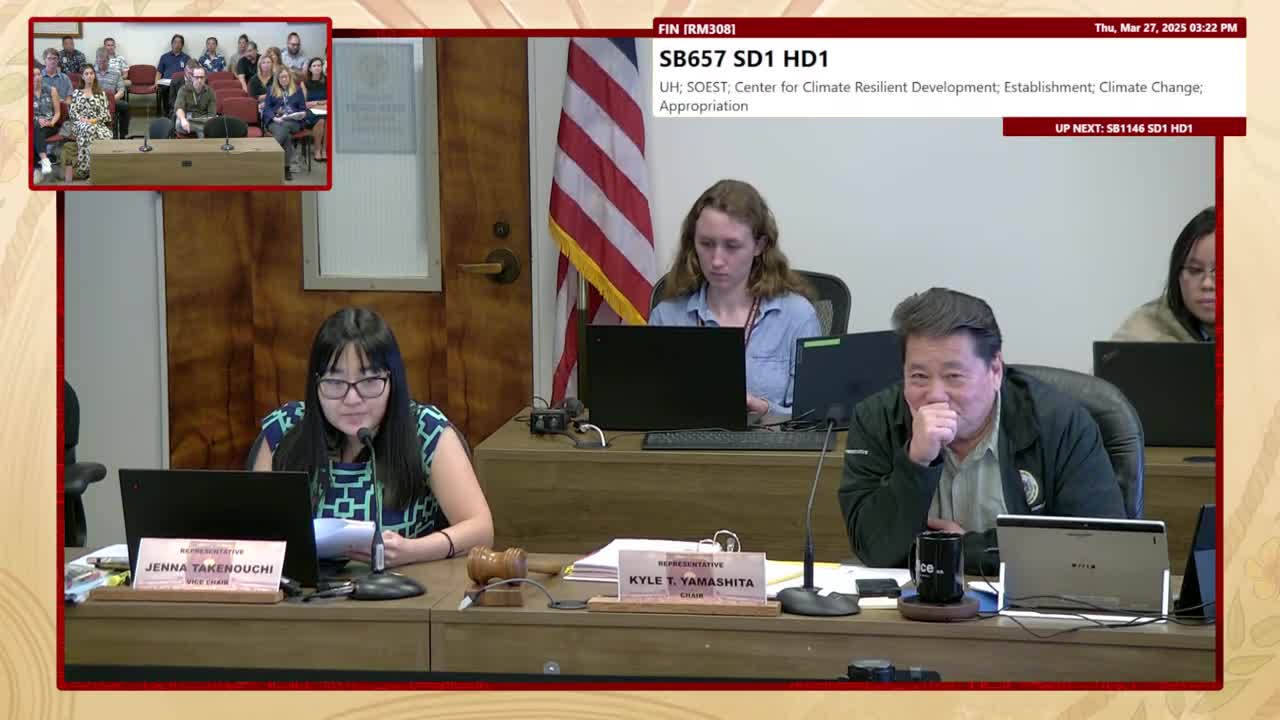
| Mar 27, 2025 | The committee on FIN recommend that the measure be PASSED, UNAMENDED. The votes were as follows: 13 Ayes: Representative(s) Yamashita, Takenouchi, Grandinetti, Holt, Keohokapu-Lee Loy, Kitagawa, Kusch, Lamosao, Lee, M., Miyake, Morikawa, Templo, Reyes Oda; Ayes with reservations: none; 0 Noes: none; and 3 Excused: Representative(s) Hussey, Alcos, Ward. |
| Mar 24, 2025 | Bill scheduled to be heard by FIN on Thursday, 03-27-25 2:00PM in House conference room 308 VIA VIDEOCONFERENCE. |
| Mar 20, 2025 | Report adopted; referred to the committee(s) on FIN with none voting aye with reservations; Representative(s) Garcia, Muraoka voting no (2) and Representative(s) Cochran, Ward excused (2). |
| Mar 20, 2025 | Reported from EEP (Stand. Com. Rep. No. 1394), recommending referral to FIN. |
| Mar 18, 2025 | The committee on EEP recommend that the measure be PASSED, UNAMENDED. The votes were as follows: 4 Ayes: Representative(s) Lowen, Perruso, Kahaloa, Kusch; Ayes with reservations: none; Noes: none; and 2 Excused: Representative(s) Quinlan, Ward. |
| Mar 14, 2025 | Bill scheduled to be heard by EEP on Tuesday, 03-18-25 9:20AM in House conference room 325 VIA VIDEOCONFERENCE. |
| Mar 13, 2025 | Passed Second Reading as amended in HD 1 and referred to the committee(s) on EEP with Representative(s) Alcos voting aye with reservations; Representative(s) Garcia, Muraoka, Pierick voting no (3) and Representative(s) Cochran, Holt, Ward, Woodson excused (4). |
| Mar 13, 2025 | Reported from TRN (Stand. Com. Rep. No. 1201) as amended in HD 1, recommending passage on Second Reading and referral to EEP. |
| Mar 11, 2025 | The committee on TRN recommend that the measure be PASSED, WITH AMENDMENTS. The votes were as follows: 6 Ayes: Representative(s) Kila, Grandinetti, Evslin, Kitagawa, La Chica, Miyake; Ayes with reservations: none; 2 Noes: Representative(s) Muraoka, Pierick; and 1 Excused: Representative(s) Cochran. |
| Mar 7, 2025 | Bill scheduled to be heard by TRN on Tuesday, 03-11-25 9:00AM in House conference room 430 VIA VIDEOCONFERENCE. |
| Mar 6, 2025 | Referred to TRN, EEP, FIN, referral sheet 19 |
| Mar 6, 2025 | Pass First Reading |
| Mar 4, 2025 | Received from Senate (Sen. Com. No. 262) in amended form (SD 1). |
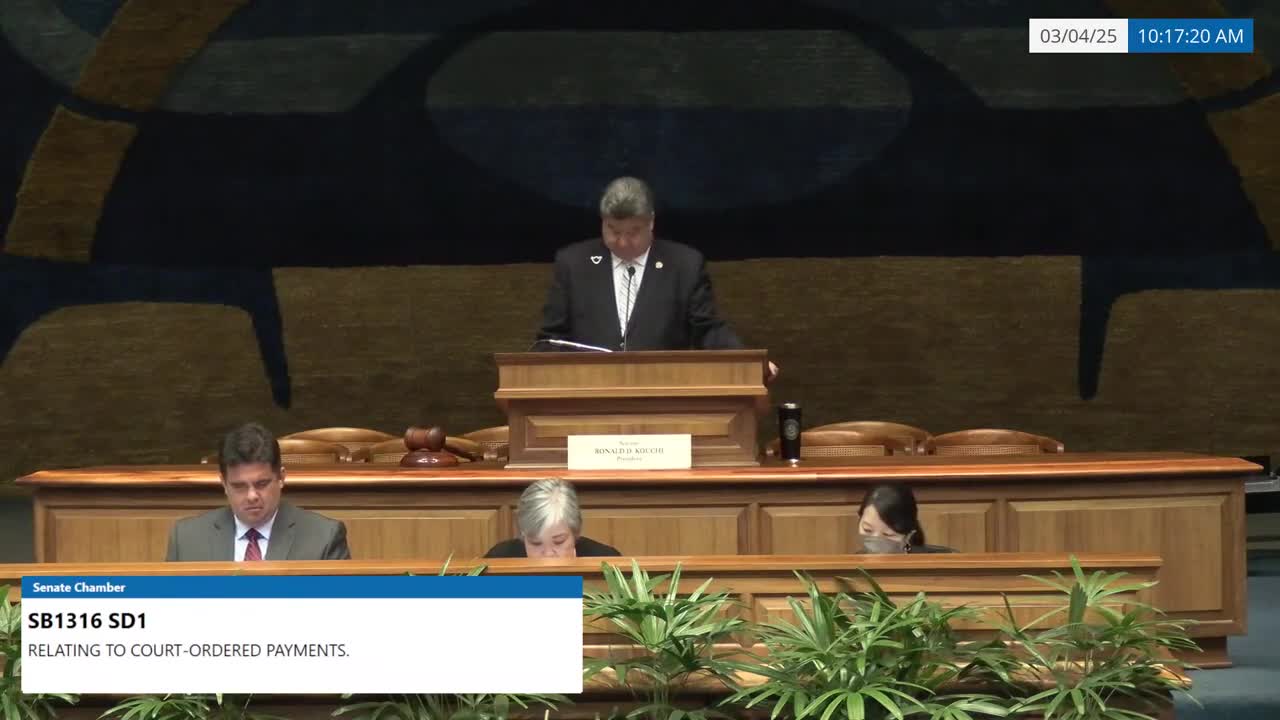
| Mar 4, 2025 | Report Adopted; Passed Third Reading. Ayes, 23; Aye(s) with reservations: none. Noes, 2 (Senator(s) Awa, DeCorte). Excused, 0 (none). Transmitted to House. |
| Feb 28, 2025 | One Day Notice 03-04-25. |
| Feb 28, 2025 | Reported from WAM (Stand. Com. Rep. No. 945) with recommendation of passage on Third Reading. |
| Feb 27, 2025 | The committee(s) on WAM recommend(s) that the measure be PASSED, UNAMENDED. The votes in WAM were as follows: 13 Aye(s): Senator(s) Dela Cruz, Moriwaki, Aquino, DeCoite, Elefante, Hashimoto, Inouye, Kanuha, Kidani, Kim, Lee, C., Wakai, Fevella; Aye(s) with reservations: none ; 0 No(es): none; and 0 Excused: none. |
| Feb 21, 2025 | The committee(s) on WAM will hold a public decision making on 02-27-25 10:30AM; Conference Room 211 & Videoconference. |
| Feb 11, 2025 | Report adopted; Passed Second Reading, as amended (SD 1) and referred to WAM. |
| Feb 11, 2025 | Reported from TCA/AEN (Stand. Com. Rep. No. 238) with recommendation of passage on Second Reading, as amended (SD 1) and referral to WAM. |
| Feb 5, 2025 | The committee(s) on AEN recommend(s) that the measure be PASSED, WITH AMENDMENTS. The votes in AEN were as follows: 4 Aye(s): Senator(s) Gabbard, Richards, DeCoite, Rhoads; Aye(s) with reservations: none ; 1 No(es): Senator(s) Awa; and 0 Excused: none. |
| Feb 5, 2025 | The committee(s) on TCA recommend(s) that the measure be PASSED, WITH AMENDMENTS. The votes in TCA were as follows: 4 Aye(s): Senator(s) Lee, C., Inouye, Elefante, Kanuha; Aye(s) with reservations: none ; 1 No(es): Senator(s) DeCorte; and 0 Excused: none. |
| Jan 31, 2025 | The committee(s) on TCA/AEN has scheduled a public hearing on 02-05-25 1:01PM; Conference Room 224 & Videoconference. |
| Jan 23, 2025 | Referred to TCA/AEN, WAM. |
| Jan 21, 2025 | Passed First Reading. |
| Jan 17, 2025 | Introduced. |
|
Date
|
Description
|
Location
|
Votes
|
|
|---|---|---|---|---|
| Apr 3, 2025 | Third Reading | House Floor |
Passed |
|
| Mar 27, 2025 | The committee on FIN recommend that the measure be PASSED, UNAMENDED | House Standing Committee on Finance |
Passed |
|
| Mar 18, 2025 | The committee on EEP recommend that the measure be PASSED, UNAMENDED | House Standing Committee on Energy & Environmental Protection |
Passed |
|
| Mar 11, 2025 | The committee on TRN recommend that the measure be PASSED, WITH AMENDMENTS | House Standing Committee on Transportation |
Passed |
|
| Mar 4, 2025 | Third Reading | Senate Floor |
Passed |
|
| Feb 27, 2025 | The committee(s) on WAM recommend(s) that the measure be PASSED, UNAMENDED | Senate Standing Committee on Ways and Means |
Passed |
|
| Feb 5, 2025 | The committee(s) on AEN recommend(s) that the measure be PASSED, WITH AMENDMENTS | Senate Standing Committee on Agriculture and Environment |
Passed |
|
| Feb 5, 2025 | The committee(s) on TCA recommend(s) that the measure be PASSED, WITH AMENDMENTS | Senate Standing Committee on Transportation and Culture and the Arts |
Passed |
This list shows positions taken on this bill by organizations on the date displayed, which is linked to the original source.
Positions by individuals are not included.
|
Organization
|
Position
|
Date
|
|---|---|---|
| Amazon | *** Support | Mar 31, 2025 |
| Biotechnology Innovation Organization | ** Support | |
| Blue Planet Foundation | *** Support | Mar 31, 2025 |
| Clean Energy | ** Support | |
| Clean Fuel HI Coalition | *** Support | Mar 31, 2025 |
| Clean Fuels Alliance America | ** Support | |
| Coalition Earth | ** Support | |
| Department of Transportation | ** Support | |
| EcoEngineers | ** Support | |
| Electrify America | ** Support | |
| Energy Justice Network | *** Against | Mar 18, 2025 |
| Environmental Caucus of the Democratic Party | *** Against | Mar 18, 2025 |
| Fair Wind Inc. | ** Support | |
| GREEN PARTY OF HAWAI'I | *** Against | Mar 18, 2025 |
| Growth Energy | *** Support | Mar 11, 2025 |
| Hawaii Department of Transportation | *** Support | Mar 31, 2025 |
| Hawaiian Electric | ** Support | |
| Infinium Operations, LLC | *** Support | Mar 31, 2025 |
| Island Energy Services, LLC | ** Support | |
| Island Energy Services, LLC | *** Support | Mar 31, 2025 |
| Low Carbon Fuels Coalition | ** Support | |
| Low Carbon Fuels Coalition | *** Support | Mar 31, 2025 |
| Neste | ** Support | |
| NXTClean Fuels, Inc. | ** Support | |
| Oahu Metropolitan Planning Organization | *** Support | Mar 31, 2025 |
| Oberon Fuels | ** Support | |
| Twelve Benefit Corporation | ** Support | |
| Twelve Benefit Corporation | *** Support | Mar 31, 2025 |
STAND. COM. REP. NO. 1927
Honolulu, Hawaii
, 2025
RE: S.B. No. 1120
S.D. 1
H.D. 1
Honorable Nadine K. Nakamura
Speaker, House of Representatives
Thirty-Third State Legislature
Regular Session of 2025
State of Hawaii
Madame:
Your Committee on Finance, to which was referred S.B. No. 1120, S.D. 1, H.D. 1, entitled:
"A BILL FOR AN ACT RELATING TO TRANSPORTATION,"
begs leave to report as follows:
The purpose of this measure is to:
(1) Require the Department of Transportation to conduct a feasibility study on implementing a clean fuel standard for alternative fuels in the State; and
(2) Require the Department of Transportation to adopt rules governing a clean fuel standard for alternative fuels in the State by January 1, 2028.
As affirmed by the record of votes of the members of your Committee on Finance that is attached to this report, your Committee is in accord with the intent and purpose of S.B. No. 1120, S.D. 1, H.D. 1, and recommends that it pass Third Reading.
Respectfully submitted on behalf of the members of the Committee on Finance,
|
|
|
____________________________ KYLE T. YAMASHITA, Chair |
|
|
|
|
STAND. COM. REP. NO. 1394
Honolulu, Hawaii
, 2025
RE: S.B. No. 1120
S.D. 1
H.D. 1
Honorable Nadine K. Nakamura
Speaker, House of Representatives
Thirty-Third State Legislature
Regular Session of 2025
State of Hawaii
Madame:
Your Committee on Energy & Environmental Protection, to which was referred S.B. No. 1120, S.D. 1, H.D. 1, entitled:
"A BILL FOR AN ACT RELATING TO TRANSPORTATION,"
begs leave to report as follows:
The purpose of this measure is to:
(1) Require the Department of Transportation to conduct a feasibility study on implementing a clean fuel standard for alternative fuels in the State; and
(2) Require the Department of Transportation to adopt rules governing a clean fuel standard for alternative fuels in the State by January 1, 2028.
Your Committee received testimony in support of this measure from the Department of Transportation; Neste; Clean Fuel HI Coalition; Amazon; Oahu Metropolitan Planning Organization; Clean Energy; Island Energy Services, LLC; Low Carbon Fuels Coalition; Clean Fuels Alliance America; Twelve Benefit Corporation; Infinium Operations, LLC; Blue Planet Foundation; and one individual. Your Committee received testimony in opposition to this measure from the Energy Justice Network; Green Party Of Hawaiʻi; Environmental Caucus of the Democratic Party of Hawaiʻi; and two individuals. Your Committee received comments on this measure from Alaska Airlines; Hawaiian Airlines; Par Hawaii; and Coalition Earth.
Your Committee finds that the State's largest source of lifecycle greenhouse gas emissions is transportation and there is an urgent need to encourage more sustainable transportation fuel options. Your Committee recognizes that in order for the State to effectively transition away from traditional fuels, clean fuel standards for alternative fuels would provide the necessary lower-carbon-emitting targets and incentives for alternative fuels.
As affirmed by the record of votes of the members of your Committee on Energy & Environmental Protection that is attached to this report, your Committee is in accord with the intent and purpose of S.B. No. 1120, S.D. 1, H.D. 1, and recommends that it be referred to your Committee on Finance.
Respectfully submitted on behalf of the members of the Committee on Energy & Environmental Protection,
|
|
|
____________________________ NICOLE E. LOWEN, Chair |
|
|
|
|
STAND. COM. REP. NO. 1201
Honolulu, Hawaii
, 2025
RE: S.B. No. 1120
S.D. 1
H.D. 1
Honorable Nadine K. Nakamura
Speaker, House of Representatives
Thirty-Third State Legislature
Regular Session of 2025
State of Hawaii
Madame:
Your Committee on Transportation, to which was referred S.B. No. 1120, S.D. 1, entitled:
"A BILL FOR AN ACT RELATING TO TRANSPORTATION,"
begs leave to report as follows:
The purpose of this measure is to require the Department of Transportation to adopt rules regarding a clean fuel standard for alternative fuels in the State.
Your Committee finds that clean fuel policies drive the adoption of lower carbon transportation technologies, resulting in advanced competition and a diversity of fuel options for consumers. Your Committee further finds that a clean fuel standard would enable the State to meet its decarbonization goals in regard to transportation fuels.
Your Committee notes that alternative fuels technology is an emerging technology in the State and as such, the financial impacts of adoption are not easily discernable and need to be thoroughly studied to ensure its adoption does not impose an unfair financial burden on taxpayers.
Accordingly, your Committee has amended this measure by:
(1) Requiring the Department of Transportation to conduct a feasibility study on implementing clean fuel standards for alternative fuels, including its potential fiscal impact on the State, and requiring a report to the Legislature sixty days before the convening of the Regular Session of 2027;
(2) Requiring the Department of Transportation to start the rule making process on July 1, 2027, and adopt final rules governing a clean fuel standard for alternative fuels by January 1, 2028;
(3) Changing the effective date to July 1, 3000, to encourage further discussion; and
(4) Making technical, nonsubstantive amendments for the purposes of clarity, consistency, and style.
As affirmed by the record of votes of the members of your Committee on Transportation that is attached to this report, your Committee is in accord with the intent and purpose of S.B. No. 1120, S.D. 1, as amended herein, and recommends that it pass Second Reading in the form attached hereto as S.B. No. 1120, S.D. 1, H.D. 1, and be referred to your Committee on Energy & Environmental Protection.
Respectfully submitted on behalf of the members of the Committee on Transportation,
|
|
|
____________________________ DARIUS KILA, Chair |
|
|
|
|
STAND. COM. REP. NO. 945
Honolulu, Hawaii
RE: S.B. No. 1120
S.D. 1
Honorable Ronald D. Kouchi
President of the Senate
Thirty-Third State Legislature
Regular Session of 2025
State of Hawaii
Sir:
Your Committee on Ways and Means, to which was referred S.B. No. 1120, S.D. 1, entitled:
"A BILL FOR AN ACT RELATING TO TRANSPORTATION,"
begs leave to report as follows:
The purpose and intent of this measure is to require the Department of Transportation to adopt rules governing a clean fuel standard for alternative fuels in the State.
Your Committee received written comments in support of this measure from the Department of Transportation, Oahu Metropolitan Planning Organization, Amazon, Biotechnology Innovation Organization, Clean Energy, Coalition Earth, Island Energy Services, Low Carbon Fuels Coalition, Neste, and one individual.
Your Committee received written comments in opposition to this measure from one individual.
Your Committee received written comments on this measure from Alaska Airlines and Hawaiian Airlines, Hawaiian Electric, and Par Hawaii.
Your Committee finds that the establishment in the State of a clean fuel standard aimed at reducing greenhouse gas emissions will incentivize the production and use of low-carbon fuels. Your Committee further finds that the development of clean transportation fuel technologies through a carefully designed program that reduces the carbon intensity of fuel use in the State presents a variety of benefits, including improved public and environmental health, employment opportunities, economic development, and a reduction in the lifecycle of greenhouse gas emissions.
As affirmed by the record of votes of the members of your Committee on Ways and Means that is attached to this report, your Committee is in accord with the intent and purpose of S.B. No. 1120, S.D. 1, and recommends that it pass Third Reading.
Respectfully submitted on behalf of the members of the Committee on Ways and Means,
|
|
|
________________________________ DONOVAN M. DELA CRUZ, Chair |
|
|
|
|
STAND. COM. REP. NO. 238
Honolulu, Hawaii
RE: S.B. No. 1120
S.D. 1
Honorable Ronald D. Kouchi
President of the Senate
Thirty-Third State Legislature
Regular Session of 2025
State of Hawaii
Sir:
Your Committees on Transportation and Culture and the Arts and Agriculture and Environment, to which was referred S.B. No. 1120 entitled:
"A BILL FOR AN ACT RELATING TO TRANSPORTATION,"
beg leave to report as follows:
The purpose and intent of this measure is to require the Department of Transportation to adopt rules governing a clean fuel standard for alternative fuels in the State.
Your Committees received testimony in support of this measure from the Oahu Metropolitan Planning Organization, Biotechnology Innovation Organization, Coalition Earth, Twelve Benefit Corporation, Electrify America, Hawaiian Electric, and Neste.
Your Committees received comments on this measure from Par Hawaii, Island Energy Services, and Growth Energy.
Your Committees find that transportation is the State's largest source of lifecycle greenhouse gas emissions and that the tourism industry is the State's largest economic driver and biggest transportation sector consumer. Better management of waste and resources is critical to environmental stewardship, and a clean fuel standard is central to reducing the State's lifecycle greenhouse gas emissions while also protecting the State's economic competitiveness, public health, and the environment. Your Committees believe that additional support is vital for the deployment of clean transportation fuel technologies throughout the State. By requiring the Department of Transportation to adopt rules governing clean fuel standards, this measure seeks to reduce greenhouse gas emissions and air pollution to support the health and prosperity of the State's residents.
Your Committees have amended this measure by:
(1) Inserting an effective date of July 1, 2050, to encourage further discussion; and
(2) Making technical, nonsubstantive amendments for the purposes of clarity and consistency.
As affirmed by the records of votes of the members of your Committees on Transportation and Culture and the Arts and Agriculture and Environment that are attached to this report, your Committees are in accord with the intent and purpose of S.B. No. 1120, as amended herein, and recommend that it pass Second Reading in the form attached hereto as S.B. No. 1120, S.D. 1, and be referred to your Committee on Ways and Means.
Respectfully submitted on behalf of the members of the Committees on Transportation and Culture and the Arts and Agriculture and Environment,
|
________________________________ MIKE GABBARD, Chair |
|
________________________________ CHRIS LEE, Chair |
|
|
|
|
|
Date
|
Testimony PDF
|
|---|---|
| Mar 31, 2025 | SB1120_HD1_TESTIMONY_FIN_03-27-25_.PDF |
| Mar 18, 2025 | SB1120_HD1_TESTIMONY_EEP_03-18-25_.PDF |
| Mar 11, 2025 | SB1120_SD1_TESTIMONY_TRN_03-11-25_.PDF |
| Feb 26, 2025 | SB1120_SD1_TESTIMONY_WAM_02-27-25_.PDF |
| Feb 5, 2025 | SB1120_TESTIMONY_TCA-AEN_02-05-25_.PDF |
Discussed in Hearing
 8SEC
Conference Committee
 47SEC
House Standing Committee on Finance
 23SEC
Senate Floor
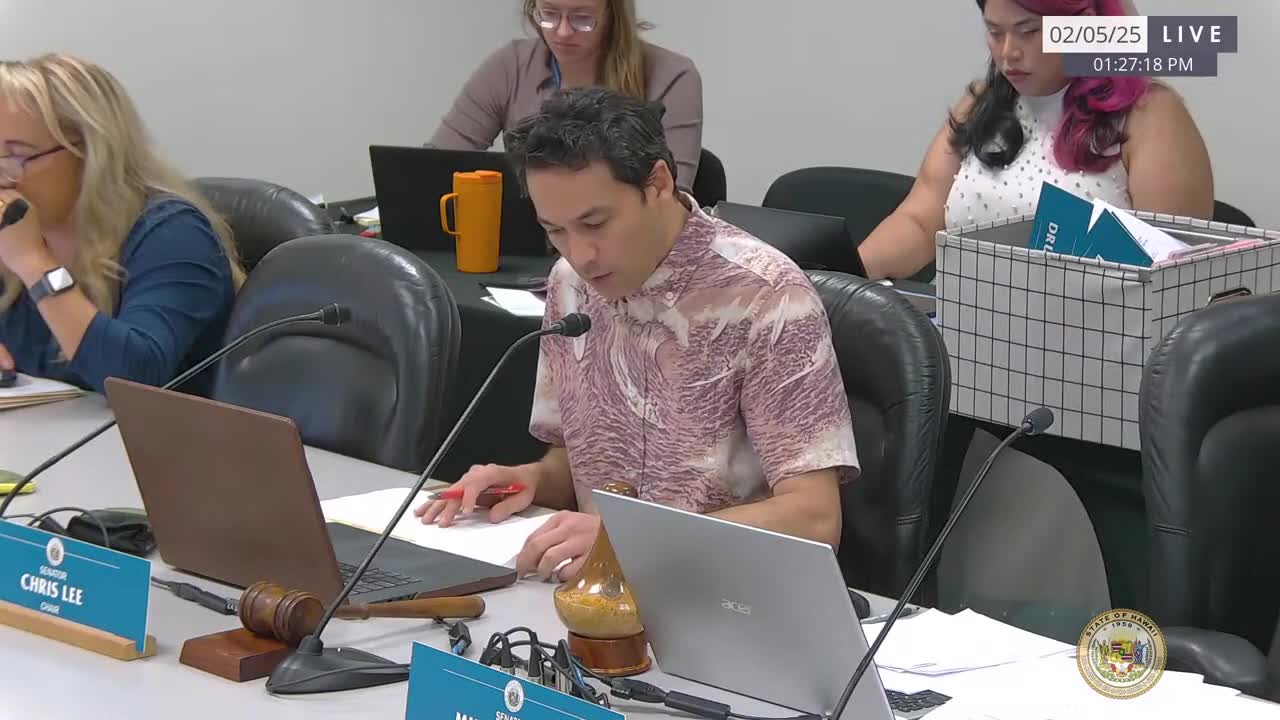 10MIN
Senate Standing Committee on Agriculture and Environment
10MIN
Senate Standing Committee on Transportation and Culture and the Arts
10MIN
Senate Standing Committee on Energy and Intergovernmental Affairs
Bill Author