SB 2425: Substance Use Disorder Treatment Providers; Substance Use Disorder Services; Assignment of Benefits; Anti-Assignment Clause; Enforcement; Rules; Civil Action
- Session Year: 2025-2026
- House: Senate
- Latest Version Date: 2026-03-19
Current Status:
Failed
(2026-03-24: The committee(s) on CPC recommend(s) that the measure be deferred.)
Introduced
In Committee
First Chamber
In Committee
Second Chamber
Final Decking
Enacted
What does this bill do?
The bill requires health insurers, mutual benefit societies, and HMOs to accept a patient’s written assignment of benefits so payments for covered substance use disorder treatment go directly to the licensed treatment provider, and it bans policy terms that block such assignments. It also requires carriers to provide an explanation of benefits to the assigned provider on request and authorizes the insurance commissioner to enforce the rule and treat violations as unfair insurance practices.
The summary is provided by generative AI which can make mistakes. For original language, please view the details in the table below.
Requires health insurers, mutual benefit societies, and health maintenance organizations to honor a patient's written assignment of benefits to a substance use disorder treatment provider. Prohibits health insurance policies, plans, contracts, and agreements from including anti-assignment clauses that restrict or invalidate a patient's right to assign benefits. Authorizes the Insurance Commissioner to adopt rules and take enforcement action to ensure compliance. Deems violations to be unfair methods of competition and unfair or deceptive acts or practices in the business of insurance. Requires insurers, mutual benefit societies, and health maintenance organizations to furnish an explanation of benefits to the assigned provider upon request. Effective 1/30/2050. (HD1)
Requires health insurance carriers to honor a patient's written assignment of benefits to a substance use disorder treatment provider. Prohibits health insurance contracts from including anti-assignment clauses that restrict or invalidate a patient's right to assign benefits. Authorizes the Insurance Commissioner to adopt rules and take enforcement action to ensure compliance. Deems violations to be unfair methods of competition and unfair or deceptive acts or practices. Requires insurers to furnish an explanation of benefits to the assigned provider upon request. Effective 1/30/2050. (SD2)
Requires health insurance carriers to honor a patient's written assignment of benefits to a substance use disorder treatment provider. Prohibits health insurance contracts from including anti-assignment clauses that restrict or invalidate a patient's right to assign benefits. Authorizes the Insurance Commissioner to adopt rules and take enforcement action to ensure compliance. Deems violations to be unfair methods of competition and unfair or deceptive acts or practices. Requires insurers to furnish an explanation of benefits to the assigned provider upon request. Effective 1/30/2050. (SD1)
Requires health insurance carriers to honor a patient's written assignment of benefits to a substance use disorder treatment provider. Prohibits health insurance contracts from including anti-assignment clauses that restrict or invalidate a patient's right to assign benefits. Authorizes the Insurance Commissioner to adopt rules and take enforcement action to ensure compliance. Requires the Insurance Commissioner to publish an annual summary. Allows providers to bring civil actions to compel payment and obtain injunctive relief, damages, interest, and attorneys' fees for violations. Deems violations to be unfair methods of competition and unfair or deceptive acts or practices. Requires insurers to furnish an explanation of benefits to the assigned provider upon request.
|
THE SENATE |
S.B. NO. |
2425 |
|
THIRTY-THIRD LEGISLATURE, 2026 |
S.D. 2 |
|
|
STATE OF HAWAII |
H.D. 1 |
|
|
|
|
|
|
|
||
|
|
||
A BILL FOR AN ACT
RELATING TO HEALTH INSURANCE.
BE IT ENACTED BY THE LEGISLATURE OF THE STATE OF HAWAII:
The purpose of this Act is to increase access to substance use disorder treatment in the State by requiring health insurance carriers to honor a patient's written assignment of benefits to treatment providers.
SECTION 2. Chapter 431, Hawaii Revised Statutes, is amended by adding a new section to article 10A to be appropriately designated and to read as follows:
"§431:10A- Fair assignment of benefits for substance use disorder services. (a) An insurer shall honor and accept a written assignment that is validly executed in compliance with this title of benefits executed by a policy holder or individual covered by a policy of accident and health or sickness insurance for the purpose of directing payment for covered substance use disorder treatment services to the treating provider. Upon receipt of a written assignment that is validly executed in compliance with this title, the insurer shall issue payment for covered services directly to the substance use disorder treatment provider. Payment made to the provider pursuant to this section shall discharge the insurer's obligation to the extent of the payment made. Payment under this subsection shall be issued within thirty days of receipt of a claim that meets the requirements of section 431:13-108.
(b) No individual or group policy of accident and health or sickness insurance that is issued or renewed on or after the effective date of this Act in the State shall contain any provision that prohibits, restricts, or renders void the assignment of benefits to a substance use disorder treatment provider. Any clause or provision contained in a policy subject to this subsection shall be unenforceable.
(c) An insurer shall provide an explanation of benefits to the assigned provider upon request, if the provider presents a valid assignment of benefits, power of attorney, or authorization executed by the policy holder or individual covered by the policy in compliance with the Health Insurance Portability and Accountability Act of 1996, P.L. 104-191.
(d) This section shall apply to all fully insured health benefit plans governed by the laws of the State, except self‑funded employer health benefit plans regulated exclusively under the Employee Retirement Income Security Act of 1974, as amended, unless and to the extent permitted under federal law.
(e) A violation of this section shall constitute an unfair method of competition and unfair or deceptive act or practice in the business of insurance under section 431:13-103.
(f) The insurance commissioner may adopt rules pursuant to chapter 91 and take enforcement action necessary to implement this section.
(g) For the purposes of this section:
"Assignment of benefits" means a written direction by a policy holder or individual covered by a policy of accident and health or sickness insurance authorizing an insurer to pay insurance benefits directly to a substance use disorder treatment provider.
"Substance use disorder treatment provider" or "provider" means any facility licensed by the office of health care assurance to provide residential or detoxification services for substance use disorders."
SECTION 3. Chapter 432, Hawaii Revised Statutes, is amended by adding a new section to article 1 to be appropriately designated and to read as follows:
"§432:1- Fair assignment of benefits for substance use disorder services. (a) A mutual benefit society shall honor and accept a written assignment that is validly executed in compliance with this title of benefits executed by an enrollee, subscriber, or individual covered by a plan contract for the purpose of directing payment for covered substance use disorder treatment services to the treating provider. Upon receipt of a written assignment that is validly executed in compliance with this title, the mutual benefit society shall issue payment for covered services directly to the substance use disorder treatment provider. Payment made to the provider pursuant to this section shall discharge the mutual benefit society's obligation to the extent of the payment made. Payment under this subsection shall be issued within thirty days of receipt of a claim that meets the requirements of section 431:13‑108.
(b) No individual or group hospital or medical service plan contract issued or renewed on or after the effective date of this Act in the State shall contain any provision that prohibits, restricts, or renders void the assignment of benefits to a substance use disorder treatment provider. Any clause or provision contained in a plan contract subject to this subsection shall be unenforceable.
(c) A mutual benefit society shall provide an explanation of benefits to the assigned provider upon request, if the provider presents a valid assignment of benefits, power of attorney, or authorization executed by the enrollee, subscriber, or individual covered by the plan contract in compliance with the Health Insurance Portability and Accountability Act of 1996, P.L. 104-191.
(d) This section shall apply to all fully insured health benefit plans governed by the laws of the State, except self‑funded employer health benefit plans regulated exclusively under the Employee Retirement Income Security Act of 1974, as amended, unless and to the extent permitted under federal law.
(e) A violation of this section shall constitute an unfair method of competition and unfair or deceptive act or practice in the business of insurance under section 431:13-103.
(f) The insurance commissioner may adopt rules pursuant to chapter 91 and take enforcement action necessary to implement this section.
(g) For the purposes of this section:
"Assignment of benefits" means a written direction by an enrollee, subscriber, or individual covered by the plan contract authorizing a mutual benefit society to pay insurance benefits directly to a substance use disorder treatment provider.
"Substance use disorder treatment provider" or "provider" means any facility licensed by the office of health care assurance to provide residential or detoxification services for substance use disorders."
SECTION 4. Chapter 432D, Hawaii Revised Statutes, is amended by adding a new section to be appropriately designated and to read as follows:
"§432D- Fair assignment of benefits for substance use disorder services. (a) A health maintenance organization shall honor and accept a written assignment that is validly executed in compliance with this title of benefits executed by an enrollee, subscriber, or individual covered by a policy, contract, plan, or agreement for the purpose of directing payment for covered substance use disorder treatment services to the treating provider. Upon receipt of a written assignment that is validly executed in compliance with this title, the health maintenance organization shall issue payment for covered services directly to the substance use disorder treatment provider. Payment made to the provider pursuant to this section shall discharge the health maintenance organization's obligation to the extent of the payment made. Payment under this subsection shall be issued within thirty days of receipt of a claim that meets the requirements of section 431:13‑108.
(b) No policy, contract, plan, or agreement issued or renewed on or after the effective date of this Act in the State shall contain any provision that prohibits, restricts, or renders void the assignment of benefits to a substance use disorder treatment provider. Any clause or provision contained in a policy, contract, plan, or agreement subject to this subsection shall be unenforceable.
(c) A health maintenance organization shall provide an explanation of benefits to the assigned provider upon request, if the provider presents a valid assignment of benefits, power of attorney, or authorization executed by the enrollee, subscriber, or individual covered by the policy, contract, plan, or agreement in compliance with the Health Insurance Portability and Accountability Act of 1996, P.L. 104-191.
(d) This section shall apply to all fully insured health benefit plans governed by the laws of the State, except self‑funded employer health benefit plans regulated exclusively under the Employee Retirement Income Security Act of 1974, as amended, unless and to the extent permitted under federal law.
(e) A violation of this section shall constitute an unfair method of competition and unfair or deceptive act or practice in the business of insurance under section 431:13-103.
(f) The insurance commissioner may adopt rules pursuant to chapter 91 and take enforcement action necessary to implement this section.
(g) For the purposes of this section:
"Assignment of benefits" means a written direction by an enrollee, subscriber, or individual covered by a policy, contract, plan, or agreement authorizing a health maintenance organization to pay insurance benefits directly to a substance use disorder treatment provider.
"Substance use disorder treatment provider" or "provider" means any facility licensed by the office of health care assurance to provide residential or detoxification services for substance use disorders."
SECTION 5. This Act shall not be applied so as to impair any contract existing as of the effective date of this Act in a manner violative of either the Hawaii State Constitution or article 1, section 10 of the United States Constitution.
SECTION 6. Statutory material to be repealed is bracketed and stricken. New statutory material is underscored.
SECTION 7. This Act shall take effect on January 30, 2050.
Report Title:
Substance Use Disorder Treatment Providers; Substance Use Disorder Services; Assignment of Benefits; Anti-Assignment Clause; Enforcement; Rules; Civil Action
Description:
Requires health insurers, mutual benefit societies, and health maintenance organizations to honor a patient's written assignment of benefits to a substance use disorder treatment provider. Prohibits health insurance policies, plans, contracts, and agreements from including anti-assignment clauses that restrict or invalidate a patient's right to assign benefits. Authorizes the Insurance Commissioner to adopt rules and take enforcement action to ensure compliance. Deems violations to be unfair methods of competition and unfair or deceptive acts or practices in the business of insurance. Requires insurers, mutual benefit societies, and health maintenance organizations to furnish an explanation of benefits to the assigned provider upon request. Effective 1/30/2050. (HD1)
The summary description of legislation appearing on this page is for informational purposes only and is not legislation or evidence of legislative intent.
|
THE SENATE |
S.B. NO. |
2425 |
|
THIRTY-THIRD LEGISLATURE, 2026 |
S.D. 2 |
|
|
STATE OF HAWAII |
|
|
|
|
|
|
|
|
||
|
|
||
A BILL FOR AN ACT
RELATING TO HEALTH INSURANCE.
BE IT ENACTED BY THE LEGISLATURE OF THE STATE OF HAWAII:
The purpose of this Act is to increase access to substance use disorder treatment in the State by requiring health insurance carriers to honor a patient's written assignment of benefits to treatment providers. This requirement ensures providers are paid directly, reduces administrative burdens, and protects patients from the dangers associated with receiving large reimbursement checks after discharge from care.
SECTION 2. Chapter 431, Hawaii Revised Statutes, is amended by adding a new section to article 10A to be appropriately designated and to read as follows:
"§431:10A- Fair assignment of benefits for substance use disorder services. (a) A health insurance carrier shall honor and accept a written assignment that is validly executed in compliance with this title of benefits executed by a covered person for the purpose of directing payment for covered substance use disorder treatment services to the treating provider. Upon receipt of a written assignment that is validly executed in compliance with this title, the health insurance carrier shall issue payment for covered services directly to the substance use disorder treatment provider. Payment made to the provider pursuant to this section shall discharge the insurer's obligation to the extent of the payment made. Payment under this subsection shall be issued within thirty days of receipt of a claim that meets the requirements of section 431:13-108.
(b) No health insurance policy, certificate, agreement, or contract delivered, issued for delivery, or renewed in the State shall contain any provision that prohibits, restricts, or renders void the assignment of benefits to a substance use disorder treatment provider. Any clause or provision contained in a policy subject to this subsection shall be unenforceable.
(c) The insurance commissioner may adopt rules pursuant to chapter 91 and take enforcement action necessary to implement this section.
(d) A violation of this section shall constitute an unfair or deceptive act or practice under section 431:13-103.
(e) A health insurance carrier shall provide an explanation of benefits to the assigned provider upon request, if the provider presents a valid assignment of benefits, power of attorney, or authorization executed by the covered person in compliance with the Health Insurance Portability and Accountability Act of 1996. A health insurance carrier's failure to provide an explanation of benefits as required by this section shall be considered a violation of state insurance law and shall be subject to enforcement action.
(f) This section shall apply to all fully insured health benefit plans governed by the laws of the State, except self‑funded employer health benefit plans regulated exclusively under the Employee Retirement Income Security Act of 1974, unless and to the extent permitted under federal law.
(g) For the purposes of this section:
"Assignment of benefits" means a written direction by a covered person authorizing a health insurance carrier to pay insurance benefits directly to a substance use disorder treatment provider.
"Covered person" means an individual who is insured under a health insurance plan subject to the jurisdiction of the State.
"Health insurance carrier" means any health insurer, health maintenance organization, mutual benefit society, or other entity subject to state insurance regulation that issues or administers health plans.
"Substance use disorder treatment provider" means any facility licensed by the office of health care assurance to provide residential or detoxification services for substance use disorders."
SECTION 3. Chapter 432, Hawaii Revised Statutes, is amended by adding a new section to article 1 to be appropriately designated and to read as follows:
"§432:1- Fair assignment of benefits for substance use disorder services. (a) A health insurance carrier shall honor and accept a written assignment that is validly executed in compliance with this title of benefits executed by a covered person for the purpose of directing payment for covered substance use disorder treatment services to the treating provider. Upon receipt of a written assignment that is validly executed in compliance with this title, the health insurance carrier shall issue payment for covered services directly to the substance use disorder treatment provider. Payment made to the provider pursuant to this section shall discharge the insurer's obligation to the extent of the payment made. Payment under this subsection shall be issued within thirty days of receipt of a claim that meets the requirements of section 431:13‑108.
(b) No health insurance policy, certificate, agreement, or contract delivered, issued for delivery, or renewed in the State shall contain any provision that prohibits, restricts, or renders void the assignment of benefits to a substance use disorder treatment provider. Any clause or provision contained in a policy subject to this subsection shall be unenforceable.
(c) The insurance commissioner may adopt rules pursuant to chapter 91 and take enforcement action necessary to implement this section.
(d) A violation of this section shall constitute an unfair or deceptive act or practice under section 431:13-103.
(e) A health insurance carrier shall provide an explanation of benefits to the assigned provider upon request, if the provider presents a valid assignment of benefits, power of attorney, or authorization executed by the covered person in compliance with the Health Insurance Portability and Accountability Act of 1996. A health insurance carrier's failure to provide an explanation of benefits as required by this section shall be considered a violation of state insurance law and shall be subject to enforcement action.
(f) This section shall apply to all fully insured health benefit plans governed by the laws of the State, except self‑funded employer health benefit plans regulated exclusively under the Employee Retirement Income Security Act of 1974, unless and to the extent permitted under federal law.
(g) For the purposes of this section:
"Assignment of benefits" means a written direction by a covered person authorizing a health insurance carrier to pay insurance benefits directly to a substance use disorder treatment provider.
"Covered person" means an individual who is insured under a health insurance plan subject to the jurisdiction of the State.
"Health insurance carrier" means any health insurer, health maintenance organization, mutual benefit society, or other entity subject to state insurance regulation that issues or administers health plans.
"Substance use disorder treatment provider" means any facility licensed by the office of health care assurance to provide residential or detoxification services for substance use disorders."
SECTION 4. Section 432D-23, Hawaii Revised Statutes, is amended to read as follows:
"§432D-23
Required provisions and benefits. Notwithstanding any provision of law to the
contrary, each policy, contract, plan, or agreement issued in the State after
January 1, 1995, by health maintenance organizations pursuant to this chapter,
shall include benefits provided in sections 431:10-212, 431:10A-115,
431:10A-115.5, 431:10A-116, 431:10A‑116.2, 431:10A-116.5, 431:10A-116.6,
431:10A-119, 431:10A-120, 431:10A-121, 431:10A-122, 431:10A-125, 431:10A-126,
431:10A-132, 431:10A-133, 431:10A-134, 431:10A-140, and [431:10A-134,]
431:10A- , and chapter 431M."
SECTION 5. Statutory material to be repealed is bracketed and stricken. New statutory material is underscored.
SECTION 6. This Act shall take effect on January 30, 2050.
Report Title:
Treatment Provider; Substance Use Disorder Services; Assignment of Benefits; Anti-Assignment Clause; Enforcement; Rules; Civil Action
Description:
Requires health insurance carriers to honor a patient's written assignment of benefits to a substance use disorder treatment provider. Prohibits health insurance contracts from including anti-assignment clauses that restrict or invalidate a patient's right to assign benefits. Authorizes the Insurance Commissioner to adopt rules and take enforcement action to ensure compliance. Deems violations to be unfair methods of competition and unfair or deceptive acts or practices. Requires insurers to furnish an explanation of benefits to the assigned provider upon request. Effective 1/30/2050. (SD2)
The summary description of legislation appearing on this page is for informational purposes only and is not legislation or evidence of legislative intent.
|
THE SENATE |
S.B. NO. |
2425 |
|
THIRTY-THIRD LEGISLATURE, 2026 |
S.D. 1 |
|
|
STATE OF HAWAII |
|
|
|
|
|
|
|
|
||
|
|
||
A BILL FOR AN ACT
RELATING TO HEALTH INSURANCE.
BE IT ENACTED BY THE LEGISLATURE OF THE STATE OF HAWAII:
The purpose of this Act is to increase access to substance use disorder treatment in the State by requiring health insurance carriers to honor a patient's written assignment of benefits to treatment providers. This ensures providers are paid directly, reduces administrative burdens, and protects patients from the dangers associated with receiving large reimbursement checks after discharge from care.
SECTION 2. Chapter 431, Hawaii Revised Statutes, is amended by adding a new section to article 10A to be appropriately designated and to read as follows:
"§431:10A- Fair assignment of benefits for substance use disorder services. (a) A health insurance carrier shall honor and accept a valid written assignment of benefits executed by a covered person for the purpose of directing payment for covered substance use disorder treatment services to the treating provider. Upon receipt of a valid assignment, the health insurance carrier shall issue payment for covered services directly to the substance use disorder treatment provider. Payment made to the provider pursuant to this section shall discharge the insurer's obligation to the extent of the payment made. Payment under this subsection shall be issued within thirty days of receipt of a claim that meets the requirements of section 431:13-108.
(b) No health insurance policy, certificate, agreement, or contract delivered, issued for delivery, or renewed in the State shall contain any provision that prohibits, restricts, or renders void the assignment of benefits to a substance use disorder treatment provider. Any clause or provision contained in a policy subject to this subsection shall be unenforceable.
(c) The insurance commissioner may adopt rules and take enforcement action necessary to implement this section.
(d) A violation of this section shall constitute an unfair or deceptive act or practice under section 431:13-103.
(e) A health insurance carrier shall provide an explanation of benefits to the assigned provider upon request, if the provider presents a valid assignment of benefits, power of attorney, or authorization executed by the covered person in compliance with the Health Insurance Portability and Accountability Act of 1996. A health insurance carrier's failure to provide an explanation of benefits as required by this section shall be considered a violation of state insurance law and shall be subject to enforcement action.
(f) This section shall apply to all fully insured health benefit plans governed by the laws of the State, except self‑funded employer health benefit plans regulated exclusively under the Employee Retirement Income Security Act of 1974, unless and to the extent permitted under federal law.
(g) For the purposes of this section:
"Assignment of benefits" means a written direction by a covered person authorizing a health insurance carrier to pay insurance benefits directly to a substance use disorder treatment provider.
"Covered person" means an individual who is insured under a health insurance plan subject to the jurisdiction of the State.
"Health insurance carrier" means any health insurer, health maintenance organization, mutual benefit society, or other entity subject to state insurance regulation that issues or administers health plans.
"Substance use disorder treatment provider" means any facility licensed by the office of health care assurance to provide residential or detoxification services for substance use disorders."
SECTION 3. Chapter 432, Hawaii Revised Statutes, is amended by adding a new section to article 1 to be appropriately designated and to read as follows:
"§432:1- Fair assignment of benefits for substance use disorder services. (a) A health insurance carrier shall honor and accept a valid written assignment of benefits executed by a covered person for the purpose of directing payment for covered substance use disorder treatment services to the treating provider. Upon receipt of a valid assignment, the health insurance carrier shall issue payment for covered services directly to the substance use disorder treatment provider. Payment made to the provider pursuant to this section shall discharge the insurer's obligation to the extent of the payment made. Payment under this subsection shall be issued within thirty days of receipt of a claim that meets the requirements of section 431:13-108.
(b) No health insurance policy, certificate, agreement, or contract delivered, issued for delivery, or renewed in the State shall contain any provision that prohibits, restricts, or renders void the assignment of benefits to a substance use disorder treatment provider. Any clause or provision contained in a policy subject to this subsection shall be unenforceable.
(c) The insurance commissioner may adopt rules and take enforcement action necessary to implement this section.
(d) A violation of this section shall constitute an unfair or deceptive act or practice under section 431:13-103.
(e) A health insurance carrier shall provide an explanation of benefits to the assigned provider upon request, if the provider presents a valid assignment of benefits, power of attorney, or authorization executed by the covered person in compliance with the Health Insurance Portability and Accountability Act of 1996. A health insurance carrier's failure to provide an explanation of benefits as required by this section shall be considered a violation of state insurance law and shall be subject to enforcement action.
(f) This section shall apply to all fully insured health benefit plans governed by the laws of the State, except self‑funded employer health benefit plans regulated exclusively under the Employee Retirement Income Security Act of 1974, unless and to the extent permitted under federal law.
(g) For the purposes of this section:
"Assignment of benefits" means a written direction by a covered person authorizing a health insurance carrier to pay insurance benefits directly to a substance use disorder treatment provider.
"Covered person" means an individual who is insured under a health insurance plan subject to the jurisdiction of the State.
"Health insurance carrier" means any health insurer, health maintenance organization, mutual benefit society, or other entity subject to state insurance regulation that issues or administers health plans.
"Substance use disorder treatment provider" means any facility licensed by the office of health care assurance to provide residential or detoxification services for substance use disorders."
SECTION 4. Section 432D-23, Hawaii Revised Statutes, is amended to read as follows:
"§432D-23
Required provisions and benefits. Notwithstanding any provision of law to the
contrary, each policy, contract, plan, or agreement issued in the State after
January 1, 1995, by health maintenance organizations pursuant to this chapter,
shall include benefits provided in sections 431:10-212, 431:10A-115,
431:10A-115.5, 431:10A-116, 431:10A‑116.2, 431:10A-116.5, 431:10A-116.6,
431:10A-119, 431:10A-120, 431:10A-121, 431:10A-122, 431:10A-125, 431:10A-126,
431:10A-132, 431:10A-133, 431:10A-134, 431:10A-140, and [431:10A-134,]
431:10A- , and chapter 431M."
SECTION 5. Statutory material to be repealed is bracketed and stricken. New statutory material is underscored.
SECTION 6. This Act shall take effect on January 30, 2050.
Report Title:
Treatment Provider; Substance Use Disorder Services; Assignment of Benefits; Anti-Assignment Clause; Enforcement; Rules; Civil Action
Description:
Requires health insurance carriers to honor a patient's written assignment of benefits to a substance use disorder treatment provider. Prohibits health insurance contracts from including anti-assignment clauses that restrict or invalidate a patient's right to assign benefits. Authorizes the Insurance Commissioner to adopt rules and take enforcement action to ensure compliance. Deems violations to be unfair methods of competition and unfair or deceptive acts or practices. Requires insurers to furnish an explanation of benefits to the assigned provider upon request. Effective 1/30/2050. (SD1)
The summary description of legislation appearing on this page is for informational purposes only and is not legislation or evidence of legislative intent.
|
THE SENATE |
S.B. NO. |
2425 |
|
THIRTY-THIRD LEGISLATURE, 2026 |
|
|
|
STATE OF HAWAII |
|
|
|
|
|
|
|
|
||
|
|
||
A BILL FOR AN ACT
relating to health insurance.
BE IT ENACTED BY THE LEGISLATURE OF THE STATE OF HAWAII:
The purpose of this Act is to increase access to substance use disorder treatment in the State by requiring health insurance carriers to honor a patient's written assignment of benefits to treatment providers. This ensures providers are paid directly, reduces administrative burdens, and protects patients from the dangers associated with receiving large reimbursement checks after discharge from care.
SECTION 2. Chapter 431, Hawaii Revised Statutes, is amended by adding a new section to article 10A to be appropriately designated and to read as follows:
"§431:10A- Fair assignment of benefits for substance use disorder services. (a) A health insurance carrier shall honor and accept a valid written assignment of benefits executed by a covered person for the purpose of directing payment for covered substance use disorder treatment services to the treating provider. Upon receipt of a valid assignment, the health insurance carrier shall issue payment for covered services directly to the substance use disorder treatment provider. Payment made to the provider pursuant to this section shall discharge the insurer's obligation to the extent of the payment made. Payment under this subsection shall be issued within thirty days of receipt of a claim that meets the requirements of section 431:13-108.
(b) No health insurance policy, certificate, agreement, or contract delivered, issued for delivery, or renewed in this State shall contain any provision that prohibits, restricts, or renders void the assignment of benefits to a substance use disorder treatment provider. Any clause or provision contained in a policy subject to this subsection shall be unenforceable.
(c) The insurance commissioner may adopt rules and take enforcement action necessary to implement this section.
(d) The insurance commissioner shall publish annually, by electronic or online publication on the official website of the insurance division, a summary of compliance trends, assignments of benefits honored or denied, and enforcement actions taken.
(e) A substance use disorder treatment provider who is denied payment by a health insurance carrier despite a valid assignment may bring a civil action to compel compliance and may be awarded injunctive relief, actual damages, interest, reasonable attorneys' fees, and costs.
(f) A violation of this section shall constitute an unfair or deceptive act or practice under section 431:13-103.
(g) A health insurance carrier shall provide an explanation of benefits to the assigned provider upon request, if the provider presents a valid assignment of benefits, power of attorney, or authorization executed by the covered person in compliance with the Health Insurance Portability and Accountability Act of 1996. A health insurance carrier's failure to provide an explanation of benefits as required by this section shall be considered a violation of state insurance law and shall be subject to enforcement action.
(h) This section shall apply to all fully insured health benefit plans governed by the laws of the State, except self‑funded employer health benefit plans regulated exclusively under the Employee Retirement Income Security Act of 1974, unless and to the extent permitted under federal law.
(i) For the purposes of this section:
"Assignment of benefits" means a written direction by a covered person authorizing a health insurance carrier to pay insurance benefits directly to a substance use disorder treatment provider.
"Covered person" means an individual who is insured under a health insurance plan subject to the jurisdiction of the State.
"Health insurance carrier" means any health insurer, health maintenance organization, mutual benefit society, or other entity subject to state insurance regulation that issues or administers health plans.
"Substance use disorder treatment provider" means any facility licensed by the office of health care assurance to provide residential or detoxification services for substance use disorders, or any program that provides partial hospitalization, intensive outpatient, or outpatient substance use disorder treatment services that are not subject to state licensure."
SECTION 3. Chapter 432, Hawaii Revised Statutes, is amended by adding a new section to article 1 to be appropriately designated and to read as follows:
"§432:1- Fair assignment of benefits for substance use disorder services. (a) A health insurance carrier shall honor and accept a valid written assignment of benefits executed by a covered person for the purpose of directing payment for covered substance use disorder treatment services to the treating provider. Upon receipt of a valid assignment, the health insurance carrier shall issue payment for covered services directly to the substance use disorder treatment provider. Payment made to the provider pursuant to this section shall discharge the insurer's obligation to the extent of the payment made. Payment under this subsection shall be issued within thirty days of receipt of a claim that meets the requirements of section 431:13-108.
(b) No health insurance policy, certificate, agreement, or contract delivered, issued for delivery, or renewed in this State shall contain any provision that prohibits, restricts, or renders void the assignment of benefits to a substance use disorder treatment provider. Any clause or provision contained in a policy subject to this subsection shall be unenforceable.
(c) The insurance commissioner may adopt rules and take enforcement action necessary to implement this section.
(d) The insurance commissioner shall publish annually, by electronic or online publication on the official website of the insurance division, a summary of compliance trends, assignments of benefits honored or denied, and enforcement actions taken.
(e) A substance use disorder treatment provider who is denied payment by a health insurance carrier despite a valid assignment may bring a civil action to compel compliance and may be awarded injunctive relief, actual damages, interest, reasonable attorneys' fees, and costs.
(f) A violation of this section shall constitute an unfair or deceptive act or practice under section 431:13-103.
(g) A health insurance carrier shall provide an explanation of benefits to the assigned provider upon request, if the provider presents a valid assignment of benefits, power of attorney, or authorization executed by the covered person in compliance with the Health Insurance Portability and Accountability Act of 1996. A health insurance carrier's failure to provide an explanation of benefits as required by this section shall be considered a violation of state insurance law and shall be subject to enforcement action.
(h) This section shall apply to all fully insured health benefit plans governed by the laws of the State, except self‑funded employer health benefit plans regulated exclusively under the Employee Retirement Income Security Act of 1974, unless and to the extent permitted under federal law.
(i) For the purposes of this section:
"Assignment of benefits" means a written direction by a covered person authorizing a health insurance carrier to pay insurance benefits directly to a substance use disorder treatment provider.
"Covered person" means an individual who is insured under a health insurance plan subject to the jurisdiction of the State.
"Health insurance carrier" means any health insurer, health maintenance organization, mutual benefit society, or other entity subject to state insurance regulation that issues or administers health plans.
"Substance use disorder treatment provider" means any facility licensed by the office of health care assurance to provide residential or detoxification services for substance use disorders, or any program that provides partial hospitalization, intensive outpatient, or outpatient substance use disorder treatment services that are not subject to state licensure."
SECTION 4. Section 432D-23, Hawaii Revised Statutes, is amended to read as follows:
"§432D-23
Required provisions and benefits. Notwithstanding any provision of law to the
contrary, each policy, contract, plan, or agreement issued in the State after
January 1, 1995, by health maintenance organizations pursuant to this chapter,
shall include benefits provided in sections 431:10-212, 431:10A-115,
431:10A-115.5, 431:10A-116, 431:10A‑116.2, 431:10A-116.5, 431:10A-116.6,
431:10A-119, 431:10A-120, 431:10A-121, 431:10A-122, 431:10A-125, 431:10A-126,
431:10A-132, 431:10A-133, 431:10A-134, 431:10A-140, and [431:10A-134,]
431:10A- , and chapter 431M."
SECTION 5. Statutory material to be repealed is bracketed and stricken. New statutory material is underscored.
SECTION 6. This Act shall take effect upon its approval.
|
INTRODUCED BY: |
_____________________________ |
|
|
|
Report Title:
Treatment Provider; Substance Use Disorder Services; Assignment of Benefits; Anti-Assignment Clause; Enforcement
Description:
Requires health insurance carriers to honor a patient's written assignment of benefits to a substance use disorder treatment provider. Prohibits health insurance contracts from including anti-assignment clauses that restrict or invalidate a patient's right to assign benefits. Authorizes the Insurance Commissioner to adopt rules and take enforcement action to ensure compliance. Requires the Insurance Commissioner to publish an annual summary. Allows providers to bring civil actions to compel payment and obtain injunctive relief, damages, interest, and attorneys' fees for violations. Deems violations to be unfair methods of competition and unfair or deceptive acts or practices. Requires insurers to furnish an explanation of benefits to the assigned provider upon request.
The summary description of legislation appearing on this page is for informational purposes only and is not legislation or evidence of legislative intent.
|
Date
|
Status
|
|---|---|
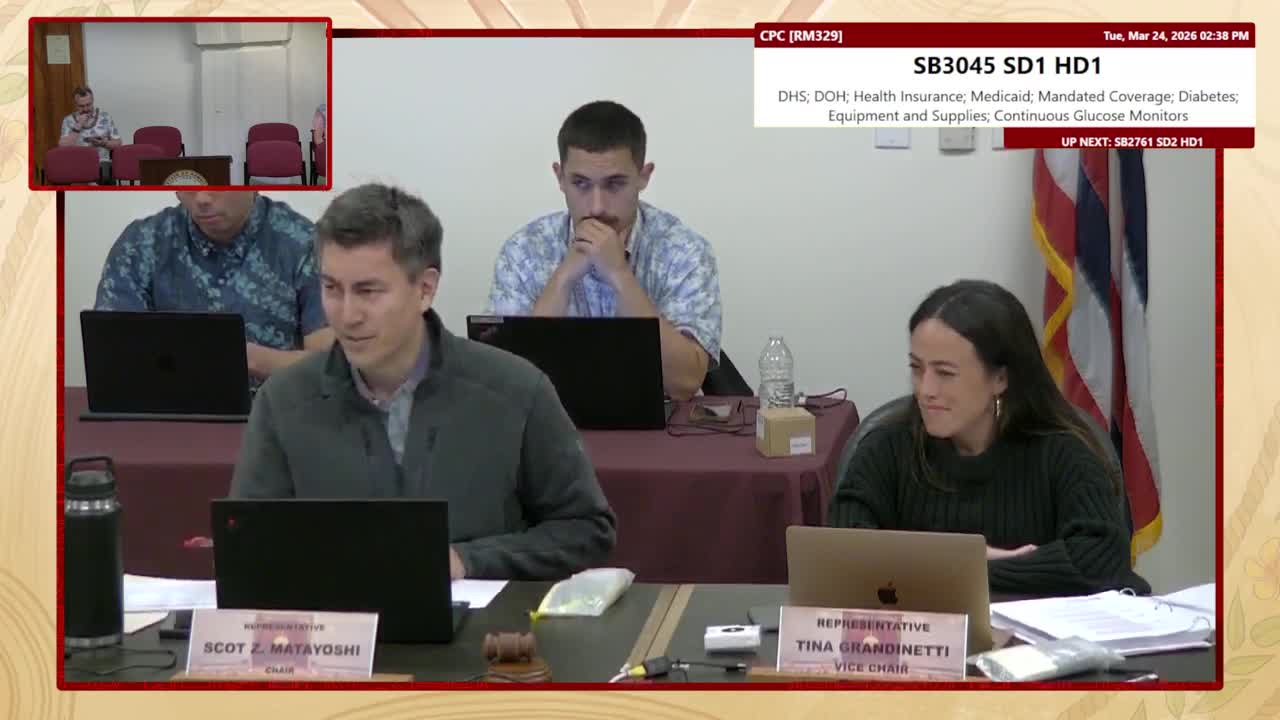
| Mar 24, 2026 | The committee(s) on CPC recommend(s) that the measure be deferred. |
| Mar 20, 2026 | Bill scheduled to be heard by CPC on Tuesday, 03-24-26 2:00PM in House conference room 329 VIA VIDEOCONFERENCE. |
| Mar 20, 2026 | Passed Second Reading as amended in HD 1 and referred to the committee(s) on CPC with none voting aye with reservations; Representative(s) Pierick voting no (1) and Representative(s) Quinlan excused (1). |
| Mar 20, 2026 | Reported from HLT (Stand. Com. Rep. No. 1282-26) as amended in HD 1, recommending passage on Second Reading and referral to CPC. |
| Mar 18, 2026 | The committee on HLT recommend that the measure be PASSED, WITH AMENDMENTS. The votes were as follows: 7 Ayes: Representative(s) Takayama, Keohokapu-Lee Loy, Amato, Marten, Olds, Takenouchi; Ayes with reservations: Representative(s) Alcos; 1 Noes: Representative(s) Garcia; and 1 Excused: Representative(s) Hartsfield. |
| Mar 12, 2026 | Bill scheduled to be heard by HLT on Wednesday, 03-18-26 9:00AM in House conference room 329 VIA VIDEOCONFERENCE. |
| Mar 12, 2026 | Referred to HLT, CPC, JHA, referral sheet 17 |
| Mar 12, 2026 | Pass First Reading |
| Mar 10, 2026 | Received from Senate (Sen. Com. No. 237) in amended form (SD 2). |
| Mar 10, 2026 | Report adopted; Passed Third Reading, as amended (SD 2). Ayes, 25; Aye(s) with reservations: none . Noes, 0 (none). Excused, 0 (none). Transmitted to House. |
| Mar 6, 2026 | 48 Hrs. Notice 03-10-26. |
| Mar 6, 2026 | Reported from JDC (Stand. Com. Rep. No. 3024) with recommendation of passage on Third Reading, as amended (SD 2). |
| Feb 27, 2026 | The committee(s) on JDC recommend(s) that the measure be PASSED, WITH AMENDMENTS. The votes in JDC were as follows: 5 Aye(s): Senator(s) Rhoads, Gabbard, Chang, San Buenaventura, Awa; Aye(s) with reservations: none ; 0 No(es): none; and 0 Excused: none. |
| Feb 23, 2026 | The committee(s) on JDC will hold a public decision making on 02-27-26 10:30AM; Conference Room 016 & Videoconference. |
| Feb 19, 2026 | Report adopted; Passed Second Reading, as amended (SD 1) and referred to JDC. |
| Feb 19, 2026 | Reported from HHS/CPN (Stand. Com. Rep. No. 2432) with recommendation of passage on Second Reading, as amended (SD 1) and referral to JDC. |
| Feb 6, 2026 | The committee(s) on CPN recommend(s) that the measure be PASSED, WITH AMENDMENTS. The votes in CPN were as follows: 5 Aye(s): Senator(s) Keohokalole, Fukunaga, Lamosao, McKelvey, Awa; Aye(s) with reservations: none ; 0 No(es): none; and 0 Excused: none. |
| Feb 6, 2026 | The committee(s) on HHS recommend(s) that the measure be PASSED, WITH AMENDMENTS. The votes in HHS were as follows: 4 Aye(s): Senator(s) San Buenaventura, McKelvey, Kanuha, Keohokalole; Aye(s) with reservations: none ; 0 No(es): none; and 1 Excused: Senator(s) Fevella. |
| Feb 2, 2026 | The committee(s) on HHS/CPN has scheduled a public hearing on 02-06-26 9:00AM; Conference Room 229 & Videoconference. |
| Jan 28, 2026 | Referred to HHS/CPN, JDC. |
| Jan 22, 2026 | Passed First Reading. |
| Jan 22, 2026 | Introduced. |
|
Date
|
Description
|
Location
|
Votes
|
|
|---|---|---|---|---|
| Mar 18, 2026 | The committee on HLT recommend that the measure be PASSED, WITH AMENDMENTS | House Standing Committee on Health |
Passed |
|
| Mar 10, 2026 | Third Reading | Senate Floor |
Passed |
|
| Feb 27, 2026 | The committee(s) on JDC recommend(s) that the measure be PASSED, WITH AMENDMENTS | Senate Standing Committee on Judiciary |
Passed |
|
| Feb 6, 2026 | The committee(s) on CPN recommend(s) that the measure be PASSED, WITH AMENDMENTS | Senate Standing Committee on Commerce and Consumer Protection |
Passed |
|
| Feb 6, 2026 | The committee(s) on HHS recommend(s) that the measure be PASSED, WITH AMENDMENTS | Senate Standing Committee on Health and Human Services |
Passed |
This list shows positions taken on this bill by organizations on the date displayed, which is linked to the original source.
Positions by individuals are not included.
|
Organization
|
Position
|
Date
|
|---|---|---|
| County of Hawaiʻi, Office of the Mayor | *** Support | Feb 6, 2026 |
| Exclusive Hawaii Rehab | *** Support | Feb 6, 2026 |
| Hawaii Association of Health Plans (HAHP) | *** Against | Mar 24, 2026 |
| Hawaii Island Recovery | *** Support | Feb 6, 2026 |
| Hawaii Medical Service Association (HMSA) | *** Against | Mar 24, 2026 |
| Hawaii Substance Abuse Coalition | ** Support | |
| Hina Mauka | ** Support | |
| Intervention 911 | ** Support | |
| Mayor of the County of Hawaiʻi | ** Support | |
| The Ohana Addiction Treatment Center | ** Support | |
| The Ohana Addiction Treatment Center | ** Support | |
| The Ohana Addiction Treatment Center | *** Support | Mar 24, 2026 |
STAND. COM. REP. NO. 3024
Honolulu, Hawaii
RE: S.B. No. 2425
S.D. 2
Honorable Ronald D. Kouchi
President of the Senate
Thirty-Third State Legislature
Regular Session of 2026
State of Hawaii
Sir:
Your Committee on Judiciary, to which was referred S.B. No. 2425, S.D. 1, entitled:
"A BILL FOR AN ACT RELATING TO HEALTH INSURANCE,"
begs leave to report as follows:
The purpose and intent of this measure is to:
(1) Require health insurance carriers to honor a patient's written assignment of benefits to a substance use disorder treatment provider;
(2) Prohibit health insurance contracts from including anti‑assignment clauses that restrict or invalidate a patient's right to assign benefits;
(3) Authorize the Insurance Commissioner to adopt rules and take enforcement action to ensure compliance;
(4) Deem violations to be unfair methods of competition and unfair or deceptive acts or practices; and
(5) Require insurers to furnish an explanation of benefits to the assigned provider upon request.
Your Committee received testimony in support of this measure from The Ohana Addiction Treatment Center and one individual.
Your Committee received testimony in opposition to this measure from the Hawaii Association of Health Plans.
Your Committee received comments on this measure from the Insurance Division of the Department of Commerce and Consumer Affairs.
Your Committee finds that health insurance carriers in the State routinely do not honor a patient's written assignment of benefits for substance use disorder treatment. Instead, health insurance carriers send reimbursement checks for large sums of money directly to patients in early recovery, creating patient safety risks and access barriers for families seeking treatment. This measure will protect at-risk individuals, reduce preventable harm, and ensure that patients can continue treatment safely and in close proximity to their family and community.
Your Committee has amended this measure by:
(1) Changing "valid written assignment" to "written assignment that is validly executed in compliance with this title" throughout the measure; and
(2) Making technical, nonsubstantive amendments for the purposes of clarity and consistency.
As affirmed by the record of votes of the members of your Committee on Judiciary that is attached to this report, your Committee is in accord with the intent and purpose of S.B. No. 2425, S.D. 1, as amended herein, and recommends that it pass Third Reading in the form attached hereto as S.B. No. 2425, S.D. 2.
Respectfully submitted on behalf of the members of the Committee on Judiciary,
|
|
|
________________________________ KARL RHOADS, Chair |
STAND. COM. REP. NO. 2432
Honolulu, Hawaii
RE: S.B. No. 2425
S.D. 1
Honorable Ronald D. Kouchi
President of the Senate
Thirty-Third State Legislature
Regular Session of 2026
State of Hawaii
Sir:
Your Committees on Health and Human Services and Commerce and Consumer Protection, to which was referred S.B. No. 2425 entitled:
"A BILL FOR AN ACT RELATING TO HEALTH INSURANCE,"
beg leave to report as follows:
The purpose and intent of this measure is to:
(1) Require health insurance carriers to honor a patient's written assignment of benefits to a substance use disorder treatment provider;
(2) Prohibit health insurance contracts from including anti-assignment clauses that restrict or invalidate a patient's right to assign benefits;
(3) Authorize the Insurance Commissioner to adopt rules and take enforcement action to ensure compliance;
(4) Require the Insurance Commissioner to publish an annual summary;
(5) Allow providers to bring civil actions to compel payment and obtain injunctive relief, damages, interest, and attorneys' fees for violations;
(6) Deem violations to be unfair methods of competition and unfair or deceptive acts or practices; and
(7) Require insurers to furnish an explanation of benefits to the assigned provider upon request.
Your Committees received testimony in support of this measure from the Mayor of the County of Hawaiʻi, The Ohana Addiction Treatment Center, Hawaii Substance Abuse Coalition, Hina Mauka, Intervention 911, and thirteen individuals.
Your Committees received comments on this measure from the Insurance Division of the Department of Commerce and Consumer Affairs and Hawaii Medical Service Association.
Your Committees find that ensuring timely and direct payment to providers is critical for maintaining access to quality substance use disorder treatment in the State's communities. Timely payment ensures continuity of care and encourages more providers to serve residents in need. This measure strengthens the State's behavioral health safety net and improves outcomes for individuals and families struggling with substance use disorders.
Your Committees have amended this measure by:
(1) Deleting language throughout this measure that would have required the Insurance Commissioner to publish annually, by electronic or online publication on the official website of the Insurance Division, a summary of compliance trends, assignments of benefits honored or denied, and enforcement actions taken;
(2) Deleting language throughout this measure that would have authorized a substance use disorder treatment provider who is denied payment by a health insurance carrier despite a valid assignment to bring a civil action to compel compliance and to be awarded injunctive relief, actual damages, interest, reasonable attorneys' fees, and costs;
(3) Deleting language throughout this measure to clarify that the term "substance use disorder treatment provider" does not include any program that provides partial hospitalization, intensive outpatient, or outpatient substance use disorder treatment services that are not subject to state licensure;
(4) Inserting an effective date of January 30, 2050, to encourage further discussion; and
(5) Making technical, nonsubstantive amendments for the purposes of clarity and consistency.
As affirmed by the records of votes of the members of your Committees on Health and Human Services and Commerce and Consumer Protection that are attached to this report, your Committees are in accord with the intent and purpose of S.B. No. 2425, as amended herein, and recommend that it pass Second Reading in the form attached hereto as S.B. No. 2425, S.D. 1, and be referred to your Committee on Judiciary.
Respectfully submitted on behalf of the members of the Committees on Health and Human Services and Commerce and Consumer Protection,
|
________________________________ JARRETT KEOHOKALOLE, Chair |
|
________________________________ JOY A. SAN BUENAVENTURA, Chair |
|
|
|
|
|
Date
|
Testimony PDF
|
|---|---|
| Mar 24, 2026 | SB2425_HD1_TESTIMONY_CPC_03-24-26_.PDF |
| Mar 18, 2026 | SB2425_SD2_TESTIMONY_HLT-HSH_03-18-26_.PDF |
| Feb 27, 2026 | SB2425_SD1_TESTIMONY_JDC_02-27-26_.PDF |
| Feb 6, 2026 | SB2425_TESTIMONY_HHS-CPN_02-06-26_.PDF |
Discussed in Hearing
 12MIN
House Standing Committee on Consumer Protection & Commerce
 49SEC
House Standing Committee on Consumer Protection & Commerce
 10MIN
House Standing Committee on Health
10MIN
House Standing Committee on Human Services & Homelessness
 1MIN
House Standing Committee on Health
1MIN
House Standing Committee on Human Services & Homelessness
 41SEC
Senate Standing Committee on Judiciary
 4MIN
Senate Standing Committee on Commerce and Consumer Protection
Bill Author