SB 1163: Privacy; Geolocation Information; Eavesdropping; Internet Browser Information; Exemptions
- Session Year: 2025-2026
- House: Senate
- Latest Version Date: 2026-03-05
Current Status:
Failed
(2026-03-12: Referred to CPC, JHA, referral sheet 17)
Introduced
In Committee
First Chamber
In Committee
Second Chamber
Final Decking
Enacted
Prohibits the sale of geolocation information and internet browser information without consent. Prohibits the sale of data collected through eavesdropping or through an application operating in the background of a device that uses the device's microphone. Establishes exemptions for lawful investigations conducted by law enforcement agencies, customer proprietary network information, and certain telecommunication carriers. Effective 1/1/2077. (SD2)
Prohibits the sale of geolocation information and internet browser information without consent. Prohibits the sale of data collected through eavesdropping or through an application operating in the background of a device that uses the device's microphone. Establishes exemptions for lawful investigations conducted by law enforcement agencies, customer proprietary network information, and certain telecommunication carriers. Effective 1/1/2077. (SD1)
Prohibits the sale of geolocation information and internet browser information without consent. Prohibits the sale of data collected through eavesdropping or through an application operating in the background of a device that uses the device's microphone.
|
THE SENATE |
S.B. NO. |
1163 |
|
THIRTY-THIRD LEGISLATURE, 2025 |
S.D. 2 |
|
|
STATE OF HAWAII |
|
|
|
|
|
|
|
|
||
|
|
||
A BILL FOR AN ACT
RELATING TO PRIVACY.
BE IT ENACTED BY THE LEGISLATURE OF THE STATE OF HAWAII:
In August 2022, the Federal Trade Commission sued a data broker corporation for the sale of hundreds of millions of mobile device users' geolocation information, finding that these sales identified and exposed individuals to dangers regarding discrimination, stigma, job loss, and physical violence. Central to their lawsuit are complaints about the role that geolocation information sales could play in disclosing users' private medical decisions, especially their protected use of abortion services. By tracking individuals' movements around reproductive health clinics, the Federal Trade Commission alleges that data brokers put the identity and safety of those seeking abortion services at risk. Additionally, the Federal Trade Commission found that these sales could endanger those employed by reproductive health clinics, including medical professionals, social workers, and administrative staff. Nonconsensual sales of geolocation information can divulge home addresses and daily routines by monitoring users' physical movements, creating dangerous situations for citizens that the legislature finds unacceptable.
The legislature further finds that this is especially problematic for citizens seeking or providing abortion care in the State. The legislature believes that these sales not only infringe on citizens' privacy rights but also may inhibit access to safe abortion care. The legislature believes that the State's citizens should not be subject to these violations of their civil rights and liberties. The legislature has determined that comprehensive regulatory action on geolocation data is necessary to prevent the uncontrolled sale of geolocation information.
Accordingly, the purpose of this Act is to prohibit the sale of:
(1) Geolocation information without consent;
(2) Data collected through eavesdropping or through an application operating in the background of a device that uses the device's microphone; and
(3) Internet browser information without consent,
with an exemption for lawful investigations conducted by law enforcement agencies in compliance with any constitutional or statutory provisions relating to privacy protections, customer proprietary network information regulated under federal law, and telecommunications carriers to the extent they are acting in compliance with applicable federal customer proprietary network information requirements.
SECTION 2. Chapter 481B, Hawaii Revised Statutes, is amended by adding two new sections to part I to be appropriately designated and to read as follows:
"§481B- Sale of geolocation information without consent or data collected through eavesdropping; prohibited. (a) No person, in any manner, or by any means, shall sell or offer for sale:
(1) Geolocation information that is recorded or collected through any means by a mobile device or location-based application without the explicit consent of the individual who is the primary user of the device or application; or
(2) Data that is recorded or collected through:
(A) Eavesdropping; or
(B) An application operating in the background of a device that uses the device's microphone.
(b) This section shall not apply to:
(3) Any telecommunications carrier as defined in title 47 United States Code section 153(51), to the extent the telecommunications carrier is acting in compliance with applicable federal customer proprietary network information requirements.
(c) For the purposes of this section:
"Consent" means prior express opt-in authorization that may be revoked by the user at any time.
"Emergency" means the imminent or actual occurrence of an event that is likely to cause extensive injury, death, or property damage.
"Geolocation information" means information that is:
(1) Not the contents of a communication;
(2) Generated by or derived, in whole or in part, from the operation of a mobile device, including but not limited to a smart phone, tablet, fitness tracker, e‑reader, or laptop computer; and
(3) Sufficient to determine or infer the precise location of the user of the device.
"Location-based application" means a software application that is downloaded or installed onto a device or accessed via a web browser that collects, uses, or stores geolocation information.
"Precise location" means any data that locates a user within a geographic area that is equal to or less than the area of a circle having a radius of 1,850 feet.
"Sale" means selling, renting, releasing, disclosing, disseminating, making available, transferring, or otherwise communicating orally, in writing, or by electronic or other means, a user's geolocation information to another business or a third party for monetary or other valuable consideration. "Sale" does not include the releasing, disclosing, disseminating, making available, transferring, or otherwise communicating orally, in writing, or by electronic or other means, a user's geolocation information for the purpose of responding to an emergency.
"User" means a person who purchases or leases a device or installs or uses an application on a mobile device.
§481B- Sale of internet browser information without consent; prohibited. (a) No person, in any manner, or by any means, shall sell or offer for sale internet browser information without the explicit consent of the subscriber of the internet service.
(b) This section shall not apply to:
(1) Any lawful investigation conducted by any law enforcement agency in compliance with any constitutional or statutory provisions relating to privacy protections;
(2) Customer proprietary network information, as defined and regulated under title 47 United States Code section 222; or
(3) Any telecommunications carrier, as defined in title 47 United States Code section 153(51), to the extent the telecommunications carrier is acting in compliance with applicable federal customer proprietary network information requirements.
(c) For the purposes of this section:
"Consent" means prior express opt-in authorization that may be revoked by the subscriber at any time.
"Internet browser information" means information from a person's use of the Internet, including:
(1) Web browsing history;
(2) Application usage history;
(3) The origin and destination internet protocol addresses;
(4) A device identifier, such as a media access control address, international mobile equipment identity, or internet protocol addresses; and
(5) The content of the communications comprising the internet activity.
"Internet service" means a retail service that provides the capability to transmit data to and receive data through the Internet using a dial-up service, a digital subscriber line, cable modem, fiber optics, wireless radio, satellite, powerline, or other technology used for a similar purpose.
"Sale" means the selling, renting, releasing, disclosing, disseminating, making available, transferring, or otherwise communicating orally, in writing, or by electronic or other means, of internet browser information to another business or a third party for monetary or other valuable consideration.
"Subscriber" means an applicant for or a current or former customer of an internet service."
SECTION 3. New statutory material is underscored.
SECTION 4. This Act shall take effect on January 1, 2077.
Report Title:
Privacy; Geolocation Information; Eavesdropping; Internet Browser Information; Exemptions
Description:
Prohibits the sale of geolocation information and internet browser information without consent. Prohibits the sale of data collected through eavesdropping or through an application operating in the background of a device that uses the device's microphone. Establishes exemptions for lawful investigations conducted by law enforcement agencies, customer proprietary network information, and certain telecommunication carriers. Effective 1/1/2077. (SD2)
The summary description of legislation appearing on this page is for informational purposes only and is not legislation or evidence of legislative intent.
|
THE SENATE |
S.B. NO. |
1163 |
|
THIRTY-THIRD LEGISLATURE, 2025 |
S.D. 1 |
|
|
STATE OF HAWAII |
|
|
|
|
|
|
|
|
||
|
|
||
A BILL FOR AN ACT
RELATING TO PRIVACY.
BE IT ENACTED BY THE LEGISLATURE OF THE STATE OF HAWAII:
In August 2022, the Federal Trade Commission sued a data broker corporation for the sale of hundreds of millions of mobile device users' geolocation information, finding that these sales identified and exposed individuals to dangers regarding discrimination, stigma, job loss, and physical violence. Central to their lawsuit are complaints about the role that geolocation information sales could play in disclosing users' private medical decisions, especially their protected use of abortion services. By tracking individuals' movements around reproductive health clinics, the Federal Trade Commission alleges that data brokers put the identity and safety of those seeking abortion services at risk. Additionally, the Federal Trade Commission found that these sales could endanger those employed by reproductive health clinics, including medical professionals, social workers, and administrative staff. Nonconsensual sales of geolocation information can divulge home addresses and daily routines by monitoring users' physical movements, creating dangerous situations for citizens that the legislature finds unacceptable.
The legislature further finds that this is especially problematic for citizens seeking or providing abortion care in the State. The legislature believes that these sales not only infringe on citizens' privacy rights but also may inhibit access to safe abortion care. The legislature believes that the State's citizens should not be subject to these violations of their civil rights and liberties. The legislature has determined that comprehensive regulatory action on geolocation data is necessary to prevent the uncontrolled sale of geolocation information.
Accordingly, the purpose of this Act is to prohibit the sale of:
(1) Geolocation information without consent;
(2) Data collected through eavesdropping or through an application operating in the background of a device that uses the device's microphone; and
(3) Internet browser information without consent,
with an exemption for lawful investigations conducted by law enforcement agencies in compliance with any constitutional or statutory provisions relating to privacy protections, customer proprietary network information regulated under federal law, and telecommunications carriers to the extent they are acting in compliance with applicable federal customer proprietary network information requirements.
SECTION 2. Chapter 481B, Hawaii Revised Statutes, is amended by adding two new sections to part I to be appropriately designated and to read as follows:
"§481B- Sale of geolocation information without consent or data collected through eavesdropping; prohibited. (a) No person, in any manner, or by any means, shall sell or offer for sale:
(1) Geolocation information that is recorded or collected through any means by a mobile device or location-based application without the explicit consent of the individual who is the primary user of the device or application; or
(2) Data that is recorded or collected through:
(A) Eavesdropping; or
(B) An application operating in the background of a device that uses the device's microphone.
(b) This section shall not apply to:
(3) Any telecommunications carrier as defined in title 47 United States Code section 153(51), to the extent the telecommunications carrier is acting in compliance with applicable federal customer proprietary network information requirements.
(c) For the purposes of this section:
"Consent" means prior express opt-in authorization that may be revoked by the user at any time.
"Emergency" means the imminent or actual occurrence of an event that is likely to cause extensive injury, death, or property damage.
"Geolocation information" means information that is:
(1) Not the contents of a communication;
(2) Generated by or derived, in whole or in part, from the operation of a mobile device, including but not limited to a smart phone, tablet, fitness tracker, e‑reader, or laptop computer; and
(3) Sufficient to determine or infer the precise location of the user of the device.
"Location-based application" means a software application that is downloaded or installed onto a device or accessed via a web browser that collects, uses, or stores geolocation information.
"Precise location" means any data that locates a user within a geographic area that is equal to or less than the area of a circle having a radius of one mile.
"Sale" means selling, renting, releasing, disclosing, disseminating, making available, transferring, or otherwise communicating orally, in writing, or by electronic or other means, a user's geolocation information to another business or a third party for monetary or other valuable consideration. "Sale" does not include the releasing, disclosing, disseminating, making available, transferring, or otherwise communicating orally, in writing, or by electronic or other means, a user's geolocation information for the purpose of responding to an emergency.
"User" means a person who purchases or leases a device or installs or uses an application on a mobile device.
§481B- Sale of internet browser information without consent; prohibited. (a) No person, in any manner, or by any means, shall sell or offer for sale internet browser information without the explicit consent of the subscriber of the internet service.
(b) This section shall not apply to:
(1) Any lawful investigation conducted by any law enforcement agency in compliance with any constitutional or statutory provisions relating to privacy protections; and
(2) Customer proprietary network information, as defined and regulated under title 47 United States Code section 222; or
(3) Any telecommunications carrier, as defined in title 47 United States Code section 153(51), to the extent the telecommunications carrier is acting in compliance with applicable federal customer proprietary network information requirements.
(c) For the purposes of this section:
"Consent" means prior express opt-in authorization that may be revoked by the subscriber at any time.
"Internet browser information" means information from a person's use of the Internet, including:
(1) Web browsing history;
(2) Application usage history;
(3) The origin and destination internet protocol addresses;
(4) A device identifier, such as a media access control address, international mobile equipment identity, or internet protocol addresses; and
(5) The content of the communications comprising the internet activity.
"Internet service" means a retail service that provides the capability to transmit data to and receive data through the Internet using a dial-up service, a digital subscriber line, cable modem, fiber optics, wireless radio, satellite, powerline, or other technology used for a similar purpose.
"Sale" means the selling, renting, releasing, disclosing, disseminating, making available, transferring, or otherwise communicating orally, in writing, or by electronic or other means, of internet browser information to another business or a third party for monetary or other valuable consideration.
"Subscriber" means an applicant for or a current or former customer of an internet service."
SECTION 3. New statutory material is underscored.
SECTION 4. This Act shall take effect on January 1, 2077.
Report Title:
Privacy; Geolocation Information; Eavesdropping; Internet Browser Information; Exemptions
Description:
Prohibits the sale of geolocation information and internet browser information without consent. Prohibits the sale of data collected through eavesdropping or through an application operating in the background of a device that uses the device's microphone. Establishes exemptions for lawful investigations conducted by law enforcement agencies, customer proprietary network information, and certain telecommunication carriers. Effective 1/1/2077. (SD1)
The summary description of legislation appearing on this page is for informational purposes only and is not legislation or evidence of legislative intent.
|
THE SENATE |
S.B. NO. |
1163 |
|
THIRTY-THIRD LEGISLATURE, 2025 |
|
|
|
STATE OF HAWAII |
|
|
|
|
|
|
|
|
||
|
|
||
A BILL FOR AN ACT
relating to privacy.
BE IT ENACTED BY THE LEGISLATURE OF THE STATE OF HAWAII:
In August 2022, the Federal Trade Commission sued a data broker corporation for the sale of hundreds of millions of mobile device users' geolocation information, finding that these sales identified and exposed individuals to dangers regarding discrimination, stigma, job loss, and physical violence. Central to their lawsuit are complaints about the role that geolocation information sales could play in disclosing users' private medical decisions, especially their protected use of abortion services. By tracking individuals' movements around reproductive health clinics, the Federal Trade Commission alleges that data brokers put the identity and safety of those seeking abortion services at risk. Additionally, the Federal Trade Commission found that these sales could endanger those employed by reproductive health clinics, including medical professionals, social workers, and administrative staff. Nonconsensual sales of geolocation information can divulge home addresses and daily routines by monitoring users' physical movements, creating dangerous situations for citizens that the legislature finds unacceptable.
The legislature further finds that this is especially problematic for citizens seeking or providing abortion care in the State. The legislature believes that these sales not only infringe on citizens' privacy rights, but also may inhibit access to safe abortion care. The legislature believes that the State's citizens should not be subject to such violations of their civil rights and liberties. The legislature has determined that comprehensive regulatory action on geolocation data is necessary to prevent the uncontrolled sale of geolocation information.
Accordingly, the purpose of this Act is to prohibit the sale of:
(1) Geolocation information without consent;
(2) Data collected through eavesdropping or through an application operating in the background of a device that uses the device's microphone; and
(3) Internet browser information without consent.
SECTION 2. Chapter 481B, Hawaii Revised Statutes, is amended by adding two new sections to part I to be appropriately designated and to read as follows:
"§481B- Sale of geolocation information without consent or data collected through eavesdropping; prohibited. (a) No person, in any manner, or by any means, shall sell or offer for sale:
(1) Geolocation information that is recorded or collected through any means by a mobile device or location-based application without the explicit consent of the individual who is the primary user of the device or application; or
(2) Data that is recorded or collected through:
(A) Eavesdropping; or
(B) An application operating in the background of a device that uses the device's microphone.
(b) For the purposes of this section:
"Consent" means prior express opt-in authorization that may be revoked by the user at any time.
"Emergency" means the imminent or actual occurrence of an event that is likely to cause extensive injury, death, or property damage.
"Geolocation information" means information that is:
(1) Not the contents of a communication;
(2) Generated by or derived, in whole or in part, from the operation of a mobile device, including but not limited to a smart phone, tablet, fitness tracker, e‑reader, or laptop computer; and
(3) Sufficient to determine or infer the precise location of the user of the device.
"Location-based application" means a software application that is downloaded or installed onto a device or accessed via a web browser that collects, uses, or stores geolocation information.
"Precise location" means any data that locates a user within a geographic area that is equal to or less than the area of a circle having a radius of one mile.
"Sale" means selling, renting, releasing, disclosing, disseminating, making available, transferring, or otherwise communicating orally, in writing, or by electronic or other means, a user's geolocation information to another business or a third party for monetary or other valuable consideration. "Sale" does not include the releasing, disclosing, disseminating, making available, transferring, or otherwise communicating orally, in writing, or by electronic or other means, a user's geolocation information for the purpose of responding to an emergency.
"User" means a person who purchases or leases a device or installs or uses an application on a mobile device.
§481B- Sale of internet browser information without consent; prohibited. (a) No person, in any manner, or by any means, shall sell or offer for sale internet browser information without the explicit consent of the subscriber of the internet service.
(b) For the purposes of this section:
"Consent" means prior express opt-in authorization that may be revoked by the subscriber at any time.
"Internet browser information" means information from a person's use of the Internet, including:
(1) Web browsing history;
(2) Application usage history;
(3) The origin and destination internet protocol addresses;
(4) A device identifier, such as a media access control address, international mobile equipment identity, or internet protocol addresses; and
(5) The content of the communications comprising the internet activity.
"Internet service" means a retail service that provides the capability to transmit data to and receive data through the Internet using a dial-up service, a digital subscriber line, cable modem, fiber optics, wireless radio, satellite, powerline, or other technology used for a similar purpose.
"Sale" means the selling, renting, releasing, disclosing, disseminating, making available, transferring, or otherwise communicating orally, in writing, or by electronic or other means, of internet browser information to another business or a third party for monetary or other valuable consideration.
"Subscriber" means an applicant for or a current or former customer of an internet service."
SECTION 3. New statutory material is underscored.
SECTION 4. This Act shall take effect upon its approval.
|
INTRODUCED BY: |
_____________________________ |
|
|
|
|
|
|
|
|
|
|
|
|
|
|
|
|
|
|
|
|
|
|
|
|
|
|
|
|
|
|
|
|
|
Report Title:
Privacy; Geolocation Information; Eavesdropping; Internet Browser Information
Description:
Prohibits the sale of geolocation information and internet browser information without consent. Prohibits the sale of data collected through eavesdropping or through an application operating in the background of a device that uses the device's microphone.
The summary description of legislation appearing on this page is for informational purposes only and is not legislation or evidence of legislative intent.
|
Date
|
Status
|
|---|---|
| Mar 12, 2026 | Referred to CPC, JHA, referral sheet 17 |
| Mar 12, 2026 | Pass First Reading |
| Mar 10, 2026 | Received from Senate (Sen. Com. No. 143) in amended form (SD 2). |
| Mar 10, 2026 | Report adopted; Passed Third Reading, as amended (SD 2). Ayes, 25; Aye(s) with reservations: none . Noes, 0 (none). Excused, 0 (none). Transmitted to House. |
| Mar 6, 2026 | 48 Hrs. Notice 03-10-26. |
| Mar 6, 2026 | Reported from CPN (Stand. Com. Rep. No. 2911) with recommendation of passage on Third Reading, as amended (SD 2). |
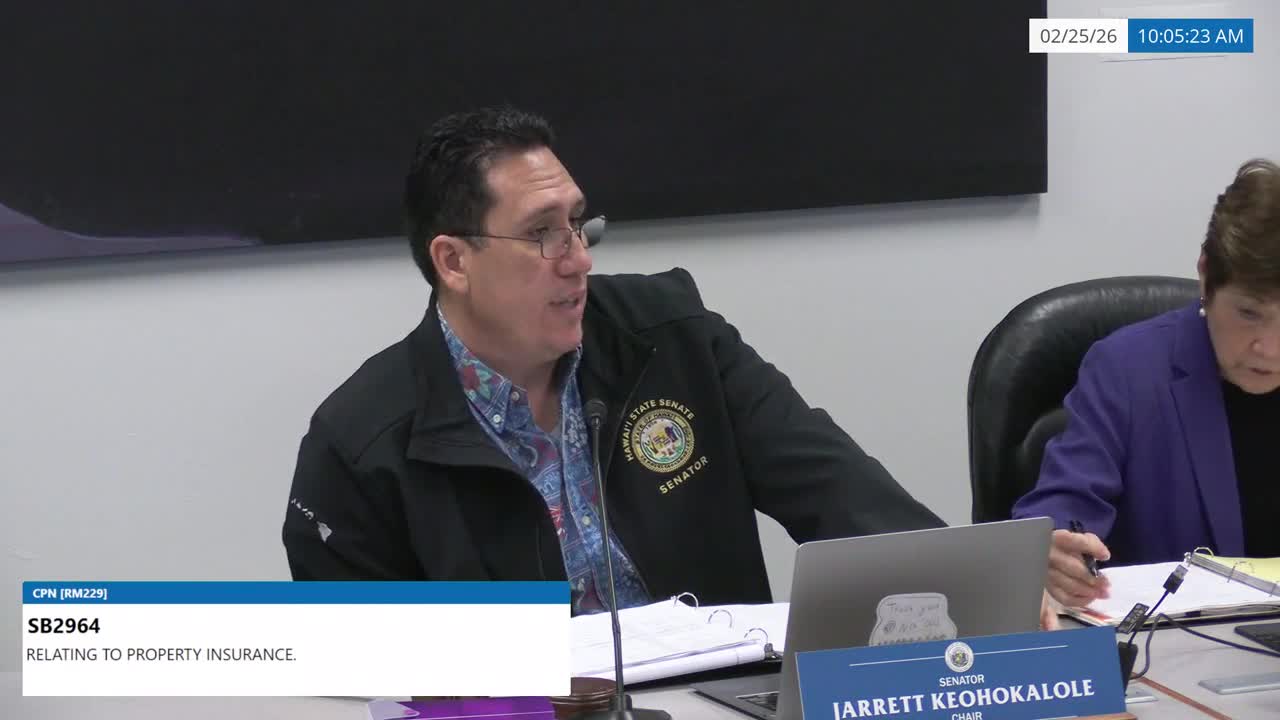
| Feb 25, 2026 | The committee(s) on CPN recommend(s) that the measure be PASSED, WITH AMENDMENTS. The votes in CPN were as follows: 4 Aye(s): Senator(s) Keohokalole, Fukunaga, McKelvey, Awa; Aye(s) with reservations: none ; 0 No(es): none; and 1 Excused: Senator(s) Lamosao. |
| Feb 20, 2026 | The committee(s) on CPN will hold a public decision making on 02-25-26 9:45AM; Conference Room 229 & Videoconference. |
| Feb 6, 2026 | Report adopted; Passed Second Reading, as amended (SD 1) and referred to CPN. |
| Feb 6, 2026 | Reported from LBT (Stand. Com. Rep. No. 2112) with recommendation of passage on Second Reading, as amended (SD 1) and referral to CPN. |
| Jan 30, 2026 | The committee(s) on LBT recommend(s) that the measure be PASSED, WITH AMENDMENTS. The votes in LBT were as follows: 4 Aye(s): Senator(s) Elefante, Lamosao, Ihara, Moriwaki; Aye(s) with reservations: none ; 0 No(es): none; and 1 Excused: Senator(s) Fevella. |
| Jan 27, 2026 | The committee(s) on LBT has scheduled a public hearing on 01-30-26 3:00PM; Conference Room 225 & Videoconference. |
| Dec 8, 2025 | Carried over to 2026 Regular Session. |
| Jan 27, 2025 | Referred to LBT, CPN. |
| Jan 21, 2025 | Passed First Reading. |
| Jan 17, 2025 | Introduced. |
|
Date
|
Description
|
Location
|
Votes
|
|
|---|---|---|---|---|
| Mar 10, 2026 | Third Reading | Senate Floor |
Passed |
|
| Feb 25, 2026 | The committee(s) on CPN recommend(s) that the measure be PASSED, WITH AMENDMENTS | Senate Standing Committee on Commerce and Consumer Protection |
Passed |
|
| Jan 30, 2026 | The committee(s) on LBT recommend(s) that the measure be PASSED, WITH AMENDMENTS | Senate Standing Committee on Labor and Technology |
Passed |
This list shows positions taken on this bill by organizations on the date displayed, which is linked to the original source.
Positions by individuals are not included.
|
Organization
|
Position
|
Date
|
|---|---|---|
| American Association of Advertising Agencies, 4As | ** Against | |
| american advertising federation | ** Against | |
| American Advertising Federation | *** Against | Feb 25, 2026 |
| American Association of Advertising Agents, 4As | ** Against | |
| American Association of Advertising Agencies (4As) | *** Against | Feb 25, 2026 |
| Association of National Advertisers | ** Against | |
| Association of National Advisors | ** Against | |
| CTIA | ** Against | |
| CTIA | *** Against | Feb 25, 2026 |
| Department of the Prosecuting Attorney of the City and County of Honolulu | ** Support | |
| Digital Advertising Alliance | ** Against | |
| Digital Advertising Alliance | *** Against | Feb 25, 2026 |
| Hawaiian Telcom | *** Support | Jan 30, 2026 |
| Planned Parenthood Alliance Advocates | ** Support | |
| Planned Parenthood Alliance Advocates | *** Support | Feb 25, 2026 |
| State Privacy and Security Coalition | ** Against | |
| Technet | ** Against |
STAND. COM. REP. NO. 2911
Honolulu, Hawaii
RE: S.B. No. 1163
S.D. 2
Honorable Ronald D. Kouchi
President of the Senate
Thirty-Third State Legislature
Regular Session of 2026
State of Hawaii
Sir:
Your Committee on Commerce and Consumer Protection, to which was referred S.B. No. 1163, S.D. 1, entitled:
"A BILL FOR AN ACT RELATING TO PRIVACY,"
begs leave to report as follows:
The purpose and intent of this measure is to:
(1) Prohibit the sale of geolocation information and internet browser information without consent;
(2) Prohibit the sale of data collected through eavesdropping or through an application operating in the background of a device that uses the device's microphone; and
(3) Establish exemptions for lawful investigations conducted by law enforcement agencies, customer proprietary network information, and certain telecommunication carriers.
Your Committee received testimony in support of this measure from Planned Parenthood Alliance Advocates and one individual.
Your Committee received testimony in opposition to this measure from the State Privacy and Security Coalition; TechNet; Association of National Advertisers; American Association of Advertising Agencies, 4As; American Advertising Federation; Digital Advertising Alliance; and CTIA.
Your Committee received comments on this measure from the Office of Consumer Protection of the Department of Commerce and Consumer Affairs and Hawaiian Telcom.
Your Committee finds that it is important to protect consumers' personal data against unregulated sale, including geolocation and browsing history, as this can pose real risks to privacy and safety. This measure would establish stronger safeguards to restrict the uninhibited sale of personal data.
Your Committee has amended this measure by:
(1) Clarifying the definition of "precise location" to mean any data that locates a user within the geographic area that is equal to or less than the area of a circle having a radius of 1,850 feet; and
(2) Making technical, nonsubstantive amendments for the purposes of clarity and consistency.
As affirmed by the record of votes of the members of your Committee on Commerce and Consumer Protection that is attached to this report, your Committee is in accord with the intent and purpose of S.B. No. 1163, S.D. 1, as amended herein, and recommends that it pass Third Reading in the form attached hereto as S.B. No. 1163, S.D. 2.
Respectfully submitted on behalf of the members of the Committee on Commerce and Consumer Protection,
|
|
|
________________________________ JARRETT KEOHOKALOLE, Chair |
|
|
|
|
STAND. COM. REP. NO. 2112
Honolulu, Hawaii
RE: S.B. No. 1163
S.D. 1
Honorable Ronald D. Kouchi
President of the Senate
Thirty-Third State Legislature
Regular Session of 2026
State of Hawaii
Sir:
Your Committee on Labor and Technology, to which was referred S.B. No. 1163 entitled:
"A BILL FOR AN ACT RELATING TO PRIVACY,"
begs leave to report as follows:
The purpose and intent of this measure is to:
(1) Prohibit the sale of geolocation information and internet browser information without consent; and
(2) Prohibit the sale of data collected through eavesdropping or an application operating in the background of a device that uses the device's microphone.
Your Committee received testimony in support of this measure from the Department of the Prosecuting Attorney of the City and County of Honolulu and one individual.
Your Committee received testimony in opposition to this measure from the State Privacy & Security Coalition; TechNet; Association of National Advisors; American Association of Advertising Agents, 4As; American Advertising Federation; and Digital Advertising Alliance.
Your Committee received comments on this measure from the Department of Commerce and Consumer Affairs and Hawaiian Telcom.
Your Committee finds that the unregulated sale of mobile device users' geolocation information poses significant privacy and civil rights implications for the State's residents. These privacy issues are especially pressing as they relate to data pertaining to sensitive locations, such as reproductive health clinics. Your Committee further finds that data brokers selling geolocation information and personal data collected through eavesdropping can threaten users' safety, enabling harassment, stalking, and abuse. This measure safeguards the civil liberties, privacy, and public safety of the State's residents by reducing the risks associated with the sale of information improper pertaining to an individual's location and online activities.
Your Committee acknowledges the concerns raised in testimony regarding the effect of the proposed prohibitions on lawful investigations conducted by law enforcement agencies in compliance with constitutional and statutory provisions pertaining to privacy protections. Your Committee also recognizes testimony requesting that that customer proprietary network information (CPNI) and telecommunications carriers, to the extent they are acting in compliance with applicable CPNI requirements, be excluded from the application of the prohibitions, as CPNI is regulated under federal law and telecommunications carriers are subject to comprehensive and longstanding privacy obligations under federal law and regulations that strictly regulate the use, disclosure, and protection of customer proprietary network information, including location-related call information. Therefore, it is necessary to amend this measure to reflect these concerns.
Accordingly, your Committee has amended this measure by:
(1) Inserting language that exempts:
(A) Lawful investigations conducted by law enforcement agencies in compliance with any constitutional or statutory provisions relating to privacy protections;
(B) Customer proprietary network information; and
(C) Telecommunications carriers, to the extent they are acting in compliance with applicable federal Customer proprietary network information requirements;
(2) Amending section 1 to reflect its amended purpose;
(3) Inserting an effective date of January 1, 2077, to encourage further discussion; and
(4) Making technical, nonsubstantive amendments for the purposes of clarity and consistency.
As affirmed by the record of votes of the members of your Committee on Labor and Technology that is attached to this report, your Committee is in accord with the intent and purpose of S.B. No. 1163, as amended herein, and recommends that it pass Second Reading in the form attached hereto as S.B. No. 1163, S.D. 1, and be referred to your Committee on Commerce and Consumer Protection.
Respectfully submitted on behalf of the members of the Committee on Labor and Technology,
|
|
|
________________________________ BRANDON J.C. ELEFANTE, Chair |
|
|
|
|
|
Date
|
Testimony PDF
|
|---|---|
| Feb 25, 2026 | SB1163_SD1_TESTIMONY_CPN_02-25-26_.PDF |
| Jan 30, 2026 | SB1163_TESTIMONY_LBT_01-30-26_.PDF |
Discussed in Hearing
 2MIN
Conference Committee
 57SEC
Senate Standing Committee on Commerce and Consumer Protection
 4MIN
Senate Standing Committee on Labor and Technology
Bill Author