SB 106: Pedestrians; Safety; Street Crossing; Pilot Program
- Session Year: 2025-2026
- House: Senate
- Latest Version Date: 2025-04-04
Current Status:
Failed
(2026-04-17: Re-Referred to TRS, JDC.)
Introduced
In Committee
First Chamber
In Committee
Second Chamber
Final Decking
Enacted
Establishes a three-year Pedestrian Safety Pilot Program in a county with population of two hundred fifty thousand or less, under certain conditions. Authorizes the Governor to revoke and abolish the Pilot Program and overturn a county's request to opt-out of the Pilot Program. Authorizes a county with a population of over two hundred fifty thousand to participate in the Pilot Program, subject to certain conditions. Requires reports to the Legislature. Requires a driver of a vehicle to yield to a pedestrian when the pedestrian clearly indicates their intention to cross a roadway within a crosswalk. Sunsets 6/30/2028. Effective 7/1/3000. (HD2)
Establishes a three-year Pedestrian Safety Pilot Program in a county with population of two hundred fifty thousand or less, under certain conditions. Authorizes the Governor to revoke and abolish the Pilot Program and overturn a county's request to opt-out of the Pilot Program. Authorizes a county with a population of over two hundred fifty thousand to participate in the Pilot Program, subject to certain conditions. Requires reports to the Legislature. Requires a driver of a vehicle to yield to a pedestrian when the pedestrian clearly indicates their intention to cross a roadway within a crosswalk. Sunsets 6/30/2028. Effective 7/1/3000. (HD1)
Authorizes pedestrians to act contrary to the statewide traffic code when a reasonably careful pedestrian would determine that there is no immediate danger of a collision with a moving vehicle if the pedestrian is more than 200 feet from a crosswalk. Requires a driver of a vehicle to yield to a pedestrian when the pedestrian clearly indicates their intention to cross a roadway within a crosswalk. Effective 7/1/2050. (SD1)
Authorizes pedestrians to act contrary to the statewide traffic code when a reasonably careful pedestrian would determine that there is no immediate danger of a collision with a moving vehicle.
|
THE SENATE |
S.B. NO. |
106 |
|
THIRTY-THIRD LEGISLATURE, 2025 |
S.D. 1 |
|
|
STATE OF HAWAII |
H.D. 2 |
|
|
|
|
|
|
|
||
|
|
||
A BILL FOR AN ACT
RELATING TO PEDESTRIANS.
BE IT ENACTED BY THE LEGISLATURE OF THE STATE OF HAWAII:
SECTION 1. The legislature finds that pedestrian mobility is an essential part of a sustainable and accessible transportation system. However, pedestrian safety is a critical concern, especially in densely populated areas with high vehicular traffic. While the legislature acknowledges the benefits of walking as a mode of transportation, including reducing carbon emissions and promoting public health, it also recognizes the need to balance pedestrian freedom with public safety.
The legislature further finds that counties with smaller populations may be better suited to test pedestrian-friendly policies, whereas counties with populations exceeding two hundred fifty thousand require a more structured approach to ensure pedestrian and driver safety.
Accordingly, the purpose of this Act is to provide pedestrians with greater freedom by:
(1) Establishing a three-year pedestrian safety pilot program in each county with a population of two hundred fifty thousand or less, under certain conditions, which prohibits a pedestrian from being stopped, fined, or subjected to a penalty for crossing outside of a marked crosswalk;
(2) Authorizing the governor to:
(A) Revoke and abolish the pilot program statewide at any time if deemed necessary for public safety; and
(B) Overturn a county's approved opt-out request after consulting with certain individuals;
(3) Authorizing a county with a population of over two hundred fifty thousand to participate in the pilot program, subject to certain conditions;
(4) Requiring reports to the legislature; and
(5) Requiring any driver of a vehicle to yield to a pedestrian who clearly indicates their intention to cross the roadway at a crosswalk.
PART II
SECTION 2. (a) There shall be established a three-year pedestrian safety pilot program in each county with a population of two hundred fifty thousand or less; provided that a county may opt out of the pilot program upon request by the mayor of the county, subject to the approval of the director of transportation. Notwithstanding any other law to the contrary, under the pilot program, no pedestrian shall be stopped by a law enforcement officer, fined, or subjected to any other penalty for crossing outside of a marked crosswalk; provided that:
(1) The pedestrian is at least two hundred feet from the nearest crosswalk; and
(2) A reasonably careful pedestrian would determine there is no immediate danger of a collision with a moving vehicle.
(b) The department of transportation and each county law enforcement agency shall develop clear enforcement guidelines to enforce the pilot program.
(c) The burden of proof shall lie with the issuing officer, who must show that the pedestrian engaged in behavior that created an immediate danger of collision with a moving vehicle.
(d) The governor may:
(1) Revoke and abolish the pilot program statewide at any time if deemed necessary for public safety; and
(2) Overturn a county's approved opt-out request under subsection (a); provided that the governor shall consult with the following individuals before overturning an opt-out request:
(A) The attorney general;
(B) The president of the senate;
(C) The speaker of the house of representatives;
(D) The chairs of the senate and house standing committees with primary jurisdiction over transportation; and
(E) The chairs of the senate and house standing committees with primary jurisdiction over the judiciary.
(e) A county with a population of over two hundred fifty thousand may participate in the pilot program; provided that the state highway safety and modernization council shall first, in consultation with the department of transportation and county law enforcement agencies, determine designated areas in the county to implement the pilot program, subject to the final approval from the director of transportation in consultation with the:
(1) Chairs of the senate and house standing committees with primary jurisdiction over transportation; and
(2) Chairs of the senate and house standing committees with the primary jurisdiction over the judiciary.
(f) The department of transportation shall, in coordination with the state highway safety and modernization council, collect and analyze data on the impacts of the pilot program and submit biannual reports to the legislature no later than sixty days prior to the convening of the regular sessions of 2026, 2027, and 2028 and sixty days after adjournment sine die of the regular sessions of 2026, 2027, and 2028. The reports shall include but not be limited to:
(1) Assessments of the benefits and drawbacks of the pilot program;
(2) Traffic crash data before and after the implementation of the pilot program;
(3) Pedestrian citation data, including how many fines were issued and contested;
(4) Public feedback on the pilot program's effectiveness and concerns raised by business districts and communities;
(5) Law enforcement reports on compliance challenges; and
(6) Recommendations for the continuation, expansion, or modification of the pilot program.
(g) This section shall not apply to:
(1) Roadways with speed limits exceeding twenty-five miles per hour;
(2) Roadways with limited pedestrian visibility, such as tunnels, bridges, and high-traffic intersections; and
(3) Areas with high pedestrian-vehicle conflict, as determined by law enforcement agencies.
(h) This section shall not relieve:
(1) A pedestrian from the duty of using due care for their safety and the safety of others; or
(2) A driver of a vehicle from the duty of exercising due care for the safety of any pedestrian within the roadway.
(i) For purposes of this section, "immediate danger" means crossing in a manner that requires an oncoming vehicle to brake suddenly or swerve to avoid impact.
PART III
SECTION 3. Section 291C-72, Hawaii Revised Statutes, is amended by amending subsection (a) to read as follows:
"(a)
The driver of a vehicle shall stop for a pedestrian who is crossing the
roadway within a crosswalk when the pedestrian is [either]:
(1) Upon
the half of the roadway upon which the vehicle is traveling; [or]
(2) Approaching
the vehicle so closely from the opposite half of the roadway as to be in danger[,];
or
(3) Clearly indicating to the driver of a vehicle their intention to cross the roadway,
and shall not proceed until the pedestrian has passed the vehicle and the driver can safely proceed.
For purposes of this section, "a pedestrian who is crossing the roadway within a crosswalk" occurs when any part or extension of the pedestrian, including any part of the pedestrian's body, wheelchair, cane, crutch, or bicycle, is beyond the curb or edges of the traversable roadway and moves onto the roadway within an intersection or crosswalk."
PART IV
SECTION 4. Statutory material to be repealed is bracketed and stricken. New statutory material is underscored.
SECTION 5. This Act shall take effect on July 1, 3000, and shall be repealed on June 30, 2028.
Report Title:
Pedestrians; Safety; Street Crossing; Pilot Program
Description:
Establishes a three-year Pedestrian Safety Pilot Program in a county with population of two hundred fifty thousand or less, under certain conditions. Authorizes the Governor to revoke and abolish the Pilot Program and overturn a county's request to opt-out of the Pilot Program. Authorizes a county with a population of over two hundred fifty thousand to participate in the Pilot Program, subject to certain conditions. Requires reports to the Legislature. Requires a driver of a vehicle to yield to a pedestrian when the pedestrian clearly indicates their intention to cross a roadway within a crosswalk. Sunsets 6/30/2028. Effective 7/1/3000. (HD2)
The summary description of legislation appearing on this page is for informational purposes only and is not legislation or evidence of legislative intent.
|
THE SENATE |
S.B. NO. |
106 |
|
THIRTY-THIRD LEGISLATURE, 2025 |
S.D. 1 |
|
|
STATE OF HAWAII |
H.D. 1 |
|
|
|
|
|
|
|
||
|
|
||
A BILL FOR AN ACT
RELATING TO PEDESTRIANS.
BE IT ENACTED BY THE LEGISLATURE OF THE STATE OF HAWAII:
SECTION 1. The legislature finds that pedestrian mobility is an essential part of a sustainable and accessible transportation system. However, pedestrian safety is a critical concern, especially in densely populated areas with high vehicular traffic. While the legislature acknowledges the benefits of walking as a mode of transportation, including reducing carbon emissions and promoting public health, it also recognizes the need to balance pedestrian freedom with public safety.
The legislature further finds that counties with smaller populations may be better suited to test pedestrian-friendly policies, whereas counties with populations exceeding 250,000 require a more structured approach to ensure pedestrian and driver safety.
Accordingly, the purpose of this Act is to provide pedestrians with greater freedom by:
(1) Establishing a three-year pedestrian safety pilot program in each county with a population of two hundred fifty thousand or less, under certain conditions, which prohibits a pedestrian from being stopped, fined, or subjected to a penalty for crossing outside of a marked crosswalk;
(2) Authorizing the governor to:
(A) Revoke and abolish the pilot program statewide at any time if deemed necessary for public safety; and
(B) Overturn a county's approved opt-out request after consulting with certain individuals;
(3) Authorizes a county with a population of over two hundred fifty thousand to participate in the pilot program, subject to certain conditions;
(4) Requires reports to the legislature; and
(5) Requiring any driver of a vehicle to yield to a pedestrian who clearly indicates their intention to cross the roadway at a crosswalk.
PART II
SECTION 2. (a) There shall be established a three-year pedestrian safety pilot program in each county with a population of two hundred fifty thousand or less; provided that a county may opt out of the pilot program upon request by the appropriate mayor, subject to the approval of the director of transportation. Notwithstanding any other law to the contrary, under the pilot program, no pedestrian shall be stopped by a law enforcement officer, fined, or subjected to any other penalty for crossing outside of a marked crosswalk, provided that:
(1) The pedestrian is at least two hundred feet from the nearest crosswalk; and
(2) A reasonably careful pedestrian would determine there is no immediate danger of a collision with a moving vehicle.
(b) Except as provided under subsection (c), a pedestrian shall be subject to a fine if they engage in behavior that creates an immediate danger of collision with a moving vehicle, as determined by a reasonable person standard.
The fines shall be as follows:
(1) $50 for a first violation;
(2) $100 for a second violation within a twelve month period; and
(3) $200 for a third or subsequent violation within a twelve month period.
Fines collected under this subsection shall be deposited into the state highway fund established pursuant to section 248‑8, Hawaii Revised Statutes, to support pedestrian safety infrastructure improvements.
(c) No fines shall be imposed pursuant to subsection (b) if the pedestrian:
(1) Is within a legally designated pedestrian zone or crosswalk;
(2) Crosses when no vehicles are present within three hundred feet; or
(3) Was cited without documented proof of engaging in a behavior that creates an immediate danger of collision with a moving vehicle.
(d) A pedestrian who receives a fine pursuant to subsection (b) may contest the citation through an administrative hearing process.
(e) The department of transportation and each county law enforcement agency shall develop clear enforcement guidelines to enforce the pilot program.
(f) Burden of proof shall lie with the issuing officer who shall show that the pedestrian engaged in behavior that creates an immediate danger of collision with a moving vehicle.
(g) The governor may:
(1) Revoke and abolish the pilot program statewide at any time if deemed necessary for public safety; and
(2) Overturn a county's approved opt-out request under subsection (a); provided that the governor shall consult with the following individuals before overturning an opt-out request:
(A) The attorney general;
(B) The president of the senate;
(C) The speaker of the house of representatives;
(D) The chairs of the senate and house standing committees with primary jurisdiction over transportation; and
(E) The chairs of the senate and house standing committees with primary jurisdiction over the judiciary.
(h) A county with a population of over two hundred fifty thousand, may participate in the pilot program; provided that the state highway safety and modernization council shall first, in consultation with the department of transportation and county law enforcement agencies, determine designated areas in the county to implement the pilot program, subject to the final approval from the director of transportation in consultation with the:
(1) Chairs of the senate and house standing committees with primary jurisdiction over transportation; and
(2) Chairs of the senate and house standing committees with the primary jurisdiction over the judiciary.
(i) The department of transportation shall, in coordination with the state highway safety and modernization council, collect and analyze data on the impacts of the pilot program and submit biannual reports to the legislature no later than sixty days prior to the convening of the regular sessions of 2026, 2027, and 2028 and sixty days after adjournment sine die of the regular sessions of 2026, 2027, and 2028. The reports shall include but is not limited to:
(1) Assessments of the benefits and drawbacks of the pilot program;
(2) Traffic crash data before and after the implementation of the pilot program;
(3) Pedestrian citation data, including how many fines were issued and contested;
(4) Public feedback on the pilot program's effectiveness and concerns raised by business districts and communities;
(5) Law enforcement reports on compliance challenges; and
(6) Recommendations for the continuation, expansion, or modification of the pilot program.
(j) This section shall not apply to:
(1) Roadways with speed limits exceeding twenty-five miles per hour;
(2) Roadways with limited pedestrian visibility, such as tunnels, bridges, and high-traffic intersections; and
(3) Areas with high pedestrian-vehicle conflict, as determined by law enforcement agencies.
(k) This section shall not relieve:
(1) A pedestrian from the duty of using due care for their safety and the safety of others; or
(2) A driver of a vehicle from the duty of exercising due care for the safety of any pedestrian within the roadway.
(l) For purposes of this section, "immediate danger" means crossing in a manner that requires an oncoming vehicle to brake suddenly or swerve to avoid impact.
PART III
SECTION 3. Section 291C-72, Hawaii Revised Statutes, is amended by amending subsection (a) to read as follows:
"(a)
The driver of a vehicle shall stop for a pedestrian who is crossing the
roadway within a crosswalk when the pedestrian is [either]:
(1) Upon
the half of the roadway upon which the vehicle is traveling; [or]
(2) Approaching
the vehicle so closely from the opposite half of the roadway as to be in danger[,];
or
(3) Clearly indicating to the driver of a vehicle their intention to cross the roadway,
and shall not proceed until the pedestrian has passed the vehicle and the driver can safely proceed.
For purposes of this section, "a pedestrian who is crossing the roadway within a crosswalk" occurs when any part or extension of the pedestrian, including any part of the pedestrian's body, wheelchair, cane, crutch, or bicycle, is beyond the curb or edges of the traversable roadway and moves onto the roadway within an intersection or crosswalk."
PART IV
SECTION 4. Statutory material to be repealed is bracketed and stricken. New statutory material is underscored.
SECTION 5. This Act shall take effect on July 1, 3000, and shall be repealed on June 30, 2028.
Report Title:
Pedestrians; Safety; Street Crossing; Pilot Program
Description:
Establishes a three-year Pedestrian Safety Pilot Program in a county with population of two hundred fifty thousand or less, under certain conditions. Authorizes the Governor to revoke and abolish the Pilot Program and overturn a county's request to opt-out of the Pilot Program. Authorizes a county with a population of over two hundred fifty thousand to participate in the Pilot Program, subject to certain conditions. Requires reports to the Legislature. Requires a driver of a vehicle to yield to a pedestrian when the pedestrian clearly indicates their intention to cross a roadway within a crosswalk. Sunsets 6/30/2028. Effective 7/1/3000. (HD1)
The summary description of legislation appearing on this page is for informational purposes only and is not legislation or evidence of legislative intent.
|
THE SENATE |
S.B. NO. |
106 |
|
THIRTY-THIRD LEGISLATURE, 2025 |
S.D. 1 |
|
|
STATE OF HAWAII |
|
|
|
|
|
|
|
|
||
|
|
||
A BILL FOR AN ACT
RELATING TO PEDESTRIANS.
BE IT ENACTED BY THE LEGISLATURE OF THE STATE OF HAWAII:
The legislature further finds that there are numerous benefits to walking, which can include greater physical longevity, lower personal expenses for transportation, and a decrease in the carbon dioxide entering the atmosphere. Further, California, with the support of over ninety pedestrian advocacy groups, passed the Freedom to Walk Act in 2022, which substantially relaxed enforcement of pedestrian street-crossing violations and makes California's streets more walkable.
Accordingly, the purpose of this Act is to provide pedestrians with greater freedom by:
(1) Allowing them to act contrary to the statewide traffic code when a reasonably careful pedestrian would consider it safe to do so if the pedestrian is more than two hundred feet from a crosswalk; and
(2) Requiring any driver of a vehicle to yield to a pedestrian who clearly indicates their intention to cross the roadway at a crosswalk.
SECTION 2. Chapter 291C, Hawaii Revised Statutes, is amended by adding a new section to part VII to be appropriately designated and to read as follows:
"§291C- Freedom to walk; absence of an immediate danger. (a) Notwithstanding any law to the contrary, a pedestrian shall not be stopped by a law enforcement officer, fined, or subjected to any other penalty, for acting contrary to this chapter, unless a reasonably careful pedestrian would determine that there is an immediate danger of a collision with a moving vehicle; provided that the pedestrian is more than two hundred feet from a marked crosswalk.
(b) This section shall not relieve a:
(1) Pedestrian from the duty of using due care for their safety and the safety of others; or
(2) Driver of a vehicle from the duty of exercising due care for the safety of any pedestrian within the roadway."
SECTION 3. Section 291C-72, Hawaii Revised Statutes, is amended by amending subsection (a) to read as follows:
"(a)
The driver of a vehicle shall stop for a pedestrian who is crossing the
roadway within a crosswalk when the pedestrian is [either]:
(1) Upon
the half of the roadway upon which the vehicle is traveling; [or]
(2) Approaching
the vehicle so closely from the opposite half of the roadway as to be in danger[,];
or
(3) Clearly indicating to the driver of a vehicle their intention to cross the roadway,
and shall not proceed until the pedestrian has passed the vehicle and the driver can safely proceed.
For purposes of this section, "a pedestrian who is crossing the roadway within a crosswalk" occurs when any part or extension of the pedestrian, including any part of the pedestrian's body, wheelchair, cane, crutch, or bicycle, is beyond the curb or edges of the traversable roadway and moves onto the roadway within an intersection or crosswalk."
SECTION 4. Statutory material to be repealed is bracketed and stricken. New statutory material is underscored.
SECTION 5. This Act shall take effect on July 1, 2050.
Report Title:
Pedestrians; Safety; Street Crossing
Description:
Authorizes pedestrians to act contrary to the statewide traffic code when a reasonably careful pedestrian would determine that there is no immediate danger of a collision with a moving vehicle if the pedestrian is more than 200 feet from a crosswalk. Requires a driver of a vehicle to yield to a pedestrian when the pedestrian clearly indicates their intention to cross a roadway within a crosswalk. Effective 7/1/2050. (SD1)
The summary description of legislation appearing on this page is for informational purposes only and is not legislation or evidence of legislative intent.
|
THE SENATE |
S.B. NO. |
106 |
|
THIRTY-THIRD LEGISLATURE, 2025 |
|
|
|
STATE OF HAWAII |
|
|
|
|
|
|
|
|
||
|
|
||
A BILL FOR AN ACT
Relating to Pedestrians.
BE IT ENACTED BY THE LEGISLATURE OF THE STATE OF HAWAII:
The legislature further finds that there are numerous benefits to walking, which can include greater physical longevity, lower personal expenses for transportation, and a decrease in the carbon dioxide entering the atmosphere. Further, California, with the support of over ninety pedestrian advocacy groups, passed the Freedom to Walk Act in 2022, which substantially relaxed enforcement of pedestrian street-crossing violations and makes California's streets more walkable.
Accordingly, the purpose of this Act is to provide pedestrians with greater freedom by allowing them to act contrary to the statewide traffic code when a reasonably careful pedestrian would consider it safe to do so.
SECTION 2. Chapter 291C, Hawaii Revised Statutes, is amended by adding a new section to part VII to be appropriately designated and to read as follows:
"§291C- Freedom to walk; absence of an immediate danger. (a) Notwithstanding any law to the contrary, a pedestrian shall not be stopped by a law enforcement officer, fined, or subjected to any other penalty, for acting contrary to this chapter, unless a reasonably careful pedestrian would determine that there is an immediate danger of a collision with a moving vehicle.
(b) This section shall not relieve a pedestrian from the duty of using due care for their safety and the safety of others.
(c) This section shall not relieve a driver of a vehicle from the duty of exercising due care for the safety of any pedestrian within the roadway."
SECTION 3. New statutory material is underscored.
SECTION 4. This Act shall take effect upon its approval.
|
INTRODUCED BY: |
_____________________________ |
|
|
|
Report Title:
Pedestrians; Safety; Street Crossing
Description:
Authorizes pedestrians to act contrary to the statewide traffic code when a reasonably careful pedestrian would determine that there is no immediate danger of a collision with a moving vehicle.
The summary description of legislation appearing on this page is for informational purposes only and is not legislation or evidence of legislative intent.
|
Date
|
Status
|
|---|---|
| Apr 17, 2026 | Re-Referred to TRS, JDC. |
| Dec 8, 2025 | Carried over to 2026 Regular Session. |
| Apr 10, 2025 | Received notice of disagreement (Sen. Com. No. 779). |
| Apr 10, 2025 | Senate disagrees with House amendments. |
| Apr 10, 2025 | Received from House (Hse. Com. No. 629). |
| Apr 8, 2025 | Passed Third Reading as amended in HD 2 with Representative(s) Iwamoto, Reyes Oda voting aye with reservations; Representative(s) Alcos, Chun, Garcia, Garrett, Holt, Kong, Lamosao, Matsumoto, Miyake, Shimizu, Souza voting no (11) and Representative(s) Cochran excused (1). Transmitted to Senate. |
| Apr 4, 2025 | Forty-eight (48) hours notice Tuesday, 04-08-25. |
| Apr 4, 2025 | Reported from JHA (Stand. Com. Rep. No. 2042) as amended in HD 2, recommending passage on Third Reading. |
| Apr 2, 2025 | The committee on JHA recommend that the measure be PASSED, WITH AMENDMENTS. The votes were as follows: 8 Ayes: Representative(s) Tarnas, Poepoe, Belatti, Hashem, Kahaloa, Perruso, Takayama, Todd; Ayes with reservations: none; 2 Noes: Representative(s) Garcia, Shimizu; and 1 Excused: Representative(s) Cochran. |
| Mar 28, 2025 | Bill scheduled to be heard by JHA on Wednesday, 04-02-25 2:00PM in House conference room 325 VIA VIDEOCONFERENCE. |
| Mar 20, 2025 | Passed Second Reading as amended in HD 1 and referred to the committee(s) on JHA with Representative(s) Souza voting aye with reservations; Representative(s) Alcos, Garcia, Lamosao, Matsumoto, Miyake voting no (5) and Representative(s) Cochran, Ward excused (2). |
| Mar 20, 2025 | Reported from TRN (Stand. Com. Rep. No. 1383) as amended in HD 1, recommending passage on Second Reading and referral to JHA. |
| Mar 18, 2025 | The committee on TRN recommend that the measure be PASSED, WITH AMENDMENTS. The votes were as follows: 7 Ayes: Representative(s) Kila, Grandinetti, Evslin, Kitagawa, La Chica, Pierick; Ayes with reservations: Representative(s) Muraoka; 1 Noes: Representative(s) Miyake; and 1 Excused: Representative(s) Cochran. |
| Mar 14, 2025 | Bill scheduled to be heard by TRN on Tuesday, 03-18-25 10:00AM in House conference room 430 VIA VIDEOCONFERENCE. |
| Mar 6, 2025 | Referred to TRN, JHA, referral sheet 19 |
| Mar 6, 2025 | Pass First Reading |
| Mar 4, 2025 | Received from Senate (Sen. Com. No. 85) in amended form (SD 1). |
| Mar 4, 2025 | Report Adopted; Passed Third Reading. Ayes, 22; Aye(s) with reservations: Senator(s) Aquino, McKelvey, Moriwaki. Noes, 3 (Senator(s) Awa, DeCorte, Elefante). Excused, 0 (none). Transmitted to House. |
| Feb 28, 2025 | One Day Notice 03-04-25. |
| Feb 28, 2025 | Reported from JDC (Stand. Com. Rep. No. 1024) with recommendation of passage on Third Reading. |
| Feb 19, 2025 | The committee(s) on JDC recommend(s) that the measure be PASSED, UNAMENDED. The votes in JDC were as follows: 3 Aye(s): Senator(s) Rhoads, Chang, San Buenaventura; Aye(s) with reservations: none ; 1 No(es): Senator(s) Awa; and 1 Excused: Senator(s) Gabbard. |
| Feb 14, 2025 | The committee(s) on JDC will hold a public decision making on 02-19-25 9:45AM; Conference Room 016 & Videoconference. |
| Feb 10, 2025 | Report adopted; Passed Second Reading, as amended (SD 1) and referred to JDC. |
| Feb 10, 2025 | Reported from TCA (Stand. Com. Rep. No. 130) with recommendation of passage on Second Reading, as amended (SD 1) and referral to JDC. |
| Jan 30, 2025 | The committee(s) on TCA recommend(s) that the measure be PASSED, WITH AMENDMENTS. The votes in TCA were as follows: 3 Aye(s): Senator(s) Lee, C., Inouye, Kanuha; Aye(s) with reservations: none ; 2 No(es): Senator(s) Elefante, DeCorte; and 0 Excused: none. |
| Jan 27, 2025 | The committee(s) on TCA has scheduled a public hearing on 01-30-25 3:00PM; Conference Room 224 & Videoconference. |
| Jan 16, 2025 | Referred to TCA, JDC. |
| Jan 15, 2025 | Introduced and passed First Reading. |
| Jan 9, 2025 | Pending Introduction. |
|
Date
|
Description
|
Location
|
Votes
|
|
|---|---|---|---|---|
| Apr 8, 2025 | Third Reading | House Floor |
Passed |
|
| Apr 2, 2025 | The committee on JHA recommend that the measure be PASSED, WITH AMENDMENTS | House Standing Committee on Judiciary & Hawaiian Affairs |
Passed |
|
| Mar 18, 2025 | The committee on TRN recommend that the measure be PASSED, WITH AMENDMENTS | House Standing Committee on Transportation |
Passed |
|
| Mar 4, 2025 | Third Reading | Senate Floor |
Passed |
|
| Feb 19, 2025 | The committee(s) on JDC recommend(s) that the measure be PASSED, UNAMENDED | Senate Standing Committee on Judiciary |
Passed |
|
| Jan 30, 2025 | The committee(s) on TCA recommend(s) that the measure be PASSED, WITH AMENDMENTS | Senate Standing Committee on Transportation and Culture and the Arts |
Passed |
This list shows positions taken on this bill by organizations on the date displayed, which is linked to the original source.
Positions by individuals are not included.
|
Organization
|
Position
|
Date
|
|---|---|---|
| ACLU Hawaiʻi | ** Support | |
| Department of Transportation | ** Against | |
| Department of Transportation | ** Against | |
| Get Fit Kauaʻi | ** Support | |
| Grassroot Institute of Hawaii | ** Support | |
| Hawaii Self-Advocacy Advisory Council | ** Support | |
| Hawaiʻi Bicycling League | ** Support | |
| Hawaiʻi Public Health Institute | ** Support | |
| Hawaiʻi Workers Center | ** Support | |
| Hawaiʻi Appleseed Center for Law and Economic Justice | ** Support | |
| Health Eating + Active Living | ** Support | |
| Honolulu Police Department | ** Against | |
| Keiki Injury Prevention Coalition | ** Against | |
| Maui Bicycling League | ** Support | |
| Oahu Metropolitan Planning Organization | ** Support | |
| Oahu Metropolitan Planning Department | ** Support | |
| Office of the Public Defender | ** Support |
STAND. COM. REP. NO. 2042
Honolulu, Hawaii
, 2025
RE: S.B. No. 106
S.D. 1
H.D. 2
Honorable Nadine K. Nakamura
Speaker, House of Representatives
Thirty-Third State Legislature
Regular Session of 2025
State of Hawaii
Madame:
Your Committee on Judiciary & Hawaiian Affairs, to which was referred S.B. No. 106, S.D. 1, H.D. 1, entitled:
"A BILL FOR AN ACT RELATING TO PEDESTRIANS,"
begs leave to report as follows:
The purpose of this measure is to:
(1) Establish a three-year Pedestrian Safety Pilot Program in each county with a population of two hundred fifty thousand or less, under certain conditions, that authorizes pedestrians to cross outside of a marked crosswalk;
(2) Authorize the Governor to revoke or abolish the Pedestrian Safety Pilot Program and overturn a county's request to opt-out of the Pilot Program;
(3) Authorize a county with a population of over two hundred fifty thousand to participate in the Pedestrian Safety Pilot Program, subject to certain conditions;
(4) Require the Department of Transportation to provide biannual reports to the Legislature on the impact of the Pedestrian Safety Pilot Program; and
(5) Require a driver of a vehicle to yield to a pedestrian when the pedestrian clearly indicates their intent to cross a roadway within a crosswalk.
Your Committee received testimony in support of this measure from the Hawaiʻi Appleseed Center for Law and Economic Justice; Get Fit Kauaʻi; Hawaiʻi Public Health Institute; Grassroot Institute of Hawaii; Oahu Metropolitan Planning Organization; ACLU Hawaiʻi; and five individuals. Your Committee received testimony in opposition to this measure from the Department of Transportation; Mayor of the County of Kauaʻi; Honolulu Police Department; Maui Police Department; Department of Public Works of the County of Hawaiʻi; Department of Public Works of the County of Kauaʻi; Keiki Injury Prevention Coalition; and two individuals. Your Committee received comments on this measure from the Department of Health and one individual.
Your Committee finds that pedestrian mobility is an essential part of a sustainable and accessible transportation system. Your Committee also finds that from 2018 to 2023 there were 30,168 jaywalking citations given in Hawaii, with an average of 5,028 jaywalking citations per year, not including sealed cases or records for minors. Authorizing pedestrians to cross the street in a safe manner without fear of incurring a fine will promote equity in a transportation network that has historically favored the unimpeded movement of vehicles. This measure will reduce the inconveniences associated with walking which encourages residents to reduce their vehicle use. Your Committee also believes that counties with smaller populations may be better suited to test pedestrian-friendly policies without jeopardizing the safety of pedestrians.
Your Committee has amended this measure by:
(1) Deleting language that would have established fines for pedestrians if they engaged in behavior that created an immediate danger of collision with a moving vehicle; and
(2) Making technical, nonsubstantive amendments for the purposes of clarity, consistency, and style.
As affirmed by the record of votes of the members of your Committee on Judiciary & Hawaiian Affairs that is attached to this report, your Committee is in accord with the intent and purpose of S.B. No. 106, S.D. 1, H.D. 1, as amended herein, and recommends that it pass Third Reading in the form attached hereto as S.B. No. 106, S.D. 1, H.D. 2.
Respectfully submitted on behalf of the members of the Committee on Judiciary & Hawaiian Affairs,
|
|
|
____________________________ DAVID A. TARNAS, Chair |
|
|
|
|
STAND. COM. REP. NO. 1383
Honolulu, Hawaii
, 2025
RE: S.B. No. 106
S.D. 1
H.D. 1
Honorable Nadine K. Nakamura
Speaker, House of Representatives
Thirty-Third State Legislature
Regular Session of 2025
State of Hawaii
Madame:
Your Committee on Transportation, to which was referred S.B. No. 106, S.D. 1, entitled:
"A BILL FOR AN ACT RELATING TO PEDESTRIANS,"
begs leave to report as follows:
The purpose of this measure is to:
(1) Authorize pedestrians to act contrary to the Statewide Traffic Code when a reasonably careful pedestrian would determine that there is no immediate danger of a collision with a moving vehicle if the pedestrian is more than two hundred feet from a crosswalk; and
(2) Require a driver of a vehicle to yield to a pedestrian when the pedestrian clearly indicates their intention to cross a roadway within a crosswalk.
Your Committee received testimony in support of this measure from the Office of the Public Defender; one member of the Kauaʻi County Council; Hawaiʻi Appleseed Center for Law & Economic Justice; Grassroot Institute of Hawaii; Oahu Metropolitan Planning Organization; Hawaii Public Health Institute; Hawaiʻi Workers Center; Health Eating + Active Living; and numerous individuals. Your Committee received testimony in opposition to this measure from the Honolulu Police Department; Keiki Injury Prevention Coalition; and six individuals. Your Committee received comments on this measure from the Department of Health.
Your Committee finds that existing pedestrian laws often penalize individuals for making reasonable and safe decisions when crossing the street, particularly in areas with limited marked crosswalks. Studies show that enforcement of jaywalking laws disproportionately affects vulnerable communities and does not necessarily improve pedestrian safety. Instead, focusing on infrastructure improvements and ensuring drivers yield to pedestrians can create safer and more accessible streets for all.
However, your Committee believes that it is imperative to ensure the safety of all pedestrians in the State and that a pilot program would provide a better understanding of the impacts of allowing pedestrians to cross in areas with an unmarked crosswalk rather than allowing pedestrians to act in a way that is contrary to the Statewide Traffic Code.
Accordingly, your Committee has amended this measure by:
(1) Amending the purpose section;
(2) Making this measure a three-year Pedestrian Safety Pilot Program (Pilot Program) in each county with a population of two hundred fifty thousand or less by placing the language in session law rather than codifying it in the Hawaii Revised Statutes and clarifying the scope of the Pilot Program;
(3) Authorizing each county to opt out of the Pilot Program, subject to the approval of the Director of Transportation;
(4) Establishing fines and exceptions to the fines and depositing the fines collected into the State Highway Fund to support pedestrian safety infrastructure improvements;
(5) Authorizing a pedestrian to contest a citation through an administrative hearing process;
(6) Requiring the Department of Transportation and each county law enforcement agency to develop clear enforcement guidelines;
(7) Specifying that burden of proof lies with the issuing officer;
(8) Authorizing the Governor to:
(A) Revoke and abolish the Pilot Program statewide at any time if deemed necessary for public safety; and
(B) Overturn a county's approved opt-out request, in consultation with various individuals;
(9) Authorizing a county with a population of over two hundred fifty thousand to participate in the Pilot Program, subject to certain conditions;
(10) Requiring the Department of Transportation, in coordination with the State Highway Safety and Modernization Council, to collect and analyze data on the impacts of the Pilot Program and report to the Legislature before and after the Regular Sessions of 2026, 2027, and 2028;
(11) Exempting certain roadways and areas from the Pilot Program;
(12) Defining "immediate danger";
(13) Inserting a sunset date of June 30, 2028;
(14) Changing the effective date to July 1, 3000, to encourage further discussion; and
(15) Making technical, nonsubstantive amendments for the purposes of clarity, consistency, and style.
As affirmed by the record of votes of the members of your Committee on Transportation that is attached to this report, your Committee is in accord with the intent and purpose of S.B. No. 106, S.D. 1, as amended herein, and recommends that it pass Second Reading in the form attached hereto as S.B. No. 106, S.D. 1, H.D. 1, and be referred to your Committee on Judiciary & Hawaiian Affairs.
Respectfully submitted on behalf of the members of the Committee on Transportation,
|
|
|
____________________________ DARIUS KILA, Chair |
|
|
|
|
STAND. COM. REP. NO. 1024
Honolulu, Hawaii
RE: S.B. No. 106
S.D. 1
Honorable Ronald D. Kouchi
President of the Senate
Thirty-Third State Legislature
Regular Session of 2025
State of Hawaii
Sir:
Your Committee on Judiciary, to which was referred S.B. No. 106, S.D. 1, entitled:
"A BILL FOR AN ACT RELATING TO PEDESTRIANS,"
begs leave to report as follows:
The purpose and intent of this measure is to:
(1) Authorize pedestrians to act contrary to the statewide traffic code when a reasonably careful pedestrian would determine that there is no immediate danger of a collision with a moving vehicle if the pedestrian is more than two hundred feet from a crosswalk; and
(2) Require a driver of a vehicle to yield to a pedestrian when the pedestrian clearly indicates their intention to cross a roadway within a crosswalk.
Your Committee received testimony in support of this measure from the Office of the Public Defender, Oahu Metropolitan Planning Department, Hawaiʻi Appleseed Center for Law and Economic Justice, Grassroot Institute of Hawaii, Hawaiʻi Bicycling League, Hawaiʻi Public Health Institute, ACLU of Hawaiʻi, Maui Bicycling League, and twenty individuals.
Your Committee received testimony in opposition to this measure from the Department of Transportation, Honolulu Police Department, and four individuals.
Your Committee received comments on this measure from the Department of Health and two individuals.
Your Committee finds that it is critical to prioritize the environment, health, and culture in the development, maintenance, and operation of the State's roadway and transportation systems. Your Committee further finds that existing state regulations do not adequately protect individuals and pedestrians from traffic and also create restrictions that inhibit walkability throughout the State. This measure will increase accessibility and safety throughout the State's transportation system, by approaching pedestrian infrastructure in a holistic, safe, and accessible manner.
As affirmed by the record of votes of the members of your Committee on Judiciary that is attached to this report, your Committee is in accord with the intent and purpose of S.B. No. 106, S.D. 1, and recommends that it pass Third Reading.
Respectfully submitted on behalf of the members of the Committee on Judiciary,
|
|
|
________________________________ KARL RHOADS, Chair |
|
|
|
|
STAND. COM. REP. NO. 130
Honolulu, Hawaii
RE: S.B. No. 106
S.D. 1
Honorable Ronald D. Kouchi
President of the Senate
Thirty-Third State Legislature
Regular Session of 2025
State of Hawaii
Sir:
Your Committee on Transportation and Culture and the Arts, to which was referred S.B. No. 106 entitled:
"A BILL FOR AN ACT RELATING TO PEDESTRIANS,"
begs leave to report as follows:
The purpose and intent of this measure is to authorize pedestrians to act contrary to the statewide traffic code when a reasonably careful pedestrian would determine that there is no immediate danger of a collision with a moving vehicle.
Your Committee received testimony in support of this measure from the Office of the Public Defender, Oahu Metropolitan Planning Organization, Hawaiʻi Appleseed Center for Law & Economic Justice, Hawaiʻi Bicycling League, Hawaiʻi Public Health Institute, Hawaii Self-Advocacy Advisory Council, Get Fit Kauai, Grassroot Institute of Hawaii, Hawaiʻi Workers Center, one member of the Kauaʻi County Council, and fourteen individuals.
Your Committee received testimony in opposition to this measure from the Department of Transportation, Honolulu Police Department, Keiki Injury Prevention Coalition, and one individual.
Your Committee received comments on this measure from the Department of Health.
Your Committee finds that existing statutes relating to pedestrians are needlessly restrictive, disproportionately impacting individuals who rely on walking as a primary form of transportation. By relaxing statewide pedestrian street regulations, Hawaii can dramatically increase walkability for people throughout the State. Your Committee believes that in many situations, the perception and judgment of pedestrians can be more effective in mitigating injuries than the threat of fines for street-crossing violations. Therefore, by allowing pedestrians to act contrary to statewide traffic regulations under certain conditions, this measure will maintain the safety of pedestrians while increasing walkability and freedom for those who choose to walk.
Your Committee notes testimony raising concerns that this measure will put pedestrians at risk as motorists may not expect them outside of a marked crosswalk.
Accordingly, your Committee has amended this measure by:
(2) Inserting language that requires drivers to yield to pedestrians when the pedestrian clearly indicates their intention to cross the roadway at a crosswalk;
(3) Inserting an effective date of July 1, 2050, to encourage further discussion;
(4) Amending section 1 to reflect its amended purpose; and
(5) Making technical, nonsubstantive amendments for the purposes of clarity and consistency.
As affirmed by the record of votes of the members of your Committee on Transportation and Culture and the Arts that is attached to this report, your Committee is in accord with the intent and purpose of S.B. No. 106, as amended herein, and recommends that it pass Second Reading in the form attached hereto as S.B. No. 106, S.D. 1, and be referred to your Committee on Judiciary.
Respectfully submitted on behalf of the members of the Committee on Transportation and Culture and the Arts,
|
|
|
________________________________ CHRIS LEE, Chair |
|
|
|
|
Discussed in Hearing
 1MIN
House Floor
 29MIN
House Standing Committee on Judiciary & Hawaiian Affairs
 27SEC
Senate Floor
 15MIN
Senate Standing Committee on Transportation and Culture and the Arts
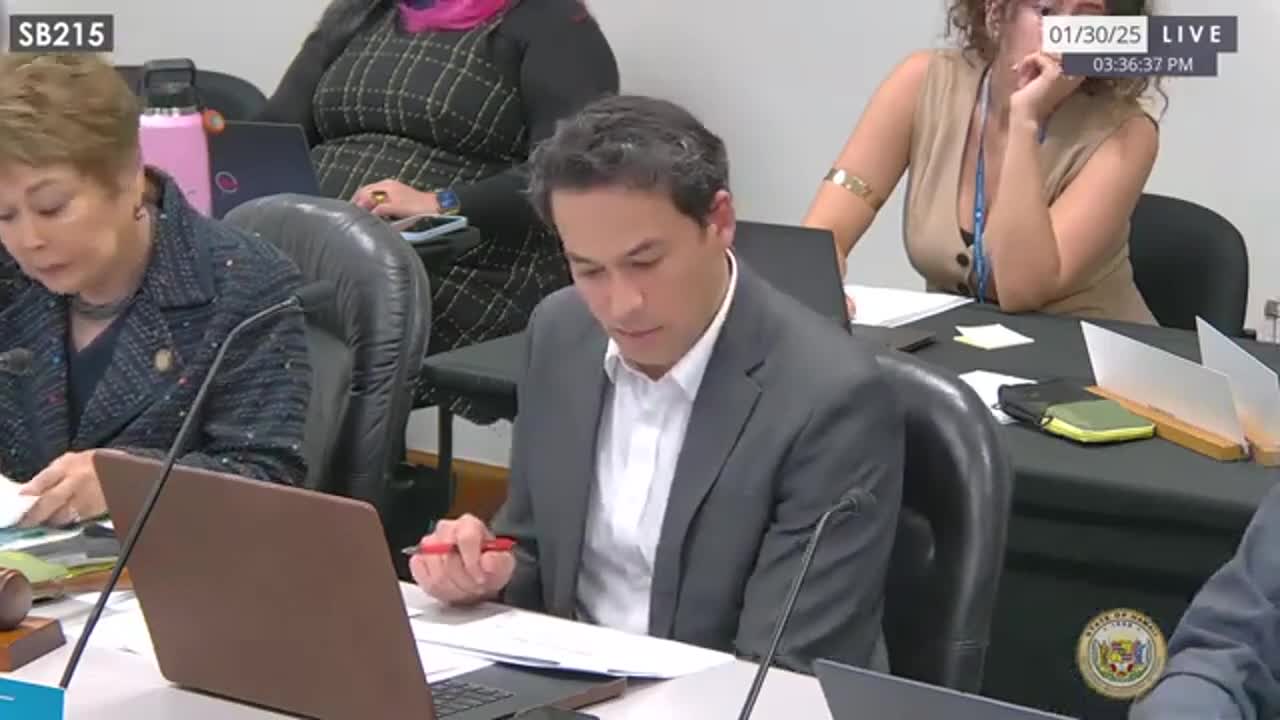 2MIN
Senate Standing Committee on Transportation and Culture and the Arts
Bill Author

Bill Co-Author(s):