HB 346: RELATING TO ELECTRIC VEHICLE CHARGING INFRASTRUCTURE.
- Session Year: 2025-2026
- House: House
- Latest Version Date: 2025-02-03
Current Status:
Failed
(2025-12-08: Carried over to 2026 Regular Session.)
Introduced
In Committee
First Chamber
In Committee
Second Chamber
Final Decking
Enacted
Provides rebates for the installation of eligible electric vehicle-ready parking stalls for new construction of affordable housing. Effective 7/1/3000. (HD1)
Provides rebates for the installation of eligible electric vehicle-ready parking stalls for new construction of affordable housing.
|
HOUSE OF REPRESENTATIVES |
H.B. NO. |
346 |
|
THIRTY-THIRD LEGISLATURE, 2025 |
H.D. 1 |
|
|
STATE OF HAWAII |
|
|
|
|
|
|
|
|
||
|
|
||
A BILL FOR AN ACT
RELATING TO ELECTRIC VEHICLE CHARGING INFRASTRUCTURE.
BE IT ENACTED BY THE LEGISLATURE OF THE STATE OF HAWAII:
SECTION 1. The legislature finds that while there is growing adoption of electric vehicles among Hawaii residents, the lack of adequate vehicle charging infrastructure presents a barrier to widespread adoption, particularly for residents who are renters or who live in apartment buildings. This barrier creates an equity issue for low-income families who are unable to access the savings and other benefits associated with electric vehicle ownership because they lack access to charging infrastructure.
The legislature further finds that the cost of constructing parking stalls that will accommodate electric vehicle charging systems, also referred to as electric vehicle-ready parking stalls, is approximately one-tenth the cost of retrofitting already-built parking stalls to accommodate electric vehicle charging systems. For market-priced housing, parking stalls are already being constructed to be electric vehicle-ready because of market demand and, in some cases, county requirements. However, parking stalls for affordable housing units are not constructed to be electric vehicle-ready because of the added cost and exemption of affordable housing from electric vehicle-ready county code requirements.
The purpose of this Act is to provide incentives for electric vehicle-ready new construction for affordable housing by providing rebates for the installation of eligible electric vehicle-ready parking stalls for new construction of affordable housing.
SECTION 2. Section 269-72, Hawaii Revised Statutes, is amended to read as follows:
"§269-72
Electric vehicle charging [system;] infrastructure; rebate
program. (a) The public utilities commission, in
consultation with electric vehicle stakeholders and the Hawaii state energy
office, shall administer a rebate program that incentivizes the installation or
upgrade of [an] electric vehicle charging [system,] infrastructure
as provided in this section, and may contract with a third-party administrator
pursuant to section 269-73 to operate and manage the rebate program.
(b) An applicant may be eligible for a rebate under the rebate program if the applicant:
(1) Installs a new electric vehicle charging system where none previously existed to either:
(A) An alternating current Level 2 station with one or more ports that provide electricity to one or more electric vehicles; or
(B) A
direct current fast charging system; [or]
(2) Upgrades an existing electric vehicle charging system to either:
(A) An alternating current Level 2 station with one or more ports that provide electricity to one or more electric vehicles; or
(B) A direct current
fast charging system[.]; or
(3) Installs an electric vehicle-ready parking stall in new construction of affordable housing; provided that fifty per cent of the total number of electric vehicle-ready parking stalls installed in a project shall be eligible for a rebate under this paragraph.
(c) Subject to subsection (f), rebates shall be distributed as follows:
(1) Each eligible installation of an electric vehicle charging system shall receive:
(A) Up to $2,000 for the installation of an alternating current Level 2 station with one port;
(B) Up to $4,500 for the installation of an alternating current Level 2 station with two or more ports; and
(C) Up to $35,000 for the
installation of a direct current fast charging system; [and]
(2) Each eligible upgrade of an electric vehicle charging system shall receive:
(A) Up to $1,300 for the upgrade to an alternating current Level 2 station with one port;
(B) Up to $3,000 for the upgrade to an alternating current Level 2 station with two or more ports; and
(C) Up to $28,000 for the upgrade to a
direct current fast charging system[.]; and
(3) Each eligible installation of an electric vehicle-ready parking stall for new construction of affordable housing shall receive up to $1,750 for the installation of an alternating current Level 2 station.
(d) The public utilities commission shall:
(1) Prepare any forms that may be necessary for an applicant to claim a rebate pursuant to this section; and
(2) Require each applicant to furnish reasonable information to ascertain the validity of the claim, including but not limited to documentation necessary to demonstrate that the installation or upgrade for which the rebate is claimed is eligible.
(e)
This section shall apply to electric vehicle charging systems that are
installed or upgraded after December 31, 2019[.], and electric
vehicle-ready parking stalls that are installed after July 1, 2025.
(f)
Applicants shall submit applications to the public utilities commission
within twelve months of the date that the newly installed or upgraded charging
system is placed into service or the electronic vehicle-ready parking stall
is installed to claim a rebate from the [electric vehicle charging
system] rebate program. Failure to
apply to the commission within twelve months of the date that the newly
installed or upgraded charging system is placed into service or the electric
vehicle-ready parking stall is installed shall constitute a waiver of the
right to claim the rebate. Rebates shall
be subject to available funds, and the program administrator shall not approve
additional rebates for the remainder of the fiscal year after program funds
have been fully exhausted.
(g)
Nothing in this section shall alter taxes due on the original purchase
or upgrade price of an electric vehicle charging system or the
infrastructure for an electric
vehicle-ready parking stall before the application of the
rebate. Any rebate received pursuant to
the electric vehicle charging [system] infrastructure rebate
program shall not be considered income for the purposes of state or county
taxes.
(h)
In administering the electric vehicle charging [system] infrastructure
rebate program, the public utilities commission shall give consideration to the
following guidelines:
(1) Priority should be given to electric vehicle charging systems that are publicly available; serve multiple tenants, employees, or customers; serve electric vehicle fleets; support the visitor industry in transitioning to clean transportation; or serve low-income, moderate-income, or environmental justice communities; and to electric vehicle-ready parking stalls in new construction of affordable housing units;
(2) Electric vehicle charging
[system] infrastructure rebates should enhance broader public
clean energy and grid resiliency goals by supporting deployment of electric vehicle charging
systems that can regulate their time of use, be networked and co-optimized with
other electric vehicle charging
systems, and otherwise provide grid services or other benefits to the utility
and electric grid;
(3) Electric vehicle charging systems that serve a single person, such as a reserved parking stall or a single-family residence, shall not be eligible for rebates;
(4) Electric vehicle
charging [system] infrastructure rebates should support
accessibility of charging to as many electric vehicle drivers as feasible; and
(5) The program administrator may propose new or modified guidelines to be considered in addition to those specified in this subsection and should have the flexibility to make programmatic adjustments due to market changes, technological advancements, and levels of participation to ensure the prudent use of taxpayer funds and to effectively manage the program budget.
(i) Nothing in this section shall prevent an entity from claiming in the same taxable year a rebate under the electric vehicle charging infrastructure rebate program for installation or upgrade of an electric vehicle charging system and installation of an electric vehicle-ready parking stall for new construction of affordable housing.
[(i)] (j) As used in this section:
"Affordable housing" means housing that is affordable to a household with an income at or below one hundred forty per cent of the area median income as determined by the United States Department of Housing and Urban Development.
"Alternating current Level 2 charging station", commonly referred to as "Level 2 charging station", means an electric vehicle charging system that utilizes alternating current electricity providing at least three kilowatts and means a system that:
(1) Is capable of providing electricity from a non-vehicle source to charge the batteries of one or more electric vehicles;
(2) Meets recognized standards and protocols including, but not limited to, Society of Automotive Engineers (SAE) J1772™ of SAE International and Tesla protocol; and
(3) Is designed and installed in compliance with article 625 of the National Electrical Code to appropriate Nationally Recognized Testing Laboratories' standards.
"Applicant" means an individual; non-profit or for-profit corporation; local, state, or federal government agency; homeowner association; or any other eligible entity as defined under rules adopted for the electric vehicle charging system rebate program.
"Direct current fast charging system", commonly referred to as "DC fast charging system", means an electric vehicle charging system that utilizes direct current electricity providing forty kilowatts or greater and:
(2) Meets recognized standards and protocols, including, but not limited to, Society of Automotive Engineers (SAE) J1772™ of SAE International, Tesla protocol, and CHAdeMO protocol; and
(3) Is designed and installed in compliance with article 625 of the National Electrical Code to appropriate Nationally Recognized Testing Laboratories' standards.
"Electric vehicle charging system" has the same meaning as Electric Vehicle Supply Equipment as defined in article 625.2 of the National Electrical Code, as amended.
"Electric vehicle-ready" means having a full-circuit installation that includes two hundred eight volt three phase or two hundred forty volt single phase power, forty-ampere panel capacity, raceway, wiring, receptacle, and overprotection devices similar to a dryer circuit."
SECTION 3. Sections 243-3.5(a), 269-33(e), and 269-73, Hawaii Revised Statutes, are amended by substituting the phrase "electric vehicle charging infrastructure", or similar term, wherever the phrase "electric vehicle charging system" appears, as the context requires.
SECTION 4. Statutory material to be repealed is bracketed and stricken. New statutory material is underscored.
SECTION 5. This Act shall take effect on July 1, 3000.
Report Title:
Electric Vehicle Charging Infrastructure; Electric Vehicle-ready Parking Stalls; Affordable Housing; Rebates
Description:
Provides rebates for the installation of eligible electric vehicle-ready parking stalls for new construction of affordable housing. Effective 7/1/3000. (HD1)
The summary description of legislation appearing on this page is for informational purposes only and is not legislation or evidence of legislative intent.
|
HOUSE OF REPRESENTATIVES |
H.B. NO. |
346 |
|
THIRTY-THIRD LEGISLATURE, 2025 |
|
|
|
STATE OF HAWAII |
|
|
|
|
|
|
|
|
||
|
|
||
A BILL FOR AN ACT
relating to Electric vehicle charging infrastructure.
BE IT ENACTED BY THE LEGISLATURE OF THE STATE OF HAWAII:
SECTION 1. The legislature finds that while there is growing adoption of electric vehicles among Hawaii residents, the lack of adequate vehicle charging infrastructure presents a barrier to widespread adoption, particularly for residents who are renters or who live in apartment buildings. This barrier creates an equity issue for low-income families who are unable to access the savings and other benefits associated with electric vehicle ownership because they lack access to charging infrastructure.
The legislature further finds that the cost of constructing parking stalls that will accommodate electric vehicle charging systems, also referred to as electric vehicle-ready parking stalls, is approximately one-tenth the cost of retrofitting already-built parking stalls to accommodate electric vehicle charging systems. For market-priced housing, parking stalls are already being constructed to be electric vehicle-ready because of market demand and, in some cases, county requirements. However, parking stalls for affordable housing units are not constructed to be electric vehicle-ready because of the added cost and exemption of affordable housing from electric vehicle-ready county code requirements.
The purpose of this Act is to provide incentives for electric vehicle-ready new construction for affordable housing by providing rebates for the installation of eligible electric vehicle-ready parking stalls for new construction of affordable housing.
SECTION 2. Section 269-72, Hawaii Revised Statutes, is amended to read as follows:
"§269-72
Electric vehicle charging [system;] infrastructure; rebate
program. (a) The public utilities commission, in
consultation with electric vehicle stakeholders and the Hawaii state energy
office, shall administer a rebate program that incentivizes the installation or
upgrade of [an] electric vehicle charging [system,] infrastructure
as provided in this section, and may contract with a third-party administrator
pursuant to section 269-73 to operate and manage the rebate program.
(b) An applicant may be eligible for a rebate under the rebate program if the applicant:
(1) Installs a new electric vehicle charging system where none previously existed to either:
(A) An alternating current Level 2 station with one or more ports that provide electricity to one or more electric vehicles; or
(B) A
direct current fast charging system; [or]
(2) Upgrades an existing electric vehicle charging system to either:
(A) An alternating current Level 2 station with one or more ports that provide electricity to one or more electric vehicles; or
(B) A direct current
fast charging system[.]; or
(3) Installs an electric vehicle-ready parking stall in new construction of affordable housing; provided that fifty per cent of the total number of electric vehicle-ready parking stalls installed in a project shall be eligible for a rebate under this paragraph.
(c) Subject to subsection (f), rebates shall be distributed as follows:
(1) Each eligible installation of an electric vehicle charging system shall receive:
(A) Up to $2,000 for the installation of an alternating current Level 2 station with one port;
(B) Up to $4,500 for the installation of an alternating current Level 2 station with two or more ports; and
(C) Up to $35,000 for the
installation of a direct current fast charging system; [and]
(2) Each eligible upgrade of an electric vehicle charging system shall receive:
(A) Up to $1,300 for the upgrade to an alternating current Level 2 station with one port;
(B) Up to $3,000 for the upgrade to an alternating current Level 2 station with two or more ports; and
(C) Up to $28,000 for the upgrade to a
direct current fast charging system[.]; and
(3) Each eligible installation of an electric vehicle-ready parking stall for new construction of affordable housing shall receive up to $1,750 for the installation of an alternating current Level 2 station.
(d) The public utilities commission shall:
(1) Prepare any forms that may be necessary for an applicant to claim a rebate pursuant to this section; and
(2) Require each applicant to furnish reasonable information to ascertain the validity of the claim, including but not limited to documentation necessary to demonstrate that the installation or upgrade for which the rebate is claimed is eligible.
(e)
This section shall apply to electric vehicle charging systems that are
installed or upgraded after December 31, 2019[.], and electric
vehicle-ready parking stalls that are installed after July 1, 2025.
(f)
Applicants shall submit applications to the public utilities commission
within twelve months of the date that the newly installed or upgraded charging
system is placed into service or the electronic vehicle-ready parking stall
is installed to claim a rebate from the [electric vehicle charging
system] rebate program. Failure to
apply to the commission within twelve months of the date that the newly
installed or upgraded charging system is placed into service or the electric
vehicle-ready parking stall is installed shall constitute a waiver of the
right to claim the rebate. Rebates shall
be subject to available funds, and the program administrator shall not approve
additional rebates for the remainder of the fiscal year after program funds
have been fully exhausted.
(g)
Nothing in this section shall alter taxes due on the original purchase
or upgrade price of an electric vehicle charging system or the
infrastructure for an electric
vehicle-ready parking stall before the application of the
rebate. Any rebate received pursuant to
the electric vehicle charging [system] infrastructure rebate
program shall not be considered income for the purposes of state or county
taxes.
(h)
In administering the electric vehicle charging [system] infrastructure
rebate program, the public utilities commission shall give consideration to the
following guidelines:
(1) Priority should be given to electric vehicle charging systems that are publicly available; serve multiple tenants, employees, or customers; serve electric vehicle fleets; support the visitor industry in transitioning to clean transportation; or serve low-income, moderate-income, or environmental justice communities; and to electric vehicle-ready parking stalls in new construction of affordable housing units;
(2) Electric vehicle charging
[system] infrastructure rebates should enhance broader public
clean energy and grid resiliency goals by supporting deployment of electric vehicle charging
systems that can regulate their time of use, be networked and co-optimized with
other electric vehicle charging
systems, and otherwise provide grid services or other benefits to the utility
and electric grid;
(3) Electric vehicle charging systems that serve a single person, such as a reserved parking stall or a single-family residence, shall not be eligible for rebates;
(4) Electric vehicle
charging [system] infrastructure rebates should support
accessibility of charging to as many electric vehicle drivers as feasible; and
(5) The program administrator may propose new or modified guidelines to be considered in addition to those specified in this subsection and should have the flexibility to make programmatic adjustments due to market changes, technological advancements, and levels of participation to ensure the prudent use of taxpayer funds and to effectively manage the program budget.
(i) Nothing in this section shall prevent an entity from claiming in the same taxable year a rebate under the electric vehicle charging infrastructure rebate program for installation or upgrade of an electric vehicle charging system and installation of an electric vehicle-ready parking stall for new construction of affordable housing.
[(i)] (j) As used in this section:
"Affordable housing" means housing that is affordable to a household with an income at or below one hundred forty per cent of the area median income as determined by the United States Department of Housing and Urban Development.
"Alternating current Level 2 charging station", commonly referred to as "Level 2 charging station", means an electric vehicle charging system that utilizes alternating current electricity providing at least three kilowatts and means a system that:
(1) Is capable of providing electricity from a non-vehicle source to charge the batteries of one or more electric vehicles;
(2) Meets recognized standards and protocols including, but not limited to, Society of Automotive Engineers (SAE) J1772™ of SAE International and Tesla protocol; and
(3) Is designed and installed in compliance with article 625 of the National Electrical Code to appropriate Nationally Recognized Testing Laboratories' standards.
"Applicant" means an individual; non-profit or for-profit corporation; local, state, or federal government agency; homeowner association; or any other eligible entity as defined under rules adopted for the electric vehicle charging system rebate program.
"Direct current fast charging system", commonly referred to as "DC fast charging system", means an electric vehicle charging system that utilizes direct current electricity providing forty kilowatts or greater and:
(2) Meets recognized standards and protocols, including, but not limited to, Society of Automotive Engineers (SAE) J1772™ of SAE International, Tesla protocol, and CHAdeMO protocol; and
(3) Is designed and installed in compliance with article 625 of the National Electrical Code to appropriate Nationally Recognized Testing Laboratories' standards.
"Electric vehicle charging system" has the same meaning as Electric Vehicle Supply Equipment as defined in article 625.2 of the National Electrical Code, as amended.
"Electric vehicle-ready" means having a full-circuit installation that includes two hundred eight volt three phase or two hundred forty volt single phase power, forty-ampere panel capacity, raceway, wiring, receptacle, and overprotection devices similar to a dryer circuit."
SECTION 3. Sections 243-3.5(a), 269-33(e), and 269-73, Hawaii Revised Statutes, are amended by substituting the phrase "electric vehicle charging infrastructure", or similar term, wherever the phrase "electric vehicle charging system" appears, as the context requires.
SECTION 4. Statutory material to be repealed is bracketed and stricken. New statutory material is underscored.
SECTION 5. This Act shall take effect on July 1, 2025.
|
INTRODUCED BY: |
_____________________________ |
|
|
|
Report Title:
Electric Vehicle Charging Infrastructure; Electric Vehicle-ready Parking Stalls; Affordable Housing; Rebates; HHFDC
Description:
Provides rebates for the installation of eligible electric vehicle-ready parking stalls for new construction of affordable housing.
The summary description of legislation appearing on this page is for informational purposes only and is not legislation or evidence of legislative intent.
|
Date
|
Status
|
|---|---|
| Dec 8, 2025 | Carried over to 2026 Regular Session. |
| Feb 13, 2025 | Report adopted; referred to the committee(s) on FIN with Representative(s) Garcia voting aye with reservations; Representative(s) Muraoka, Pierick voting no (2) and Representative(s) Cochran, Kitagawa, Ward excused (3). |
| Feb 13, 2025 | Reported from HSG (Stand. Com. Rep. No. 588), recommending referral to FIN. |
| Feb 12, 2025 | The committee on HSG recommend that the measure be PASSED, UNAMENDED. The votes were as follows: 6 Ayes: Representative(s) Evslin, Miyake, Grandinetti, Kila, Kitagawa, La Chica; Ayes with reservations: none; 2 Noes: Representative(s) Muraoka, Pierick; and 1 Excused: Representative(s) Cochran. |
| Feb 6, 2025 | Bill scheduled to be heard by HSG on Wednesday, 02-12-25 9:00AM in House conference room 430 VIA VIDEOCONFERENCE. |
| Feb 4, 2025 | Passed Second Reading as amended in HD 1 and referred to the committee(s) on HSG with none voting aye with reservations; Representative(s) Pierick voting no (1) and Representative(s) Cochran, Kong, Ward excused (3). |
| Feb 4, 2025 | Reported from EEP (Stand. Com. Rep. No. 94) as amended in HD 1, recommending passage on Second Reading and referral to HSG. |
| Jan 28, 2025 | The committee on EEP recommend that the measure be PASSED, WITH AMENDMENTS. The votes were as follows: 5 Ayes: Representative(s) Lowen, Perruso, Kahaloa, Kusch, Quinlan; Ayes with reservations: none; 0 Noes: none; and 1 Excused: Representative(s) Ward. |
| Jan 24, 2025 | Bill scheduled to be heard by EEP on Tuesday, 01-28-25 9:00AM in House conference room 325 VIA VIDEOCONFERENCE. |
| Jan 21, 2025 | Referred to EEP, HSG, FIN, referral sheet 1 |
| Jan 17, 2025 | Introduced and Pass First Reading. |
| Jan 16, 2025 | Pending introduction. |
|
Date
|
Description
|
Location
|
Votes
|
|
|---|---|---|---|---|
| Feb 12, 2025 | The committee on HSG recommend that the measure be PASSED, UNAMENDED | House Standing Committee on Housing |
Passed |
|
| Jan 28, 2025 | The committee on EEP recommend that the measure be PASSED, WITH AMENDMENTS | House Standing Committee on Energy & Environmental Protection |
Passed |
This list shows positions taken on this bill by organizations on the date displayed, which is linked to the original source.
Positions by individuals are not included.
|
Organization
|
Position
|
Date
|
|---|---|---|
| 350Hawaii.org | ** Support | |
| 350Hawaii.org | *** Support | Feb 12, 2025 |
| Alliance for Automotive Innovation | *** Support | Feb 12, 2025 |
| Alliance For Automotive Innovation | ** Support | |
| Citizens' Climate Lobby Hawaiʻi | ** Support | |
| Citizens’ Climate Lobby (Hawai'i) | *** Support | Feb 12, 2025 |
| City and County of Honolulu Office of Climate Change, Sustainability and Resiliency | *** Support | Feb 12, 2025 |
| Climate Protectors Hawaiʻi | ** Support | |
| Climate Protectors Hawai‘i | *** Support | Feb 12, 2025 |
| Coalition Earth | *** Support | Feb 12, 2025 |
| Coalition Earth | ** Support | |
| County of Kaua‘i, Office of Economic Development | *** Support | Feb 12, 2025 |
| EAH Housing | ** Support | |
| Green Party of Hawaiʻi | ** Support | |
| Hawaii Electric Vehicle Association | ** Support | |
| Hawaii Electric Vehicle Association | *** Support | Feb 12, 2025 |
| Hawaii EV Association | *** Support | Jan 28, 2025 |
| Hawaii State Energy Office | *** Support | Feb 12, 2025 |
| Hawaiian Electric | ** Support | |
| Hawaiian Electric | *** Support | Feb 12, 2025 |
| Hawaii Climate Change Mitigation & Adaptation Commission | ** Support | |
| Hawaii Energy | ** Support | |
| Hawaiʻi State Energy Office | ** Support | |
| Hawaiʻi Climate Change Mitigation and Adaptation Commission | *** Support | Feb 12, 2025 |
| Hawaiʻi Energy | *** Support | Feb 12, 2025 |
| Kauai Climate Action Coalition | ** Support | |
| Kauai Climate ACTION Coalition | *** Support | Feb 12, 2025 |
| NAIOP Hawaii | ** Support | |
| Oahu Metropolitan Planning Organization | ** Support | |
| Oahu Metropolitan Planning Organization | *** Support | Feb 12, 2025 |
| Office of Climate Change, Sustainability and Resiliency of the City and County of Honolulu | ** Support | |
| Office of Economic Development of the County of Kauaʻi | ** Support | |
| Office of Planning and Sustainable Development | *** Support | Feb 12, 2025 |
| Office of Planning and Sustainable Development | ** Support | |
| Public Utilities Commission | ** Support | |
| Public Utilities Commission | *** Support | Feb 12, 2025 |
| RERides EV, LLC | ** Support | |
| Ulupono Initiative | ** Support | |
| Ulupono Initiative | *** Support | Feb 12, 2025 |
STAND. COM. REP. NO. 588
Honolulu, Hawaii
, 2025
RE: H.B. No. 346
H.D. 1
Honorable Nadine K. Nakamura
Speaker, House of Representatives
Thirty-Third State Legislature
Regular Session of 2025
State of Hawaii
Madame:
Your Committee on Housing, to which was referred H.B. No. 346, H.D. 1, entitled:
"A BILL FOR AN ACT RELATING TO ELECTRIC VEHICLE CHARGING INFRASTRUCTURE,"
begs leave to report as follows:
Your Committee received testimony in support of this measure from the Office of Planning and Sustainable Development; Hawaiʻi State Energy Office; Hawaii Climate Change Mitigation & Adaptation Commission; Public Utilities Commission; Oahu Metropolitan Planning Organization; Office of Economic Development of the County of Kauaʻi; Office of Climate Change, Sustainability and Resiliency of the City and County of Honolulu; Ulupono Initiative; Hawaiian Electric; Hawaii Electric Vehicle Association; Hawaii Energy; Kauai Climate Action Coalition; Coalition Earth; 350Hawaii.org; Citizens' Climate Lobby Hawaiʻi; Alliance for Automotive Innovation; Climate Protectors Hawaiʻi; and numerous individuals. Your Committee received comments on this measure from the Disability and Communication Access Board.
Your Committee finds that the inclusion of electric vehicle-ready parking stalls in a new affordable housing project is a forward-thinking initiative that aligns with the State's clean energy goals and ensures equitable access to emerging technologies. Designing electric vehicle-ready parking stalls in affordable housing developments is a practical, cost-effective, and equitable strategy to support clean energy. This measure will ensure that affordable housing developments are prepared for the future while enabling residents to actively participate in the clean energy transition.
As affirmed by the record of votes of the members of your Committee on Housing that is attached to this report, your Committee is in accord with the intent and purpose of H.B. No. 346, H.D. 1, and recommends that it be referred to your Committee on Finance.
Respectfully submitted on behalf of the members of the Committee on Housing,
|
|
|
____________________________ LUKE A. EVSLIN, Chair |
|
|
|
|
STAND. COM. REP. NO. 94
Honolulu, Hawaii
, 2025
RE: H.B. No. 346
H.D. 1
Honorable Nadine K. Nakamura
Speaker, House of Representatives
Thirty-Third State Legislature
Regular Session of 2025
State of Hawaii
Madame:
Your Committee on Energy & Environmental Protection, to which was referred H.B. No. 346 entitled:
"A BILL FOR AN ACT RELATING TO ELECTRIC VEHICLE CHARGING INFRASTRUCTURE,"
begs leave to report as follows:
Your Committee received testimony in support of this measure from the Hawaii State Energy Office; Office of Planning and Sustainable Development; Public Utilities Commission; Green Party of Hawaiʻi; Climate Protectors Hawaiʻi; Hawaiian Electric; 350Hawaii.org; Hawaii Electric Vehicle Association; Citizens' Climate Lobby Hawaii; Hawaiʻi Energy; RERides EV, LLC; Kauai Climate Action Coalition; Alliance for Automotive Innovation; EAH Housing; Coalition Earth; NAIOP Hawaii; and numerous individuals.
Your Committee finds that there is a lack of adequate electric vehicle charging infrastructure in the State, limiting the adoption of electric vehicles and depriving the State of the environmental benefits associated with increased electric vehicle usage. This measure addresses this need by establishing rebates for the installation of eligible electric vehicle-ready parking stalls for new construction of affordable housing.
Your Committee has amended this measure by changing the effective date to July 1, 3000, to encourage further discussion.
As affirmed by the record of votes of the members of your Committee on Energy & Environmental Protection that is attached to this report, your Committee is in accord with the intent and purpose of H.B. No. 346, as amended herein, and recommends that it pass Second Reading in the form attached hereto as H.B. No. 346, H.D. 1, and be referred to your Committee on Housing.
Respectfully submitted on behalf of the members of the Committee on Energy & Environmental Protection,
|
|
|
____________________________ NICOLE E. LOWEN, Chair |
|
|
|
|
|
Date
|
Testimony PDF
|
|---|---|
| Feb 12, 2025 | HB346_HD1_TESTIMONY_HSG_02-12-25_.PDF |
| Jan 28, 2025 | HB346_TESTIMONY_EEP_01-28-25_.PDF |
Discussed in Hearing
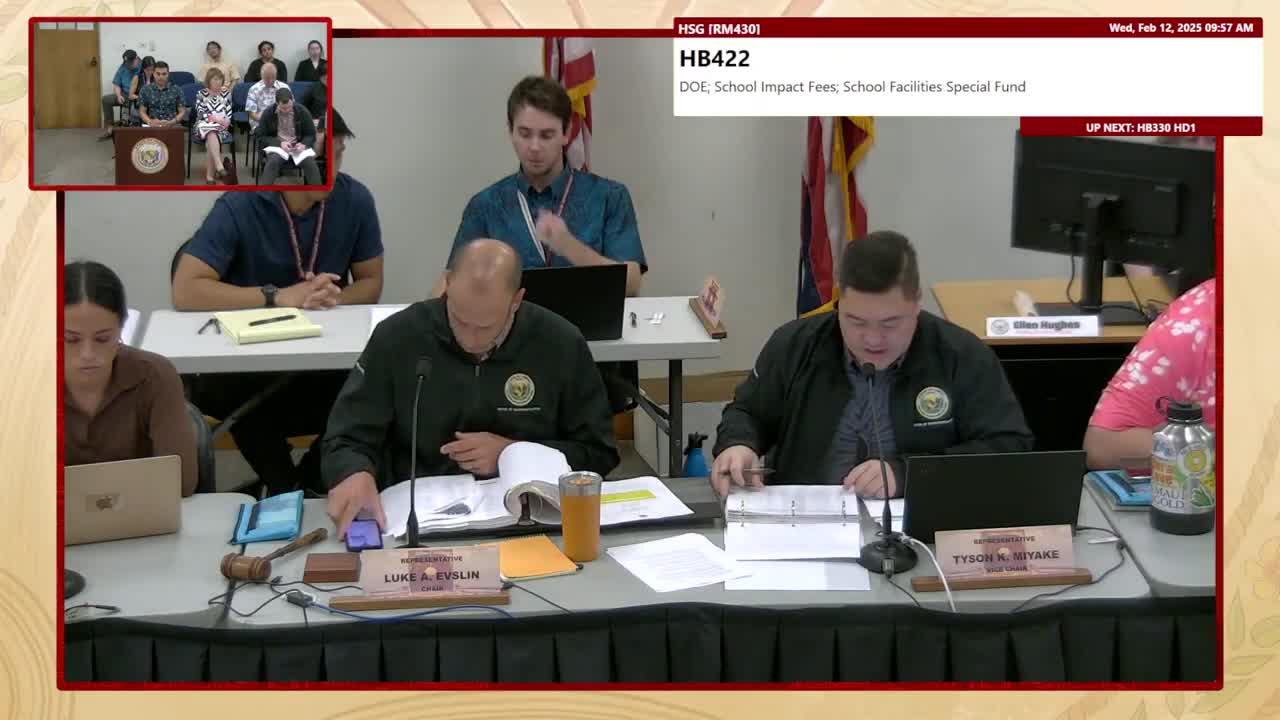 2MIN
House Standing Committee on Housing
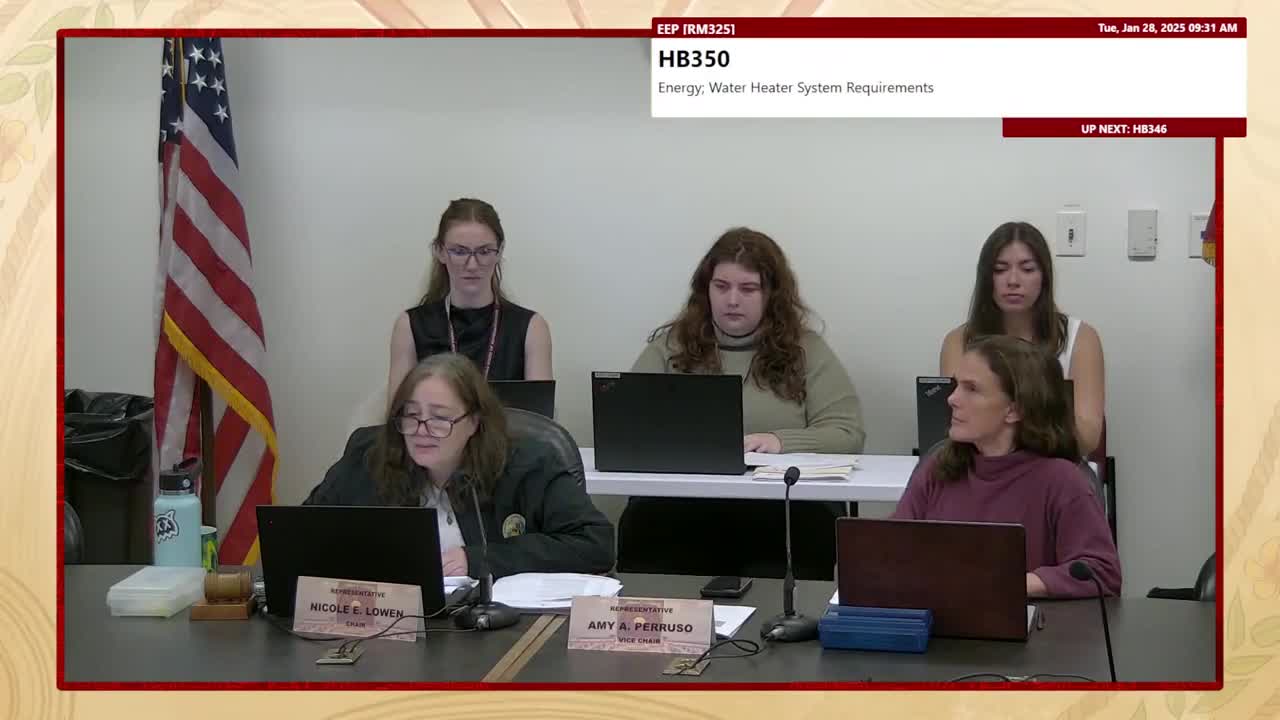 3MIN
House Standing Committee on Energy & Environmental Protection
Bill Author