HB 2560: DHS; DOE; Homelessness; Pilot Program; Temporary Assistance for Needy Families; Financial Stabilization Assistance
- Session Year: 2025-2026
- House: House
- Latest Version Date: 2026-02-18
Current Status:
Failed
(2026-03-03: The committee(s) on FIN recommend(s) that the measure be deferred.)
Introduced
In Committee
First Chamber
In Committee
Second Chamber
Final Decking
Enacted
Establishes a two-year-pilot program within the Department of Human Services to provide temporary financial stabilization assistance to families with students identified as experiencing homelessness. Funds the program through the Department of Human Services using allowable Temporary Assistance for Needy Families funds. Requires Department of Education Complex Area Community Homeless Concerns Liaison to make approved purchases. Effective 7/1/3000. (HD2)
Establishes a two-year-pilot program within the Department of Human Services to provide temporary financial stabilization assistance to families with students identified as experiencing homelessness. Funds the program through the Department of Human Services using allowable Temporary Assistance for Needy Families funds. Requires Department of Education Complex Area Community Homeless Concerns Liaison to make approved purchases. Effective 7/1/3000. (HD1)
Establishes a two-year-pilot program within the Department of Education, to be headed by the State Coordinator for Education for Homeless Children and Youth, to provide temporary financial stabilization assistance to families with students identified as experiencing homelessness. Funds the program through the Department of Human Services using allowable Temporary Assistance for Needy Families funds.
|
HOUSE OF REPRESENTATIVES |
H.B. NO. |
2560 |
|
THIRTY-THIRD LEGISLATURE, 2026 |
H.D. 2 |
|
|
STATE OF HAWAII |
|
|
|
|
|
|
|
|
||
|
|
||
A BILL FOR AN ACT
RELATING TO HOMELESSNESS.
BE IT ENACTED BY THE LEGISLATURE OF THE STATE OF HAWAII:
SECTION 1. The legislature finds that families with children experiencing homelessness often face immediate and urgent financial needs that threaten housing stability and school attendance. Students identified as experiencing homelessness require timely, flexible assistance to address basic necessities that directly affect their ability to remain engaged in school.
The purpose of this Act is to establish a two-year pilot program allowing the use of allowable temporary assistance for needy families funds to provide short-term, flexible assistance to eligible families of students experiencing homelessness, while maintaining fiscal accountability and compliance with federal and state requirements.
SECTION 2. (a) There is established a two-year pilot program within the department of human services to provide temporary financial stabilization assistance to families with enrolled students identified as experiencing homelessness.
(b) The pilot program shall be funded through the department of human services using allowable temporary assistance for needy families funds, subject to federal and state requirements. Funds shall be allocated by the department of human services to department of education complex area community homeless concerns liaisons.
(c) Prior to the use of funds for any family, the appropriate department of education complex area community homeless concerns liaison shall conduct a department of human services temporary assistance for needy families eligibility screening survey with the family.
(d) Assistance under the pilot program shall only be provided to families with one or more enrolled students who are:
(1) Identified as experiencing homelessness under the department of education's form MV-1; and
(2) Determined to be eligible for temporary assistance for needy families assistance based on the completed eligibility screening.
(e) Completed eligibility screening documentation shall be maintained in the student's confidential records held and managed by the appropriate department of education complex area community homeless concerns liaison.
(f) Funds distributed under the pilot program shall be used in a flexible spending model to address immediate needs necessary to stabilize the family, including but not limited to:
(1) Food;
(2) Clothing;
(3) Transportation support, including gasoline or public transportation passes; and
(4) Other short-term necessities as determined by the community homeless concerns liaison; provided that the short-term necessities are non-recurring and do not extend beyond a term of four consecutive months;
provided that the flexible spending model and any expenditures are in compliance with the requirements under title 2 Code of Federal Regulations Part 200.
(g) All purchases for families and students using pilot program funds shall be made directly by the appropriate department of education complex area community homeless concerns liaison; provided that:
(1) Individual purchases shall not exceed $200 per transaction;
(2) The total assistance provided shall not exceed $500 per eligible student per school year; and
(3) Spending limits shall apply regardless of the number of transactions conducted.
(h) No direct monetary disbursements, cash assistance, or gift cards shall be provided to families or students under the pilot program; provided that if any federally-funded payments under the pilot program are made on behalf of eligible families to third-party payees, then the department of human services shall ensure that the payees that are compliant with applicable federal, state, and county laws that in any way affect the payee's ability to do business in the State, including compliance with the rules or regulations of the Internal Revenue Services or department of taxation.
(i) If a family has students enrolled in schools located in different department of education complex areas:
(1) Any respective department of education complex area community homeless concerns liaison may make allowable purchases on behalf of the family; and
(2) The community homeless concerns liaison making the purchase shall provide a copy of the purchase receipt and related documentation to all other involved liaisons for record-keeping purposes.
(j) The department of human services shall maintain records of expenditures, eligibility determinations, and assistance provided pursuant to this Act.
(k) The department of education shall provide periodic reports to the department of human services detailing:
(1) The number of students and families served;
(2) The types of assistance provided;
(3) Total expenditures; and
(4) Any additional information required to ensure temporary assistance for needy families compliance.
(l) The department of human services and department of education shall enter into information sharing agreements to reduce duplication of services already provided by the department of human services.
(m) The pilot program shall cease to exist on June 30, 2028, unless extended by the legislature.
SECTION 3. The department of human services, in consultation with the department of education, may adopt rules pursuant to chapter 91, Hawaii Revised Statutes, as necessary to implement this Act.
SECTION 4. This Act shall take effect on July 1, 3000.
Report Title:
DHS; DOE; Homelessness; Pilot Program; Temporary Assistance for Needy Families; Financial Stabilization Assistance
Description:
Establishes a two-year-pilot program within the Department of Human Services to provide temporary financial stabilization assistance to families with students identified as experiencing homelessness. Funds the program through the Department of Human Services using allowable Temporary Assistance for Needy Families funds. Requires Department of Education Complex Area Community Homeless Concerns Liaison to make approved purchases. Effective 7/1/3000. (HD2)
The summary description of legislation appearing on this page is for informational purposes only and is not legislation or evidence of legislative intent.
|
HOUSE OF REPRESENTATIVES |
H.B. NO. |
2560 |
|
THIRTY-THIRD LEGISLATURE, 2026 |
H.D. 1 |
|
|
STATE OF HAWAII |
|
|
|
|
|
|
|
|
||
|
|
||
A BILL FOR AN ACT
RELATING TO HOMELESSNESS.
BE IT ENACTED BY THE LEGISLATURE OF THE STATE OF HAWAII:
SECTION 1. The legislature finds that families with children experiencing homelessness often face immediate and urgent financial needs that threaten housing stability and school attendance. Students identified as experiencing homelessness require timely, flexible assistance to address basic necessities that directly affect their ability to remain engaged in school.
The purpose of this Act is to establish a two-year pilot program allowing the use of allowable temporary assistance for needy families funds to provide short-term, flexible assistance to eligible families of students experiencing homelessness, while maintaining fiscal accountability and compliance with federal and state requirements.
SECTION 2. (a) There is established a two-year pilot program within the department of human services to provide temporary financial stabilization assistance to families with enrolled students identified as experiencing homelessness.
(b) The pilot program shall be funded through the department of human services using allowable temporary assistance for needy families funds, subject to federal and state requirements. Funds shall be allocated by the department of human services for equitable distribution to department of education complex area community homeless concerns liaisons.
(c) Prior to the use of funds for any family, the appropriate department of education complex area community homeless concerns liaison shall conduct a department of human services temporary assistance for needy families eligibility screening survey with the family.
(d) Assistance under the pilot program shall only be provided to families with one or more enrolled students who are:
(1) Identified as experiencing homelessness under the department of education's form MV-1; and
(2) Determined to be eligible for temporary assistance for needy families assistance based on the completed eligibility screening.
(e) Completed eligibility screening documentation shall be maintained in the student's confidential records held and managed by the appropriate department of education complex area community homeless concerns liaison.
(f) Funds distributed under the pilot program shall be used in a flexible spending model to address immediate needs necessary to stabilize the family, including but not limited to:
(1) Food;
(2) Clothing;
(3) Transportation support, including gasoline or public transportation passes; and
(4) Other short-term necessities that directly support student attendance and stability.
(g) All purchases for families and students using pilot program funds shall be made directly by the appropriate department of education complex area community homeless concerns liaison; provided that:
(1) Individual purchases shall not exceed $200 per transaction;
(2) The total assistance provided shall not exceed $500 per eligible student per school year; and
(3) Spending limits shall apply regardless of the number of transactions conducted.
(h) No direct monetary disbursements, cash assistance, or gift cards shall be provided to families or students under the pilot program.
(i) If a family has students enrolled in schools located in different department of education complex areas:
(1) Any respective department of education complex area community homeless concerns liaison may make allowable purchases on behalf of the family; and
(2) The community homeless concerns liaison making the purchase shall provide a copy of the purchase receipt and related documentation to all other involved liaisons for record-keeping purposes.
(j) The department of human services shall maintain records of expenditures, eligibility determinations, and assistance provided pursuant to this Act.
(k) The department of education shall provide periodic reports to the department of human services detailing:
(1) The number of students and families served;
(2) The types of assistance provided;
(3) Total expenditures; and
(4) Any additional information required to ensure temporary assistance for needy families compliance.
(l) The pilot program shall cease to exist on June 30, 2028, unless extended by the legislature.
SECTION 2. The department of human services, in consultation with the department of education, may adopt rules pursuant to chapter 91, Hawaii Revised Statutes, as necessary to implement this Act.
SECTION 3. This Act shall take effect on July 1, 3000.
Report Title:
DHS; DOE; Homelessness; Pilot Program; Temporary Assistance for Needy Families; Financial Stabilization Assistance
Description:
Establishes a two-year-pilot program within the Department of Human Services to provide temporary financial stabilization assistance to families with students identified as experiencing homelessness. Funds the program through the Department of Human Services using allowable Temporary Assistance for Needy Families funds. Requires Department of Education Complex Area Community Homeless Concerns Liaison to make approved purchases. Effective 7/1/3000. (HD1)
The summary description of legislation appearing on this page is for informational purposes only and is not legislation or evidence of legislative intent.
|
HOUSE OF REPRESENTATIVES |
H.B. NO. |
2560 |
|
THIRTY-THIRD LEGISLATURE, 2026 |
|
|
|
STATE OF HAWAII |
|
|
|
|
|
|
|
|
||
|
|
||
A BILL FOR AN ACT
relating to homelessness.
BE IT ENACTED BY THE LEGISLATURE OF THE STATE OF HAWAII:
SECTION 1. The legislature finds that families with children experiencing homelessness often face immediate and urgent financial needs that threaten housing stability and school attendance. Students identified as experiencing homelessness require timely, flexible assistance to address basic necessities that directly affect their ability to remain engaged in school.
The legislature further finds that the department of education's education for homeless children and youth program provides critical support to students identified as experiencing homelessness and that additional, flexible financial resources administered at the complex area level would enhance the department's ability to stabilize families during periods of crisis.
The purpose of this Act is to establish a two-year pilot program allowing the use of allowable temporary assistance for needy families funds to provide short-term, flexible assistance to eligible families of students experiencing homelessness, while maintaining fiscal accountability and compliance with federal and state requirements.
SECTION 2. (a) There is established a two-year pilot program within the department of education, to be headed by the state coordinator for education for homeless children and youth, to provide temporary financial stabilization assistance to families with enrolled students identified as experiencing homelessness.
(b) The pilot program shall be funded through the department of human services using allowable temporary assistance for needy families funds, subject to federal and state requirements. Funds shall be allocated to the state coordinator for equitable distribution to complex area community homeless concerns liaisons.
(c) Prior to the use of funds for any family, the appropriate complex area community homeless concerns liaison shall conduct a department of human services temporary assistance for needy families eligibility screening survey with the family.
(d) Assistance under the pilot program shall only be provided to families with one or more enrolled students who are:
(1) Identified as experiencing homelessness under the department of education's form MV-1; and
(2) Determined to be eligible for temporary assistance for needy families assistance based on the completed eligibility screening.
(e) Completed eligibility screening documentation shall be maintained in the student's confidential records held and managed by the appropriate complex area community homeless concerns liaison.
(f) Funds distributed under the pilot program shall be used in a flexible spending model to address immediate needs necessary to stabilize the family, including but not limited to:
(1) Food;
(2) Clothing;
(3) Transportation support, including gasoline or public transportation passes; and
(4) Other short-term necessities that directly support student attendance and stability.
(g) All purchases for families and students using pilot program funds shall be made directly by the appropriate complex area community homeless concerns liaison; provided that:
(1) Individual purchases shall not exceed $200 per transaction;
(2) The total assistance provided shall not exceed $500 per eligible student per school year; and
(3) Spending limits shall apply regardless of the number of transactions conducted.
(h) No direct monetary disbursements, cash assistance, or gift cards shall be provided to families or students under the pilot program.
(i) If a family has students enrolled in schools located in different complex areas:
(1) Any respective complex area community homeless concerns liaison may make allowable purchases on behalf of the family; and
(2) The community homeless concerns liaison making the purchase shall provide a copy of the purchase receipt and related documentation to all other involved liaisons for record-keeping purposes.
(j) The department of education shall maintain records of expenditures, eligibility determinations, and assistance provided pursuant to this Act.
(k) The department of education shall provide periodic reports to the department of human services detailing:
(1) The number of students and families served;
(2) The types of assistance provided;
(3) Total expenditures; and
(4) Any additional information required to ensure temporary assistance for needy families compliance.
(l) The pilot program shall cease to exist on June 30, 2028, unless extended by the legislature.
SECTION 2. The department of education, in consultation with the department of human services, may adopt rules pursuant to chapter 91, Hawaii Revised Statutes, as necessary to implement this Act.
SECTION 3. This Act shall take effect upon its approval.
|
INTRODUCED BY: |
_____________________________ |
Report Title:
DOE; DHS; Homelessness; Pilot Program; Education for Homeless Children and Youth; Temporary Assistance for Needy Families; Financial Stabilization Assistance
Description:
Establishes a two-year-pilot program within the Department of Education, to be headed by the State Coordinator for Education for Homeless Children and Youth, to provide temporary financial stabilization assistance to families with students identified as experiencing homelessness. Funds the program through the Department of Human Services using allowable Temporary Assistance for Needy Families funds.
The summary description of legislation appearing on this page is for informational purposes only and is not legislation or evidence of legislative intent.
|
Date
|
Status
|
|---|---|
| Mar 3, 2026 | The committee(s) on FIN recommend(s) that the measure be deferred. |
| Feb 27, 2026 | Bill scheduled to be heard by FIN on Tuesday, 03-03-26 2:00PM in House conference room 308 VIA VIDEOCONFERENCE. |
| Feb 19, 2026 | Report adopted; referred to the committee(s) on FIN as amended in HD 2 with none voting aye with reservations; none voting no (0) and none excused (0). |
| Feb 19, 2026 | Reported from HSH (Stand. Com. Rep. No. 522-26) as amended in HD 2, recommending referral to FIN. |
| Feb 17, 2026 | The committee on HSH recommend that the measure be PASSED, WITH AMENDMENTS. The votes were as follows: 8 Ayes: Representative(s) Marten, Olds, Amato, Keohokapu-Lee Loy, Takayama, Takenouchi, Alcos, Garcia; Ayes with reservations: none; Noes: none; and 1 Excused: Representative(s) Hartsfield. |
| Feb 12, 2026 | Bill scheduled to be heard by HSH on Tuesday, 02-17-26 9:30AM in House conference room 329 VIA VIDEOCONFERENCE. |
| Feb 10, 2026 | Passed Second Reading as amended in HD 1 and referred to the committee(s) on HSH with none voting aye with reservations; none voting no (0) and none excused (0). |
| Feb 9, 2026 | Reported from EDN (Stand. Com. Rep. No. 69-26) as amended in HD 1, recommending passage on Second Reading and referral to HSH. |
| Feb 5, 2026 | The committee on EDN recommend that the measure be PASSED, WITH AMENDMENTS. The votes were as follows: 10 Ayes: Representative(s) Woodson, La Chica, Amato, Evslin, Garrett, Kapela, Kila, Olds, Muraoka, Souza; Ayes with reservations: none; Noes: none; and Excused: none. |
| Feb 3, 2026 | Bill scheduled to be heard by EDN on Thursday, 02-05-26 2:00PM in House conference room 309 VIA VIDEOCONFERENCE. |
| Feb 2, 2026 | Referred to EDN, HSH, FIN, referral sheet 6 |
| Jan 28, 2026 | Introduced and Pass First Reading. |
|
Date
|
Description
|
Location
|
Votes
|
|
|---|---|---|---|---|
| Feb 17, 2026 | The committee on HSH recommend that the measure be PASSED, WITH AMENDMENTS | House Standing Committee on Human Services & Homelessness |
Passed |
|
| Feb 5, 2026 | The committee on EDN recommend that the measure be PASSED, WITH AMENDMENTS | House Standing Committee on Education |
Passed |
This list shows positions taken on this bill by organizations on the date displayed, which is linked to the original source.
Positions by individuals are not included.
|
Organization
|
Position
|
Date
|
|---|---|---|
| Hawaii Youth Services Network | *** Support | Mar 3, 2026 |
| Hawaiʻi State Youth Commission | *** Support | Mar 3, 2026 |
| Hawai‘i Children's Action Network Speaks! | *** Support | Mar 3, 2026 |
| Opportunity for Youth Action Hawaiʻi | *** Support | Mar 3, 2026 |
STAND. COM. REP. NO. 522-26
Honolulu, Hawaii
, 2026
RE: H.B. No. 2560
H.D. 2
Honorable Nadine K. Nakamura
Speaker, House of Representatives
Thirty-Third State Legislature
Regular Session of 2026
State of Hawaii
Madame:
Your Committee on Human Services & Homelessness, to which was referred H.B. No. 2560, H.D. 1, entitled:
"A BILL FOR AN ACT RELATING TO HOMELESSNESS,"
begs leave to report as follows:
The purpose of this measure is to:
(1) Establish a two-year-pilot program within the Department of Human Services to provide temporary financial stabilization assistance to families with students identified as experiencing homelessness;
(2) Fund the program through the Department of Human Services using allowable Temporary Assistance for Needy Families funds; and
(3) Require Department of Education Complex Area Community Homeless Concerns Liaisons to make approved purchases.
Your Committee received testimony in support of this measure from the Hawaiʻi State Youth Commission; Opportunity for Youth Action Hawaiʻi; and one individual. Your Committee received comments on this measure from the Department of Human Services.
Your Committee finds that families with children experiencing homelessness often face urgent, short‑term financial needs that jeopardize housing stability and consistent school attendance. Your Committee further finds that addressing the financial needs of homeless youth and their families can prevent or reduce the harmful effects of unstable housing and financial instability and ensure that students experiencing homelessness can focus more on school and remain engaged in their education.
Your Committee has amended this measure by:
(1) Removing language that required the Department of Human Services to allocate funds for equitable distribution;
(2) Specifying that other short term necessities are to be determined by the Community Homeless Concerns Liaisons; provided that the necessities are non-recurring and for a period that is less than four months;
(3) Clarifying that the flexible spending model and funds distributed under the pilot program are to be compliant with federal regulations for federal awards;
(4) Specifying that if any federally-funded payments are made to third-party payees on behalf of eligible families, then the Department of Human Services shall ensure that the third-party payee is in compliance with applicable federal, state, and county laws, including tax laws;
(5) Requiring the Department of Human Services and Department of Education to enter into information sharing agreements to ensure that there is no duplication of assistance already provided by the Department of Human Services; and
(6) Making technical, nonsubstantive amendments for the purposes of clarity, consistency, and style.
Your Committee notes that the Department of Human Services would require additional resources to administer the pilot program proposed by this measure, including one program specialist position, which would require a matching general fund appropriation, to oversee the statewide coordination of services.
Your Committee respectfully requests your Committee on Finance, should it deliberate on this measure, to consider an appropriation amount of $400,000.
As affirmed by the record of votes of the members of your Committee on Human Services & Homelessness that is attached to this report, your Committee is in accord with the intent and purpose of H.B. No. 2560, H.D. 1, as amended herein, and recommends that it be referred to your Committee on Finance in the form attached hereto as H.B. No. 2560, H.D. 2.
Respectfully submitted on behalf of the members of the Committee on Human Services & Homelessness,
|
|
|
____________________________ LISA MARTEN, Chair |
|
|
|
|
STAND. COM. REP. NO. 69-26
Honolulu, Hawaii
, 2026
RE: H.B. No. 2560
H.D. 1
Honorable Nadine K. Nakamura
Speaker, House of Representatives
Thirty-Third State Legislature
Regular Session of 2026
State of Hawaii
Madame:
Your Committee on Education, to which was referred H.B. No. 2560 entitled:
"A BILL FOR AN ACT RELATING TO HOMELESSNESS,"
begs leave to report as follows:
Your Committee finds that families with children experiencing homelessness often face immediate and urgent financial needs that compromise housing stability and school attendance. Your Committee further finds that students identified as experiencing homelessness need timely, flexible assistance to obtain the basic necessities that directly affect their ability to remain engaged in school.
Your Committee has amended this measure by:
(1) Establishing the pilot program within the Department of Human Services, rather than the Department of Education;
(2) Deleting language that would require the State Coordinator for Education for Homeless Children and Youth to head the pilot program;
(3) Amending the preamble to reflect its amended purpose;
(4) Changing the effective date to July 1, 3000; and
(5) Making technical, nonsubstantive amendments for the purposes of clarity, consistency, and style.
As affirmed by the record of votes of the members of your Committee on Education that is attached to this report, your Committee is in accord with the intent and purpose of H.B. No. 2560, as amended herein, and recommends that it pass Second Reading in the form attached hereto as H.B. No. 2560, H.D. 1, and be referred to your Committee on Human Services & Homelessness.
Respectfully submitted on behalf of the members of the Committee on Education,
|
|
|
____________________________ JUSTIN H. WOODSON, Chair |
|
|
|
|
|
Date
|
Testimony PDF
|
|---|---|
| Mar 3, 2026 | HB2560_HD2_TESTIMONY_FIN_03-03-26_.PDF |
| Feb 16, 2026 | HB2560_HD1_TESTIMONY_HSH_02-17-26_.PDF |
| Feb 5, 2026 | HB2560_TESTIMONY_EDN_02-05-26_.PDF |
Discussed in Hearing
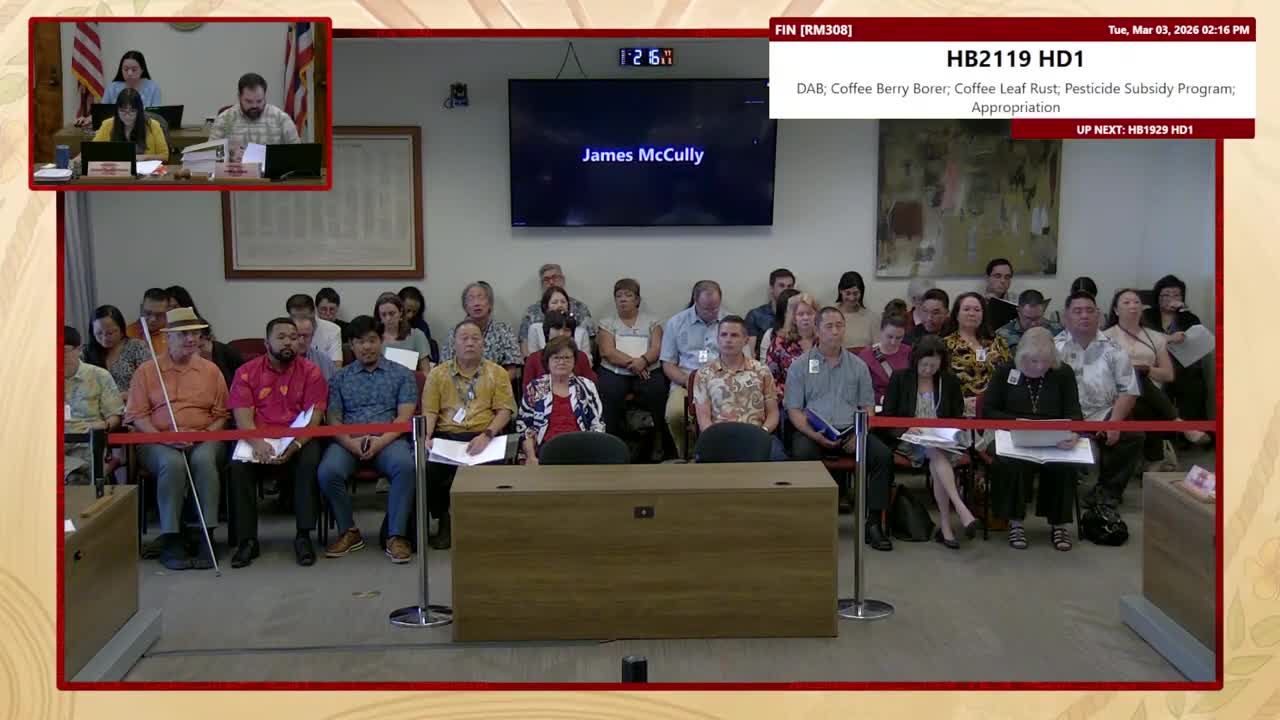 1MIN
House Standing Committee on Finance
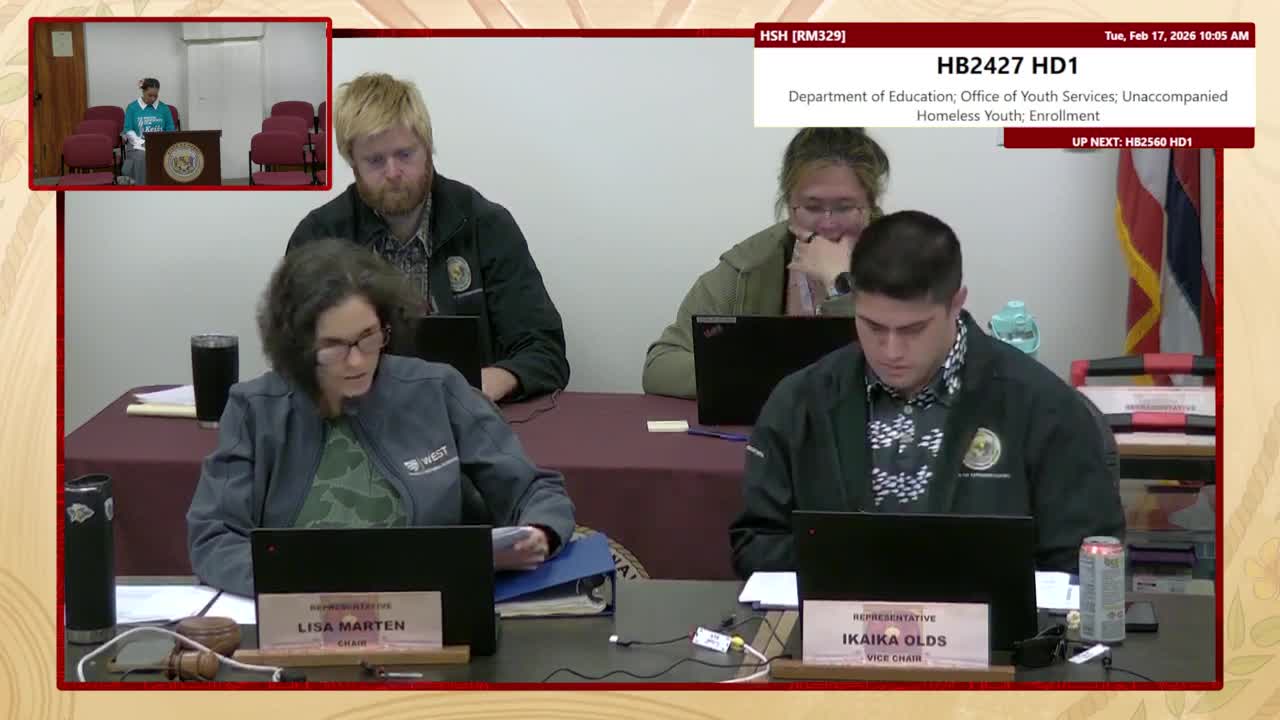 3MIN
House Standing Committee on Human Services & Homelessness
3MIN
House Standing Committee on Human Services & Homelessness
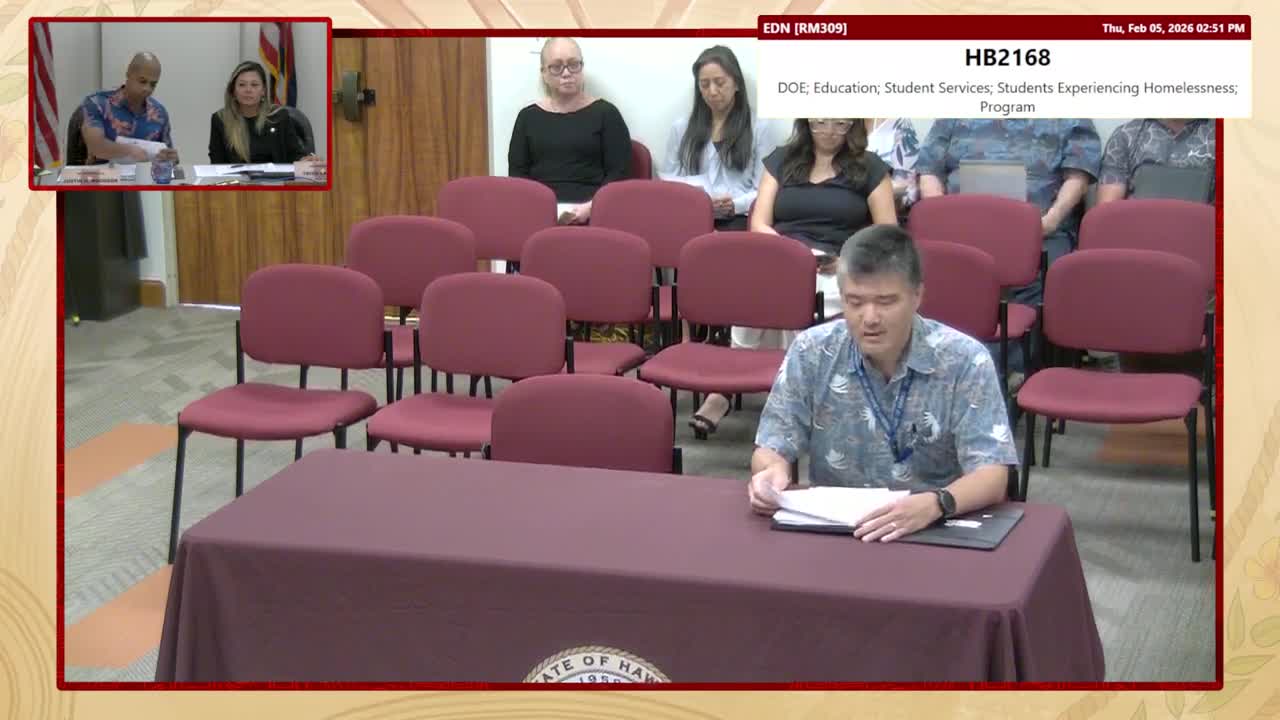 2MIN
House Standing Committee on Education
32SEC
House Standing Committee on Education
Bill Author
Bill Co-Author(s):