HB 2458: DCCA; OCP; Surveillance Pricing; Study; Report; Appropriation
- Session Year: 2025-2026
- House: House
- Latest Version Date: 2026-03-27
Current Status:
Failed
(2026-03-30: Re-Referred to LBT, CPN/WAM.)
Introduced
In Committee
First Chamber
In Committee
Second Chamber
Final Decking
Enacted
Requires the Office of Consumer Protection of the Department of Commerce and Consumer Affairs to conduct a study to determine the extent to which companies operating in the State deploy surveillance pricing practices. Requires a report to the Legislature. Appropriates funds. Effective 1/1/2077. (SD1)
Prohibits persons from using surveillance pricing in the sale of food. Exempts certain discounts and restaurants. Effective 7/1/3000. (HD3)
Prohibits persons from using surveillance pricing in the sale of food. Exemptions certain discounts, loyalty programs, and restaurants. Effective 7/1/3000. (HD2)
Prohibits retailers from using surveillance pricing in the sale of food that is sold, or qualifies to be sold, as part of the federal Supplemental Nutrition Assistance Program or Special Supplemental Nutrition Program for Women, Infants, and Children. Establishes fines. Exemptions certain discounts and loyalty programs. Effective 7/1/3000. (HD1)
Prohibits retailers from using surveillance pricing in the sale of food that is sold, or qualifies to be sold, as part of the federal Supplemental Nutrition Assistance Program or Special Supplemental Foods Program for Women, Infants, and Children. Establishes fines. Exemptions certain discounts and loyalty programs.
|
HOUSE OF REPRESENTATIVES |
H.B. NO. |
2458 |
|
THIRTY-THIRD LEGISLATURE, 2026 |
H.D. 3 |
|
|
STATE OF HAWAII |
S.D. 1 |
|
|
|
|
|
|
|
||
|
|
||
A BILL FOR AN ACT
RELATING TO SURVEILLANCE PRICING.
BE IT ENACTED BY THE LEGISLATURE OF THE STATE OF HAWAII:
SECTION 1. The legislature finds that the increasing cost of groceries and basic necessities is placing a strain on Hawaii's residents. Many individuals often have to carefully weigh the cost of their purchases, whether it is an item like milk or fresh produce. In Hawaii, some residents must spend over seventeen per cent of their household budget to put a meal on the table, which is significantly higher than the national average of twelve per cent, according to the United States Bureau of Labor Statistics. Furthermore, the Hawaii Foodbank reports that nearly one in three households in the State is food-insecure, meaning that they do not have access to sufficient or quality food to meet their basic needs.
The legislature further finds that surveillance pricing — which is a form of dynamic pricing where a consumer's personal data and behavior, including location, demographics, browsing patterns, and shopping history, are used to determine their willingness to pay for a good or service — can have an adverse effect on consumers, especially low-income individuals and households that rely on government assistance. These kinds of retail practices can obscure the base price of everyday items and can lessen the power that consumers wield to make responsible and financially sound decisions. Although retailers contend that surveillance pricing can be used to lower the cost of goods, data has shown that instead, retailers often change prices to raise their own profits while leaving consumers to pay.
Accordingly, the purpose of this Act is to require the office of consumer protection of the department of commerce and consumer affairs to conduct a study to determine the extent to which companies operating in the State deploy surveillance pricing practices.
SECTION 2. (a) The office of consumer protection of the department of commerce and consumer affairs shall conduct a study to determine the extent to which companies operating in the State deploy surveillance pricing practices to adjust the prices of goods and services for individual consumers.
(b) The study shall evaluate:
(1) Surveillance pricing practices deployed by companies operating in the State, including the use of electronic surveillance technology;
(2) Whether the State should enact legislation prohibiting the use of surveillance pricing:
(A) In the sale of food; or
(B) Specifically for the offering or setting of a customized price increase for a good or service for a specific consumer or group of consumers based on personally identifiable information collected through electronic surveillance technology;
(3) Potential exemptions from surveillance pricing regulations, including but not limited to:
(A) Discounts that are readily available to the public, posted in an easily accessible area of a company's website or mobile application, and may be obtained by any customer;
(B) Common group discounts; and
(C) Restaurants or other establishments that prepare and sell food directly to consumers for immediate consumption, including locations within retail establishments; and
(4) Whether the enactment of comprehensive privacy laws is necessary to protect the right to privacy of residents of the State.
(c) The office of consumer protection of the department of commerce and consumer affairs shall submit a report of its findings and recommendations, including any proposed legislation, to the legislature no later than twenty days prior to the convening of the regular session of 2027.
(d) For the purposes of this section:
"Common group discounts" means discounts that are offered or provided to a cognizable group, such as teachers, students, senior citizens, or veterans, and:
(1) The eligibility, type, quantity, or any other term of the discount is readily available to the public and posted in an easily accessible area of a company's website or mobile application; and
(2) Any consumer can obtain the discount if the consumer demonstrates that they are part of the cognizable group.
"Electronic surveillance technology" means the use of technological methods, systems, or tools, including but not limited to sensors, cameras, device tracking, biometric monitoring, or other forms of observation or data collection, that are capable of gathering personally identifiable information about a consumer's behavior, characteristics, location, or other personal attributes, whether in physical or digital environments.
"Food" means:
(1) Articles used for food or drink by humans;
(2) Chewing gum; or
(3) Articles used for components of paragraphs (1) or (2).
"Personally identifiable information" means:
(1) Any of the following:
(A) An individual's social security number, in its entirety or the last four or more digits;
(B) Driver's license number, federal or state identification card number, or passport number;
(C) A federal individual taxpayer identification number;
(D) A military identification number;
(E) An individual's financial account number or credit or debit card number, unless redacted;
(F) A security code, access code, personal identification number, or password that would allow access to an individual's account;
(G) Unique biometric data generated from a measurement or analysis of human body characteristics that is used for authentication purposes, including a fingerprint, voice print, retina or iris image, or other unique physical or digital representation of biometric data;
(H) A private key that is unique to an individual and is used to authenticate or sign an electronic record; or
(I) Health insurance policy number, subscriber identification number, medical identification number, or any other unique number that is used by a health insurer to identify a person; and
(2) In combination with any one or more of the following when the information in paragraph (1) is not encrypted, redacted, or otherwise protected by another method that renders the information unreadable or unusable:
(A) An individual's first initial or first name, and last name;
(B) A username or electronic mail address, in combination with a password or security question and answer that would permit access to an online account;
(C) A name used by an individual, including the combination of the first name, any initials in the name, whether at the beginning or middle of the name, or a nickname combined with the last name;
(D) A username for an online account;
(E) A mobile or home phone number; or
(F) An electronic mail address specific to the individual.
"Surveillance pricing" means the practice of offering or setting a customized price for a good or service for a specific consumer or group of consumers based, in whole or in part, on personally identifiable information collected through electronic surveillance technology.
SECTION 3. There is appropriated out of the general revenues of the State of Hawaii the sum of $ or so much thereof as may be necessary for fiscal year 2026-2027 for the office of consumer protection of the department of commerce and consumer affairs to conduct a study to determine the extent to which companies operating in the State deploy surveillance pricing practices to adjust the prices of goods and services for individual consumers.
The sum appropriated shall be expended by the department of commerce and consumer affairs for the purposes of this Act.
SECTION 4. This Act shall take effect on January 1, 2077.
Report Title:
DCCA; OCP; Surveillance Pricing; Study; Report; Appropriation
Description:
Requires the Office of Consumer Protection of the Department of Commerce and Consumer Affairs to conduct a study to determine the extent to which companies operating in the State deploy surveillance pricing practices. Requires a report to the Legislature. Appropriates funds. Effective 1/1/2077. (SD1)
The summary description of legislation appearing on this page is for informational purposes only and is not legislation or evidence of legislative intent.
|
HOUSE OF REPRESENTATIVES |
H.B. NO. |
2458 |
|
THIRTY-THIRD LEGISLATURE, 2026 |
H.D. 3 |
|
|
STATE OF HAWAII |
|
|
|
|
|
|
|
|
||
|
|
||
A BILL FOR AN ACT
RELATING TO SURVEILLANCE PRICING.
BE IT ENACTED BY THE LEGISLATURE OF THE STATE OF HAWAII:
SECTION 1. The legislature finds that the increasing cost of groceries and basic necessities is placing a strain on Hawaii's residents. Many individuals often have to carefully weigh the cost of their purchases, whether it is an item like milk or fresh produce. In Hawaii, some residents must spend over seventeen per cent of their household budget to put a meal on the table, which is significantly higher than the national average of twelve per cent, according to the United States Bureau of Labor Statistics. Furthermore, the Hawaii Foodbank reports that nearly one in three households is food-insecure, meaning that they do not have access to sufficient or quality food to meet their basic needs.
The legislature further finds that surveillance pricing — which is a form of dynamic pricing where a consumer's personal data and behavior, including location, demographics, browsing patterns, and shopping history, is used to determine their willingness to pay for a good or service — can have an adverse effect on consumers, especially for low-income individuals and households that rely on government assistance. These kinds of retail practices can obscure the base price of everyday items and can lessen the power that consumers wield to make responsible and financially sound decisions. Although retailers contend that surveillance pricing can be used to lower the cost of goods, data has shown that instead, retailers often change prices to raise their own profits while leaving consumers to pay.
Accordingly, the purpose of this Act is to prohibit persons from using surveillance pricing in the sale of food.
SECTION 2. Chapter 481B, Hawaii Revised Statutes, is amended by adding a new section to be appropriately designated and to read as follows:
"§481B- Surveillance pricing; prohibition; fines. (a) No person shall use surveillance pricing in the sale of food.
(b) Each item sold in violation of this section shall constitute a distinct and separate offense. Each day of a continued violation of this section shall constitute a distinct and separate offense.
(c) This section shall not apply to:
(1) Discounts that are readily available to the public, posted in an easily accessible area of a company's website or mobile application, and may be obtained by any customer;
(2) Common group discounts; or
(3) Restaurants or other establishments that prepare and sell food directly to consumers for immediate consumption, including such locations located within retail establishments.
(d) As used in this section:
"Common group discounts" means discounts that are offered or provided to a cognizable group, such as teachers, students, senior citizens, or veterans and:
(1) The eligibility, type, quantity, or any other term of the discount is readily available to the public and posted in an easily accessible area of a company's website or mobile application; and
(2) Any consumer can obtain the discount if the consumer demonstrates they are part of the cognizable group.
"Electronic surveillance technology" means the use of technological methods, systems, or tools, including but not limited to sensors, cameras, device tracking biometric monitoring, or other forms of observation or data collection, that are capable of gathering personally identifiable information about a consumer's behavior, characteristics, location, or other personal attributes, whether in physical or digital environments.
"Food" means:
(1) Articles used for food or drink by humans;
(2) Chewing gum; or
(3) Articles used for components of any such article.
"Personally identifiable information" means:
(1) Any of the following:
(A) An individual's social security number, either in its entirety or the last four or more digits;
(B) Driver's license number, federal or state identification card number, or passport number;
(C) A federal individual taxpayer identification number;
(D) A military identification number;
(E) An individual's financial account number, or credit or debit card number, unless redacted;
(F) A security code, access code, personal identification number, or password that would allow access to an individual's account;
(G) Unique biometric data generated from a measurement or analysis of human body characteristics used for authentication purposes, including a fingerprint, voice print, retina or iris image, or other unique physical or digital representation of biometric data;
(H) A private key that is unique to an individual and is used to authenticate or sign an electronic record; or
(I) Health insurance policy number, subscriber identification number, medical identification number, or any other unique number used by a health insurer to identify a person; and
(2) In combination with any one or more of the following when the information in paragraph (1) is not encrypted, redacted, or otherwise protected by another method that renders the information unreadable or unusable:
(A) An individual's first initial or first name, and last name;
(B) A user name or electronic mail address, in combination with a password or security question and answer that would permit access to an online account;
(C) A name used by an individual, including the combination of the first name, any initials in the name, whether at the beginning or middle of the name, or a nickname combined with the last name;
(D) A user name for an online account;
(E) A mobile or home phone number; or
(F) An electronic mail address specific to the individual.
"Surveillance pricing" means the practice of offering or setting a customized price for a good or service for a specific consumer or group of consumers based, in whole or in part, on personally identifiable information collected through electronic surveillance technology."
SECTION 3. This Act does not affect rights and duties that matured, penalties that were incurred, and proceedings that were begun before its effective date.
SECTION 4. New statutory material is underscored.
SECTION 5. This Act shall take effect on July 1, 3000.
Report Title:
Surveillance Pricing; Food; Prohibition; Fines; Exceptions
Description:
Prohibits persons from using surveillance pricing in the sale of food. Exempts certain discounts and restaurants. Effective 7/1/3000. (HD3)
The summary description of legislation appearing on this page is for informational purposes only and is not legislation or evidence of legislative intent.
|
HOUSE OF REPRESENTATIVES |
H.B. NO. |
2458 |
|
THIRTY-THIRD LEGISLATURE, 2026 |
H.D. 2 |
|
|
STATE OF HAWAII |
|
|
|
|
|
|
|
|
||
|
|
||
A BILL FOR AN ACT
RELATING TO SURVEILLANCE PRICING.
BE IT ENACTED BY THE LEGISLATURE OF THE STATE OF HAWAII:
SECTION 1. The legislature finds that the increasing cost of groceries and basic necessities is placing a strain on Hawaii's residents. Many individuals often have to carefully weigh the cost of their purchases, whether it is an item like milk or fresh produce. In Hawaii, some residents must spend over seventeen per cent of their household budget to put a meal on the table, which is significantly higher than the national average of twelve per cent, according to the United States Bureau of Labor Statistics. Furthermore, the Hawaii Foodbank reports that nearly one in three households is food-insecure, meaning that they do not have access to sufficient or quality food to meet their basic needs.
The legislature further finds that surveillance pricing — which is a form of dynamic pricing where a consumer's personal data and behavior, including location, demographics, browsing patterns, and shopping history, is used to determine their willingness to pay for a good or service — can have an adverse effect on consumers, especially for low-income individuals and households that rely on government assistance. These kinds of retail practices can obscure the base price of everyday items and can lessen the power that consumers wield to make responsible and financially sound decisions. Although retailers contend that surveillance pricing can be used to lower the cost of goods, data has shown that instead, retailers often change prices to raise their own profits while leaving consumers to pay.
Accordingly, the purpose of this Act is to prohibit persons from using surveillance pricing in the sale of food.
SECTION 2. Chapter 481B, Hawaii Revised Statutes, is amended by adding a new section to be appropriately designated and to read as follows:
"§481B- Surveillance pricing; prohibition; fines. (a) No person shall use surveillance pricing in the sale of food.
(b) Each item sold in violation of this section shall constitute a distinct and separate offense. Each day of a continued violation of this section shall constitute a distinct and separate offense.
(c) This section shall not apply to:
(1) Discounts that are readily available to the public, posted in an easily accessible area of a company's website or mobile application, and may be obtained by any customer;
(2) Common group discounts;
(3) Loyalty programs; or
(4) Restaurants or other establishments that prepare and sell food directly to consumers for immediate consumption, including such locations located within retail establishments.
(d) As used in this section:
"Common group discounts" means discounts that are offered or provided to a cognizable group, such as teachers, students, senior citizens, or veterans and:
(1) The eligibility, type, quantity, or any other term of the discount is readily available to the public and posted in an easily accessible area of a company's website or mobile application; and
(2) Any consumer can obtain the discount if the consumer demonstrates they are part of the cognizable group.
"Electronic surveillance technology" means the use of technological methods, systems, or tools, including but not limited to sensors, cameras, device tracking biometric monitoring, or other forms of observation or data collection, that are capable of gathering personally identifiable information about a consumer's behavior, characteristics, location, or other personal attributes, whether in physical or digital environments.
"Food" means:
(1) Articles used for food or drink by humans;
(2) Chewing gum; or
(3) Articles used for components of any such article.
"Loyalty program" means a program where discounted prices, including lower prices or other rewards, are offered to members of the program to encourage repeat purchases and patronage and:
(1) The terms of the loyalty program, including any discounted prices and conditions for loyalty rewards, are readily available to the public and posted in an easily accessible area of a company's website or mobile application; and
(2) The terms of the loyalty program are applied consistently to all consumers in the program and are not individualized for consumers.
"Personally identifiable information" means:
(1) Any of the following:
(A) An individual's social security number, either in its entirety or the last four or more digits;
(B) Driver's license number, federal or state identification card number, or passport number;
(C) A federal individual taxpayer identification number;
(D) A military identification number;
(E) An individual's financial account number, or credit or debit card number, unless redacted;
(F) A security code, access code, personal identification number, or password that would allow access to an individual's account;
(G) Unique biometric data generated from a measurement or analysis of human body characteristics used for authentication purposes, including a fingerprint, voice print, retina or iris image, or other unique physical or digital representation of biometric data;
(H) A private key that is unique to an individual and is used to authenticate or sign an electronic record; or
(I) Health insurance policy number, subscriber identification number, medical identification number, or any other unique number used by a health insurer to identify a person; and
(2) In combination with any one or more of the following when the information in paragraph (1) is not encrypted, redacted, or otherwise protected by another method that renders the information unreadable or unusable:
(A) An individual's first initial or first name, and last name;
(B) A user name or electronic mail address, in combination with a password or security question and answer that would permit access to an online account;
(C) A name used by an individual, including the combination of the first name, any initials in the name, whether at the beginning or middle of the name, or a nickname combined with the last name;
(D) A user name for an online account;
(E) A mobile or home phone number; or
(F) An electronic mail address specific to the individual.
"Surveillance pricing" means the practice of offering or setting a customized price for a good or service for a specific consumer or group of consumers based, in whole or in part, on personally identifiable information collected through electronic surveillance technology."
SECTION 3. This Act does not affect rights and duties that matured, penalties that were incurred, and proceedings that were begun before its effective date.
SECTION 4. New statutory material is underscored.
SECTION 5. This Act shall take effect on July 1, 3000.
Report Title:
Surveillance Pricing; Food; Prohibition; Fines; Exceptions
Description:
Prohibits persons from using surveillance pricing in the sale of food. Exemptions certain discounts, loyalty programs, and restaurants. Effective 7/1/3000. (HD2)
The summary description of legislation appearing on this page is for informational purposes only and is not legislation or evidence of legislative intent.
|
HOUSE OF REPRESENTATIVES |
H.B. NO. |
2458 |
|
THIRTY-THIRD LEGISLATURE, 2026 |
H.D. 1 |
|
|
STATE OF HAWAII |
|
|
|
|
|
|
|
|
||
|
|
||
A BILL FOR AN ACT
RELATING TO SURVEILLANCE PRICING.
BE IT ENACTED BY THE LEGISLATURE OF THE STATE OF HAWAII:
SECTION 1. The legislature finds that the increasing cost of groceries and basic necessities is placing a strain on Hawaii's residents. Many individuals often have to carefully weigh the cost of their purchases, whether it is an item like milk or fresh produce. In Hawaii, some residents must spend over seventeen per cent of their household budget to put a meal on the table, which is significantly higher than the national average of twelve per cent, according to the United States Bureau of Labor Statistics. Furthermore, the Hawaii Foodbank reports that nearly one in three households is food-insecure, meaning that they do not have access to sufficient or quality food to meet their basic needs.
The legislature further finds that surveillance pricing — which is a form of dynamic pricing where a consumer's personal data and behavior, including location, demographics, browsing patterns, and shopping history, is used to determine their willingness to pay for a good or service — can have an adverse effect on consumers, especially for low-income individuals and households that rely on government assistance, such as the supplemental nutrition assistance program and special supplemental foods program for women, infants, and children. These kinds of retail practices can obscure the base price of everyday items and can lessen the power that consumers wield to make responsible and financially sound decisions. Although retailers contend that surveillance pricing can be used to lower the cost of goods, data has shown that instead, retailers often change prices to raise their own profits while leaving consumers to pay.
Accordingly, the purpose of this Act is to prohibit retailers from using surveillance pricing in the sale of food that is sold, or qualifies to be sold, as part of the supplemental nutrition assistance program or special supplemental foods program for women, infants, and children.
SECTION 2. Chapter 480, Hawaii Revised Statutes, is amended by adding a new section to be appropriately designated and to read as follows:
"§480- Surveillance pricing; prohibition; fines. (a) No retailer shall use surveillance pricing in the sale of food that is sold, or qualifies to be sold, as part of the federal supplemental nutrition assistance program or special supplemental nutrition program for women, infants, and children.
(b) Any retailer that violates this section shall be subject to a civil fine of not more than $5,000 per item per day. Each day of a continued violation of this section shall constitute a distinct and separate offense. The attorney general may bring an action to collect the fine.
(c) Any retailer that violates this section shall be subject to a civil fine of no more than $5,000 per item per day. Each day of a continued violation of this section shall constitute a distinct and separate offense. The attorney general or director of the office of consumer protection may bring an action to collect the fine.
(d) This section shall not apply to:
(1) Discounts that are readily available to the public, posted in an easily accessible area of a company's website or mobile application, and may be obtained by any customer;
(2) Common group discounts; and
(3) Loyalty programs.
(e) As used in this section:
"Common group discounts" means discounts that are offered or provided to a cognizable group, such as teachers, students, senior citizens, or veterans and:
(1) The eligibility, type, quantity, or any other term of the discount is readily available to the public and posted in an easily accessible area of a company's website or mobile application; and
(2) Any consumer can obtain the discount if the consumer demonstrates they are part of the cognizable group.
"Electronic surveillance technology" means the use of technological methods, systems, or tools, including but not limited to sensors, cameras, device tracking biometric monitoring, or other forms of observation or data collection, that are capable of gathering personally identifiable information about a consumer's behavior, characteristics, location, or other personal attributes, whether in physical or digital environments.
"Loyalty program" means a program where discounted prices, including lower prices or other rewards, are offered to members of the program to encourage repeat purchases and patronage and:
(1) The terms of the loyalty program, including any discounted prices and conditions for loyalty rewards, are readily available to the public and posted in an easily accessible area of a company's website or mobile application; and
(2) The terms of the loyalty program are applied consistently to all consumers in the program and are not individualized for consumers.
"Personally identifiable information" means:
(1) Any of the following:
(A) An individual's social security number, either in its entirety or the last four or more digits;
(B) Driver's license number, federal or state identification card number, or passport number;
(C) A federal individual taxpayer identification number;
(D) A military identification number;
(E) An individual's financial account number, or credit or debit card number, unless redacted;
(F) A security code, access code, personal identification number, or password that would allow access to an individual's account;
(G) Unique biometric data generated from a measurement or analysis of human body characteristics used for authentication purposes, including a fingerprint, voice print, retina or iris image, or other unique physical or digital representation of biometric data;
(H) A private key that is unique to an individual and is used to authenticate or sign an electronic record; or
(I) Health insurance policy number, subscriber identification number, medical identification number, or any other unique number used by a health insurer to identify a person; and
(2) In combination with any one or more of the following when the information in paragraph (1) is not encrypted, redacted, or otherwise protected by another method that renders the information unreadable or unusable:
(A) An individual's first initial or first name, and last name;
(B) A user name or electronic mail address, in combination with a password or security question and answer that would permit access to an online account;
(C) A name used by an individual, including the combination of the first name, any initials in the name, whether at the beginning or middle of the name, or a nickname combined with the last name;
(D) A user name for an online account;
(E) A mobile or home phone number; or
(F) An electronic mail address specific to the individual.
"Surveillance pricing" means the practice of offering or setting a customized price for a good or service for a specific consumer or group of consumers based, in whole or in part, on personally identifiable information collected through electronic surveillance technology."
SECTION 3. This Act does not affect rights and duties that matured, penalties that were incurred, and proceedings that were begun before its effective date.
SECTION 4. New statutory material is underscored.
SECTION 5. This Act shall take effect on July 1, 3000.
Report Title:
Surveillance Pricing; Food; Prohibition; Fines; Exceptions
Description:
Prohibits retailers from using surveillance pricing in the sale of food that is sold, or qualifies to be sold, as part of the federal Supplemental Nutrition Assistance Program or Special Supplemental Nutrition Program for Women, Infants, and Children. Establishes fines. Exemptions certain discounts and loyalty programs. Effective 7/1/3000. (HD1)
The summary description of legislation appearing on this page is for informational purposes only and is not legislation or evidence of legislative intent.
|
HOUSE OF REPRESENTATIVES |
H.B. NO. |
2458 |
|
THIRTY-THIRD LEGISLATURE, 2026 |
|
|
|
STATE OF HAWAII |
|
|
|
|
|
|
|
|
||
|
|
||
A BILL FOR AN ACT
relating to surveillance pricing.
BE IT ENACTED BY THE LEGISLATURE OF THE STATE OF HAWAII:
SECTION 1. The legislature finds that the increasing cost of groceries and basic necessities is placing a strain on Hawaii's residents. Many individuals often have to carefully weigh the cost of their purchases, whether it is an item like milk or fresh produce. In Hawaii, some residents must spend over seventeen per cent of their household budget to put a meal on the table, which is significantly higher than the national average of twelve per cent, according to the United States Bureau of Labor Statistics. Furthermore, the Hawaii Foodbank reports that nearly one in three households is food-insecure, meaning that they do not have access to sufficient or quality food to meet their basic needs.
The legislature further finds that surveillance pricing — which is a form of dynamic pricing where a consumer's personal data and behavior, including location, demographics, browsing patterns, and shopping history, is used to determine their willingness to pay for a good or service — can have an adverse effect on consumers, especially for low-income individuals and households that rely on government assistance, such as the supplemental nutrition assistance program and special supplemental foods program for women, infants, and children. These kinds of retail practices can obscure the base price of everyday items and can lessen the power that consumers wield to make responsible and financially sound decisions. Although retailers contend that surveillance pricing can be used to lower the cost of goods, data has shown that instead, retailers often change prices to raise their own profits while leaving consumers to pay.
Accordingly, the purpose of this Act is to prohibit retailers from using surveillance pricing in the sale of food that is sold, or qualifies to be sold, as part of the supplemental nutrition assistance program or special supplemental foods program for women, infants, and children.
SECTION 2. Chapter 480, Hawaii Revised Statutes, is amended by adding a new section to be appropriately designated and to read as follows:
"§480- Surveillance pricing; prohibition; fines. (a) No retailer shall use surveillance pricing in the sale of food that is sold, or qualifies to be sold, as part of the federal supplemental nutrition assistance program or special supplemental foods program for women, infants, and children.
(b) Any retailer that violates this section shall be subject to a civil fine of not more than $5,000 per item per day. Each day of a continued violation of this section shall constitute a distinct and separate offense. The attorney general may bring an action to collect the fine.
(c) Any retailer that violates this section shall be subject to an administrative fine of not more than $500 for the first offense and not more than $1,000 for a second or subsequent offense and the actual costs of the investigation of the violation. Each day of a continued violation of this section shall constitute a distinct and separate offense. The director of commerce and consumer affairs may bring an action to collect the fine.
(d) This section shall not apply to:
(1) Discounts that are readily available to the public, posted in an easily accessible area of a company's website or mobile application, and may be obtained by any customer;
(2) Common group discounts; and
(3) Loyalty programs.
(d) As used in this section:
"Common group discounts" means discounts that are offered or provided to a cognizable group, such as teachers, students, senior citizens, or veterans and:
(1) The eligibility, type, quantity, or any other term of the discount is readily available to the public and posted in an easily accessible area of a company's website or mobile application; and
(2) Any consumer can obtain the discount if the consumer demonstrates they are part of the cognizable group.
"Electronic surveillance technology" means the use of technological methods, systems, or tools, including but not limited to sensors, cameras, device tracking biometric monitoring, or other forms of observation or data collection, that are capable of gathering personally identifiable information about a consumer's behavior, characteristics, location, or other personal attributes, whether in physical or digital environments.
"Loyalty program" means a program where discounted prices, including lower prices or other rewards, are offered to members of the program to encourage repeat purchases and patronage and:
(1) The terms of the loyalty program, including any discounted prices and conditions for loyalty rewards, are readily available to the public and posted in an easily accessible area of a company's website or mobile application; and
(2) The terms of the loyalty program are applied consistently to all consumers in the program and are not individualized for consumers.
"Surveillance pricing" means the practice of offering or setting a customized price for a good or service for a specific consumer or group of consumers based, in whole or in part, on personally identifiable information collected through electronic surveillance technology."
SECTION 3. This Act does not affect rights and duties that matured, penalties that were incurred, and proceedings that were begun before its effective date.
SECTION 4. New statutory material is underscored.
SECTION 5. This Act shall take effect upon its approval.
|
INTRODUCED BY: |
_____________________________ |
|
|
|
Report Title:
Surveillance Pricing; Food; Prohibition; Fines; Exceptions
Description:
Prohibits retailers from using surveillance pricing in the sale of food that is sold, or qualifies to be sold, as part of the federal Supplemental Nutrition Assistance Program or Special Supplemental Foods Program for Women, Infants, and Children. Establishes fines. Exemptions certain discounts and loyalty programs.
The summary description of legislation appearing on this page is for informational purposes only and is not legislation or evidence of legislative intent.
|
Date
|
Status
|
|---|---|
| Mar 30, 2026 | Re-Referred to LBT, CPN/WAM. |
| Mar 30, 2026 | Report adopted; Passed Second Reading, as amended (SD 1) and referred to CPN. |
| Mar 30, 2026 | Reported from LBT (Stand. Com. Rep. No. 3354) with recommendation of passage on Second Reading, as amended (SD 1) and referral to CPN. |
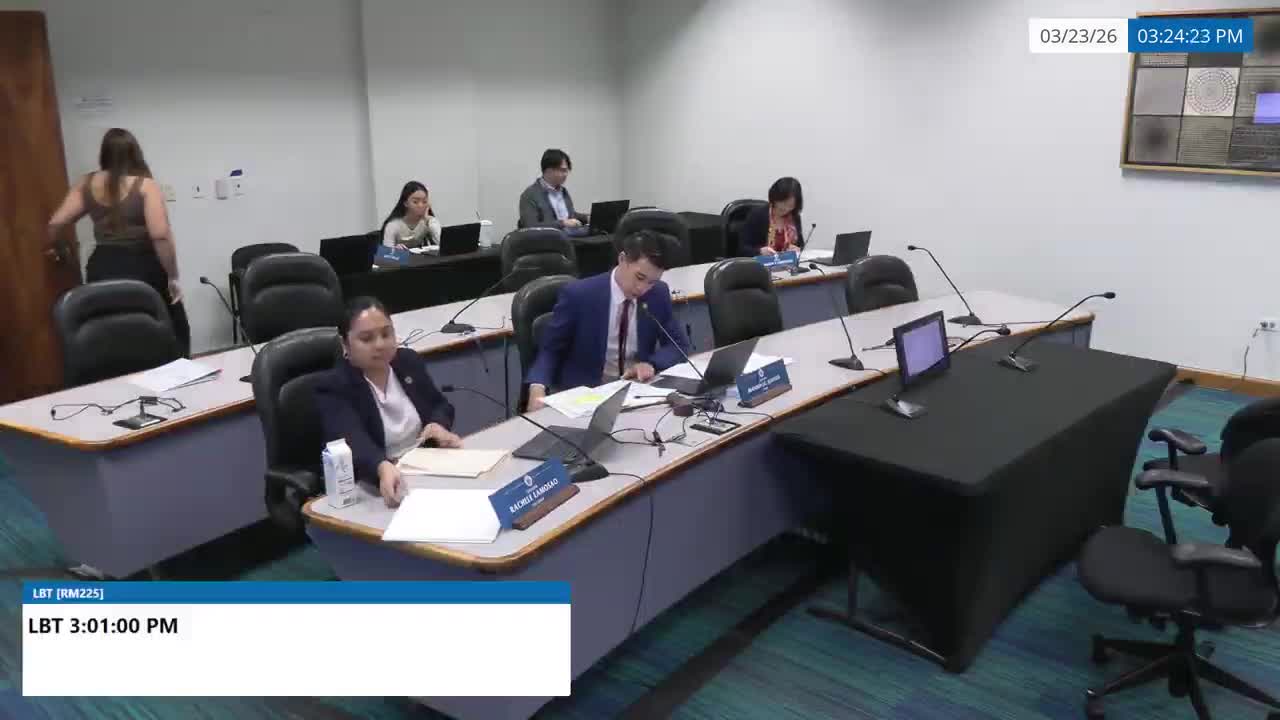
| Mar 23, 2026 | The committee(s) on LBT recommend(s) that the measure be PASSED, WITH AMENDMENTS. The votes in LBT were as follows: 3 Aye(s): Senator(s) Elefante, Lamosao, Moriwaki; Aye(s) with reservations: none ; 0 No(es): none; and 2 Excused: Senator(s) Ihara, Fevella. |
| Mar 20, 2026 | The committee(s) on LBT has scheduled a public hearing on 03-23-26 3:01PM; Conference Room 225 & Videoconference. |
| Mar 12, 2026 | Referred to LBT, CPN. |
| Mar 12, 2026 | Passed First Reading. |
| Mar 12, 2026 | Received from House (Hse. Com. No. 426). |
| Mar 10, 2026 | Passed Third Reading as amended in HD 3 with Representative(s) Garcia voting aye with reservations; none voting no (0) and Representative(s) Pierick excused (1). Transmitted to Senate. |
| Mar 6, 2026 | Forty-eight (48) hours notice Tuesday, 03-10-26. |
| Mar 6, 2026 | Reported from JHA (Stand. Com. Rep. No. 1128-26) as amended in HD 3, recommending passage on Third Reading. |
| Mar 4, 2026 | The committee on JHA recommend that the measure be PASSED, WITH AMENDMENTS. The votes were as follows: 8 Ayes: Representative(s) Tarnas, Poepoe, Hashem, Kahaloa, Sayama, Takayama; Ayes with reservations: Representative(s) Garcia, Shimizu; Noes: none; and 2 Excused: Representative(s) Belatti, Cochran. |
| Feb 27, 2026 | Bill scheduled to be heard by JHA on Wednesday, 03-04-26 2:00PM in House conference room 325 VIA VIDEOCONFERENCE. |
| Feb 20, 2026 | Report adopted; referred to the committee(s) on JHA as amended in HD 2 with Representative(s) Garcia voting aye with reservations; none voting no (0) and Representative(s) Quinlan excused (1). |
| Feb 20, 2026 | Reported from CPC (Stand. Com. Rep. No. 759-26) as amended in HD 2, recommending referral to JHA. |
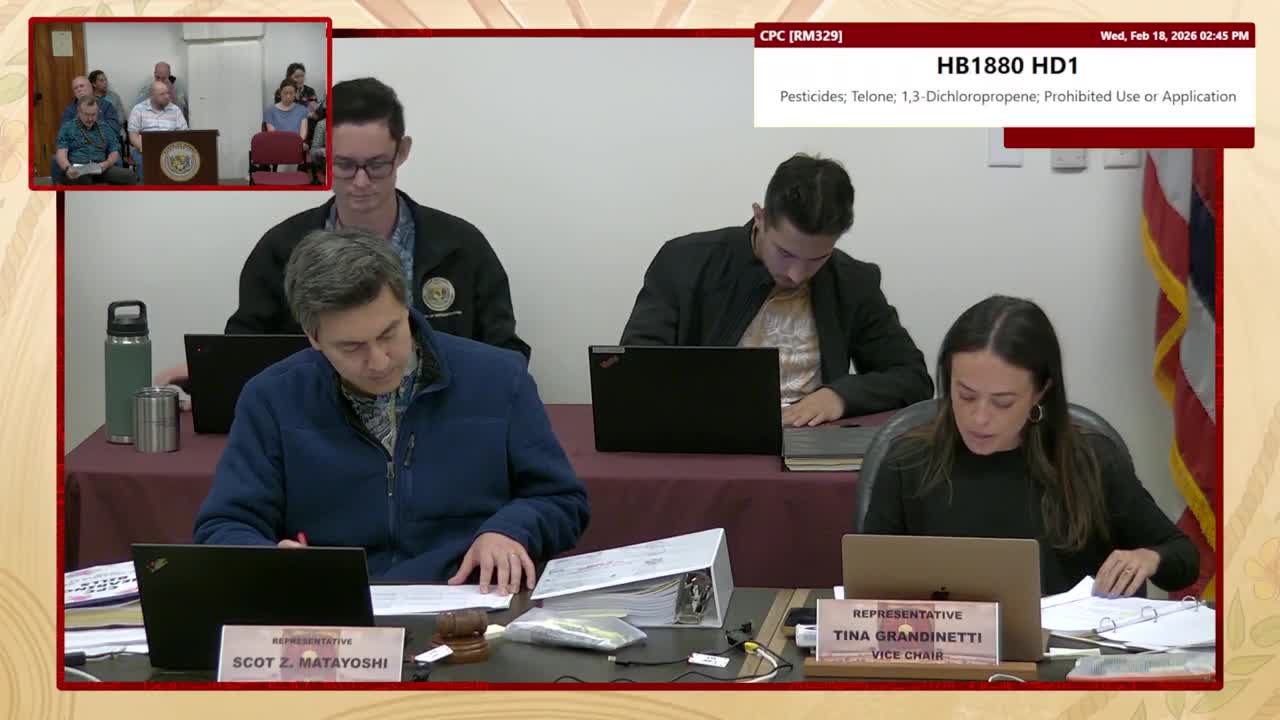
| Feb 18, 2026 | The committee on CPC recommend that the measure be PASSED, WITH AMENDMENTS. The votes were as follows: 9 Ayes: Representative(s) Matayoshi, Grandinetti, Chun, Ilagan, Iwamoto, Kong, Marten, Tam, Pierick; Ayes with reservations: none; Noes: none; and 2 Excused: Representative(s) Ichiyama, Lowen. |
| Feb 13, 2026 | Bill scheduled to be heard by CPC on Wednesday, 02-18-26 2:00PM in House conference room 329 VIA VIDEOCONFERENCE. |
| Feb 11, 2026 | Passed Second Reading as amended in HD 1 and referred to the committee(s) on CPC with Representative(s) Garcia, Pierick voting aye with reservations; none voting no (0) and Representative(s) Holt excused (1). |
| Feb 11, 2026 | Reported from HSH (Stand. Com. Rep. No. 154-26) as amended in HD 1, recommending passage on Second Reading and referral to CPC. |
| Feb 5, 2026 | The committee on HSH recommend that the measure be PASSED, WITH AMENDMENTS. The votes were as follows: 9 Ayes: Representative(s) Marten, Olds, Amato, Hartsfield, Keohokapu-Lee Loy, Takayama, Takenouchi, Alcos; Ayes with reservations: Representative(s) Garcia; Noes: none; and Excused: none. |
| Feb 2, 2026 | Bill scheduled to be heard by HSH on Thursday, 02-05-26 9:30AM in House conference room 329 VIA VIDEOCONFERENCE. |
| Feb 2, 2026 | Referred to HSH, CPC, JHA, referral sheet 6 |
| Jan 28, 2026 | Introduced and Pass First Reading. |
| Jan 27, 2026 | Pending introduction. |
|
Date
|
Description
|
Location
|
Votes
|
|
|---|---|---|---|---|
| Mar 23, 2026 | The committee(s) on LBT recommend(s) that the measure be PASSED, WITH AMENDMENTS | Senate Standing Committee on Labor and Technology |
Passed |
|
| Mar 10, 2026 | Third Reading | House Floor |
Passed |
|
| Mar 4, 2026 | The committee on JHA recommend that the measure be PASSED, WITH AMENDMENTS | House Standing Committee on Judiciary & Hawaiian Affairs |
Passed |
|
| Feb 18, 2026 | The committee on CPC recommend that the measure be PASSED, WITH AMENDMENTS | House Standing Committee on Consumer Protection & Commerce |
Passed |
|
| Feb 5, 2026 | The committee on HSH recommend that the measure be PASSED, WITH AMENDMENTS | House Standing Committee on Human Services & Homelessness |
Passed |
This list shows positions taken on this bill by organizations on the date displayed, which is linked to the original source.
Positions by individuals are not included.
|
Organization
|
Position
|
Date
|
|---|---|---|
| Albertsons Companies | *** Against | Mar 23, 2026 |
| Chamber Of Progress | ** Against | |
| Consumer Reports | *** Support | Mar 23, 2026 |
| Green Party of Hawaiʻi | ** Support | |
| Hawaiʻi Alliance for Progressive Action | ** Support | |
| Hawaiʻi Good Food Alliance | ** Support | |
| Hawaiʻi Hunger Action Network | *** Support | Mar 23, 2026 |
| Hawai‘i Appleseed Center for Law and Economic Justice | *** Support | Mar 23, 2026 |
| Hawai‘i Children’s Action Network Speaks! | *** Support | Mar 23, 2026 |
| Hawai‘i Food+ Policy | *** Support | Mar 23, 2026 |
| Hawai‘i Food+ Policy (Food+ Policy) | *** Support | Feb 18, 2026 |
| Hawai‘i Good Food Alliance | *** Support | Mar 4, 2026 |
| Hawai‘i Public Health Institute | *** Support | Mar 23, 2026 |
| Health Eating + Active Living Statewide Coalition | ** Support | |
| Healthy Eating + Active Living (HEAL) Statewide Coalition | *** Support | Mar 23, 2026 |
| Retail Merchants of Hawaiʻi | *** Against | Mar 23, 2026 |
| TechEquity Action | *** Support | Mar 23, 2026 |
| Technet | *** Against | Mar 23, 2026 |
| Wainiha Country Market | *** Support | Mar 4, 2026 |
| Wainiha Country Market | ** Support |
STAND. COM. REP. NO. 1128-26
Honolulu, Hawaii
, 2026
RE: H.B. No. 2458
H.D. 3
Honorable Nadine K. Nakamura
Speaker, House of Representatives
Thirty-Third State Legislature
Regular Session of 2026
State of Hawaii
Madame:
Your Committee on Judiciary & Hawaiian Affairs, to which was referred H.B. No. 2458, H.D. 2, entitled:
"A BILL FOR AN ACT RELATING TO SURVEILLANCE PRICING,"
begs leave to report as follows:
The purpose of this measure is to:
(1) Prohibit persons from using surveillance pricing in the sale of food; and
(2) Exempt certain discounts and restaurants.
Your Committee received testimony in support of this measure from the Hawaiʻi Public Health Institute; Hawaiʻi Children's Action Network Speaks!; Wainiha Country Market; Hawaiʻi Alliance for Progressive Action; Green Party of Hawaiʻi; Hawaiʻi Food+ Policy; Hawaiʻi Appleseed Center for Law & Economic Justice; Hawaiʻi Hunger Action Network; Hawaiʻi Good Food Alliance; and numerous individuals. Your Committee received testimony in opposition to this measure from the Chamber of Progress and TechNet. Your Committee received comments on this measure from the Department of Commerce and Consumer Affairs.
Your Committee finds that the expansion of surveillance-based pricing practices raises serious concerns regarding fairness, transparency, and consumer protection within the State's legal framework, particularly for residents who already experience disproportionate economic strain. Your Committee further finds that individualized, data driven price setting has the potential to exacerbate inequities faced by low-income communities, many of whom rely on consistent food pricing to maintain basic food security and household stability. Your Committee believes that prohibiting surveillance pricing for food purchases strengthens legal safeguards against discriminatory economic practices and upholds the State's commitment to equity and fair treatment under the law.
Your Committee has amended this measure by:
(1) Removing the exemption for loyalty programs; and
(2) Making technical, nonsubstantive amendments for the purposes of clarity, consistency, and style.
As affirmed by the record of votes of the members of your Committee on Judiciary & Hawaiian Affairs that is attached to this report, your Committee is in accord with the intent and purpose of H.B. No. 2458, H.D. 2, as amended herein, and recommends that it pass Third Reading in the form attached hereto as H.B. No. 2458, H.D. 3.
Respectfully submitted on behalf of the members of the Committee on Judiciary & Hawaiian Affairs,
|
|
|
____________________________ DAVID A. TARNAS, Chair |
|
|
|
|
STAND. COM. REP. NO. 759-26
Honolulu, Hawaii
, 2026
RE: H.B. No. 2458
H.D. 2
Honorable Nadine K. Nakamura
Speaker, House of Representatives
Thirty-Third State Legislature
Regular Session of 2026
State of Hawaii
Madame:
Your Committee on Consumer Protection & Commerce, to which was referred H.B. No. 2458, H.D. 1, entitled:
"A BILL FOR AN ACT RELATING TO SURVEILLANCE PRICING,"
begs leave to report as follows:
Your Committee received testimony in support of this measure from the Hawaii Appleseed Center for Law & Economic Justice; Hawaiʻi Public Health Institute; Health Eating + Active Living Statewide Coalition; Hawaiʻi Food+ Policy; Hawaiʻi Hunger Action Network; Hawaiʻi Children's Action Network Speaks!; Hawaiʻi Alliance for Progressive Action; and seven individuals. Your Committee received comments on this measure from the Department of Human Services and Department of Commerce and Consumer Affairs.
Your Committee finds that surveillance pricing, where prices are adjusted based on consumer data, behavior, or technology use, threatens affordability and predictability for any consumer. Such practices are more than just inconsistent pricing, they are a way for large companies to use personal demographic, consumer, workplace, and contextual data to charge higher prices for essential foods. Your Committee further finds that expanding this measure to prohibit the use of surveillance pricing in the sale of food generally, rather than food sold to a specific subset of consumers, will provide greater consumer protection in the State from these exploitative pricing practices.
Accordingly, your Committee has amended this measure by:
(1) Expanding the surveillance pricing prohibition to cover the sale of food per the definition provided, rather than food sold to recipients of certain federal programs;
(2) Deleting language with respect to penalties that conflicted with existing penalties under laws relating to unfair or deceptive acts or practices;
(3) Exempting restaurants and other establishments that prepare and sell food directly to consumers for immediate consumption, including such locations located within retail establishments;
(4) Inserting a definition for "food"; and
(5) Making technical, nonsubstantive amendments for the purposes of clarity, consistency, and style.
As affirmed by the record of votes of the members of your Committee on Consumer Protection & Commerce that is attached to this report, your Committee is in accord with the intent and purpose of H.B. No. 2458, H.D. 1, as amended herein, and recommends that it be referred to your Committee on Judiciary & Hawaiian Affairs in the form attached hereto as H.B. No. 2458, H.D. 2.
Respectfully submitted on behalf of the members of the Committee on Consumer Protection & Commerce,
|
|
|
____________________________ SCOT Z. MATAYOSHI, Chair |
STAND. COM. REP. NO. 154-26
Honolulu, Hawaii
, 2026
RE: H.B. No. 2458
H.D. 1
Honorable Nadine K. Nakamura
Speaker, House of Representatives
Thirty-Third State Legislature
Regular Session of 2026
State of Hawaii
Madame:
Your Committee on Human Services & Homelessness, to which was referred H.B. No. 2458 entitled:
"A BILL FOR AN ACT RELATING TO SURVEILLANCE PRICING,"
begs leave to report as follows:
Your Committee received testimony in support of this measure from the Hawaii Appleseed Center for Law & Economic Justice; Hawaiʻi Food+ Policy; and four individuals. Your Committee received testimony in opposition to this measure from the Chamber of Progress. Your Committee received comments on this measure from the Department of Human Services and Department of Commerce and Consumer Affairs.
Your Committee finds that one in three Hawaii residents struggle to afford enough food, with supplemental nutrition programs being more important than ever to support working families, individuals with disabilities, and others living on fixed or limited incomes. Your Committee further finds that surveillance pricing, where prices are adjusted based on consumer data, behavior, or technology use, threatens affordability and predictability for any consumer especially for 155,000 Hawaii residents relying on the Supplemental Nutrition Assistance Program and twenty-five thousand pregnant people, infants, and young children served by the Special Supplemental Nutrition Program For Women, Infants, and Children.
Your Committee notes that the Department of Commerce and Consumer Affairs, in its written testimony before your Committee, requested two positions a technologist and staff attorney to meet the challenges of enforcing the provisions of this measure.
Your Committee has amended this measure by:
(1) Amending the penalties as follows:
(A) Specifying that the penalty is a civil fine, rather than an administrative fine;
(B) Specifying that the penalty amount is $5,000 per item per day, rather than $500 for the first offense and $1,000 for each subsequent offense; and
(C) Designating the Attorney General and the Director of the Office of Consumer Protection to be the enforcement authorities, rather than the Director of Commerce and Consumer Affairs;
(2) Inserting a definition of "personally identifiable information";
(3) Changing the effective date to July 1, 3000, to encourage further discussion; and
(4) Making technical, nonsubstantive amendments for the purposes of clarity, consistency, and style.
As affirmed by the record of votes of the members of your Committee on Human Services & Homelessness that is attached to this report, your Committee is in accord with the intent and purpose of H.B. No. 2458, as amended herein, and recommends that it pass Second Reading in the form attached hereto as H.B. No. 2458, H.D. 1, and be referred to your Committee on Consumer Protection & Commerce.
Respectfully submitted on behalf of the members of the Committee on Human Services & Homelessness,
|
|
|
____________________________ LISA MARTEN, Chair |
|
|
|
|
|
Date
|
Testimony PDF
|
|---|---|
| Mar 23, 2026 | HB2458_HD3_TESTIMONY_LBT_03-23-26_.PDF |
| Mar 4, 2026 | HB2458_HD2_TESTIMONY_JHA_03-04-26_.PDF |
| Feb 18, 2026 | HB2458_HD1_TESTIMONY_CPC_02-18-26_.PDF |
| Feb 4, 2026 | HB2458_TESTIMONY_HSH_02-05-26_.PDF |
Discussed in Hearing
 14MIN
Senate Standing Committee on Commerce and Consumer Protection
14MIN
Senate Standing Committee on Labor and Technology
1MIN
Senate Standing Committee on Commerce and Consumer Protection
1MIN
Senate Standing Committee on Labor and Technology
 57SEC
House Floor
 8MIN
House Standing Committee on Judiciary & Hawaiian Affairs
 1MIN
House Standing Committee on Judiciary & Hawaiian Affairs
 7MIN