HB 1304: RELATING TO TRANSPORTATION.
- Session Year: 2025-2026
- House: House
- Latest Version Date: 2025-02-03
Current Status:
Failed
(2025-12-08: Carried over to 2026 Regular Session.)
Introduced
In Committee
First Chamber
In Committee
Second Chamber
Final Decking
Enacted
Requires the Department of Transportation to adopt rules governing a clean fuel standard for alternative fuels in the State. Effective 7/1/3000. (HD1)
Requires the Department of Transportation to adopt rules governing a clean fuel standard for alternative fuels in the State.
|
HOUSE OF REPRESENTATIVES |
H.B. NO. |
1304 |
|
THIRTY-THIRD LEGISLATURE, 2025 |
H.D. 1 |
|
|
STATE OF HAWAII |
|
|
|
|
|
|
|
|
||
|
|
||
A BILL FOR AN ACT
RELATING TO TRANSPORTATION.
BE IT ENACTED BY THE LEGISLATURE OF THE STATE OF HAWAII:
The legislature additionally finds that by creating a clean fuel standard that rewards environmental performance, the State will incentivize the creation of jobs in various sectors, including construction, agriculture, waste management, landscape restoration, forestry, and transportation. A clean fuel standard can create new markets for what is usually considered waste, including but not limited to municipal solid waste; construction and demolition debris; used cooking oil from food processing; agricultural and forestry residuals; industrial emissions; invasive species biomass from landscape restoration projects; and renewable electricity. Furthermore, the demand created for alternative fuels and cleaner forms of mobility under a clean fuel standard will not only help reduce greenhouse gas emissions but may also have a co-benefit of reducing air pollution, improving the health of citizens of the State.
It is the intent of the legislature to support the deployment of c1ean transportation fuel technologies through a carefully designed program that reduces the carbon intensity of fuel used in the State to:
(1) Reduce lifecycle greenhouse gas emissions;
(2) Stimulate the local, state, and regional economies, thereby providing economic development;
(3) Promote public and environmental health by increasing sustainability and encouraging a circular economy and landscape restoration activities; and
(4) Support existing jobs in the clean fuel industry and create new jobs in new innovative clean fuel technologies.
Therefore, the purpose of this Act is to require the department of transportation to adopt rules governing a clean fuel standard for alternative fuels in the State.
SECTION 2. (a) The department of transportation shall adopt rules pursuant to chapter 91, Hawaii Revised Statutes, governing a clean fuel standard for alternative fuels in the State. The rules shall include:
(1) A schedule to phase-in the implementation of the clean fuel standard for alternative fuels in a manner that reduces the average carbon intensity by at least ten per cent below 2019 levels by 2035 and at least fifty per cent below 2019 levels by 2045, including the establishment of annual carbon intensity standards for alternative fuels;
(2) An implementation date for the clean fuel standard for diesel and gasoline on or before January 1, 2027;
(3) Standards for measuring lifecycle greenhouse gas emissions using Argonne National Lab's GREET model attributable to the production and use of diesel, gasoline, and other alternative fuels throughout their lifecycles, including feedstock production or extraction, fuel production, and the transportation of raw materials and finished fuels;
(4) A mechanism by which diesel and gasoline that have a carbon intensity below the annual carbon intensity standard are used within the State to generate credits;
(5) A mechanism by which alternative fuel that has a carbon intensity below the annual carbon intensity standard is used within the State to generate credits;
(6) A mechanism to adjust the carbon intensity of alternative fuel when the alternative fuel is used in a powertrain that is not equal in efficiency to that of the reference fuel and drivetrain combination;
(7) A mechanism by which diesel or gasoline that has a carbon intensity above the annual carbon intensity standard would generate a deficit;
(8) A mechanism by which an alternative fuel that has a carbon intensity above the annual carbon intensity standard would generate a deficit;
(9) A mechanism that requires diesel, gasoline, or other alternative fuel that is exported from the State to retire any associated credit or debit;
(10) Exemptions for diesel, gasoline, or other fuels used by aircraft, railroad locomotives, military vehicles, and interstate waterborne vessels;
(11) Procedures for verifying credits and deficits generated under the clean fuel standard; and
(12) A schedule by which the department of transportation shall review and update the lifecycle greenhouse gas modeling every three years based on a review of the best available scientific literature.
(b) The department of transportation may adopt rules that include:
(1) A cost containment mechanism designed to allow for sufficient compliance flexibility and maximum greenhouse gas reductions;
(2) Mechanisms whereby an electric utility or an energy producer can generate credits for electricity for gaseous fuels used in transportation; provided that the department of transportation shall develop these mechanisms based on best practices in use in other states and in consultation with industry stakeholders;
(3) Mechanisms whereby exempt end-uses, such as aviation, marine, rail, and military, can opt in to the program to generate credits when using alternative fuel;
(4) Mechanisms whereby alternative fuel users can opt in to the clean fuel program to generate credits when it displaces the combustion of gasoline or diesel in offroad, heating, cooling, and temporary power generation;
(5) A schedule to phase in the implementation of the standards for alternative fuels that have achieved a predominant market share and have an average carbon intensity that exceeds the annual diesel or gasoline carbon intensity standard;
(6) A program to support the deployment of infrastructure for the distribution of electricity as a vehicle fuel based on a mechanism by which no more than per cent of the annual deficits can be allocated;
(7) A program to support the deployment of new technologies and infrastructure for the distribution or production of liquid or gaseous alternative fuels based on a mechanism by which no more than per cent of the annual deficits can be allocated;
(8) Any standards, specifications, testing requirements, and other measures as needed to ensure the quality of gasoline, diesel, and alternative fuels used in accordance with the clean fuel standard;
(9) Linking the clean fuel standard to similar policies in other jurisdictions, including but not limited to California, Washington, and Oregon;
(10) A method to utilize the carbon intensity pathways already approved in other states like California, Oregon, and Washington to reduce the burden of administering and certifying the carbon intensity of transportation fuels in the clean fuel program;
(11) Mechanisms that allow credits to be traded and to be banked for future compliance periods; and
(12) Exemptions for diesel, gasoline, and alternative fuels that are used in volumes below thresholds established by the department of transportation.
(c) As used in this section:
"Alternative fuel" means any fuel that is not gasoline or diesel and is used for transportation purposes, including but not limited to ethanol, biomass-based diesel, renewable diesel, sustainable aviation fuel, electricity, biomethane, biogasoline, renewable natural gas, fuels from carbon capture and utilization, electrofuels, and hydrogen.
"Carbon intensity" means that quantity of lifecycle greenhouse gas emissions per unit of fuel energy, expressed in grams of carbon dioxide equivalent per megajoule.
"Clean fuel standard" means standards for the reduction of greenhouse gas emissions, on average, per unit of fuel energy.
"Greenhouse gas" means carbon dioxide, methane, nitrous oxide, hydrofluorocarbons, perfluorocarbons, sulfur hexafluoride, and any other gas or gases designated by the department of transportation or the Hawaii state energy office by rule.
SECTION 3. This Act shall take effect on July 1, 3000.
Report Title:
DOT; Clean Fuel Standard; Greenhouse Gases; Alternative Fuels; Rules
Description:
Requires the Department of Transportation to adopt rules governing a clean fuel standard for alternative fuels in the State. Effective 7/1/3000. (HD1)
The summary description of legislation appearing on this page is for informational purposes only and is not legislation or evidence of legislative intent.
|
HOUSE OF REPRESENTATIVES |
H.B. NO. |
1304 |
|
THIRTY-THIRD LEGISLATURE, 2025 |
|
|
|
STATE OF HAWAII |
|
|
|
|
|
|
|
|
||
|
|
||
A BILL FOR AN ACT
RELATING TO TRANSPORTATION.
BE IT ENACTED BY THE LEGISLATURE OF THE STATE OF HAWAII:
The legislature additionally finds that by creating a clean fuel standard that rewards environmental performance, the State will incentivize the creation of jobs in various sectors, including construction, agriculture, waste management, landscape restoration, forestry, and transportation. A clean fuel standard can create new markets for what is usually considered waste, including but not limited to municipal solid waste; construction and demolition debris; used cooking oil from food processing; agricultural and forestry residuals; industrial emissions; invasive species biomass from landscape restoration projects; and renewable electricity. Furthermore, the demand created for alternative fuels and cleaner forms of mobility under a clean fuel standard will not only help reduce greenhouse gas emissions but may also have a co-benefit of reducing air pollution, improving the health of citizens of the State.
It is the intent of the legislature to support the deployment of c1ean transportation fuel technologies through a carefully designed program that reduces the carbon intensity of fuel used in the State to:
(1) Reduce lifecycle greenhouse gas emissions;
(2) Stimulate the local, state, and regional economies, thereby providing economic development;
(3) Promote public and environmental health by increasing sustainability and encouraging a circular economy and landscape restoration activities; and
(4) Support existing jobs in the clean fuel industry and create new jobs in new innovative clean fuel technologies.
Therefore, the purpose of this Act is to require the department of transportation to adopt rules governing a clean fuel standard for alternative fuels in the State.
SECTION 2. (a) The department of transportation shall adopt rules pursuant to chapter 91, Hawaii Revised Statutes, governing a clean fuel standard for alternative fuels in the State. The rules shall include:
(1) A schedule to phase-in the implementation of the clean fuel standard for alternative fuels in a manner that reduces the average carbon intensity by at least ten per cent below 2019 levels by 2035 and at least fifty per cent below 2019 levels by 2045, including the establishment of annual carbon intensity standards for alternative fuels;
(2) An implementation date for the clean fuel standard for diesel and gasoline on or before January 1, 2027;
(3) Standards for measuring lifecycle greenhouse gas emissions using Argonne National Lab's GREET model attributable to the production and use of diesel, gasoline, and other alternative fuels throughout their lifecycles, including feedstock production or extraction, fuel production, and the transportation of raw materials and finished fuels;
(4) A mechanism by which diesel and gasoline that have a carbon intensity below the annual carbon intensity standard are used within the State to generate credits;
(5) A mechanism by which alternative fuel that has a carbon intensity below the annual carbon intensity standard is used within the State to generate credits;
(6) A mechanism to adjust the carbon intensity of alternative fuel when the alternative fuel is used in a powertrain that is not equal in efficiency to that of the reference fuel and drivetrain combination;
(7) A mechanism by which diesel or gasoline that has a carbon intensity above the annual carbon intensity standard would generate a deficit;
(8) A mechanism by which an alternative fuel that has a carbon intensity above the annual carbon intensity standard would generate a deficit;
(9) A mechanism that requires diesel, gasoline, or other alternative fuel that is exported from the State to retire any associated credit or debit;
(10) Exemptions for diesel, gasoline, or other fuels used by aircraft, railroad locomotives, military vehicles, and interstate waterborne vessels;
(11) Procedures for verifying credits and deficits generated under the clean fuel standard; and
(12) A schedule by which the department of transportation shall review and update the lifecycle greenhouse gas modeling every three years based on a review of the best available scientific literature.
(b) The department of transportation may adopt rules that include:
(1) A cost containment mechanism designed to allow for sufficient compliance flexibility and maximum greenhouse gas reductions;
(2) Mechanisms whereby an electric utility or an energy producer can generate credits for electricity for gaseous fuels used in transportation; provided that the department of transportation shall develop these mechanisms based on best practices in use in other states and in consultation with industry stakeholders;
(3) Mechanisms whereby exempt end-uses, such as aviation, marine, rail, and military, can opt in to the program to generate credits when using alternative fuel;
(4) Mechanisms whereby alternative fuel users can opt in to the clean fuel program to generate credits when it displaces the combustion of gasoline or diesel in offroad, heating, cooling, and temporary power generation;
(5) A schedule to phase in the implementation of the standards for alternative fuels that have achieved a predominant market share and have an average carbon intensity that exceeds the annual diesel or gasoline carbon intensity standard;
(6) A program to support the deployment of infrastructure for the distribution of electricity as a vehicle fuel based on a mechanism by which not more than per cent of the annual deficits can be allocated;
(7) A program to support the deployment of new technologies and infrastructure for the distribution or production of liquid or gaseous alternative fuels based on a mechanism by which not more than per cent of the annual deficits can be allocated;
(8) Any standards, specifications, testing requirements, and other measures as needed to ensure the quality of gasoline, diesel, and alternative fuels used in accordance with the clean fuel standard;
(9) Linking the clean fuel standard to similar policies in other jurisdictions, including but not limited to California, Washington, and Oregon;
(10) A method to utilize the carbon intensity pathways already approved in other states like California, Oregon, and Washington to reduce the burden of administering and certifying the carbon intensity of transportation fuels in the clean fuel program;
(11) Mechanisms that allow credits to be traded and to be banked for future compliance periods; and
(12) Exemptions for diesel, gasoline, and alternative fuels that are used in volumes below thresholds established by the department of transportation.
(c) As used in this section:
"Alternative fuel" means any fuel that is not gasoline or diesel and is used for transportation purposes, including but not limited to ethanol, biomass-based diesel, renewable diesel, sustainable aviation fuel, electricity, biomethane, biogasoline, renewable natural gas, fuels from carbon capture and utilization, electrofuels, and hydrogen.
"Carbon intensity" means that quantity of lifecycle greenhouse gas emissions per unit of fuel energy, expressed in grams of carbon dioxide equivalent per megajoule.
"Clean fuel standard" means standards for the reduction of greenhouse gas emissions, on average, per unit of fuel energy.
"Greenhouse gas" means carbon dioxide, methane, nitrous oxide, hydrofluorocarbons, perfluorocarbons, sulfur hexafluoride, and any other gas or gases designated by the department of transportation or the Hawaii state energy office by rule.
SECTION 3. This Act shall take effect on July 1, 2025.
|
INTRODUCED BY: |
_____________________________ |
|
|
|
Report Title:
DOT; Clean Fuel Standard; Greenhouse Gases; Alternative Fuels; Rules
Description:
Requires the Department of Transportation to adopt rules governing a clean fuel standard for alternative fuels in the State.
The summary description of legislation appearing on this page is for informational purposes only and is not legislation or evidence of legislative intent.
|
Date
|
Status
|
|---|---|
| Dec 8, 2025 | Carried over to 2026 Regular Session. |
| Feb 4, 2025 | Passed Second Reading as amended in HD 1 and referred to the committee(s) on EEP with none voting aye with reservations; Representative(s) Garcia, Muraoka, Pierick voting no (3) and Representative(s) Cochran, Kong, Ward excused (3). |
| Feb 4, 2025 | Reported from TRN (Stand. Com. Rep. No. 115) as amended in HD 1, recommending passage on Second Reading and referral to EEP. |
| Jan 30, 2025 | The committee on TRN recommend that the measure be PASSED, WITH AMENDMENTS. The votes were as follows: 5 Ayes: Representative(s) Kila, Grandinetti, Evslin, Kitagawa, Miyake; Ayes with reservations: none; 2 Noes: Representative(s) Muraoka, Pierick; and 2 Excused: Representative(s) Cochran, La Chica. |
| Jan 28, 2025 | Bill scheduled to be heard by TRN on Thursday, 01-30-25 10:00AM in House conference room 430 VIA VIDEOCONFERENCE. |
| Jan 27, 2025 | Referred to TRN, EEP, FIN, referral sheet 4 |
| Jan 23, 2025 | Introduced and Pass First Reading. |
| Jan 22, 2025 | Pending introduction. |
|
Date
|
Description
|
Location
|
Votes
|
|
|---|---|---|---|---|
| Jan 30, 2025 | The committee on TRN recommend that the measure be PASSED, WITH AMENDMENTS | House Standing Committee on Transportation |
Passed |
This list shows positions taken on this bill by organizations on the date displayed, which is linked to the original source.
Positions by individuals are not included.
|
Organization
|
Position
|
Date
|
|---|---|---|
| Biotechnology Innovation Organization | ** Support | |
| Coalition Earth | ** Support | |
| Neste | ** Support |
STAND. COM. REP. NO. 115
Honolulu, Hawaii
, 2025
RE: H.B. No. 1304
H.D. 1
Honorable Nadine K. Nakamura
Speaker, House of Representatives
Thirty-Third State Legislature
Regular Session of 2025
State of Hawaii
Madame:
Your Committee on Transportation, to which was referred H.B. No. 1304 entitled:
"A BILL FOR AN ACT RELATING TO TRANSPORTATION,"
begs leave to report as follows:
The purpose of this measure is to require the Department of Transportation to adopt rules regarding a clean fuel standard for alternative fuels in the State.
Your Committee finds that clean fuel policies drive the adoption of lower carbon transportation technologies, resulting in advanced competition and a diversity of fuel options for consumers. Your Committee further finds that a clean fuel standard would enable the State to meet its decarbonization goals in regard to transportation fuels.
Your Committee has amended this measure by:
(1) Changing the effective date to July 1, 3000, to encourage further discussion; and
(2) Making technical, nonsubstantive amendments for clarity, consistency, and style.
Your Committee notes that alternative fuels technology is an emerging technology in the State and as such, the financial impacts of adoption are not easily discernable.
As affirmed by the record of votes of the members of your Committee on Transportation that is attached to this report, your Committee is in accord with the intent and purpose of H.B. No. 1304, as amended herein, and recommends that it pass Second Reading in the form attached hereto as H.B. No. 1304, H.D. 1, and be referred to your Committee on Energy & Environmental Protection.
Respectfully submitted on behalf of the members of the Committee on Transportation,
|
|
|
____________________________ DARIUS KILA, Chair |
|
|
|
|
|
Date
|
Testimony PDF
|
|---|---|
| Jan 30, 2025 | HB1304_TESTIMONY_TRN_01-30-25_.PDF |
Discussed in Hearing
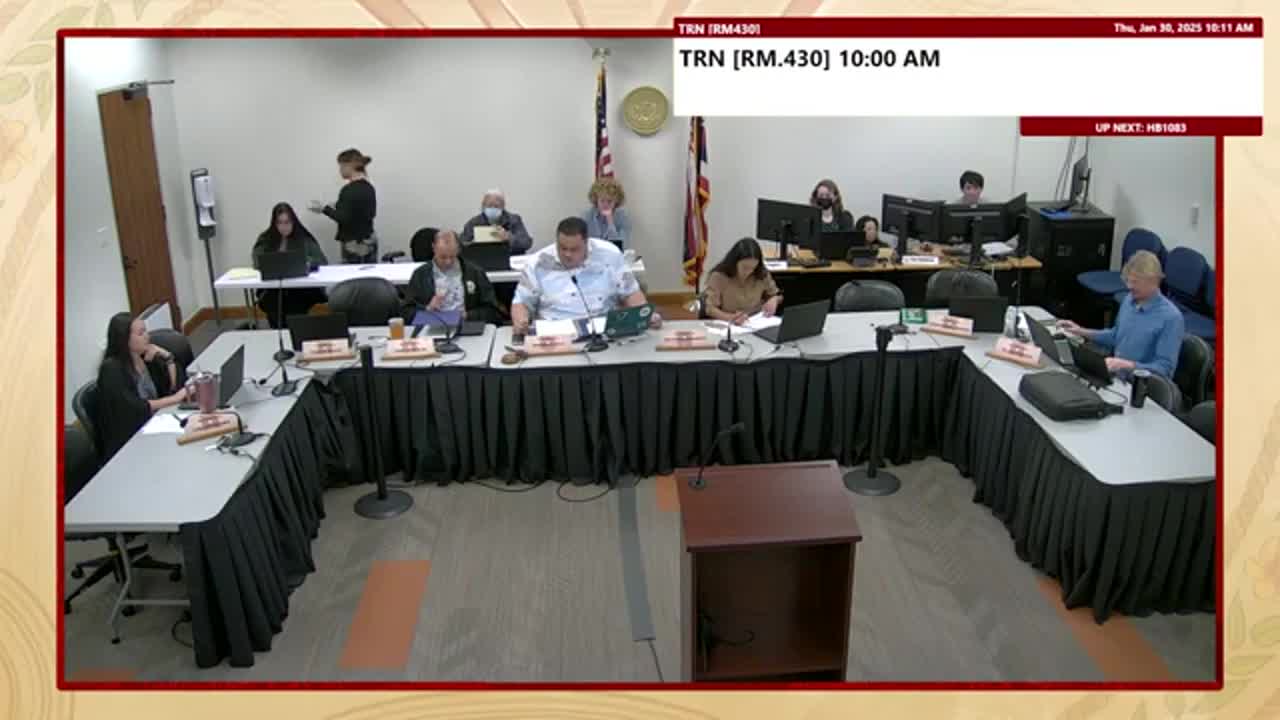 1MIN
House Standing Committee on Housing
1MIN
House Standing Committee on Transportation
Bill Author